

History

Al-Andalus: Islamic Civilization and the Liberation from Visigothic Tyranny

6 min read 1172 words

The Islamic conquest of Al-Andalus was not merely a military campaign but a civilizational turning point — replacing centuries of Visigothic tyranny and illiteracy with a period that Western historians themselves describe as the most advanced in medieval Europe.


The Condition of Al-Andalus Under Visigothic Rule

Far from being a golden era, the Visigothic period in Iberia was defined by structural oppression, illiteracy, and the brutal concentration of power in the hands of a foreign minority.

Aldo Mieli, in Knowledge Among the Arabs, records that under Visigothic rule, Al-Andalus suffered greatly under barbaric governance, enduring all kinds of torment with no civilization to speak of.

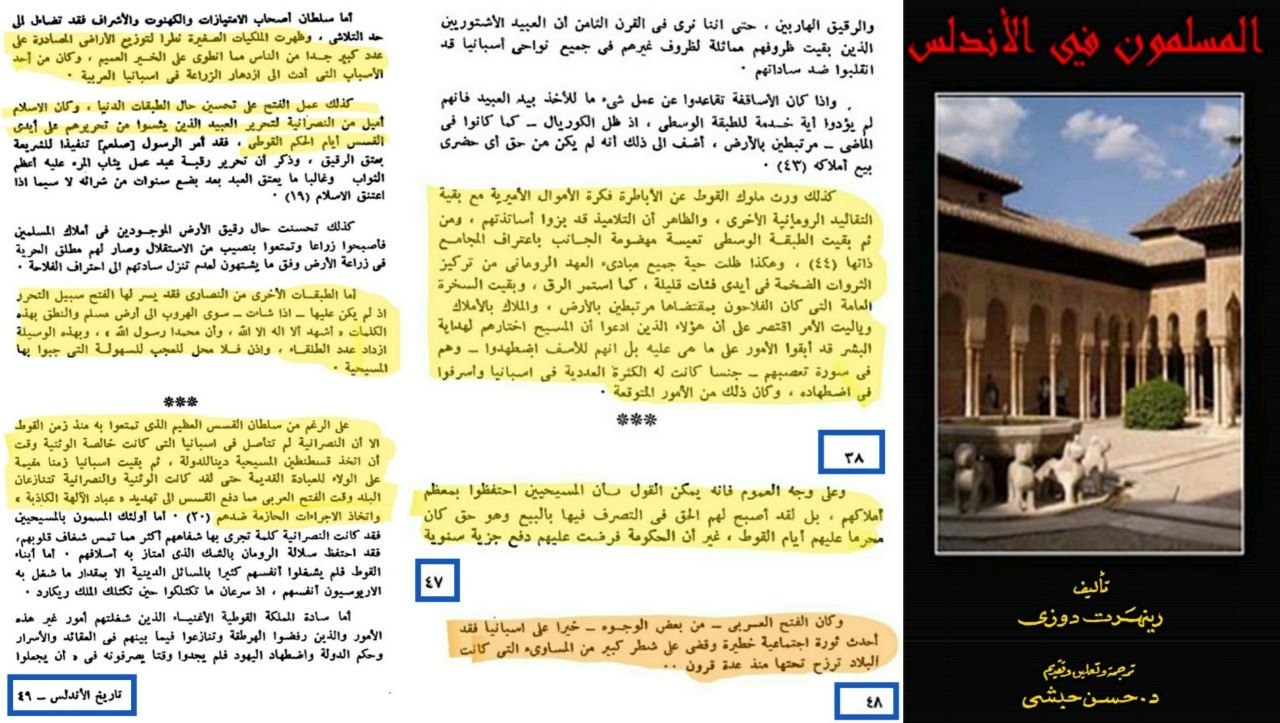
Reinhart Dozy — Studies in the Political and Literary History of Spain During the Middle Ages Christian clergy themselves complained about the widespread corruption and moral decay among the ruling Visigothic class and their indulgence in luxury, while the middle and poor classes, as well as the slaves, suffered from exploitation. “The condition of the slave class was unbearable during the Visigothic era, and this is evident when one examines their harsh laws toward slaves.”

For nearly a thousand years of Roman and Visigothic rule, wealth was concentrated in the hands of a small minority. The vast majority of the Andalusian people were subjected to harsh oppression and deprived of the freedom to manage their own properties.

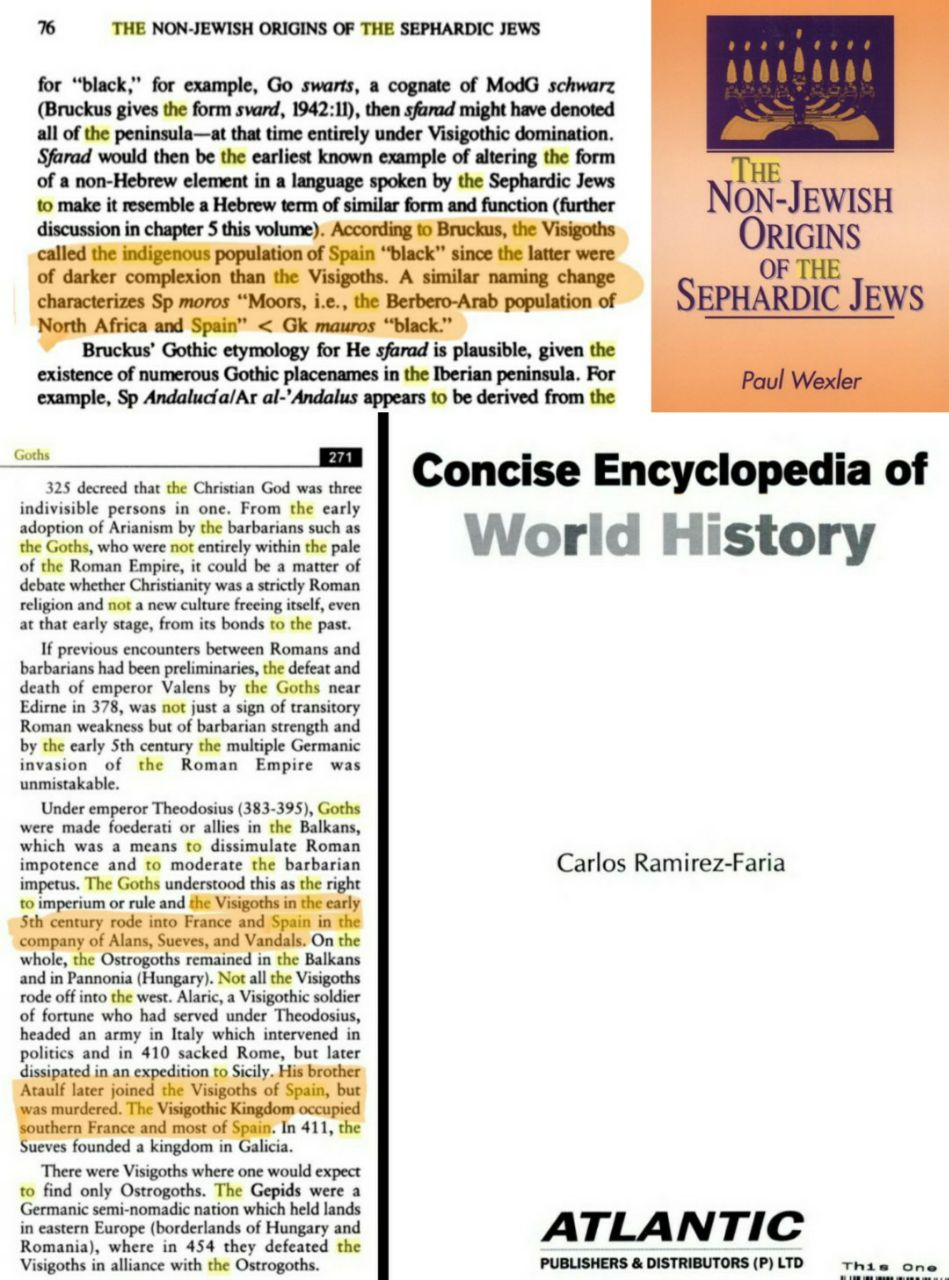
The Visigoths were not the original inhabitants of Al-Andalus. They were a minority that migrated to Iberia in the fifth century CE and used the term “blacks” to demean the native Andalusian population — a documented form of racial contempt used to justify their rule.

[The Non-Jewish Origins of the Sephardic Jews, p. 76] · [Concise Encyclopedia of World History — Carlos Ramirez-Faria, p. 271]

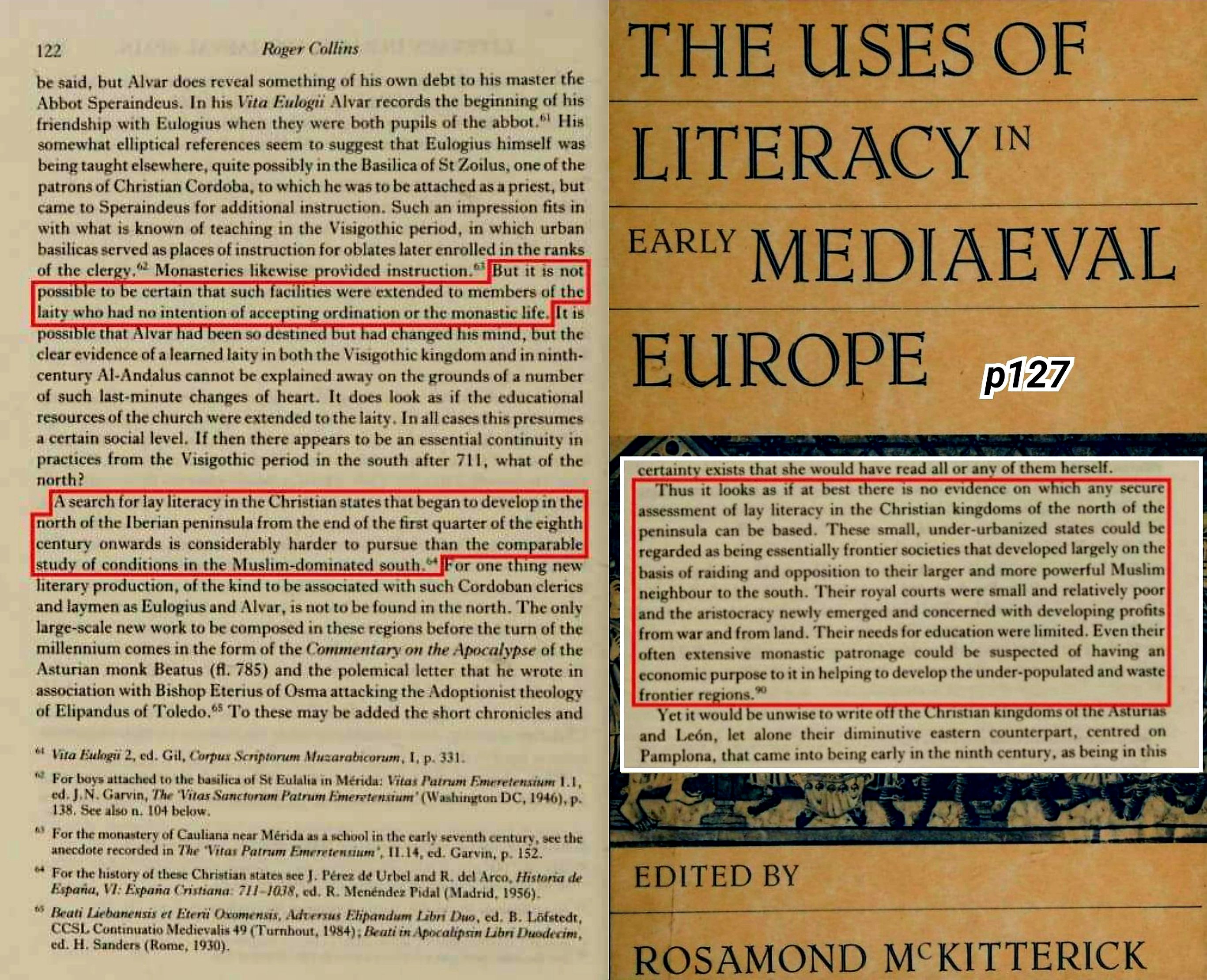
Rosamond McKitterick (ed.) — The Uses of Literacy in Early Mediaeval Europe, pp. 120–122, 127 Illiteracy was a primary characteristic of the Visigothic kingdom in Iberia. Most literary works from Christians in Spain after the conquest originated from the regions ruled by Muslims in the south — their counterparts in the far northern Christian kingdoms produced almost nothing.

The Arab Muslim Conquest and the Liberation of Al-Andalus

A common misconception frames the conquest as a Berber-Moorish campaign. Contemporary Latin sources tell a different story.

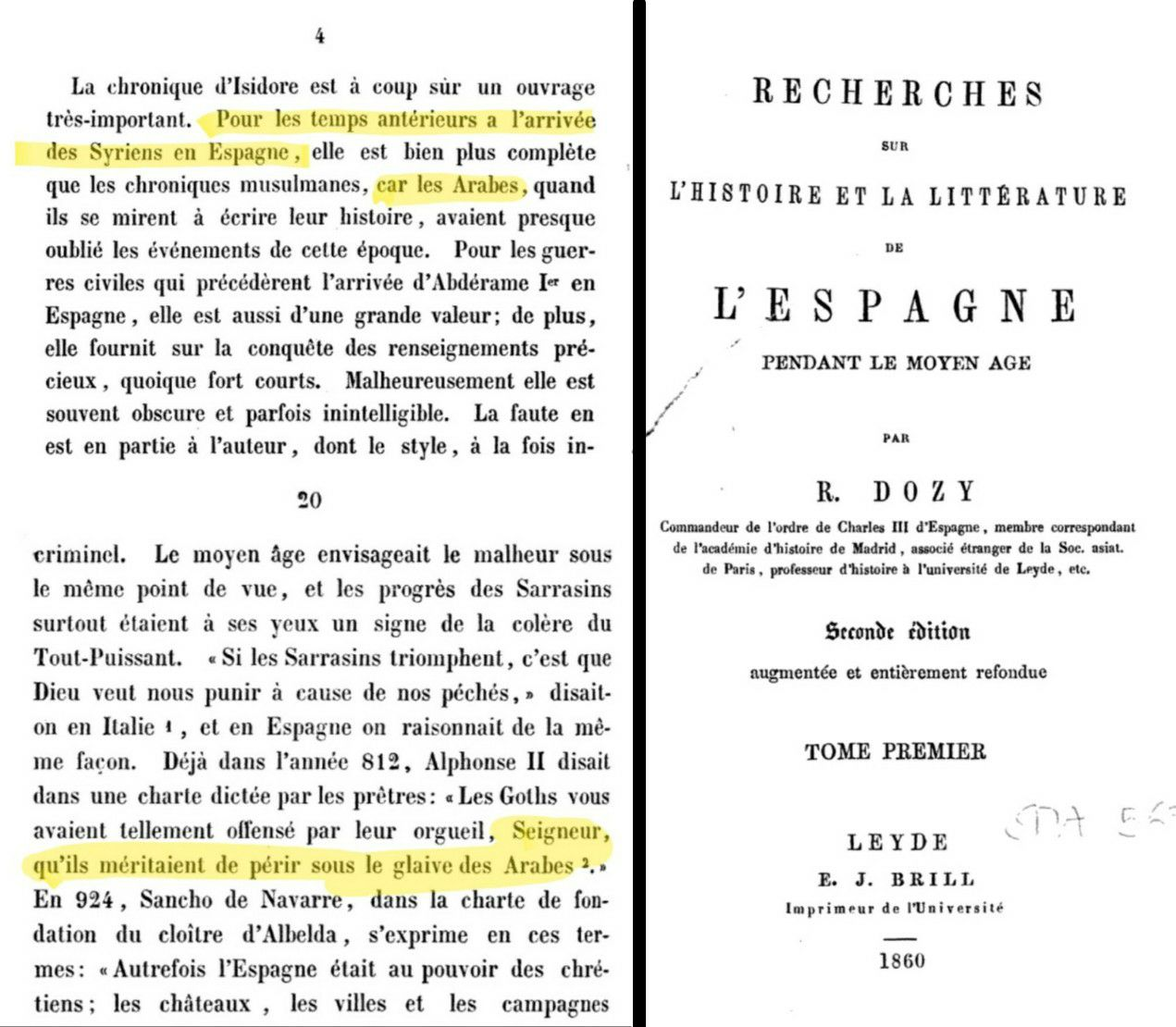
Reinhart Dozy — Recherches sur l’Histoire et la Littérature de l’Espagne Pendant le Moyen Âge, Vol. 1, pp. 4, 20 Latin histories refer to the conquering Muslims as Syrian Arabs who came from the land of Syria. The conquering army was a Muslim Arab Syrian army — not Berber.

The Islamic conquest transformed the condition of every class in Iberian society. Dorothy Loader, in Spain, Its People and Land (p. 50), states: “During the first four hundred years of Arab rule over Spain, their treatment of the Spaniards was the gentlest and most merciful treatment a defeated people ever received at the hands of their conquerors.”

Following the conquest, conditions improved dramatically: the status of slaves was elevated, Christians were able to sell their properties freely, all classes were released from forced labour, agriculture flourished, and a genuine social revolution took place across Al-Andalus.

[Muslims in Al-Andalus — Reinhart Dozy, Vol. 1, pp. 38–49]

The people of Al-Andalus, whose religions had been paganism and later Christianity, embraced Islam in large numbers. Most Muslims of Al-Andalus were Arabs, followed by Iberians due to the waves of Arab migration to the peninsula.

[Historia Literaria de España, Tomo II, p. 26, Madrid 1768] · [The Victors and the Vanquished — Brian A. Catlos]
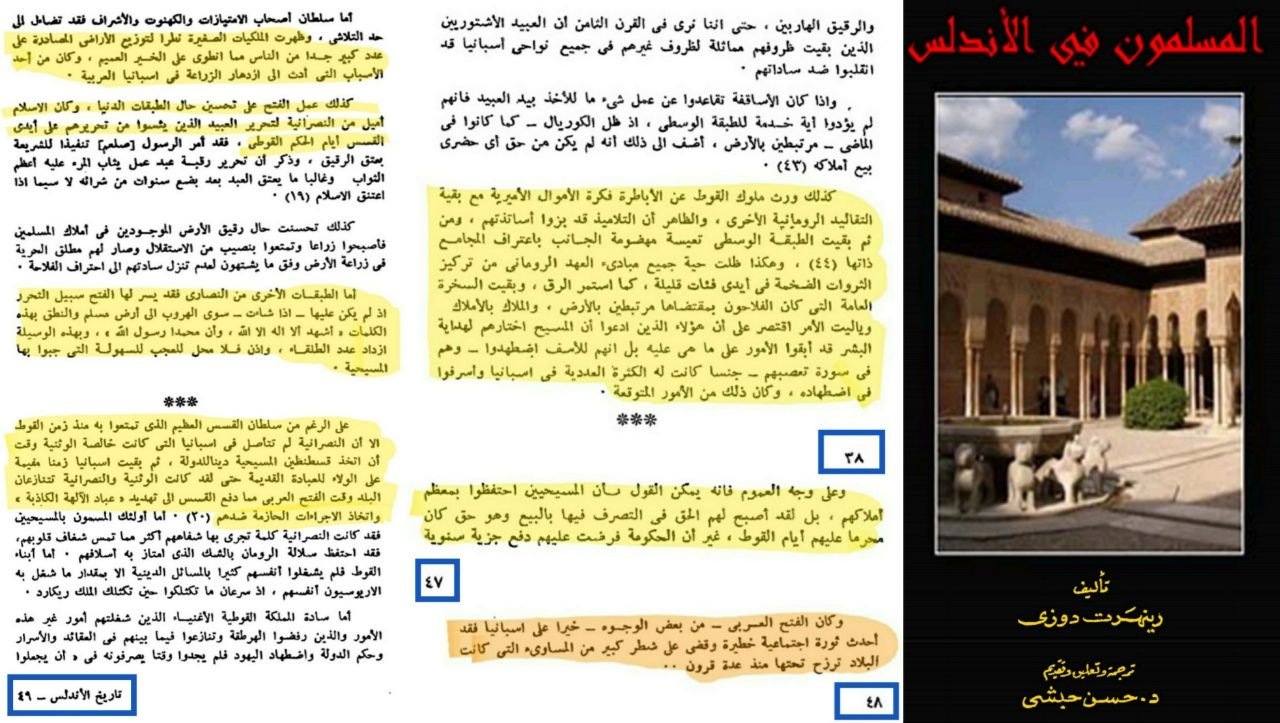
Book scan from Reinhart Dozy — Muslims in Al-Andalus Vol. 1, pp. 38–49, documenting social transformation under Islamic rule

The passage above records Dozy’s account of the social conditions before and after the Islamic conquest, noting the liberation of the slave class and the revival of agriculture.
Book scan from Dozy's Recherches — Latin histories identifying the conquering army as Syrian Arabs, Vol. 1, p. 4

This passage from Dozy’s Recherches directly confirms that Latin contemporary sources identified the conquerors as Arabs from Syria — not Berbers.
Book scan from McKitterick — The Uses of Literacy in Early Mediaeval Europe, pp. 120–122, on Visigothic illiteracy

McKitterick’s work demonstrates that literary production under Visigothic rule was virtually absent, while the Muslim-ruled south became the center of learning on the peninsula.
Book scan — Historia Literaria de España, Tomo II, p. 26, Madrid 1768, on Arab demographic majority in Al-Andalus

This 1768 Spanish literary history confirms that Arabs constituted the majority population of Al-Andalus, followed by Iberians who embraced Islam.


The Civilization of Islamic Al-Andalus

^^Under Arab Islamic rule, Al-Andalus became the most advanced civilization in the world^ — a claim made not by Muslim historians alone, but by Western royalty, European scholars, and secular academics.

Charles, Prince of Wales — Islam and the West, Sheldonian Theatre, Oxford, 27 October 1999 “Spain, under Arab rule, was the most civilized country in the world.”
Sigrid Hunke — The Sun of the Arabs Shines on the West, p. 474 The civilization of Al-Andalus was purely Arab, more so than any other Arab civilization anywhere else.
Stanley Lane-Poole — The Story of the Arabs in Spain, p. 40 (Hindawi Library) · The Moors in Spain, p. 43, London 1887 Al-Andalus experienced its greatest days under Arab rule, marked by tolerance, justice, and wisdom. The rulers who preceded the Arabs were mere murderers, oppressors, and destructive tyrants who spread corruption on earth.

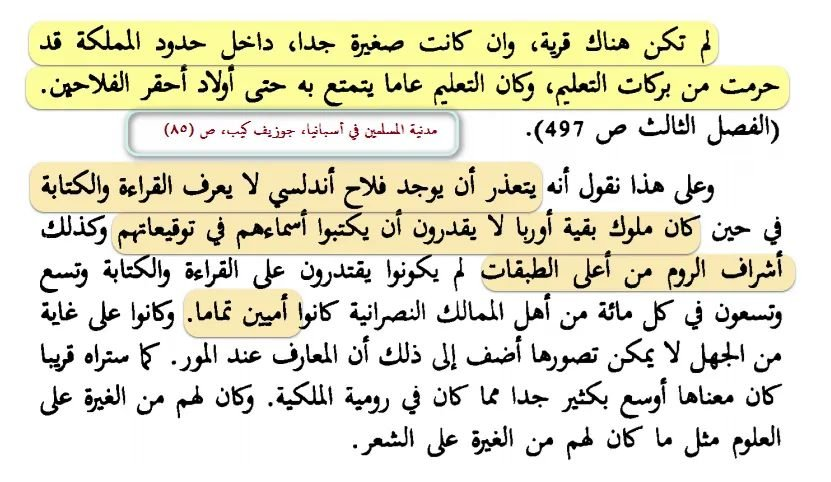
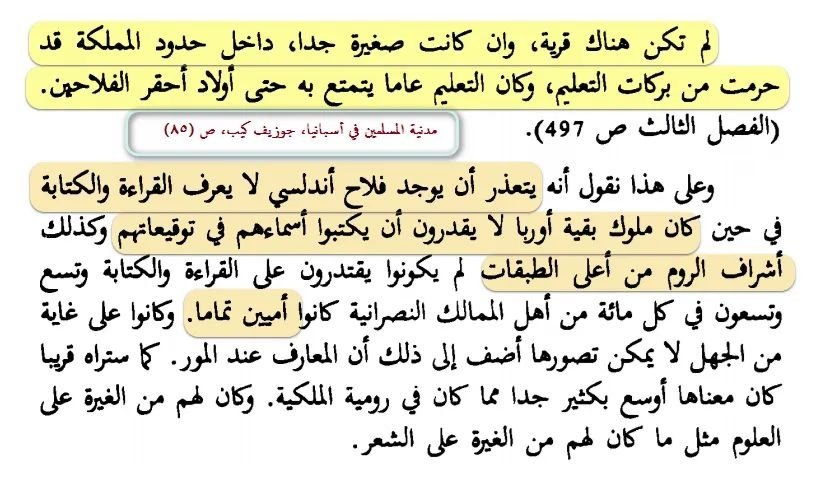
During the Arab Islamic era, all Andalusians — young and old, Muslim and non-Muslim alike — knew how to read and write, a stark contrast to the illiteracy that defined the preceding Visigothic era.

[The Civilization of Muslims in Spain, p. 85]
Lévi-Provençal — cited in The Thirteenth Tribe by Arthur Koestler, p. 68 The greatest king in all of Europe’s eras was the Umayyad king Abd al-Rahman al-Nasir — the Arab Muslim ruler of Islamic Al-Andalus.

Book scan — Historia Literaria source confirming Arab demographic composition and Iberian conversions to Islam

The eighteenth-century Spanish source above corroborates that the Arab Muslim population represented the majority in Al-Andalus throughout its Islamic era.
Book scan — Brian A. Catlos, The Victors and the Vanquished, on mass Iberian conversion to Islam

Catlos documents that the majority of the original Iberian inhabitants — the people historically called Spaniards — embraced Islam entirely during the Islamic era.
Book scan — Lévi-Provençal source via Koestler, identifying Abd al-Rahman al-Nasir as the greatest European king

This passage records Lévi-Provençal’s assessment, affirming the unmatched stature of the Umayyad Caliphate of Córdoba among all European kingdoms.
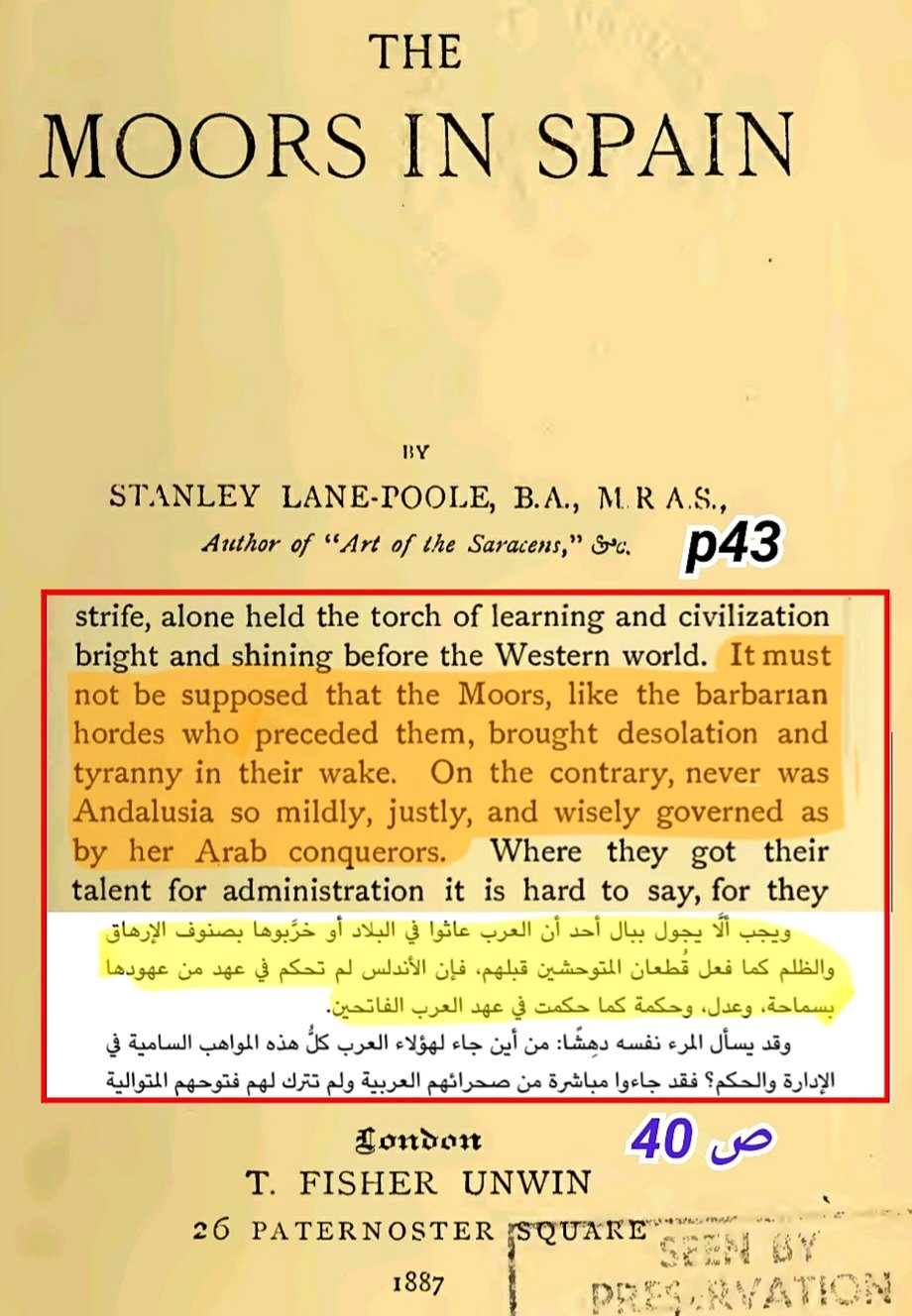
Book scan — Stanley Lane-Poole, The Moors in Spain, p. 43, London 1887, contrasting Arab governance with Visigothic tyranny

Lane-Poole’s 1887 work remains one of the most cited Western assessments of Moorish Spain, directly contrasting the justice of Arab rule against the cruelty of their predecessors.


The Question of Who “Reconquered” Al-Andalus

Those who overthrew Islamic Al-Andalus were not the original Iberian people but the Visigoths — led by Pelayo, king of Asturias — along with Gothic nobles who had retreated to the far north. The native Andalusian people had already embraced Islam. The so-called Reconquista was therefore a Gothic and later Germanic re-imposition of foreign rule over a Muslimized native population, not a liberation of indigenous Iberians.

[Pelayo, King of Asturias — Britannica]

This historical reality exposes the framing of the Reconquista as a return of “Spain to its people.” The Visigoths were the original occupiers; the Islamic era was, for the native population, the era of liberation, literacy, and prosperity.

Al-Andalus was liberated from polytheism, slavery, and injustice through the Arab Muslims — followers of the prophets — who brought with them a civilization that the West itself acknowledges as the greatest of its age.
2025 https://www.openislam.wiki/og/al-andalus-islamic-civilization-and-the-liberation-from-visigothic-tyranny.png