Authors of Gospels
https://heudis.blogspot.com/2025/01/the-gospels-are-anonymous-documents.html
{Embed}
https://heudis.blogspot.com/2025/01/the-gospels-are-anonymous-documents.html
The Gospels are anonymous documents - documented scientific references
Kufrcleaner Library 📚 - ✝catalogue - The Gospels are anonymous documents - documented scientific references [1324394024244875417].txt_Files\AEn0k_v7CgSNL5YnHI9o_wL924oh_W5SUGXa2EDjPA-da00d9d271bc9ed0
see #☦《corruption-of-bible》
In the name of Allah, the Most Gracious, the Most Merciful. Praise be to Allah, and peace and blessings be upon His chosen servants.
Christians believe that these Gospels in their hands are inspired books written by God’s holy people led by the Holy Spirit. They attribute these books to Matthew, Mark, Luke, and John. Did these people really write these Gospels, or are they unknown Gospels whose author or source we do not know? This negates their inspiration and reduces confidence in them, because we cannot trust books whose author we do not know, whether it was a believer, a righteous person, an enemy, or a friend. Are they truly inspired or fabricated? The unknown author undermines the reliability of these books. Therefore, we wrote, with God’s help, this humble research to prove that the Gospels are unknown documents through the sayings and research of specialized scholars and researchers.
We begin, with God’s blessing,
the modern interpretation - the Gospel of Matthew, where he says:
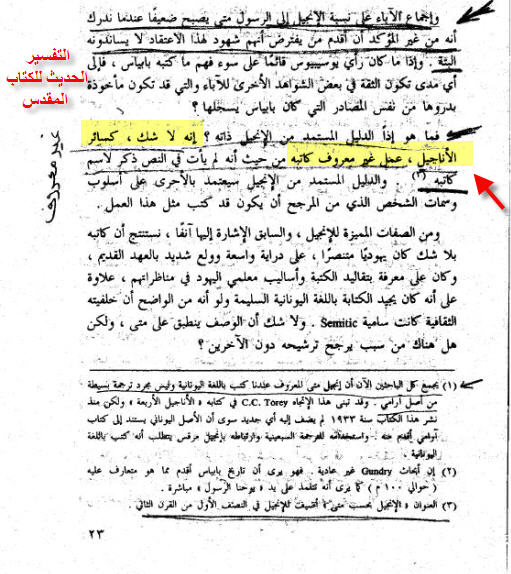
Introduction
to the New Testament - Dr. Priest Fahim Aziz, the Jesuit
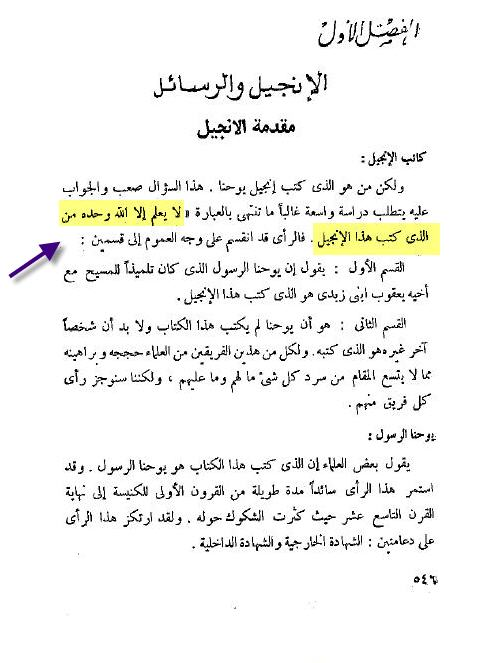
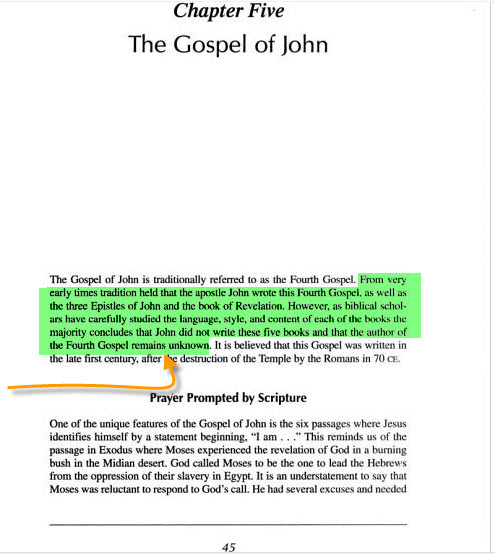
Introduction to the New Testament - Dr. Priest Fahim Aziztranslation, the book The Bible from Scratch: The New Testament for Beginners by Donald L. Griggs Translation of the above:- It was believed that John was the author of the five books (the Book of Revelation, the Epistles 1, 2, and 3 attributed to John, and the Gospel attributed to John). When scholars examined the language of these books and studied them well, they concluded that John was not the author and did not write the five books. The author of the fourth Gospel (attributed to John) remains unknown (unknown).
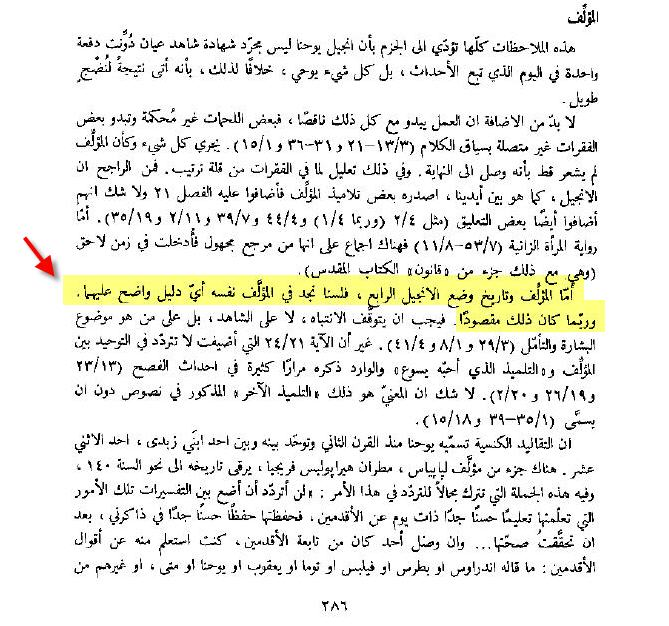
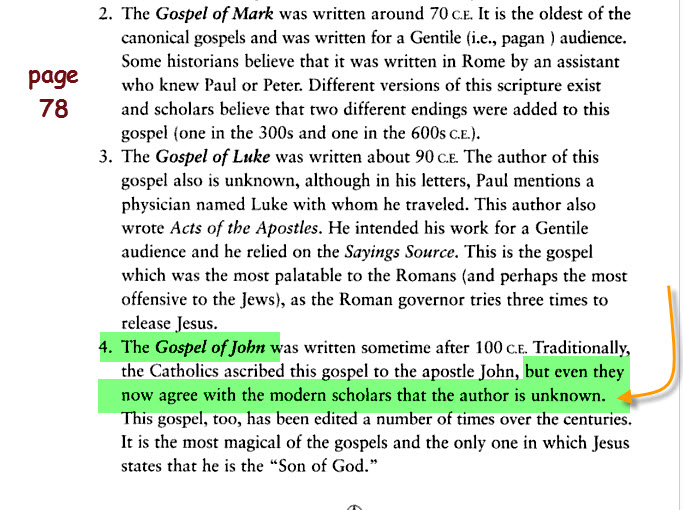
The Truth
: About the Five Primary Religions & The Seven Rules of Any Good Religion by The Oracle Institute
Sacra
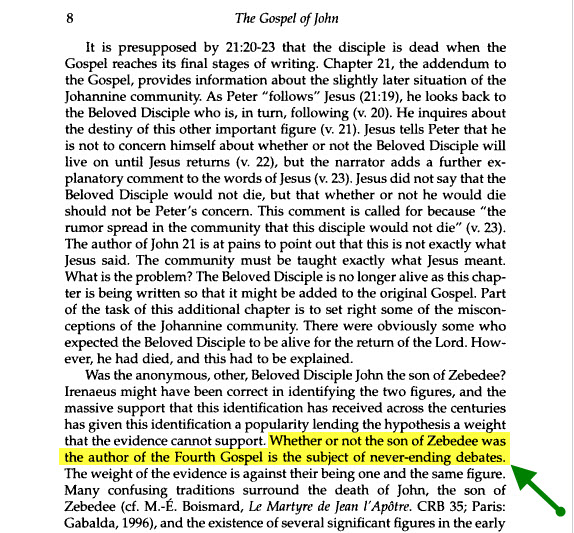
Pagina: The Gospel of John by theologian and New Testament professor Francis J. Moloney Translation : Whether or not John, son of Zebedee, wrote the Fourth Gospel is a matter of endless debate (meaning that John cannot be proven to be the author). *Special thanks to the distinguished brother eng.con in the Son of Mary Forum The prominent Christian scholar Raymond Brown says: It is most likely that neither the Gospel of Matthew nor the Gospel of John was actually written by the apostle whose name it bears—the position of virtually all major Catholic commentators today. Source: Raymond E. Brown, The Critical Meaning of the Bible: How a Modern Reading of the Bible Challenges Christians, the Church, and the Churches (Mahwah: Paulist Press, 1981), pp. 69-70. “We must candidly acknowledge that all three of the Synoptic Gospels are anonymous documents. ” Keith F. Nickle. The Synoptic Gospels (2001). Kentucky: Westminster John Knox Press. p. 43. ” All the Gospels in the New Testament are anonymous works. ” Theologian and New Testament studies professor Francis Wright Pierre says: “Second century guesses that gave the four canonical gospels the names by which we now know them ;anonymous texts — to say it again — but later authority issues among Christians forced them to identify Matthew, Mark, Luke , and John as authors of the Gospels, and, in turn, to associate these names with apostolic auhority.” Source: F.W. Beare. The Earliest Records of Jesus (1964). Oxford: Blackwell. p. 13. Professor Rick Strelan ( Lecturer in Studies in Religion at the University of Queensland, Australia) says, “The Gospels are anonymous texts — to say it again — but later authority issues among Christians forced them to identify Matthew, Mark, Luke, and John as authors of the Gospels, and, in turn, to associate these names with apostolic auhority.” Source : Strelan, R. (2007). Luke the Priest: The Authority of the Author of the Third Gospel. England: Ashgate Publishing Limited. p. 11
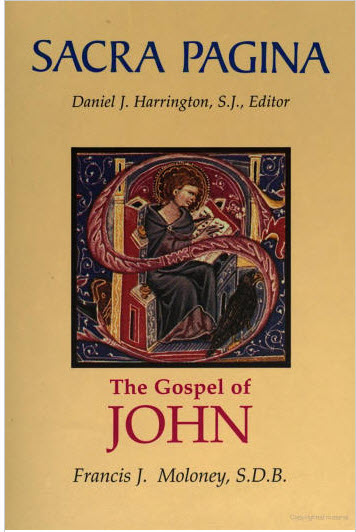
The late Jesuit priest Daniel J. Harrington, who was professor of New Testament and chairman of the department of biblical studies at Boston Theological Seminary, says,
“All four of the Gospels are anonymous, that is, they themselves do not tell us who their authors were. The Fourth Gospel indicates, as we shall see, that “the disciple Jesus loved,” who figures prominently in the second half, was responsible for this Gospel, but even he is anonymous. In the second century, the names of Matthew, Mark, Luke, and John were attached to the Gospels, and at the end of the century John was identified as the Apostle of John. It is unlikely that the Fourth Gospel as we have it was written by an Apostle, but it may embody a tradition in interpreting Jesus that originated with the Apostle, and of course we cannot
prove or disprove that it was John.” In the second century the names of Matthew, Mark, Luke, and John were attached to the Gospels, and near the end of the century John was identified as the Apostle John. It is unlikely that the Fourth Gospel as we have it was written by an apostle, but it may embody a tradition of interpreting Jesus that originated with an apostle, and of course we can neither prove nor disprove that it was John.]
Source:
Achtemeier, P.J., Harrington, D.J., Karris, R.J. et. al. (2002). Invitation to the Gospels. Mahwah, New Jersey: Paulist Press. p. 328.
Bart Ehrman, the renowned scholar of New Testament studies, textual criticism, and early Christianity, says,
“The Gospels that came to be included in the New Testament were all written anonymously; only later were they called by the names of their famous authors, Matthew, Mark, Luke, and John.
” “Only at a later time were they called by the names of their reputed authors, Matthew, Mark, Luke, and John.”
Source:
Bart D. Ehrman. Lost Christianities (2005). New York: Oxford University Press. p. 3.
Rev. Professor John F. Grady, Professor of Theology, says of the Gospel of Mark,
“The Gospel itself never states anything about its author, its origin
, or the time of composition.”
Professor John F. Grady continues in the same reference under the heading “The Anonymous Evangelists.”
The same is true of all the Gospels. Matthew does not identify himself, nor does Luke, and in the Gospel of John the author seems to identify the beloved disciple, but this cannot be equated with the Apostle John (John 21:24).
“Who wrote Mark? First, recall that nowhere does the author identify himself. The same is true for all the Gospels. Matthew does not identify himself, nor does Luke, and in the Gospel of John the author seems to identify himself with the beloved disciple, but this cannot be equated with the apostle John (Jn. 21:24).
Source:
John F. O’Grady. The Four Gospels and the Jesus Tradition (1989). New Jersey: Paulist Press. p. 67.
The eminent New Testament scholar Richard Thomas France says: “The headings ‘According to Matthew’; ‘According to Mark’ etc., are not part of the text of the Gospels… are generally believed to
have been added early in the second century. ” Source : R. T. France. The Evidence for Jesus (1986). London: Hodder and Stoughton. p. 122 Here Dr. Richard France says that these names were added in the early second century AD, but there are those who say that it was at the end of the second century AD. The first to attribute these unknown gospels to Matthew, Luke, Mark, and John was Irenaeus from the late second century AD. Professor Albert George Wells (who is one of those who say that Jesus did not exist in history ) says: ” And so we find Iranaeus (bishop of Lyons about AD 180) naming all four as they are now named, and as the first to do so.” Source : G. A. Wells. Who Was Jesus? A Critique of the New Testament Record (1989). Illinois, La Salle: Open Court. p. 1. This is confirmed by the prominent Christian scholar Raymond Brown, who says: “Let me add that the designations you find in your New Testament, such as “The Gospel according to Matthew” (note that the oldest designation is “according to “Let me add that the designations that you find in your New Testament, such as “The Gospel According to Matthew” (note that the oldest designation is “According to” and not “of”), are the result of late-second-century scholarship attempting to identify the authors of works that had no identification. Source : Raymond E. Brown, Op. Cit. p. 60. Professor Edwin Freed, Professor Emeritus of Religion and Biblical Studies at Gettysburg College, says:
Most New Testament scholars agree that the Gospels are anonymous and that the current titles were probably not added until sometime in the second century. Since the title form is the same for each Gospel, it is likely that each title was not given until after the Gospels were compiled as a set of four. Then the name of a famous person was inserted into the writing of each Gospel.But the written reading, “the Gospel according to,” is not “the Gospel” by Matthew, Mark, or Luke, so the Gospels as we have them now are anonymous.
“Most NT scholars agree that the gospels are anonymous and that the present titles were probably not added until sometime in the second century. Because the form of the title is the same for every gospel, a title was probably given to each only after the gospels had been collected as a group of four. Then the name of a well-known person was included in the superscription of each gospel. But the superscription read,“the gospel according to,” not “the gospel by” Matthew or Mark or Luke, so the gospels as we now have them are “anonymous
Source:
Edwin D. Freed. The New Testament, A Critical Introduction (2001). Wadsworth. p. 123.
Raymond Brown also says:
“The view that the evangelists were not themselves eyewitnesses of the public ministry of Jesus would be held in about 95% of contemporary critical scholarship.”
Source: Raymond E. Brown. Response to 101 Questions on the Bible (1990
) . Mahwah, New Jersey: Paulist Press. pp. 59-60 ************************************************ If these gospels are anonymous, and no one can deny that, then there is no clear evidence of their authorship, nor any clear and strong external evidence that tells us who wrote these gospels. The truth is that these books are propaganda, books composed for specific purposes, and The actions and words of Christ reflect the truth. We conclude with this very important reference that confirms what we say: The Cambridge Companion to the Bible , in which Howard Clark Kee, who was a professor of New Testament at Drew University, biblical scholar and archaeologist Eric M. Myers, and professor of biblical studies John Rogerson, Anthony J. Saldarini, professor of Judaism and Early Christianity at Boston College, participated. The reference says: The primary sources for our knowledge of Jesus are the Gospels, and they are not objective reports but rather propaganda from the source. Kee, H.C., Meyers, E.M., Rogerson, J. & Saldarini, A.J. (1997). The Cambridge Companion to the Bible. Cambridge, UK: Cambridge University Press. p. 447.