Bhagwatam Cosmology
Introduction
→The shape of the Earth has long been a subject of curiosity, speculation, and study. While modern science has established a clear, evidence-based understanding of our planet’s form, ancient religious traditions often offered their own cosmological models—models that were deeply rooted in myth, symbolism, and theological assumptions. Among these, Hinduism presents a particularly complex and imaginative cosmology, describing the Earth in ways that diverge sharply from empirical reality.
__
→Srimad-bhagavatam, the sacred scripture of the Vedic tradition, is considered the quintessence of Vedic literature. It encapsulates the highest truths of Vedic knowledge, providing profound insights into the nature of life and the universe. According to the Vedas, this vast universe spans an immeasurable expanse with a diameter of 4 billion miles. However, it is believed that this material world represents only a fraction of the spiritual realm from which we have descended. The universe itself assumes a spherical shape, accommodating diverse forms of life across its numerous realms. Srimad-bhagavatam serves as an invaluable guide in understanding these intricate cosmic realities.
__
The image below depicts a simplified representation of round universe, divided by a flat plane called Bhu-mandala, similar to a sliced water melon, with a flat circular shape.
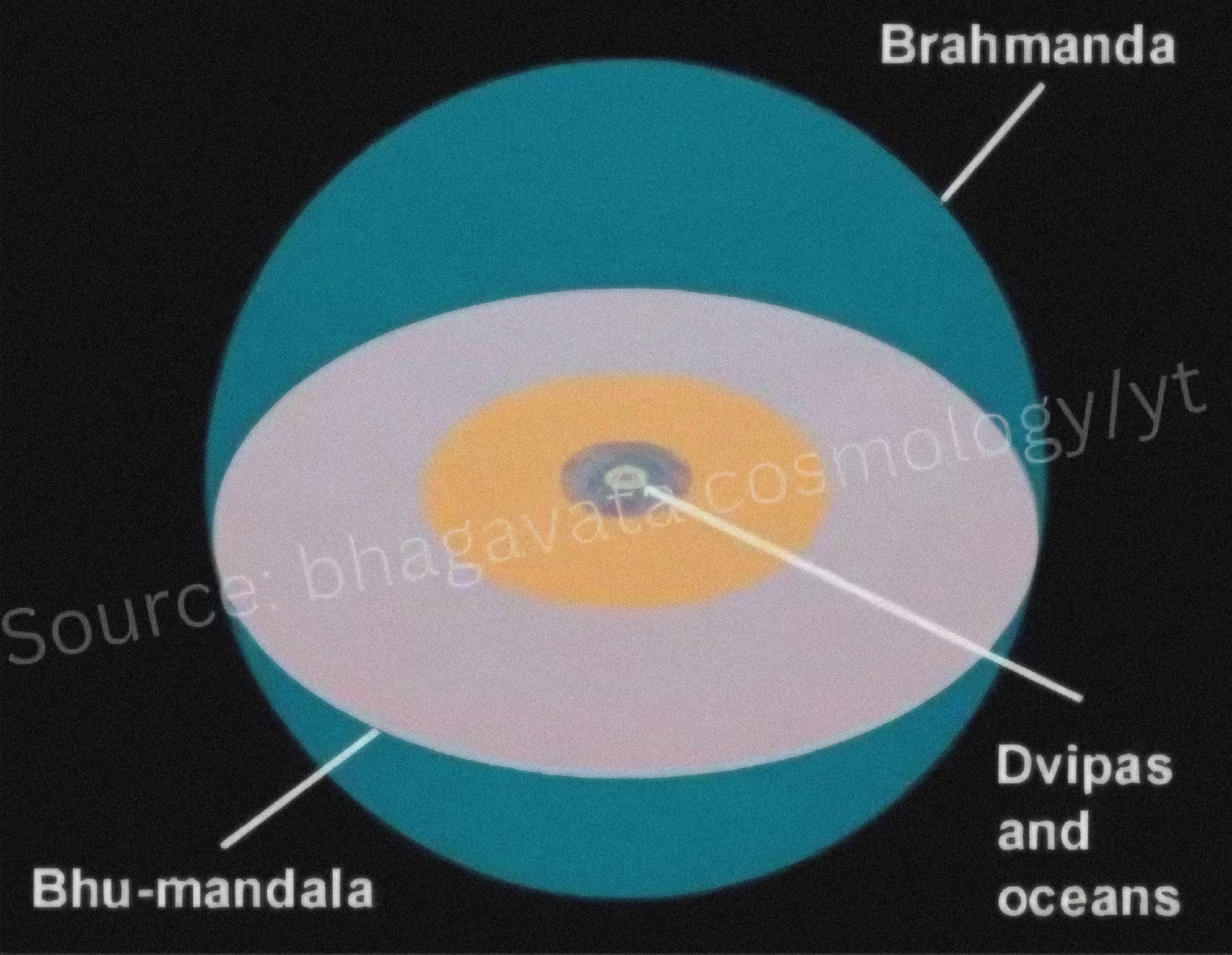
Srimad-Bhagavatam Canto 5 chapter sixteen posits Earth as a small part of Jambudvipa, the centeral island of Bhu-mandala, the cosmic sphere that spans the universe.
(Earth is part of Jambudvipa and Jambudvipa is in the center of Bhu-mandala.)
__
The circular island of Jambudvipa (800,000 miles wide) is with a great golden mountain named Meru in its center.
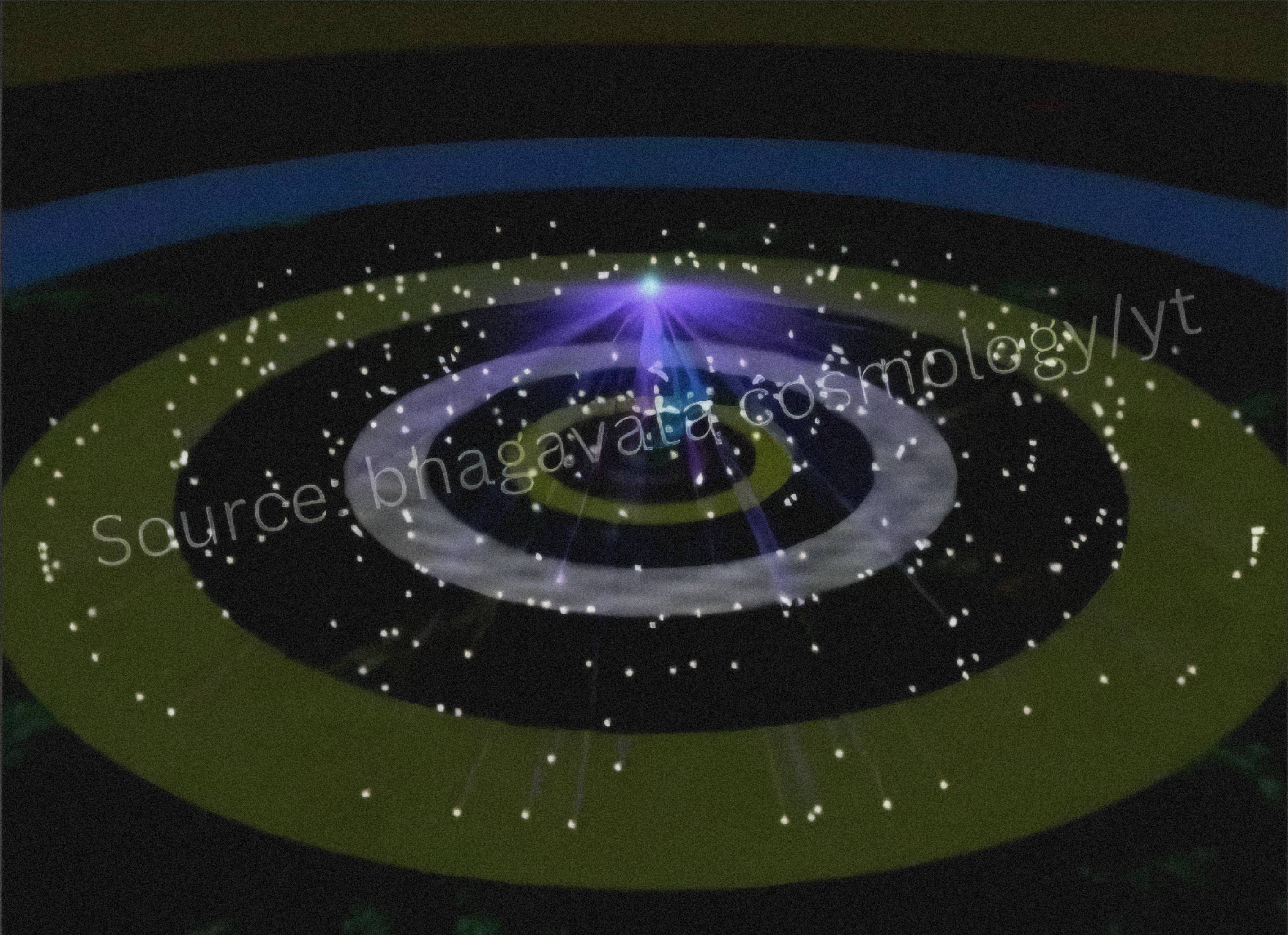
Upper image depicts rough idea of seven islands and seven oceans along the Bhu-mandala, each inhabited by human life, spanning millions of miles.
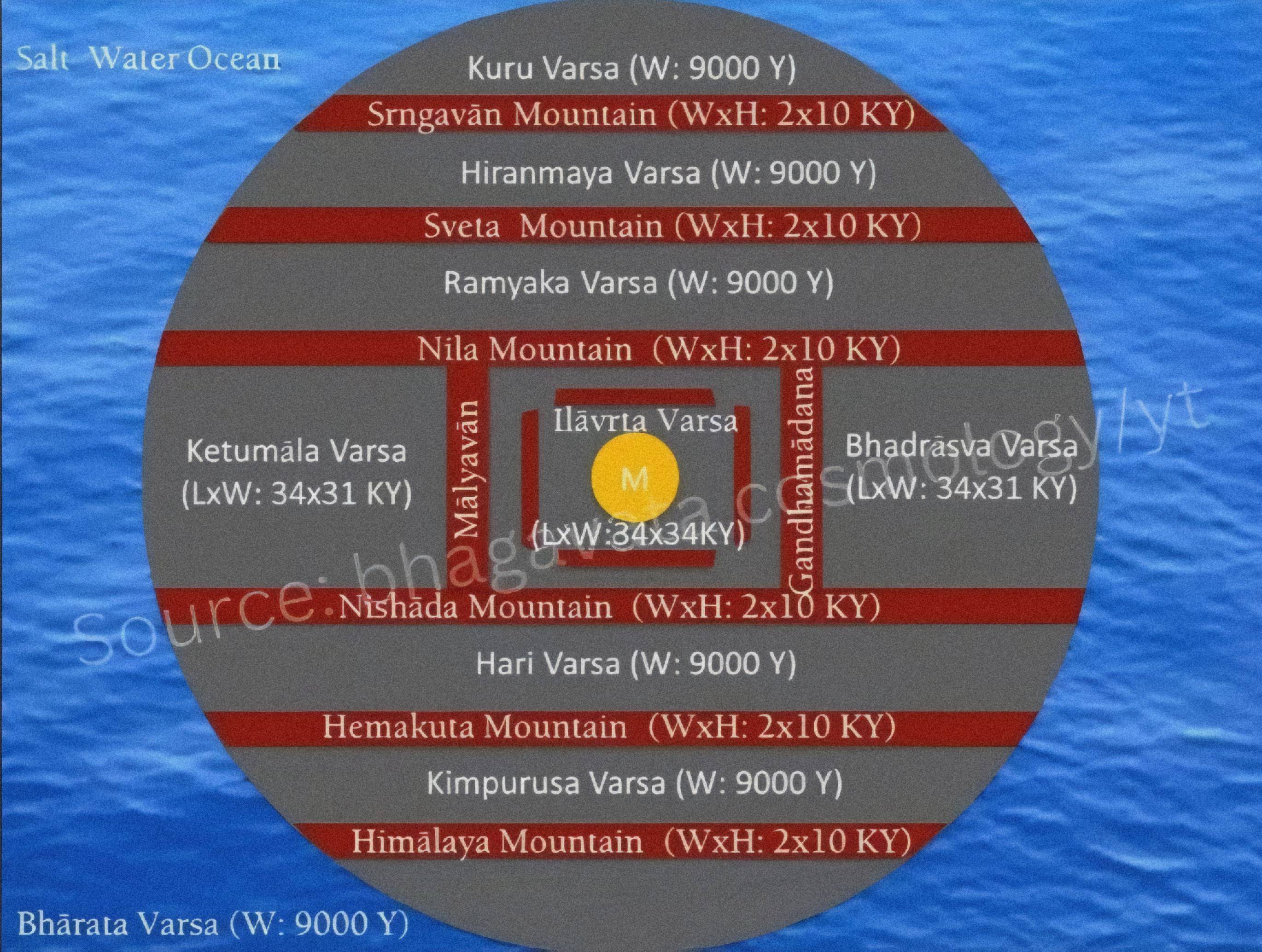
The diagram depicts an aerial view of the circular island of Jambudvipa, encompassing Bharata-varsa in the south. Bharata-varsa is the Sanskrit name for our Earth, which is part of one of the nine divisions of Jambudvipa in the Vedic universe. When interacting with other people from Jambudvipa, referring to one as Bharata-varsa signifies Earth’s location.
(So far we knew Earth is not a round globe (because it doesn’t specify about the shape of earth) rotating in space but part of the Bhu-mandala, an expanded land area. It is located in Bharata-varsa, a division of Jambudvipa, the central island. Earth is part of an 800,000 mile island inhabited by humans, one of many such islands across the universe.)
__
Previous image depicts a northward journey through Kimpurusa-varsa, Hari-varsa, and center Mount Meru in Jambudvipa, Ilavrta-varsa, with red lines representing mountain ranges dividing different varşas.
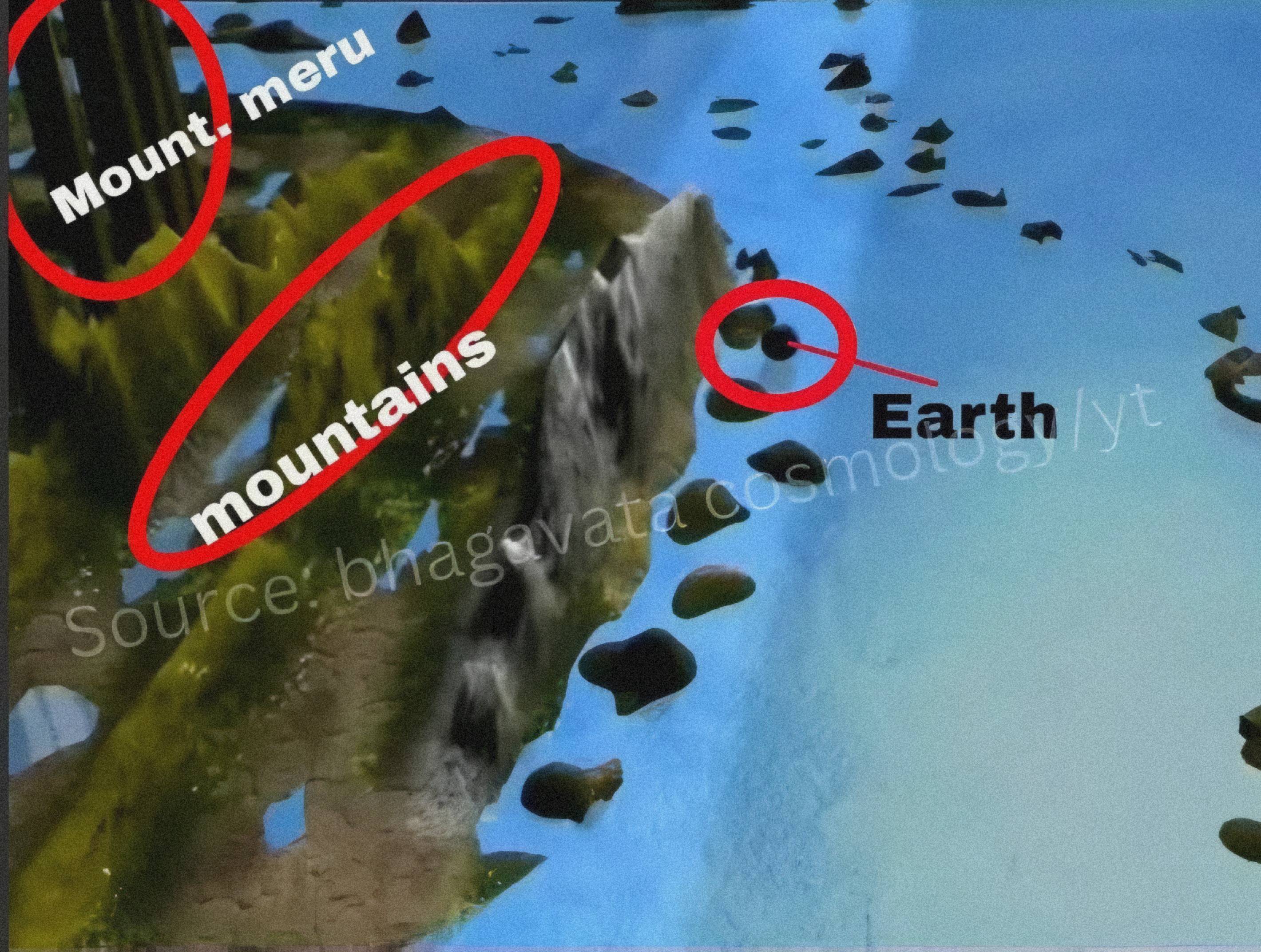
You can see earth is shown spherical in this picture and most of the modern hindu sources has shown earth as spherical but it’s inaccurate and its questionable as per scriptural description, the earth is known as a round, and Vedas do not describe it as a round sphere. Instead, the most accurate description is as the central island of Bhu-Mandala, named Jambhudvipa, a large round flat plane (like a round disc). Many other references has drawn earth more as flat than of spherical in other hindu scriptures.
If we look deeply into it then we can understand Bharata-kanda, a part of Bharata-varsa, is formed of the same topography as the rest of the original landscape then how, it suddenly becomes a perfect globe, appearing incongruous with Jambudvipa’s terrain? The image accurately depicts Jambudvipa as a normal-looking island, but then shows Earth as miraculously forming a globe. You can understand this with simple example of rising sea levels around India could cause new islands to form around unsubmerged land, but these islands would still resemble the rest of India, not resembling a perfect ball. There are also other points inside this model like flowing of river Ganga which comes from universe and flowing through four streams, to reach earth the only possible way for earth is to be flat.
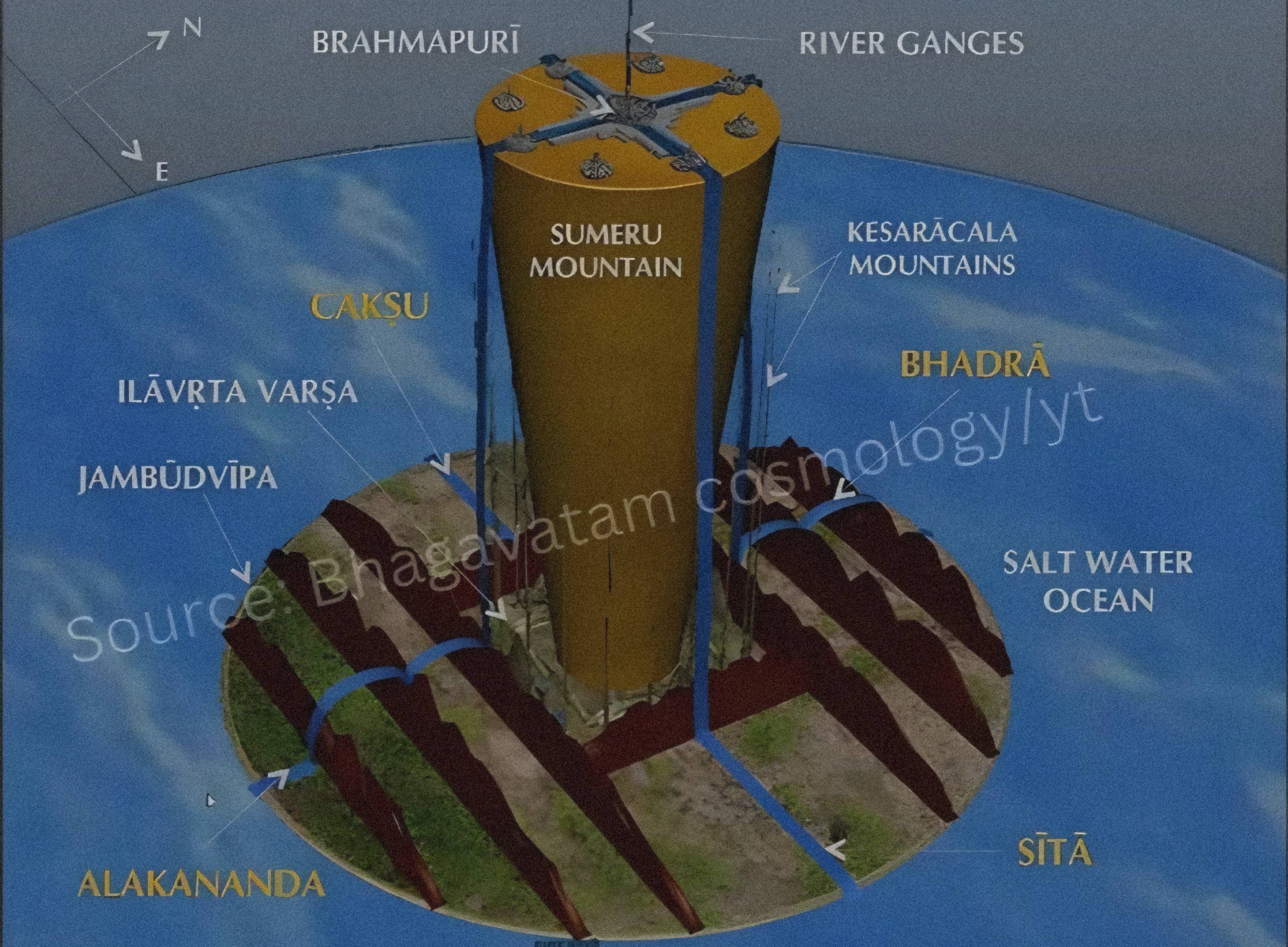
Imagine a pyramid-shaped island/planet, 8,000 high, with sloping sides, oceans, and people. Geographers would mention such an astonishing creation, requiring explanations of gravity and other factors, but we don’t find any such description, it also suffers from internal contradictions and violations of common sense.
This was the complete summary of hindu cosmological description mentioned in Shrimad bhagwatam canto 5 chapter 16th
Source:- https://archive.org/details/srimad-bhagavatam-5th-canto/mode/1up
{Embed}
https://archive.org/details/srimad-bhagavatam-5th-canto/mode/1up
Srimad Bhagavatam 5th Canto : Free Download, Borrow, and Streaming …
Srimad Bhagavatam 5th Canto