

Calf Before Thunderbolt? Resolving the Order in Surah An-Nisa
This is a claimed linguistic and grammatical error in the Quran. The response resolves the apparent discrepancy through classical Arabic grammar — specifically through the documented rhetorical functions of the conjunction ثُمَّ (thumma) as analyzed by the master grammarians. The three surahs are not in conflict; the ordering in An-Nisa is narrative and rhetorical, not chronological.
Establishing the Correct Chronological Order from Three Surahs
Before addressing the apparent problem, the actual sequence of events must be established from the Quranic text itself.
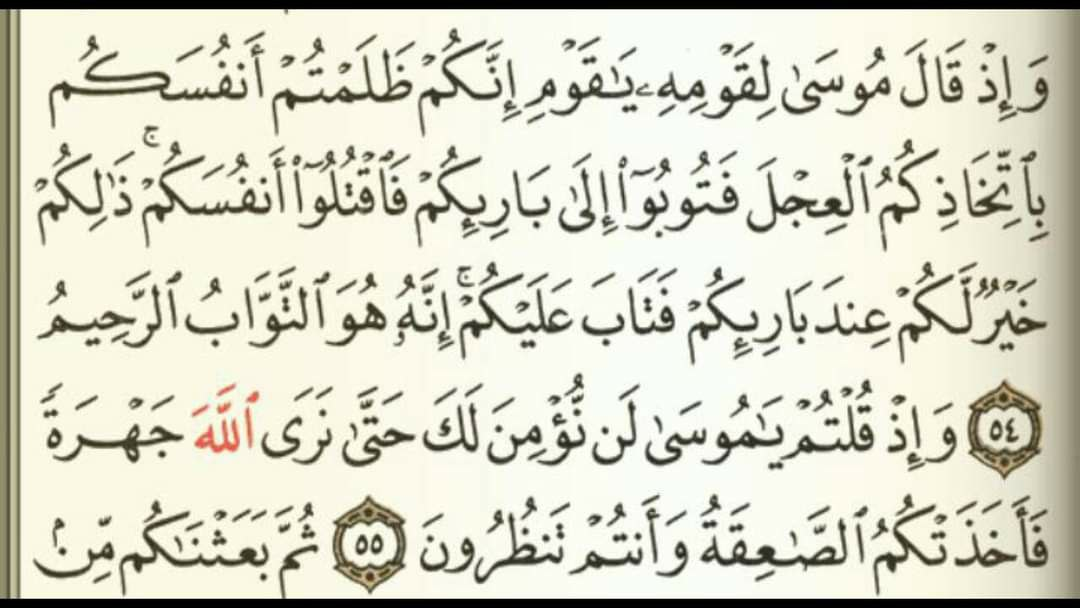
Surah Al-Baqarah 2:54–55 presents the events in this order: the Children of Israel took the calf and worshipped it, then the thunderbolt struck them. Verse 55 states God’s words to them:
And when you said, “O Moses, we will not believe you until we see God outright,” then the thunderbolt struck you while you were looking on.
The order in Al-Baqarah is therefore correct and unambiguous: the calf, then the thunderbolt.
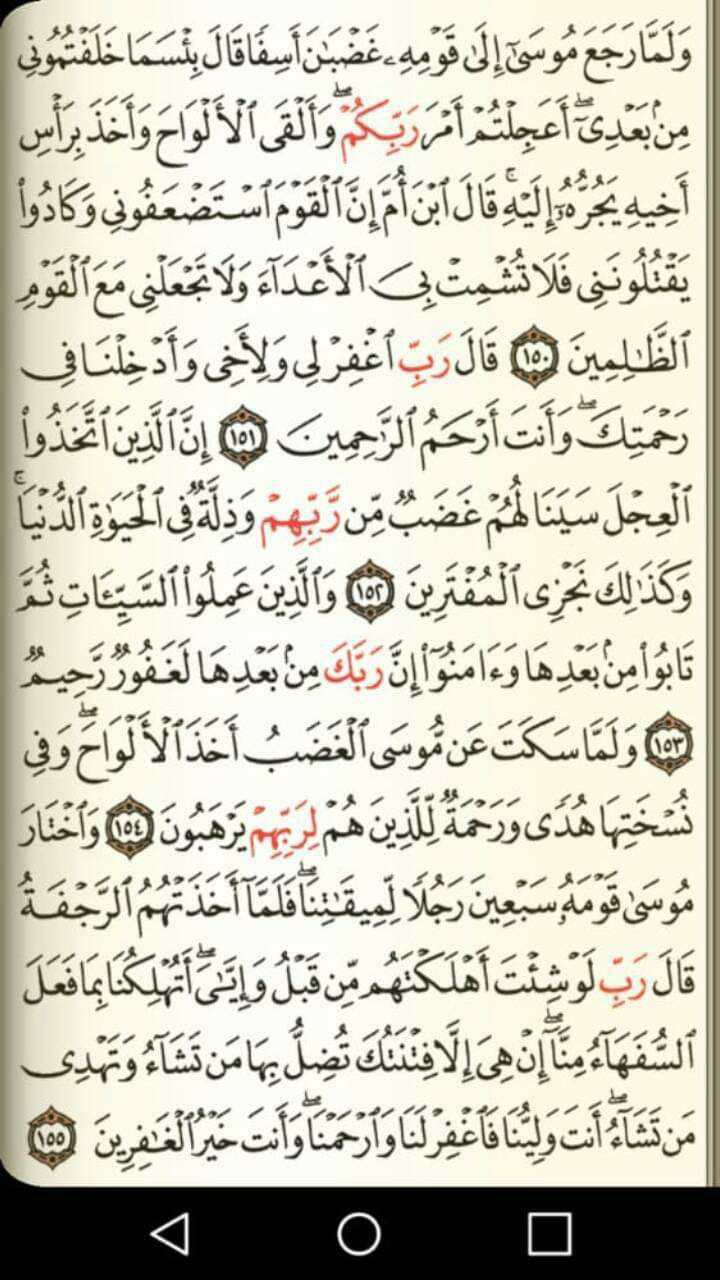
Surah Al-A’raf 7:149–155 is the most detailed account. It clearly states in sequence: they took the calf and worshipped it; Moses became angry upon learning of his people’s condition and threw down the tablets; he then chose seventy men; the earthquake struck them after they asked to see God outright. The order in Al-A’raf is also unambiguous: the calf, then the earthquake.
The problem arises exclusively in Surah An-Nisa:
The thunderbolt seized them for their wrongdoing, then they took the calf.
Read as strict chronological sequence, this verse places the thunderbolt before the calf — the reverse of what Al-Baqarah and Al-A’raf establish. The conjunction ثُمَّ (thumma) in Arabic ordinarily indicates sequence and gradual progression. This is the apparent contradiction.
The Linguistic Resolution: The Rhetorical Functions of Thumma
The resolution lies in a well-documented function of thumma in classical Arabic: it does not always indicate strict chronological order. The following three scans from primary grammatical sources establish this principle in full.
The first scan shows the source documentation for the broader grammatical discussion of thumma and the problem in An-Nisa.
The second scan shows additional source documentation on the grammatical analysis.
The third scan shows the third set of primary source documentation referenced in the refutation.
Al-Farra: Thumma as an Addendum, Not a Timeline
The first grammarian to address is Al-Farra’, one of the foremost authorities of classical Arabic grammar. The following scan shows his analysis.
-
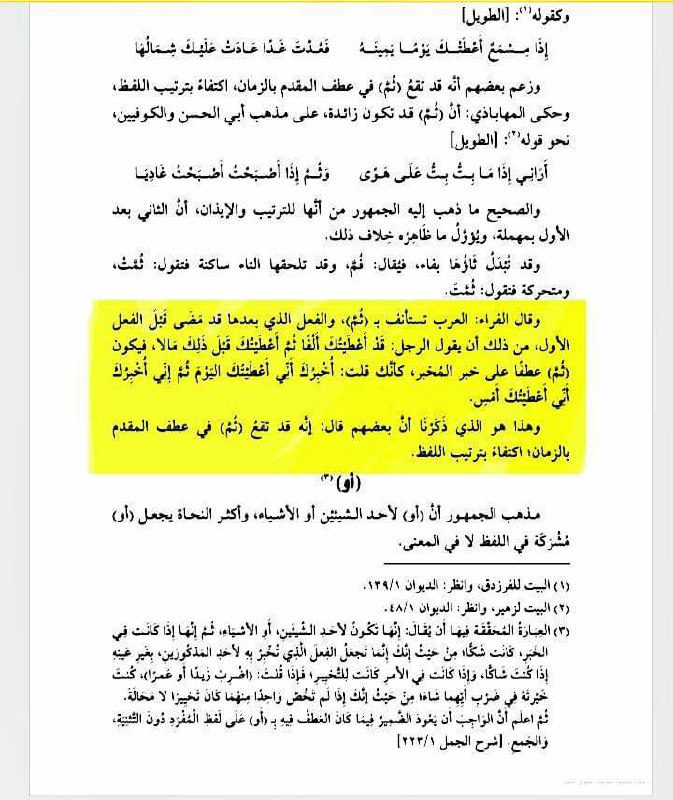
The Linguistic Phenomenon: Al-Farra’ states that the Arabs occasionally use thumma (ثُمَّ) to introduce a fresh clause, even though the actual action described by the verb following it historically took place before the action of the first verb.
-
The Sentence Example: He exemplifies this with a hypothetical statement: “I have given you today a thousand [dirhams], and then (ثُمَّ) I had given you before that a wealth.”
- The Core Meaning: Structuring a sentence this way functions as an addendum to an earlier piece of news rather than indicating a strict chronological timeline. It translates contextually to: “I am informing you today that I have given you [wealth], just as I am informing you that I had already given you wealth yesterday.”
Al-Radi: Thumma for Structural Mention (لِلتَّرْتِيبِ الذِّكْرِيِّ)
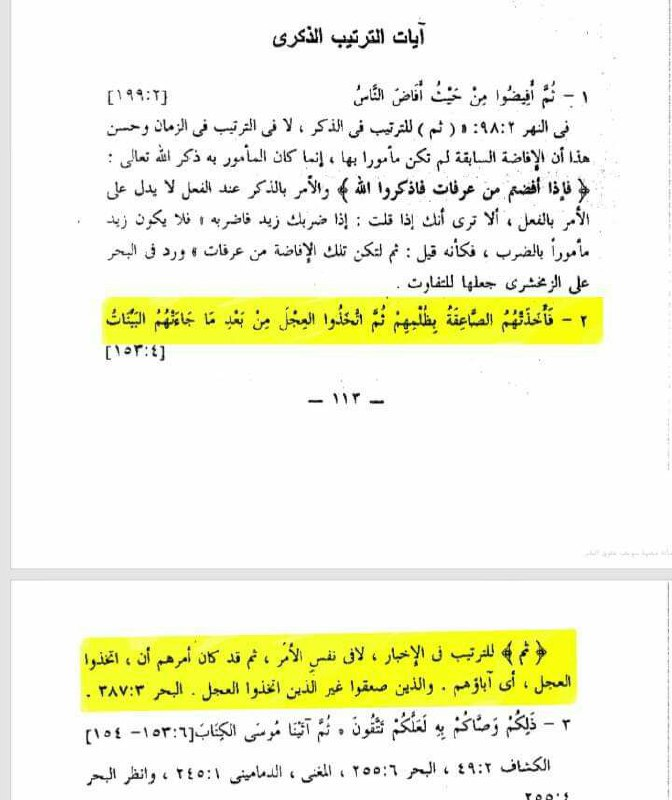
Al-Radi provides an even more comprehensive analysis, identifying thumma as functioning purely for rhetorical and narrative sequencing. The following scan shows his analysis applied directly to An-Nisa 4:153.
-
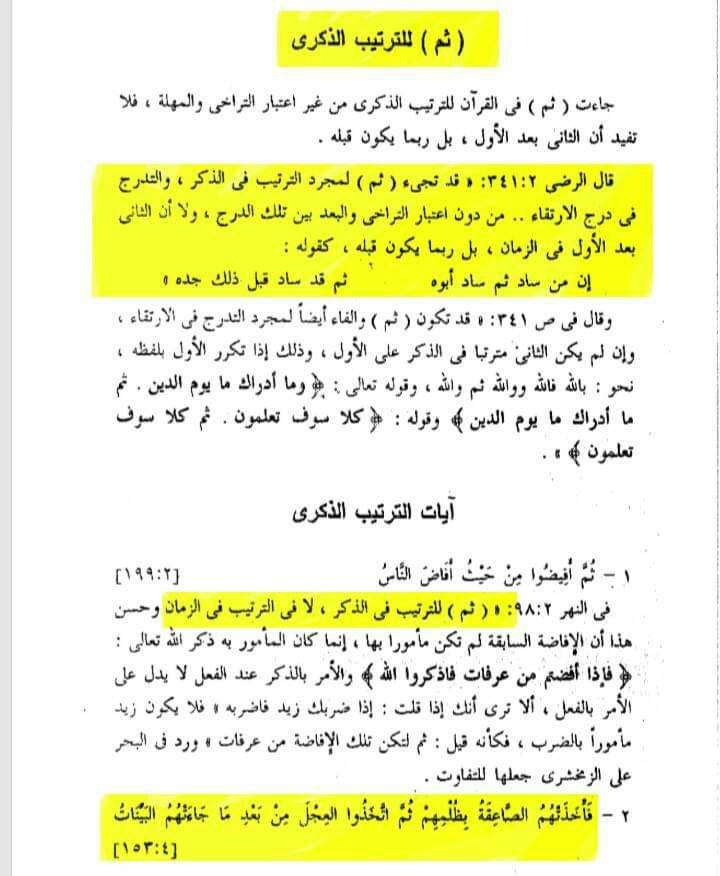
Merely for Sequential Mention (لِمُجَرَّدِ التَّرْتِيبِ فِي الذِّكْرِ): Al-Radi explains that thumma can be utilized simply to order the sequence of statements in speech, without indicating a structural time delay or implying that the second event happened after the first in reality.
-
Climbing Degrees of Importance (التَّدَرُّجُ فِي دَرَجِ الِارْتِقَاءِ): It is frequently employed to transition to a point of higher status, greater emphasis, or weightier significance.
-
Poetic Example: This is illustrated in the classical line:
“In man sāda thumma sāda abūhu… thumma qad sāda qabla dhālika jadduhu” (“From a man who led, then his father led… then his grandfather had already led before that”). Here, the ancestral leadership chronologically occurred first, but thumma is used to textually ascend the lineage for rhetorical honors.
-
Quranic Evidence (Surah An-Nisa 4:153): The second highlighted block applies this exact rule to the verse {فَأَخَذَتْهُمُ الصَّاعِقَةُ بِظُلْمِهِمْ ثُمَّ اتَّخَذُوا الْعِجْلَ} (“The thunderbolt struck them for their wrongdoing, then they took the calf for worship”). The worship of the calf actually happened before they were struck by the thunderbolt; therefore, thumma functions here solely to organize the narrative sequence and scale the gravity of their historical crimes.
Al-Radi: The Same Principle Applied to Al-Baqarah 2:29
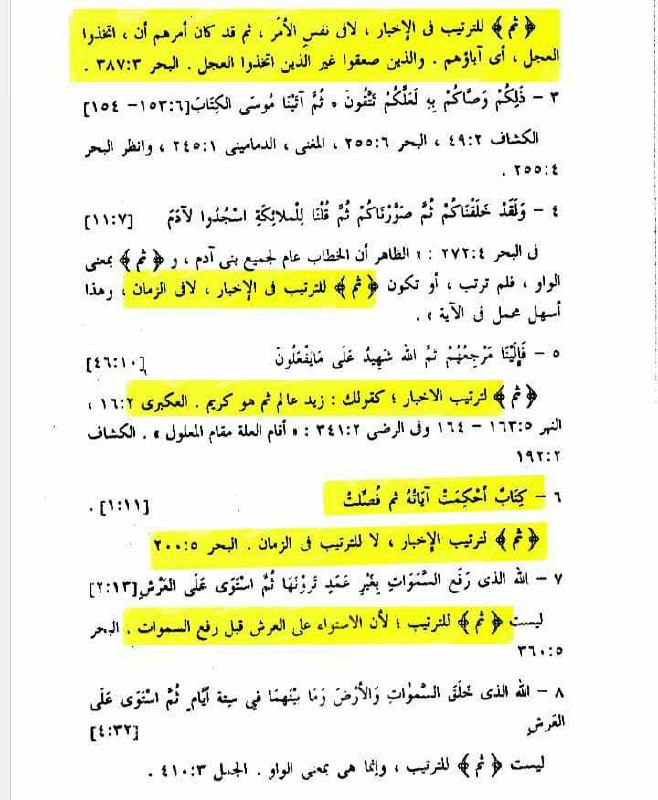
The following scan shows Al-Radi’s analysis extended to a second Quranic example — the creation verse in Surah Al-Baqarah — demonstrating that this is not an isolated usage but a recognized pattern across the Quran.
-
The Core Concept: When thumma serves this specific function, it does not imply a time delay or a chronological gap between the mentioned actions. Instead, its sole purpose is to transition between sentences or thoughts, typically shifting from an initial point to something of greater importance or higher status.
-
Application to Surah Al-Baqarah 2:29: This rule is used to explain the verse {ثُمَّ اسْتَوَىٰ إِلَى السَّمَاءِ} (“Then He directed Himself to the heaven”):
- The Chronological Reality: The creation of the heavens and the earth occurred together, or the structural design of the heavens was already established concurrently.
- The Rhetorical Function: Therefore, thumma here does not mean a period of time passed after the earth was created before the heavens were addressed. Rather, it is used strictly for narrative sequencing (لِمُجَرَّدِ التَّرْتِيبِ فِي الذِّكْرِ) — structuring the sequence of statements to elevate the description from earthly creation to the magnificent creation of the celestial heavens.
Al-Radi’s synthesis on this point is decisive:
-
Rejection of Chronological Delay: Thumma here does not indicate a physical timeline or a gap in time between the creation of the earth and the heavens.
-
The Rhetorical Sequence (الترتيب الذكري): Instead, it is used strictly to sequence the narrative. It transitions the reader’s attention from a lower or closer creation (the earth and its provisions for mankind) to a loftier, grander creation (the seven celestial heavens).
-
The Theological Purpose: This structural arrangement serves to systematically count and elevate the mention of divine favors. By detailing the earthly blessings first and then ascending to the cosmic architecture, the discourse maximizes the psychological impact of gratitude and awe required from the listener.
Conclusion
^^The apparent contradiction in An-Nisa 4:153 dissolves entirely once the rhetorical function of thumma is understood.^^ The verse does not claim the thunderbolt struck them before they worshipped the calf. Thumma in that verse performs tartib dhikri — narrative sequencing — not tartib zamani — chronological ordering. This is a recognized and documented function of the conjunction, attested in classical poetry, in other Quranic verses such as Al-Baqarah 2:29, and analyzed explicitly by Al-Farra’ and Al-Radi in the context of this very verse.
The correct sequence, established by Al-Baqarah 2:54–55 and Al-A’raf 7:149–155, is: the calf first, then the thunderbolt. Surah An-Nisa does not contradict this — it ascends narratively through the catalogue of the Children of Israel’s crimes, using thumma to heighten the rhetorical weight of each transgression. The Quran is internally consistent.
References
- Video lecture: