Dawud 2147 Wife Beating
scholars classified this Hadeeth as Dha’eef (weak) such as Shaykh Ahmad Shaakir and Shaykh Al-Albaani,
may Allaah have mercy upon them.
Shaykh Al-Albaani, may Allaah have mercy upon him, said: ”… I said: This is a weak chain of narrators
because among the narrators is Al-Musliyy (i.e. Abdurrahmaan Al-Musliyy who narrated this Hadeeth
from Al-Asha’th ibn Qays on the authority of ‘Umar ibn Al-Khattaab from the Prophet, sallallaahu ‘alayhi wa sallam).”
Ath-Thahabi said: “He is not known except by this Hadeeth, and the only one who narrated from him was
Daawood ibn ‘Abdullah Al-Awdi. The Haafidh [i.e. Ibn Hajar] said: “He is acceptable.” Note: Ath-Thahabi did not comment
on this Hadeeth in his Mukhtasar, so Shaykh Ahmad Shaakir
commented on this in his Commentary, and he said after attributing it to Musnad Ahmad, “Its chain of narrators
is weak, as the narration by Daawood ibn ‘Abdullah Al-Awdi is weak, so the fact that Al-Munthiri kept quiet about it
(without criticizing it) is negligence on his part.
And I (Al-Albaani) say: “Daawood ibn ‘Abdullah Al-Awdi is a trustworthy narrator and I think that
Shaykh Ahmad Shaakir mistakenly thought that he was Daawood ibn Yazeed Al-Awdi, uncle of ‘Abdullaah ibn Idrees,
who is a weak narrator, and he was not the one who narrated this Hadeeth,
from Al-Asha’th ibn Qays on the authority of ‘Umar ibn Al-Khattaab from the Prophet, sallallaahu ‘alayhi wa sallam).”
Ath-Thahabi said: “He is not known except by this Hadeeth, and the only one who narrated from him was
Daawood ibn ‘Abdullah Al-Awdi. The Haafidh [i.e. Ibn Hajar] said: “He is acceptable.” Note: Ath-Thahabi did not comment
on this Hadeeth in his Mukhtasar, so Shaykh Ahmad Shaakir
commented on this in his Commentary, and he said after attributing it to Musnad Ahmad, “Its chain of narrators
is weak, as the narration by Daawood ibn ‘Abdullah Al-Awdi is weak, so the fact that Al-Munthiri kept quiet about it
(without criticizing it) is negligence on his part.
And I (Al-Albaani) say:
Daawood ibn ‘Abdullah Al-Awdi is a trustworthy narrator and I think that
Shaykh Ahmad Shaakir mistakenly thought that he was Daawood ibn Yazeed Al-Awdi, uncle of ‘Abdullaah ibn Idrees,
who is a weak narrator, and he was not the one who narrated this Hadeeth, even though Shaykh Ahmad understood
it to be narrated by him in his commentary on Al-Musnad.” [Irwaa’ al-Ghaleel fi Takhreej Ahadeeth Manaar as-Sabeel (7/99)]
As regards to sunan ibn majah 1986 Here is Dr. G.F. Haddad’s discussion on this hadith:
Beware of irreligious publishers who (i) mistranslate and (ii) lie about the status of hadiths without second thought.
First, the Arabic wording clearly states “Diftu ‘Umara” which means “I hosted ‘Umar (at MY home).”
Second, the hadith is not hasan but very weak as stated by the Hanbali hadith master al-Maqrizī in
his Mukhtasar Kitab al-Witr (p. 50) and others because it comes only through ‘Abd al-Rahmān Muslī who not only is
“not known” as stated by al-Dhahabī in al-Mughnī fīl-Du’afā’, but is not known to narrate anything else whatsoever
in all of hadith literature! This makes him “of complete unknown reliability” (majhūl) as per the criterion of
Ibn Hajar in Taqrīb al-Tahdhīb that one from whom only one person narrated, without
declaration of his being trustworthy, is called majhūl.
Furthermore, the fact that Ibn Hajar actually graded ‘Abd al-Rahmān Muslī as “passable” (maqbūl)
is a mistake as pointed out by al-Arna’ūt and Ma’rūf in their Tahrīr Taqrīb al-Tahdhīb since the definition of
maqbūl is, “Whoever narrated very few hadiths which contain nothing on the basis of which they should be discarded:
if he is corroborated [by other narrations] then he is called maqbūl.” Even if we retained the latter rank for Muslī,
it is not enough to raise his narration to the rank of “fair” because maqbūl means his narration can serve to mutually strengthen another, other-chained
but similarly weak narration with an identical or similar content which may then result in the grading of hasan –
and there is no such narration.
This particular narration is narrated by Abū Dāwūd, Ibn Mājah, and Ahmad (Arna’ūt ed. 1:275 §122
“isnād da’īf” = Shākir ed. 1:219 §122 “isnād da’īf”), all of them through ‘Abd al-Rahmān Muslī.
Finally, the sense of the words “A man is not to be asked why he beat his wife” does not mean that
he is considered free to do so — because he is not, since the Prophet (s) explicitly prohibited wife-beating —
but rather that one should not be pressed to disclose anything blameful about one’s wife.
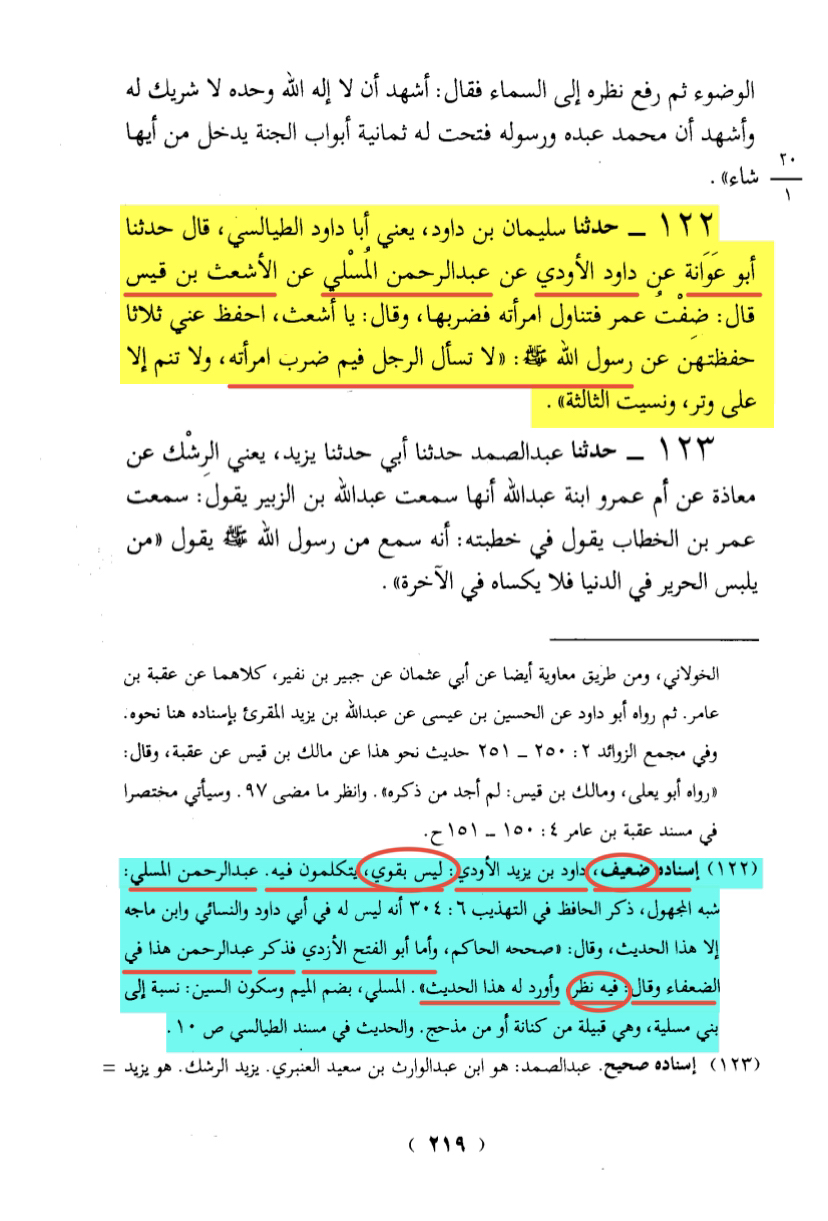
Ahmed Shakir weakens the sanad and says that dawod b. yazid al-awdi is not strong he says also that Abd al rahman al musli is majhol etc
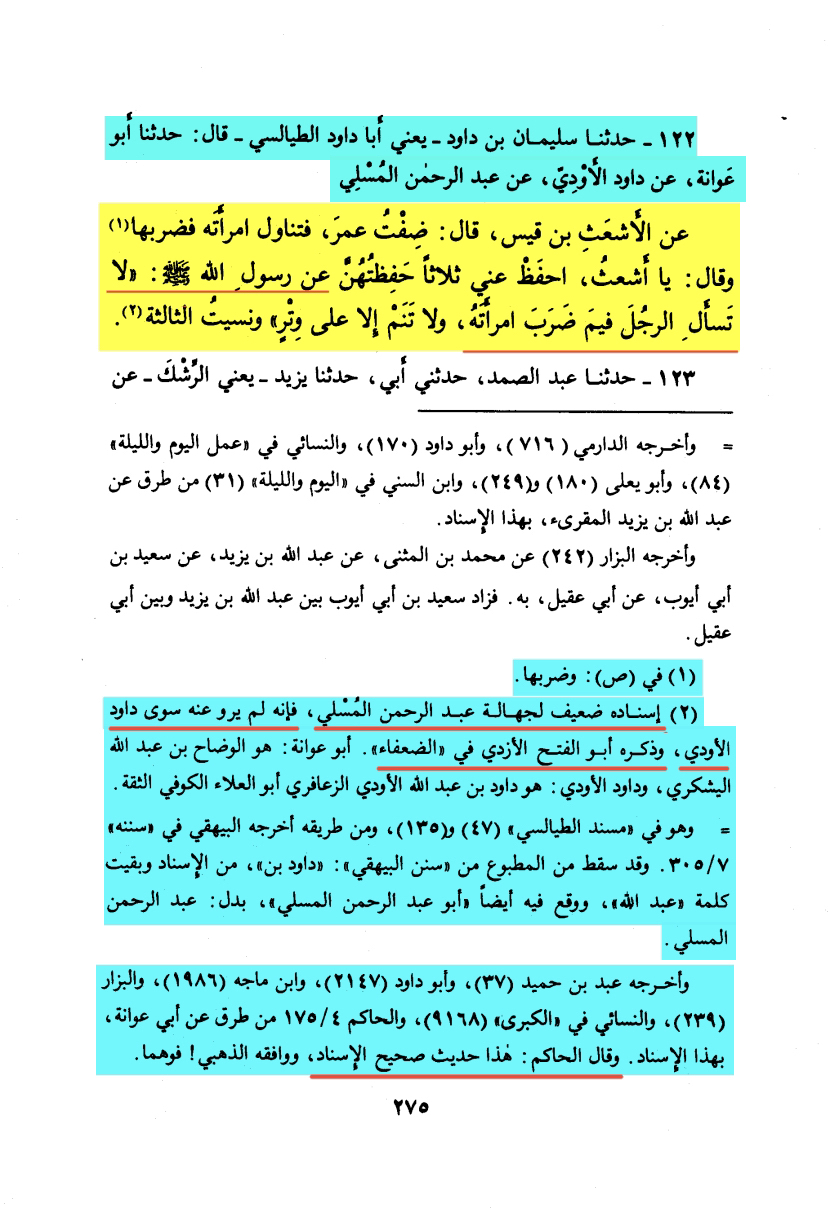
shu’ayb al-arnoouut weakens the sanad bcz of Abd al rahman al-musli and that no one narrated from him except
dawud al awdi who was mentioned in the Du’afa of abul fath al-azdi
and although al-Hakim said sahih
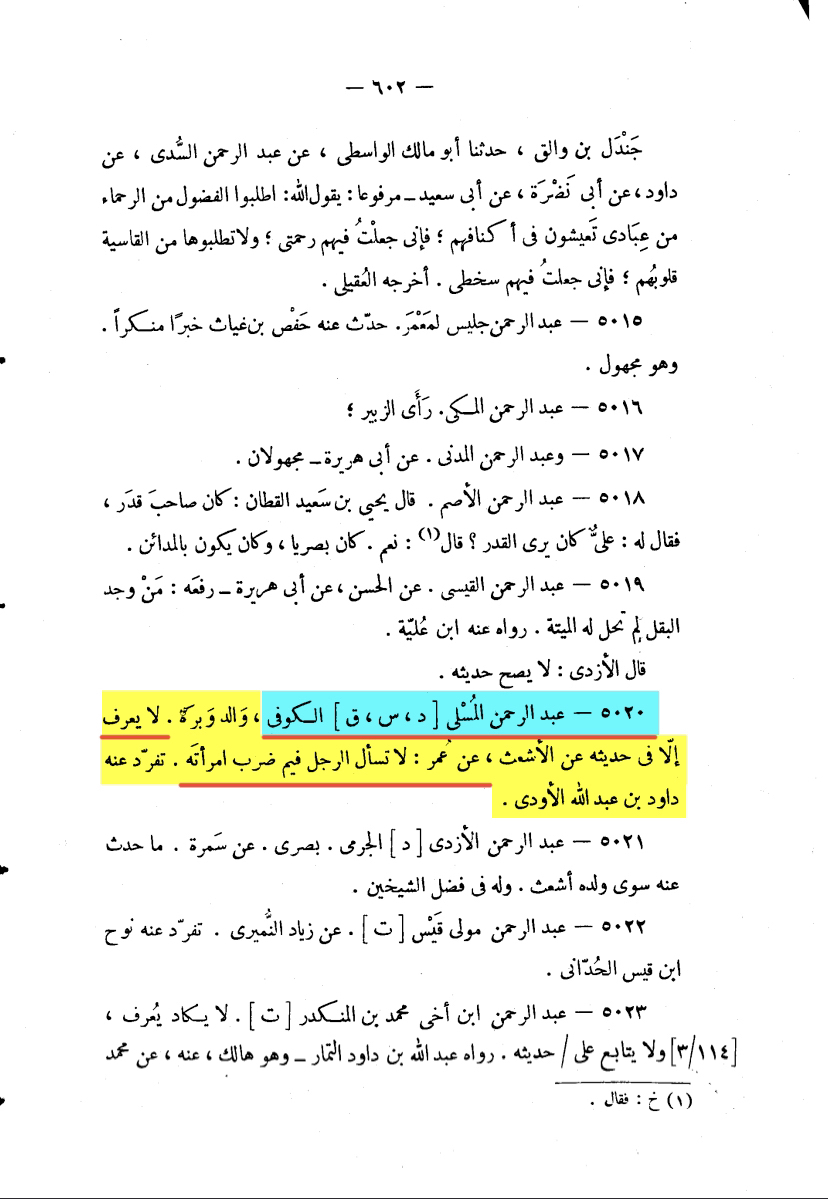
Interesting Al-Dhahabi mentions Abd al rahman al-musli’s name and then quotes the hadith probably the
only hadith he narrated
Mizan Al-itidal volume 2 page 602 person number 5020
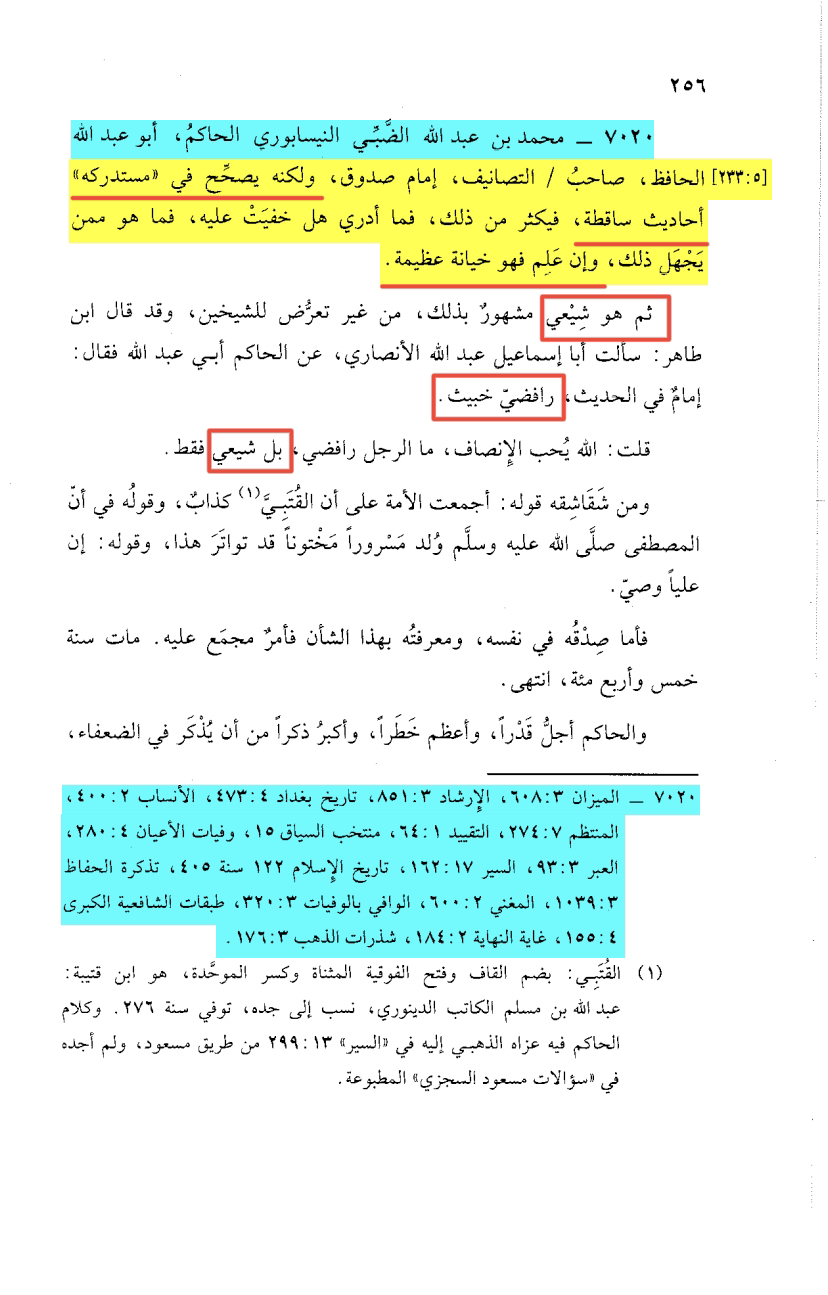
Here Ibn Hajar mentions Al-Hakim and then goes on to say he authenticated narrations in his mustadrak
which are rejected (that’s where he authenticated that narration) and then at the end he says if
he’s aware of this then it is a great treachery
Lisan Al-Mizan volume 7 page 256 person number 7020
And in the red boxes you’ll see some very interesting stuff🤔
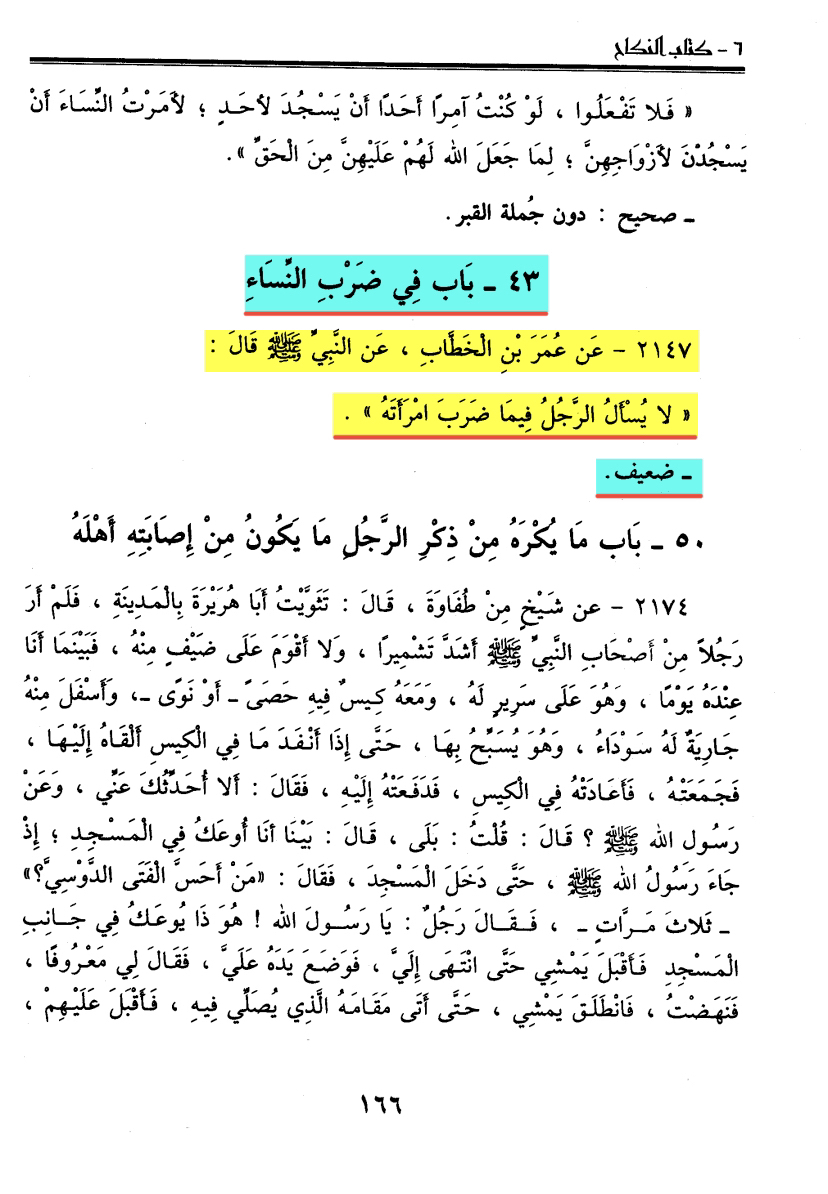
Here in Da’if Sunan Abi dawud page 166 hadith number 2147
Al-Albani weakens
This narration
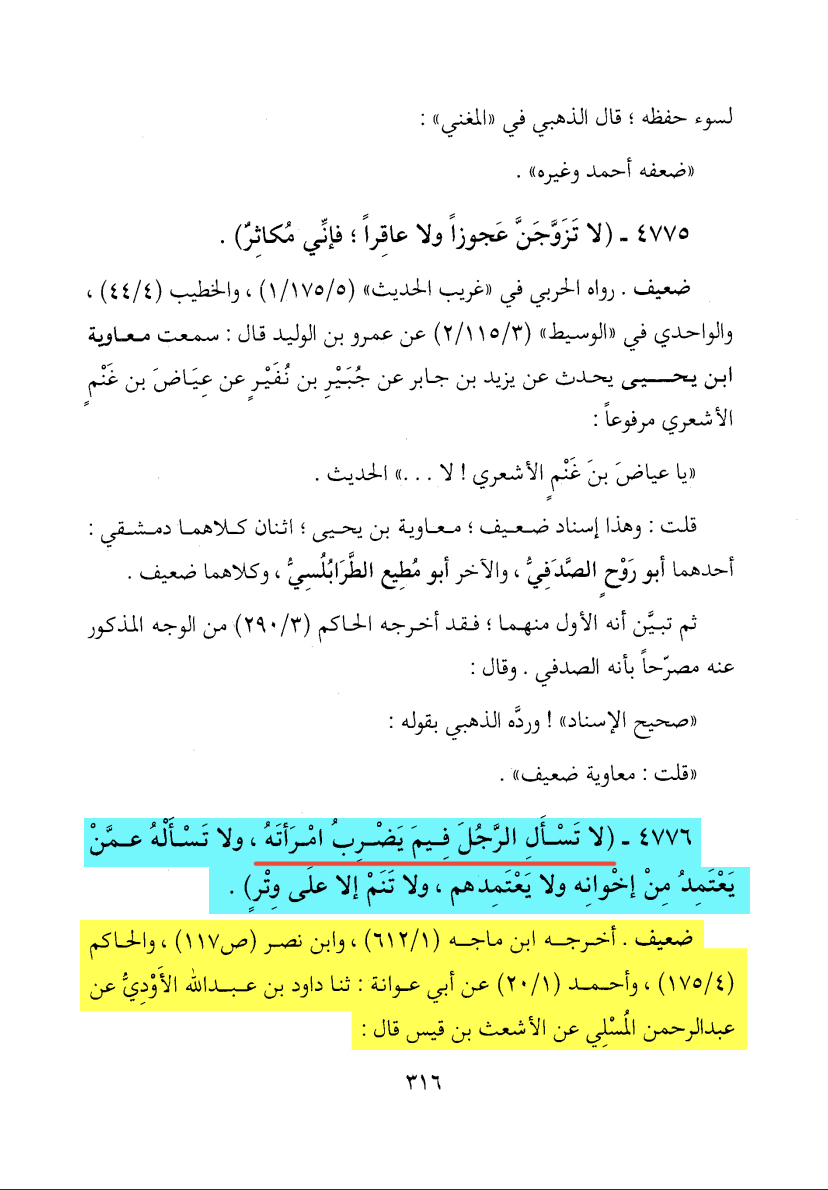
Weakens the same version of it in his Daif Sunan Ibn majah page 151 number 385
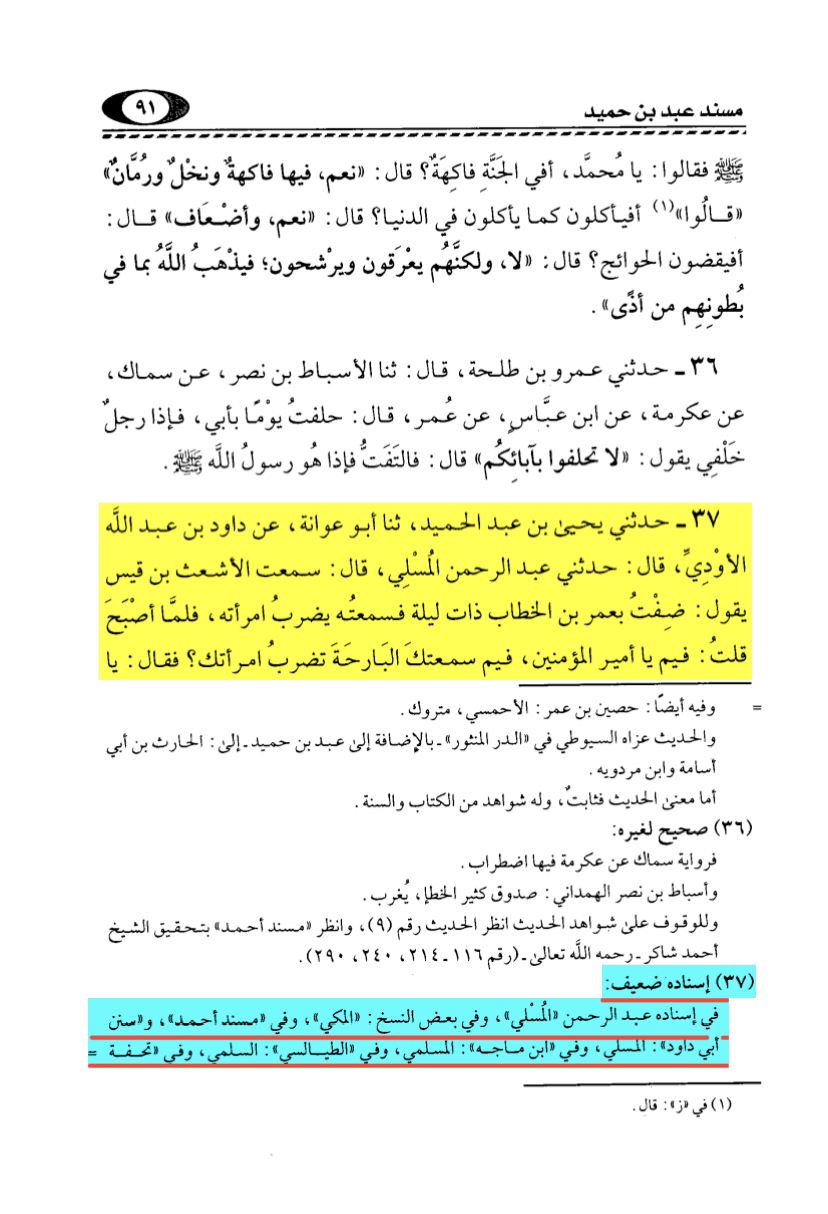
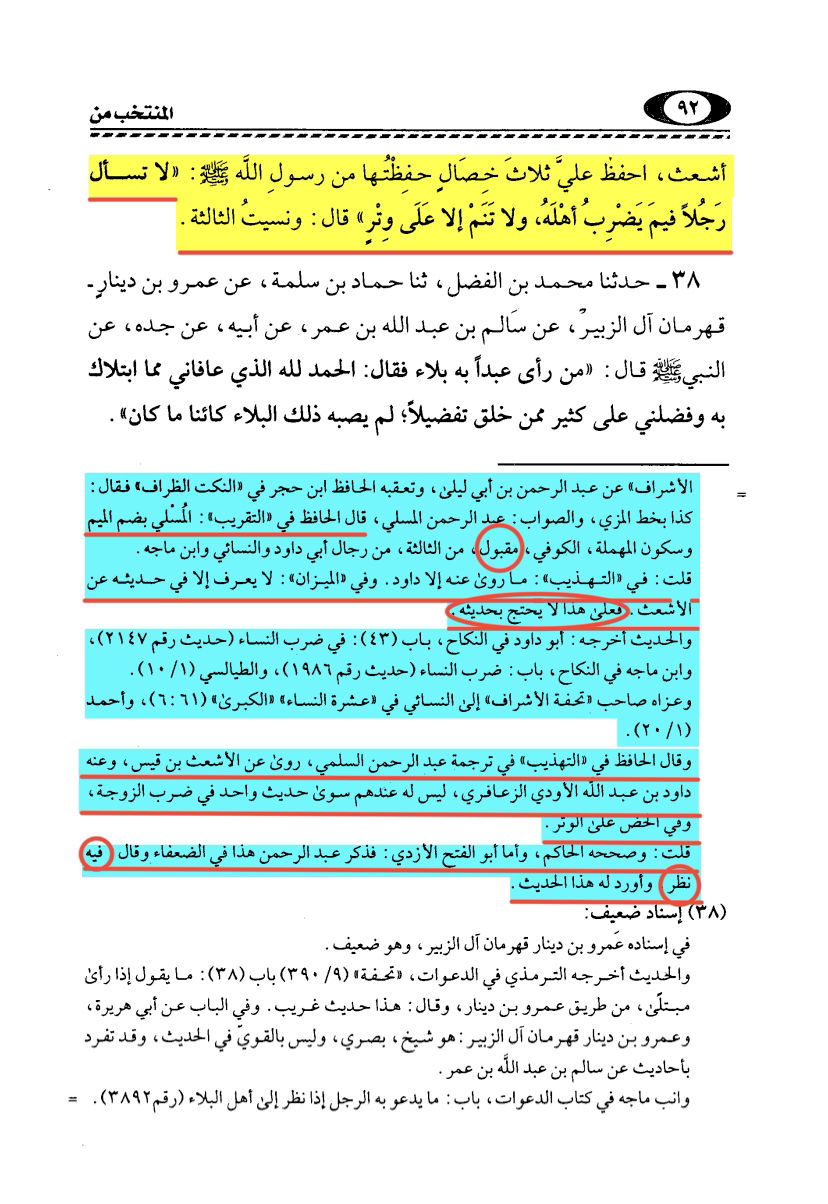
Here in Musnad ‘Abd Bin humayd this narration is also weakened by the muhaqiq (Abu abdallah mustafa Bin Al-‘adawi)
next page