Did Abdullah Bin Masoud Deny the Two Mu'awwidhat
Without knowledge, research, or thought, they said that our master Abdullah bin Masoud said that the two Mu’awwidhat are not from the Quran and that he ruled them from his copy of the Mushaf. We will begin, God willing, to respond to them, and God is behind the intention
First, We Must Know Some of the Important Rules and Things to Respond to This Slander
1The Quran was transmitted to us by continuous transmission, and the absence of a contradiction is not one of the conditions of continuous transmission.
2It is not among the conditions of the Quran that Abdullah bin Masoud agree with it, because if he denied the Quran in its entirety, this does not detract from its mutawatir (despite the weakness of the narration, but this is a rule).
3The two Mu’awwidhat are proven to be from the Holy Quran in Sahih Muslim No. 814 and Sahih Ibn Hibban No. 1842.
We will begin, with the help of Allah, in narrating what they use as evidence for their statement, and we will begin with the response.
1 - 21790Abdullah narrated to us, my father narrated to us, Sufyan bin Uyaynah narrated to us, on the authority of Abdah and Asim, on the authority of Zirr, who said: I said to Ubayy, “Your brother scratches them out from the Mushaf,” and he did not deny it. It was said to Sufyan ibn Masud. He said, “Yes, and they are not in Ibn Masud’s Mushaf. He used to see the Messenger of Allah, may Allah bless him and grant him peace, seeking refuge with them for al-Hasan and al-Husayn, but he did not hear him recite them in any of his prayers. So he thought that they were two incantations of refuge, and he insisted on his assumption. The rest were certain that they were part of the Qur’an, so they entrusted them to him.” Masterpiece 19, Mu’tala 19, Majma’ 7/149 (Musnad of Imam Ahmad).
We see from the hadith that Ibn Masud did not hear the Messenger of Allah (may Allah bless him and grant him peace) recite them in prayer, and therefore he did not write them in his copy of the Qur’an. He thought that they were two incantations that he used to seek refuge with for al-Hasan and al-Husayn, meaning that he heard them from the Prophet (may Allah bless him and grant him peace) and he did not deny that they were revelation. (Nor does he speak from [his own] inclination) Surah An-Najm, verse 3. Abu Said al-Khudri
transmitted their recitation from the Prophet (may Allah bless him and grant him peace ) in his saying : ( The Messenger of Allah ( may Allah bless him and grant him peace) used to seek refuge from the evil eye of the jinn and the evil eye of mankind , and when the two incantations were revealed , he took them and left everything else (1).
2What al-Tabari included in his book al-Mujam al-Kabir from the saying of Ibn Masud (Do not mix with the Qur’an what is not in it, for they are two incantations that the Prophet (may Allah bless him and grant him peace) used to seek refuge with: Say, “I seek refuge with the Lord of the daybreak” and Say, “I seek refuge with the Lord of mankind.”) Their chain of transmission goes back to their chains of
transmission on the authority of Abu Ishaq `Amr ibn Abdullah Al-Hamdani on the authority of Abdul Rahman bin Yazid.)
And let us look at what was said about Abu Ishaq in the hadith
. Abu Ishaq, despite the scholars’ documentation of him, Ibn Hibban said about him:Mudallis: The narration of a mudallis is not accepted unless he explicitly states that he narrated it (i.e. he said he narrated to me ). His narration is rejected if it is in the form of ‘annah as in the narration from ‘Abd al-Rahman (2).
’ Abd al-Rahman ibn Mahdisaid:nothing wrong with him. Abu Hatim said:He is truthful,[p.27]he is not to be relied upon. Al-Nasa’i said:nothing wrong with him. Yahya al-Qattan said :He was careless. Ahmad said:His narration is confused. Salim ibn Qutaybah said:I came from Kufa and Shu’bah said to me:Who did you meet? I said: I met Yunus ibn Abi Ishaq.He said: What told you? So I told him, and he was silent for a while, and I said to him: He said: Bakr ibn Ma’iz narrated to us.
He said: Why did he not say to you: Ibn Mas’ud narrated to us?!
Ibn al-Madini said:I heard Yahya mention Yunus ibn Abi Ishaq and said: He was careless, which was his nature. He used to say: My father told me, I heard Adi ibn Hatim: ” Protect yourselves from the Fire, even with half a date .” Then he said: And this is Sufyan and Shu’bah saying: On the authority of Abi Ishaq, on the authority of Abdullah ibn Muqal, on the authority of Adi ibn Hatim.
I said: His two sons are more reliable than him, and his hadith is good (3).
It is also not strengthened by al-Tabari’s narration of it through Abu al-Jahm al-Hanafi because he narrates on the authority ofHassanibnIbrahimal-Karmani, and Ibn Hibban said about him that he has strange things, and some have authenticated him and others have weakened him, such as al-‘Aqili, who said about his hadith that he was mistaken, and Abu Zur’ah said that he is good, and al-Nasa’i said that he is not strong (4).
The weakness of the chain of transmission of this narration becomes clear to us, and it is not acceptable to take it into account
. We must also note that no one from the companions has reached us to deny this on the authority of Abdullah ibn Mas’ud, and they denied that he objected to him not participating in writing the Mushaf.
What invalidates all of these weak narrations is that the reading reported on the authority of Asim bin Abi Al-Najoud Al-Kufi on the authority of Zur bin Habish Al-Asadi and the readings of Zur on the authority of Abdullah bin Masoud and the readings of Ibn Masoud on the Messenger of God, may God bless him and grant him peace (5). It is well known that the recitation of the Holy Qur’an is transmitted repeatedly, and it was not reported that the two Mu’awwidhat were not recited on Abdullah bin Masoud, which confirms to us the weakness of these narrations.
Most of the ideas I mentioned here were inspired by the book Tanzih al-Qur’an ‘an Da’wat al-Mubtaleen by Dr. Munqidh al-Saqqar. May Allah forgive him, his parents, and all Muslims, because the book is easy to present.
I ask Allah to make this work purely for the sake of His Noble Face
(1)Narratedbyal-TirmidhiHadith(2058),al-Nasa’i,Hadith(5494),and IbnMajah,Hadith(3511). Source: Tanzih al-Qur’an ‘an Da’wat al-Mubtaleen by Dr. Munqidh al-Saqqar
(2),p. 106.
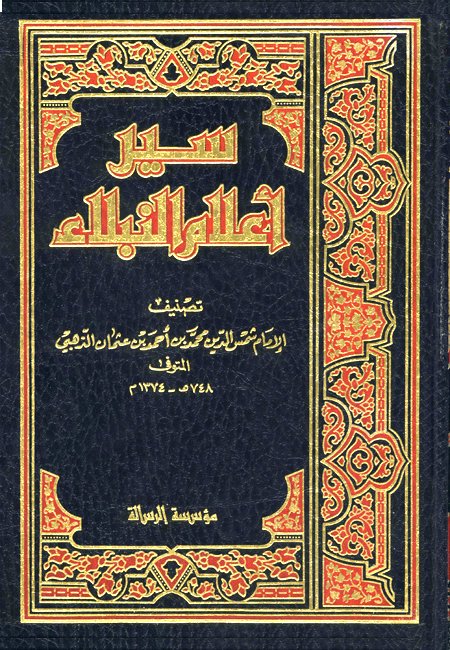
(3) Seerah wa’lam al-Nubala’
(4)Tanzih al-Qur’an ‘an Da’wat al-Mubtaleen by Dr. Munqidh al-Saqqar, p. 107.
(5) The book “The Ultimate Goal for the Disciple in the Science of Tajweed” p. 30 by Sheikh Attia Qabil Nasr (seventh edition)
{Embed}
إسلام ويب - سير أعلام النبلاء - الطبق…
فضيل بن غزوان (ع)، الإمام المحدث الثقة من أهل الكوفة، هو أبو محمد الضبي الذي روى عن العديد من العلماء مثل أبي حازم الأشجعي وأبي زرعة البجلي. وقد نقل عنه ابنه محمد بن فضيل، بالإضافة إلى جرير بن ع…
{Embed}

TOPPPPPPP