Did Aisha Say Allah Hastens to Fulfill the Prophet’s Desires? Full Hadith Refutation
Did Aisha Say Allah Hastens to Fulfill the Prophet’s Desires? Full Refutation
This article responds to the objection raised around the hadith in which Aisha رضي الله عنها said:
“I see your Lord only hastens to fulfill your desires.”
The answer depends on context, classical commentary, Arabic wording, prophetic infallibility in revelation, and Qur’anic evidence that the Prophet ﷺ did not speak from personal desire.
Table of Contents
- ⭕ The Response
- First Response: The Hadith Was Cut from Its Context
- Al-Nawawi’s Explanation
- Ibn Battal’s Explanation
- Supporting Tafsir Context
- Ibn Hajar’s Explanation
- Second Response: The Prophet ﷺ Does Not Speak from Desire
- Third Response: Allah Did Not Fulfill Every Request of the Prophet ﷺ
- God’s Rebuke of His Prophet Contradicts the Claim
- Conclusion
The Objection
The objection claims that the phrase “I see your Lord only hastens to fulfill your desires” means that revelation was supposedly following the personal desires of the Prophet ﷺ.
⭕: mentioned in the image below, and I apologize for the offensive language towards God Almighty, but it was necessary to present it to clarify the objection.
⭕ The Response
First Response: The Hadith Was Cut from Its Context
First: The hadith “He hastens to fulfill your desires” is taken from Sahih Muslim, and the part you saw above was cut out.
The phrase was spoken by Aisha رضي الله عنها in a context of jealousy, not as a theological statement accusing Allah or His Messenger ﷺ.
Al-Nawawi’s Explanation
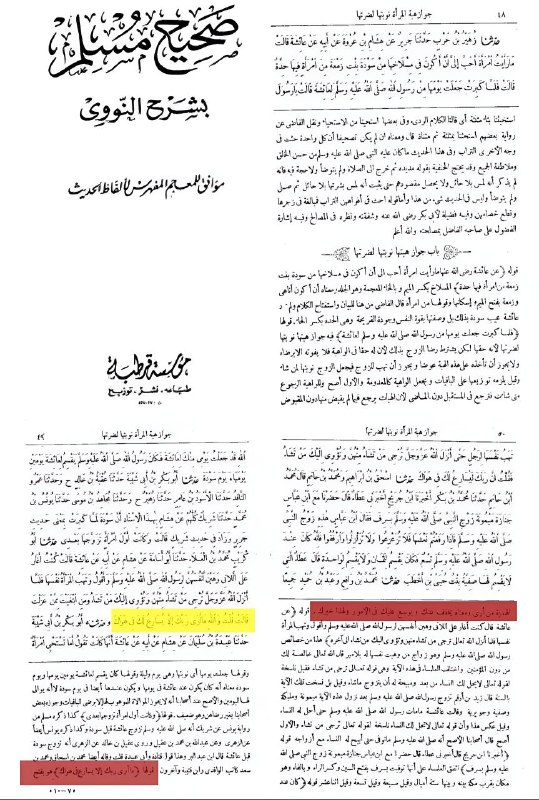
This scan is fromAl-Nawawi’s commentary on Sahih Muslim.
Al-Nawawi explains Aisha’s phrase:
“I see your Lord only hastens to fulfill your desires”
as meaning that Allah made matters easy and light for the Prophet ﷺ.
It does not mean that revelation followed personal lust or false desire.
(*Al-Nawawi said in his commentary on Muslim (10/49): “Her saying: (I see your Lord only hastens to fulfill your desires): It is with a fatha on the hamza, from ‘ara,’ and its meaning is: He lightens things for you, and makes things easy for you, and for this reason He gave you a choice.”)
Ibn Battal’s Explanation
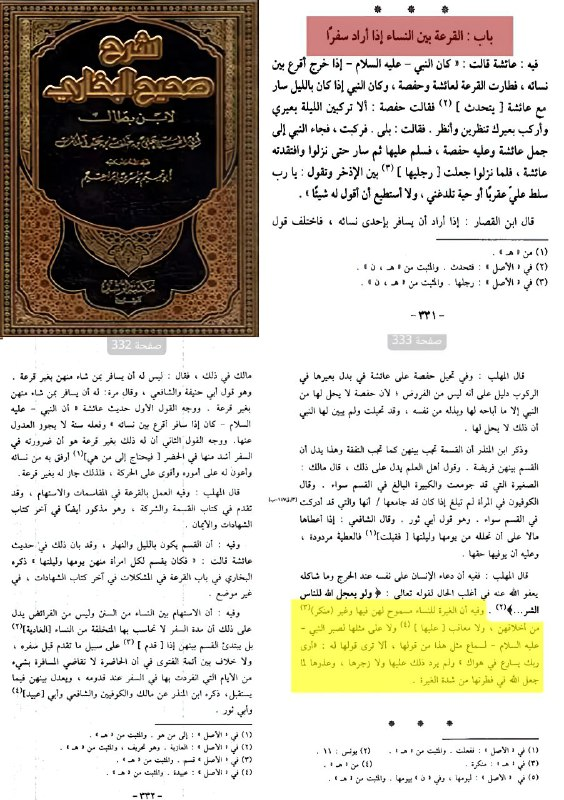
This scan is fromSharh Sahih al-Bukhari by Ibn Battal.
Ibn Battal explains that jealousy among women is something naturally excused, and Aisha رضي الله عنها was not punished or rebuked for this statement.
The Prophet ﷺ patiently endured it because it came from natural jealousy, not disbelief or accusation.
(*Ibn Battal said: “…and in it is that jealousy for women is permissible for them and is not considered a reprehensible trait among their morals.” Neither she nor anyone like her was punished for it, and the Prophet (peace be upon him) patiently endured hearing such a statement from her. Do you not see her saying to him, “I see your Lord hastening to fulfill your desires”? He did not respond to her, nor did he rebuke her, and he excused her because of the intense jealousy God had placed within her nature.)
Supporting Tafsir Context
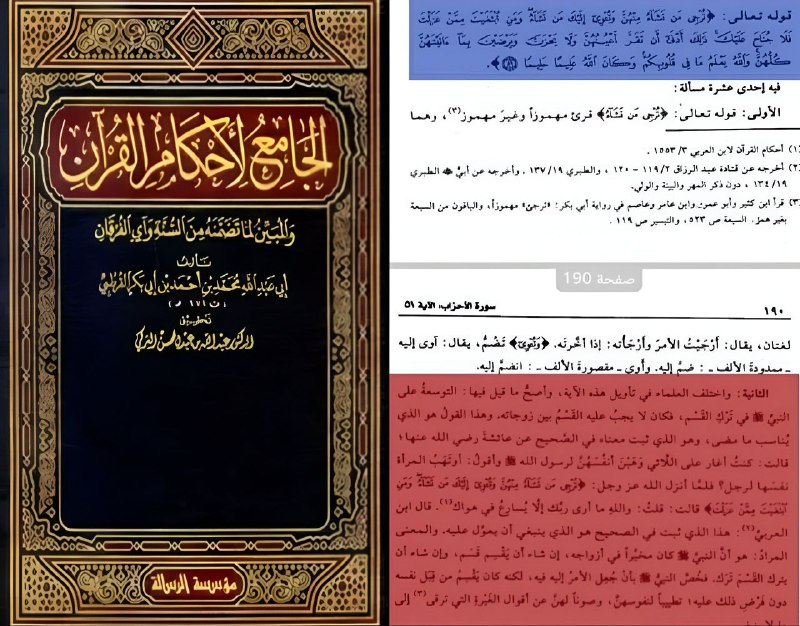
This scan is fromAl-Jami’ li Ahkam al-Qur’an by Al-Qurtubi.
It discusses the verse concerning the Prophet’s ﷺ arrangement regarding his wives.
The highlighted section connects Aisha’s words to the specific context of marital arrangement and jealousy, not a general accusation that revelation followed desire.
Ibn Hajar’s Explanation
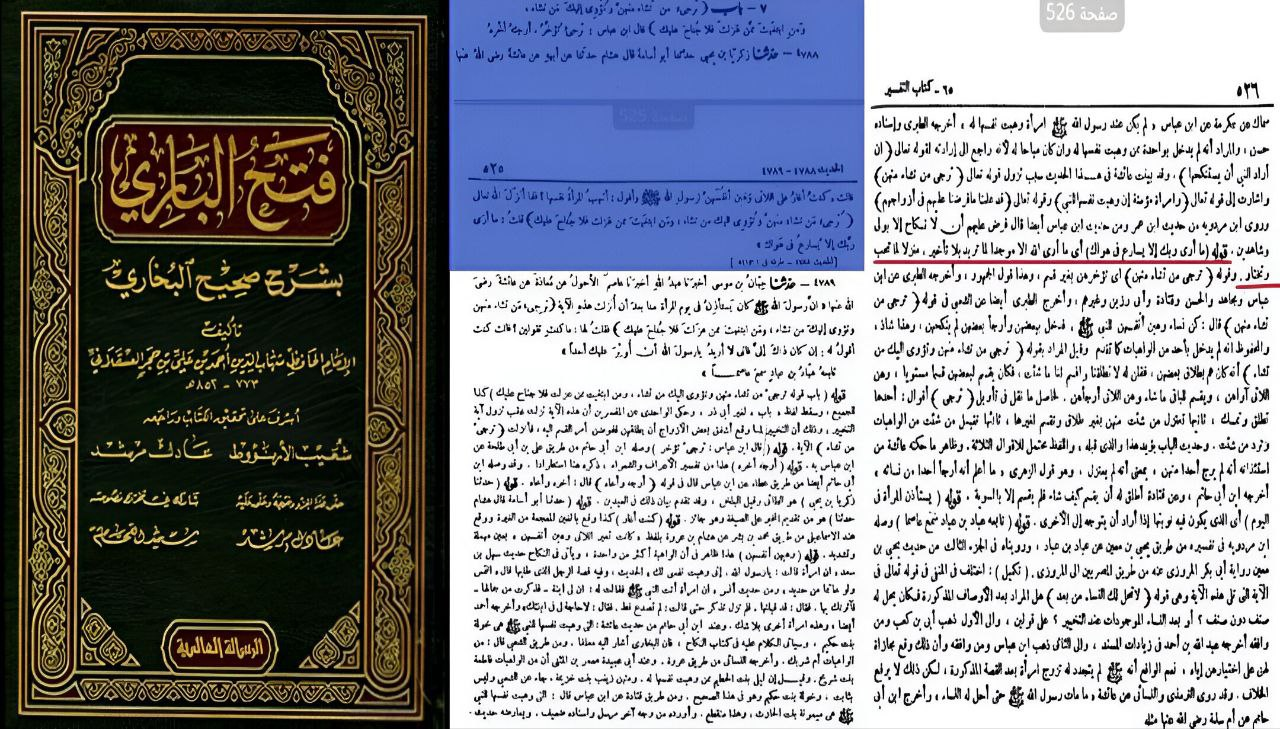
This scan is fromFath al-Bari by Ibn Hajar al-Asqalani.
Ibn Hajar explains the phrase as meaning that Allah brought about what the Prophet ﷺ chose or wanted without delay in that specific matter.
Again, this is not a claim that Allah follows desire; it is an explanation of ease and divine permission in a particular ruling.
(*Ibn Hajar said in “Fath al-Bari” (8/526): “His statement, ‘I see your Lord only hastening to fulfill your desires,’ means: I see God only bringing about what you want without delay, and sending down what you love and choose.”)
Second Response: The Prophet ﷺ Does Not Speak from Desire
Secondly: God, the Exalted, cleared His Prophet of this nonsense attributed to him in His Book, saying:
“Nor does he speak of [his own] desire. It is not but a revelation revealed.”

This scan shows the opening verses ofSurah al-Najm, where Allah declares that the Prophet ﷺ does not speak from personal desire in matters of revelation.
This directly refutes the claim that revelation was merely following his personal wishes.
Third Response: Allah Did Not Fulfill Every Request of the Prophet ﷺ
Thirdly: God only responded to two requests from His Messenger. Peace and blessings be upon him, he requested one of three things, so how could he hasten to fulfill his desires according to the interpretation of the person in this picture?
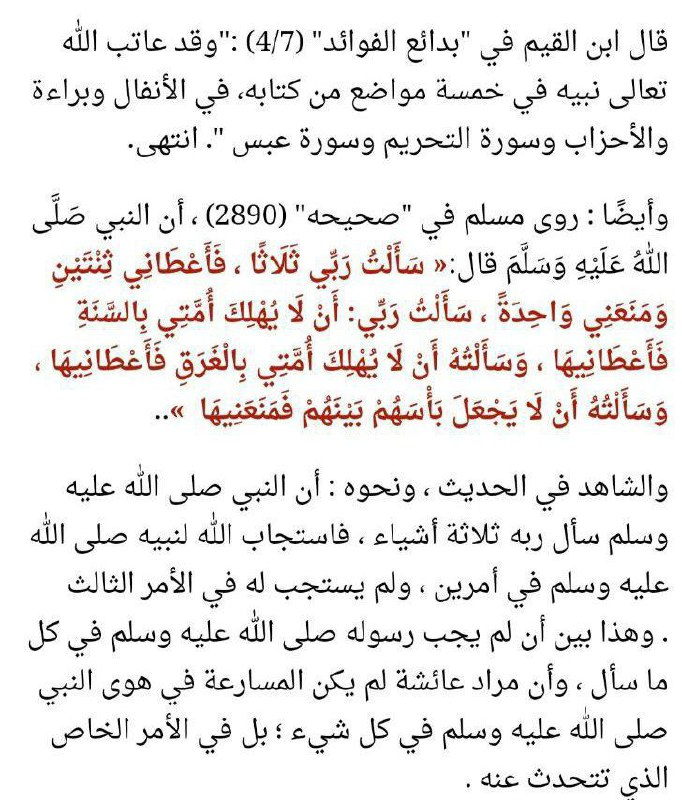
This scan cites a report fromSahih Muslim where the Prophet ﷺ asked Allah for three things.
Allah granted him two and withheld one.
This destroys the false claim that Allah simply fulfilled every desire or request of the Prophet ﷺ.
God’s Rebuke of His Prophet Contradicts the Claim
God’s rebuke of His Prophet = Rebuke contradicts rushing headlong into desires.
This is the cover page ofBada’i al-Fawa’id by Ibn al-Qayyim.
The following scan quotes from this work to show that Allah rebuked His Prophet ﷺ in multiple places, which contradicts the accusation that revelation simply followed his personal desire.
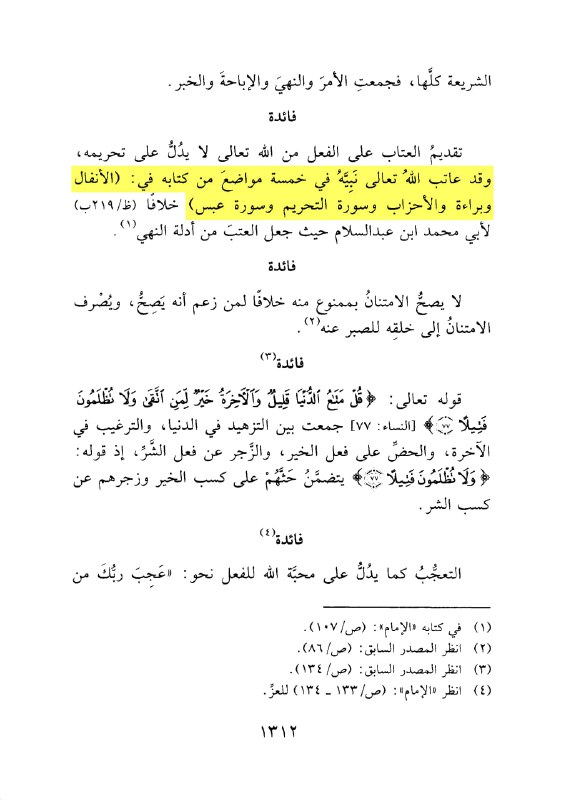
Ibn al-Qayyim states that Allah rebuked His Prophet ﷺ in several places in the Qur’an, includingSurah al-Anfal, Surah Bara’ah, Surah al-Ahzab, Surah al-Tahrim, and Surah ‘Abasa.
If revelation were merely rushing to fulfill personal desire, there would be no divine rebuke.
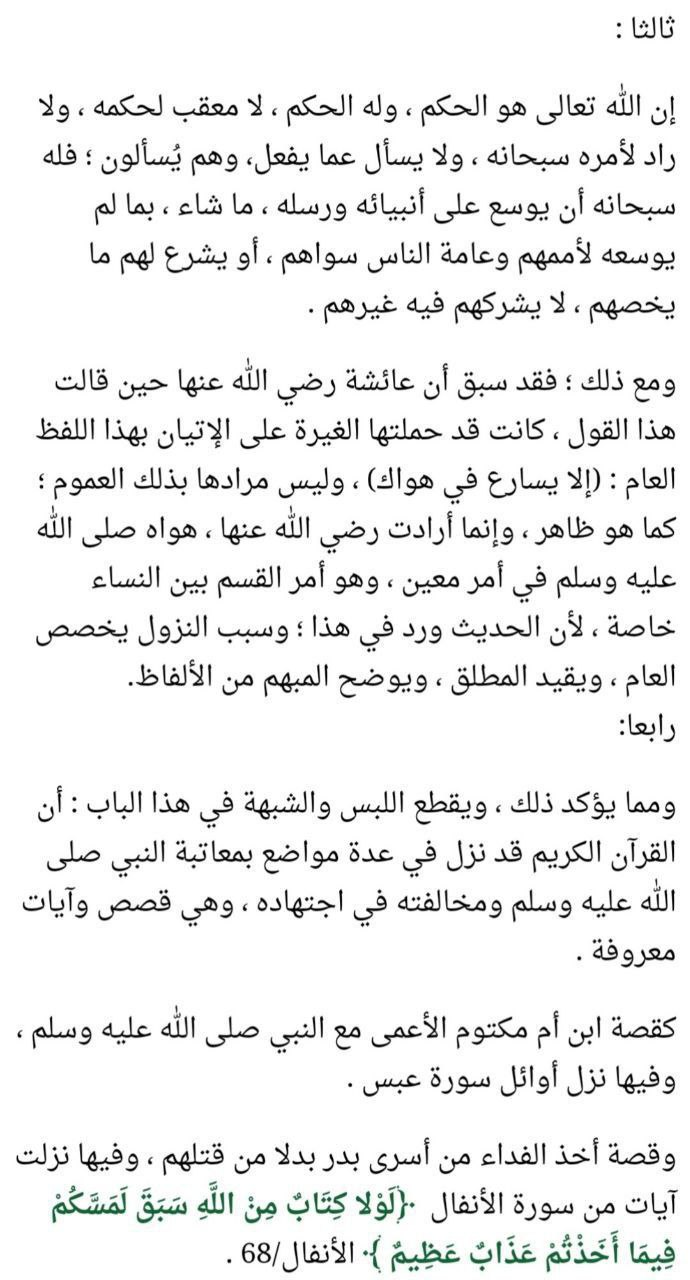
This scan explains that Aisha’s wording came from jealousy and was intended for a specific matter: the Prophet’s ﷺ arrangement between his wives.
It also reinforces that the Qur’an contains examples where Allah corrected or rebuked the Prophet ﷺ, which proves revelation was not dictated by personal desire.
Conclusion
The objection collapses once the full context is restored.
The phrase “I see your Lord only hastens to fulfill your desires” was:
- spoken by Aisha رضي الله عنها in a context of jealousy,
- explained by scholars as meaning Allah made matters easy for the Prophet ﷺ,
- not understood by classical scholars as an accusation against Allah or His Messenger ﷺ,
- contradicted by the Qur’an’s statement that the Prophet ﷺ does not speak from desire,
- contradicted by cases where Allah did not grant every request of the Prophet ﷺ,
- contradicted by Qur’anic verses where Allah corrected or rebuked His Prophet ﷺ.
Therefore, the phrase cannot honestly be used to claim that revelation followed the Prophet’s ﷺ personal desires. That reading is cut from context, rejected by the classical explanations, and contradicted by the Qur’an itself.