

Did Jesus Ever Say 'I Am God'? The Ego Eimi and Yahweh Argument Destroyed
Where did Jesus say “I am God, worship me”? This is a question that Muslims have asked and continue to ask Christians. The answer differs from one Christian to another. Perhaps someone will cite words from the Bible — but not from the words of Christ, like the words of Paul for example. Or he will cite a text from the words of Christ and conclude from it the divinity of Christ. Or he will justify why Christ did not say this saying by saying that if he had said it, the Jews would have stoned him, as Pope Shenouda said.
We did not find in the past any missionary who went out to the people and brought them from the Bible a sentence on the tongue of Christ in which he says that he is God. But it seems that with the developments of time, talking about love and that Jesus loves you and died for you is not enough to convince a non-Christian to worship a person who did not ask him to worship. So some came out with a text in the Gospel of John and said that this text is an explicit expression from Jesus that he is God.
Before we present their words regarding this text, we will make a slight modification to the wording of the question. If we go back to the original Hebrew and Greek manuscripts, we will not find a god called “God” (Allah) at all. So we ask from Christians: bring a text in which Jesus says that he is God — for the word Allah is 100% Islamic and does not exist in the original Bible, and this is something we are honoured by. We are the ones who should demand that Christians delete this honourable name from their book. But what is required is a text on the tongue of Jesus in which he says that he is Yahweh — the God of the Old Testament. This name is the proper name for God in Christianity, specific to God alone and cannot be attributed to anyone other than God. We will discuss this topic in full.
The Names of God in the Bible — and Why Only Yahweh Matters
Some Christian scholars have tried, through the text of the Gospel of John, to prove that Jesus said that he is Yahweh. Jesus could have said it in two ways: either he used one of the names of God in the New Testament, or he expressed his divinity through the name of God in the Old Testament.
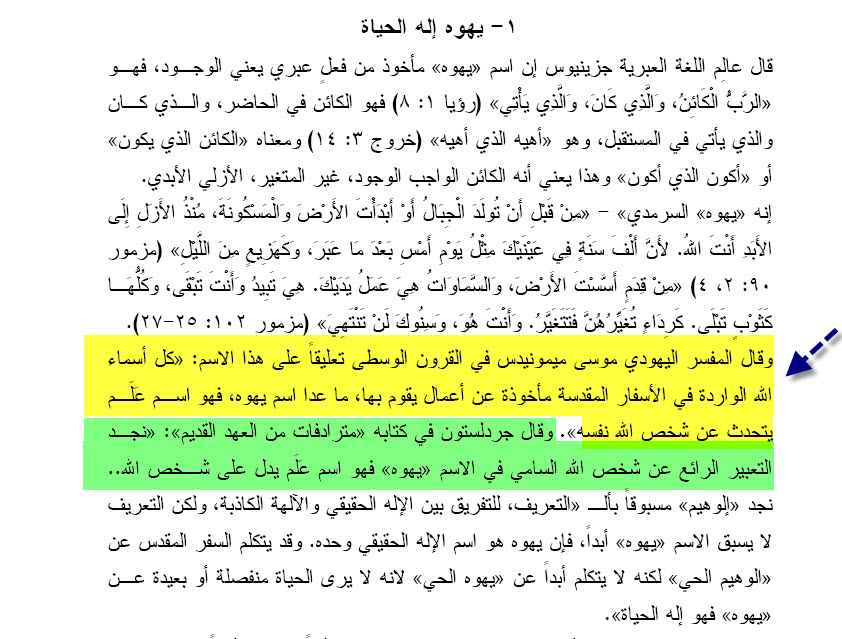
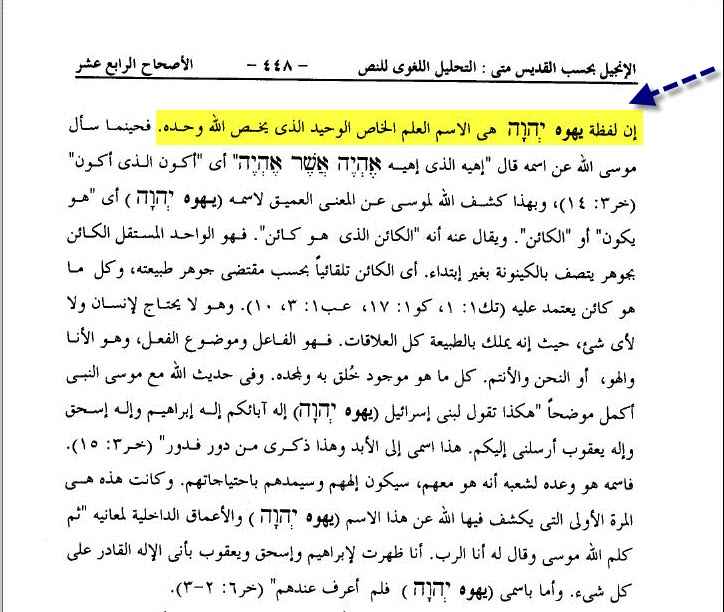
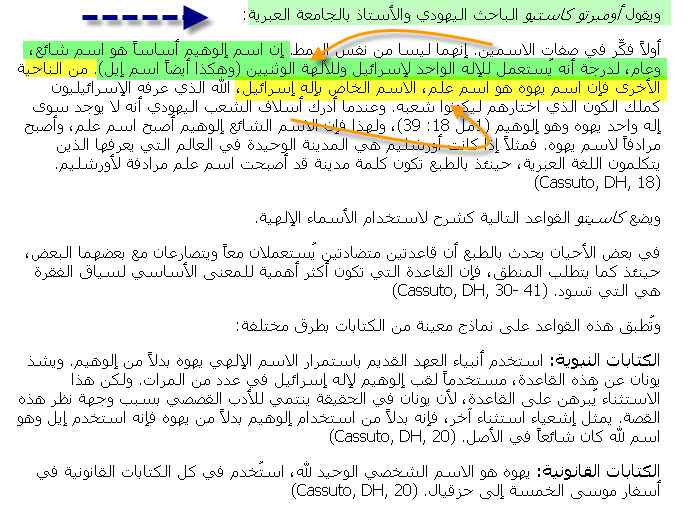
The names of God in the Old Testament are many — Yahweh, Elohim, El Shaddai, etc. But the only name that pertains to God alone is Yahweh. The rest of the names are general and can be given to God or others. Yahweh is a proper name specific to God Himself.
We read this in the book The Names of God in the Holy Bible by Dr. Munis Abdel Nour:
In the Analysis of the Language of the Gospel of Matthew by Dr. Maurice Tawadros:

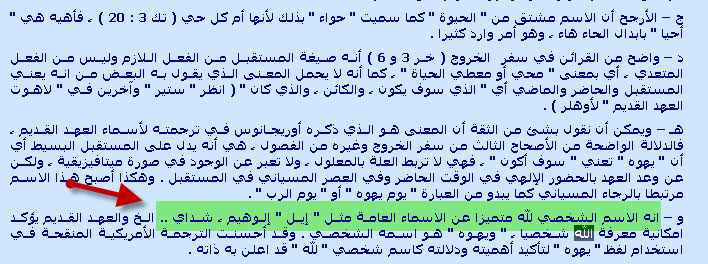
They are a personal name that is distinct from other general names.
The Encyclopedia of the Bible confirms:
A New Evidence Demands a Verdict by Josh McDowell:
Theological Dictionary of the New Testament:
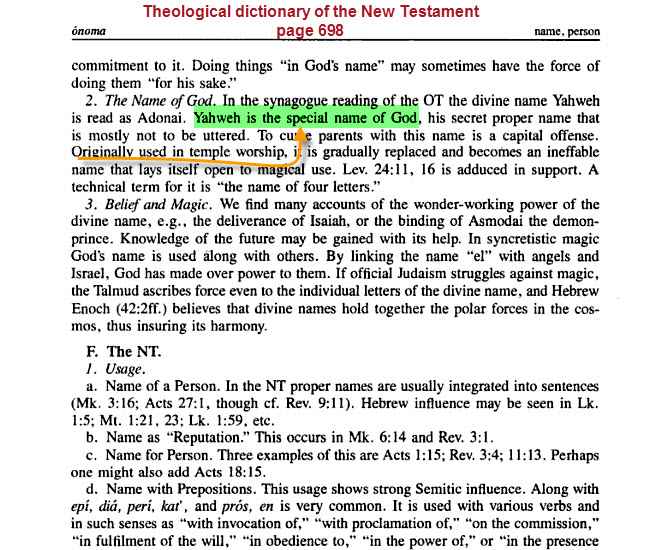
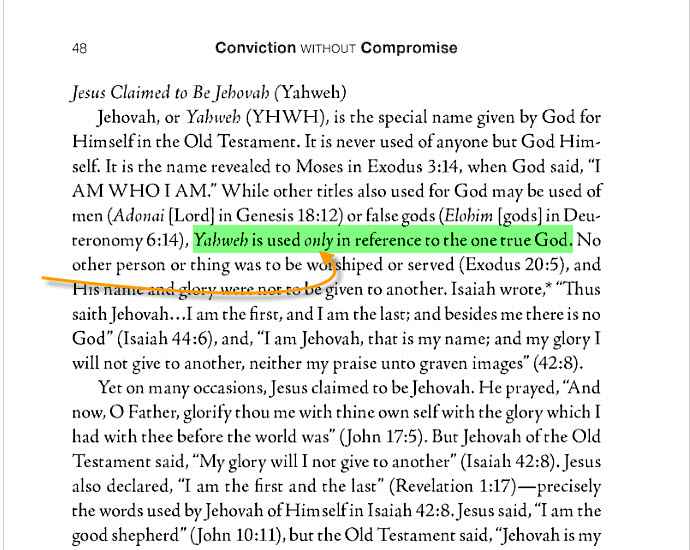
And when it is used, it is used only for the true God:
Conviction Without Compromise — Norman Geisler and Ron Rhodes:

Father Abdel-Masih Basit says:
[!scholar] Father Abdel-Masih Basit — Is Christ God, the Son of God, or Human?
If “Jehovah” is the special name of God that cannot be given to anyone else, and that expresses His being and essence, and His being eternally existing and eternally living, then it is never said “Jehovah the Living…” The name itself means that He is the self-existent, necessarily existing, and eternally living. There are other general titles for God that express “divinity, theology,” and they are “Elohim, Eloah,” which means “God, divinity.” The title “Elohim” is used in the Old Testament in general as a title for the one God, and as a word expressing divinity in general. It was repeated in the Old Testament 2,570 times — 2,300 of which were for “God,” and the rest were used in a general sense for idols, angels, and humans.
The interpreter Albert Barnes says in his interpretation of Genesis 2–4: it is never applied to any but the true God.
So if Jesus wanted to express his divinity through the Old Testament, there is no way but to say that he is Yahweh. And it is logical and natural that the expression of divinity in the Old Testament would be the same as in the New Testament, because it is assumed that the God of the Old Testament is the God of the New Testament. But the shocking thing is that the name Yahweh does not exist at all in the New Testament, and the writers of revelation never used it.
This position, if it indicates anything, indicates that the God of the Old Testament has no relation to the God of the New Testament — because the name of God himself is different. Priest Abdel-Masih Basit says that the New Testament did not use the word “Jehovah” and this name did not appear in any of its books at all, whether in the speech of Jesus Christ or his disciples or in the speeches of the Jews, and it was not mentioned even in the verses that were transmitted and quoted from the Old Testament in which the name “Jehovah” is found.
Therefore, there is another way in which Jesus could express his divinity — which is to use one of the names of God in the New Testament. Priest Abdel-Masih Basit says that in addition to the word “Father,” Jesus Christ and his disciples used the words “Lord — Kyrios” and “God — Theos” as an alternative to Yahweh and other titles such as “Elohim” and “El.” This is clear from the verses that the New Testament borrowed from the Old Testament, and the same words were also mentioned in the Encyclopedia of the Bible.
Jesus could express his divinity through the New Testament through three names:
First: He says he is the Father — and this did not happen.
Second: To say that he is Theos (Θεόν) — the name of God in the New Testament. And Jesus called the Father by this name:
“And this is life eternal, that they might know thee the only true God, and Jesus Christ, whom thou hast sent.”
And Jesus never called himself by this name.
Third: As for Kyrios, which means master or lord — and which Jesus also called the Father by — it is not specific to God only but can be used for other than God:
“At that time Jesus answered and said, I thank you, Father, Lord of heaven and earth, because you have hidden these things from the wise and prudent and revealed them to babes.”
The Thayer dictionary defines κύριος as: “he to whom a person or thing belongs, about which he has power of deciding; master, lord.” The Strong dictionary defines it as: “God, Lord, master.” So the word means Lord, Master, or Teacher — and it may be applied to God and others. Therefore whether it is applied to Christ or not, it will be of no use at all. It was applied to Paul in Acts 16:30.
So the only way for Christians to prove that Jesus said that he is God is to express divinity through the Old Testament — because Jesus did not call himself by any of the names of God in the New Testament. And this is what Christians tried to prove through the text of the Gospel of John 8:58.
The Story of Ego Eimi and Yahweh
We mentioned that the only way for Jesus to declare his divinity is to declare to the Jews that he is Yahweh, the God of the Old Testament, who spoke to Moses on the mountain. The question now is: how does Jesus declare that he is Yahweh? The New Testament is in Greek — so how can a person who speaks Greek declare that he is Yahweh?
It is obvious and well-known that the matter with proper nouns is simple: Yahweh in Greek is Yahweh in Hebrew is Yahweh in Arabic. Proper nouns are not translated from one language to another — they are placed as they are. But the matter was completely different for the Jews when translating the name Yahweh from Hebrew to Greek in the Septuagint. They did not put Yahweh as it is, but rather used alternative words.
Now let us see how Jesus said that he is Yahweh according to what some of the People of the Book claim.
Ego Eimi — The Claim
This is the word on which some of the People of the Book built their belief that Jesus is declaring that he is Yahweh. The text that some Christian scholars have argued about is John 8:58:
“Jesus said unto them, Verily, verily, I say unto you, Before Abraham was, I am.”
Dr. Samuel Youssef says in his book Introduction to the Old Testament:

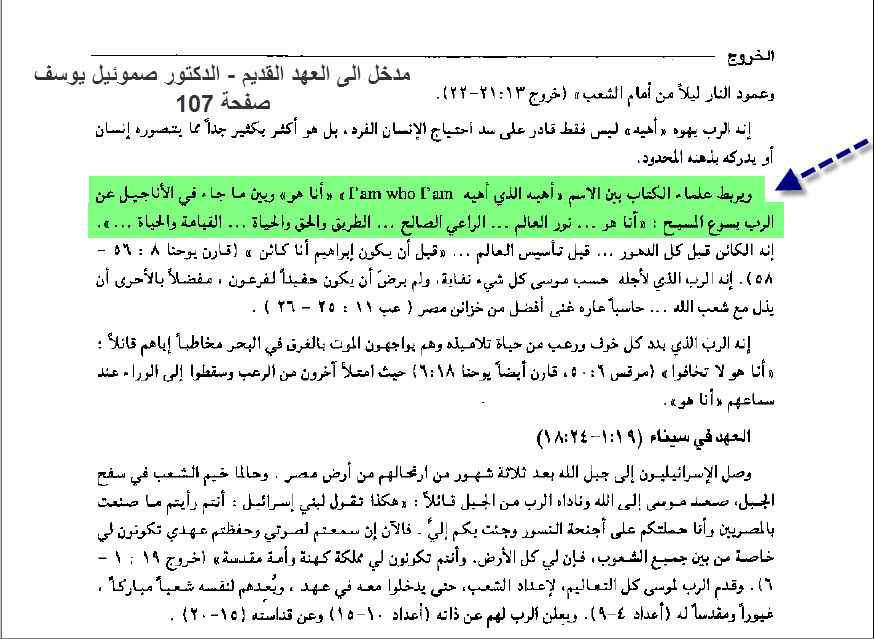
So this is the beginning — linking Ego Eimi to Ahyah Asher Ahyah — the phrase that the God of the Old Testament said to Moses when he asked Him about His name in the Book of Exodus:
“Then Moses said to God, ‘Behold, I come to the children of Israel and will say to them, The God of your fathers has sent me to you. And if they say to me, What is his name? what shall I say to them?’ Then God said to Moses, ‘I AM THAT I AM.’ And he said, ‘Thus you shall say to the children of Israel, I AM has sent me to you.’”
The respected interpreter William Barclay repeated the same words in his interpretation of this verse, saying that Ahyah in Hebrew = Ego Eimi in Greek:

Dr. Morris also repeated this statement in his book Analysis of the Gospel of Matthew:
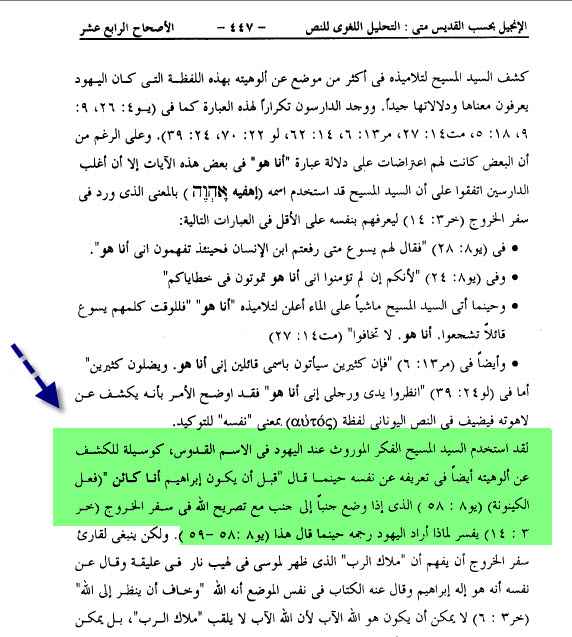
Dr. Youssef Riad says:
When the Lord appeared to Moses in the bush and asked to send Him to the children of Israel, Moses said: “The God of your fathers has sent me to you. And if they say to me, ‘What is His name?’ what shall I say to them?” And God said to Moses, “I AM WHO I AM.” When the Old Testament was translated into Greek — the Septuagint — the divine name “I AM” was translated as “EGO EIMI.” This is the same word that Jesus used to the Jews when He said to them, “I AM.”
If, according to what these people say, Ego Eimi in Greek = Ahyah Asher Ahyah in Hebrew — and they then link Ahyah Asher Ahyah to Yahweh, saying that Ahyah Asher Ahyah is the deep meaning of the name Yahweh, and thus whoever says Ahyah Asher Ahyah is as if he said Yahweh — then Ego Eimi = Yahweh. Dr. Morris says in the same reference:
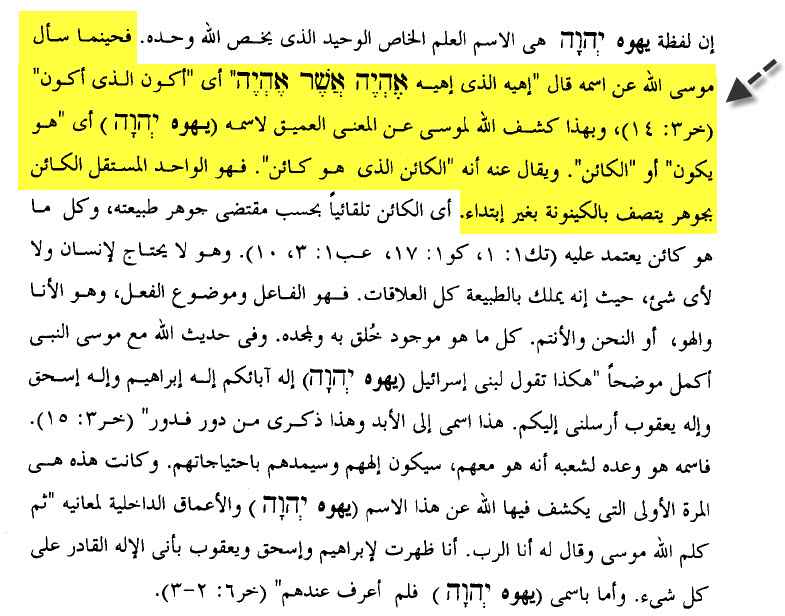
Josh McDowell says in Evidence That Demands a Verdict:

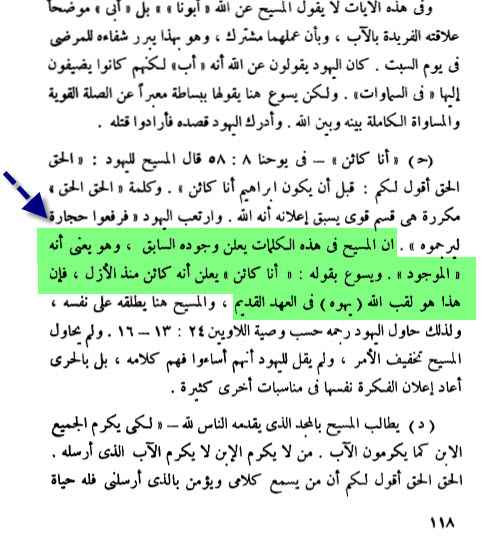
Father Antonius Fikry says:
[!scholar] Father Antonius Fikry — Interpretation of the Gospel of John, Chapter 8
But he said, “I am,” and in this he refers to his name, Jehovah, meaning the being… before Abraham was (its original meaning is to become), I am a being (its root is being and I am a being, meaning divinity = the name of God).
Father Abdel-Masih Basit says while explaining the word Yahweh:
[!scholar] Father Abdel-Masih Basit — Is Christ God, the Son of God, or Human?
“I am who I am… I am who sent me… Jehovah, the God of your fathers.” “I am” like “Jehovah” — I am, is the first person form of the verb “hayya, hayah, heh,” meaning “I am,” “I am who I am… I am… the being,” and upon God’s saying “I am,” the human being answers “He is the being.”
Dr. Youssef Riad says:
The phrase “I am” is exactly equivalent to saying “I am God” or “I am the Lord” or “I am Jehovah” which is the name of God according to the Hebrew Bible. This expression “I am” according to the original Greek in which the New Testament was written — “Ego Eimi” — means the necessary and permanent existence, the eternal and everlasting. Who could that be but God?
It even reached the point where one of them claimed that Ahyah Asher Ahyah and Yahweh are two sides of the same coin, and that the word Yahweh is just an abbreviation for the phrase Ahyah Asher Ahyah.
Modern Commentary on the Holy Bible, pages 77–78:

So in brief, according to what these people are saying: Ahyah Asher Ahyah means “I am the being” in Hebrew, and Ego Eimi means “I am the being” in Greek — so Ego Eimi = Ahyah Asher Ahyah. And since Ahyah Asher Ahyah is the deep meaning of the proper name Yahweh, then Ego Eimi = Yahweh. This is what they are saying. There is no power or strength except with God.
Things to Forget Before Replying
Before delving into this text, we have to forget or ignore several things.
First: We must forget that the Gospels are the work of an unknown author and assume that the Gospels are a work inspired by God.
Modern Interpretation — The Gospel of Matthew:
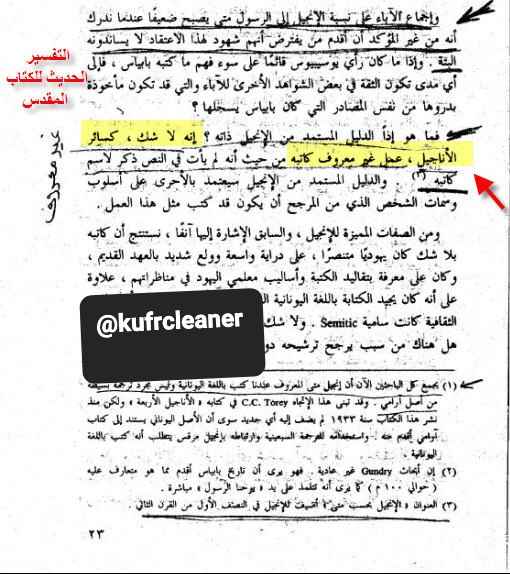

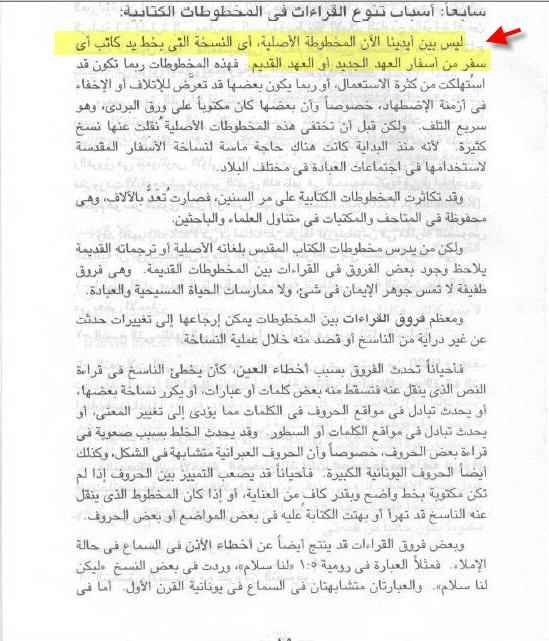

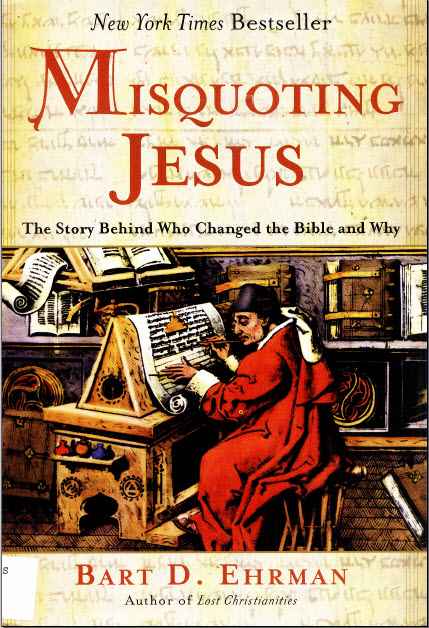
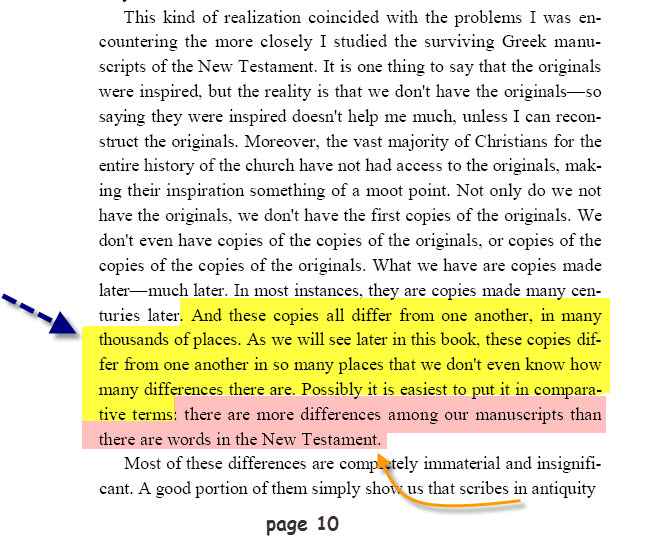
Third: We must forget that there are hundreds of thousands of differences between the remaining manuscripts of the book, and that the number of differences is greater than the number of words in the New Testament itself.
“More than 150,000 different readings have been found in the older witnesses to the text of the New Testament.”
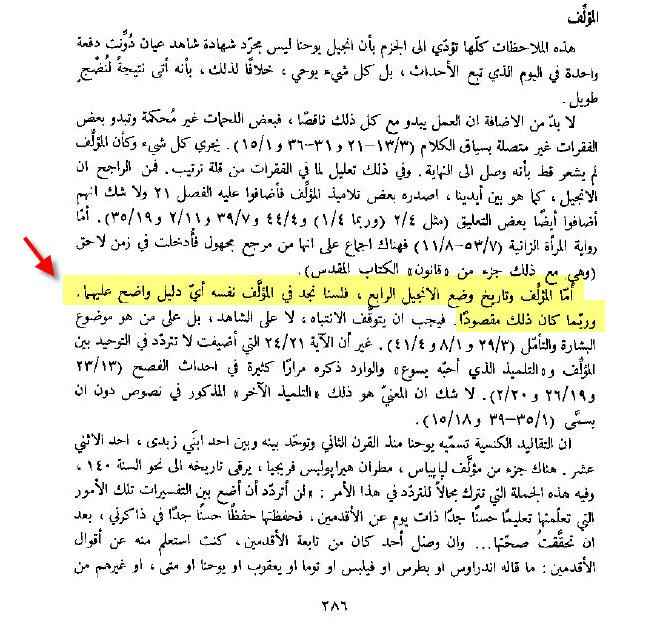
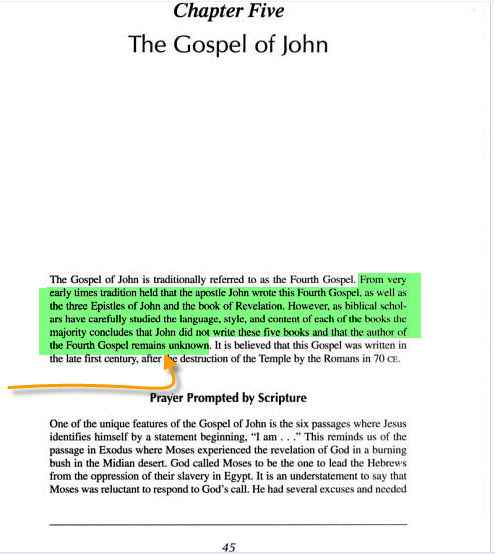
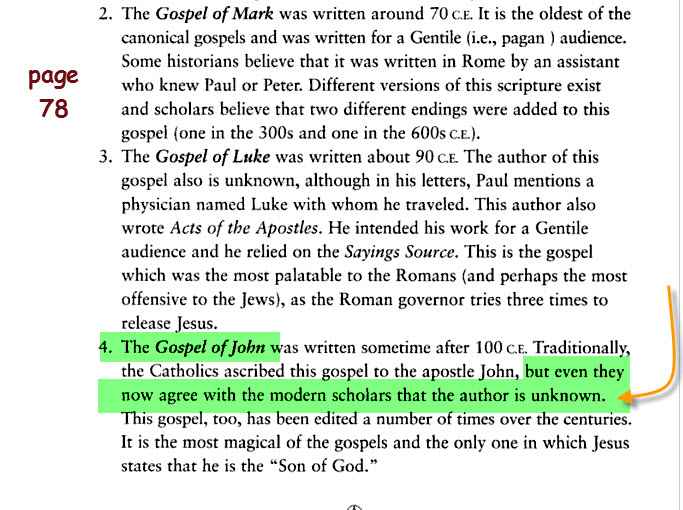
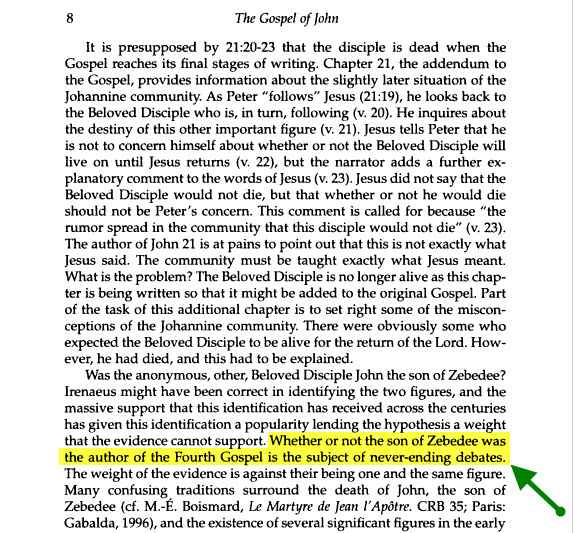
Fourth: We must forget that the author of the Gospel of John is known only to God, and that the Gospel does not explain anything about its author or the date of its composition, and we assume that John the Beloved is the author.
The Bible from Scratch: The New Testament for Beginners:

Institute reference:
We will not dwell on this point for long — the discussions on it will never end.
The Gospel of John:
Fifth: We must forget that Jesus did not speak Greek at all and did not say “ego eimi” or anything else — rather he spoke Aramaic — and we will assume that Jesus spoke Greek.
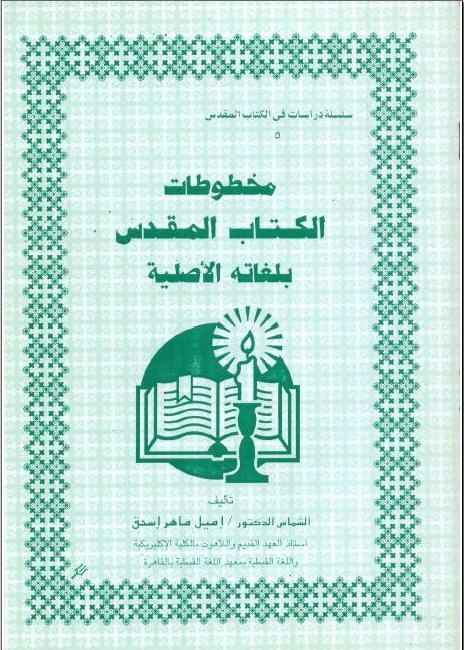

Jesus’ Community — Its Traditions and Customs — Father Sami Hallaq:

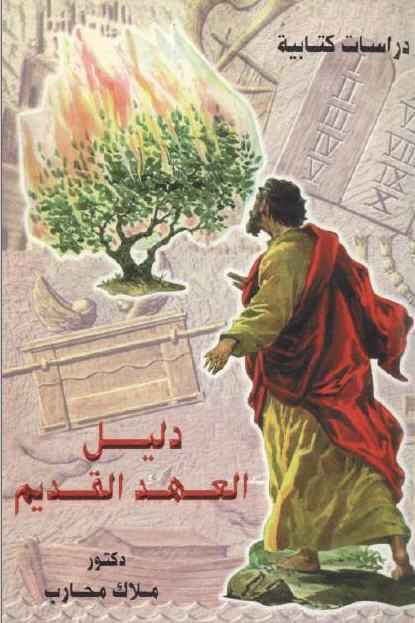
Old Testament Guide — Dr. Angel Warrior:

Evidence That Demands a Verdict — Josh McDowell:
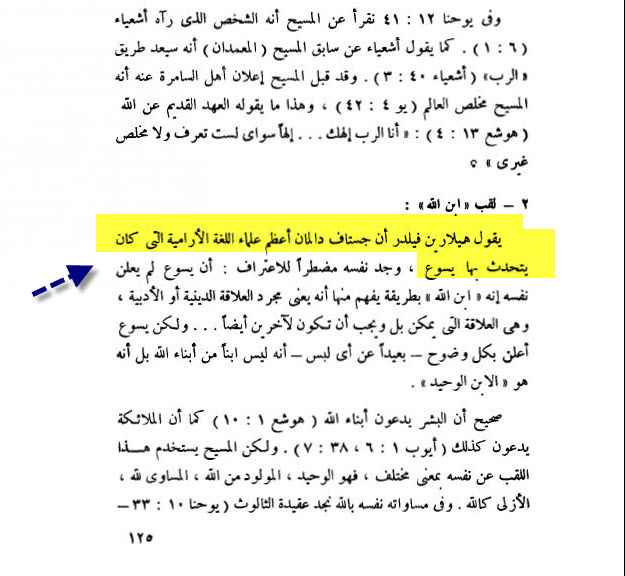
Someone philosophized and asked us — a very funny request — that if it indicates anything, it indicates the bankruptcy of the argument. This honourable man said that he wants Muslims to provide a Christian reference that says that Christ said this verse specifically in Aramaic. We say to him: we have brought references that say that the language of Christ was Aramaic. And if you want to prove that Jesus said Ego Eimi in Greek, then bring a Christian reference that says that Jesus, during his dialogue with the Jews, was speaking Aramaic but suddenly and without warning changed his language from Aramaic to Greek and said Ego Eimi — and then after saying it, went back to speaking Aramaic again. Very funny, by God.
Sixth: We must forget that the text in which Jesus is supposed to have said that he is Yahweh is not found in the first three Gospels — Mark, Matthew, and Luke — and it suddenly appeared to people in the late first century AD after the writing of the Gospel of John.
Wouldn’t it have been better for the writer of the Gospel of Mark to have narrated this incident instead of narrating Jesus’ question about the number of loaves of bread?
“And he said to them, ‘How many loaves do you have? Go and see.’ And when they knew, they said, ‘Five and two fish.’”
Wouldn’t it have been better for the writer of the Gospel of Matthew to have narrated this incident instead of Jesus’ command to the people not to swear by their heads?
“And do not swear by your head, for you cannot make one hair white or black.”
Wouldn’t it have been better for the writer of the Gospel of Luke to narrate this incident instead of his dialogue with Theophilus at the beginning of the Gospel? Wouldn’t it have been better for Paul to allude to this serious incident in which Jesus declared that he is Yahweh instead of mentioning his greetings, longings, and warm kisses in the Epistle to the Romans?
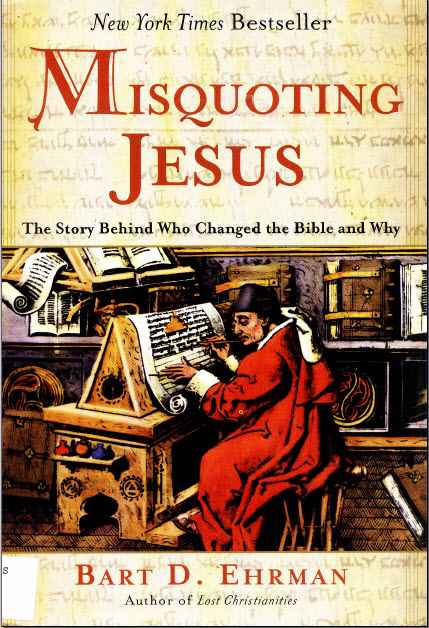
Seventh: We must forget that revelation in Christianity is only in meaning and not literally, and we must forget that each writer expresses his own ideas, opinions, and beliefs, and that each book was distinguished by certain characteristics according to the circumstances of the time and place in which it was written — and we assume that the book as a whole is the book of God and every letter in it is from God.
Introduction to the Holy Book, page 17 — Habib Saeed:

Habib Saeed continues on the same page:
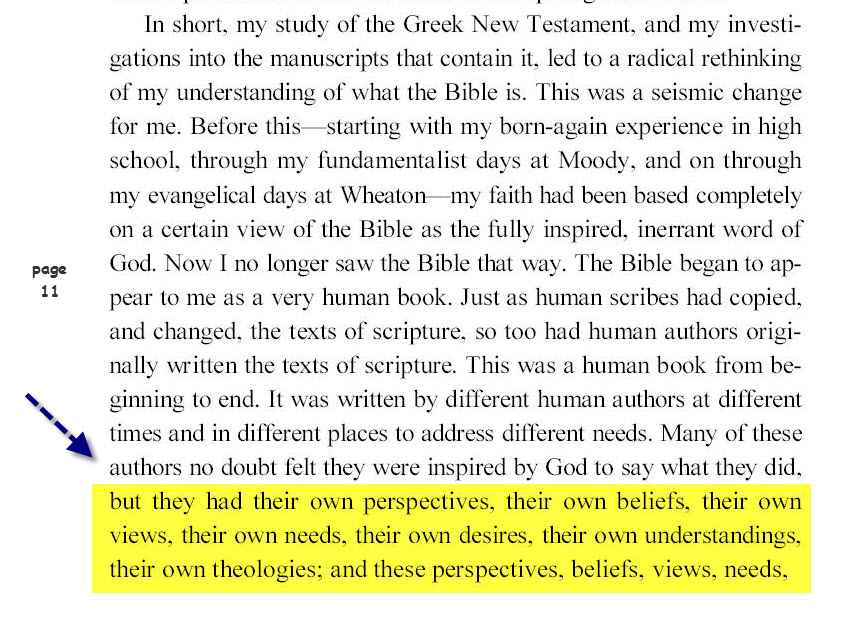
We must also forget that the Holy Bible does not pretend to be eloquent and uses the methods common among all people — and we assume that it is a miraculous book suitable for all times and places:

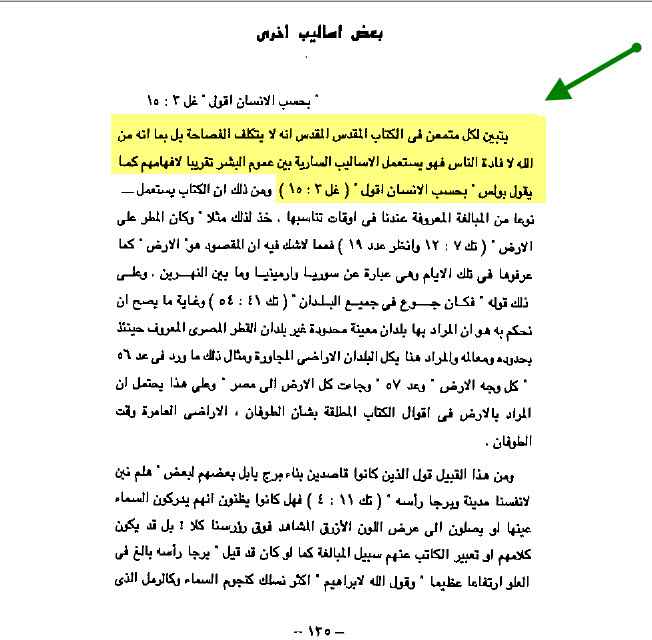
The Name Yahweh — Unknown Meaning, Unknown Pronunciation, Unknown Derivation
The scholars of the People of the Book who said that Ego Eimi = Yahweh built this on: Yahweh equals Ahyah, and Ahyah equals Ego Eimi, and thus Yahweh = Ego Eimi. But the talk of these people with this excessive confidence makes the reader feel that the name Yahweh, its meaning, and the word derived from it are all known to scholars with no disagreement. They forgot or pretended to forget that almost nothing is known about this name — neither the original meaning, nor the source of derivation, nor even the pronunciation.
This is confirmed by Dr. Munis Abdel Nour in The Names of God in the Bible:
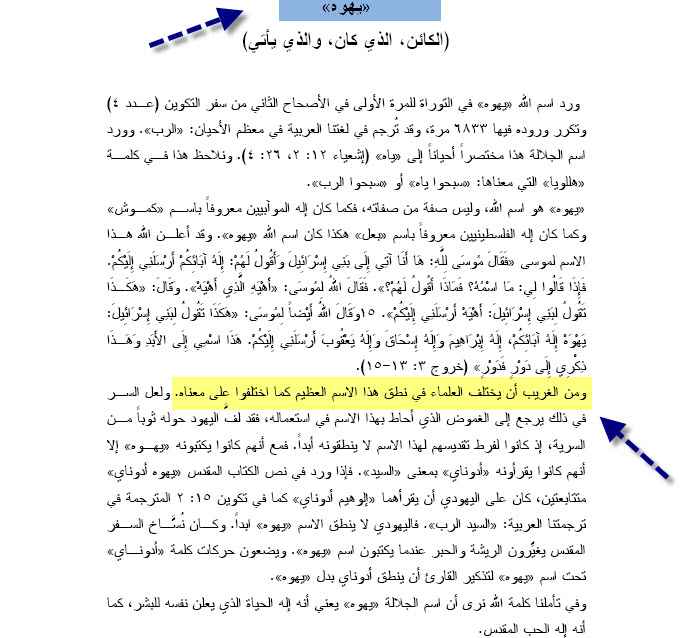
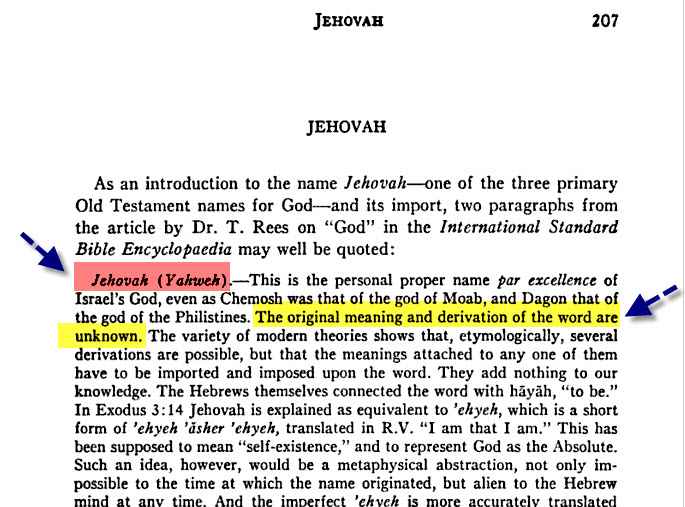
The original meaning of the name Yahweh is unknown. The source of derivation of the word is unknown. And its correct pronunciation is also unknown.
The Biblical Encyclopedia — God:
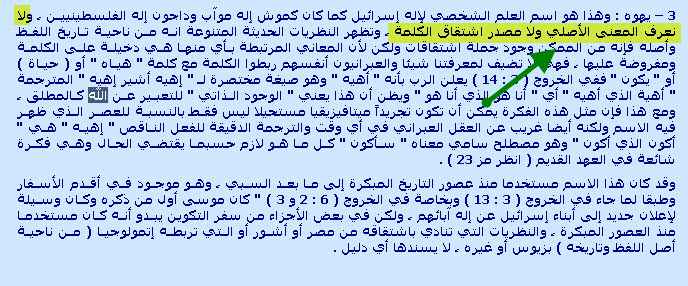
This is also confirmed by the website of Anba Takla:
“Yahweh: This is the personal name of the God of Israel, just as Chemosh was the god of Moab and Dagon was the god of the Philistines. We do not know the original meaning or the source of the word’s derivation.”
Systematic Theology — Lewis Sperry Chafer:
The Named God and the Question of Being:
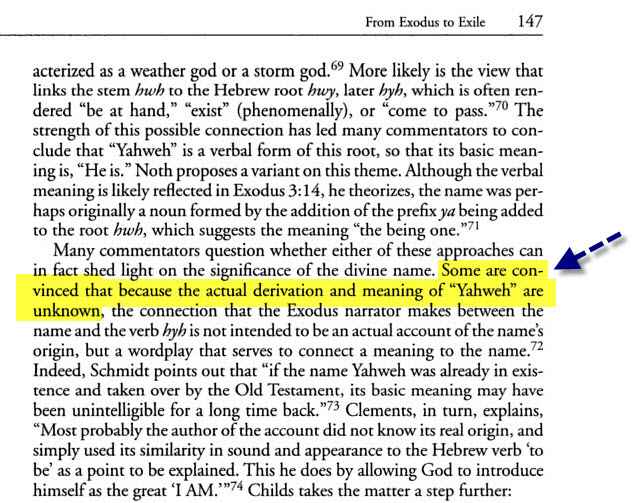

Flying Serpents and Dragons: The Story of Mankind’s Reptilian Past, page 90:
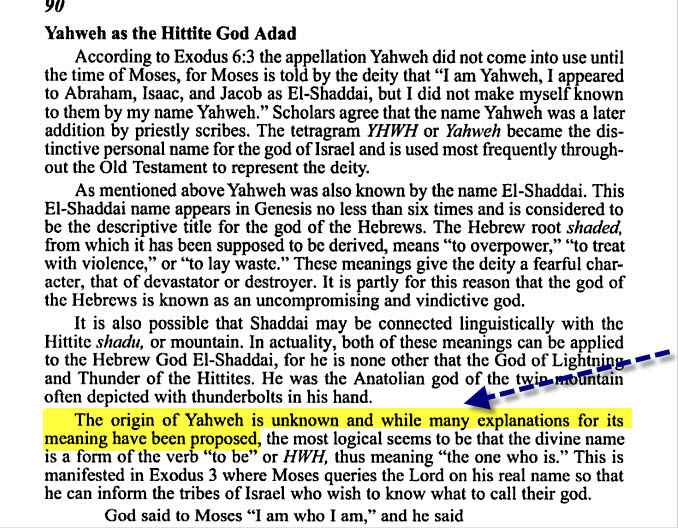
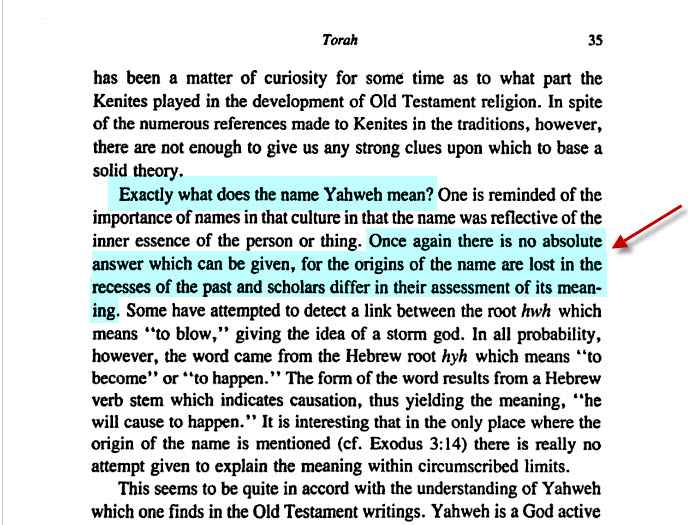
The original meaning is vague and uncertain. Cambridge Bible:

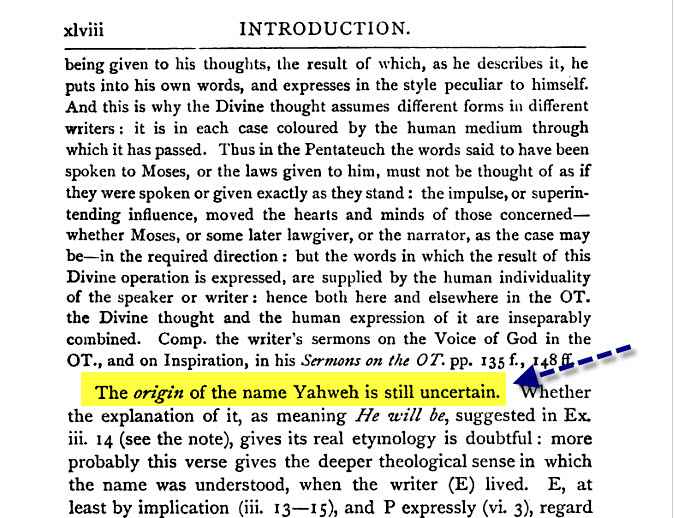
In general, there is no definitive answer to this question as the origin of the name is unknown.
Introduction to the Bible:
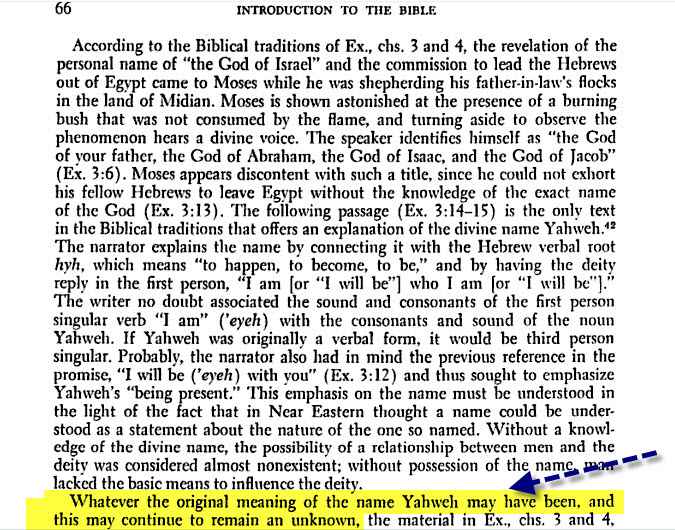
The Old Testament Writings — James M. Efird:

The Pronunciation of the Name Is Also Unknown
We come to the pronunciation of this name — and it is unfortunate that the pronunciation is also unknown. The Jews did not pronounce this name. They used to write it Yahweh and pronounce it Adonai (Lord), and with time the original pronunciation of the name was lost, as Dr. Munis Abdel Nour explained, and as Habib Saeed confirms in his book Introduction to the Holy Book, and Father Matta El Meskeen, and Father Abdel-Masih Basit, and many references confirm.
Introduction to the Holy Bible — Habib Saeed, pages 30–31:


Interpretation of the Gospel of John — Father Matta El Meskeen, page 220:
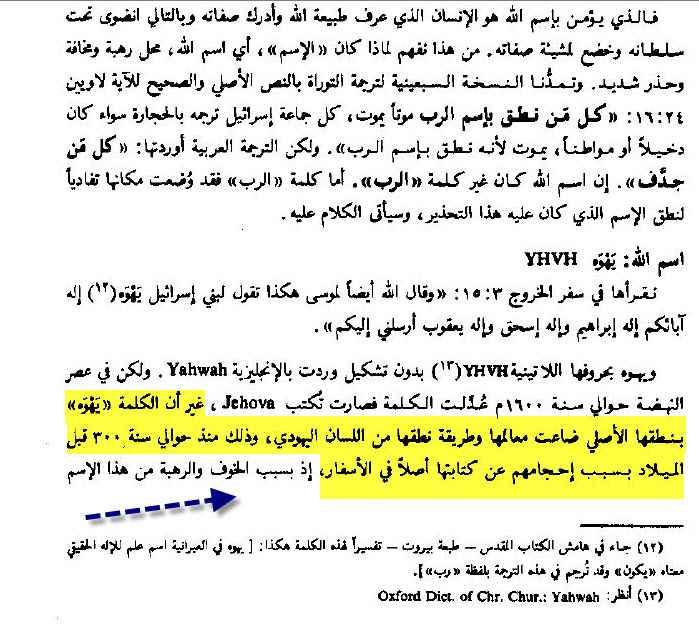
Father Abdel-Masih Basit says: “The correct pronunciation of the name was lost from Jewish tradition during the Middle Ages, and it was pronounced in different forms, the most important of which are: Yahveh, Yeheveh, Yahve, or Jehova.”
“Therefore, we may well hold that YHWH does not come from the verb hawa which is cited in the first person ‘ehyeh’ — I will be — but is an old word of unknown origin.”
“The origin of Yahweh is unknown; and while many explanations for its meaning have been proposed…”
So: the original meaning of the word is unknown. The source of derivation of the word is unknown. And the correct pronunciation is unknown. I really do not know how we can take a book from a people who failed to preserve even the name of their Lord from being lost.
Pagan Origins of the Name Yahweh
About the meaning of the name — we come to some special theories.
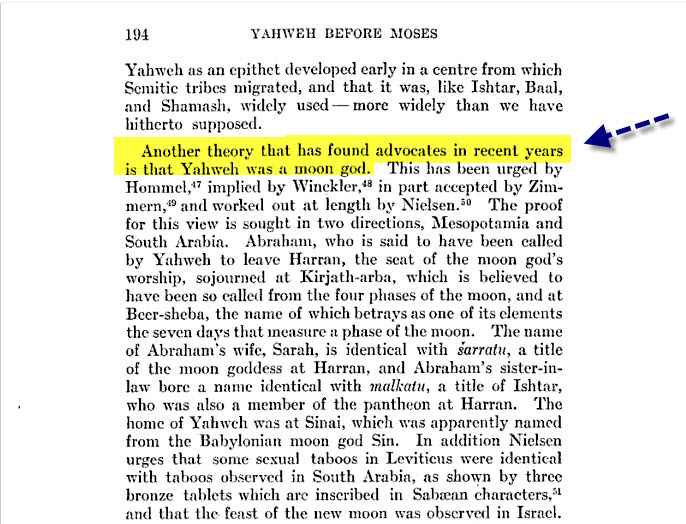
Yahweh the Moon God
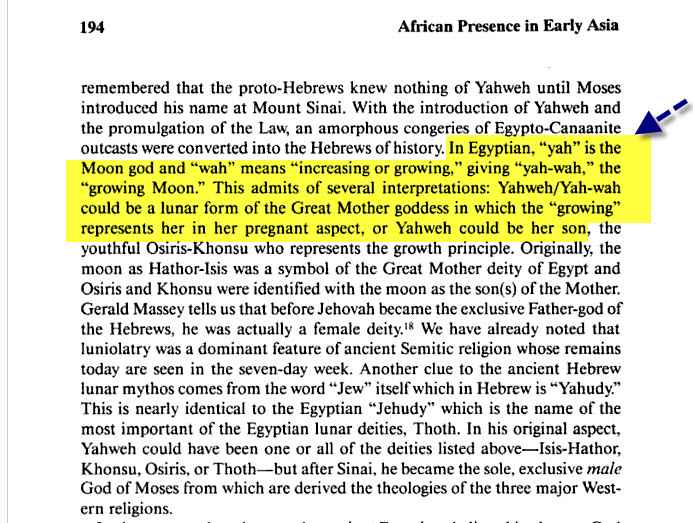
The first theory regarding the name Yahweh is that he is the god of the moon. The name of the moon god in Egypt was Yah — and the word wah means to grow or increase — so the word Yahweh was formed, meaning the growing moon.
African Presence in Early Asia, Volume 7 — Ivan Van Sertima and Runoko Rashidi:
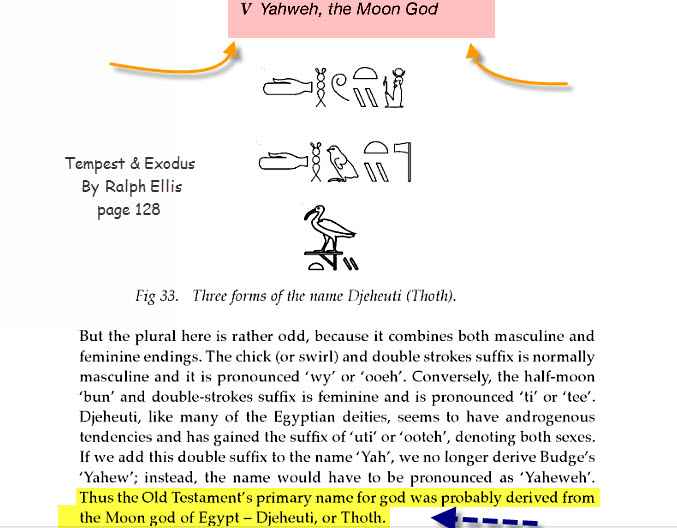
Studies in the History of Religions — Lyon:

Yahweh the God of the Volcano
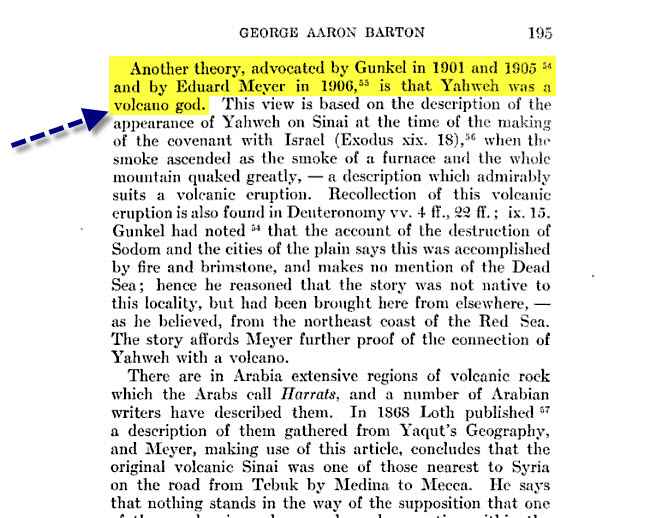
Yahweh means overflowing — and especially the god of the volcano:
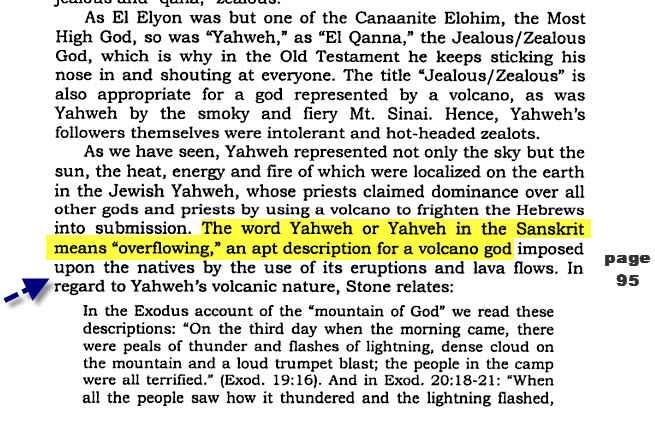
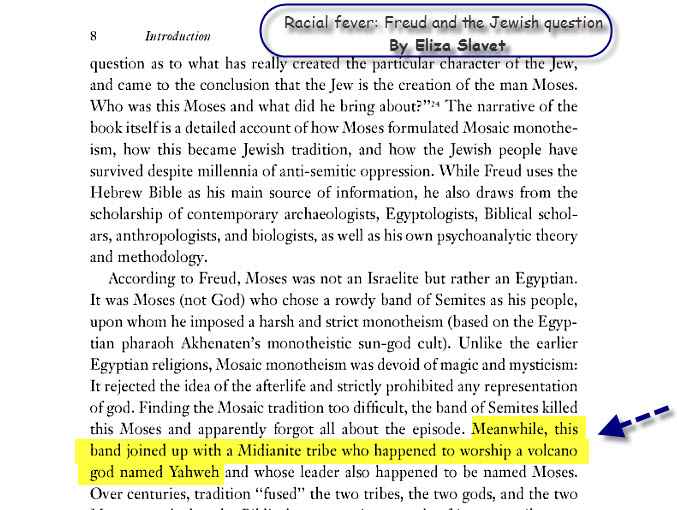
Studies in the History of Religions — Lyon:

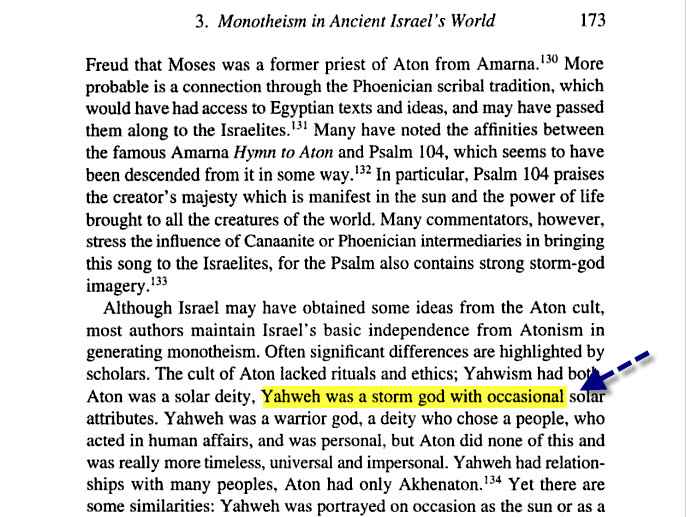
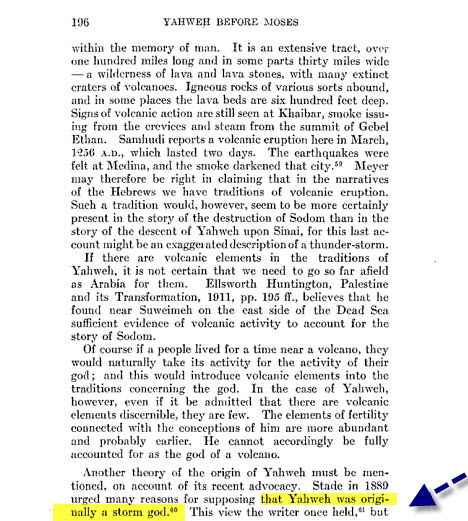
Yahweh the Storm God
Traditions and Beliefs of Ancient Israel — Cheyne T. K.:

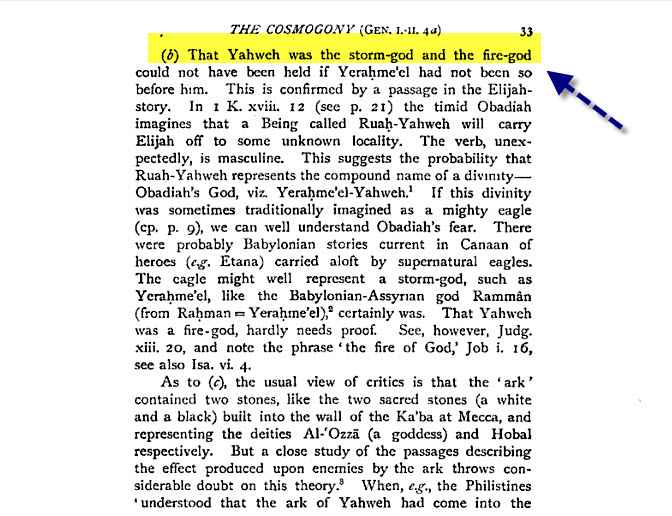
No Other Gods: Emergent Monotheism in Israel — Robert Karl Gnuse:
Studies in the History of Religions — Lyon:

A Name Stolen from Other Religions
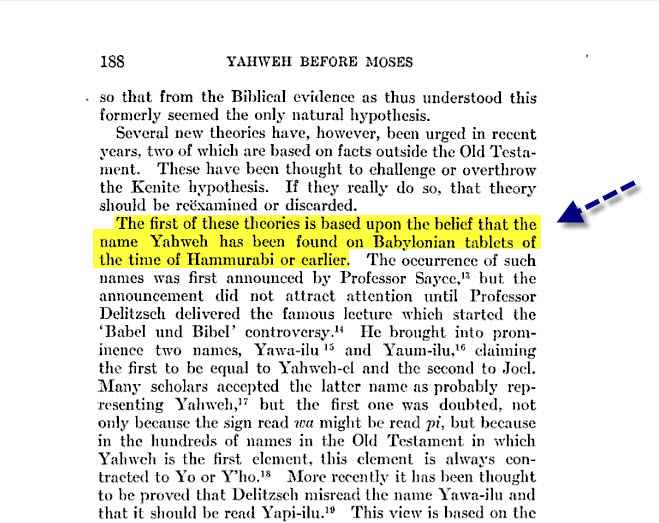
A name stolen from other religions — found on Babylonian inscriptions.
The Biblical Encyclopedia:
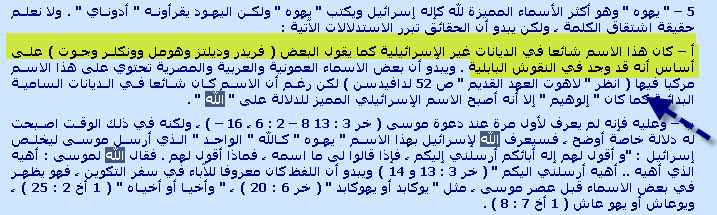
Studies in the History of Religions — Lyon:
Not a Name at All
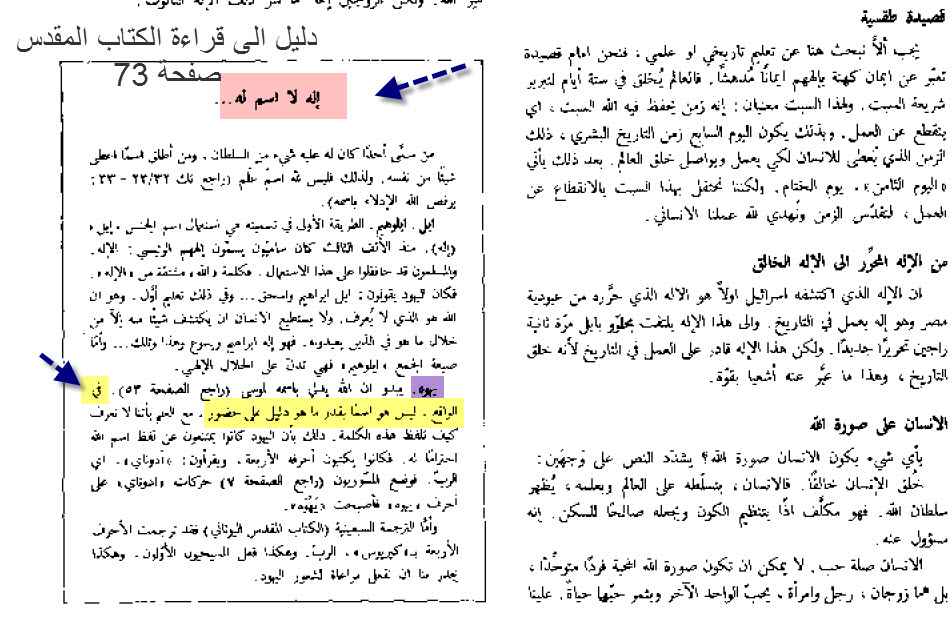
Under the title of a “God with no name,” the author of A Guide to Reading the Bible tells us that Yahweh is not a name but rather evidence of presence:
“I Will Be” — The Covenantal Future
Origen says it denotes the simple future — that is, “Yahweh” means “I will be.” It does not connect cause and effect, nor does it express existence in a metaphysical image, but rather the covenantal promise of divine presence in the present time and in the Messianic age in the future. Thus this name became associated with Messianic hope, as appears from the phrase “the day of Yahweh.”
As the translators of the Septuagint understood — the word Yahweh was translated in the Septuagint as Kyrios (Lord) and other words. Father Basit stated that the translators of the Septuagint translated Yahweh as Kyrios as an interpretive translation. The priest says simply: when the Jews translated the Old Testament into Greek in the third century BC, they did not translate the name “Jehovah” as it is — like the names of angels and humans such as Michael and Israel — but rather they translated it in an interpretive translation. They translated it into Greek as “Kyrios,” which means “Lord and Master.”
Modern Interpretation of the Holy Bible:

And with this we have seen that Yahweh is a name whose derivation, original meaning, and pronunciation are unknown, and scholars differed about its meaning.
The Word Hayah — No Sanctity in the Old Testament
Let us return to the original text that came in the Book of Exodus, when Moses, peace be upon him, asked God Almighty about His name:
“Then Moses said to God, ‘Behold, I am going to the children of Israel and will say to them, The God of your fathers has sent me to you. And they will say to me, What is his name? What shall I say to them?’ And God said to Moses, ‘I AM THAT I AM.’ And he said, ‘Thus you shall say to the children of Israel, I AM has sent me to you.’”
What does the word Ahyah mean? The BDB dictionary defines הָיָה (hayah) as: “to be, become, come to pass, exist, happen, fall out.” The Strong dictionary defines it as: “a primitive root; to exist, that is, be or become, come to pass.”
So the word means to be, or to become, or to happen — and its meaning is not specific to God only in the Old Testament, and it was said by many. Let us take some examples:
“And Jephthah said to the elders of Gilead, If you bring me home again to fight against the children of Ammon, and the Lord deliver them before me, shall I be your head?”
“And David said unto Saul, Who am I? and what is my life, or my father’s family in Israel, that I should be son in law to the king?”
“But if thou return to the city, and say unto Absalom, I will be thy servant, O king; as I have been thy father’s servant hitherto, so will I now also be thy servant: then mayest thou for me defeat the counsel of Ahithophel.”
Now we know that the word Ahyah has no sanctity in the Old Testament and anyone can say it. This is the first point.
We return to the phrase Ahyah Asher Ahyah and see how the commentators differed about its meaning. Let us go to Adam Clarke’s interpretation to see that this phrase can be understood in many ways:
[!scholar] Adam Clarke — Clarke’s Commentary on Exodus 3:14
These words have been variously understood. The Vulgate translates Ego Sum Qui Sum, I am who am. The Septuagint, Εγω ειμι ὁ Ων, I am he who exists. The Syriac, the Persic, and the Chaldee preserve the original words without any gloss. The Arabic paraphrases them…
Father Matta El Meskeen conveys the Jews’ interpretation of this phrase, saying that its meaning is: “I am the one who establishes the entity or existence.”
Interpretation of the Gospel of John — Father Matta El Meskeen, page 221:
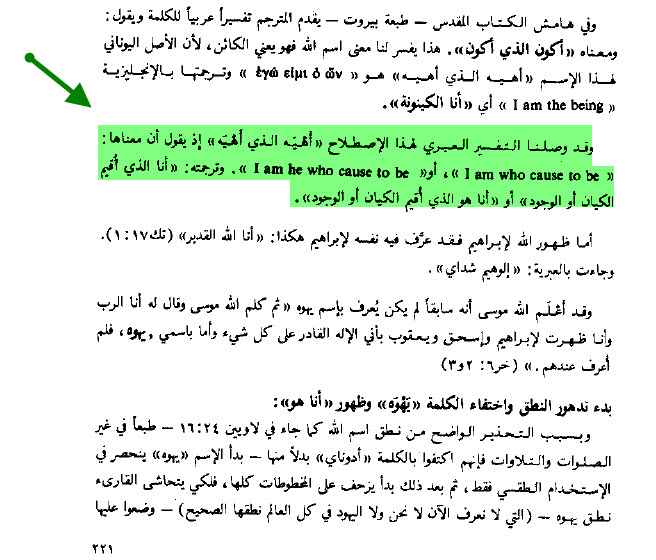
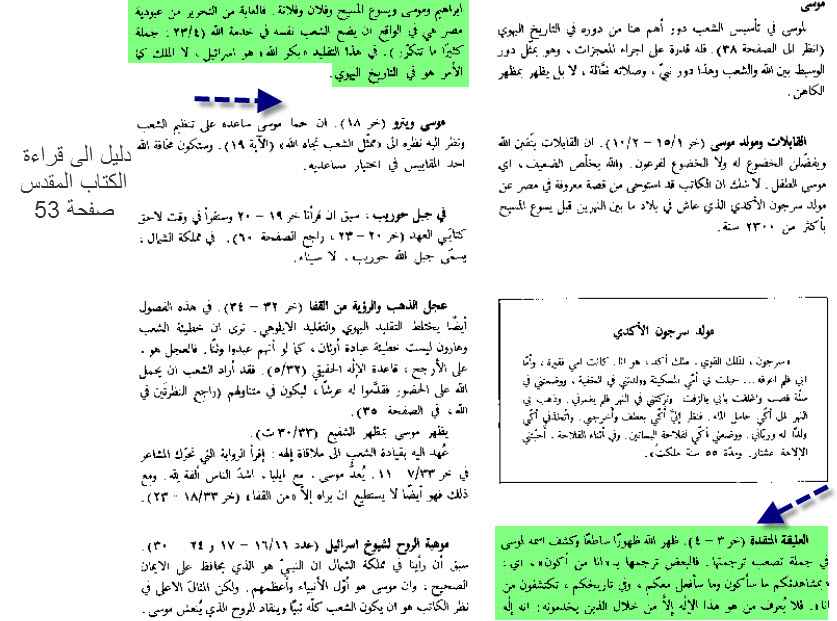
We read in A Guide to Reading the Bible that after stating that this phrase is difficult to translate, it says that the phrase means “I am who I am” — meaning that people will know me with the passage of time:
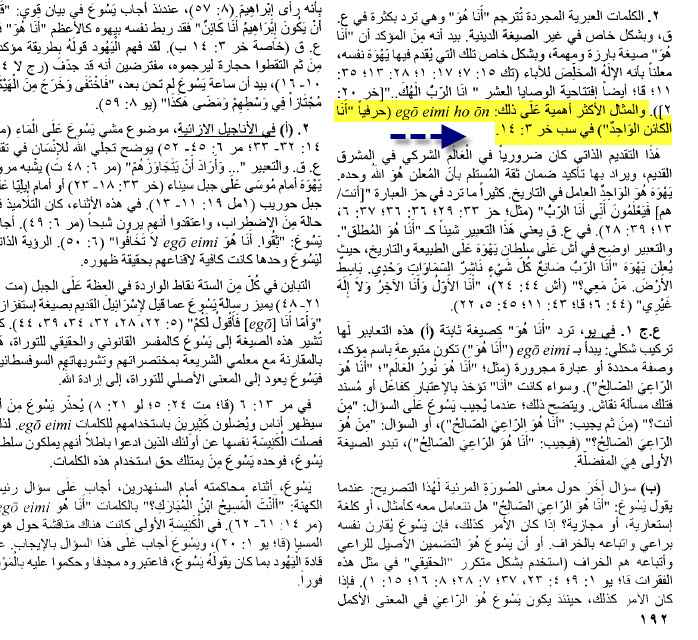
We read in the Encyclopedic Dictionary of the New Testament that the word means “I am the one being”:

Father Basit quotes some other translations: “I Am Who I Am” — “I Am What I Am” — “I Am That I Am” — “I Am That is Who I am” — “I Will Be What I Will Be.”
What we would like to clarify is that linking this phrase to Yahweh is just a theory among theories, as we have seen — and even those who said that, said that it is not a proper name for God at all and is just an interpretation of the name Yahweh.
Modern Commentary on the Holy Bible, page 78:
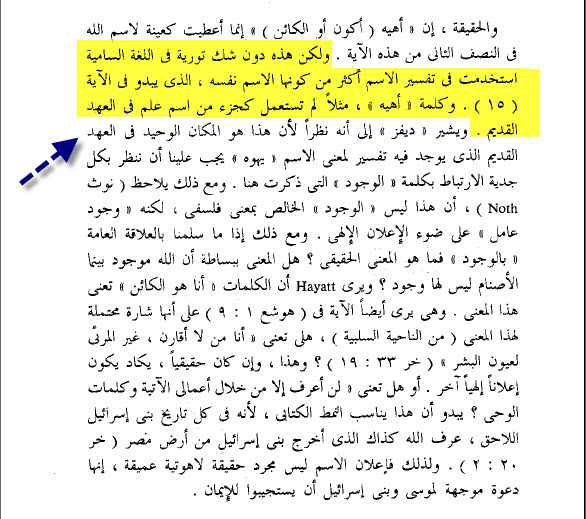
So Ahyah Asher Ahyah is not a proper noun for God but rather just an interpretation — and this is one theory among many theories. Ahyah is not specific to God alone, anyone can say it, and scholars differed about its meaning.
The Septuagint Destroys the Link Between Ego Eimi and Ahyah
Now we have to determine what is the relationship between Ego Eimi and Yahweh.

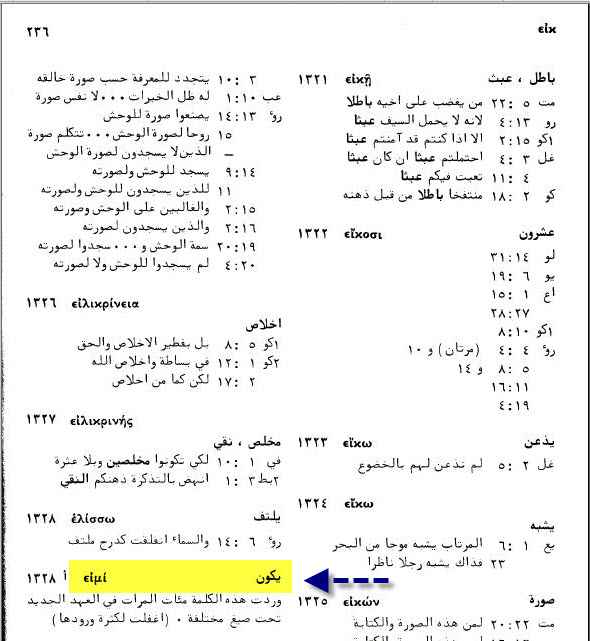
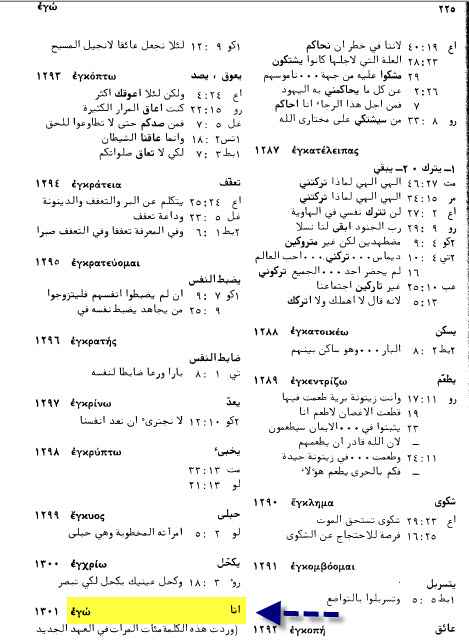
The Elements of New Testament Greek — Jeremy Duff and David Wenham:
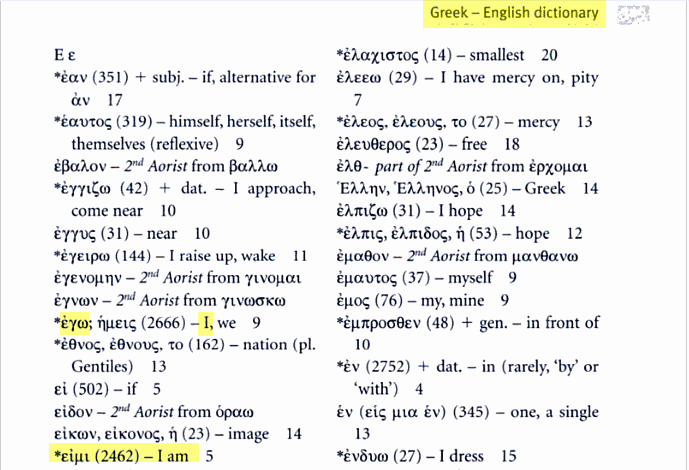
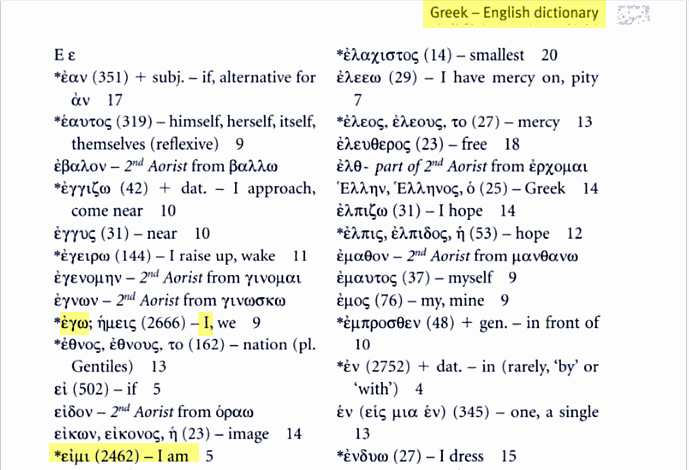
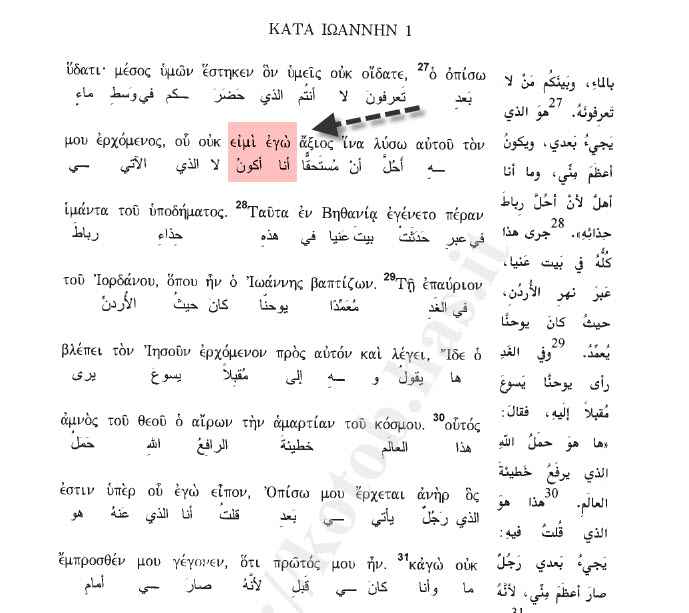
So the word in its Greek origin has no sanctity. There is no Christian reference at all that says that Ego Eimi is one of the names of God in the Greek language. The holiness that some of the People of the Book gave to this word was claimed by saying it is equal to Ahyah in Hebrew — and thus whoever said Ego Eimi in Greek is like whoever said Ahyah in Hebrew — and whoever said Ahyah is Yahweh. We have proven, thanks to God, that linking Yahweh to Ahyah is just a theory among theories, and we have also proven that Ahyah has no sanctity in the Old Testament and anyone can say it.
What Did the Septuagint Actually Translate Ahyah As?
This translation has gained a very great position among Christian scholars. Many of the fathers believed that this translation is a revelation from God. Indeed, this translation is considered the official text of the Old Testament in the Orthodox Church.
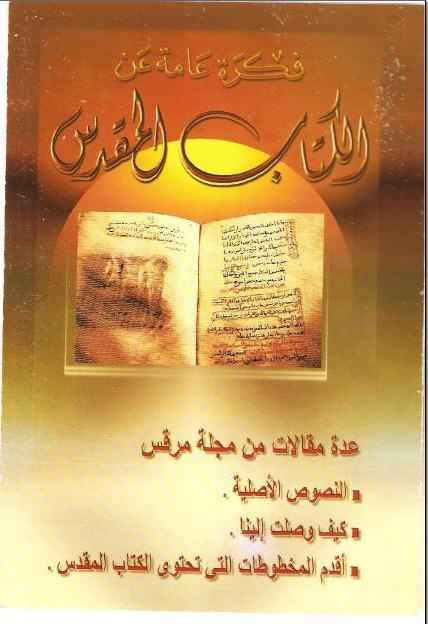
General Idea about the Holy Bible — Monastery of Anba Makar:

Patrology — Tadros Yacoub Malati:
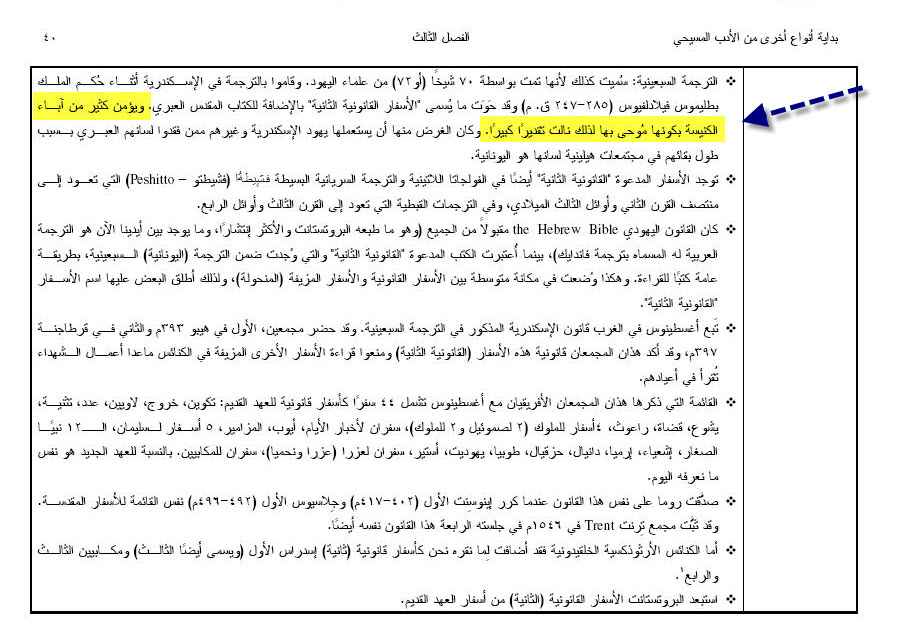
A Guide to Reading the Bible:

Most of the New Testament quotations from the Old Testament were from the Septuagint translation — that is, the writers of revelation themselves were leaving the Hebrew original and quoting from this Greek translation, such as the famous text of Matthew which he quoted from the Book of Isaiah. In the Septuagint it says “the Virgin” while in the Hebrew original it is “the young girl.” The writer of the Gospel of Matthew quoted the text from the Septuagint because it serves the Christian belief in proving the existence of Jesus in the Old Testament.
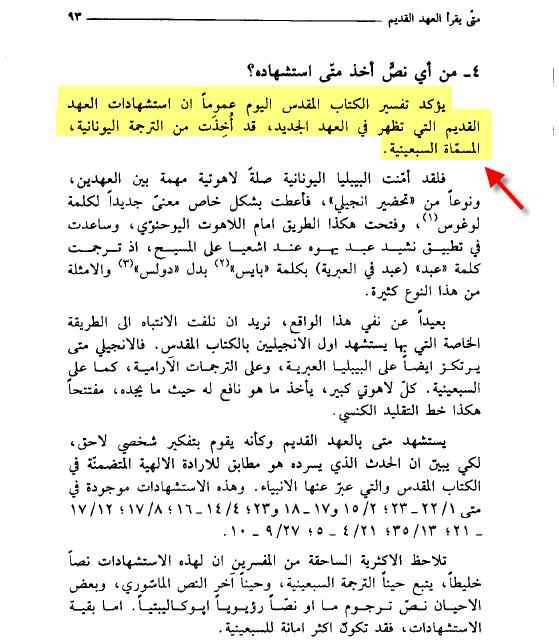
An Introduction to the New Testament and the Origins of Christianity — Delbert Royce Burkett:
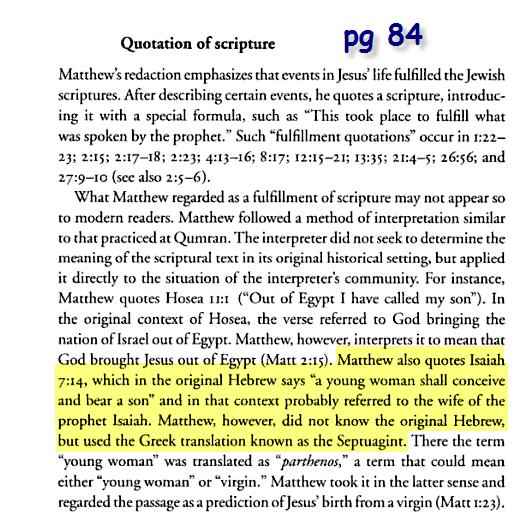
Now let us go to the Septuagint and see if Ahyah Asher Ahyah was translated into Ego Eimi. Let us look at the text of Exodus 3:14:
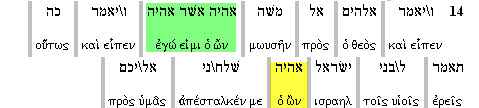
Let us take the first section: “I AM THAT I AM” in Hebrew is אהיה אשׁר אהיה and in the Septuagint it is Ἐγώ εἰμι ὁ ὤν.
The word Ego Eimi is actually present in the translation — but there is another word next to it: ὁ ὤν. What does this word mean? This word consists of two syllables:
- ὁ (ho) — Thayer definition: “the definite article, ‘the’”
- ὤν (ōn) — Thayer definition: “being.” Strong dictionary: “The feminine, the neuter and the present participle of G1510; being”
So ὁ ὤν = the being.
Now let us go to the New Testament and see what word corresponds to “being” in the original Greek:
“from whom the fathers, and from whom Christ in the flesh, who is above all God blessed forever; amen.”
“John to the seven churches in Asia: grace to you and peace from Him who was and who is to come, and from the seven spirits who are before his throne.”
The Septuagint translators translated Ahyah Asher Ahyah as “I am THE BEING” — not as “I am” alone.
Interpretation of the Gospel of John — Father Matta El Meskeen, page 221:
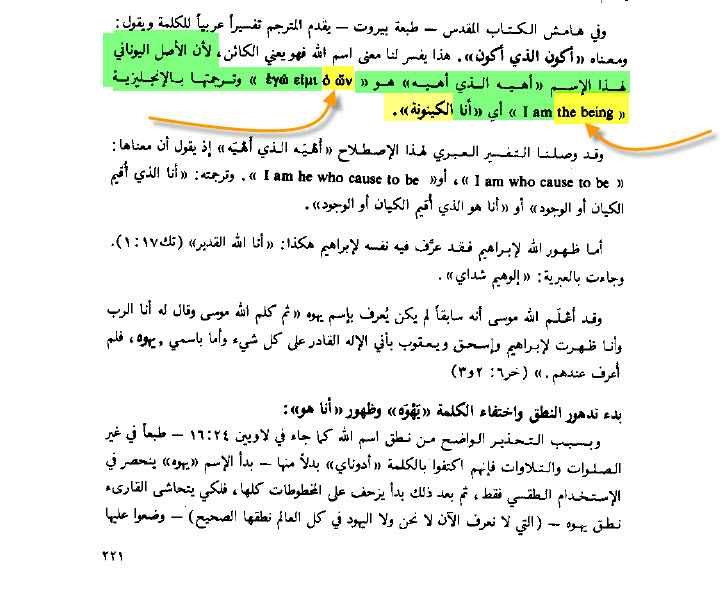
Father Basit says:
[!scholar] Father Abdel-Masih Basit — Is Christ God, the Son of God, or Human?
“Ego eimi ho On… ho On apestalke me” — and it literally translates into English: “I am THE BEING… THE BEING has sent me.”
So the matter has become very clear for everyone: the word that corresponded to Ahyah among the Jews is Ho On — and not Ego Eimi as these people claimed. The evidence that completely destroys the sanctity of Ego Eimi is the translation that corresponds to the word Ahyah when it came alone in the second part of the verse:
“Ahyah has sent me” → translated in the Septuagint as Ὁ ὢν ἀπέσταλκέν με (Ho On apestalken me — “THE BEING has sent me”)
The word Ahyah when it came alone was translated as Ho On — not as Ego Eimi. The translators of the Septuagint understood the verse as follows: God said to Moses, “I am who I am (I am the one who is)” — and said, “Thus you shall say to the children of Israel: the one who is (Ho On) has sent me to you.” The word “being” in both parts came as Ho On (Ὁ ὢν) — while Ego Eimi was merely a definite article, nothing more and nothing less.
Father Basit says:
[!scholar] Father Abdel-Masih Basit — Is Christ God, the Son of God, or Human?
The name of God “Ahyah” was known among the Jews who lived in the diaspora and used Greek in their conversations as “the being — Ho On” according to the Greek translation they had. And “the being,” as we have shown, is the name of God that expresses His being, existence, and essence. They knew “Ho On — the being” more than the original Hebrew “Ahyah.” Philo, the Alexandrian Jewish philosopher, used the Greek word “being” in the first century AD as the real name of God.
So the matter has become very clear — the word that corresponded to Ahyah among the Jews is Ho On, and not Ego Eimi. So whoever wants to tell us after that that Jesus said that he is Ahyah, let him come to us on the tongue of Christ with words in which he says that he is Ho On (Ὁ ὢν).
Yahweh Was Never Translated as Ego Eimi in the Septuagint
Now after the fall of any link connecting Ego Eimi to Ahyah, all that remains is to see the names that the translators of the Septuagint used in exchange for the word Yahweh. We say and challenge any Christian: No, it never happened that the Septuagint translated Yahweh as Ego Eimi. Someone claimed that Yahweh in Hebrew corresponds to Ego Eimi in the Septuagint, and cited Isaiah 45:18 — but this is an error:
“For thus says the LORD, the Creator of the heavens, He is God; He formed the earth and made it; He ordained it; He did not create it in vain, to be inhabited; He formed it: I am the LORD, and there is no other.”
This honourable man claimed that Yahweh in Hebrew corresponds to Ego Eimi in Greek. But what is the word that corresponds to the word next to Yahweh — the word אני (ani)? The Strong dictionary defines it as simply “I (first person singular — usually used for emphasis).” The BDB dictionary: “I (first person singular — usually used for emphasis).”
So אני simply means “I.” And this is the word that in the Septuagint corresponds — it is a tool for definition, nothing more and nothing less. As for Yahweh in this text, it was not translated at all into Ego Eimi.
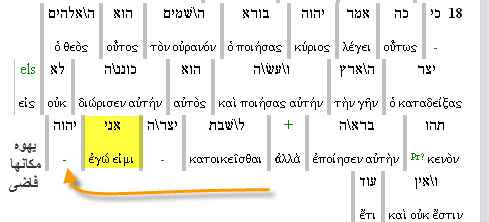
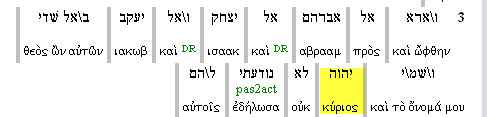
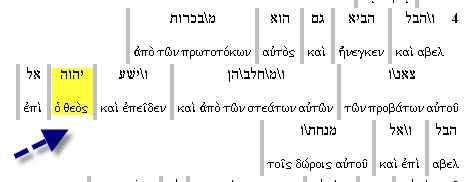
Yahweh was often translated in the Septuagint as Kyrios (Lord) or Ho Theos (God), and sometimes it was not translated at all when it came with Elohim.
Father Matta El Meskeen says in the Book of the Titles of Christ: The true pronunciation of the word was lost from the Jewish tongue since around 300 BC, because they refrained from pronouncing it at all when reading the books due to fear and awe of the owner of the name, which they replaced with the word “Adonay” meaning Lord, and it was translated as “Lord” — it came in the Septuagint as Κύριος and in Latin as Dominus and in English as Lord.
Example — Yahweh vs. Kyrios in Exodus 6:3:
Example — Yahweh vs. Ho Theos in Genesis 4:4:
Example — Yahweh not translated at all in Genesis 2:4:
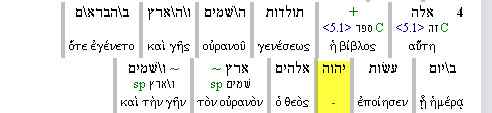
In summary: Ahyah did not correspond to Ego Eimi in Greek but rather to Ho On. And Yahweh was never translated as Ego Eimi in the Septuagint. Thus any theory linking Ego Eimi to Ahyah or Yahweh completely falls.
The Story of Ego Eimi — Even If We Accept All Their Assumptions
Now let us make several more assumptions:
- Let us assume that the meaning of Yahweh and the derivation of the word are known to everyone.
- Let us assume that Ahyah is the deep meaning of the word Yahweh.
- Let us also assume that Ahyah in Hebrew corresponds to Ego Eimi in Greek.
- Let us let our imagination run wild a bit more and assume that Yahweh in Hebrew corresponds to Ego Eimi in the Septuagint of the Old Testament.
Now let us ask: did the New Testament writers use Ego Eimi to refer to the name of God? Did Ego Eimi mean Yahweh to the Jews?
Some divided Ego Eimi into several sections — a definition of identity followed by a name and things like that — and said that when Jesus says “Ego Eimi” you must understand that he means he is Yahweh, but if someone else said it, he didn’t mean anything. Let the Christian references refute this nonsense.
The Encyclopedic Dictionary of the New Testament:
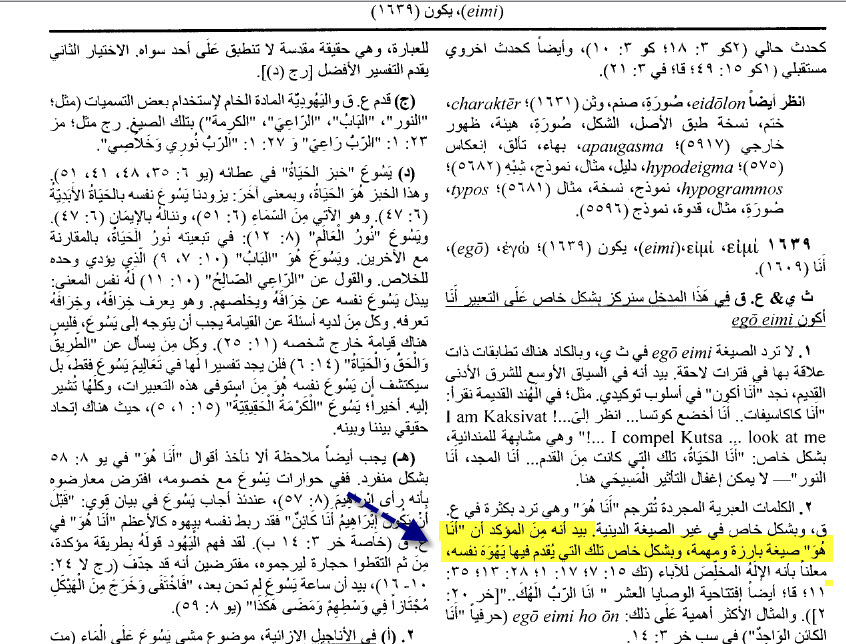

Evidence That Demands a Verdict — Josh McDowell:
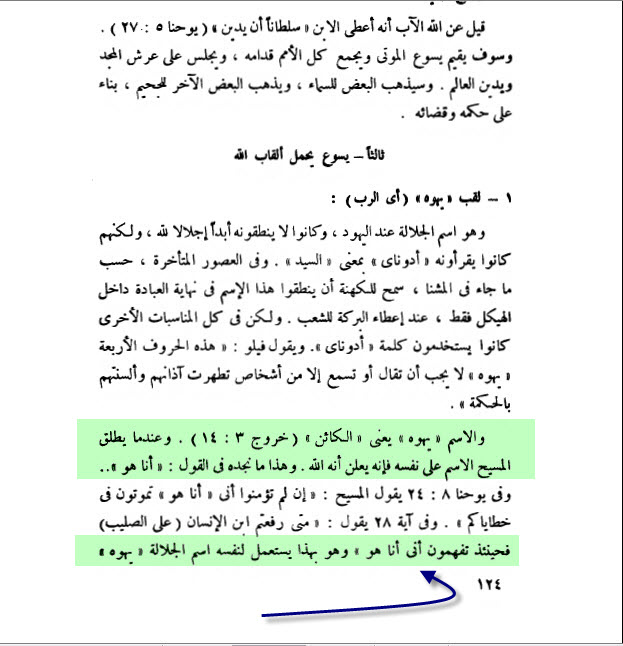
Commentary on the Gospel of John — Father Matta El Meskeen:
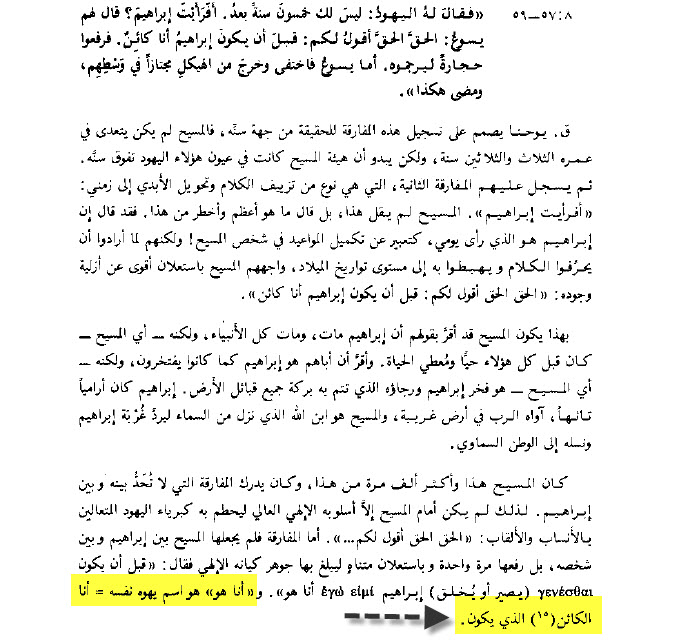
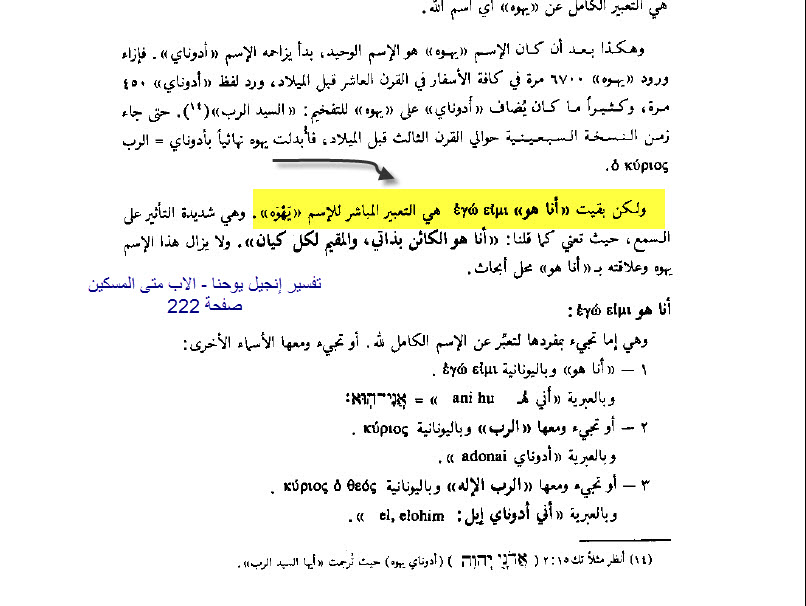
I Am the Resurrection and the Life — Anba Moussa:
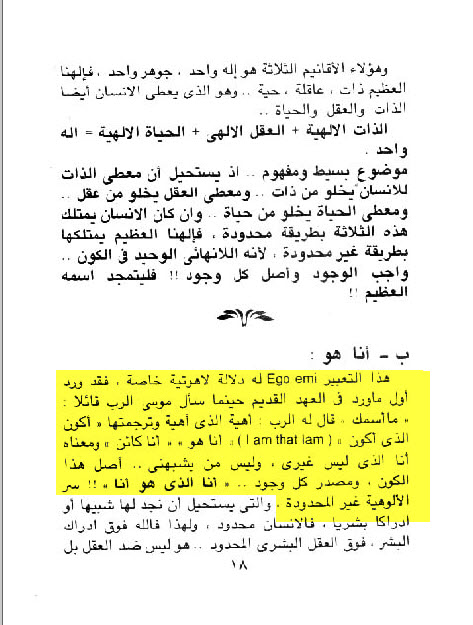

So the words are very clear — Ego Eimi is the formula in which Yahweh presents himself and it means “I am the being who is” and it is the name of majesty, the phrase has special theological connotations. As everyone can see, those scholars who said that Ego Eimi = Yahweh said that the word in itself is sacred at all times. Thus the dialogue with some scholars of the People of the Book is limited to two points and no third: either Ego Eimi = Yahweh, or Ego Eimi does not equal Yahweh.
Is Ego Eimi equal to Yahweh? The answer is simply no. If Ego Eimi was equal to Yahweh in the Jewish tradition and in the tradition of the Gospel writers, no one other than Jesus would have said it. But the funny thing is that this expression — which some scholars of the People of the Book use as evidence of the divinity of Jesus — was said by everyone in the Bible.
Paul Said It
“Then Paul said, ‘I would pray to God that, both very briefly and very much, not only you but also all who hear me this day may become even as I am (ἐγώ εἰμι), except for these chains.’”
All the Disciples Said It
“And as they were eating, he said, Verily I say unto you, That one of you shall betray me. And they were exceeding sorrowful, and every one of them began to say unto him, Is it I (ἐγώ εἰμι), Lord?”
Peter Said It
“Then Peter went down to the men who had been sent to him from Cornelius, and said, ‘Here I am (ἐγώ εἰμι), the one you are looking for. What is the reason for which you have come?’”
The Blind Man Said It
“Others said, ‘This is he,’ and others, ‘It is like him.’ But he said, ‘I am he (ἐγώ εἰμι).’”
The Angel Gabriel Said It
“Then the angel answered and said to him, ‘I am (ἐγώ εἰμι) Gabriel, who stands before God, and I have been sent to speak to you and to bring you this good news.’”
As everyone can see, Ego Eimi was translated simply as “I am” — because the meaning is the same in the translators’ understanding. Whether translated as “I am” or not, the meaning reaches the reader. This indicates the translators’ disdain for the word — it is just a word for definition, nothing more and nothing less.
According to the Septuagint, Some Also Said It in the Old Testament
“Then Abner turned behind him and said, ‘Are you Asahel?’ And he said, ‘I am (ἐγώ εἰμι).’”
The funny, sad, and shameful thing about this matter is — Judas the traitor also said Ego Eimi:
“Then Judas, who betrayed him, answered and said, ‘Rabbi, is it I (ἐγώ εἰμι)?’ He said to him, ‘You said it.’”
Yes — Judas said Ego Eimi. Christianity is the only religion that is unique in that the title of the Lord is the same as the title of the traitor to the Lord. There is no power or strength except with God.
The Sanctity of the Word Among the People of the New Testament
Now let us add another assumption to the previous assumptions — which is that the word Ego Eimi was only said by Jesus, whether in the New Testament or in the Septuagint translation of the Old Testament. Now let us see how sacred this word was to Jesus personally, and when he said this word did he mean by it that he was Yahweh?
Let us take the answer from the mouth of Christ himself:
“Then Jesus said to them, ‘When you lift up the Son of Man, then you will know that I am he (ἐγὼ εἰμί) and that I do nothing of myself, but as my Father taught me, I speak these things.’”
By the Lord of the Kaaba, I am amazed at this verse. How can “Ego Eimi” mean Yahweh and then say “I do nothing of myself”?
Tadros Yacoub Malati says in his interpretation of this verse:
[!scholar] Father Tadros Yacoub Malati — Interpretation of the Gospel of John, Chapter 8
“I am not of myself. Because the Son is God from the Father, but the Father is God, not from the Son. The Son is God from God, the Father is God, not from God. The Son is Light from Light, and the Father is Light, but not from Light. The Son is, but there is someone from whom he is, and the Father is, but there is no someone from whom he is.”
No comment of course.
Did Christ mean in this verse that he is Yahweh when he said Ego Eimi? Let us go to the Noble Commentary on the Holy Bible for the answer:
In Adam Clarke’s interpretation:
[!scholar] Adam Clarke — Clarke’s Commentary on John 8:28
“When ye have lifted up — when ye have crucified me, and thus filled up the measure of your iniquities, ye shall know that I am the Christ, by the signs that shall follow; and ye shall know that what I spoke is true, by the judgments that shall follow.”
In Albert Barnes’ interpretation:
[!scholar] Albert Barnes — Barnes’ Notes on the Bible, John 8:28
“That I am he — Am the Messiah, which I have professed to be. And that I do nothing of myself — that is, you shall have proof that God has sent me; that I am the Messiah; and that God concurs with me and approves my doctrine.”
When Jesus used the word Ego Eimi, he used it to define himself — nothing more and nothing less. When he said “I am,” he meant “I am the Christ” — not “I am Yahweh.”
Let us go to another text in Luke that clarifies the matter:
“Then they all said, ‘Are you the Son of God?’ And he said to them, ‘You say that I am (ἐγὼ εἰμί).’”
Ask any Christian — Jesus said to the people “You say that I am (ἐγὼ εἰμί).” Is there anyone among those whom Jesus met in the New Testament who claimed that Jesus is Yahweh? Therefore, Jesus’ words are very clear — “I am” means: I am the Christ, the Son of God.
Commentary on the Gospel of Luke — William Barclay:
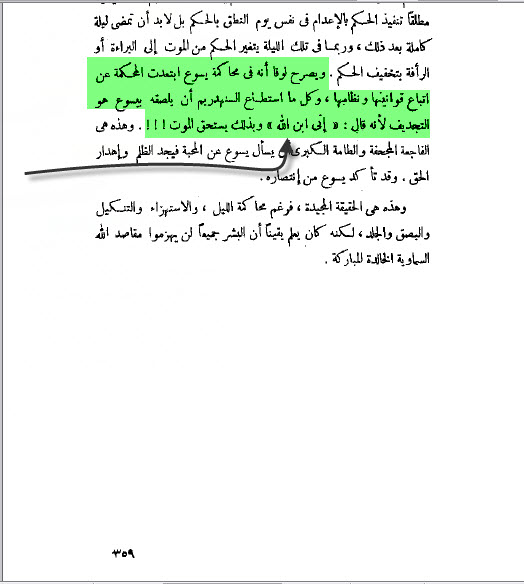
The accusation against Jesus before the council was that he said he was the Son of God. This is what he meant by the phrase “You say I am the Messiah” (ἐγὼ εἰμί) — meaning I am the Christ, or I am the Son of God — and there is no God, no Yahweh, and nothing else.
The Ancient Christian Commentary on Scripture:
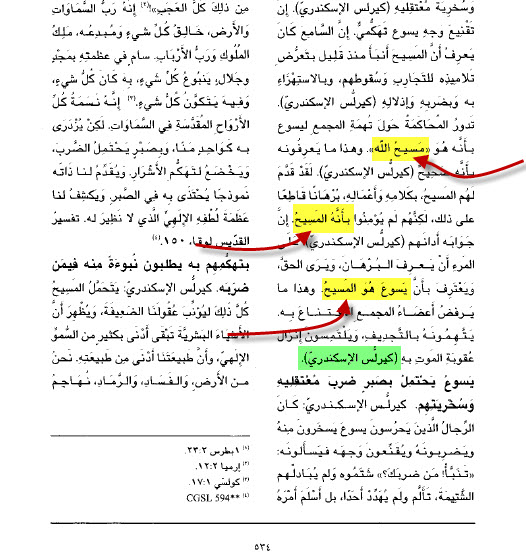
Saint Cyril’s words are clear and do not need explanation. Father Matta El Meskeen’s interpretation:
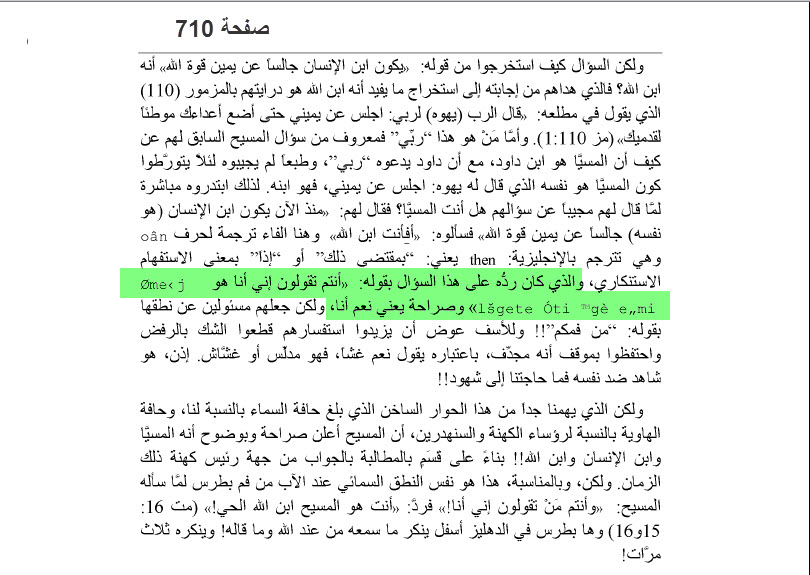
Here the words of Father Matta are very clear — Jesus’ sentence means “yes, I am” — because the people’s question was “Are you the Son of God?” and Christ’s answer was “yes, I am the Son of God.”
Another text showing how Christ himself used the word:
“Then he said, ‘Take heed that you be not deceived, for many will come in my name, saying, I am he! and the time is near; therefore do not go after them.’”
Here Christ is telling the disciples that there will come one day people who say “I am Yahweh”? Or is there another meaning? Indeed, there is another meaning — revealed to us by the writer of the Gospel of Matthew:
“For many will come in my name, saying, I am the Christ! And they will deceive many.”
The word “I am” for Jesus was for identification — nothing more, nothing less. “I am he” = “I am the Christ.”
The Effect of Hearing Ego Eimi on People
To the Disciples
“And immediately Jesus spoke to them, saying, Take courage, I am he (ἐγώ εἰμι), do not be afraid. Then Peter answered and said, Lord, if it is you, command me to come to you on the water. And he said, Come. So Peter got down from the boat and walked on the water to come to Jesus. But when he saw the wind strong, he was afraid; and beginning to sink, he cried out, saying, Lord, save me. And immediately Jesus stretched out his hand and caught him, and said to him, O you of little faith, why did you doubt? And when they had entered into the boat, the wind ceased. And those in the boat came and worshipped him, saying, Of a truth you are the Son of God.”
Here Jesus said Ego Eimi before the people — and the people believed in him that he was the Son of God. No one understood from the words of Jesus that he was Yahweh.
On Martha
“Then Martha said to Jesus, ‘Lord, if you had been here, my brother would not have died. But even now I know that whatever you ask of God, God will give it to you.’ Jesus said to her, ‘Your brother will rise again.’ Martha said to him, ‘I know that he will rise again in the resurrection at the last day.’ Jesus said to her, ‘I am the resurrection and the life. Whoever believes in me, though they die, yet shall they live. And everyone who lives and believes in me will never die. Do you believe this?’ She said to him, ‘Yes, Lord. I believe that you are the Christ, the Son of God, who is coming into the world.’”
Here Martha believed that Jesus was the Christ, the Son of God — and even said to him “Lord” — although Jesus said Ego Eimi in front of her. And she did not understand from this word that Jesus is Yahweh.
The Samaritan Woman
“The woman said to him, ‘I know that Messiah is coming, who is called Christ. When he comes, he will tell us everything.’ Jesus said to her, ‘I who speak to you am he (ἐγώ εἰμι).’ At this point his disciples came and marvelled that he was talking with a woman. So the woman left her waterpot and went away into the city and said to the people, ‘Come, see a man who told me everything I ever did. Is not this the Christ?’”
Here Jesus said Ego Eimi in front of the woman. The woman went away and said to them: “Come, see a man…” We will leave the comment to the wise.
Among the Jews
“Then Jesus said to them, ‘I am the bread of life. Whoever comes to me will never go hungry, and whoever believes in me will never thirst. But I said to you that you have seen me and do not believe. All that the Father gives me will come to me, and whoever comes to me I will in no way cast out. For I have come down from heaven, not to do my own will, but the will of him who sent me. And this is the will of the Father who sent me, that of all that he has given me I should lose nothing, but raise it up at the last day. For this is the will of him who sent me, that everyone who sees the Son and believes in him may have eternal life, and I will raise him up at the last day.’ Then the Jews murmured against him because he said, ‘I am the bread that came down from heaven.’ And they said, ‘Is not this Jesus, the son of Joseph, whose father and mother we know? How can this man say, I came down from heaven?’”
Here we see that the Jews were amazed by Jesus’ words that he came down from heaven — and none of them said anything about the word Ego Eimi.
“So I told you that you will die in your sins, for unless you believe that I am he (ἐγώ εἰμι), you will die in your sins. Then they said to him, Who are you? Jesus said to them, What have I been saying to you from the beginning?”
Here Jesus says Ego Eimi in front of the Jews. So the Jews responded: “Who are you?” If Ego Eimi for the Jews meant Yahweh, their response would not have been “Who are you?”
The Gospel Writer Did Not Believe That Christ Is Yahweh
Did the writer of the Gospel of John believe that Christ is Yahweh? And is this the message he wanted to convey to people through his Gospel and through the word “Ego Eimi” which he attributed to Jesus? Let us go to the Gospel itself:
“And many other signs did Jesus in the presence of his disciples, which are not written in this book. But these are written that you may believe that Jesus is the Christ, the Son of God; and that by believing you may have life in his name.”
Therefore the writer of the Gospel of John wrote his Gospel so that we may believe that Jesus is the Christ, the Son of God — not that we may believe that Christ is Yahweh or God. This is the message that the writer of the Gospel of John wanted to deliver to people. This is of course very normal in the Jewish tradition — there are many sons of God in the Bible, both in the Old and New Testaments. Thus the writer does not know anything about the sanctity of Ego Eimi — otherwise he would have written in his Gospel that the reason for writing was so that people would believe that Jesus is Yahweh.
Introduction to the Bible — on the reason for writing the Gospel:
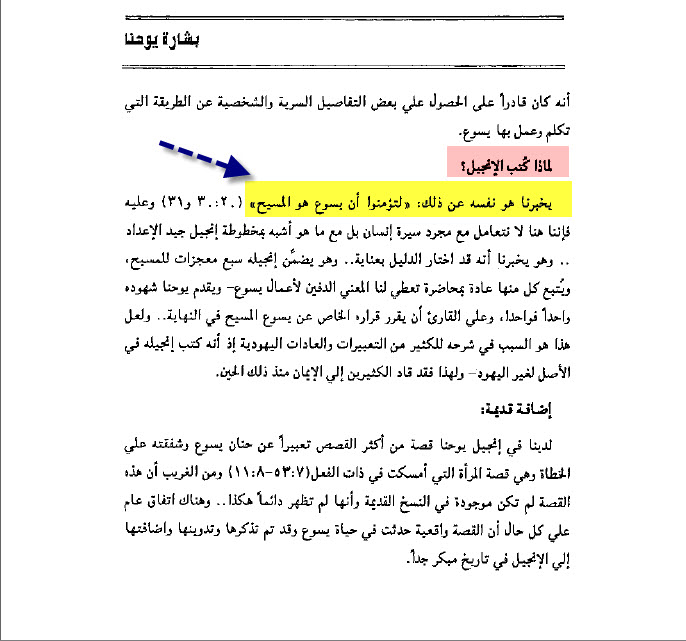

This meaning is also confirmed by Dr. Fahim Aziz in his book Introduction to the New Testament, where he confirms that the teaching intended to be conveyed by the Gospel of John is the belief that Christ is the Son of God:
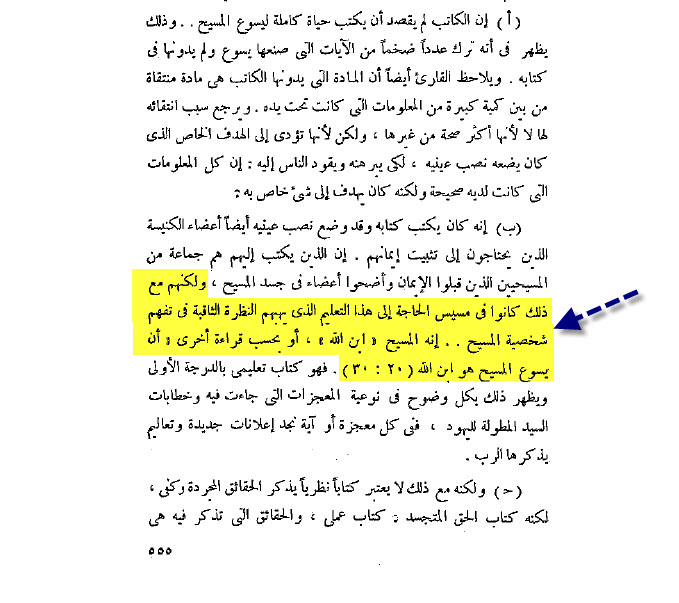
Dr. William Addy in the introduction to his interpretation says that the purpose of writing this Gospel is to strengthen people’s faith that Christ is the Son of God:
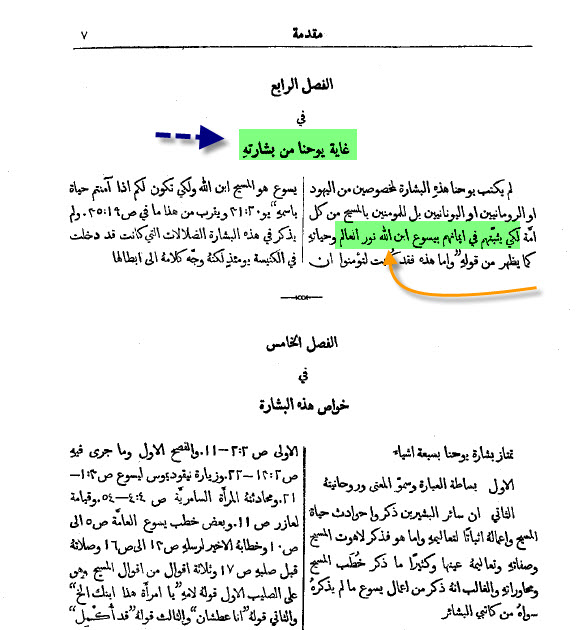
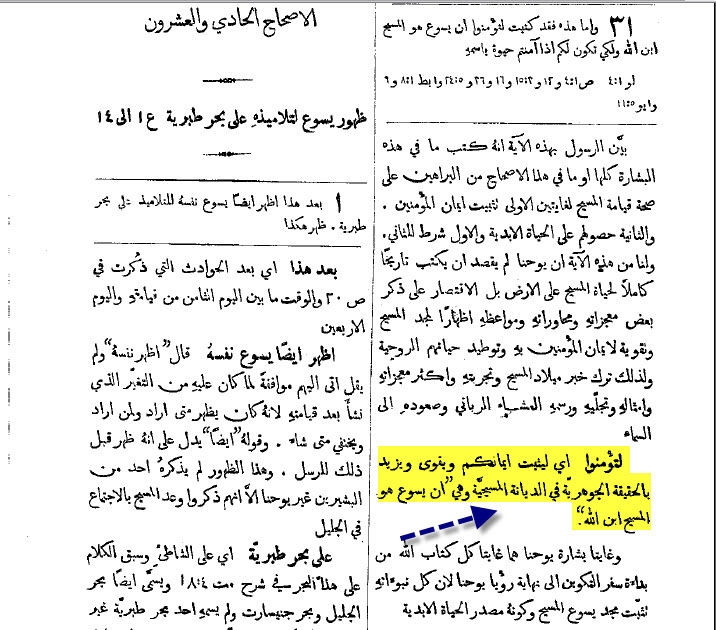
Father Matta El Meskeen says in his interpretation — these are the goals that were in the saint’s heart, and these are the goals that he wanted to convey to the reader:
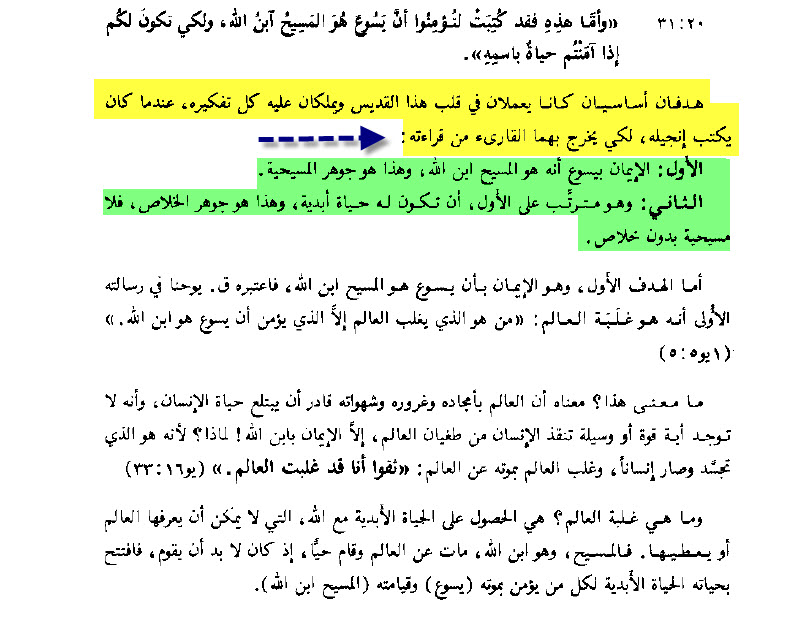
In A Guide to Reading the Bible:
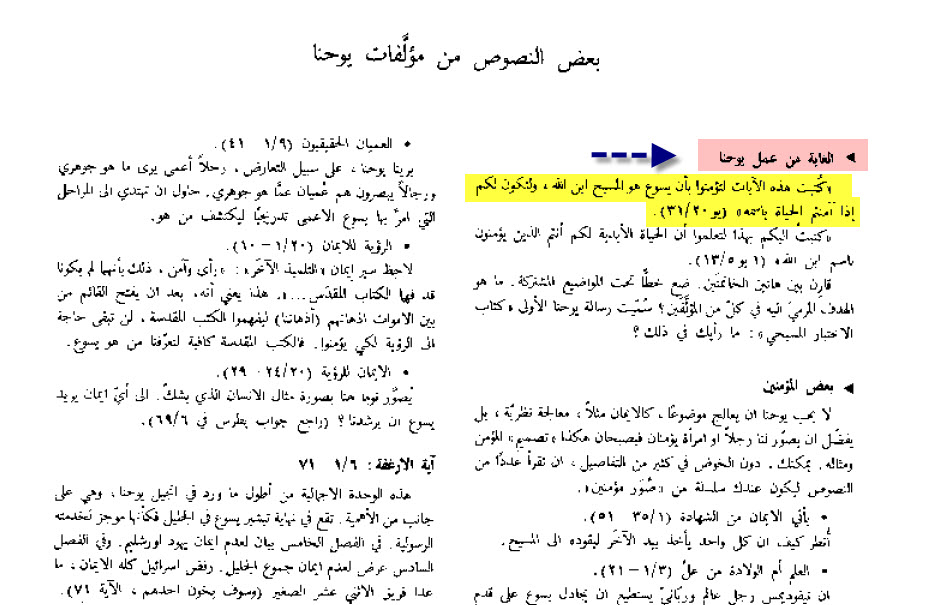
Father Anthony Fikry mentions the reasons for writing the Gospel and says:
[!scholar] Father Anthony Fikry — Interpretation of the Gospel of John, Chapter 20
So that you may believe that Jesus of Nazareth, who was born of a virgin, was crucified, and rose again, is the Christ, the Son of God, the Messiah, whom all the prophets prophesied. He is the hope of all Israel. He is the one who establishes the Kingdom of God. This Jesus, whom we saw as a man in our midst, is not of the earth, but is himself the Son of God. That by believing you may have life in his name — by this faith you may receive eternal life that appeared in the resurrection of Christ.
Tadros Yacoub Malati says:
[!scholar] Father Tadros Yacoub Malati — Interpretation of John 20:30–31
Belief in Jesus as the Christ, the Son of God, does not leave a person in his current position, but rather leads him to enjoy eternal life, or to enjoy the name of Christ, that is, his person as life itself.
Barnes says in his interpretation of this verse that everything that came in the Bible from miracles, discussions, and facts aims to believe that Jesus is the Messiah, the Son of God — and thus we will have eternal life if we believe that. The whole scope or end of the book is to accomplish two objects: to prove that Jesus was the Messiah, and that they who looked at the proof might be convinced and have eternal life.
So the writer of the Gospel of John does not know anything about Ego Eimi, and what he wanted to convey to people is that Jesus is the Christ and the Son of God. With this, any verse that Christians cite regarding the divinity of Christ from within this Gospel falls away — because the writer himself does not believe in the divinity of Jesus, but rather believes that he is the Christ and the Son of God, and this is what he wanted to convey to the people.
Scholars Who Know Nothing About This Claim
Dr. Maurice Tadros conveys to us that some Christian scholars objected to the word Ego Eimi:
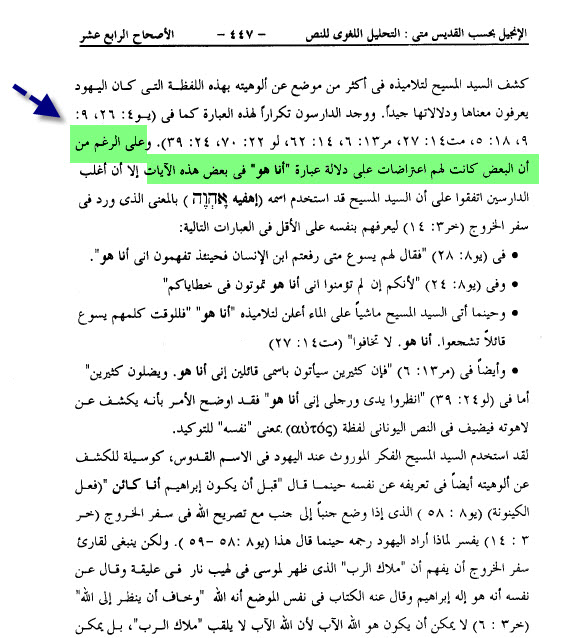
Now let us see some opinions of scholars who did not speak about Yahweh, neither directly nor indirectly. The first people who deserve to be mentioned are all the ancient church fathers. We challenge any Christian to bring us a saying by any of the ancient church fathers in which he said that Ego Eimi = Yahweh. We want anything from the church tradition — any saying that clarifies that Ego Eimi = Yahweh.


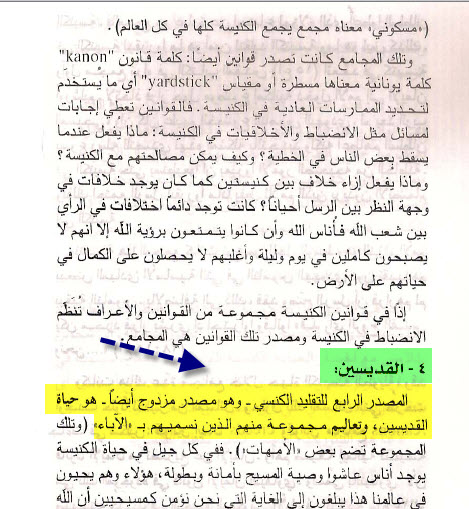
The ultimate reasoning that all ancient scholars have used from John 8:58 is the eternity of Jesus — and nothing else. We take from the ancients as an example:
Why did He not say “Before he was made, I was” but rather “I am”? Christ uses this expression to mean the continuity of being over all time. For this reason, this expression was considered blasphemy.
To weigh the words, and to know the secret: “Before he was made, I am.” To understand that “was made” refers to human creation, while “I am” refers to the divine essence. He did not say “Before Abraham was I was” — the one who was created only by me, the being. Nor did he say “Before Abraham was created, I was created.” To distinguish between the Creator and the creature.
“I am” in the present, because the Godhead has no past or future tense, but is always “being,” since He did not say “I was before Abraham.”
As everyone can see, not one of the ancient church fathers ever said that Jesus declared that he is Yahweh in this text.
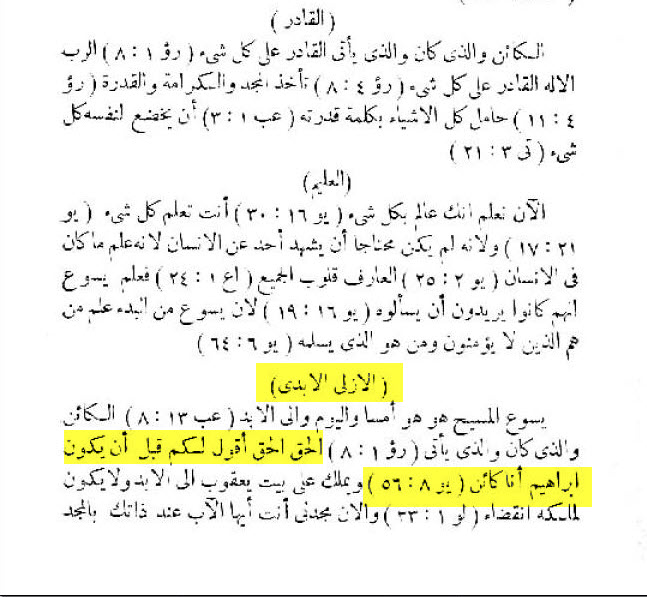
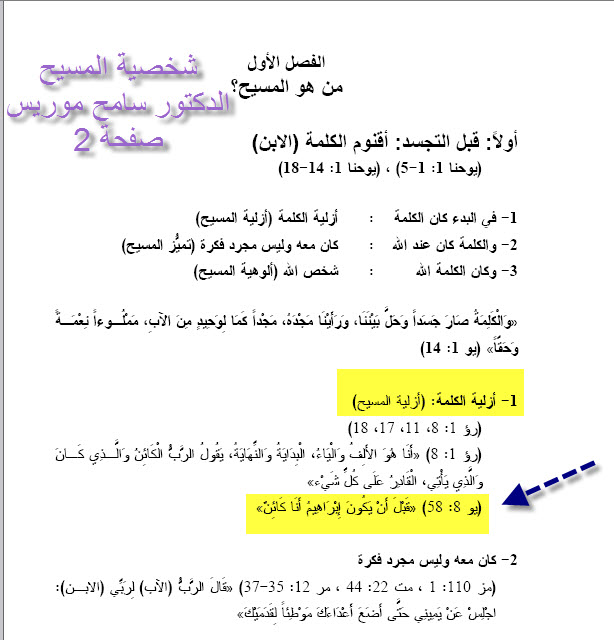
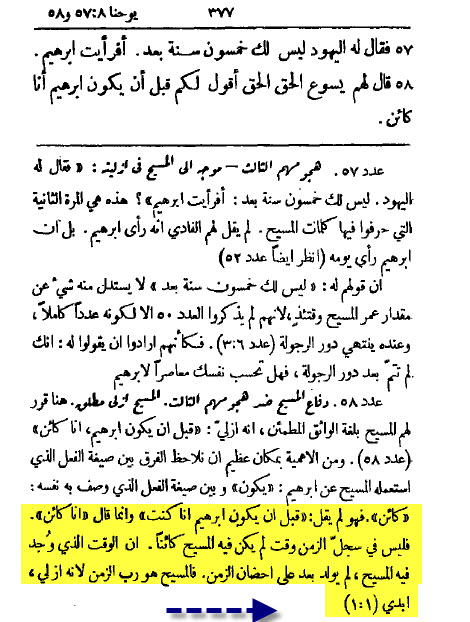
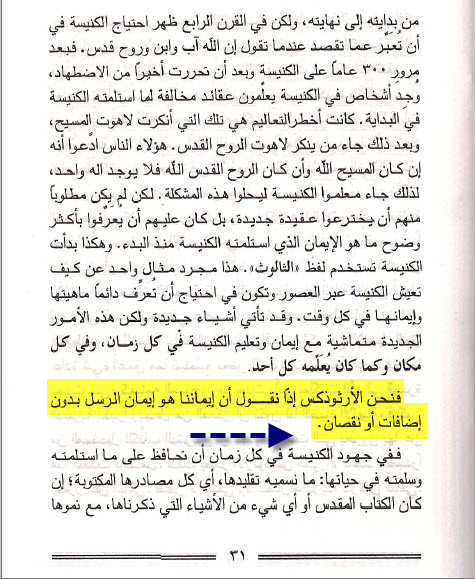
There are also scholars other than the ancient church fathers who know nothing about the relationship between Ego Eimi and Yahweh. Take for example the head of the Coptic Church, Pope Shenouda, who put in his book The Divinity of Christ, page 89, clear verses that indicate the divinity of Christ — and he did not put this text among them. When he cited this text, he concluded from it the eternity of Jesus only and nothing else, and he did not speak about the subject of Yahweh at all.
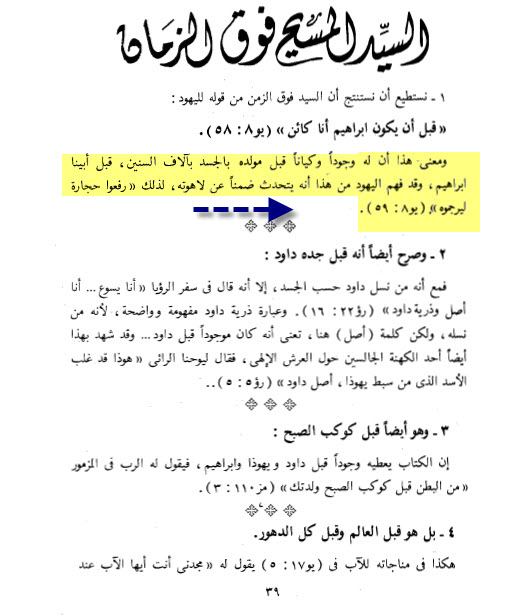
Dr. Emil Ishaq followed in this:
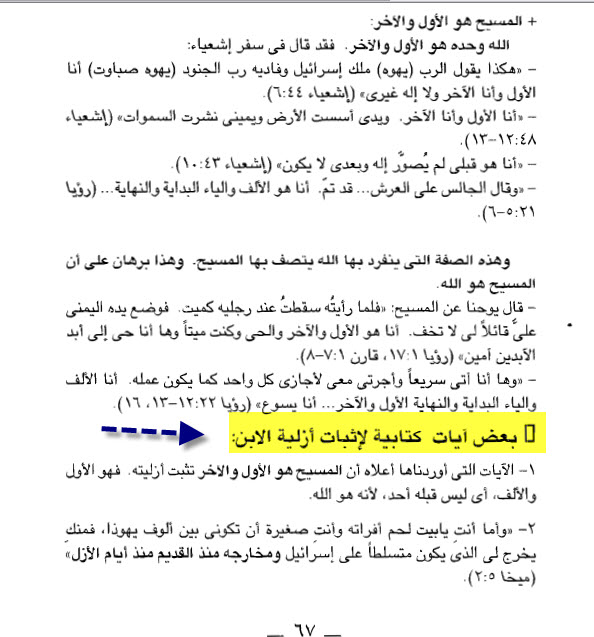

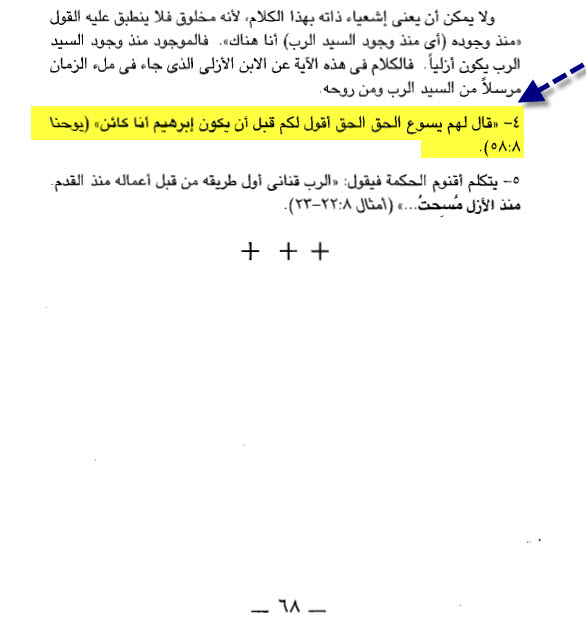
Theology, Part One — Father Mikhail Mina, page 218:
Dr. Sameh Maurice followed in their footsteps:
Dr. Ibrahim Saeed confirmed their words in his commentary on the Gospel of John:

A big salute to those who preserved their faith from innovations and did not introduce anything new in their faith that was different from the faith of the apostles.
Therefore, any Orthodox Christian is required to come with any of the sayings of the Church Fathers in which he says that Ego Eimi = Yahweh — otherwise his faith is not right.
Questions About the Incident — Why Did the Jews Pick Up Stones?
“Verily, verily, I say unto you, If any man keep my word, he shall never see death. Then said the Jews unto him, Now we know that thou hast a demon: Abraham died, and the prophets; and thou sayest, If any man keep my word, he shall never taste death. Art thou greater than our father Abraham, which died, and the prophets died? Who makest thou thyself? Jesus answered, If I glorify myself, my glory is nothing: it is my Father that glorifieth me, of whom ye say, He is your God. And ye know him not, but I know him: and if I should say, I know him not, I shall be a liar like unto you: but I know him, and keep his saying. Your father Abraham rejoiced to see my day: and he saw it, and was glad. Then said the Jews unto him, Thou art not yet fifty years old, and hast thou seen Abraham? Jesus saith unto them, Verily, verily, I say unto you, Before Abraham was, I am. Then took they up stones to cast at him: but Jesus hid himself, and went out of the temple, passing through the midst of them, and so passed by.”
They said that when the Jews heard Jesus’ Ego Eimi and understood that he claimed to be God, they took up stones to stone him — according to the Jewish law in Leviticus 24:16.
This statement is rejected for several reasons.
First: Justifying this by saying the Jews applied the law is very naive. Since when have the Jews applied the law? They are an immoral, wicked generation who killed the prophets as Jesus himself described them. The Jews act on anything at any time without reason or cause. We ask the Christians: is there anything in the Old Testament law that says whoever performs miracles shall be killed? Why did the Jews want to kill Jesus when he raised the dead? Is there anything in the law that says that?
“And when he had said this, he cried with a loud voice, Lazarus, come forth! And he that was dead came out, bound hand and foot with graveclothes. Jesus said unto them, Loose him, and let him go. Many of the Jews therefore, which came to Mary, and had seen what Jesus did, believed in him. But some of them went away to the Pharisees, and said unto them, What things did Jesus do? Then the chief priests and the Pharisees gathered a council, and said, What shall we do? For this man doeth many miracles. If we let him thus pass, all will believe in him; and the Romans will come and take away our place and our nation. But one of them, Caiaphas, being high priest that year, said unto them, Ye know nothing at all, nor consider that it is expedient for us, that one man should die for the people, and that the whole nation perish not. And this spake he not of himself: but being high priest that year, he prophesied that Jesus should die for that nation; and not for that nation only, but that also he should gather together in one the children of God that were scattered abroad. Then from that day forth they took counsel together for to put him to death.”
So the Jews do not need a reason to do anything.
Second: Jesus said Ego Eimi before the Jews more than once and they did not stone him:
“Verily, verily, I say unto you, He that believeth on me hath everlasting life. I am (ἐγὼ εἰμί) the bread of life… I am the living bread that came down from heaven. If any man eat of this bread, he shall live for ever: and the bread that I will give is my flesh, which I will give for the life of the world. The Jews therefore strove among themselves, saying, How can this man give us his flesh to eat?”
The reaction of the Jews was to be astonished by Jesus’ words about eating his flesh — no Jew said anything about the word Ego Eimi. This is evidence of the complete lack of sanctity of this word.
“Then said Jesus unto them again, Verily, verily, I say unto you, I am (ἐγώ εἰμι) the door of the sheep.”
Third: The stoning of Jesus was merely out of spite and anger, nothing else. This is the words of Dr. Ibrahim Saeed in his explanation of the Gospel of John:
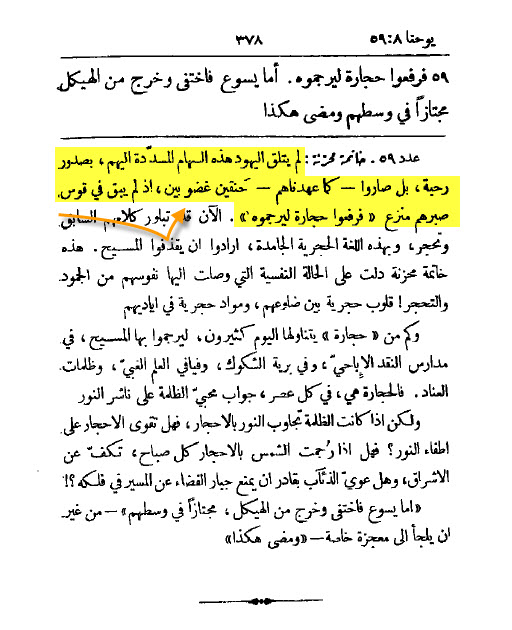

Fourth: According to the Bible, Jesus humiliated the Jews and described them with the worst descriptions:
“He who is from God hears the words of God. Therefore you do not hear, because you are not from God.”
“Ye are of your father the devil, and the lusts of your father ye will do. He was a murderer from the beginning.”
“And ye know him not, but I know him. If I say I do not know him, I will be a liar like you. But I know him and keep his words.”
These accusations are enough for stoning.
Fifth: There is no objection to taking the opinion of Jehovah’s Witnesses regarding the reason for the stoning. Their belief is based on the fact that the Jews tried to stone Jesus because he claimed that he saw Abraham:
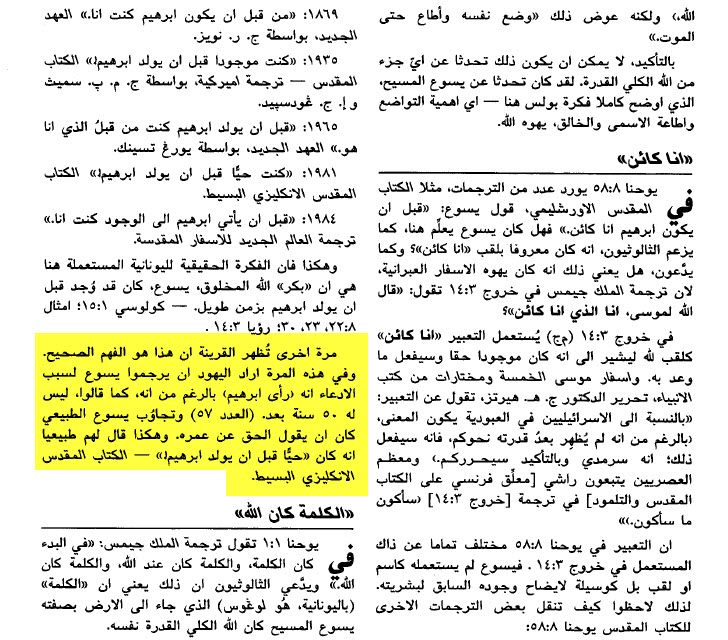

The Meaning of “Before Abraham Was, I Am” — Even If We Accepted It
We will not care much about the meaning of these words because we do not believe them in the first place — the words of the whole Bible do not bind us, and we do not believe what is in it unless the Quran confirms it. This incident appeared in the Gospel of John at the end of the first century, and the writers of the first three Gospels did not know about it. Thus we are not bound by any information issued by a book for which there is no evidence of the name of its author, nor the time of its writing, nor evidence that it is a revelation from God.
But in general, if this text is correct, its meaning will not go beyond the eternal knowledge of God — such that Christ has existed in God’s knowledge since eternity, or that God chose Christ since eternity. This concept is naturally present in the Christian faith itself.
Theology — Father Mikhail Mina, Part One, page 140:
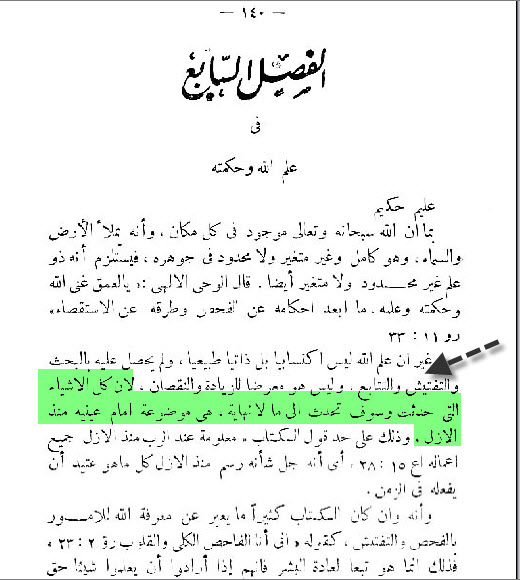
Systematic Theology — James Anse, page 138:
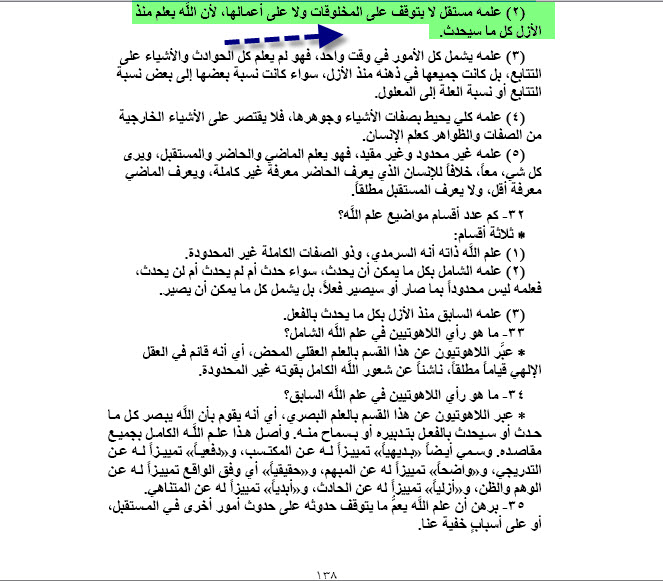
The Theological Summa of St. Thomas Aquinas, Part One, page 204:
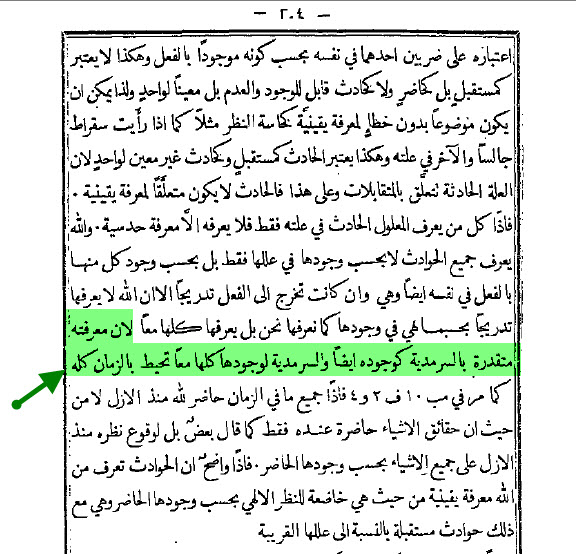
God in Christianity has eternal knowledge and knows all things before they happen. This concept is found in the Bible:
“Before I formed you in the womb I knew you, and before you were born I consecrated you; I have appointed you a prophet to the nations.”
And as we mentioned before, the meaning of Jesus’ words will not matter to us much because we do not believe them in the first place.
Six Unanswered Questions
Before we conclude, we have several questions we are looking for answers to:
- If Ego Eimi means Yahweh, why didn’t Jesus address the Father with it at any time?
- Which of the disciples knew God by the name Ego Eimi?
- Where is this story in the rest of the Gospels?
- Why didn’t Jesus clearly express and use any word that indicates divinity in the New Testament?
- How did the Gospel writers mention the word of majesty (Ego Eimi) on the tongues of Paul, the blind man, and the angel?
- Did Paul know about this incident? What is the evidence? And why didn’t he refer to it?
- If Ego Eimi means Yahweh to the Jews, how do we explain the blind man pronouncing it — knowing that whoever pronounces the word of majesty will be stoned?
Why Do We Leave Dozens of Clear Verses and Hold to This?
After all this — why do we leave dozens of verses in the Bible that clearly show that Jesus is a human being and hold onto one meagre verse to prove Jesus’ divinity?
How do we leave all this and hold onto this claim:
“I can do nothing of myself. As I hear I judge, and my judgment is just, because I do not seek my own will, but the will of the Father who sent me.”
“At that hour Jesus rejoiced in the Spirit and said, I thank you, O Father, Lord of heaven and earth.”
“Truly, truly, I say to you, the Son can do nothing of himself, but what he sees the Father doing.”
“Of that day and that hour no one knows, not even the angels in heaven, nor the Son, but the Father.”
“Jesus said to her, Woman, believe me, the hour is coming when you will neither on this mountain, nor in Jerusalem, worship the Father.”
“But now you seek to kill me, a man who has told you the truth which I heard from God.”
“But Jesus said to them, A prophet is not without honour except in his own country and in the house of his own.”
“They said again to the blind man, What do you say about him, since he has helped you? He said, He is a prophet.”
“Then Jesus cried out and said, He who believes in me believes not in me but in him who sent me.”
“Truly, truly, I say to you, a servant is not greater than his master, nor is a messenger greater than he who sent him.”
“For I have not spoken on my own authority, but the Father who sent me himself gave me a commandment what to say and what to speak. And I know that his commandment is eternal life. Therefore what I speak, even as the Father said to me, even so I speak.”
“And he went a little farther, and fell on his face, and prayed, saying, O my Father, if it is possible, let this cup pass from me: nevertheless not as I will, but as you will.”
“And when he had sent the multitudes away, he went up into a mountain apart to pray; and when evening came, he was there alone.”
“A ruler asked him, Good teacher, what must I do to inherit eternal life? Jesus said to him, Why do you call me good? No one is good except God.”
A Final Note on the Manuscript Evidence
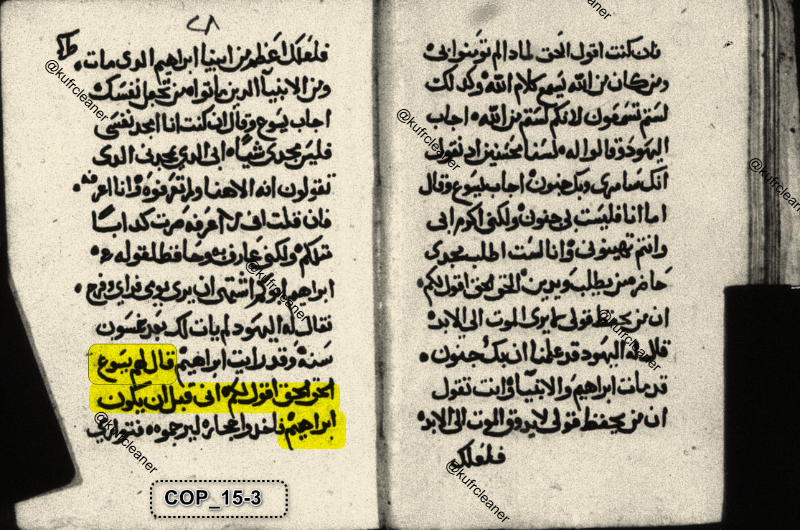
One of the most important texts in which some claim Jesus testifies to his divinity — John 8:58 — is a text in which Jesus Christ says “I am a being,” proving the immortality of Jesus Christ and that before Abraham there was an immortal being.
It is strange that many books from the translations of the Egyptian Church, copies of the Saint Catherine Abbey, and copies of the Fathers of the Ancient Egyptian Church are partially missing:
“I am a being.” The text in those manuscripts reads: “Then Jesus said to them, Truly, truly, I say to you, before Abraham was.” — and that is where it ends.
Question: Why did the Egyptian Church remove the partial phrase “I am a being” from the text?
Edition: COP 15-3. Edition date: 1814 AD. The Coptic library was sealed under number 176.
The Ego Eimi argument collapses at every level. The name Yahweh is of unknown meaning, unknown derivation, and unknown pronunciation — and was never used in the New Testament at all. The phrase Ahyah Asher Ahyah is not a proper name for God but only one theory among many interpretations. In the Septuagint, Ahyah when standing alone was translated as Ho On — not as Ego Eimi. Yahweh was translated in the Septuagint as Kyrios or Theos — never once as Ego Eimi. The word Ego Eimi was said by Paul, Peter, the disciples, the blind man, the angel Gabriel, and even Judas the traitor — with no divine connotation in any of these cases. The writer of the Gospel of John himself explicitly stated that his Gospel was written so people would believe that Jesus is the Christ, the Son of God — not that he is Yahweh. Not one Church Father, not one ancient scholar, not Pope Shenouda himself ever said that Ego Eimi = Yahweh. And Jesus himself, when he said Ego Eimi, was understood by every person who heard it — Martha, the Samaritan woman, the disciples, the Jews — as meaning “I am the Christ, the Son of God” — nothing more and nothing less.