Refutations

Did Prophet Muhammad ﷺ Try to Commit Suicide? Refuting the Weak Bukhari Addition & Az-Zuhri’s Idraj

7 min read 1518 words

Did Prophet Muhammad صلى الله عليه وآله وسلم Try To Commit Suicide?

Core QuestionDID Prophet Muhammed صلى الله عليه وآله وسلم Tried To Commit Suicide.

The Three Points Will Be:

  1. Idrajj الإدراج
  2. How It Is Worthless
  3. Other Riwayat

Table of Contents

Topic 1: The Idrajj الإدراج
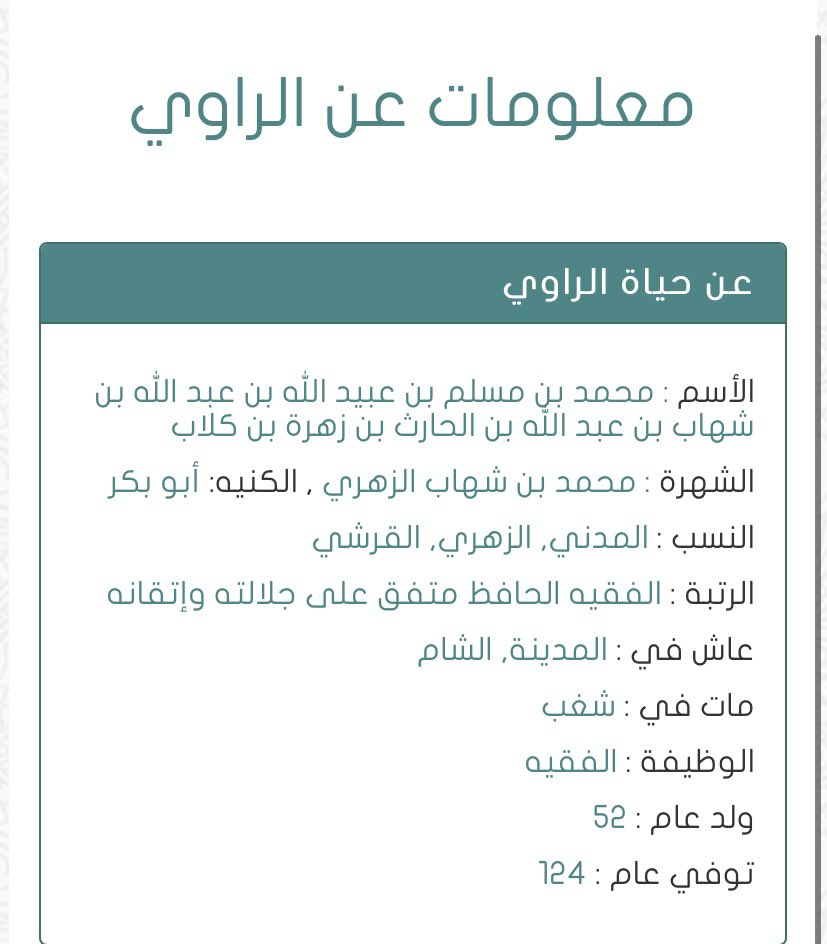
The Main PointIn the sanad, there is Ibn Shihab az-Zuhri. He is a Tabi known for his idrajj commentary on Sahih Al-Bukhari when transmitting ahadith. We will see which of the Ulema said this.

GCeJsqrWIAAifZQ 2268edfda5280f49

GCeJsqlXsAAFfJ1 4a7ceaad30f746e3

For English ReadersThese scans are being used to establish the technical hadith issue of idrajj / الإدراج, meaning inserted commentary or wording that can become confused with the original hadith text if the narrator’s addition is not clearly separated.

Az-Zuhri and His Idrajj

ArgumentIbn Shihab az-Zuhri was a Tabi known for inserting his own explanatory wording or comments after narrations. The argument is that the disputed suicide wording is not part of the original connected riwayah, but from the balaghat / mursal material of Az-Zuhri.

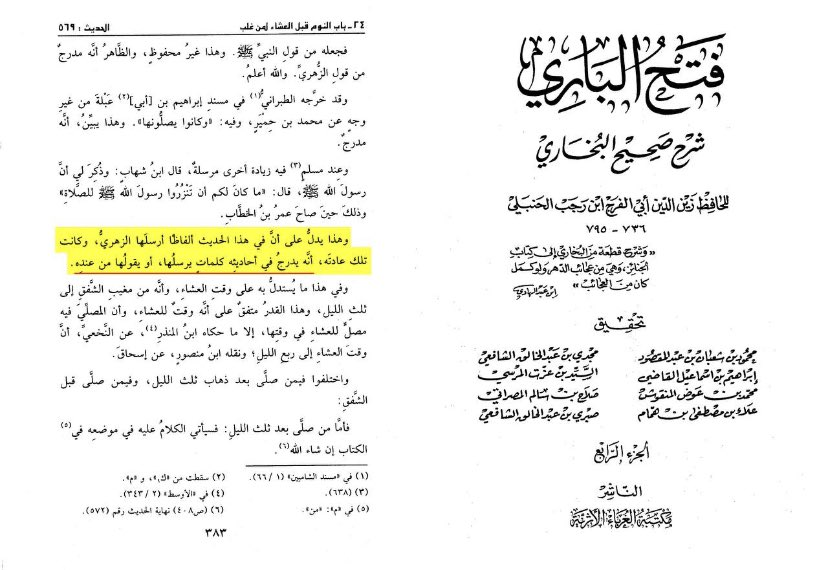
Ibn Rajab Al-Hanbali on Az-Zuhri

Ibn Rajab Al-Hanbali رحمه الله تعالى said:

Az-Zuhri used to put his idrajj commentary in ahadith and that was his habit.
GCeJtuaXAAEClJ4 1ac1fa9a4cfe003d

For English ReadersThis scan is used to show that Ibn Rajab identified Az-Zuhri’s habit of inserting explanatory material into narrations. This supports the claim that the disputed addition should be examined as possible idrajj rather than automatically treated as part of the connected hadith.

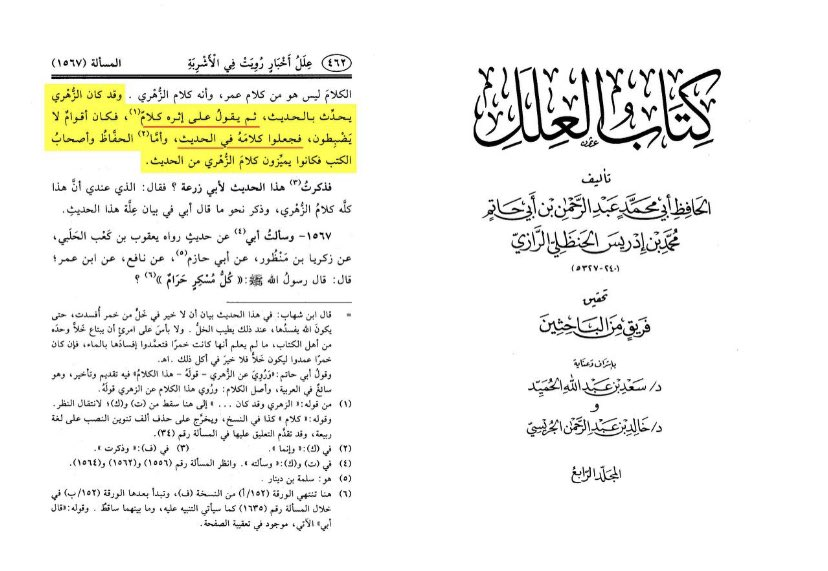
Ibn Abi Hatim Al-Razi on Az-Zuhri

Imam Ibn Abi Hatim Al Razi رحمه الله تعالى said:

Al Zuhri used to narrate aḥadīth then say his own words after the athar therefore confusing people into thinking it was part of the ḥadīth itself
GCeJus0WkAADld9 adbe863c4a9c783e

For English ReadersThis scan is being used to show that Az-Zuhri’s style could confuse listeners or readers into thinking his own added words were part of the original narration.

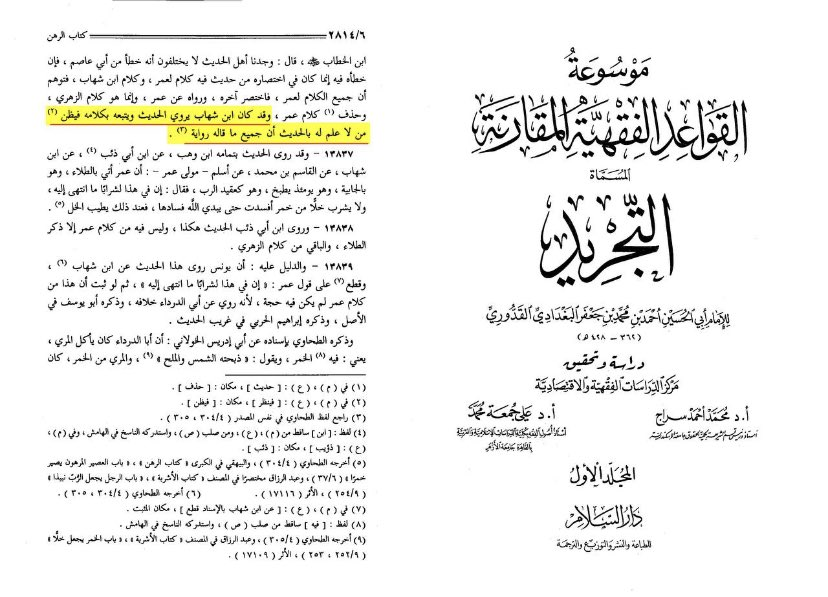
Al-Qaduri on Az-Zuhri

Al-Qaduri رحمه الله تعالى said:

Al-Zuhri used to narrate the hadith and then follow it up with his idrajj so the person who doesn’t know thinks that all of what is said is from the narration i.e Laymen
GCeJvohWEAA6tSk 7c1cafc518fc1998

For English ReadersThis scan reinforces the same point: Az-Zuhri’s inserted commentary could be mistaken by non-specialists as part of the hadith itself.

Topic 2: The Worthlessness

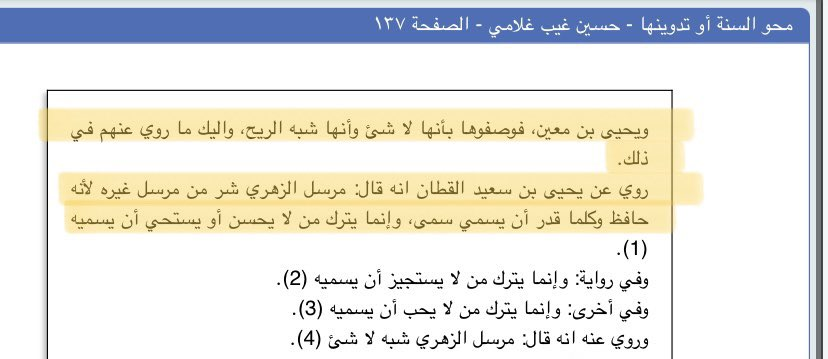
What Is Being Called WorthlessThe point here is not an attack on Az-Zuhri as a narrator in general. The argument concerns his marasil / balaghat when he reports something without a connected sanad. In this case, the disputed wording is argued to fall under that category.

Yahya Bin Saeed Al-Qahtan on the Marasil of Az-Zuhri

Yahya Bin Saeed Al-Qahtan رحمه الله تعالى said:

Ibn Maeen added saying it is nothing.

GCeJx oWwAAQCeo 4dfdea2d00ec0d96

For English ReadersThe argument is that when Az-Zuhri does not name his source, this is a serious weakness because he was fully capable of naming sources when he had them. Therefore, his mursal / balagh reports are not treated like fully connected narrations.

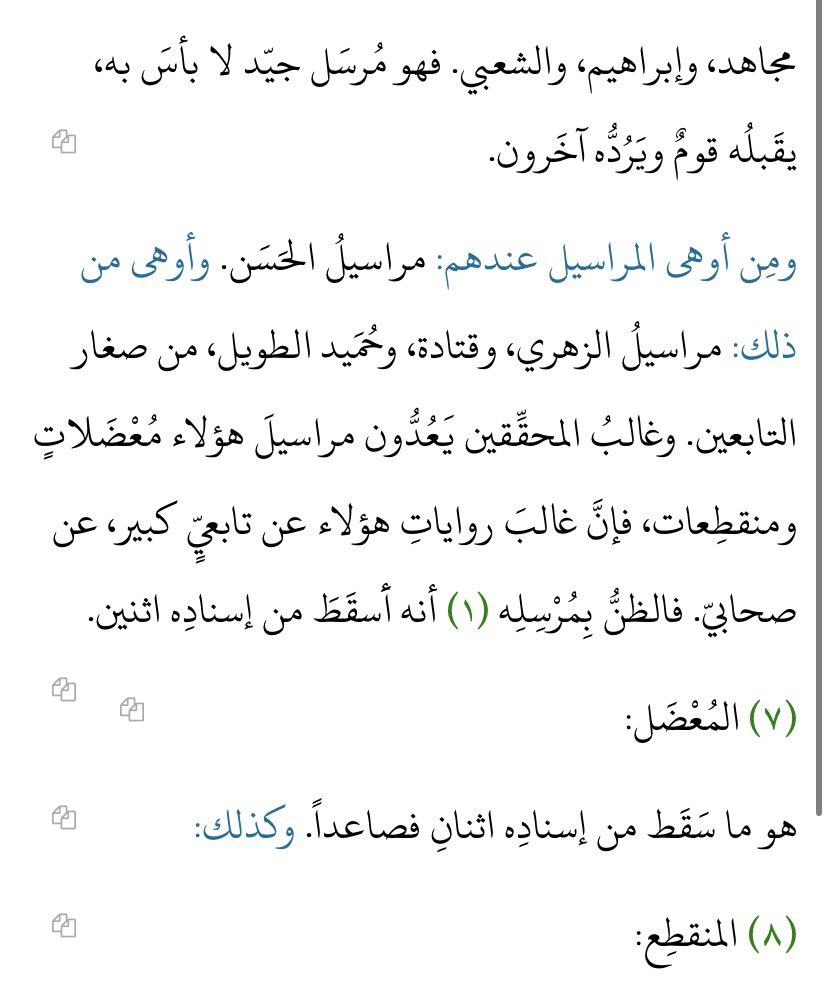
Imam Dhahabi on the Marasil of Az-Zuhri

Imam Dhahabi رحمه الله تعالى said:

The most insignificant marasil is from Al-Hasan. What is EVEN WORSE than that are the marasil of Az-Zuhri. Most of the investigators see them as problematic and interrupted no chain in this case.
GCeJzsNXUAAJP Q 01b4f9d11fc6c00a

GCeJzsIW4AAsFHn f5d996dbe90cd3b6

For English ReadersThese scans are cited to show that al-Dhahabi considered Az-Zuhri’s mursal reports especially problematic. The key issue is interruption: the report is not connected back through a named chain.

Ibn Hajar Al-Asqalani on Fima Balaghana

Ibn Hajar’s PointIbn Hajar Al-Asqalani رحمه الله تعالى pointed out the fact that the idrajj says كما بلغنا / فيما بلغنا meaning “as we were informed” or “from what reached us.”

This is from the Balaghat of Az-Zuhri and not accepted with no sanad.

Additional PointAlso, Aisha رضي الله عنها is a singular narrator. She would use “I” not “We.”
For English ReadersThis is one of the strongest internal indicators. The wording “from what reached us” does not sound like the direct wording of Aisha رضي الله عنها. It points to later transmitted information from Az-Zuhri’s side, not the connected report itself.

Topic 3: Other Narrations

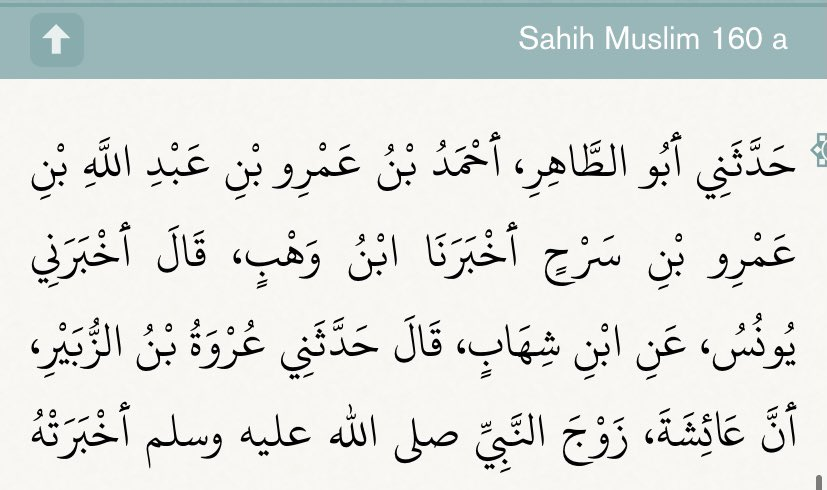
Sahih Muslim 160a

The Most Significant Parallel NarrationThe most significant narration along with Bukhari is Sahih Muslim 160 a.

The Sanad is:

Abu Al-Tahir > Ahmed Bin Amr Bin Sarh > Ibn Wahb > Yunus > Ibn Shihab Az-Zuhri > Urwah Bin Zubayr > Aisha
GCeJ1OPXsAApIi4 f7955c7997ad7658

For English ReadersThis scan is used to show that the Sahih Muslim version contains the connected narration through Aisha رضي الله عنها without the disputed suicide addition.
Argument From Sahih MuslimThis narration has no idrajj from Az-Zuhri in the sanad. Why is that? Because Az-Zuhri knew this was not from the riwayah and was from his marasil which links back to what Yahya Bin Saeed said.

This is undoubtedly not from the original riwayah.


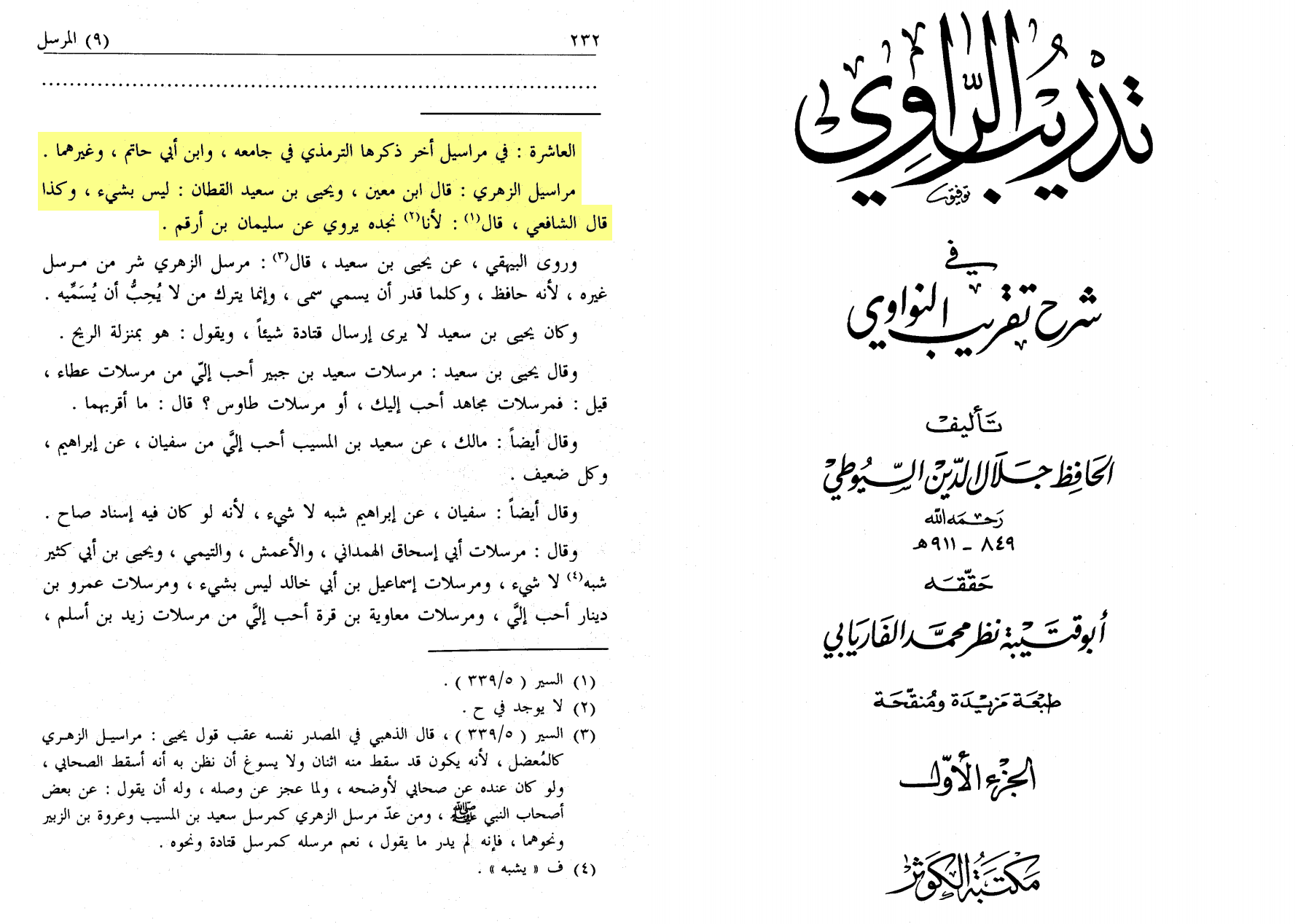
Tadrib Al-Rawi on the Mursal of Az-Zuhri

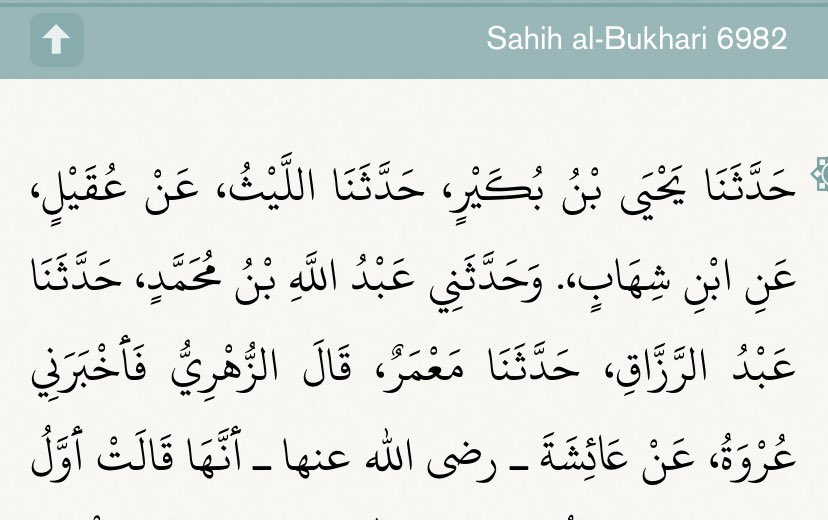
The Bukhari AdditionThis narration found in al-Bukhari is a second part. It says fima balaghana: “from what we have heard” from al-Zuhri, who is a Tabi.
MeaningMeaning he didn’t live in the lifetime of the Prophet, so his hadith is mursal, meaning he gives information from which he has not seen.
Ruling on ThatWhat is the ruling on that?

Translation:

“Ibn Ma’in said: it is nothing and so said Al-Shāfī’ī. Ibn Sa’d said the mursal of al-Zuhri is worse of mursal of others”

Source: Tadrib al-rawy fi sharh taqrib al-nawawi volume 1 page number 232
133e1 3df76a786c0b7e57

For English ReadersThis scan is cited to show that major hadith authorities considered the mursal reports of Az-Zuhri weak and not dependable when disconnected.

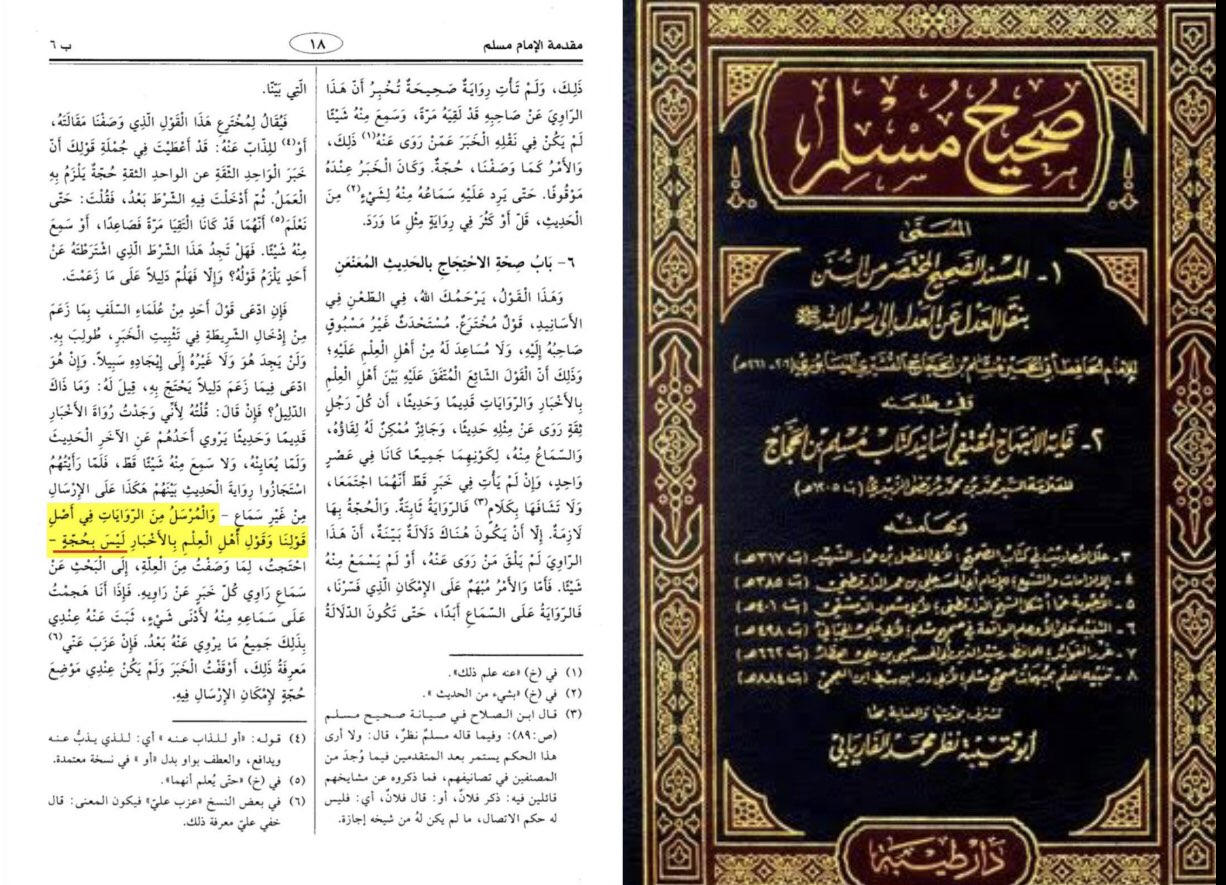
Imam Muslim on Mursal Reports

Note, al-Imām Muslim says in Sahīh Muslim:

“… And the principle of our saying, and the saying of Ahl al-‘Ilm is Akhbār that are Mursal are not a Hujjah, meaning they are nothing.”
133e2 490cf3ef26f3c4da

For English ReadersThis scan is used to establish the broader hadith principle: mursal reports are not proof according to Imam Muslim and the people of knowledge.

Sirah Ibn Ishaq Report

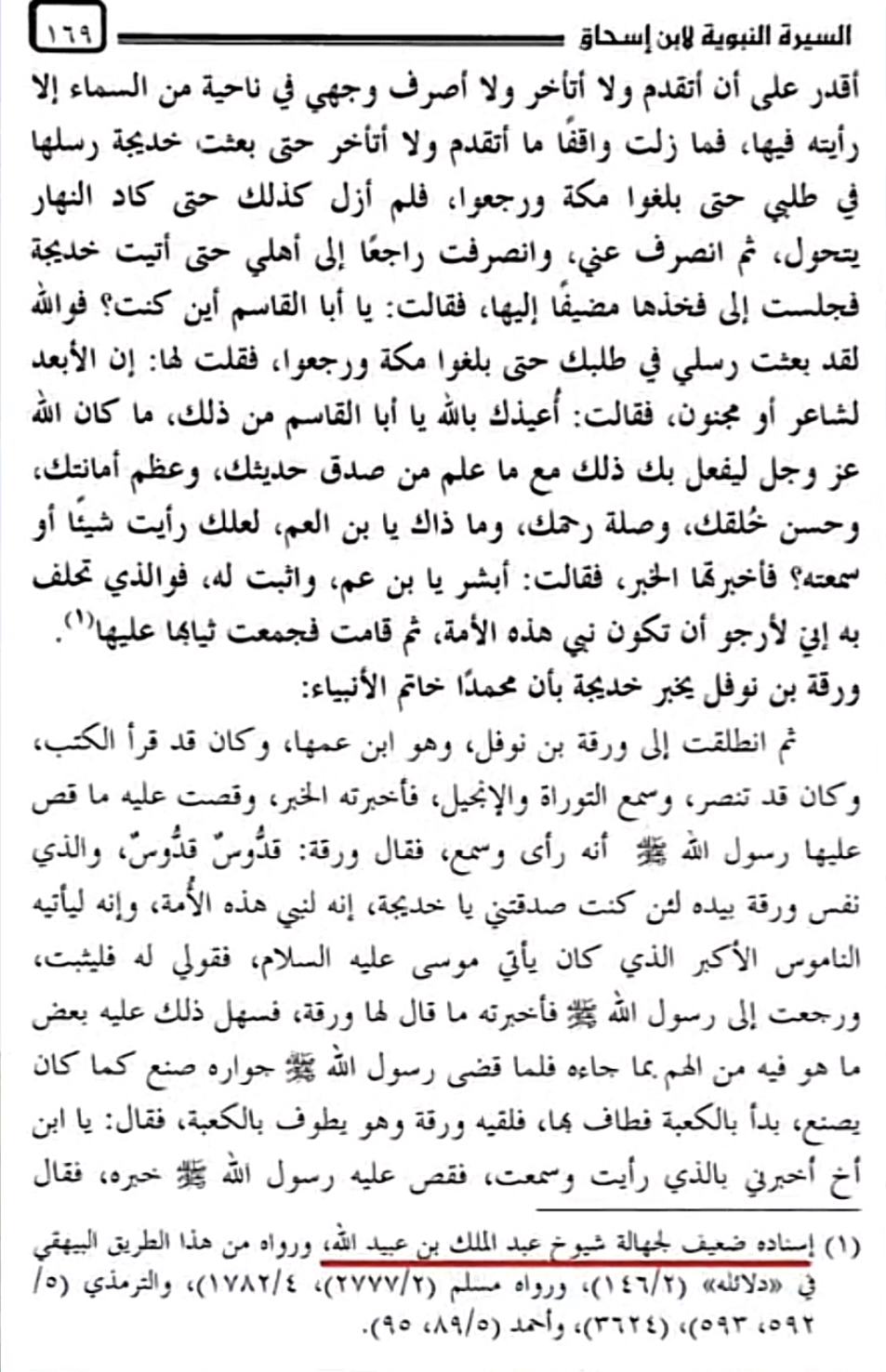
Another IsnadThere is another isnad mentioned in Sirah Ibn Ishaq however it has majhools in it that is weak too.
TaqhueeqThe taqhueeq says the report chain is weak because the sheyookh of Abdul Malik bin Abdullah are unknown.

133e3 8a0f9ff71961d14c

For English ReadersThis scan is used to show that the alternate Sirah Ibn Ishaq route is also weak because unknown narrators appear in the chain.

Conclusion

Final RefutationThe disputed wording about the Prophet Muhammad صلى الله عليه وآله وسلم trying to commit suicide is not established as part of the original connected riwayah.

The reasons are:

  1. It comes through Az-Zuhri, who was known for idrajj.
  2. The wording fima balaghana / كما بلغنا indicates balagh / mursal material, not a connected report from Aisha رضي الله عنها.
  3. The marasil of Az-Zuhri were heavily criticized by major hadith scholars.
  4. The parallel narration in Sahih Muslim does not include this addition.
  5. The alternate report in Sirah Ibn Ishaq is weak due to unknown narrators.

Therefore, this claim cannot be used as a reliable accusation against the Prophet Muhammad صلى الله عليه وآله وسلم.