

Did the Prophet Make a False Prophecy About 100 Years? Hadith Explained
The Hadith “No One Alive Tonight Will Remain After 100 Years” Explained
Table of Contents
- Introduction
- The Hadith
- The Doubt
- The Correct Meaning
- Ibn Hajar’s Explanation
- Ibn Battal’s Explanation
- Al-Nawawi’s Explanation
- A Prophetic Sign
- Refuting the False Prophecy Claim
- The Meaning of “Do You See This Night”
- The Phrase Does Not Mean the Night Had Special Cosmic Importance
- Scan Evidence for the Phrase “Ara’aytakum”
- The Qur’anic Parallel
- Conclusion
Introduction
The objection collapses because the hadith is not speaking about every human being born after that night, nor about the end of humanity.
It is speaking about those who were alive on that specific night.
The Hadith
Shaykh Sa‘d al-Humayd mentions that this hadith was narrated by Imam al-Bukhari, may Allah have mercy on him, in his Sahih, from Abdullah ibn Umar, who said:
When he had said the salam, he stood up and said:
“Do you see this night of yours? One hundred years from now, there will not be anyone left of those who are on the face of the earth.”
The Doubt
“Nobody present on the surface of the earth tonight will be living after 100 years.”
The objector then pretends this means no human being at all would exist after one hundred years.
This is a weak reading.
The hadith does not say that mankind would end after one hundred years.
It says that those alive on that night would not remain alive after one hundred years had passed.
The Correct Meaning
Everyone alive on that night would die before one hundred years had passed from that night.
It does not mean that nobody born later would live after that period.
It does not mean the world would end after one hundred years.
It does not mean humanity would disappear.
The phrase is restricted to those who were living at the time of the statement.
Ibn Hajar’s Explanation
There follow some comments made by Ibn Hajar, may Allah have mercy on him, on this hadith:
“Led us in prayer” means as an imam.
“Towards the end of his life” — a corroborating report narrated by Jabir states that this was one month before he, peace and blessings be upon him, died.
“Do you see” means: “Think about this night.”
“One hundred years from now” means when one hundred years have passed.
“There will not be anyone left of those who are on the face of the earth” means anyone who was alive at that time.
The hadith is about the generation alive at that moment, not every future generation.
Ibn Battal’s Explanation
Ibn Battal said:
He was pointing out to them how short their lives were and that their lives were not like those of the nations who came before them, so that they would strive hard in worship.
The Companions were being reminded that their generation would soon pass away, so they should not be deceived by worldly life.
Al-Nawawi’s Explanation
Al-Nawawi said:
It does not mean that anyone who was born after that night would not live for a hundred years.
And Allah knows best.
The hadith applies only to those alive on that night.
A Prophetic Sign
He spoke of a future event, and it happened exactly as he described.
The trustworthy scholars used this hadith as evidence in refuting some of the Sufis who claimed that al-Khidr is still alive until now.
If everyone who was alive on that night had died within one hundred years, then al-Khidr could not have been alive on earth at that time and still remain alive centuries later.
Refuting the False Prophecy Claim
The critic claims:
“The Prophet made a false prophecy because he said nobody present on the earth tonight would be living after one hundred years.”
But this is exactly what the hadith says, and it is not false.
The full meaning is:
Nobody present on the surface of the earth tonight will be living after the completion of one hundred years from this night.
This is not a failed prophecy.
This is a fulfilled prophecy.
“No human being will exist after one hundred years.”
It is saying:
“No one who is alive tonight will still be alive after one hundred years.”
The objector’s mistake is basic reading failure.
The Meaning of “Do You See This Night”
Some translations insert wording like:
“Do you not see the importance of this night?”
But that wording can mislead if the reader thinks the Prophet, peace and blessings be upon him, was assigning some cosmic importance to the night itself.
The Arabic phrase is:
أَرَأَيْتُمْ لَيْلَتَكُمْ هَذِهِ
Meaning:
Or:
“Consider this night of yours.”
Or:
“Think about this night.”
It does not mean that the night itself has some special ritual or cosmic status.
The Phrase Does Not Mean the Night Had Special Cosmic Importance
It often means:
“Have you considered?”
“Think about this.”
“Tell me, what do you think?”
So when the Prophet, peace and blessings be upon him, said:
“Do you see this night of yours?”
He was not saying the night itself was uniquely holy.
He was drawing their attention to the time-marker from which the one-hundred-year prophecy would be measured.
Scan Evidence for the Phrase “Ara’aytakum”
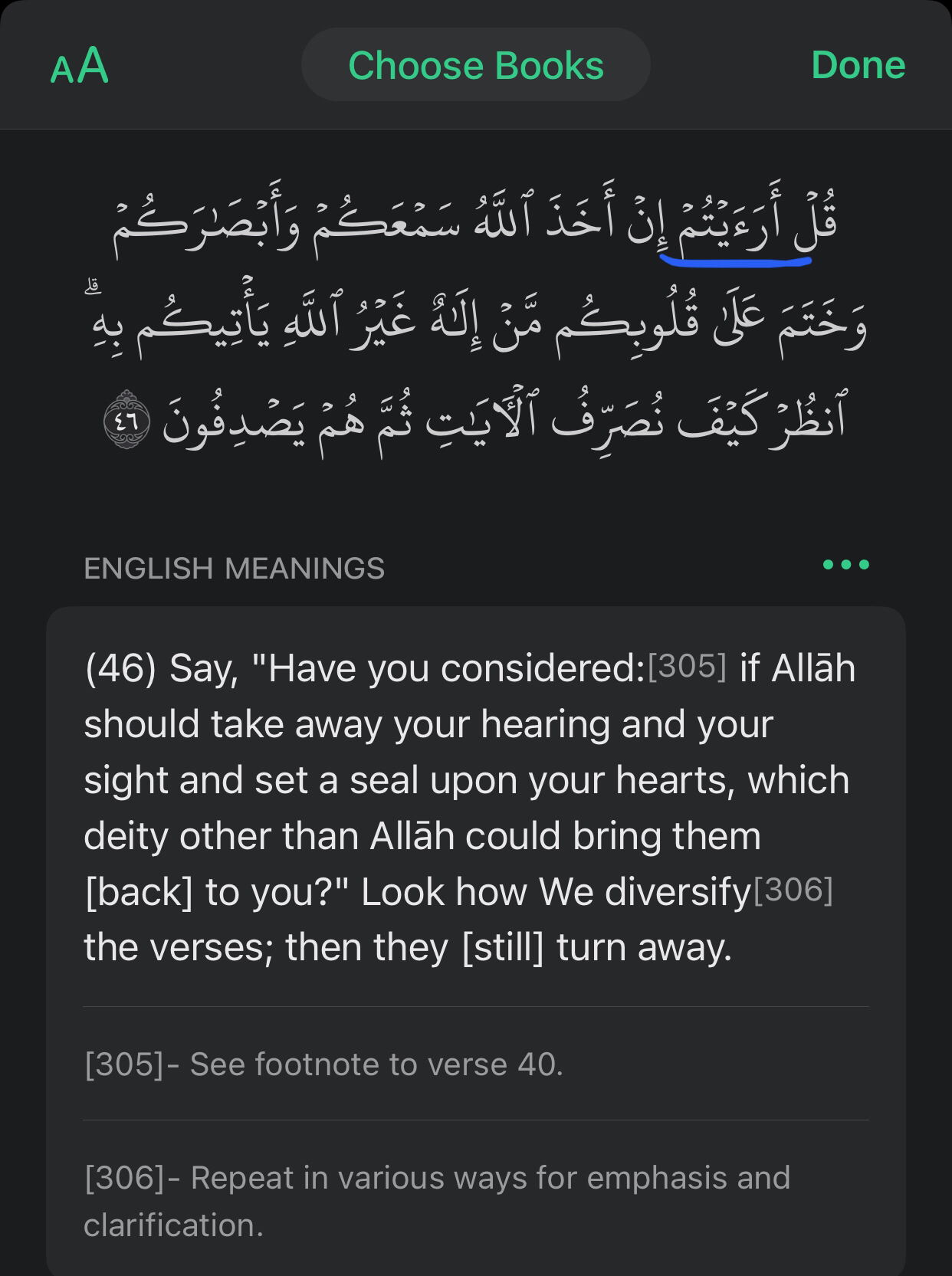
For your info: This scan is used to demonstrate the Arabic rhetorical usage of expressions such as أرأيت and أرأيتكم. The point is that the phrase often functions as a call to reflection or consideration, not as a declaration that the object mentioned has special sanctity. This supports the argument that “Do you see this night of yours?” means “consider this night” as a time reference.
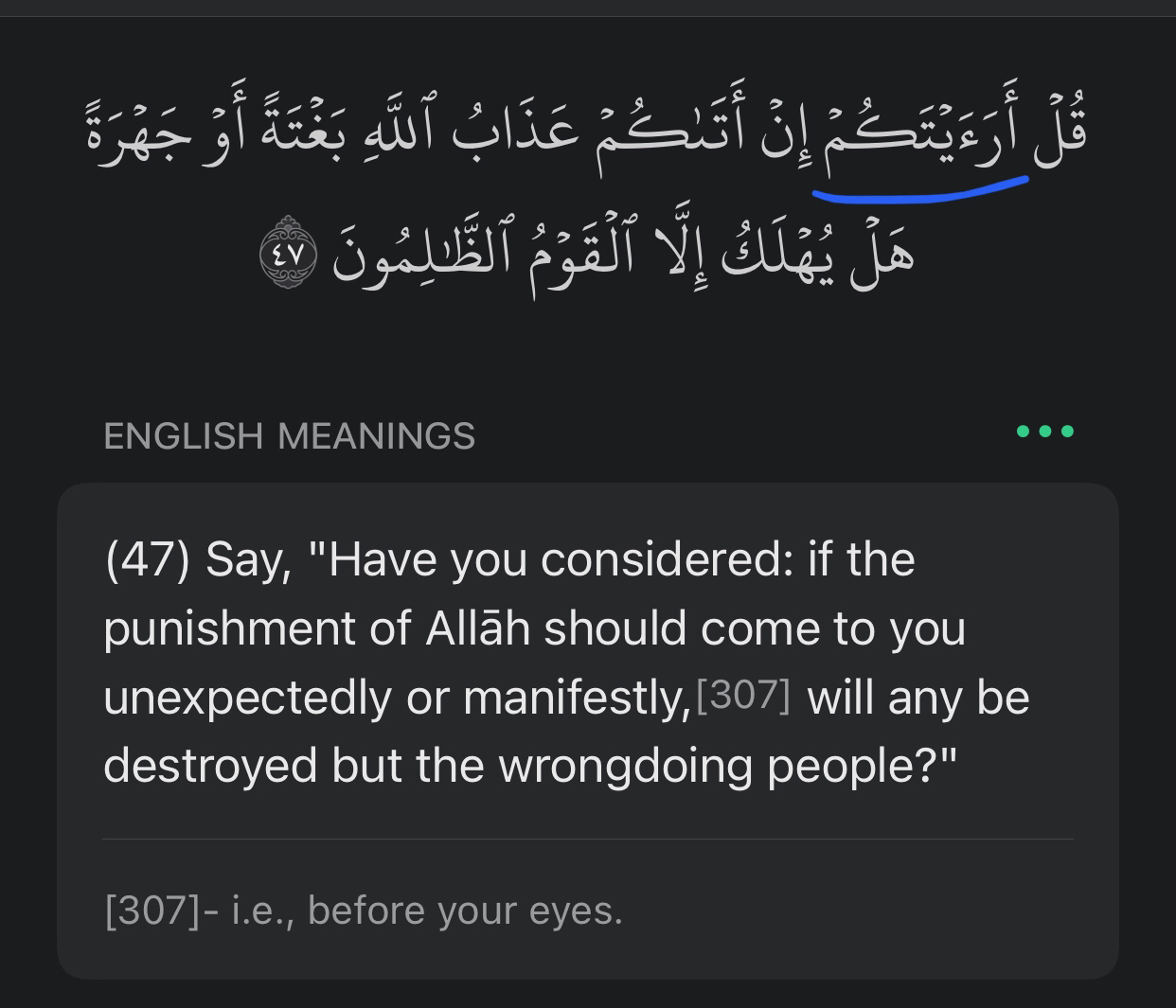
For your info: This scan continues the evidence for the rhetorical use of أرأيتكم. It supports the claim that the phrase is not used to assign independent religious importance to the thing being mentioned. Rather, it introduces a matter for the listener to ponder. In the hadith, the night is mentioned because the Prophet, peace and blessings be upon him, is setting the starting point for the one-hundred-year period.
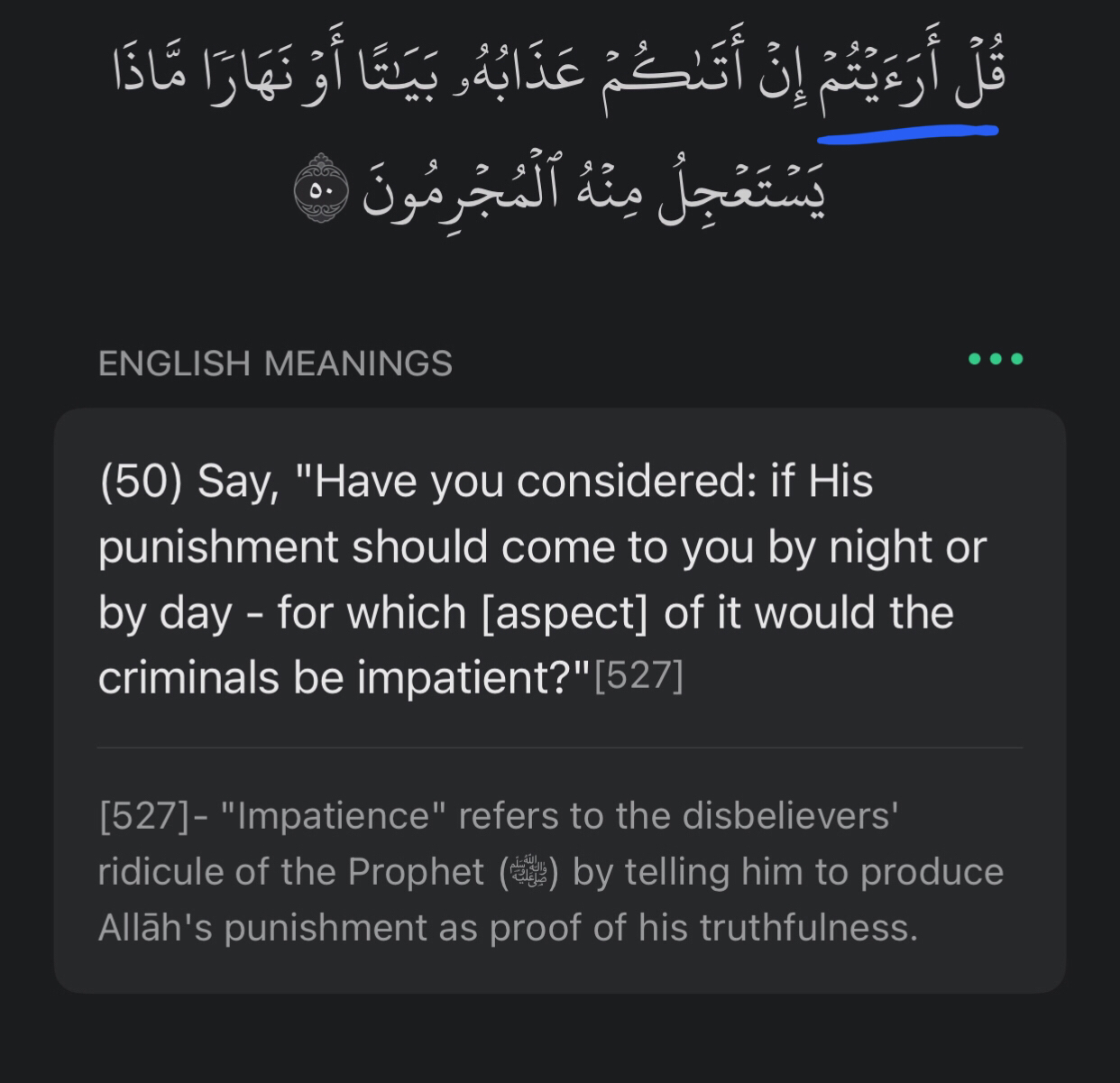
For your info: This scan further strengthens the linguistic point. The phrase أرأيتكم is being treated as an idiomatic expression for directing attention and provoking thought. This matters because the objection relies on misunderstanding the phrase as if the Prophet, peace and blessings be upon him, was making the night itself the main subject. In reality, the main subject is the passing away of the living generation within one hundred years.
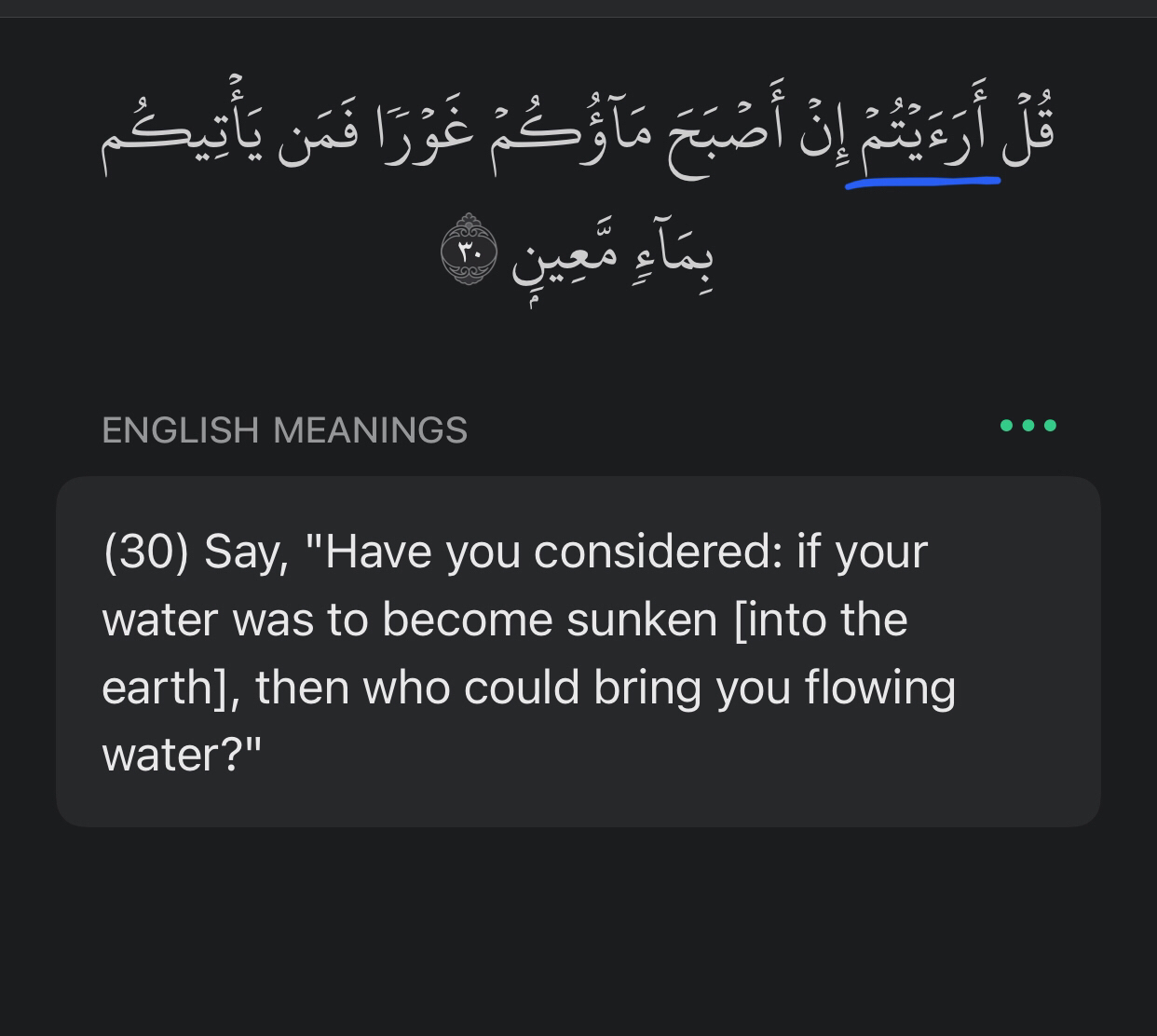
For your info: This scan is another supporting example for the same Arabic construction. It shows that the wording is not unusual and that its function is rhetorical. The phrase introduces a point of reflection, just as English speakers may say, “Do you see this?” or “Consider this.” The hadith should therefore be read as a reminder tied to that night, not as a mysterious claim about the night itself.
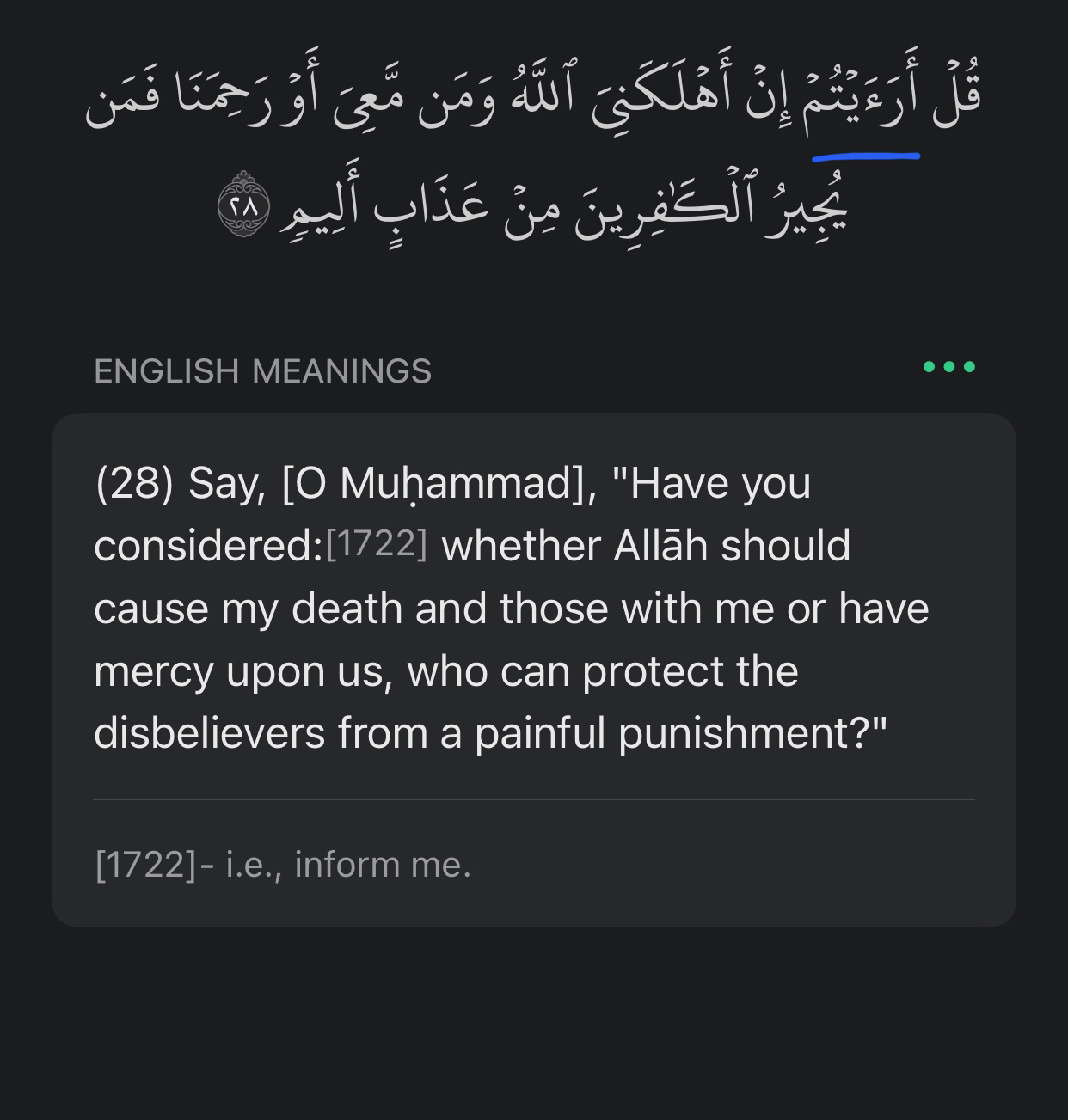
For your info: This scan completes the set of linguistic examples. It is being used to prove that أرأيتكم is a device for making the listener think about the statement that follows. The hadith’s meaning is therefore straightforward: the Prophet, peace and blessings be upon him, directed the Companions’ attention to that night and then informed them that those alive then would not remain after one hundred years.
The Qur’anic Parallel
Perhaps the closest parallel to the phrase “Do you not see this night?” is the Qur’anic style of asking people to consider a hypothetical matter.
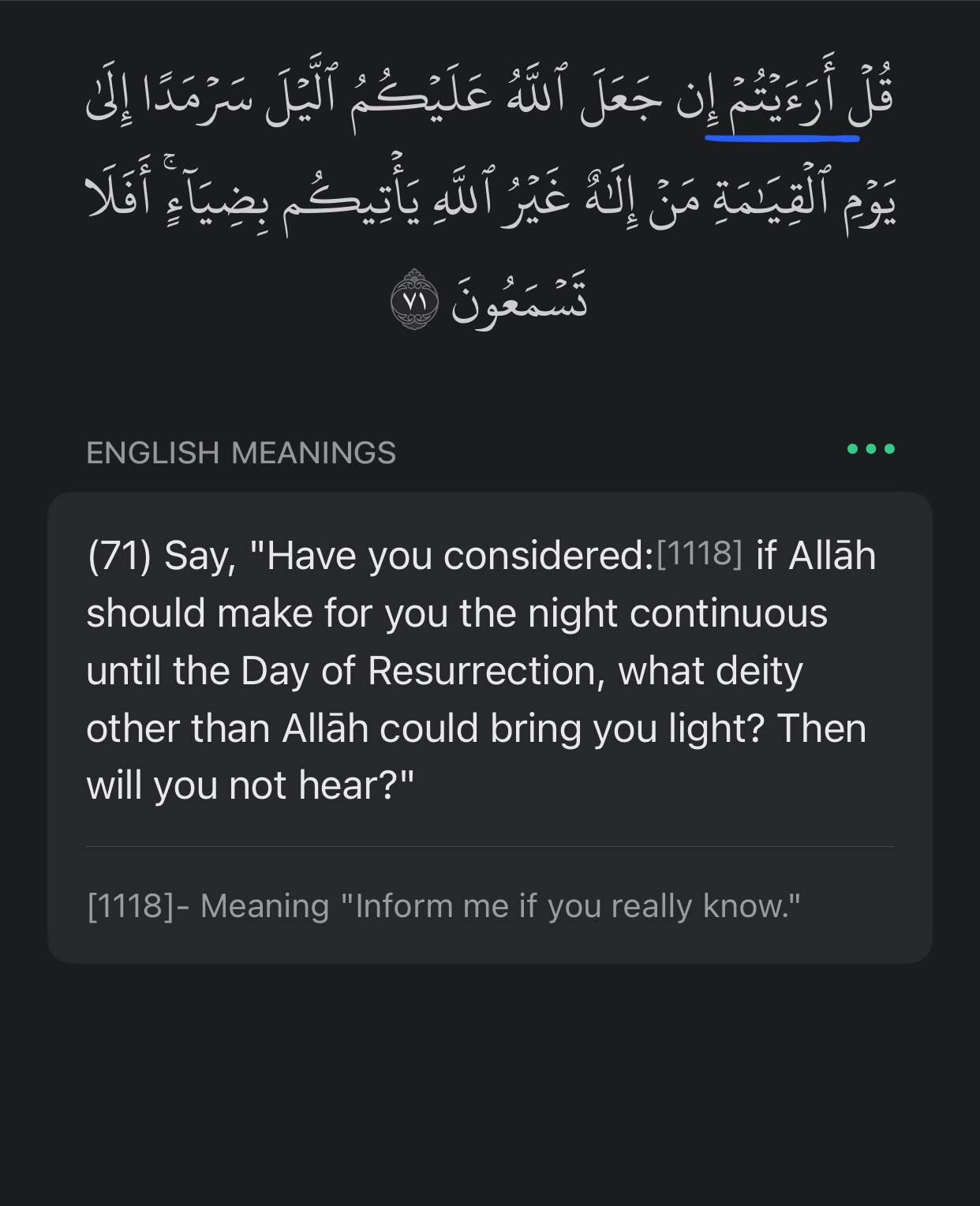
For your info: This scan is used as the closest parallel to the phrase in the hadith. It points to the Qur’anic rhetorical style in which Allah says, in meaning: “Have you considered if Allah made the night perpetual over you until the Day of Resurrection?” The point is not that a particular night has special sanctity. The point is to make the listener reflect. This directly supports the argument that “Do you see this night of yours?” in the hadith means “consider this night”, not that the night itself is being given independent sacred significance.
Is Allah assigning special ritual importance to a hypothetical night that He could make perpetual until the Day of Resurrection?
No.
The verse is using a rhetorical device.
It is calling the listener to ponder.
Likewise, the hadith says:
“Do you see this night of yours?”
Meaning:
“Think about this night as the starting point.”
Then the Prophet, peace and blessings be upon him, gives the prophecy:
“After one hundred years from this night, none of those alive now will remain.”
Conclusion
The Prophet, peace and blessings be upon him, did not say humanity would end after one hundred years.
He did not say nobody born later would live after one hundred years.
He said that nobody alive on that specific night would remain alive after one hundred years had passed.
Ibn Hajar, Ibn Battal, and al-Nawawi all explain the hadith this way.
The phrase “Do you see this night of yours?” means “consider this night” or “think about this night.”
It is a rhetorical expression, not a claim that the night itself has some special cosmic importance.
Therefore, the objection is based on a misreading.
Far from being a failed prophecy, the hadith is a fulfilled prophecy and a sign of the Prophethood of Muhammad, peace and blessings be upon him.