Does Islam Permit Bestiality? Classical Fiqh Refutation of a False Claim
Does Islam Permit Bestiality? A Full Refutation from Qur’an, Hadith, Tafsir, and Classical Fiqh
Table of Contents
- Introduction
- The Core Islamic Rule
- The Qur’anic Boundary of Lawful Sexual Relations
- Classical Tafsir: Seeking Beyond Lawful Spouses Is Transgression
- Consensus of the Jurists on Prohibition
- The Punishment Discussion: Hadd Vs Ta’zir
- Hadith Reports Condemning the Act
- Why “No Hadd” Does Not Mean “Permitted”
- Additional Juristic Context
- Conclusion
Introduction

For your info:
This opening image frames the entire response: the claim that Islam permits bestiality is presented as a misguided accusation. The article will answer it through Qur’an, tafsir, hadith reports, and classical fiqh references. The central point is simple: Islamic sources do not permit this act. The only juristic debate is over what legal punishment applies — whether a fixed hadd punishment or a discretionary ta’zir punishment.
The weak trick behind this accusation is the usual one: enemies quote statements saying “there is no hadd” and then pretend this means “it is allowed.”
That is not scholarship. That is either ignorance or deception.
In Islamic law, no hadd means there is no fixed prescribed punishment of the same category as zina. It does not mean the act is halal. The act remains haram, filthy, and punishable by ta’zir according to many jurists.
The Core Islamic Rule
Islam permits sexual relations only within the lawful boundaries established by Allah: marriage and what classical law discusses under lawful ownership in its historical legal context. Anything beyond those lawful channels is transgression.
The Qur’anic Boundary of Lawful Sexual Relations
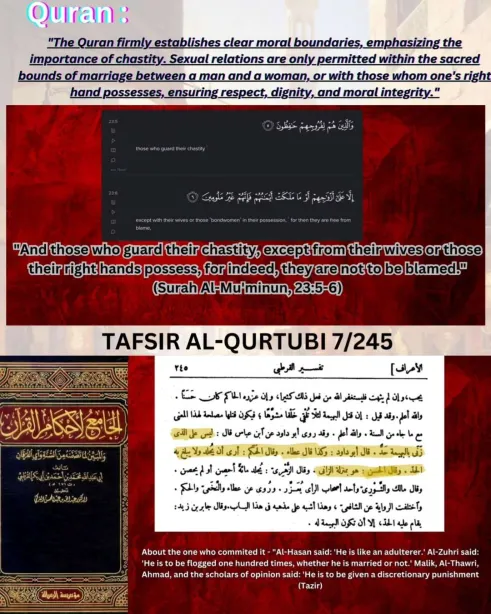
For your info:
This scan uses Qur’an 23:5–6:
“And those who guard their chastity, except from their wives or those their right hands possess, for indeed, they are not to be blamed.”
The image then cites Tafsir al-Qurtubi. The highlighted section discusses those who seek sexual gratification outside the lawful bounds. The point being made is that the Qur’an restricts lawful sexual relations to legitimate channels. Anything outside that framework becomes blameworthy and sinful. The tafsir discussion also mentions juristic punishment: some statements compare the offender to a fornicator/adulterer, while other jurists mention discretionary punishment. None of this presents the act as allowed.
Classical Tafsir: Seeking Beyond Lawful Spouses Is Transgression
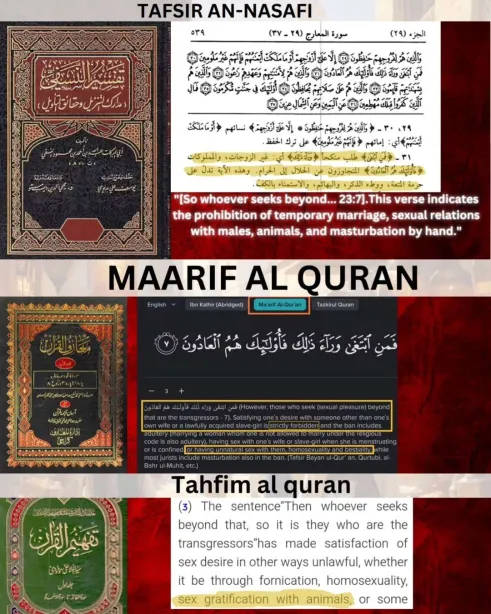
For your info:
This scan brings together multiple tafsir references on the Qur’anic phrase:
“Whoever seeks beyond that, then they are the transgressors.”
The highlighted material from Tafsir an-Nasafi explains that seeking beyond the lawful channels includes prohibited sexual acts, including animals and other unlawful means. The image also cites Ma’arif al-Qur’an, where the explanation states that anyone seeking sexual pleasure beyond the permitted relations is violating Allah’s limits. The lower English excerpt makes the same point: satisfaction of sexual desire through unlawful channels — including animals — falls under transgression. This is the opposite of permission.
Consensus of the Jurists on Prohibition
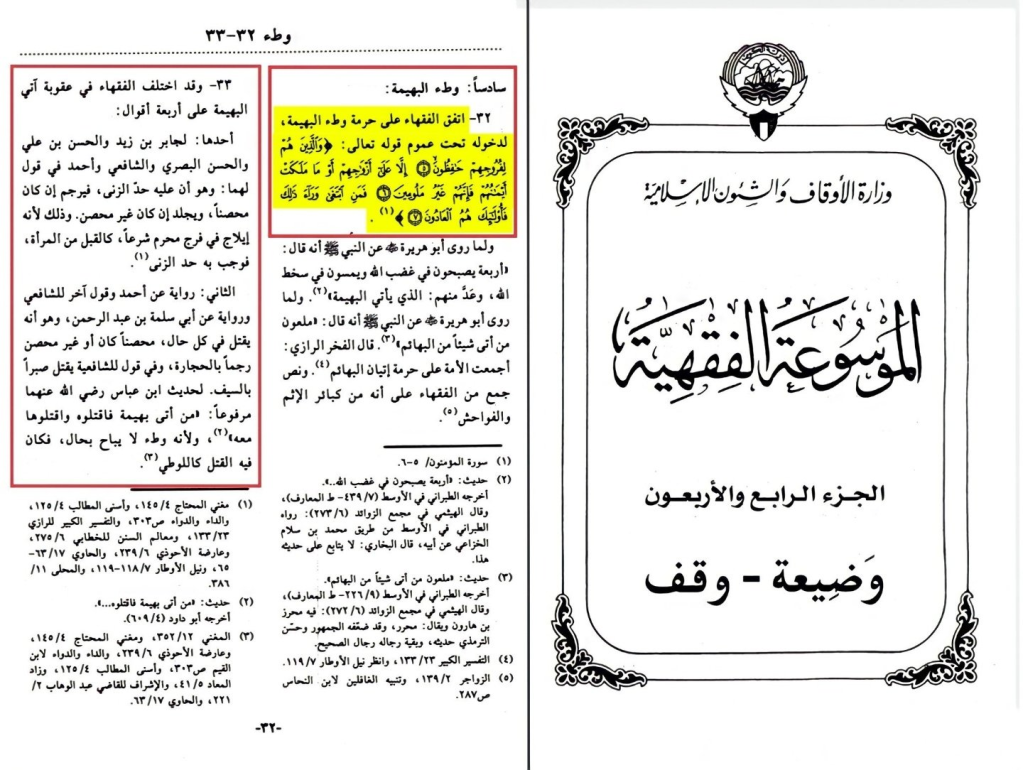
For your info:
This scan from al-Mawsu’ah al-Fiqhiyyah states clearly under the heading “وطء البهيمة” that the jurists agreed on the prohibition of intercourse with an animal. It connects the ruling to the general Qur’anic command to guard one’s private parts except within the lawful categories. The page also cites reports condemning the act. The highlighted paragraph is important because it proves the main point directly: the classical fiqh position is not permissibility, but prohibition.
For your info:
This scan is also from al-Mawsu’ah al-Fiqhiyyah. The highlighted section explicitly states:
“There is no disagreement among the jurists regarding the prohibition of intercourse with an animal.”
After affirming the prohibition, it explains that the disagreement is about the punishment. This is the decisive distinction: the act is agreed to be haram, while the jurists differ over whether a fixed hadd applies or whether the punishment is discretionary.
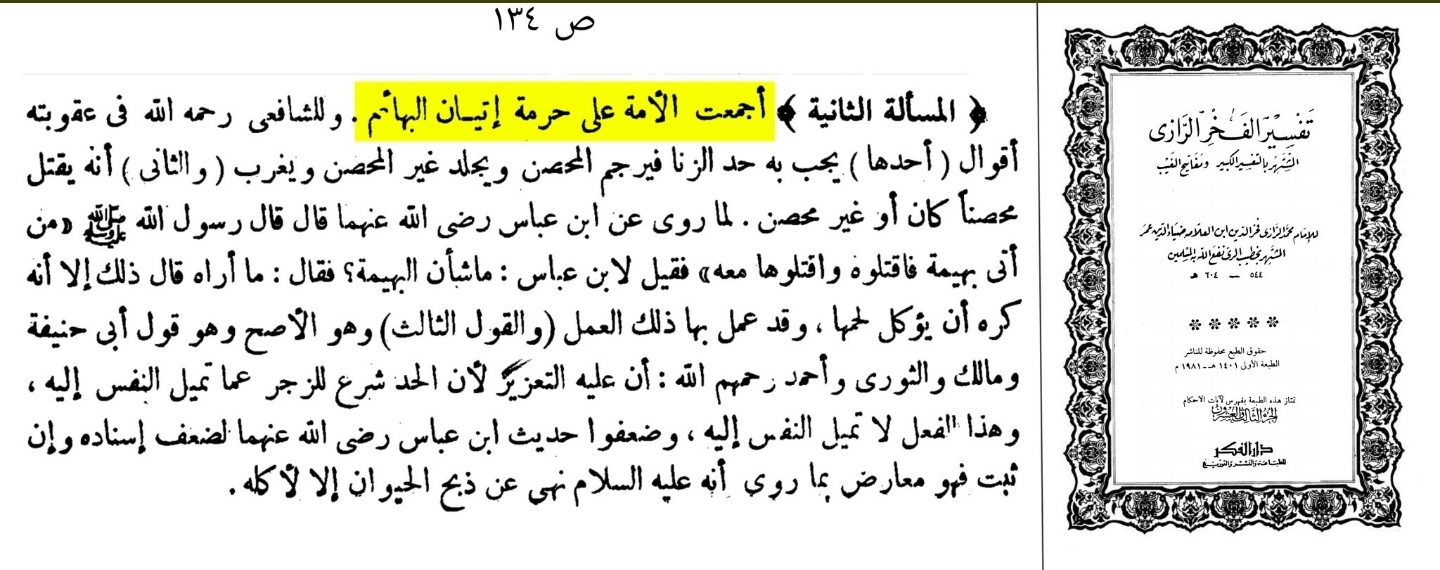
For your info:
This scan from Tafsir al-Razi contains the highlighted statement:
“The Ummah has agreed upon the prohibition of intercourse with animals.”
The page then discusses what punishment applies. Some reports mention killing the offender and the animal, while other juristic discussion moves toward ta’zir because the act does not fall under normal zina categories. Again, the scan proves consensus on prohibition. The legal debate is not whether it is allowed, but how it is punished.
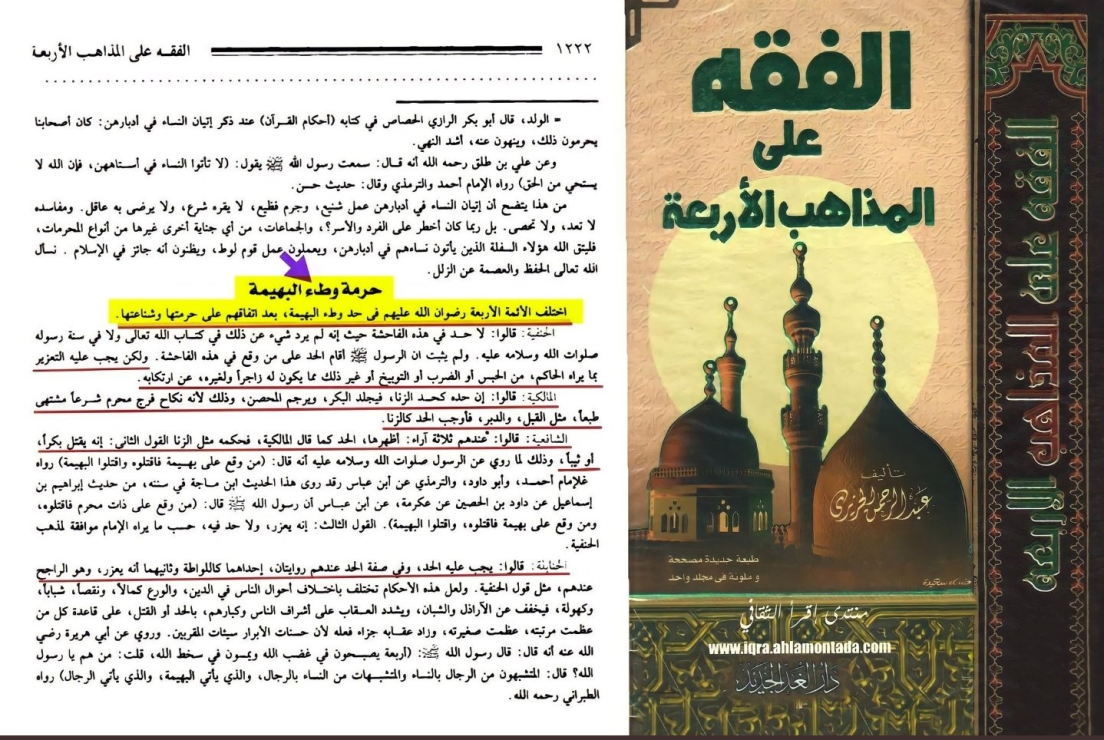
For your info:
This scan from al-Fiqh ‘ala al-Madhahib al-Arba’ah has the heading “حرمة وطء البهيمة” — the prohibition of intercourse with an animal. The highlighted section states that the four imams agreed on its prohibition. The page then discusses different legal opinions regarding punishment: some compare the punishment to zina, while others assign ta’zir. The scan is strong because it shows agreement across the four Sunni schools that the act is forbidden.
The Punishment Discussion: Hadd Vs Ta’zir
“Some jurists said there is no hadd for this act, therefore Islam permits it.”
That is nonsense.
Hadd means a fixed punishment with strict evidentiary and legal conditions.
Ta’zir means discretionary punishment imposed by the judge or authority.
A sin can be haram and punishable even if it does not have a fixed hadd.
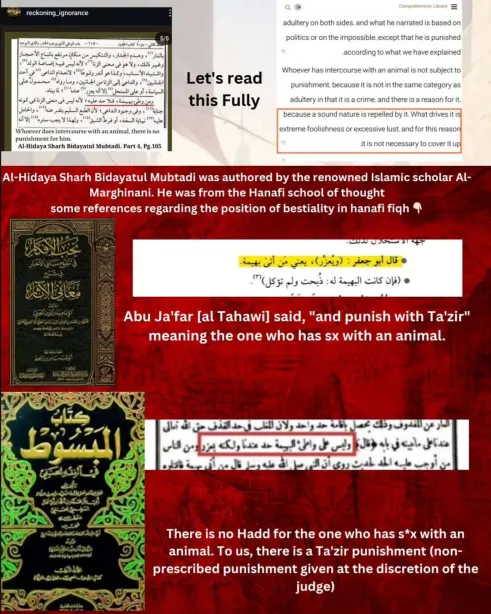
For your info:
This scan discusses the Hanafi position through al-Hidayah Sharh Bidayat al-Mubtadi. It explains that the one who has intercourse with an animal is not given the zina hadd according to that position, but is punished by ta’zir. The reason given is that the act, while obscene and prohibited, does not fall into the same legal category as zina for hadd application. The scan even makes the point in English: there is no hadd, but there is ta’zir. So this source destroys the false claim, because it proves punishment, not permission.
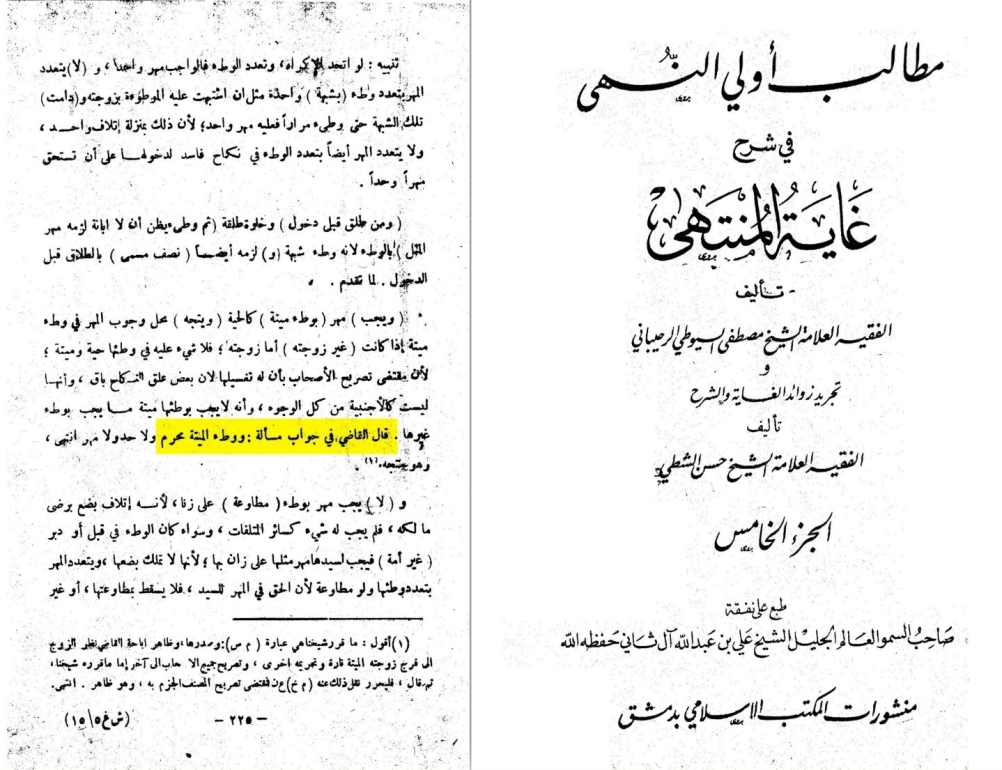
For your info:
This scan from Matalib Uli al-Nuha states in the highlighted line that intercourse with animals is haram, and that there is no hadd for it. This is exactly the kind of quote dishonest polemicists abuse. The line does not mean “permitted.” It means the act is forbidden, but the fixed hadd is not applied in that school’s legal analysis. The punishment would fall under ta’zir or another legal category.
For your info:
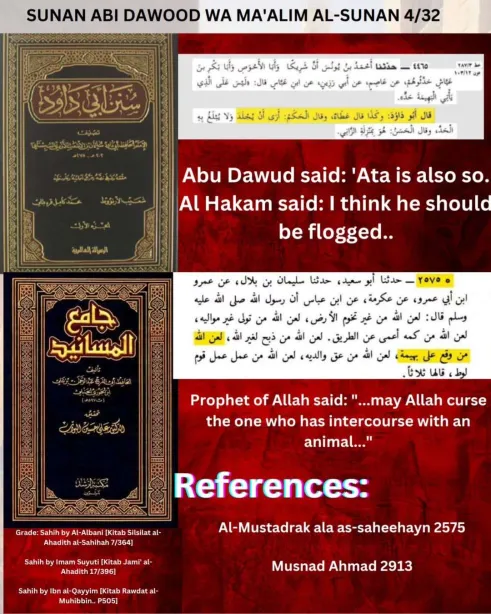
This scan cites Sunan Abi Dawud and related hadith material. The upper section mentions statements from early authorities such as Abu Dawud, ‘Ata’, and al-Hakam about the offender being flogged or punished. The lower section cites the prophetic curse upon the one who commits intercourse with an animal. The image also lists references such as al-Mustadrak and Musnad Ahmad, along with grading notes. The point is that the act is condemned, cursed, and treated as punishable — not permitted.
For your info:
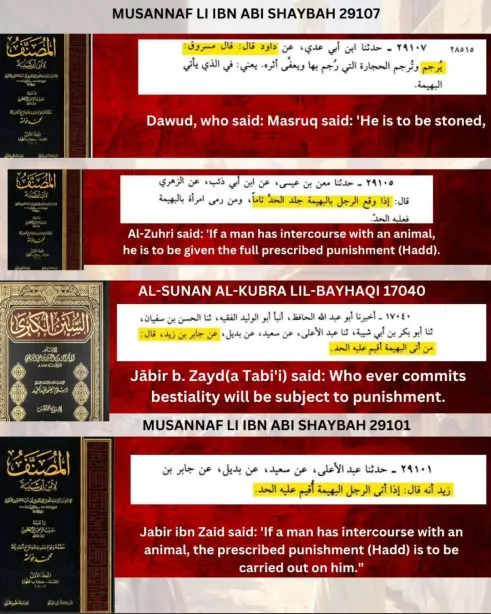
This scan collects reports from Musannaf Ibn Abi Shaybah and al-Sunan al-Kubra of al-Bayhaqi. It cites early authorities such as Masruq, al-Zuhri, and Jabir ibn Zayd. Some reports mention stoning, others mention hadd, and others mention punishment generally. The importance of this scan is that early authorities treated the act as a punishable offense. The disagreement is over the exact form of punishment, not over whether the act is acceptable.
Hadith Reports Condemning the Act
For your info:
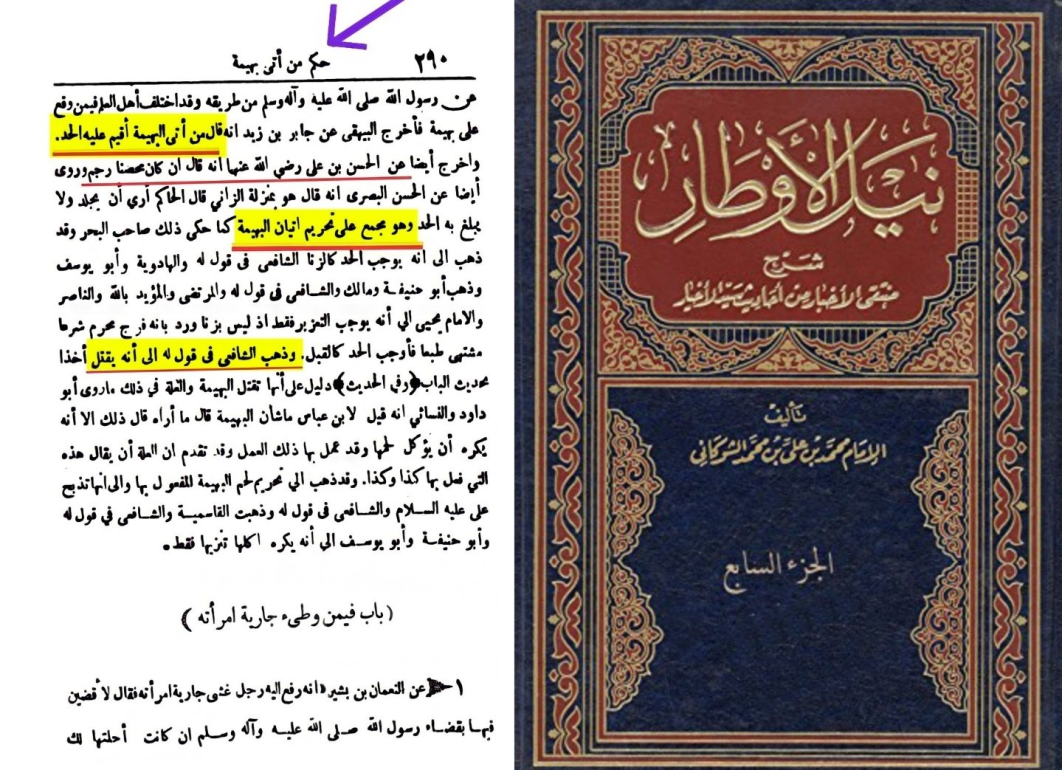
This scan from Nayl al-Awtar discusses reports attributed to Ibn ‘Abbas concerning the one who commits intercourse with an animal. The highlighted narration says that whoever does such an act should be killed, and the animal should also be killed. The scan also discusses the legal disagreement around the report and how jurists understood it. The critical point is this: the hadith discussion is about condemnation and punishment, not permission.
For your info:
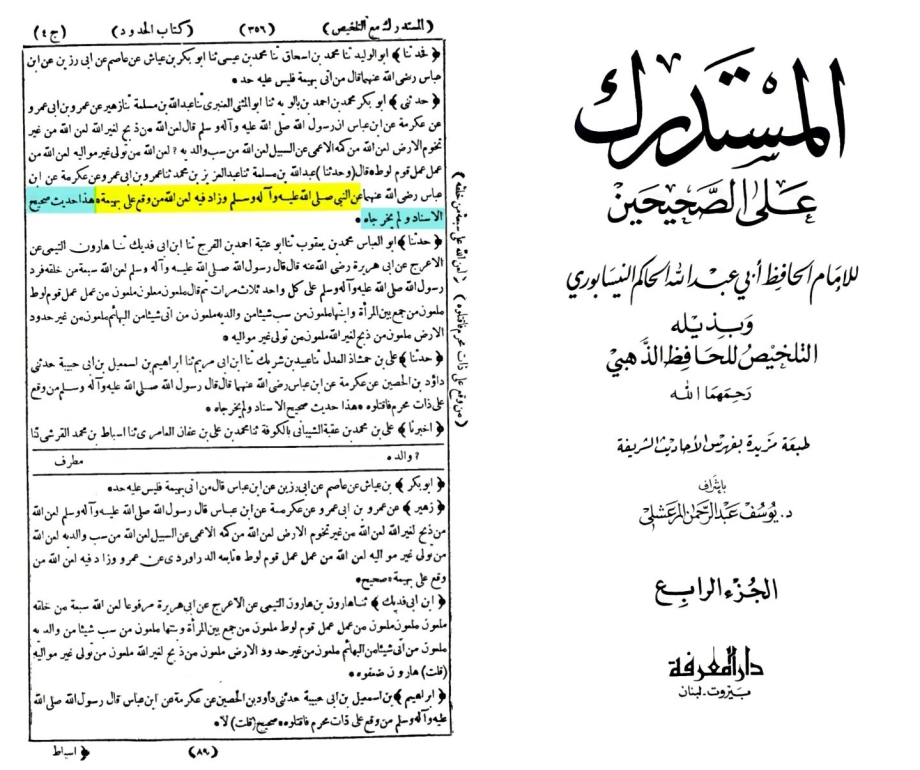
This scan from al-Mustadrak ‘ala al-Sahihayn contains the highlighted report from Ibn ‘Abbas:
“Whoever has intercourse with an animal, kill him and kill the animal.”
The scan is used to show the severe condemnation found in hadith literature. Even where jurists debate the application, authenticity, or exact legal ruling of such reports, no one extracts permissibility from them. They are cited in discussions of punishment and prohibition.
Why “No Hadd” Does Not Mean “Permitted”
Absence of hadd ≠ permissibility.
Many prohibited acts do not have a specific hadd. They are still haram and can be punished by ta’zir.
So when a jurist says, “there is no hadd,” he is not saying, “this is halal.” He is saying the act does not receive that specific fixed punishment category.
For your info:
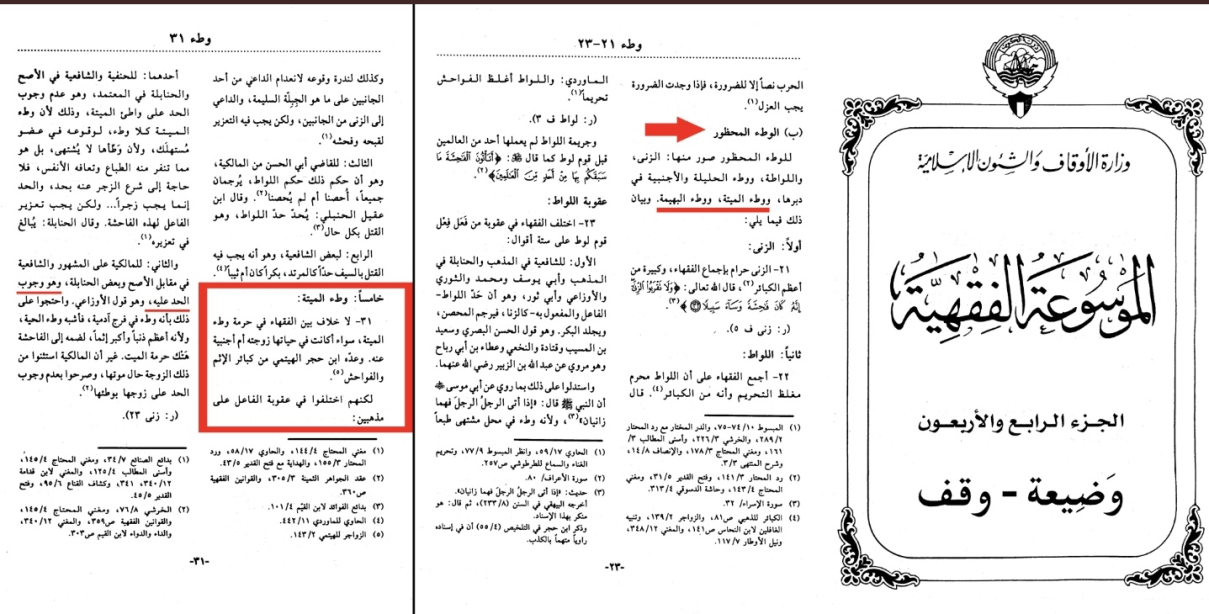
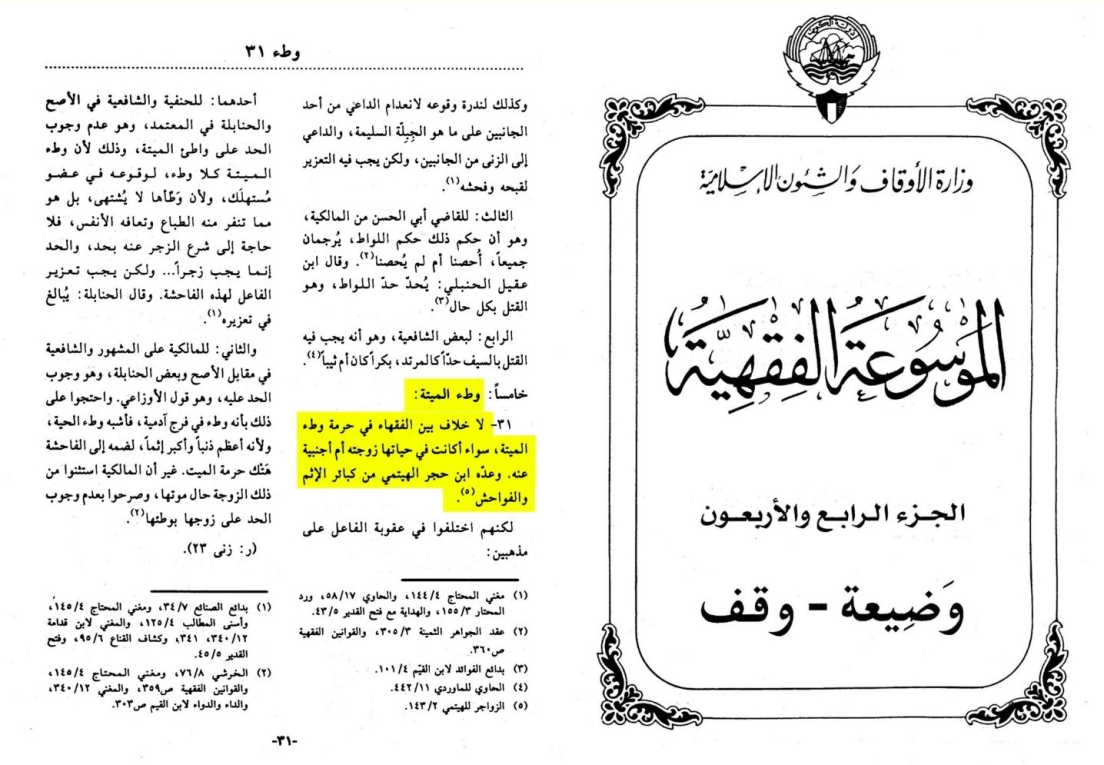
This scan from al-Mawsu’ah al-Fiqhiyyah discusses another forbidden sexual category: intercourse with a dead woman. The highlighted section states that jurists did not differ over its prohibition, whether the dead woman had been his wife in life or not. The relevance is methodological: classical fiqh books discuss ugly and abnormal acts in technical legal terms, but discussing a ruling is not the same as permitting the act. These sources classify such acts as prohibited and then discuss punishment categories.
For your info:
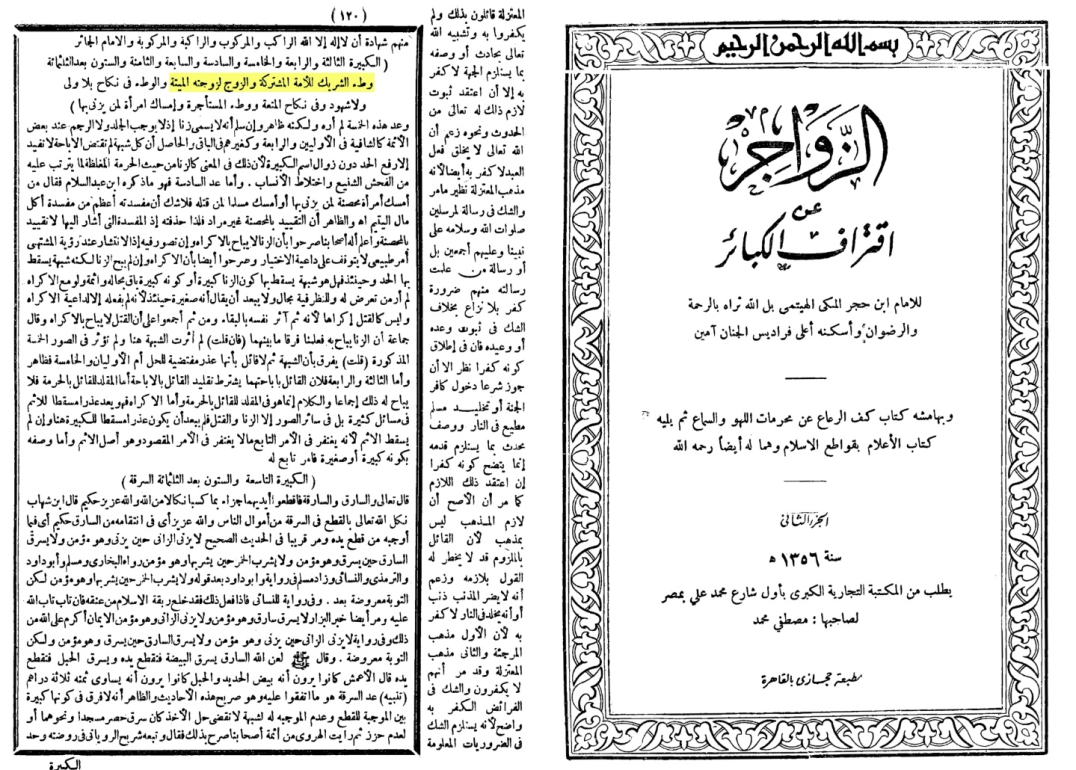
This scan shows al-Zawajir ‘an Iqtiraf al-Kaba’ir, a work dealing with major sins. The highlighted discussion lists unlawful sexual violations and invalid sexual arrangements in the context of major sins and moral corruption. The scan is useful because it shows how classical scholars treated abnormal sexual violations: not as neutral permissions, but as sins and unlawful acts. The surrounding material belongs to a genre concerned with warning against grave sins.
Additional Juristic Context
Classical jurists often discuss disgusting acts because law has to classify every possible violation: whether it is haram, whether a hadd applies, whether ta’zir applies, whether evidence is required, and what happens to related property or animals.
A legal discussion is not approval. Only a weak reader confuses legal classification with moral permission.
Conclusion
The scans prove:
- The Qur’an restricts lawful sexual relations to lawful channels.
- Tafsir works classify seeking beyond those lawful channels as transgression.
- Classical jurists explicitly state that intercourse with animals is haram.
- Major fiqh references mention agreement on prohibition.
- The disagreement is only over the punishment: hadd, killing, flogging, or ta’zir.
- Statements such as “no hadd” do not mean permissibility.
Therefore, the claim is not merely weak. It is a dishonest abuse of technical fiqh language.
Final answer:
Islam does not permit bestiality. Classical Islamic sources prohibit it. The only juristic debate is over the legal punishment, not over the moral or religious ruling.