Does Nikāḥ Mean Sex in the Qur’an? Refuting the Claim With Arabic and Qur’anic Usage
Does Nikāḥ Mean Sex in the Qur’an? Refuting the Claim With Arabic and Qur’anic Usage
Some critics claim that the Arabic word nikāḥ in the Qur’an means sexual intercourse rather than marriage. They use this claim to attack Qur’anic passages about marriage, divorce, and lawful relations.
This is a weak argument built on either ignorance of Arabic or deliberate selective reading.
The word nikāḥ can be discussed in Arabic lexicons under meanings connected to marriage and intercourse, but the decisive question is not whether the word can ever carry a sexual sense in Arabic. The decisive question is: how is the word used in the Qur’an?
The Qur’anic usage makes the matter clear.
In the Qur’an, nikāḥ is used for marriage or the marriage contract, not as a crude synonym for intercourse. Qur’an 33:49 proves this directly because it speaks of marrying women and then divorcing them before touching them.
Qur’an 33:49 Destroys the Claim
“O believers! If you marry believing women and then divorce them before you touch them, they will have no waiting period for you to count, so give them a suitable compensation, and let them go graciously.”
This verse is decisive.
Allah says: “If you marry believing women, then divorce them before touching them…”
If nikāḥ meant sexual intercourse here, the verse would become absurd:
“If you have intercourse with believing women, then divorce them before touching them…”
That makes no sense.
The verse clearly distinguishes between nikāḥ and touching. Therefore, in this verse, nikāḥ means marriage, not intercourse.
Qur’an 33:49 proves that nikāḥ cannot mean intercourse in this context, because the verse speaks of nikāḥ occurring before physical contact.
This is not a complicated argument. The verse itself settles it.
The Claim Depends on Flattening Arabic
The critic’s mistake is treating an Arabic word as if it must carry only one crude meaning everywhere.
That is not how language works.
Words can have broader lexical fields, and their intended meaning is determined by context.
Nikāḥ in Arabic can be discussed in relation to marriage, marital contract, and sometimes intercourse depending on context. In Qur’anic legal usage, it refers to marriage or the marriage contract.
So the refutation should not be phrased as: “Nikāḥ can never have a sexual meaning in Arabic.”
That is too broad and easy to attack.
The correct phrasing is:
Even if Arabic lexicons mention intercourse among possible meanings, the Qur’anic usage of nikāḥ is marriage, and Qur’an 33:49 proves that it cannot mean intercourse there.
Al-Muʿjam Al-Wajīz: Nikāḥ Means Marriage
The source material cites Al-Muʿjam Al-Wajīz defining nikāḥ as marriage.
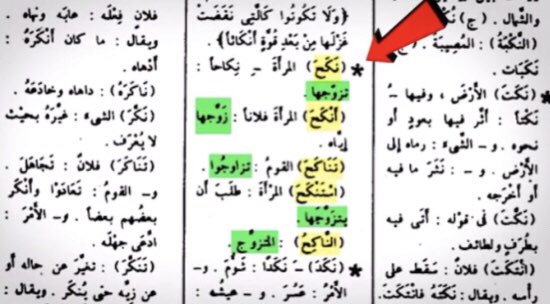
This scan is cited to show that a standard Arabic lexical source definesnikāḥ as marriage. The highlighted entry supports the basic linguistic point that nikāḥ is not limited to sexual intercourse, but is a recognized Arabic term for marriage.
This alone refutes the simplistic claim that nikāḥ must mean intercourse.
Almaany Lexical Evidence
The source material also cites entries from Almaany showing the same basic meaning.
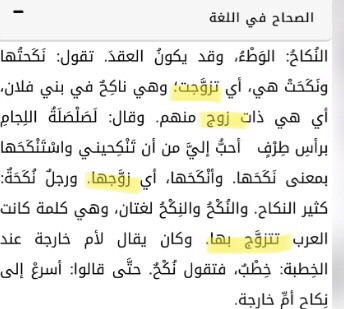
This scan is used as lexical support for the meaning ofnikāḥ as marriage. It supports the point that the marriage meaning is not an apologetic invention but part of ordinary Arabic usage.
The next supporting entry continues the same lexical pattern.
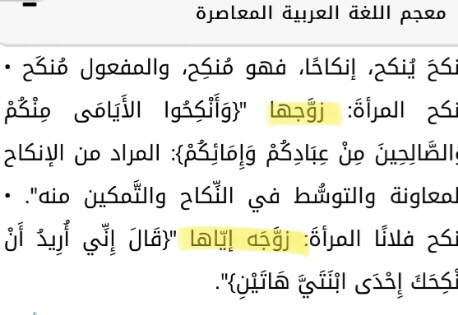
This scan continues the Almaany lexical evidence. The relevance is that Arabic reference material recognizes nikāḥ in the semantic field of marriage, which directly undermines the polemical claim that the Qur’an must be read as speaking about intercourse.
Another entry is cited for the same purpose.
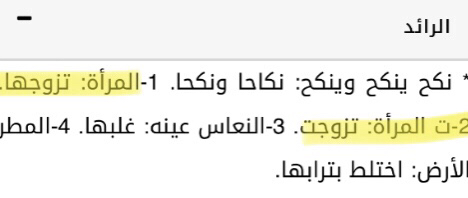
This scan further supports the marriage meaning of nikāḥ. It is part of the cumulative lexical evidence showing that the critic’s reading is not demanded by Arabic.
The source material then cites another lexical page.
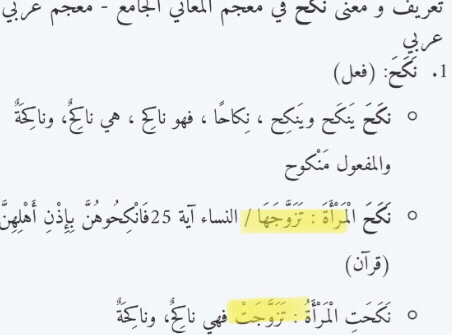
This scan is relevant because it supports the idea that nikāḥ is used in Arabic for marriage and the marital contract. This matters because Qur’anic legal contexts speak about marriage, divorce, waiting periods, and lawful spouses.
The final Almaany scan continues this lexical support.
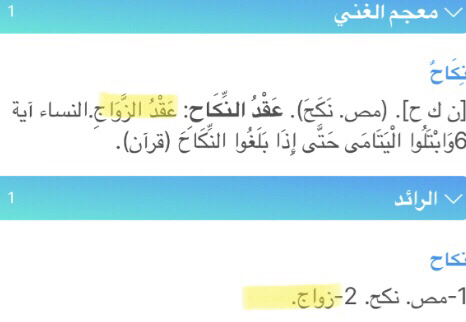
This scan is another supporting lexical entry showing that nikāḥ is not restricted to the crude meaning alleged by the critic. The point is cumulative: Arabic sources recognize the marriage meaning clearly.
Lisan al-Arab and Qur’anic Usage
The strongest lexical point in the source material comes from Lisan al-Arab.
The cited passage says that while the word may be discussed in Arabic under meanings connected to intercourse and contract, al-Azhari lists Qur’anic passages using nikāḥ and explains them with the meaning of zawāj, meaning marriage.
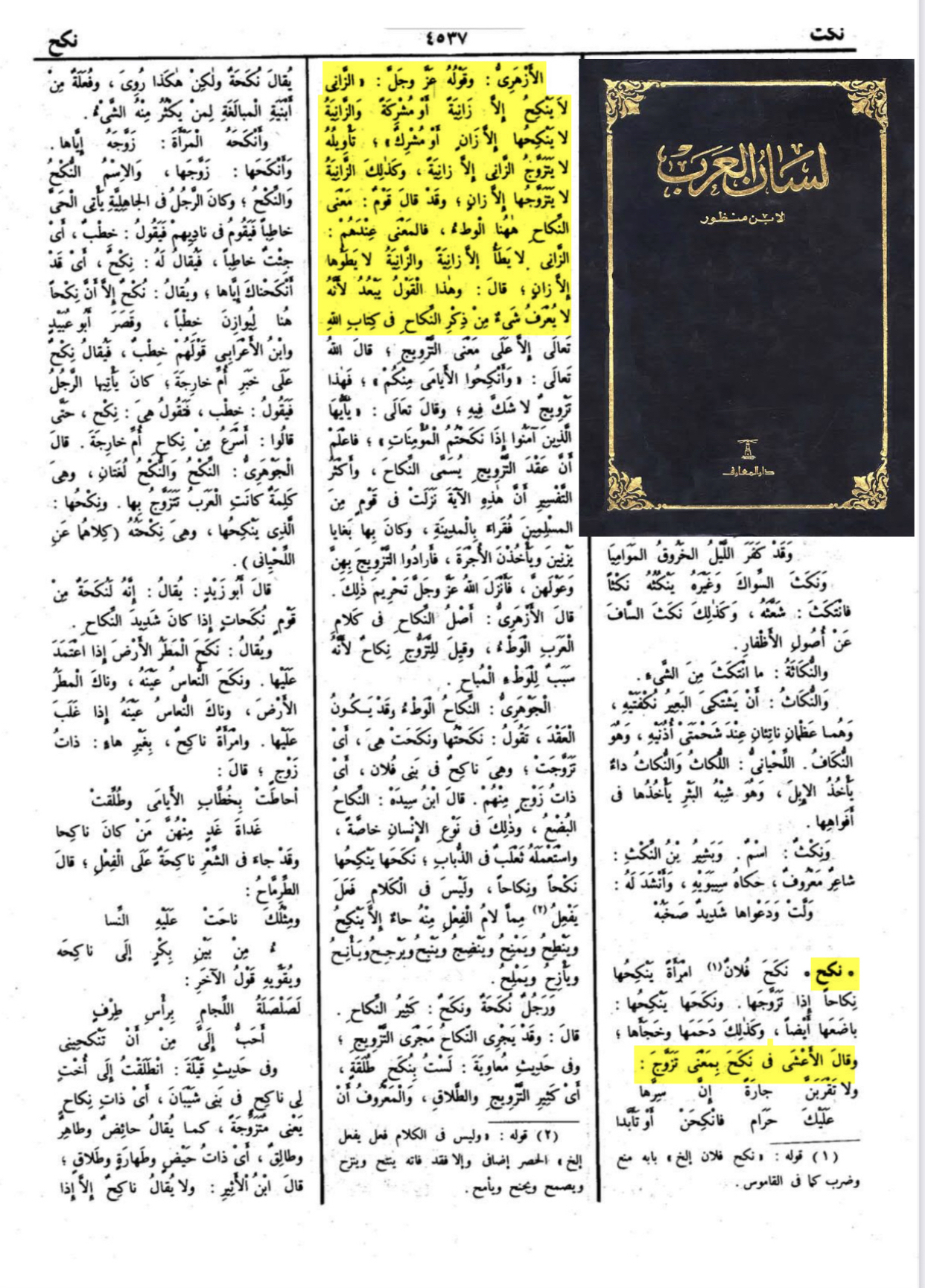
This scan fromLisan al-Arab is central. It cites the discussion of nikāḥ and notes that al-Azhari listed Qur’anic passages containing the word and interpreted them with the meaning of zawāj, meaning marriage. The key point is that the Qur’anic usage is treated as marriage, not as sexual intercourse.
The lexical discussion recognizes that nikāḥ may be mentioned in relation to intercourse and contract in Arabic, but the Qur’anic passages are explained as marriage.
This is exactly the distinction needed.
The issue is not whether a lexicon somewhere lists a sexual sense. The issue is whether that is the meaning in the Qur’anic passage under discussion.
Qur’an 33:49 already proves it is not.
Another Lexical Scan
The source material also provides another Arabic lexical scan discussing nikāḥ.
This scan discusses the lexical meaning of nikāḥ and notes that it may be used for intercourse and for the marriage contract. It also gives examples of a woman being married to a man by nikāḥ. The value of this scan is that it does not support the critic’s simplistic claim. Rather, it proves that Arabic recognizes nikāḥ as a term for marriage and marital contract.
This is why precision matters. If someone says, “Some lexicons mention intercourse,” the answer is: yes, but they also mention marriage and contract, and context determines meaning.
In Qur’an 33:49, the context forces the meaning of marriage.
Qur’anic Context: Marriage, Divorce, and Waiting Period
The context of Al-Ahzab 33:49 is legal.
It mentions:
- believers marrying believing women,
- divorce,
- physical contact not having occurred,
- no waiting period,
- compensation,
- gracious release.
These are marital legal categories.
The verse is about marriage and divorce law. Reading nikāḥ here as intercourse destroys the sentence and makes the legal ruling incoherent.
A critic who ignores the legal context is not interpreting the verse. He is mutilating it.
Christian Arabic Sources Also Use Nikāḥ for Marriage
The source material also cites Christian Arabic sources using the word nikāḥ in the sense of marriage.
This is useful because some Christian polemicists attack Islamic usage of the word while their own Arabic religious literature uses the same word for marriage.
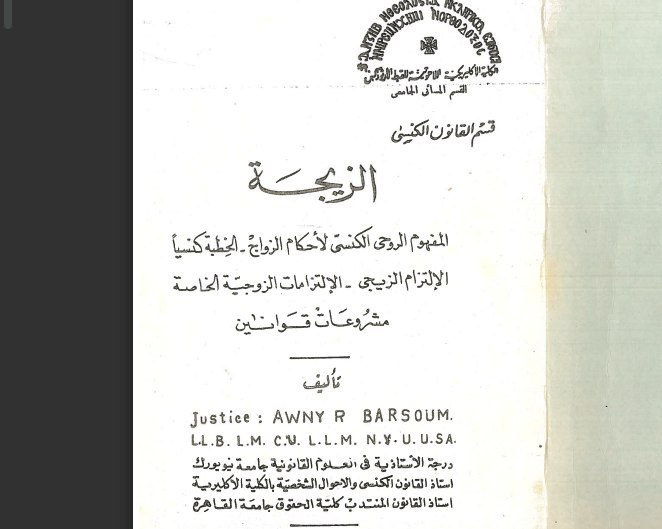
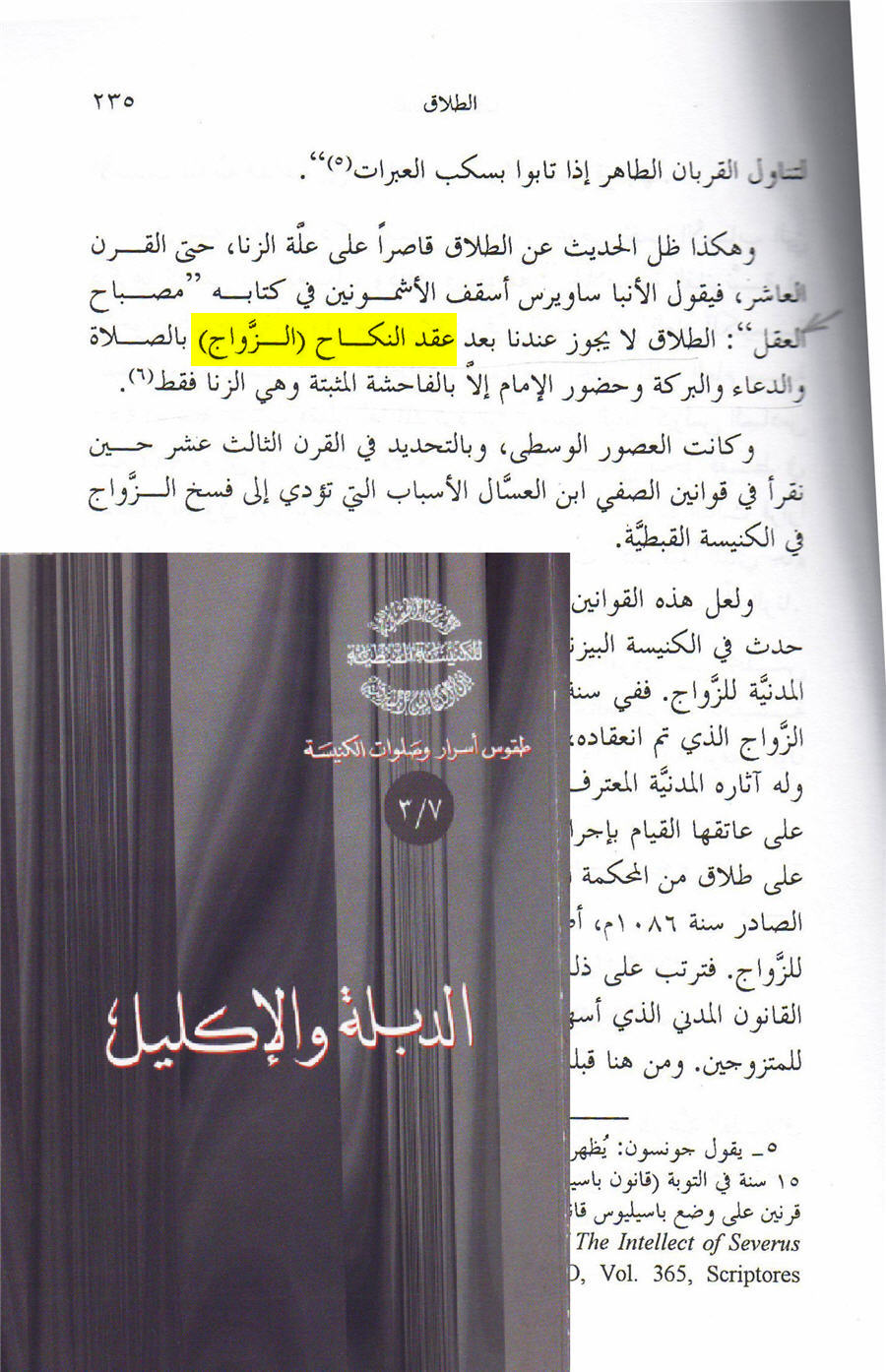
This scan is presented as evidence from a Christian Arabic source using the wordnikāḥ in the context of marriage. Its relevance is polemical: Christian Arabic literature itself recognizes the word as a marriage term, so attacking the Qur’an for using it is selective and unserious.
A second Christian-source scan is provided.
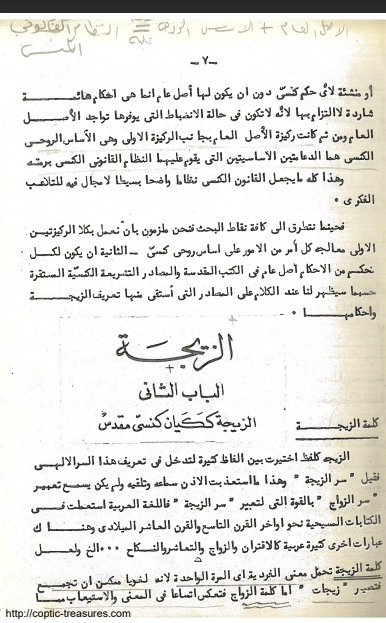
This scan continues the Christian Arabic evidence. The point is not that Christian sources define Qur’anic Arabic. The point is that Arabic-speaking Christian literature also uses nikāḥ as a marriage term, which undermines the claim that the word is inherently obscene or necessarily sexual.
The next scan continues the same line of evidence.
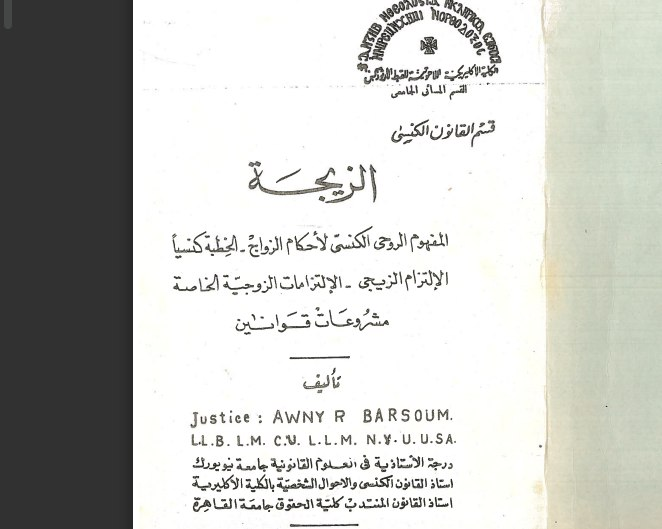
This scan is another example from Christian Arabic material where nikāḥ appears in a marriage-related context. It helps show that the word belongs to normal Arabic religious and legal vocabulary, not merely crude sexual speech.
The final scan in this group is also included.
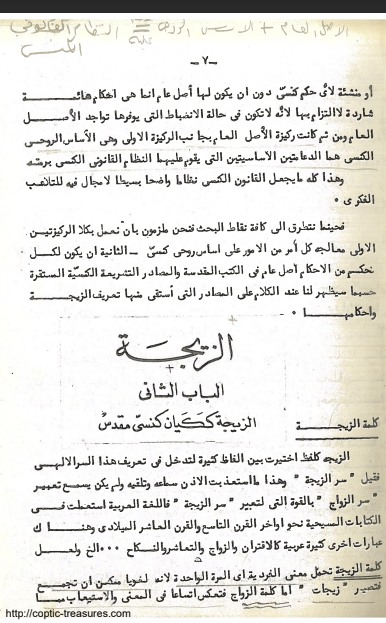
This scan supports the statement that Christian Arabic sources themselves use or acknowledge nikāḥ as marriage terminology. This is useful against polemicists who pretend the word can only mean intercourse when attacking the Qur’an.
The argument is not that Christian sources are authorities over the Qur’an. The argument is that even Christian Arabic religious material uses nikāḥ as marriage terminology, proving that the critic’s claim is linguistically dishonest.
The Bible Reference Should Be Checked
The raw material mentions an Arabic Bible version published in 1826 and says the word appears in Matthew 5:33.
That reference should not be used carelessly.
The marriage and divorce context in Matthew 5 is normally Matthew 5:32, not 5:33. Matthew 5:33 is usually about oaths.
Do not publish the claim as “Matthew 5:33” unless the exact Arabic edition is checked. The safer wording is that some Arabic Christian sources and editions use nikāḥ terminology in marriage contexts, but the exact verse reference should be verified.
This is important. A single wrong Bible reference gives critics an easy way to dismiss the whole article.
Additional Christian Book References
The source material mentions Christian books such as Spiritual Medicine and The Ring and the Crown as examples of Christian Arabic religious literature using nikāḥ terminology in marriage contexts.
It also gives links to online copies.
The source material cites Christian church-related books where nikāḥ terminology appears in marriage contexts. This further shows that Arabic religious literature outside Islam also recognizes the term as marriage vocabulary.
The point is simple: if Arabic Christian writers can use nikāḥ for marriage, then Christian polemicists cannot honestly pretend the word is inherently obscene when the Qur’an uses it.
More Supporting Scans
The source material also includes additional scans connected to Christian Arabic usage and marriage terminology.
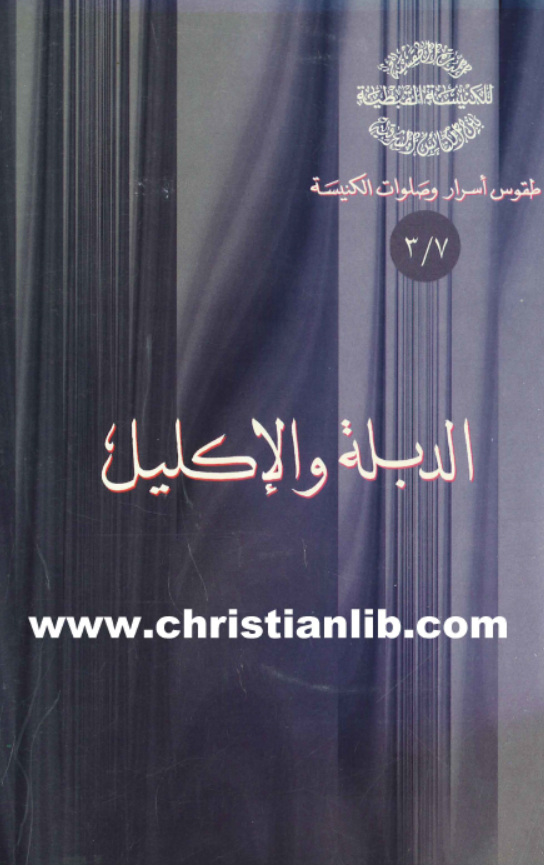
This scan appears to relate to the Christian bookThe Ring and the Crown or a similar church marriage-related source. It is used to support the claim that Christian Arabic religious literature contains marriage terminology connected to nikāḥ. Its role is supplementary, not the main proof.
The next scan is presented as another example.
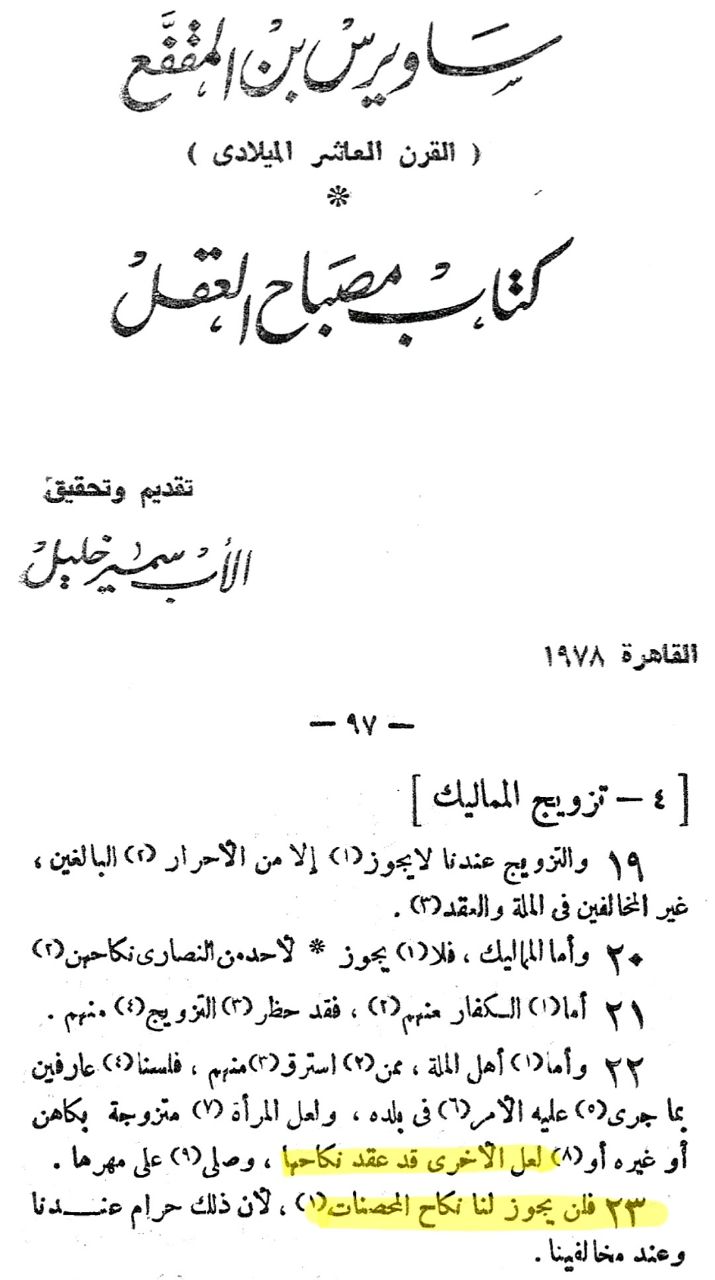
This scan is cited as another example of Arabic usage of nikāḥ in a marriage-related context. The broader point remains that nikāḥ is normal Arabic legal and religious vocabulary for marriage, not merely a crude word for intercourse.
The final scan continues the supporting evidence.
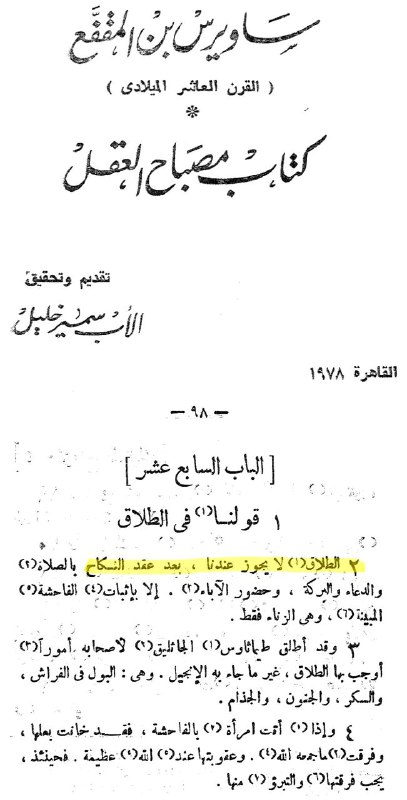
This scan is used as further supporting evidence that nikāḥ appears in Arabic marriage-related discussions. It reinforces the cumulative linguistic point: the critic’s attempt to reduce nikāḥ to intercourse is false.
The Strongest Argument Is Qur’anic Usage
Do not let the article get lost in secondary evidence.
The strongest proof is still Qur’an 33:49.
“If you marry believing women and then divorce them before you touch them…”
This verse makes the meaning unavoidable.
Nikāḥ happens.
Then divorce happens.
And this is before touching.
Therefore nikāḥ here is marriage, not intercourse.
If nikāḥ meant intercourse in Qur’an 33:49, the verse would speak of intercourse before touching, which is nonsense. Therefore, in Qur’anic legal usage, nikāḥ means marriage.
Everything else is supporting evidence.
Why the Critic’s Argument Fails
The argument fails for several reasons.
First, it ignores Qur’an 33:49, where nikāḥ clearly occurs before touching.
Second, it ignores the legal context of marriage, divorce, waiting period, and compensation.
Third, it treats one possible lexical meaning as if it must be the meaning in every context.
Fourth, it ignores Arabic lexicons that recognize nikāḥ as marriage and marital contract.
Fifth, it ignores that even Christian Arabic sources use nikāḥ as marriage terminology.
The critic commits a basic lexical fallacy: choosing one possible dictionary meaning and forcing it into every occurrence, even where the context rejects it.
This is not serious Arabic analysis. It is polemical word abuse.
Final Refutation
The claim that nikāḥ in the Qur’an means sexual intercourse rather than marriage is false.
Arabic sources recognize nikāḥ as marriage and marital contract. Lisan al-Arab discusses the word and cites the Qur’anic usage as marriage. Qur’an 33:49 is decisive because it speaks of marrying women, divorcing them, and doing so before touching them. Therefore, nikāḥ cannot mean intercourse in that verse.
The critic’s argument depends on ignoring context and forcing a crude meaning into a legal passage where it does not fit.
Nikāḥ in Qur’anic legal usage means marriage, not intercourse. Qur’an 33:49 proves this directly: nikāḥ is mentioned before touching. The critic’s claim collapses because it confuses possible lexical range with actual Qur’anic meaning.
Source Notes
Adapted from the provided material on the claim that nikāḥ means intercourse in the Qur’an.
- Al-Muʿjam al-Wajīz, p. 633.
- Almaany Arabic lexical entries for nikāḥ.
- Ibn Manẓūr, Lisān al-ʿArab, Dār al-Maʿārif print, p. 4537, under the root n-k-ḥ.
- Christian Arabic sources cited in the provided material, including church-related books and Arabic Bible material using nikāḥ in marriage contexts.