Evolutionary Hypothesis of Endosymbiosis
evolutionary hypothesis of Endosymbiosis,
Hamir Darawneh Al-Arab cites a study published in Nature as supporting the evolutionary hypothesis of Endosymbiosis,
https://www.nature.com/articles/s41586-024-08010-x
Before we begin, this ridiculous hypothesis says that organelles such as mitochondria were bacteria that were swallowed by larger bacteria, then transformed into mitochondria… Now let’s respond with quotes from the same study that the laughing atheists cited, so you know that you are in front of a group of clowns, and let’s see whether a change occurred in the bacteria at all or not… By contrast, the germination success of bacteria-containing spores for both FAnc–BAnc and the evolved pair decreased substantially over time from more than 50% to below 5% after about a month, suggesting that the presence of bacteria takes a continuous toll on the spores. “The germination success of the bacteria-containing spores for both FAnc–BAnc and the evolved pair declined dramatically over time from more than 50% to less than 5% after about a month, suggesting that the presence of bacteria negatively impacts the spores.” A summary of the study in Nature stated: But the germination success of the bacteria-containing spores was low. In a mixed population of spores (some with bacteria and some without), those with bacteria vanished after two generations. Negatively, laughing alike, not positively 😆
https://www.nature.com/articles/d41586-024-03224-5
{Embed}
https://www.nature.com/articles/s41586-024-08010-x
Inducing novel endosymbioses by implanting bacteria in fungi
Nature - A study presents an approach to establish and track a new endosymbiotic partnership by implanting bacteria in a non-host fungus and shows that stable inheritance of the implanted bacteria…

{Embed}
https://www.nature.com/articles/d41586-024-03224-5
Bacteria implanted in fungi hints at ancient relationships that hel…
Biologists created a symbiotic system that hints at how features such as mitochondria and chloroplasts might have emerged a billion years ago.
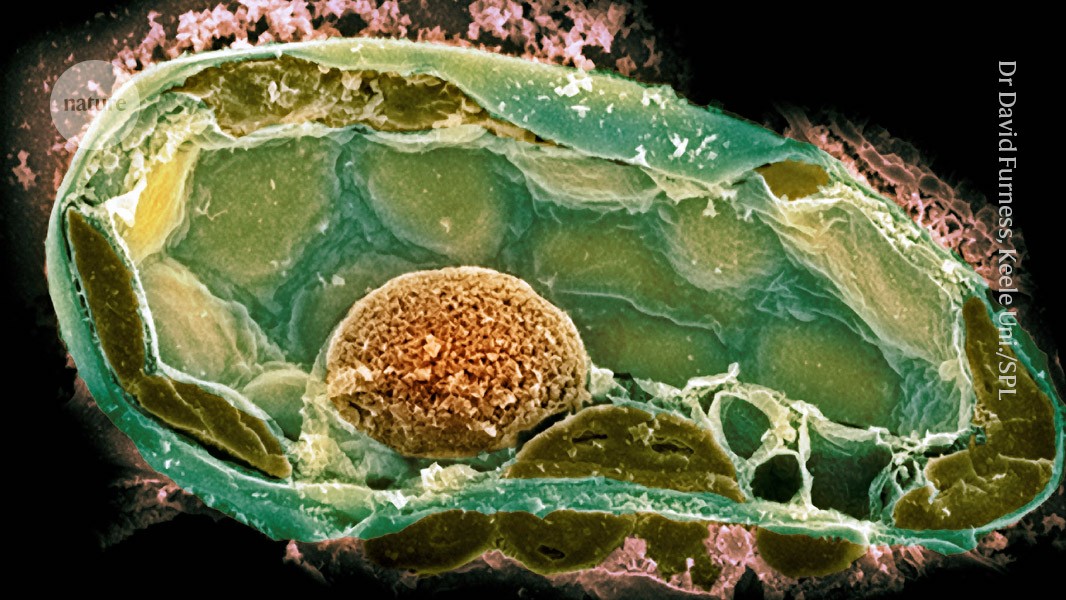
Short-read sequencing was used to track changes at several rounds of the experiment for both the fungus and the bacteria. In the bacteria, we did not detect any mutational changes throughout the evolution experiment. “Short-read sequencing was used to track changes in several rounds of the experiment for both fungi and bacteria. In bacteria, we did not detect any mutational changes throughout the evolution experiment.” The findings of the sequence analysis confirmed that genomic changes occurred during the adaptive evolution experiment on the host side rather than in the endosymbiont. We therefore reasoned that the induced endosymbiosis would be quickly lost in the absence of positive selection, but would persist for longer after adaptation and mitigation of some of the fitness costs. But no spontaneous adaptation occurred originally, so they created a selective pressure.😆
The pairing illustrates the necessity for sufficient preadaptation for endosymbiogenesis, as otherwise natural selection cannot begin to take effect. Do you understand, you sewer atheists?! Despite the demonstrated vertical inheritance, the endosymbiosis is rapidly lost in the absence of positive selection, probably owing to competition by bacteria-free spores and the observed costs of delayed germination and reduced germination success of colonized spores. The funny thing is that they tried to expose it to high selective pressure to stabilize the symbiosis… Wait, wait, wait… How did they conclude that this is evidence of evolution, when they were the ones who applied selective pressure because normal selection does not lead to symbiosis? Are organisms under normal conditions subject to selective pressure so that you can say that this is evidence of evolution? 🤦
I mean, the bacteria themselves did not change, did not mutate at all, and did not even adapt to the fungus, so how can you say that this supports the hypothesis that mitochondria originated from bacteria that were swallowed?!! 🤦
In all cases, the bacteria did not change at all, and did not mutate as the endosymbiotic farce assumes 😆
. In short: 1The presence of bacteria negatively affected the fungus. 2No mutations occurred in the bacteria at all.
- The bacteria must be pre-equipped to coexist with the fungus, which would not exist in a primitive cell. 4. Endosymbiosis is rapidly lost in the absence of positive selection, probably due to competition from bacteria-free spores and the significant costs of delayed germination and reduced germination success of colonized spores. 5. Even if changes were to occur in the bacteria, these would have to be remarkably precise and synchronized for the bacteria to transform into, say, mitochondria or something else, which is impossible. Finally, this is a summary of the study, also from Nature: “The line that germinated most efficiently tended to limit the number of bacteria in each spore,” says study co-author Gabriel Giger, a microbiologist at ETH Zurich. “There are ways for these two partners to make a better, easier life with each other.”
🪫 Before we start responding to the nonsense written in this evolutionary research (which is based on circular reasoning),
let us first pave the way for some things to understand the research:
- Humans and mice, for example, share the vast majority of genes;
however, the same genes in humans still code for things other than those in mice, and vice versa,
even though they are the same genes — this is what is called gene expression .
🪫 For example:
The caterpillar and the butterfly have 100% genetic similarity , with 100% genetic homology ,
yet the caterpillar is completely different morphologically from the butterfly —
due to the difference in gene expression of the same genes.
Likewise, humans have a gene that codes for the neural tube ,
and the same gene in mice codes for the tail .
🪫 Naturally, if you alter the gene expression of a mouse to make it resemble that of a human,
the tail will be lost, because the same gene expression in humans doesn’t create the tail,
but rather the neural tube.
This is what happened in this study.
When they mimicked the expression pattern of the human TBXT gene in mice,
the tail was completely lost.
Some mice even had shortened tails,
depending on the proportion of TBXT isoforms expressed during the embryonic stage .
📌 As for this statement:
“Moreover, mice expressing the exon-skipped Tbxt isoform develop neural tube defects, a condition that affects approximately 1 in 1,000 neonates in humans.”
By the way, we explained this in the introduction,
but they interpret it according to their mood to say that it is evidence of evolution…
It is natural for defects to occur in the neural tube of mice that have been imitated in gene expression that exists in humans.
🧠 First:
Because simultaneous changes must occur in order to avoid a deformity in the neural tube,
because every organism has its own equipped mechanism and its own genetic expressions,
and a change in one of them could lead to disasters.
🧬 Second:
The gene present in humans is only intended to form the neural tube , not the tail,
while in mice it leads to the formation of the tail ,
and when a defect occurs in the formation of the tail during the embryonic stages,
it is natural that there are problems in the neural tube that have already occurred —
for example, it may lead to neural tube defects , diseases , etc.
🪫 Rather, the variation in this gene (TBXT ) is linked to the possibility of neural tube defects and chordoma ,
and not the inheritance of generations that do not have a tail and salvation.
But rather, these generations will be disabled ,
and the only logical explanation is to say that man is created as he is —
because the change in such a gene produces generations that are physically disabled.
🩺 As for these diseases in humans, “these are diseases” and rare cases ,
1 in 1000 of every newborn — not as happened with these mice in the study.
📎 https://www.ncbi.nlm.nih.gov/pmc/articles/PMC10481946/
{Embed}
https://www.ncbi.nlm.nih.gov/pmc/articles/PMC10481946/
The loop-tail mouse model displays open and closed caudal neural tu…
Neural tube defects (NTDs) are the second most common cause of congenital malformations and are often studied in animal models. Loop-tail (Lp) mice carry a mutation in the Vangl2 gene, a member of the Wnt-planar cell polarity pathway. In Vangl2+/Lp …