Hadith of 42 Nights: Embryology, Sex Differentiation, and Organ Formation Explained
I Heard the Messenger of Allah ﷺ Say Many Times: Embryology, Forty-Two Nights, and the Formation of the Human Body
Table of Contents
- Introduction
- The Hadith About Forty Nights and Forty-Two Nights
- The Soul and the Angel of the Womb
- Scientific Note: The Sixth Week and Early Heart Activity
- Sexual Differentiation Begins After Six Weeks
- Embryo Development at Six Weeks
- Development at Seven and Eight Weeks
- Bone Formation Begins Around the Sixth or Seventh Week
- Historical Views About Ensoulment
- Conclusion
Introduction
It then compares this with modern embryological observations about early development around the sixth week.
The Hadith About Forty Nights and Forty-Two Nights
I heard the Messenger of Allah, peace be upon him, say many times:
He said: Then the angel of the womb comes and enters and shapes for him his bones, flesh, blood, hair, skin, hearing, and sight.
Then he says: O Lord, is he male or female?
Allah decrees for him what He wills, and the angel writes it down.
Then he says: O Lord, what is his trace?
Allah decrees, and the angel writes it down.
Then he says: O Lord, what is his life span?
Allah decrees what He wills, and the angel writes it down.
Then that document is folded and not touched until the Day of Resurrection.
Its chain of transmission is authentic according to the conditions of the two sheikhs.
The Soul and the Angel of the Womb
When forty-two nights have passed over the sperm, Allah sends an angel to it, who shapes it and creates its hearing, sight, skin, flesh and bones.
Then he says: O Lord, is it male or female?
Your Lord decrees what He wills, and the angel writes it down.
Then he says, “O Lord, his term.”
Your Lord says, “What He wills.”
The angel writes it down.
Then he says, “O Lord, his provision.”
Your Lord decrees what He wills, and the angel writes it down.
Then the angel comes out with the scroll in his hand. He does not add to what he was commanded, nor does he subtract from it.
Sahih Muslim.
Scientific Note: The Sixth Week and Early Heart Activity
The flutter occurs because the cluster of cells that will become the heart’s future “pacemaker” is gaining the ability to fire electrical signals.
But the heart is far from fully formed at this point, and the “beat” is inaudible; if doctors put a stethoscope in a woman’s abdomen this early in pregnancy, they wouldn’t hear a heartbeat.
Moreover, a baby isn’t called a fetus until the eighth week of pregnancy; before that, it’s still considered a fetal embryo, according to the Cleveland Clinic.
Aftab: It’s only in the past few decades that doctors have been able to detect the flutter at six weeks, thanks to the use of more advanced ultrasound techniques. Previously, technology wasn’t advanced enough to detect the flutter that early in pregnancy.
The heart still has a lot of development to do before it’s fully formed. In fact, the first trimester of pregnancy is a period of “organogenesis,” or the formation of organs, Aftab says.
After the tremor is detected at six weeks, the heart muscle continues to develop over the next four to six weeks, undergoing the folding and bending that must occur for the heart to take its final shape, Aftab said.
“A lot of the heart development is still going on” during the first trimester of pregnancy, she said.
{Embed}
What exactly do we mean when we talk about a “fetal heartbeat” at six weeks of pregnancy?
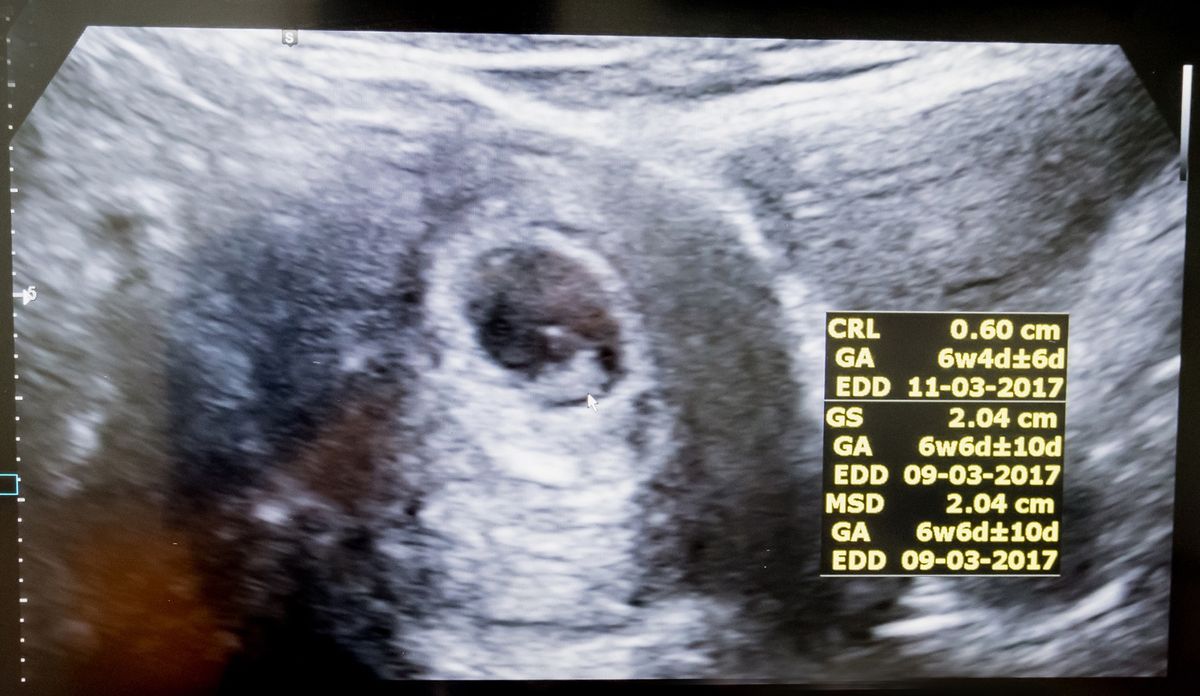
This image belongs to the Live Science article discussing whether the so-called “fetal heartbeat” at six weeks is truly a fully formed heartbeat. The article explains that at this stage doctors may detect a flutter or electrical activity in the area that will later become the heart, but the heart is still developing and is not yet fully formed. This is relevant to the hadith discussion because the article emphasizes that the sixth week is a major period of early organ formation, not a stage where all organs are already complete.
Sexual Differentiation Begins After Six Weeks
The undifferentiated gonads of XX or XY individuals appear to be identical and can form either ovaries or testes. This period is therefore called the neutropenic or bipotent stage of gonadal development.
https://www.ncbi.nlm.nih.gov/books/NBK279001/
SRY levels must reach a certain threshold at a certain stage of fetal development to induce testis differentiation.
SRY expression commences between days 41 and 44 post-fertilization in humans.
https://www.ncbi.nlm.nih.gov/books/NBK279001/
At 6 weeks, there are many changes in embryo development. Overall, the embryo is less than half an inch in length.
{Embed}
https://www.ncbi.nlm.nih.gov/books/NBK279001/
The chromosomal sex of the embryo is established at fertilization. However, 6 weeks elapse in humans before the first signs of sex differentiation are noticed.
Sex differentiation involves a series of events whereby the sexually indifferent gonads and genitalia progressively acquire male or female characteristics.

This image is from the NCBI Endotext chapter on sexual differentiation. It is used to support the point that although chromosomal sex is determined at fertilization, visible sexual differentiation does not begin immediately. The source states that about six weeks pass before the first signs of sex differentiation are noticed, and that the early gonads are initially undifferentiated or bipotential. This supports the discussion of the hadith mentioning the angel asking whether the embryo will be male or female after the forty-two-night stage.
Embryo Development at Six Weeks
{Embed}
The Secret Life of the Brain
At 6 weeks, there are many changes in embryo development. Overall, the embryo is less than half an inch in length.
- the arm and leg buds
- the neural tube, the tissue that forms the brain, spinal cord, nerves, and spine
- a large head and a smaller, C-shaped body
- facial features including the eyes, nose, jaw, cheeks, and chin
- the inner ears
- the kidneys, liver, lungs, the pituitary gland
- the trachea, larynx, and bronchi
- the heart, dividing into four chambers and pumping blood
- primitive germ cells responsible for the formation of male or female genitalia
A very basic heart can sometimes be seen beating in ultrasound exams at this stage. It will currently be beating at around 150-160 beats per minute, about twice as fast as your heart.
- Arm and leg buds
- Neural tube, the tissue that forms the brain, spinal cord, nerves, and spine
- Large head and smaller C-shaped body
- Facial features including eyes, nose, jaw, cheeks, and chin
- Inner ears
https://www.medicalnewstoday.com/articles/297616#hormones
{Embed}
https://www.medicalnewstoday.com/articles/297616
Six weeks in and your baby will be taking huge developmental strides as its vital organ systems start forming or continue to grow.
The embryo will be less than half an inch in length.
The pregnant person may begin to experience symptoms, such as morning sickness, changing emotions, and breast tenderness and swelling.

This image is from the Medical News Today article about the sixth week of pregnancy. It is used to support the point that the sixth week is a stage of rapid development, where major body systems and early organ structures are forming. The article says that the embryo is still less than half an inch long, but important developmental changes are taking place.
{Embed}
https://www.medicalnewstoday.com/articles/297616

This second Medical News Today image accompanies the same article on pregnancy at six weeks. The source describes the formation of early body systems and organs, including limb buds, neural tube, facial features, inner ears, and early heart activity. It is being used here because the article’s description overlaps with the hadith’s mention of shaping, flesh, bones, hearing, sight, and sex-related development around this stage.
Development at Seven and Eight Weeks
Depressions that will give rise to nostrils become visible, and the beginnings of the retinas form.
Lower limb buds that will become legs appear and the arm buds that sprouted last week now take on the shape of paddles.
Fingers have begun to form.
Small swellings outlining the future shell-shaped parts of your baby’s ears develop and the eyes become obvious.
The upper lip and nose have formed.
The trunk and neck begin to straighten.
The depressions that give rise to the nostrils become visible, and the beginnings of the retina are forming.
The lower limb buds that will become legs are appearing, and the arm buds that developed last week are now shaped like paddles.
Fingers have begun to form.
Small swellings outlining the future shell-shaped parts of your baby’s ears are appearing and the eyes are becoming obvious.
The upper lip and nose have formed.
The trunk and neck begin to straighten.
{Embed}
Learn what happens in the first 12 weeks of pregnancy.

This image belongs to the Mayo Clinic article on fetal development during the first trimester. The cited text explains what happens at seven and eight weeks of pregnancy, including growth of the brain and face, the appearance of structures that become nostrils and retinas, limb-bud development, finger formation, visible eye development, and formation of the upper lip and nose. It supports the article’s broader point that the sixth to eighth week window is a major period of visible shaping and organ development.
Bone Formation Begins Around the Sixth or Seventh Week
By the sixth or seventh week of embryonic life, the actual process of bone development, ossification (osteogenesis), begins.
There are two osteogenic pathways — intramembranous ossification and endochondral ossification — but bone is the same regardless of the pathway that produces it.
At 6 weeks, the embryo’s hand plates develop a subtle flattening and linear digital rays now become noticeable.
These digital rays form the bones of the fingers and metacarpals of each hand as development progresses.
{Embed}
9.5: Bone Formation and Development

This image is attached to the LibreTexts source on bone formation and development. The relevant text explains that the embryo’s skeleton first consists of fibrous membranes and hyaline cartilage, and that ossification begins around the sixth or seventh week of embryonic life. This is relevant because the hadith mentions the angel shaping the bones, flesh, skin, hearing, and sight after the forty-two-night stage.
Historical Views About Ensoulment
Historical statements on the question of the soul of humans.
For him, the entry of the soul occurred 40 days after gestation in male fetuses and 90 days after gestation in female Stoic fetuses.
Hellenistic doctrine of the 3rd century BCE held that the soul of a living animal is received only at birth, through contact with the external air.
Epicureanism held that the origin of the soul, that it consists of only a few atoms, is from the beginning of pregnancy.
Pythagoras also held that the inhalation of the soul occurs at conception.
- some say at conception
- some say after birth
- some mention it in alleged conversations between rabbis after 40 days of pregnancy
- some mention it if the child says Amen
But the general view of the rabbis is that the soul is in the first day of pregnancy, and most did not apply the word “nephesh”, meaning soul or person, to a fetus still in the womb.
The latter half of the Second Temple period saw a growing acceptance of the idea that the soul joins the body at birth and leaves it again at death.
Christianity does not mention the subject, but the popes relied on both Aristotelian and Pythagorean doctrines.
Hinduism does not believe that the soul adheres to the body until the seventh month of pregnancy.
https://en.wikipedia.org/wiki/Ensoulment
Conclusion
No one dares to say that the Messenger ﷺ borrowed this from any of the myths of the predecessors.
And God intends the path.