

Halalah in Islam: Hadith Evidence and Scholarly Refutation of Taḥlīl Marriage
Planned ḥalālah — where a man marries a divorced woman purely to restore her legality for her first husband and then divorces her — is cursed in the Sunnah, condemned by the scholars, and void as a contract. The narrations are consistent, the transmitters are multiple, and the scholarly consensus is clear.
Planned ḥalālah (also called taḥlīl marriage) is when a man marries a divorced woman with the intention of making her lawful again for her first husband, then divorces her so the first husband can remarry her. The sources gathered here show this practice is cursed, prohibited, and treated by major scholars as invalid.
What Is Planned Ḥalālah?
This article is not about a normal second marriage that happens genuinely, without arrangement or pre-planned divorce. It is about the corrupt practice where marriage is used as a legal trick to bypass the ruling of triple divorce.
Muḥallal lahu: the first husband for whom she is being made lawful.
Core Prophetic Evidence
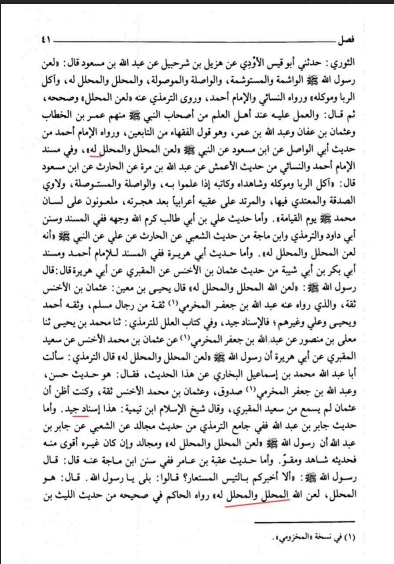
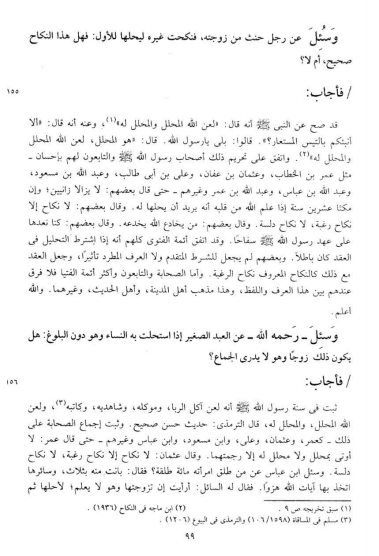
The Messenger of Allāh ﷺ cursed the man who made a woman lawful for her first husband and the one for whom she was made lawful.
Grade: Authentic · Reported by Aḥmad, al-Nasāʾī, and al-Tirmidhī
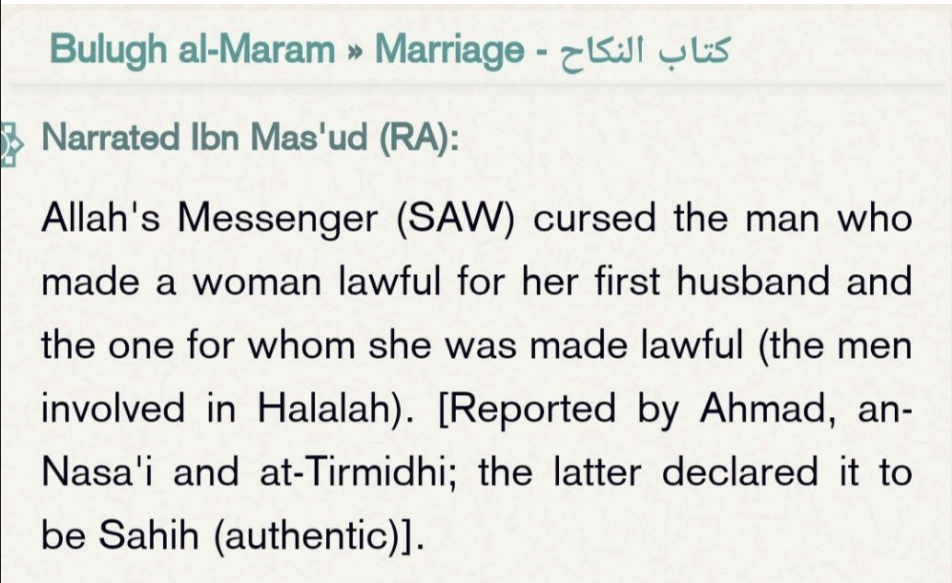
The Prophet ﷺ did not merely dislike this practice. The narration uses the word curse — one of the strongest expressions of prohibition in the Sunnah. The curse falls on both parties: the man who performs the arranged marriage, and the first husband for whom the woman is being made lawful again.
Ḥadīth Evidence from Major Collections
Mishkāt al-Maṣābīḥ
Note in the collection: This refers to an arrangement to marry a divorced woman and then divorce her after intercourse so that the one who divorced her may remarry her.
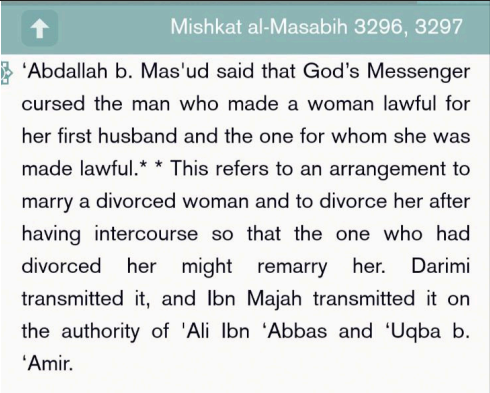
This source explicitly defines the condemned act as an arranged marriage — not a coincidental second marriage, but one organized for the purpose of returning the woman to her previous husband.
Sunan Abī Dāwūd
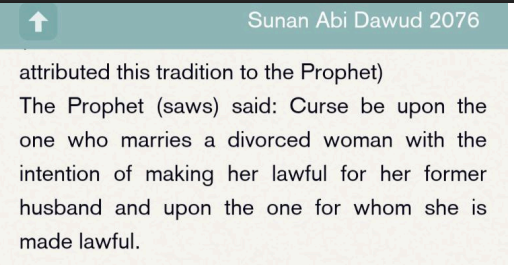
“Curse be upon the one who marries a divorced woman with the intention of making her lawful for her former husband and upon the one for whom she is made lawful.”
Grade: Authentic
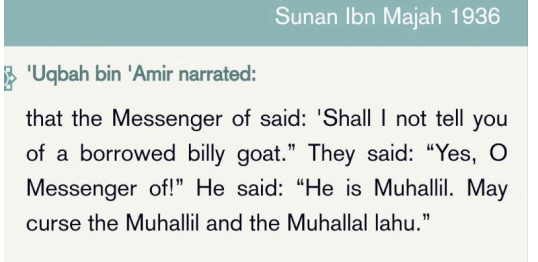
Sunan Ibn Mājah — The Borrowed Goat
“Shall I not tell you of a borrowed billy goat?”
They said: “Yes, O Messenger of Allāh.”
He said: “He is the muḥallil. May Allāh curse the muḥallil and the muḥallal lahu.”
Grade: Ḥasan
“A borrowed billy goat” — the Prophet ﷺ chose this expression deliberately. The man is not entering a dignified marriage; he is being used temporarily and then discarded, like livestock borrowed and returned.
Sunan Ibn Mājah — Ibn ʿAbbās
“The Messenger of Allāh ﷺ cursed the muḥallil and the muḥallal lahu.”
Grade: Authentic
The ruling is not based on a single isolated report. The curse is narrated through multiple Companions — Ibn Masʿūd, Ibn ʿAbbās, and ʿUqbah ibn ʿĀmir رضي الله عنهم — which establishes the ruling on firm ground.
Why the Curse Matters
In Islamic law, when the Prophet ﷺ curses an action or the people involved in it, this marks the act as amajor sin (kabīrah). Planned ḥalālah is therefore not a harmless legal device — it is a cursed act.
Marriage in Islam is supposed to be a serious covenant, not a temporary arrangement used to make a previous relationship legally possible again. Using it as such turns the institution of marriage into a tool of manipulation.
Scholarly Positions
Allāmah al-Ṣanʿānī
The ḥadīth is evidence for the prohibition of taḥlīl, because curse only occurs upon the doer of something prohibited. Every prohibited act is forbidden, and the prohibition indicates the corruption of the contract.
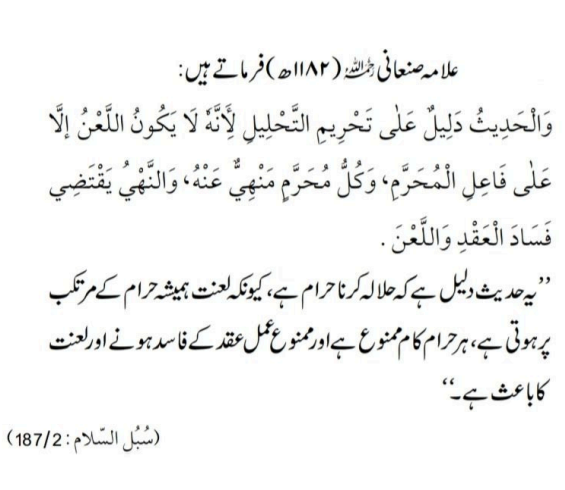
Al-Ṣanʿānī‘s argument is direct: a curse signals prohibition → prohibition indicates corruption of the contract → therefore planned taḥlīl does not make the woman lawful again. The legal consequence flows from the prophetic condemnation.
Ibn Qudāmah
In summary, the marriage of the muḥallil is unlawful and invalid according to the general body of the people of knowledge. This was narrated from a group of Companions, and no disagreement from them is known, so it is treated as consensus.
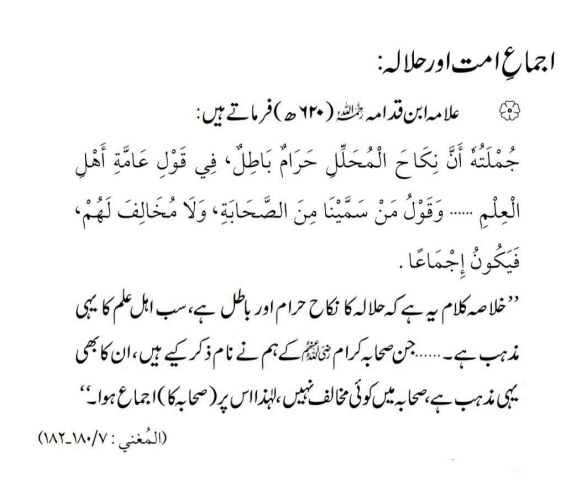
Ibn Qudāmah makes two clear points: planned taḥlīl is ḥarām, and the contract is invalid — not merely sinful but void. He traces this position to the Companions themselves, with no recorded dissent, treating it as a form of ijma.
Ibn al-Qayyim
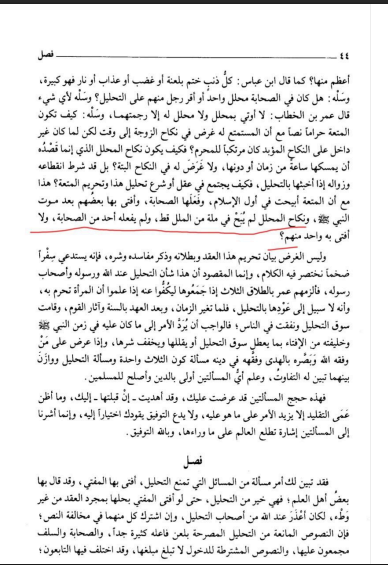
Ibn al-Qayyim collects the narrations concerning the curse of the muḥallil and the muḥallal lahu, mentioning reports from multiple Companions and routes. He emphasizes that the Prophet ﷺ cursed both the one who performs the arrangement and the one for whom it is done.
Ibn al-Qayyim does not stop at the legal ruling. He turns his attention to the social reality of people actively searching for someone willing to perform this ugly arrangement — men who, after triple divorce, seek out a shameless person to temporarily make the woman available and then return her to the first husband. His language is one of moral disgust, not merely legal prohibition.
Ibn Taymiyyah
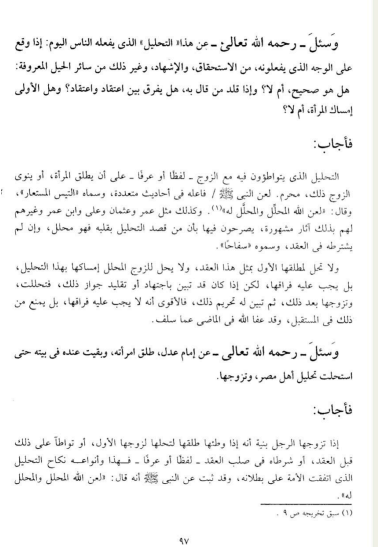
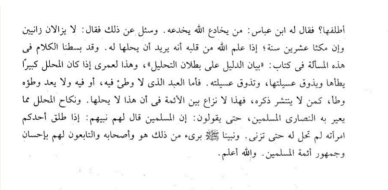
Ibn Taymiyyah was asked about the form of taḥlīl practiced by people: a man marries a divorced woman so that she may return to her first husband. He answered that this is the taḥlīl which is cursed in the Sunnah, and that such a marriage does not make her lawful for the first husband.
Ibn Taymiyyah makes the ruling unambiguous: the second marriage is cursed, the second husband is not a genuine husband in the intended Islamic sense, and the woman does not become lawful for the first husband through this trick.
No Loophole Through Omission
The ruling applies whether the arrangement is explicitly written as a condition, verbally agreed upon, understood by custom, or merely intended by the parties.
This closes the fake loophole of “we did not write it in the contract.” If the intention and arrangement are known, concealing the explicit condition does not purify the marriage.
Ruling on Deceptive Cases
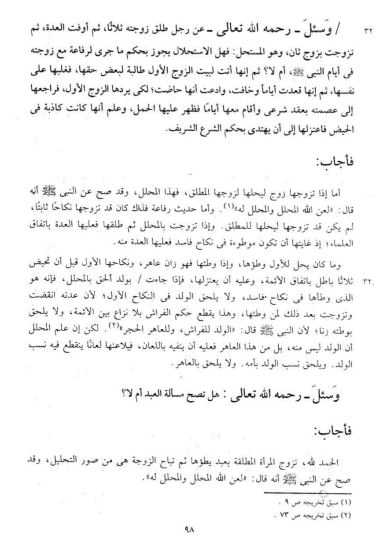
He was asked about a man who marries a woman divorced three times, while internally intending to make her lawful for the first husband, then divorces her afterward. He answered that this is forbidden and does not make her lawful for the first husband.
If the purpose is taḥlīl, the act remains taḥlīl — silence does not change the nature of the deed.
The Legal Distinction
Understanding what is and is not condemned here is important.
If a woman is divorced finally, then later genuinely marries another man, lives in a real marriage, and that marriage ends naturally through divorce or deathwithout any prior arrangement — this is a completely different case, and it is permitted.
If the second marriage is arranged from the beginning so that she becomes lawful again for the first husband, this is the cursed taḥlīl condemned in the narrations.
The entire issue hinges on one question: is the second marriage genuine or staged? A real marriage is not the same as a loophole dressed as a marriage.
Conclusion
The evidence is consistent and comes from multiple directions:
- Prophetic narrations curse the muḥallil and muḥallal lahu.
- Multiple Companions — Ibn Masʿūd, Ibn ʿAbbās, ʿUqbah ibn ʿĀmir — transmitted this ruling independently.
- Classical scholars — al-Ṣanʿānī, Ibn Qudāmah, Ibn al-Qayyim, Ibn Taymiyyah — are unanimous: planned taḥlīl is unlawful, corrupt, and does not restore the first marriage.
Planned ḥalālah is not an Islamic solution. It is a cursed practice in the Sunnah, condemned through multiple narrations, and rejected by the major scholars. The Prophet ﷺ cursed both the man who performs the temporary arrangement and the first husband for whom it is done. The scholars explain that this curse indicates prohibition, corruption of the contract, and the invalidity of using a staged marriage to make the woman lawful again.
Islam does not treat marriage as a loophole. Marriage is a serious covenant — using it as a temporary trick after triple divorce is exactly what the Sunnah condemned.