

Is Bismillah Syriac? Refuting the Script Origin Claim
Some critics allege that the word Bismillah (بسم الله), as it appears without the alif in the Quranic opening formula, is not Arabic but Syriac — specifically derived from the Syriac Bishm (ܒܫܡ). They claim that if a Muslim wrote “Bismillah” without the alif in a dictation exam, he would receive a failing mark, implying the Quran employs a foreign script. This post demonstrates that the Quranic (Ottoman) script is a comprehensive system of Arabic orthography, that the elision of alif in frequently used phrases is a well-documented feature of Arabic scribal practice, and that the very Syriac sources the critics cite themselves write the word in the same form — proving either a common Semitic origin or Arabic-to-Syriac transmission, not the reverse.
The Objection: Bismillah as Syriac Script
The Ottoman Script as Comprehensive Arabic Orthography
The Quranic script — also called the Ottoman script or rasm Uthmani — is not a narrow or defective system; it is a comprehensive orthography that accommodates the full range of Arabic phonological and morphological variation. The word “Bismillah” came in the Almighty’s saying, In the name of God, the Most Gracious, the Most Merciful [Al-Fatihah 1:1], without the alif, because the Arabs drop it due to frequent use. Likewise, it came in the Quran with the alif in the Almighty’s saying, Read in the name of your Lord who created [Al-Alaq 96:1].
The variation between Bism (بسم) and Bismi (باسم) is not a contradiction or a foreign intrusion; it is the same orthographic flexibility that governs other frequently written words. The word “prayer” (صلاة) was written as both “صلاة” and “صلاه” in classical manuscripts. A certain script may become famous in people’s writings without another form disappearing entirely. This does not mean that the other script is specific to the Quran only, but it is possible to write with it without embarrassment.
However, the Quran must be written with the script that was revealed to the Prophet Muhammad, may God bless him and grant him peace, only and not any other. As for those who say that it is obligatory to adhere to the elided script (Bism) outside the Quran, this is because it became famous among people due to the ease of this script and to make the style of the Quran distinct and unique. They made it a conventional script only, and it is possible to change this convention and adhere to the fully vocalized script.
The Syriac Evidence Undermines the Objection
Even if we were to grant — for the sake of argument — that writing “Bismillah Al-Rahman Al-Raheem” without the alif in “Bism” is a Syriac script and not an Arabic one, and that the Quran transmitted it from Syriac, a fatal problem arises for the critic’s own argument: why did Arab Christians write it with this same script in the hymn “I trust in you, O Lord” and not write it with “Bismillah” on the basis that this is the only Arabic script, as the one who raised the doubt claims?
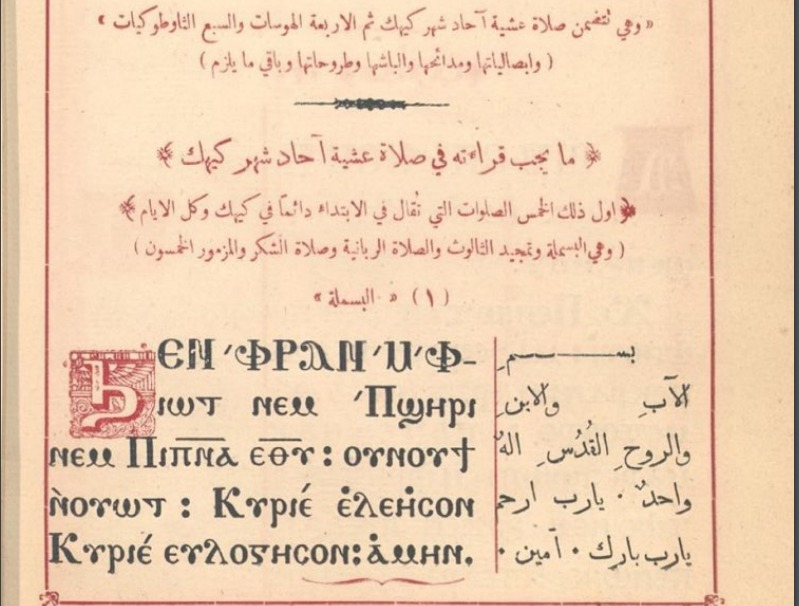
The image above shows a Syriac Christian liturgical text in which the word appears in the same elided form used in the Quran. If this form were exclusively Syriac, we would expect Syriac Christians to distinguish their script from the Arabic Quran by employing a different orthography. Instead, the agreement between the Quranic form and the Syriac Christian form proves the opposite of what the critic intends.
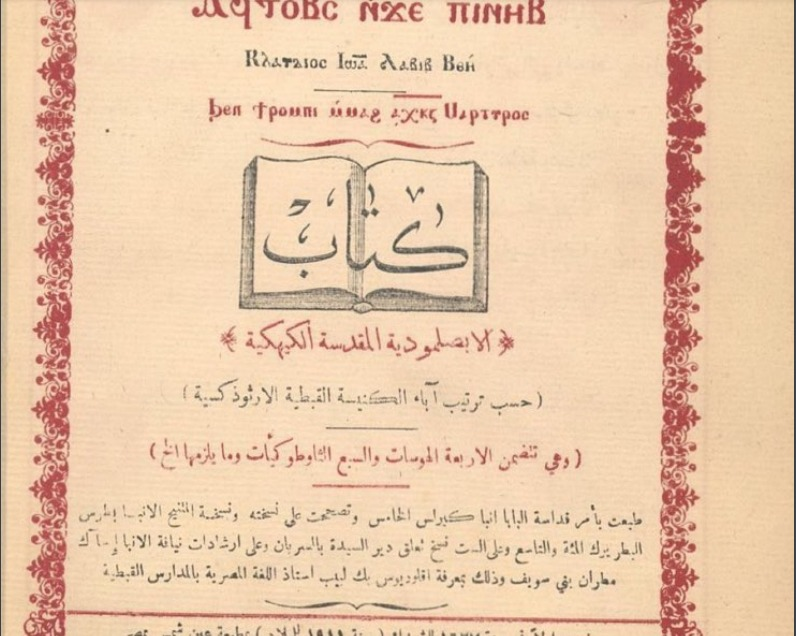
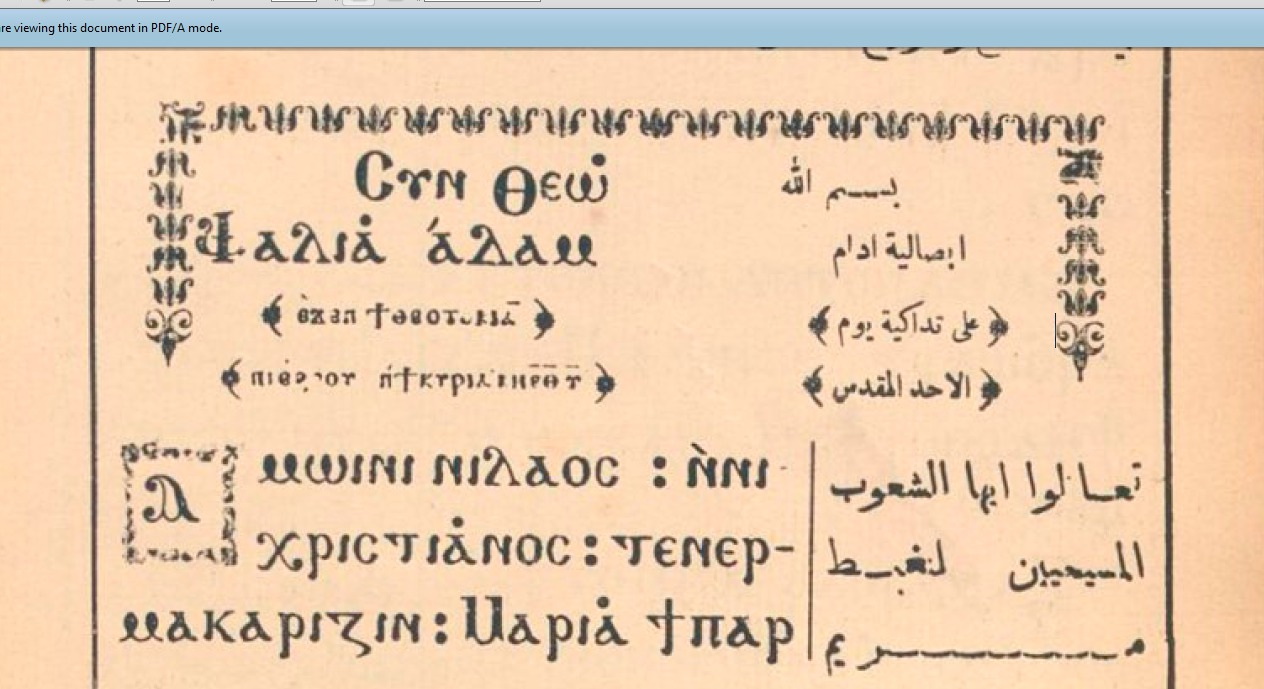
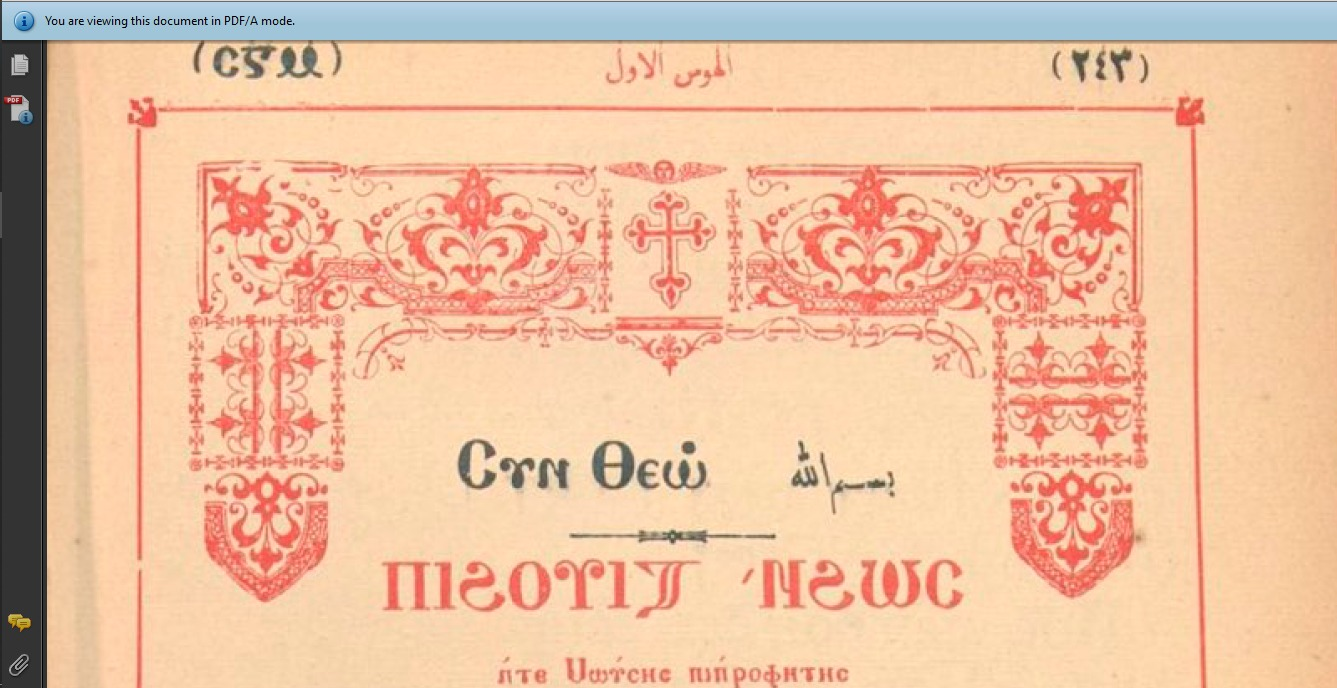
In fact, this agreement between the writing of the word Bismillah in the Syriac word Bashm proves the correctness of the Ottoman script and that it is a known Arabic script. The agreement of Syriac with this script is because Arabic and Syriac go back to a common Semitic origin, or — more plausibly — Syriac took the word with this writing from the Arabic language.The direction of borrowing is supported by the fact that the Quran predates the Syriac Christian manuscripts in question and that the elided form is consistent with pre-Islamic Arabic orthographic practice for frequently occurring phrases.
The Inconsistency of the Critics
Why does an important Christian reference like this sometimes write Bismillah without the alif, and then a lay Christian who does not know how to read comes and tells you “Bismillah Al-Rahman Al-Raheem is written wrong”? Our response to him should be to ask his father in the church to prevent him from writing and from drinking the jug of the blood of the Lord, which is sealed and aged.