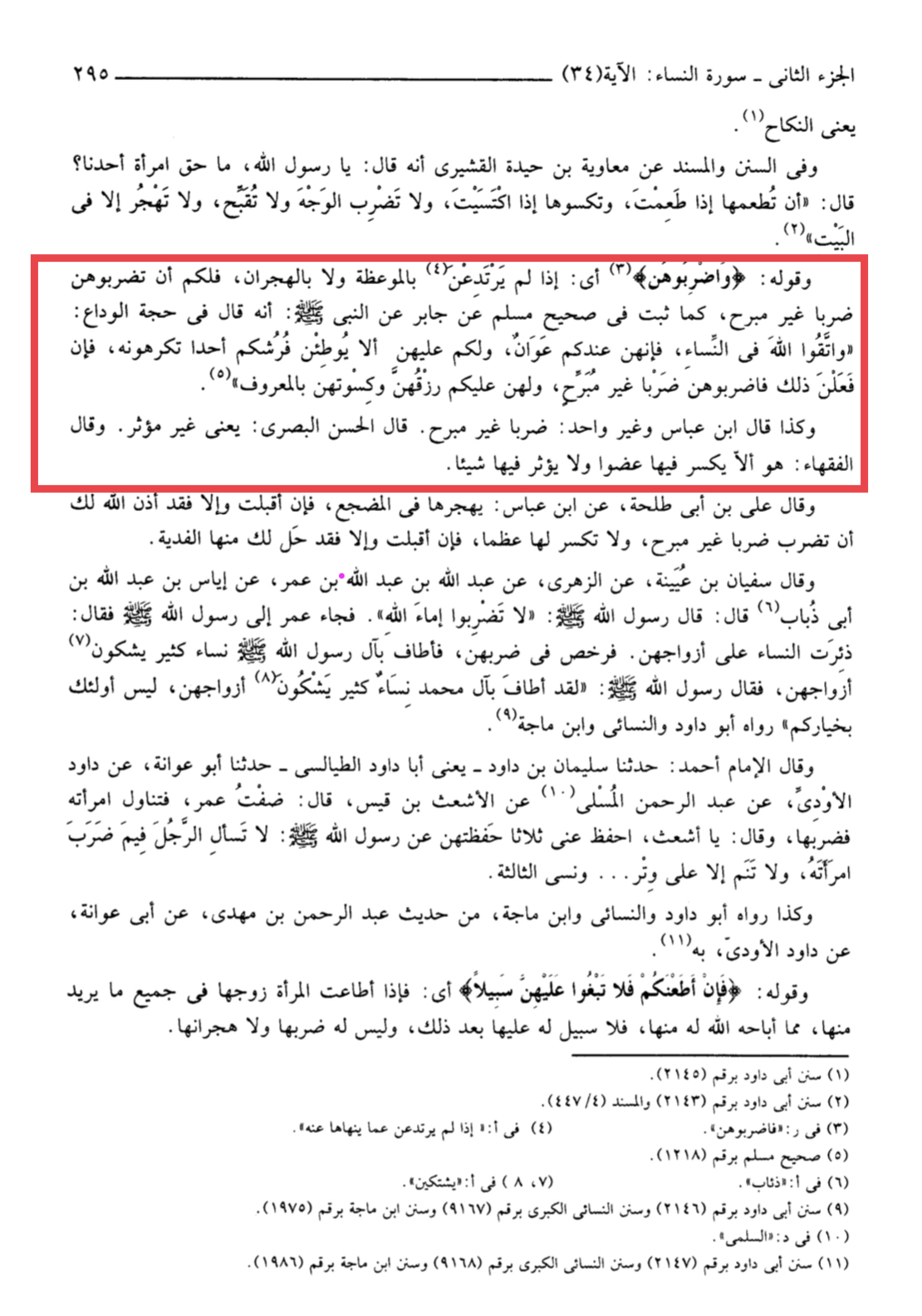
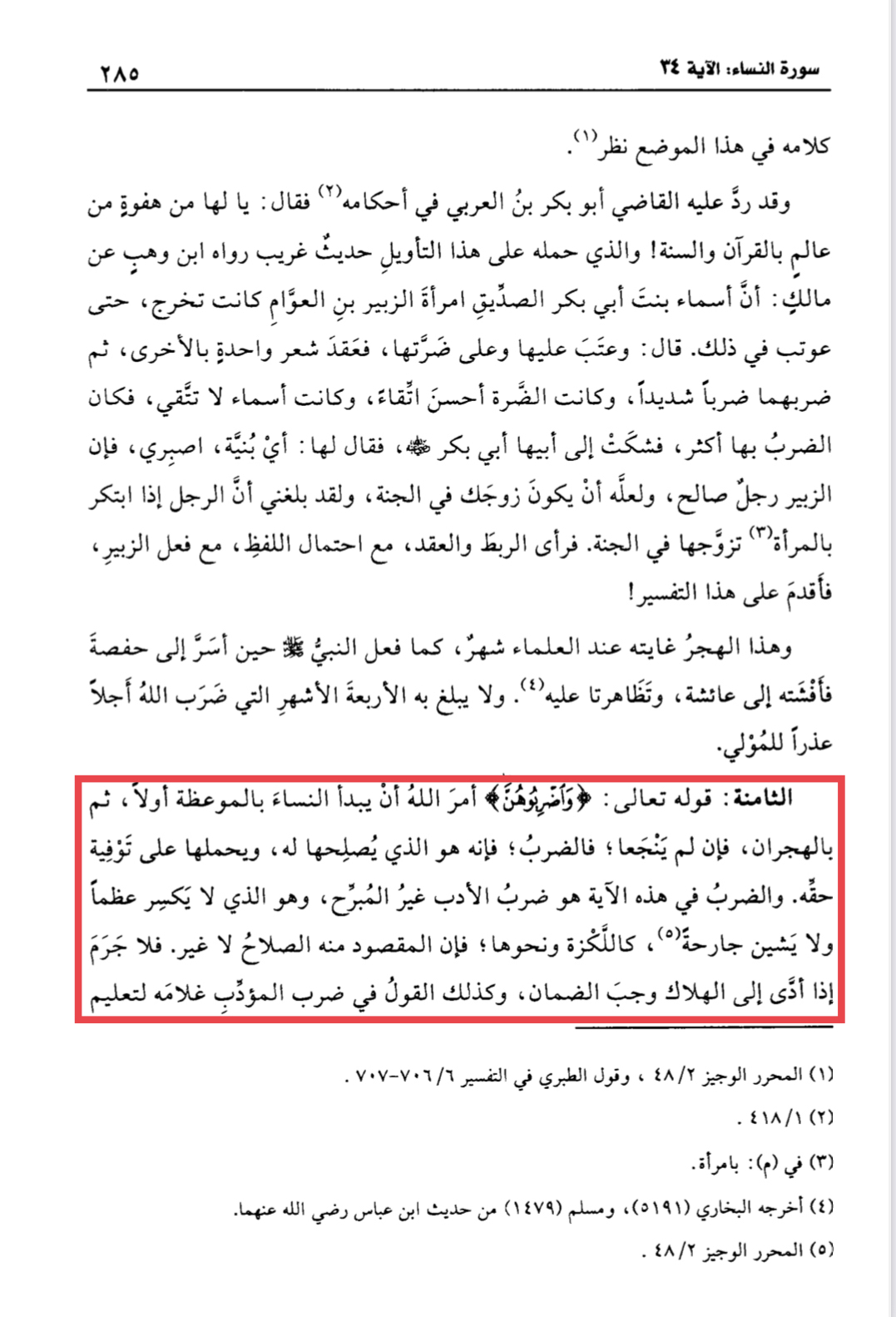
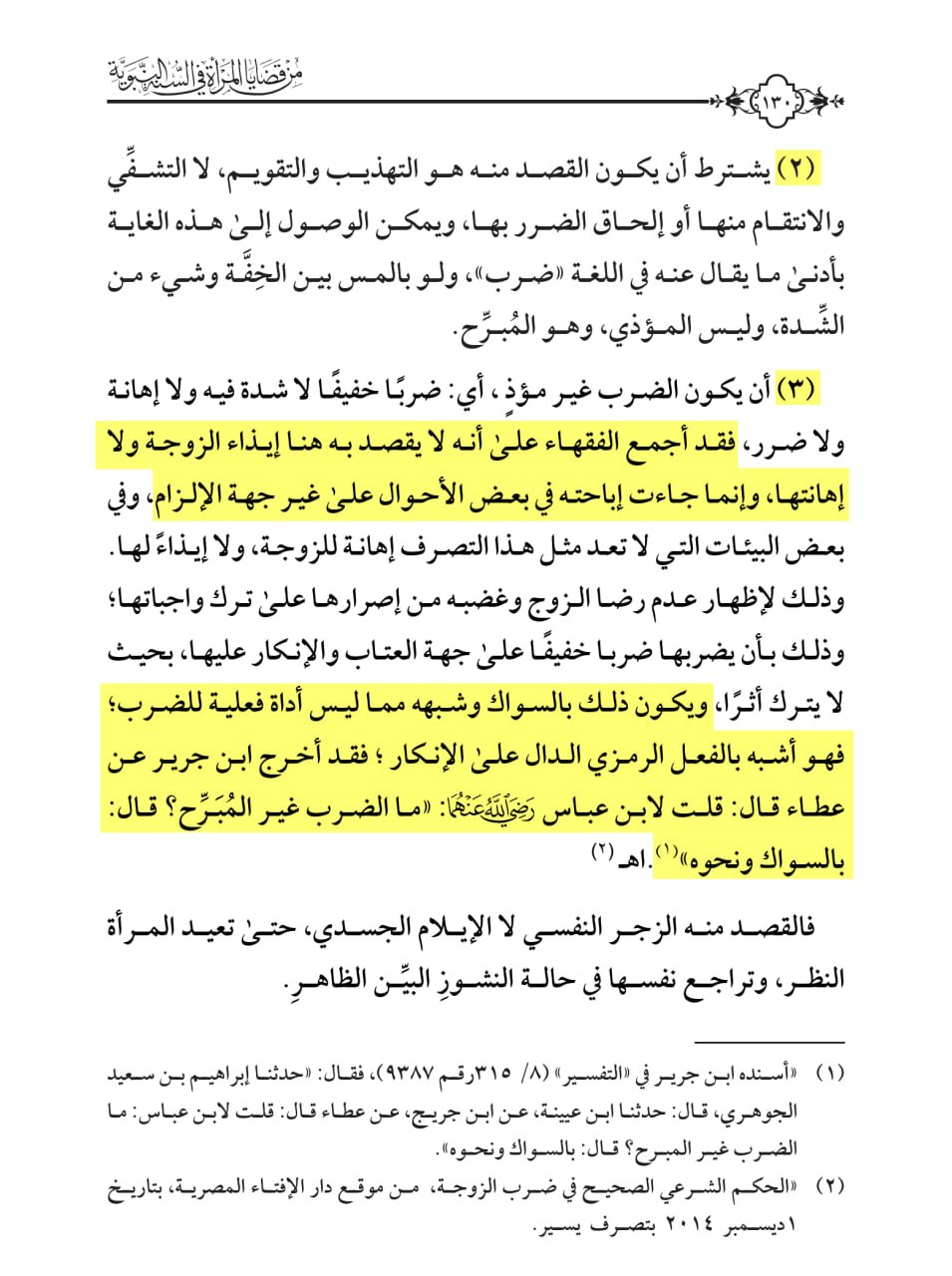
The word Daraba (“ضَرَبَ”) in this verse is a striking of discipline without severity, which may not break bones or disgrace with injuries as if it were a clenched fist, and so on. For the purpose of it is reform and nothing else.
Tafsir al-Tabari
qr17 277c379ba1cd2a53qr16 9a01841d4c1a932e
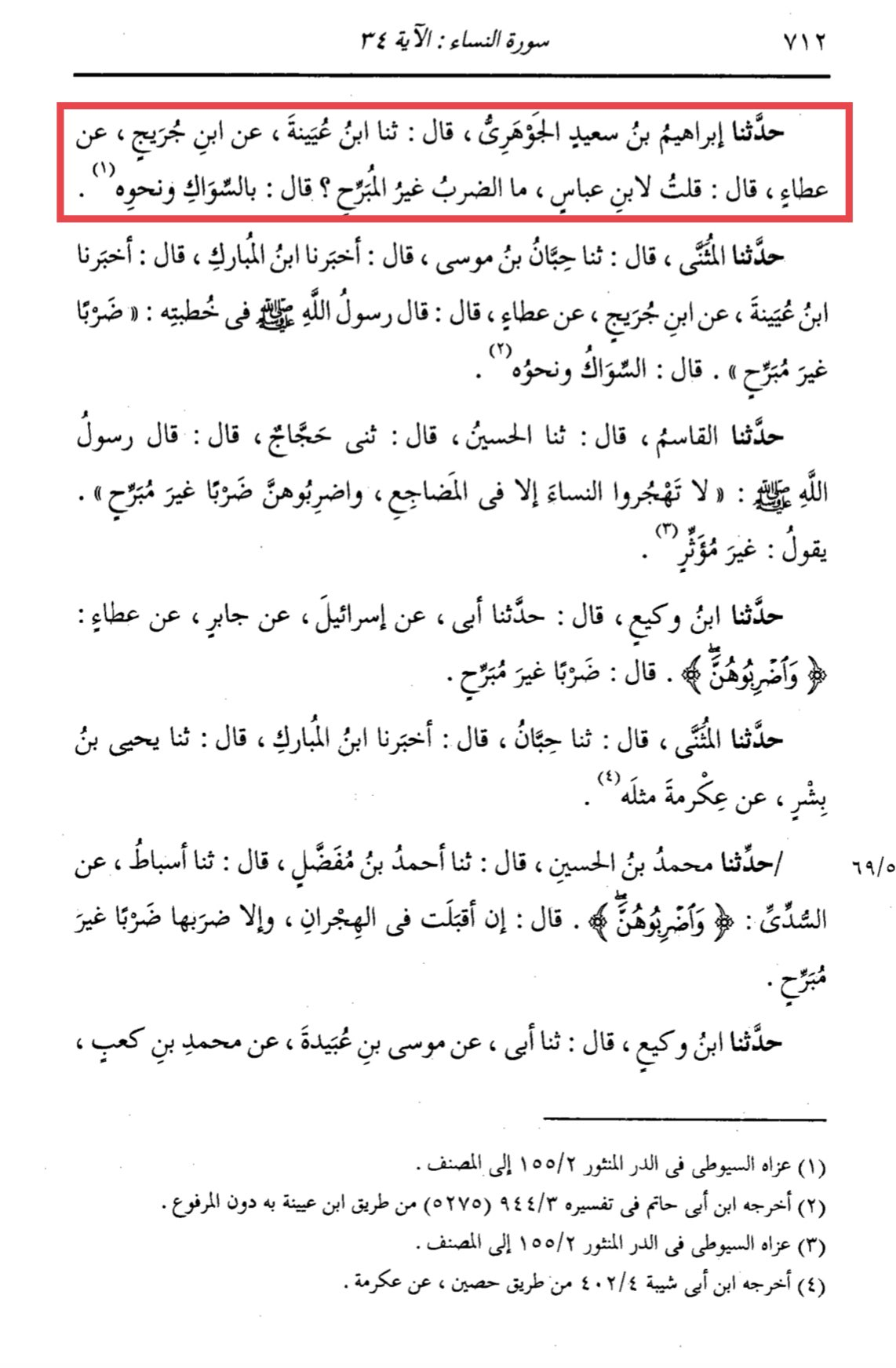
Tafsir al-Tabari — Ibn Abbas on Ghayr al-Mubarrih I asked Ibn Abbas: What is the hitting that is Ghayr Al-Mubarrih? He replied with (miswak)
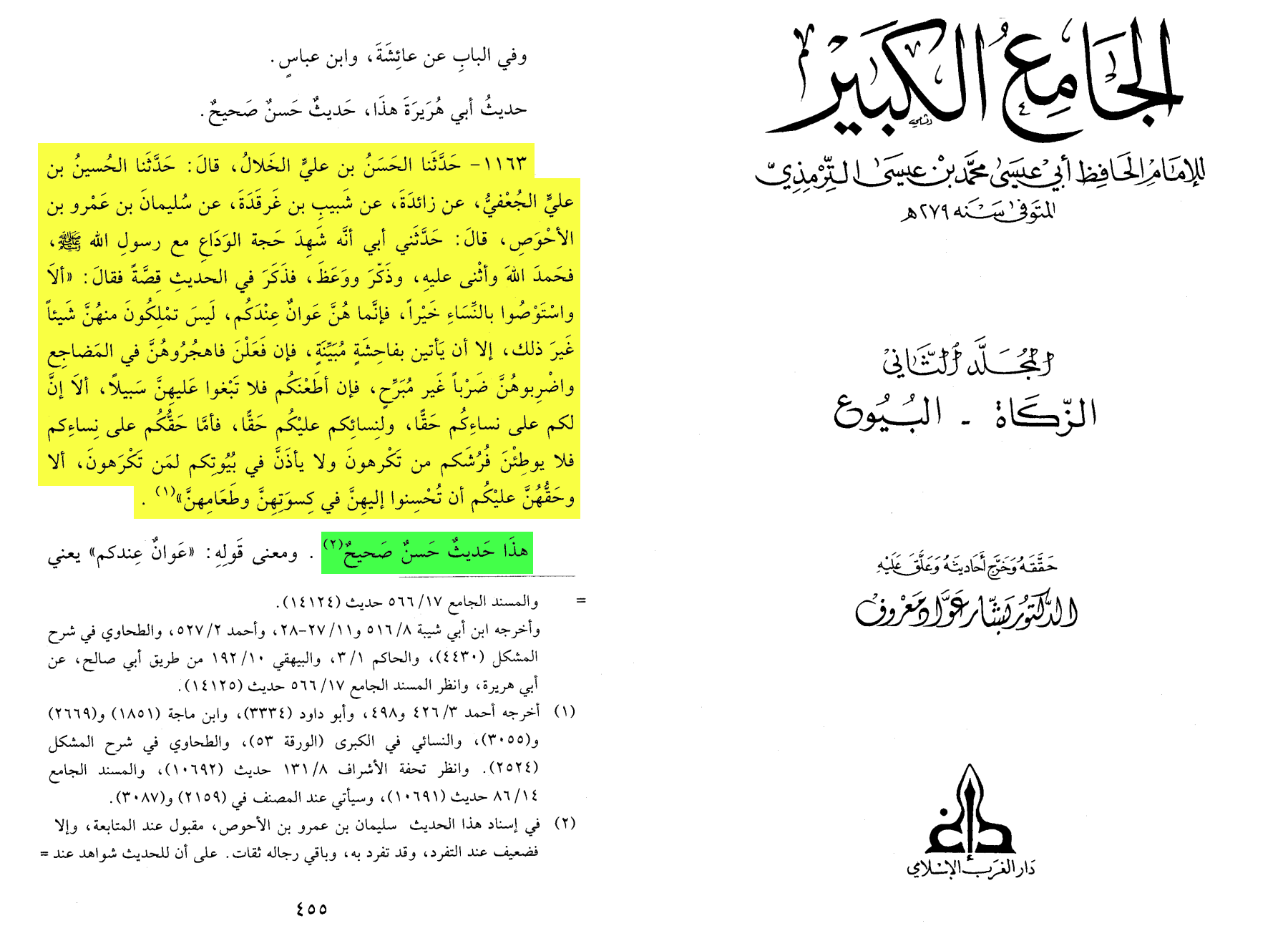
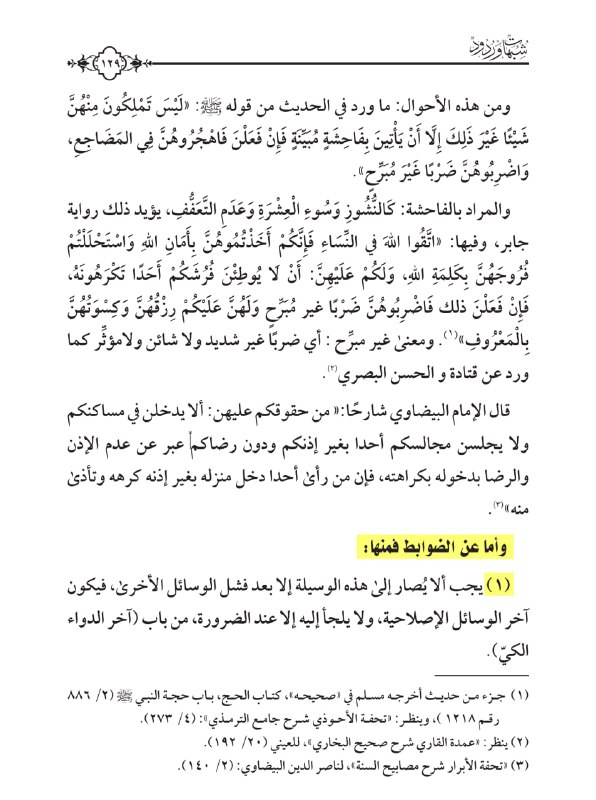
And they take this ruling from this hadith of the prophet where he was referring to a symbolic beating:
The Prophet ﷺ “And indeed I order you to be good to the women, for they are but captives with you over whom you have no power than that, except if they come with manifest Fahishah (evil behavior). If they do that, then abandon their beds and beat them with a beating that is not harmful.
And if they obey you then you have no cause against them. Indeed you have rights over your women, and your women have rights over you. As for your rights over your women, then they must not allow anyone whom you dislike to treat on your bedding (furniture), nor to admit anyone in your home that you dislike. And their rights over you are that you treat them well in clothing them and feeding them.”
qr18 b853b594ca81a4e2
So the scholars explain it to being a symbolic beating/striking since this “beating” won’t cause any pain or leave marks of any sort
qr19 d78ea6c109bbb6c4
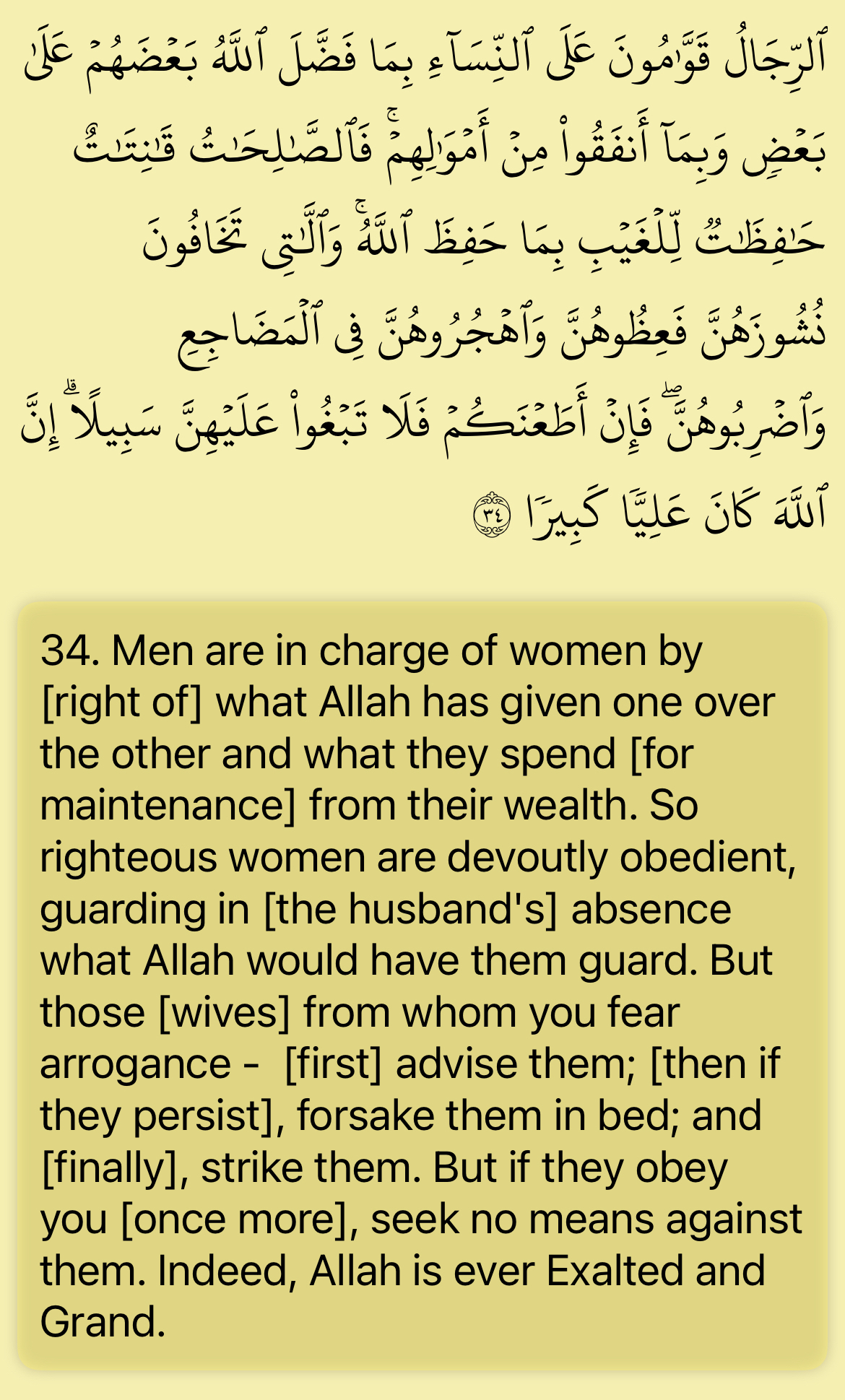
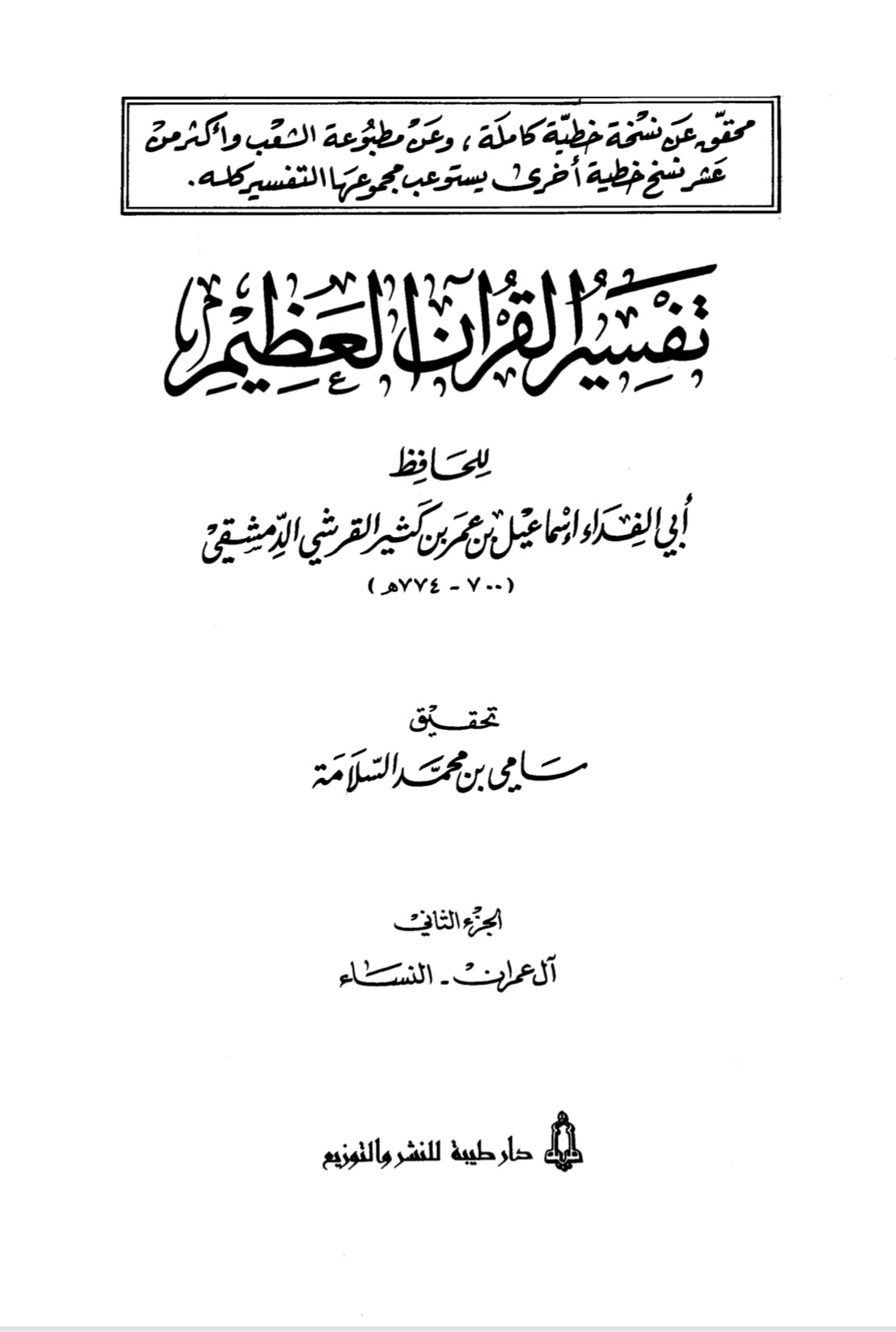
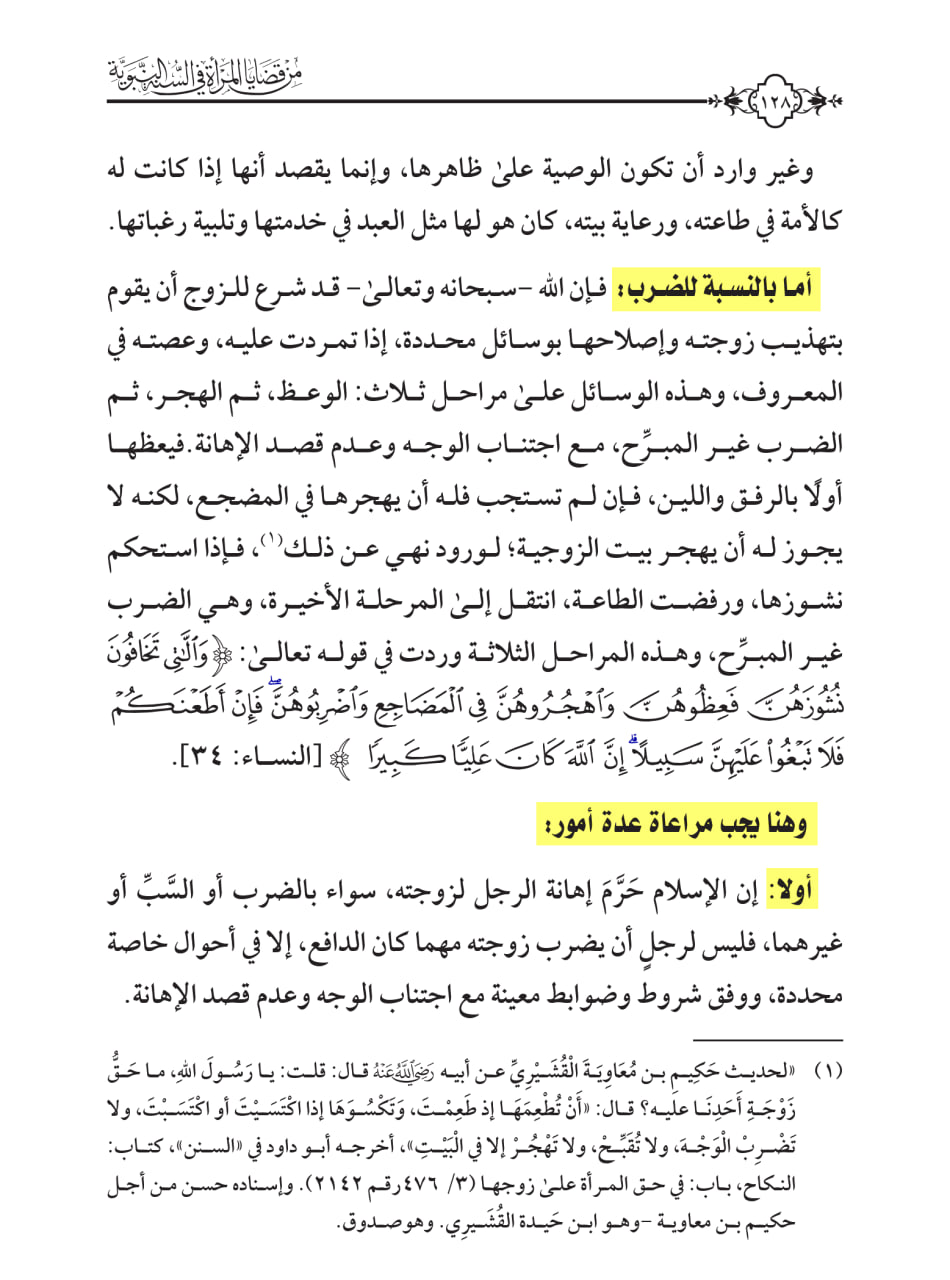
For English Readers This scan is from a discussion on the issue of wife beating in Islamic scholarship. It serves as the opening source context for the discussion and frames the topic as one of restriction and regulation, not unrestricted violence.
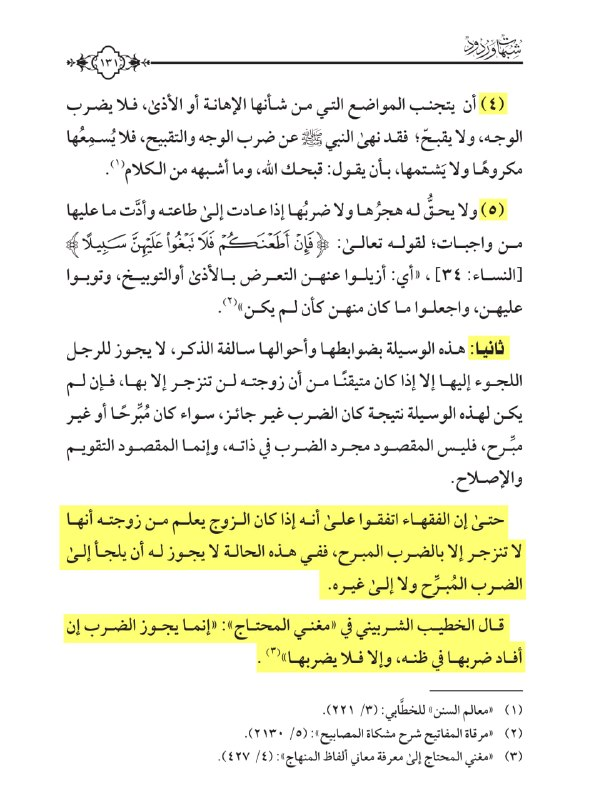
For English Readers This scan supports the point that the Qur’anic treatment comes in stages: admonition, separation in bed, then only a restricted and non-severe form of striking in exceptional cases.
The Prophetic Example
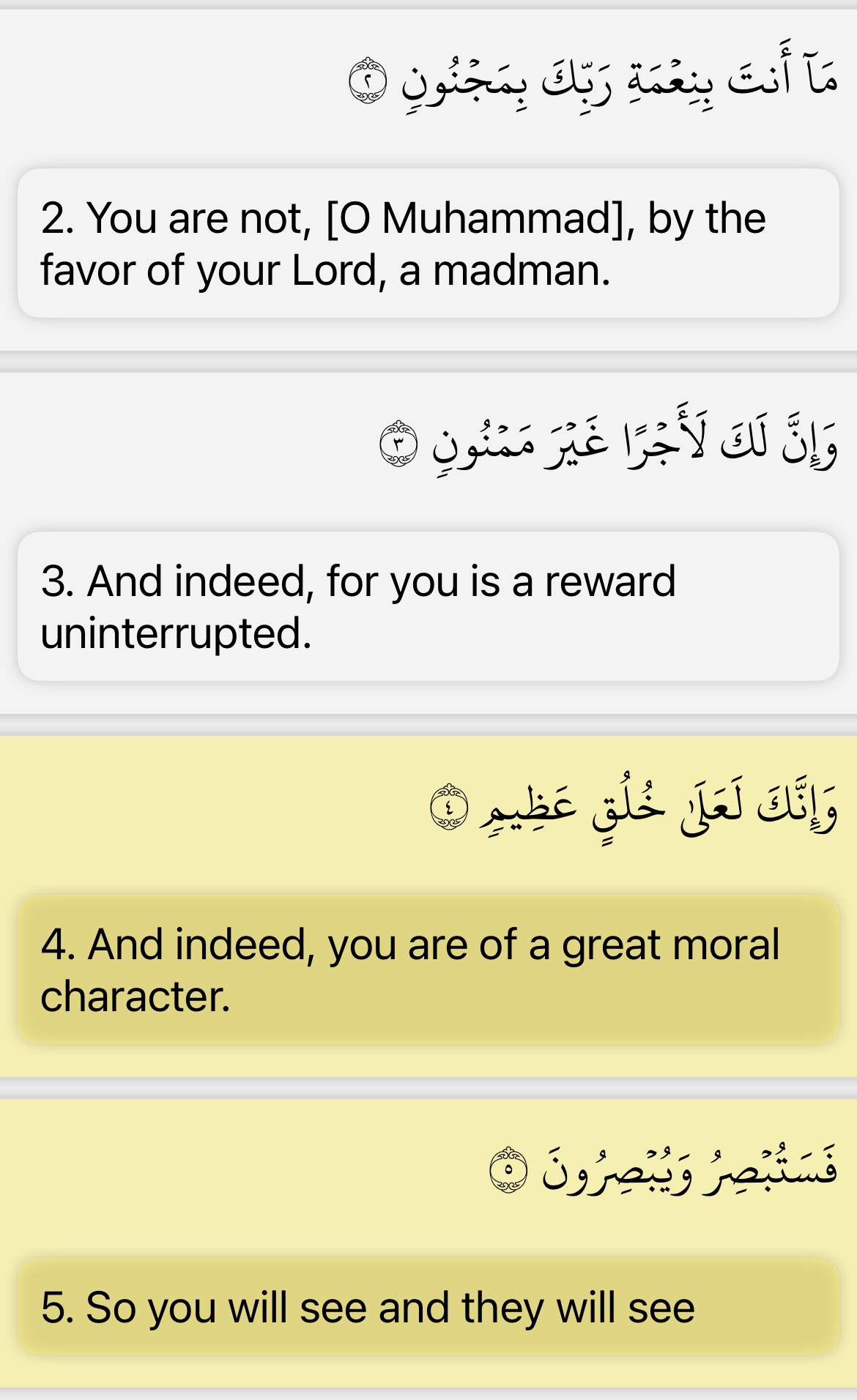
But regardless we should all be like the prophet ﷺ since God told us he is a great moral example for us to follow, thus we should treat anyone the way he treated them
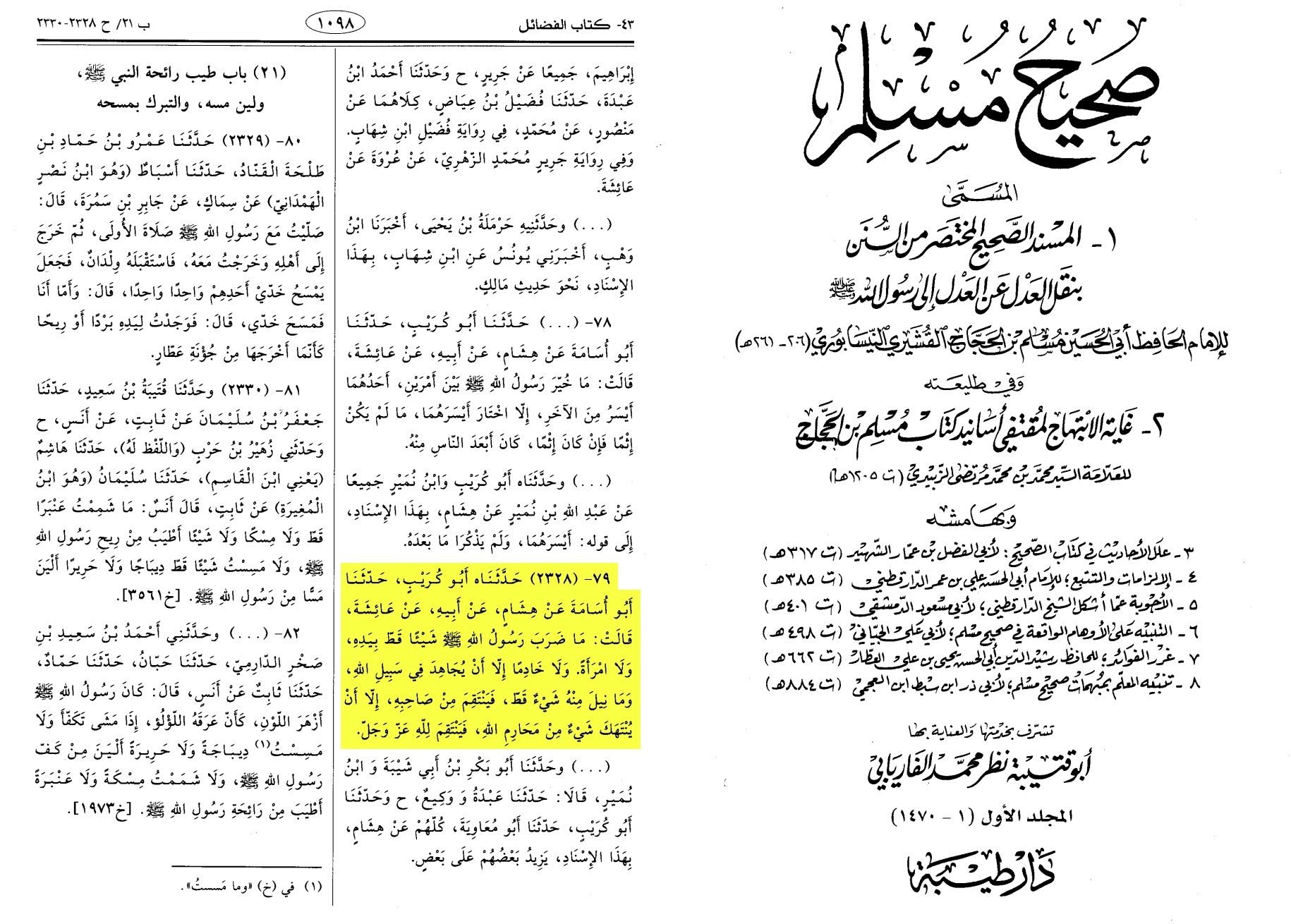
A’isha (رضي الله عنها) — Sahih Muslim Allah’s Messenger ﷺ never beat anyone with his hand, neither a woman nor a servant, but only in the case when he had been fighting in the cause of Allah. And he never took revenge for anything unless the things made inviolable by Allah were made violable; he then took revenge for Allah, the Exalted and Glorious.
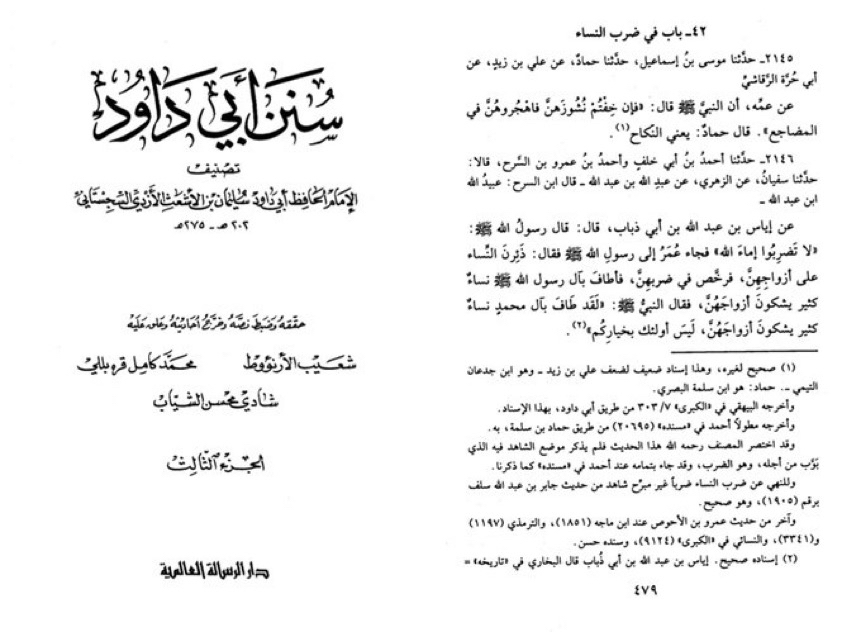
Sunan Abi Dawud 2146 — and Its Sharh
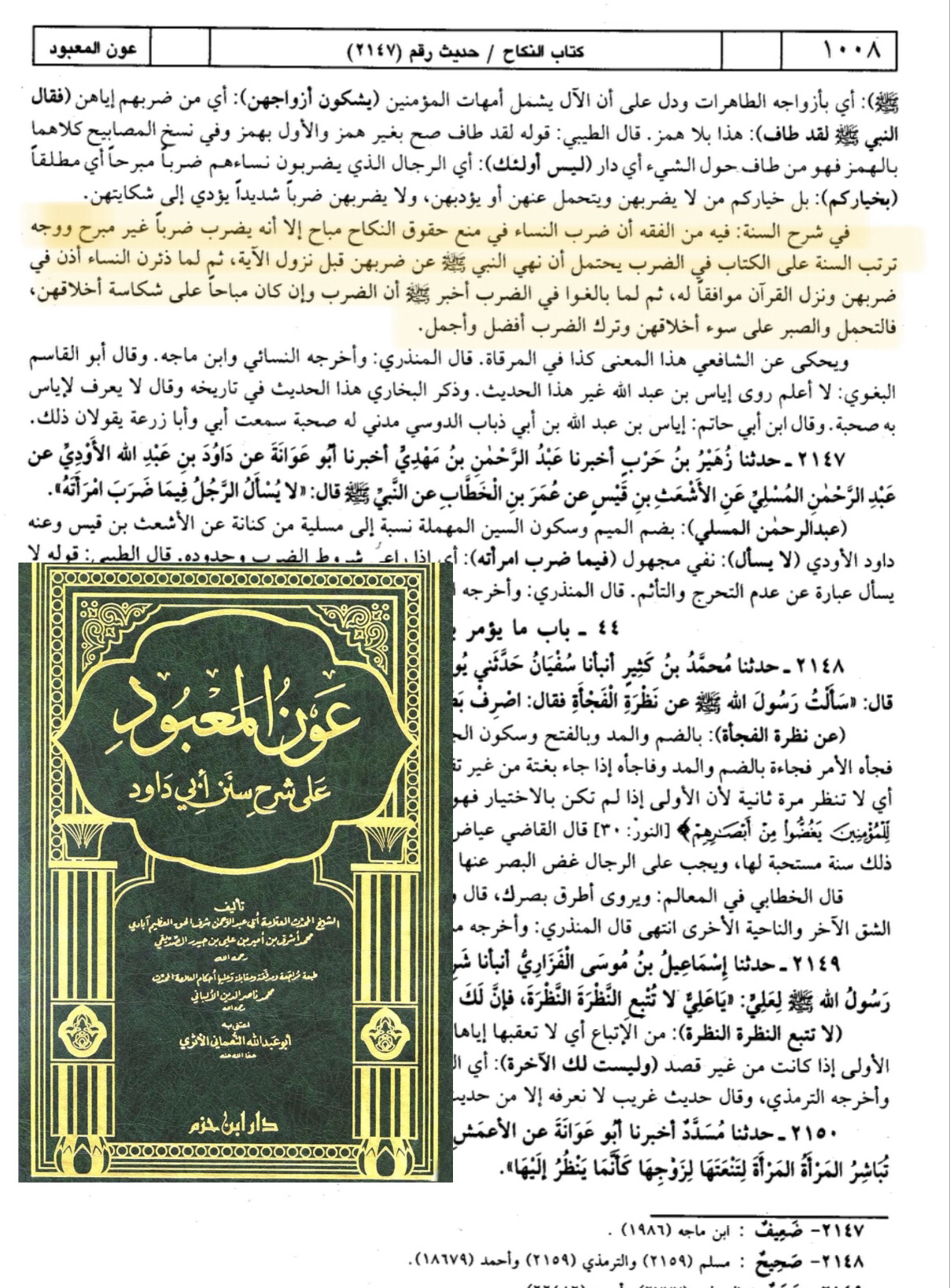
There is a hadith mentioned in Sunan Abi Dawud 2146 where the prophet allowed beating — however let’s look at the sharh:
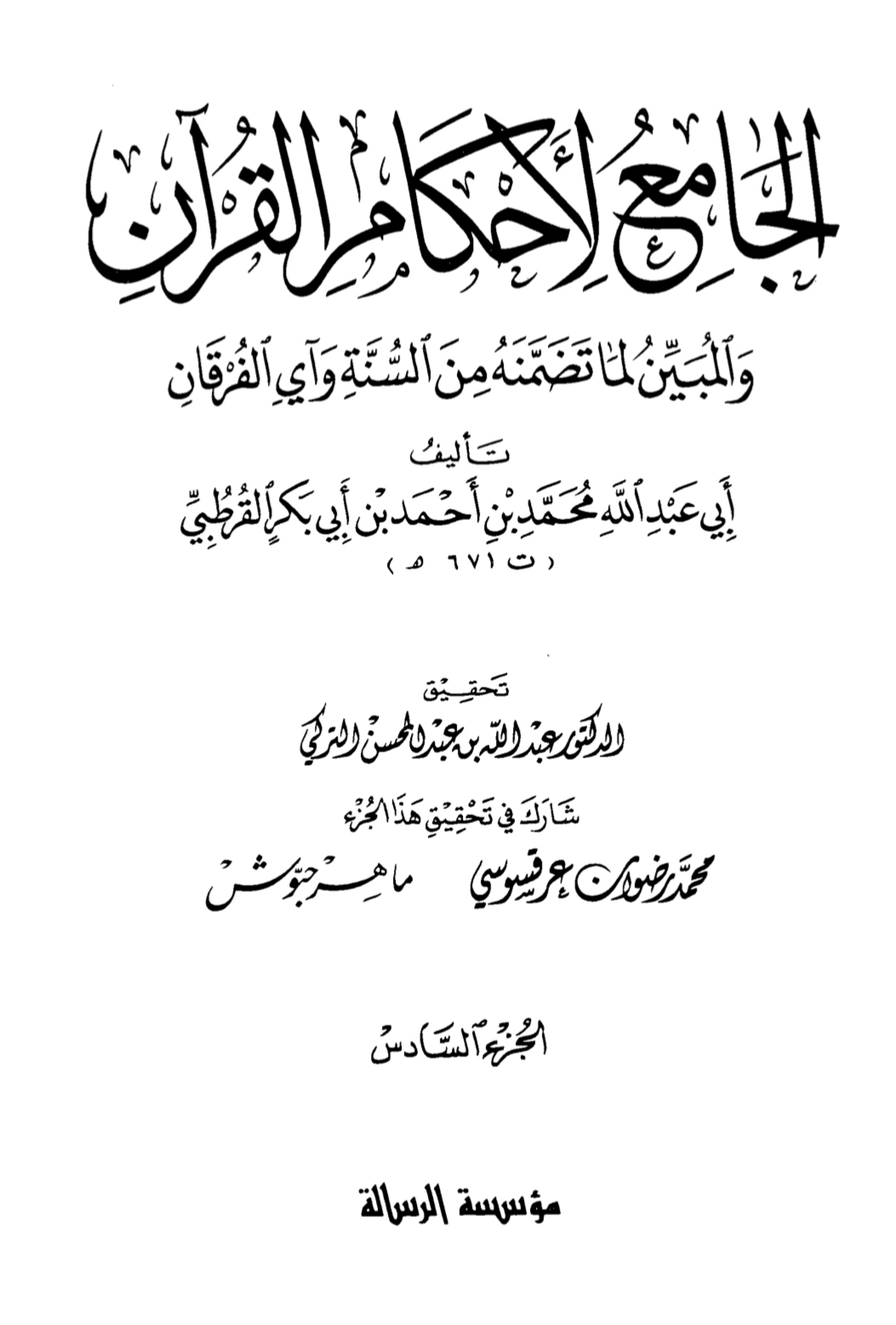
Awn al-Ma’boud (p.1008) “In the sharh al-sunnah of the fiqh of beating women — that the prophet forbade beating them before the verse was revealed, then he allowed beating them because women became rebellious, then when the verse came down to him it is not painful beating (like a nudge — like al-Qurtubi said in his tafsir)”
qr1a 1defdc28981cd582qr1b 3263a132bcc09adb
Imam an-Nawawi
Even if it is permissible for discipline, it is still better to avoid it.
Sahih Muslim Bi-Sharh An-Nawawi Sheikh al-Islam Imam an-Nawawi comments on a hadith of the prohibition of hitting someone in the face by saying it includes the wife — meaning if someone hits his wife’s face, even if he thinks he is exercising 4:34, he is sinful.
This is what Hasan al-Basri said — who is a student of over 100 companions of the Prophet — it should not even leave a trace.
The Prophet’s Disapproval of Hitting
The Prophet ﷺ “Many women have come to the family of Muhammad complaining about their husbands striking them. These men are not the best among you.”
qr1e ae19d62d39cf6f59
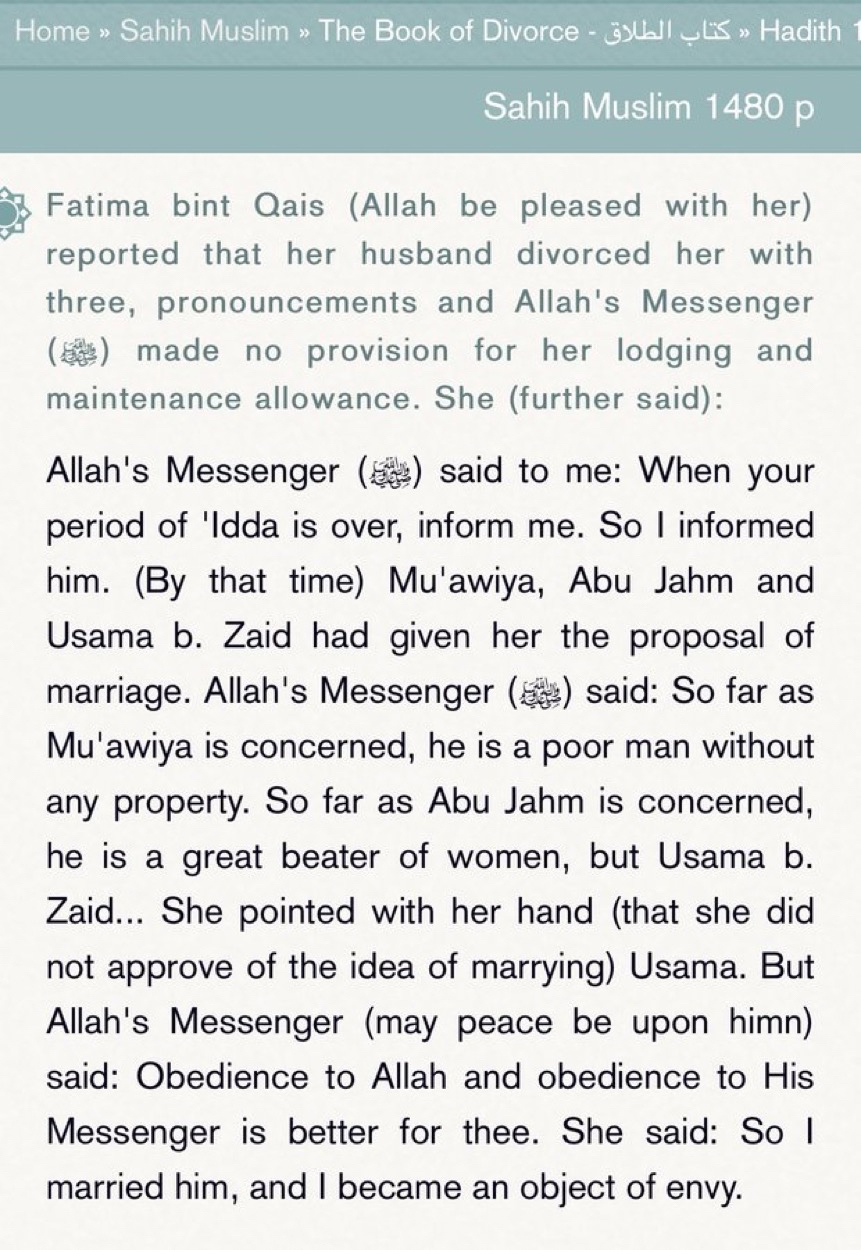
Fatima Bint Qais
Fatima bint Qais (رضي الله عنها) — a female companion of the Prophet ﷺ — wanted to get married after she divorced. The Prophet ﷺ disapproved of a man called Abu Jahm because he physically assaults women.
qr1f 24ab087a905f1479qr1g 8b152c6169927ba0
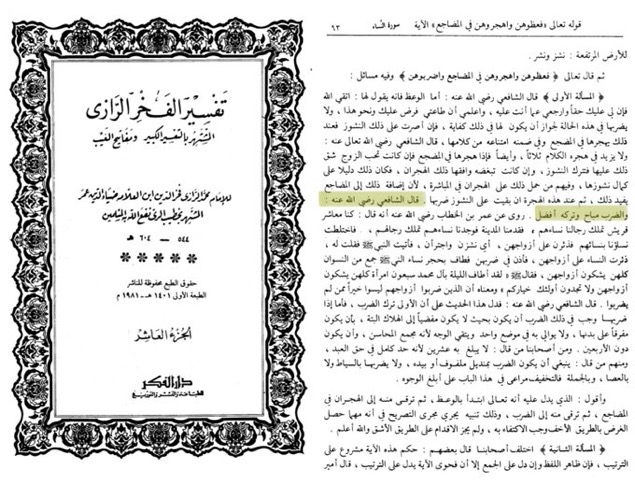
Imam al-Shafi’i via al-Razi
Imam Fakhruddin al-Razi the Shafi’i jurist quotes Imam al-Shafi’i who said that “hitting” is allowed but leaving it is better.
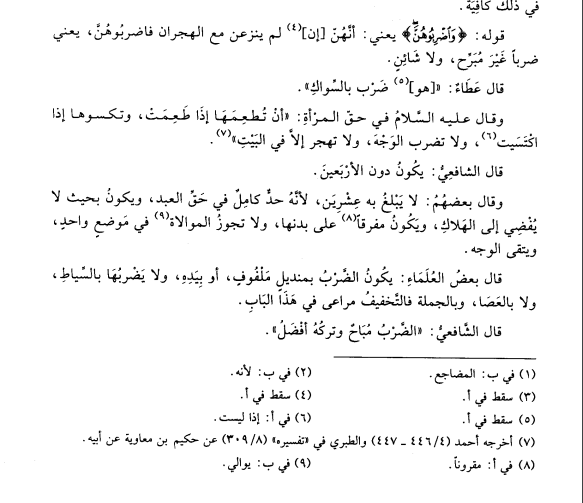
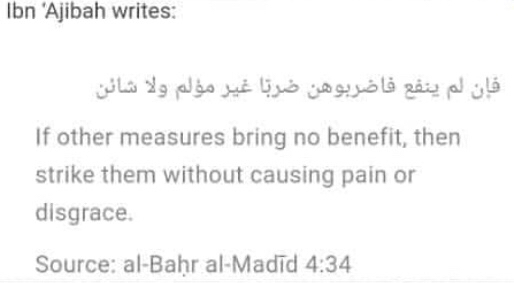
Ibn Adil al-Hanbali — Tafsir “Allah’s words (“ضَرَبَ”) means a beating in a manner which is non-violent & doesn’t dishonor her.”
‘Ata added and said: This is hitting with miswak.
qr1i 7611d6c53c5be1d8
The ulama said: Beating is done with a rolled up handkerchief or with the hand, and he should not strike with a whip, or a stick. And in general, leniency is taken into account in this matter. Imam Shafi’i said: Beating is allowed although avoiding it is better.
qr1j 92ab4f40ef55ef5e
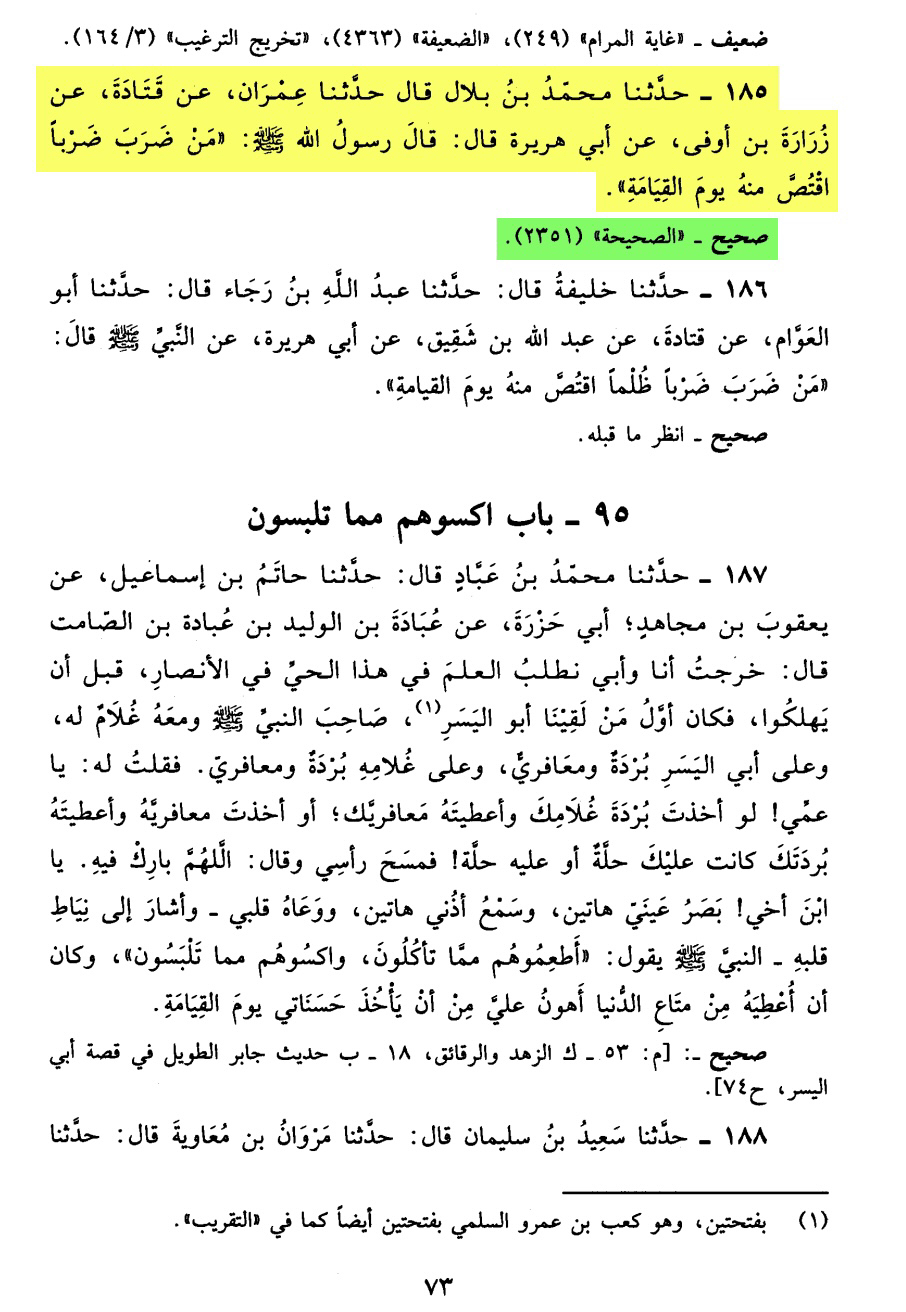
Retribution on the Day of Resurrection
Rasulallah ﷺ Whoever strikes someone will receive retribution for it on the Day of Resurrection
qr1k 6dd48c2c7d83e366
❤️
qr1l 4fb23a322a5508c3qr1m e4283ff528d7c3c4
The Wife’s Right to Qisas and Divorce
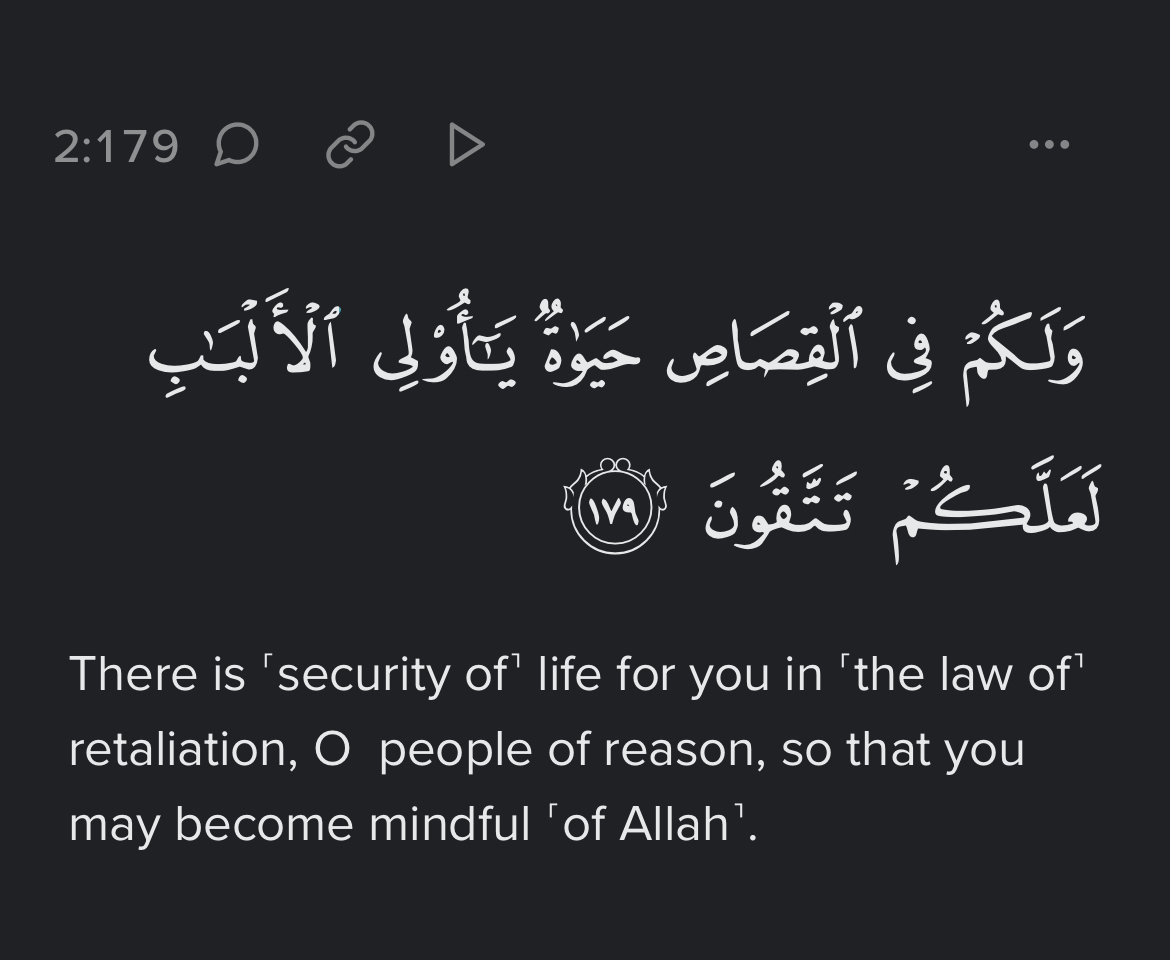
If a husband beats his wife unjustly or harms her, she has the right to qisas and to get a divorce.
So, are we really done here? What more do Islamophobes want? Can we finally move beyond this topic?
Of course not, cuz I still need to deal with DCCI, but that might take a while.
In any case, with all sources shown and with no way out for Mr Woody, it’s all up to him to meet his burden of proof. We are here, we are waiting.
Ata Ibn Abi Rabah and Ibn al-Arabi
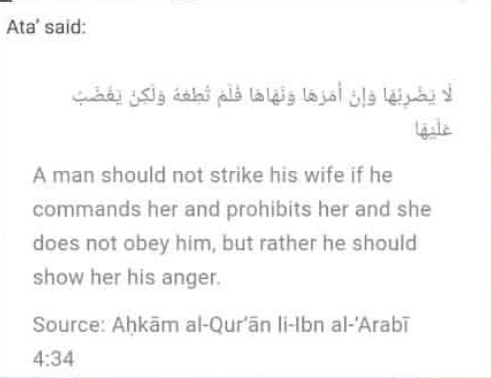
Among the commentators who addressed this issue in a moderate manner was Abu Bakr ibn al-Arabi, after he cited the ruling of Ata ibn Abi Rabah (27 AH - 114 AH / 667 - 732 CE) in the chapter on striking, which prohibited striking women, and its text is:
Ata ibn Abi Rabah “He should not strike her even if he commands her and forbids her and she does not obey him, but he should be angry with her.”
Then Ibn al-Arabi commented, saying:
Ibn al-Arabi “This is from the jurisprudence of Ata, for from his understanding of the Sharia, and his knowledge of the sources of ijtihad, he knew that the command to strike here is a command of permissibility, and he knew of the reprehensibility from another source in the saying of the Prophet ﷺ in the hadith of Abdullah bin Zam’ah: ‘I dislike a man striking his slave girl when he is angry, and perhaps he will sleep with her that same day’
and his saying: ‘And the best of you will not strike.’”
For English Readers This scan fits the argument that even where jurists allowed striking in principle, they imposed strong restrictions, including avoiding the face and anything that causes humiliation or injury.
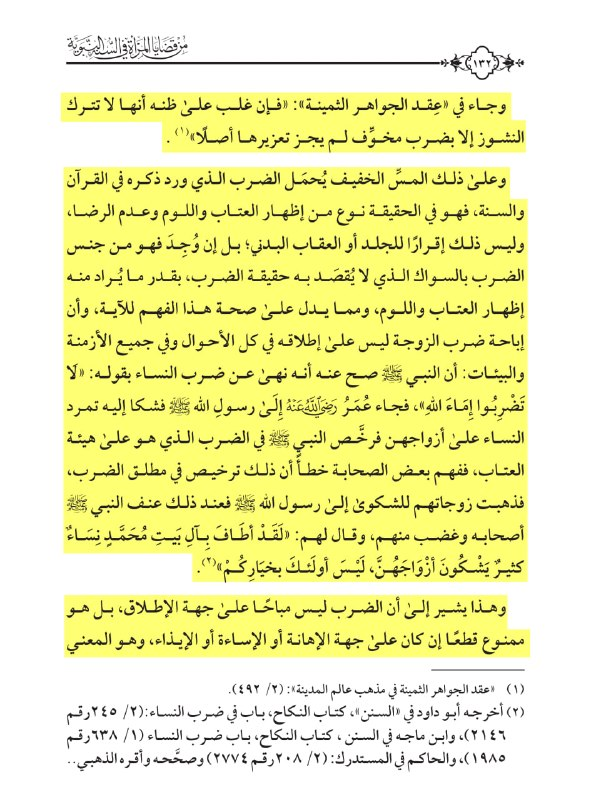
For English Readers This scan supports the more moderate reading: the point is discipline under restriction, not harm. And many scholars leaned toward discouraging or minimizing the act altogether.
For English Readers This scan reinforces the view that the ضرب mentioned by the scholars is not severe, and is limited by the condition that it must not cause real harm.
For English Readers The highlighted material here reflects the classical restriction that any striking must not injure, damage, or leave a harmful effect. This fits the interpretations cited from Ibn Kathir and Al-Alusi.
Tahir Ibn Ashur
Among contemporary commentators, Tahir ibn Ashur spoke well on the issue, linking the act of striking to custom.
He interpreted the statements of commentators and the opinions of jurists as reflecting the customs of certain social classes or tribes, since people vary in this regard.
He noted that Bedouin people do not consider striking a woman an act of aggression, nor do women consider it aggression.
He, may God have mercy on him, rejected striking without logical justification, saying:
Tahir ibn Ashur “As for striking, it is serious and difficult to define, but it is permitted in cases of corruption, because the woman then transgressed.”
He continues:
Tahir ibn Ashur “It is permissible for those in authority, if they know that husbands do not properly apply the prescribed punishments, nor adhere to their limits, to forbid them from using this punishment and to declare to them that whoever strikes his wife will be punished, so that the matter of harm between spouses does not escalate, especially when moral restraint is weak.”
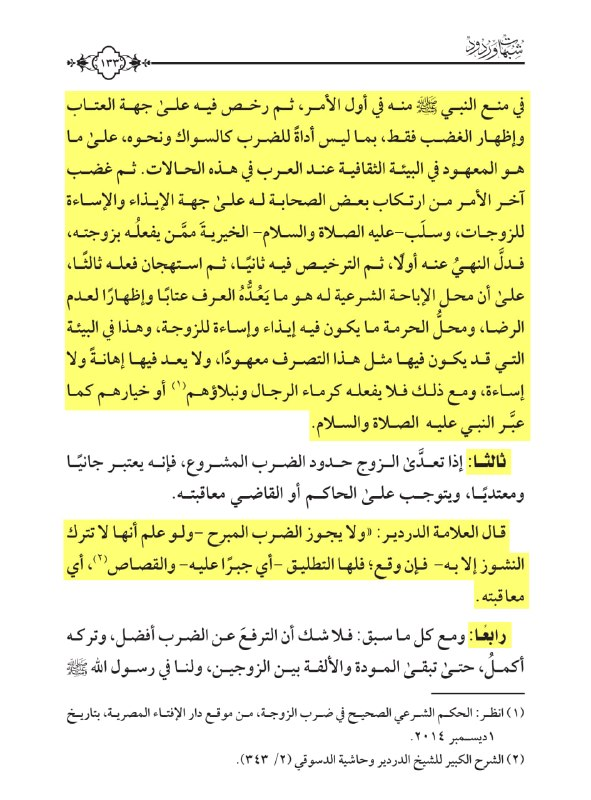
For English Readers This scan reflects the idea that the Prophetic guidance did not open the door to abuse. Rather, misuse and تجاوز were condemned, and exceeding the limits would make the husband blameworthy.
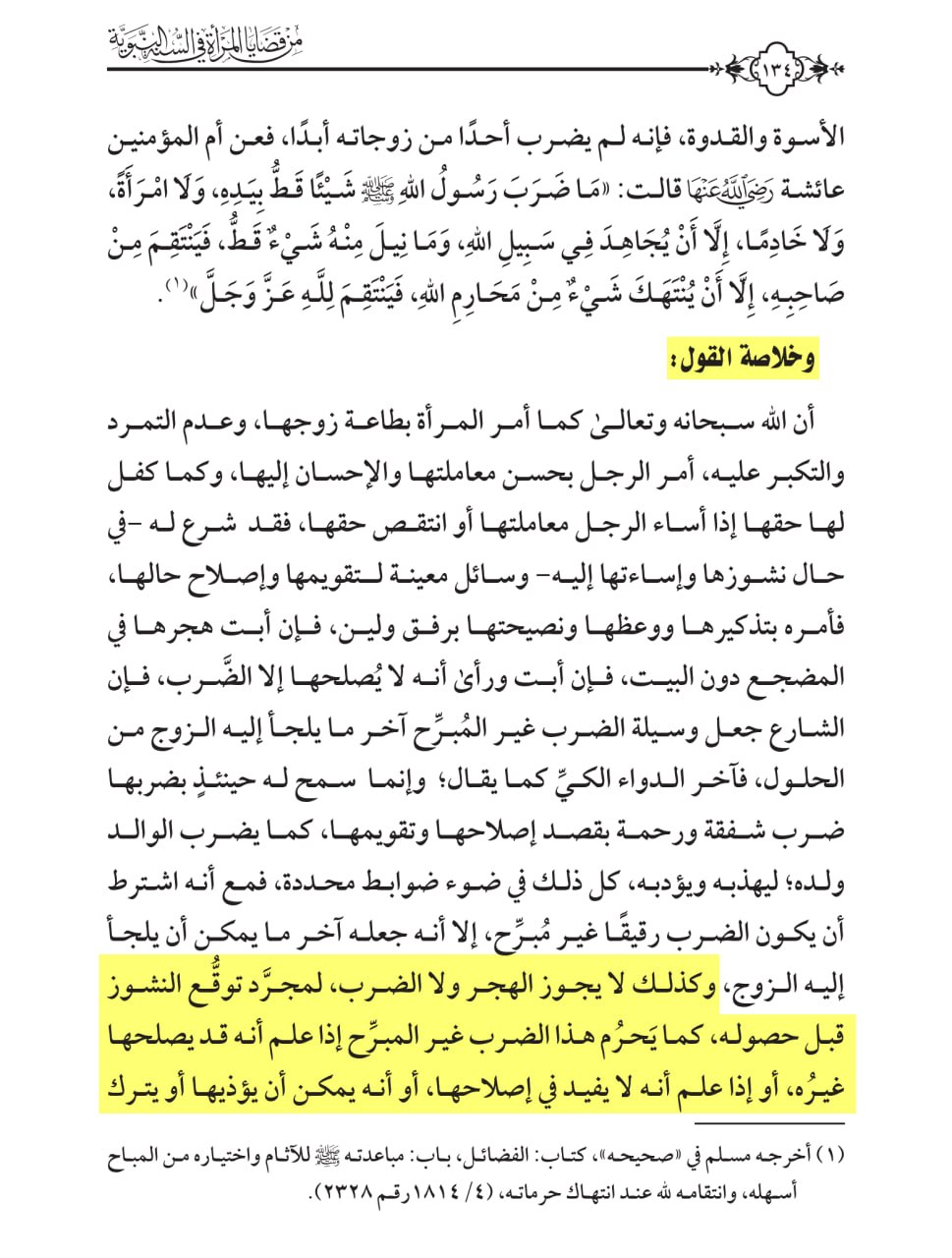
For English Readers This scan aligns with the broader Prophetic example that the Messenger ﷺ was not a man of domestic violence. It strengthens the argument that ideal conduct is good treatment, restraint, and avoidance of harm.
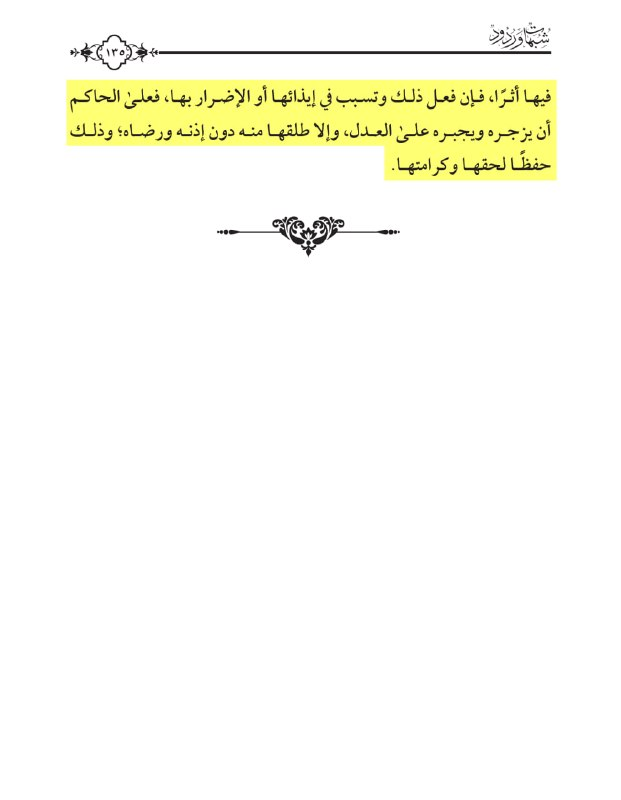
For English Readers This scan supports Ibn Ashur’s important point that authorities may restrict or forbid husbands from using this punishment when abuse becomes likely, in order to prevent harm between spouses.