

Islamic Heritage Texts and Sex: Refuting Secularist Distortions
The secularist claim that Islamic heritage texts are saturated with sex rests on forged books, misattributed quotes, and unreliable narrators — while the authentic scholarly tradition explicitly rejects these fabrications.
A secularist claims that Islamic heritage texts are full of sex, and that Arabs and Muslims were deeply involved in sex. He cites books likeNawadir al-Aik, Letters of al-Jahiz, Al-Basair wa al-Dhakha’ir, Al-Aghani, Fruits of Hearts, and Lectures of the Writers as evidence.
Every citation the secularist offers collapses under scrutiny: the book is forged, the narrator is a liar, the quote is fabricated, or the context is deliberately omitted. The response proceeds by examining each claim systematically.
First: Nawadir al-Aik — A Forgery Attributed to al-Suyuti
This secularist cited the book Nawadir al-Aik fi Nawadir al-Nik, and I respond to this secularist and say: this book is essentially a forgery, and has been falsely attributed to Jalal al-Din al-Suyuti, an attribution that is completely false. The simplest evidence of this is that al-Suyuti himself listed his own works in his book Hasan al-Muhadara fi Tarikh Misr wa al-Qahira 1/339, but he did not mention Nawadir al-Aik fi Nawadir al-Nik among them.
The book Nawadir al-Aik fi Ma’rifat al-Nik is a fabrication and the name Jalal al-Din al-Suyuti was put on its cover. You will even notice the differences in the title of the book; sometimes they write the title like this: [Nawadir al-Aik], sometimes they write it like this: [Nawadir al-Aik fi Ma’rifat al-Nik], and another time they write it like this: [Nawadir al-Aik fi Nawadir al-Nik]…!!!
We will show the falsity of these books more at the end of the article.
The Poetry Attributed to Ibn Abbas in Ihram
Then this secularist cited a verse of poetry attributed to Ibn Abbas, in which he claimed that Ibn Abbas was in a state of ihram and recited a sexual verse in the Sacred Mosque. This verse is as follows:
“And they walk with us in a whisper. If the birds are truthful, we will whisper quietly.”
This verse is mentioned in weak, unstable chains of transmission, and cannot be attributed to Ibn Abbas at all. Moreover, these narrations do not mention that Ibn Abbas was in the Sacred Mosque. Rather, the narrations state that Ibn Abbas was urging his camel on the road during ihram. In other words, he was not in Mecca itself, but rather on the road. Ihram begins at the Hajj miqats, which are outside Mecca, as long as you are not a resident of Mecca.
The narration then indicates that Ibn Abbas did not address the verse to any woman or man, but rather he was urging the camel on, as it was the custom of the ancient Arabs to recite poetry to the camel during the caravan’s journey.
Second: The Quote Attributed to Ali ibn Abi Talib
This secularist cited a quote attributed to Ali ibn Abi Talib, in which he says the following:
Ali entered upon some of the people of Basra, and he was not of that lineage. He said: Who is in these houses? They said: The most beautiful women of the Arabs. He said: “Whoever grows his father’s penis will speak about it.”
But the above statement has no basis and no reliable source. Rather, the first person to mention this empty statement was the innovator al-Jahiz in his literary letters.
Al-Jahiz was neither a sheikh nor an Islamic jurist, as some claim on websites. Rather, he was one of the most prominent men of letters from the Abbasid era, living during the second and third centuries AH. So how did al-Jahiz know that Ali ibn Abi Talib said these words, even though there were decades between them?
Al-Jahiz was a member of the Mu’tazila sect, and he had innovations and heresies, including that he said that the people of Hell will not remain there forever, but will transform into a fiery nature. Among Al-Jahiz’s innovations was that he followed the approach of the Greek philosophers in denying divine attributes. Al-Jahiz had faults, including that he would harass and mock passersby, and sometimes he would harass women or harass them with words and flirtatious language. Al-Jahiz would present arguments to prove that blacks are better than whites, just because Al-Jahiz was black.
Al-Khatib al-Baghdadi narrated on the authority of Ibn Abi Al-Dhayyal that he was at a banquet with Al-Jahiz. The call to prayer for the noon prayer came, but Al-Jahiz did not rise for prayer. Then the call to prayer for the afternoon prayer came, but Al-Jahiz did not rise for prayer. The host of the house denounced this heinous act by Al-Jahiz and said to him: “You have no opinion regarding prayer except to abandon it.”
Al-Jahiz had contradictory views; sometimes he supported the Ottomans against the Rawafidh, and other times he supported the Zaidi Shiites against the Sunnis. Al-Jahiz would mention some doubts in his books without providing an adequate response to them, as if he wanted to alert Christians so they could use them as an argument against Muslims. Sometimes, Al-Jahiz would ridicule some of the Prophet’s hadiths, and at other times, he would circulate some fabricated Rafidi hadiths to support the Rafidis against Muslims.
In short, Al-Jahiz was the first to attribute this phrase to Ali ibn Abi Talib, and we do not know where Al-Jahiz got this nonsense from.
Then the secularist deleted the rest of Al-Jahiz’s words, where Al-Jahiz said immediately after that: [So Ali is relied upon in the purification.] That is, Ali is extremely abstaining from shameful actions. This is a continuation of Al-Jahiz’s statement; that is, Al-Jahiz absolves Ali from such things.
The Linguistic Meaning of the Proverb
Even if we assume that Ali ibn Abi Talib said: [Whoever lengthens his father’s penis will pronounce it], this phrase has a different meaning than the sexual meaning understood by the ignorant scholar. Let us see the opinions of linguists about this phrase whose attribution is doubted:
[!scholar] Abu Mansur al-Tha’alibi — Al-Tamthil wa al-Muhadara 1/322
[(Whoever lengthens his father’s penis will pronounce it), meaning whoever has many brothers will be supported by them]
[!scholar] Abu al-Fadl al-Maydani — Majma’ al-Amthal 2/300
[(Whoever lengthens his father’s penis will pronounce it); meaning whoever has many brothers will be strong and proud because of them]
[!scholar] al-Zamakhshari — Asas al-Balagha 2/282
[(Whoever lengthens his father’s penis will pronounce it); Whoever has many sons will be strengthened by them.]
[!scholar] al-Hamdani — Shams al-Ulum 10/6649
[And among their proverbs: “Whoever has long father’s penis will speak with it” meaning: Whoever has many sons will support him and his back will be strong. And in another proverb: “Whoever has long tail will speak with it”]
[!scholar] Ibn al-Jawzi — Gharib al-Hadith 1/49
[And whoever has long father’s penis will speak with it, this is a proverb whose meaning is whoever has many sons will be strong with them.]
So the conclusion is that Ali’s saying [Whoever has long father’s penis will speak with it] is a fabrication and its attribution to Ali bin Abi Talib has not been proven. Then the proverb means: whoever has many sons will be strengthened by them — or as we call it in Egyptian culture: (Ezwa).
Third: The Phrase Attributed to Abu Bakr al-Siddiq
This secularist cited the words of Abu Bakr al-Siddiq to one of the polytheists: “He bit the clitoris of Al-Lat. Should we abandon him?”
Of course, the same secularist quoted the phrase from Al-Jahiz’s book, but the phrase found in the books of hadith is not as Al-Jahiz said, but rather it is as follows: [Suck the vagina of Al-Lat, so we will flee from it and leave it].
Of course, secularists think that the clitoris here means the female reproductive organ, but many people do not know that the word “clitoris” in the Arabic language can also be used to refer to the bump on the upper lip of your face, adjacent to the nose.
It is likely that the infidels of Quraysh made idols of al-Lat and created a face for them, but I believe they did not create a genital organ for them. Therefore, it seems more plausible that the phrase “the clitoris of al-Lat” refers to something on the face of the idol al-Lat, not the genital organ, as many authors throughout history have claimed.
Note that the phrase “suck Al-Lat’s clitoris” has nothing to do with sexual talk at all. Al-Lat was an idol of the Quraysh at the time Abu Bakr uttered this phrase. Abu Bakr was criticizing a polytheist who had insulted the Companions.
Fourth: The Fabricated Hadith Attributed to the Prophet
The secularist cited a fabricated hadith, in which he claimed that there is a hadith attributed to the Prophet ﷺ, which is: “Who is my excuse for the son of Umm Saba’, the one who cuts off her vagina?”
This secularist has quoted the previous nonsense from the books of the heretic Al-Jahiz, and Al-Jahiz did not mention any evidence that the Prophet said the previous words. By the way, there is no hadith of the Prophet in which he says this. Rather, Al-Jahiz is the one who claimed this statement, and there is no chain of transmission for this statement.
That is why Abu Mansur al-Azhari said in the introduction to the book Tahdhib al-Lughah 1/26:
[!scholar] Abu Mansur al-Azhari — Tahdhib al-Lughah 1/26
Tha’lab said: “Al-Jahiz was a liar about God, His Messenger, and the people.”
As for the saying of Hamza bin Abdul Muttalib: [O beasts, O son of Umm Anmar, cutter of vaginas], this phrase has nothing to do with sexual arousal or sexual excitement. Rather the phrase was said by Hamza when he was on the battlefield, and he was criticizing a man named (Saba’a). Saba’a was on the battlefield fighting the Muslims, and he was bragging to the warriors that he was a strong fighter, so Hamza came out to him and wanted to break his prestige, so he said to him: [O son of a vagina cutter], as Umm Saba’a worked in female circumcision, and this was her profession. So the matter has nothing to do with sexual excitement, rather both parties were fighting on the battlefield, and each side was trying to break the other’s prestige with slogans and movements.
But the problem with the secularist is that his mind only thinks about sex!!!
Fifth: The Dialogue Attributed to Abu al-Zinad’s Nephew
This secularist cited what Al-Jahiz also said, as Al-Jahiz said in his letters the following:
[Hadith of Abu Al-Zinad’s nephew when he said to his uncle: “Do you snore during intercourse?” He said: “My son, when you are alone, do what you like.” He said: “Uncle, do you snore?” He said: “My son, if you saw your uncle having intercourse, you would think that he does not believe in God Almighty!” These are two of the expressions of the licentious.]
The liar Al-Jahiz, as usual, did not provide us with any evidence or support for what he claims. Then the old books did not mention that Abu Al-Zinad had a brother or nephews, so where did Al-Jahiz get this nonsense from?!
Then, Abu Al-Zinad was from the people of Medina, while Al-Jahiz was from the people of Basra in Iraq, so how did he know about this dialogue?! Indeed, Abu Al-Zinad died approximately in the year 130 AH, while Al-Jahiz was born after the year 150 AH. So how did Al-Jahiz know this dialogue?!
From here it becomes clear to you that Al-Jahiz was transmitting lies in his books, and that is why Abu Mansur Al-Azhari said in the introduction to the book Tahdhib al-Lughah 1/26:
[!scholar] Abu Mansur al-Azhari — Tahdhib al-Lughah 1/26
Scholars have accused Al-Jahiz of lying and have rejected the truth. Tha’lab said: “Al-Jahiz was a liar about God, His Messenger, and the people.”
Sixth: The Story Attributed to Ibn Hazim
Al-Almanji also mentioned the words of Al-Jahiz when he said: Hadith of Ibn Hazim when he claimed that he erected his penis and climbed the stairs while his wife was clinging to his penis until he climbed.
Of course, the above statement is empty talk; Al-Jahiz did not provide any evidence or support for what he said. Is it reasonable that a man would order his penis to become erect so that his wife would hold onto it and the man would climb the stairs while his wife held onto his penis until she climbed the stairs with him!!! Is this an unbreakable steel rod?! This is all nonsense and myths.
Seventh: The Story of Khalida and the Hajj Pilgrim
Al-Almanji cited Al-Jahiz’s words in his letters when he said:
[He said: Khalida was a black woman with a wonderful character. She had a house in Mecca that she would rent out during the days of Hajj. A young man from Iraq performed Hajj and rented her house. He left the mosque after completing the circumambulation, but he became exhausted. When he went up to the roof, he looked at Khalida sleeping in the moonlight. He saw the most handsome and best-looking of people. His soul called him to her, so he approached her, but she let him until he raised her legs. She followed him and showed him that she was asleep, so he had intercourse with her. When he finished, he regretted it and started crying and slapping his face. She became affectionate towards him and said: What is the matter with you? Did a snake sting you? Did a scorpion sting you? Why are you crying? He said: No, by God, but I fuck you while I am in a state of ihram. She said: So you fuck me and cry? By God, I have more right to cry than you. Get up, you fool!]
Of course, as usual, Al-Jahiz spreads lies. I wish I knew how Al-Jahiz knew this story. Was Al-Jahiz sitting with them on the roof watching the sex scenes?!
By the way, what Al-Jahiz and his ilk did was just to make people laugh, nothing more. These are not true stories. Al-Jahiz pointed this out before he narrated this previous story, as he said in 2/125 the following:
[And we mentioned at the end of this book excerpts from the hadiths of the idle and the witty.]
Al-Jahiz used to take these stories from the words of humorists and idlers (unemployed fools).
Eighth: The Story of the Beautiful Woman and the Ugly Husband
Al-Almanji cited Al-Jahiz’s words in his letters, which are as follows:
[He said: A man looked at a beautiful, secret woman, and there was an ugly, disfigured man in her house, ordering and forbidding, so he thought that he was her slave, so he asked her about him and she said: My husband. — He said: Glory be to God, someone like you in God’s blessing upon you, so you marry someone like this? — She said: If he turned his back to you as he faces me, it would be great in your eyes. Then she uncovered her thigh and saw greenness in it, so she said: This is his mistake, so how did he get it?!]
As usual, the filthy Al-Jahiz fills his book with lies and filth. I wish I knew how a woman would expose her thigh in front of a strange man while her virile husband was sitting with her?! Even Al-Jahiz failed at writing those stupid stories!
Ninth: Abu Hayyan al-Tawhidi — The Atheist Heretic
Al-Almanji cited the words of Abu Hayyan al-Tawhidi in the book Al-Basair and Al-Dhakha’ir where he says:
A slave girl was shown to Al-Mutawakkil, and he said to her: What do you like? She said: Twenty colors of rahz. He liked her and bought her. Mazbad asked his wife from behind, and she gave him permission. Then he asked her again, and she said to him: Remember that today you will be fucked alone.
Isaac said: Do not befriend an effeminate man, because it is considered rude to befriend someone without having sex.
But I respond to the previous statement and say: Abu Hayyan al-Tawhidi was an atheist, a heretic, and a heretic. He used to insult and slander the Companions and the righteous. Therefore, al-Dhahabi said the following about him in Siyar A’lam al-Nubala 12/547:
[!scholar] al-Dhahabi — Siyar A’lam al-Nubala 12/547
Ibn Babi said in the book “Al-Kharida and Al-Fareeda”: This Abu Hayyan was a liar, of little religion and piety, and he refrained from slander and openly slandering. He was exposed to serious matters, such as slandering the Sharia and saying that it was invalid. Our master, the minister, the Companion Kafi al-Kifaya, discovered some of the evil beliefs he was concealing and deceiving, so he sought him out to kill him. He fled and sought refuge with his enemies, and spent on them his embellishment and his slander. Then they discovered the ugliness of his entrance and his bad beliefs, the atheism he concealed, the corruption he sought in Islam, the ugliness he attributed to the prominent Companions, and the abominations he attributed to them. The righteous predecessors were exposed to scandals, so the minister Al-Muhallabi sought him out, but he hid from him and died in hiding. May God have mercy on him, and nothing was reported about him except a blemish or shameful thing.
Abu al-Faraj ibn al-Jawzi said: The heretics of Islam are three: Ibn al-Rawandi, Abu Hayyan al-Tawhidi, and Abu al-Ala al-Ma’arri. The most severe of them against Islam is Abu Hayyan, because they both stated this explicitly, while he is an ignorant person and did not state it explicitly.
Look at this scholar who cites Abu Hayyan al-Tawhidi, the liar and misguided person who was one of the most ardent in his attempts to corrupt Islam. Note that the title “Tawhidi” here does not refer to the oneness of God and the rejection of polytheism. Rather, it refers to the unity of existence in which such heretics believe.
Tenth: Ibn Kathir on Sodomy — Misquoted and Misunderstood
This secularist claimed that homosexuality was widespread in ancient times among Arabs and Muslims. This secularist cited the words of Ibn Kathir, where he says in the book Al-Bidayah wa al-Nihayah:
[The abomination of sodomy, with which most kings, princes, merchants, common people, writers, jurists, judges, and the like have been afflicted, except for those whom God has protected from them…]
In response to the above statement, I say: The word “most” in the previous quote was intended to refer only to kings. As for the rest of society’s classes (merchants, commoners, writers, jurists, and judges), Ibn Kathir did not mean the majority of them. This confusion arose among those who do not understand the Arabic language well and do not understand conjunction in grammar.
Then Ibn Kathir exaggerates in this matter, and he himself has proven the inaccuracy of what he said about the classes of society. Ibn Kathir himself said on the same pages:
I said: So he denied this ugly, heinous trait, and this reprehensible obscenity, for which God punished its people with various types of punishments, and imposed upon them various types of immoralities, for which He did not punish any of the previous nations, and it is the obscenity of sodomy, with which most kings, princes, merchants, common people, writers, jurists, judges, and the like were afflicted, except for those whom God protected from them.
The point is that the evil of sodomy is one of the greatest evils, and it was unknown among the Arabs in ancient times, as has been mentioned by more than one of them. That is why Al-Walid ibn Abd al-Malik said: “Had it not been for the fact that Allah Almighty told us the story of the people of Lot in the Qur’an, I would not have thought that a male would mount another male.”
Ibn Kathir himself admits that the abomination of sodomy was unknown among the Arabs, and likewise Al-Walid ibn Abd al-Malik did not witness such a phenomenon. From here it becomes clear to us that Ibn Kathir was exaggerating in his narration of the classes of society.
Eleventh: Al-Aghani — The Shiite Fabricator
Al-Almanji cited the words of Abu al-Faraj al-Isfahani in his book Al-Aghani. But I respond to this stupid secularist and say: The above statement is from the book of Abu al-Faraj al-Isfahani, who was a Shiite, and his books are full of lies and distortions of the reputation of great figures, to the point that he insulted Aisha, the daughter of the companion Talha, and even insulted Lady Sukayna, the daughter of Imam al-Husayn. This is why Imam Shams al-Din al-Dhahabi said the following about him in his book Siyar A’lam al-Nubala 16/202:
[!scholar] al-Dhahabi — Siyar A’lam al-Nubala 16/202
He was filthy and disgraceful, and they feared his satire.
Shams al-Din al-Dhahabi said about him in his book History of Islam 26/144:
[!scholar] al-Dhahabi — History of Islam 26/144
[I said: I saw our Sheikh Ibn Taymiyyah weakening him and accusing him of transmitting it and being astonished by what he brings]
Then the people mentioned in the previous story are the poet Yahya bin Ziyad Al-Harithi, who was a libertine and accused of heresy as mentioned in the book Dictionary of Arab Poets page 2295. As for the poet Hammad bin Ajrad, he was not religious and was accused of heresy, as mentioned by Imam Shams al-Din al-Dhahabi in the book Siyar A’lam al-Nubala 7/157. As for Mut’i’ bin Iyas, he was a licentious poet who was also accused of heresy, as mentioned in the book A Brief History of Damascus 24/359.
Why does this secularist refer to us as heretics?! Indeed, you will notice that these poets were interested in the Nowruz festival, which is a pagan festival, as mentioned in the previous story. Al-Raqiq Al-Qayrawani mentioned in his book Qutb Al-Surur fi Awsaf Al-Anbidha wa Al-Khamur that these three poets used to meet to drink (wine). Al-Raqiq Al-Qayrawani narrated their story under the title [Akhbar Al-Shu’ara wal-Mujjan], and it seems that he took the story from the Shiite Abu Al-Faraj Al-Isfahani.
There are books that respond to the lies of (Abu al-Faraj al-Isfahani), including the book by Professor Walid al-A’zami: called The Yemeni Sword in the Throat of al-Isfahani, the Author of Songs, and there is a book by Sheikh Mashhour Salman entitled: Books that Scholars Warned Against.
Twelfth: Fruits of Hearts — Unreliable Narration About Yahya ibn Aktham
Al-Almanji cited what Al-Tha’alibi Al-Nishapuri mentioned in his book Fruits of Hearts in the Noun and the Attributive. But these statements attributed to Yahya ibn Aktham are not true. Rather, this man was one of the most well-mannered and well-mannered people. As for the reports attributed to him, they are not authentic. Therefore, the researchers, under the supervision of Sheikh Shuaib al-Arna’ut, said the following in the book Siyar A’lam al-Nubala — Volume 12 — footnote page 10:
[!scholar] Researchers under Shuaib al-Arna’ut — Siyar A’lam al-Nubala, Vol. 12, fn. 10
Al-Khatib al-Baghdadi (14/197) and Ibn Khallikan (6/152) reported some reports that mention the mistakes attributed to Yahya ibn Aktham, such as sodomy and other things. I do not think that these reports are true about a great judge like Yahya ibn Aktham, who was an imam of ijtihad, which prompted Caliph al-Ma’mun — who was a man of knowledge and understanding — to appoint him as a judge in Baghdad. Especially since these reports (of sodomy) were reported by people who are not reliable… Al-Hafiz Ibn Kathir said in “Al-Bidayah wa al-Nihayah”: This Yahya ibn Aktham was one of the imams of the Sunnah, the scholars of the people, and one of those who respected jurisprudence, hadith, and following the hadith.
The news of sodomy attributed to Yahya bin Aktham was reported by people whom we cannot believe. For example: the words that Al-Tha’alibi Al-Nishaburi said about Yahya bin Aktham are the same words that he transmitted from an unknown person named (Mutraf), where Al-Tha’alibi Al-Nishaburi said the following:
Al-Ma’mun was alone with him one night, to joke around and tease him in the boys’ arena. Al-Ma’mun’s slave, Mutraf, was eavesdropping on them, and he was the one who told this story about him. He said: Al-Ma’mun said to him, “O Abu Muhammad, tell me about the most charming boy you have ever seen.” He said, “Yes, O Commander of the Faithful. Seek judgment from a boy who is the epitome of charm, charm, and tact.”
The one who narrated this whole story is an unknown person named (Mutraf), and there is no evidence of this person’s credibility at all. Moreover, this young man lived during the era of Al-Ma’mun in the second century AH and the beginning of the third century AH. As for Al-Tha’alibi Al-Nishapuri, he lived in the late fourth century AH and the beginning of the fifth century AH; meaning that there are about 200 years between them. So how did Al-Tha’alibi Al-Nishapuri obtain this story from the unknown (Mutraf) ?!
It is even strange to find Al-Khatib Al-Baghdadi attributing another fabricated story to Yahya bin Aktham, where he said:
[Qadi Abu al-Tayyib Tahir ibn Abdullah al-Tabari told us, al-Mu’afa ibn Zakariya told us, Muhammad ibn Ahmad ibn Ibrahim al-Hakimi told us: Abu Abdullah Muhammad ibn al-Qasim said: When Ismail ibn Hammad was dismissed from Basra, they escorted him. They said: You have spared our money and our blood. Ismail ibn Hammad said: And your children!!; insinuating that Yahya ibn Aktham committed sodomy.]
There is no evidence that Yahya ibn Aktham committed sodomy. Rather, Ismail ibn Hammad’s claims are merely hearsay without any evidence. Even if we assume there is evidence, why did Ismail ibn Hammad not punish Yahya ibn Aktham, even though Ismail was the judge of Basra?
Many ancient scholars accused Ismail ibn Hammad of being unreliable. For example, Imam Salih ibn Muhammad Jazra said that Ismail ibn Hammad was unreliable. Ibn Adi al-Jurjani said that he was among the weak narrators… So how can we accept Ismail ibn Hammad’s statement about Yahya ibn Aktham?!
Then the person who transmitted this story from (Ismail bin Hammad) is: Abu Al-Ayna’, whose name is (Abu Abdullah Muhammad bin Al-Qasim bin Khallad), and he is a man who was a storyteller, and he is not strong in hadith nor is he documented as Al-Daraqutni said… so how can we accept this story from him?!
As for the one who narrated this story on the authority of Abu Al-Ainain, he is Muhammad bin Ahmad bin Ibrahim Al-Hakimi, a man who narrates strange stories, as Imam Al-Barqani described him.
As for what Ibn al-Jawzi mentioned in the book The Blame of Passion, where he said:
[Abu al-Faraj al-Asbahani narrated on the authority of his uncle, on the authority of Abu al-Ayna’, who said: Al-Ma’mun saw Yahya ibn Aktham staring at one of his servants, so he said to the servant, “Come to him when I get up, for I am going to get up to perform ablution.” He ordered him not to move and to come back to me with what he says to you. Al-Ma’mun stood up and ordered Yahya to sit down. When he stood up, the servant winked at him, and Yahya said, “If it weren’t for you, we would have been believers.” The servant went to Al-Ma’mun and informed him. Al-Ma’mun said to him, “Go back to him and say to him, ‘Have we turned you away from guidance after it had come to you? Rather, you were criminals.’”
The servant went out to him and told him that, so he lowered his head and almost died of fear.
Al-Ma’mun came out saying: When will the world be set right and its people be set right… while the chief judge of the Muslims practices sodomy?]
The same story was mentioned by Ibn Hamdun in Al-Tadhkira Al-Hamduniyya, Ibn Hajar in Lifting the Burden from the Judges of Egypt, and Ibn Al-Imad Al-Hanbali in Shudharat Al-Dhahab, but this vile story was taken from the book Al-Aghani by the liar Abu Al-Faraj Al-Isfahani. Abu Al-Faraj Al-Isfahani claims that he took this story from his uncle called (Al-Hasan bin Muhammad), but the heritage books do not contain any documentation of this uncle, so this man is unknown and his truthfulness or trustworthiness cannot be proven.
Then Abu al-Faraj al-Isfahani claims that his uncle took this story from Abu al-Ayna’, but Abu al-Ayna’ is not documented in the books of men, and al-Daraqutni even said about him that he is not strong in hadith, and this man became blind after the age of forty, so I wonder if he even witnessed the situation?!
Thirteenth: Al-Shabashti and Al-Mutawakkil
This secularist cited what Al-Shabashti said in the book Al-Diyarat where he says:
Al-Mutawakkil said to his servants one day: Stop acting effeminately until I marry you. He said: Are you a caliph or a guide?
In response to the above statement, I say: There is no conclusive evidence that Caliph Al-Mutawakkil said these words; this incident has no documented basis. Caliph Al-Mutawakkil died at least 60 years before Al-Shabashti was born. Moreover, Al-Shabashti was the servant and companion of the Fatimid king (Al-Aziz ibn Al-Muizz), who would sit with him, entertain him, and make him laugh. The Fatimid king held a grudge against the Abbasid Caliphate, so it is not surprising that this story was fabricated in order to make the Fatimid king laugh against his Abbasid opponents. The Fatimid king was an Ismaili Shiite, while the Abbasid caliphs were Muslims, not Shiites.
The previous story does not encourage immorality, but rather forbids effeminacy. Effeminacy may be a psychological illness for some, while others may deliberately adopt effeminacy. As for those who are psychologically ill, they should be treated, counseled religiously and psychologically, and disciplined. As for those who deliberately adopt effeminacy, they should be punished.
Servants of kings came from other regions, perhaps even from non-Muslim countries. In fact, some slaves from non-Muslim lands were eunuchs, which may explain why some slaves were effeminate.
Caliph Al-Mutawakkil advised his servant to abandon effeminacy so that he could marry him. The word “I will marry you” means “I will make you marry so-and-so,” so you will notice that the servant responded to him and said: “Are you a Caliph or a guide?!”
The word “dalala” means the person who guides and suggests the names of some women so that the groom can choose one of them and go to her father and propose to her.
Fourteenth: Lectures of the Writers — Quotes Not Found in the Book
Al-Almanji cited many quotes from the book Lectures of the Writers by Al-Raghib Al-Isfahani, and these quotes are as follows:
Madani said: O God, grant me a penis whose warp is sinew and whose flesh is reed, and which will not be afflicted with fatigue or exhaustion, and where will you be from Rajab to Rajab?
But I searched in the book Lectures of Writers for the previous quote and did not find it there.
An effeminate man and a homosexual met. The homosexual said: I am better than you because I am above the sky, so I am close to the sky. The effeminate man said: I am more humble than you because I am close to the ground.
But I searched the book and did not find the previous quote in this form.
An effeminate man was asked: Which of the names do you like best? He said: Az-Zubayr, because Zub and Er are combined in him. It was also asked: Which of the prophets do you like best? He said: Lot. It was also asked: Which branch of jurisprudence do you like best? He said: The chapter on marriage. It was also asked: Which branch of grammar do you like best? He said: The chapter on the subject and the object!
But I looked for it in the book Lectures of Writers and I did not find it.
It was said: A muezzin was found on the back of a Christian boy in the mosque, so it was said: What are you doing?! He said: Doesn’t God say: {And they do not take any step to enrage the disbelievers, nor do they attain any advantage against the enemy, but a good deed is recorded for them because of it.} So what step is more enraging to the disbelievers than this?
But I searched in the book Lectures of Writers and did not find the previous statement.
It was said that a drunkard was crying and saying: If only he had known who killed Uthman! — Then an effeminate man said to him: What would you have done to them? — He said: I would have fucked them! — The effeminate man said to him: I killed him. And he kept saying: Oh, revenge for Uthman! — And the effeminate man said from beneath him: If you are the avenger of blood and this is your punishment, then I kill Uthman every day.
But I reviewed the book Lectures of the Writers and did not find the previous nonsense in it.
Even if we assume that the above quotes actually existed, they were just comic stories invented by some immoral people for the sake of laughter and joking among themselves, and they are not real stories at all, and therefore you will not find any support or documented source for them, but rather they are in the form of (gossip). This comic style still exists today among some immoral youth, where you will find one of them saying: [He told you once that someone did such and such]
Fifteenth: The Fictional Story of the Judge and the Impotent Husband
Al-Almanji provided evidence with the following quote:
A woman brought her husband to the judge and said: My husband does not sleep with me. The husband said: I am impotent. The woman said: He is lying. The judge said: Give me your penis so I may test you. So he took his penis and licked it. The judge was ugly, so his penis would not rise. She said to the judge: If the Angel of Death saw you erect, he would relax. Give it to your slave. The judge had a handsome slave, so he gave him to him and it quickly spread. She said: Give the bow to its maker. The judge said: O Kashhan, take your wife and do not covet the judges’ slaves!
As for the previous quote, it is a fictional story that has no basis in fact. What indicates the mythical nature of the story is that the woman says: [Give the bow to its owner], meaning that she wants to give her husband’s penis to the boy because he was able to arouse her husband’s penis!
It is unreasonable that a woman would allow her husband to do this with young boys, especially since she is in court before the judge. In fact, she herself came to complain about her husband not sleeping with her, so how would she want someone other than her to play with her husband’s penis?!
Then why didn’t the judge order the wife to test her husband’s penis instead of him holding it?!
Moreover, the story does not explicitly admit that the husband was gay. Furthermore, it is normal for a man’s penis to become erect if touched by soft skin, but the hand of an old woman (like the judge in the story) is rough.
Sixteenth: The Secularist’s Self-Refuting Argument About Homosexuality
Finally, this secularist says the following:
[In isolated, closed societies where women disappear from the streets and public life, men will turn to (boys) and may resort to practicing “homosexuality.”]
Of course, the above statement is just nonsense uttered by this secularist in order to justify prostitution for himself. The simplest proof of the absurdity of his statement is that the secular countries where women strip in the streets are the same countries with the highest levels of homosexuality. At the top of the list of homosexuality are: the Philippines, America, Thailand, Brazil, Sweden, Spain, Britain, France, and Germany!!!

Seventeenth: The Books Attributed to al-Suyuti
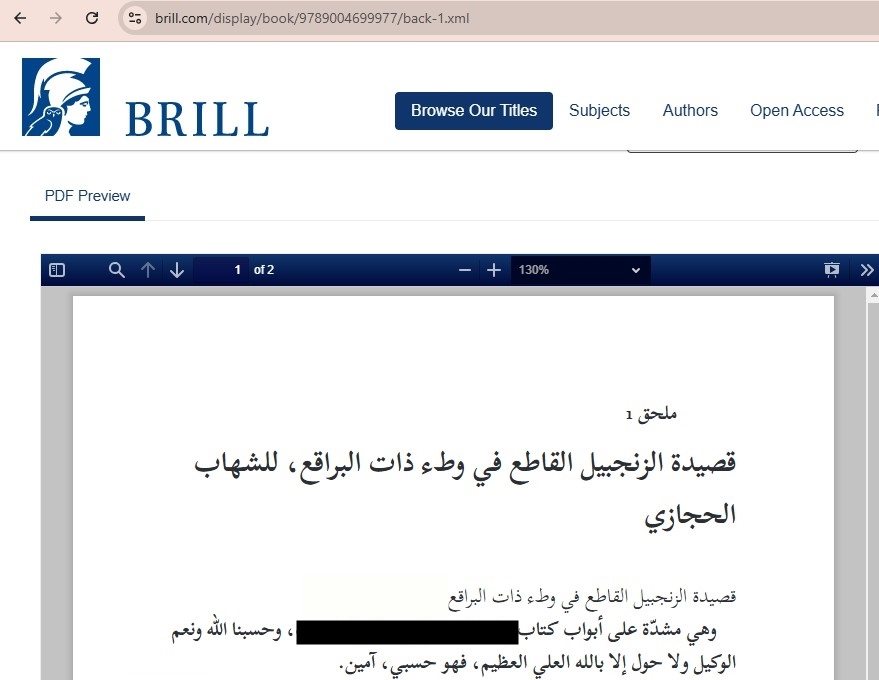
He argued that Jalal al-Din al-Suyuti had several books on sex, including: The book The Cutting Ginger in the Tread of the Veiled Woman, but some have suggested that this book is actually a poem written by an Egyptian writer named Al-Shihab Al-Hijazi; so this is his poem. This man was born before Al-Suyuti.
This secularist cited the book Al-Mustadrafah fi Ahkam Dukhul al-Hashfah as evidence, believing that the book talks about sex, while the book has nothing to do with sex at all, and the book does not talk about the method of practicing sex. Rather, when I read a copy of the book, I found that it talks about the jurisprudential rulings related to sexual intercourse, such as that sexual intercourse nullifies ablution and spoils fasting, and such as the rulings on maintenance and the limits (stoning and flogging)…
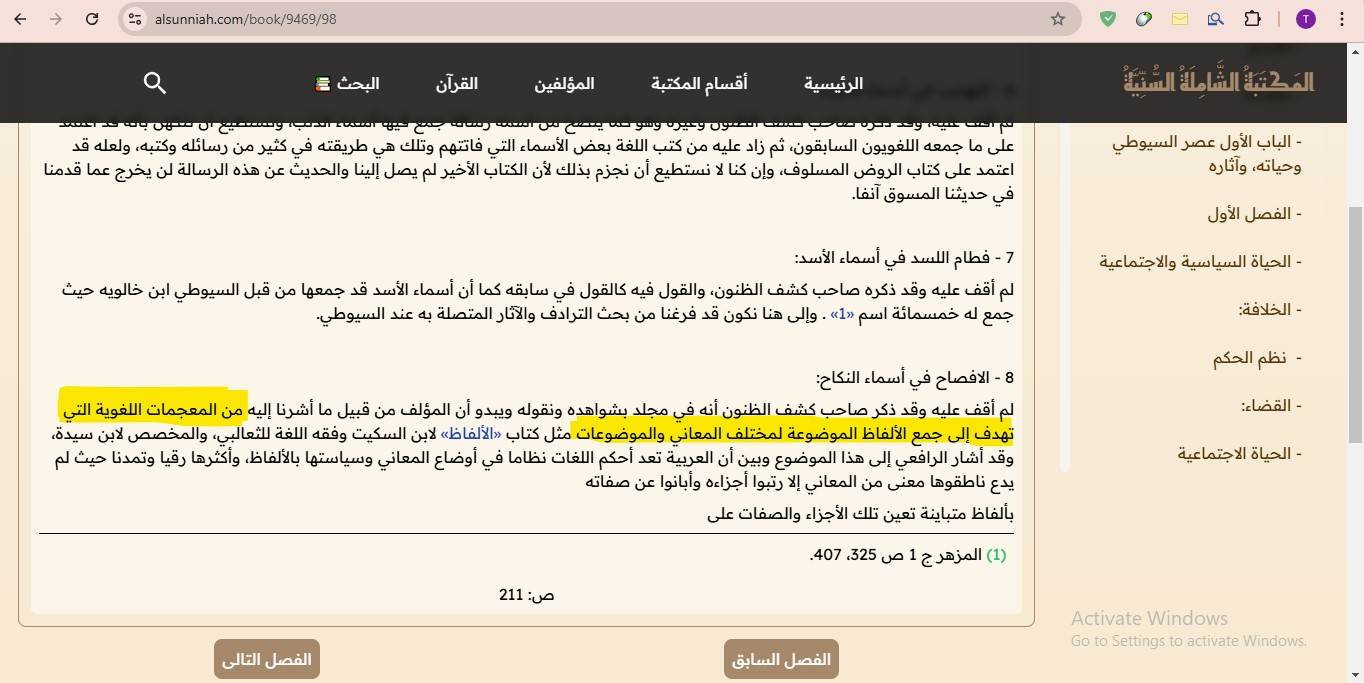
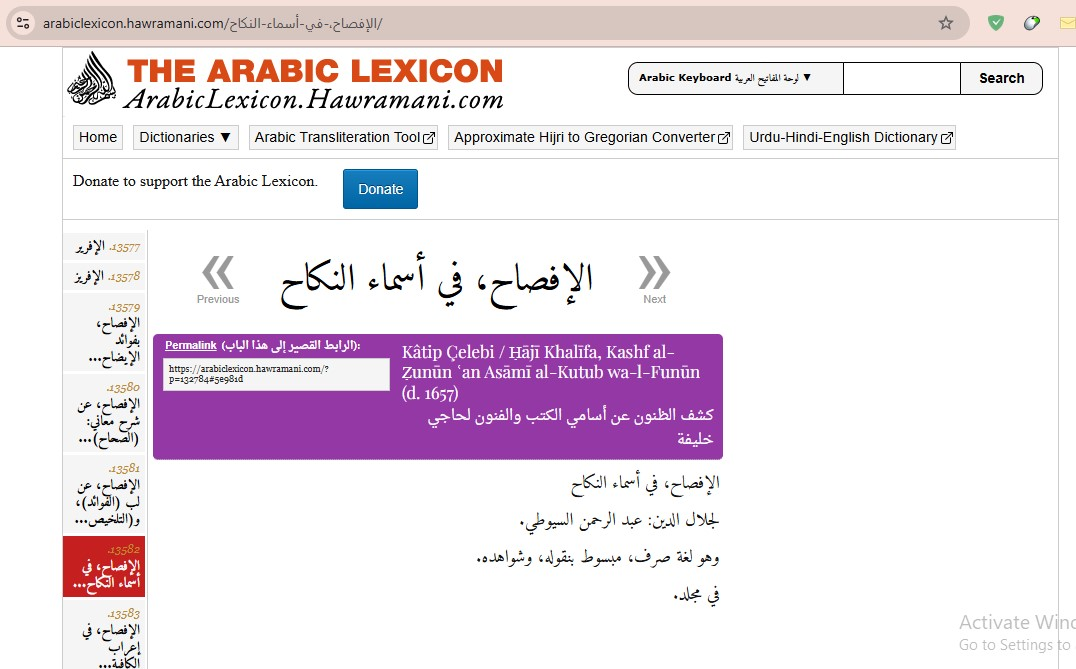
Al-Almanji cited the book Al-Ifsah fi Asma’ Al-Nikah (Disclosure of the Names of Marriage) as evidence, even though this book is merely a linguistic book. The word “nikah” in Arabic means marriage. Therefore, Haji Khalifa said in his book Kashf al-Zunun an Asma’ al-Kutub wa al-Funun 1/81:
[!scholar] Haji Khalifa — Kashf al-Zunun 1/81
[Al-Ifsah, on the names of marriage, by Jalal al-Din Abd al-Rahman al-Suyuti. It is purely linguistic, and its quotes and evidence are detailed in one volume.]
Al-Almanji cited the book Morning Light on the Languages of Marriage, believing it to be a sexual book, even though the book is dedicated to the art of language. Therefore, Haji Khalifa says the following in his book Kashf al-Zunun 2/1089:
[!scholar] Haji Khalifa — Kashf al-Zunun 2/1089
[Morning Light, on the languages of marriage by Jalal al-Din: Abd al-Rahman ibn Abi Bakr al-Suyuti. Mentioned in: The Art of Language.]
The same information was mentioned by Sadiq Hassan Khan in the book Al-Balagha to the Origins of Language 1/187.
Al-Almanji continued to attribute sexual books to Al-Suyuti, even though Al-Suyuti was innocent of many of them. Therefore, Professor Dr. Samir Al-Darubi says the following:
Dr. Samir Al-Darubi
[I tend to think that most of the books attributed to Al-Suyuti on the subject of (the penis) are not authentically attributed to him. Rather, he is a pretender in his literature and knowledge, and perhaps it is something attributed to him by copyists who want to promote such a type of book, or something that was foisted on him by his opponents and staunch enemies. Therefore, what is attributed to him, such as the book (Al-Idah fi Asrar Al-Nikah), (Al-Aik fi Ma’rifat…), (Mabasim Al-Malah wa Manasim Al-Nikah…), (Nawakhir Al-Aik…) and others: is considered to have been infiltrated by the man, and it is something that someone else did in his name and was falsely attributed to him.]
See the book Al-Suyuti and his letter “Index of My Works” on the sciences of language, grammar, rhetoric, literature, and history, Pages 48, 49.
Many of these sex books are forged and fabricated.
Eighteenth: The Farting Allegation
This secularist talked about farting, and I don’t know what the connection between farting and sex is, and what is the importance of talking about this topic in the first place?!
Among the nonsense that this secularist spoke was that he said: Al-Hajjaj farted on the pulpit and said: “Except that every cavity farts.” He asked for water and performed ablution.
But I searched in the books and did not find the previous quote. Rather, I found one book, Samt Al-Nujum Al-Awali by Al-Isami, and he attributed the phrase “Every cavity is full of farts” to its speaker, Abu Al-Aswad Al-Du’ali, not Al-Hajjaj.
Nineteenth: The Hindu Statues
Finally, I found secularists posting pictures of ancient statues depicting obscene sexual positions. These statues are Hindu and have nothing to do with Islam at all.
Every citation the secularist offers — from forged books to liar narrators, from heretic authors to comic fiction, from misquoted scholars to fabricated hadiths — collapses under the scrutiny of hadith criticism, linguistic analysis, and historical verification. The authentic Islamic scholarly tradition is innocent of these fabrications, and the secularist’s own countries lead the world in the very practices he falsely attributes to Islam.