

John 17:3 — How Pope Kyrollos VI Changed 'And' to 'With' to Fabricate Proof for the Divinity of Christ
John 17:3 is among the most theologically direct verses in the Gospel of John, explicitly calling the Father the only true God and describing Jesus Christ as the one sent by him — not his co-equal partner in divinity. The verse reads: “And this is eternal life, that they may know you, the only true God, and Jesus Christ whom you have sent.” The theological force of this verse against the Christian doctrine of Christ’s divinity has long been recognized across confessional lines. It is precisely this force that makes what Pope Kyrollos VI did to its Arabic rendering so significant: he translated the Greek conjunction καὶ — which means “and” in every language and every translation across the entire history of the verse — as “with,” converting a statement that grammatically separates knowing the Father as the only true God from knowing Christ as his sent messenger into a statement that fuses the two into a shared divine identity. This note documents that distortion fully, comparing the Kyrollos VI rendering against every available Arabic translation, every major English translation, both Coptic traditions, and the Aramaic Peshitta.
The Verse Under Examination
And this is eternal life, that they know you the only true God, and Jesus Christ whom you have sent.
The verse contains a single Greek conjunction — καὶ — which joins the clause “that they may know you, the only true God” with the clause “and Jesus Christ whom you have sent.” The grammatical structure assigns the attribute “only true God” exclusively to the Father, and then introduces Jesus Christ as a distinct referent — the one whom the Father sent. Every translating tradition that has ever rendered this verse into any language uses a coordinating conjunction (“and”) to preserve this grammatical separation. The translation of Pope Kyrollos VI introduced the word “with” in place of “and,” which fundamentally alters the theological meaning of the verse by implying that Christ participates in the Father’s divine identity rather than being distinguished from him as the sent messenger.
Pope Kyrollos VI’s Translation — The Distortion Documented
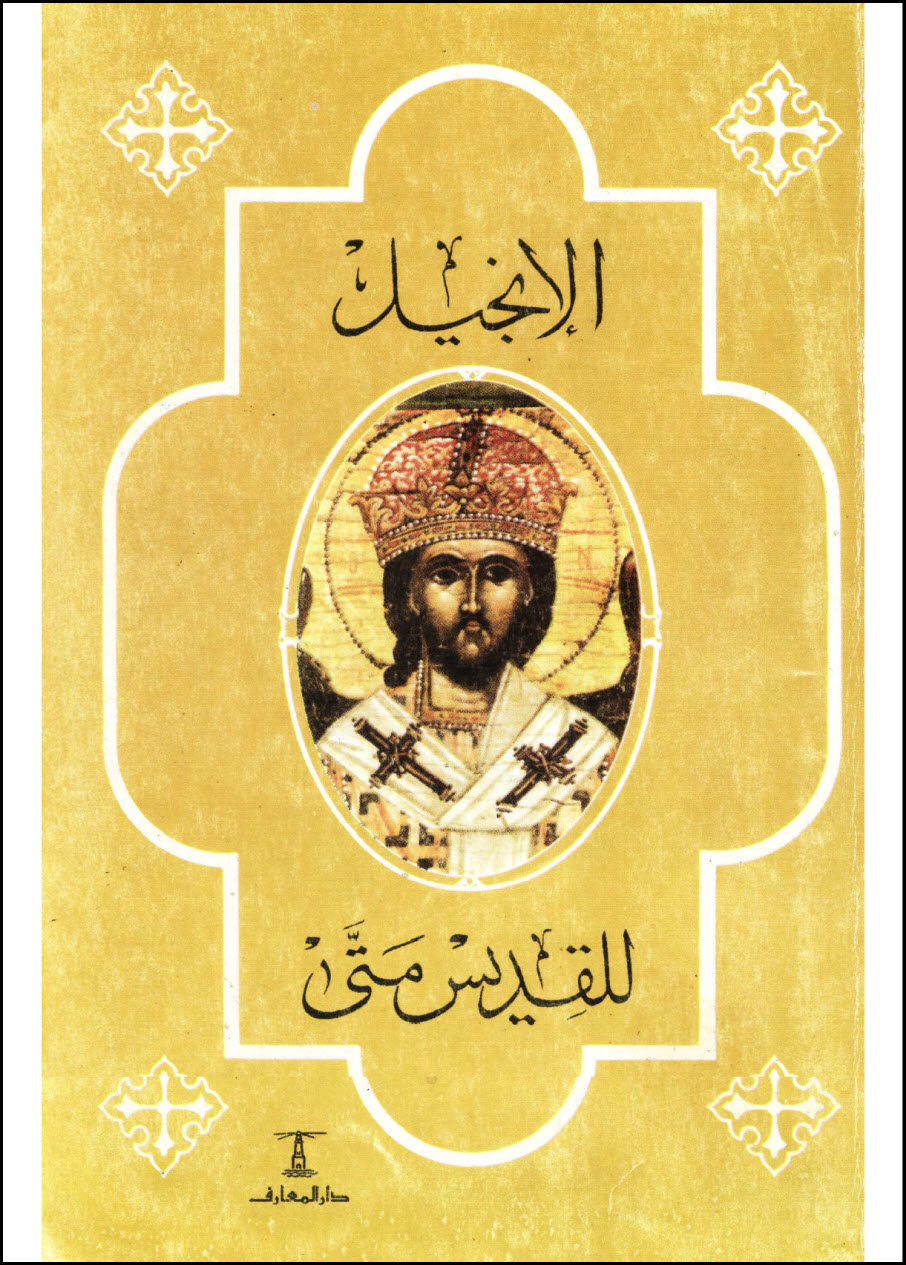
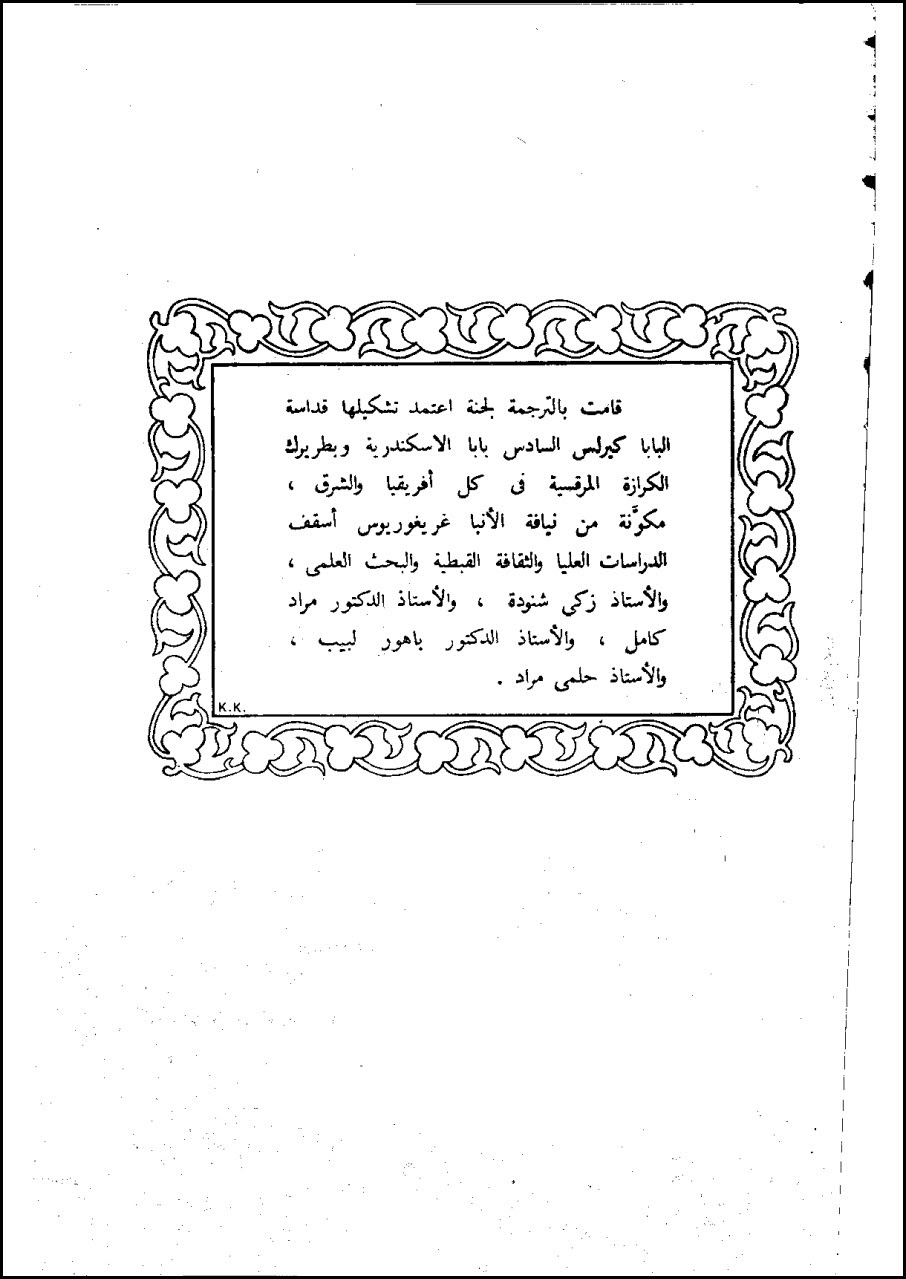
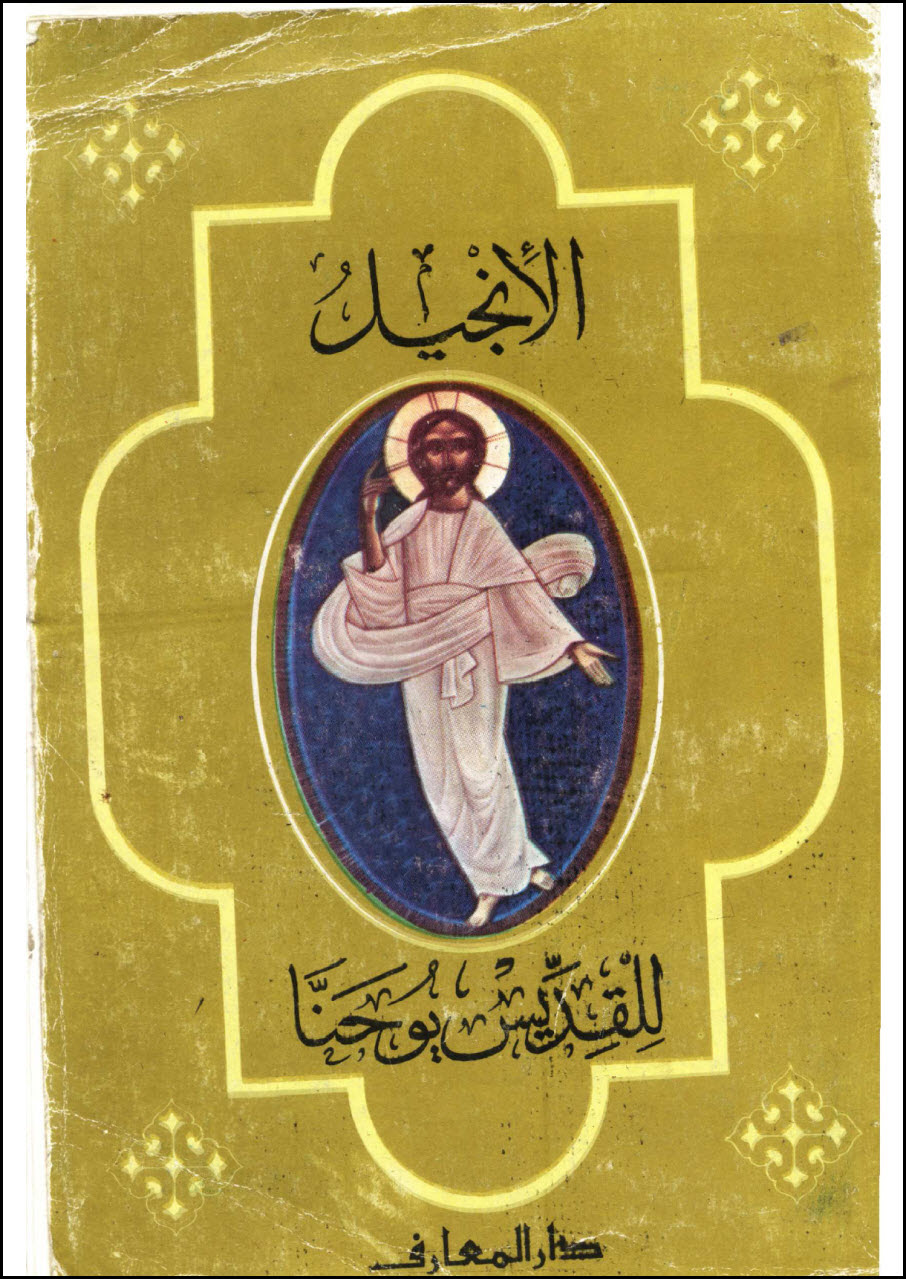
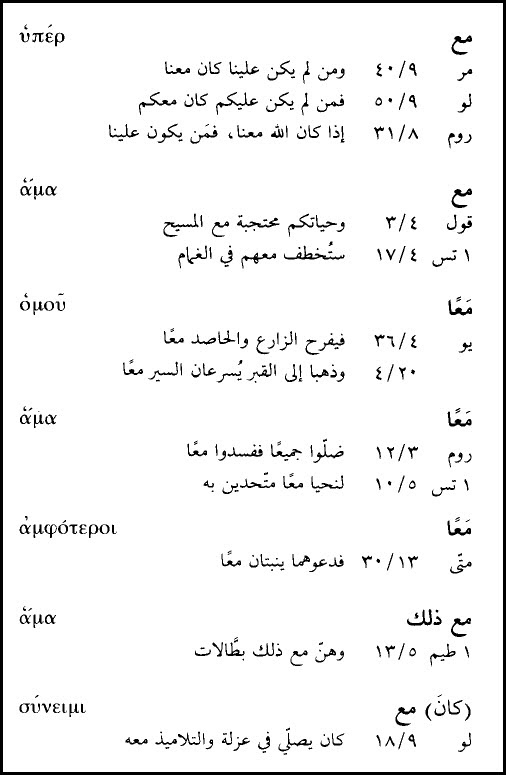
The following images show the official Arabic translation produced under Pope Kyrollos VI, the 116th Pope of the Coptic Orthodox Church of Alexandria, in which the Greek conjunction καὶ is rendered as “with” in the Arabic text of John 17:3.
The first image shows the opening pages of the Kyrollos VI Arabic Bible at the relevant passage, where the distorted rendering first appears.
The following image shows a second section or page of the same Kyrollos VI translation, confirming the same rendering in the surrounding textual context.
Now here is the actual text — the standard Arabic reference text against which the Kyrollos VI rendering is to be compared.
The following image provides an additional Arabic reference text for further comparison.
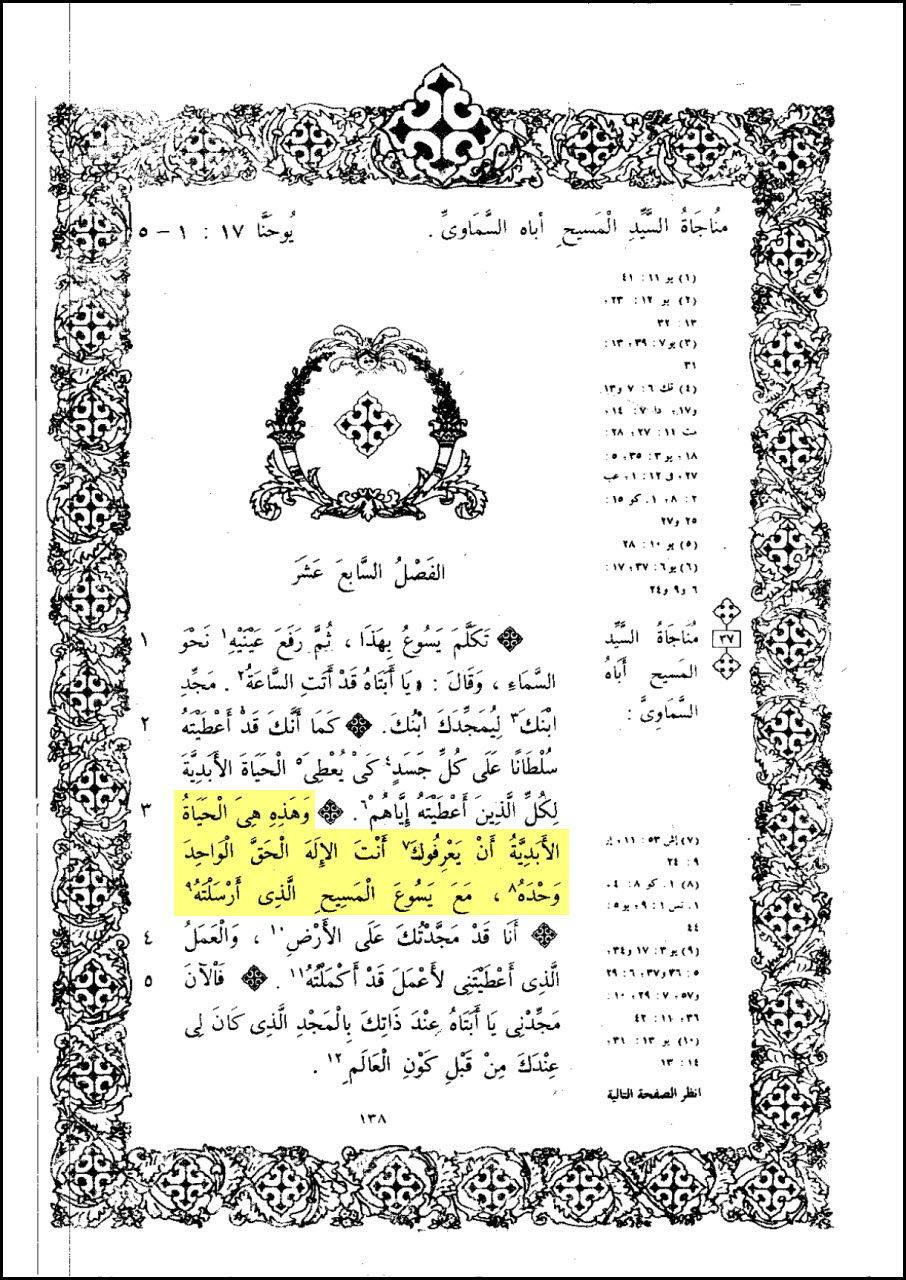
Look carefully at these images. You will realize without further explanation how grave the distortion is.
Arabic Translations of John 17:3
Not a single Arabic translation circulating in the Middle East renders the Greek word καὶ as “with.” The following are all the well-known Arabic translations:
- Jesuit Fathers: And eternal life is that they may know you, the only true God, and know him whom you have sent, Jesus Christ.
- Holy Bible: And eternal life is that they may know you, the only true God, and know Jesus Christ whom you have sent.
- Simplified Arabic: And eternal life is that they may know you, the only true God, and know Jesus Christ whom you have sent.
- Common Arabic: And eternal life is that they may know you, the only true God, and know Jesus Christ whom you have sent.
- Al-Fandyk: And this is eternal life, that they may know you, the only true God, and Jesus Christ whom you have sent.
- Life Translation: And eternal life is that they may know you, the only true God, and him whom you have sent, Jesus Christ.
- Pauline: And eternal life is that they may know you, the only true God, and him whom you have sent, Jesus Christ.
- Dominican Fathers: And this is eternal life, that they may know you, the only true God, and Jesus Christ whom you have sent.
The first four of these translations repeat the verb “know” twice — once for the Father and once for Christ — even though it appears only once in the Greek text. They do this so that the reader who does not know Greek understands the correct meaning of the text: the verse separates knowing God from knowing the messenger. This deliberate clarifying addition stands in sharp contrast to what Pope Kyrollos VI did — which was not to clarify but to distort. Replacing “and” with “with” is a crime against every Christian who has trusted the honesty of the committee in charge of the translation. This crime consists precisely in translating the famous Greek word (καὶ) as “with.” This word does not mean “with” at all. Those with the least knowledge of the Greek language know that the word (καὶ) is a conjunction. This is in addition to all the English translations, as we now demonstrate.
English Translations of John 17:3
The same pattern holds across every ancient and modern English translation of John 17:3, without a single exception. The following are all the major universal English translations, ancient and modern:
- ASV: And this is life eternal, that they should know thee the only true God, and him whom thou didst send, even Jesus Christ.
- BBE: And this is eternal life: to have knowledge of you, the only true God, and of him whom you have sent, even Jesus Christ.
- CJB: And eternal life is this: to know you, the one true God, and him whom you sent, Yeshua the Messiah.
- CSB: This is eternal life: that they may know You, the only true God, and the One You have sent — Jesus Christ.
- DBY: And this is the eternal life, that they should know thee, the only true God, and Jesus Christ whom thou hast sent.
- DRA: Now this is eternal life: That they may know thee, the only true God, and Jesus Christ, whom thou hast sent.
- ERV: And this is life eternal, that they should know thee the only true God, and him whom thou didst send, even Jesus Christ.
- ESV: And this is eternal life, that they know you the only true God, and Jesus Christ whom you have sent.
- GNV: And this is life eternall, that they knowe thee to be the onely very God, and whom thou hast sent, Iesus Christ.
- GWN: This is eternal life: to know you, the only true God, and Jesus Christ, whom you sent.
- KJG: And this is life eternal, that they might know thee the only true God, and Jesus Christ, whom thou hast sent.
- KJV: And this is life eternal, that they might know thee the only true God, and Jesus Christ, whom thou hast sent.
- MRD: And this is life eternal, that they may know thee, that thou art the only true God, and whom thou hast sent, Jesus Messiah.
- NAB: Now this is eternal life, that they should know you, the only true God, and the one whom you sent, Jesus Christ.
- NAS: And this is eternal life, that they may know Thee, the only true God, and Jesus Christ whom Thou hast sent.
- NAU: This is eternal life, that they may know You, the only true God, and Jesus Christ whom You have sent.
- NET: Now this is eternal life — that they know you, the only true God, and Jesus Christ, whom you sent.
- NIB: Now this is eternal life: that they may know you, the only true God, and Jesus Christ, whom you have sent.
- NIV: Now this is eternal life: that they may know you, the only true God, and Jesus Christ, whom you have sent.
- NJB: And eternal life is this: to know you, the only true God, and Jesus Christ whom you have sent.
- NKJ: And this is eternal life, that they may know You, the only true God, and Jesus Christ whom You have sent.
- NLT: And this is the way to have eternal life — to know you, the only true God, and Jesus Christ, the one you sent to earth.
- NRS: And this is eternal life, that they may know you, the only true God, and Jesus Christ whom you have sent.
- PNT: This is lyfe eternall, that they myght knowe thee, the only true God, and Iesus Christe whom thou hast sent.
- RSV: And this is eternal life, that they know thee the only true God, and Jesus Christ whom thou hast sent.
- RWB: And this is life eternal, that they may know thee the only true God, and Jesus Christ, whom thou hast sent.
- TNT: This is lyfe eternall that they myght knowe the that only very God and whom thou hast sent Iesus Christ.
- WEB: And this is life eternal, that they may know thee the only true God, and Jesus Christ whom thou hast sent.
- YLT: and this is the life age-during, that they may know Thee, the only true God, and him whom Thou didst send — Jesus Christ;
Not one of these twenty-nine English translations — spanning from the earliest printed English Bibles to the most recent critical editions — renders the Greek καὶ as “with.” Every single one uses “and.” This unanimity across centuries, confessions, and critical methods is itself a demonstration that what the Kyrollos VI translation did is not a translation at all, but a theological intervention that has no precedent in the history of the verse.
The Greek Text — καὶ Never Means “With”
Καὶ is one of the most elementary words in the Greek language. It is a coordinating conjunction — the equivalent of “and” in English, “و” in Arabic, and “et” in Latin. It joins two grammatically equal elements. It does not mean “with,” “together with,” or “alongside.” No Greek lexicon, no Greek grammar, and no Greek translator across any language or any century has ever rendered καὶ as “with.” Look at the following image of the Greek text of John 17:3 from a critical edition of the New Testament and find the word (καὶ):
Of course you will not find that the word (καὶ) ever means “with.” This is from the Greek language itself, and it is confirmed by the Arabic and English translations cited above. The purpose of changing (καὶ / “and”) to (“with”) is clear to the eye: it is to transform the strongest evidence denying the divinity of Christ into evidence purporting to prove that alleged divinity, by suggesting that Christ shares in the divinity with the Father.
Coptic Translations of John 17:3
The Coptic translations of John 17:3 — the very liturgical language of the church that ((Pope Kyrollos VI)) led — also render the conjunction as “and,” not “with.” As for the Coptic language, here are its translations.
The following image shows the Upper Egyptian Coptic version of John 17:3:

The Upper Egyptian Coptic text translates as follows:
3 But this is the life for ever, that they should know thee the true God alone, and him whom thou sentest, Jesus the Christ.
The following image shows a second Coptic version of John 17:3:

The translation of this second Coptic version reads:
3 And this is eternal life, that they may know thee the one true God alone, and him whom thou sentest, Jesus Christ.
Translation: And this is eternal life, that they may know thee the one true God alone, and him whom thou sentest, Jesus Christ.
Both the Upper Egyptian and the Bohairic Coptic renderings of John 17:3 — from the native liturgical tradition of the very church whose Pope distorted the Arabic — use “and,” not “with.” There is also a wonderful translation by Father Shenouda Maher Ishaq: “And this is eternal life, that they may know thee the one true God alone, and Jesus Christ whom thou sentest.” He, too, uses “and.” The translation that reads “the one true God alone with Jesus Christ” will be found in one place only: the translation of Pope Kyrollos VI.
The Aramaic Peshitta
The Peshitta, the ancient Aramaic Bible used by Syriac-speaking Christians from the early centuries of the Church, likewise renders John 17:3 without any suggestion that Christ shares in the Father’s exclusive divinity as the only true God. The following image shows the Aramaic Peshitta text of the verse:
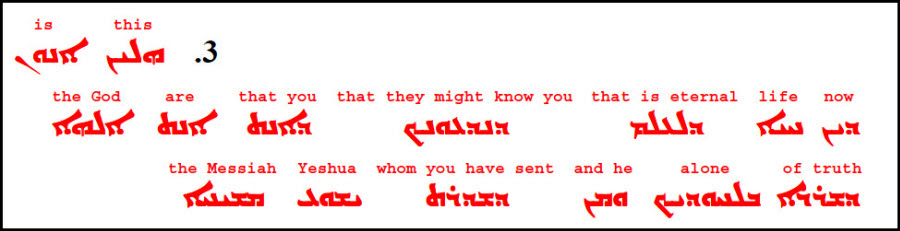
The Peshitta rendering of the verse, like every other version across every language, uses the conjunction “and” to connect the clause about the Father as the only true God with the clause about Jesus Christ as the one sent by him. Where is the translation that says “the one true God alone with Jesus Christ”? You will find it in one place only: the translation of Pope Kyrollos VI.
A Catholic Admission on Biblical Manuscript Corruption
Lest it be thought that concerns about intentional alteration of biblical texts belong only to Muslim polemicists, the following admission comes from the official NewAdvent Catholic Encyclopedia itself.
The translation of the above passage is as follows: No book from ancient times has reached us completely intact as written by its authors. All of them have been distorted in some way. What explains well the differences in the manuscripts of the same book is the circumstances that accompanied the copying and dissemination of books before the age of printing (1440), in terms of the lack of care of the copyists and correctors. In addition to these reasons, we can also add — for the Bible in particular — interpretive and doctrinal differences. In order to exempt the Holy Books from these circumstances, it would have been necessary for divine providence to be present to preserve them, but it was not God’s will to exercise this providence in transmitting these books. As there are more than 150,000 differences between the ancient manuscripts of the New Testament, this proves that the Bible is not the only or principal means of revelation.
Conclusion
The evidence against this rendering is unanimous across every tradition:
Eight Arabic translations in the Middle East — the Jesuit Fathers, the Holy Bible, the Simplified Arabic, the Common Arabic, the Al-Fandyk, the Life Translation, the Pauline, and the Dominican Fathers — all render καὶ as “and.”
Twenty-nine English translations spanning from the first printed English Bibles to contemporary critical editions — ASV, BBE, CJB, CSB, DBY, DRA, ERV, ESV, GNV, GWN, KJG, KJV, MRD, NAB, NAS, NAU, NET, NIB, NIV, NJB, NKJ, NLT, NRS, PNT, RSV, RWB, TNT, WEB, and YLT — all render καὶ as “and.”
Three Coptic versions — the Upper Egyptian, the Bohairic, and the translation of Father Shenouda Maher Ishaq, from the very tradition over which Kyrollos VI presided — render the conjunction as “and.”
The Aramaic Peshitta renders it as “and.”
The Greek text itself uses the elementary conjunction καὶ, a word that has never meant “with” in any Greek grammar, any Greek lexicon, or any translation in the history of the language.
The Kyrollos VI rendering stands alone in the entire history of John 17:3. And the NewAdvent Catholic Encyclopedia itself concedes that more than 150,000 variant readings exist in the New Testament manuscripts, produced by copyists, correctors, and those motivated by doctrinal controversies — of which this rendering is a documented modern example.