John 5:3–4 and the Angel at Bethesda: Missing from the Oldest Bible Manuscripts
John 5:3–4 and the Angel at Bethesda: Missing from the Oldest Bible Manuscripts
Table of Contents
- Introduction
- Pope Shenouda’s Claim
- The Text of John 5:3-4
- The Manuscript Evidence
- Papyrus 66
- Papyrus 75
- The Sinaiticus Manuscript
- The Vatican Manuscript
- Arabic Translation Witnesses
- Joint Arabic Translation
- Jesuit Fathers Translation
- Why Was This Story Added?
- Conclusion
- References
Introduction
(The infallibility of the Bible)
For example, Pope Shenouda says dangerous words that we will present (1)
Pope Shenouda’s Claim
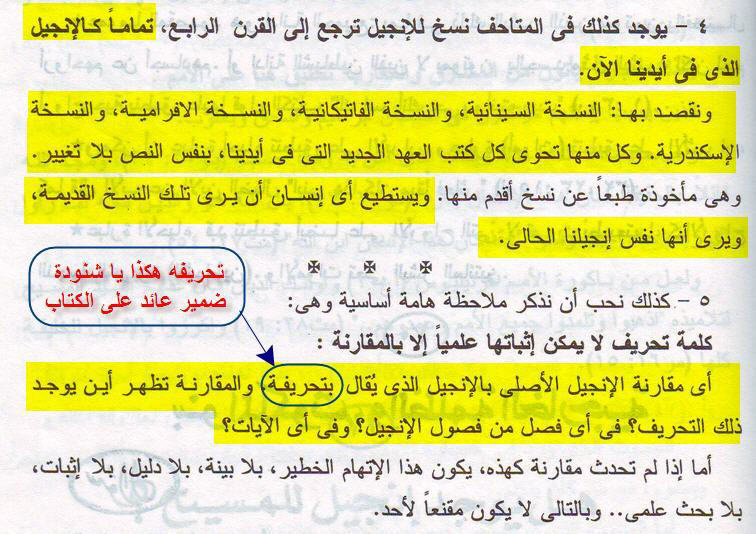
The lower highlighted section shows him asking where the alleged corruption is: in which Gospel chapter and in which verses? The scan is being used here to show the exact claim being challenged: that the ancient manuscripts are supposedly identical to the current Bible text.
Pope Shenouda says that the copies (manuscripts) that date back to the fourth century, namely the Sinaiticus, the Vaticanus, and others, are exactly like the Bible that we have in our hands now…!!
And from it
The Text of John 5:3-4
(In this lay a great multitude of sick people, blind, lame, paralyzed, waiting for the moving of the water, for an angel went down at a certain time into the pool and stirred up the water. And whoever stepped in first after the stirring of the water was made well of whatever disease he had.)
Does the Pope know what he is saying? Or has he never seen a manuscript before and is quoting from ordinary Christians and writing?!
The Manuscript Evidence
- Papyrus 66 (p66) dates back to the second century, or as Father Basit says, 125 AD.
- Papyrus 75 (p75) dates back to the third century.
- The Sinaiticus manuscript dates back to the fourth century.
- The Vatican manuscript dates back to the fourth century.
We will start with Papyrus 66.
Papyrus 66
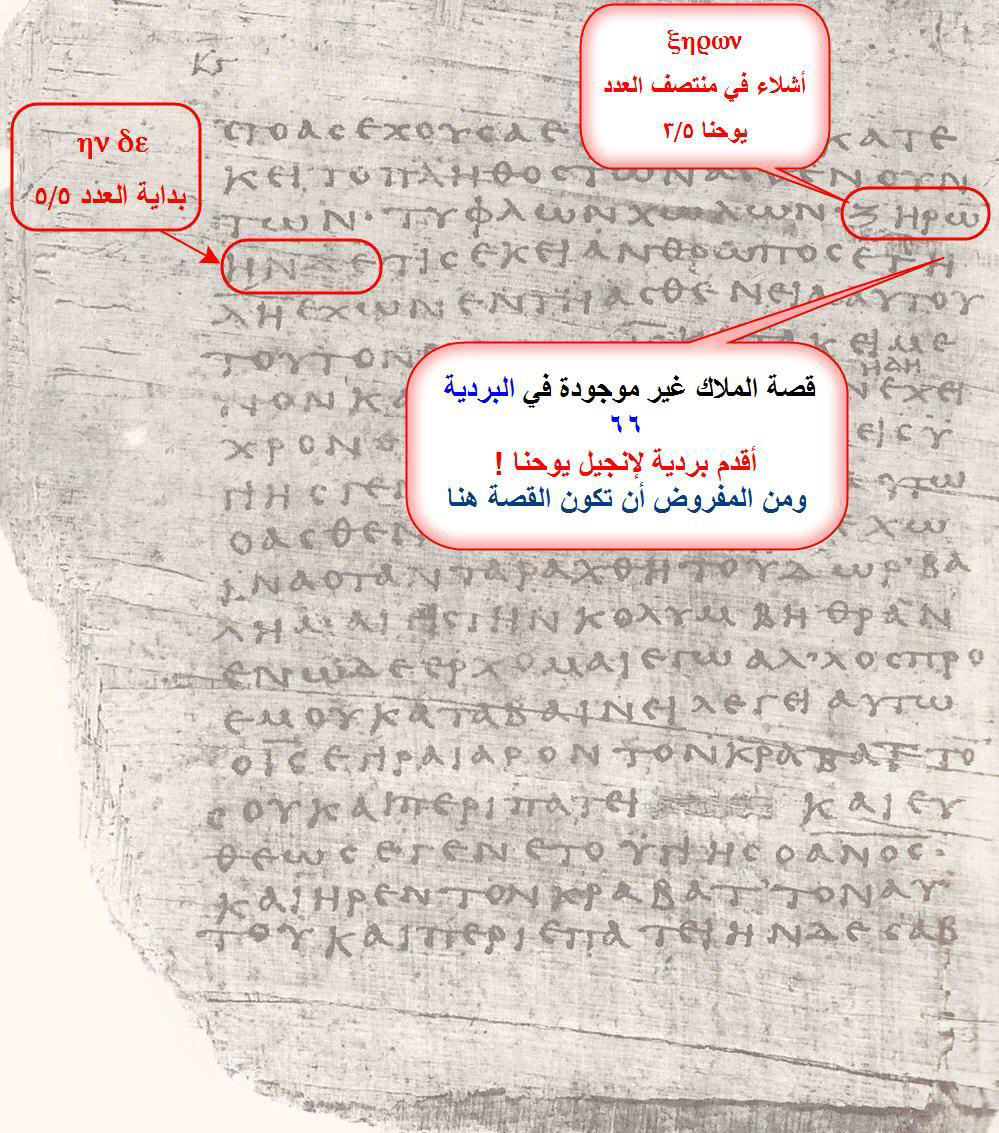
The note on the scan says that the story of the angel is not present in Papyrus 66, which is presented here as the oldest papyrus of the Gospel of John, and that this is exactly where the story would be expected to appear if it belonged to the text.
Papyrus 75
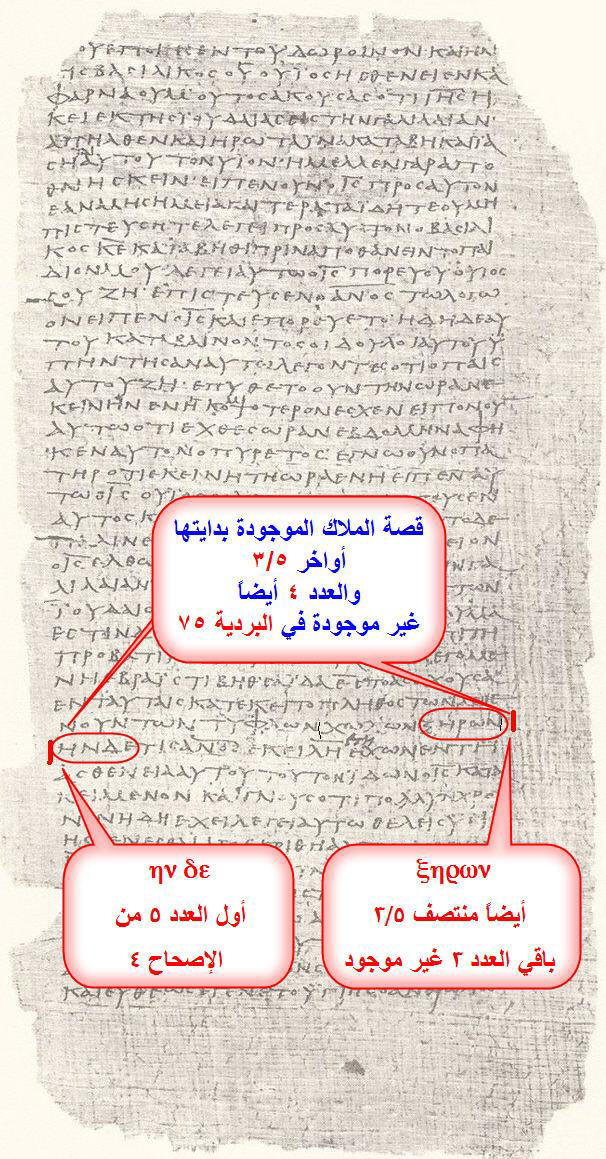
The scan specifically states that the angel story, which appears at the end of John 5:3 and throughout John 5:4 in later texts, is also absent from Papyrus 75. The point being made is that another very ancient manuscript of John does not contain the disputed addition.
The Sinaiticus Manuscript
the Sinaiticus manuscript
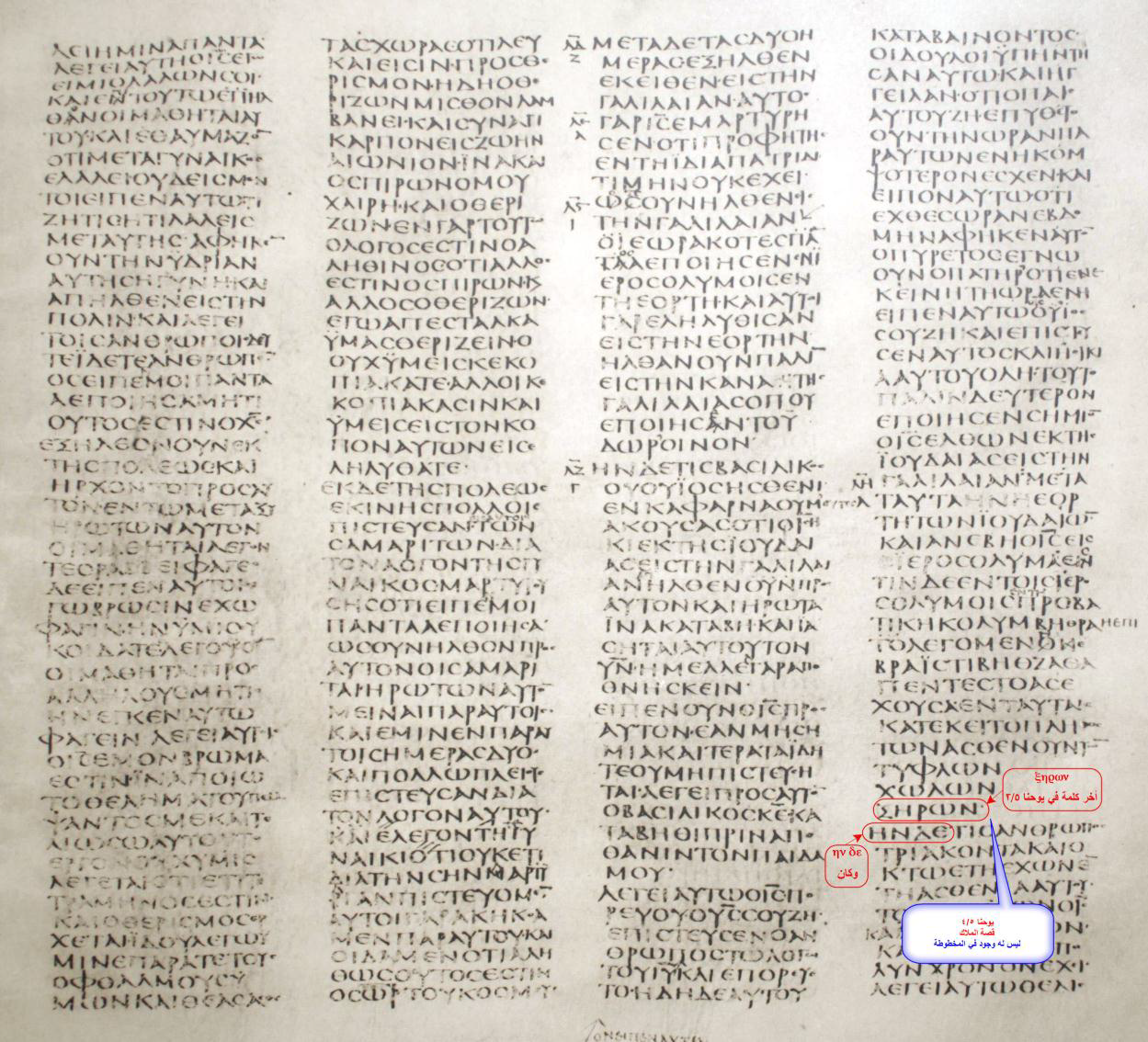
The scan indicates that the story of the angel is not found in this manuscript. This directly challenges the claim that the Sinaiticus manuscript is exactly like the current Bible text, because the current longer reading includes the angel story while Sinaiticus does not.
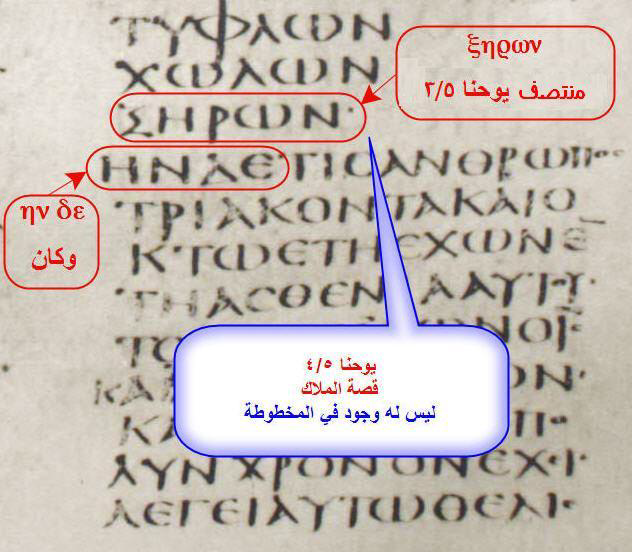
The close-up is meant to remove ambiguity: the manuscript does not merely have a damaged or unclear reading in this location; the transition in the text shows that the angel passage is absent.
The Vatican Manuscript
of the Vatican manuscript
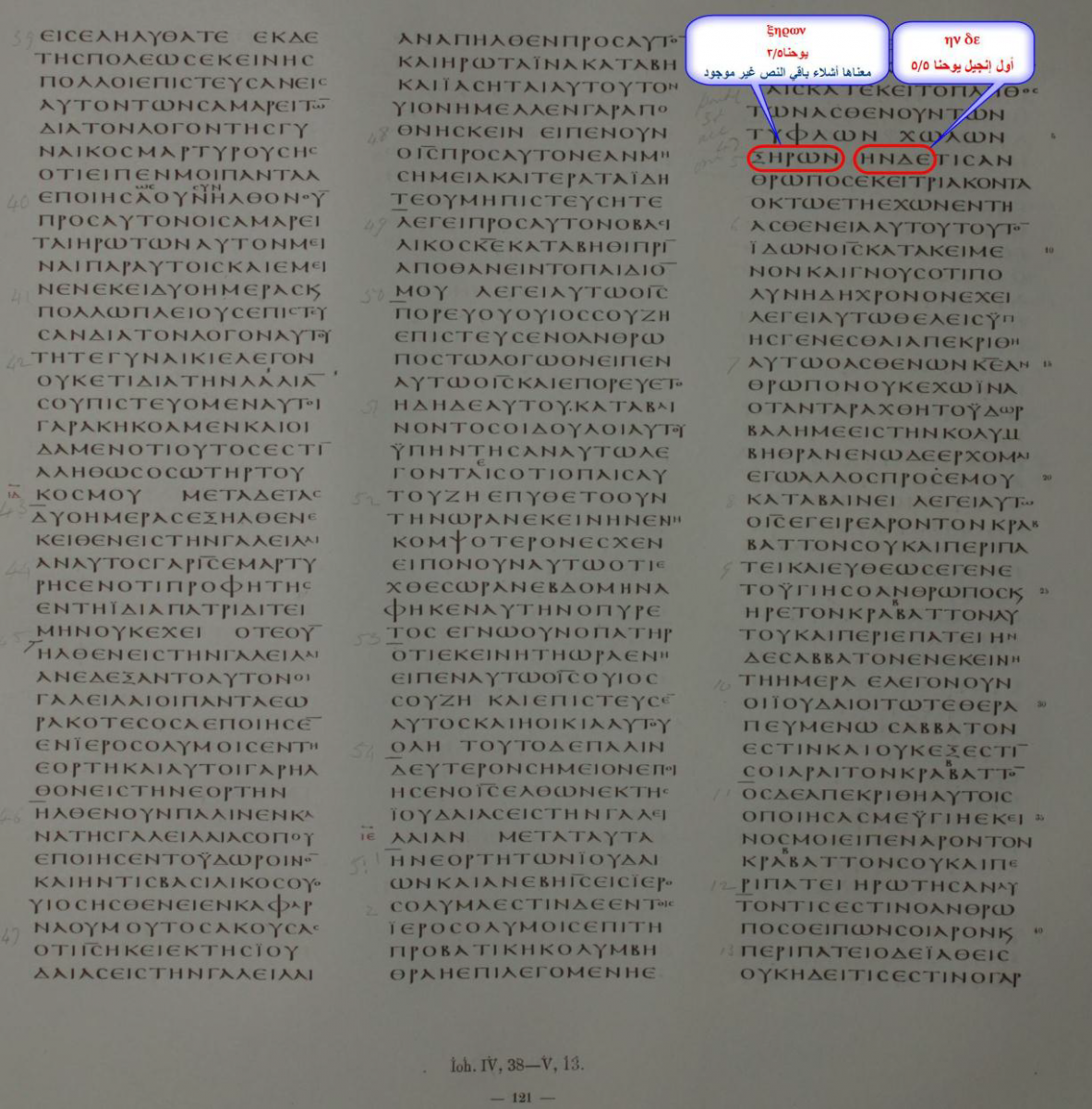
The note says that the story of the angel and the rest of the disputed text are not present. This is important because Pope Shenouda specifically referenced the Vatican manuscript as one of the ancient witnesses supposedly matching the current Bible text, while this scan shows that the angel passage is absent from it.
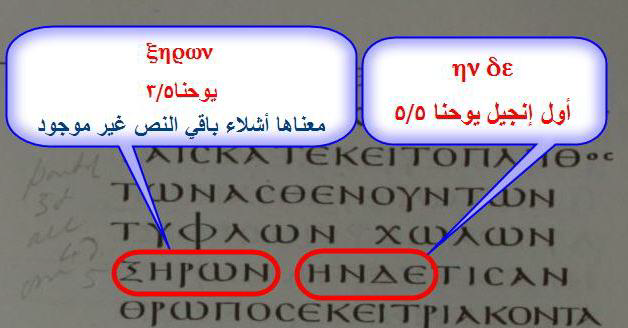
The scan is used as a focused visual proof that the Vatican manuscript skips the disputed John 5:3-4 material, moving from the surrounding text without including the angel descending and stirring the water.
Arabic Translation Witnesses
This was also witnessed by some Arabic translations, such as the translation of the Jesuit Fathers and the joint Arabic translation in the margin of this text. I wish Pope Shenouda would open these translations and read what is in them so that he does not say what he does not know.
Joint Arabic Translation
Here is a comment on the joint Arabic translation in which Bishop Gregorius participated(2)
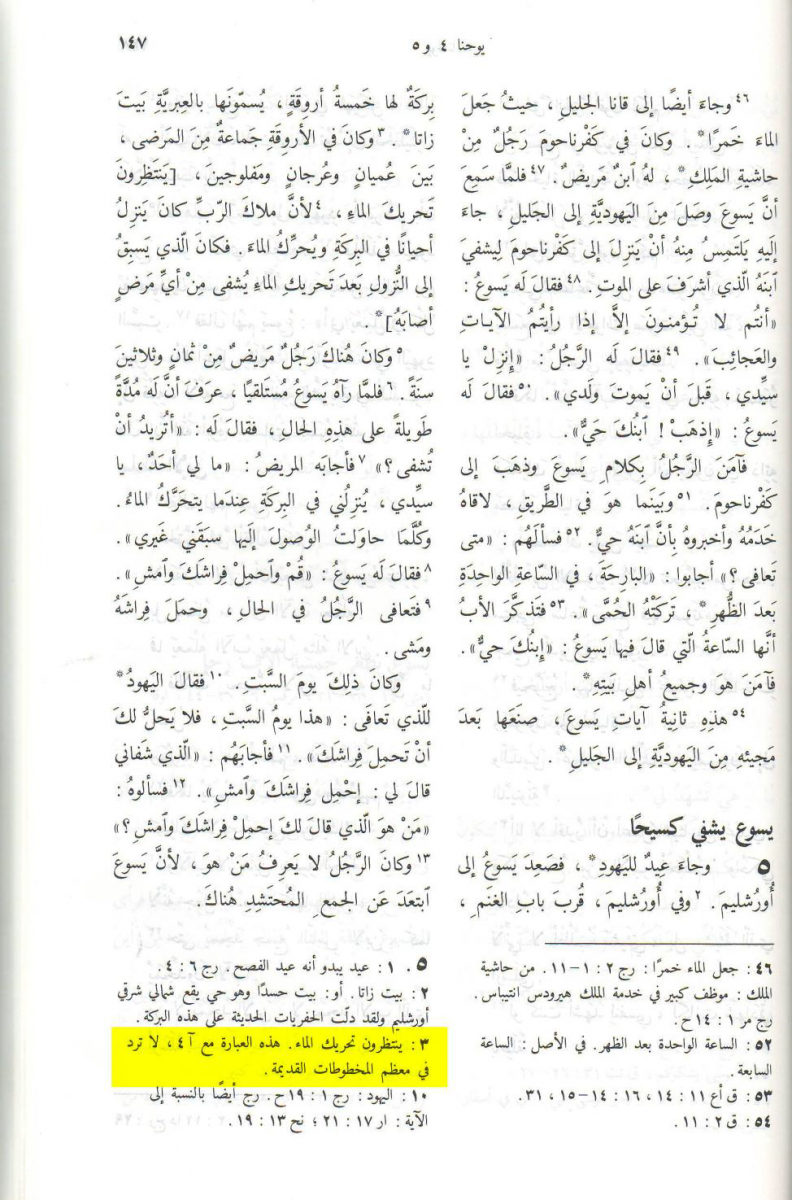
The importance of this scan is that it is not only Muslim polemics making the point; an Arabic Christian translation itself acknowledges in its margin that this disputed phrase and verse are absent from most ancient manuscript witnesses.
Does Pope Shenouda not know?!!
Jesuit Fathers Translation
knowing that they completely deleted the text from the translation!!
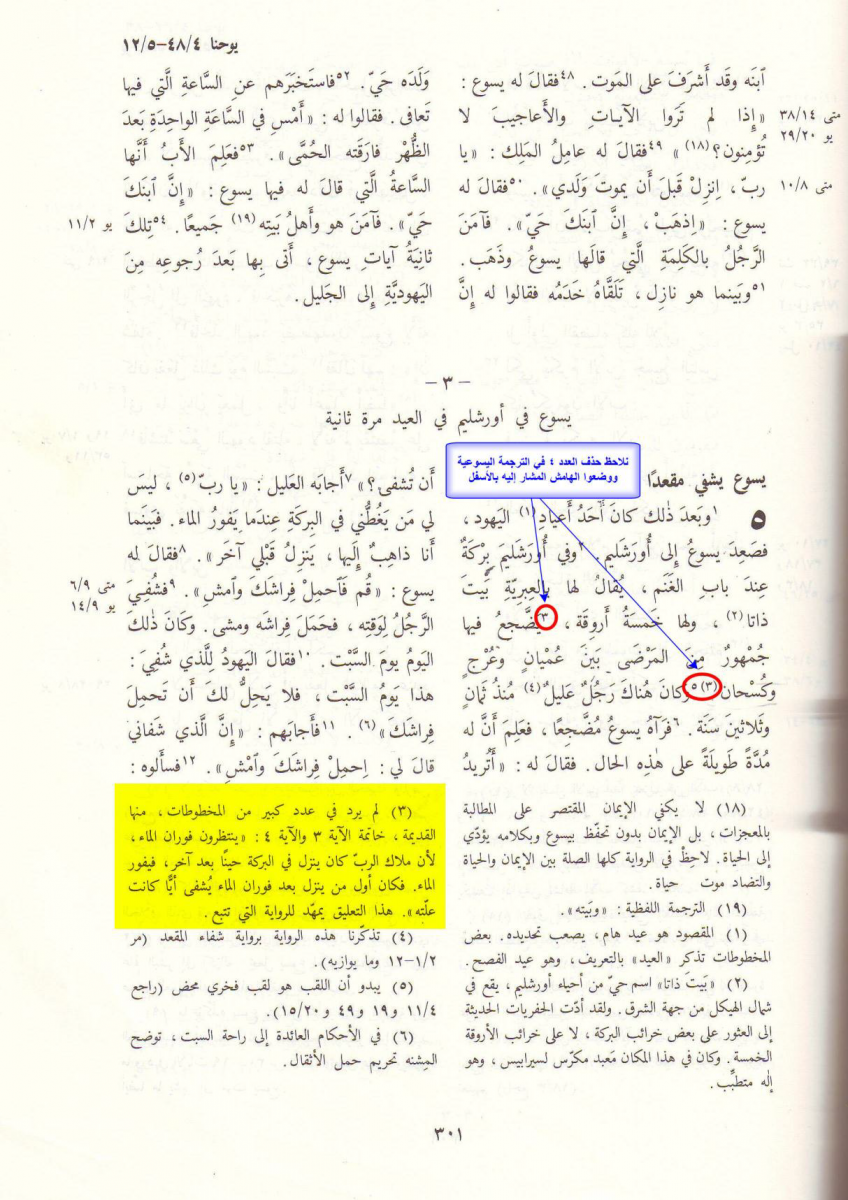
The scan also notes that this text appears foreign to John’s style and method. This supports the claim that the passage was not part of the original Johannine text but a later explanatory addition that entered some manuscript traditions.
The text is not found in any ancient manuscript dating back to before the fifth century.
Why Was This Story Added?
But someone might wonder why this story was added?
emphasizing the importance of the text.
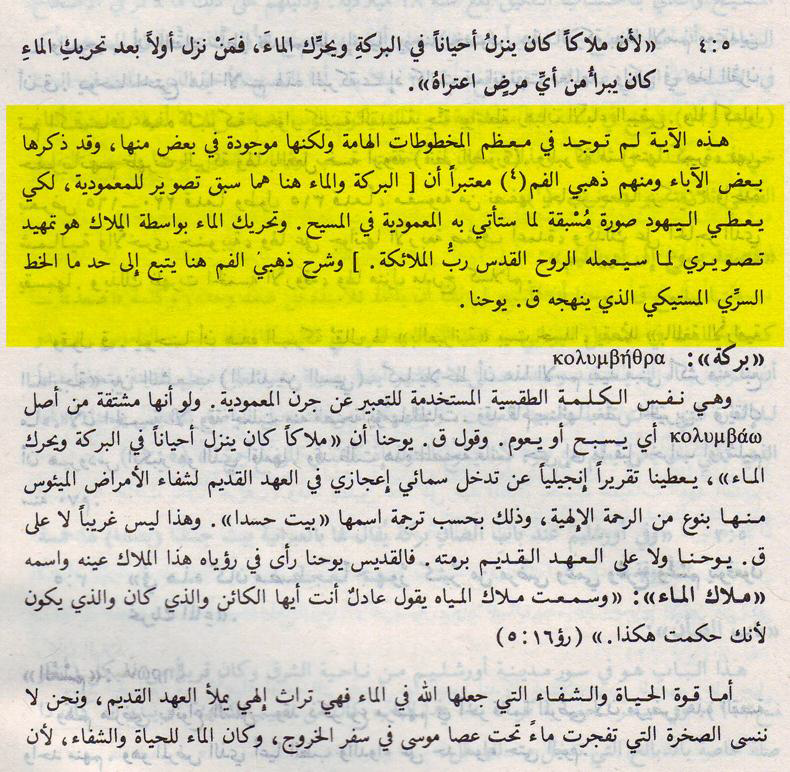
The highlighted section also says that the stirring of the water by the angel was understood as a symbolic preparation for what the Holy Spirit, the Lord of the angels, would later do. The scan is therefore used to argue that the passage had theological usefulness: it could be interpreted as a baptismal foreshadowing, which explains why such a story may have been attractive to later Christian transmission.
Thus this piece was added as a prelude to the Jews being baptized in advance, as Father Matthew the Poor explains.
Meaning that the addition came so that they could make it a prophecy that was for the Jews, but they did not believe.!!
Conclusion
And our final supplication is that all praise is due to God, Lord of the Worlds.
References
(2) The Holy Bible - Joint Arabic Translation - Page 147.
(3) Translation of the Jesuit Fathers - Page 301.
(4) The Gospel According to Saint John - Study, Interpretation and Explanation - Father Matta El Meskeen - Page 328.