

Melchizedek and Jesus: Applying Christian Standards of Divinity to a Biblical Figure
We often read the justifications of Christians in deducing the divinity of Christ due to the absence of a statement from Christ that removes all doubt with certainty regarding his divinity. They make deductions the only way to extract the divinity of Christ. On this page, we will take their criteria for those deductions and apply them to a very strange character in the Holy Bible.
A character about whom the Encyclopedia of the Bible, Volume Seven, Page 222, says the following:
“Melchizedek is an obscure biblical figure, and his name means: ‘King of Righteousness’ and also ‘King of Peace’ (Hebrews 7:2). Melchizedek is mentioned several times in the Bible (Gen. 14:18–20, Ps. 110:4, Hebrews 5:10, 6:20, 7:1–17)…”
Yes — he is a mysterious figure. On this page we will put the points that Christians rely on to conclude the divinity of Jesus and apply them to Melchizedek, to see the extent of the confusion in the sea of conclusions — particularly in light of the ongoing discoveries of the manuscripts of the Holy Book, which most Christians do not see, but only mention their discovery without issuing any study on them.
Among the latest discoveries we find the Qumran manuscripts — these manuscripts that Christians have always been troubling us with, claiming without knowledge or scrutiny that they completely agree with the Holy Book in both Testaments. Words of faith that they repeat after hearing them from their fathers, believing them without investigating the matter. Among the manuscripts discovered in Qumran, we focus in our topic here on the manuscript of the Book of Enoch, through the book: Qumran Manuscripts — the Dead Sea Torah (intertestamental writings) — the Apocryphal Torah:
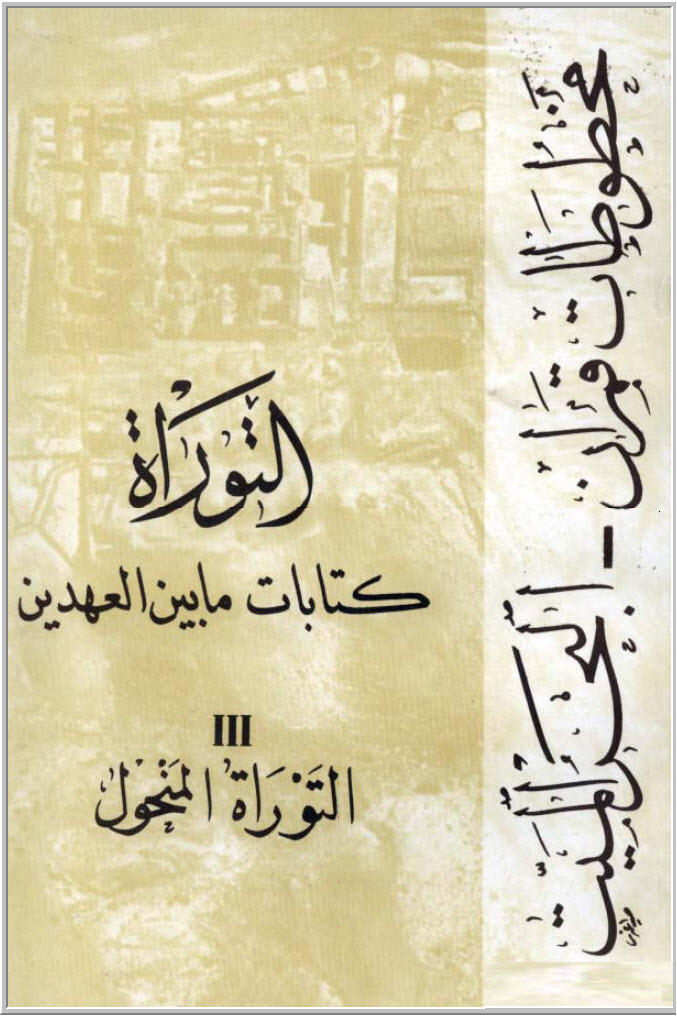
It will be necessary to rely on this study as well as other references throughout.
Point 1: The Unique Birth
Jesus
Pope Shenouda III says in the book Theology of Christ, page 111:
[!scholar] Pope Shenouda III — Theology of Christ, p. 111
“And let us not forget that the life of Christ himself was a miracle that was unique to him: in terms of his birth from a virgin (Isaiah 7:14), a unique matter in the history of the entire world, as it did not happen before or after him.”
“Now the birth of Jesus Christ was on this basis: When his mother Mary had been espoused to Joseph, before they came together, she was found to be with child of the Holy Spirit.”
Melchizedek
From the aforementioned book, Part Three, Pages 165–167, under the title: The Miraculous Birth of Melchizedek:
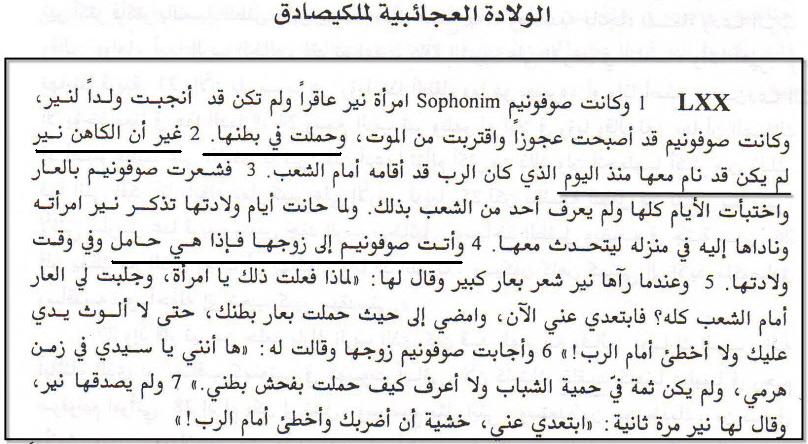
Summary of the correspondence:
- Jesus: Joseph the carpenter did not consummate the marriage with Mary
- Melchizedek: Ner did not have intercourse with Sophonim
As a result of the similarity of some descriptions of Jesus — which Christians considered strong evidence of his divinity — with the descriptions of the priest Melchizedek, many Christians have claimed that Jesus is Melchizedek himself. This claim has no evidence and is contradicted by Paul’s own statements in his letters about Melchizedek.
Point 2: The Angel’s Announcement of the Purity of the Newborn
Jesus
“But while he thought on these things, behold, an angel of the Lord appeared to him in a dream, saying, ‘Joseph, son of David, do not be afraid to take Mary as your wife; for that which is conceived in her is of the Holy Spirit.’”
Melchizedek
The same incident happened with Ner, the father of Melchizedek, as we read in the same previous source, page 165:
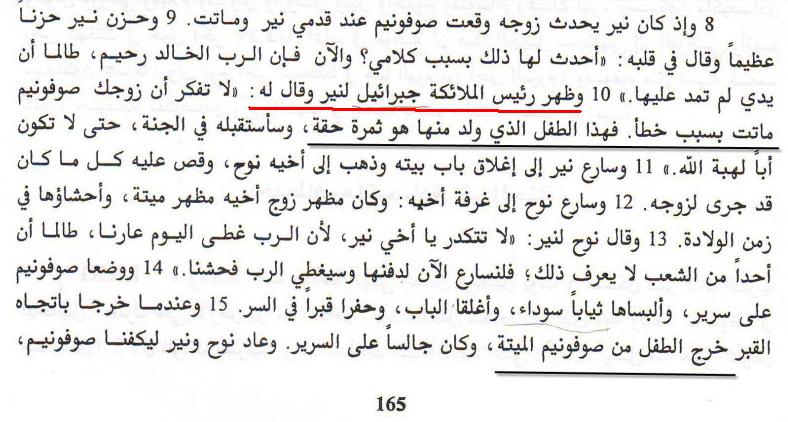
Summary of the correspondence:
- Jesus: The angel appeared to Joseph and told him that this was not the son of fornication
- Melchizedek: The angel appeared to Ner and told him that this was not the son of fornication
Point 3: Fleeing with the Newborn Child for Fear of Killing Him
Jesus
“And when they had departed, behold, an angel of the Lord appeared to Joseph in a dream, saying, Arise, and take the young child and his mother, and flee to Egypt, and remain there until I tell you; for Herod will seek the young child to destroy him.”
Melchizedek
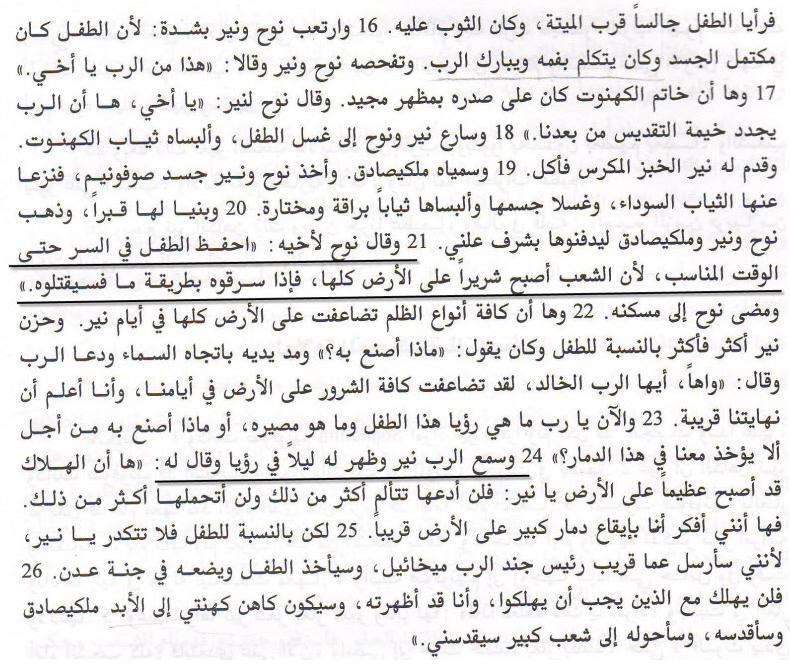
Summary of the correspondence:
- Jesus: Herod wanted to kill him
- Melchizedek: The people wanted to kill the child
Point 4: Creation from the Word of God
Jesus
“In the beginning was the Word, and the Word was with God, and the Word was God.”
Melchizedek
From the same previous book, page 166:
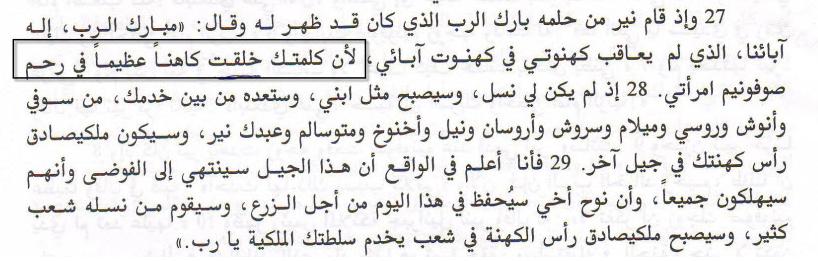
Summary of the correspondence:
- Jesus: created from the Word of God
- Melchizedek: created from the Word of God
Point 5: The Second Coming
Jesus
“For the Son of Man will come in the glory of his Father with his angels, and then he will reward each one according to his works.”
Melchizedek
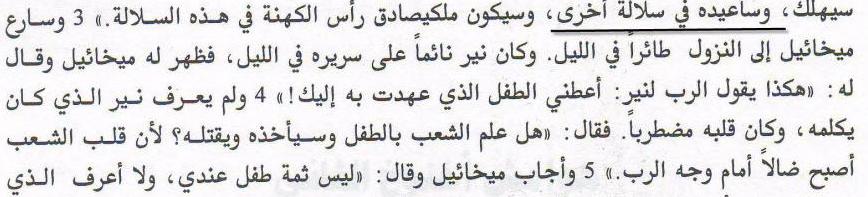
Summary of the correspondence:
- Jesus: He will come again to earth
- Melchizedek: He will come again as a high priest
Point 6: Ascension to Heaven
Jesus
“Jesus said to her, Do not touch me, for I have not yet ascended to my Father. But go to my brothers and say to them, I am ascending to my Father and your Father, to my God and your God.”
Melchizedek
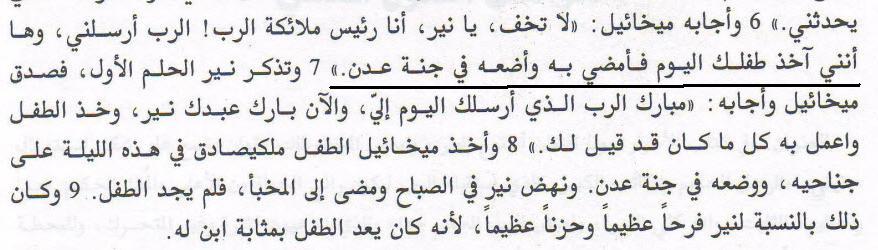
Summary of the correspondence:
- Jesus: ascends to the Father in heaven, after his death
- Melchizedek: ascends to the Garden of Eden alive without dying
Every single criterion that Christians use to deduce the divinity of Christ applies point for point to Melchizedek: miraculous birth without intercourse, angelic announcement of purity, flight from those seeking to kill the child, creation from the Word of God, a promised second coming, and ascension to the highest realm. The question that must be answered is: why then do Christians not take Melchizedek as a god according to the very same standards they applied to Jesus? If the methodology is sound, it must lead to the same conclusion for Melchizedek. If it does not, then the methodology itself is unsound — and the deduction of divinity from such criteria collapses entirely.