

Muhaysah Killing Ibn Sunaynah — Narration Is Weak. Islam and Jews
After we exposed Majid’s ignorance several times, he returns to his nonsense again, citing the narration: “Whoever you capture from among the Jewish men, kill him” — so Muhaysah bin Masoud jumped on Ibn Sunaynah, a man from among the Jewish merchants who used to associate with them and trade with them, and killed him. This post addresses that claim on two fronts: first, a counter from the objector’s own scripture; second, a full chain-of-transmission refutation demonstrating that this narration is not authentic.
The Objector’s Own Scripture Commands Wholesale Slaughter
Why do you object to the order to kill all the Jews? Your Lord commanded the killing of all living things, not just the Jews:
Refer to the Book of Joshua to see the atrocities your Lord commanded, you ignorant one. Oh, the mercy of your Lord, the God of love!
The Narration Is Not Authentic — Two Unknown Narrators in the Chain
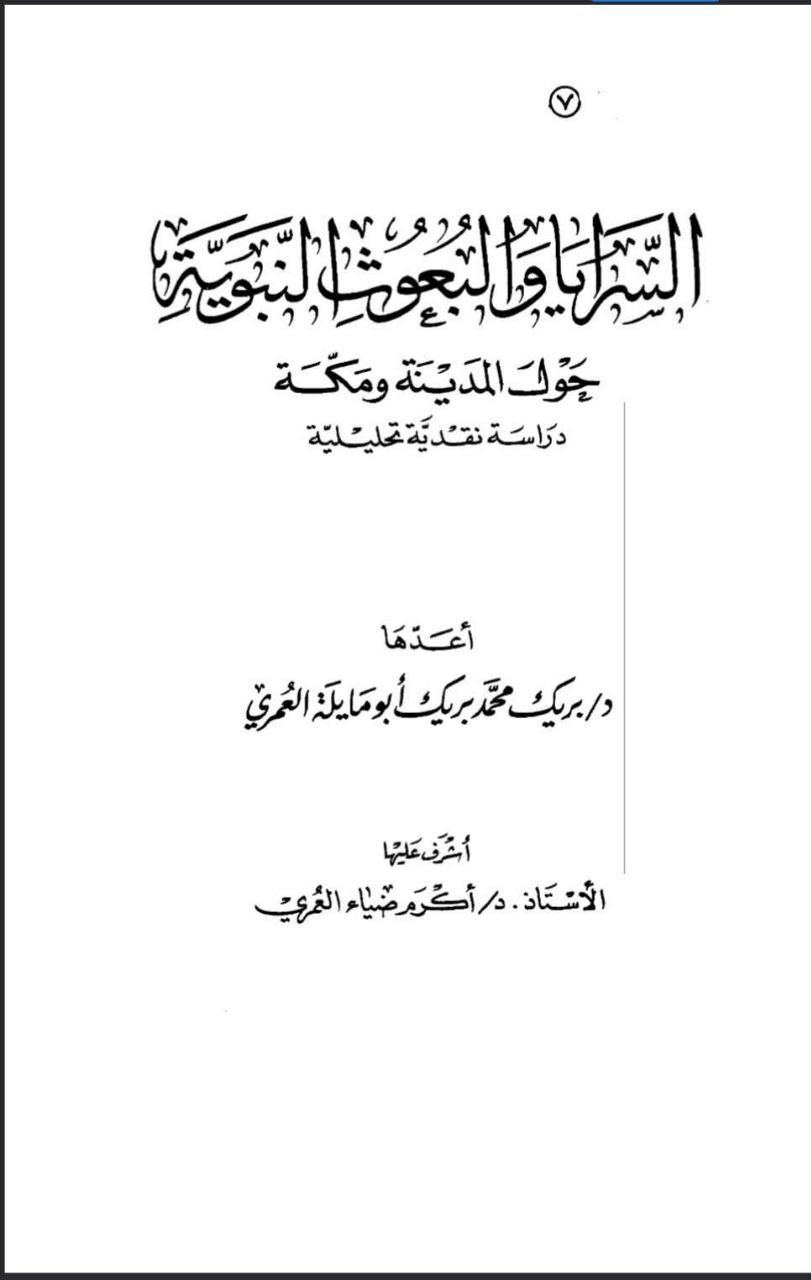
Secondly: This story is not authentic because it contains two unknown narrators. Dr. Brik Al-Omari said:
Additional Reasons the Narration Cannot Stand
This account, in addition to its weak chain of transmission, is contradicted by another account mentioned by Ibn Hisham regarding the reason for Huwaysah’s conversion, which is much later than the story of Ka’b ibn al-Ashraf. Furthermore, its weakness is compounded by its contradiction of a fundamental principle of Islamic law: the prohibition against a protected non-Muslim subject (!![dhimmi]!!) breaking his covenant or joining the ranks of the polytheists, as Ibn al-Ashraf did.
First: The narration is transmitted by Ibn Ishaq with a chain containing two unknown narrators, and by Al-Waqidi on the authority of his teachers — both chains are weak.
Second: The account is contradicted by a separate narration in Ibn Hisham regarding the actual reason for Huwaysah’s conversion to Islam, which is placed much later than the story of Ka’b ibn al-Ashraf.
Third: The narration contradicts a fundamental principle of Islamic law — the prohibition against a dhimmi breaking his covenant or joining the ranks of the polytheists, as Ibn al-Ashraf did. This internal legal contradiction further undermines the account’s credibility.
Fourth: Even if the account were authentic, it is possible that Ibn Sunaynah was like Ka’b ibn al-Ashraf in his hostility and treachery, and his ally Muhaysah, due to their proximity, was aware of this.
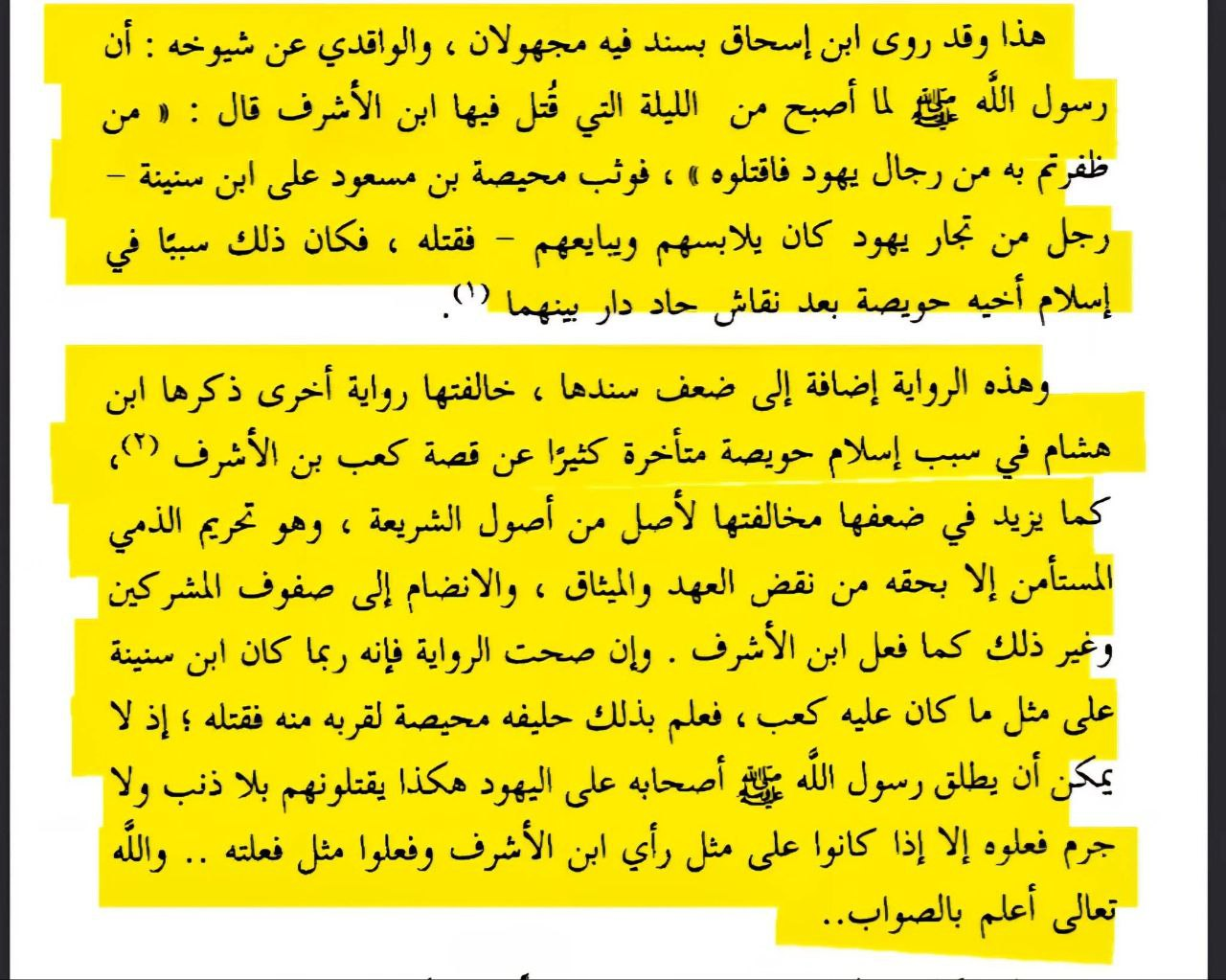
- The First Narration: Ibn Ishaq (via a chain containing two unknown narrators) and Al-Waqidi (from his teachers) report that on the morning Ka’b ibn al-Ashraf was killed, the Prophet ﷺ allegedly said: “Whoever you overpower among the Jewish men, kill him.” Following this, Muhayyisah ibn Mas’ud attacked and killed Ibn Sunaynah, a Jewish merchant with whom he had business and social ties. This incident led to the Islam of Muhayyisah’s brother, Huwayyisah, after a heated discussion between them.
- Critique of the Narration’s Authenticity:
- Weakness in Chain: The narration is inherently weak due to the gaps/unknown figures in its chain of transmission (Isnad).
- Historical Contradiction: It is contradicted by another narration mentioned by Ibn Hisham, which states that Huwayyisah embraced Islam much later than the events surrounding Ka’b ibn al-Ashraf.
- Critique of the Narration’s Text (Matn): > * Violation of Islamic Principles: The text fundamentally contradicts established principles of Islamic law (Sharia), which strictly forbid killing a non-Muslim living under a covenant (Dhimmi or Musta’man) unless they commit a crime that justifies it—such as breaking their treaty or joining the ranks of the enemy polytheists (as Ka’b ibn al-Ashraf did).
- Reconciliation if Proven: The text concludes that even if this narration were theoretically true, Ibn Sunaynah must have shared the same treasonous stance and actions as Ka’b, prompting his ally Muhayyisah to kill him for his treachery. It is impossible that the Prophet ﷺ would command his companions to kill Jewish people indiscriminately without a justifiable crime. And Allah knows best.