

Refutations

My Honor Was Violated" — Does the Hadith Mean the Prophet ﷺ Was Assaulted

6 min read 1278 words

“My Honor Was Violated” — Does the Hadith Mean the Prophet ﷺ Was Assaulted?


The Doubt

The Claim Critics cite the following narration and claim that the phrase “he violated my honor” means the Prophet ﷺ was sexually assaulted:

Ibn Ishaq said: Abu Sufyan ibn al-Harith ibn Abd al-Muttalib and Abdullah ibn Abi Umayyah ibn al-Mughira had also met the Messenger of Allah ﷺ at the neighing of the eagle between Mecca and Medina, and they sought to enter upon him. Umm Salamah spoke to him about them and said: O Messenger of Allah, they are your cousin, your paternal aunt, and your son-in-law. He said: I have no need of them. As for my cousin, he violated my honor, and as for my paternal aunt and my son-in-law, he is the one who said what he said about me in Mecca.

When the news of that reached them, and Abu Sufyan had a son with him, he said: By Allah, he will give me permission or I will take the hand of this son of his and we will go through the land until we die of thirst and hunger. When the Messenger of Allah ﷺ heard of that, he took pity on them, then he gave them permission, and they entered upon him and converted to Islam.


The Response

Point One — Consider the Source

Contextualising the Critics We excuse those who were raised on the morals of what they call their holy book — a scripture that contains incest, adultery with daughters-in-law, pedophilia, the rape of women, and the killing of men, women, the elderly, and children. It is natural that they read every text through the lens of the environment they come from.

Point Two — The Arabic Meaning of “Violated My Honor”

The Linguistic Reality The meaning of “he violated my honor” (nahaka ‘irḍī) in the Arabic language is that Abu Sufyan went to extremes in satirising, cursing, and insulting the Messenger of Allah ﷺ. Violating honour in Arabic means exaggerating in satire and insult — not sexual assault.
Evidence from the Arabic Dictionaries
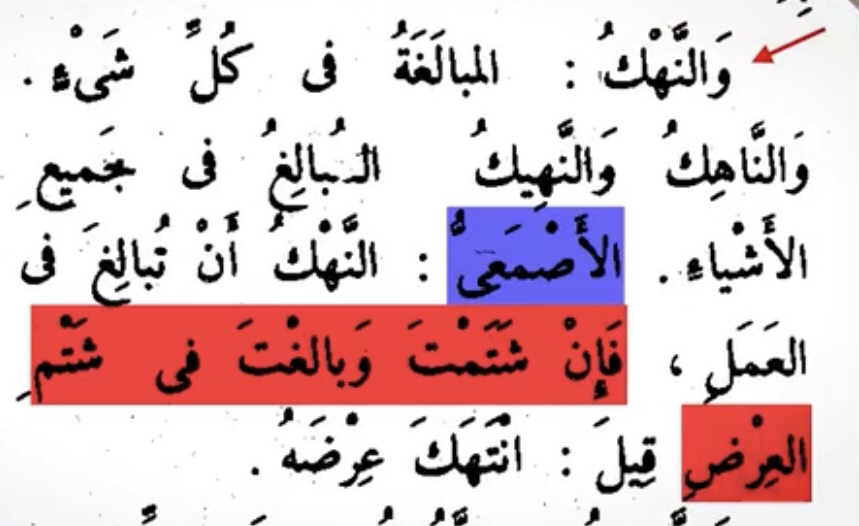
Lisān al-Arab — Ibn Manzur (entry: nahaka) “Excessive exhaustion in everything. Al-Nahik and Al-Nahik: the one who exaggerates in all things. Al-Asma’i: Al-Nahik is to exaggerate in work. So if you curse and exaggerate in cursing the honor, it is said: he violated his honor.”

“It is said: He was exhausted from this food, and also his display, meaning he went to extremes in cursing him.”
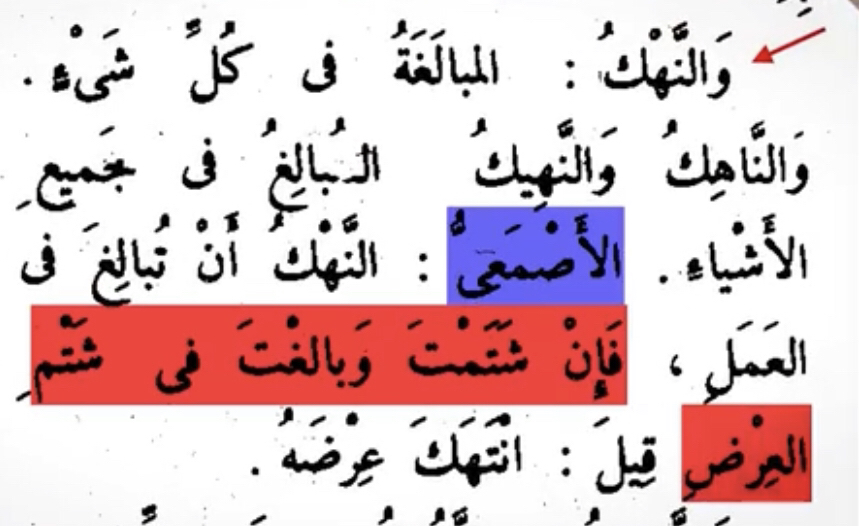
Al-Ṣiḥāḥ fī al-Lughah (root: nahaka) “I wore out the garment… I also wore out the food: I ate it to excess. It is said: He wore out this food, and also he wore out his honor — meaning he went to extremes in cursing him.”
Al-Qāmūs al-Muḥīṭ (root: nahaka) “He defeated him, he overcame him… and of food: he went to extremes in eating it. And its display: he went to extremes in cursing it.”
In lisan al-arab al-asma’i says if you insulted someone badly it is called هتك العرض

clg1 ee8e250fc8ec728a

Quote

Al-faraby says hatk al-ird means insulting badly
clg1 1 3b053af7ba6bf000

Conclusion from the Dictionaries All three major Arabic dictionaries confirm: “violated his honor” for a man = went to extremes in satirising, cursing, and insulting him. This was well-known about Abu Sufyan ibn al-Harith before his conversion to Islam.

Point Three — Who Was Abu Sufyan Ibn al-Harith?

Abu Sufyan ibn al-Harith — Background
  • Full name: Abu Sufyan ibn al-Harith ibn Abd al-Muttalib ibn Hashim al-Hashimi
  • Relation to the Prophet ﷺ: His cousin and foster brother — both were breastfed by Halima al-Sa’diyyah
  • Before Islam: He was a poet who was known for satirising the Messenger of Allah ﷺ and opposing him alongside Hassan ibn Thabit
  • After Islam: He converted at the Conquest of Mecca and became a devoted companion

(Al-Iṣābah fī Tamyīz al-Ṣaḥābah — Part Seven — Abu Sufyan ibn al-Harith)

Narration — via Aisha (Majma’ al-Zawa’id 6/22) Abu Sufyan ibn al-Harith passed by the Messenger of Allah ﷺ and said to Aisha: “O Aisha, come here so that I may show you your cousin who satirized me.”

Grade: Abd al-Rahman ibn Shaibah — Abu Hatim said his hadith is authentic; the rest of the narrators are trustworthy.

Hassan ibn Thabit ؓ — in response to Abu Sufyan’s satire “You satirized Muhammad, so I responded on his behalf — and with Allah in that is recompense. I satirize him, although I am not a match for him — so your partners are a ransom for the best of you. I satirized a blessed, pious, upright man — the Messenger of Allah, whose nature is loyalty. My father, my mother, and my honor — for the honor of Muhammad is a shield from you.”

Point Four — Would the Prophet ﷺ Say This About Himself?

A Simple Logical Challenge How could a man from the nobles of his tribe — the Messenger of Allah ﷺ — utter a word about himself that would be a disgrace and give his enemies a handle to attack him and his message?

If the critics’ interpretation were correct, the Prophet ﷺ would have been handing his lifelong enemies the greatest weapon against him with his own tongue. This is plainly absurd.


Point Five — Responding to the “Hatak = Rape” Objection

The Objection Some critics argued that “violating honor” (hatak al-‘irḍ) means rape, citing dictionary entries showing hatak can mean tearing or ripping.
The Rebuttal — Gender Specificity in the Language Even granting that hatak al-‘irḍ can mean rape in Arabic dictionaries — every single dictionary entry uses it exclusively in the context of a man assaulting a woman, not a man assaulting another man.
Dictionary Entry on Hatak “Hataka al-Sitr: he cut it, tore it. Hataka al-Thawb: he ripped it lengthwise. Hataka Allahu Sitrahu: he disgraced him. Hataka ‘irḍ al-Mar’ah: he raped her — a man forced a woman to commit adultery against her will.”

“The woman was forced to commit adultery.”

Lisān al-Arab — on ghasb (forced intercourse) “He usurped her soul means that he had intercourse with her against her will — so he used it as a metaphor for sexual intercourse.”

“She was subjected to ghasb: her honor, her dignity was violated — against his will: despite his will.”

The Point The word is used for a man violating a woman — not a man violating another man. The critics’ application of this meaning to the Prophet ﷺ has no linguistic basis in classical Arabic.

Summary

The Doubt Collapses on Two Levels

1 — Linguistically: The phrase “nahaka ‘irḍī” means Abu Sufyan went to extremes in satirising and insulting the Prophet ﷺ — a meaning confirmed by Lisān al-Arab, al-Ṣiḥāḥ, and al-Qāmūs al-Muḥīṭ. Abu Sufyan was historically known as a poet who satirised the Prophet ﷺ before his conversion.

2 — Logically: No noble Arab — least of all the Prophet ﷺ — would publicly describe himself using a term that would hand his enemies a weapon against him. The Arabs who were actively hostile to the Prophet ﷺ and listening for every slip never understood the phrase this way.

The doubt is built entirely on ignorance of the Arabic language.


صلى الله عليه وآله وسلم 🫀