Omar Took Two Sips of Wine
Response to the allegation that Omar took two sips of wine | Response to the allegation about drinking wine in Islam
Content of the Doubt
The Shiite Nasibis claim that Omar ibn al-Khattab used to drink alcohol, and they prove this with the following narration:
[ On the authority of Ma’mar, on the authority of Al-Zuhri, that Umar ibn Al-Khattab was brought two shallow bowls containing wine while he was on the road to Ash-Sham. He drank from one of them and turned away from the other. He said: “Then he ordered the other one to be removed, and it was brought to him the next day, and what was in it had become somewhat bitter. He said: “He tasted it, then said: ‘Good, good, break it with water.’”]
Response to This Ridiculous Suspicion
First: This narration is ☝️ weak and fabricated and has not been proven historically. The one who narrated it is Al-Zuhri, and Al-Zuhri here attributes words to Omar bin Al-Khattab!
But Al-Zuhri did not live during the time of Omar ibn Al-Khattab, nor did he see him or hear from him at all, because Omar ibn Al-Khattab died in the year 23 AH, while Al-Zuhri was born after the year 50 AH.
So Al-Zuhri was not with Omar when the incident occurred, nor did he hear it from him, nor was he with him on his way to Syria… So this narration has a weak and broken chain of transmission.
It is well known to scholars that Al-Zuhri’s transmissions are very weak… because he often takes his transmissions from an unauthenticated source.
Some Shiites say that this hadith is good, but they do not know that a good hadith is different from an authentic hadith. There is a difference between the two definitions. A good hadith is of a lower rank than an authentic hadith, and there may be a defect in the chain of transmission of a good hadith that leads to its weakness.
So the conclusion is that the authentic hadith is higher in rank than the good hadith, and therefore every authentic hadith is also good, but not every good hadith is considered an authentic hadith… For example: every cat is an animal, but not every animal is considered a cat.
Every minister is considered a government official, but not every government official is considered a minister.
If you live on the fifth floor and your neighbor lives on the third floor, you will go up to your apartment and pass through the third and fifth floors, but your neighbor will not pass through the fifth floor. You will have passed through two floors because you are higher than your neighbor.
secondly:
Many people today misunderstand the word (wine); they think that wine is always an intoxicating liquor… This is a wrong understanding; because wine in the Arabic language dictionaries means putting a sweet fruit in water in order to sweeten the taste of the water. For example: dates or raisins are put in the water and the fruit is left in the water; so that the water takes on a sweet taste. This is what we call in Egyptian: apricot.
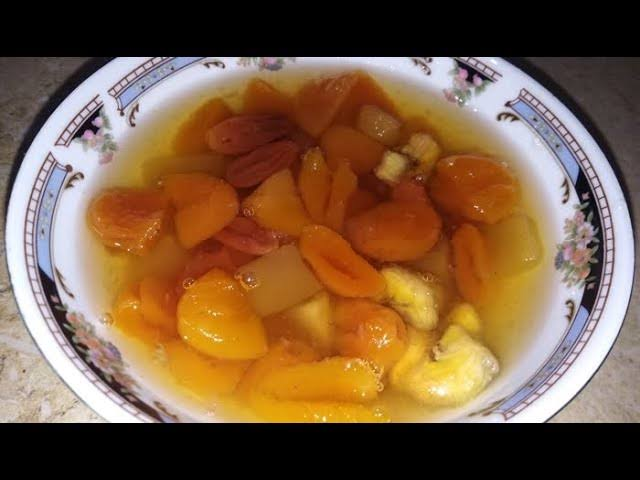
Therefore, it is permissible for you to drink this water and there is no shame in that. However, if the wine water has spoiled and its smell and taste are bad, then it has turned into wine and must be poured out and disposed of. In that case, it is forbidden to drink it.
So wine is divided into two states: fresh wine that has not fermented, and wine that has fermented and become cloudy and causes intoxication to the drinker.
If we go back to the Arabic language dictionaries, we will find that Arabic language scholars know this information well and differentiate between wine that does not intoxicate and wine that does.
Abu Hafs Al-Nasafi says in his book ( Talbat Al-Talbat) 1/70 the following:
[And wine is to simmer dates or raisins in water to extract their sweetness from the water. This is not the first (i.e. not the intoxicating wine that he mentioned at the beginning of his speech)]
Al-Himyari says in his book (Sun of Sciences and the Medicine of Arab Speech from Wounds) - Part Ten - Page 6464 - the following:
Wine is well-known, and it comes from the verb “nabadh” which means to throw something away, because it is thrown into a container and then water is poured over it.
Al-Jubbi says in (Explanation of the Strange Words of Al-Mudawwana) 1/111 - the following:
Wine: with the letter dhal, taken from the word nabadh, meaning to leave something until it becomes good.
The linguist Al-Lubli says in his book (Tuhfat Al-Majd Al-Sareeh fi Sharh Kitab Al-Fasaih) 1/262 the following:
And his saying: “And I rejected the wine.”
Abu Jaafar said: It means I left it to be good for more than one person. It is a verbal noun in the sense of a passive participle, like Kattil and Jareh in the sense of Maqtool and Majruh. The root of Nabdh is throwing and rejecting. And wine is named after it, as if it was thrown into vessels to be consumed.
The famous linguist Ibn Duraid said in his book (Jamharat al-Lughah) 1/306 the following:
[To throw something away means to throw it out of your hand. Wine is called nabidh because the dates were thrown into the jar or elsewhere.]
The linguist Ibn Faris says in his book (Maqayis Al-Lughah) - Part Five - Page 380 - the following:
[And wine: dates are thrown into a vessel and water is poured over them.]
Finally, we find that linguists divide wine into intoxicating wine and non-intoxicating wine, and in both cases it is called “wine.” If it is intoxicating wine, then drinking it is forbidden, but if it is non-intoxicating wine, then drinking it is permissible.
Let’s see👇
The linguist Ibn Manzur says in his book (Lisan al-Arab) - Part Three - Page 511 the following:
[ And wine: something that is discarded. And wine: what is discarded of juice and the like… The mention of wine has been repeated in the hadith, and it is what is made from drinks from dates, raisins, honey, wheat, barley, and other things. It is said: I discarded the dates and grapes, if you left the water on them so that they would become wine, so it was changed from maf’ul to fa’il. And I made it into wine: I made it into a drink, whether it was intoxicating or not, it is called wine.
As for the scholar Al-Azhari, he is one of the linguists and he is also a Shafi’i jurist. He died more than a thousand years ago. He said in his book (Tahdhib Al-Lughah) - Part 14 - Page 318 the following:
Wine is well-known. It is called nabidh because the one who makes it takes dates or raisins and ferments them, i.e., puts them in a container or water skin, pours water over them, and leaves them until they bubble and evaporate, thus becoming intoxicating. Nabidh means throwing away. Whatever does not become intoxicating is permissible, but if it intoxicates, then it is forbidden .
Here☝️ the scholar Al-Azhar says that wine is permissible as long as it is fresh and does not intoxicate. However, if it ferments over time and intoxicates, then it is forbidden because in this way it has turned into alcohol.
Therefore, when you open the books of hadith, you will find that the Prophet permitted drinking this wine as long as the smell and taste of the water did not change, spoil, or ferment. The Prophet also forbade us from leaving soaked fruits in water for several days, as this leads to fermentation and spoilage.
Third
In the Shiite religion, drinking wine is permissible. The great Shiite scholar Al-Kulayni devoted an entire chapter to wine. We will present this chapter to you, but first, let us review what is mentioned in other Shiite books.
The book (Details of the Shia’s Means to Acquire the Issues of Sharia) - Part Three - Page 471 states the following:
[And with his chain of transmission on the authority of Ahmad ibn Muhammad ibn Isa, on the authority of Ali ibn al-Hakam, on the authority of Saif ibn Umayrah, on the authority of Abu Bakr al-Hadrami, who said: I said to Abu Abdullah, peace be upon him: Wine has spilled on my garment in which I pray. He said: Yes. I said: A drop of wine has dripped into a bean from which I drink. He said: Yes, indeed the origin of the wine is permissible.]
Here ☝️ the Imam of the Shiites permitted his Shiites to pray in a garment stained with wine and permitted them to drink any beverage mixed with drops of wine.
The great Shiite scholar Al-Tusi mentioned in his book (Selection of Knowledge of Men) (Rijal Al-Kashi) - Part One - Page 285 the following:
Nasr ibn al-Sabbah narrated to me, saying: Ishaq ibn Muhammad al-Basri narrated to us, saying: Ali ibn Ismail narrated to me, saying: Fadil al-Rasan informed me, saying: I entered upon Abu Abdullah (peace be upon him)… and I heard a sobbing from behind the curtain, so he said: Who recited this poem? I said: Al-Sayyid ibn Muhammad al-Himyari. He said, may Allah have mercy on him, “I said, ‘I saw him drinking wine!’ He said, may Allah have mercy on him, ‘I said, ‘I saw him drinking rustic wine.’ He said, ‘Do you mean wine?’ I said, ‘Yes.’ He said, may Allah have mercy on him, ‘And that is not difficult for Allah to forgive the lover of Ali.’”
Here ☝️ the Imam of the Shiites prayed for mercy for a person from his Shiites who was drinking fermented intoxicating wine, and he did not carry out the punishment on him, but rather left him on the pretext that he was a Shiite who loved Ali!!!
There is one of the Shiite narrators, Safwan al-Jammal , who is one of the noble and trustworthy figures in the Shiite religion. He was one of the close companions of Imam al-Sadiq and al-Kadhim, but the Shiite books say about this man:
[On the authority of Ahmad ibn Muhammad, on the authority of Ali ibn al-Hakam, on the authority of Safwan al-Jammal, who said: I was afflicted with wine and was pleased with it.]
The book (Al-Istibsar) - Part One - Page 14 - states the following:
[The Sheikh, may God have mercy on him, informed us of it on the authority of Abu al-Qasim Ja’far ibn Muhammad ibn Qulawayh, on the authority of Muhammad ibn Ya’qub, on the authority of al-Husayn ibn Muhammad, on the authority of Mu’alla ibn Muhammad and a number of our companions, on the authority of Sahl ibn Ziyad, all of them on the authority of Muhammad ibn ‘Ali al-Hamadhani, on the authority of ‘Ali ibn ‘Abdullah al-Khayyat, on the authority of Sama’ah ibn Mihran, on the authority of Al-Kalbi the genealogist: He asked Abu Abdullah, peace be upon him, about wine, and he said: It is permissible. He said: We ferment it and throw away the turbidity and everything else. He said: Shah, shah, rotten wine. He said: I said: May I be sacrificed for you, what kind of wine do you mean? He said: The people of Medina complained to the Messenger of God about the change in the water and Their natures became corrupt, so he ordered them to throw away the water. A man would order his servant to throw away the water for him, so he would take a handful of dates and throw them into the water skin, and some of them he would drink and some of them he would purify himself with .
The following was mentioned in the book (Man La Yahduruhu Al-Faqih) - Part Three - Page 409:
It was narrated on the authority of Muhammad ibn Ismail ibn Bazi’ who said: I asked al-Rida, peace be upon him, about a woman who was afflicted with drinking wine and became drunk, so she married herself to a man while she was drunk. Then she came to her senses and denied that. Then she thought that he was obligating her, so she was afraid of him and stayed with the man in that marriage. Is he permissible for her? Or is the marriage invalid because of the drunkenness and the man has no way to have intercourse with her?! - He said, “If she stays with him after she has recovered, then it is her consent.” I said, “Is that marriage permissible?” He said, “Yes.”
Here ☝️ the Imam was pleased with the marriage of a woman who got drunk and married herself to a man while she was drunk.
The following was mentioned in the book (High Sciences) - Part 20 - Page 1144:
[The Book of Purification: On the authority of Furat bin Ahnaf, he said: I was with Abu Abdullah, peace be upon him, when one of these accursed men entered upon him. He said: By God, I will make him miserable in his followers. He said: O Abu Abdullah, come to me. But he did not come to him. He repeated the question, but he did not come to him. Then he repeated the question a third time. He said: Here I am coming, so speak, and you will not say anything good. He said: Your followers drink wine. He said: There is nothing wrong with wine.]
Now, let us look at the chapter that the Shiite Al-Kulayni mentioned about the ruling on drinking wine.
It was mentioned in the book (Al-Kafi) - Part 4 - Page 417 - the following:
On the authority of Ali ibn Ibrahim, on the authority of his father, on the authority of Ibn Abi Umayr, on the authority of Abd al-Rahman ibn al-Hajjaj, who said: I asked permission for some of our companions to visit Abu Abdullah, peace be upon him, and he asked him about wine. He said: It is permissible. He said: I only asked you about wine in which turbidity is placed, so it boils and then settles. Abu Abdullah said: Allah’s Messenger, peace and blessings be upon him, said: “All intoxicants are forbidden.”
It was mentioned in (Al-Kafi) - Part 4 - Page 415 as follows:
Muhammad ibn Yahya, on the authority of Ahmad ibn Muhammad, on the authority of Muhammad ibn Ismail, on the authority of Hanan ibn Sadir, who said: I heard a man saying to Abu Abdullah, peace be upon him: What do you say about wine? Abu Maryam drinks it and claims that you ordered him to drink it. He said: Abu Maryam has spoken the truth. He asked me about wine, and I informed him that it was permissible, and I did not… He asks me about intoxicants
Muhammad ibn Yahya, on the authority of Ahmad ibn Muhammad, on the authority of Ali ibn al-Hakam, Muhammad ibn Ismail, and Muhammad ibn Ja’far Abu al-Abbas al-Kufi, on the authority of Muhammad ibn Khalid, all of them on the authority of Saif ibn Umayrah, on the authority of Mansur, who said: Ayyub ibn Rashid told me: I heard Abu al-Bilad asking Abu Abdullah, peace be upon him, about wine. He said, “There is nothing wrong with it.”
Al-Husayn ibn Muhammad, on the authority of Mu’alla ibn Muhammad and a number of our companions, on the authority of Sahl ibn Ziyad, all of them, on the authority of Muhammad ibn Ali al-Hamadhani, on the authority of Ali ibn Abdullah al-Hannat, on the authority of Sama’ah ibn Mihran, on the authority of al-Kalbi the genealogist, who said: I asked Abu Abdullah, peace be upon him, about wine, and he said: It is permissible. I said: We leave it aside and throw it away. It contains turbidity and other things. So he, peace be upon him, said: Shame, shame, that is the stinking wine.
The Shiite Imams used to drink wine.
[On the authority of Muhammad ibn Yahya, on the authority of Ahmad ibn Muhammad, on the authority of al-Husayn ibn Said, on the authority of Ibrahim ibn Abi al-Bilad, on the authority of his father, on the authority of more than one person who was present with him, who said: I was with Abu Jafar, peace be upon him, and I said, “O slave girl, give me some water to drink.” He said to her, “Give him some of my wine to drink.” So she brought me wine made of unripe dates in a brass cup.]
A number of our companions narrated on the authority of Sahl ibn Ziyad, on the authority of Ja’far ibn Muhammad, on the authority of Ibrahim ibn Abi al-Bilad, who said: I entered upon Abu Ja’far ibn al-Rida, peace be upon him, and I said to him: I want to stick my stomach to your stomach. He said: Here, O Abu Ismail, and he uncovered his stomach. I uncovered my stomach and stuck my stomach to his stomach. Then… He made me sit down and called for a plate of raisins, so I ate. Then he began to talk. He complained to me about his stomach and I felt thirsty, so I got some water. He said, “O girl, give him some of my wine to drink.” So she brought me some fermented wine in a brass cup, so I drank it and found it sweeter than honey.
Here is the Imam of the Shiites permitting drinking wine, exposing his stomach and sticking it to the exposed stomach of his friend…
As for Jews and Christians, they drink alcohol originally:
For example: in the Eucharist ritual, Christians drink wine.
In the Holy Bible, we find that Jesus (the God of Christians) made wine at the wedding in Cana of Galilee!
Here are texts from the Holy Book that permit drinking alcohol:
Deuteronomy 14:26
“And spend the money on whatever your soul desires, on cattle, on sheep, on wine, on strong drink, and on whatever your soul desires. And eat there before the Lord your God, and rejoice, you and your household.”
Song of Songs 5:1
Eat, my friends. Drink and be drunk, my friends.
Proverbs 31:6
Give strong drink to him who is perishing, and wine to him who is sick in soul.
Proverbs 3:9, 10
Honor the Lord with your wealth and with the firstfruits of all your produce; your barns will be filled with plenty, and your vats will overflow with new wine.
As for atheism, atheists drink alcohol in principle.