Organisms That Deny Evolution, Fun Facts, Brief Responses
First of all: The Earth is about 4.5 billion years old. Now let’s give some examples of organisms that have existed for at least tens of millions of years. We will only talk about organisms that have existed for more than 20 million years, because to say after that that it is an evolutionary stagnation would be ridiculous and not even worth paying attention to: ★ Cyanobacteria (blue-green bacteria): They have existed for 3.5 billion years according to the oldest fossil, and they still exist today. But someone might come and say: “There are types of cyanobacteria, some of which evolved into algae.” Aside from this “assumption”, it still doesn’t explain why they exist until now, and have existed for 3.5 billion years
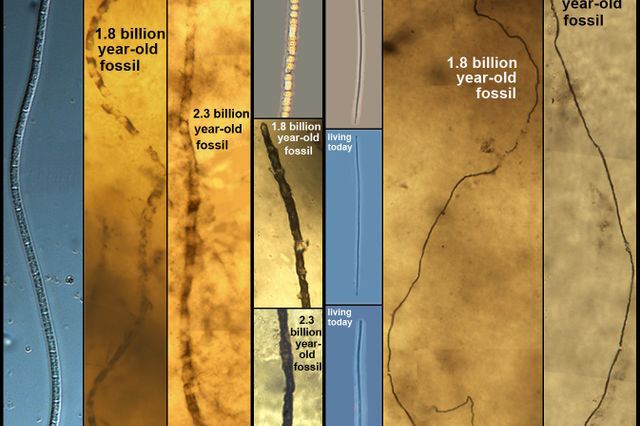
★ Bacteria that haven’t changed for about 2.3 billion years, would you say evolutionary dormancy that has lasted for more than half the age of the Earth?!!
https://www.livescience.com/49677-deep-sea-organism-evolution.html
★ Oxygen-breathing bacteria: Discovered to have existed 2.48 billion years ago, and still alive today, were living on Earth, “100 million years older than previously thought.”
https://www.sciencedaily.com/releases/2011/10/111019181210.htm
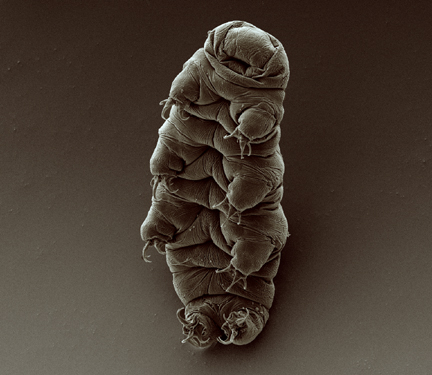
★ Tardigrade/Water Bear: The oldest tardigrade fossil found is more than half a billion years old, as this evolutionary site says
https://tardigrad.org/evolution/
and this research says it’s 600 million years old
★ Starfish: A 430 million-year-old starfish fossil was found
http://www.fossilmuseum.net/fossils/starfish/Australaster-giganteus/Australaster.htm
★ Crocodile: A study in Nature magazine stated that crocodiles have existed for 200 million years, and have not evolved… How do evolutionists behave? They said but… it didn’t need to evolve, meaning there was a slight disagreement between it and evolution that extended back only 200 million years, it’s very easy
https://www.nature.com/articles/s42003-020-01561-5
★ Cockroaches: Researchers discovered a 100-million-year-old ancestor of a group of large, carnivorous insects that resemble cockroaches and still live today in South Asia, northern Indochina, and Africa
https://www.sciencedaily.com/releases/2011/02/110203113758.htm
And this article mentioned that cockroaches haven’t evolved for 350 million years
https://gizmodo.com/cockroaches-are-evolving-to-avoid-poison-will-rule-us-509702307
{Embed}
https://www.livescience.com/49677-deep-sea-organism-evolution.html
2 Billion Years Unchanged, Bacteria Pose an Evolutionary Puzzle
{Embed}
https://www.sciencedaily.com/releases/2011/10/111019181210.htm
New evidence for the oldest oxygen-breathing life on land
New research shows the first evidence that oxygen-breathing bacteria occupied and thrived on land 100 million years earlier than previously thought.

{Embed}
Radium Team 4
https://tardigrad.org/evolution/
Evolution - Tardigrades - Water Bear
Explore the remarkable evolutionary journey of tardigrades, nature’s time-travelers, in this in-depth page. Discover their astonishing adaptation strategies

{Embed}
Lauren Robertson
Everything you need (and want) to know about tardigrades - Front Li…
The science of tardigrades has come a long way in the last couple of decades – and their genomes are key to unravelling the mystery.
{Embed}
http://www.fossilmuseum.net/fossils/starfish/Australaster-giganteus/Australaster.htm
Australaster Australian Starfish Fossil
Australaster Australian Starfish Fossil
★ Discovery of an ancient fossil penis: It dates back 425 million years, and scientists say that the five-millimeter-long fossil closely resembles some Modern crustaceans, indicating an extremely low rate of evolutionary change over the past 425 million years, said Dr. Tom Cronin of the US Geological Survey: “This is evidence of incredible stability.”
http://news.bbc.co.uk/1/hi/sci/tech/3291025.stm
★ Bacteria that have not changed for 55 to 165 million years, and share more than (99.2%) of their ancestors at the genome sequence level;
★ A 46 million year old mosquito
fossil that is still the same today
https://www.nature.com/articles/nature.2013.13946
★ Tarsier monkey: It has a fossil that has been around for 45 million years, and it hasn’t changed until now
https://www.sciencedaily.com/releases/2012/02/120208220210.htm
★ A fossil of an ant that is 46 million years old 77 million years ago, and the general body plans of the ant remained relatively constant across 100 million years
★ And here’s another fossil of a vampire ant, about 98 million years old, yet the shape hasn’t changed
★ Horseshoe crab: The oldest fossil found, 445 million years old
https://www.sciencedaily.com/releases/2008/02/080207135801.htm
★ Coelacanth: This fish appeared in the Devonian period, and it was described as having maintained its morphology for about 420 million years; however, you will find evolutionary patches that they discovered slight changes in the skull and others, and of course this is like the Stickleback fish, the birds in the Galapagos Island, the Metrosideros plant, and other examples that we have previously proven through studies that they resemble evolution; but they change within the stock of genetic diversity SGV; but wait… Let’s assume for the sake of argument that this is evolution, then in 420 million years only slight changes occurred? Why is the Earth so old that all species have evolved at this rate?!!
https://www.ncbi.nlm.nih.gov/pmc/articles/PMC8273612/
★ King fern: Science magazine reported that it has maintained its genome size for 180 million years, and has not evolved
https://www.science.org/doi/10.1126/science.1249884
★ Lamprey fish: A fossil of it was discovered 360 million years ago, yet it has changed only slightly, and these changes are certainly part of the stock of genetic diversity
https://www.sciencedaily.com/releases/2006/10/061025185208.htm
{Embed}
https://www.ncbi.nlm.nih.gov/pmc/articles/PMC8273612/
A microanatomical and histological study of the scales of the Devon…
Coelacanths have traditionally been described as morphologically conservative throughout their long evolutionary history, which spans more than 400 million years. After an initial burst during the Devonian, a morphological stasis was long thought to …

{Embed}
https://www.sciencedaily.com/releases/2006/10/061025185208.htm
Scientists Find Lamprey A ‘Living Fossil’: 360 Million-year-old Fis…
Scientists from the University of Witwatersrand in Johannesburg, South Africa, and the University of Chicago have uncovered a remarkably well-preserved fossil lamprey from the Devonian period that reveals today’s lampreys as “living fossils” since they have remained largely unaltered for 360 million years. The scientists describe the new find in…
★ Ginkgo tree: Previous excavations revealed that ginkgo species have remained unchanged for the past 51 million years, and that similar trees were alive and well 170 million years ago, during the Jurassic period.
★ Goblin shark: It is one of the sharks that exist today, and yet it has a fossil dating back 125 million years
★ Pleistocene anteater: The oldest The known Tubulidentata species are about 20 million years old
I have more, thanks to God; but this is enough for those with thinking minds, not minds that try to justify the non-occurrence of evolution as a given from the beginning…
“Study Contradicts Darwin’s Sexual Selection Hypothesis.” During the seven years of observation, Takahashi’s team observed 268 successful matings; however, surprisingly, they found that females mated with poor-quality peacocks at the same rates as with high-quality, “flashy” males. They conclude that the peacock train is not the subject of female sexual preference—which contradicts Darwin’s theory of sexual selection.
https://www.sciencedirect.com/science/article/abs/pii/S0003347207005301
The Dementor (Ampulex dementor) and the problem of evolution: What distinguishes this wasp from other wasps is that it stings its prey (cockroaches), turning them into zombies and dragging them to its nest by one of its antennae, while they move obediently without any resistance… Is all this the result of random mutations, or the result of deliberate creation?
https://www.ncbi.nlm.nih.gov/pmc/articles/PMC3995701/#pone.0095068-Libersat1
{Embed}
https://www.ncbi.nlm.nih.gov/pmc/articles/PMC3995701/
The Soul-Sucking Wasp by Popular Acclaim – Museum Visitor Partici…
Taxonomy, the science of describing and naming of the living world, is recognized as an important and relevant field in modern biological science. While there is wide agreement on the importance of a complete inventory of all organisms on Earth, the …
As we know that the bacterial genome is the simplest genome of a living cell on Earth, and now we are presenting a Stromatolith fossil (which belongs to Cyanobacteria, which belongs to the kingdom bacteria), as the age of this fossil dates back to 3.7 billion years at least.. The strange thing is that the type of Cyanobacteria still exists as it is, to clarify the idea more: imagine that there is a primitive cell (according to evolution) protocell, and this cell forms its DNA by chance, then later becomes a type of bacteria.. Then it reproduced, and became other types of the same kingdom of bacteria, and did not go outside this range. Here is the question: If the bacterial genome is the simplest cellular genome on Earth, then throughout the 3.7 billion years, have there not been mutations in this simple genome that led to the transfer of “all” types of bacteria in the generations resulting from the first cell (according to their claim) to what is outside the kingdom of bacteria? Or does genetic drift occur in other generations and generations do not occur? If it happens in some species and not in others, will this continue for 3.7 billion years?!! Knowing that the Earth is 4.5 billion years old.
https://www.nature.com/articles/nature21377
“Bacteria are more resilient than humans.” The idea of natural selection is that what is fitter for survival is naturally (randomly) selected. But let’s ask some questions first: Are evolved humans (according to evolution) more resilient than bacteria? The answer: bacteria, as bacteria have a remarkable ability to withstand deadly conditions. “A variety of studies indicate that microorganisms can survive under extreme conditions, such as ultracentrifugation, high velocity, shock pressure, extreme temperature changes, vacuum, and various intensity levels of ultraviolet and ionizing radiation, which simulate the conditions that microbes might encounter during ejection from one planet, travel through space, and collision with another planet.” A variety of studies demonstrate that microorganisms can survive under extreme conditions, such as ultracentrifugation, hypervelocity, shock pressure, high temperature variations, vacuums, and different ultraviolet and ionizing radiation intensities, which simulate the conditions that microbes could experience during the ejection from one planet, the journey through space, as well as the impact on another planet. Are humans better at reproducing than bacteria? The answer is: bacteria. Bacteria are prokaryotes, and their DNA is simple and reproduces very quickly due to its ease of copying. Can humans survive for millions of years? Absolutely not. But bacteria can enter certain forms of hibernation that may last for hundreds of millions of years. Microbes can return to life even after hundreds of millions of years. If evolution is true, why do bacteria evolve into less viable organisms, even though natural selection selects the fittest to survive?
“Chimpanzees are stronger than humans.” If you were put in a cage with chimpanzees, you might think you could defeat them. But let me tell you that chimpanzees have a greater ability to survive predators than humans. In fact, their muscles are 1.35 times stronger than humans, and their jaws are stronger than humans. In fact, chimpanzees are more aggressive than humans.
https://www.pnas.org/doi/full/10.1073/pnas.1619071114
If humans evolved from chimpanzees, how did natural selection preserve what was less able to survive, while at the same time its purpose was to preserve the fittest to survive? And how did it change the muscular anatomy to make the muscles weaker, although its purpose was survival? And how did it make the jaw weaker?!! Support your answer with evidence, away from funny patchwork. Here are pictures of chimpanzees without hair.
In 2002, the endless monkey theory was tested, which states that monkeys could produce the literary works of William Shakespeare, which atheists have used to argue that evolution can produce complexity in living organisms given enough time. What happened in the experiment was as follows: Not only did the monkeys produce nothing but five total pages largely consisting of the letter ‘S’, the lead male began striking the keyboard with a stone, and other monkeys followed by urinating and defecating on the machine. Alas, in this experiment, Juliet’s plea was unrequited: “O Romeo, Romeo, wherefore art thou Romeo?”
https://medium.com/@rdieter/blankety-blank-monkeys-just-be-patient-abf66c080bf6
{Embed}
https://medium.com/@rdieter/blankety-blank-monkeys-just-be-patient-abf66c080bf6
Blankety-blank Monkeys — Just be patient
Some guy with too much time on his hands once wondered if monkeys could write as well as Shakespeare. That seemed unlikely, but what if a…

The frozen head of a wolf that lived 40,000 years ago was found in Siberia… and it looks similar to wolves that exist today.
https://www.livescience.com/65677-severed-head-ancient-wolf-russia.html
Even stranger is that the size of this wolf was 25% larger than wolves living today, which proves the claim that some creatures have shrunk in size over time. “Valery Plotnikov, a top researcher at the local branch of the Russian Academy of Sciences, said the animal belonged to an ancient subspecies of wolf that lived at the same time as the mammoths and became extinct alongside them. Scientists said it was an adult, about 25% bigger than today’s wolves.”
If this study is true (and the evidence is strong), it will destroy all hypotheses about the origin of life and chemical evolution, and even uproot the entire tree of evolution. In short: This study suggests that planet Earth was a watery planet about 4 to 3.2 billion years ago, such that the water level on its surface was higher than the highest mountain peak currently existing. All of this will make neither life nor the alleged fairy tales worthwhile.
By the way: There is a myth that life originated from hydrothermal vents.. This is an unlikely hypothesis originally, due to chemical instability and the toxic sulfur released by these vents:
https://www.science.org/content/blog-post/hydrothermal-vents-weren-t-home
Believe it or not, an evolutionary study attempted to classify 23 yeast species using 1,070 genes, resulting in 1,070 distinct evolutionary trees, which differ from the traditional (love-built) evolutionary tree. Phylogenomic analysis of 1,070 orthologues from 23 yeast genomes identified 1,070 distinct gene trees, which were all incongruent with the phylogeny inferred from concatenation. None of the 1,070 gene trees agreed with each other, with the concatenation phylogeny or with the eMRC phylogeny.
https://www.nature.com/articles/nature12130
Changed the channel name: Organisms that deny evolution, fun facts, little responses
Changed the channel name: Organisms that deny evolution, fun facts, brief responses
“Is the bonobo’s ability to group syllables evidence of descent from a common ancestor?” One of the brothers showed me this study and asked for a response.. The important thing is to respond briefly so as not to prolong the response to empty talk: First: The study is about bonobo apes, not chimpanzees. 🤡
This means from the beginning it has no relation to the ancestor, because chimpanzees, according to evolution, are closer to humans than bonobo apes, even though they are the closest relatives to humans according to evolution.. The common ancestor, according to their assumption, originally resembled chimpanzees to a greater extent than bonobos It’s not even a chimpanzee, but closer to chimpanzees Ok, let’s assume that the bonobo is the common ancestor. Does this mean that its ability to group syllables is evidence of descent from a common ancestor?! Ok, what if I told you that speech is originally a trait found in animals? For example, the parrot is far superior to the bonobo himself in repeating sounds. Does that mean that humans descended from parrots? Ok, ants have the ability to speak. Does that mean that humans descended from ants? Someone might say: The parrot example doesn’t work, because it repeats what it says.. And the bonobo also repeats what it says, even if it composes incomprehensible speech. It is the one who communicates with its own kind.. Only, just as some other creatures communicate with each other. What does all this have to do with evolution from a common ancestor?! Laughing atheists! There is a mind that can work, by the way. Study:
https://www.science.org/doi/10.1126/science.adv1170
“Chimpanzees fail to learn to speak like humans.” In an experiment called “Project Nim,” led by Professor Herbert Terrace of Columbia University, and analyzed by psycholinguist Thomas Beaver, they removed a baby chimpanzee from its mother and raised it with humans to see if it could learn language like humans. The result: The chimpanzee failed to learn to speak, but it was able to learn sign language, which dogs and cats already know 😁
. Nim learned 128 signs and, more impressively, produced sequences of signs. But, ultimately, Terrace discovered that chimpanzees were incapable of learning language. “He was unable to use words conversationally, let alone form sentences.”
https://news.columbia.edu/news/chimpanzee-language-project-nim-herbert-terrace
“I’d seen my children acquire language, I’d seen them acquire two languages – they speak Danish and English. It was simple for them to have two languages on the go, all the time. Not a problem. So it does suggest that humans are utterly made for language. Nim was not.
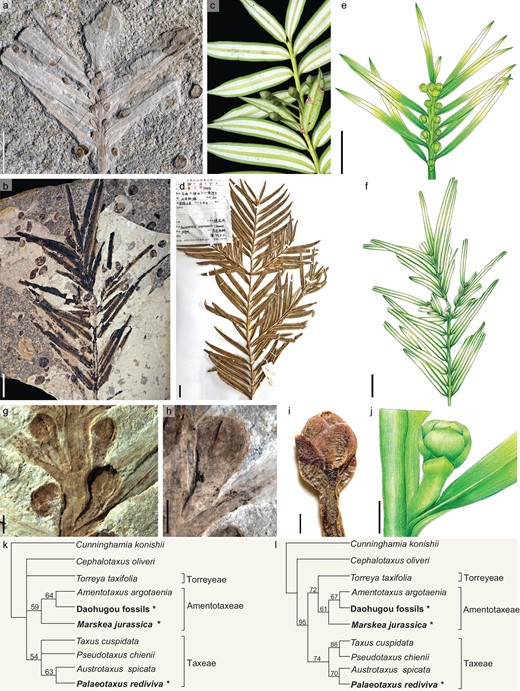
Amentotaxus argotaenia has remained largely unchanged for 158-165 million years.
https://academic.oup.com/nsr/article/7/11/1765/5859291
{Embed}
https://academic.oup.com/nsr/article/7/11/1765/5859291
Middle–Late Jurassic fossils from northeastern China reveal morph…
The Taxaceae, commonly known as the yews, are widely used in ornamental horticulture and are an important source of chemotherapeutic drugs (e.g. Paclitaxel
Guys, we’re not talking about a million years or even 10 million years, but rather a period of time that is a fraction of the age of the Earth.
No wonder, I’ve found them before explaining the stability of one species of bacteria for 2.3 billion years, by evolutionary stagnation.🤡
So that you are not deceived, my friend, by this term… it is just a patchwork that they threw at the common people of Darawneh, and then —> we found an explanation for this constancy.
This is the oldest fossil of a tree leaf ever discovered, yet it is clearly beautifully and geometrically designed, dating back about 220 million years, yet it resembles leaves found today. And it’s not even a simple leaf, so they’re trying to patch it up. 😁
https://www.nature.com/articles/s41598-022-09262-1

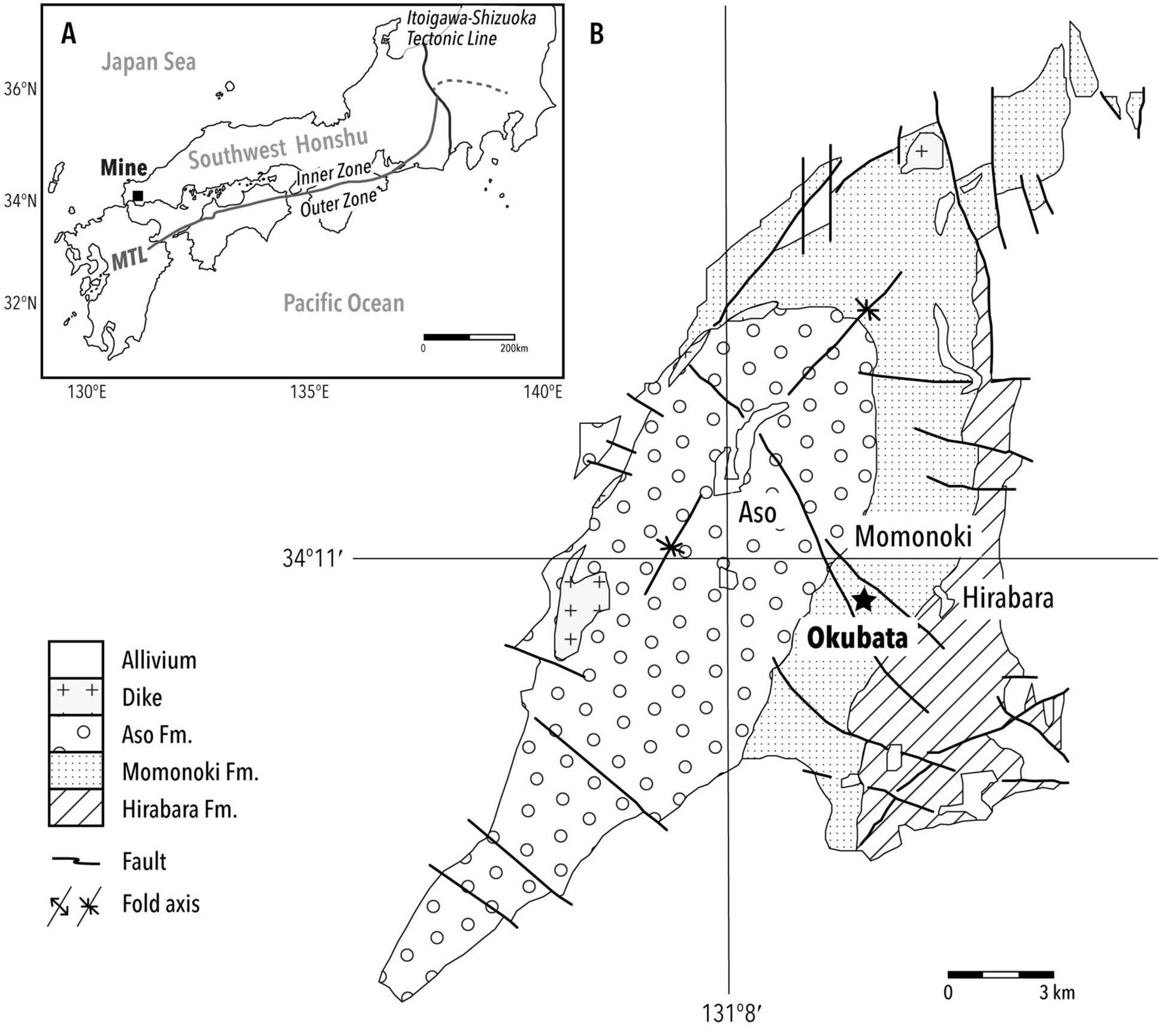
Also, look at the oldest flower fossil ever discovered, dating back about 164 million years. Try as you might, you can’t patch things up.
https://www.lyellcollection.org/doi/full/10.1144/SP521-2021-122

According to the patchwork myth, tetrapods evolved from the fish Tiktaalik, which Darwinists considered a link between land and sea life. However, a discovery in Nature in 2010 demonstrated that tetrapods with “distinct digits” already existed about 22 million years before Tiktaalik. 😁
Now, however, Niedźwiedzki et al.1 lob a grenade into that picture. They report the stunning discovery of tetrapod trackways with distinct digit imprints from Zachełmie, Poland, that are unambiguously dated to the lowermost Eifelian (397 Myr ago). “But now, Niedzwiedzki and colleagues1 have dropped a bombshell on that picture. They report the stunning discovery of tetrapod tracks with distinctive fingerprints from Zaklmi, Poland, unambiguously dated to the lower Eifelian (397 million years ago).”
https://www.nature.com/articles/463040a
A new study on the plague-causing bacteria Yersinia pestis suggests that its replication rate has increased at the expense of its ability to cause disease. Lest you think this is evidence of evolution, here’s what happened: We have the “pla” gene responsible for causing disease. This gene is located on a plasmid (a piece of DNA outside the chromosomes) called pPCP1. When the number of copies of this gene decreased, the amount of DNA copied became lower, and thus a faster replication rate, and consequently a faster replication rate. Needless to say, the decreased ability to cause disease (a decrease in the overall mortality rate (100 to 85%), and a two-day longer time to death) is a setback or deterioration for the bacteria, and this has nothing to do with evolution. Only the Druids call this evolution. 😁
https://www.science.org/doi/10.1126/science.adt3880
“Evolutionary Study Challenges Chimpanzee Model as Humans’ Closest Relative” In a nutshell: This study challenges the model, on which tons of alleged evidence are based, which posits chimpanzees as humans’ closest relatives. It notes that the genetic evidence based on this model conflicts with fossil evidence and morphological traits. It then concludes that orangutans are humans’ closest relative, not chimpanzees. “They have good morphological evidence in support of their interpretation, so that it must be taken seriously, and if it reopens the debate between molecular biologists and morphologists, so much the better.” By the way, I found this while writing an article titled “Why Chimpanzees and Not Orangutans?” I noticed several similarities that significantly distinguish orangutans from chimpanzees, such as the significantly greater similarity in behavior in orangutans compared to chimpanzees, as well as the level of intelligence, etc. The point is: Do you know what this means? If this model is recognized, the research that huge budgets were spent on will become nothing more than scribbles on paper. This is science based on indisputable evidence?!
https://www.sciencedaily.com/releases/2009/06/090618084304.htm
Humans More Related To Orangutans Than Chimps, Study Suggests
New evidence underscores the theory of human origin that suggests humans most likely share a common ancestor with orangutans. The researchers reject as “problematic” the popular suggestion, based on DNA analysis, that humans are most closely related to chimpanzees, which they maintain is not supported by fossil evidence.