Science and Islam

Pharaoh Threatened Crucifixion and Amputation in Quran 7:124 — The Historical and Archaeological Evidence for Both Punishments in Ancient Egypt

12 min read 2620 words
How to Navigate This Note Understanding the Threat — What the Verse Says and What the Commentators Explain — the meaning of “opposite sides,” the two sequential punishments, and the classical tafsir on the verse The Logical Framework — Who Bears the Burden of Proof — why the objector must produce a contradicting document, not merely demand the Quran be proven First Evidence — Genesis 40:19 and the Bible’s Own Testimony — the Pharaoh of Joseph’s time threatening crucifixion by hanging, establishing the punishment predates the Pharaoh of Moses Second Evidence — Smith’s Bible Dictionary on Crucifixion in Egypt — the Christian reference confirming crucifixion was used by the Egyptians Third Evidence — The Gesenius Hebrew and Chaldee Lexicon — the Hebrew word תָּלָה in Genesis 40:19 includes crucifixion among its meanings Fourth Evidence — Egyptological Historians on Crucifixion and Amputation — ancient Egyptian official punishments including burning alive and impalement on a stake Fifth Evidence — Impalement as a Type of Crucifixion — bibletools.org confirming impalement is a recognized form of crucifixion Sixth Evidence — The Encyclopedia of the Bible — confirmation of crucifixion in the ancient Near Eastern world Seventh Evidence — The History of the Cross in Heritage and Art — two types of crucifixion illustrated in historical documentation Eighth Evidence — The Horus Crucifixion in Ancient Egyptian Mythology — crucifixion embedded in Egyptian religious iconography Ninth Evidence — The Islamic Awareness Papyri Archive — Pharaonic papyri documenting the punishment Tenth Evidence — Amputation of Limbs in Ancient Egypt — the book Punishment and Reformation on amputation as a known Egyptian punishment Eleventh Evidence — The Scope of Amputation in Ancient Egypt — scholarly confirmation that amputation was widespread and not limited to narrow offenses Twelfth Evidence — The Pharaoh’s Discretion in Combining Punishments — the legal procedure whereby the Pharaoh personally decided punishment and could combine multiple penalties Thirteenth Evidence — The Medinet Habu Mural: Hand Amputation — surviving Pharaonic art depicting the cutting of hands at the palm Fourteenth Evidence — The Edfu Temple Mural: Crucifixion with Cut Hands — surviving Pharaonic art depicting a crucified figure with hands cut off at the palms

The Quran’s attribution of crucifixion and limb amputation to Pharaoh is not a historical error. Both punishments are documented in ancient Egypt through the Bible itself, Egyptological scholarship, lexicographic sources, papyrological records, and Pharaonic murals that survive to this day.

The objection raised is based on Quran 7:124, where Pharaoh threatens the magicians who believed in Moses:

Al-A’raf 7:124 ﴿لَأُقَطِّعَنَّ أَيْدِيَكُمْ وَأَرْجُلَكُم مِّنْ خِلَافٍ ثُمَّ لَأُصَلِّبَنَّكُمْ أَجْمَعِينَ﴾

“I will surely cut off your hands and your feet on opposite sides, and I will crucify you all on the trunks of palm trees.” (Al-A’raf: 124)

The objection has two parts: first, did the Pharaohs know crucifixion? Second, how can hands and feet be cut off and then a person be crucified? Both questions have clear answers.


Understanding the Threat — What the Verse Says and What the Commentators Explain

The phrase “from opposite sides” is explained by the classical tafsir scholars.

We read in Zahrat al-Tafasir, Vol. 6, p. 2927: “The tyrant swore by what he swears by that he would cut off their hands and feet on opposite sides, meaning he would cut off a hand on one side and a foot on the other side.”

And in Fath al-Bayan, Vol. 6, p. 431: “Meaning the right leg and the left hand, or the left leg and the right hand.”

Hanging on palm trunks is also called crucifixion. The meaning of the threat is therefore: Pharaoh threatened to cut off the right hand and left foot — or vice versa — one limb from each side of the body, and then to crucify the remaining living persons on tree trunks. These are two separate sequential punishments joined by “then” (ثُمَّ), not one merged punishment. Both are documented in ancient Egyptian practice.

Al-Shihab al-Thaqib clarifies further on the verse: “The verse says {your hands} and here it means the palm and not the arm, and ‘from opposite sides’ refers to the legs. If it is said that it refers to one of the hands with one of the legs, then there is nothing wrong with that.”


The Logical Framework — Who Bears the Burden of Proof

An objector who claims the Quran contains a historical error must produce a historical document that contradicts what the Quran states. The Quran mentions an incident; the objector must find evidence that this incident was impossible or did not occur. An error is proven by the presence of evidence contradicting the Quran, not by the absence of corroborating evidence.

Is there a document — before the Quran — stating that the Pharaohs did not know crucifixion? No. Is there a document — before the Quran — saying that limb amputation was unknown to the ancient Egyptians? No. Is there even a document that discusses these topics independently of the Quran? The objectors produced none.

The standard of proof for a “historical error” is a document that explicitly contradicts what the Quran states — not a demand that the Quran prove itself, and not pointing to an absence of corroborating records. A genuine error requires an existing conflicting record. None was produced. The absence of contradiction is itself evidence that the Quranic account faces no documented objection.

First Evidence — Genesis 40:19 and the Bible’s Own Testimony

The Bible itself — the very scripture of the objectors — proves that crucifixion was known to the Pharaohs. The Pharaoh of Joseph’s time, which predates the Pharaoh of Moses:

Genesis 40:19 — King James Version (Van Dyke) “Within three days Pharaoh will lift up your head from off you, and will hang you on a tree, and the birds will eat your flesh from off you.”

This is the Pharaoh of Joseph threatening hanging on a tree — crucifixion — centuries before the Pharaoh of the Exodus. If the Pharaoh before Moses’s time knew crucifixion, the claim that the Pharaoh of Moses’s time did not know it is untenable.

Father Antonius Fikry states regarding this verse: “Hanging your body = it is a terrifying punishment for the Egyptians, as his body will not be embalmed, and therefore, according to the belief of the ancient Egyptians, he will not be resurrected.” This confirms that hanging the body was a known and feared Egyptian punishment with specific cultural and religious significance within ancient Egyptian theology.

The Pharaoh of Joseph — who predated the Pharaoh of Moses — already knew and threatened crucifixion. This is stated in the objectors’ own scripture. They cannot reject it as a source without undermining their own Bible.


Second Evidence — Smith’s Bible Dictionary on Crucifixion in Egypt

The following image is from Smith’s Bible Dictionary entry on crucifixion, which explicitly confirms Egyptian use of the punishment by reference to Genesis.
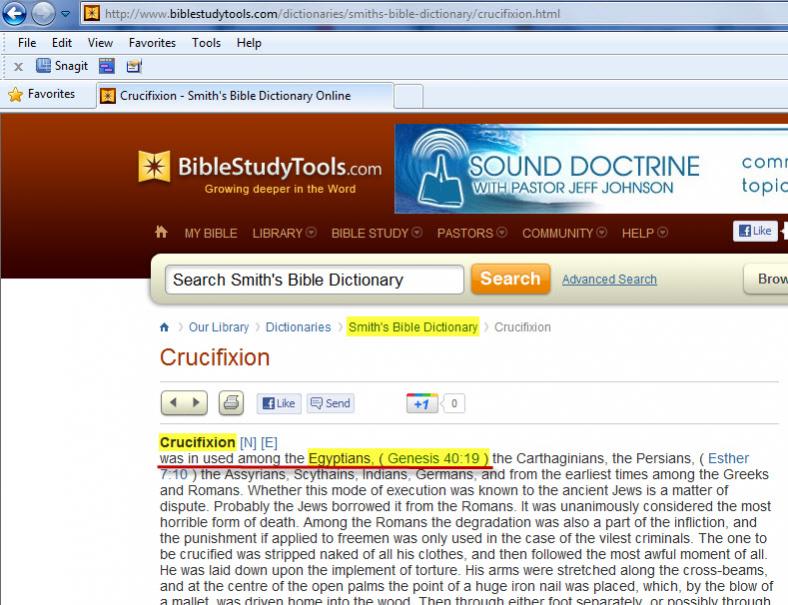
Screenshot from Smith's Bible Dictionary entry on crucifixion confirming that crucifixion was used by the Egyptians as stated in Genesis 40:19

Smith’s Bible Dictionary states under the entry for crucifixion: “Crucifixion was used by the Egyptians, as stated in Genesis.” This is a Christian reference source confirming from within Biblical scholarship that the ancient Egyptians practiced crucifixion.


Third Evidence — The Gesenius Hebrew and Chaldee Lexicon

The following image is from Gesenius’s Hebrew and Chaldee Lexicon showing the entry for the Hebrew word used in Genesis 40:19.
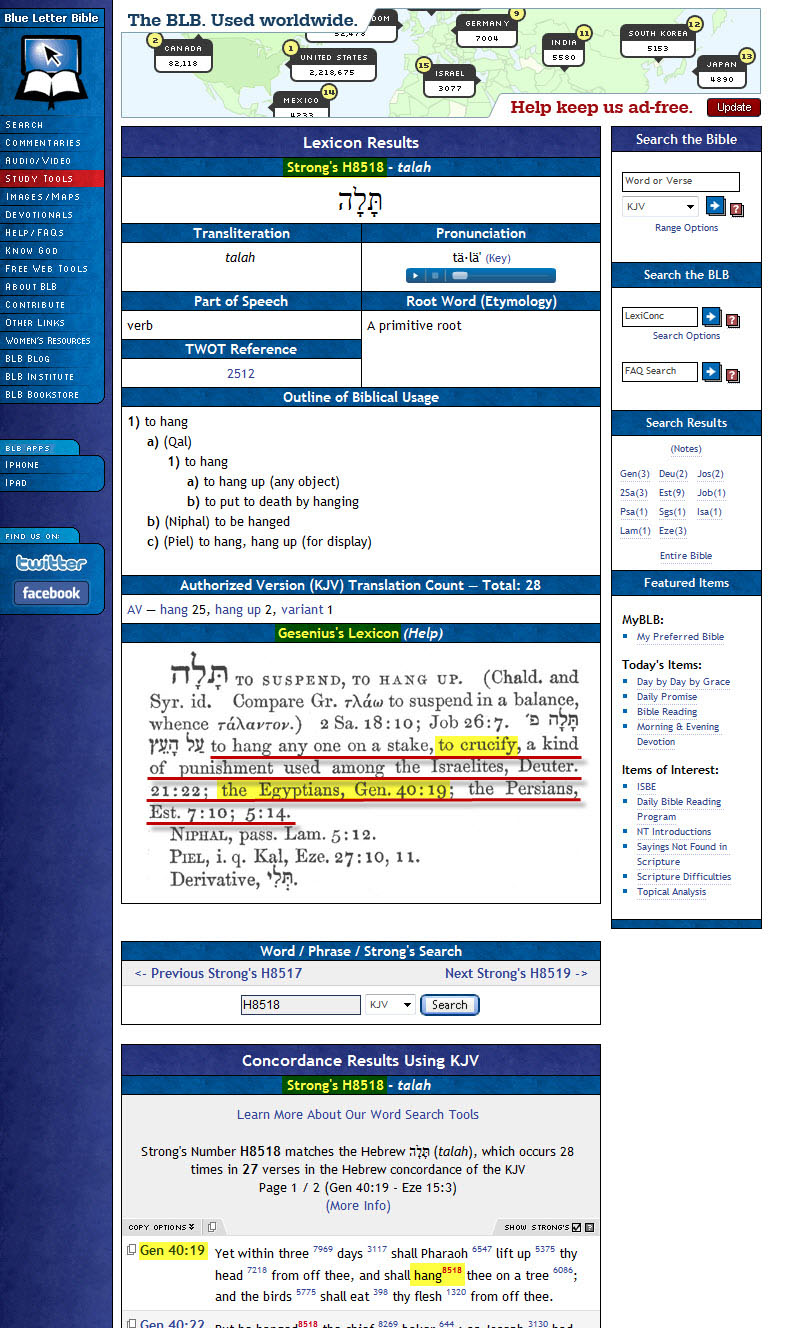
Screenshot from Gesenius's Hebrew and Chaldee Lexicon showing that the Hebrew word תָּלָה used in Genesis 40:19 includes crucifixion among its meanings

The Hebrew word תָּלָה (talah) used in Genesis 40:19 — translated as “hang” — includes crucifixion among its documented meanings in the Gesenius Hebrew and Chaldee Lexicon. The lexicographic evidence therefore confirms that the type of hanging described in the Genesis verse falls within the semantic range of crucifixion as a form of capital punishment.


Fourth Evidence — Egyptological Historians on Crucifixion and Amputation

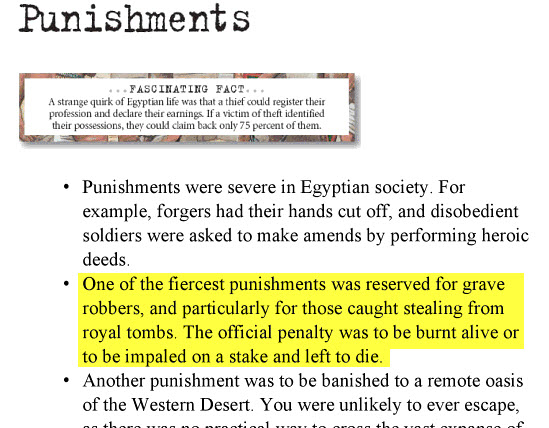
The following image is the first screenshot from Egyptological historians documenting crucifixion as a punishment in ancient Egypt.
First screenshot from Egyptological historical sources documenting that among the official punishments of ancient Egypt was burning alive and piercing on a stake which is impalement as a type of crucifixion

Historians of Pharaonic civilization document that among the official punishments of ancient Egypt was burning alive, or piercing the body on a stake and leaving it until death — impalement — which is one of the types of crucifixion.

The following image is the second screenshot from the same Egyptological sources.
Second screenshot from Egyptological historical sources confirming ordinary criminals were punished by amputation of the nose and ear and heinous criminals by crucifixion on a stake

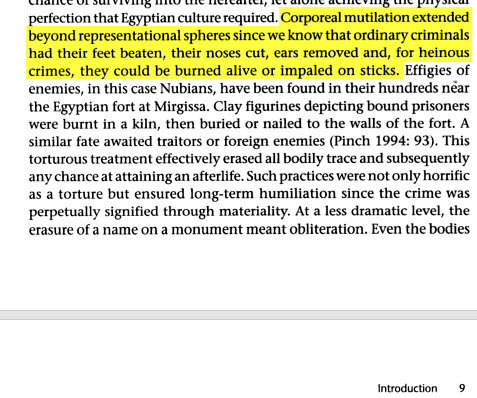
The Egyptological record establishes: “Ordinary criminals were punished by amputation of the nose and ear and beating of the feet. In heinous crimes, the criminal was burned alive or crucified on a stake.” Both amputation and crucifixion are confirmed as distinct punishments in the ancient Egyptian system.

The following two images are from additional Egyptological historical sources further documenting these punishments.
First screenshot from additional Egyptological historical sources confirming ordinary criminals were punished by amputation of the nose and ear and heinous criminals by burning alive or crucifixion on a stake

The documentation of these punishments appears across multiple independent Egyptological sources, confirming this was not an isolated or disputed claim about ancient Egyptian penal practice.
Second screenshot from additional Egyptological historical sources on amputation and crucifixion as punishments in ancient Egypt


Fifth Evidence — Impalement as a Type of Crucifixion

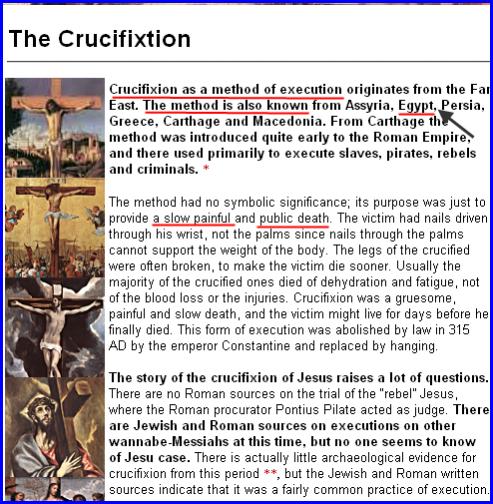
The following image is from bibletools.org confirming that impalement is classified as a form of crucifixion.
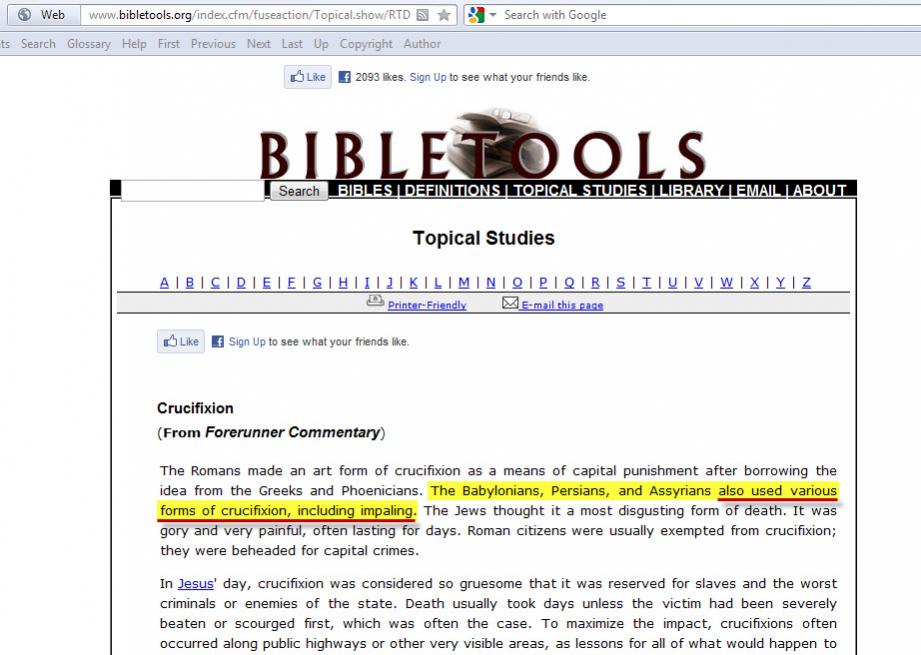
Screenshot from bibletools.org confirming that the Babylonians Persians and Assyrians used different types of crucifixion including hanging on a stake which is impalement

The bibletools.org website states: “The Babylonians, Persians, and Assyrians used different types of crucifixion, including hanging on a stake (impalement).” Egypt was part of the broader ancient Near Eastern world and shared these penal practices.


Sixth Evidence — The Encyclopedia of the Bible

The following image is from the Encyclopedia of the Bible confirming the historical use of crucifixion in the ancient world.
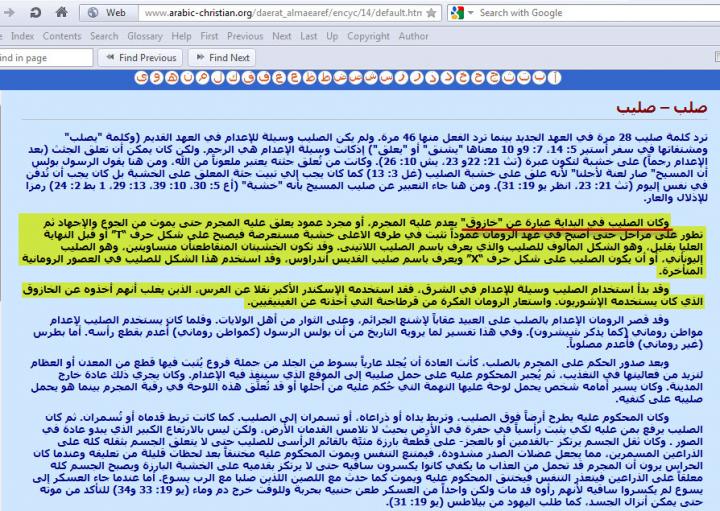
Screenshot from the Encyclopedia of the Bible on the historical use of crucifixion in the ancient world confirming its presence across Near Eastern civilizations contemporary with Pharaonic Egypt

The Encyclopedia of the Bible confirms the historical use of crucifixion in the ancient world including in the civilizations of the Near East contemporary with Pharaonic Egypt.


Seventh Evidence — The History of the Cross in Heritage and Art

The following two images are from a book on the cross in heritage, history, and art, illustrating the two historical types of crucifixion.
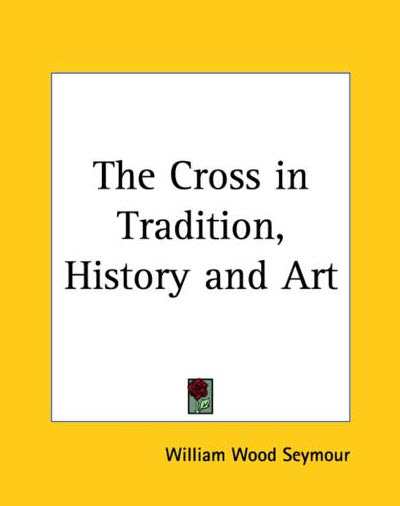
First image from the book on the cross in heritage history and art illustrating crucifixion on a stick as one of the two historical forms of the punishment

The book documents two historical types of crucifixion: crucifixion on a stick, and crucifixion by hanging from a stake through impalement.
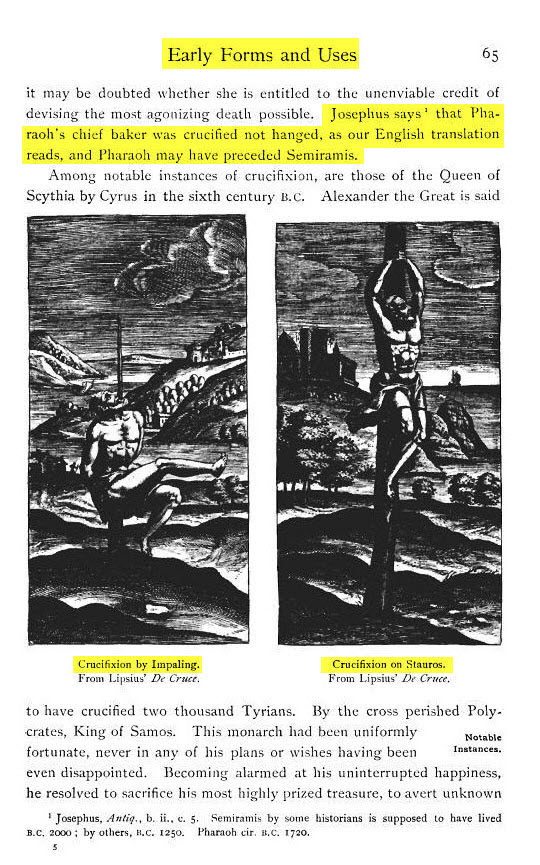
Second image from the book on the cross showing the form of crucifixion by hanging from a stake through impalement as practiced in the ancient world

Both forms were known and practiced in the ancient world in which Egypt participated.


Eighth Evidence — The Horus Crucifixion in Ancient Egyptian Mythology

The following image shows a representation associated with the Egyptian god Horus in a posture linked to crucifixion in Egyptian religious iconography.
Ancient Egyptian representation associated with the god Horus depicting outstretched arms in a crucifixion posture as described by Thomas W. Doane in Bible Myths and Their Parallels in Other Religions

Thomas W. Doane writes in Bible Myths and Their Parallels in Other Religions — cited in Christ In Egypt by D.M. Murdock: “Horus was also crucified in the heavens. He was represented, like Christ Jesus, with outstretched arms in the vault of heaven.” The concept of crucifixion was therefore embedded in ancient Egyptian religious consciousness at the mythological level — confirming that the punishment and its visual representation were deeply familiar to the ancient Egyptian world.


Ninth Evidence — The Islamic Awareness Papyri Archive

The Islamic Awareness website (islamic-awareness.org) maintains an archive of Pharaonic papyri documenting the punishment of crucifixion in ancient Egypt. These papyrological records constitute primary source documentation from ancient Egypt itself — original documents from the Pharaonic period — confirming the existence of this form of punishment independent of all the Biblical and secondary scholarly sources cited above. These papyri represent the voice of ancient Egypt’s own administrative and legal record-keeping tradition on this subject.


Tenth Evidence — Amputation of Limbs in Ancient Egypt

The book Punishment and Reformation documents that amputation and mutilation were ancient punishments known to the Egyptians.
Screenshot from the book Punishment and Reformation stating that amputation and mutilation are ancient punishments known to the Egyptians with examples including amputation of the hand for forgery and the tongue for divulging state secrets

The book states: “Amputation and mutilation are ancient punishments known to the Egyptians.” It gives specific examples — amputation of the hand of a forger, amputation of the tongue of someone who divulged state secrets. Limb amputation was therefore a standard element of the ancient Egyptian penal system.


Eleventh Evidence — The Scope of Amputation in Ancient Egypt

The following two images are from a scholarly work specifically addressing amputation in ancient Egypt.
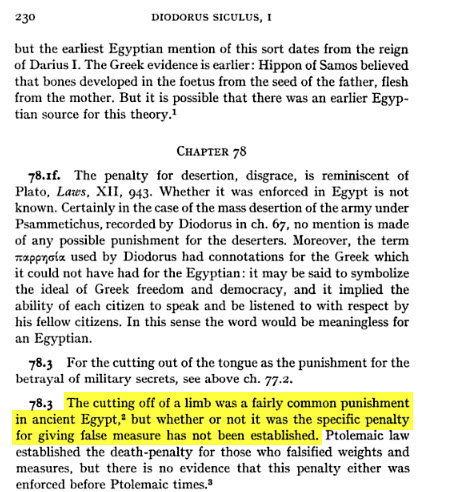
First image from the scholarly work settling the question of amputation among ancient Egyptians confirming it was a widespread punishment not limited to narrow offenses

The scholarly source states: “Amputation of limbs was a widespread punishment among the ancient Egyptians, and it is not proven that it was only a punishment for those who gave incorrect measurements.” This explicitly refutes any narrowing of the scope of amputation in ancient Egyptian penal practice.
Second image showing the text confirming the widespread nature of amputation as punishment in ancient Egypt across multiple offense categories

Limb amputation was a general punishment applicable across a wide range of offenses in ancient Egypt.


Twelfth Evidence — The Pharaoh’s Discretion in Combining Punishments

The following two images are from a work specializing in ancient Pharaonic civilization, documenting the legal procedure for sentencing.
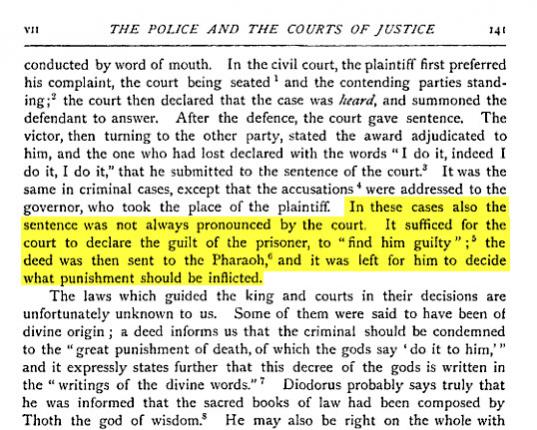
First screenshot from a book on ancient Pharaonic civilization documenting that the court declared guilt and the Pharaoh personally decided the type of punishment to be applied

The source states: “Sometimes the court bears the responsibility of declaring the prisoner guilty. Then the Pharaoh decides the type of punishment.” Punishment was at the Pharaoh’s personal discretion — not bound to a fixed prescribed penalty.
Second screenshot confirming that the Pharaoh decided the type of punishment after the court determined guilt allowing complete discretion in choice and combination of penalties

The Pharaoh could combine punishments at will. The following image settles the question of combination explicitly.
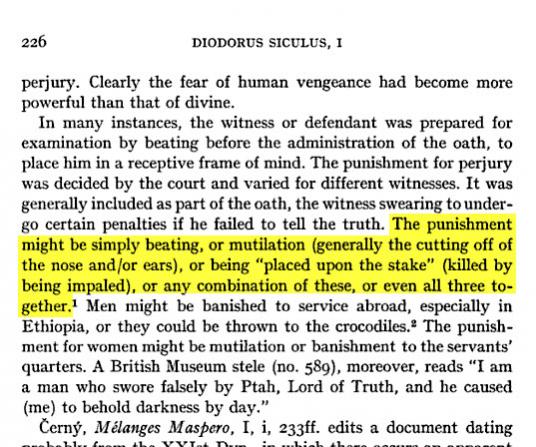
Screenshot showing the scholarly text confirming that punishments in ancient Egypt could include beating amputation and impalement or any two combined or all three together applied to the same person

The source states: “The punishment may be beating, amputation (generally cutting off the nose and/or ear), or impalement (killing by piercing) — or any two of them combined, or even all three punishments together.” This definitively establishes that in ancient Egyptian judicial practice, multiple punishments including amputation and crucifixion could be applied to the same person sequentially. The Quranic description of Pharaoh threatening both punishments in sequence is historically coherent.


Thirteenth Evidence — The Medinet Habu Mural: Hand Amputation

The following image is a Pharaonic mural from Medinet Habu showing that cutting off the hand at the palm was practiced in ancient Egypt.
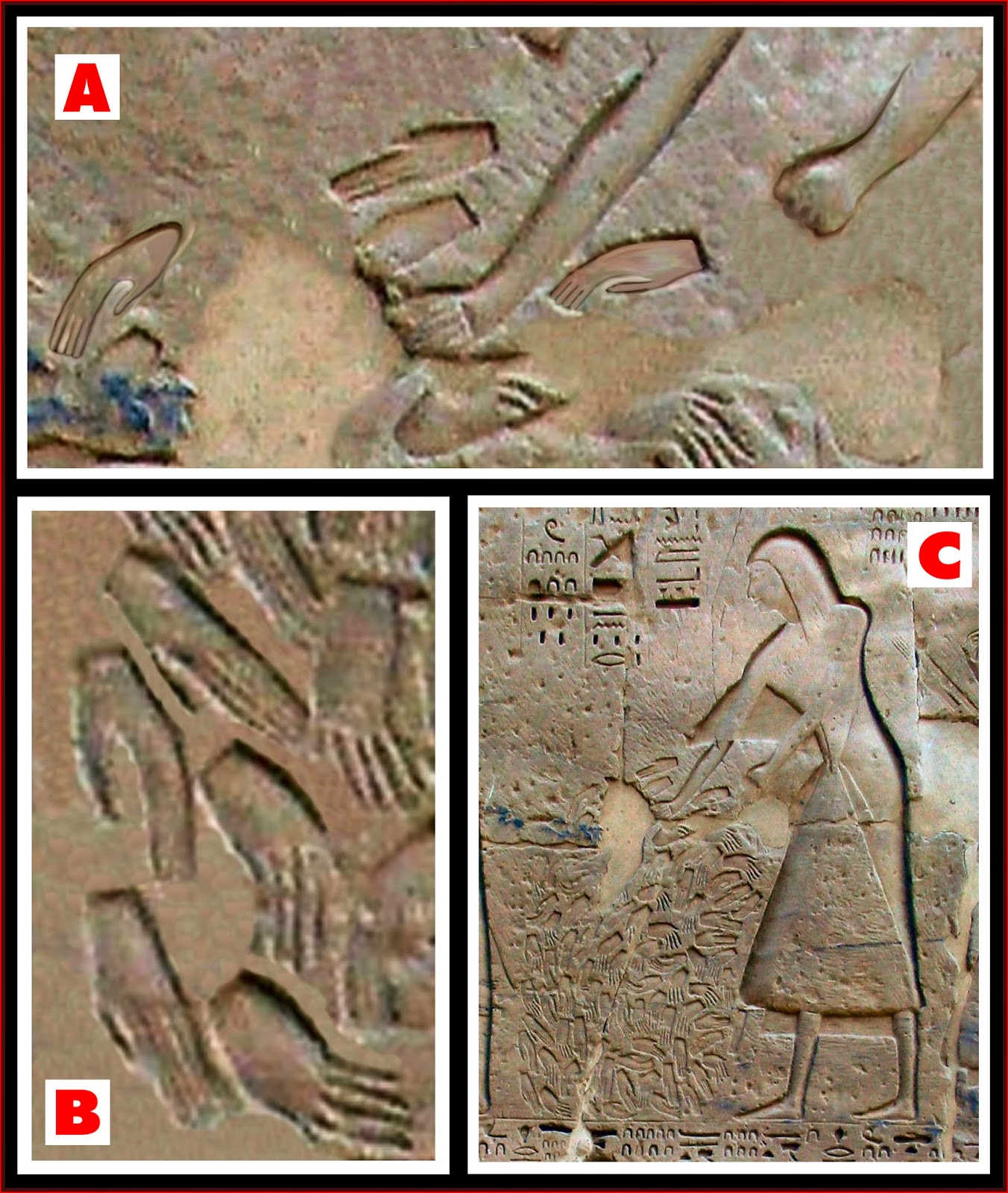
Pharaonic mural from Medinet Habu depicting the cutting off of hands at the palm as a form of punishment or post-battle penalty practiced in ancient Egypt

The Medinet Habu mural is one of the most important surviving visual records of ancient Egyptian military and judicial practice. It depicts amputated hands — confirming that hand amputation at the palm was a documented practice in ancient Egypt.

The following image shows an additional mural documenting hand amputation at the palm.
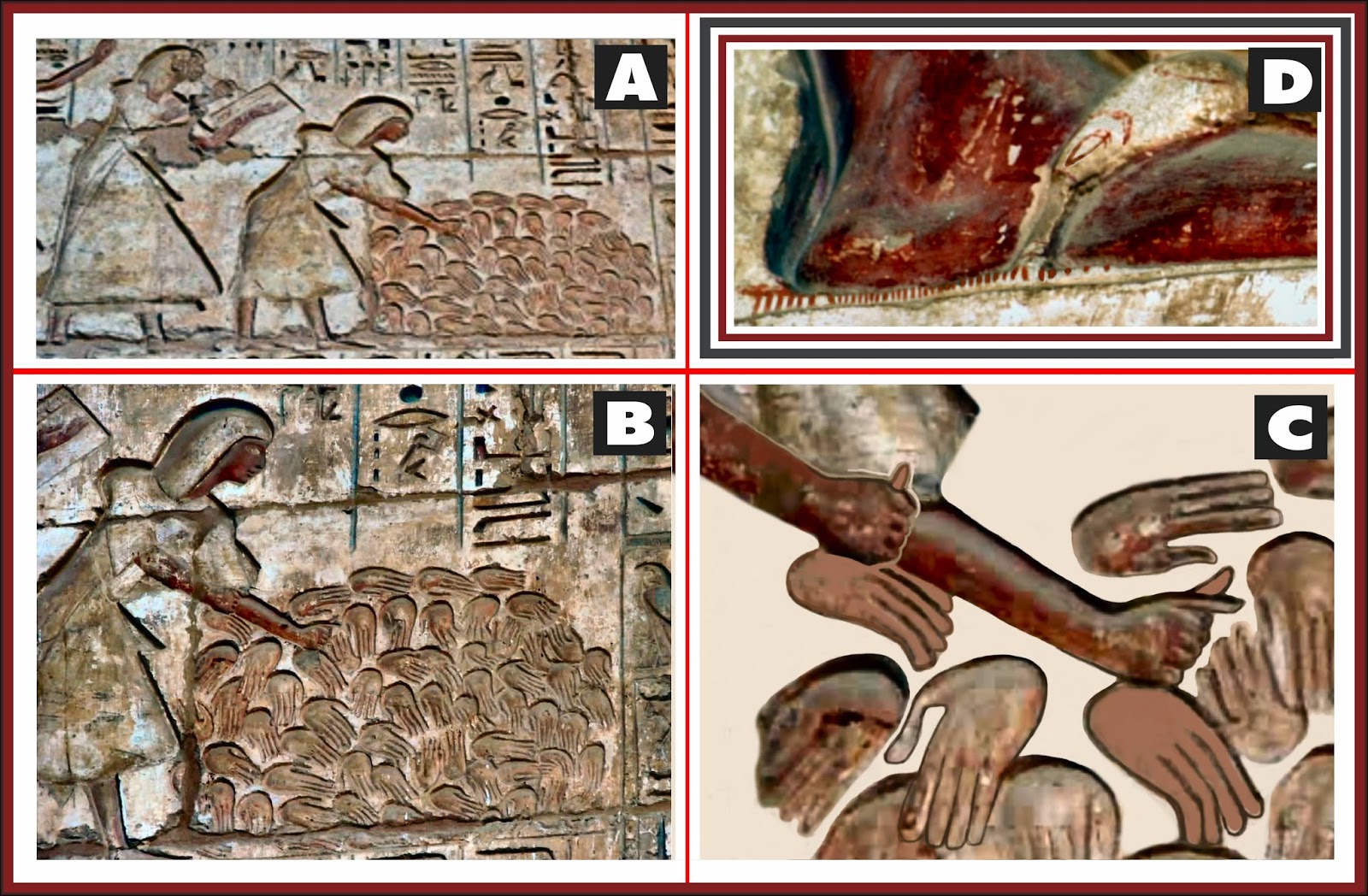
Additional ancient Egyptian mural showing hand amputation at the palm as a documented practice in Pharaonic Egypt


Fourteenth Evidence — The Edfu Temple Mural: Crucifixion with Cut Hands

The following image is a mural from the Edfu Temple showing the method of hanging on wood — crucifixion — as practiced in ancient Egypt.
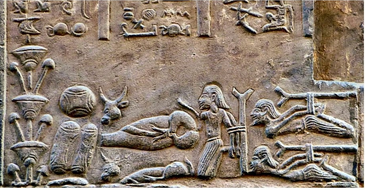
Mural from the Edfu Temple in ancient Egypt depicting the hanging of a figure on wood constituting crucifixion as a form of punishment in Pharaonic Egypt

The Edfu Temple mural depicts a figure crucified on wood. Close examination reveals that the figure’s hands have been cut off at the palms — showing the combination of amputation and crucifixion within a single ancient Egyptian visual record.

The following image is a close-up of the Edfu Temple mural confirming the specific details of the combined punishment depicted.
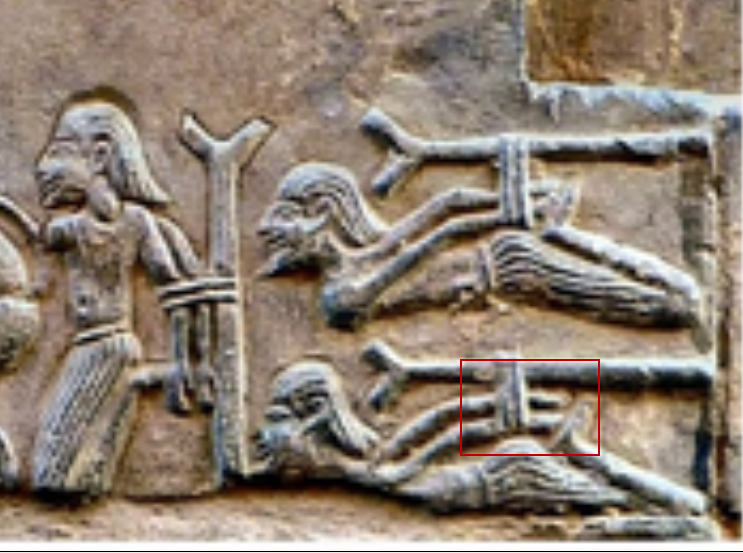
Close-up of the Edfu Temple mural showing an ancient Egyptian figure crucified on wood with hands cut off at the palms combining the two punishments of amputation then crucifixion described in Quran 7:124

The close-up confirms: a figure is crucified on wood with its hands cut off at the palms. This is the precise combination — limb amputation followed by crucifixion — that the Quran attributes to Pharaoh’s threat in Al-A’raf 7:124. The objection has been answered from the ancient Egyptians’ own visual art.


Conclusion — Fourteen Lines of Evidence, One Verdict The Quran’s attribution of crucifixion and limb amputation to Pharaoh in Al-A’raf 7:124 is historically documented from fourteen independent lines of evidence. The Bible itself confirms that the Pharaoh of Joseph’s time — before the Pharaoh of Moses — threatened crucifixion by hanging on a tree (Genesis 40:19). Smith’s Bible Dictionary explicitly states that crucifixion was used by the Egyptians. The Gesenius Hebrew Lexicon confirms that the Hebrew word in Genesis 40:19 includes crucifixion. Egyptological scholarship documents both impalement and limb amputation as distinct punishments in ancient Egypt. bibletools.org confirms impalement is a recognized form of crucifixion. The Encyclopedia of the Bible confirms crucifixion in the ancient Near East. A historical work on the cross illustrates two types of crucifixion. Ancient Egyptian mythology depicts Horus in a crucifixion posture. The Islamic Awareness papyri archive provides papyrological primary source records from ancient Egypt. The book Punishment and Reformation confirms amputation was known to the Egyptians. Scholarly Egyptology confirms amputation was widespread and not limited to narrow offenses. Pharaonic legal procedure gave the Pharaoh personal discretion to combine punishments, and explicit sources confirm amputation and crucifixion could be combined in a single sentence. The Medinet Habu murals depict hand amputation at the palm. The Edfu Temple mural depicts a crucified figure with hands cut off at the palms — the exact combination Quran 7:124 describes. The objectors produced no document contradicting the Quran. The evidence is complete.
2025 https://www.openislam.wiki/og/pharaoh-threatened-crucifixion-and-amputation-in-quran-7-124-the-historical-and-archaeological-evidence-for-both-punishments-in-ancient-egypt.png