

Pharaoh's Claim to Divinity: Quran Confirmed by Egyptology
The Quran makes a precise historical claim about Pharaoh that directly contradicts the Torah — and that modern Egyptology has since confirmed. Fourteen hundred years before archaeologists excavated the relevant hieroglyphic inscriptions, the Quran recorded that Pharaoh declared himself the supreme lord. The Torah, by contrast, inverts the relationship entirely: it states that Moses was made a god to Pharaoh, not the other way around. This is one of the clearest cases in which the Quran diverges from the surrounding textual environment of its time and is vindicated by later archaeological discovery.
The Quranic Claim: Pharaoh Declared Himself the Supreme Lord
The Quran identifies Ramses IIMost scholars identify the Pharaoh of the Exodus narrative with Ramses II, based on archaeological and textual evidence from the Egyptian New Kingdom period. as a man who gathered his people and made a direct claim to divine supremacy.
Then he gathered [his people] and called out, saying: “I am your most high lord.”
And Pharaoh said: “O eminent ones, I know of no god for you other than myself.”
He said: “If you take a god other than me, I will surely put you among the imprisoned.”
These verses present a consistent portrait: Pharaoh did not merely hold political authority — he claimed theological supremacy, threatening imprisonment for anyone who acknowledged another deity.
The Torah’s Contradiction: Moses Was a God to Pharaoh
The Torah, which was the most important historical document available during the time of the Prophet Muhammad ﷺ, presents the opposite relationship. Rather than Pharaoh being a god to the people, the Torah makes Moses into a god-figure to Pharaoh.
This is a direct inversion of the Quranic account. The Torah does not contain any statement from Pharaoh claiming divinity or declaring himself the supreme lord. The Quran therefore diverges sharply from the textual tradition that surrounded it — and this divergence was not a borrowing or an error. It was a correction.
What Egyptology Confirmed: Ramses II Did Claim Divinity
Modern Egyptological research, conducted centuries after the Quran’s revelation, has excavated and deciphered hieroglyphic inscriptions that confirm the Quranic account with remarkable precision. The findings establish three specific points that the Quran anticipated:
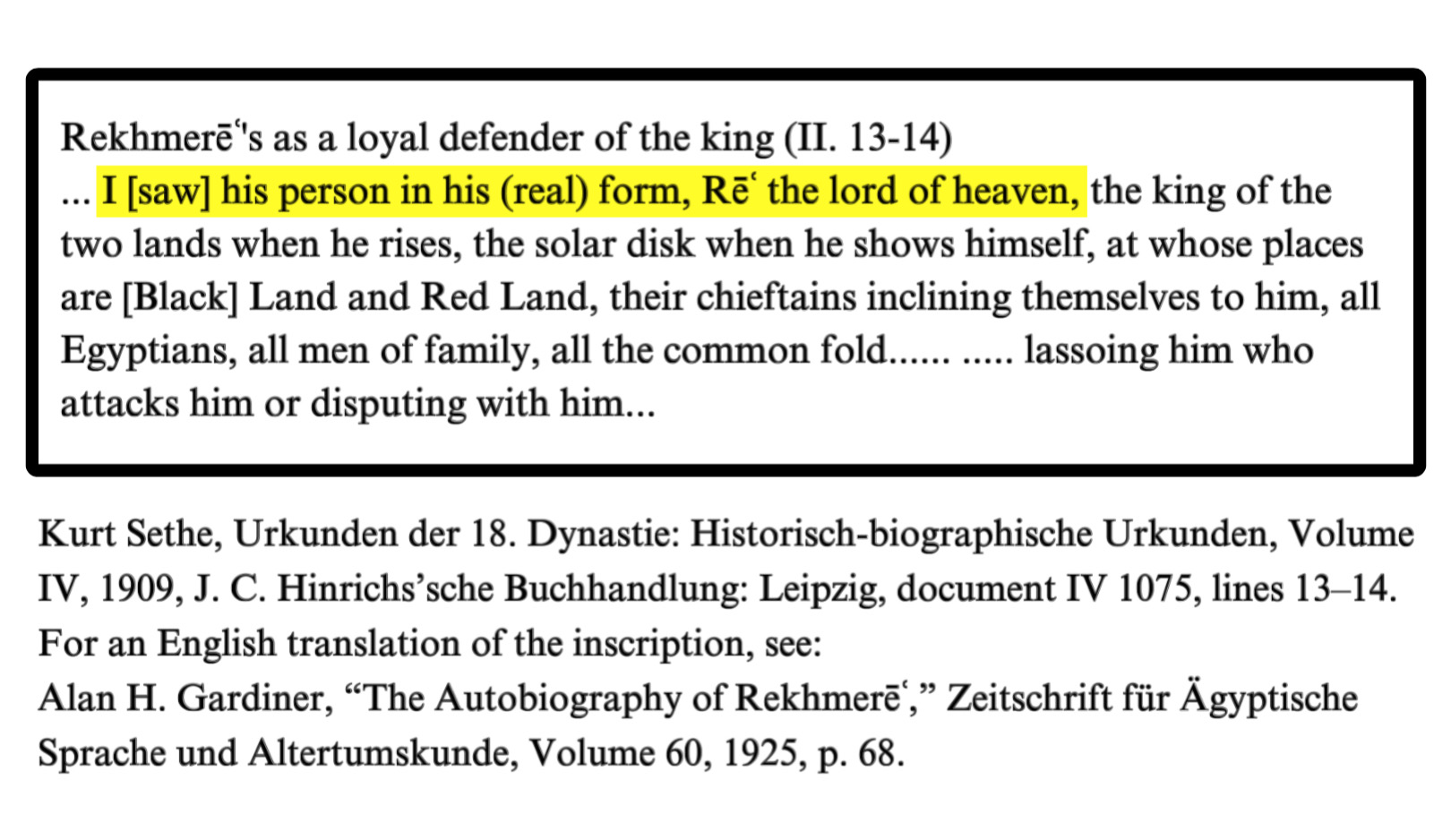
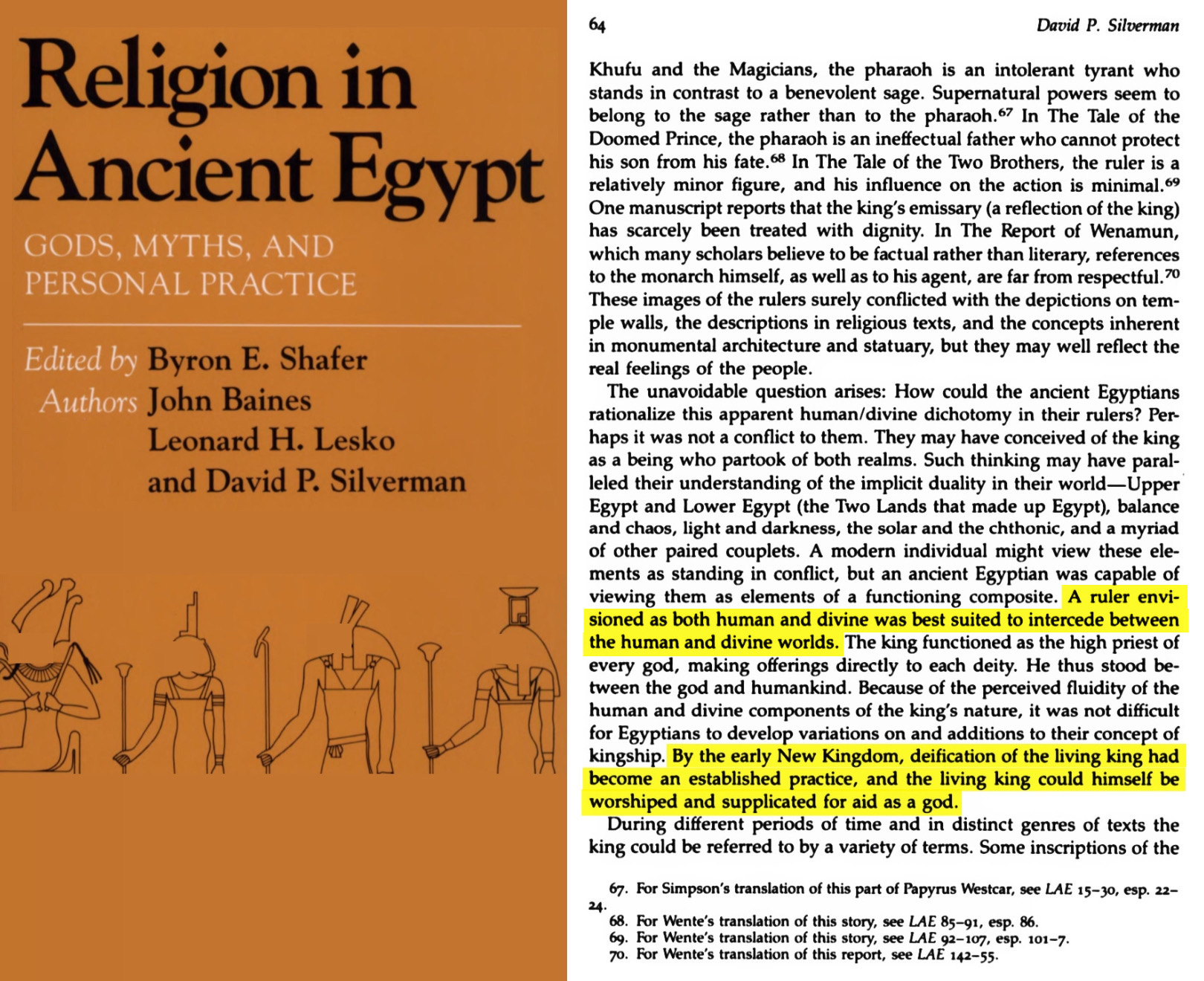
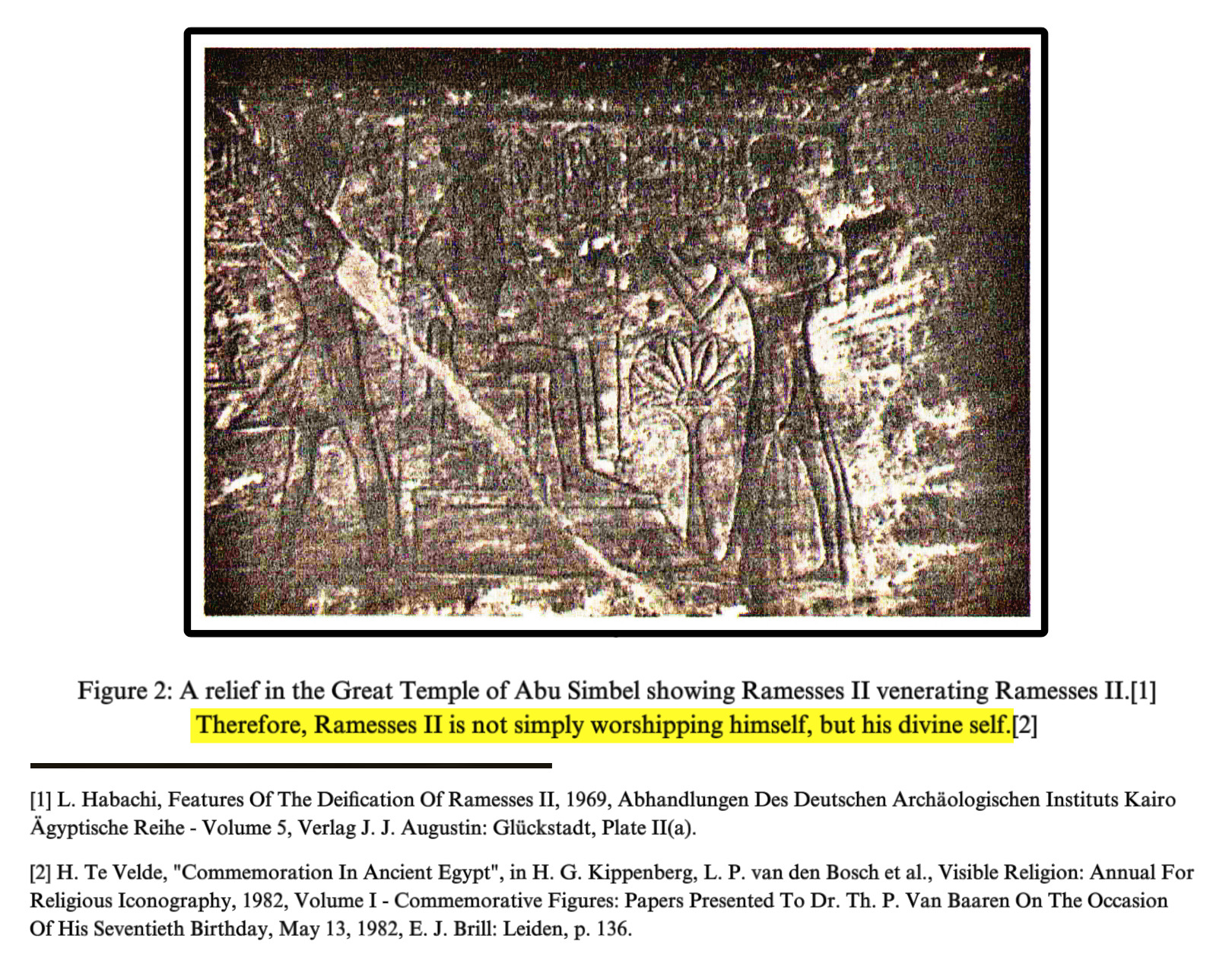
First: Ramses II claimed that his body “was not devoid of a divine essence because he had unified all divine entities within himself.” He did not merely claim to be a god — he claimed to be the unification of all divine entities.
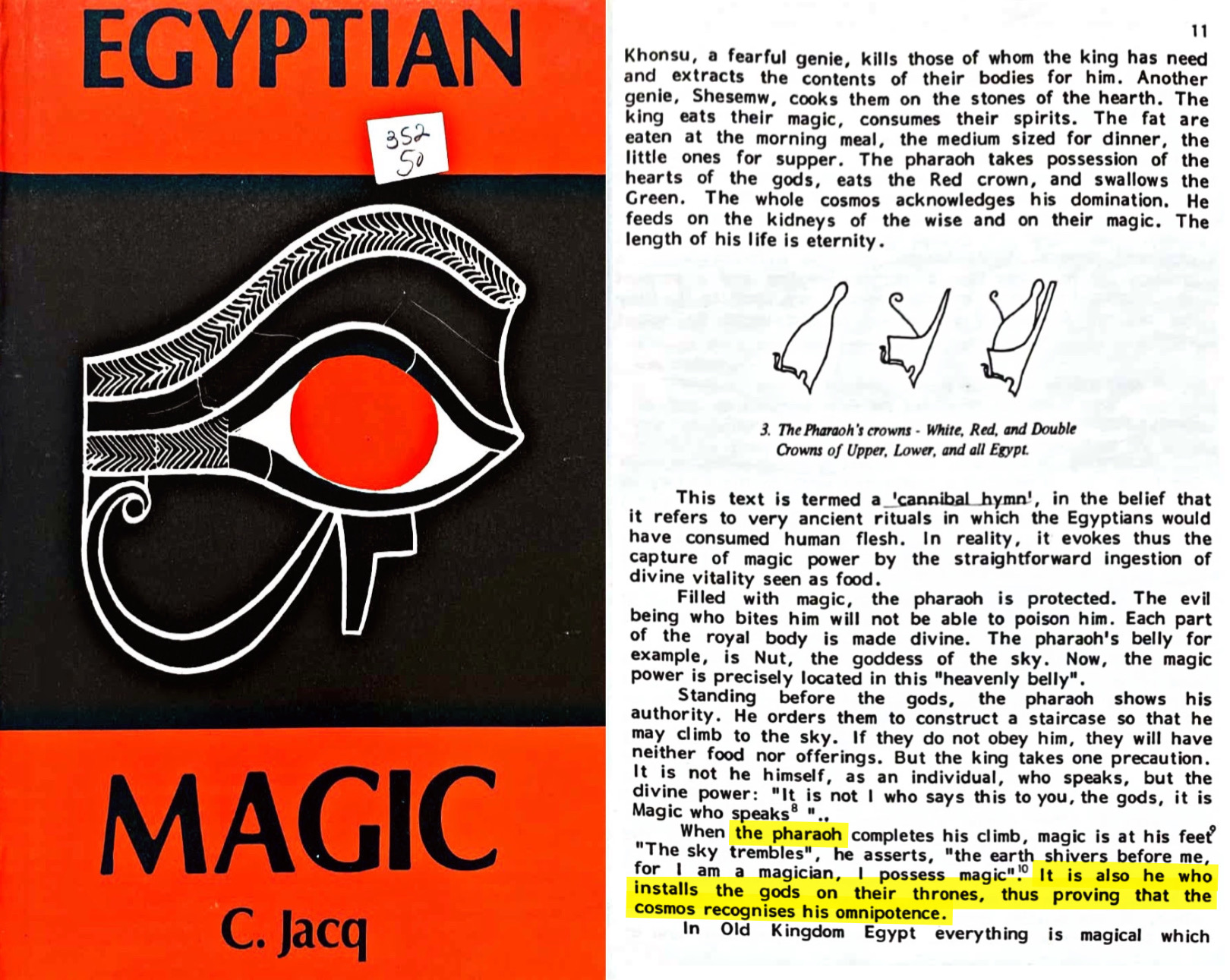
Second: He declared himself “the one who has no equal, and the one who places the gods on their thrones” — meaning he determined which entities held divine status and which did not. He was not a worshipper of the gods in any ordinary sense; he was their controller and superior.
Third: He explicitly threatened the other gods with deprivation if they did not obey him. The source C. Jacq, in Egyptian Magic (p. 11), records: “Standing before the gods, the Pharaoh demonstrates his authority. He orders them to construct a staircase so that he may ascend to the sky. If they do not obey him, they will have neither food nor offerings.”
The Quran was not influenced by any historical error present in the Torah. It recorded the accurate account of a man who claimed divine supremacy — an account that lay buried in undiscovered inscriptions for over a millennium after the Quran’s revelation.
The following scan documents this Egyptological evidence:
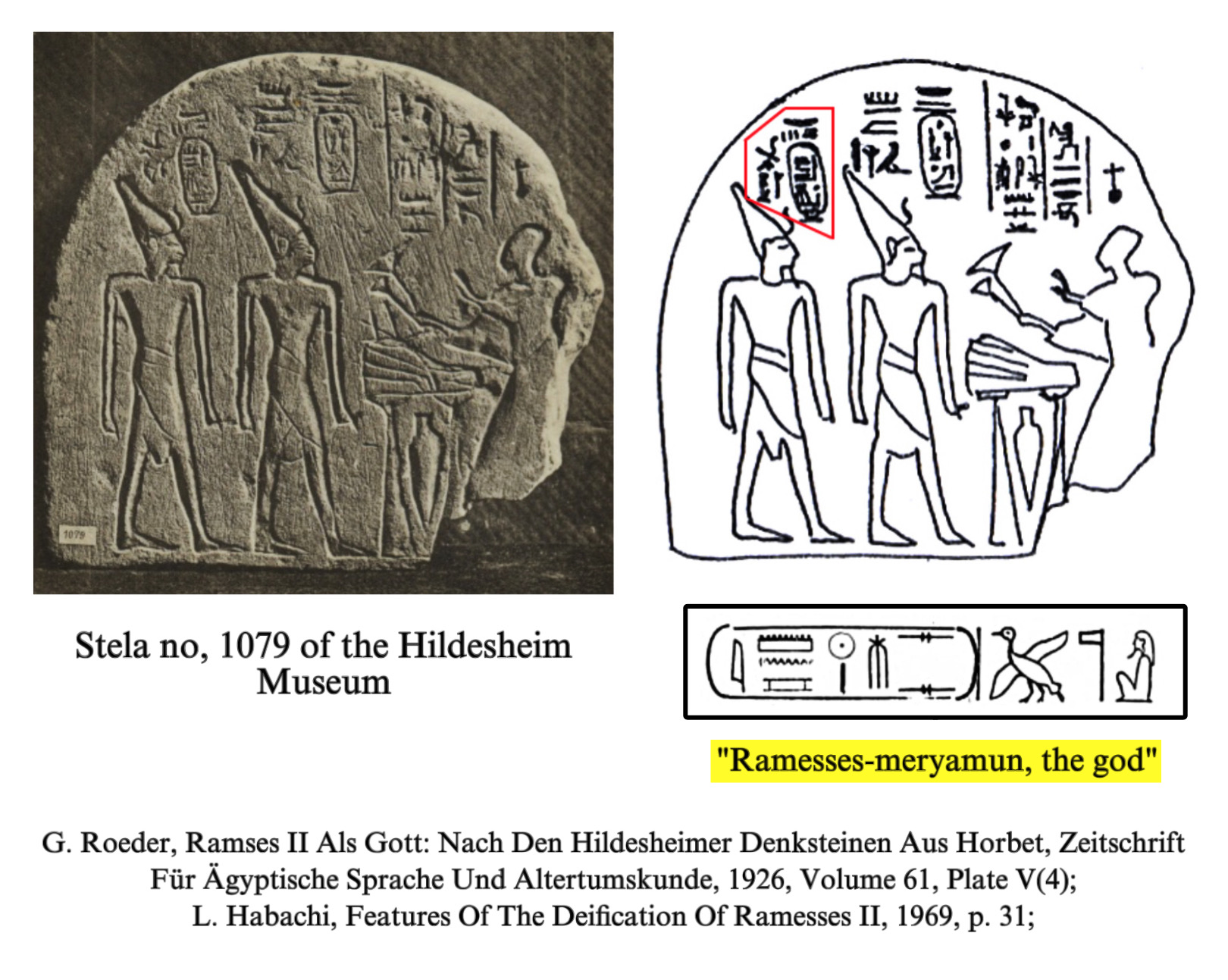
The evidence continues across the following source page:
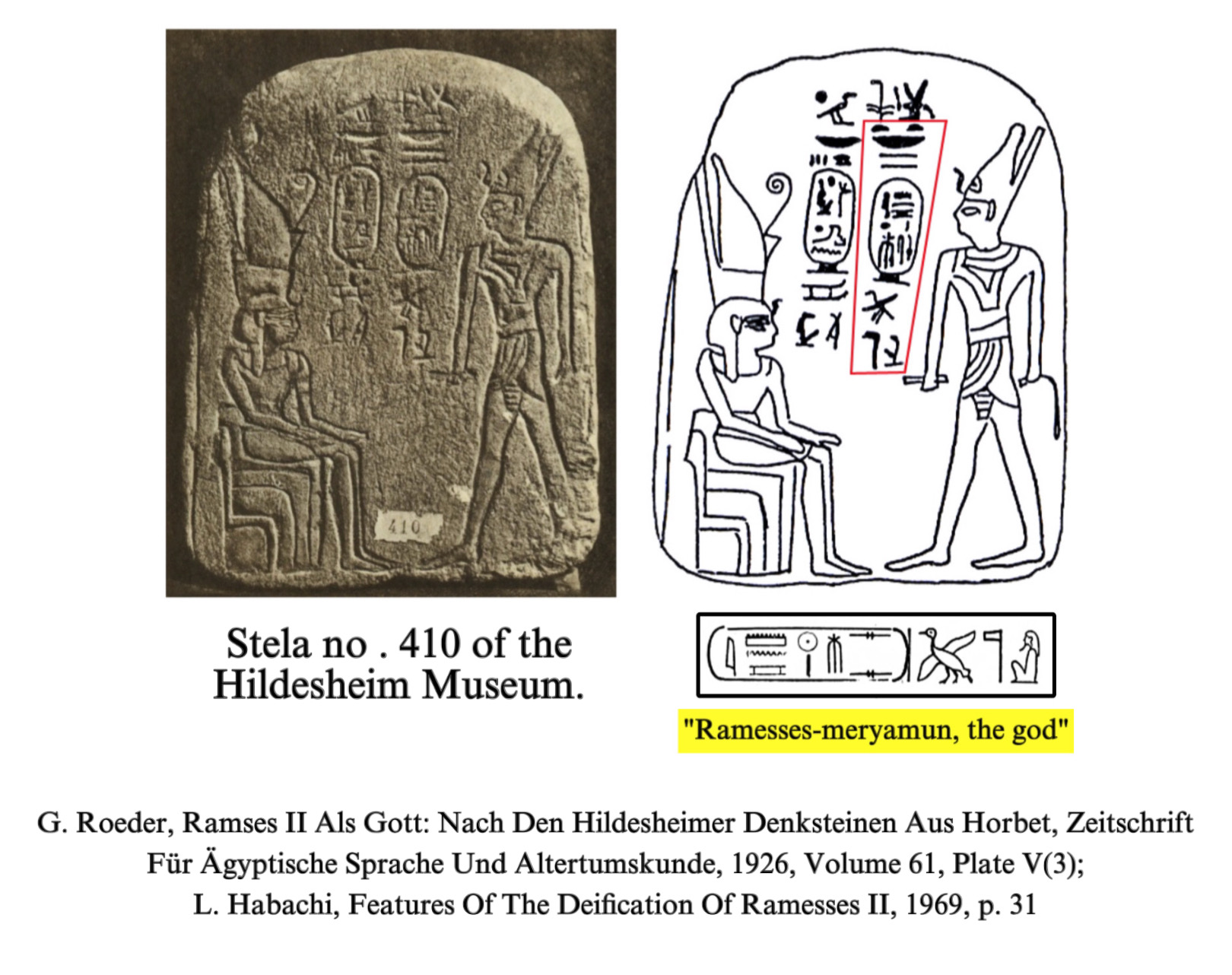
Further corroborating material from the primary sources:
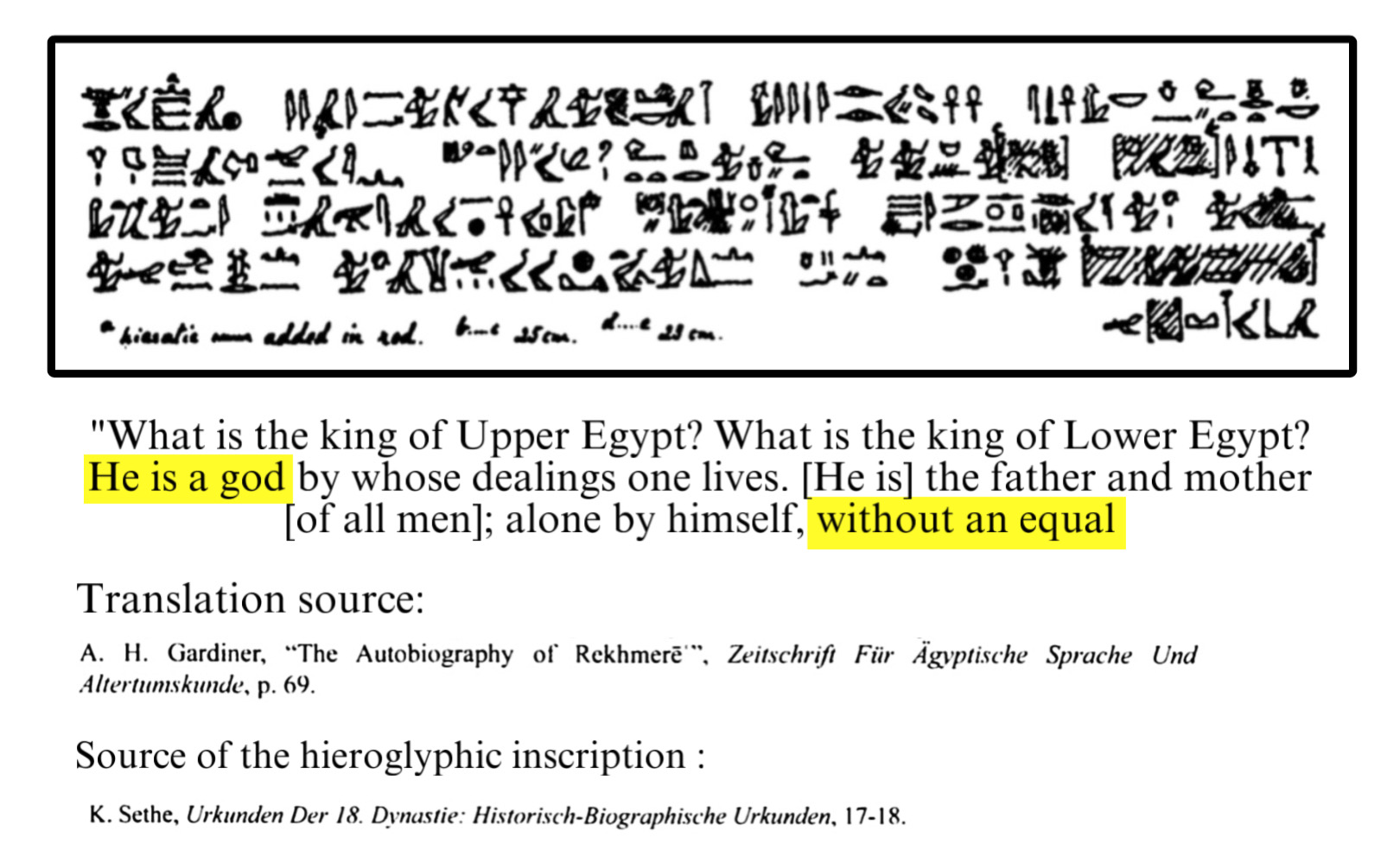
The Apparent Contradiction: If Pharaoh Was a God, Why Did He Have Gods?
A distinct objection arises from Surah Al-A’raf, which appears to show Pharaoh’s people referring to gods that Pharaoh himself maintained. This seems to create an internal Quranic tension with his claim to be the only god.
“And He leaves you and your gods.”
First — The Unified Divine Body: Hieroglyphic inscriptions establish that Pharaoh’s claim to divinity was not a simple monotheistic self-deification. Rather, his body “was not devoid of a divine essence because he had unified all divine entities within himself.” He simultaneously claimed supremacy over the gods while claiming to contain those gods within his own person. He worshipped what dwelt within him, and what dwelt within him was the totality of the divine realm. This explains how he could have gods and be the supreme lord simultaneously.
Second — The Quranic Reading of Al-Tabari and Ibn Abbas: Al-Tabari records an alternative reading of Al-A’raf 7:127 in which the word rendered as “gods” (plural, masculine) is instead read as a feminine singular — referring to a specific female deity. Ibn Abbas identifies this deity as Al-Baqarah — the cow. This would mean the verse reads: “And He leaves you and your [cow-goddess].”
The Cow Goddess Hathor: Confirmed by Egyptian Archaeology
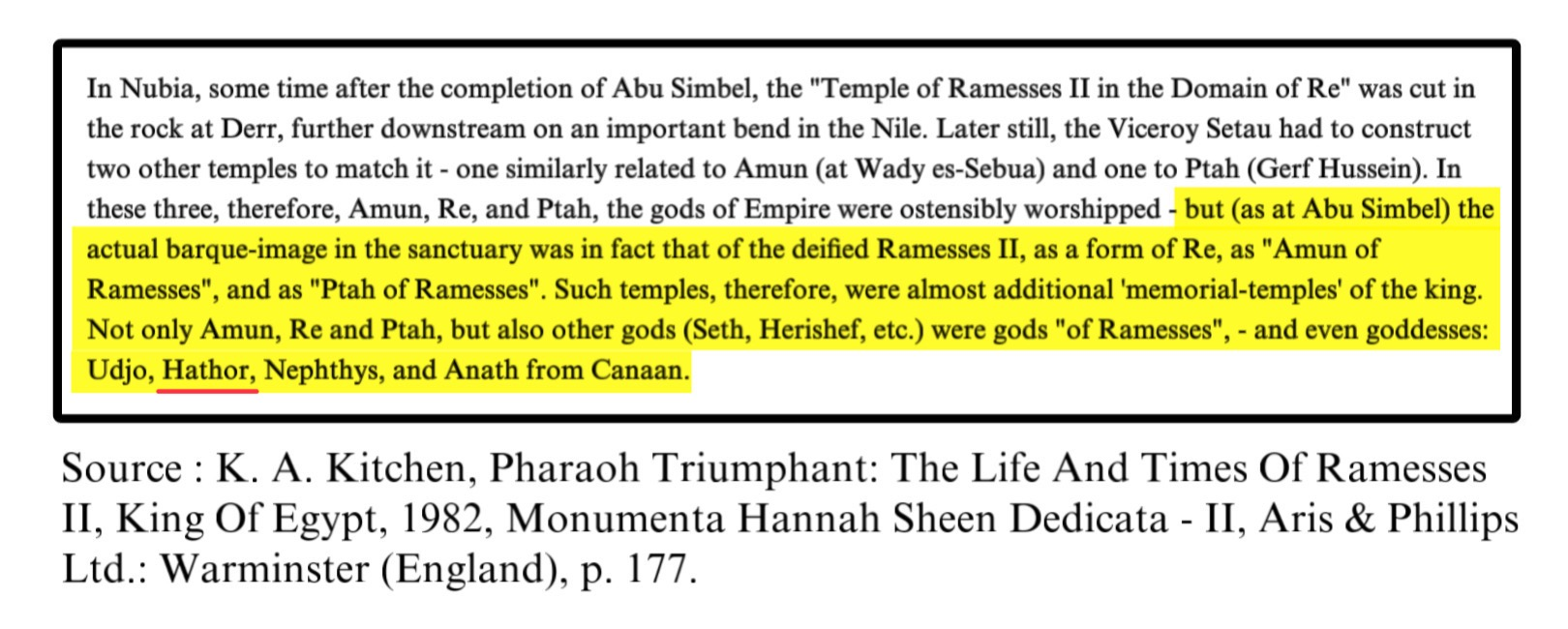
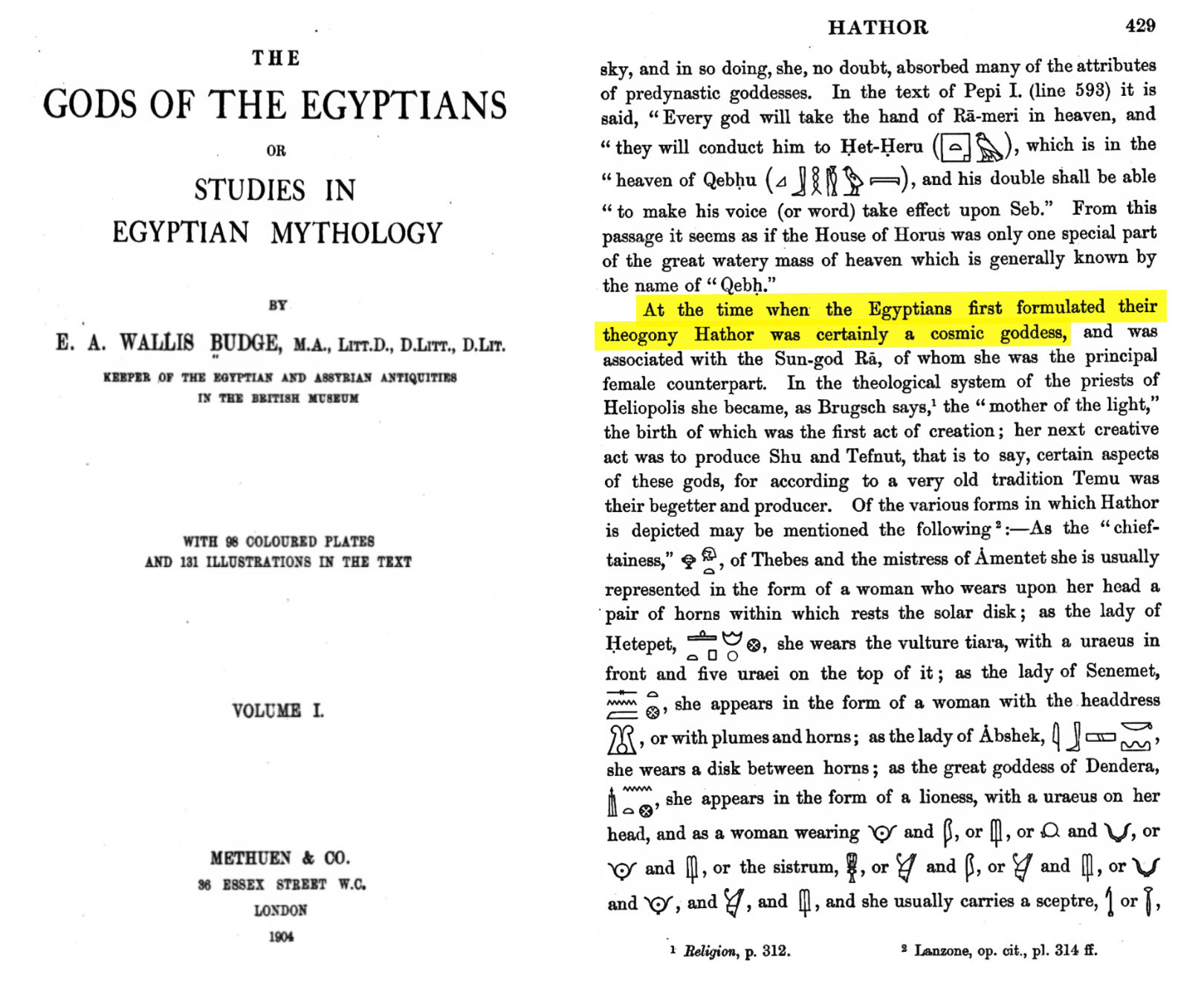
The identification by Ibn Abbas of a specific bovine female deity worshipped by Pharaoh is a remarkable detail. Egyptological finds have confirmed that among the divine entities “united within Pharaoh’s body” was the cow goddess Hathor — described in Egyptian religious texts as the mother of the gods and the greatest divine entity among the Pharaohs.
This means the Quran preserves two levels of accuracy simultaneously:
- The plural reading (Hafs’s recitation): Pharaoh had multiple deities — confirmed by Egyptology’s finding that numerous divine entities were held to reside within him.
- The singular feminine reading (Ibn Abbas’s reading via Al-Tabari): Pharaoh worshipped a specific female deity — the cow goddess — confirmed by Hathor’s supreme status in Pharaonic religion.
Both readings are corroborated by Egyptian artifacts. Neither reading was available from the Torah or from any surrounding textual tradition accessible in 7th-century Arabia.
The following scans show the relevant source material for this section:
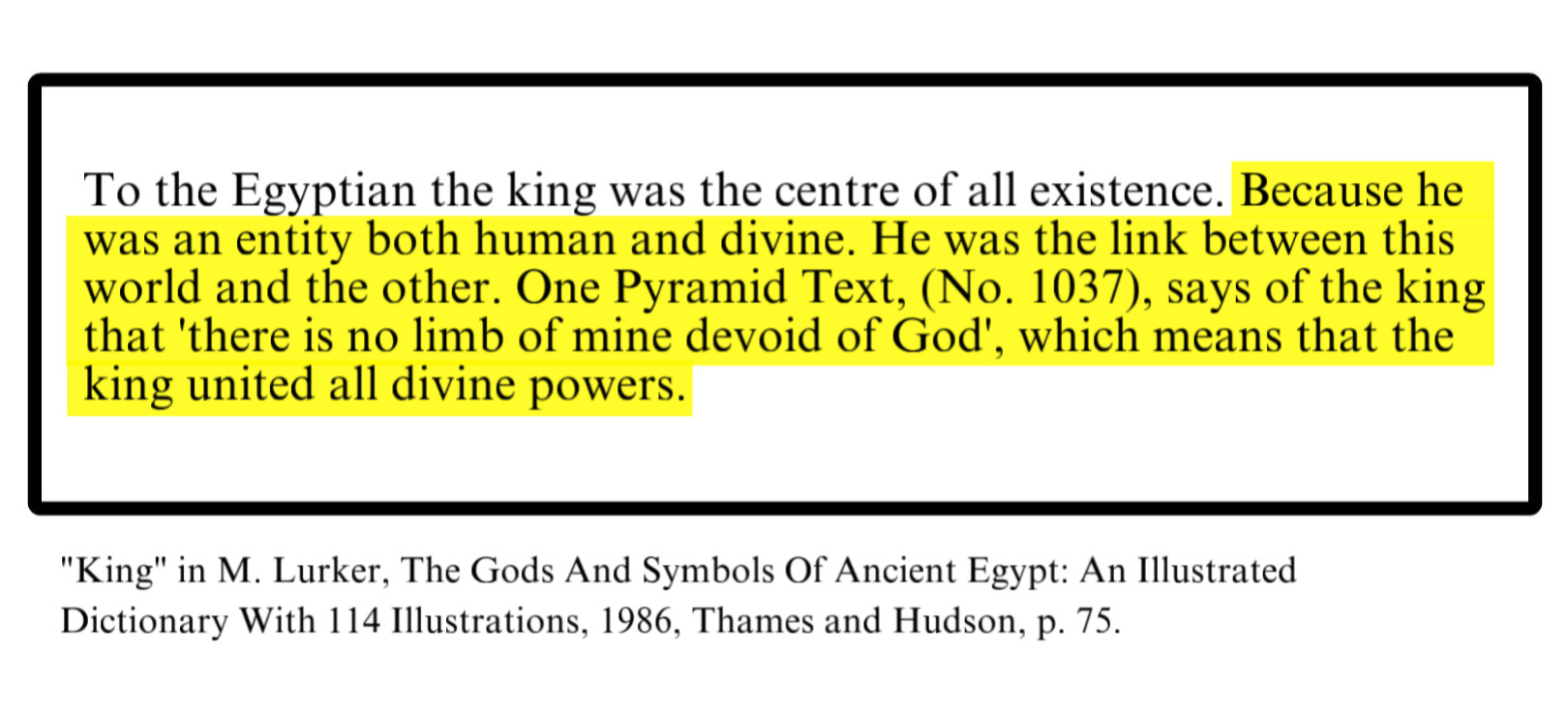
The Egyptological sources confirming the cow goddess Hathor’s role in Pharaonic religion:
Further documentation from the primary source material:
Additional source pages on this topic:
The evidence from the Egyptian artifacts referenced in the argument:
Continuing source scans:
Further primary source material on Pharaoh’s divine claims and Hathor:
Summary of the Miracle
The Quran’s account of Pharaoh produces three distinct layers of historical accuracy, each of which was inaccessible from the textual environment of 7th-century Arabia:
Layer 1 — Pharaoh’s claim to supreme lordship, stated in An-Nazi’at 79:23–24 and elsewhere, directly contradicts the Torah’s account and is confirmed by hieroglyphic inscriptions excavated long after the Quran’s revelation.
Layer 2 — Pharaoh’s role as controller of the gods, rather than merely their worshipper, confirmed by inscriptions recording his authority to place gods on their thrones and threaten them with deprivation.
Layer 3 — The specific female bovine deity, recorded only in Ibn Abbas’s alternative reading via Al-Tabari, confirmed by Egyptology’s identification of Hathor — the cow goddess — as the supreme divine entity among the Pharaohs.
For a video discussion of this material, see the following presentation: