
Christianity

Polygamy in the Bible and Christian Tradition: Refuting the Claim It Was Never Permitted

19 min read 4088 words

The missionary claim that God never permitted polygamy “from cover to cover” of the Bible is contradicted by the Bible’s own text, by Christian encyclopedias, by Church Fathers, by Protestant Reformers, and by Jewish rabbinical authorities. Every source cited below is Christian or Jewish — not Islamic.


The Scholarly and Ecclesiastical Consensus: God Permitted Polygamy

God permitted polygamy in the Torah, according to the consensus of theologians. Saint Augustine, commenting on the marriages of the Prophet Jacob, says:
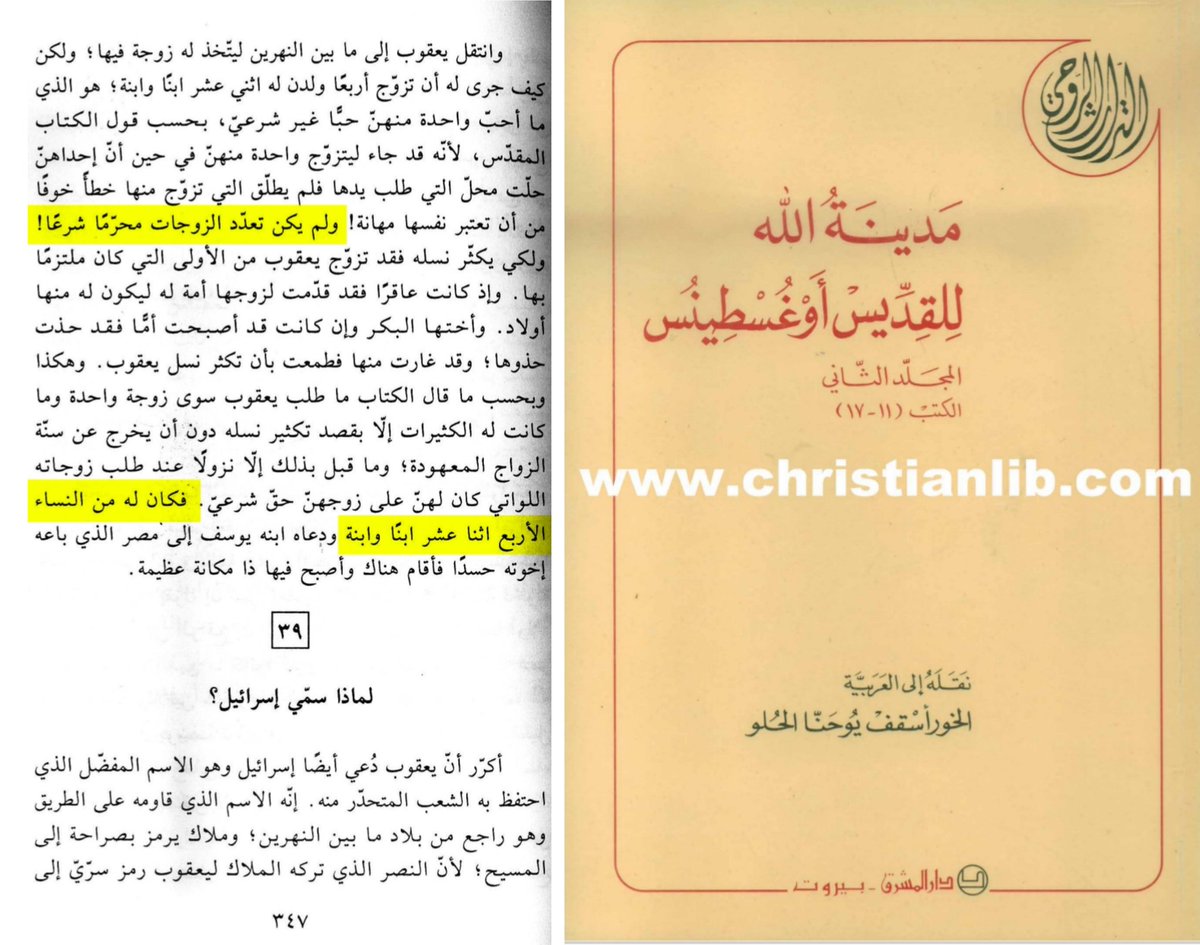
Saint Augustine Polygamy was not forbidden by law.

Saint Augustine's statement that polygamy was not forbidden by law, in the context of the Prophet Jacob's marriages

The image below documents the broader scholarly and ecclesiastical position on polygamy in Christianity among Church Fathers and throughout Western history.
Overview of polygamy positions held by Christian scholars and Church Fathers throughout Western history

Pope Shenouda III states in his book “The Law of Monogamy”:
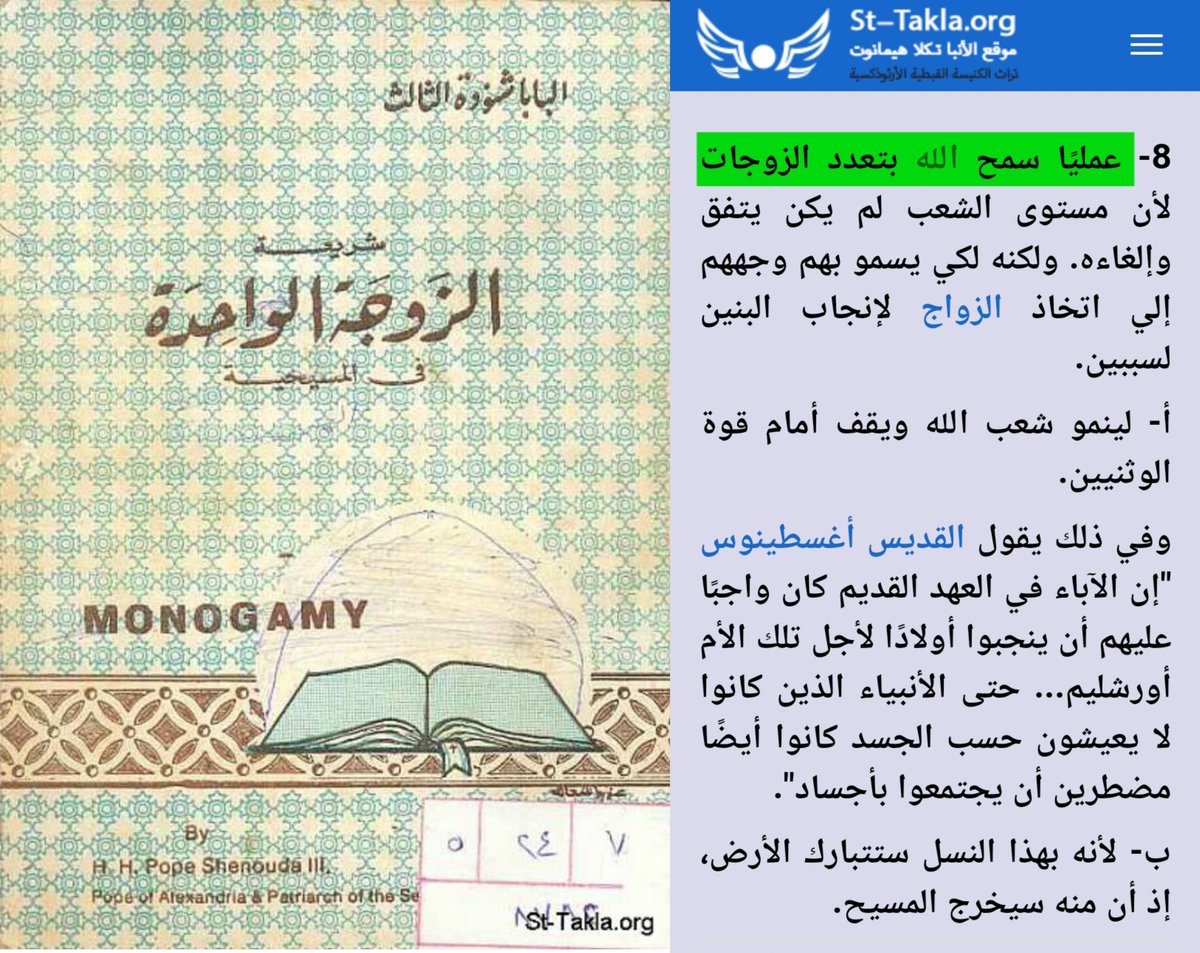
Pope Shenouda III | “The Law of Monogamy” In practice, God permitted polygamy.

Pope Shenouda III's statement in "The Law of Monogamy" that God permitted polygamy in practice

Helmy al-Qums Yaqoub says in his book “Schools of Criticism, Skepticism, and Responses to Them”:
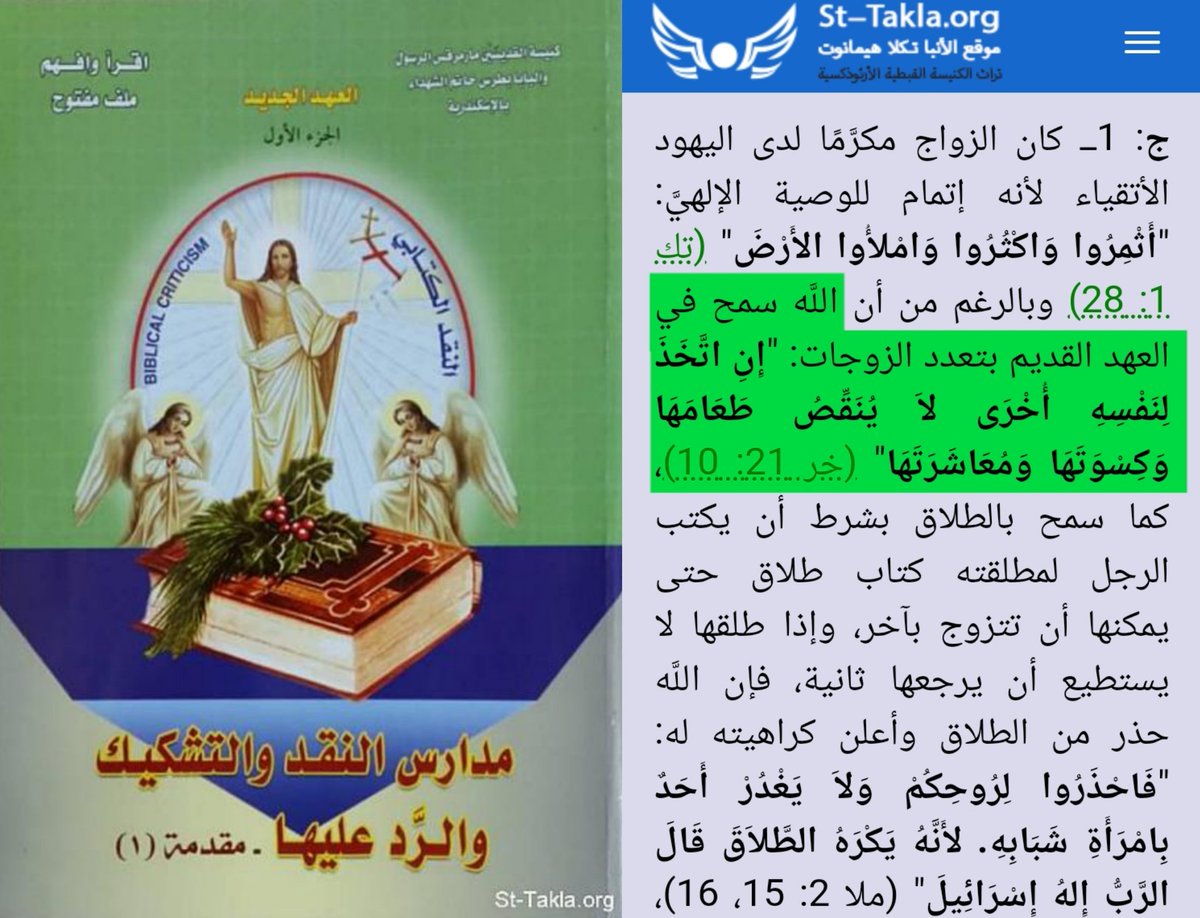
Helmy al-Qums Yaqoub | “Schools of Criticism, Skepticism, and Responses to Them” Although God permitted polygamy in the Old Testament: “If he takes another wife, her food, clothing, and marital relations shall not be lacking” (Exodus 21:10).

Helmy al-Qums Yaqoub's acknowledgment that God permitted polygamy in the Old Testament, citing Exodus 21:10

The Church Encyclopedia states:

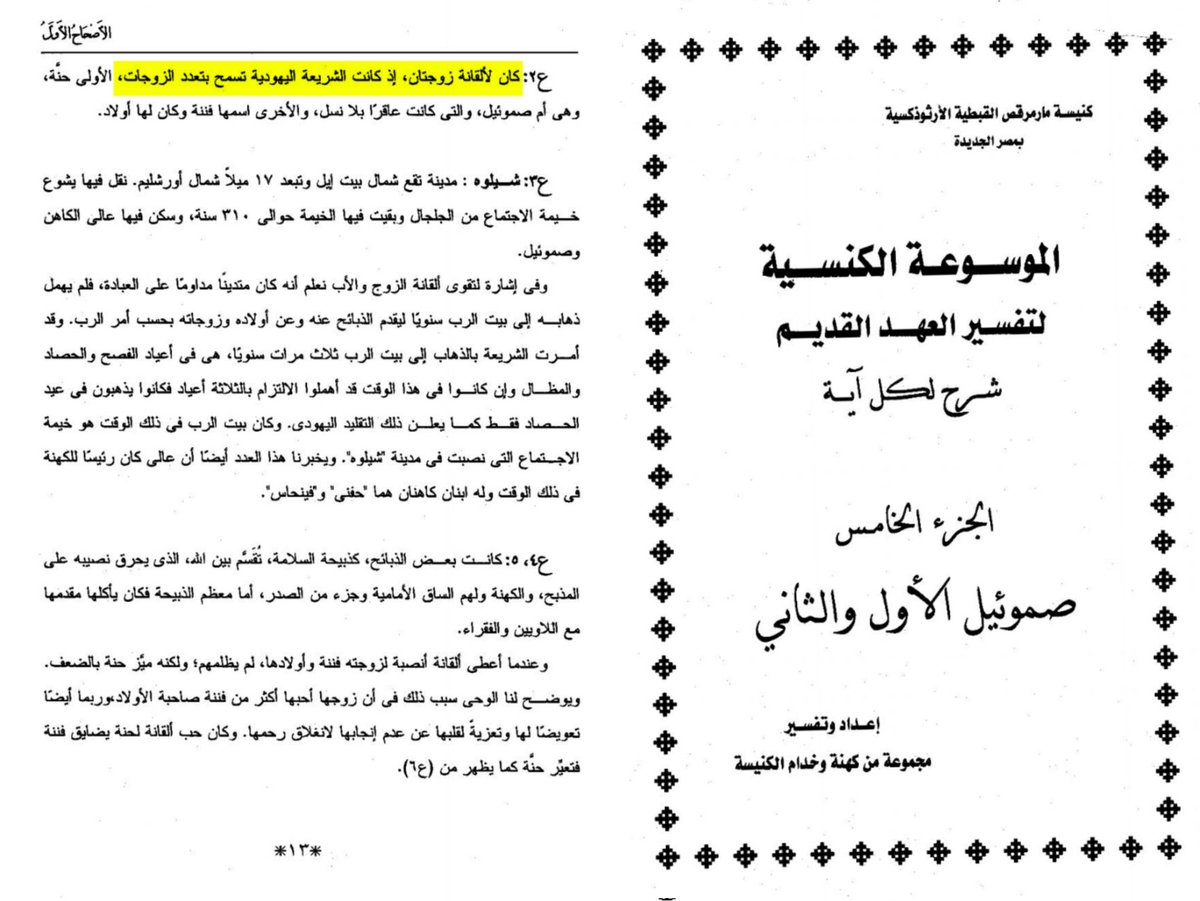
The Church Encyclopedia Elkanah had two wives, as the law permitted polygamy.

Church Encyclopedia entry confirming the law permitted Elkanah to have two wives

According to the Biblical Encyclopedia:
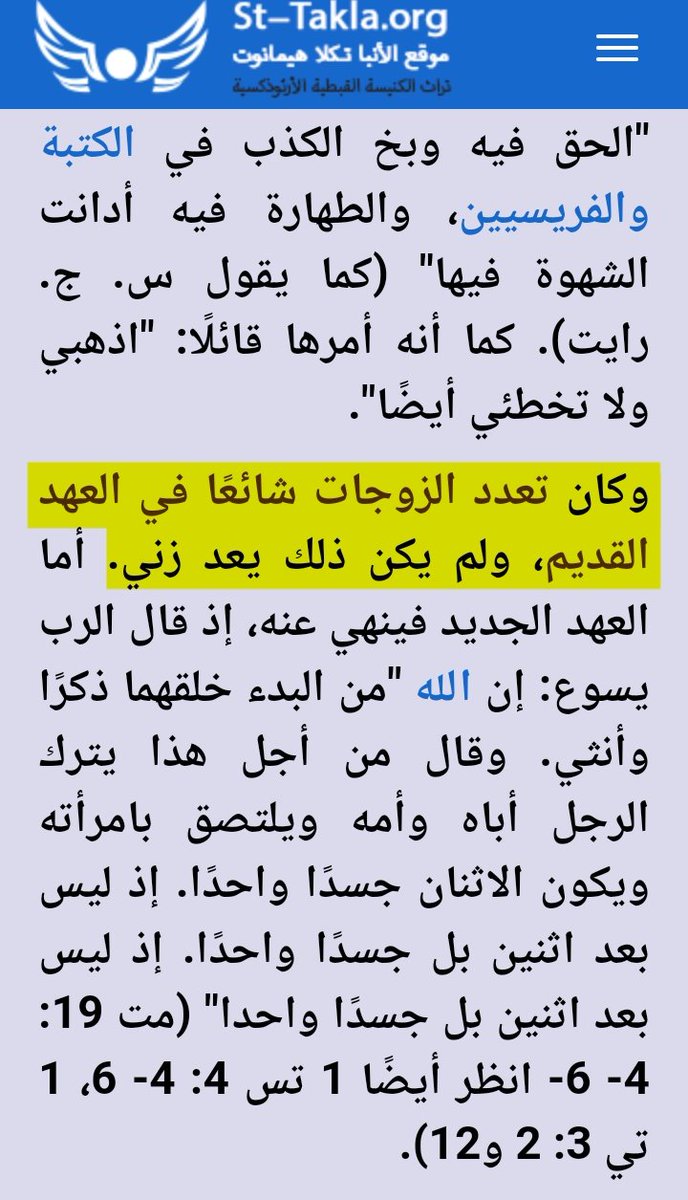
The Biblical Encyclopedia Polygamy was common in the Old Testament and was not considered adultery.

Biblical Encyclopedia entry stating polygamy was common in the Old Testament and was not considered adultery

In the Ecclesiastical Encyclopedia, under the First Book of Samuel:
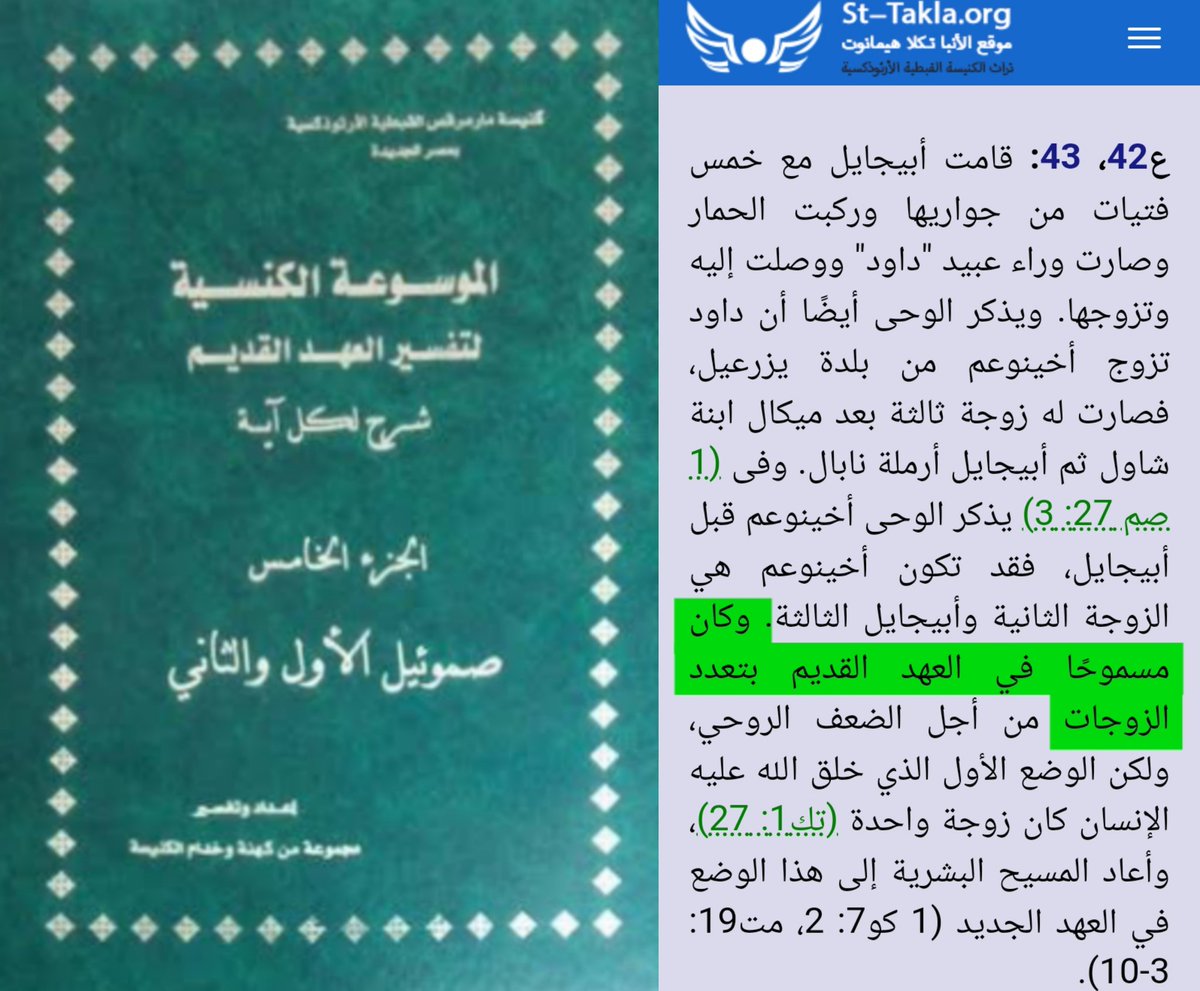
The Ecclesiastical Encyclopedia | Under the First Book of Samuel Polygamy was permitted in the Old Testament.

Ecclesiastical Encyclopedia entry under First Samuel confirming polygamy was permitted in the Old Testament

The commentary on Genesis also states:
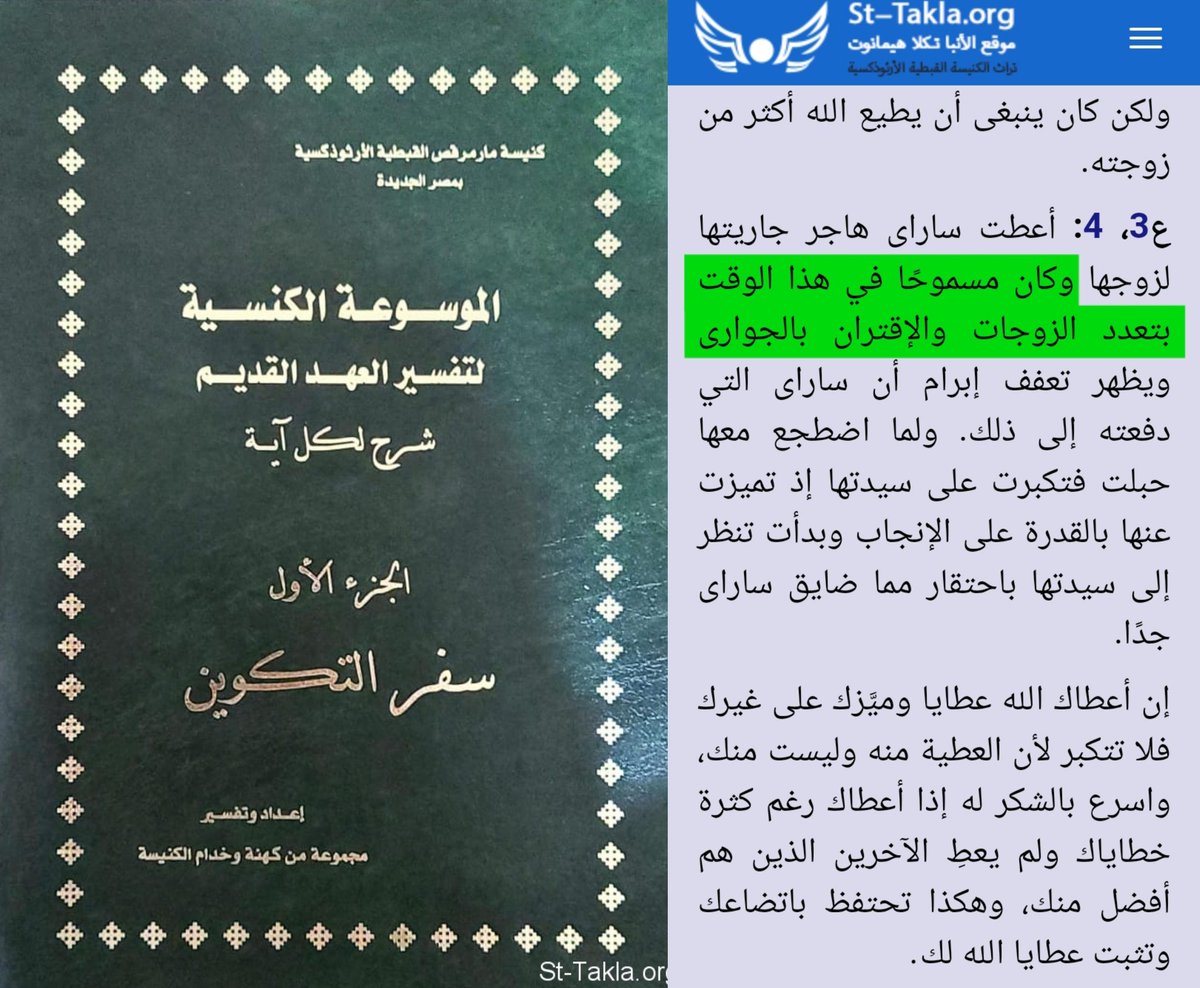
Commentary on Genesis Sarai gave Hagar, her handmaid, to her husband, and at that time, polygamy and concubinage were permitted.

Commentary on Genesis acknowledging that polygamy and concubinage were permitted in the time of Sarai and Hagar

After the Council of Laodicea prohibited polygamy, the Ethiopian Church continued to permit it. The Dictionary of Church Fathers and Saints states:
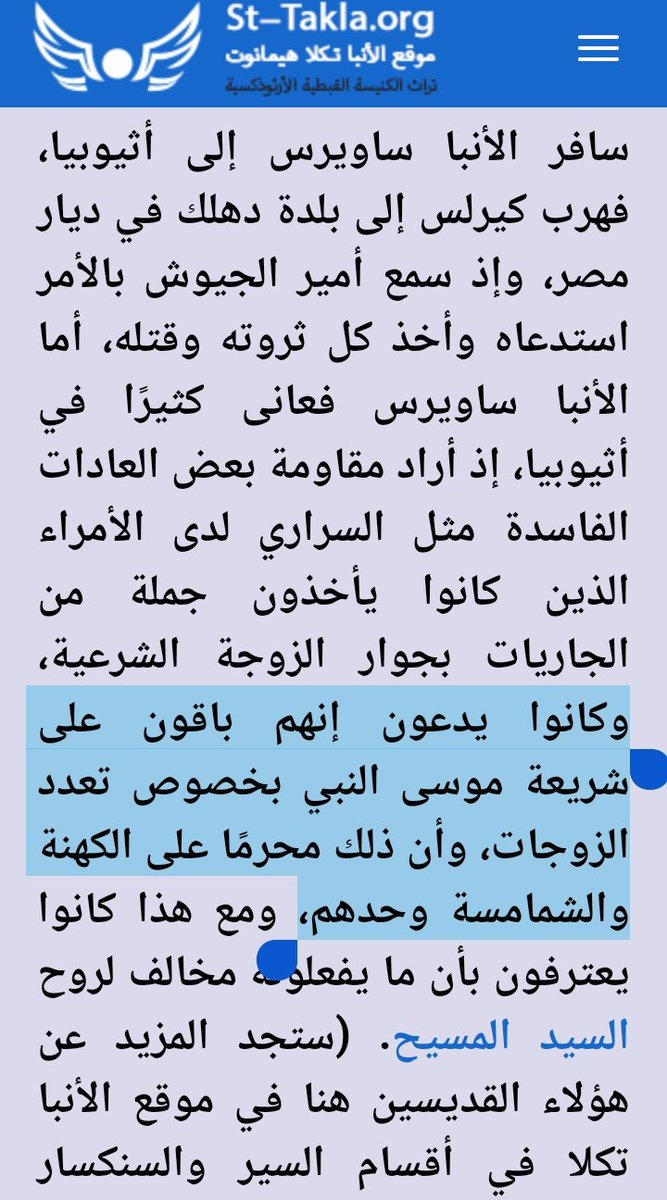
Dictionary of Church Fathers and Saints They claimed to adhere to the Law of Moses regarding polygamy, which was forbidden only to priests and deacons.

Dictionary of Church Fathers and Saints entry on the Ethiopian Church's continued permission of polygamy under Mosaic Law

Reverend William Marsh, in his commentary on Leviticus, says:
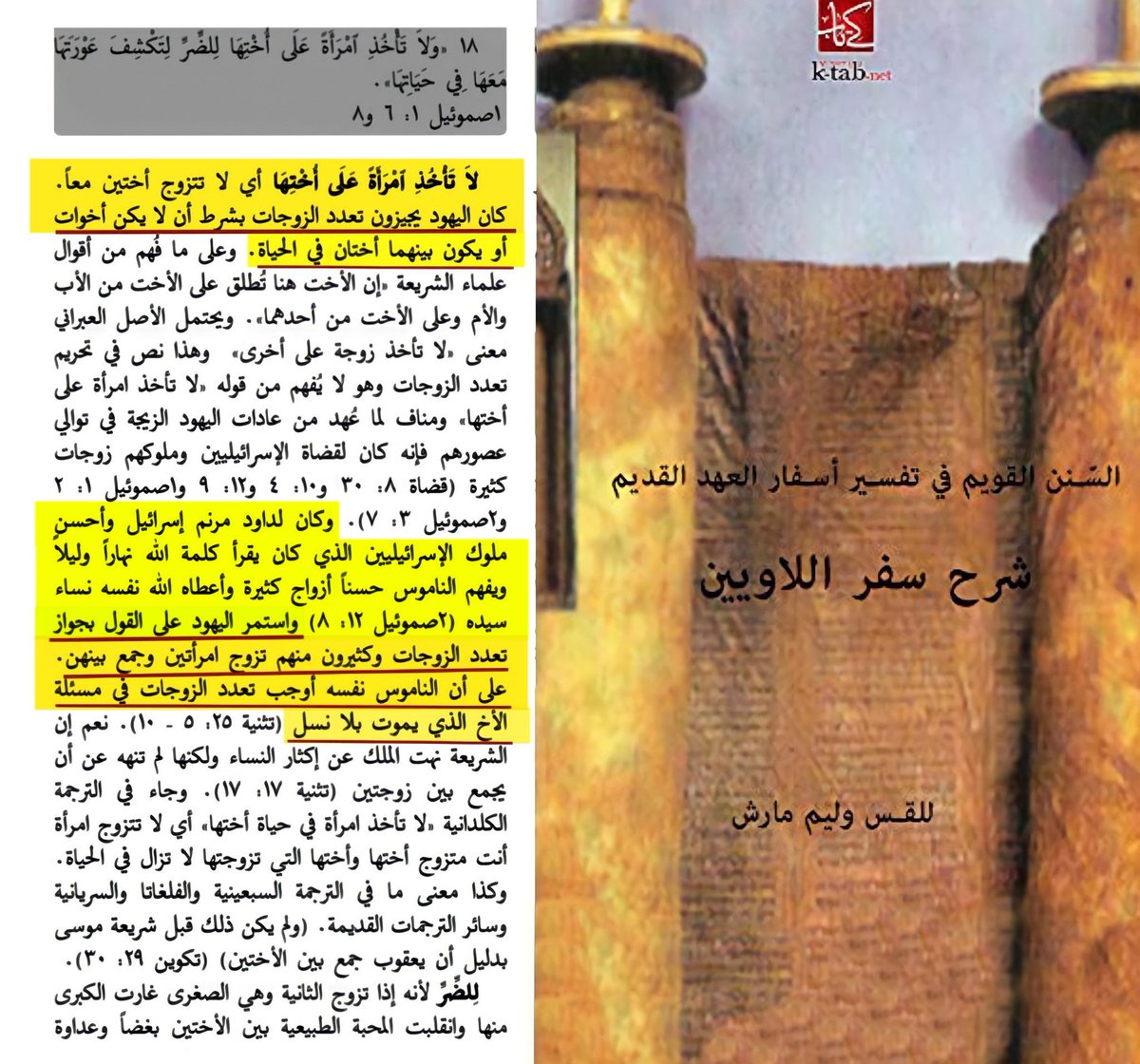
Reverend William Marsh | Commentary on Leviticus David, the psalmist of Israel, who read the word of God day and night and understood the Law well, had many wives, and God Himself gave him the wives of his Lord.

Reverend William Marsh's commentary on Leviticus confirming God gave David his master's wives

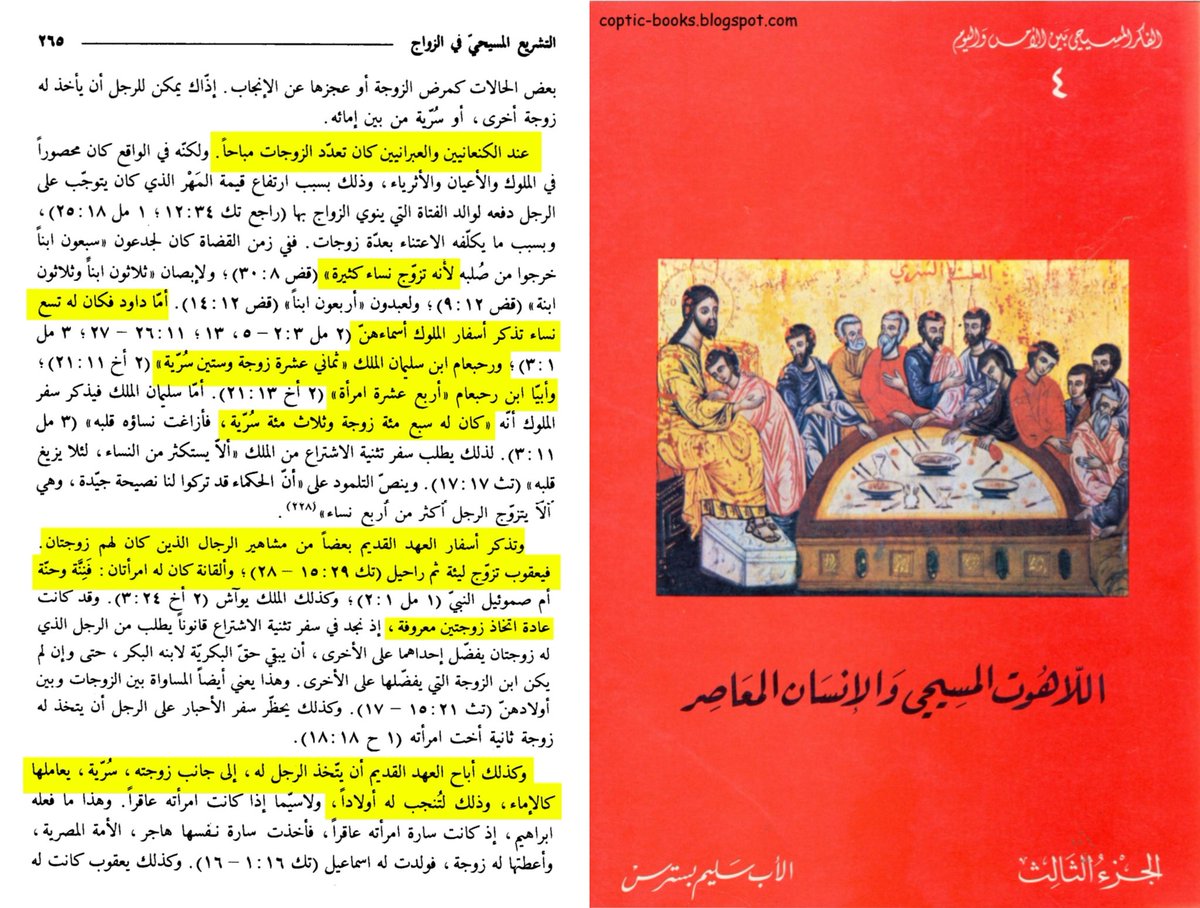
The Jews continued to permit polygamy, and the Law itself mandated polygamy in the case of a brother who died childless. In short, the Torah permitted polygamy with no limits on the number of wives and concubines a man could have. Later, the rabbis restricted the number of wives to four for commoners and eighteen for the king.
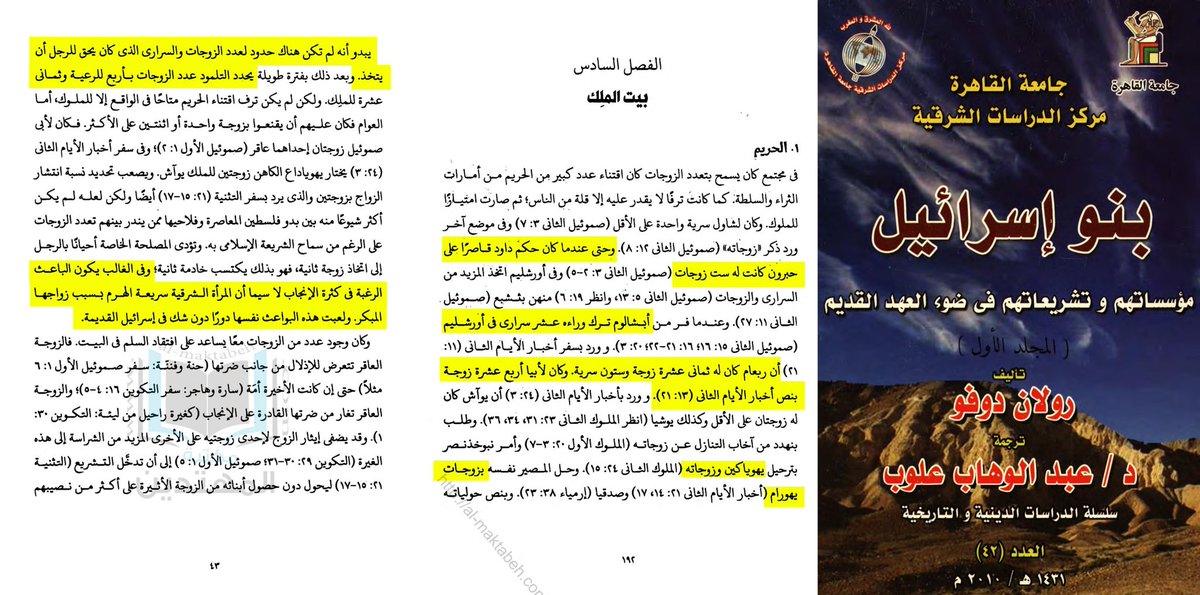
Rabbinic sources discussing the permitted limits on the number of wives under Torah law — first image

Rabbinic sources discussing the permitted limits on the number of wives under Torah law — second image


God’s Approval of Polygamous Prophets and Kings in Scripture

The Lord in the Torah praised the righteous who took more than one wife, stating that they did what was right in His eyes. In the Second Book of Chronicles, the Lord praises Joash, King of Judah — even though he had two wives:
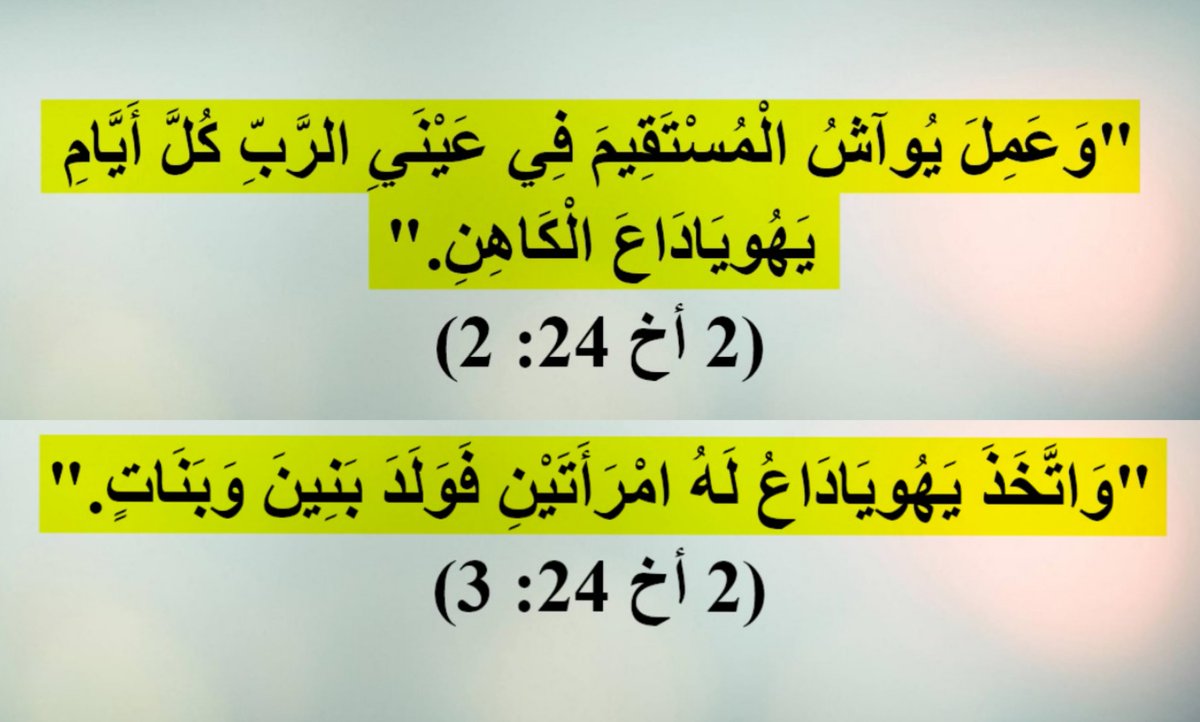
2 Chronicles (ESV) Joash did what was right in the eyes of the Lord all the days of Jehoiada the priest.

Biblical text praising King Joash as righteous in God's eyes despite having two wives

Although David had many wives, the Lord Himself stated that David’s wives and concubines were a divine gift. Can a gift from the Lord be considered a sin?
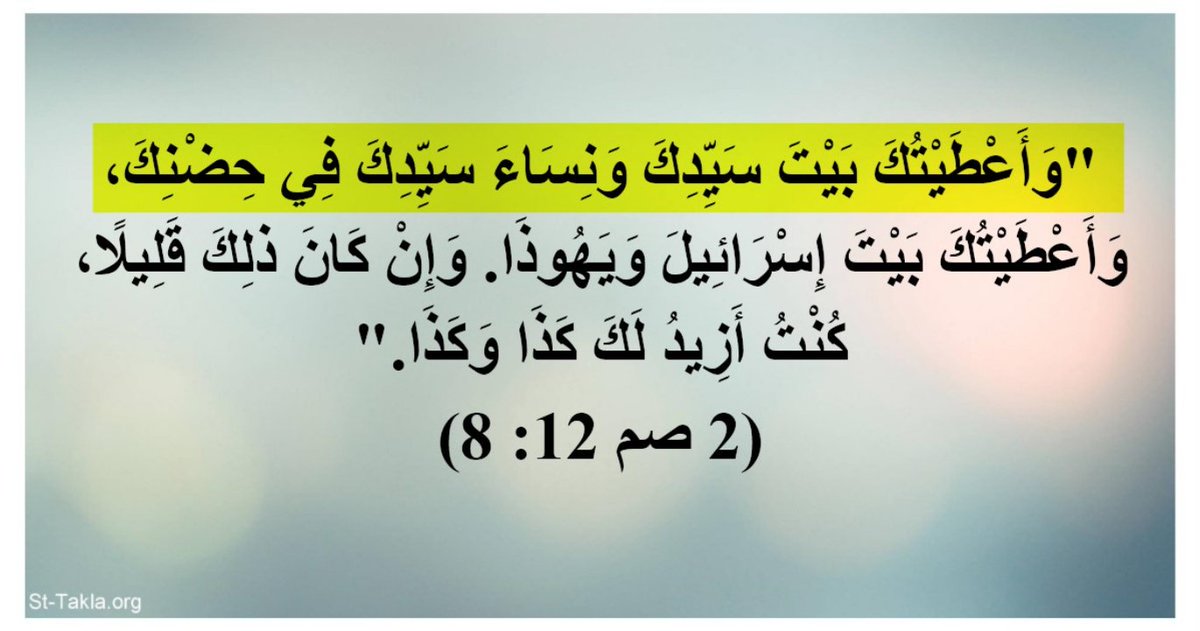
2 Samuel 12:7–8 (ESV) I have anointed you king over Israel, and I have delivered you from the hand of Saul. I have given you your master’s house and your master’s wives into your care, and I have given you the house of Israel and Judah. And if this seems too little, I will surely give you even more.

2 Samuel 12:8 showing God's declaration that He gave David his master's wives as a divine gift, with an offer of more

The Lord then shows that David, who had many wives, did what was right in the Lord’s eyes and did not deviate from what He commanded him all the days of his life, except in the case of Uriah the Hittite. If David had been wrong to take wives and concubines, the Scriptures would be lying, since they exonerated David from everything except that one case.
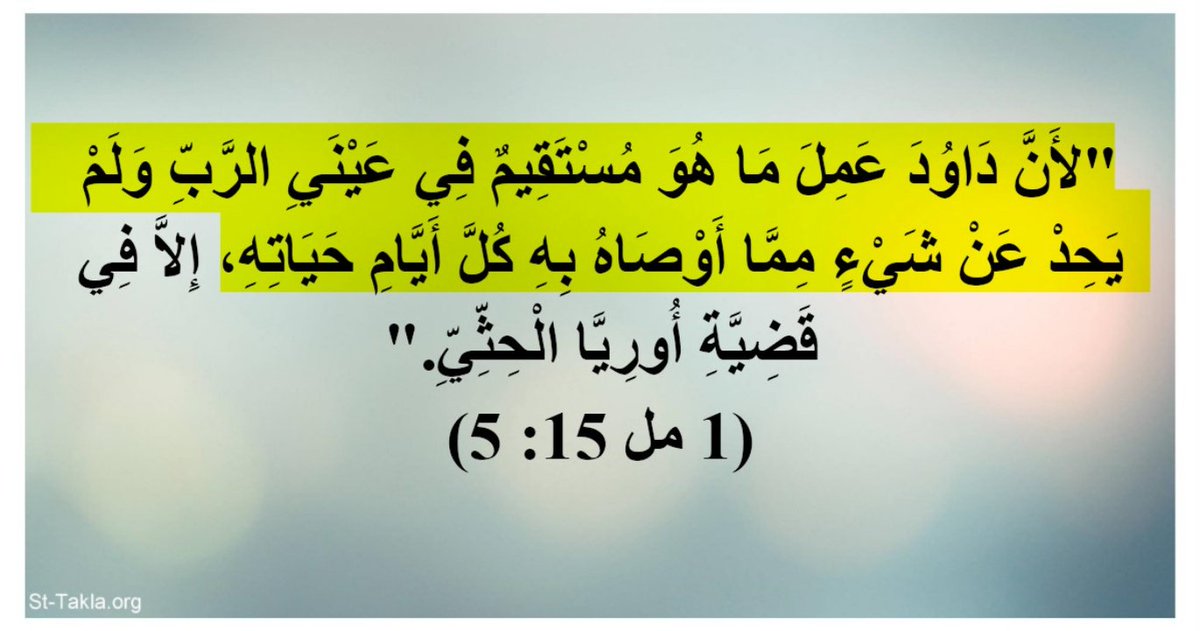
Biblical text exonerating David from all wrongdoing except the matter of Uriah the Hittite, despite his many wives

The Lord showed His complete approval of polygamy when He punished Miriam the prophetess, Moses’ sister, when she mocked his second marriage to the Cushite woman (Numbers 12:1–2). The Lord punished her with leprosy (Numbers 12:10). The Lord did not tell Moses he had sinned by taking multiple wives, nor did He affirm Miriam’s criticism. Couldn’t the Lord have told Moses that he had sinned by taking multiple wives, or that Miriam was right to condemn him for polygamy, even if she was wrong to criticize women in general?
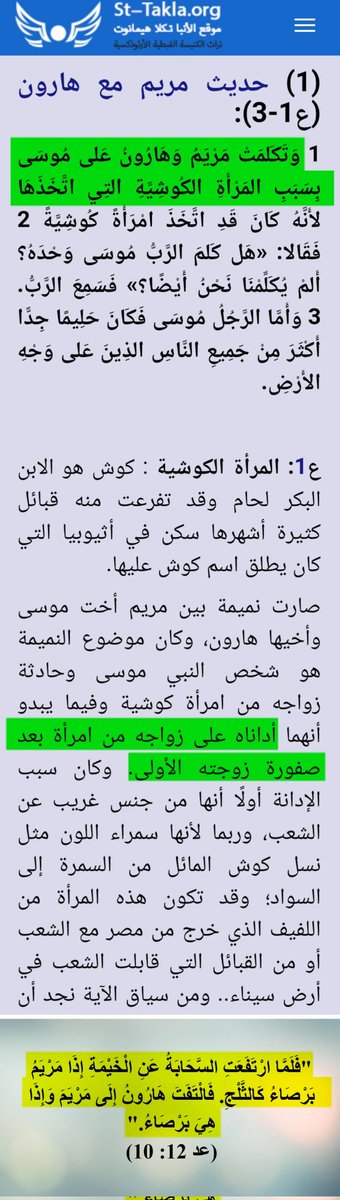
Numbers 12 showing God's punishment of Miriam with leprosy for criticizing Moses' second marriage, not for the polygamy itself


Church Fathers and Protestant Reformers on Polygamy

Saint Augustine acknowledged that it was permissible in the Torah for a man to have more than one wife, and that polygamy was legal among the early Church Fathers before the time of Christ.
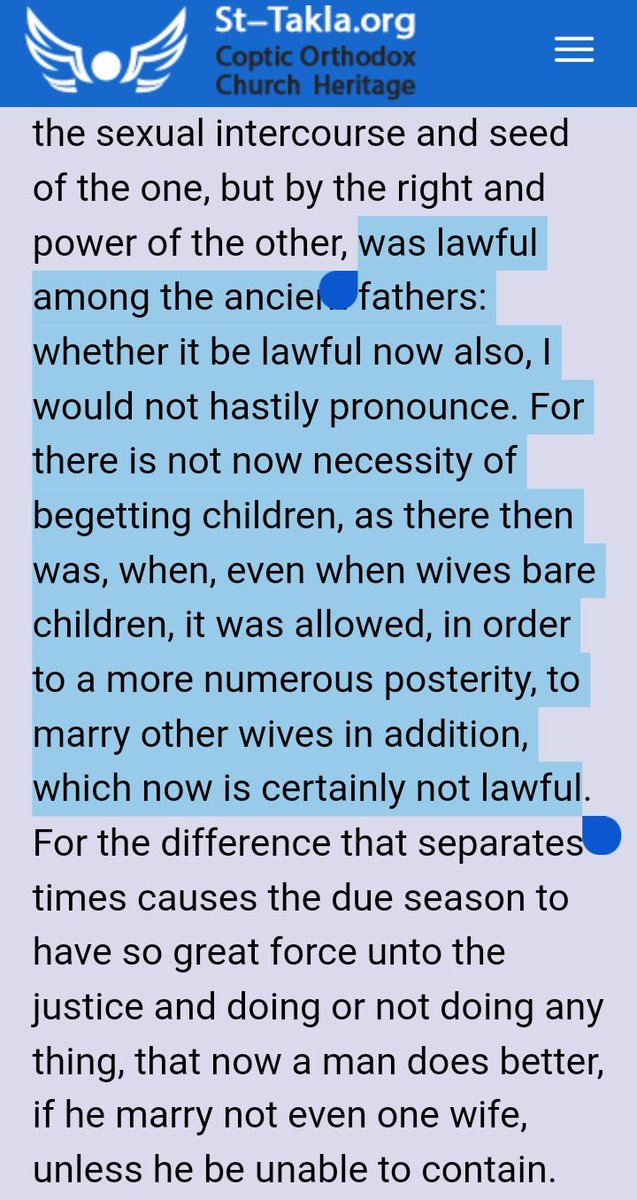
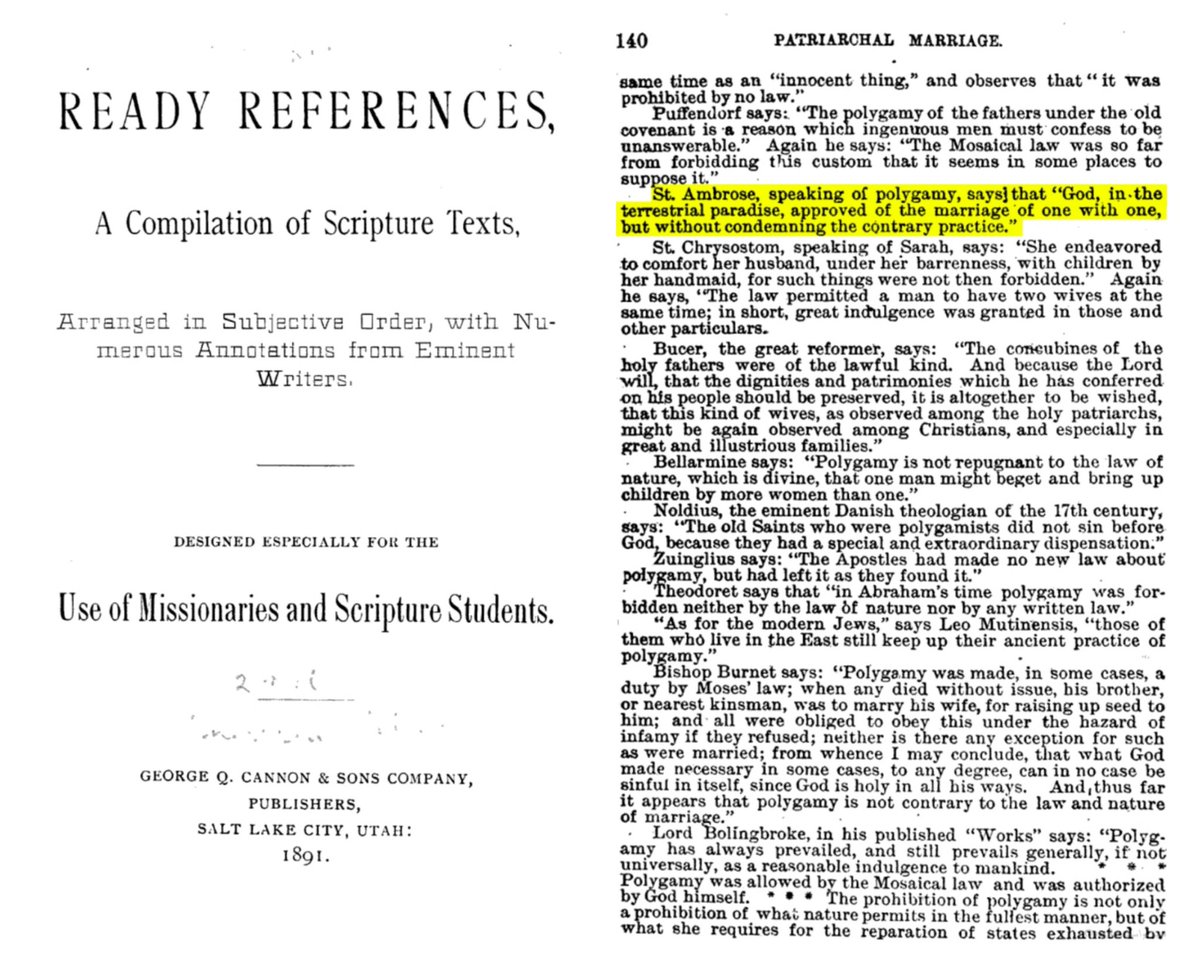
Saint Augustine's acknowledgment that polygamy was permissible in the Torah and legal among early Church Fathers

Saint Ambrose God permitted in the earthly paradise the marriage of one man to one woman without condemning the contrary practices — i.e., without condemning polygamy. This indicates that the Lord approves of polygamy and acknowledges it.

Saint Ambrose's statement that God did not condemn polygamy, indicating divine approval

The leader of the Protestant Reformation, Martin Luther, said:
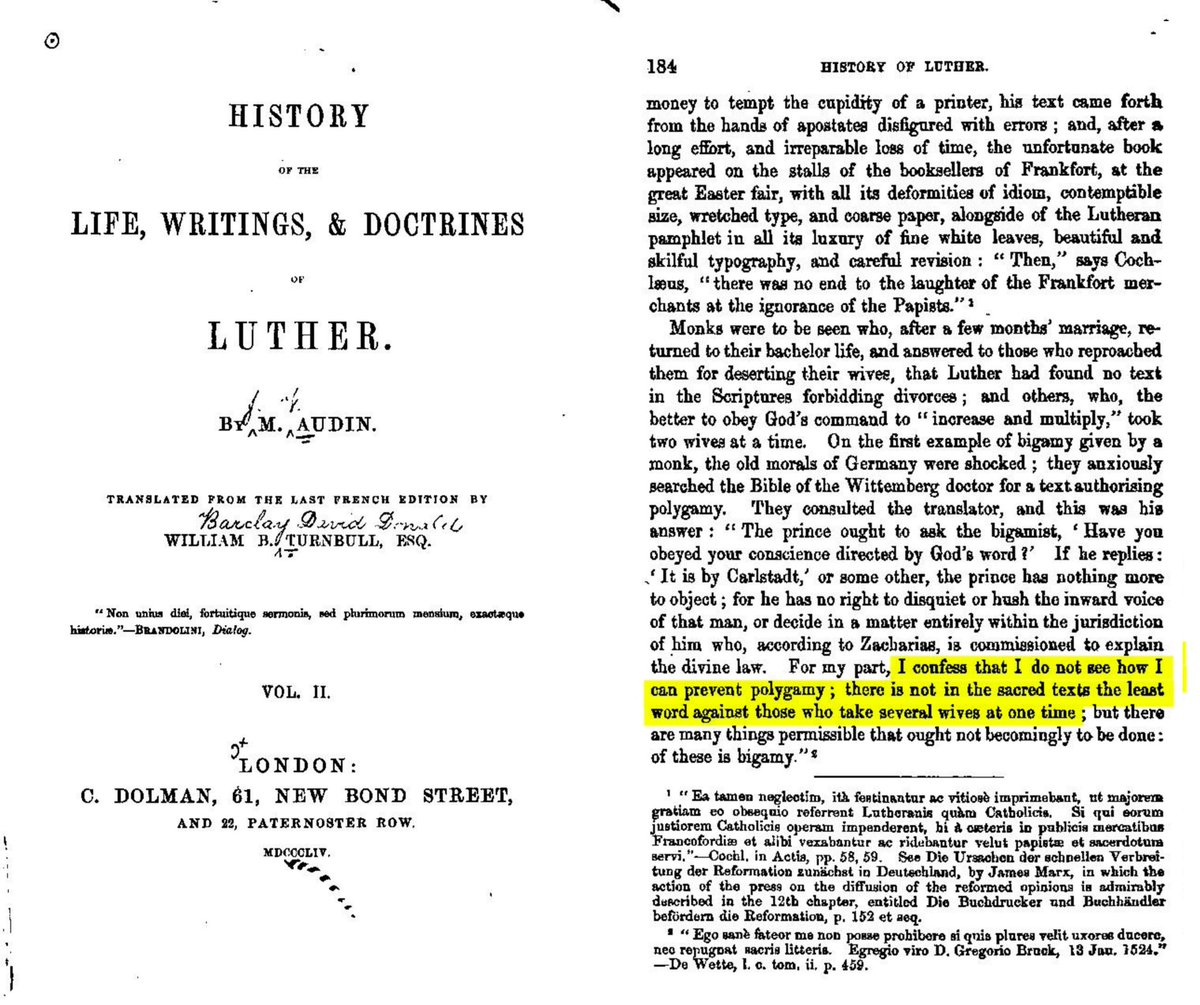
Martin Luther | Leader of the Protestant Reformation For my part, I cannot prohibit polygamy because the Holy Scriptures permit it and do not forbid having more than one wife at a time.

Martin Luther's statement that he cannot prohibit polygamy because the Holy Scriptures permit it

Among the Protestant leaders who defended polygamy were Boser and Melanchthon, who participated in a council of six leading Protestant reformers. They explicitly stated that the Bible does not condemn polygamy anywhere and that it was practiced consistently by the highest figures in the Church.
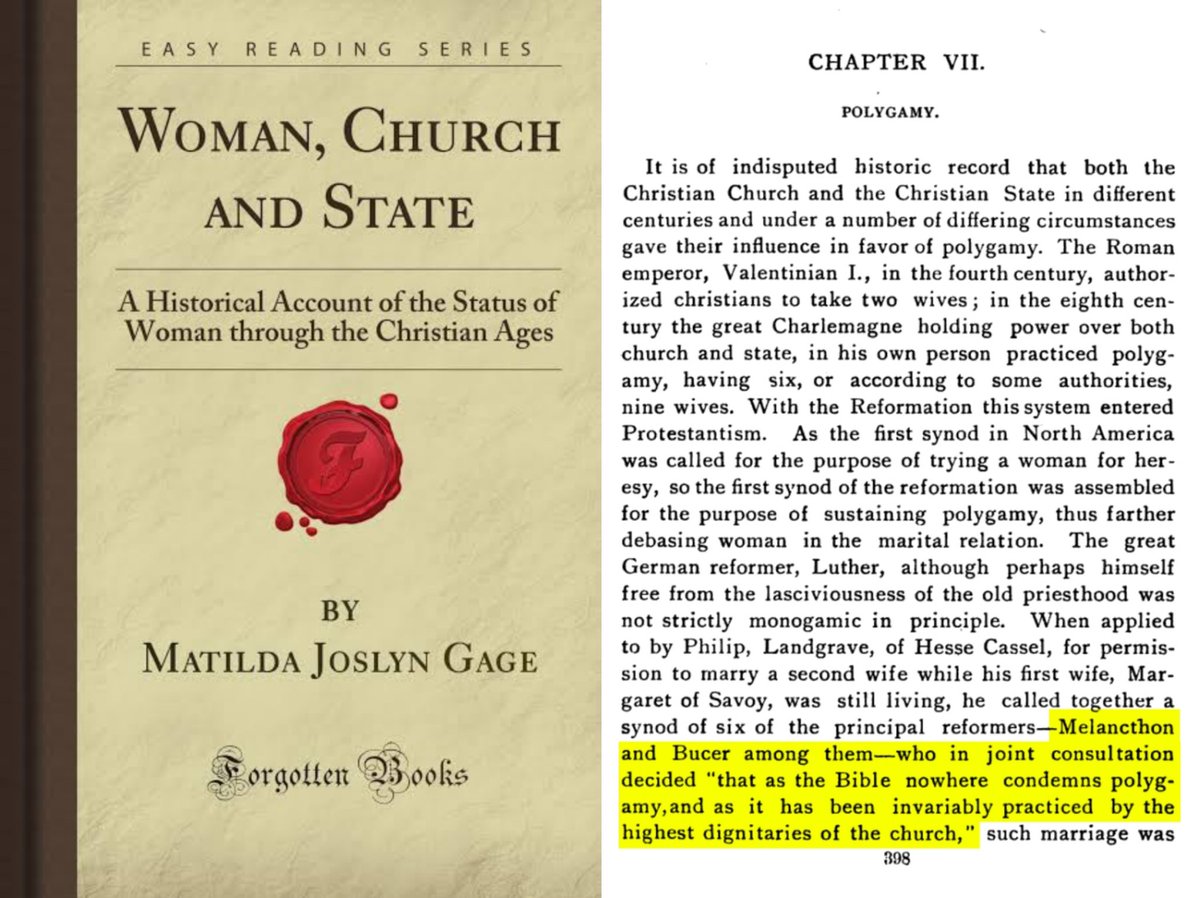
Documentation of Protestant reformers Boser and Melanchthon defending polygamy in a council of six Protestant leaders

The law of polygamy will remain until the Day of Judgment and will not be abrogated, according to the words of the prophet Isaiah:
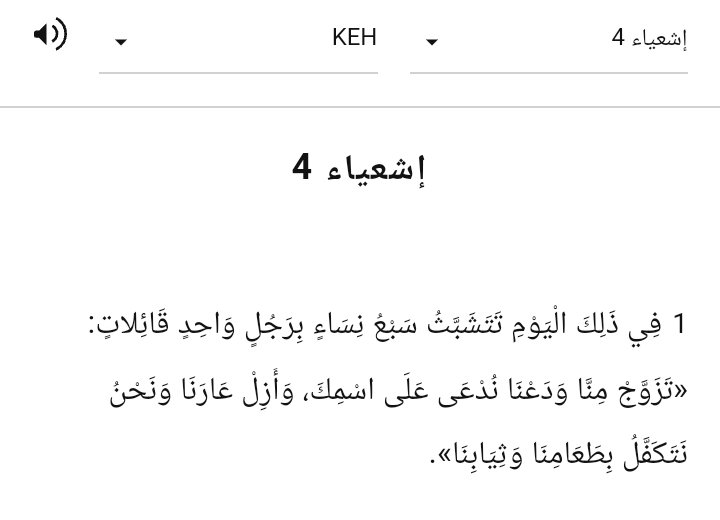
Isaiah 4:1 (Living Bible) In that day seven women will cling to one man, saying, “Marry us, and let us be called by your name.”

Isaiah 4:1 in the Living Bible translation, describing seven women clinging to one man in the end times

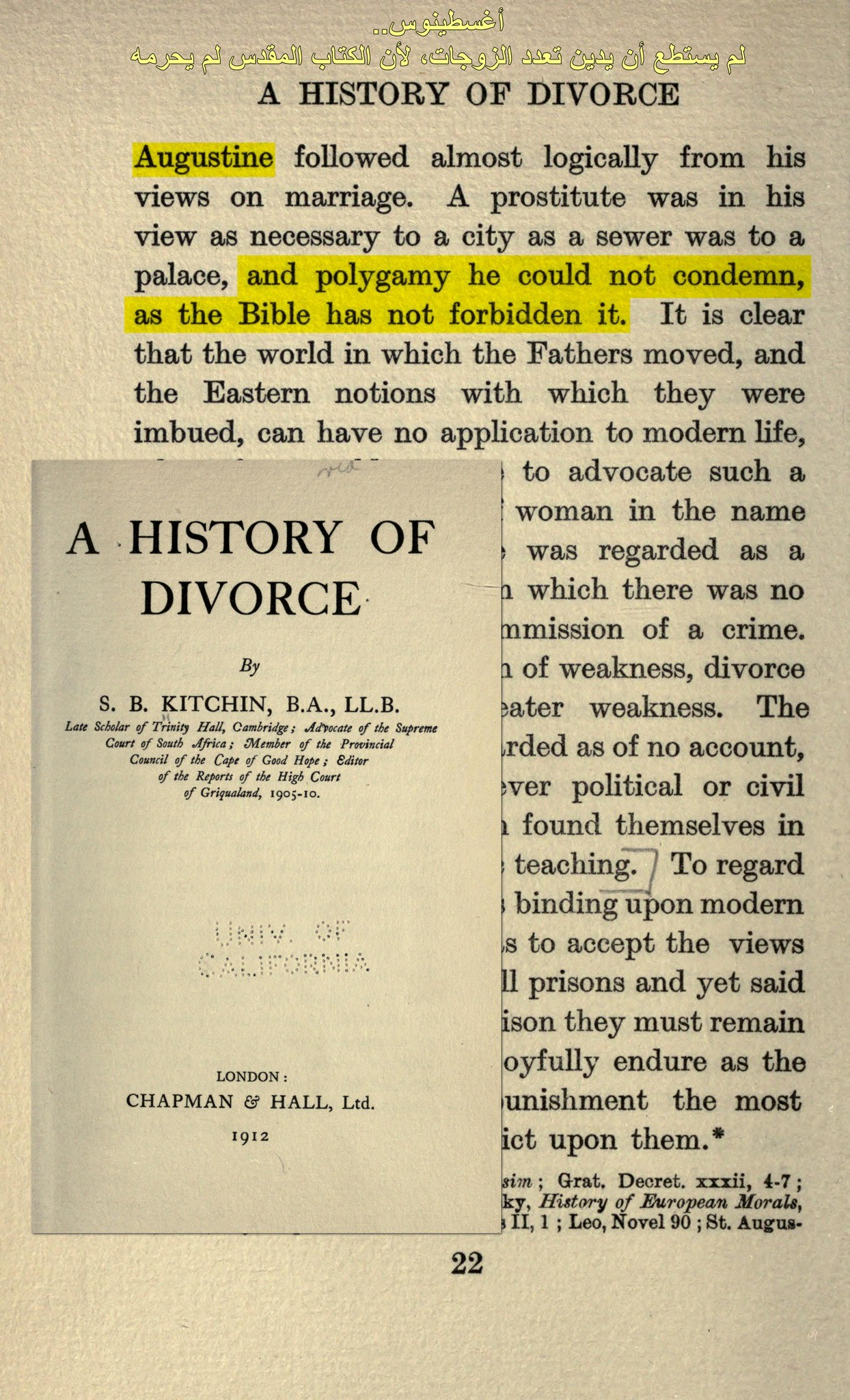
Saint Augustine considered himself unable to condemn polygamy because the Bible did not forbid it.
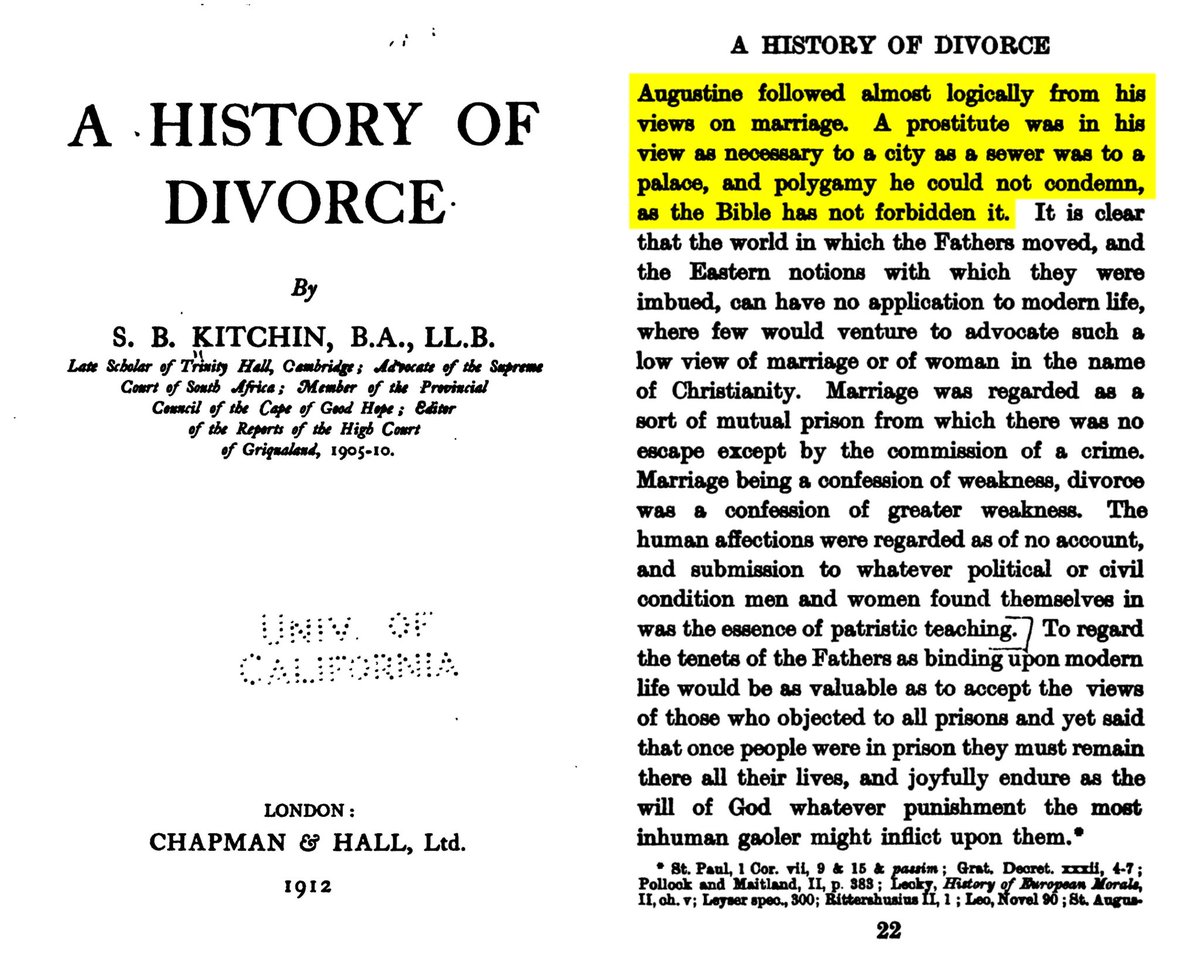
Saint Augustine's statement that he could not condemn polygamy because the Bible did not forbid it

Bishop Burnet, in his book “Is the Plurality of Wives in Any Case Lawful Under the Gospel?”, states:
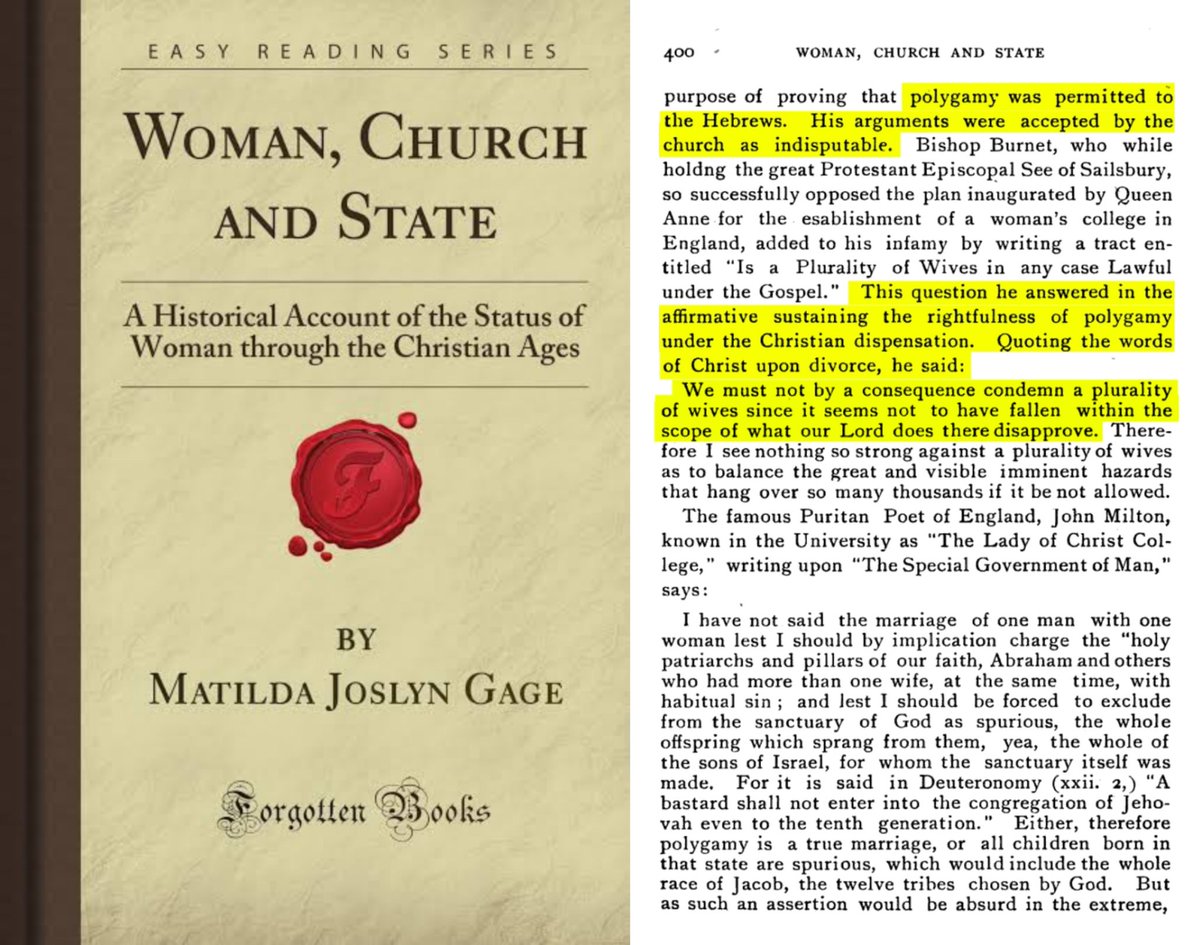
Bishop Burnet | “Is the Plurality of Wives in Any Case Lawful Under the Gospel?” The Gospel undoubtedly permits polygamy.

Bishop Burnet's book and statement that the Gospel undoubtedly permits polygamy


Responses to the Missionary’s Objections

Objection 1: Polygamy Was Against God’s Will — “One Woman for One Man from the Beginning”
Polygamy was never a religious custom among Jews; it was against God’s will, whose order from the beginning was one woman for one man
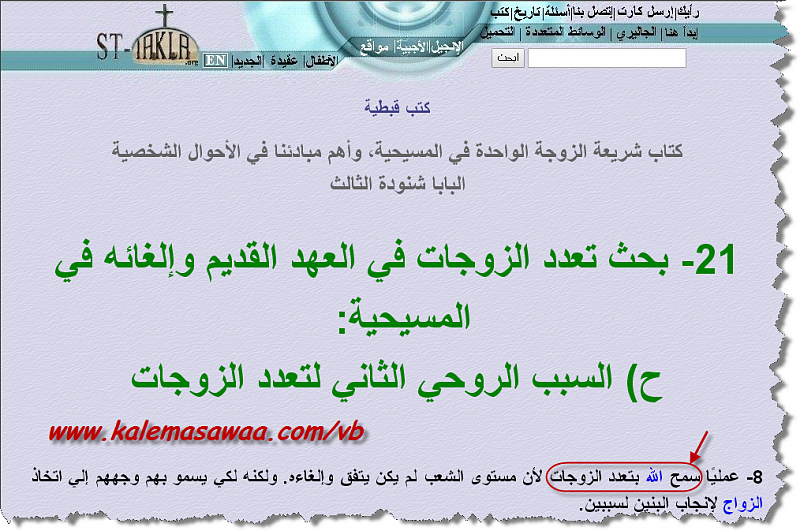
The missionary’s own fathers and priests contradict this on their own authoritative platforms The Takla website — one of the most reputable Coptic Christian websites — explicitly states that polygamy in the Old Testament was permitted by Yahweh, the God of the Old Testament, who is the same as Jesus, the incarnate God of the New Testament.

Takla website's statement that polygamy in the Old Testament was permitted by Yahweh

Furthermore, the great Jewish rabbis followed the tradition of their forefathers in polygamy. Rabbi Tarfon, for example, married 300 women, as documented in the Talmud.
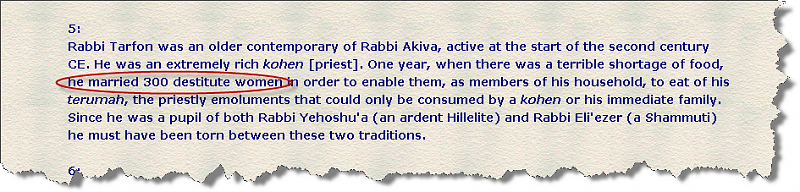
Talmudic documentation of Rabbi Tarfon marrying 300 women

As for Genesis 2:24 — “Therefore a man shall leave his father and mother and be united to his wife, and they shall become one flesh” — this is a description of the marital bond, not a numerical restriction. What prevents a man, within the bounds of permissible polygamy, from having a first, second, third, and fourth wife while each union still fulfills the principle of Genesis 2:24? This principle was in any case one which humans broke after the Fall: “They saw that the daughters of men were beautiful, so they took wives for themselves from all whom they chose” (Genesis 6:2). Citing these two texts together is a distortion of meaning.

Objection 2: The Fallen Angels’ Sin Was Taking More Than One Wife

Angels are not supposed to marry; the divine wrath on fallen angels was due to sexual relations with human women — so even one such union brought punishment, making polygamy irrelevant
The transgression was the nature of the union between angels and human women, not its number The only thing linking the events is the marriage of fallen angels to human daughters. Even if a fallen angel had taken only one wife, the wrath and punishment of the Lord would inevitably have befallen him. Therefore, invoking this story against polygamy is a blatant lie and a distortion of the truth. The missionary’s own fathers and priests, inspired by the Holy Spirit, wrote exactly this — that the only thing that could link the two events and God’s wrath is the marriage of the fallen angels to human daughters.

Objection 3: Polygamy in Israel Is a Crime Punishable by Five Years in Prison

Israeli positive law prohibits polygamy with a five-year prison sentence, proving it was always against God’s will
Israeli civil law is not derived from Torah texts, and rabbinical voices within Israel openly challenge the prohibition There is no direct, clear, explicit, definitive Old Testament text that forbids polygamy. The response comes from an article published on the website of the Israeli Ministry of Foreign Affairs, quoting Rabbi Reuben Firestone:
Rabbi Reuben Firestone | Israeli Ministry of Foreign Affairs Polygamy is permitted in Judaism, and the Old Testament describes prophets and elders with more than one wife. However, despite its legality, monogamy appears to be the norm in both the Old Testament and the Talmud. Rabbis have prohibited polygamy in the Christian world, which forbids polygamy, in order to avoid condemnation and potential criticism from Christians.

Rabbi Dov Stein confirms this, stating: “According to the Torah, the prophet Jacob — the father of the Jewish people — married four women, his grandfather Abraham married two, and his grandson David married eighteen. The real reason behind the prohibition of polygamy is the threat posed by the European Church to the Jews a thousand years ago to prevent the spread of this practice in Europe.” When asked about the importance of polygamy in his opinion, Rabbi Stein said: “The Jewish people are a small nation and need to increase their birth rate. The Torah considers this a duty — indeed the foremost duty. Therefore, we support polygamy, which will accomplish the task of increasing the Jewish birth rate.” Rabbi Stein also believes that the solution to many social problems — spinsterhood, adultery, and sexually transmitted diseases — lies in polygamy, which will contribute to increasing the number of Jews in the world, a pillar of the religion according to him.

A thousand years ago, Rabbi Gershom enacted a ban on polygamy — but this was a rabbinic restriction, not a Torahic prohibition. Today, polygamy continues to be practiced within the framework of Torah law. A family photo below shows Rabbi Philip Sharp with his six wives.

Family photo of Rabbi Philip Sharp with his six wives, illustrating active polygamy practiced within Torah law

The rabbi stated he could take another wife or two. The following image shows the Times of Israel source documenting this case.

Times of Israel article on the polygamous rabbi, confirming the practice is framed within Torah law

There are now open calls within Israel demanding the legalization of polygamy. The image below documents this campaign.

Israeli campaign for polygamy legalization, led by women and rabbis calling openly for the right to practice polygamy

Synagogues across Israel have been flooded with tens of thousands of leaflets calling on Sephardic men to marry several women, claiming this ancient custom is now permissible under Jewish Law. Religious Jewish women have expressed happiness and a fervent desire to marry a married man. One woman, aged 39, stated: “I am a single religious woman who am afraid of losing the ability to become a mother,” adding that there were 27 other women like her who would be happy to marry a married man. A recorded conversation with Rabbi Yechezkel Sofer on this matter is documented below.

First image from Yediot Aharonot documenting the leaflet campaign in Israeli synagogues calling on Sephardic men to take multiple wives

The full dialogue with Rabbi Yechezkel Sofer reads: “Hello rabbi, married life is not what it used to be. May I take another wife?” — “Of course. You can see in Rabbi Ovadia’s writings that it’s fully permitted.” — “What about the law?” — “State law forbids it, but from a rabbinical perspective — if the woman agrees and you are able to provide for another home — it’s permissible.” — “Aren’t you afraid of promoting a legal offense?” — “If you follow the State’s law, fine, but you should know that the Torah law allows it.” — “Can it be done secretly?” — “Of course.” — “Is this also permissible for Ashkenazi Jews?” — “I believe it’s not forbidden for them.” — “Are there such cases in Israel?” — “Yes.” — “What about you?” — “I’m planning to marry a second wife with the first wife’s consent.” — “Aren’t you afraid that what was right in the past isn’t right these days?” — “Why? Is the Torah wrong, God forbid?”
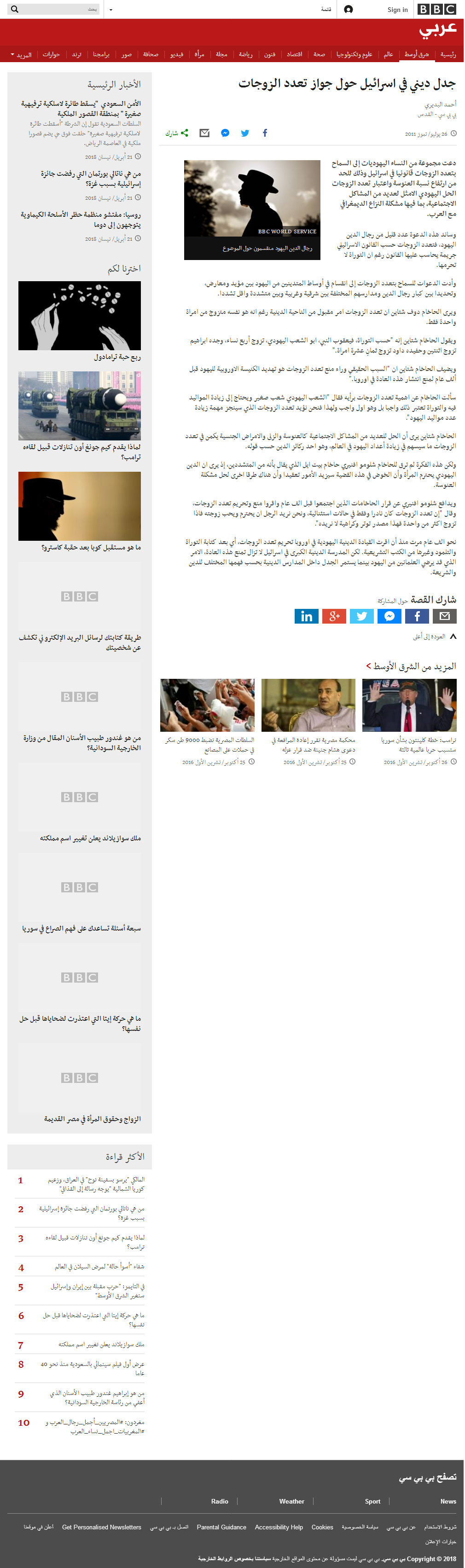
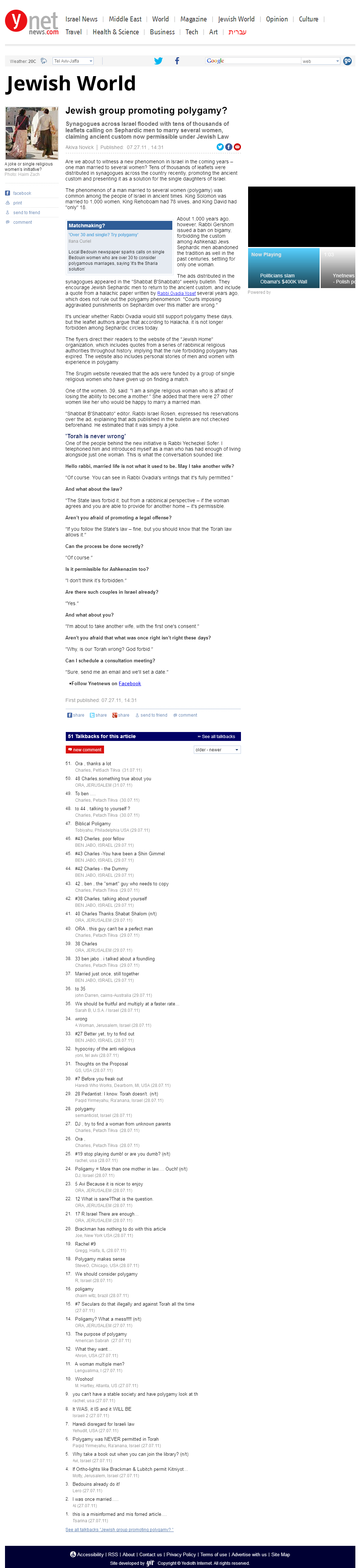
Second image from Yediot Aharonot with further coverage of the Israeli polygamy legalization movement

Third image from Yediot Aharonot documenting the broader Israeli rabbinical and social debate on polygamy

Objection 4: Polygamous Figures in the Old Testament Were Evil Men

The Old Testament tells us about evil figures who practiced polygamy — Lamech, Gideon, Rehoboam, Abijah, and Joash
The missionary’s own reference works describe these figures without condemning their polygamy, and Gideon is listed among the heroes of the faith in the New Testament

On Lamech: The biblical dictionary states that his address to his wives can be interpreted in two main ways — first, that he acted in self-defense, and second, that he intended minimal harm, a concept linked to his son Tubal-cain’s invention of the sword.

On Gideon: The same reference states that Gideon had many wives and 70 sons, ruled Israel for about 50 years, died at a ripe old age, and his name appears in the Epistle to the Hebrews in the New Testament in the list of heroes of the faith. Is a hero of the faith an evil figure?

On Rehoboam: He refrained from marching against the rebels by divine command (1 Kings 12:21–24).

We also ask: Was Moses the Prophet evil for having a second wife?

Numbers 12:1 (ESV) And Miriam and Aaron spoke against Moses because of the Cushite woman whom he had taken, for he had taken a Cushite woman.

The Lord’s response was to punish Miriam with leprosy — not Moses. This is the clearest possible divine verdict.

Objection 5: Abraham Was Punished for Polygamy Through the “Wild Man” Prophecy About Ishmael

Abraham married Hagar without the Lord’s permission, and his punishment was that Ishmael would be a monstrous son
The Lord explicitly blessed Ishmael and the marriage of Abraham to Hagar — the claim of punishment is pure fabrication
Genesis 17:20 (ESV) As for Ishmael, I have heard you concerning him; behold, I have blessed him and will make him fruitful and will multiply him exceedingly. He shall father twelve princes, and I will make him a great nation.

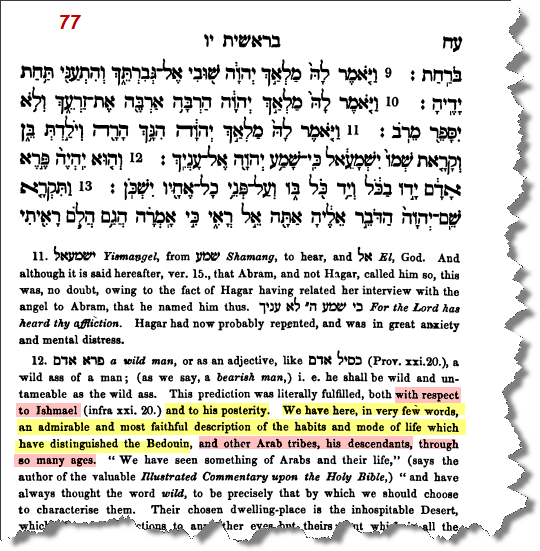
Furthermore, the phrase “wild man” does not carry any shameful connotation. As documented in The Sacred Scriptures in Hebrew and English — A New Translation, the phrase means a man who lives in the wilderness.
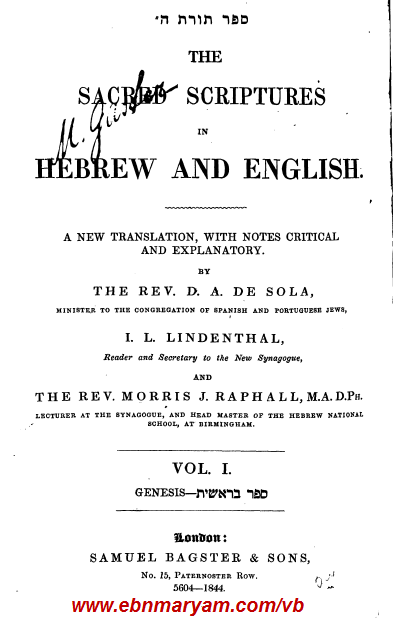
The Sacred Scriptures in Hebrew and English translation showing "wild man" means a man who lives in the wilderness, a description of the Bedouin way of life

This prophecy was fulfilled with complete respect for Ishmael and his descendants — a beautiful, eloquent, truthful, and faithful description of the way of life of the Bedouin and Arab descendants of Ishmael throughout the ages. The following image provides a further scholarly overview of polygamy in Christian history relevant to this discussion.
Second scholarly overview chart documenting polygamy in Christian tradition and among Church Fathers

Objection 6: David Divorced His Wives Because of Polygamy

David separated from his ten concubines — 2 Samuel 20:3 — proving polygamy leads to the abandonment of wives
David confined his ten concubines not because of polygamy but because they had fallen into sin with Absalom during the rebellion

The commentary of Father Antonios Fikry on 2 Samuel 20:3 states: “David confined the concubines because they had likely surrendered to Absalom so easily, thinking that David was gone forever. Generally, it was considered inappropriate for them to return to him after Absalom had been intimate with them.” The issue was the concubines’ conduct during Absalom’s rebellion — not a verdict against polygamy.

Objection 7: Solomon’s Many Wives Led Him Astray, Proving Polygamy Is Sinful

Solomon took many wives and was led astray from God; he built pagan temples for them
Not all of Solomon’s wives were pagans, and the sin was the specific category of idolatrous marriages, not polygamy as a principle

The commentary of Father Antonios Fikry on Deuteronomy 17:17 states that God warned kings against increasing their wives and wealth, and that Solomon fell into three sins simultaneously: power, women, and money. The commentary specifies “many of whom were pagans” — not all. What prevents the second, third, or fourth wife from being virtuous if a man makes a good choice and marries, within the framework of polygamy, women of good character and religion?

Objection 8: Proverbs 31 Describes Monogamy

Solomon wrote Proverbs 31 about “a virtuous woman,” implying a single wife
Father Tadros Yaqoub Malaty | Commentary on Proverbs 31 The mother presents a vivid image not only of the virtuous woman, but also of the virtuous husband, and indeed of every devout believer. For a virtuous person in general, whether woman or man, child, young person, or elder, is priceless.

The description in Proverbs 31 applies to virtuous character in general — not to one wife as opposed to many. Furthermore, what prevents the second, third, or fourth wife from being a virtuous woman of this description?

Objection 9: Deuteronomy 17:17 Forbids Polygamy for Kings and Therefore Condemns It

Deuteronomy 17:17 says kings shall not “multiply wives,” condemning polygamy even for royalty
The Hebrew word יַרְבֶּה means multiplication and excess, not a prohibition of two wives — and Reverend William Marsh confirms this directly

The Hebrew word in question is יַרְבֶּה (pronounced yarbeh), and the root meaning according to Strong’s H7235 is multiplication and doubling — not a prohibition of polygamy as such. This same word appears in Isaiah 55:7: “Let the wicked forsake their ways… and to our God, for He will freely pardon.” By the missionary’s twisted logic, “generous forgiveness” in that verse would constitute polytheism. Furthermore, the restriction in Deuteronomy 17 applies only to kings — not to the general population, who retain their full legal right to polygamy. And even for kings, Reverend William Marsh states in his commentary that the law did not prohibit them from having two wives.
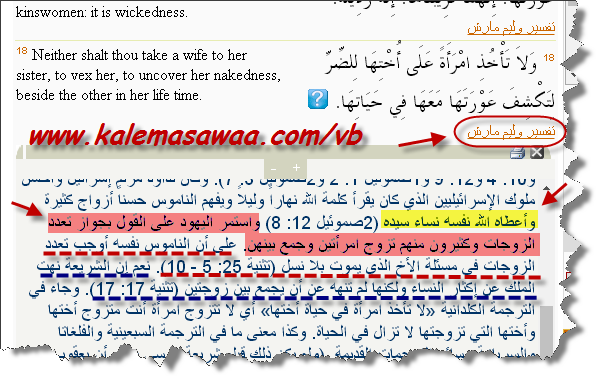
Reverend William Marsh's commentary confirming the law did not prohibit kings from having two wives

Objection 10: No Country Permits Polygamy, So It Is Universally Condemned

No country, including Islamic countries, permits polygamy — it is a universal modern consensus against the practice
Polygamy is legally recognized in multiple non-Muslim jurisdictions and is not an Islamic invention

South African law legally recognizes polygamous marriages, and polygamous marriages are common there. The Kingdom of Bhutan — a Buddhist nation — has a former king, Jigme Singye Wangchuck, who married four women. Mormons, who form a Christian sect, have practiced polygamy since ancient times.
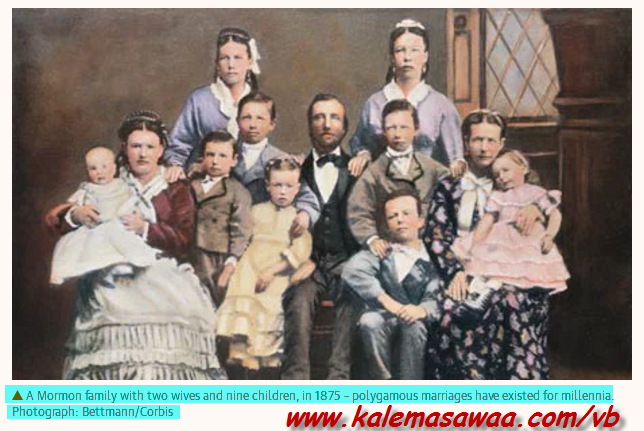
Documentation of Mormon polygamy as a Christian sect practicing polygamy since ancient times

In the Christian West, there are at least 15,000 documented cases of polygamy — not including the Mormon sect — including the case of citizen Brady Williams, who is married to five women.

Brady Williams, married to five women, among 15,000 documented polygamy cases in the Christian West


Additional Biblical Evidence for Legislated Polygamy

The following texts establish that polygamy was practiced by figures the Bible treats as righteous and that the Torah directly legislated for polygamous situations.

Judges 8:30 (ESV) Gideon had seventy sons, his own flesh and blood, for he had many wives.
1 Samuel 1:1–2 (ESV) There was a man from Ramathaim-zuphim, from the hill country of Ephraim, whose name was Elkanah son of Jeroham, son of Elihu, son of Tohu, son of Zuph. He was an Ephraimite. He had two wives; the name of the one was Hannah, and the name of the other Peninnah. Peninnah had children, but Hannah had no children.
2 Samuel 12:7–8 (ESV) Then Nathan said to David, “You are the man!” This is what the Lord, the God of Israel, says: “I have anointed you king over Israel, and I have delivered you from the hand of Saul. I have given you your master’s house and your master’s wives into your care, and I have given you the house of Israel and Judah. And if this seems too little, I will surely give you even more.”
Deuteronomy 25:5 (ESV) If brothers live together and one of them dies and has no son, the wife of the deceased must not marry a stranger. Her husband’s brother may go in to her and take her as his wife, and he shall perform the duty of a brother-in-law to her.

Since this verse places no restriction on whether the brother is single or married, it applies in both cases — making levirate marriage an instance of legislated polygamy within the Torah itself. Additionally, the law of Moses permitted a divorced woman to marry any other man, whether single or married.
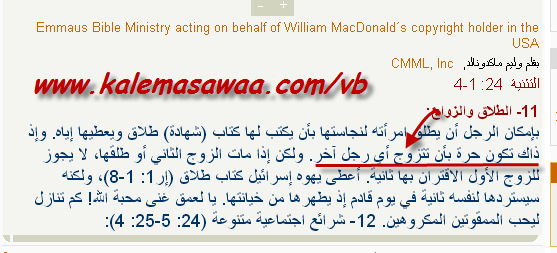
Biblical text showing Moses' law permitting a divorced woman to marry any man, whether single or married

An Israelite, whether single or already married, was also permitted to marry a captive woman.

Biblical text showing an Israelite, whether single or married, was permitted to marry a captive woman


The Admission of a Christian Apologetics Source

A Christian apologetics source responding to the question of polygamy in the Bible acknowledges the following:

Christian Apologetics Source The topic of polygamy in the Bible is interesting because most people today view it as immoral, while the Bible doesn’t explicitly condemn it. The first instance of polygamy in the Bible is Lamech in Genesis 4:19, “And Lamech took two wives for himself.” Many other prominent men in the Old Testament were also polygamists: Abraham, Jacob, David, Solomon, and others. In 2 Samuel 12:8, God speaks through the prophet, saying that if David’s wives and concubines weren’t enough, He would have given him more. Solomon had 700 wives and 300 concubines according to 1 Kings 11:3. It seems that God permitted polygamy to protect and provide for women who would otherwise have no husbands. A man could take multiple wives and be the provider and protector for them all. While this situation was not ideal, life in a household with several wives was preferable to other available options: prostitution, slavery, or starvation. In addition, polygamy facilitated the faster expansion and multiplication of humanity, fulfilling God’s command: “Be fruitful and multiply and fill the earth” (Genesis 9:7). Men could father children with multiple women simultaneously, allowing the population to grow more rapidly than if a man had only one child per year.

The source also addresses how God views polygamy today, noting that even with polygamy permitted, the Bible presents the monogamous model as the one that aligns with God’s original plan for marriage, citing Genesis 2:24, Deuteronomy 17:14–20, 1 Timothy 3:2, 12, Titus 1:6, and Ephesians 5:22–33. The source further cites the book “Woman, Church and State” (pages 402–403): the number of eminent Protestants both lay and clerical who endorsed polygamy was not small. In the sixteenth century, a former Capuchin monk who converted to Protestantism published “Dialogues in Favor of Polygamy.” In the latter part of the seventeenth century, John Lyser, another minister of the Reformed Church, strongly defended polygamy in “Polygamia Triumphatrix” — “The Triumphant Defense of Polygamy.” The Reverend Dr. Madden argued in his treatise “Thalypthora” that Paul’s injunction that bishops should be the husbands of one wife signified that laymen were permitted to marry more than one. The scholar William Ellery Channing found no prohibition against polygamy in the New Testament, stating: “We believe it to be an indisputable fact that although Christianity was first preached in Asia — which from the earliest days was the center of polygamy — the apostles never condemned it as a crime, nor did they ever require believers to put away all their other wives and keep only one. There is no clear prohibition of polygamy in the New Testament.” (1 Timothy 3:2: “the bishop must be blameless, the husband of one wife”; 1 Timothy 3:12: “the deacons must each be the husband of one wife.”)

Conclusion The missionary’s claim that the God of the Bible never permitted polygamy from cover to cover is refuted on every level: by the direct text of the Torah, by God’s explicit gift of wives to David, by God’s punishment of Miriam for opposing a polygamous marriage, by God’s blessing of Ishmael born of a polygamous union, by the Church Fathers from Augustine to Ambrose, by the Protestant Reformers from Luther to Melanchthon, by Christian encyclopedias and commentaries, by Jewish rabbinical authorities ancient and modern, and by a Christian apologetics source’s own admission that the New Testament contains no prohibition of polygamy. Not a single verse in the entire Bible explicitly forbids polygamy for the general believer.
2025 https://www.openislam.wiki/og/polygamy-in-the-bible-and-christian-tradition-refuting-the-claim-it-was-never-permitted.png