

Prophet Muhammad ﷺ Die as a False Prophet? Refuting the Poison and Aorta Arguments
Critics of Islam frequently recycle three connected arguments regarding the death of the Prophet Muhammad ﷺ:
- “Allah could not protect His Prophet.”
- The “aorta argument” from Qur’an 69:44-46.
- The claim that the Prophet ﷺ died poisoned, supposedly proving false prophethood.
Ironically, the hadiths themselves refute these claims rather than support them.
The Hadith of the Poisoned Sheep
The Messenger of Allah ﷺ used to accept presents but not charity.
A Jewish woman at Khaybar presented him with a roasted sheep which she had poisoned.
The Messenger of Allah ﷺ ate from it and the people also ate.
Then he said:
“Take away your hands, for it has informed me that it is poisoned.”
Bishr ibn al-Bara’ ibn Ma‘rur died from it.
The Prophet ﷺ summoned the Jewish woman and asked:
“What motivated you to do this?”
She replied:
“If you were a prophet, it would not harm you. But if you were a king, I would rid the people of you.”
The Messenger of Allah ﷺ ordered that she be killed.
He later said during the illness of his death:
“I continued to feel pain from the morsel I ate at Khaybar, and now is the time when it has cut off my abhar.”
Grade: Hasan Sahih (Al-Albani)
The Hadith Actually Supports Prophethood
Critics quote this narration without realizing that it contains evidence for prophethood.
The Prophet ﷺ immediately knew the meat was poisoned before anyone informed him through ordinary means.
“It has informed me that it is poisoned.”
This is not normal human knowledge.
The poisoned meat itself is described as informing the Prophet ﷺ through divine revelation or miraculous means.
If the intention is to use this narration against Islam, then the critic must also explain:
- How the Prophet ﷺ detected the poison instantly,
- Why he survived while another companion died rapidly,
- And why the poisoning failed to immediately kill him despite the severity of the poison.
The Timeline Destroys the Argument
The Battle of Khaybar occurred in 7 AH.
The Prophet ﷺ passed away in 11 AH.
That is approximately four years later.
Meanwhile:
- Bishr ibn al-Bara’ died shortly after consuming the poisoned food,
- But the Prophet ﷺ continued living for years,
- Completed the religion,
- Delivered the final message,
- Led campaigns,
- Gave sermons,
- And conducted normal affairs afterward.
If the poison truly “killed him,” then critics must explain why it failed to kill him for four entire years while killing another man almost immediately.
This alone severely weakens the claim.
Understanding Qur’an 5:67
Some critics cite the poisoning incident as proof that Allah failed to protect His Messenger ﷺ.
But this misunderstands the verse entirely.
“O Messenger, convey what has been revealed to you from your Lord. If you do not, then you have not conveyed His message. And Allah will protect you from the people.”
The verse means the Prophet ﷺ would be protected until he fully conveyed the message.
And that mission was completed.
“Today I have perfected your religion for you…”
The religion was completed before the Prophet ﷺ passed away.
So the divine protection succeeded exactly as intended:
- The Prophet ﷺ delivered the message,
- Islam was completed,
- The Qur’an was preserved,
- Then Allah caused His Prophet ﷺ to pass away naturally like all human beings eventually do.
The verse never says the Prophet ﷺ would live forever or never experience illness.
The “Aorta Argument” Fails Linguistically
Critics often connect this hadith with the following verse:
“Had he fabricated against Us some statements, We would have seized him by the right hand, then We would have cut from him the watin.”
Critics then claim:
- The Qur’an mentions the watin,
- The hadith mentions something being “cut,”
- Therefore Muhammad ﷺ fulfilled the punishment of a false prophet.
This argument collapses because the hadith does not use the same word.
The hadith says:
“هذا أوان انقطاع أبهري”
“This is the time when my abhar is being cut off.”
The word used is abhar, not watin.
These are different Arabic terms.
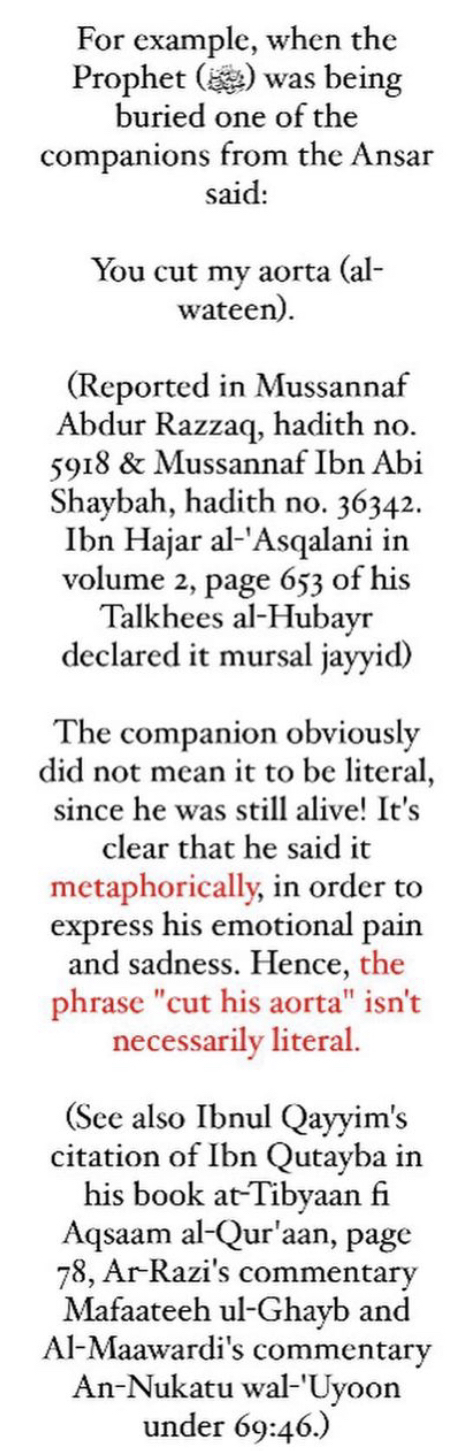
For your info:
This scan contains Arabic lexical discussions distinguishing between the terms abhar and watin. Critics frequently conflate the two despite classical Arabic sources differentiating between them.
The same distinction is further demonstrated in the following references:
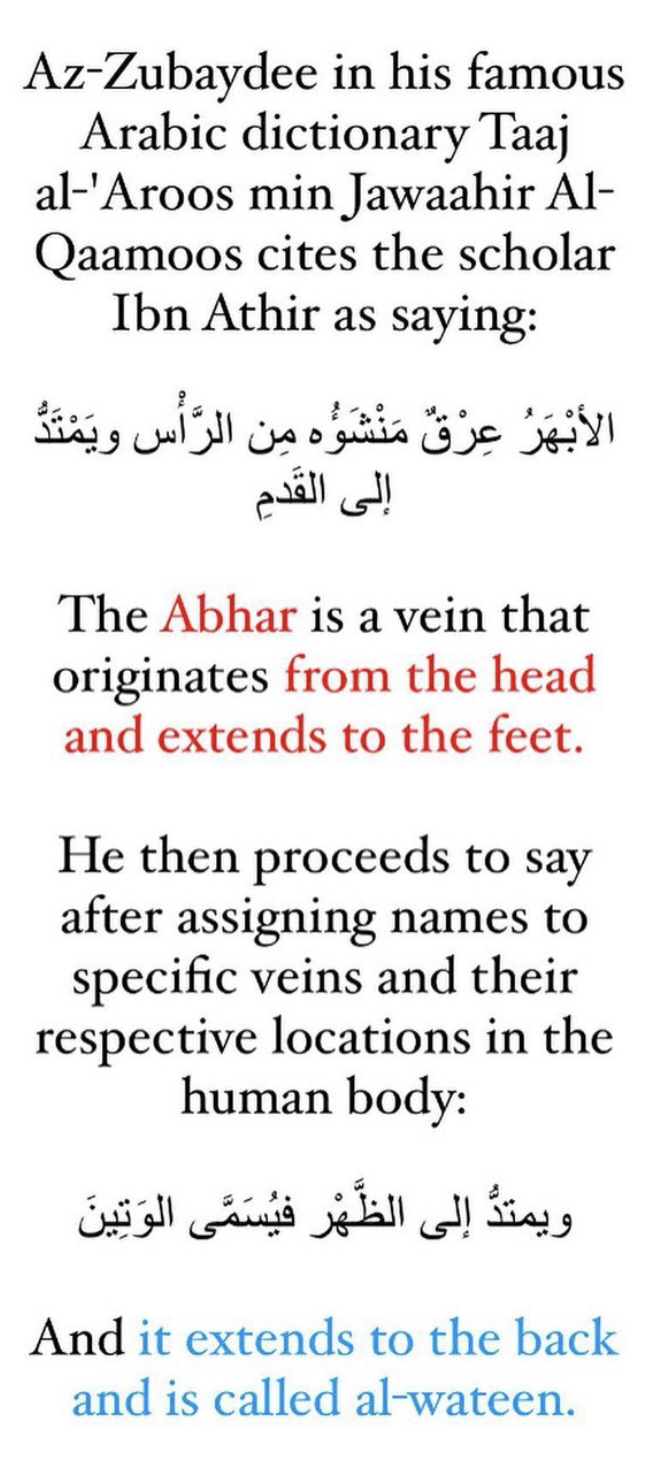
For your info:
This scan continues the linguistic discussion showing that abhar and watin are not synonymous terms in Arabic usage.
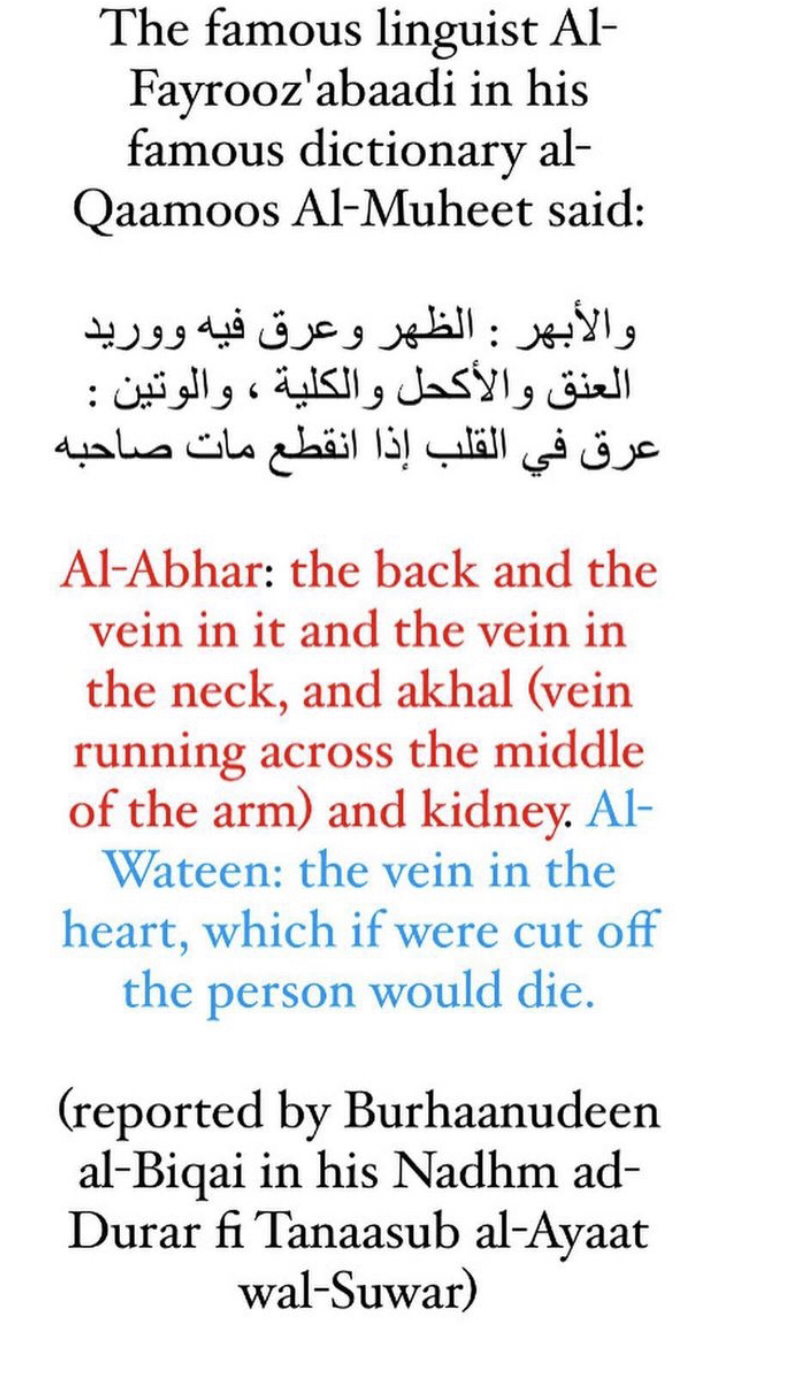
For your info:
This scan provides additional dictionary material discussing the meaning of abhar and its medical or anatomical usage in classical Arabic literature.
They are not.
Did the Prophet ﷺ Actually Die From Poison?
The narration does not necessarily mean the Prophet ﷺ literally died from poisoning four years later.
Ibn Hajar al-Asqalani explains in Fath al-Bari that the Prophet ﷺ would occasionally feel pain from the poison over time.
During his final illness, that pain coincided with the sickness from which he ultimately passed away.
This is very different from claiming:
“The poison directly killed him after four years.”
An analogy makes this obvious.
“The car accident killed him years later.”
They simply acknowledge that remnants of the injury continued to cause discomfort.
The same principle applies here.
The Prophet ﷺ experienced recurring pain from the poisoning incident, but this does not prove the poison itself directly caused his death four years later.
Martyrdom Is Not a Disproof of Prophethood
Even if one were to argue that the poisoning contributed to his death, this still would not disprove prophethood.
In Islam, the Prophet ﷺ is considered to have attained the rank of martyrdom.
Ironically, some Christian polemicists mock this while simultaneously believing that their own central religious figure was publicly crucified.
The criticism is inconsistent.
The Hadith of Seven Ajwa Dates
The Prophet ﷺ also said:
“Whoever eats seven Ajwa dates in the morning will not be harmed that day by poison or magic.”
Critics sometimes attempt to use this narration as another objection.
But the Khaybar incident actually supports the hadith rather than contradicts it.
The Prophet ﷺ:
- Was informed of the poison,
- Was protected from immediate death,
- Continued living for years afterward,
- And completed his mission successfully.
That is protection, not failure.
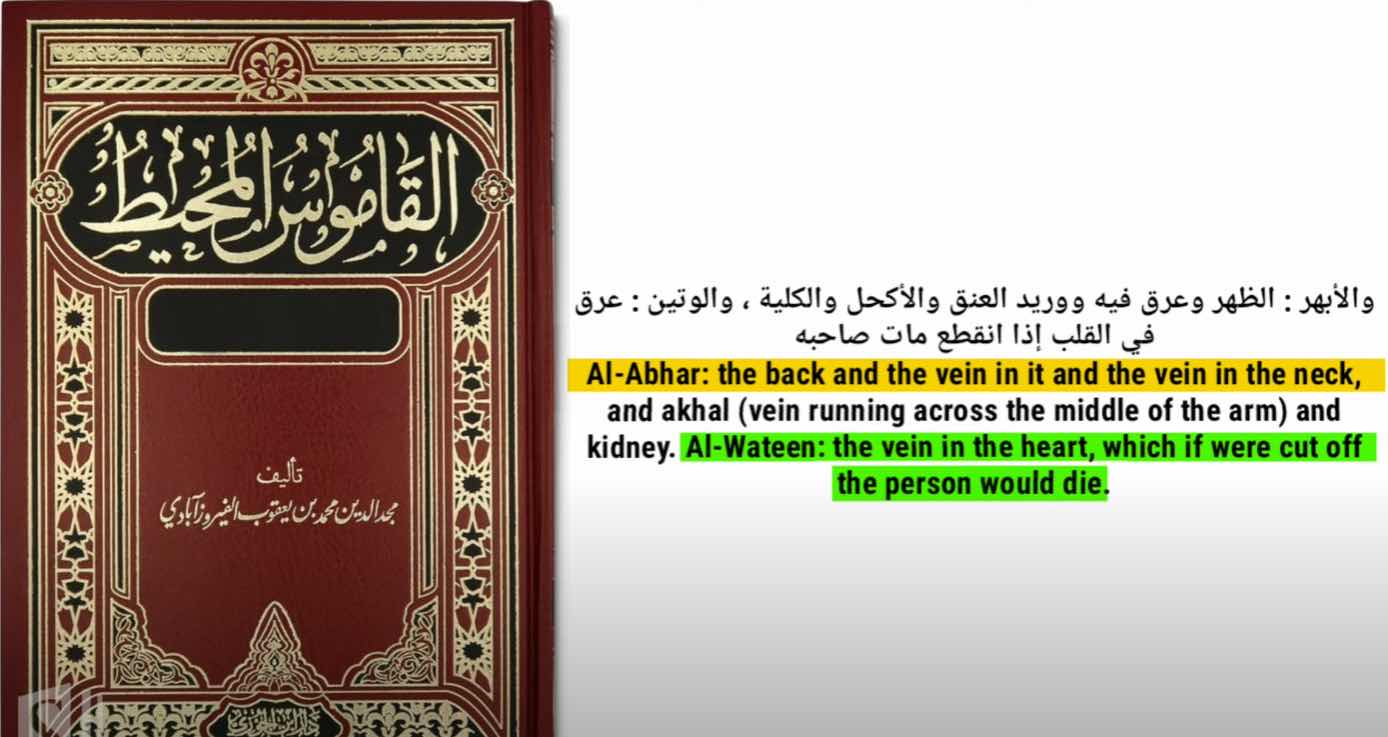
For your info:
This scan discusses narrations connected to protection from poison and addresses how critics misuse the Khaybar incident against the Prophet ﷺ.
Additional References
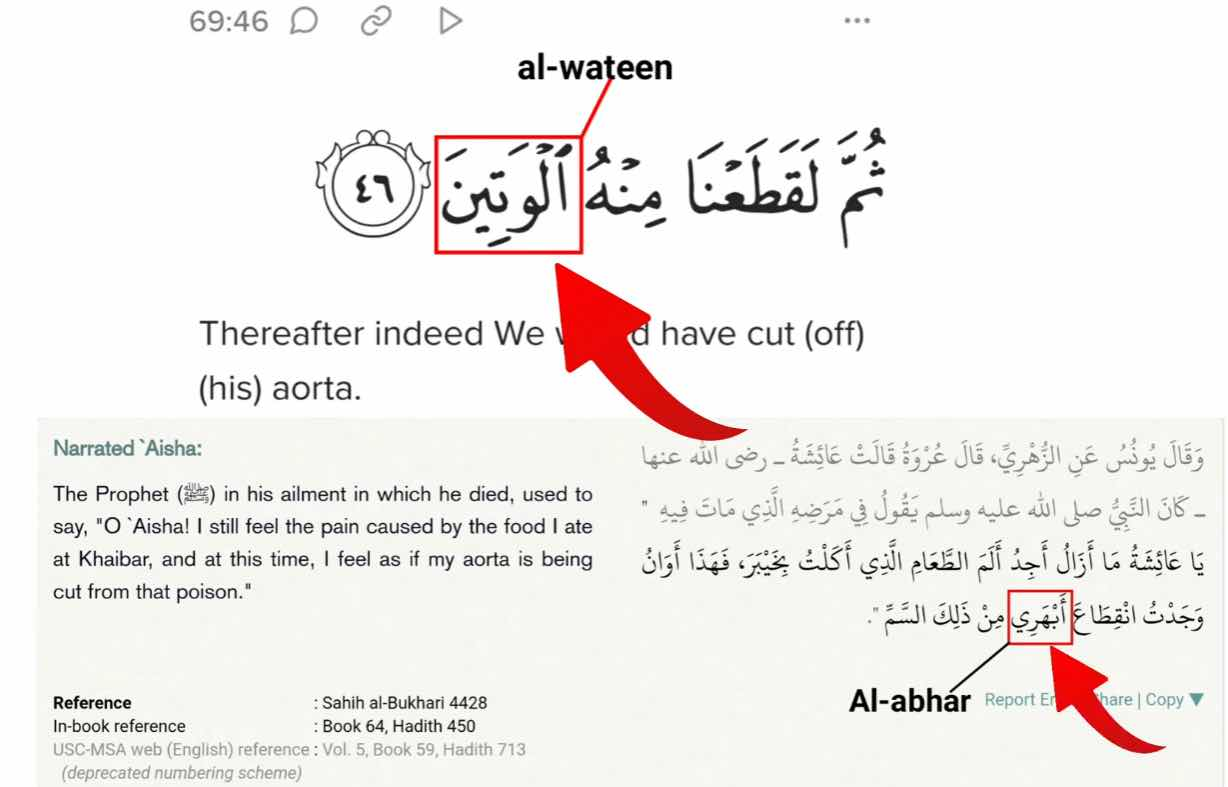
For your info:
This scan contains additional scholarly discussion addressing the “aorta argument” and explaining why the comparison between Qur’an 69:46 and the Khaybar narration is linguistically flawed.
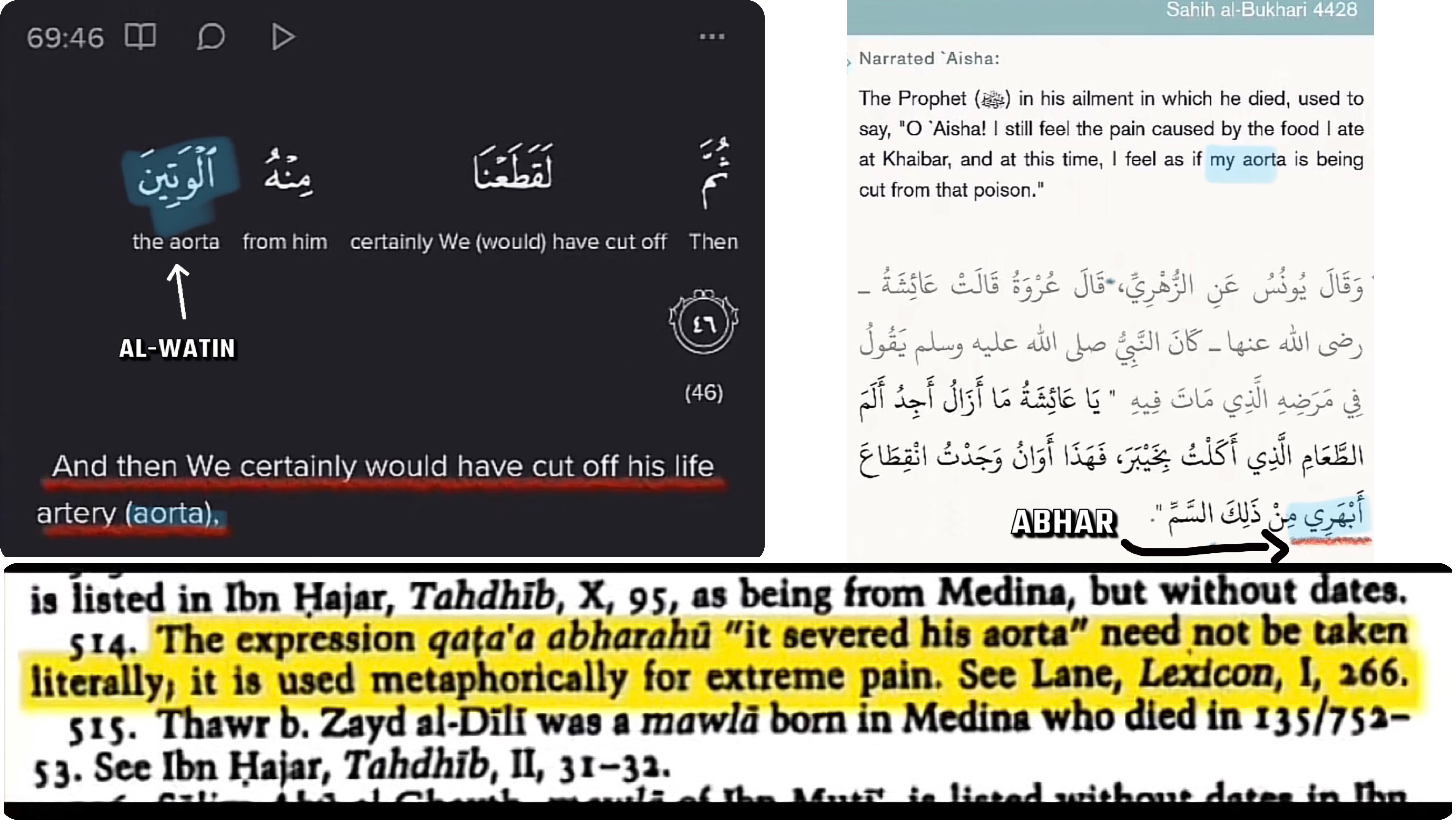
For your info:
This scan continues the refutation of the claim that the Prophet ﷺ fulfilled the punishment mentioned in Surah al-Haqqah. The material emphasizes the difference between the Qur’anic wording and the wording used in the hadith.