Psalm 110:1 — Does 'The Lord Said to My Lord' Prove Jesus Is God?
·14 min read·3119 words
Psalm 110:1 — “The Lord said to my Lord, sit at my right hand” — is among the most frequently cited Old Testament texts for the divinity of Christ. This note examines the verse from four perspectives: the Christian position, the Jewish position as original custodians of the text, the Jehovah’s Witnesses position, and the Muslim response. It then addresses the linguistic problem with Adoni, the internal theological contradiction the Christian fathers created by assigning the verse to Christ’s humanity, and the three-level refutation of the text as a proof of divinity.
The Christian Position
Four authoritative Coptic sources use this text as a proof of Christ’s divinity.
Father Abdel-Masih Basit Abu al-Khair, in Did Christ Say, “I Am Your Lord, So Worship Me?”, under the title “The Lord Said to My Lord — Christ’s Declaration of His Divinity and Lordship”:
Father Abdel-Masih Basit Abu al-Khair — Did Christ Say, “I Am Your Lord, So Worship Me?” “Here the Lord Jesus Christ confirms in His question to them that He is the Lord of David, seated at the right hand of the Majesty in the heavens. So who is the Lord of David? The answer is: The Lord of David is God. ‘Hear, O Israel: The Lord our God, the Lord is one’ (Deuteronomy 6:4).”
Pope Shenouda III, in Theology of Christ, under the title “The Name Lord Was Given to Christ on Occasions That Indicate His Divinity”:
Pope Shenouda III — Theology of Christ “Perhaps one of them is that question that puzzled the Pharisees, when they said that Christ is the son of David. ‘He said to them, How then does David in the Spirit call Him Lord? Saying: The Lord said to my Lord, Sit at my right hand, until I make your enemies your footstool. And no one was able to answer him a word.’ So David calls him his Lord, and the verse is made more powerful by his sitting at the right hand of God.”
Father Tadros Yacoub Malti, interpreting Psalm 110:1 and quoting Saint Cyril of Jerusalem:
Father Tadros Yacoub Malti — Interpretation of Psalm 110:1, citing Saint Cyril of Jerusalem “Since this prophet was a king, who is he whom his Lord can call while he sits at the right hand of God except Christ, the Son of God, who is the King of Kings and Lord of Lords?”
Father Abdel-Masih Basit Abu al-Khair, in Mary Magdalene and Her Relationship with Christ, Chapter Four:
Father Abdel-Masih Basit Abu al-Khair — Mary Magdalene and Her Relationship with Christ “Since it will be said that Christ is the son of David, David quickly prophesies, saying, ‘The Lord said to my Lord, Sit at my right hand, until I make your enemies your footstool.’ Have you seen how David gives him the name Lord for the name Son?”
The Christian argument: the second “Lord” refers to Christ; since David calls him “Lord” and the Lord of David is God, Christ is God.
The Jewish Position: The Original Custodians of the Text
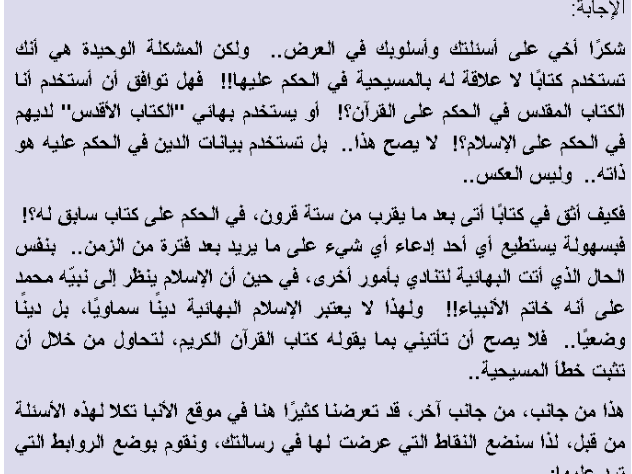
A foundational rule in evaluating religious texts is that a text must be understood according to the people of the faith that produced it. The Anba Takla website itself stated this when responding to Muslim objections:
Anba Takla Website — Frequently Asked Questions About Christianity “The only problem is that you are using a book that has nothing to do with Christianity to judge it. Do you agree that I use the Holy Bible to judge the Quran? Or that the Baha’is use their ‘Holiest Book’ to judge Islam? The data of the religion is used to judge it itself — and not the other way around.”
By this same principle, Psalm 110 is a Jewish text. The Jewish judgment on its meaning is more authoritative than a Christian interpretation formed centuries later.
Rabbi Rashi — The Most Famous Jewish Interpreter
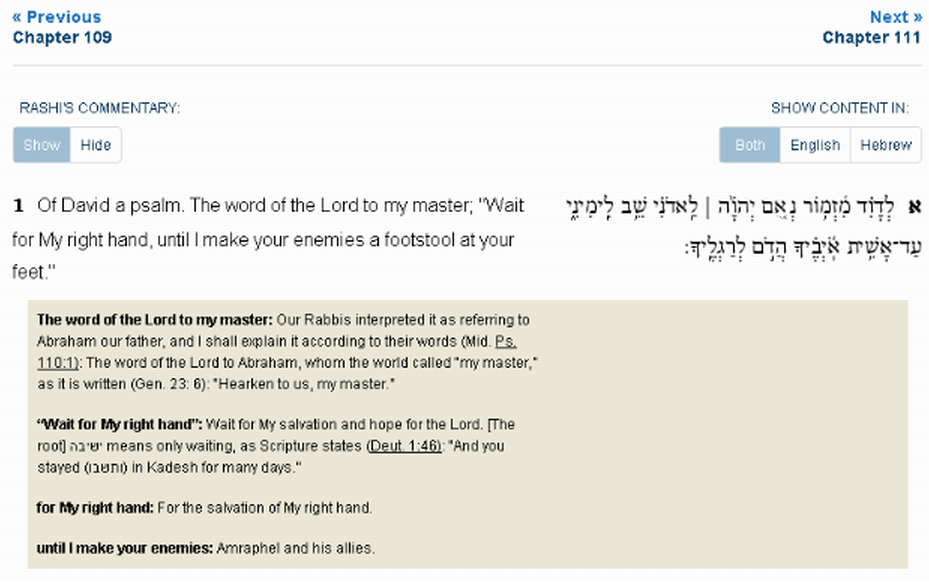
The following is a scan of Rabbi Rashi’s classical commentary on Psalm 110:1, establishing his interpretation of the addressee as Abraham rather than a future Messiah.
Rabbi Rashi's commentary on Psalm 110:1 identifying the addressee as Abraham
Rabbi Rashi — Commentary on Psalm 110:1 “‘The word of the Lord to my lord’ — Our rabbis have interpreted this as referring to our father Abraham, and I will interpret it according to their comments. The word of the Lord to our lord Abraham, whom the world calls ‘my lord,’ as it is written in Genesis 23:6: ‘Hear us, my lord, you are a prince from God among us.’ ‘Wait for my right hand’ — I wait for my salvation and my hope in the Lord. The root of this word in Hebrew means only ‘wait,’ not ‘sit.’ ‘For my right hand’ — for the salvation of my right hand.”
Rashi identifies the addressee as Abraham and notes that the Hebrew root of the verb means to wait — not to sit at a position of authority.
Rabbi Zechariah — In the Name of Rabbi Yishmael
Rabbi Zechariah, in the name of Rabbi Yishmael — Talmudic tradition “The Holy One put the blessing of Abraham before the blessing of existence; he had a priesthood in particular. As it is said: ‘Blessed be Abram, God Most High, maker of heaven and earth, and blessed be God Most High’ (Genesis 14:19–20). And Abraham said: Does he put the blessing of a servant before the blessing of his master? You must bless God first. Immediately the Holy One gave Abraham the priesthood, as stated: ‘The Lord says to my lord: Sit at my right hand.’”
The Talmudic tradition connects the verse to Abraham’s priesthood — a reward for his correction of Melchizedek. No Messianic or divine application to Jesus exists in this tradition.
Rabbi Ibn Ezra and Rabbi Radak
Both Rabbi Ibn Ezra and Rabbi Radak held that the psalm was written by one of David’s servants about David himself — David writing about himself in the third person.
The Official Jewish Response — Jews for Judaism
The following is a screenshot from the Jews for Judaism website’s official response to Christian use of Psalm 110:1, establishing the distinction between Adoni and Adonai in the Hebrew text.
Jews for Judaism article on Psalm 110 establishing that Adoni always refers to a human being in the Hebrew Bible
Jews for Judaism — Official Response to Psalm 110:1 “In Hebrew, it is not uncommon to have a word that can be divine or human depending on the context. An excellent example is the Hebrew ‘Elohim’ which can mean either human judge or God. It is important to note that Christian translations such as the Oxford Study Edition recognize the error in Psalm 110 and correctly translate it as ‘The Lord said to my Lord’ with a lowercase ‘L.’ In the Hebrew Bible, the Tanakh uses the word ‘Adoni’ over 130 times. In each case, it means ‘master’ or ‘lord’ and refers to a human being. In addition to Psalm 110:1, the word ‘to my master’ (ladoni) appears 20 times and always refers to a human being: ‘Hear us, my lord (Abraham)’ — Genesis 23:6. ‘Sarah bore a son to my lord (Abraham)’ — Genesis 24:36. ‘You must say, my lord, to Esau’ — Genesis 32:5. ‘What can we say to the lord (Joseph)’ — Genesis 44:16. ‘I love my lord (slave owner)’ — Exodus 21:5. ‘Do not let the anger of my lord (Moses) burn’ — Exodus 32:22. ‘To do this thing to my lord (David)’ — 1 Samuel 24:7. Although the Psalms were composed by King David, they were often written in the third person about himself. For example: ‘Who let David go, his servant?’ — Psalm 144:10. This psalm in Hebrew begins ‘L’David Mizmor’ which means ‘Psalm of David’ — indicating David was writing about himself.”
The summary of all Jewish positions: this text has nothing to do with Jesus Christ. It is not legitimate for Christianity to come centuries after Judaism and interpret this text according to its own doctrinal needs while discarding the understanding of the people who produced and preserved it.
The Jehovah’s Witnesses Position
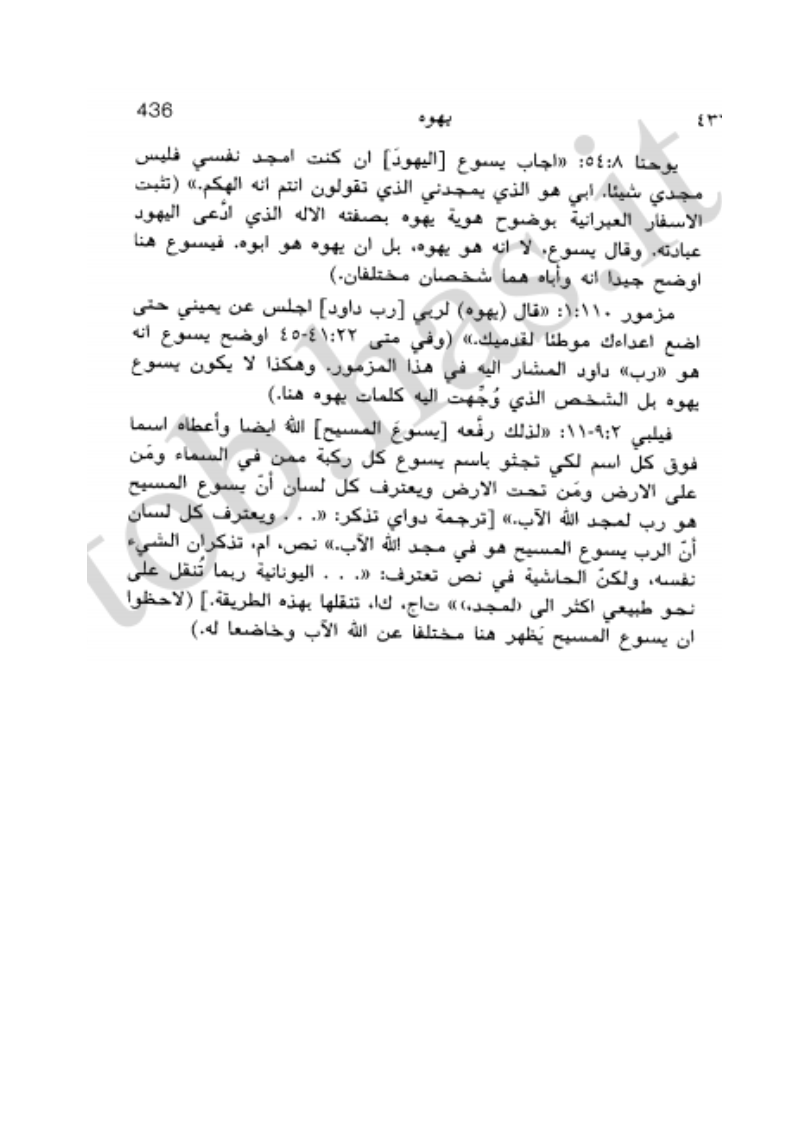
Jehovah’s Witnesses are a Christian sect who believe in one true God: the Father, Jehovah. Christ is not a true God in their theology. The following is a scan from their official book Discussion in the Holy Scriptures, p. 436, under the title “Jehovah,” confirming their position that this text speaks of only one God and proves nothing about Christ’s divinity.
Page 436 of the Jehovah's Witnesses book Discussion in the Holy Scriptures on the title Jehovah, rejecting the use of Psalm 110:1 to prove Christ's divinity
Three parties who all accept this text as scripture — Judaism, Jehovah’s Witnesses, and mainstream Christianity — produce three irreconcilable readings. Judaism identifies the addressee as Abraham or David. Jehovah’s Witnesses identify him as Christ but deny his divinity. Only mainstream Christianity derives divinity from it.
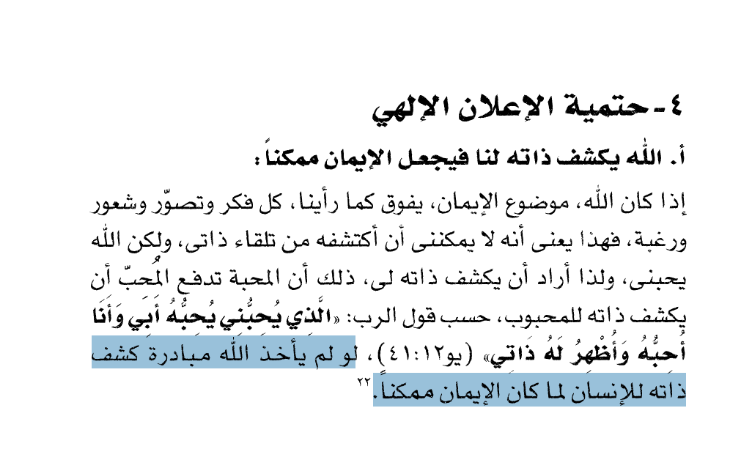
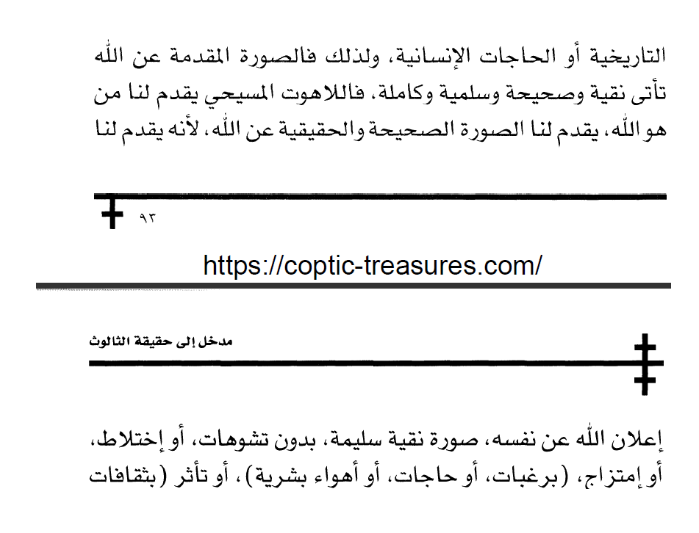
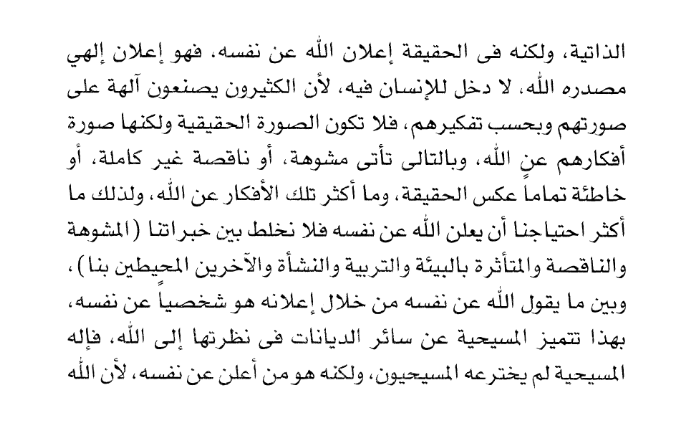
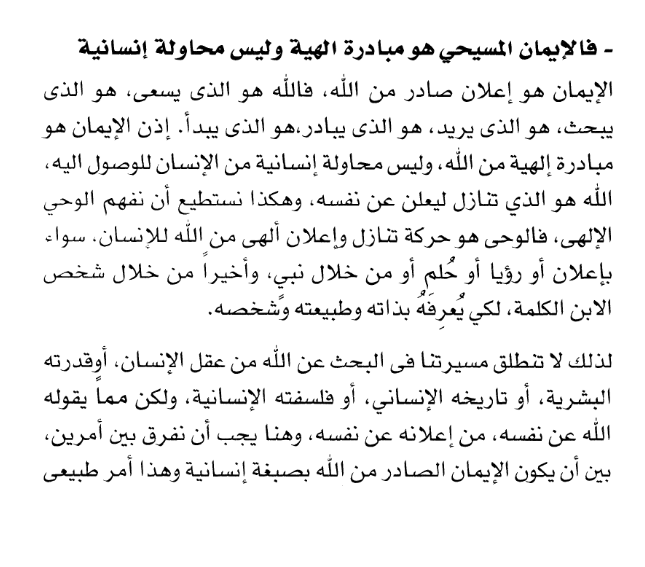
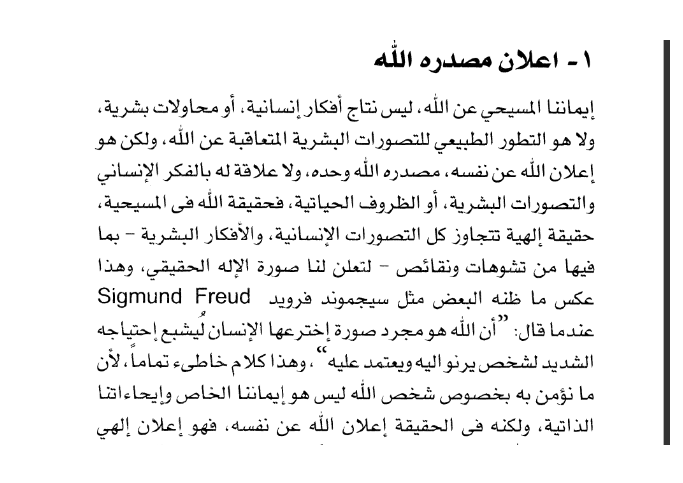
This is confirmed by Father Ibrahim al-Qummus Azer in Introduction to the Truth of the Trinity. The following four scans show the relevant pages establishing that doctrine must rest on clear, unambiguous divine declarations free from human interpretation and sectarian disagreement.
Page from Introduction to the Truth of the Trinity by Father Ibrahim al-Qummus Azer on the requirement of doctrinal claritySecond page from Introduction to the Truth of the Trinity on clear divine declarations as the basis of doctrineThird page from Introduction to the Truth of the Trinity on the impossibility of belief in unclear doctrinal declarationsFourth page from Introduction to the Truth of the Trinity completing the argument on doctrinal clarityFifth page from Introduction to the Truth of the Trinity
Father Ibrahim al-Qummus Azer — Introduction to the Truth of the Trinity “The doctrine is based on clear declarations from God Himself that do not contain ambiguity, difference, human perceptions, or interference by the human mind. If the doctrine was not clearly declared, then belief in it would not be possible.”
Applying this standard to Psalm 110:1: the text contains difference, ambiguity, and multiple contradictory human interpretations even among believers. It is therefore an unclear declaration. God declares His doctrine through clear declarations only. A text that cannot be agreed upon by Judaism, Jehovah’s Witnesses, and mainstream Christianity cannot serve as the foundation of the doctrine of Christ’s divinity.
The Muslim Response
Dr. Munqidh al-Saqqar
Dr. Munqidh al-Saqqar — on Psalm 110:1 “Let us assume that ‘to my Lord’ means Christ. When were the enemies of Christ under his feet? When did he humiliate and defeat them? But if we asked Christ according to the Gospels about this text, we would hear an answer that would disturb the Church. He considers this text a prophecy about the coming Messiah — the awaited Prophet — whom David describes as ‘to my Lord,’ meaning my lord. Christ showed them through this text that the coming Prophet is not from the descendants of David, because David described him by saying ‘to my Lord’ — and a father does not say about his son ‘my lord.’ From this, Christ inferred that the awaited Prophet is not from the descendants of David.”
This reading is drawn from Matthew, Mark, and Luke. Christ himself uses this psalm not to claim divinity but to demonstrate that the awaited one is not from David’s lineage — which would exclude Christ himself, since he is repeatedly called “Son of David” in the Gospels (Luke 18:38, Mark 10:48). The word “lord” in Biblical vocabulary means master or teacher, confirmed by Mary Magdalene’s address:
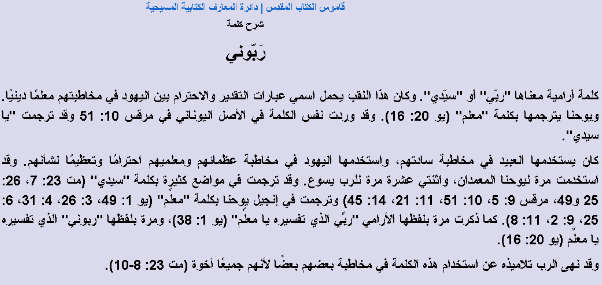
John 20:16 (ESV) “Jesus said to her, ‘Mary.’ She turned and said to him in Aramaic, ‘Rabboni!’ (which means Teacher).”
The following is a scan from the Bible Dictionary entry on the word Rabboni, confirming that it means Teacher or Master — not a divine title.
Bible Dictionary entry on the word Rabboni confirming it means Teacher or Master, not a divine title
Dr. Wissam Abdullah — The Linguistic Argument
Dr. Wissam Abdullah — Debate with Father Abdel-Masih Basit Abu al-Khair “The text does not say ‘The Lord said to my Lord.’ Return to the Psalms. The text says ‘to my lord,’ not ‘to my Lord.’ The Van Dyck translation is a wrong translation — return to the Jesuit translation. The Hebrew says ‘Adonai’ and ‘Adoni.’ ‘Adoni’ means ‘my lord’ — the Van Dyck translation is a deliberate mistranslation to prove the divinity of Christ. Furthermore, from the Gospel of Matthew verse 42: ‘And while the Pharisees were gathered together, Jesus asked them, What do you think about the Christ, whose son is he? They said, The son of David. He said to them, How then does David in spirit call him Lord? If David calls him Lord, how can he be his son?’ The only way to connect Jesus to David is through Mary — who is from the tribe of Levi, not the tribe of Judah, and has nothing to do with David. And through Joseph the carpenter — who is not his father and has no relation to Jesus.”
Sheikh al-Balaghi — The Translation Problem
Sheikh al-Balaghi — Science of Comparative Religions, Second Section “Al-Balaghi mentioned that the translations of the New Testament and the Psalms agreed to change the meaning of ‘my master’ — which is in the Hebrew meaning master or lord — to ‘my Lord.’ They translated the text of Psalm 110:1: ‘Naom Jehovah Ladoni’ — meaning ‘God inspired my master’ — as ‘The Lord said to my Lord.’”
The word Adon in Hebrew means master, lord, baal. It appears in the Old Testament 334 times, in more than 100 places in the plural Adonim meaning masters. Its uses include: six places indicating ruler or leader (Genesis 8:9, 45; Jeremiah 21:10, 5:12; Psalms 5:34, 18:22); twenty-six places as a title of the Lord (Exodus 23:34, 17:23; Isaiah 1:7, 1:14; Psalms 33, 16:10, 3:24); and other places indicating masters who own slaves (Genesis 13:33, 41, 29, 27, 25, 24:25; 1 Samuel 22:32; Exodus 15, 14).
The word also appears as compound proper nouns: Adoni-Zedek (Master of Truth) in Joshua 1:3 and 10; Adoni-Qam (Master rose) in Ezra 8:13; Adoniyah (Jehovah is the Master) in Nehemiah 10:17; Adoniram (The High Lord) in 1 Kings 4:6.
!!Adonai!! — the divine name — is entirely distinct from !!Adoni!!. !!Adonai!! appears over 425 times in the Old Testament as a name of God. !!Adoni!! appears over 130 times and always refers to a human being. The Hebrew text of Psalm 110:1 uses Adoni, not Adonai.
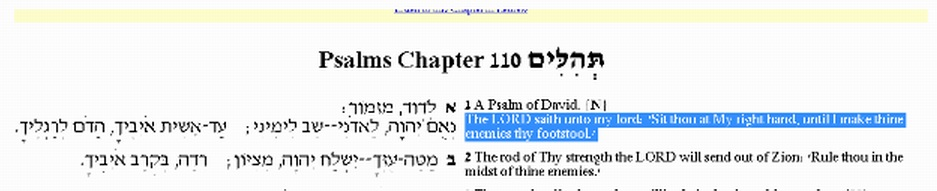
The Hebrew text of Psalm 110:1 as rendered in the Mechon Mamre edition:
Translation: “The LORD said to my lord (the king): Sit at my right hand, until I make your enemies your footstool.”
The following is a screenshot of the Mechon Mamre Hebrew text of Psalm 110:1, confirming the lowercase rendering of the second “lord.”
Mechon Mamre Hebrew text of Psalm 110:1 showing the word Ladoni — to my lord — with lowercase rendering
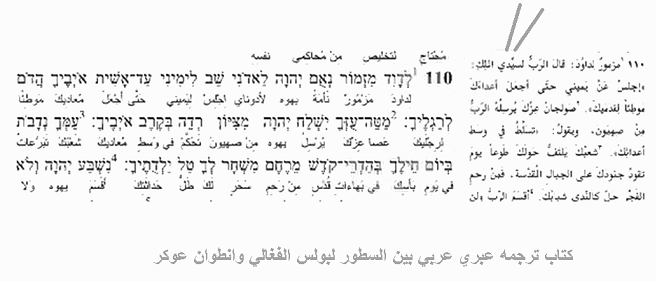
The following is a scan from the Hebrew-Arabic interlinear translation by Paul al-Feghali and Antoine Awkar, translating the second word as “my lord” — not “my Lord.”
Hebrew-Arabic interlinear translation by Paul al-Feghali and Antoine Awkar of Psalm 110:1 rendering the second lord as lowercase my lord
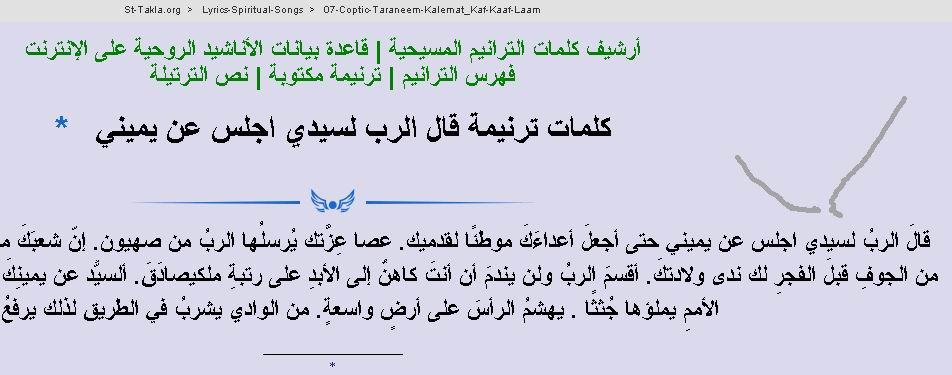
The following is a screenshot from the Anba Takla website itself, which on one occasion quoted this text using “my lord” — lowercase — in direct contradiction of the doctrinal capitalisation used elsewhere.
Screenshot from the Anba Takla website quoting Psalm 110:1 with lowercase my lord, contradicting its own doctrinal use of the capitalised My Lord
The Mechon Mamre edition, the Hebrew-Arabic interlinear, the Jesuit translation, the Oxford Study Edition, and the Anba Takla website in its own slip all render the second “lord” as lowercase. The capitalised “Lord” in the Van Dyck and similar translations is a mistranslation — and it is the entire foundation of the Trinitarian argument from this verse.
The Internal Contradiction: Whose Humanity Is This?
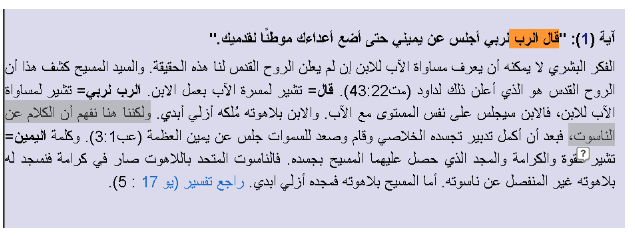
The verse describes someone who needs God to put his enemies under his feet. The Christian fathers recognised it is theologically impossible for the divine nature to need anyone’s help subduing enemies. They therefore assigned the verse to Christ’s humanity.
The following is a scan of Father Antonius Fikry’s interpretation of Psalm 110:1, confirming that the text addresses the humanity of Christ, not his divinity.
Father Antonius Fikry's interpretation of Psalm 110:1 assigning the text to the humanity of Christ
Father Tadros Yacoub Malti’s interpretation of Psalm 110:1 confirms the same: the text speaks about the humanity of Christ because it is impossible for the divinity to need someone to put its enemies under its feet.
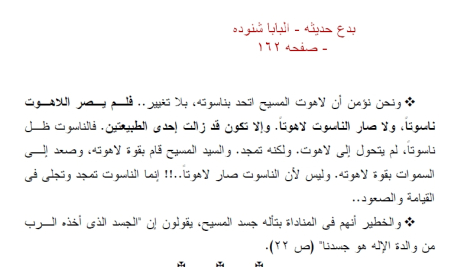
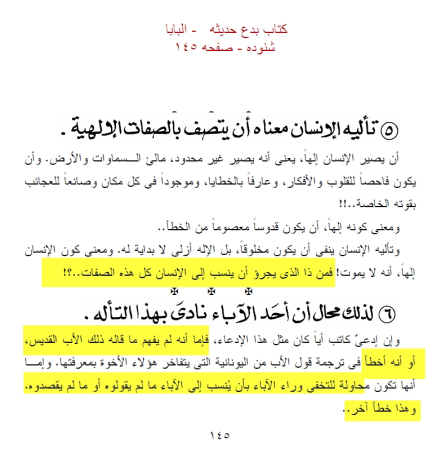
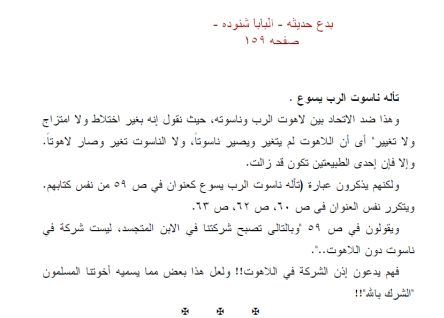
The following scans from Pope Shenouda III’s book Modern Heresies establish that the humanity of Christ, regardless of what is said about it, cannot become God — because this would violate the law of the union of the two natures.
First page from Pope Shenouda III's Modern Heresies establishing that the humanity of Christ cannot become GodSecond page from Pope Shenouda III's Modern Heresies confirming that attributing divinity to the humanity of Christ is heresyThird page from Pope Shenouda III's Modern Heresies on the law of the union of the two naturesFourth page from Pope Shenouda III's Modern Heresies completing the argument on the humanity and divinity of Christ
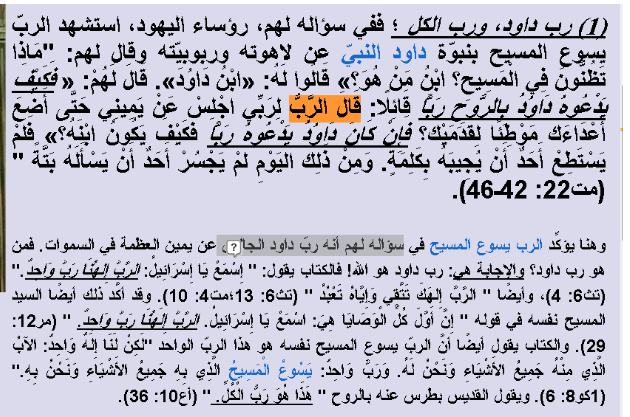
The following is a scan from Father Abdel-Masih Basit Abu al-Khair’s book Yes, Christ Said, I Am God, where he builds his argument that the text proves Christ’s divinity through the word “Lord.”
Page from Father Abdel-Masih Basit Abu al-Khair's book Yes Christ Said I Am God showing his argument that Psalm 110:1 proves divinity through the word Lord
The text proves Christ is divine because David calls him “Lord” The priest argues: David calls the second party “Lord,” therefore that party is God, therefore Christ is God.
The Christian fathers themselves declared that the addressee in this text is Christ’s humanity — not his divinity — precisely because the verse describes a being that needs God’s help to subdue his enemies, which the divine nature cannot need. Therefore: the one David calls “my lord” is humanity; the one whose enemies will be placed under his feet is humanity; the one sitting at the right hand of God is humanity. Pope Shenouda III stated in Modern Heresies that the humanity of Christ cannot become God — this would violate the law of the union of two natures. The addressee in this text — humanity — is therefore not God.
The question stands: if this text is attributed to Christ’s humanity because it is against his divinity — how can it be used to prove his divinity?
Three-Level Summary
Psalm 110:1 fails as a proof of Christ’s divinity on three independent levels. Linguistically: the Hebrew word is — appearing over 130 times in the Old Testament and always referring to a human being. The divine name is . The capitalised “Lord” in the Van Dyck translation is a mistranslation corrected by the Mechon Mamre Hebrew text, the Hebrew-Arabic interlinear, the Jesuit translation, the Oxford Study Edition, and the Anba Takla website’s own slip. Contextually: the verse describes a being who needs God to subdue his enemies — which the Christian fathers assigned to Christ’s humanity precisely because it cannot apply to the divine nature. A verse assigned to Christ’s humanity by the Christian fathers cannot simultaneously prove his divinity, since Pope Shenouda III’s own Modern Heresies declares that attributing divinity to the humanity of Christ is heresy. Doctrinally: Judaism identifies the addressee as Abraham or David; Jehovah’s Witnesses deny it proves divinity; only mainstream Christianity derives divinity from it. By the Christian fathers’ own standard — doctrine must rest on clear, unambiguous declarations free from human interference — a text producing three irreconcilable readings among its own believers cannot bear the weight of the doctrine of Christ’s divinity.