Quran 27:18 — The Ant's Warning to Solomon and the Three Scientific Types of Ant Crushing
The Quran did not say that ants have a layer of silicon dioxide or glass. The Quran said that Solomon’s soldiers might crush the ants. Science has now described three distinct mechanisms by which ants are crushed — all of which correspond to the physical structure of the ant’s body.
An atheist claimed that Quran 27:18 contains a scientific error because Muslims allegedly claim that ants have a layer of silicon dioxide or glass. The claim misrepresents what the Quran says. The Quran says nothing about silicon dioxide. It describes an ant warning its fellow ants that Solomon and his soldiers might crush them. The word used is yahtimannakum — they crush you, or break you — and this word has been the subject of Quranic commentary since the time of al-Tabari. When the atheist was presented with the three scientific types of crushing that can occur to an ant, he deleted all the responses and blocked the poster.
The Verse and Its Classical Commentary
“Until, when they came to the Valley of the Ants, an ant said, ‘O ants, enter your dwellings lest Solomon and his soldiers crush you while they perceive not.’” (Al-Naml: 18)
The verse says: Solomon and his soldiers came to the Valley of the Ants, and an ant said — O ants, enter your dwellings lest Solomon and his soldiers crush you (yahtimannakum) while they do not know that they are crushing you.
Al-Tabari records in his interpretation:
The word used in the verse — yahtim — means to break, crush, or shatter. It is a word applicable to structures that have hardness and can be broken under force. This is the word the Quran chose for what might happen to the ants under the soldiers’ feet.
The Atheist’s Objection — A Misrepresentation
First Type of Crushing — Mechanical Failure of the Chitin Exoskeleton
The external structure of the ant’s body is covered with a hard, scaled outer layer called the exoskeleton, composed of a material called chitin. This layer constitutes the first mechanism by which an ant can be crushed or broken.
The following image shows the ant body structure diagram from Harvard Forest, illustrating the exoskeleton and its chitin composition.
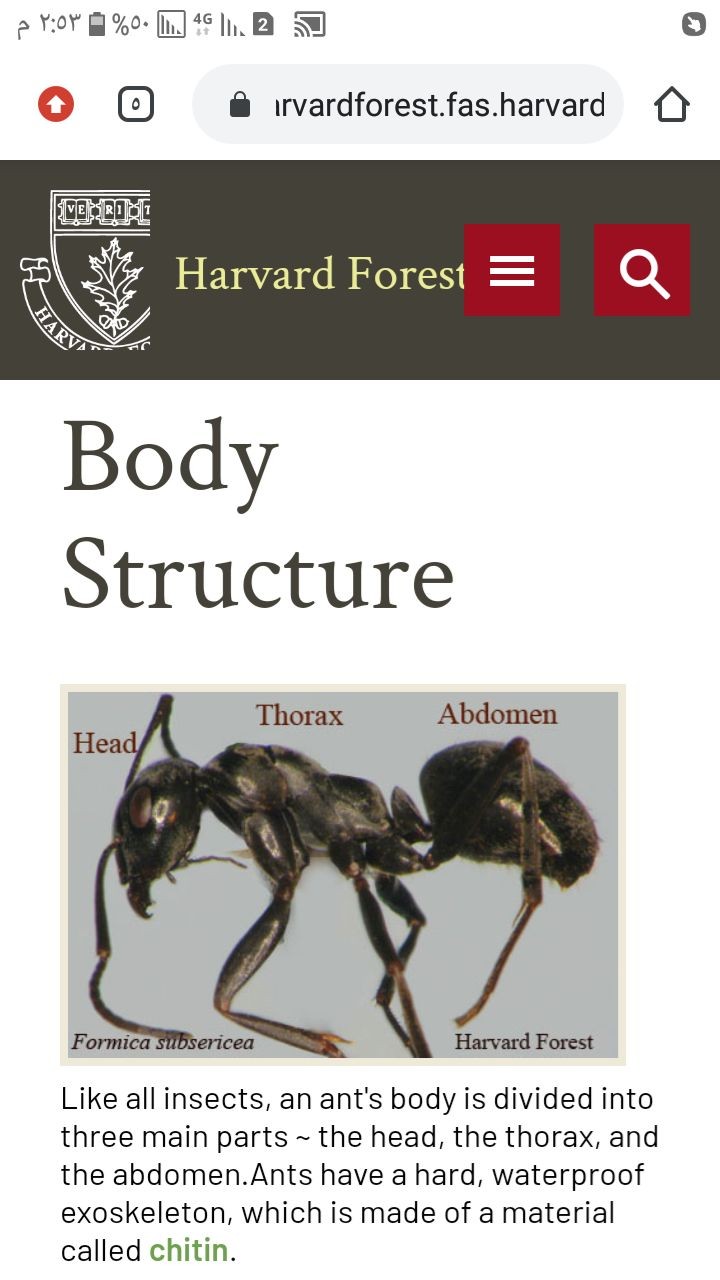
Chitin: a tough, protective, semitransparent substance that forms the exoskeletons of arthropods. Exoskeleton: hard outer shell of arthropods made of chitin.
The mechanical properties of this chitin layer determine precisely how it fails under compressive force:
“Below a certain degree of deformation, changes of shape or dimension of the cuticle are elastic and the original shape returns after the stress is removed. Beyond that level of deformation, non-reversible, plastic deformation occurs until finally the cuticle cracks or splits.”
The chitin exoskeleton of the ant is specifically designed to resist the compressive forces of predation — and when it fails under sufficient compressive stress, it does so by cracking and splitting. A soldier’s foot exerts exactly the type of compressive force that this system is designed to resist, and beyond its threshold, it cracks. This is the first scientific meaning of crushing an ant.
Chitin is also reinforced by mineral crystals in a process called biomineralization: “Typically the mineral crystals, mainly calcium carbonate, are deposited among the chitin and protein molecules in a process called biomineralization. The crystals and fibers interpenetrate and reinforce each other, the minerals supply the hardness and resistance to compression, while the chitin supplies the tensile strength.”
Second Type of Crushing — Rupture of Inter-Segmental Joints
The second mechanism by which an ant can be crushed or broken involves the joints and connections between the segments of its body — the articulating links, vertebrae, or joints that connect the head to the thorax and the thorax to the abdomen.
The following image is from the antkeepers.com anatomy reference, illustrating the segmented body structure of the ant and the critical petiolar connections between its parts.
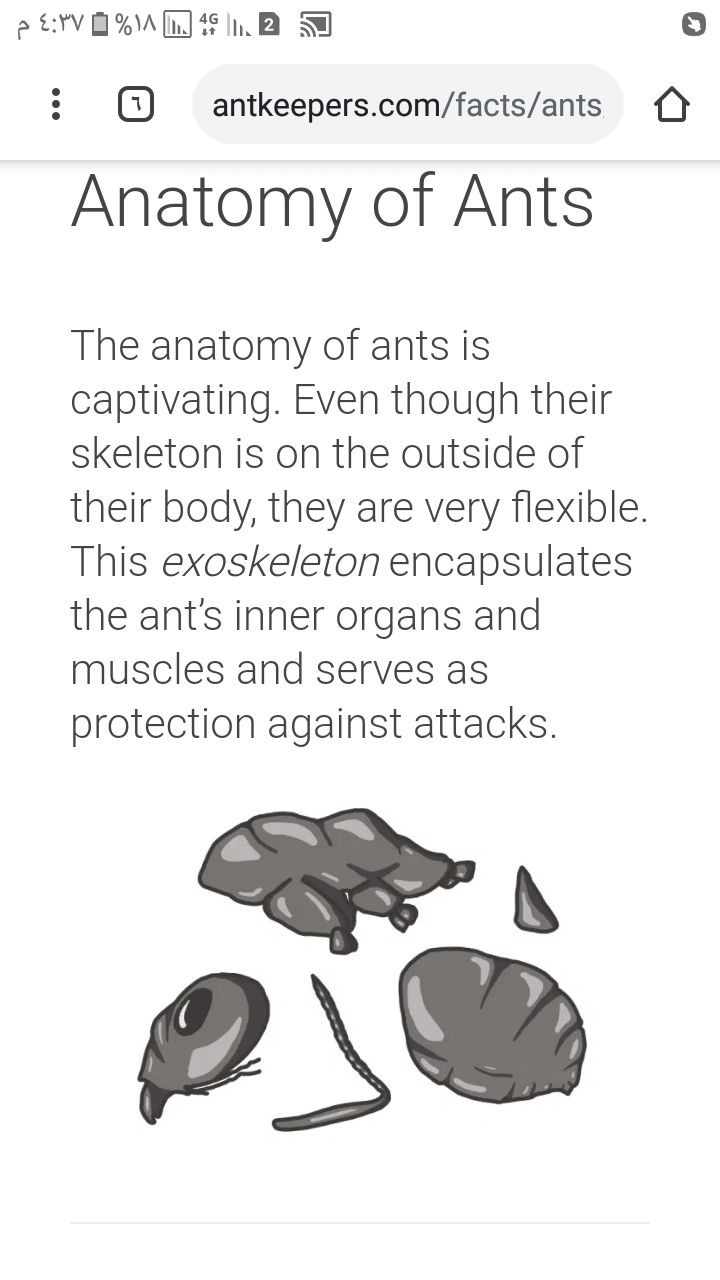
The arthropod exoskeleton is explicitly divided into “different functional units, each comprising a series of grouped segments” called tagmata, connected by flexible cuticle and muscles. In most arthropods “the bodily tagmata are so connected and jointed with flexible cuticle and muscles that they have at least some freedom of movement.” However, when sufficient force is applied, these joints rupture — the connection between the thorax and the abdomen, or between the head and the thorax, can be broken or separated. This is the second scientific meaning of crushing an ant.
Third Type of Crushing — Enzymatic Degradation of Chitin Bonds
The third mechanism of ant crushing is the decomposition, breaking, or analysis of the cell wall bonds that make up the outer chitin layer by enzymes called chitinases, produced by bacteria, fungi, and other organisms.
The following image is from the Microbial Physiology reference by S. Ram Reddy and S.M. Reddy, showing the context for the chitinase literature cited in this discussion.
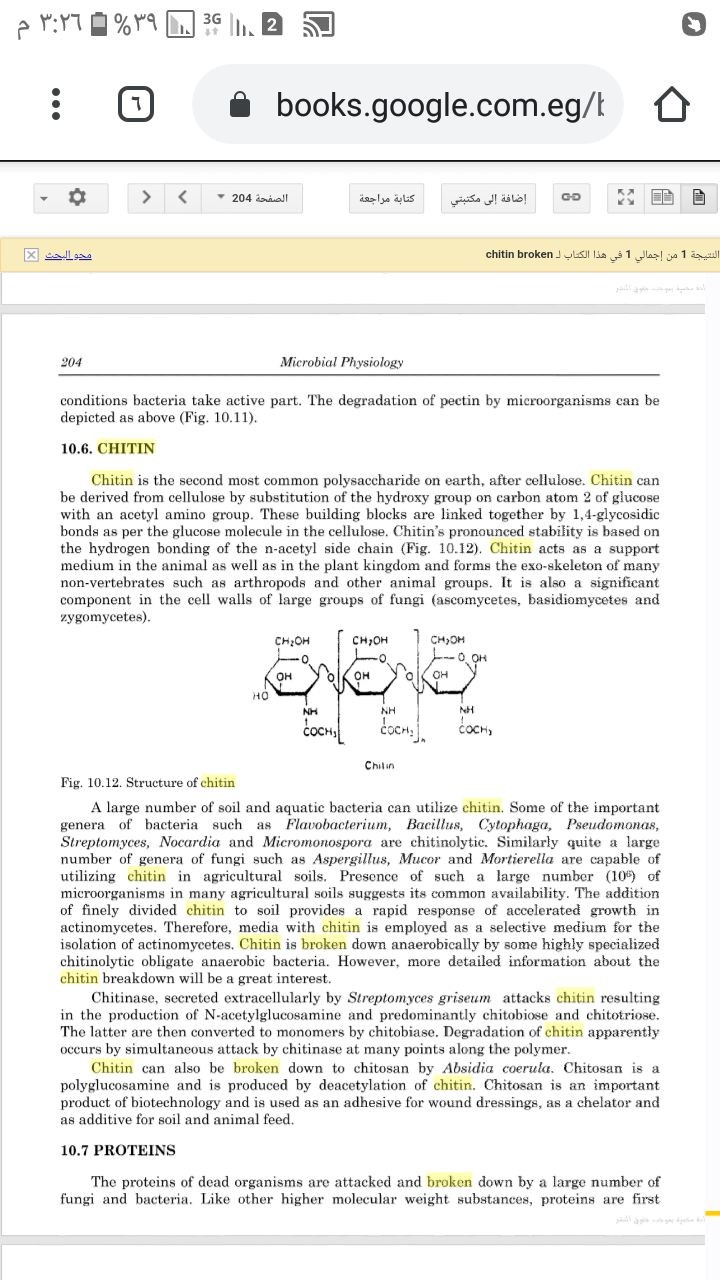
“Organisms that are susceptible to infection by chitin-coated microorganisms express chitinases to degrade the protective shield of the infecting pathogens, thereby providing immunity.”
The chitin polymer itself is described as follows: “Chitin is a linear stable polymer of β-1,4-N-acetylglucosamine (GlcNAc)… It is present in exoskeleton of insect, crabs, shrimp, lobsters, fungi, yeast, diatoms, nematodes, crustaceans, and other invertebrates… It is a crystalline polysaccharide that exists in nature in three different forms: α-chitin, β-chitin, and γ-chitin.”
The chitinase enzyme breaks down this polymer by cleaving the bonds between the N-acetylglucosamine units that form the chitin chains. This is a third form of structural breakdown of the ant’s body — not by mechanical force but by enzymatic dissolution. Bacteria and fungi in soil carry out this process continuously, preventing the accumulation of chitin in the environment despite its enormous abundance as a natural material.
This third type is distinguishable from the first two in that it does not require mechanical force from outside. The breakdown comes from within — from microbial agents that degrade the structural material of the exoskeleton at the molecular level.