Refuting the Claim That the Prophet ﷺ Desired His Adopted Son's Wife — The Story of Zainab bint Jahsh
·8 min read·1689 words
The Prophet ﷺ Desired His Adopted Son’s Wife and Had Him Divorce Her So He Could Marry Her Christians and atheists claim that the Prophet ﷺ saw unveiled, desired her, and pressured to divorce her so he could take her.
This claim rests on narrations that every major scholar of hadith and tafsir has declared weak, fabricated, or unworthy of citation. The actual story — established in Sahih al-Bukhari and the books of biography — is the opposite: Zayd came to the Prophet ﷺ complaining about his wife and wanting to divorce her, and the Prophet ﷺ repeatedly told him to keep her. The marriage after the divorce was a divine command to permanently abolish a pre-Islamic custom — not a personal desire.
First — What Actually Happened
Zayd Complained — The Prophet ﷺ Told Him to Stay
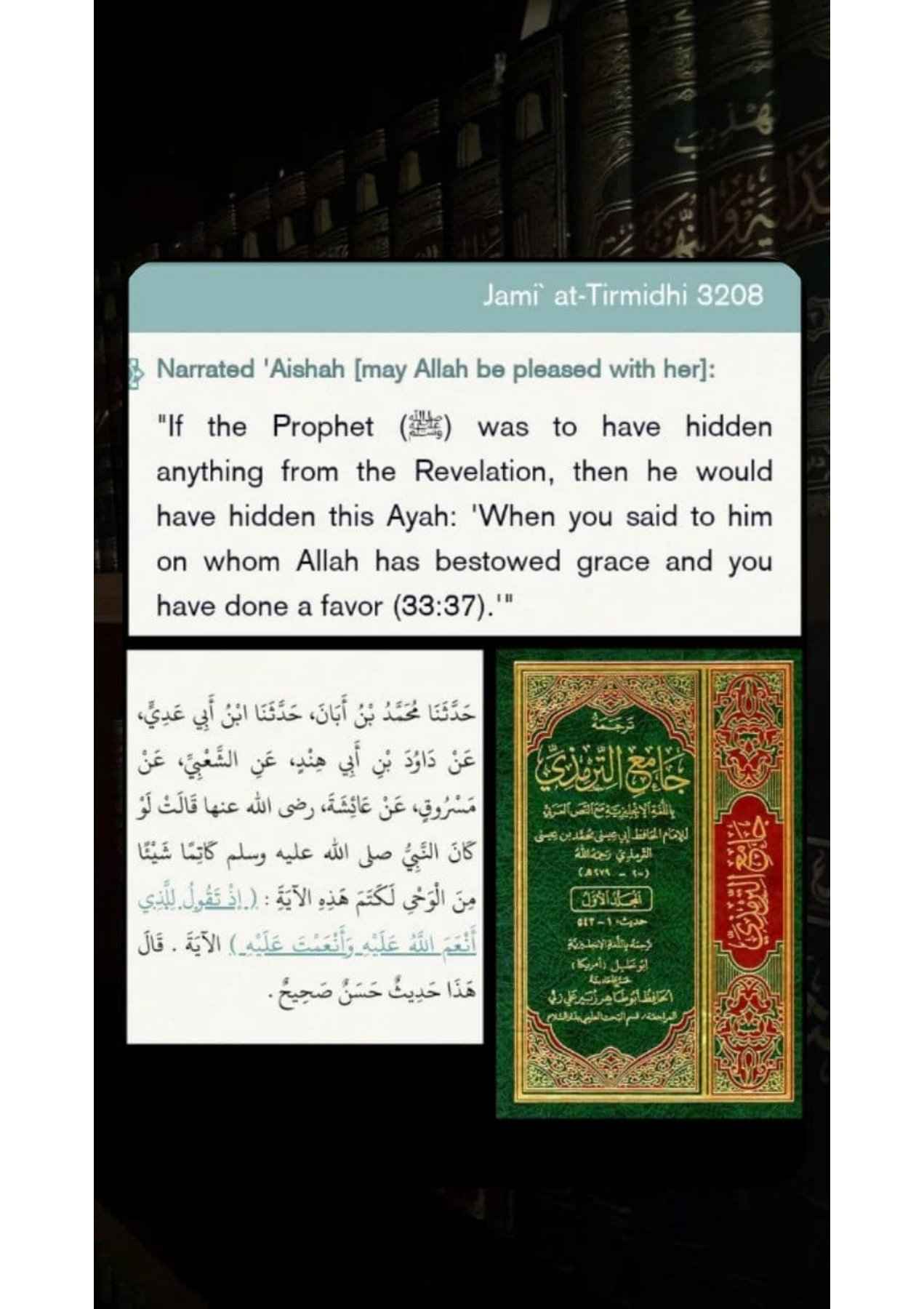
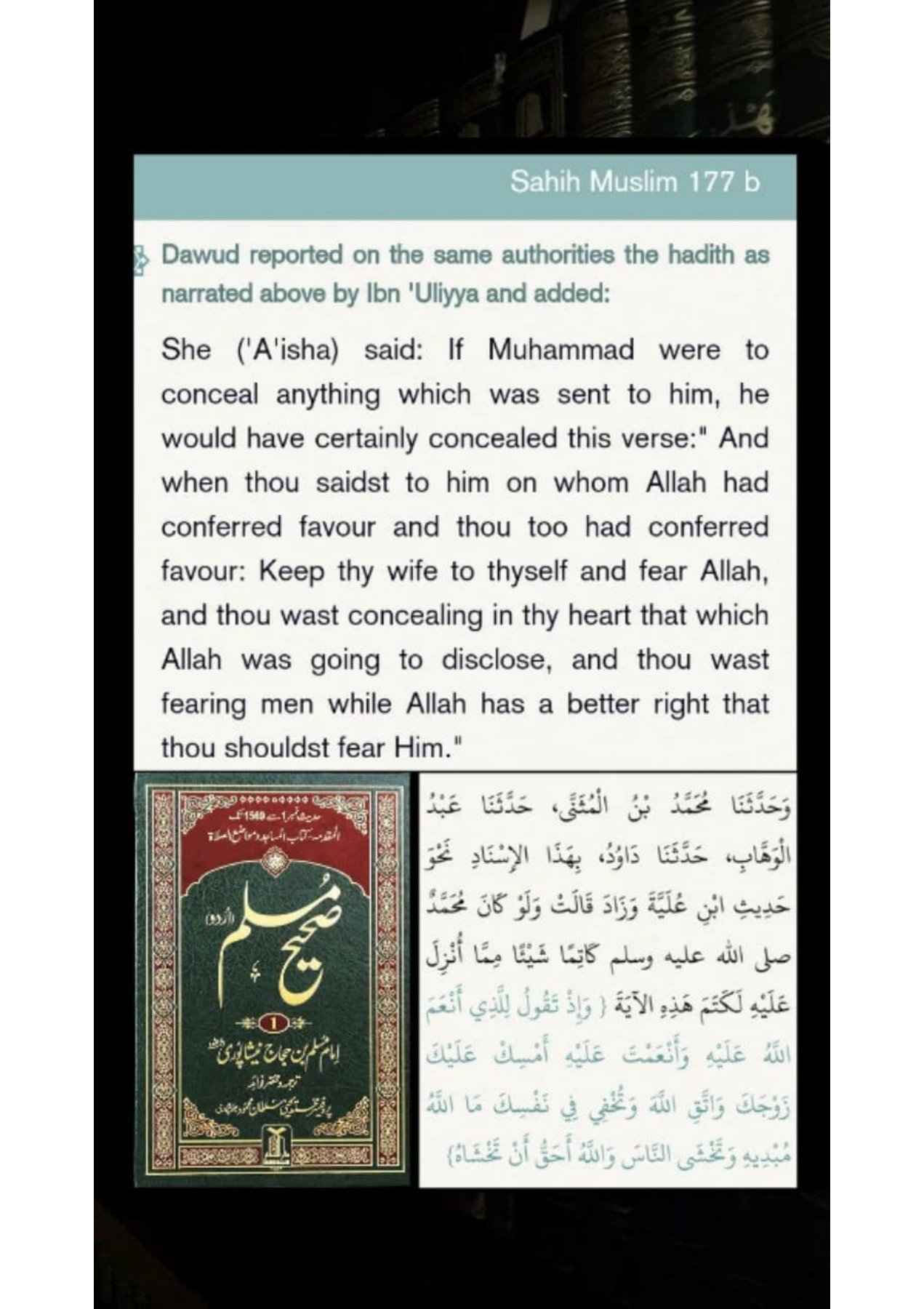
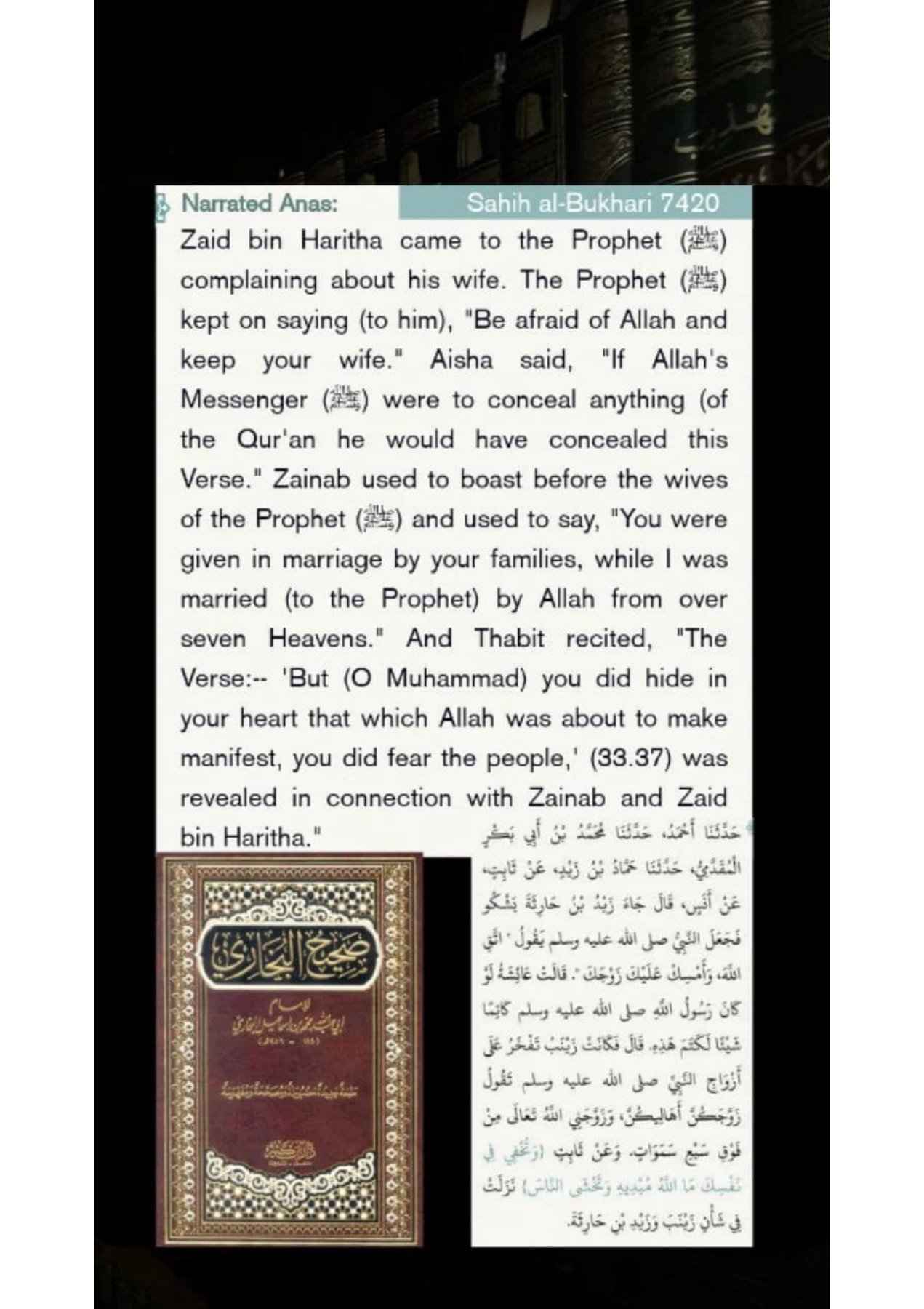
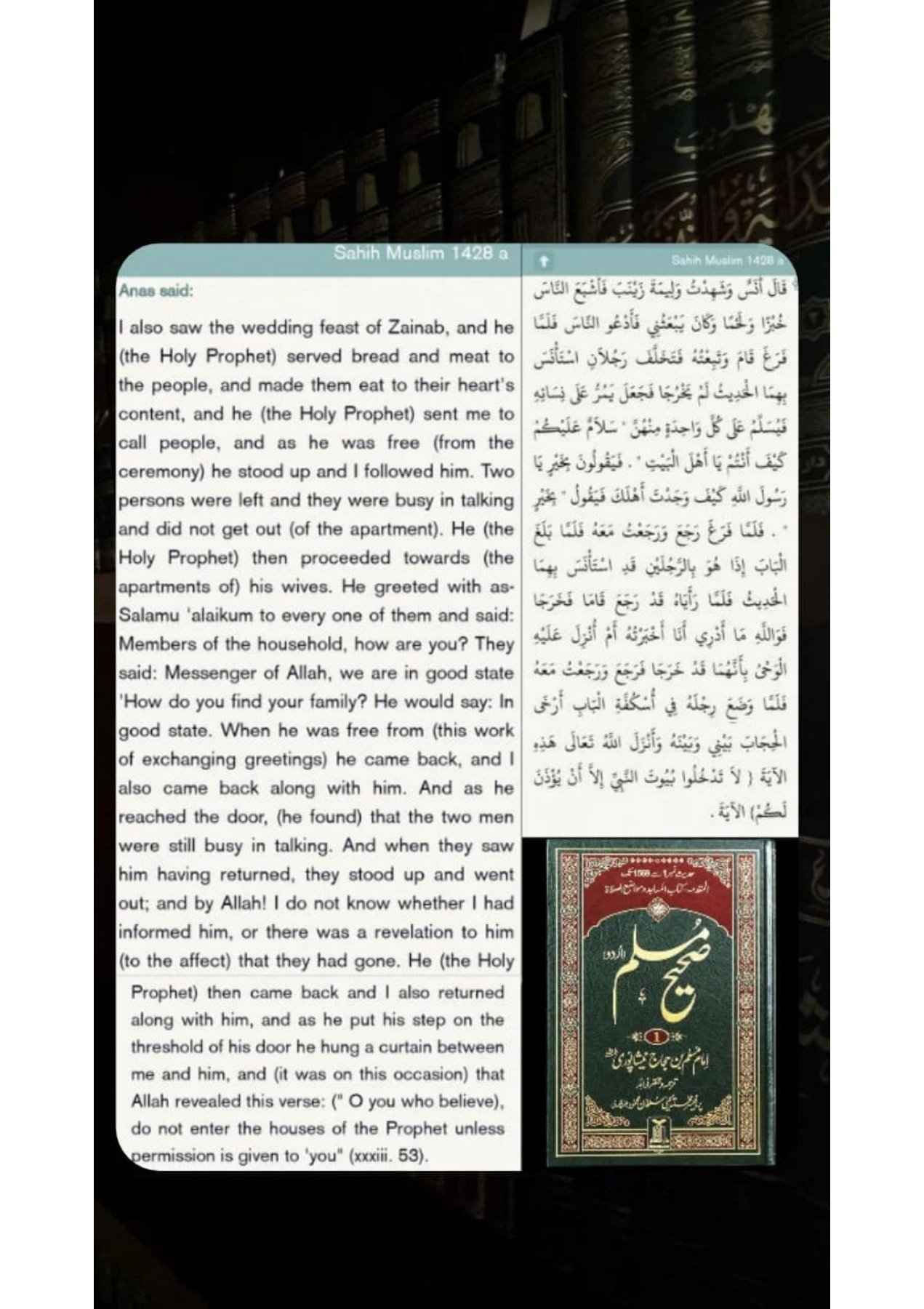
Sahih al-Bukhari 7420 Zayd came complaining about his wife, so the Prophet ﷺ kept saying: “Fear Allah and keep your wife.” Aisha said: “If the Messenger of Allah ﷺ had concealed something, he would have concealed this.” So Zainab used to boast to the wives of the Prophet ﷺ, saying: “Your families married you, but Allah married me from above the seven heavens.”
Grade: Sahih · Al-Bukhari
Allah created three foundations for a marriage to continue — tranquility, affection, and mercy — as He said:
“And among His signs is that He created for you mates from among yourselves, that you may find tranquility in them, and He has put between you affection and mercy.”
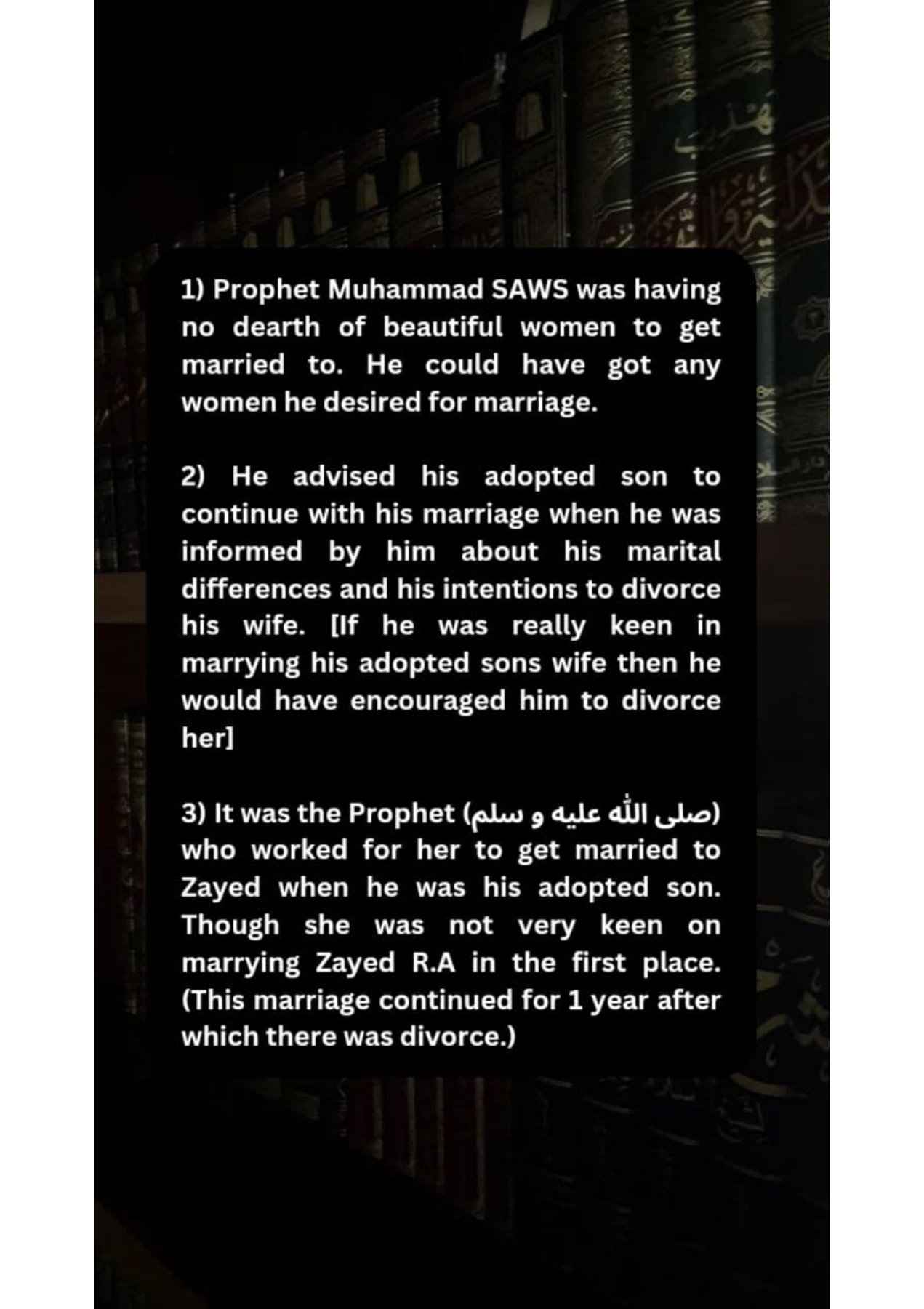
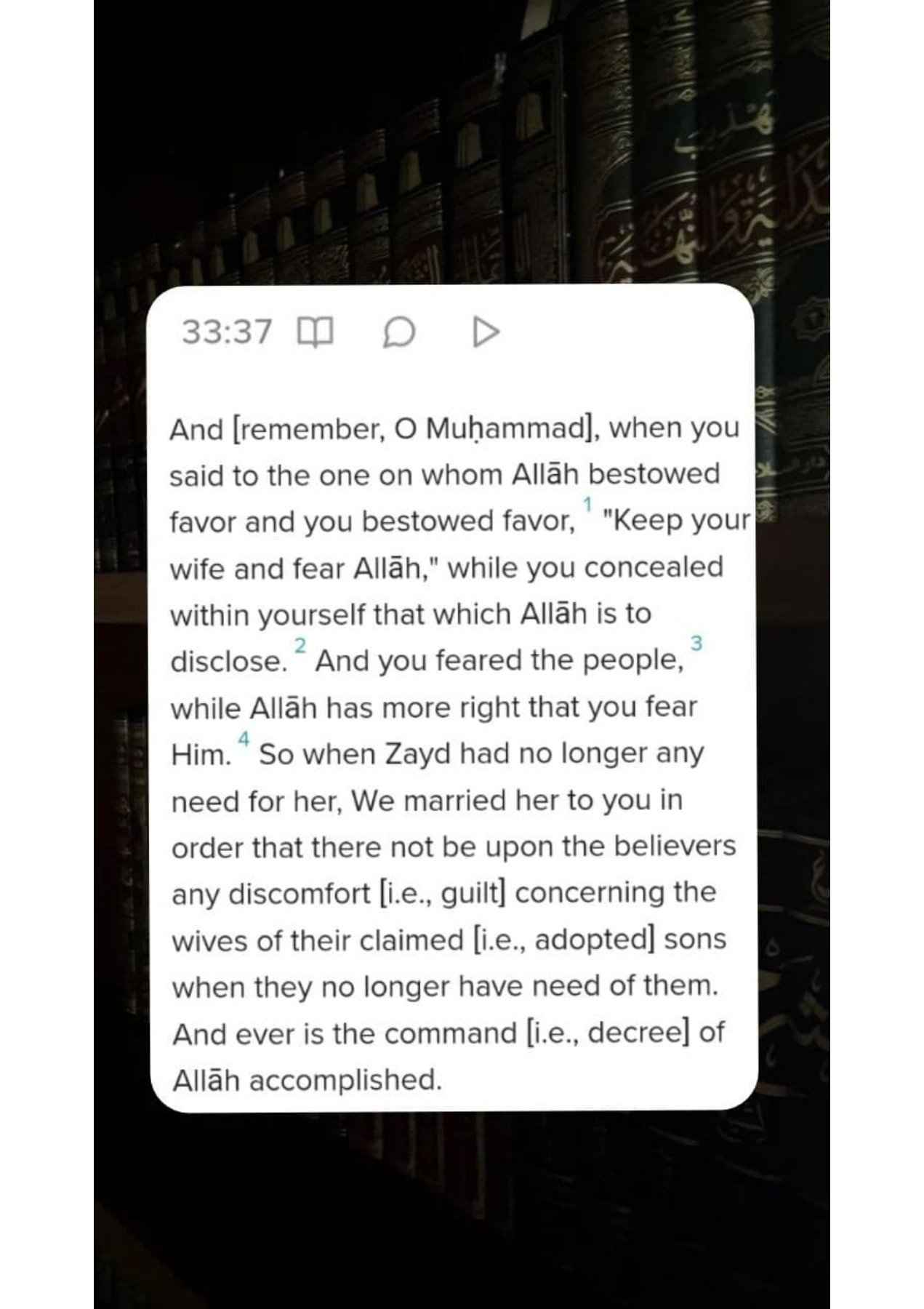
Zayd found none of these three in his marriage. He went to the Prophet ﷺ to complain. The Prophet ﷺ did not encourage the divorce — he repeatedly told him to fear Allah and keep his wife. This is the command preserved in the Quran itself:
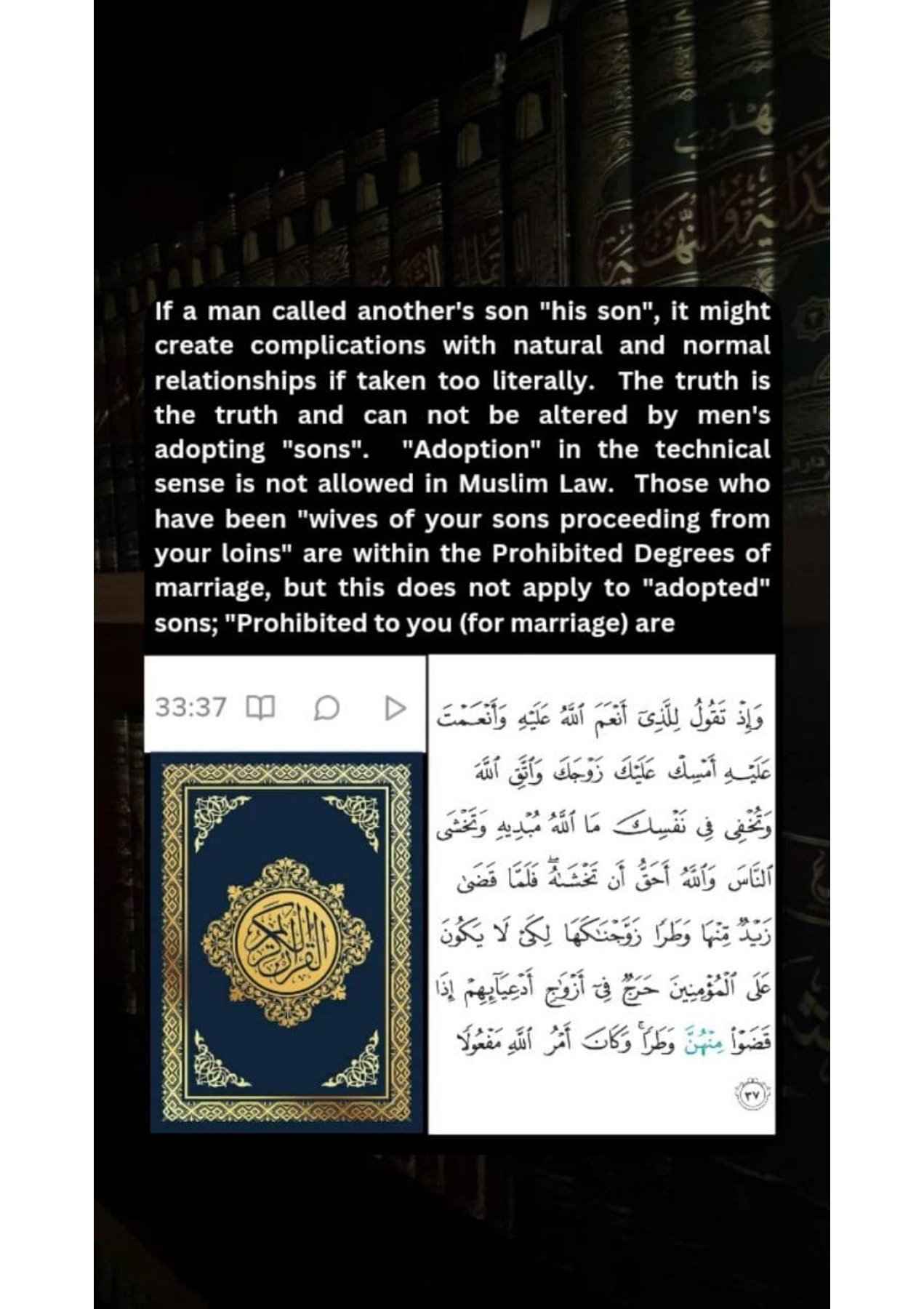
“And when you said to the one on whom Allah bestowed favour and you bestowed favour: ‘Keep your wife and fear Allah.’”
If the Prophet ﷺ desired Zainab and wanted to marry her, he would have told Zayd to divorce her the first time Zayd complained. He did the opposite.
The Purpose Was to Abolish the Custom of Adoption
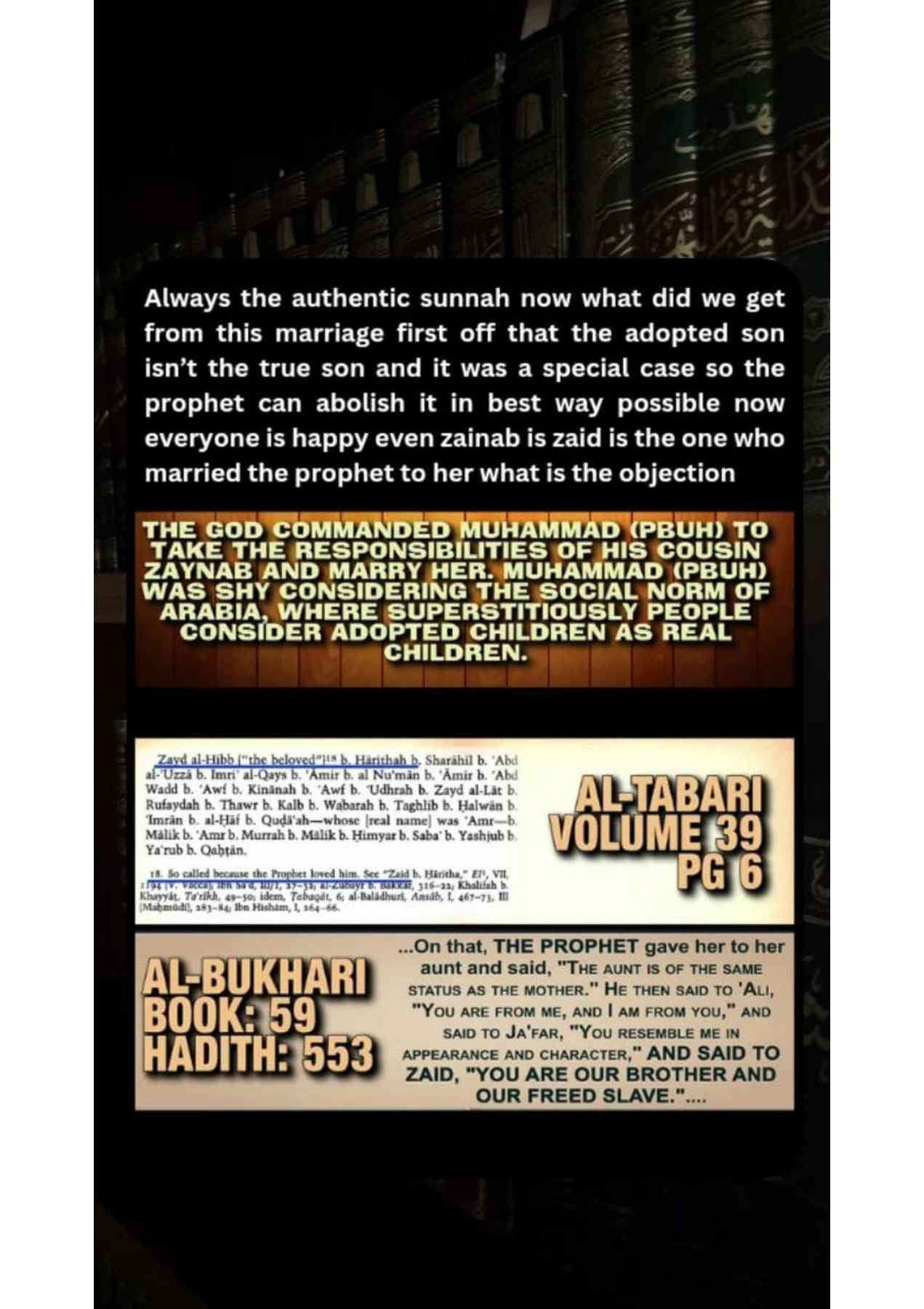
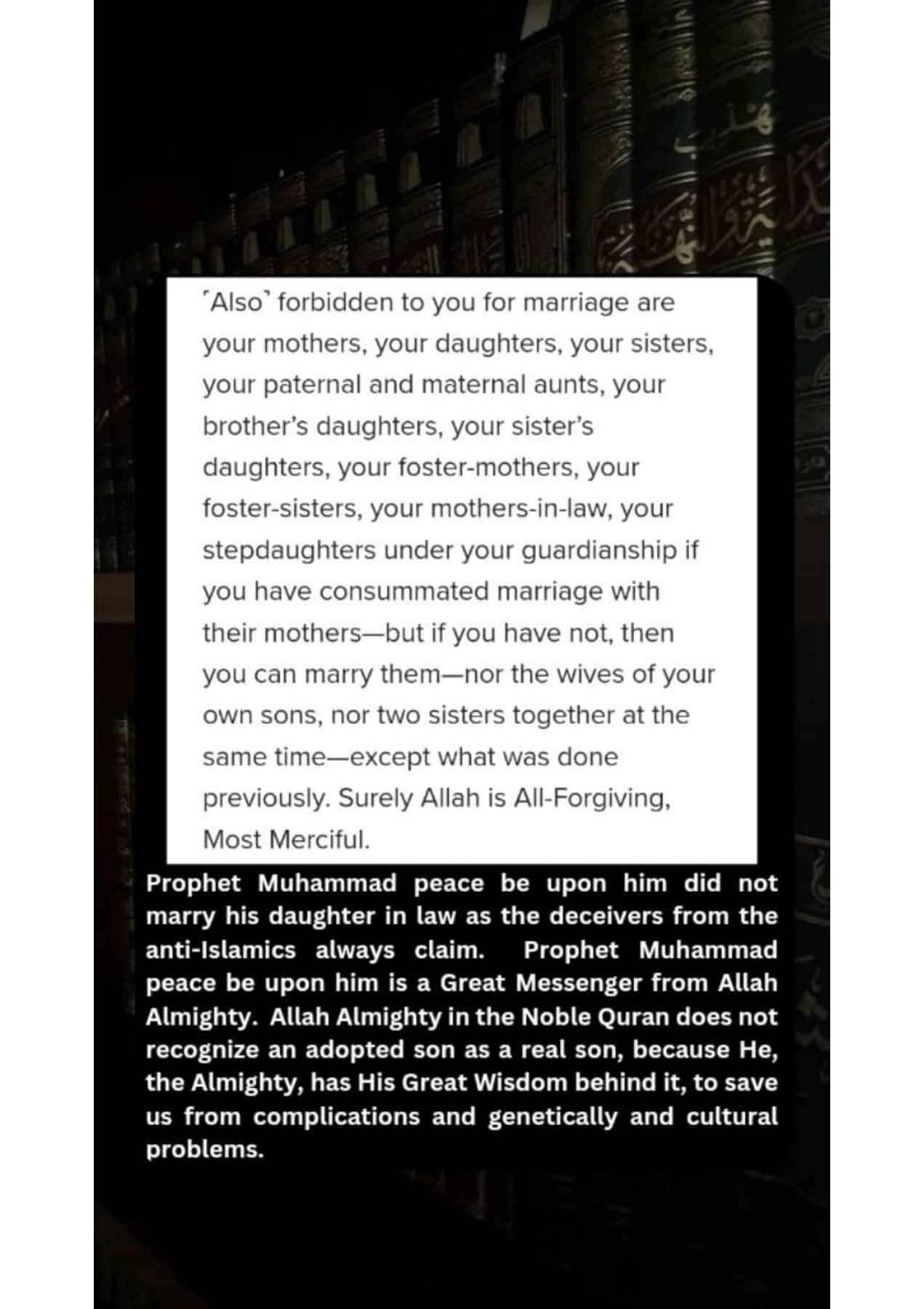
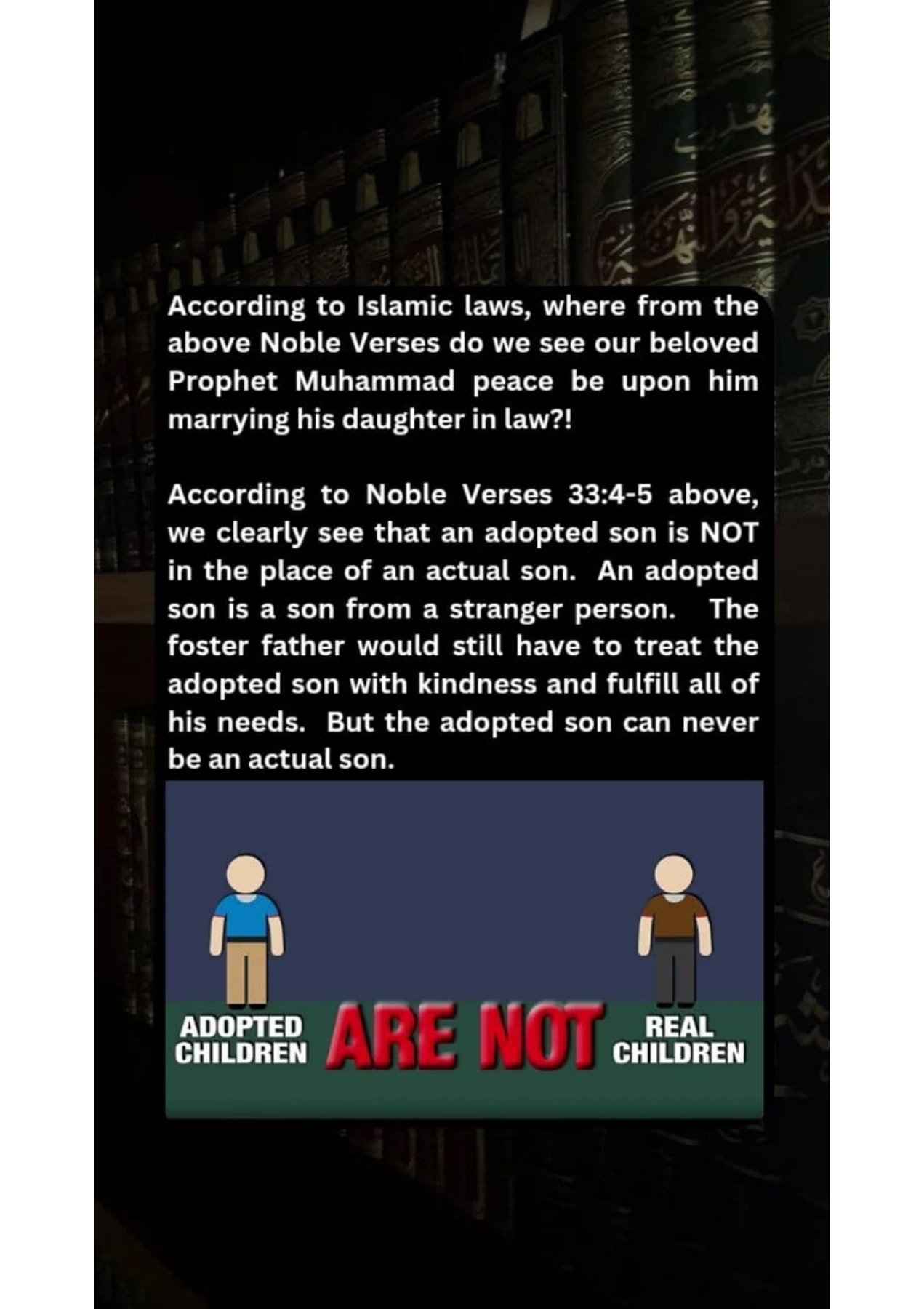
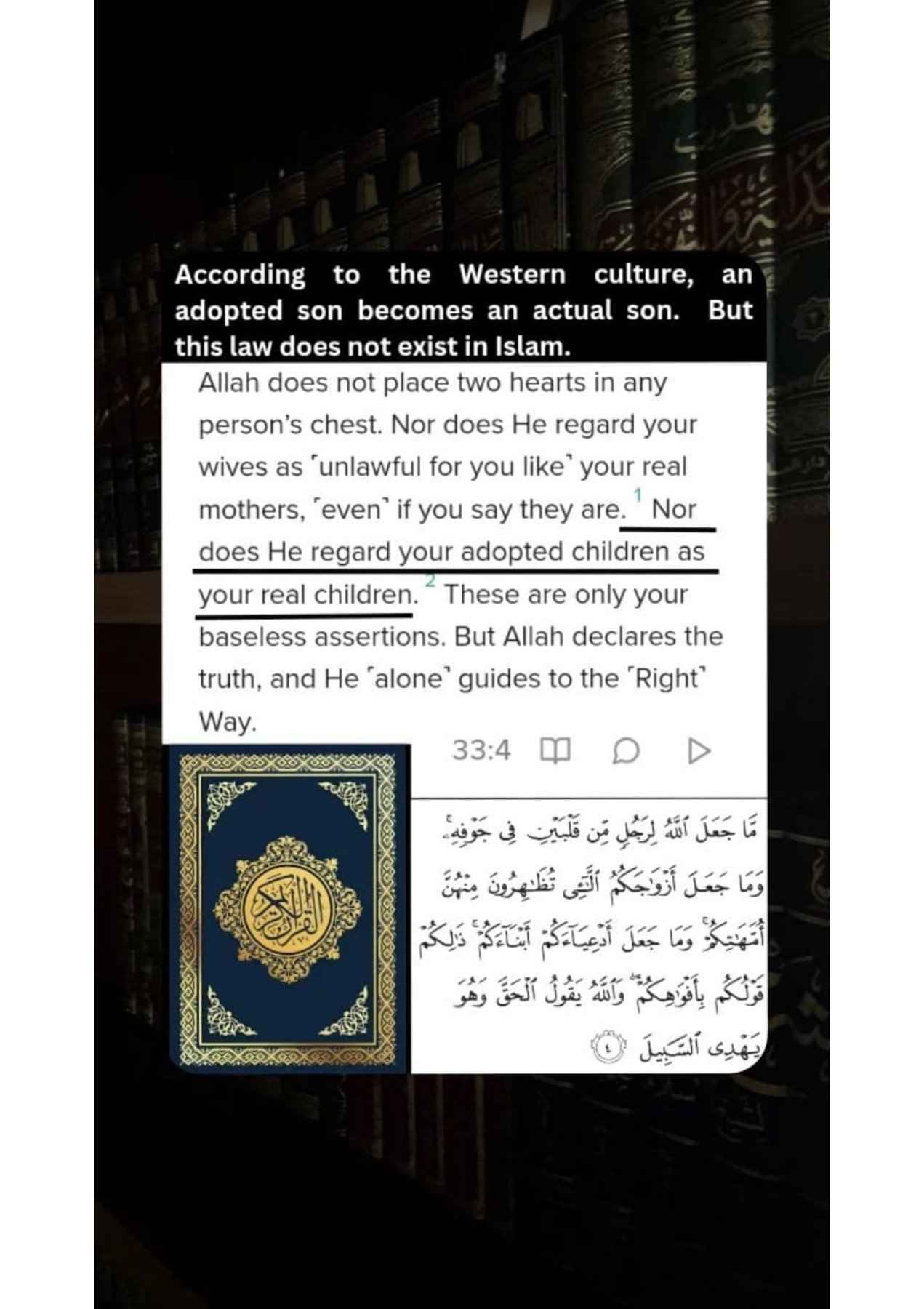
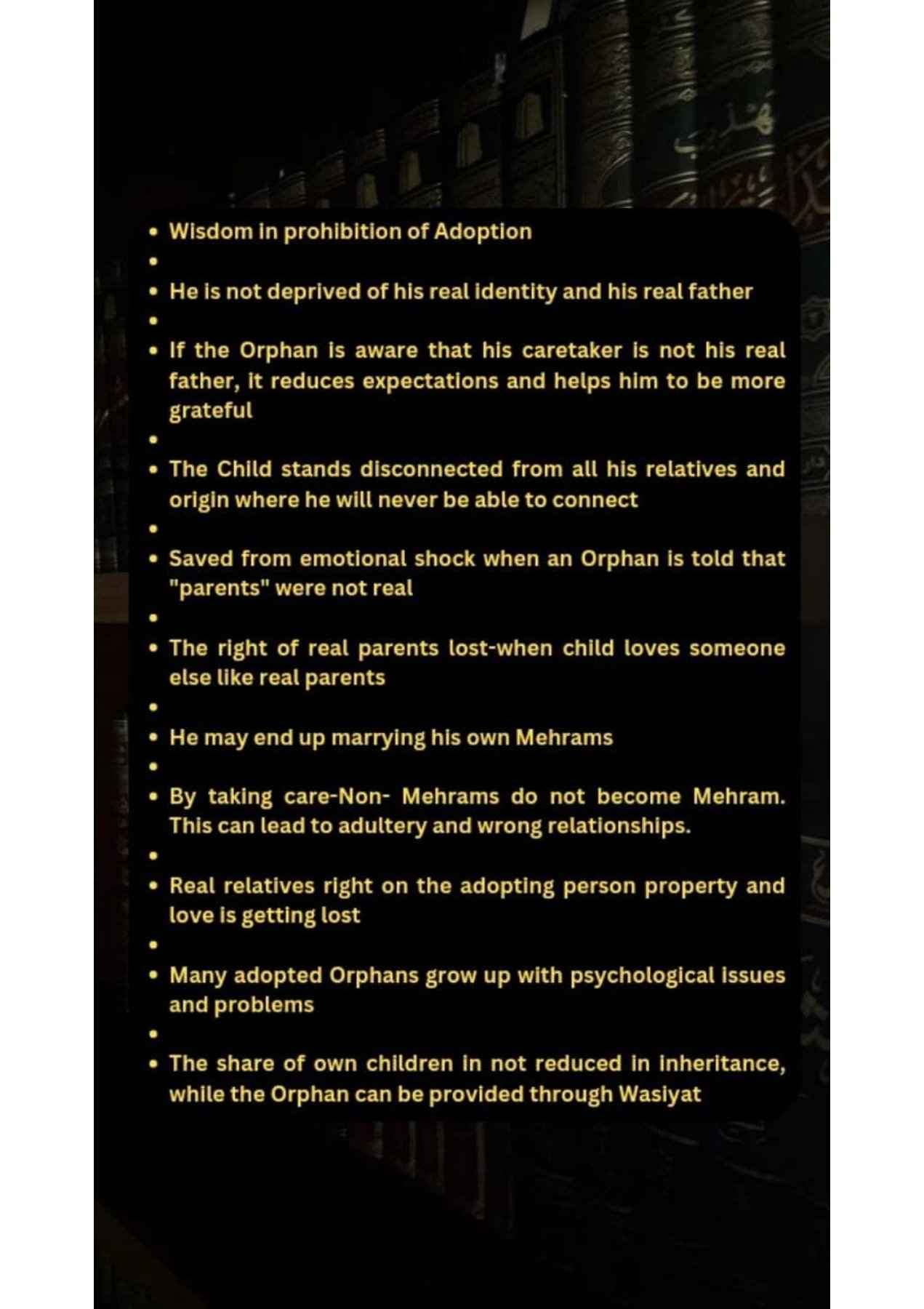
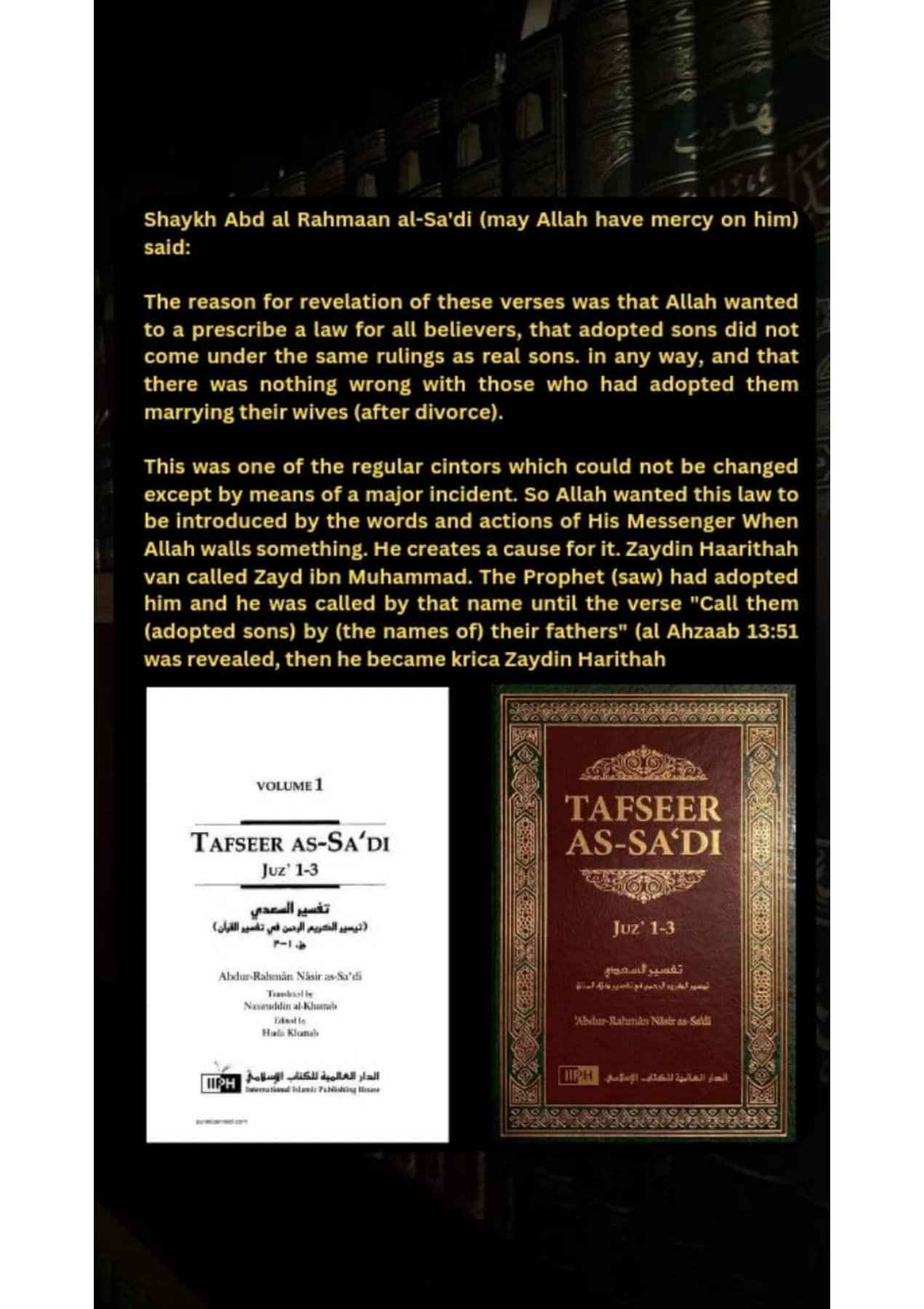
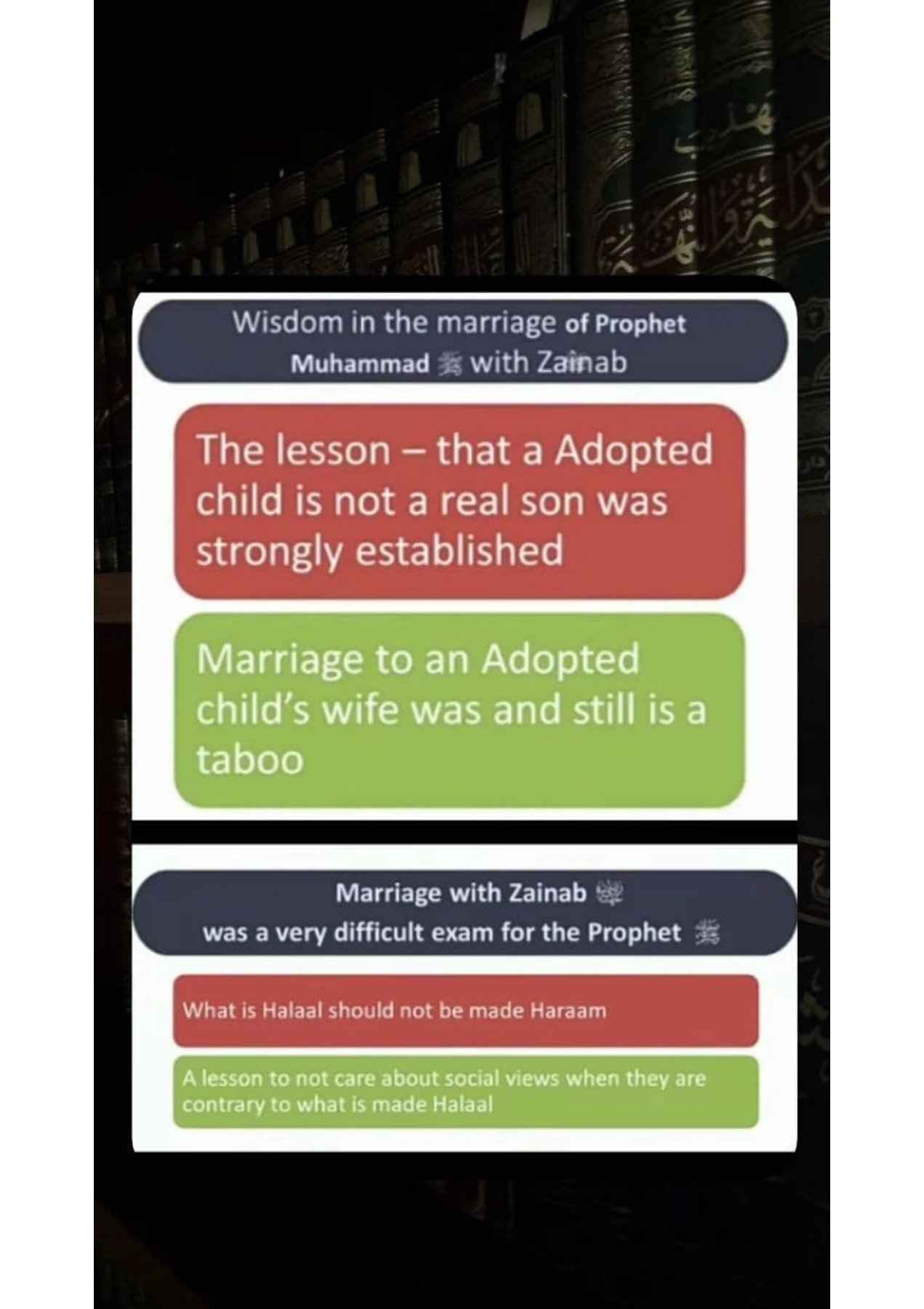
Even after the divorce, the deep-rooted pre-Islamic custom of adoption created a major social barrier. According to that custom, a man could not marry the ex-wife of his adopted son — just as he could not marry the ex-wife of a biological son. The adopted son also inherited from the adoptive father as a biological son. Allah wanted to abolish this false custom permanently, by practical example — and He chose His Messenger ﷺ for this task and commanded him to marry Zainab after her divorce from Zayd.
Second — The Fabricated Narration About Him Seeing Her Unveiled
The Claim Has No Basis
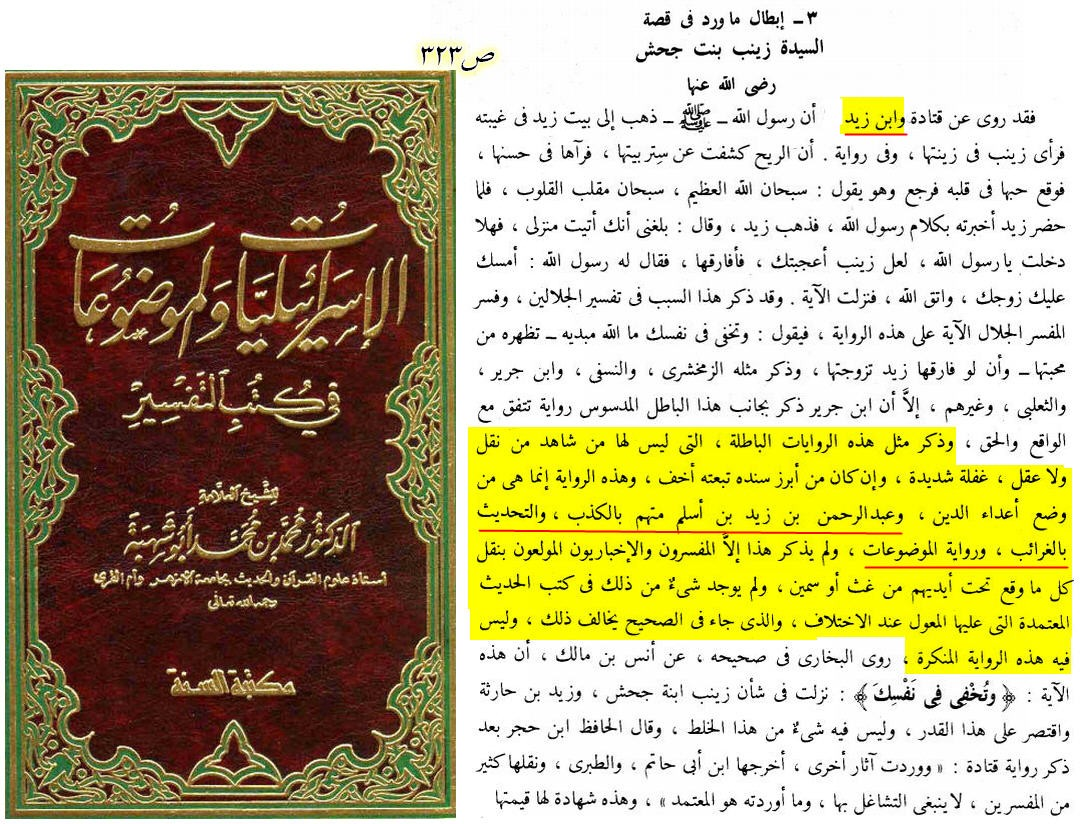
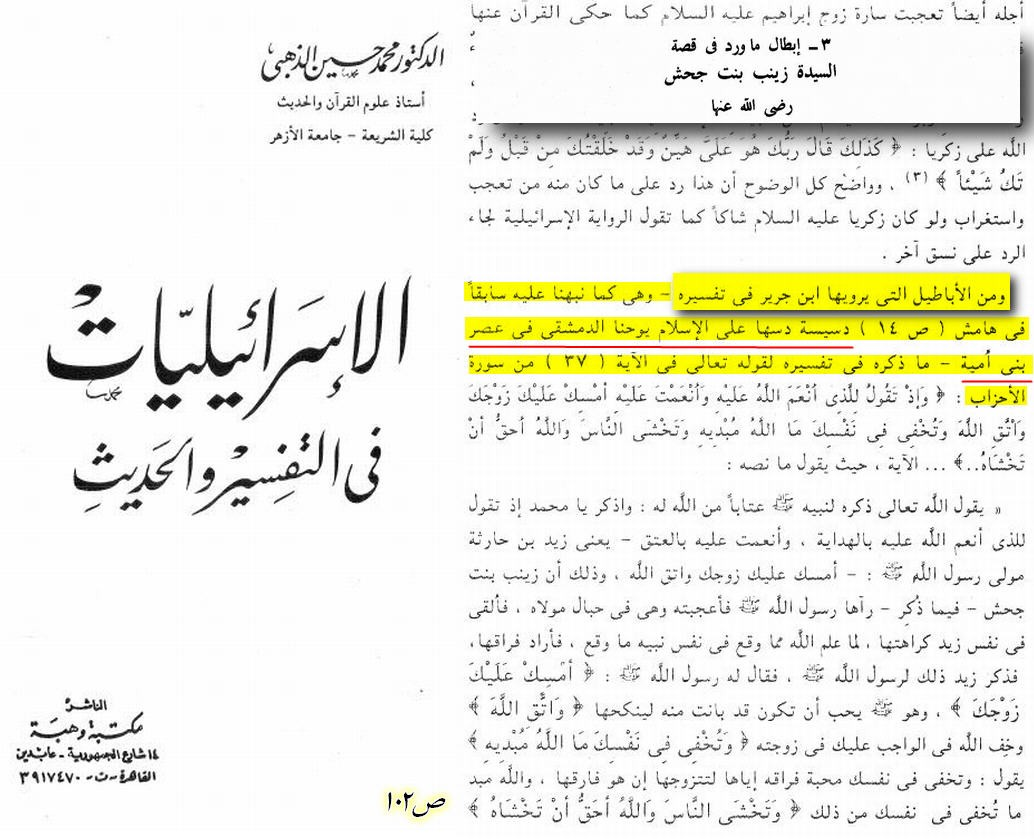
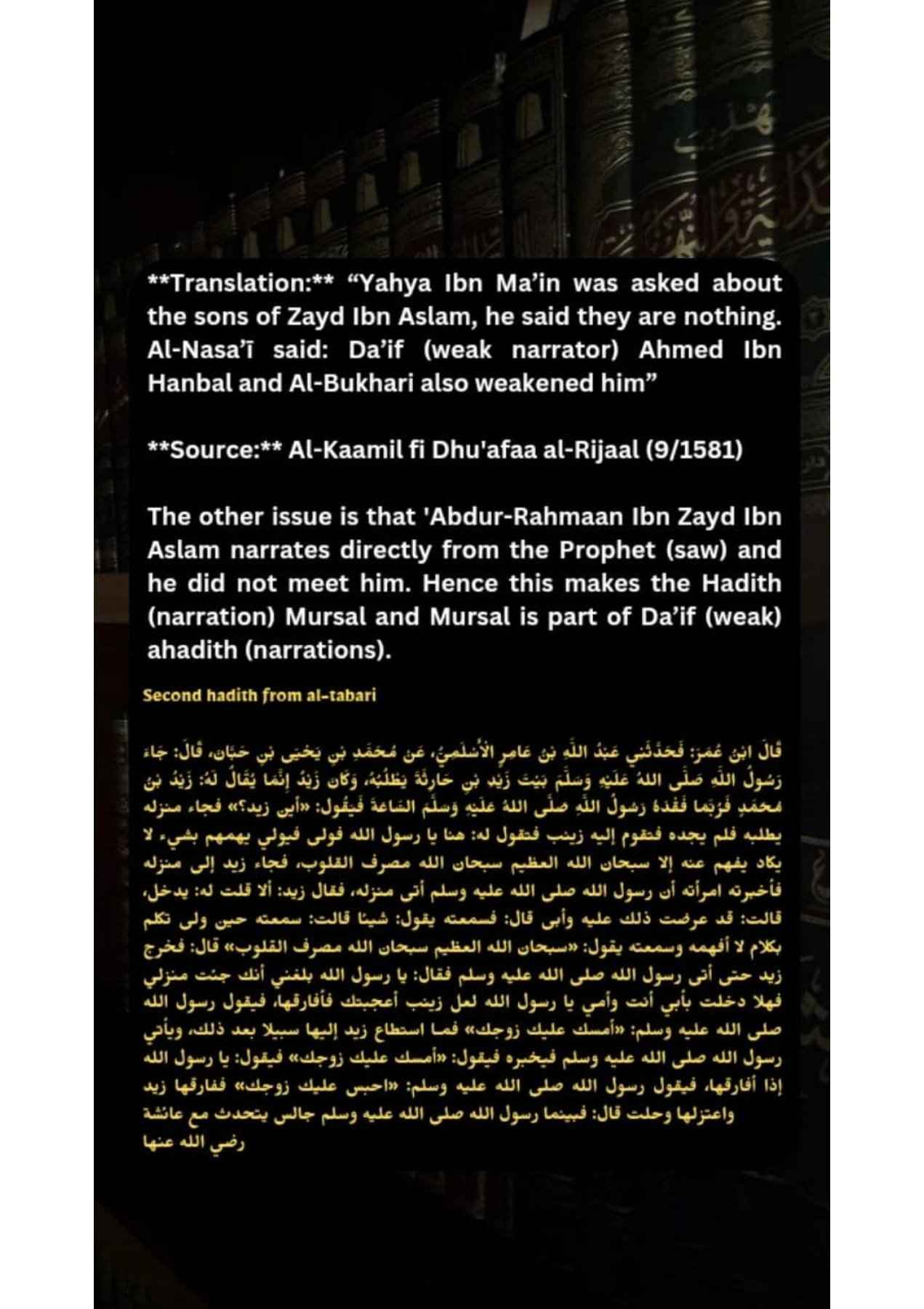
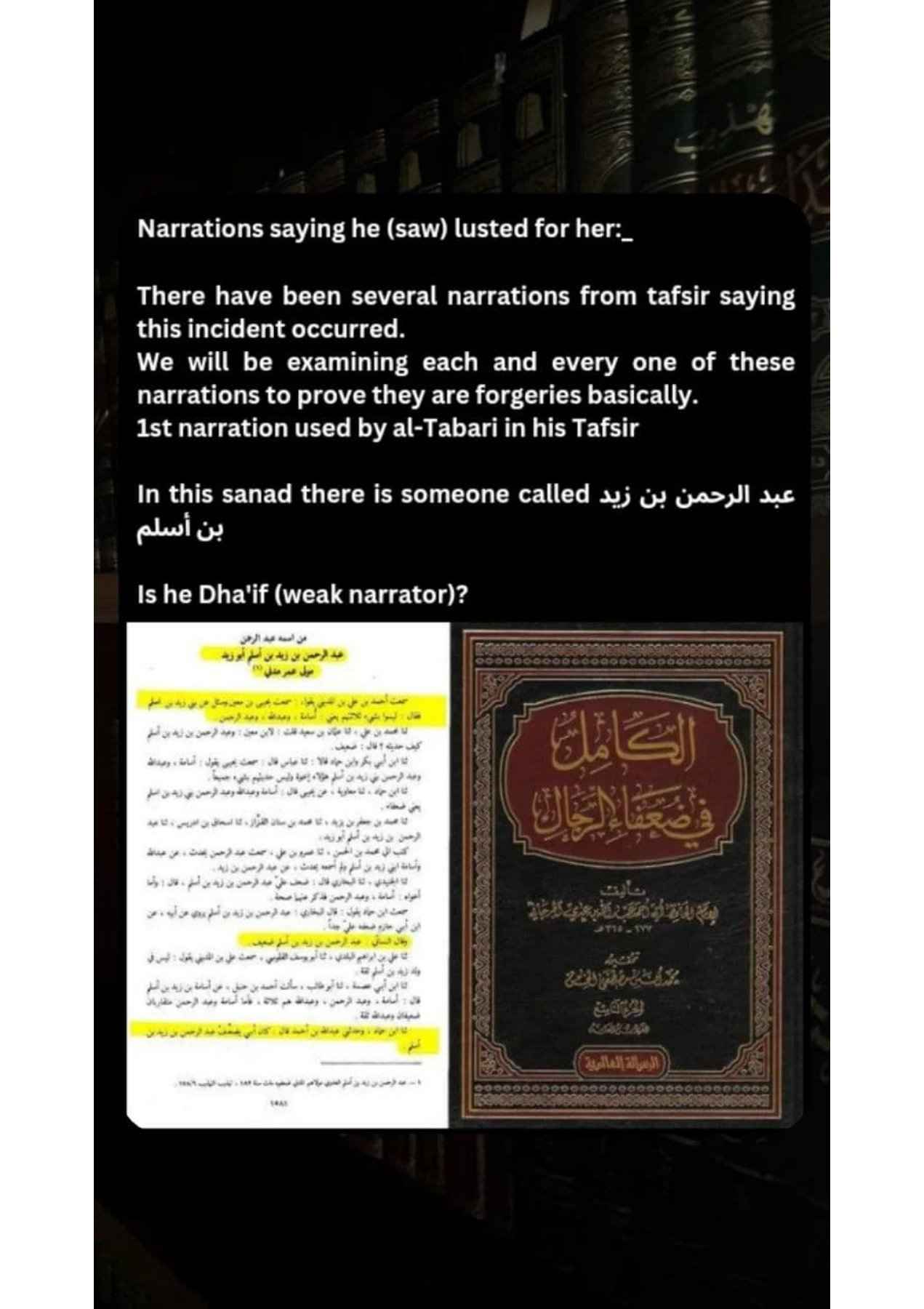
The Prophet ﷺ Saw Zainab Unveiled and Was Overcome by Desire for Her This narration appears in some tafsir books and is used by critics as their primary evidence.
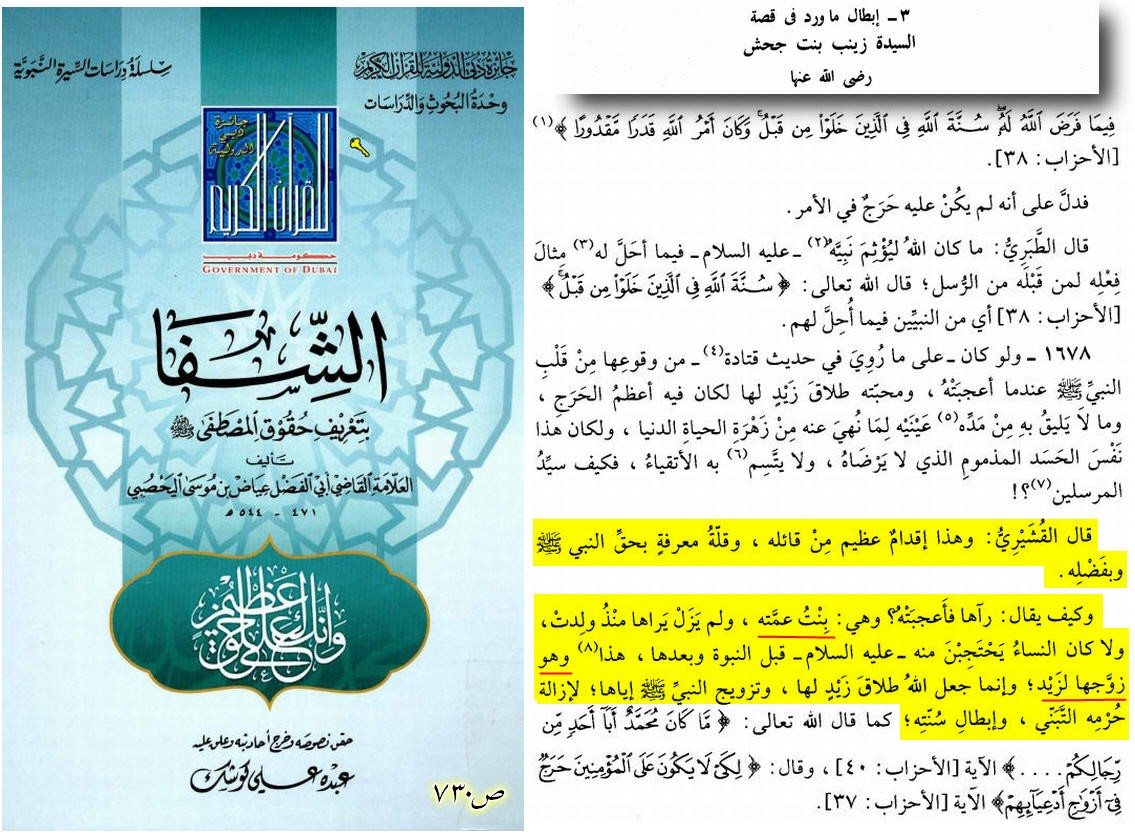
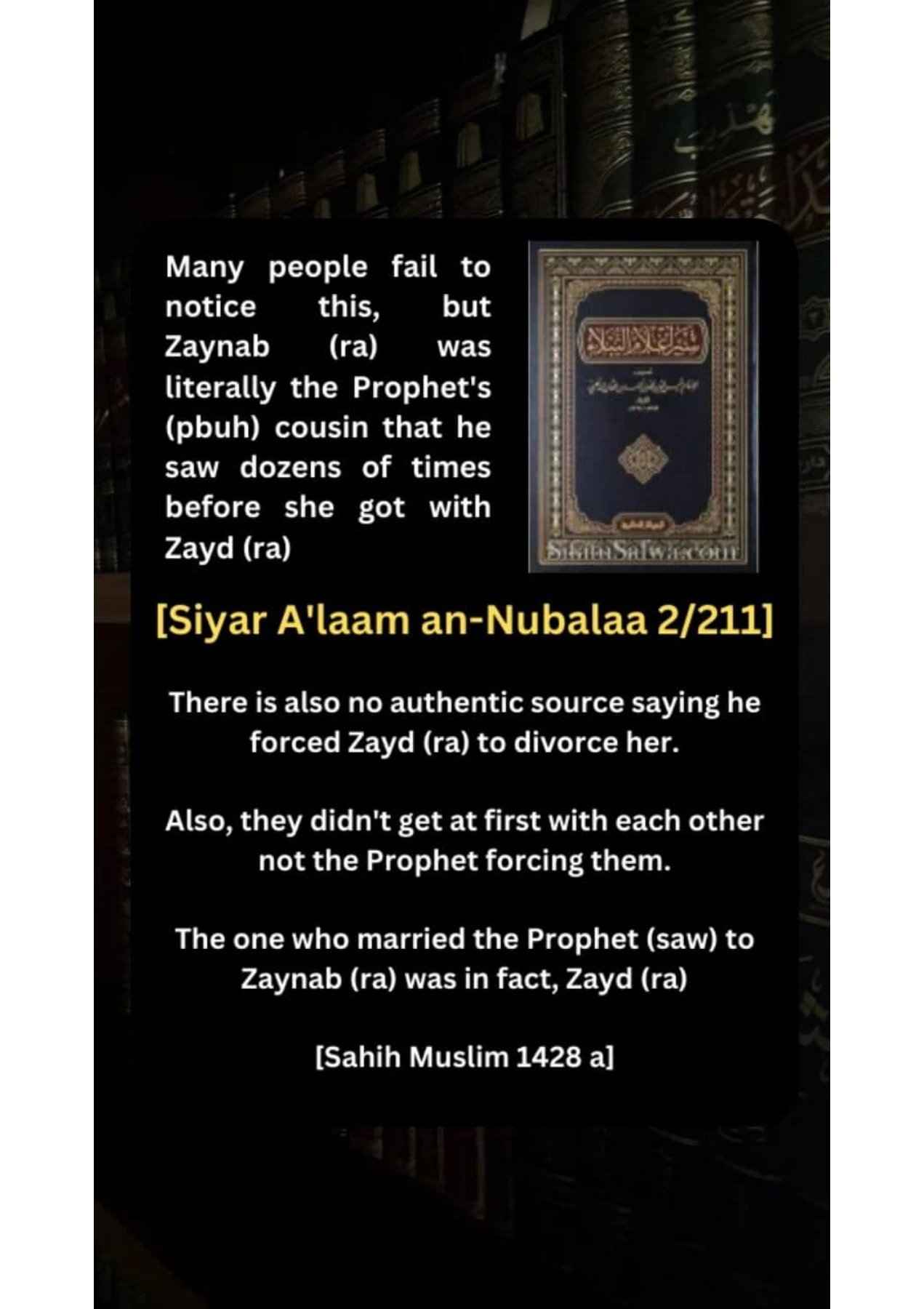
This claim collapses on simple biographical facts. Zainab bint Jahsh was the Prophet’s ﷺ own cousin — she was born when he was over twelve years old and grew up in front of him throughout her entire life. He had known her for decades before the veil was even prescribed. He was the one who personally arranged her marriage to Zayd and insisted on it when she initially refused. Would a man arrange a marriage for a woman he desired, insist she marry another man, wait years, and only “notice her beauty” after she was already married?
Biographical fact — Zainab was the Prophet's cousin who grew up in front of him for decades before the veil
Furthermore, Zainab herself initially refused to marry Zayd because he was a freed slave and she was from Quraysh — she considered the match beneath her lineage. The Prophet ﷺ insisted on the marriage precisely to strike down the false belief that lineage and social status create superiority between people, in application of:
“Indeed, the most honourable of you in the sight of Allah is the most righteous of you.”
If she had been in his heart, nothing would have prevented him from marrying her as a virgin rather than giving her to Zayd.
Why This Narration Exists in Tafsir Books
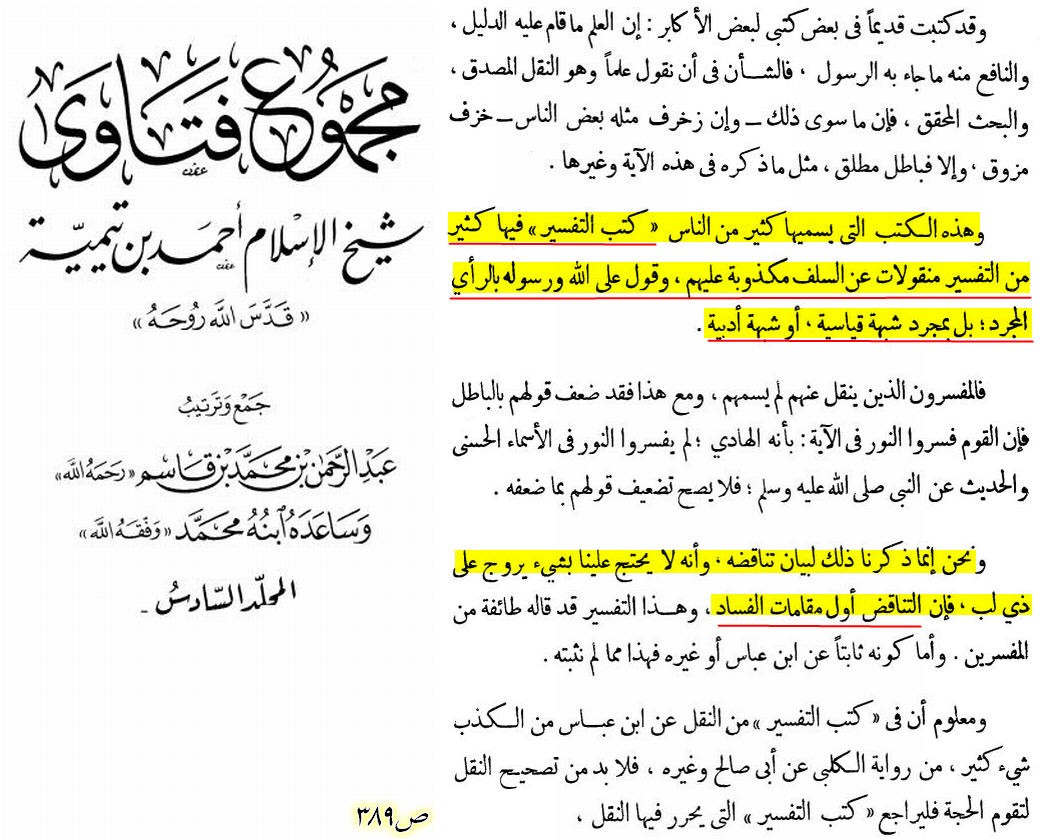
The narration entered tafsir literature because the scholars of tafsir were not specialists in hadith authentication. Ibn Taymiyyah stated in Majmu’ Fatawa, Vol. 6, p. 388:
— Majmu’ Fatawa Shaykh al-Islam, Vol. 6, p. 388 “These books that many people call books of tafsir contain a lot of tafsir transmitted from the salaf that are falsely attributed to them, and statements about Allah and His Messenger based on mere opinion, or even a mere analogical or literary doubt.”
Ibn Taymiyyah — Majmu' Fatawa Vol. 6 p. 388 — on fabricated material in tafsir books
Ibn al-Kamal stated in Fayd al-Qadir, Vol. 1, p. 20:
— Fayd al-Qadir Sharh al-Jami’ al-Saghir by , Vol. 1, p. 20 “The books of tafsir are filled with fabricated hadiths.”
Ibn al-Kamal — Fayd al-Qadir Vol. 1 p. 20 — on fabricated hadiths in tafsir literature
The Scholars’ Rulings on This Specific Narration
Every major hadith scholar who examined these narrations rejected them:
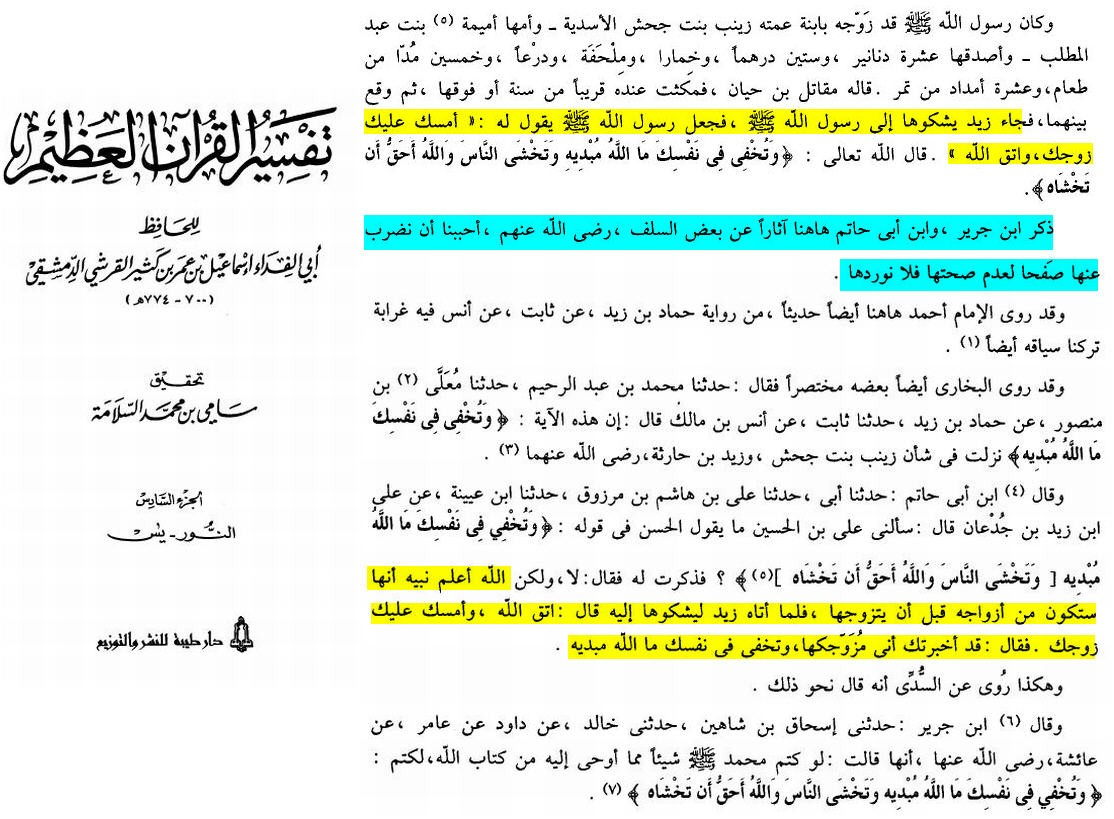
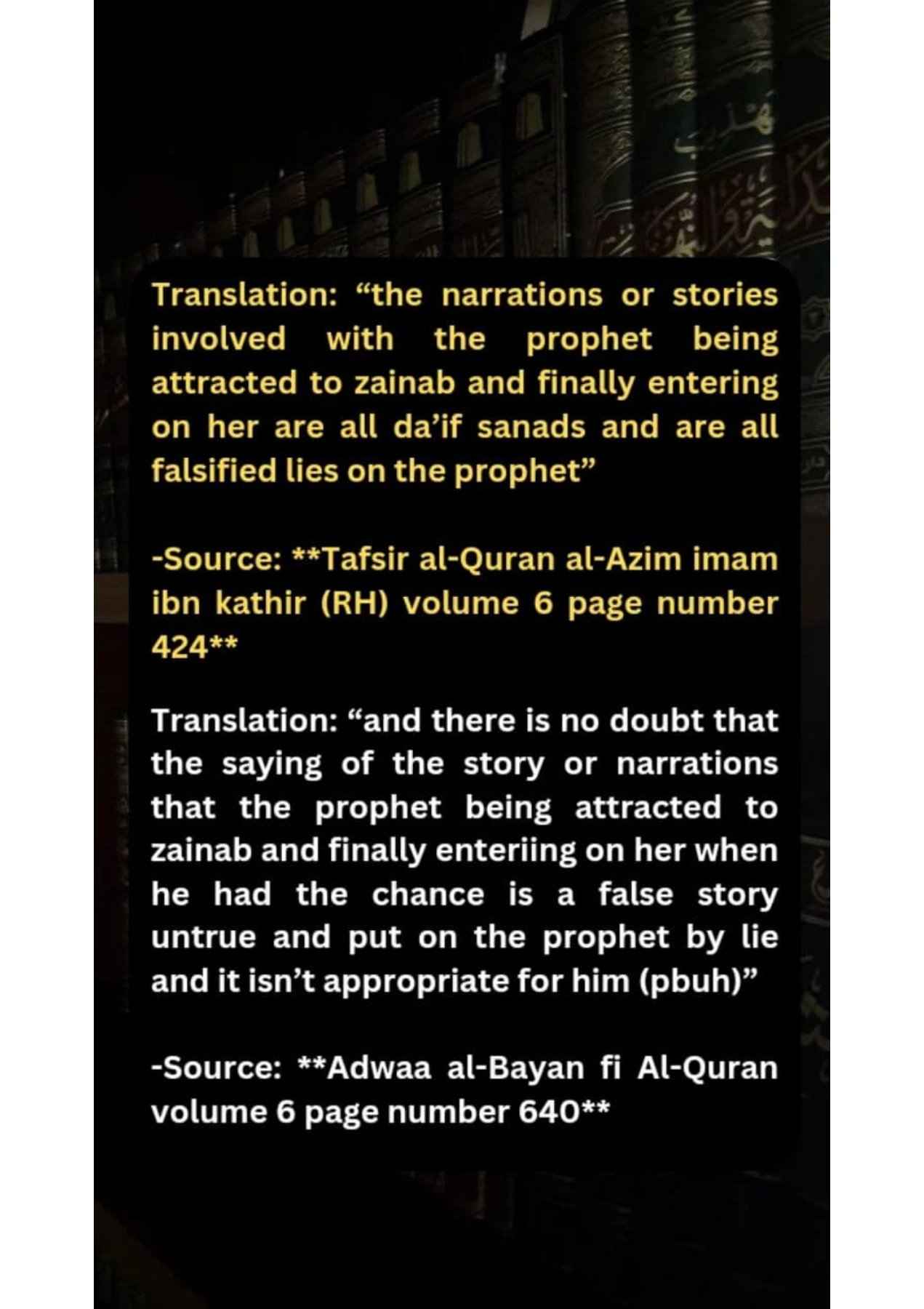
— Tafsir al-Quran al-Azim, Vol. 6, p. 424 “Ibn Jarir and Ibn Abi Hatim mentioned here traces from some of the predecessors, may God be pleased with them, which we wanted to ignore due to their lack of authenticity, so we will not include them.”
Ibn Kathir — Tafsir al-Quran al-Azim Vol. 6 p. 424 — rejecting the narrations as lacking authenticity
— Fath al-Bari bi Sharh Sahih al-Bukhari, Vol. 12, p. 503 “Other narrations were reported by Ibn Abi Hatim and al-Tabari and transmitted by many of the commentators, and we should not be preoccupied with them. What I have mentioned of them is the reliable one, and the result is that what the Prophet ﷺ was concealing was God informing him that she would become his wife.”
— Adwa al-Bayan fi Tafsir al-Quran bi al-Quran, Vol. 6, p. 639 “All of these narrations that say that Zainab fell into his heart ﷺ are not authentic.”
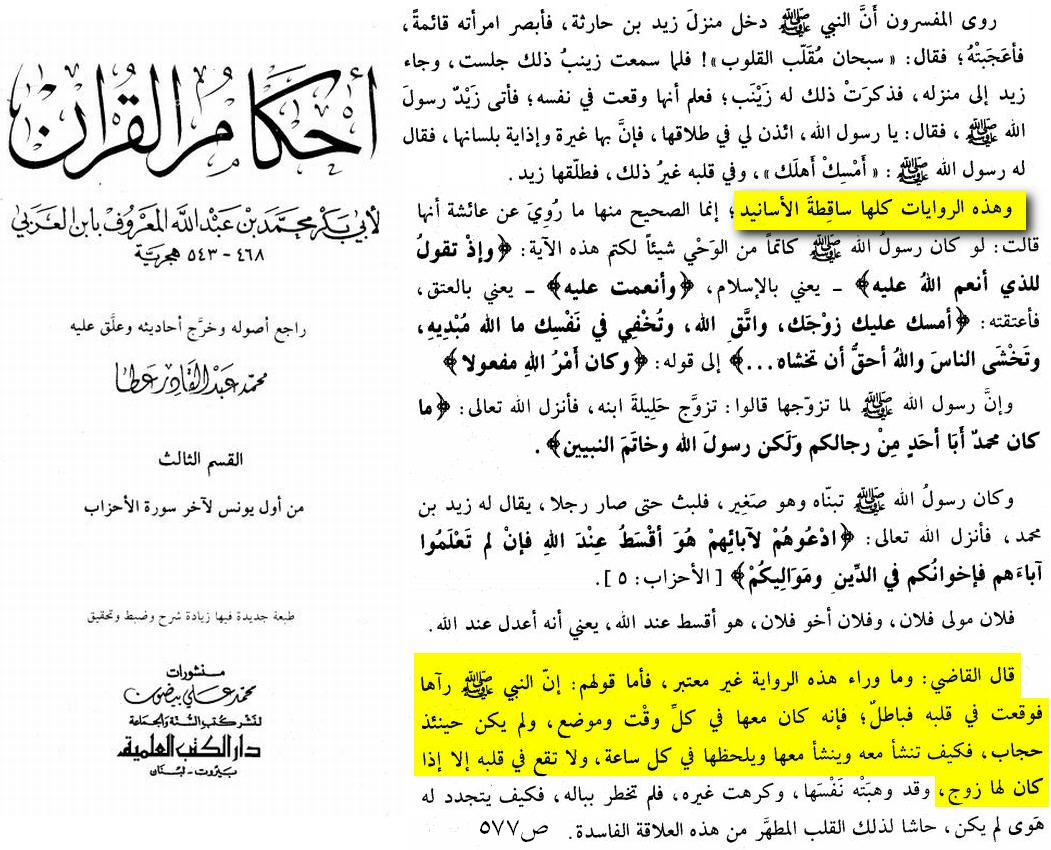
— Ahkam al-Quran, Vol. 3, p. 577 “All of these narrations have weak chains of transmission.”
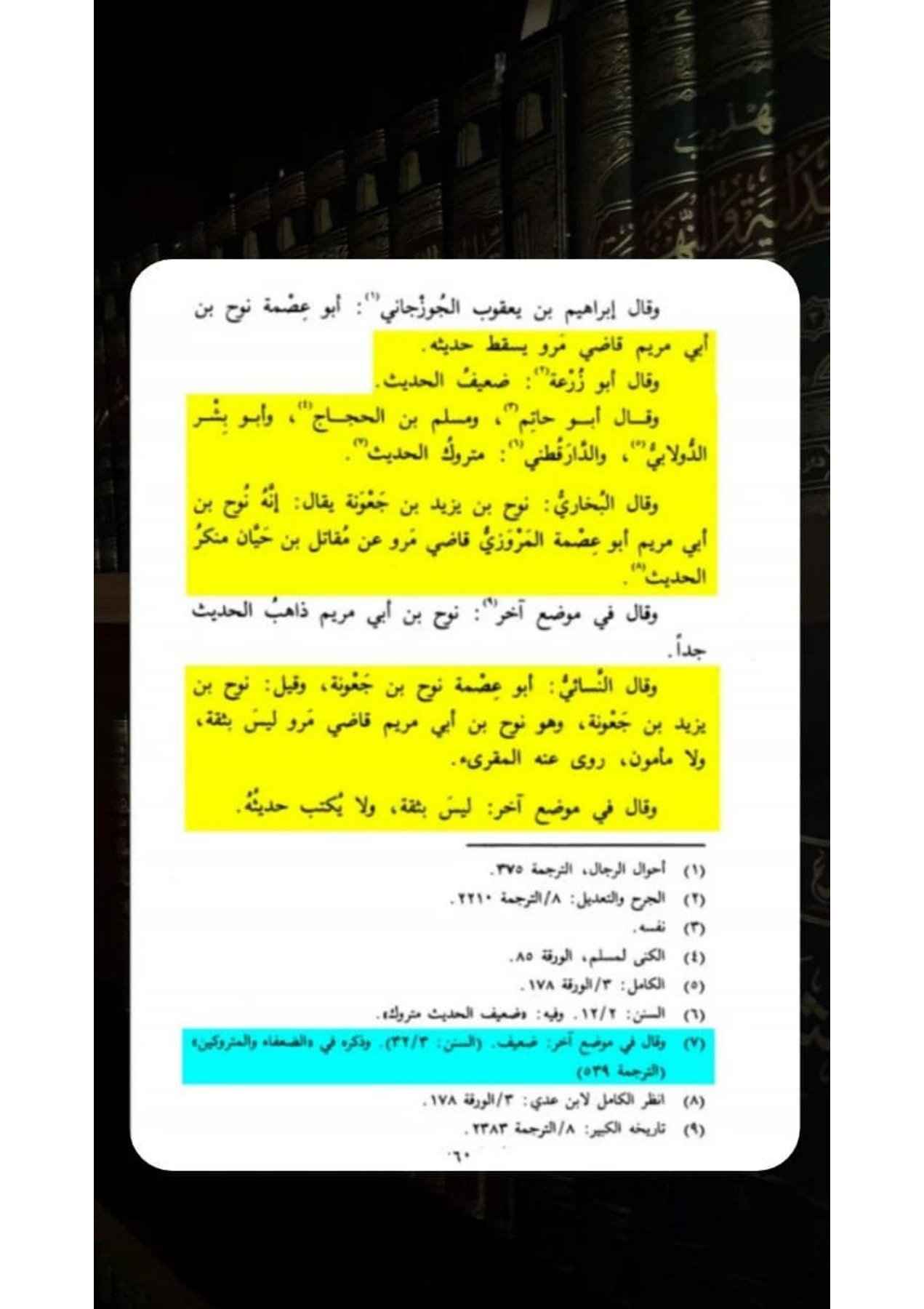
Scholar consensus — Ibn Hajar, al-Shanqeeti, and Ibn al-Arabi all rejecting the narrations on Zainab
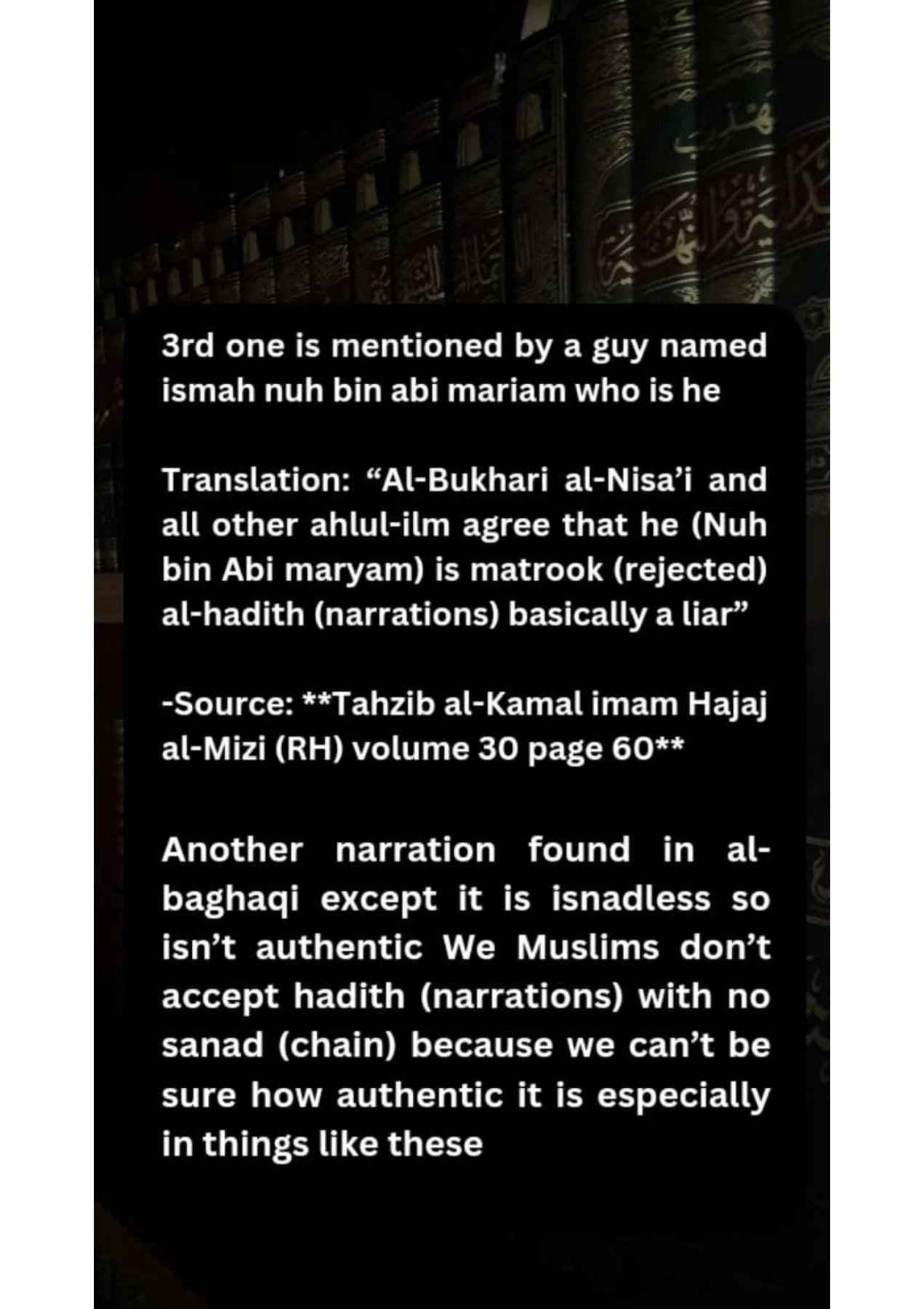
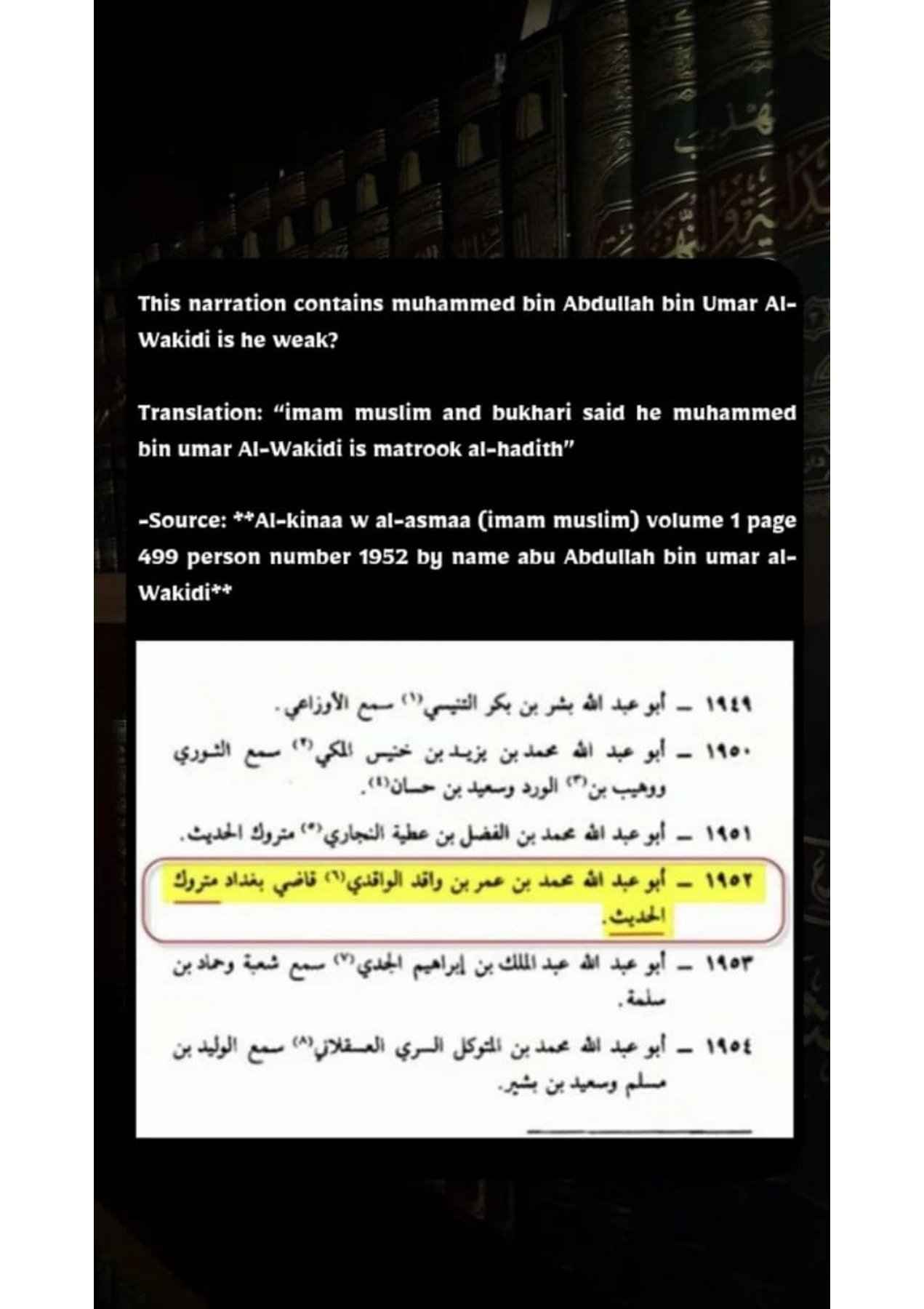
Not a single scholar of hadith has declared any of these narrations sound.
Summary image — no scholar authenticated the narration about the Prophet ﷺ desiring Zainab
Third — Even If We Assumed the Narration Were Sound
Even granting, purely for argument’s sake, that the narration were authentic — the most it would contain is that the Prophet ﷺ desired a divorced woman and married her after her divorce was complete and her waiting period was over. This is not adultery. This is not coercion. This is not betrayal.
Now compare this with what the Bible says about their own Prophet David:
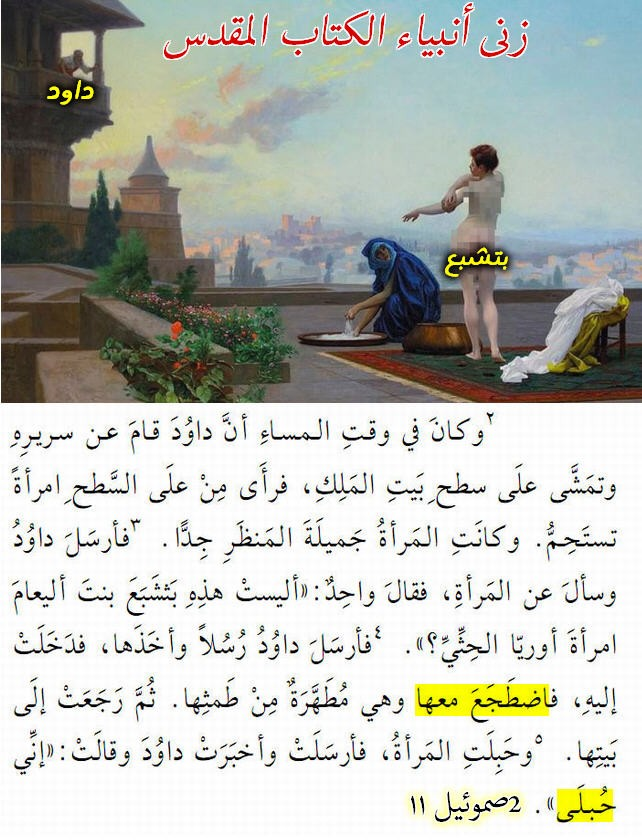
David saw Bathsheba bathing, desired her while she was another man’s wife, sent soldiers to bring her to him, committed adultery with her, made her pregnant, attempted to cover it up by pressuring her husband Uriah to sleep with her, and when Uriah refused out of honour, David arranged his death on the battlefield — a cold-blooded murder of one of his own soldiers to conceal his crime.
2 Samuel 11 (ESV) — summarised David saw Bathsheba bathing, sent and took her, and lay with her. She became pregnant. David sent her husband Uriah to the front of the battle and withdrew from him, so that he was struck down and died.
2 Samuel 11 — David's adultery, cover-up, and murder of Uriah
The Christians disbelieve in a prophet who did not desire a married woman, did not commit adultery, and married a divorced woman after her ‘idda — and they believe in a prophet who was, by their own scripture’s account, an adulterer, a rapist, and a murderer.
Fourth — The Incestuous Marriage in Christian Theology
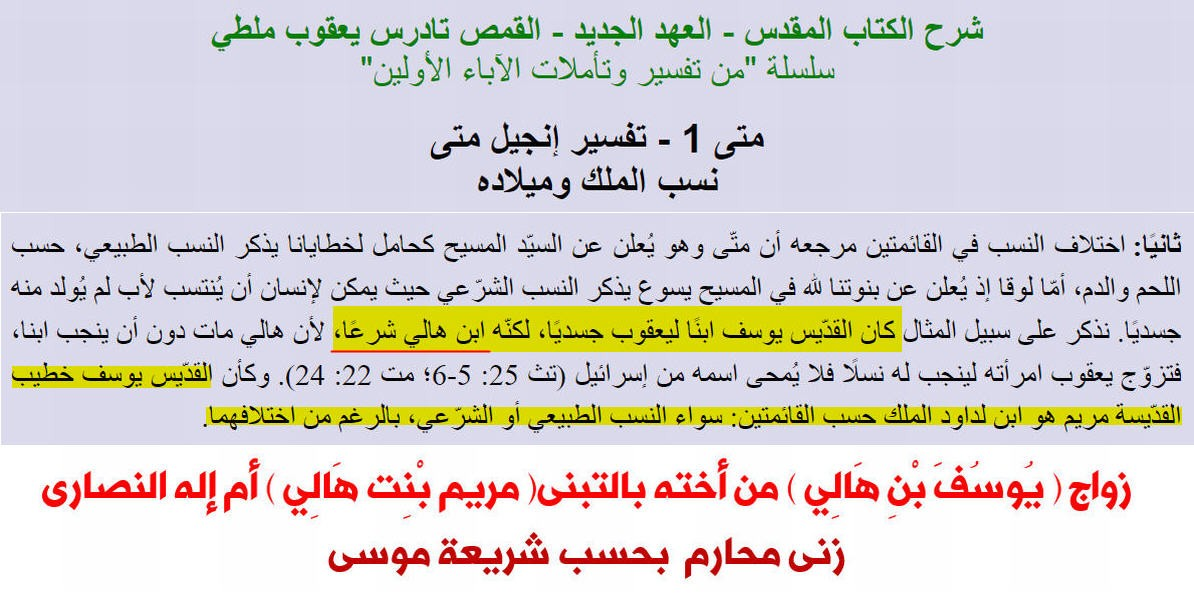
The surprise held in reserve: according to Christian interpretations of Matthew 1, Mary’s father Joachim (Heli) had no son. He therefore adopted Joseph the carpenter, who became known as Joseph ibn Heli — Mary’s adopted brother under the law of Moses.
Father Tadros Malaty and Saint Severus of Antioch state in the interpretation of Matthew 1:
and Saint Severus of Antioch — Interpretation of the Gospel of Matthew: The Lineage and Birth of the King “Saint Joseph was the son of Jacob physically, but the son of Heli legally, because Heli died without having a son, so Jacob married his wife to have offspring for him so that his name would not be erased from Israel — as if Saint Joseph, the fiancé of Saint Mary, was the son of King David according to the two lists.”
Father Tadros Malaty — Matthew 1 commentary establishing Joseph as the adopted son of Heli, Mary's father
This creates, by the logic of Christian interpretation itself, an incestuous marriage: Joseph ibn Heli married Mary bint Heli — his adopted sister under the law of Moses — a union forbidden in both Judaism and Christianity. Islam abolished the institution of adoption and its associated prohibitions. Christianity did not.
If the marriage of the Prophet ﷺ to the ex-wife of his adopted son — in order to abolish a false pre-Islamic custom by divine command — is called adultery by the critics, then by the same standard they are accusing the mother of their God of marrying her adopted brother.
The narration about the Prophet ﷺ desiring Zainab is rejected by Ibn Kathir, Ibn Hajar, al-Shanqeeti, and Ibn al-Arabi — unanimously, without a single dissenting authentication. The biographical facts make the claim absurd: she was his cousin, he had known her for decades, he arranged her marriage to Zayd himself, and he repeatedly told Zayd to keep her when Zayd wanted to divorce. The marriage was a divine command to abolish adoption permanently. And those who raise this objection believe in a scripture that attributes rape, adultery, cover-up, and murder to their own Prophet David — while objecting to a man who married a divorced woman, lawfully, by divine instruction.
FROM ISLAMOPHOBES NIGHTMARE PDF
Islamophobes Nightmare pdf 1289 38ac8429941f417cIslamophobes Nightmare pdf 1306 35cfead0af586708Islamophobes Nightmare pdf 1305 d58a9e759121bcb2Islamophobes Nightmare pdf 1304 7ae6af3bdc93bad1Islamophobes Nightmare pdf 1303 c9a87f56586526c1Islamophobes Nightmare pdf 1302 1d7858635c202824Islamophobes Nightmare pdf 1301 c9137e931dbf6543Islamophobes Nightmare pdf 1300 562eef81e8b3ae4bIslamophobes Nightmare pdf 1299 0b1dbe93a41f63edIslamophobes Nightmare pdf 1298 e5ca19c4c94e6194Islamophobes Nightmare pdf 1297 69f4d3a9dae79c0dIslamophobes Nightmare pdf 1296 538143676a81b888Islamophobes Nightmare pdf 1295 f5b0269cea24a4fdIslamophobes Nightmare pdf 1294 5099ea6c64313724Islamophobes Nightmare pdf 1293 c02096a864cc3e6dIslamophobes Nightmare pdf 1292 d34a531b3c947efdIslamophobes Nightmare pdf 1291 802f0348a762d47dIslamophobes Nightmare pdf 1290 a785300a8d7bdddfIslamophobes Nightmare pdf 1311 1cdceccc36fa7025Islamophobes Nightmare pdf 1310 398414f97fbbdb3dIslamophobes Nightmare pdf 1309 fbf64302deba8892Islamophobes Nightmare pdf 1308 d0232f2418ee48bfIslamophobes Nightmare pdf 1307 cd3e9c6fac94efff