

Safiyya bint Huyayy — The Distorted Word, the Biblical Double Standard, and Her Own Testimony
Christians claim that the Prophet ﷺ killed Safiyya’s husband with his own hand, took her captive, and violated her while she was in her waiting period. Each of these three claims is either a deliberate distortion of the Arabic text, a misapplication of Jewish law, or a contradiction of the Christians’ own scripture.
First — The Distorted Word: Quttila vs Qatala
What is established in the books of biography is that the Prophet ﷺ made a peace agreement with the people of Khaybar: they would leave and take whatever their camels could carry, while all gold, silver, and weapons remained. He stipulated that they must not conceal or hide anything — if they did, the covenant would be void. When it was proven that Kinanah ibn al-Rabi’ broke the covenant by concealing hidden treasure, the treaty was absolved and his killing was the consequence of his own betrayal and breach of covenant — not an act of the Prophet ﷺ personally.
Second — The Law of Captives Is in the Bible, Not Islam
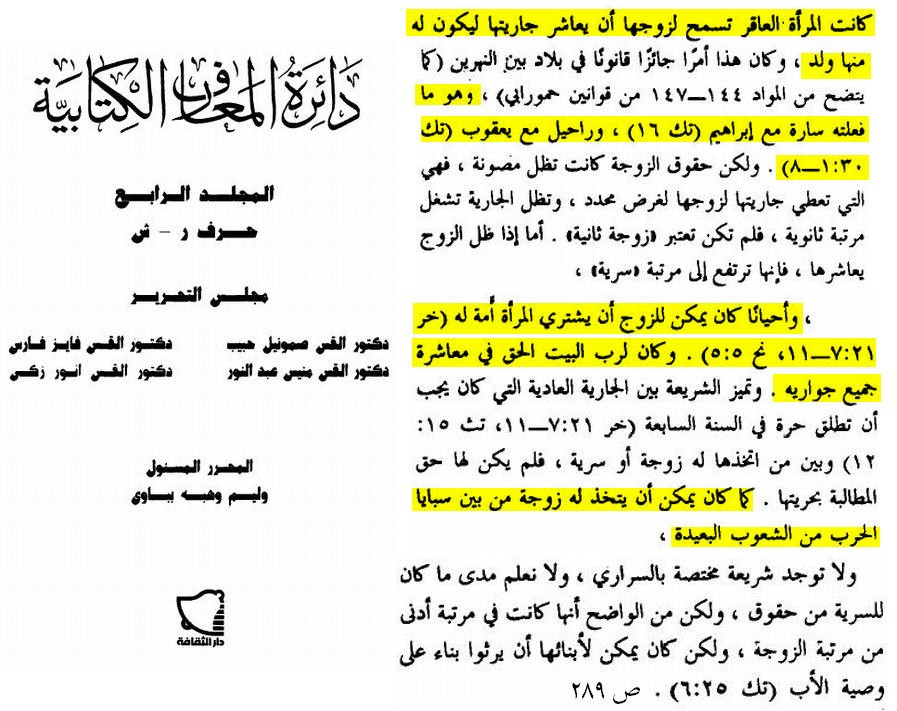
Furthermore, if the ruling of the Bible were applied to Safiyya (RA) — as a married woman among the conquered — she would have been killed, not taken captive. Numbers 31:17 states:
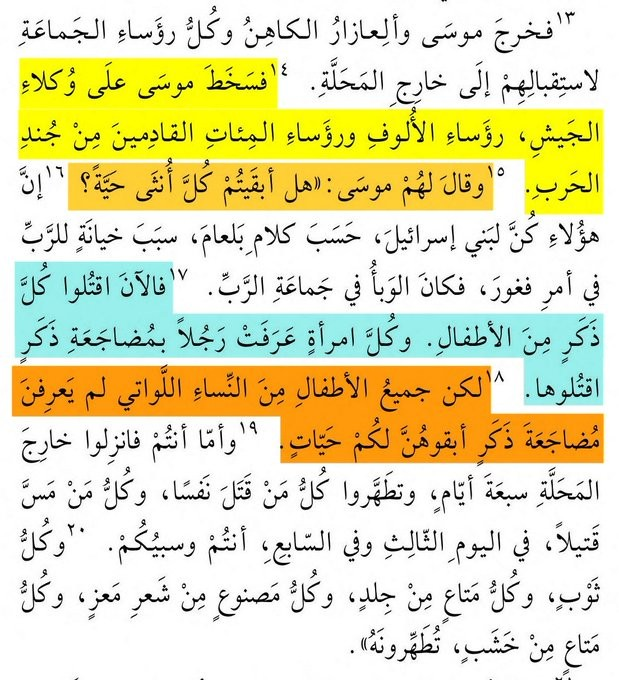
Islam spared Safiyya’s life. The Bible commands her execution. The Christians object to her marriage rather than to the command that would have had her killed.
Islam did not only refrain from killing her — it went further and introduced the legislation of emancipation, correspondence, and the freeing of slaves, none of which existed in any previous legal tradition.
Third — Jews Have No Waiting Period; They Have Mourning
Father Tadros Yacoub Malaty states in his commentary: “Bathsheba — with whom the Prophet David committed adultery — heard about the death of her husband — whom the Prophet David caused to be killed — so she mourned for him for seven days according to the ancient custom, then the Prophet David took her as his wife.”
The word used is mourning, not waiting period. Safiyya (RA) observed her mourning before her conversion to Islam and her marriage to the Prophet ﷺ, as was the Jewish custom.
As for the Islamic ‘idda, it was observed in full. Sahih Muslim (1365), on the authority of Anas (RA), records: “Then he gave her — meaning Safiyya — to Umm Sulaym to make her ready for him and to observe her waiting period in her house.”
Imam al-Nawawi (may God have mercy on him) explains: “As for his saying ‘obtain her waiting period,’ its meaning is: to purify herself; for she was a captive who had to be purified and placed in the house of Umm Sulaym during the period of purification. When the waiting period was over, Umm Sulaym prepared her and made her ready, meaning: she adorned and beautified her according to the custom of a bride.”
The ‘idda was observed. The Prophet ﷺ waited. The claim collapses.
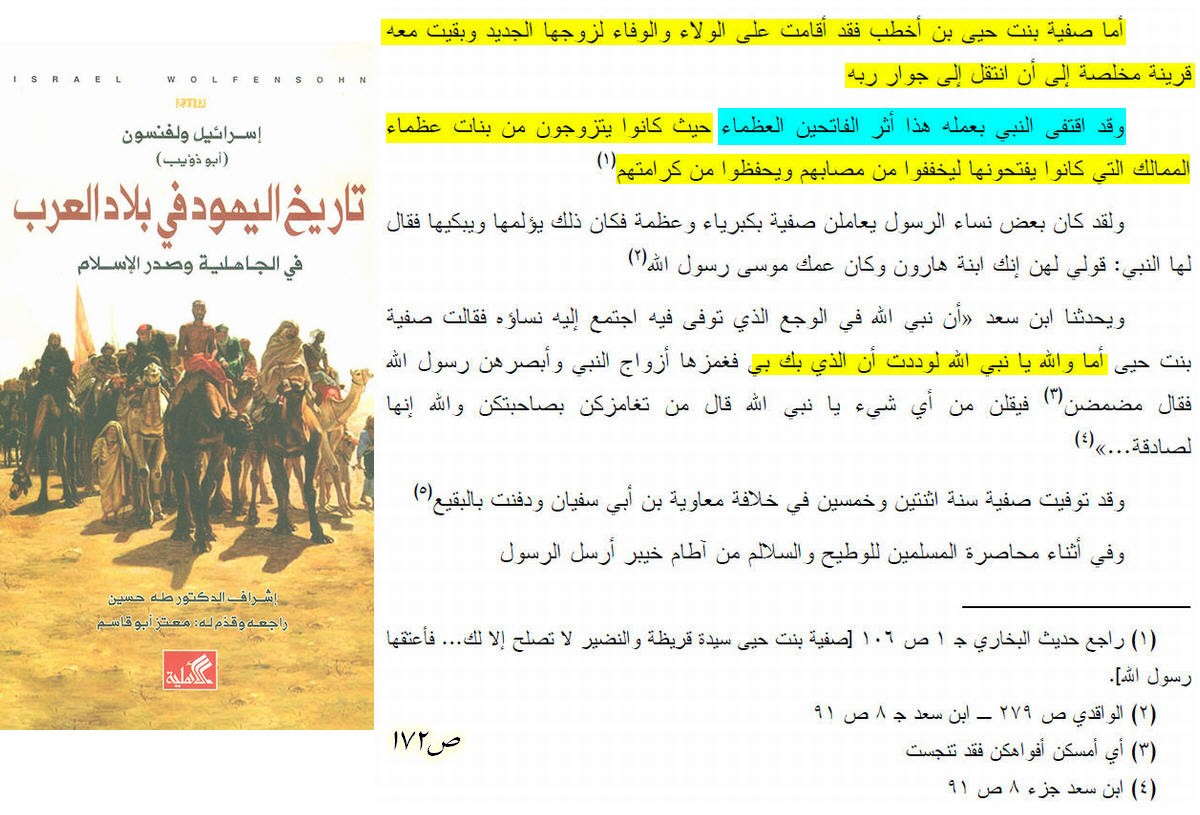
This testimony comes from a Jewish historian — not a Muslim apologist.
Fourth — Let Safiyya Speak for Herself
Grade: Sahih · Ibn Hibban
The Prophet ﷺ gave her the choice. She was the one who chose him over emancipation and freedom. Any person given a choice between two options will choose the better one. Safiyya chose the Prophet ﷺ.
In a narration from Safiyya (RA) herself, recorded in Majma’ al-Zawa’id, Vol. 9, p. 15:
“I have never seen anyone with better character than the Messenger of Allah ﷺ.”
These are her own words. She chose him. She praised him. She mourned him. The Christians claim to sympathise with her — she is innocent of their sympathy, by Allah.
Finally — A Prophecy in the Psalms
This prophecy — recorded approximately 3000 years ago — describes a king whose women include daughters of kings. Safiyya (RA) was the daughter of the master of Banu Nadir, from the lineage of the Prophets of Israel. The question is worth asking: in whom has this prophecy been fulfilled, if not in the Prophet Muhammad ﷺ?
...her to the Caliph rather than punishing her. She died of grief — but not the grief her enemies imagine. She is the Mother of the Believers, and the enemies of Islam took three words from her story,...