

Satan Called 'God' in the Letters of Paul
The letters attributed to Paul contain a verse that Christian commentators themselves struggle to explain: a verse that applies the definite Greek title for God — ὁ Θεός — directly to Satan. This is not a Muslim accusation. It is documented from the Bible’s own manuscripts, its own commentaries, and its own scholars.
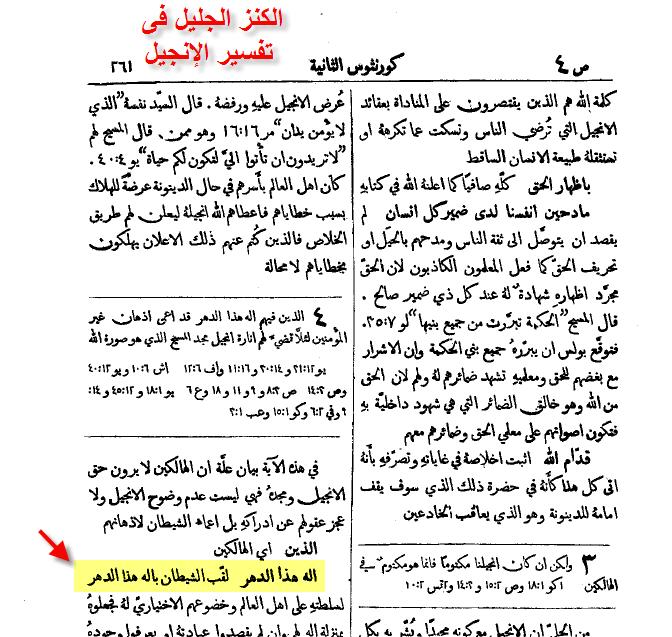
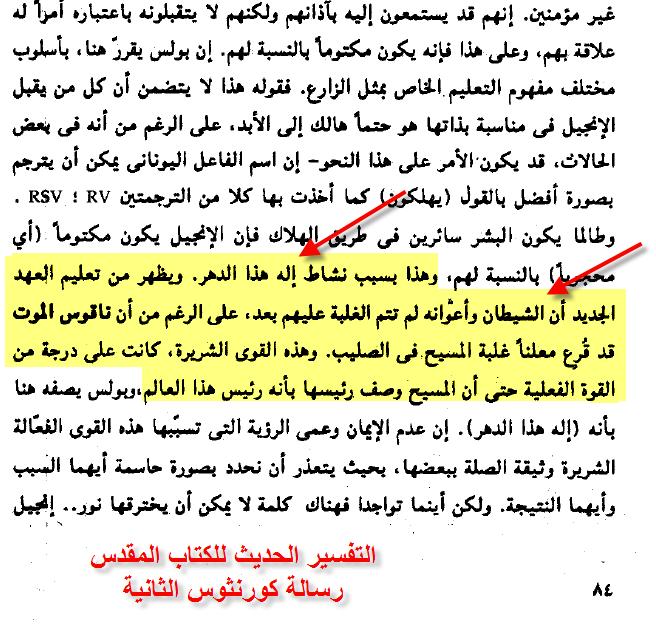
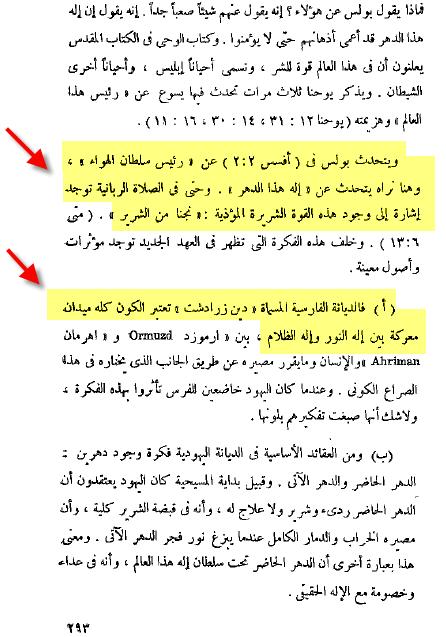
Who Is “The God of This World”?
The commentaries leave no ambiguity.
The Applied Commentary on the Holy Bible also confirms: “The work of Satan is to deceive, and those who do not believe are blinded by Satan.”
The Greek Manuscript Evidence — A Deeper Problem
The problem does not end with interpretation. It begins in the original Greek text.
θεός (Theos) is the Greek word for God. In Greek manuscripts, when a word carries a definite article — ὁ — it becomes specific and proper. ὁ θεός (ho Theos) does not mean “a god” or “some divine figure.” It means The God — the same term used for the God of the universe throughout the New Testament.
The Greek text of 2 Corinthians 4:4 across all major manuscript traditions reads:
ὁ θεὸς τοῦ αἰῶνος τούτουHo Theos tou aionos toutou — The God of this age.
^^Satan is not called a god — he is called The God, with the definite article, using the same word applied to the Father throughout the New Testament.^^
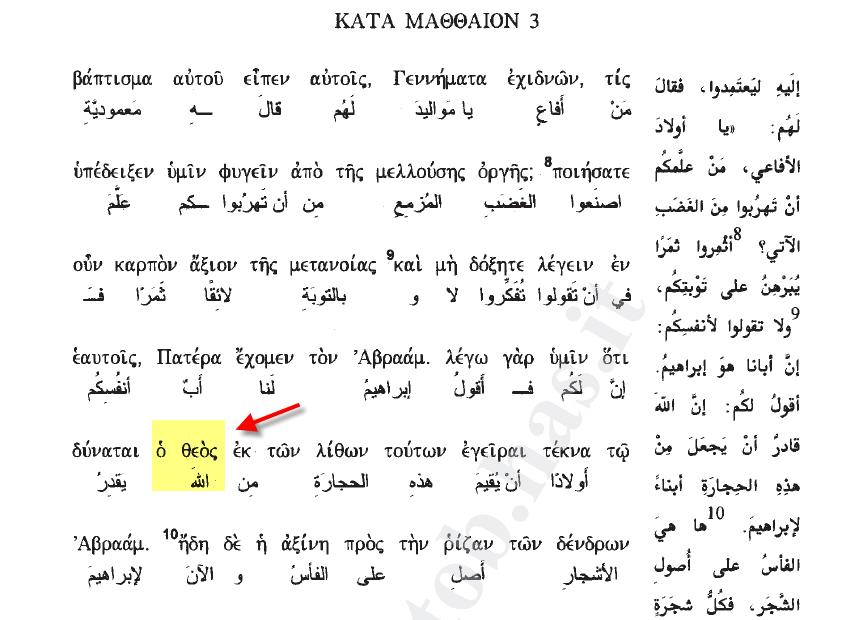
The Same Word in Matthew 3:9
To demonstrate that ὁ θεός is the standard New Testament term for God the Father, compare Matthew 3:9:
The Greek here uses the exact same construction — ὁ θεός. Every translation renders it as God.
Now observe the translation of the identical Greek term in 2 Corinthians 4:4:
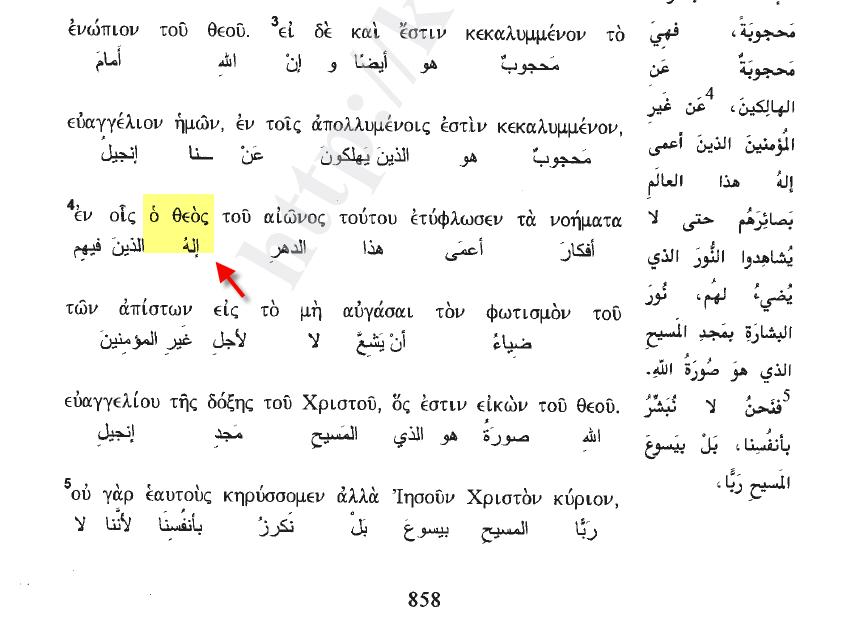
The translator’s hand hesitated — but the Greek does not. The word is identical. Where Matthew 3:9 gives the title to the Father, 2 Corinthians 4:4 gives it to Satan.
The Murdock Translation — Rendered It Plainly
One English translation did not hesitate. The Murdock translation of the Peshitta renders 2 Corinthians 4:4 as:
Note the capital G. Satan is rendered as God — because the Greek ὁ θεός grammatically demands it.
Adam Clarke’s Lament
Even the great Christian commentator Adam Clarke could not hide his distress at this verse:
This is one of the most candid admissions in the history of Christian biblical commentary. Clarke does not deny that the Greek says what it says. He simply confesses his reluctance — his theological discomfort — at the fact that Paul applied the highest divine title in the Greek language to the devil.
The Core Argument
This is Paul’s text. Paul who said “I tell you, I — not the Lord” (1 Corinthians 7:12). Paul who declared the Law abolished. Paul who called Satan by the definite title of God. As Christ himself warned:
“Beware of false prophets, who come to you in sheep’s clothing, but inwardly they are ravenous wolves. You will know them by their fruits.” (Matthew 7:15–16)
The Quranic Verdict on Satan
The Quran is unambiguous about Satan’s status and his relationship with God:
The contrast could not be clearer. The Quran calls Satan a clear enemy, expelled and cursed, whose plots are weak. The letter attributed to Paul calls him ὁ θεός — The God — of this world.
The standard applied to the Quran must be applied equally to the text that actually contains this verse. The verse is in Paul’s letter. The Greek is unambiguous. The commentaries are unanimous. The translators hesitated but could not change what the text says.
Every Christian must answer: whose words are these?