Sun Prostrating Under the Throne
The Final Response to the Doubt About the Hadith of the Sun Prostrating Under the Throne
Table of Contents
- The Hadiths in Question
- The Six Apparent Problems — Listed
- Response to Problem 1 — The Setting and Movement of the Sun
- Response to Problem 2 — Reaching the Resting Place Under the Throne
- Response to Problem 3 — The Sun Rises Elsewhere While It Sets Here
- Response to Problem 4 — The Sun Sets and Rises Simultaneously in Different Places
- Response to Problem 5 — The Sun Does Not Prostrate Like a Human
- Response to Problem 6 — The Sun Does Not Actually Rise or Return
- The Internal Evidence Within the Hadiths Themselves
- The Purpose and Benefit of These Hadiths — Summary
- Scientific Supplement — The Sun’s Movement in the Milky Way
- Turning the Tables — The Bible on the Sun
The Hadiths in Question
Hadith 1 — Sahih Bukhari Book of the Beginning of Creation
The Prophet ﷺ said to Abu Dharr when the sun set: “Do you know where it goes?” I said: “Allah and His Messenger know best.” He said: “It goes until it prostrates under the Throne, then asks permission and it is given permission. It is about to prostrate but it is not accepted from it, then it asks permission but it is not given permission. It is told: ‘Go back from where you came,’ then it rises from its place of setting. This is what Allah the Almighty said: ‘And the sun runs to its resting place. That is the determination of the Almighty, the All-Knowing.’ And His Throne is over the water, and He is the Lord of the Mighty Throne.”
Hadith 2 — Sahih Bukhari Book of Tawhid
“I entered the mosque and the Messenger of Allah ﷺ was sitting. When the sun set, he said: ‘O Abu Dharr, do you know where this sun goes?’ I said: ‘Allah and His Messenger know best.’ He said: ‘It goes asking permission to prostrate, and it is given permission, and it is as if it has been told to go back from where you came, and it rises from its place of setting.’”
Note on the Weak Narration via Sufyan ibn Husayn
- Its chain is weak by consensus of scholars — the defect being Sufyan himself
- Yaqub bin Shaibah, Uthman bin Abi Shaibah, and Al-Ajli noted weakness in his hadiths due to confusion and frequent mistakes
- Abu Dawud and Ibn Ma’in stated he is not a hafiz
- Its text contradicts the authentic hadiths: it says the Prophet was riding his donkey on the road — while the authentic hadiths say the Prophet was sitting inside the mosque
- It mentions the sun prostrating in a hot spring — not mentioned in any authentic narration
This narration will therefore not be discussed further. The response focuses on the authentic hadiths.
The Six Apparent Problems — Listed
1. The setting and movement of the sun — it is known that the Earth revolves around the sun, not the other way around.
2. Reaching its resting place under the Throne — the sun does not walk and stand like a human, and it does not leave its solar system to go under the Throne.
3. The apparent meaning suggests the sun does not prostrate except between its setting and rising — but scientifically, when the sun is absent from one place, it rises in another.
4. The connection between the sun’s setting and its going to prostrate — since the sun sets in one place and rises in another at every moment simultaneously.
5. The prostration of the sun under the Throne — the sun does not prostrate like a human, nor do visible changes occur to it.
6. The rising and returning of the sun — since rising and setting are linked to the movement of the Earth, not the sun.
Response to Problem 1 — The Setting and Movement of the Sun
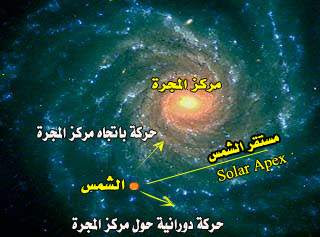
The fact that the sun does not revolve around the Earth does not mean the sun is stationary. Science has confirmed that the sun runs and moves in the Milky Way galaxy, revolving around the center of the galaxy in a circular manner.
Therefore, there is no contradiction between:
- What came in the hadith and the Qur’anic verse that “the sun runs to its resting place”
- And what modern science has established — that the sun moves and revolves around the center of the galaxy
Response to Problem 2 — Reaching the Resting Place Under the Throne
It is possible that it wants to prostrate, or actually prostrates, while it is moving — because the prostration of creatures differs from one to another:
- The prostration of a human ≠ the prostration of mountains
- The prostration of mountains ≠ the prostration of seas
- The prostration of seas ≠ the prostration of the sun and moon
Everything prostrates to Allah in this universe — by consensus of scholars.
The First Group of Scholars
The sun is always prostrating — and as soon as it finishes one prostration, it enters into another, like the pilgrim who circumambulates the Kaaba: as soon as he finishes one round, he begins the next directly.
The Second Group of Scholars
The sun has two prostrations:
- A general, permanent prostration — mentioned in Surah An-Nahl and Al-Hajj with all creatures
- A special prostration — achieved when it is aligned with the center of the Throne while traveling under it — mentioned in the hadith
Both groups agreed: the sun does not leave its galaxy — it is under the Throne and can be under the center of the inner part of the Throne while in its galaxy.
God, by His power, makes the center of the Throne above the sun every 12 hours — and despite the sun’s immense speed, this tells us that the Throne of God is incomprehensibly vast.
Response to Problem 3 — The Sun Rises Elsewhere While It Sets Here
- Its setting is the end of its work and benefit for those people on that day
- Its prostration after sunset is only its thanking of God for setting from that place and completing its work there
Consequently: its prostration while rising in one place is a prostration for its setting from another place. There is no contradiction.
Response to Problem 4 — The Sun Sets and Rises Simultaneously in Different Places
It is possible that when the sun sets from a specific place — while still setting over another place and rising over another simultaneously — it travels in its galaxy and prostrates under the Throne. All of this happens at the same time.
The hadiths speak about one place where the sun sets and rises — and the meaning is: the sun does not rise on a place except after it travels and wants to prostrate under the Throne of its Lord after setting from that same place.
This does not contradict science, in light of the consensus that the prostration of the sun is not like the prostration of humans, and does not require the sun to leave its galaxy.
The First Group
The Second Group
In the other half of the day, when the state of the Earth is reversed, the sun prostrates again. God, by His power, makes the center of the Throne above the sun at each of these moments.
Response to Problem 5 — The Sun Does Not Prostrate Like a Human
The hadiths did not say the sun stopped, slowed down, or halted at its resting place. The hadiths said “until it prostrates” or “until it reaches its resting place” — which does not require stopping, as scholars have said. It can prostrate while moving, in a prostration that only God knows.
The phrase “people do not find it strange at all” is itself an implicit indication that there are people who will hear this hadith and imagine the sun stops or slows down — and find it difficult. The Prophet ﷺ referred in the hadith to the sun’s movement as it usually does, even though it prostrates — but it is a prostration that is not like the prostration of humans.
Who informed the Prophet ﷺ that there are those who will denounce this hadith, except the Lord of Glory, the Knower of the Unseen?
Response to Problem 6 — The Sun Does Not Actually Rise or Return
The one who sees the sun sees it as if it was ordered to return and rise. No one sees the rotation of the Earth or feels it — and this is the greatest evidence that the hadiths confirm that the rising of the sun is not real but came by way of simile.
- A slip of the tongue by the narrators Muhammad bin Yusuf and Yahya bin Ja’far
- An indication that the sun’s prostration has been completed — which is supported by both groups of scholars
- The meaning of “return and rise” could refer to God’s command to the Earth to rotate — because the purpose of the command is for people to see the sun rise again, not for the sun itself to physically travel back
The website responded: “God tells us the words that we can comprehend, but He does not tell us what we cannot comprehend. The fact that the book says that God orders the sun not to rise does not negate the Earth’s rotation around the sun — rather God addresses us according to our minds.”
This is the same principle that applies to the prophetic hadiths. If the rotation of the Earth had been mentioned, the contemporaries of the Prophet ﷺ would not have understood it — nor would the generations that followed them. Many people, when the heliocentric theory first appeared, said: “If we spent the evening in Mecca and the Earth rotated, we would have woken up in Taif or Najd.”
The Internal Evidence Within the Hadiths Themselves
The Purpose and Benefit of These Hadiths — Summary
- After it sets in every place — during its movement
- Therefore the sun is always prostrating to God, because at every moment the sun sets in a place on the Earth (as the first group of scholars said)
Or:
- The sun prostrates to God at a specific moment in time when the sun has set from half the Earth — because the sun does not set from the entire Earth at one time — and God by His power makes the sun under the center of the Throne at that moment (as the second group said)
Prostration — as scholars agreed — we cannot see or notice it with our eyes. And when it is said to it “rise and return” — this is a simile for the occurrence of the word “as if” in most hadiths, indicating the end of one prostration while merging directly into the next — like the merging of rounds during circumambulation.
Scientific Supplement — The Sun’s Movement in the Milky Way
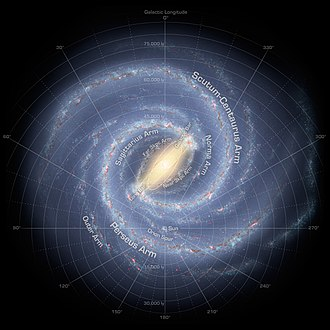
The sun’s speed in its rotation around the center of the galaxy ranges from 200–250 kilometers per second. Scientists also found:
- The sun has an up and down movement
- The sun rotates around itself as a result of its movement around the center of the galaxy
Therefore, its movement around the center of the galaxy in a circular spiral is itself a return from where it came — in a more precise sense: as if it is returning from where it came. This is precisely the prophetic expression used in all hadiths except two.
Turning the Tables — The Bible on the Sun
This article is part of the OpenIslam Wiki — Responses to Hadith Doubts and Orientalist Critiques series.