The Miracle of the Unseen in (Fat Will Appear in Them
In the name of Allah, the Most Gracious, the Most Merciful,
and may blessings and peace be upon the Messenger of Allah -
The best of you are my generation, then those who come after them, then those who come after them - Imran said: I do not know: He mentioned two or three after his generation - Then a people will come, who will make vows but will not fulfill them, and will betray but will not be trusted, and will bear witness but will not be asked to bear witness, and
|
Obesity Will Appear among Them
Narrator: Imran bin Al-Hussain Narrator: Al-Bukhari - Source: Sahih Al-Bukhari - Page or number: 6695 Summary of the narrator’s ruling: [Sahih] The meaning of the hadith, as is clear, is that the best of generations and centuries are those who lived with the Prophet, may Allah bless him and grant him peace, then those who come after them, then those who come after them. After this, generations and centuries will appear in whose religion there is deficiency, and among the manifestations of that is that they will not fulfill their vows and will betray trusts, and obesity will also appear among them, as they will eat a lot and become Many of them are obese and currently obesity has become a problem that is constantly increasing and worsening. Let’s see what Wikipedia says about the problem of obesity in the world… http://en.wikipedia.org/wiki/Epidemiology_of_obesity
{Embed}
http://en.wikipedia.org/wiki/Epidemiology_of_obesity
Epidemiology of obesity
Obesity has been observed throughout human history. Many early depictions of the human form in art and sculpture appear obese. However, it was not until the 20th century that obesity became common — so much so that, in 1997, the World Health Organization (WHO) formally recognized obesity as a global epidemic and estimated that the worldwide pr…
✅
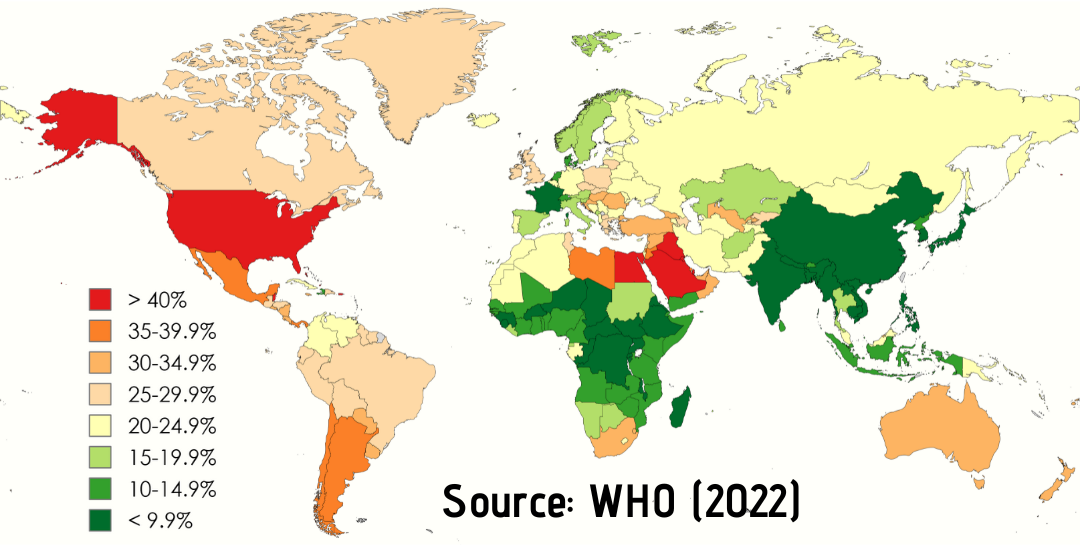
For thousands of years obesity was rarely seen.[3] It was not until the 20th century that it became common, so much so that in 1997 the World Health Organization (WHO) formally recognized obesity as a global epidemic.[4] As of 2005 the WHO estimates that at least 400 million adults (9.8%) are obese, with higher rates among women than men.[5]
As of 2008, The World Health Organization claimed that 1.5 billion adults, 20 and older, were overweight and of these over 200 million men and nearly 300 million women were obese.
For
thousands of years, obesity was a rare sight. It was only in the 20th century that obesity became so widespread that the World Health Organization (WHO) declared obesity a global epidemic in 1997. In 2005, the WHO estimated that at least 400 million (9.8%) people over the age of 20 were obese, with obesity rates higher in women than men.
In 2008, the WHO said that 1.5 billion people over the age of 20 were overweight, including about 200 million men and 300 million women.
Thus we see that obesity actually appeared in humans in the twentieth century AD, as the Messenger of God, may God bless him and grant him peace, informed us more than 1400 years ago
. Some may think that the noble hadith speaks about the appearance of obesity in Muslims in particular, and not in the whole world
. To see what research says about obesity in Islamic countries, we will review a link with a study on obesity in all regions of the world, which is affiliated with Harvard University in America, which is the best university in the United States
https://nutritionsource.hsph.harvard.edu/obesity/#North_Africa_and_the_Middle_East
{Embed}
Brett O Otis
https://nutritionsource.hsph.harvard.edu/obesity/
Obesity - The Nutrition Source
The World Health Organization (WHO) defines overweight and obesity as having “excessive fat accumulation that presents a risk to health.” There are various

Data are scarce from many countries in North Africa and the Middle East, but even so, there’s compelling evidence that obesity rates are on the rise. (1,15) Researchers have taken a closer look at obesity trends in the six Arabian Gulf states (Oman, Bahrain, United Arab Emirates, Saudi Arabia, Qatar, and Kuwait), since these countries have seen tremendous increases in wealth—and weight —since the discovery of oil reserves in the 1960s. (16)
Today, obesity rates in some of the Arab Gulf countries rival or exceed those of the US: In Saudi Arabia, for example, recent surveys have found that 28 percent of men and 44 percent of women are obese, and 66 percent of men and 71 percent of women are overweight or obese. In Kuwait, 36 percent of men and 48 percent of women are obese, while 74 percent of men and 77 percent of women are overweight or obese. (16) Although obesity rates are higher among women in the region than men, they appear to be rising more quickly in men than in women.
The question is, how did the Prophet (peace and blessings of Allah be upon him) know that people after him would become obese ? The Prophet (peace and blessings of Allah be upon him) spoke the truth .
We read in an article in the French newspaper Asdaa:
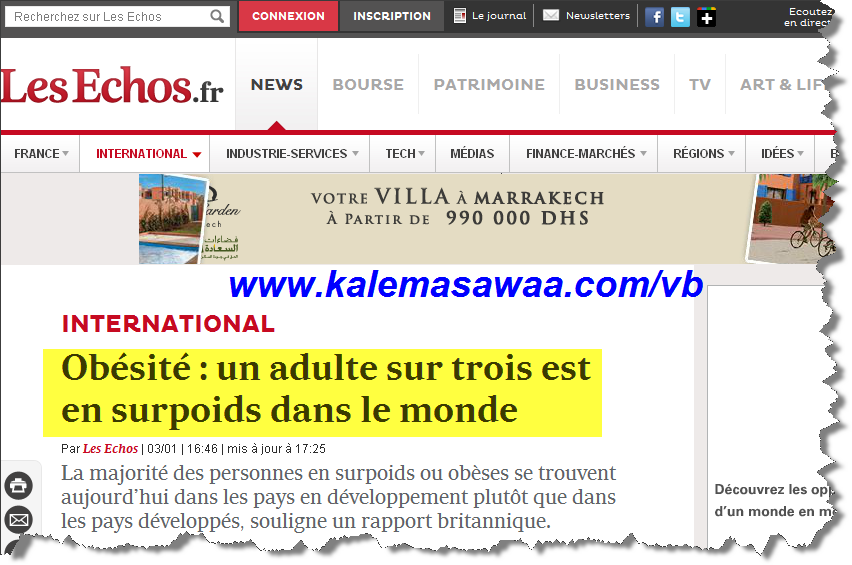
One third of the world’s adult population is obese.
Where are the pretenders to explain how the Prophet described the state of the world with such precision?
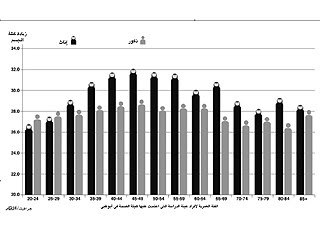
75% of Abu Dhabi suffers from obesity
https://www.aletihad.ae/article/17425/2008
{Embed}
https://www.aletihad.ae/article/17425/2008
75% من سكان أبوظبي يعانون السمنة والنس…
كشفت هيئة الصحة في أبوظبي ان 75% من سكان أبوظبي يعانون من مرض السمنة وان النساء فوق سن 30 عاما أكثر وزنا من الرجال·وتعرف السمنة بأنها زيادة وزن الجسم عن حده الطبيعي نتيجة تراكم الدهون فيه، وهذا …

Western media
Look at the increase in the rate from 1990 until now .!!
We read in Al-Riyadh newspaper
93% of Saudis suffer from obesity
Link to the news: https://www.alriyadh.com/622295l
We read on Al-Arabiya website
Kuwait is the second most obese country in the world and Qatar is the third
Four Gulf countries are on the list of the top ten countries in terms of obesity
https://www.alarabiya.net/articles/2012/07/05/224557
We also read in an article on the CNN Arabic website:
Obesity increases the risk of 10 types of cancer
It is known that obesity has negative effects on human health, but what was recently discovered proved that there is a relationship between obesity and the risk of 10 types of cancer.
A long scientific study published in the medical journal The Lancet revealed that obesity may increase the risk of cancer. British scientists at the London School of Hygiene and Tropical Medicine analyzed medical data for five million Britons and compared the development of their health status over a whole seven years. The result was that 12,000 cases of cancer were suffering from excessive weight gain.
The researchers also found that a person’s weight gain of 13 to 16 kilos may often increase the risk of six of the following types of cancer:
uterine cancer (closely linked to obesity), gallbladder cancer, kidney cancer, cervical cancer, thyroid cancer, and leukemia (not closely linked to obesity). The study also indicated that obesity increases the risk of liver, bowel, testicular and breast cancer.
However, the study’s authors stressed that obesity in general does not necessarily mean that cancer is more likely to occur. Researchers from the London School of Hygiene and Tropical Medicine also confirmed that the risk of cancer varies depending on weight and condition. In general, a person’s weight remains an important factor among several factors that may cause cancer.
Quoted from dw.de