

The Moon's Erasure in the Quran — Scientific Evidence
The Distinction Between Light and Radiance
The Quran employs precise terminology when describing celestial bodies. Allah the Almighty stated:
“And made the moon a light therein and made the sun a lamp.”
This distinction is fundamental. The sun is described as a سراج (siraj) — a self-luminous source that actively emits light. The moon is described as نور (nur) — light that is reflected or acquired from another source. Consider the following supporting verses:
“It is He who made the sun a radiance and the moon a light…”
“Blessed is He who placed in the heaven constellations and placed therein a lamp and a moon giving light.”
The Quran’s terminology distinguishes sharply and consistently between ضياء (diya) — radiance, the self-emitted light of a burning body — and نور (nur) — reflected light from a cold, dark body. This precision was not scientifically articulated until the last two centuries of modern physics. Fourteen hundred years ago, no human mechanism existed to describe this distinction with such accuracy, save revelation from Allah, the All-Knowing.
The Quran also contrasts darkness with light rather than brightness:
“Praise be to Allah, who created the heavens and the earth and made darkness and light…”
This theological and linguistic precision could not have originated from the knowledge available to seventh-century Arabia. It reflects divine knowledge of the cosmos.
The Quran’s Account of the Moon’s Erasure
The verse in question appears in Surah Al-Isra:
“And We have made the night and the day two signs, and We have erased the sign of the night and made the sign of the day visible — that you may seek bounty from your Lord and that you may know the number of years and the account. And all things We have explained in detail.”
The Classical Islamic Interpretation
Early Islamic scholars interpreted this verse in the context of the moon as a celestial body. According to al-Tabari’s Jami’ Al-Bayan fi Tafsir Al-Qur’an, multiple chains of transmission record the companion Ali ibn Abi Talib (may Allah be pleased with him) explaining the dark spots on the moon:
Another chain records:
Ibn Kathir (may Allah have mercy on him) transmitted from Abdullah ibn Abbas (may Allah be pleased with both of them):
Islamic Tafsir on the Verse’s Meaning
Al-Saadi’s interpretation clarifies the theological purpose:
Modern Scientific Evidence: The Moon Was Once Luminous
The scientific evidence overwhelmingly confirms what the Quranic verses and classical Islamic scholars stated: the moon was once burning and luminous, then cooled and lost its light.
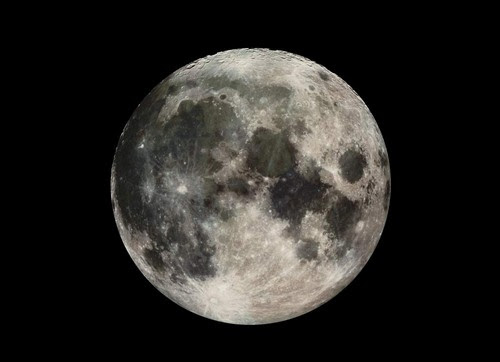
The Encyclopædia Britannica documents this process:
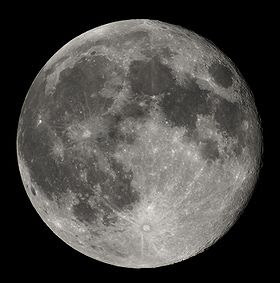
The dark spots visible on the moon are not caused by erosion from meteorites alone — they are maria (singular: mare) formed by ancient volcanic eruptions. These eruptions produced basalts, the dark-colored lava that covers the lunar basins. This is what classical Islamic scholars recognized as “the erasure”: the cooling of the moon’s primordial luminosity.
Why the Moon’s Cooling Was Essential to Life on Earth
Had the moon remained luminous and burning until the present day, life on Earth could not have evolved. The moon’s continued thermal activity would have sustained gravitational disturbances incompatible with the emergence of complex life. As the Earth and moon continued their orbital migration away from the sun, the moon’s crust cooled. Its original self-luminosity was extinguished — “erased,” as the Quranic term describes it — and the moon began to derive its visible light entirely through reflection of the sun’s rays.
This evolutionary sequence is documented in modern planetary science:
The Refutation of the Christian Objection
The critic’s claim that dark spots on the moon are merely “the result of the contrast of the moon’s surface between high mountains and deep craters” misrepresents both the Quranic teaching and scientific fact. The Quranic term محا (mahā) — “erased” — does not describe a visual contrast. It describes a physical transformation: the loss of the moon’s original self-luminosity due to cooling after its formation.
The Christian critic further attempts to ridicule Islamic scholarship by claiming that Muslims once believed the Earth was flat and carried on the back of a whale. This claim has no basis in the Quranic text or Islamic scholarly consensus.
The Quran’s Teaching on a Spherical Earth
The Quran explicitly describes the sphericity of the Earth:
“He wraps the night over the day, and He wraps the day over the night.”
The Arabic term يكف (yakiff) — “wraps” — derives from the pattern of wrapping a turban around a sphere. This is a direct textual description of the Earth’s sphericity. Ibn Hazm, the renowned Islamic jurist and scholar (d. 456 AH / 1064 CE), documented this understanding over one thousand years ago in his Al-Fasl fi al-Milal wa al-Ahwa wa al-Nihal:
Ibn Hazm further explained the logical necessity of the Earth’s sphericity through the five daily prayers:
The Bible, by contrast, describes the Earth as having “four corners”:
The Christian’s attempt to transfer the flat-earth teaching of the Bible onto Islam is an act of projective polemic. Islamic scholarship affirmed the Earth’s sphericity from the earliest centuries, grounded in Quranic language and logical reasoning.The teaching that the Earth is spherical is unanimously upheld in Islamic jurisprudence and cosmology, with no legitimate scholarly dissent recorded in classical sources.
Conclusion
The Quranic description of the moon’s “erasure” is not a poetic metaphor or an ancient misconception — it is a precise statement of physical fact, confirmed by modern planetary science. The moon was once a self-luminous, burning body. As it cooled through cosmic history, its primordial light was extinguished — “erased” — and it became dependent on reflected solar light. This understanding was preserved in the Quranic text and explicated by Islamic scholars centuries before modern astronomy revealed the mechanisms behind it.