

The Pagan Roots of Sham El Nessim: An Islamic Warning Against Imitation
Sham El Nessim is one of the occasions with pagan Pharaonic roots that is celebrated by the Christians of the East, and unfortunately, some Muslims celebrate with them in blind imitation.
Muslims are prohibited from participating in celebrations that have pagan, idolatrous origins or that imitate non-Islamic religious practices. This includes Sham El Nessim, which originated as a Pharaonic harvest festival dedicated to the bull god Apis.
Manifestations of the Celebration
The celebration begins in the early morning hours by going out to green spaces and public parks, where the celebrants take with them various popular foods consisting of colored eggs, onions, lettuce, feseekh (salted fish) and green chickpeas.
Sham El Nessim is a Pharaonic and Pagan Holiday Par Excellence
Hieroglyphic writing refers to SHEMOU (“Sham El Nessim”) as the harvest festival dedicated to the Pharaonic bull god “Apis”.
The bull god worshipped by the Pharaohs bears the Greek name APIS:
A Pharaonic harvest festival representing the beginning of the harvest season that lasts for four months in the ancient Egyptian calendar.
The Pharaonic calendar shows the Shemou harvest season:
Pachons: from March 16 to April 14
Payni: from April 15 to May 14
Epiphi: from May 15 to June 13
Mesori: from June 14 to July 13
Explanation of the Shemou harvest season, which lasts four months:
Pharaonic Origins of Traditional Foods
Feseekh (salted fish) was one of the famous dishes of the Pharaohs:
Dr. Zahi Hawass, former Minister of State for Antiquities Affairs, affirmed that the Pharaohs were the first to know the technique of salted fish (feseekh) and they were the first to celebrate Sham El Nessim.
Source: General Authority for Information
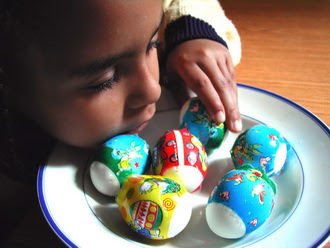
Colored eggs are one of the manifestations of the pagan Pharaonic celebration of Sham El Nessim:
The same colored eggs are also found among the Pharaohs:
Pharaonic inscriptions explaining the celebration of Sham El Nessim - the “Shamu” harvest festival:
Historical Transformation
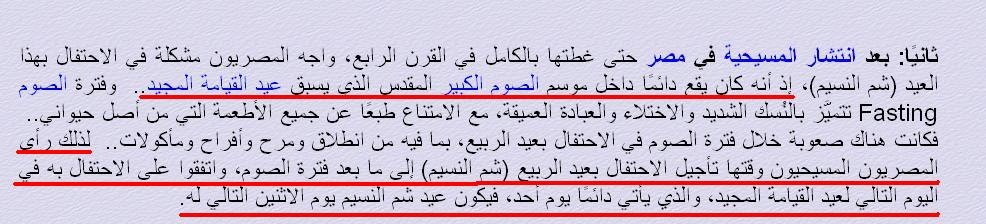
He was actually a pagan pharaonic holiday, but it became associated with Christianity when they changed its date to the day after Easter.
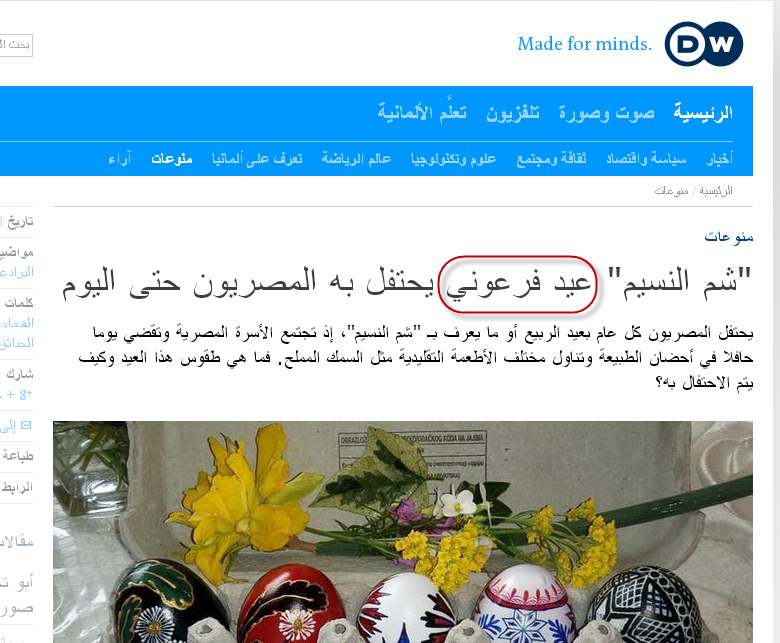
“Sham El Nessim” is a Pharaonic holiday that Egyptians celebrate to this day. Every year, Egyptians celebrate the spring festival, also known as “Sham El Nessim”, when Egyptian families gather and spend a busy day in the bosom of nature and eat various traditional foods such as salted fish.
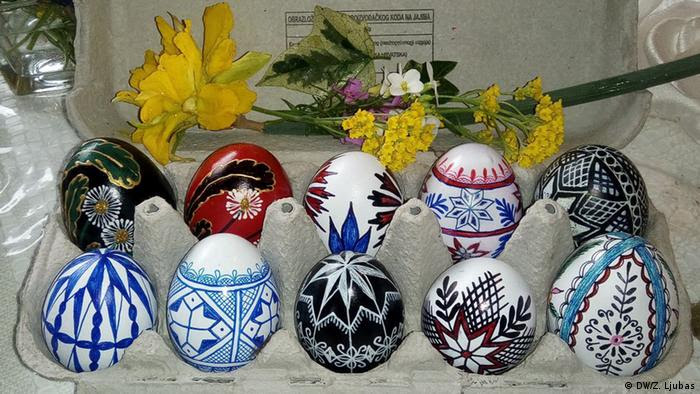
This year, 2018, “Sham El Nessim” falls on April 9, as this holiday has been associated since the time of the Pharaohs with the harvest season. As for the name of the holiday, it has changed over the ages, and the word “El Nessim” was added to it due to the association of this season with moderate weather and pleasant breezes, and the celebration of the holiday of going out to gardens and parks and enjoying the beauty of nature.
Source: Deutsche Welle - Arabi
The preservation of pagan rituals, idolatrous symbols (like the bull god Apis), and their continuation under different names does not change their本质 nature. A practice rooted in polytheism remains prohibited regardless of how much time passes or what name it adopts.
And praise be to God, Lord of the Worlds.