The Response to the So Called Syriac Nonsense About the Meaning of the Houris
Among the funny doubts, the ignorant claim that the Almighty’s saying, “And We married them to houris” does not mean marrying houris, meaning the women of Paradise with wide, very white eyes. Rather, houris is a Syriac phrase that has another meaning,
which is that the Qur’an was not punctuated and that the correct word is “and We roused them” and not “we married them.” In Syriac, the letter “ba” means “between,” and houris means white grapes, and “ayn” means the spring of water near the white grapes, so the meaning is “and We blessed them among the white grapes near the springs of water.” May our Lord save us from ignorance and nonsense.
The answer to them
is that the Companions memorized the Qur’an in their hearts before the punctuations, and they distinguished between the letters “zay” and “ra” and between the letters “ha” and “jim.” Rather, the punctuations were based on what they had memorized and what others had heard from them. The hadiths indicate that houris are women whom a Muslim will marry in Paradise. O God, provide for us, O Lord of the Worlds.
The letter “ba” is an Arabic letter that indicates companionship and attachment, and the letter “ba” in Syriac also indicates companionship and attachment, as well as indicating place. It is not only used to indicate spatial circumstance, but rather On what basis did they assume that the letter Baa is Syriac and indicates place only, although the letter is used in Arabic and indicates companionship in Syriac as well
This is what Bishop Yaqoub Okin mentioned in his Syriac-Arabic dictionary
ܣܶܕܪܳܐ ܕܒܶܝܬ
Chapter of Baa
https://dss-syriacpatriarchate.org/…/%dc%a3%dc%b6…/…
ܒ: The single Baa comes for several meanings, including: (1) for companionship, such as ܐܶܬ̥ܳܐ ܒܚܰܝܠܳܐ he came with an army. I went in peace (2) for help or mediation towards ܟܶܬ̥ܒ̊ܶܬ̥݁ ܒܩܰܢܝܳܐ I wrote with the number (3) for the oath towards ܒܰܐܠܳܗܳܐ By God. With your life (4) for the present, such as ܒܕ̥ܶܚܠܬ̥ܳܐ ܘܰܒܚܰܕ̥ܽܘܼܬ̥ܳܐ with fear and joy (5) for attachment, such as ܐܶܣܬ̊ܰܪܰܟ ܒܶܗ cling to it (6) for the spatial circumstance, such as ܒܗܰܝܟ̊ܠܳܐ in the temple. And the temporal, such as ܒܠܹܺܠܝܳܐ[1] at night (7) for the causal, such as ܡܺܝܼܬ̥ ܒܨܰܗܝܳܐ he died of thirst (For comparison and compensation, such as ܙܰܒ̊ܢܶܗ ܒܰܬ̥ܠܳܬ̥ܺܝܼܢ ܕܟ̥ܶܣܦܳܐ He sold him for thirty pieces of silver (9) For transgression, such as ܐܶܬ̥ܟ̊ܰܬ̊ܰܫ ܒܺܝܼ He fought me (10) For preferring an individual over his own kind, such as ܡܫܰܒ̊ܚܳܐ ܒܰܢܒ̥ܺܝܼ̈ܶܐ ܐܶܫܰܥܝܳܐ The most glorious of the prophets, Isaiah. The Most Holy (11) for distinction, such as ܗܳܢܳܐ ܥܰܫܺܝܼܢ ܡܶܢܳܟ ܒܡܶܠܬ̥ܳܐ This is stronger than you in speech (12) for partialization, meaning from, such as ܒܰܕ̥ܡܶܗ ܚܰܝܳܐ ܐܰܪܘܺܝܼ ܐܶܢܽܘܿܢ He intoxicated them with His living blood (13) for comparison, meaning like and like, such as ܒܫܶܡܫܳܐ ܚܰܘܰܪܘ Make your garments white as the sun (14) for superiority, like ܢܶܗܦܽܘܿܟ ܥܰܘܠܶܗ ܒܪܹܺܫܶܗ[2] His sin will return upon his head (15) for the end of the goal, like ܢܶܗܘܶܐ ܚܢܰܢ ܫܡܳܐ ܒܺܝܼܫܳܐ ܒܚܰܪܬ̥ܶܗ ܕܥܳܠܡܳܐ And we will be an ugly name until the end of the world (16) for warning and alerting, like ܐܶܙܕܰܗܪ Beware of defiling the faith. (17) For the purpose, meaning for the sake of, like, for this reason we obey you (18) for emphasis, like, for the sake of, on that very day. The verb itself is (19) to mention the subject with the passive verb, such as: From you, O Lord, we are all blessed (20), meaning between, such as: I counted him among the simple ones (21)
meaning according to, such as: I counted him among the simple ones But every man shall inherit according to his works, and shall receive justly (22) meaning, to the extent that they shall go into captivity.
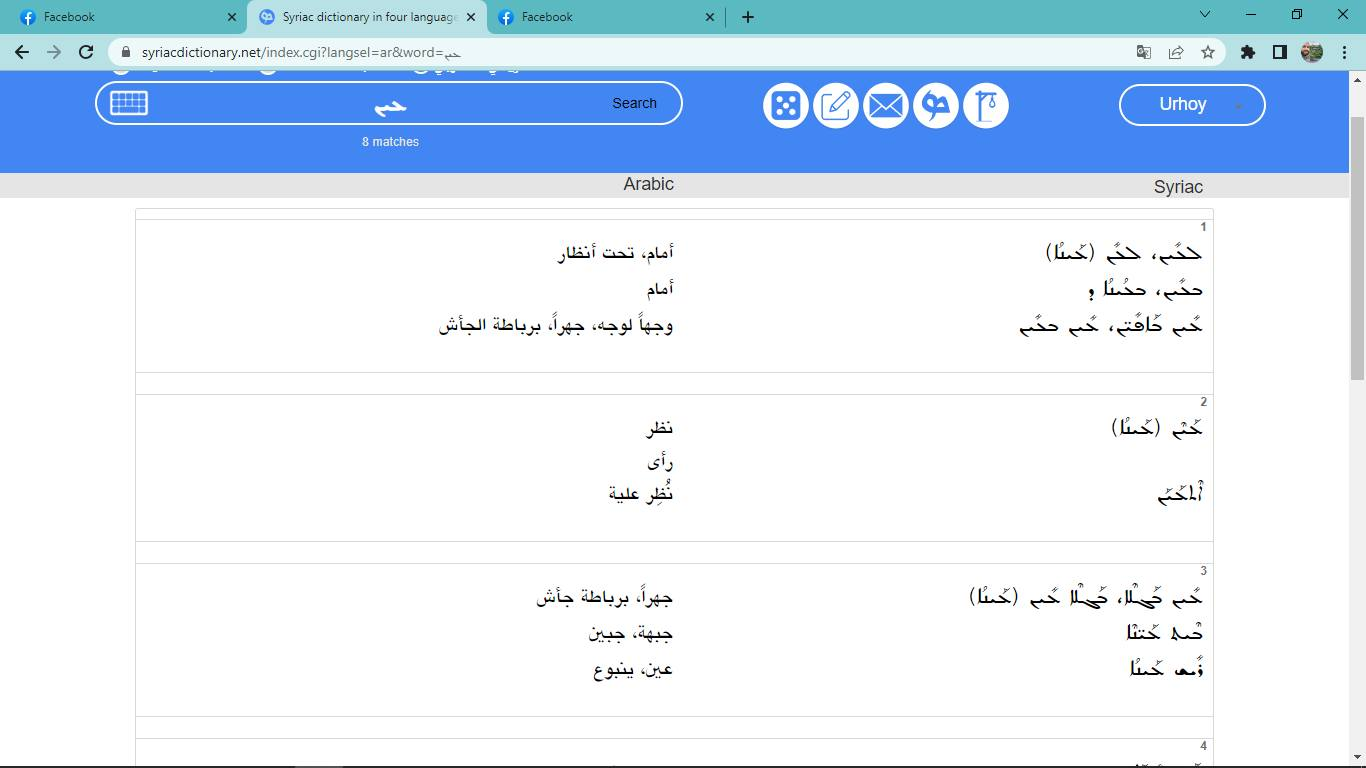
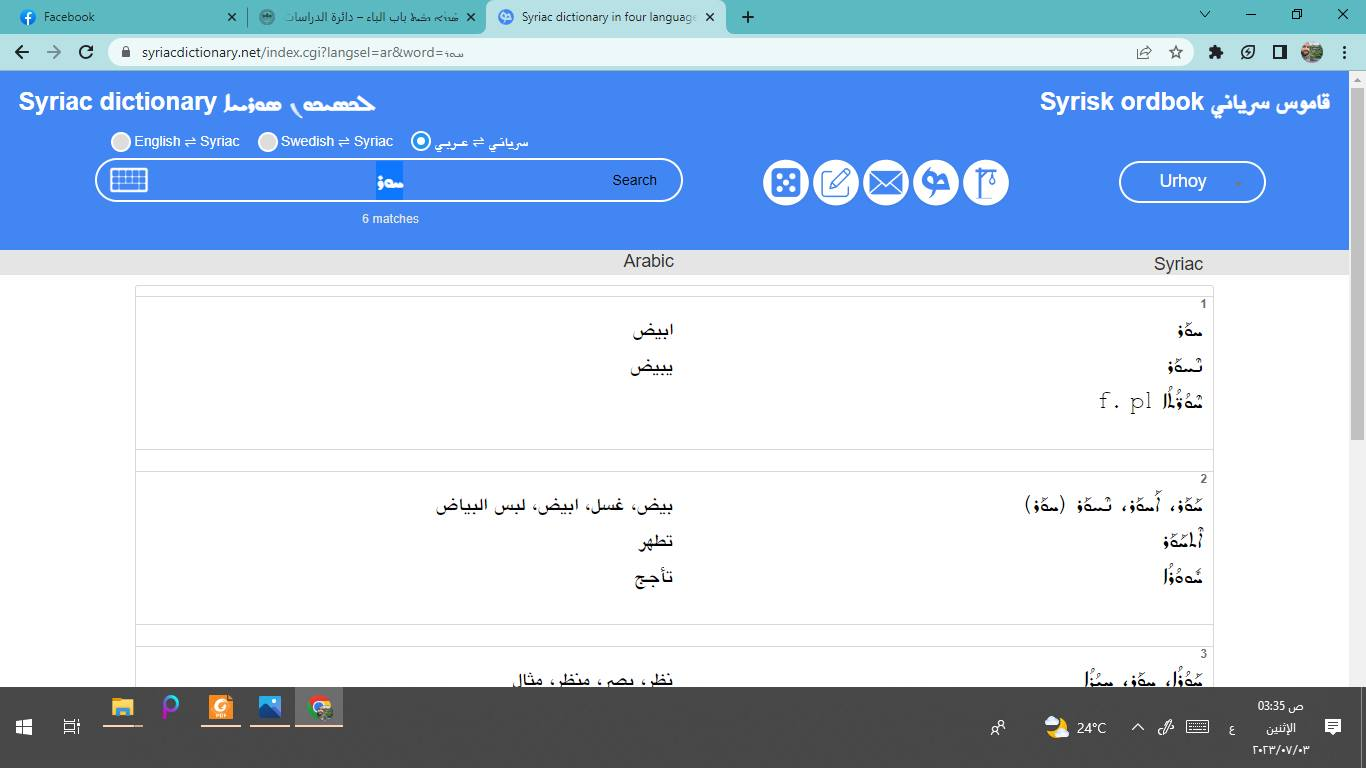
We come to the word Hour (ܚܘܪ)
which is one of the common words between the two languages
. In Arabic and Syriac it means intense whiteness, but in Syriac it does not mean white grapes, but its meaning is intense whiteness only. See the pictures .
Definition and meaning of Hour (عين) in the comprehensive dictionary of meanings - Arabic-Arabic dictionary
Hour (عين):
white women or women with very white eyes and intense black pupils, or women with wide eyes with intense whiteness and blackness, “{reclining on lined couches, and We have married them to wide-eyed, beautiful women}.”
He turned away from something:
he turned away from it.
Hour (عين): (Terminology)
The women of Paradise, with wide, beautiful eyes. (Jurisprudence)
A squinting eye:
when the whiteness of its whites and the blackness of its blacks are intense.
As for the word ‘ayn ܥܝܢ, it is Arabic and also in Syriac it means the eye with which we see and also the spring of waters.
‘ayn: (noun) Al-Ma’ani Al-Jami’ Dictionary
Plural: ‘ayyun, a’yun, a’yan Dual: ‘aynaan
The eye: the organ of sight for humans and other animals
The eye: the spring of water that springs from the ground and flows (in them are two springs flowing)
See the pictures and the meaning according to the context and the context The intended meaning of the eye cannot be the spring of waters even if it was as they interpreted it, this construction is not valid and consistent and we made them rest among the white grapes the spring of waters but it is consistent if we say and we married them with wives with white eyes
and the story is over
so O God, marry us from the houris what pleases our souls
Amen Lord of the worlds