The Issue Being Addressed Some scholars in the past allowed maidservants to reveal their naked breasts as a concession to make their work easier, unlike free women who were required to veil. Some masters even paraded their naked slave women in the market in hopes of attracting the highest bidder.
Is there any evidence from the Quran and Sunnah to support this practice?
“O Prophet, tell your wives, your daughters, and the believing women to draw their cloaks over themselves. That is more suitable, such that they will be acknowledged and not harmed. Allah is ever forgiving and merciful.”
The Point of Contention Some scholars argued that “the believing women” refers only to free women — not maidservants or slave women — and on that basis reduced the clothing requirements for slave women. However, this contradicts the plain meaning of the verse.
Scholars Who Reject the Distinction
Abu Hayyan — Al-Bahr al-Muhit (8/504) “The apparent meaning of His saying ‘the believing women’ includes free women and maidservants. The temptation from maidservants is even greater because of their frequent activity, unlike free women. Excluding them from the generality of women requires clear evidence.”
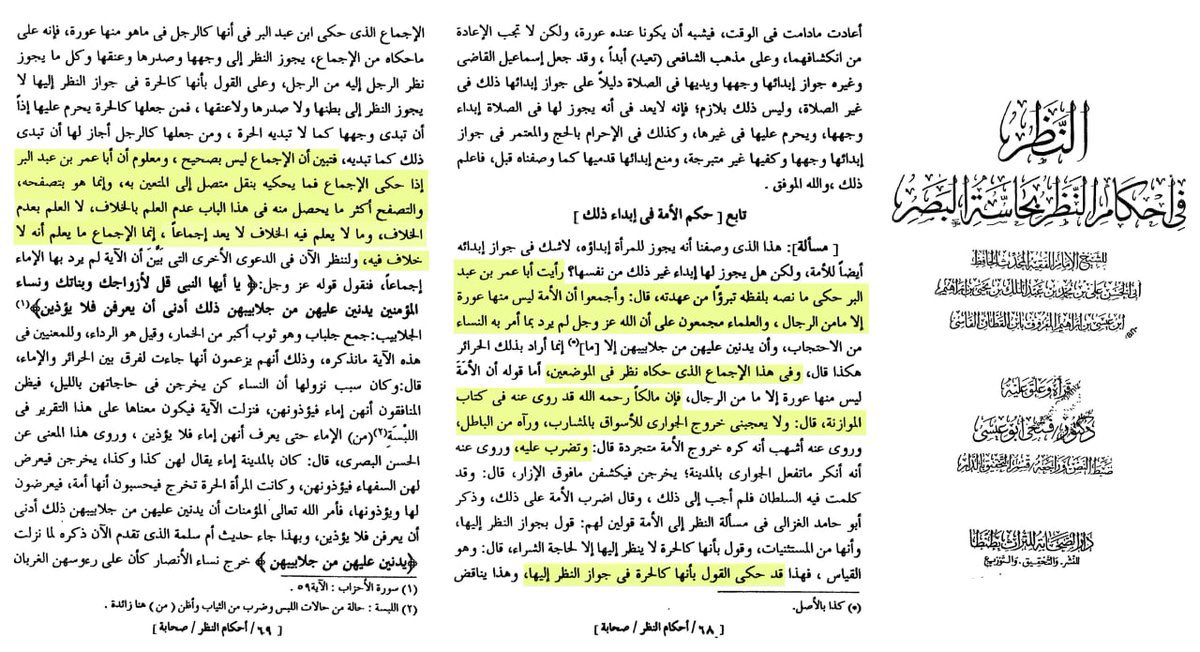
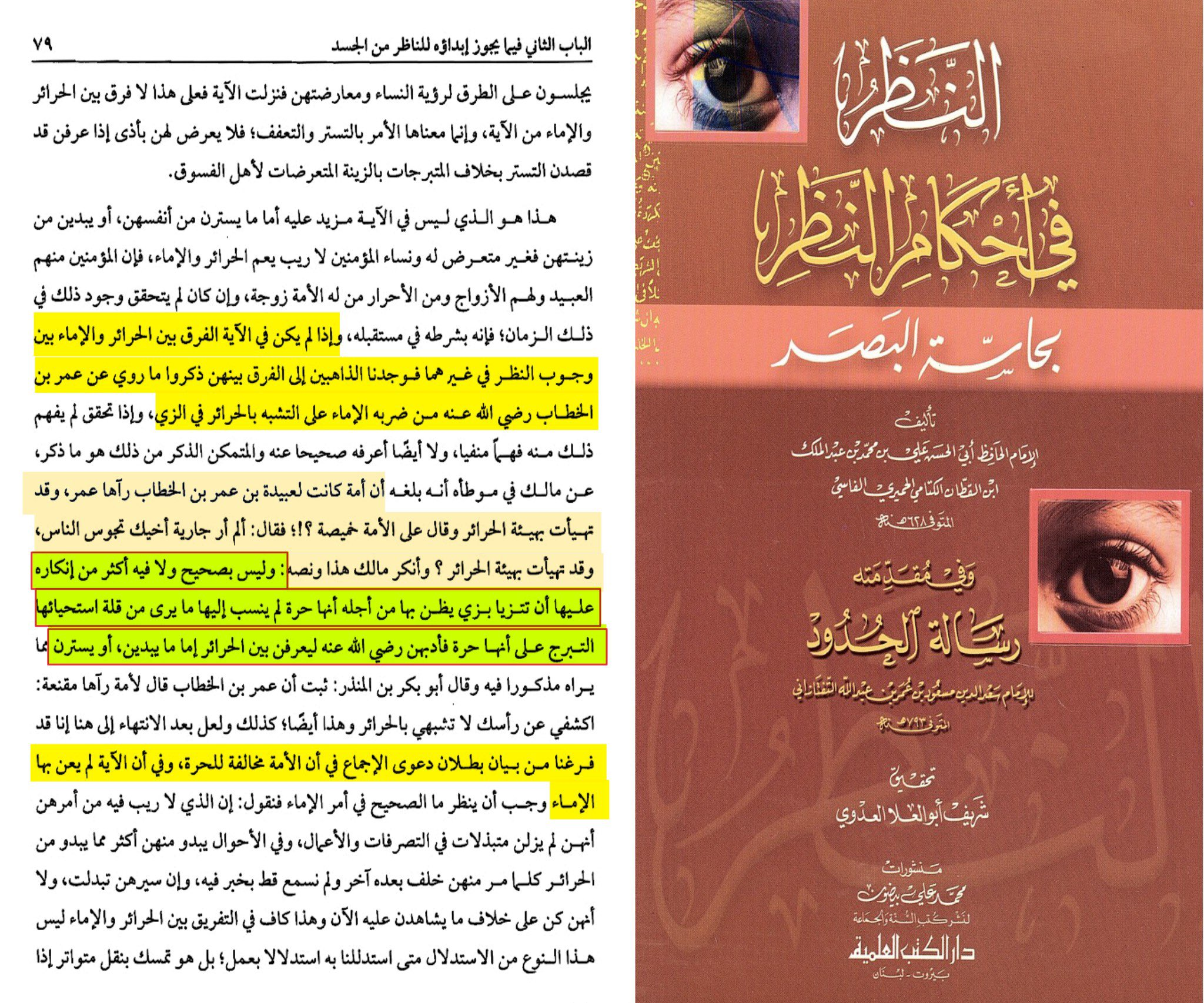
Ibn al-Qattan — Ahkam al-Nazar (1/228) “Upon this, there is no difference between free women and maidservants in respect to the verse. Indeed, the meaning is to command veiling and chastity, such that they are not exposed to harm when their intention to veil is recognized, as opposed to sinful women who beautify themselves for adultery.”
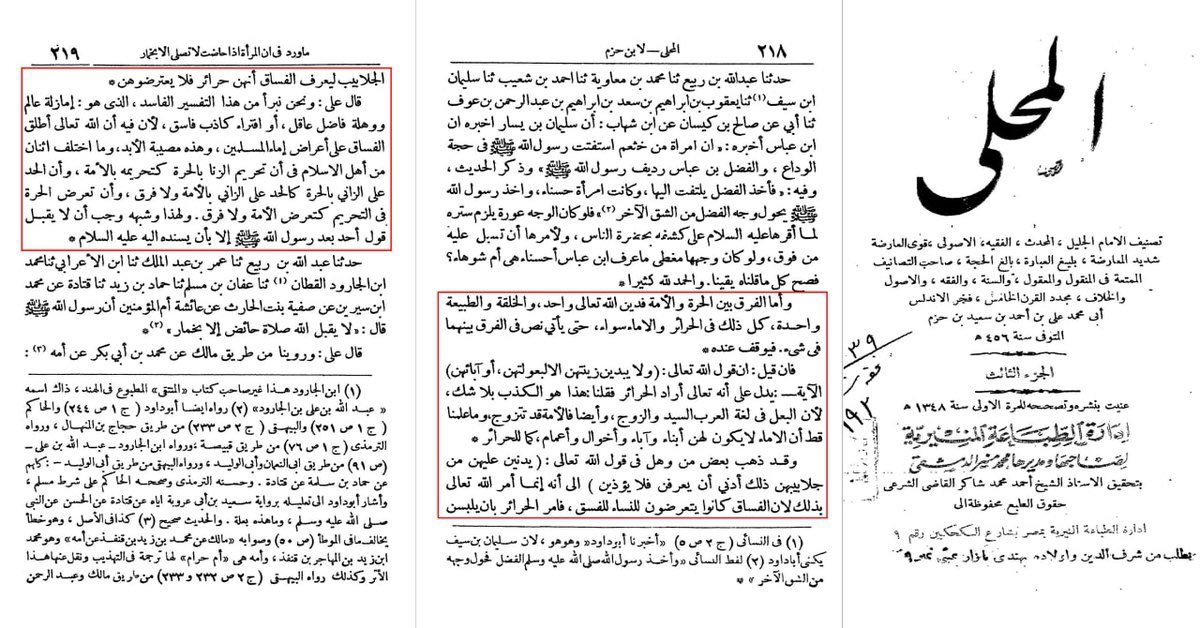
Ibn Hazm — Al-Muhalla (2/241 and 248) “The nakedness of a woman is her entire body excluding the face and palms only. The free man and male servant, the free woman and maidservant are equal in this respect; there is no difference…
As for differentiating between the free woman and maidservant, then the religion of Allah Almighty is one, creation and nature are one. All of that in respect to free women and maidservants is the same, unless there is an explicit text to distinguish between them in any way such that it can be applied.”
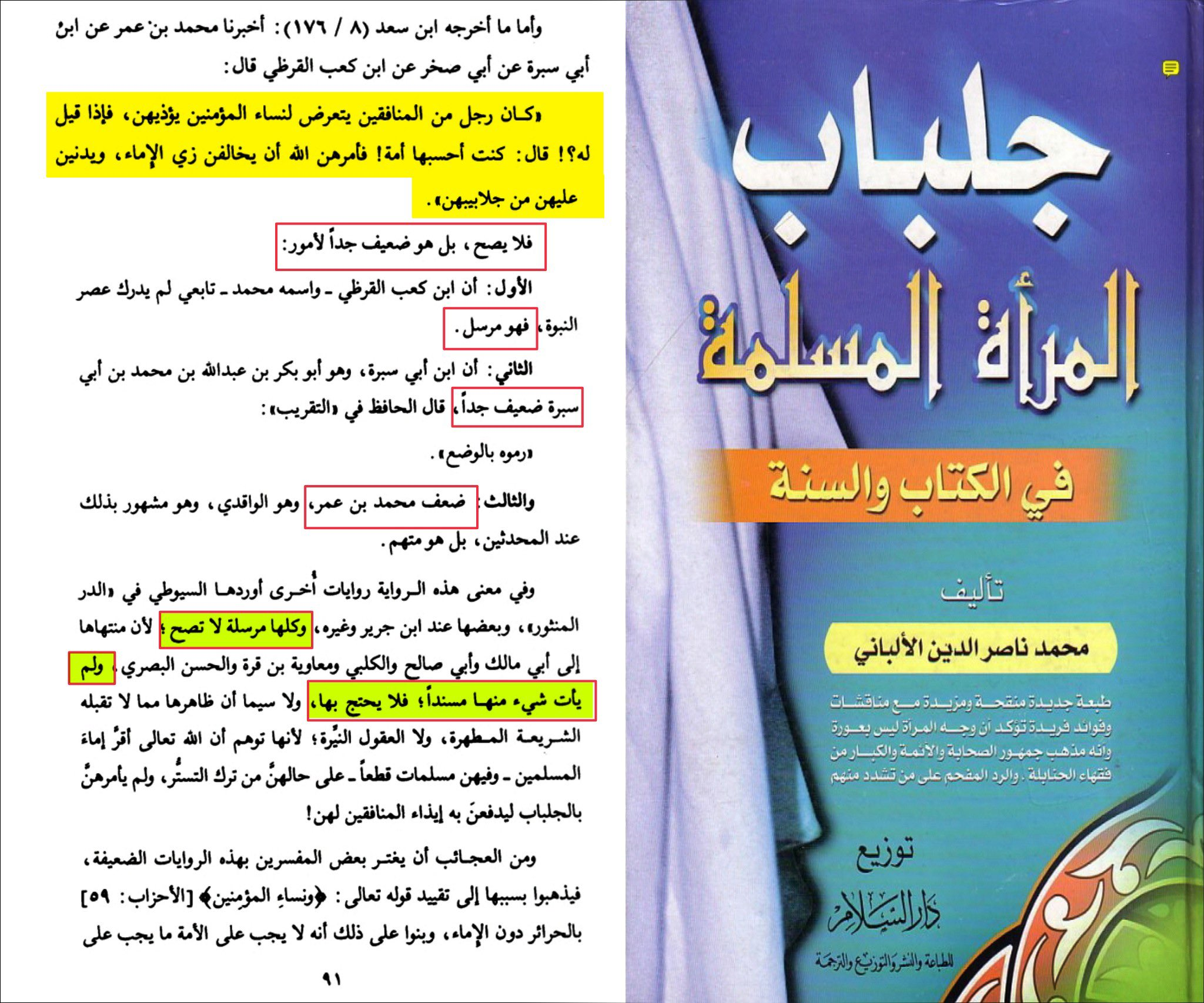
Sheikh al-Albani — Jilbab al-Mar’ah (1/91–92) “It is strange that some exegetes are fooled by these weak narrations, such that they adhere to the view restricting His saying ‘the believing women’ as free women to the exclusion of maidservants, and based upon this that maidservants do not have the obligation to cover their head and hair like free women. Rather, some of the legal schools exaggerate to the point that they mention her nakedness is like the nakedness of men, only from the navel to the knee…
Despite this, there is no evidence for it in the Book and the Sunnah.”
The Concession for Working Women
The Limited Concession Some scholars granted a concession to working-class women to unveil their hair and minor body parts — primarily to ease their workload. One of the most well-known concessions is lifting the obligation of a maidservant to pray in her veil.
Ibn Qudamah — Al-Mughni (1/432) “The prayer of a maidservant with her head unveiled is permissible. This is the opinion of the majority of scholars. I know of no one who differs in it except for Al-Hasan… ‘Ata recommended for her to wear a veil when she prays, but he did not obligate it.”
Even the Concession Has Limits Even scholars who accepted these concessions did not allow maidservants to show their naked breasts, chests, or backs.
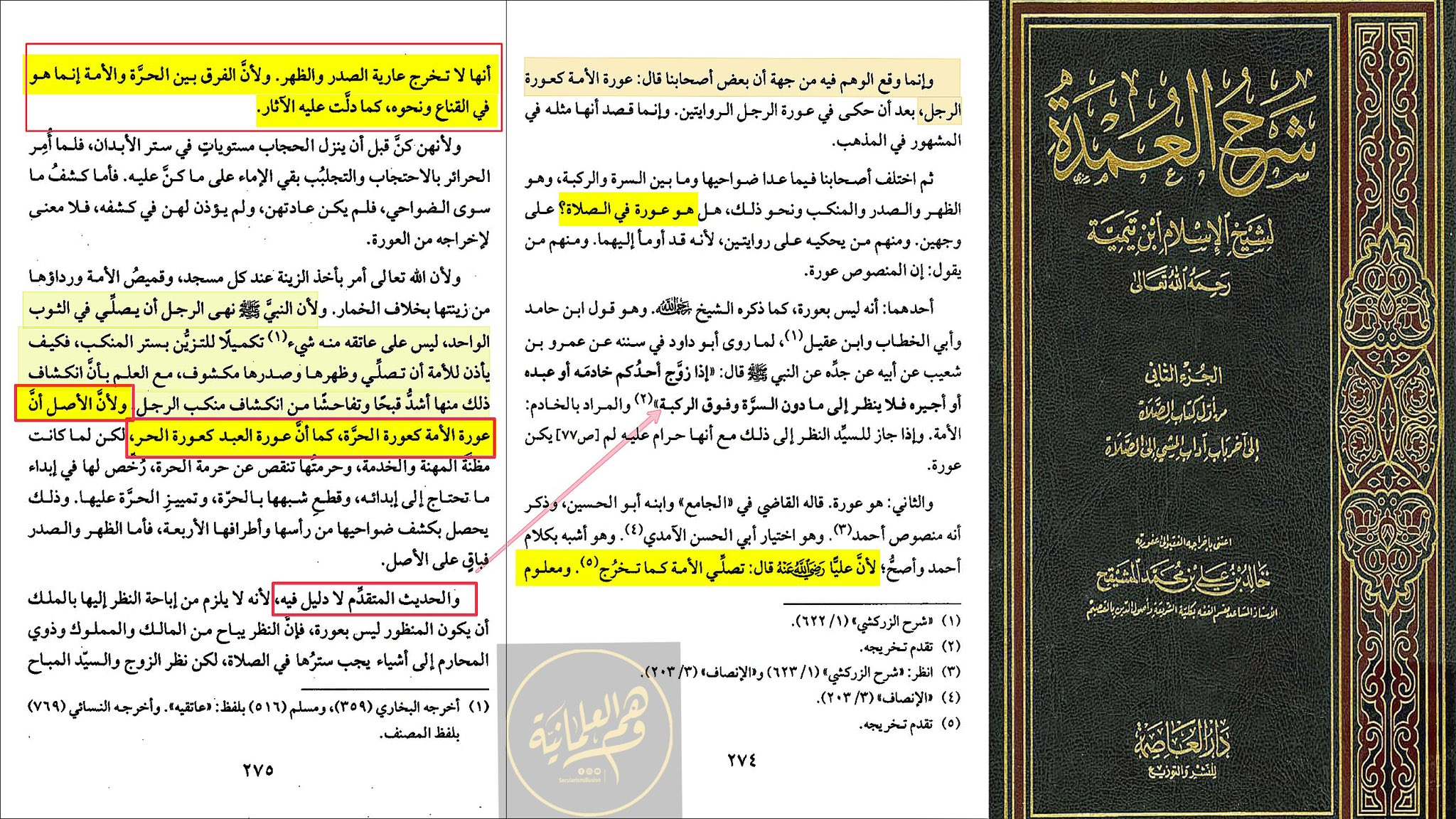
Ibn Taymiyyah — Sharh al-‘Umdah (1/275) “The default position is that the nakedness of a maidservant is like a free woman, just as the nakedness of a male servant is like a free man. When she takes on an occupation and duties, her prohibitions are reduced in comparison to a free woman, as a concession to her in showing only what needs to be shown…
As for the back and chest, it remains in the default position.”*
On Men Looking at Maidservants Scholars who granted concessions for maidservants to unveil did not permit unrelated men to stare at them freely.
Ibn Qudamah — Al-Mughni (7/101) “Ahmad said: One must not gaze upon a woman unless it is to recognize her identity, even if he is conducting business with a woman in buying and trading.”
Al-Mawsu’at al-Fiqhiyyah al-Kuwaytiyyah (31/49) “The Hanbali scholars said the nakedness of a maidservant is like the nakedness of a free woman. It is not permissible to look at her except with what is permissible to see in regards to a free woman.”
The Report of Umar Ibn al-Khattab — Examined
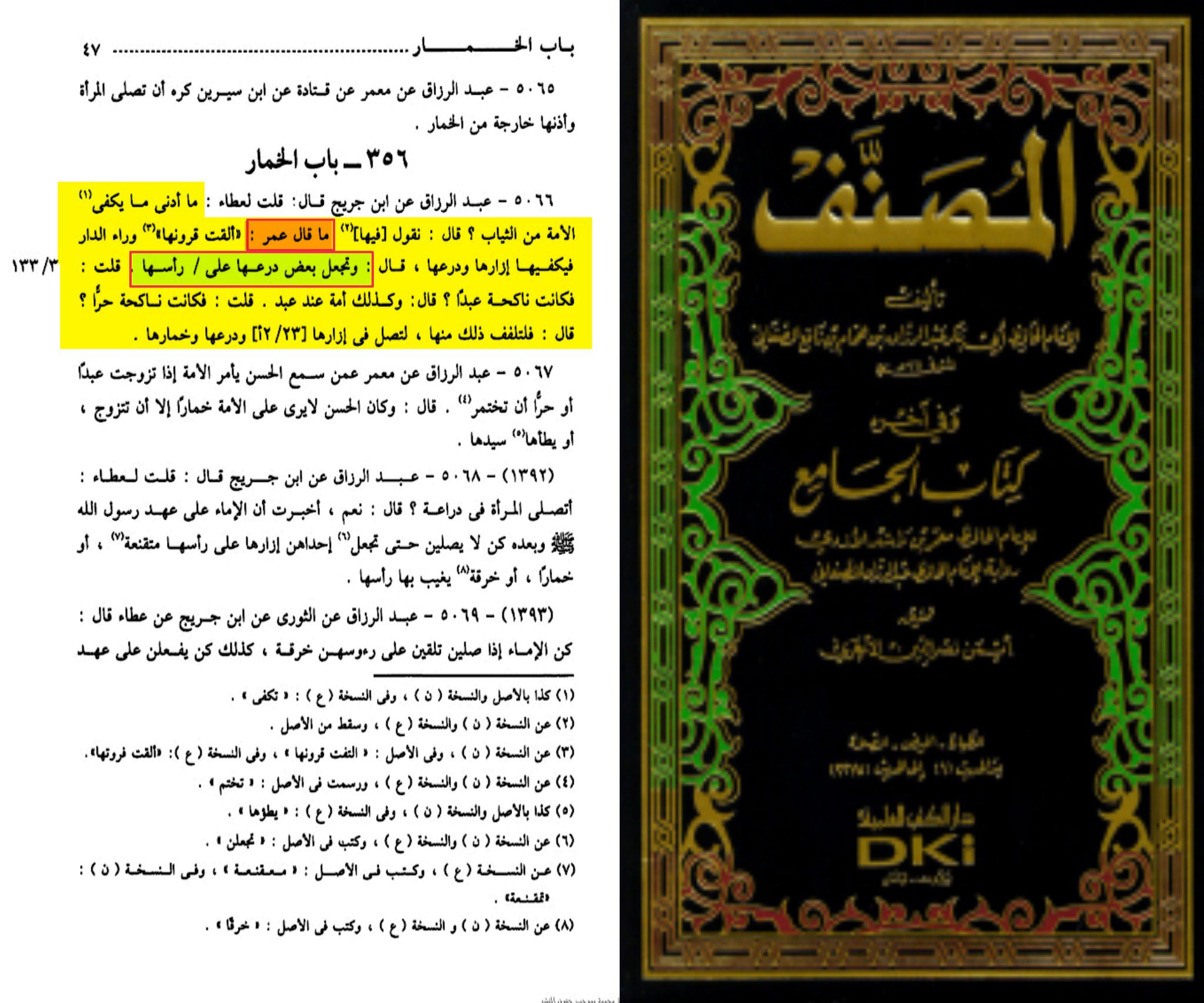
The Key Narration Used to Justify Lax Standards Some scholars relied on a report attributed to Umar ibn al-Khattab to justify extremely lax clothing requirements for maidservants:
Anas reported:“Umar saw one of our maidservants wearing a veil and he flogged her. Umar said: Do not resemble free women.”(Musannaf Ibn Abi Shaybah 6/236)
The Report Is Not Authentic Ibn al-Qattan commented on this narration:
“This was explicitly reported from Umar and it is not authentic. It contains nothing more than his condemnation of her for wearing attire to make others assume she was a free woman.”(Ahkam al-Nazar 1/230)
The Correct Understanding The report — even if authentic — describes Umar punishing a woman for wearing a disguise to mislead people about her identity. It was not her modesty that upset him — it was her deception and the use of modest dress to flirt with men while adorned.
Historical Practice in the Time of the Companions
What Actually Happened in the Time of the Prophet ﷺ Maidservants in the time of the Prophet ﷺ and his companions served people without their hair covered — but they never exposed their breasts.
Al-Hattab — Mawahib al-Jalil (1/501) “Malik was asked: Do you dislike a servant-girl to go out bare-chested? Malik said: Yes, and I would punish her for that.”
Ibn Taymiyyah — Majmu’ al-Fatawa (15/418) “Maidservants, in the time of the companions, used to walk in the streets with their heads uncovered and would serve men who had no ill intentions in their hearts. If a man were to let attractive Turkish maidservants walk among people in the likes of this time and place, as these maidservants had done, this would be a type of corruption.”
Ibn Taymiyyah — Al-Sharh al-Mumti’ li-Ibn ‘Uthaymin (2/158) “As for attractive Turkish maidservants, this cannot possibly be as it was in the time of the Messenger of Allah ﷺ. It is an obligation for them to cover their whole bodies from being looked at.”
Conclusion on the Historical Practice The practice of parading naked slave women in the market was introduced by foreign cultures — not from Islamic teachings. It has no basis in the Quran, the Sunnah, or the practice of the companions and early Muslims. The historical practice of parading naked slave women in the market was undoubtedly unlawful in Islam.
The Correct Position — Awrah of Slave Girl = Free Woman
The Established View of the Salaf The awrah of the slave girl is like the awrah of the free woman. This is the correct and established view according to the Salaf. The foundational principle — as explicitly stated by Ibn Taymiyyah, Ibn Hazm, Ibn al-Qattan, and others — is that those who held that the awrah of the slave girl is from the navel to the knee were referring specifically to her:
Awrah in prayer
Awrah in front of her mahrams
— NOT the awrah for looking upon.
GxivBCLXYAAbbvs 9b862bd9111a6b4f
Ibn al-Qayyim — on the Two Types of Awrah “As for the slave girls used for intimate purposes, those whom custom has established as being guarded and veiled — where has Allah and His Messenger permitted them to uncover their faces in the markets, streets, and gatherings of people, and allowed men to gaze upon them with desire? This is pure error against the Shariah.
This error is further compounded by the fact that some jurists heard the statement: ‘The free woman is entirely awrah except for her face and hands, and the slave girl’s awrah is what is not usually exposed, like the belly, back, and shin.’ So they assumed that what is usually exposed has the same ruling as a man’s face — and this applies only to prayer, not to looking.
For awrah is of two types: awrah for looking and awrah for prayer. Thus, the free woman may pray with her face and hands uncovered, but she is not permitted to go out into the markets and public gatherings in that state.”
What Is the Evidence for Differentiating
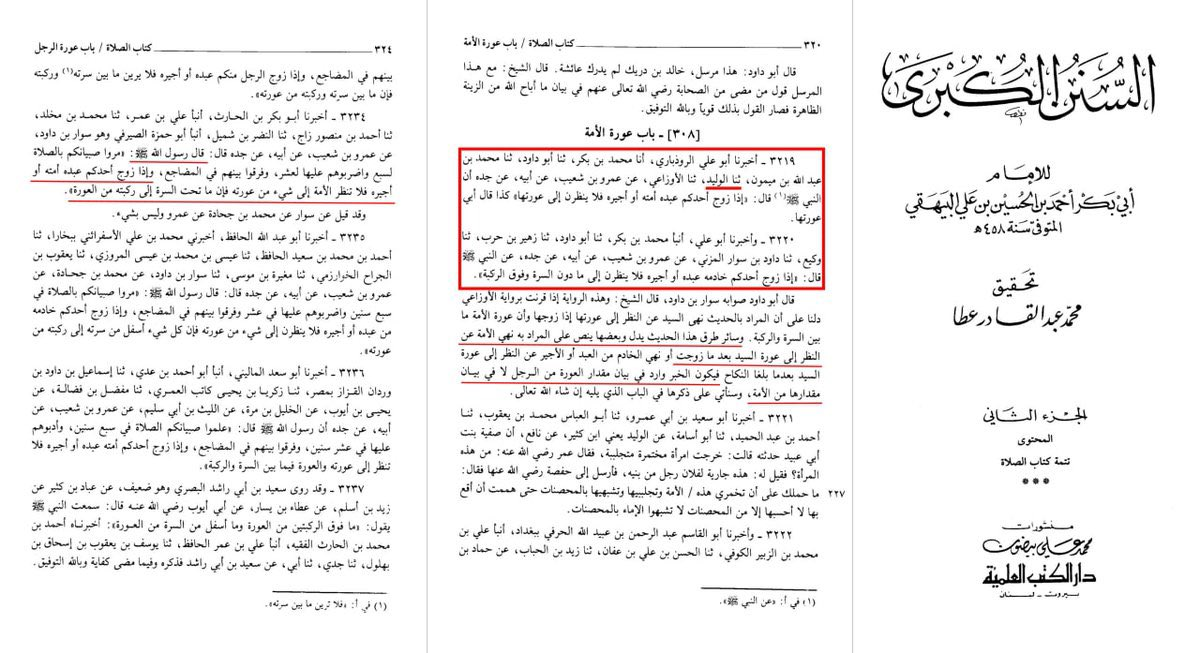
The Only Evidence — A Weak Hadith Their evidence was a weak hadith narrated by ‘Amr ibn Shu’ayb, in which it says: “If one of you marries his female slave to his male slave, he should not look at her ‘awrah.”
Imam al-Bayhaqi documented all chains of this narration and confirmed its weakness
Al-Bayhaqi stated that all chains indicate the hadith is about a man’s awrah — not the slave girl’s awrah
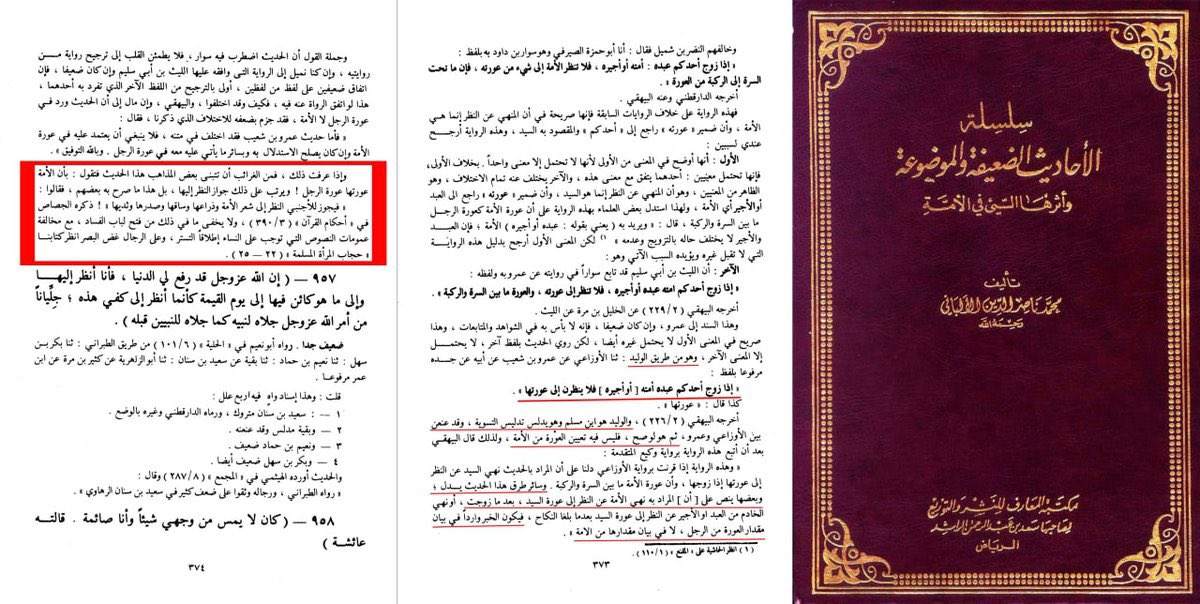
This hadith is found in al-Albani’s Silsilat al-Ahadith al-Da’ifah
The Only Scholar Who Permitted Looking The only scholar in Islamic history who said it is permissible for a non-mahram man to look at the slave girl was al-Jassas — who was:
A Mu’tazili
Weak in hadith
Criticized by scholars
Has no foundation in the knowledge of hadith
His statement is irregular, and no scholar is known to have acted upon it or used it as evidence.
Imam Malik’s Practice Imam Malik would order the striking of any female slave who went out to the market with her hair uncovered.
Umar Ibn al-Khattab and Striking Slave Women Who Imitated Free Women
What Umar Actually Forbade Umar ibn al-Khattab forbade slave women from wearing the jilbab and niqab — not from covering their hair.
His prohibition was for more than one reason during his caliphate:
Slave women would wear the attire of free women, then mix with men in the markets and flirt with people while adorned and speaking submissively
A slave woman went out wearing a jilbab and adorned, so he became angry and said: “Do you take your slave women out adorned to tempt people!!”
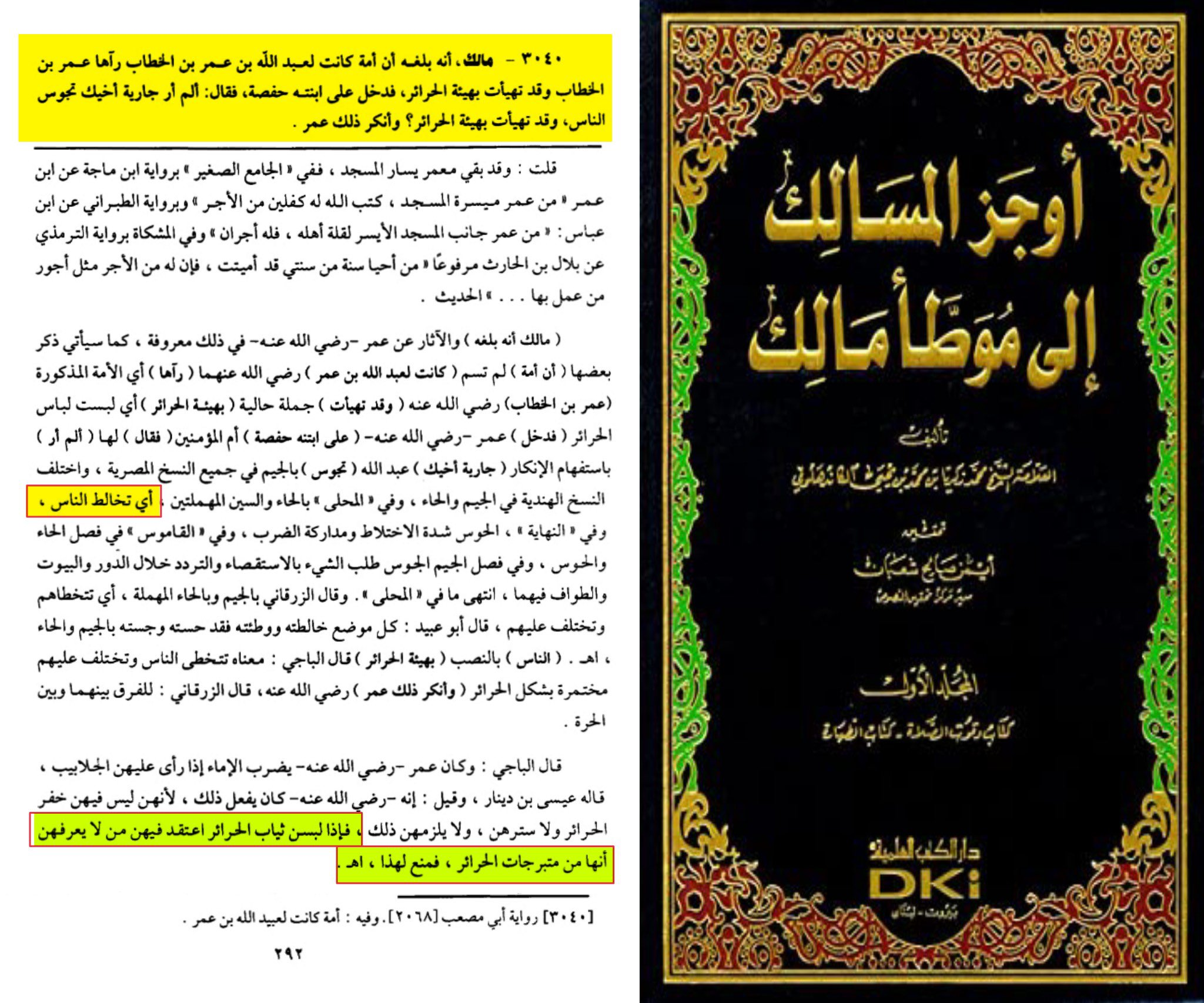
Al-Baji in his explanation stated he forbade it because it is an affront to the jilbab — so that the garment does not become associated with ill repute among the people.
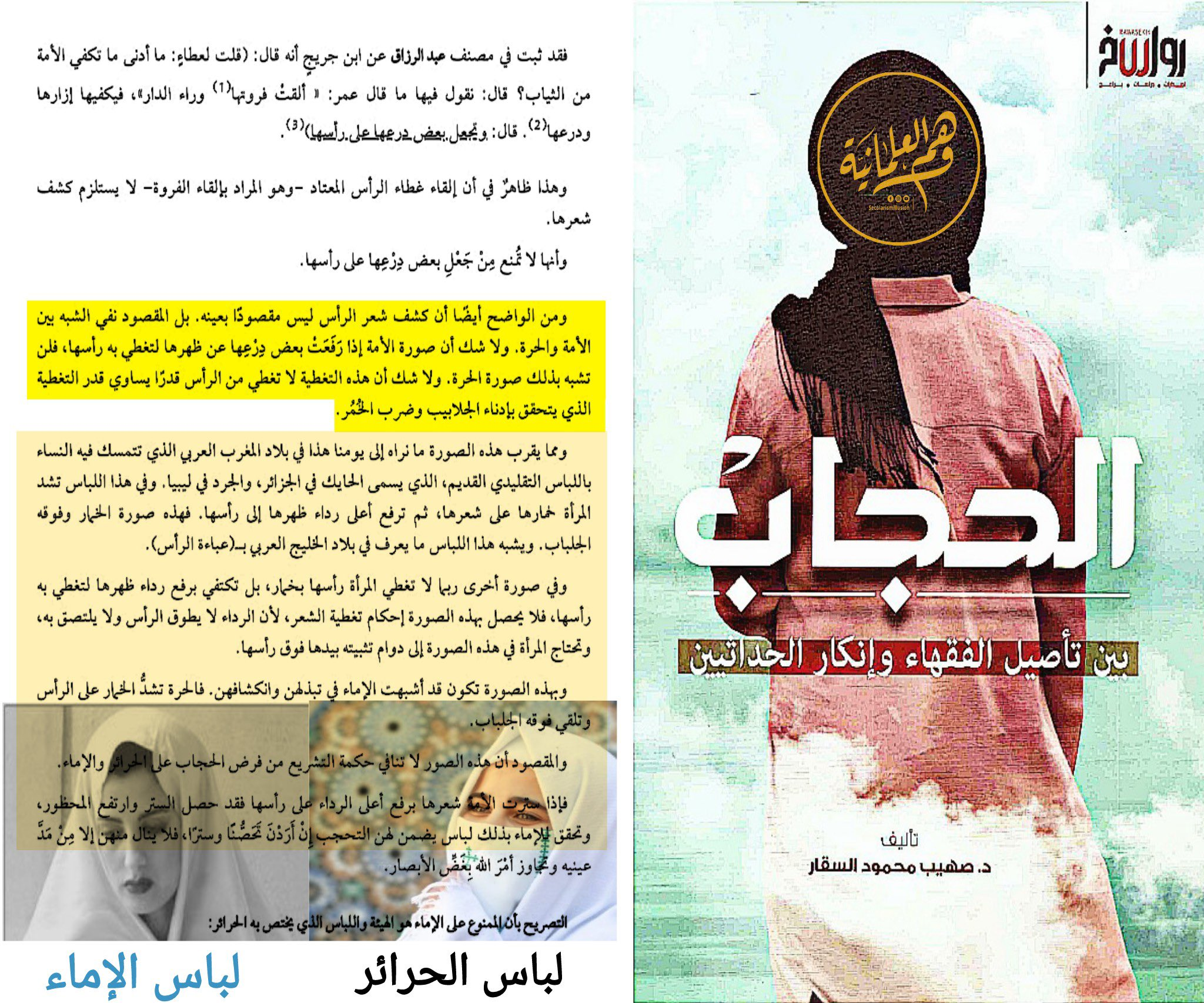
The Authentic Narration — Musnad of Abd al-Razzaq al-San’ani Umar originally commanded the slave women to cover their hair with part of their garments when going out. He only forbade them from the niqab — which involves concealing identity and hiding the face.
Clarifying the Common Misuse Some biased individuals use these narrations to argue that hijab is not obligatory — claiming it was only to distinguish free women from slave women, and since slave women no longer exist, hijab is no longer needed.
This argument fails because:
Umar never forbade covering the hair — he forbade the jilbab and niqab as a disguise
The verse of the jilbab is a general, continuing obligation not contingent on the existence of slave women
The Causes of Revelation — No Valid Basis
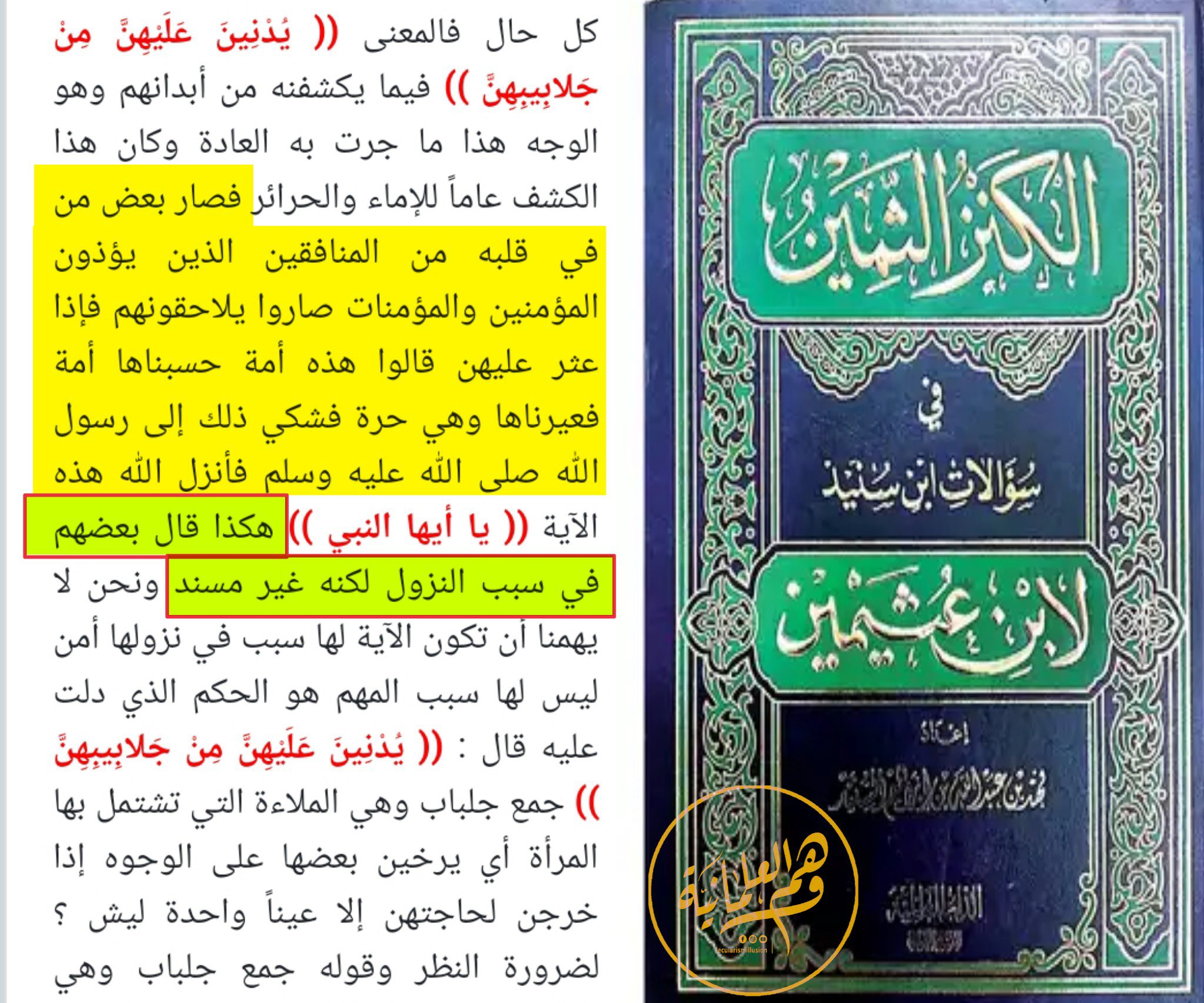
The “Distinction” Interpretation Has No Authentic Chain All explanations claiming the jilbab verse (Al-Ahzab: 59) was revealed to distinguish between free women and slave women:
Have no valid basis
Are unsupported and mursal (disconnected chains)
Lack a continuous chain of narration
Only emerged in the era of the Tabi’in
Some mistakenly inferred this from the action of Umar
Ibn Hazm “I do not know whether this was a slip of a rational mind or a fabrication of a liar?”
Ibn ‘Uthaymin After citing their interpretation that the jilbab verse was revealed as a distinction between free women and slave women, he immediately said: “This is what some of them said regarding the cause of revelation, but it is unsupported.”
Ibn al-Qattan al-Fasi — on the Umar Narration Those who found no explicit evidence for distinguishing between the free woman and the slave woman resorted to citing what was narrated from Umar and his striking of the slave women. He then said: “This is not authentic, and it contains nothing more than his denial of the slave woman wearing the free woman’s cloak while she was displaying her adornments. Thus, Umar disciplined them.”
A Simple Logical Point The books of jurisprudence state that a woman’s awrah in front of another woman is from the navel to the knee. The awrah of a woman in front of her mahrams is likewise from the navel to the knee.
Yet we have never heard of women baring their chests in front of one another.
So why would the same statement about a slave girl’s awrah mean she goes bare-chested?
Ibn Taymiyyah — Explicit Clarification
“Their saying ‘her awrah is from the navel to the knee’ does not mean that they go out bare-chested”
Their disagreement was regarding the awrah of prayer — not the awrah of looking or going out
A misconception occurred due to the weak hadith of ‘Amr ibn Shu’ayb
“The foundational principle is that the awrah of a slave woman is like the awrah of a free woman.”
GxivdEHWMAAzhh3 004e66c0ba471712
Scholarly Consensus on Covering the Face
Unanimous Agreement Across All Four Schools The scholars from all four schools of thought and others unanimously agreed that covering the face of a free, young woman — when there is fear of temptation — is obligatory, especially when evildoers are present and she cannot protect herself except by covering her face.
Ibn Raslan al-Shafi’i “And it indicates its restriction to need — meaning: looking — the agreement of the Muslims to prevent women from going out with uncovered faces; especially when there are many evildoers.”
Their Only Disagreement Scholars only disagreed on one point: for the woman who abandons face covering in the absence of temptation — is she:
Abandoning an obligation (incurring sin), or
Abandoning a recommended act of virtue?
They all agreed it is legislated — the only question is the level of obligation in the absence of temptation.
The Companions’ Interpretation of the Jilbab Verse
Ibn Abbas (via Ibn Jarir and Ibn Abi Hatim — strengthened chain confirmed by Ahmad, used by al-Bukhari as evidence) “Allah commanded the believing women, when they go out of their homes for a need, to cover their faces from above their heads with their jilbabs, and to uncover one eye.”
Aisha (via Sa’id ibn Mansur in his Sunan — authentic chain) “The woman lets down her jilbab from above her head over her face.”
Ubaydah al-Salmani (via Ibn Awn from Muhammad ibn Sirin — via Ibn Jarir) Ibn Sirin said: “I asked Ubaydah al-Salmani about the statement of Allah Almighty: ‘They should draw their jilbabs over themselves’ [Al-Ahzab: 59]; so he covered his face and head and revealed his left eye.”
Ibn Sirin and Ibn Awn interpreted it the same way.
The Practice of the Companions’ Women As in the two Sahihs, from the hadith of Hafsa bint Sirin, from Umm Atiyya and others — when the Prophet ﷺ commanded women to attend the two Eids, a woman asked: “Shall any one of us attend while she is in mourning if she does not have a jilbab?”
He ﷺ said: “Let her companion give her from her jilbab to wear, and let her witness the good and the supplication of the Muslims.”
This shows the jilbab was standard dress for the women of the companions at all public gatherings.
Non-Islamic Civilizations
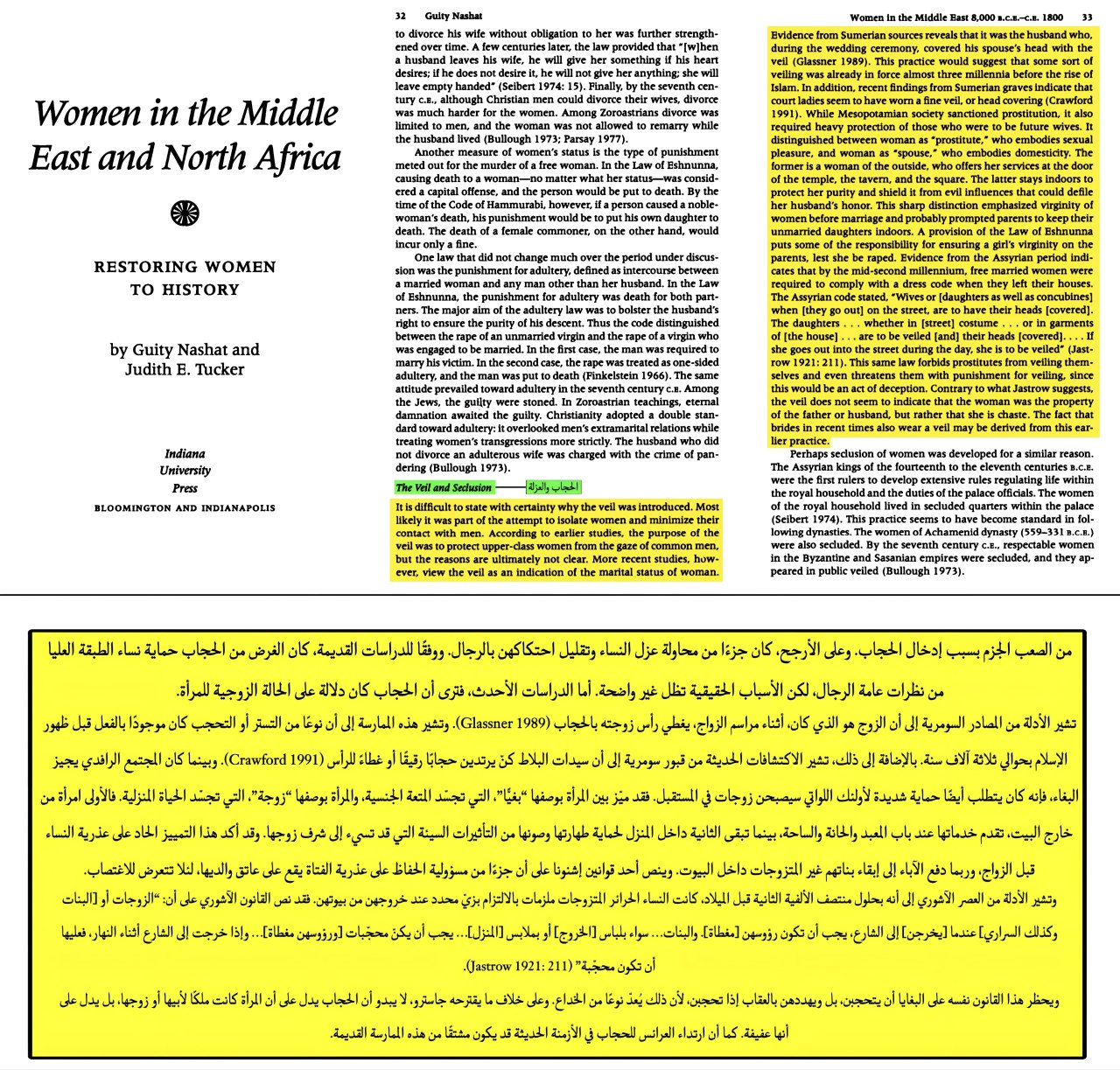
“The hijab and niqab are only for free and honorable women. If a prostitute wears the hijab, she will be punished with 50 lashes and tar will be poured over her head. Any man who sees her wearing the niqab and imitating honorable women and covers for her will receive the same punishment.”
“Assyrian women wore loose, long veils that covered their entire bodies, and even a niqab to cover their faces after puberty. This was forbidden for slave women and prostitutes; only free or honorable women were required to cover their hair and faces in Assyria.”
(Assyrian laws found among royal inscriptions [Women in the Middle East and North Africa by Guity Nashat, pp. 32–33])