

Update (Is It Really Possible
The enemies of Islam often mock Sahih al-Bukhari by raising the narration of Amr ibn Maymun regarding monkeys stoning another monkey during the pre-Islamic period. They then ask: how can monkeys stone anyone, and how did the narrator know that zina had occurred?
The objection is weaker than it looks. It depends on pretending that the report is a Prophetic legal ruling, when it is actually a personal eyewitness report from the pre-Islamic period. It also ignores the fact that animals, especially primates, are capable of coordinated behavior, tool use, jealousy, aggression, and even premeditated stone-throwing.
On the authority of Amr ibn Maymun, who said: “I saw during the pre-Islamic period a group of monkeys who had committed adultery. They stoned her, and I stoned her along with them.”
The enemies of Islam then ask:
How can monkeys be stoned?
How did Amr ibn Maymun know that those monkeys had committed zina?
Why would such a report appear in Sahih al-Bukhari?
The Report Is Not from the Prophet ﷺ
The first and most important point is that this narration is not a statement of the Prophet ﷺ.
It is not a hadith where the Prophet ﷺ taught a ruling. It is not a command from the Prophet ﷺ. It is not a legal proof for applying Islamic law to animals. Rather, it is an eyewitness report from Amr ibn Maymun al-Awdi, who witnessed this scene during the pre-Islamic period.
The narration is not saying that Islam legislated stoning for monkeys. It is not saying that monkeys have Shariah punishments. It is simply reporting something Amr ibn Maymun said he saw before Islam.
This one distinction destroys most of the objection.
Why Did Al-Bukhari Mention It?
Al-Bukhari did not cite this report to establish a legal punishment for animals. Rather, the report is connected to the biography of Amr ibn Maymun and the fact that he lived during the pre-Islamic period.
In other words, the report serves as a historical indicator that Amr ibn Maymun witnessed events before the coming of Islam.
The narration is not part of creed, law, or Prophetic instruction. It is a historical report from a narrator about something he personally saw in Jahiliyyah.
Does the Report Contradict Science?
From the perspective of animal behavior, the report is not impossible. Primates are intelligent animals. They use tools, respond socially, display jealousy, engage in group aggression, and may use stones or other objects.
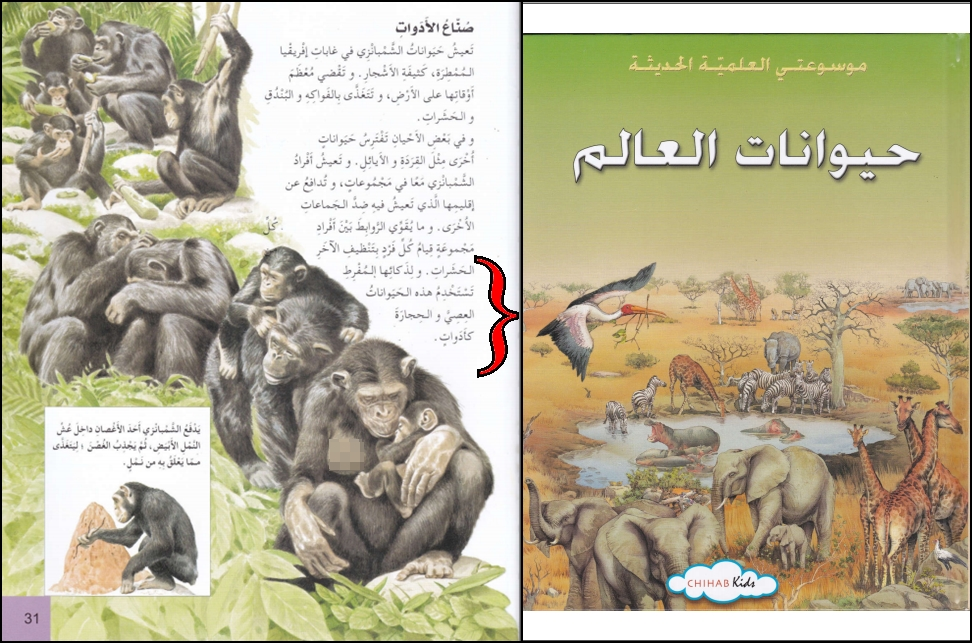
For your info: this scan is cited as My Modern Scientific Encyclopedia — Animals of the World, page 31. It is being used to support the point that chimpanzees and similar primates are intelligent animals capable of using tools such as sticks and stones. This does not “prove” the narration by itself, but it does show that the basic idea of primates using objects violently or deliberately is not absurd.
Foreign newspapers have also reported cases of chimpanzees gathering stones in advance and throwing them at zoo visitors with planning and premeditation.
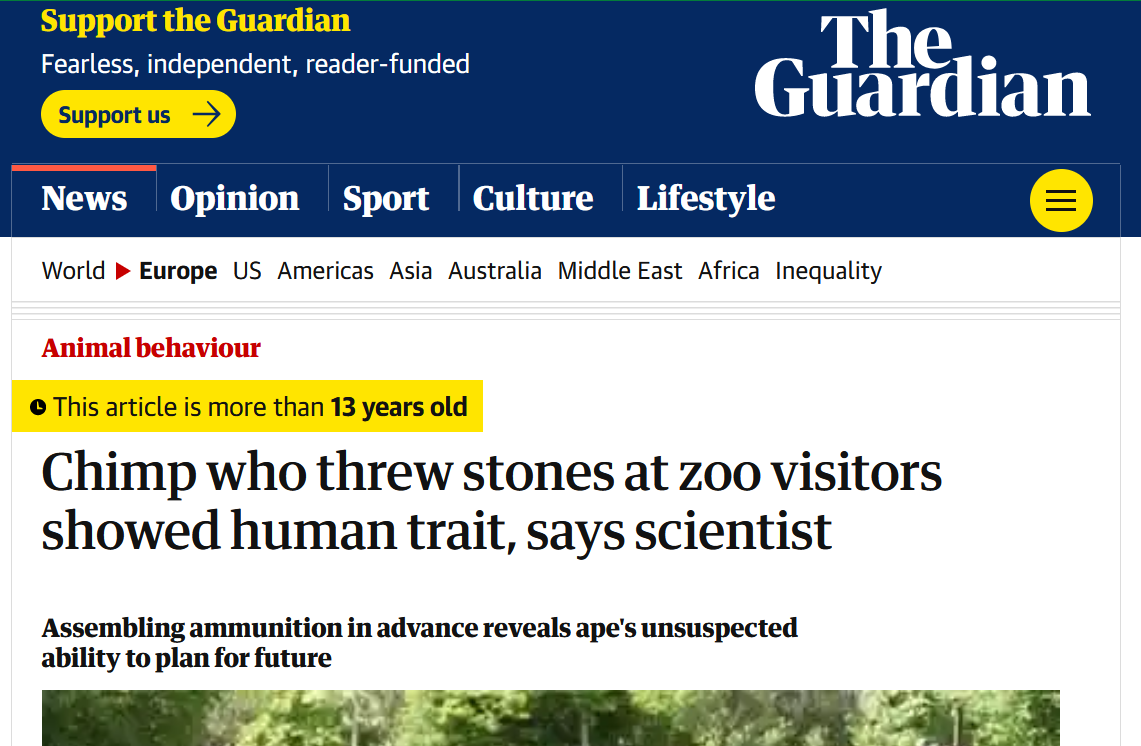
This screenshot references reporting about a chimpanzee that collected stones and later threw them at visitors. The point is not that this proves Amr ibn Maymun’s report, but that planned stone use among primates is not some fantasy invented by Muslims.
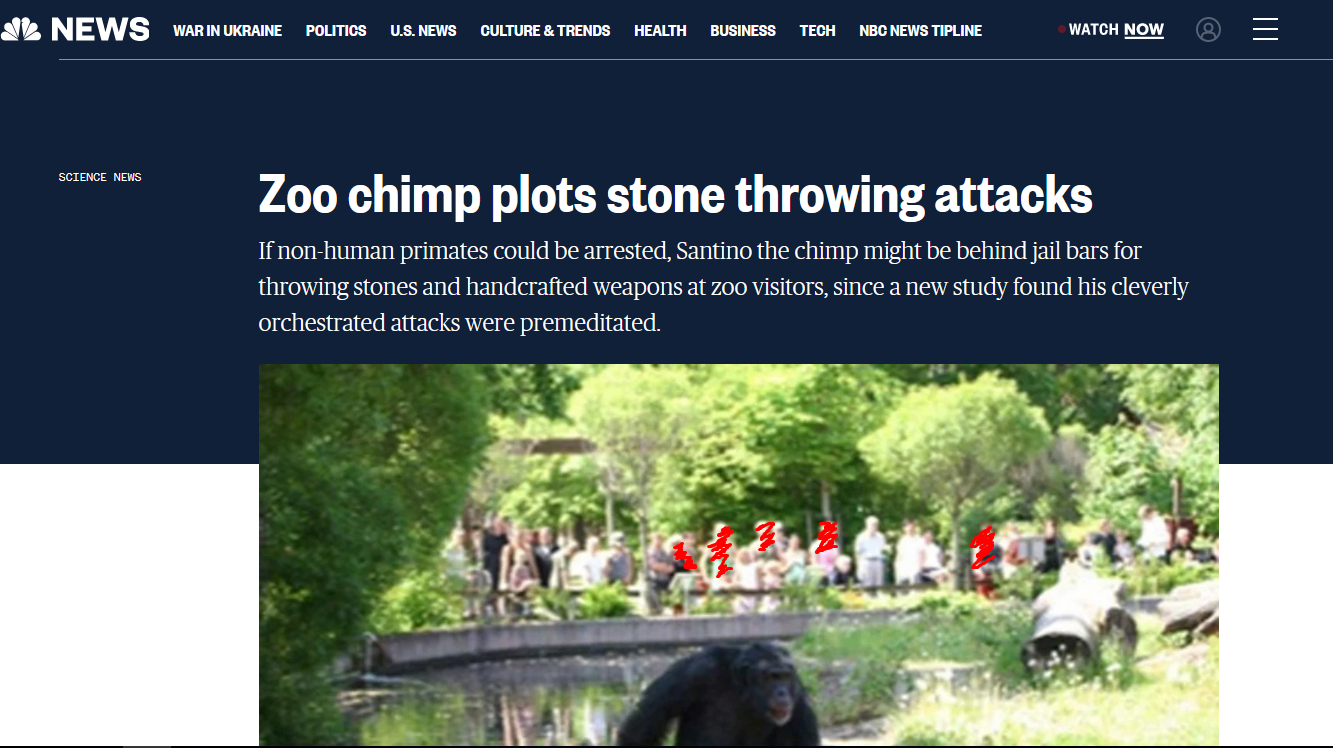
This second screenshot makes the same point: primates can display planning, aggression, and stone-throwing behavior. Therefore, mocking the narration as biologically impossible is ignorant.
Modern observations of primates make the report plausible.
The incorrect argument is this:
Modern science proves the narration authentic.
That second claim is too strong and unnecessary. Science can show that the behavior is not absurd, but the report itself is assessed through hadith transmission and historical reporting.
Al-Bukhari Was Not the Only One Who Narrated It
Another weak claim is that al-Bukhari invented or uniquely inserted this report. This is false. The story is reported through other works as well.
This matters because it shows that the report was not some isolated fabrication invented by al-Bukhari. It circulated through other channels and was known outside the single placement in Sahih al-Bukhari.
Did the Monkeys Stone According to Shariah?
No.
The narration does not say that the monkeys were applying Shariah law. It does not say they were morally responsible like humans. It does not say they were legally required to stone anyone.
Rather, it describes animal behavior observed by Amr ibn Maymun.
The monkeys’ action was not a legal punishment in the Islamic sense. It was an animal behavior witnessed by the narrator. The report does not establish “the law of zina among monkeys.”
This is similar to the Qur’anic mention of the crow that taught the son of Adam how to bury the dead. The crow was not following a legal burial code. Rather, Allah caused a scene to occur from which a human being learned.
The crow was not acting according to a revealed burial law for crows. It was an animal action from which a human being learned.
So when animals perform a striking action, it does not automatically mean they are following Shariah.
Qur’anic Examples of Animals Performing Extraordinary Acts
Those who mock this report should be consistent. The Qur’an itself mentions animals performing striking and meaningful actions.
The Qur’an mentions the birds of Ababil that struck Abraha’s army with stones of baked clay. It mentions the crow that showed burial. It mentions the hoopoe that observed the people of Sheba and reported their condition to Prophet Sulayman عليه السلام. It mentions the ant that warned the other ants about the coming army of Sulayman عليه السلام.
If someone accepts that Allah can mention extraordinary animal behavior in the Qur’an, then mocking every strange animal report in hadith literature is not an intellectual argument. It is selective ridicule.
Were These Monkeys Transformed Humans?
No. There is no evidence that the monkeys in this report were originally humans who had been transformed.
Some people claimed that these monkeys were remnants of previous humans transformed as punishment. This claim is false.
The books of hadith mention that those who were transformed did not live long and did not produce offspring. Therefore, it is wrong to claim that these monkeys were transformed Jews from the Sabbath-breaking community or descendants of transformed people.
The correct position is that these were actual monkeys, not transformed humans. The report should not be forced into a baseless theory about transformed nations.
Al-Hamidi’s Claim About the Report Being Inserted
Al-Hamidi claimed that this narration was found in some copies of Sahih al-Bukhari but not all of them, and he suggested it may have been inserted into the book.
Ibn Hajar responded to this claim and rejected it.
The meaning of Ibn Hajar’s response is that al-Hamidi’s suspicion is not reliable and leads to a corrupt methodology: if one can dismiss a report from Sahih al-Bukhari merely by imagining insertion, then the door is opened to dismissing anything in the book without evidence.
So al-Hamidi’s claim does not stand as a valid objection.
How Did Amr ibn Maymun Know Zina Occurred?
The deniers ask: how did Amr ibn Maymun know that the monkeys had committed zina?
The answer is that other narrations provide the detailed version of the incident. Amr ibn Maymun did not merely see monkeys randomly throwing stones. He saw the sequence of events leading up to it.
I entered the mosque of Kufa and found Amr ibn Maymun al-Awdi sitting with some people. A man said to him: “Tell us the most amazing thing you saw in the pre-Islamic period.”
Amr said that he was in the land of Yemen and saw many monkeys gathered. He saw a male and female monkey lying down together. The female placed her hand under the neck of the male and they slept. Then another male monkey came and nudged her from under her head. She withdrew her hand from under the first monkey’s head, went with the other male not far away, and he had intercourse with her while Amr was watching.
Then she returned to her place and attempted to place her hand back under the first monkey’s neck as before. The first monkey noticed, got up, and smelled her. The monkeys gathered, and after some time the other male was brought. Amr recognized him. The monkeys took both of them to a sandy place, dug a hole, placed them in it, and stoned them until they died.
Amr said: “By Allah, I saw stoning before Allah sent Muhammad ﷺ.”
This longer version answers the question. Amr ibn Maymun said he saw the act itself, then saw the reaction of the monkeys afterward.
Whether one accepts every detail of the report or not, the objection “how did he know?” is answered by the extended narration: he claimed to have directly witnessed the act and the events that followed.
The same story is also mentioned through other reports with similar details: the female monkey left the first male, went with another male, returned, and then the first male reacted after smelling her. The monkeys gathered, brought the other male, dug a pit, and stoned them.
References mentioned for these detailed reports include:
- Tahdhib al-Kamal fi Asma’ al-Rijal 22/265
- Al-Tawdih li Sharh al-Jami’ al-Sahih 20/470
- Siyar A’lam al-Nubala’ 5/86
The People of Arabia Had Experience with Animals
Another point often ignored is that the people of the Arabian Peninsula were not detached from animals the way many modern urban critics are. They lived with animals, guarded crops from them, observed their habits, and had practical knowledge of animal behavior.
The extended version of the report even mentions that Amr ibn Maymun was guarding palm trees from monkeys. So the setting itself explains why he was observing them closely.
There Are Monkeys in Yemen
The report mentions Yemen, and monkeys exist in Yemen to this day. They are known to attack crops and cause damage.
This supports the basic geographical plausibility of the report. The setting is not random or impossible.
Mocking the Name “Maymun”
Some deniers mock the narrator’s name, saying that “Maymun” resembles the Arabic word used for monkey.
This is childish.
First, Maymun means blessed or auspicious. It is an Arabic name connected to blessing. One may say “mawlud maymun,” meaning a blessed birth.
Second, even if someone’s name resembled the name of an animal, this would not be a defect. Arabs used names connected to animals, tribes, and natural things. Examples include names such as Usamah, Zaynab, and tribal names such as Banu Kalb.
Mocking a narrator’s name is not scholarship. It is the behavior of someone who has no argument left.
Reference Links

This report discusses a chimpanzee that gathered stones in advance and later threw them at zoo visitors. It is useful as supporting evidence that primates can plan and use stones aggressively.

This report also discusses premeditated stone-throwing behavior in a chimpanzee, supporting the broader point that stone use by primates is not impossible or absurd.
Conclusion
It is not a Prophetic ruling, not Islamic legislation for animals, and not evidence that monkeys are morally accountable under Shariah. It is an eyewitness report from Amr ibn Maymun about something he said he saw during the pre-Islamic period.
The claim that such behavior is impossible is also weak. Primates are capable of tool use, stone-throwing, social aggression, jealousy, and coordinated behavior.
The extended narrations also answer how Amr ibn Maymun knew what had happened: he said he witnessed the act and then witnessed the monkeys’ reaction afterward.
The strongest response is simple: this report is a historical narration, not a legal hadith from the Prophet ﷺ. Those mocking it are attacking a strawman.
...se, stone-throwing, social aggression, jealousy, and coordinated behavior. The strongest response is simple: this report is a historical narration from a Tabi‘i, not a legal hadith from the Prophet...