

Was the Prophet ﷺ a Polytheist Before His Mission? Al Razi Misquoted
A Christian polemicist circulated a screenshot claiming that al-Razi’s tafsir states the Prophet ﷺ was a polytheist before his mission. The claim is a deliberate truncation. The line immediately following the passage he published reads the opposite of what he implied — and the broader scholarly tradition, from Imam Ahmad to al-Bayhaqi, is unambiguous on the matter.
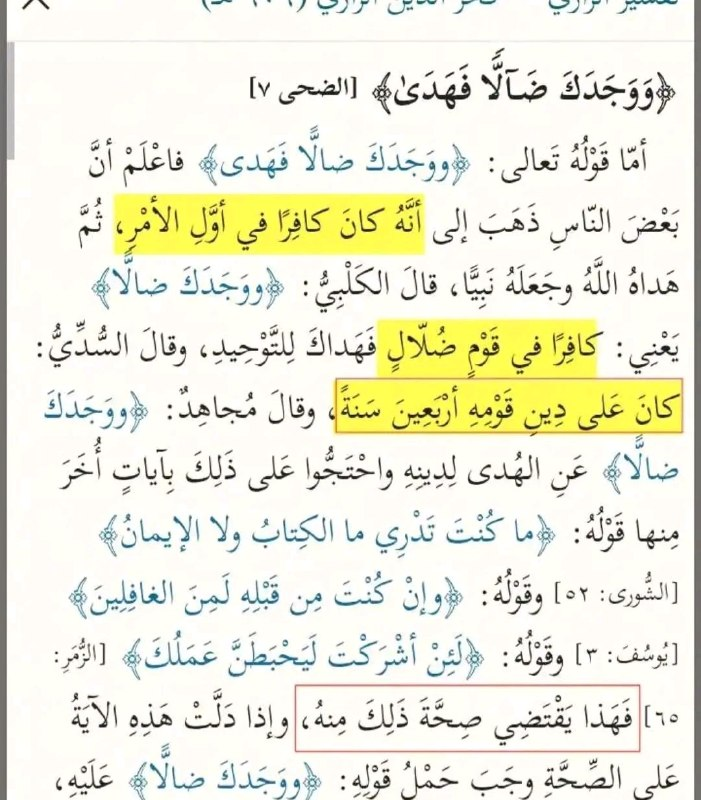
The Deception — What Was Quoted and What Was Omitted
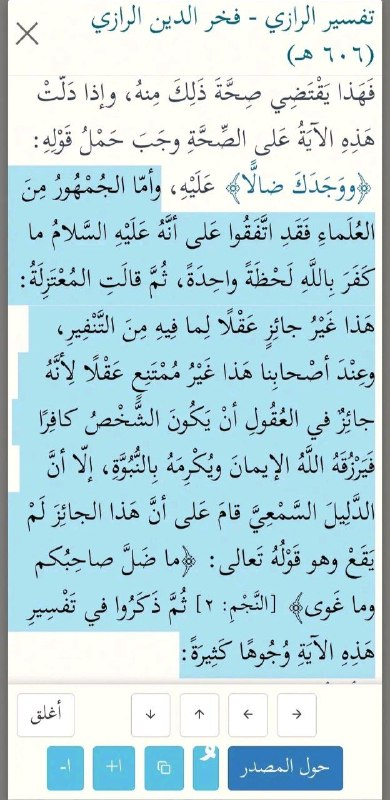
The Christian published a passage from al-Razi’s tafsir as though it represented al-Razi’s own position. He did not quote the very next line, in which al-Razi states:
“As for the majority of scholars, they have agreed that he ﷺ did not disbelieve in God for a single moment. Then the Mu’tazilites said: This is not permissible logically because of the aversion it causes. And according to our scholars, this is not logically impossible because it is permissible in logic that a person could be an unbeliever, then God would grant him faith and honour him with prophethood. However, the revealed evidence establishes that this possibility did not occur, as in the Almighty’s statement: {Your companion has neither gone astray nor erred} [An-Najm: 2].”
This is the standard procedure of hadith fabricators and polemicists alike: quote a reported opinion that a scholar is in the process of refuting, cut off before the refutation, and present the discarded opinion as the scholar’s own conclusion.

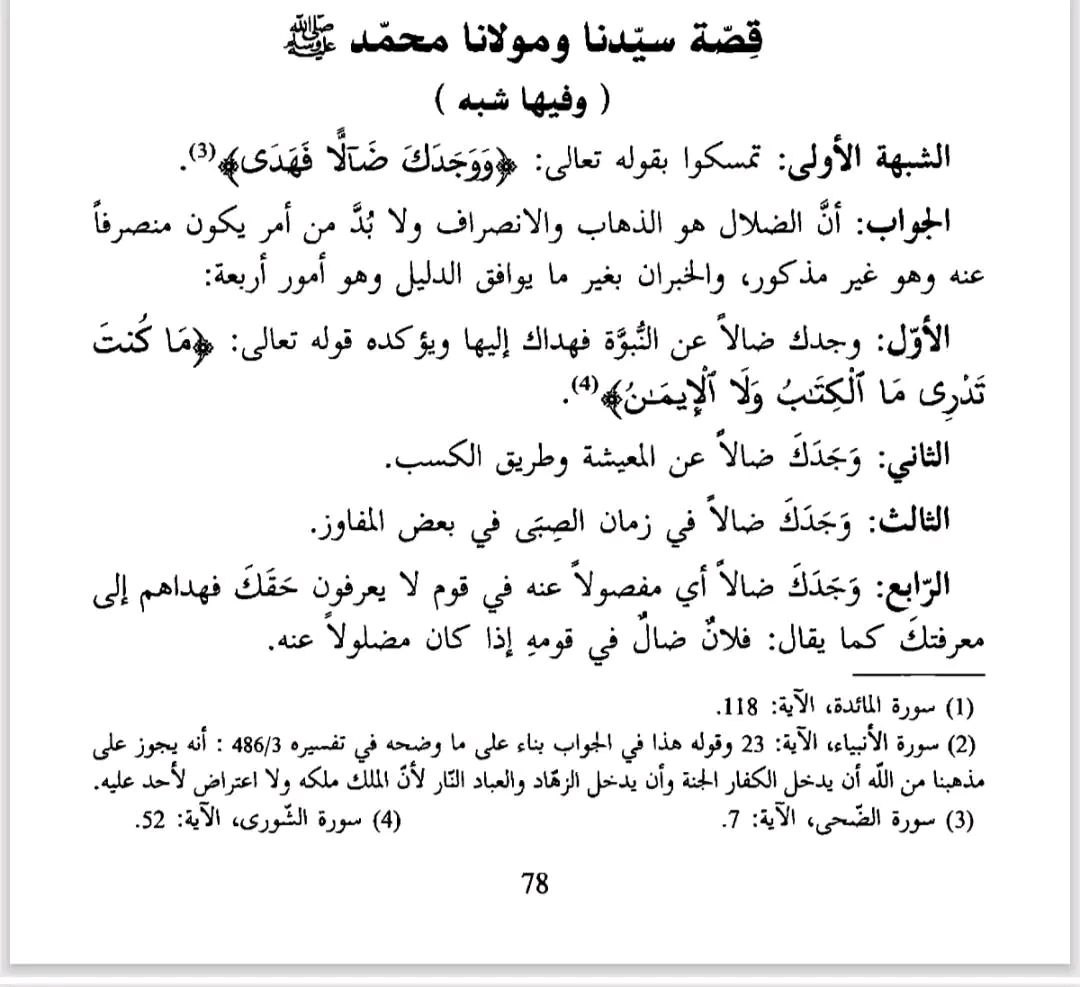
Al-Razi on “And He Found You Lost” — Four Interpretations
In his work The Infallibility of the Prophets, al-Razi addresses the verse cited as the primary proof-text by those who make this claim:
The claim is that “lost” (daall) here implies the Prophet ﷺ was in a state of misguidance — i.e. polytheism — before revelation.
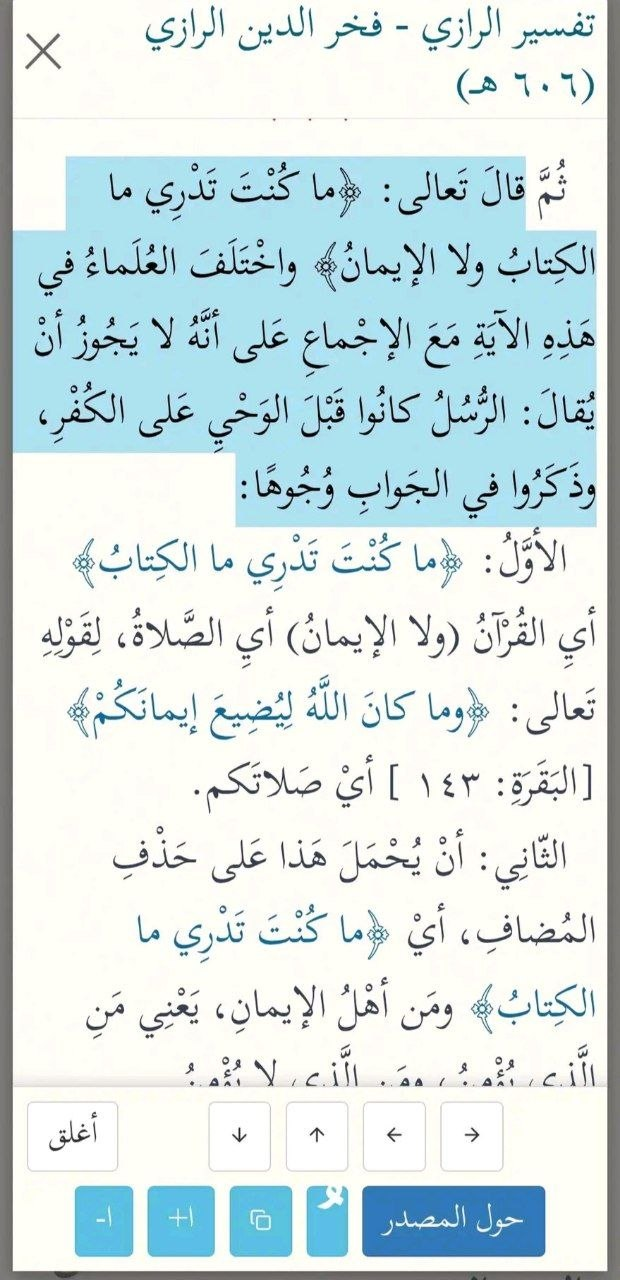
First: He found you lost regarding prophethood and guided you to it — confirmed by the verse: “You did not know what the Book was, nor what faith was.” [Al-Shura: 52]
Second: He found you lost regarding livelihood and the means of earning a living.
Third: He found you lost in your childhood in some desolate place.
Fourth: He found you lost, meaning separated among a people who did not recognise your rights, and He guided them to recognise you — as it is said of someone: “So-and-so is lost among his people” when he is misled about in their estimation.
The Scholarly Consensus
The scholars of Islam did not merely differ on this question — they established a clear position and condemned the contrary view in the strongest terms.
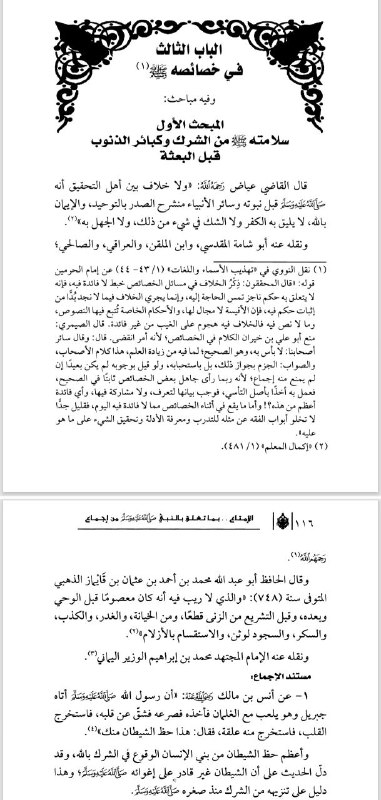
Al-Wahidi stated:
“This is the view of the masters of the principles, and the scholars of our school of thought — that the Messenger of God ﷺ wasnever an unbeliever.”
Abu Ishaq chose this position and said:
“Its meaning is that he did not know the Qur’an, nor the laws — so God guided him to the Qur’an and the laws of Islam.”
Ibn Hibban recorded:
“Mentioning the news that refutes the statement of whoever claimed that the Prophet ﷺ was on the religion of his people before revelation was sent down to him.”
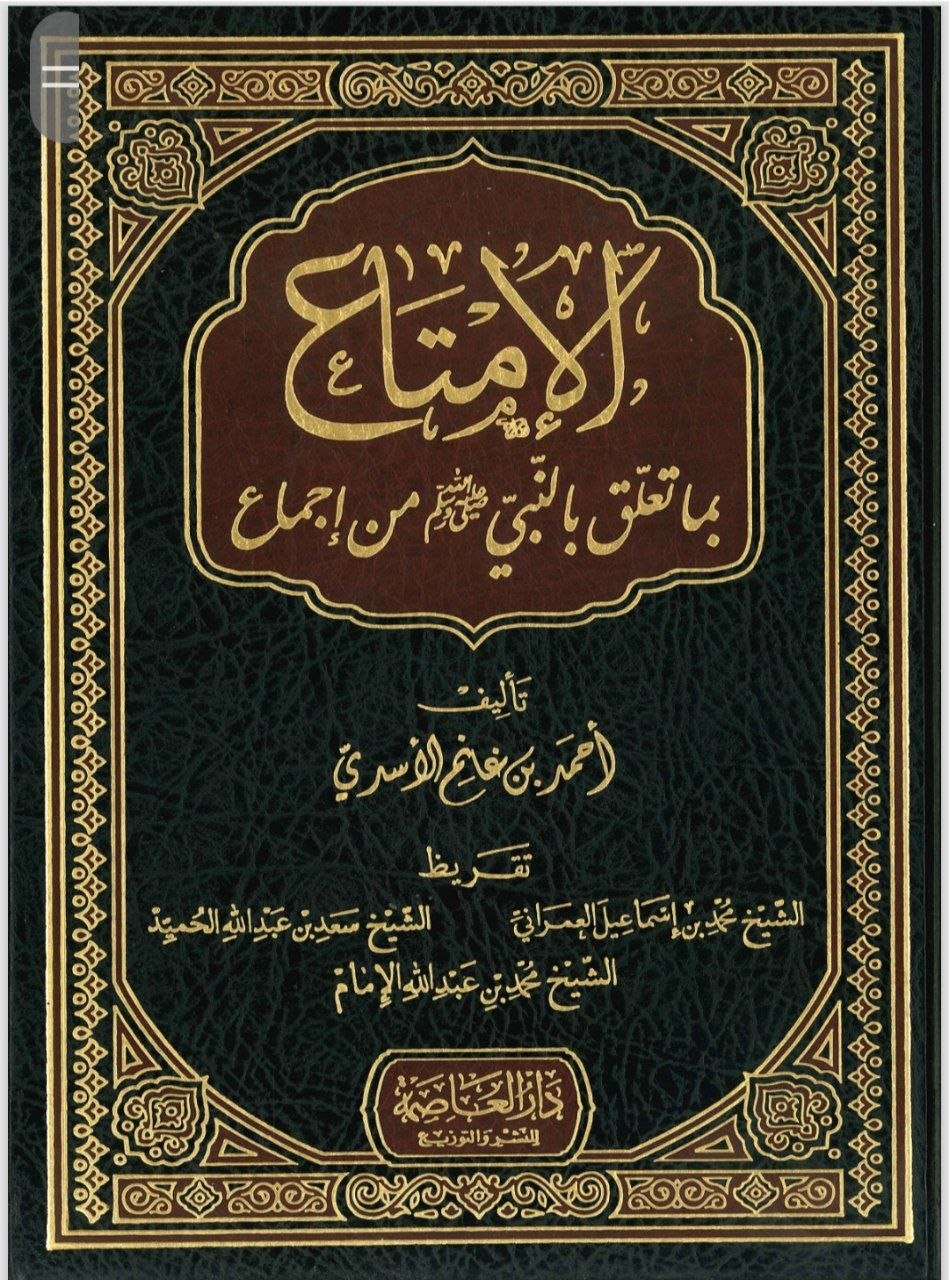
Al-Bayhaqī wrote in Dalā’il al-Nubuwwah:
“His statement ‘upon the religion of his people’ means: upon what remained among them of the legacy of Abraham and Ishmael in their pilgrimage, marriages, and trade —without associating partners with God, for he never associated partners with God. And what was mentioned of his hatred for al-Lat and al-‘Uzza is evidence of that.”
Imam Ahmad’s Verdict
The sharpest condemnation comes from Imam Ahmad ibn Hanbal himself. Hanbal ibn Ishaq narrated that he asked Imam Ahmad about one who claimed that the Prophet ﷺ was on the religion of his people before the mission:
When told that a certain critic (Abu al-Abbas) held this view, Imam Ahmad said: “May God curse him! What is left if he claims that the Messenger of God ﷺ followed the religion of his people while they worshipped idols — when God said, and Jesus gave glad tidings of him, that his name is Ahmad? Glory be to God, glory be to God for this statement.”
He then said: “Before he was sent he was pure and cleansed from idols — and did he not refuse to eat what was sacrificed on altars? Beware of the people of speech; their affair will not end well.”
[Latā’if al-Ma’ārif by Ibn Rajab; Al-‘Uddah by Abu Ya’la; Al-Wādih fī Usūl al-Fiqh by Ibn ‘Aqīl]

Al-Razi did not say the Prophet ﷺ was a polytheist. He recorded a discredited minority opinion and then immediately refuted it with the position of the majority of scholars. The consensus — from al-Wahidi, Abu Ishaq, Ibn Hibban, and al-Bayhaqi to Imam Ahmad — is that the Prophet ﷺnever associated partners with God for a single moment of his life. Imam Ahmad considered the contrary claim evil enough to warrant shunning its proponent entirely. The verse {And He found you lost} refers to his guidance toward prophethood, scripture, and law — not to any prior state of disbelief.
This article is part of the KufrCleaner Dawah Library — Refuting Doubts About the Prophet ﷺ series.