Arab Identity of the Land of Syria and Most of Its People
It is often claimed by the outcasts of chauvinistic groups that Arabs are neither ancient nor modern inhabitants of Arab countries, that they are not original residents of the Arab East, and furthermore, that Arabs are a minority rather than a majority in the countries of the Arab homeland. They also claim that most Arabs are merely Arabized, not of original Arab descent. Therefore, it is incumbent upon us to respond and clarify the truth regarding the Arab identity of the majority, even though they were not the predominant original inhabitants of the Levant.
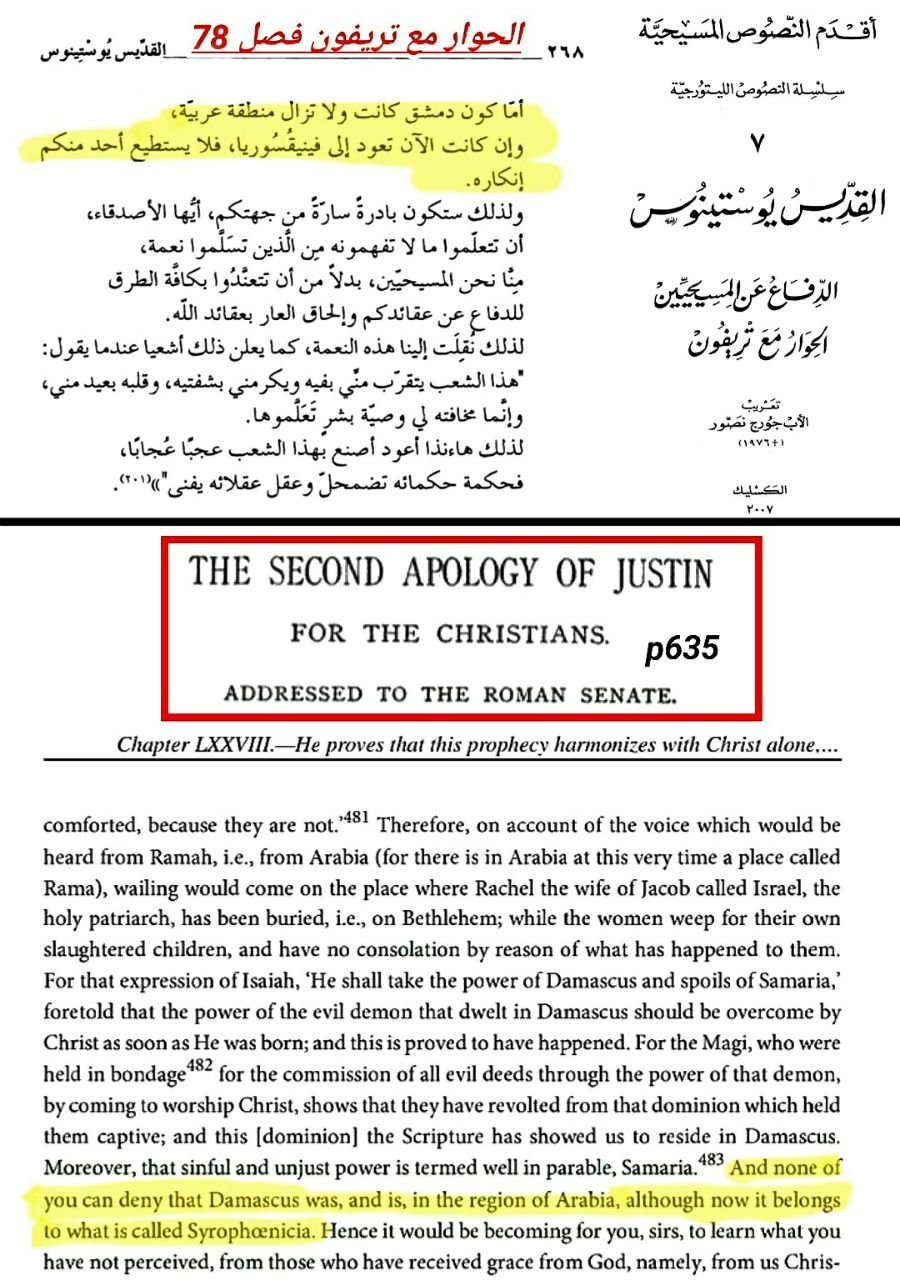
1 - The land of Damascus: Justinus, from the second century CE, mentions that Damascus is an Arab land and part of the lands of the Arabs, which indicates the Arab identity of the Damascenes and their land.
[Dialogue with Trypho - Justinus, Chapter 78]
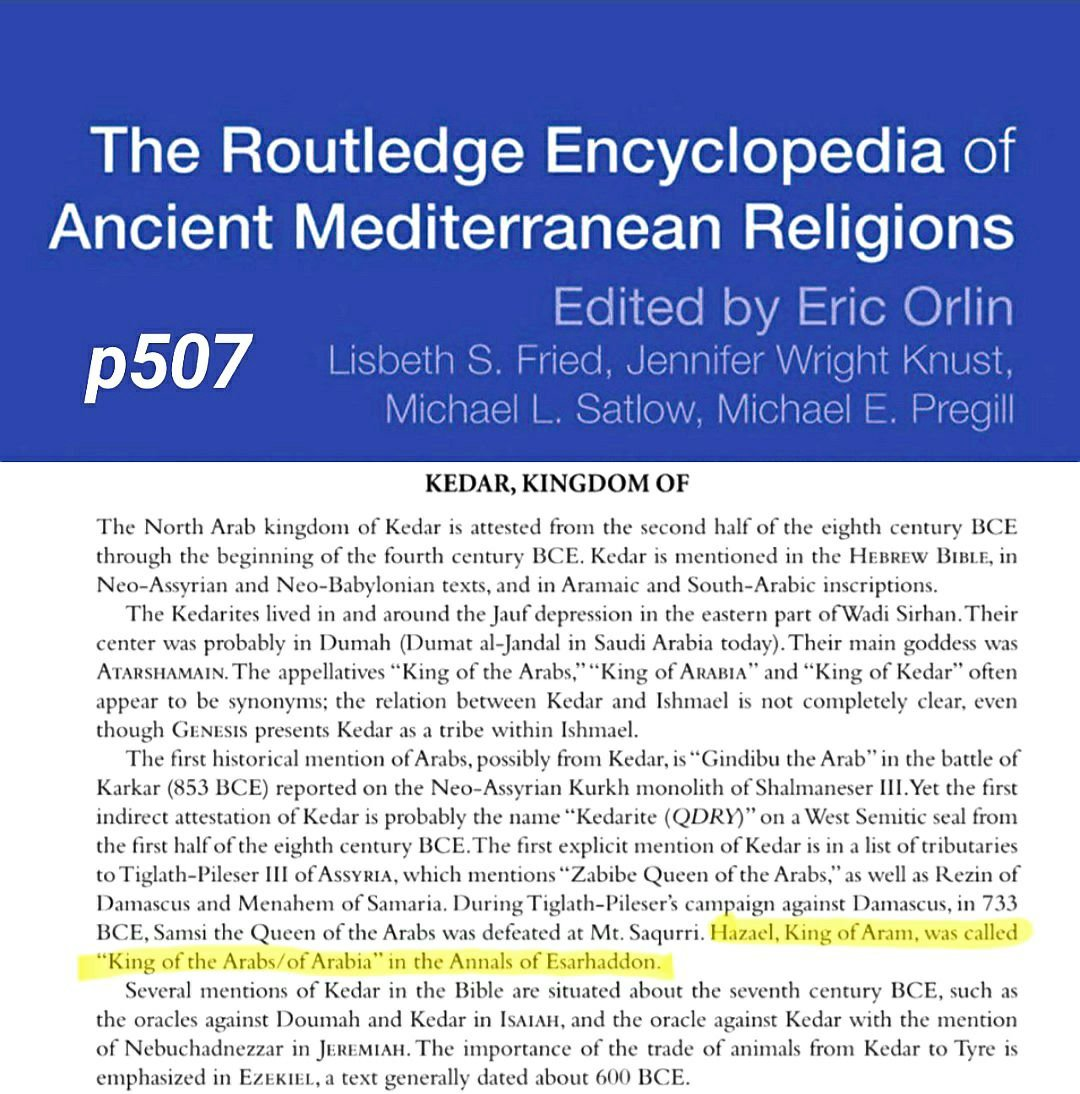
The Arab identity of Damascus has been unanimously established in Assyrian inscriptions, where Hazael, the king of Aram-Damascus and the Arameans in the Levant, was referred to as the king of the Arabs in the annals of Esarhaddon. It is well-known that Hazael was the king of Aram-Damascus, and the Arabs referred to, whom Hazael ruled, were undoubtedly the Arameans in southern Levant. The designation of Hazael as the king of the Arabs is evidence of the Arab identity of most Arameans and their status as Levantine Arabs. Thus, we find that the Assyrian annals describe Hazael, king of Aram and the Arameans, as the king of the Arabs simultaneously, without distinguishing between Arabs and Arameans when referring to Hazael as their king. Instead, the Arameans are considered Arabs, and the Arabs are considered Arameans, which indicates that this is evidence of the Arab identity of most Arameans and their land.
[The Routledge Encyclopedia of Ancient Mediterranean Religions p507]
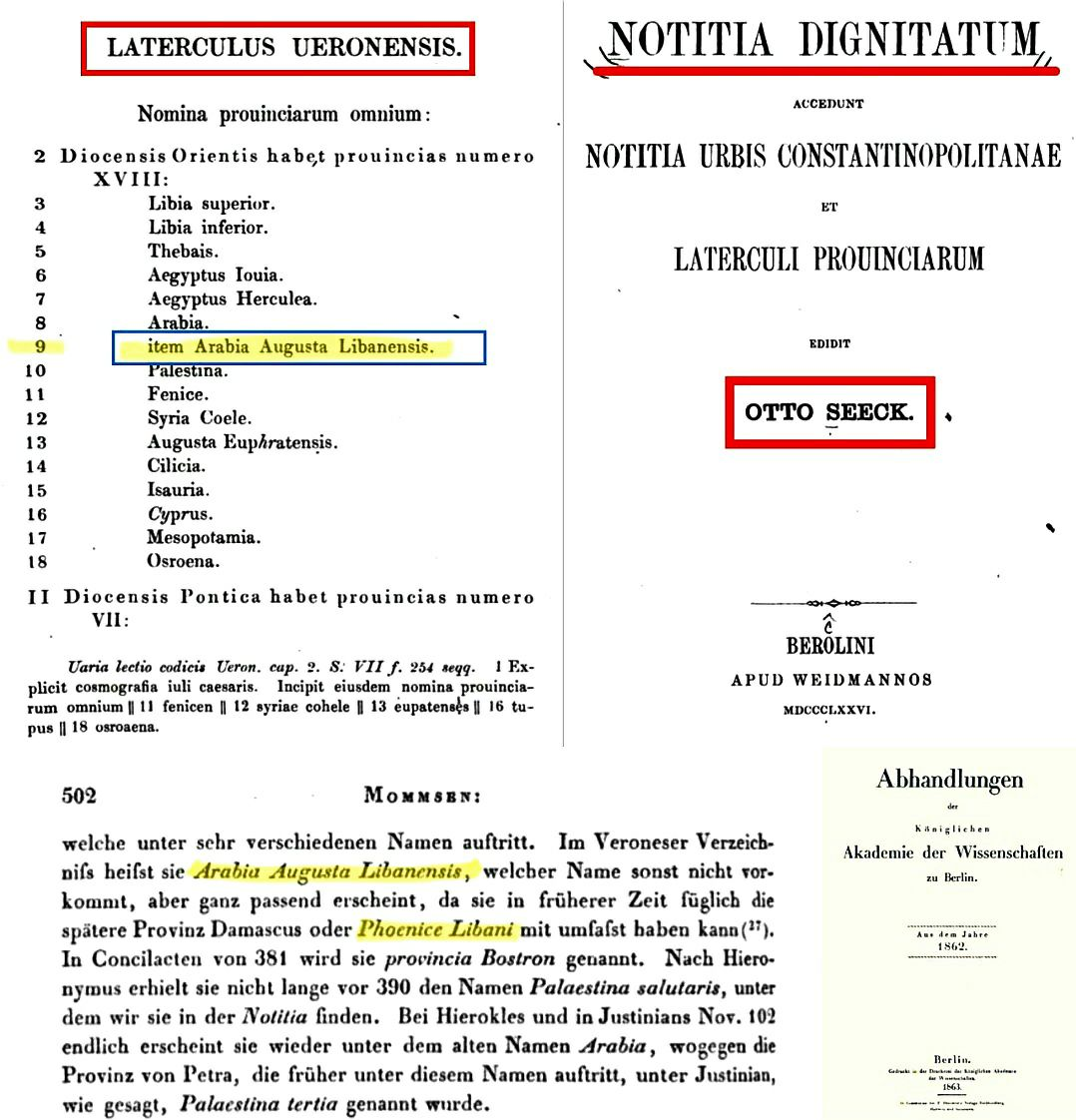
2 - Central Syria or Western Phoenician Arabia: The Romans generally referred to the land of Phoenicia Secunda as Arabia Augusta Libanensis, meaning Royal Arabia.
[NOTITIA DIGNITATUM, OTTO SEECK, Berlin 1876 p247]
This region included the cities of Homs, Palmyra, Damascus, and Baalbek, all of which were Phoenician cities described as Arab. These cities constitute central Syria, which was Phoenicia alongside the Phoenician coast of the Levant. According to the Notitia Dignitatum, this indicates that Arabs formed the majority of the population of Phoenicia Secunda and were Phoenician Arabs. Mommsen noted that Phoenicia Secunda is the same as Royal Arabia.
[Abhandlungen der Königlichen zu Berlin 1862 p502]
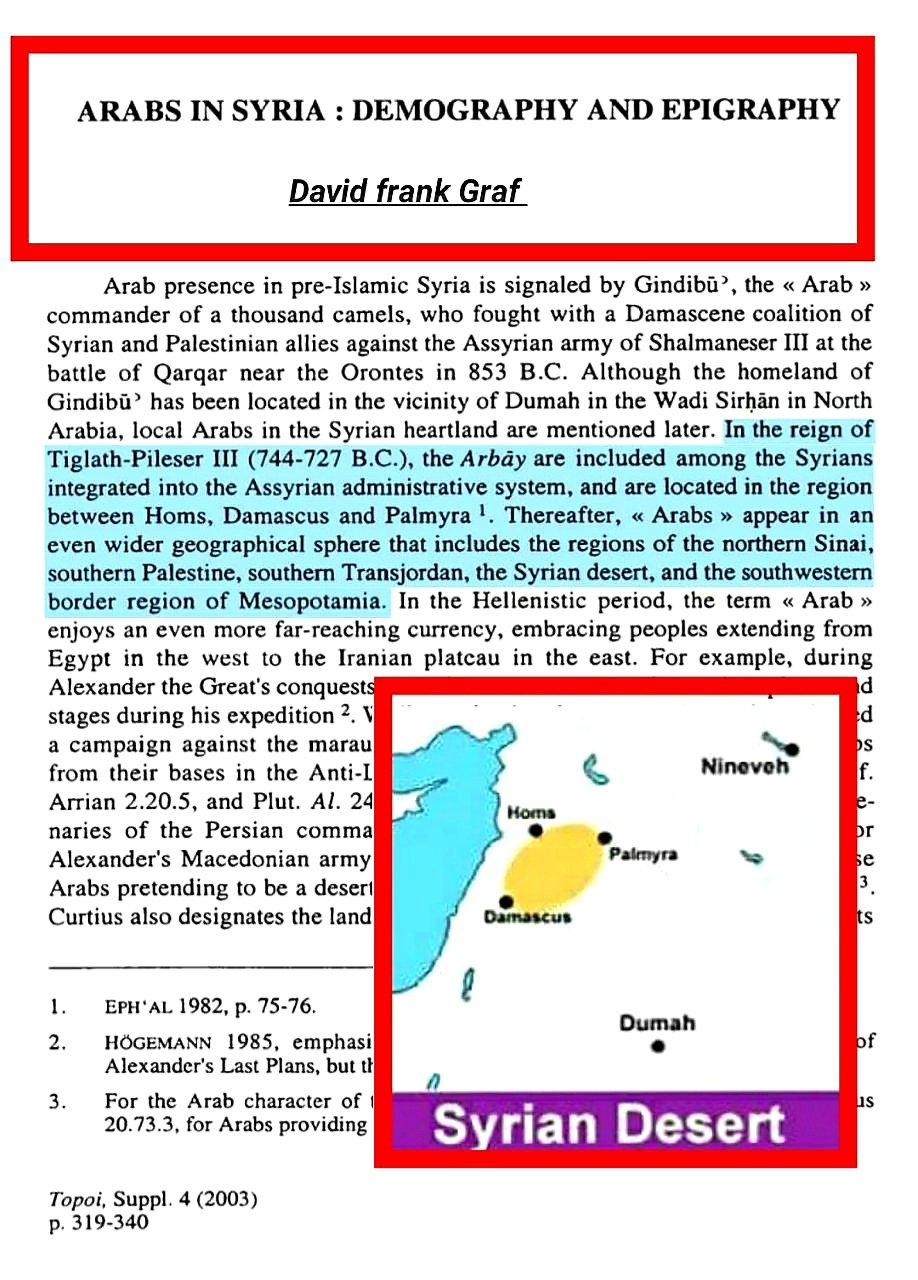
During the reign of the Assyrian king Tiglath-Pileser in the eighth century BCE, Arabs were included among the integrated Assyrian-Syrians, and their land was identified as a region located between Palmyra, Homs, and Damascus, called Arbay. This indicates that the land of the Arabs was central Syria.
[Topoi. Orient-Occident, Arabs in Syria: David Frank Graf p319]
3 - Arabism of the Land of Homs and the Kingdom of Homs (Emesani)
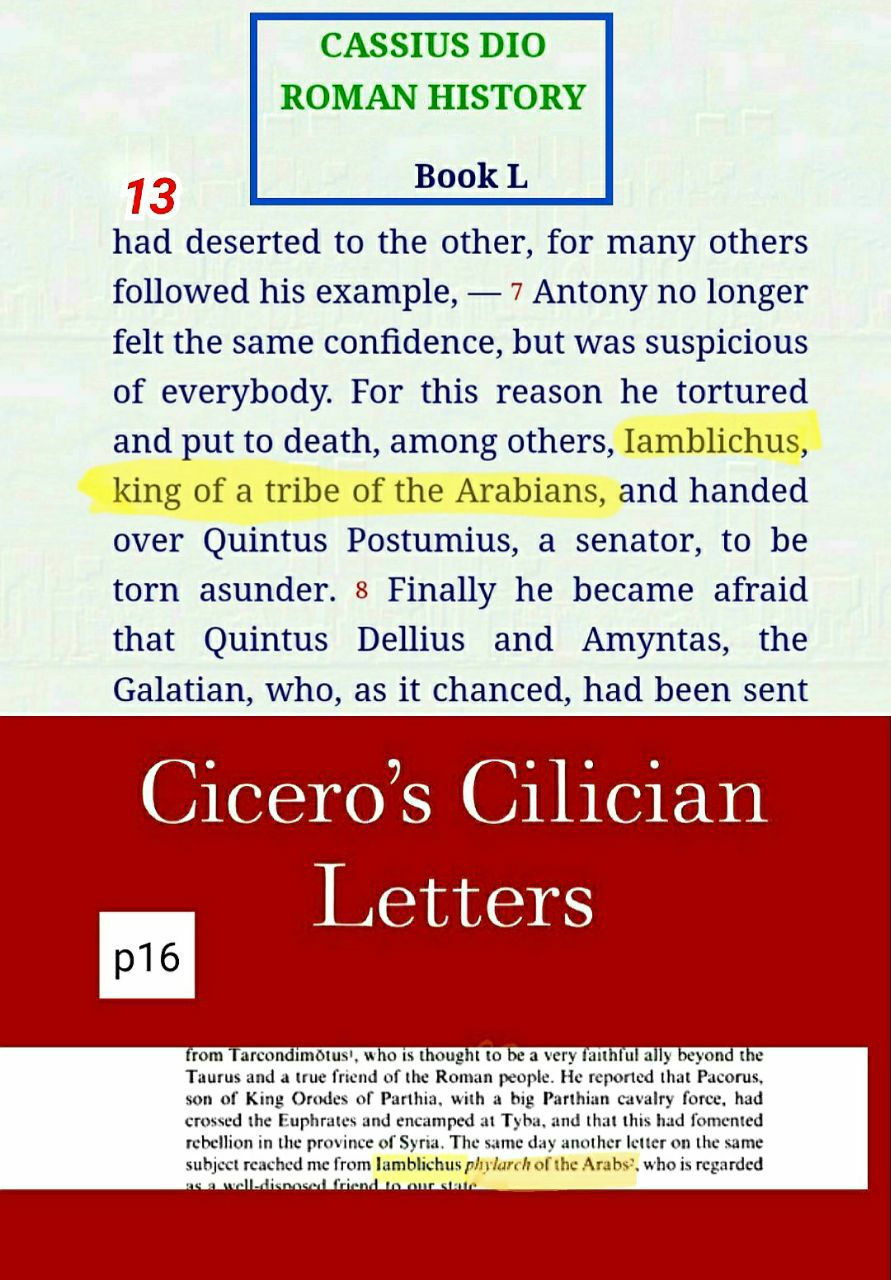
Cicero mentioned that the leader of the Shamsi-Ghram family, Iamblichus, the prince of Homs, was referred to as a king and the sheikh of the Arabs.
[ Cicero’s cilician letters p16 ]
Cassius Dio mentioned that Iamblichus was the leader of Homs and traced his origins to an Arab tribe.
[ Cassius Dio book 50:13:7 ]
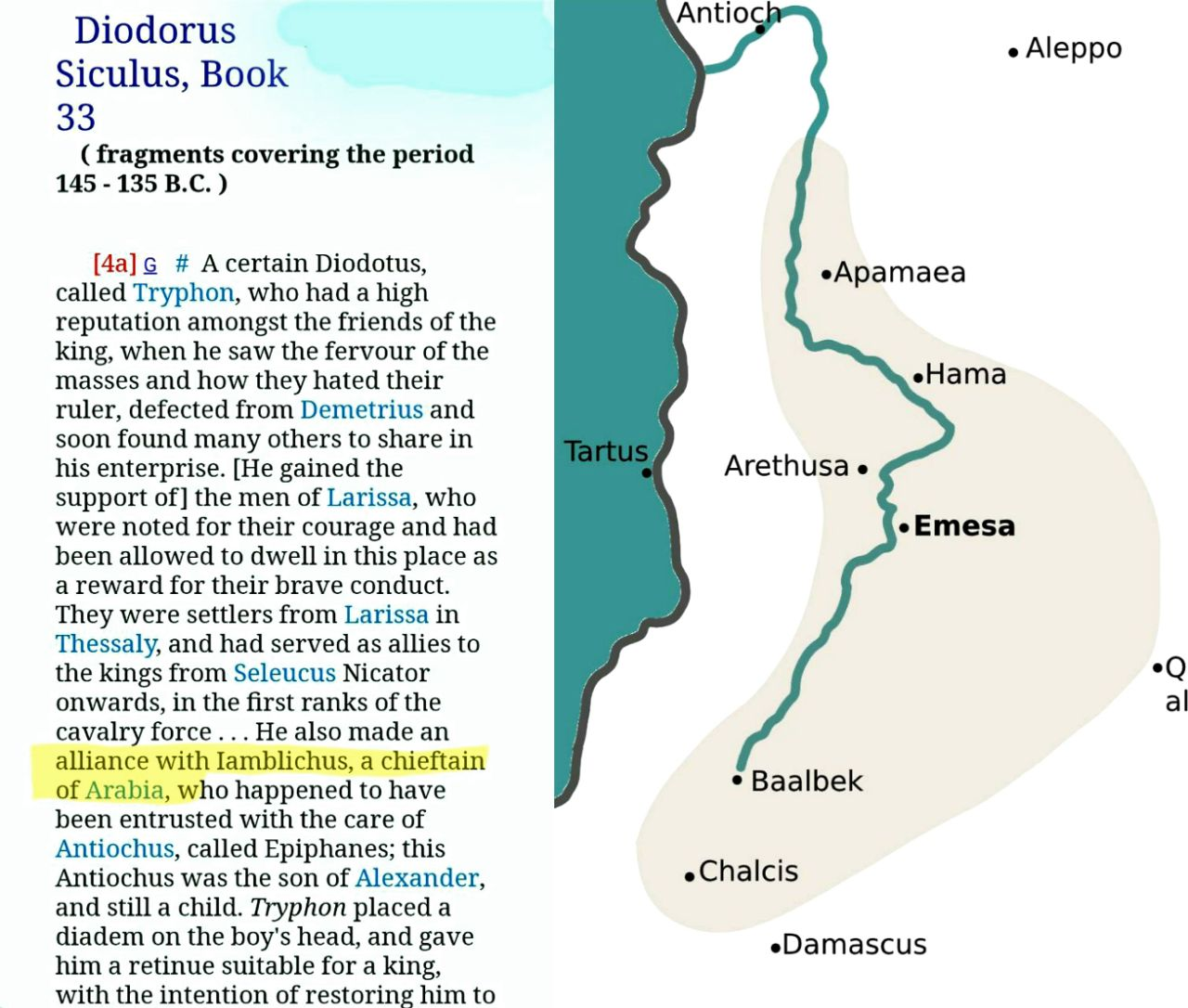
Diodorus Siculus stated that Iamblichus, the leader of Homs, was a chieftain of Arabia, which indicates that the land of Homs was called the land of the Arabs.
[ Diodorus 33:4a ]
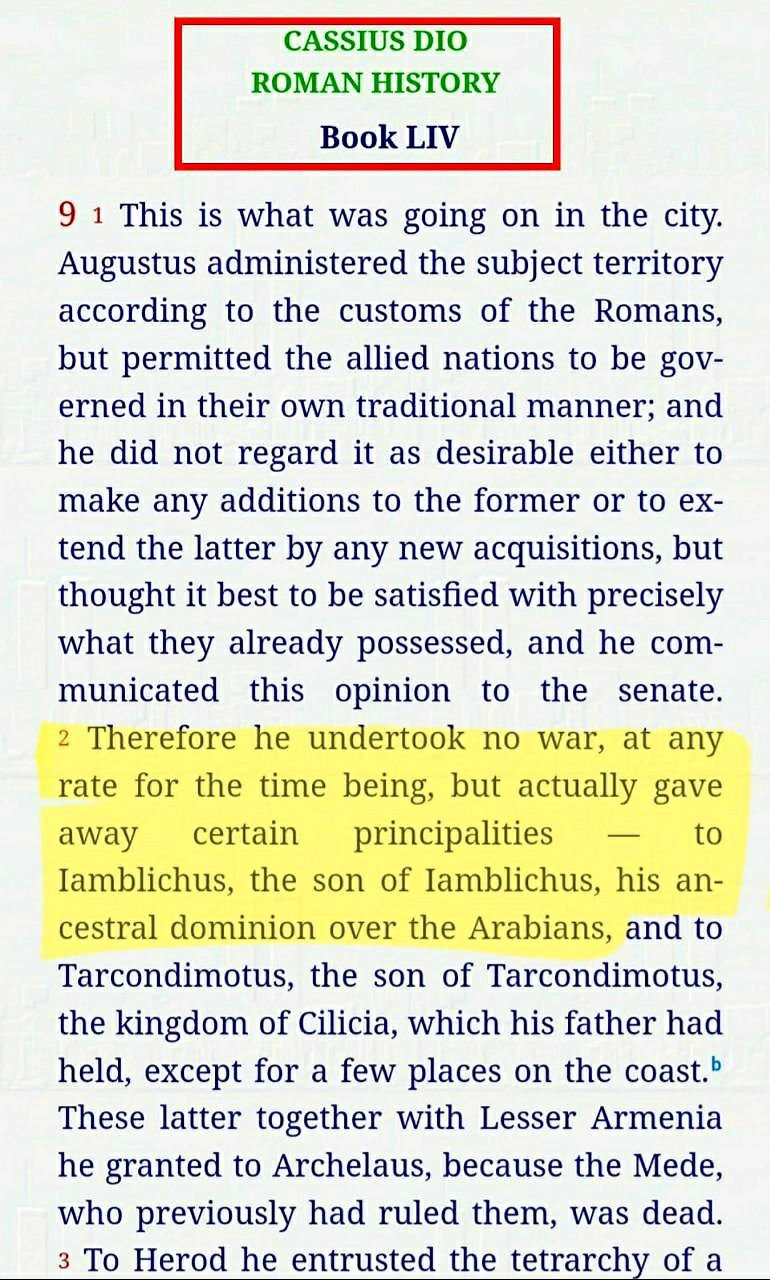
The region of Homs was inhabited by Arabs. Cassius Dio states that Augustus Caesar relinquished some principalities to Iamblichus II, son of Iamblichus I. These principalities were inherited by Iamblichus from the authority of his ancestors over the Arabs. These Arabs, ruled by his ancestors, were the inhabitants of the Homs region and its surroundings, extending to Apamea and other areas.
[ Cassius Dio 54.9.2 ]
4 - The Golan, Hauran, and Lajat as Part of the Land of the Arabs
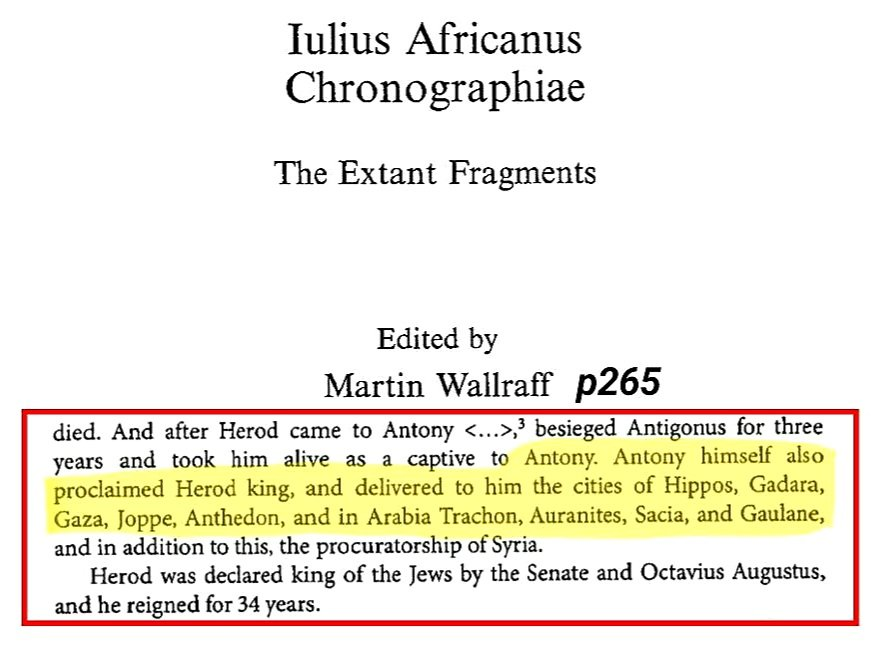
The historian Sextus Africanus mentioned that Antony crowned Herod, declared him king, and handed over the governance of the cities of Hippos, Gadara, Gaza, Jaffa, and Anthedon, as well as some cities in the Arabian Peninsula, such as Trachon (Lajat), Hauran, Sakia, and the Golan.
This indicates that the regions of the Golan, Hauran, and Lajat were part of the land of the Arabs.
[ Iulius Africanus Chronographiae Edited by Martin Wallraff p265 ]
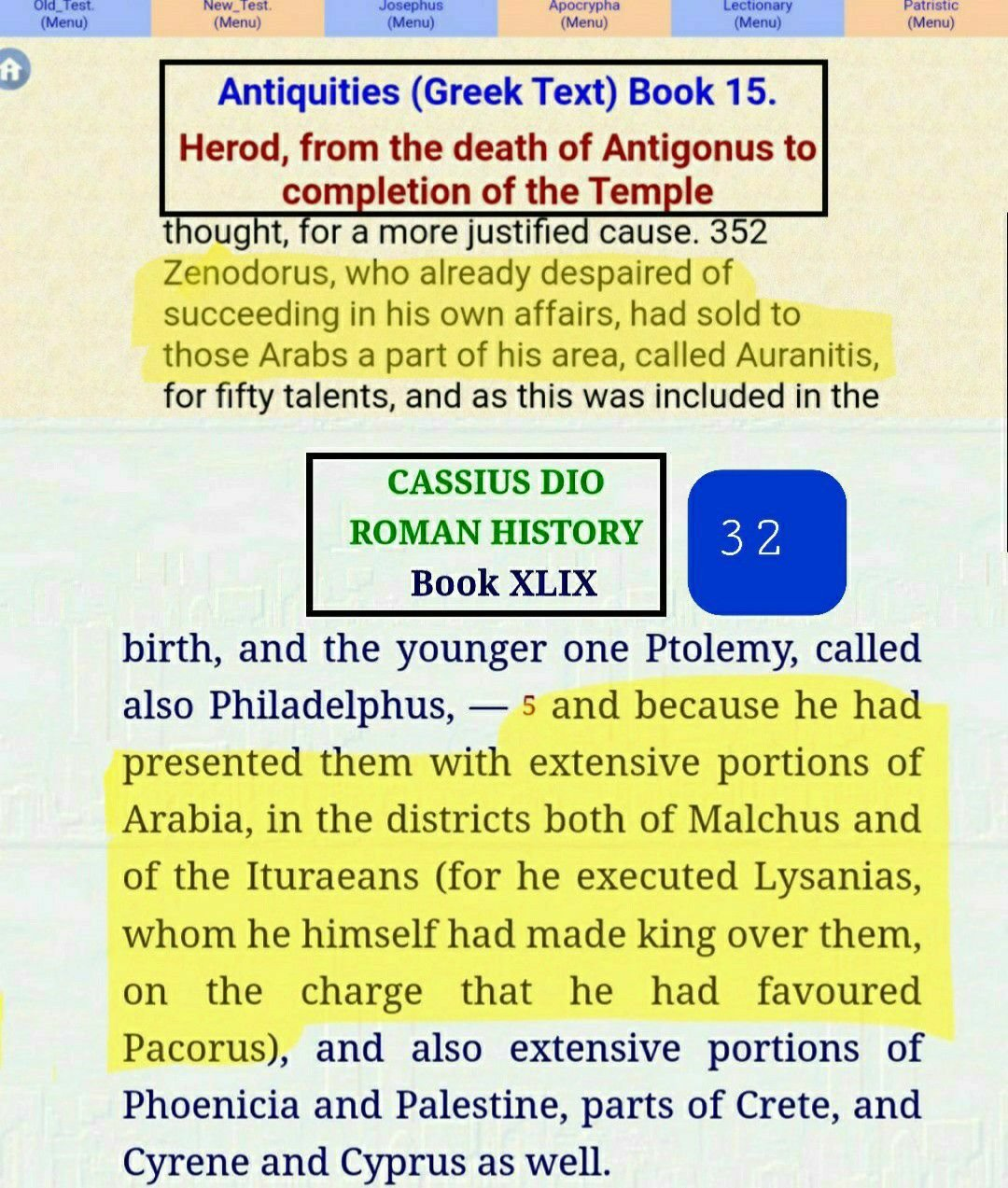
And Josephus also says that Hauran is an Arab land purchased by some Arabs from a local Arab prince named Zenodorus from the Itureans, and this means that Hauran was an Arab land ruled by an Arab king, then a group of Arabs bought it from that king. Cassius Dio mentioned that Lysanias, the father of Zenodorus, was an Iturean man, and his country was called the land of the Iturean Arabs, from which Hauran, the Arab land ruled by Zenodorus, originated.
[ Josephus 15.352 ]
[ Cassius Dio 49.32.5 ]
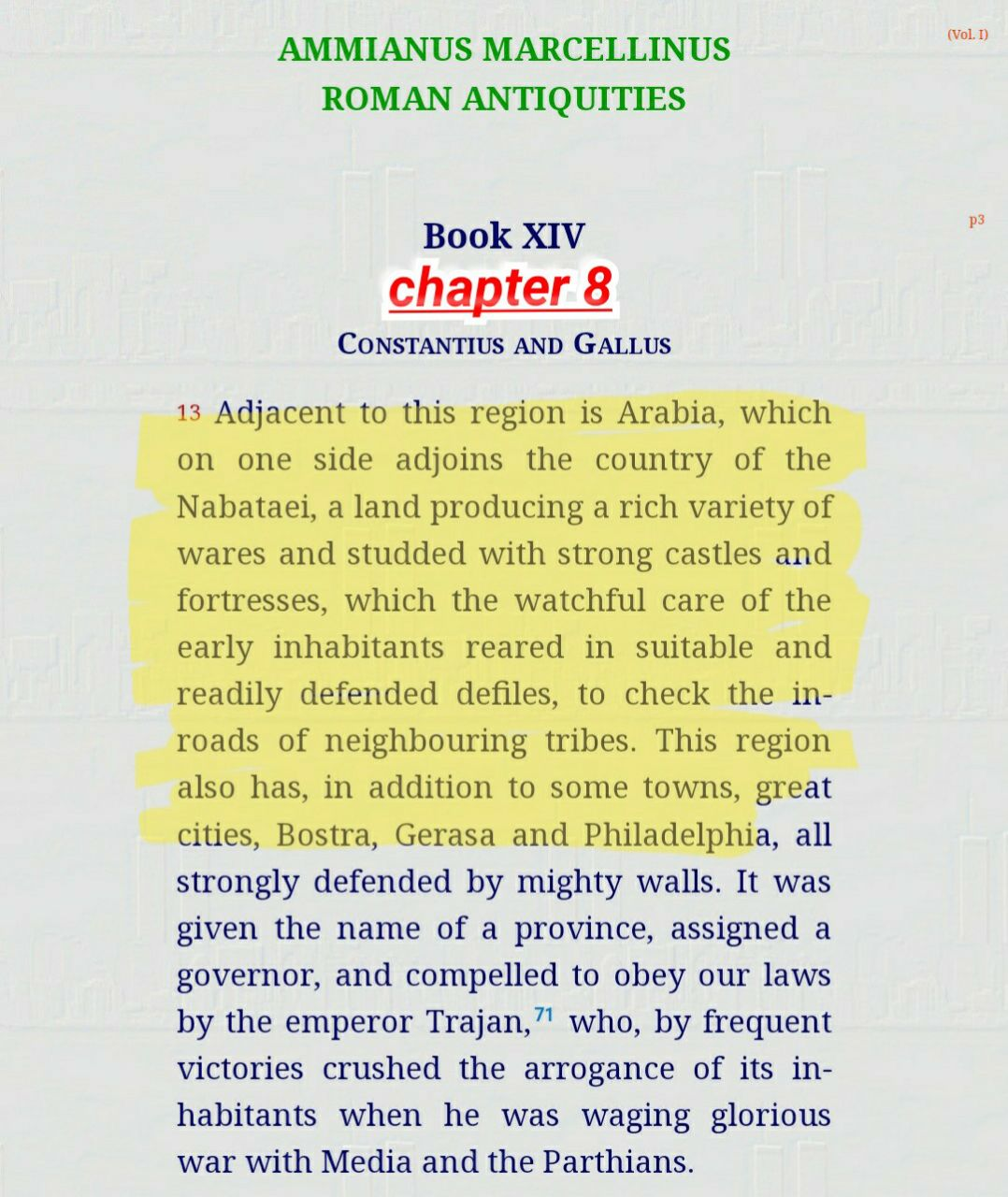
Ammianus Marcellinus describes the Roman Arabia region (which includes both southern Syria and Jordan) as an extremely rich region that includes cities such as Bosra in southern Syria, Jerash in northern Jordan, and Philadelphia, which is Amman in central Jordan, and this indicates the Arab character of Hauran, southern Syria, and Jordan.
[ AMMIANUS MARCELLINUS 14.8.13 ]
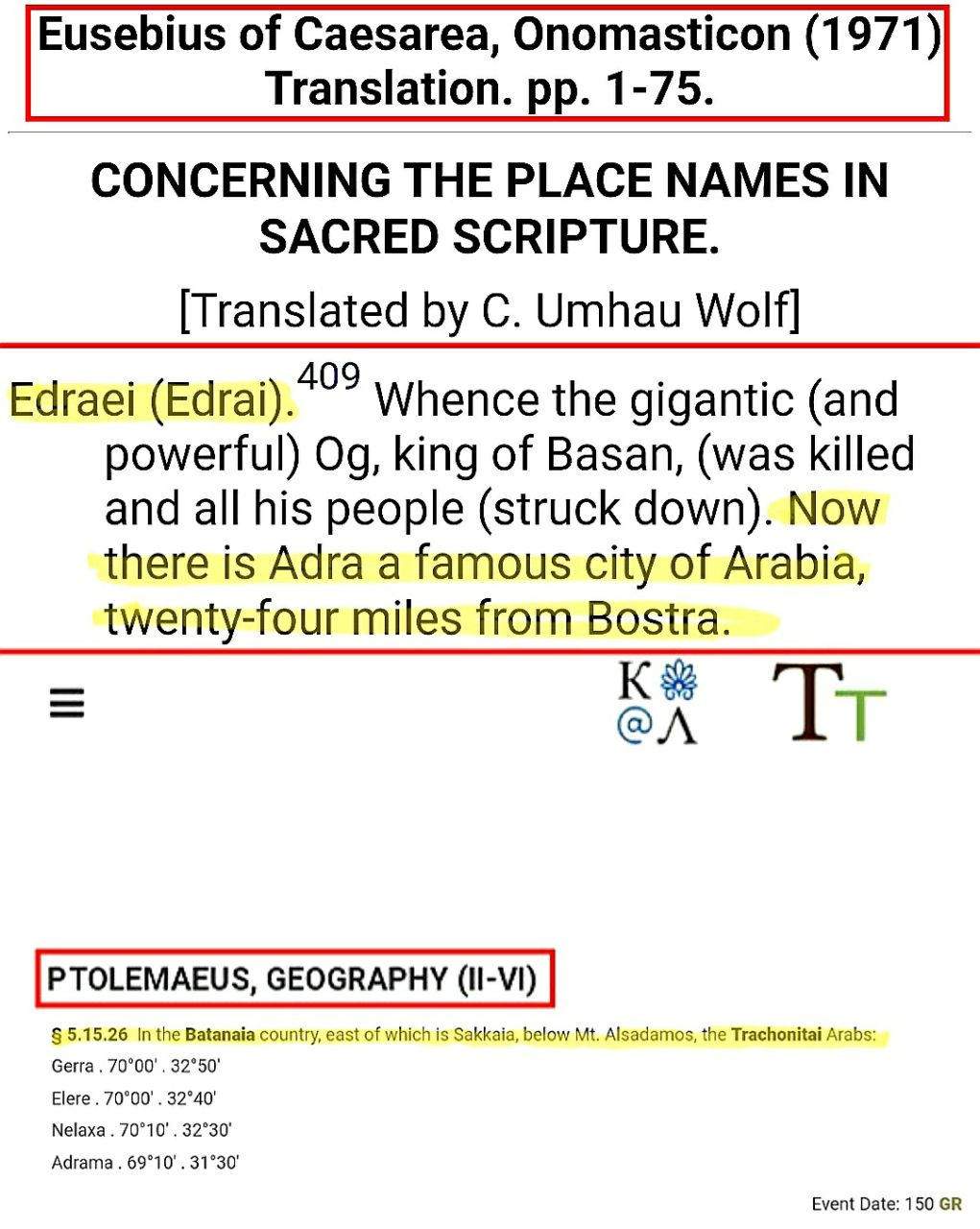
Eusebius of Caesarea described the city of Daraa as a famous Arab city, and this indicates the Arab character of southern Syria.
[ Eusebius of Caesarea, Onomasticon (1971) by C. Umhau Wolf 409 ]
Ptolemy mentions that the Lajat is located in Batnaya or Batania, and its inhabitants were Arabs, and their name was the Trachonitai Arabs.
[ Trachonitai Arabs ]
[ Petlomy Geography 5.15.26 ]
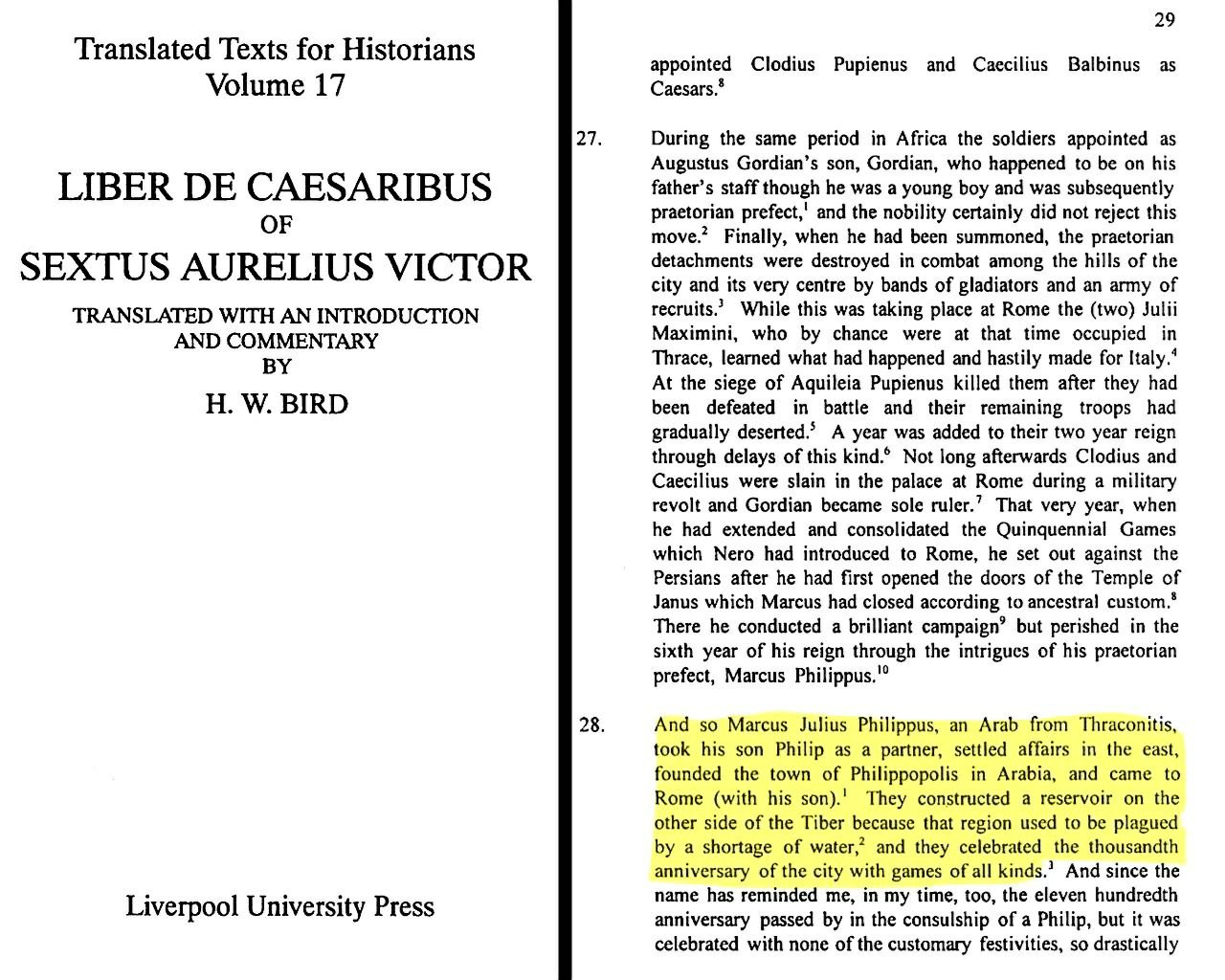
Thus, the regions described as having an Arab character are Hauran, the Lajat, Bosra, Damascus, and Daraa, and all these cities and regions form southern Syria. We also mention the emergence of Philip the Arab, the king of the Romans, from this region, which further reinforces its Arab character. He was called in Roman documents Philippus Arabs, which indicates that Philip represented the Arab people as a whole as a Roman king, and this indicates his Arab identity.
[ THE SCRIPTORES HISTORIAE AUGUSTAE , VOLUME II p435 , the Loeb ]
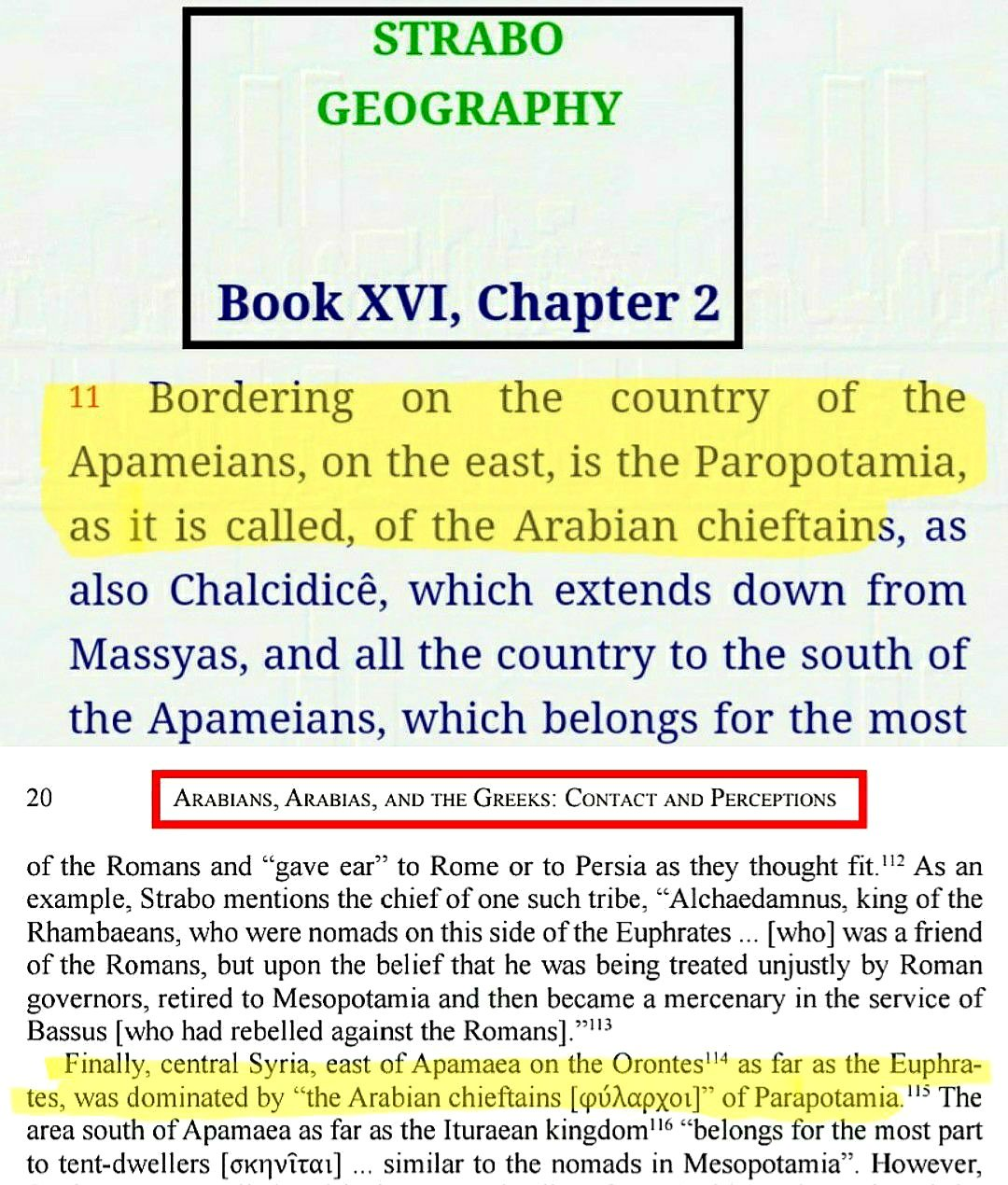
5 - And Strabo mentioned that the regions located east of Apamea and south of Apamea are all inhabited by Arabs.
The region of Parapotamia, which lies east of Apamea, and whose name means “beside the river” because its borders begin adjacent to the Euphrates, extends from the west of the Euphrates to the eastern borders of the city of Apamea. This region belongs to the leaders of the Arab tribes and is inhabited by Arabs. This area includes central Syria east of Apamea up to northern Syria west of the Euphrates.
As for all the land located south of the city of Apamea, most of its inhabitants are Saracen Arabs (tent-dwellers) whose occupation is herding. This land includes most of central and southern Syria.
[ Strabo 16.2.11 ]
[ ARABIANS, ARABIAS, AND THE GREEKS: CONTACT AND PERCEPTIONS p20 ]
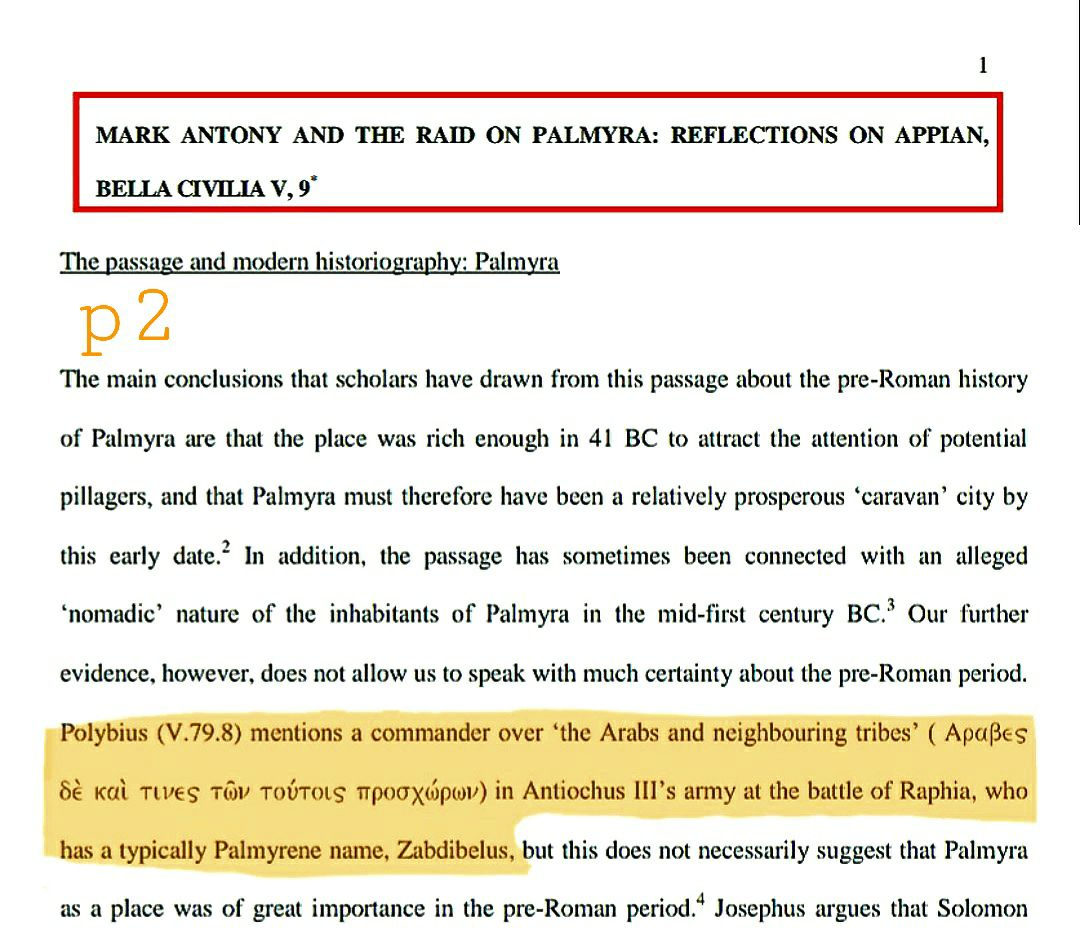
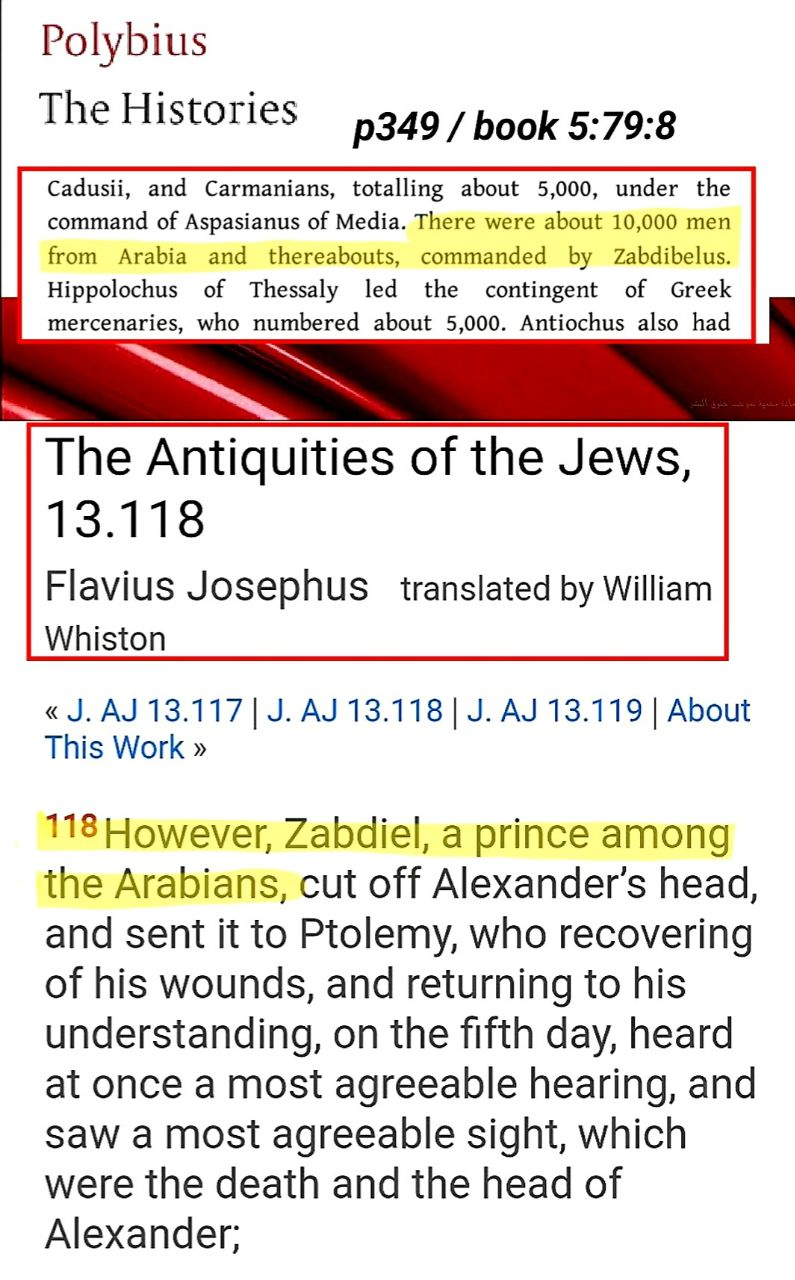
6 - Palmyra, from the lands of the Arabs. The historian Polybius from the second century AD speaks of an Arab leader commanding 10,000 fighters from the lands of the Arabs, and the name of this leader is Zabdibel. Zabdibel is an Arab Palmyrene name, which indicates the Arab identity of Palmyra.
[ Polybius The Histories p 349 ]
[ MARK ANTONY AND THE RAID ON PALMYRA: REFLECTIONS ON APPIAN, BELLA CIVILIA V, 9 p2 ]
The historian Josephus the Jew refers to Zabdibel the Palmyrene by the name Zabelius and mentions that he was a prince and leader of the Arabs.
[ Josephus antiquities 13.118 ]
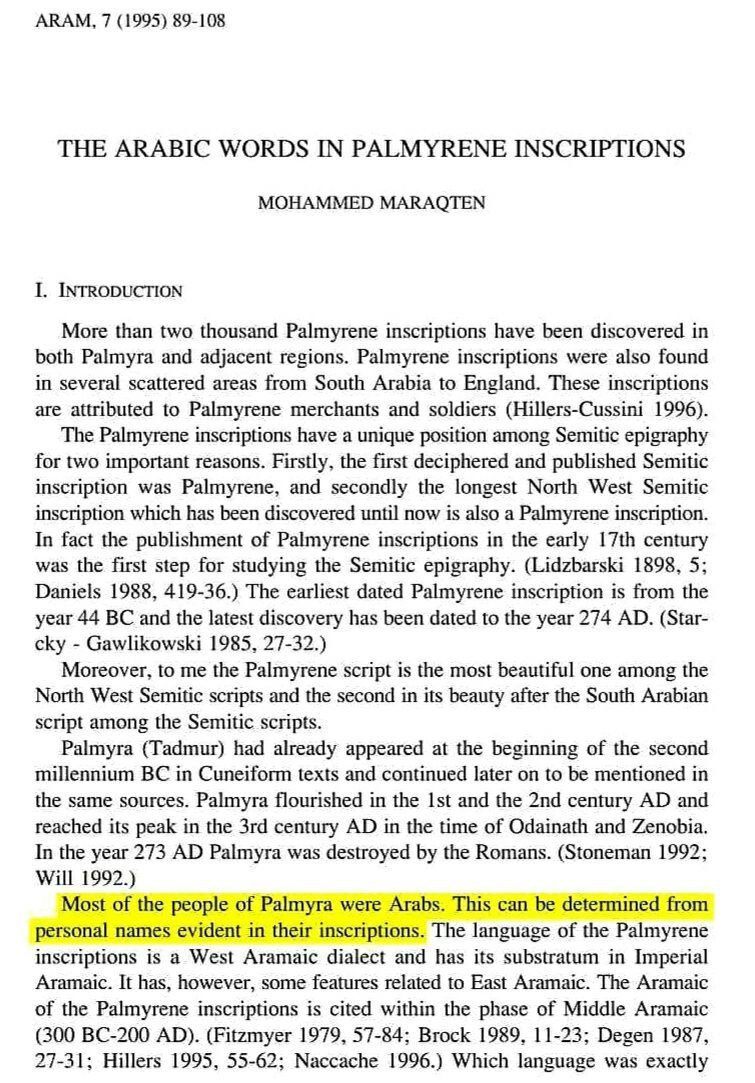
These testimonies are of great importance as they demonstrate that the region of central Syria, including Palmyra, is Arab land. Even the inscriptions have shown that the majority of Palmyra’s inhabitants in central Syria are Arabs. The researcher Mohammed Maraqtin stated that the majority of the population of the Kingdom of Palmyra were Arabs because the names found in its inscriptions are Arab names, not Roman or Syriac.
[ ARAM, 7 (1995) 89-108 THE ARABIC WORDS IN PALMYRENE INSCRIPTIONS MOHAMMED MARAQTEN ]
And I say that Palmyra included Saracen and Canaanite tribes, and all of them had Arab names, which indicates the Arab identity of the Canaanite Arabs and the Saracen Arabs. One of the tribes of Palmyra was called Math-Baal, a Canaanite name, yet all its members declared in the inscriptions that they were Arabs, and their names were Arab.
7 - The Arabness of the Land of Edessa (includes most of northern Syria)
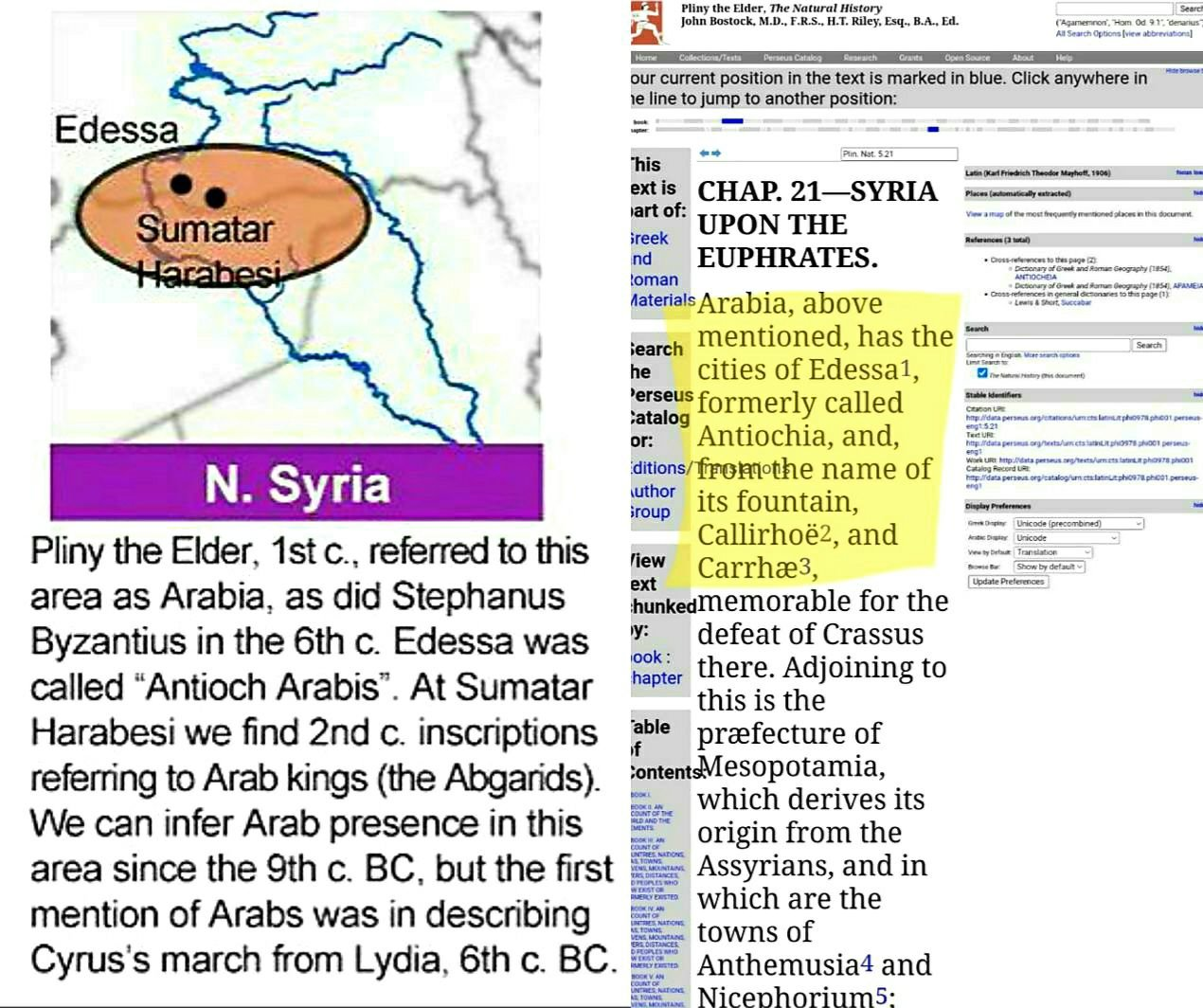
Pliny referred to the region of northern Syria, which includes Edessa, Samosata, Harran, and other cities and regions, as the Land of Arabia.
[ Pliny 5.21.1-3 ]
MacAdam states: Pliny the Elder refers in his writings to the indigenous inhabitants of Osroene and Commagene as Arabs and to these regions as the Land of Arabia.
[H. I. MacAdam, N. J. Munday, “Cicero’s Reference to Bostra (AD Q. FRAT. 2. 11. 3)” p131 - 136 ]
It is well-known that the Abgarids were an Arab dynasty.
Plutarch refers to Abgar II as the King of the Arabs.
The Roman Tacitus refers to Abgar V as the King of the Arabs.
8 - The Land of Hama from the Lands of the Arabs
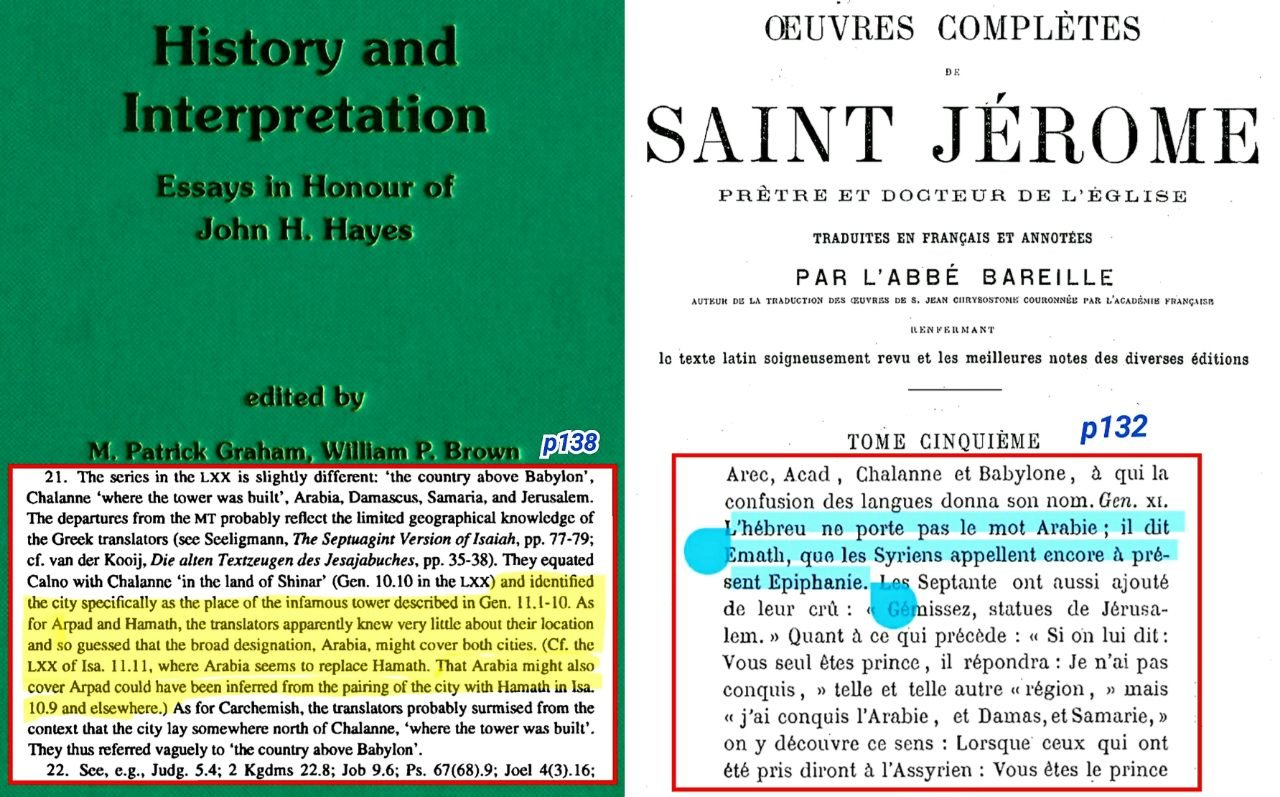
In the Septuagint translation of Isaiah (9:10) and (11:11), Hama is called Arabia, meaning the Land of the Arabs, and this was confirmed by the scholar Patrick Graham.
[ History and Interpretation, edited by M. Patrick Graham p138 ]
Jerome (4th century AD), while comparing the differences between the Septuagint and the Hebrew translations, states that the Septuagint named Hama as Arabia, while the Hebrew named it Hama, indicating that the seventy translators called Hama the Land of the Arabs / Arabia, which points to its Arabness.
[ JÉROME Trad bareille 05 p132 ]
These pieces of evidence from the Septuagint, dating back to the 3rd century BC, clearly prove that Hama was called the Land of the Arabs and that Hama is an Arab land.
9 - Malchus the Monk on the Arabs
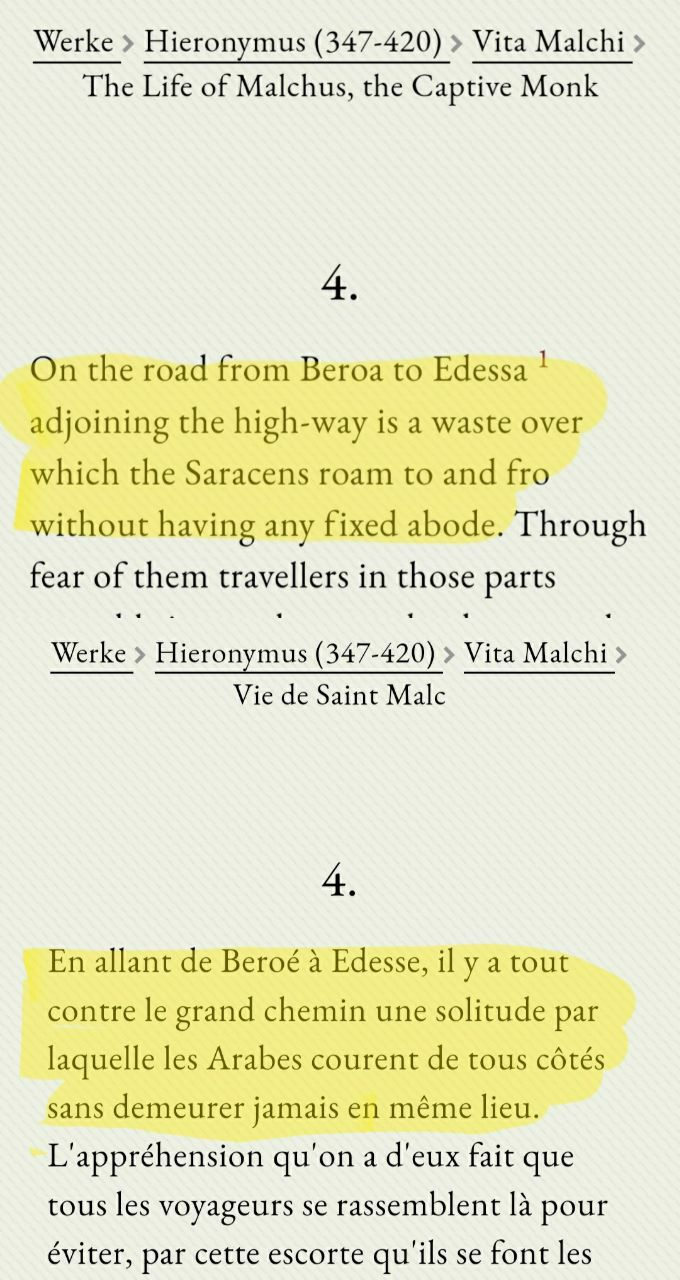
Malchus the Monk mentions in his biography that the Arabs (Saracens) roamed the land stretching from Aleppo (Beroea) to Edessa, meaning he places them in the provinces of Syria Prima, Euphratensis, and Edessa, and that the Arabs’ lands in northern Syria were represented by these Roman provinces in the 4th century AD.
[ vita malchi / The Life of Manchester, the Captive Monk chapter 4 ]
[ Vita Malchi / Vie de Saint Malc 4 ]
10 - The Syrian-Arab Amanus Mountains
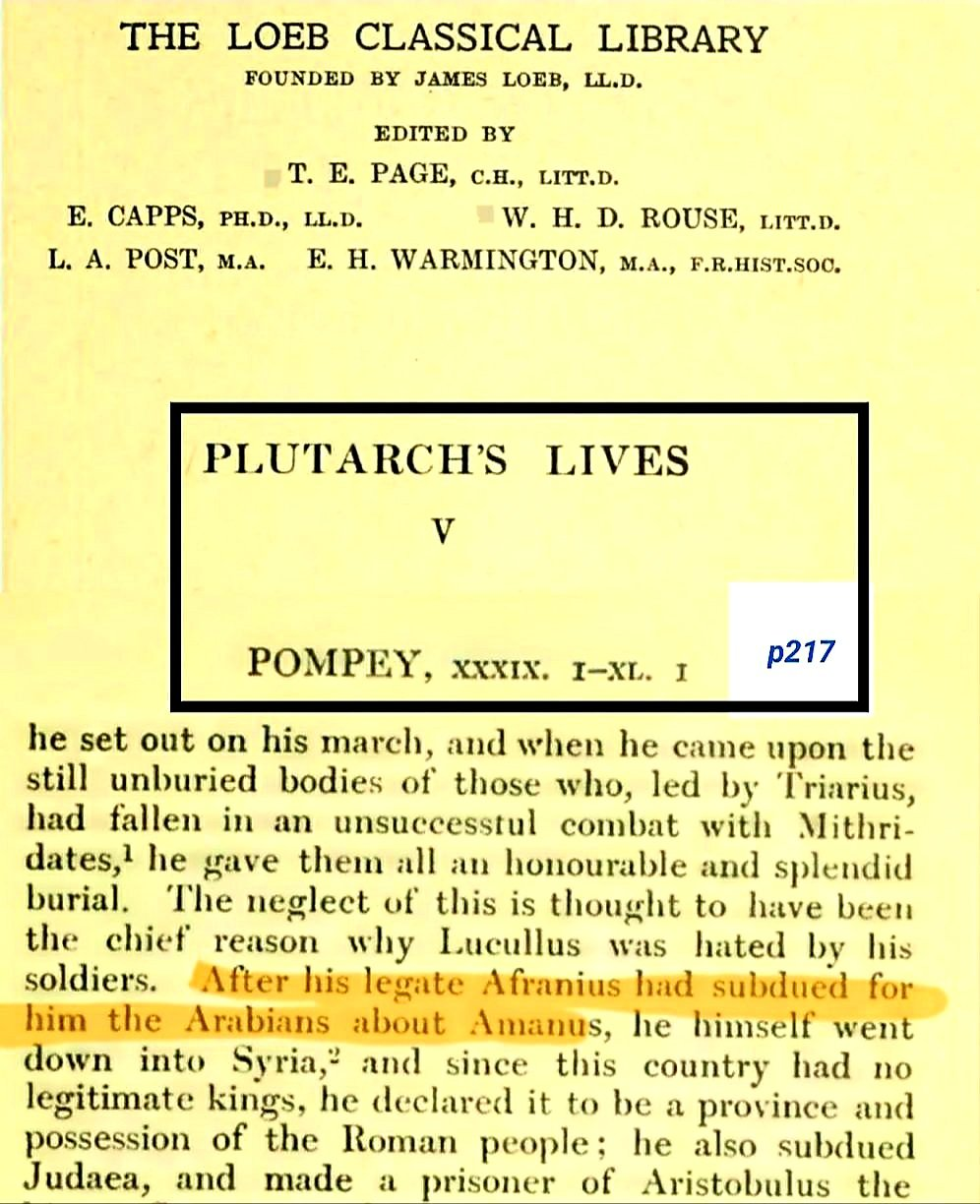
Plutarch, in his biography of Pompey, states that the Arabs were the inhabitants of the Amanus Mountains and that Pompey fought against them.
This means that the Antioch region was full of Arabs, as evidenced by the presence of Arabs in the Amanus Mountains.
Plutarch’s account, quoting Pompey, implies that the Syrian tetrapolis was an Arab land under Greek rule, and thus we have proven the Arabness of all of Syria.
[ PLUTARCH’S LIVES / Pompey 39:50 ]
Completed, and praise be to God.