Can Life Arise by Chance? Debunking Abiogenesis Through Logic and Cell Biology
Debunking the Myth That Life Originated by Chance Through Serendipitous Chemical Reactions
Table of Contents
- Argument 1 — The Logical Proof: Knowledge vs. Ignorance
- The Four Possibilities
- Can You Have a Thinking Mind Without Design?
- Objection — The Infinite Dice Throw
- Answer — Randomness Cannot Produce Order
- Counter-Response — “An Ignorant Person Acquires Knowledge Over Time”
- The Scientific Response — Is the Living Cell Evidence of Creation or Evolution?
- What Is Protein Made Of?
- The 20 Amino Acids Used in Proteins
- Conditions for Protein Formation
- The Enzyme Paradox
- Irreducible Complexity — Definition
- The Bacterial Cell — Component by Component
- What Happens If You Remove Any Part?
- The Problem of Chemical Attraction
- The Minimum Number of Genes — Destroying the Evolutionary Myth
- Viruses — What Happens Below the Minimum
- The Craig Venter Claim — Debunked
- Final Warning to the Reader
Argument 1 — The Logical Proof: Knowledge vs. Ignorance
Suppose we have a scientist who is professional in manufacturing spacecraft, and on the other hand we have an ignorant, uneducated person — who can build a spacecraft?
The Four Possibilities
We have 4 possibilities:
- The scientist is capable and the ignorant is incapable.
- Both are capable.
- The ignorant is capable and the scientist is incapable.
- Both are incapable.
- Knowledge → gives knowledge
- Ignorance → does not give knowledge
When you prove that nature has the ability to make, you have proven Possibility 2, because ignorance is proven for nature — which is a contradictory possibility, and the combination of opposites is rationally impossible.
Can You Have a Thinking Mind Without Design?
You may say: “Who told you that there is making and design?!”
We have two possibilities:
Objection — The Infinite Dice Throw
Answer — Randomness Cannot Produce Order
- The randomness that produces order is not even observed.
- Rather, he made a false comparison with the example we gave.
- The randomness that produces a complex order is logically impossible.
- The phrase “randomness produced order over time” is in itself a contradiction, because randomness implies the absence of order.
❓ How can something lacking order produce order?
It’s as if you’re saying that ignorance over time produces knowledge.
❌ “Does ignorance produce knowledge?” — No, because it lacks knowledge.
Similarly, randomness doesn’t produce order because it lacks order.
Counter-Response — “An Ignorant Person Acquires Knowledge Over Time”
If these mechanisms are lost, he won’t have knowledge.
Of course, I don’t need to explain the absurdity of those who claim that a madman could produce a system.
The Scientific Response — Is the Living Cell Evidence of Creation or Evolution?
بِسْمِ اللَّهِ الرَّحْمَنِ الرَّحِيمِ
Introduction
Evolutionists assume that life began with a simple bacterial cell. But let’s examine one of the most fundamental components of any cell: protein.
Proteins are essential building blocks — in some bacterial cells, they may make up as much as 50% of the cell’s mass.
What Is Protein Made Of?
Proteins are composed of amino acids.
There are approximately 500 types of amino acids in nature, but only 20 specific ones are used in proteins.
The 20 Amino Acids Used in Proteins
- Alanine
- Arginine
- Asparagine
- Aspartic acid
- Cysteine
- Glutamine
- Glutamic acid
- Glycine
- Histidine
- Isoleucine
- Leucine
- Lysine
- Methionine
- Phenylalanine
- Proline
- Serine
- Threonine
- Tryptophan
- Tyrosine
- Valine
Conditions for Protein Formation
For a chain of amino acids to qualify as a protein, several strict conditions must be met simultaneously:
❓ How did each type become specialized to perform a specific function? Why does one go to build the wall, while another performs internal functions?
The Enzyme Paradox
The answer lies in enzymes — which are themselves proteins.
- Proteins are built by enzymes.
- Enzymes are made of proteins.
- So where did the first enzyme come from?

Irreducible Complexity — Definition
🐭 Irreducible Complexity — Imagine a mousetrap: Remove any single part, and it stops working entirely.
Now apply this to a bacterial cell — considered the simplest form of life.
❓ Can any part of it be removed without breaking its functionality?
The Bacterial Cell — Component by Component
1 — The Capsule
A protective layer made mostly of complex sugars.
Functions include:
- Preventing dehydration
- Resisting phagocytosis (being eaten by immune cells)
- Shielding from toxins
- Enhancing pathogenicity (e.g., E. coli)
2 — Cell Wall
A rigid wall composed of proteins and sugars. This wall performs the following functions:
- Gives the bacterial cell its specific shape.
- Protects the bacteria from bursting if there is a difference in osmotic pressure between the internal contents of the cell and the surrounding environment.
- Helps stabilize the flagella and pili of the bacteria, which arise from the cytoplasmic membrane.
3 — Cytoplasmic Membrane
This layer is formed from phospholipids and a group of proteins.
- Responsible for the flow of materials into and out of the cell.
- Allows bacteria to adapt to the external environment and the various conditions surrounding them.
4 — Flagella
A hair-like structural structure that emerges from the cytoplasmic membrane.
- Provides a means of transport and movement for bacteria towards food or away from harmful substances.
5 — Pili
Small projections spread across the outer surface of the capsule.
- Help bacteria adhere to the walls of other objects.
- An important factor in making bacteria pathogenic because they allow them to adhere to the cell walls of the intestine, teeth, and other cells.
6 — Cytoplasm
A gelatinous tissue composed of water, nutrients, enzymes, waste products, and gases produced by bacteria.
- Provides a suitable location for the rest of the cell’s organelles and components.
7 — Nucleoid
The region of the cytoplasm that contains the specific DNA of bacteria.
- In most species, it is a single circular chromosomal thread responsible for the reproduction process.
- In some species, there are small circular strands of DNA called plasmids.
8 — Ribosomes
The parts responsible for translating the genetic code in DNA into the code for manufacturing amino acids to build proteins, which are important in many bacterial functions.
What Happens If You Remove Any Part?
The Problem of Chemical Attraction
❓ Have you ever seen or heard that chemical compounds attract each other?
Absolutely not.
❓ Have you ever seen two chemical compounds attract each other when you place them next to each other? Absolutely not.
- 🪫 So how do the compounds attract each other to interact and form amino acids?
- Or how do they attract each other, then form amino acids, then coordinate and assemble into specific clusters to form proteins, and then the proteins combine with each other to form the rest of the cell’s components?
The Minimum Number of Genes — Destroying the Evolutionary Myth
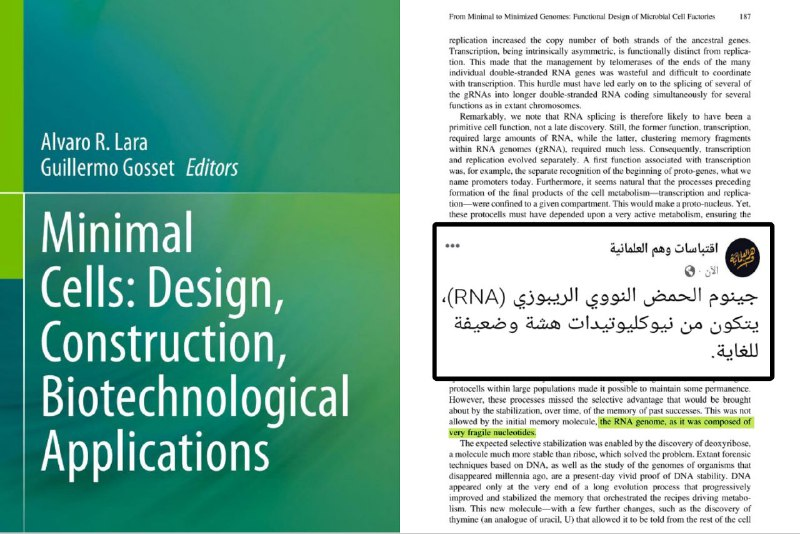
The myth of evolution is based on the idea that life began with zero genes and then evolved into a single gene randomly over time — regardless of:
- The rest of the structures of the simplest cell
- The function of each organelle in the first cell
- The conditions for protein formation
- Carbohydrates in the cell
- The conditions for gene formation
- The entire system for error repair
- Enzymes
- Complex transcription and translation processes
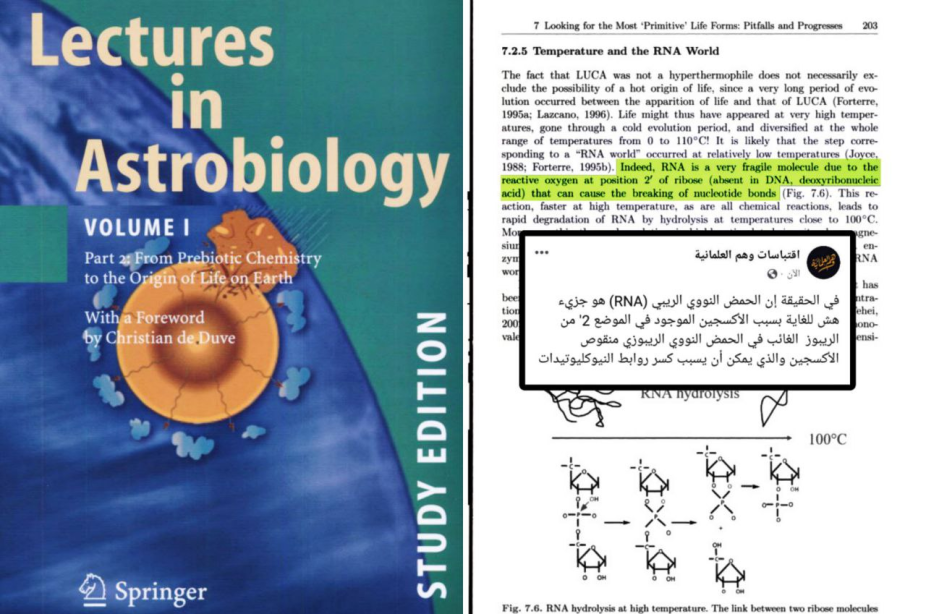
- Types of RNA
- The method of protein and carbohydrate synthesis
- etc…
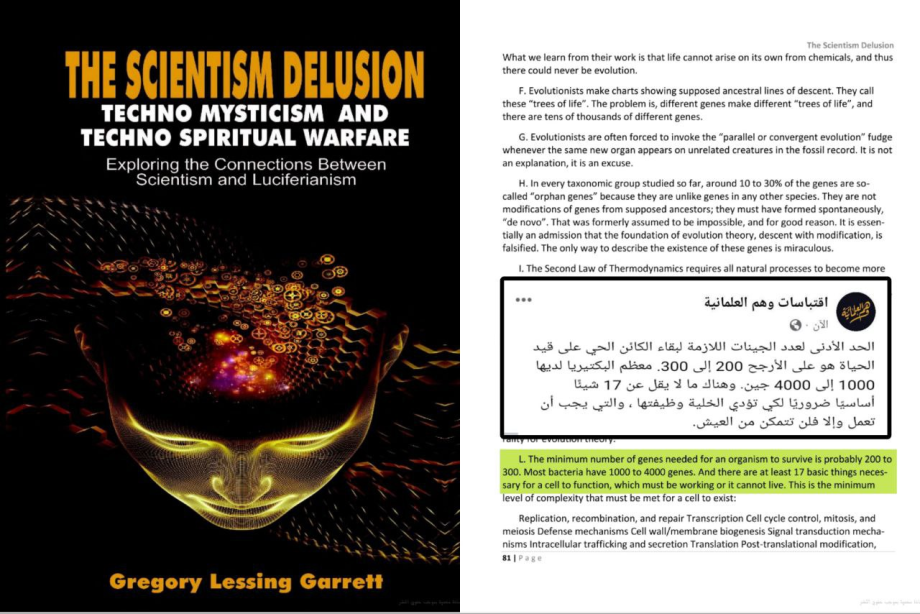
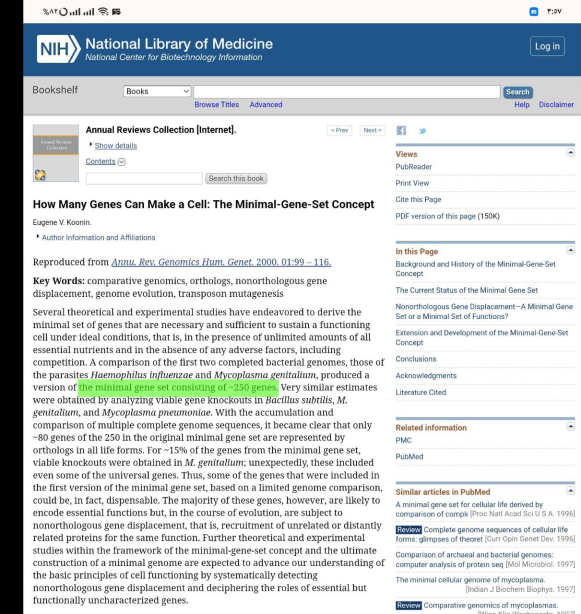
- One study says the minimum number of genes is 250 genes.
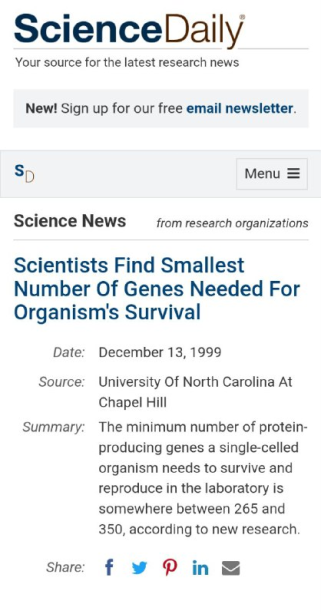
- Another study says 265–350 genes.
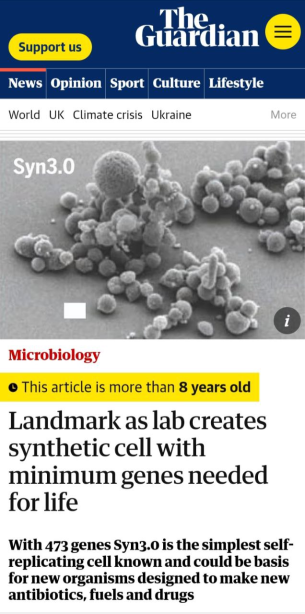
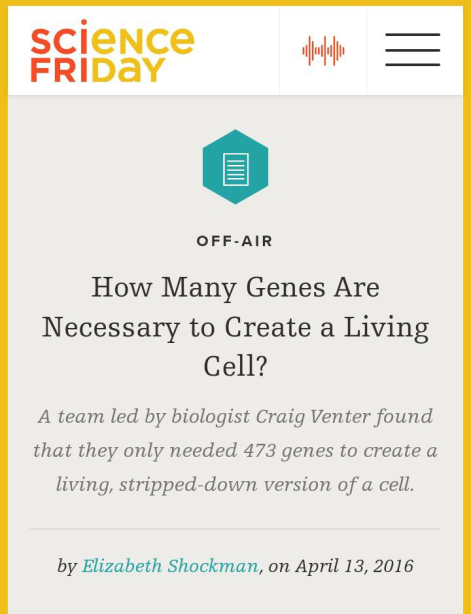
- Another study says the minimum is 473 genes for the cell to function.
🪫 Where is evolution in all this?!
Viruses — What Happens Below the Minimum
❓ Do you know what would happen if the cell contained fewer than the minimum number of genes?
Viruses are organisms that need a living organism in order to become alive.
- They have both living and non-living characteristics.
- They are non-living without an organism to feed on, and alive inside an organism.
- They are chemically inert without anything to feed on.
Without a living organism, they will not become alive — like the virus T4-Bacteriophage, which feeds on bacteria.
The Craig Venter Claim — Debunked
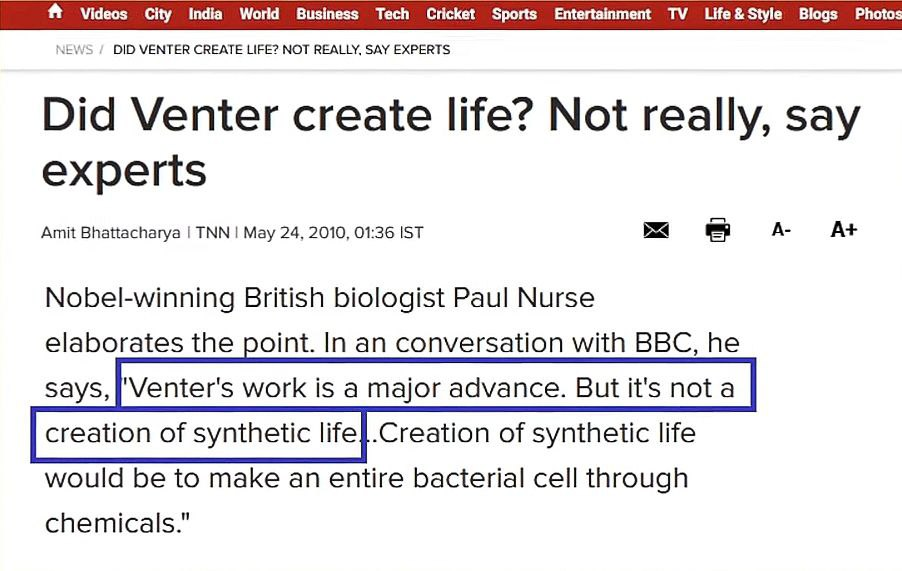
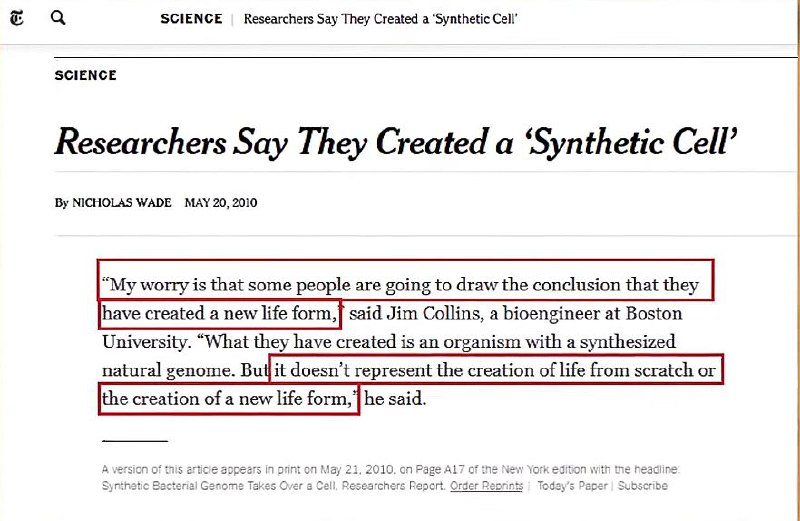
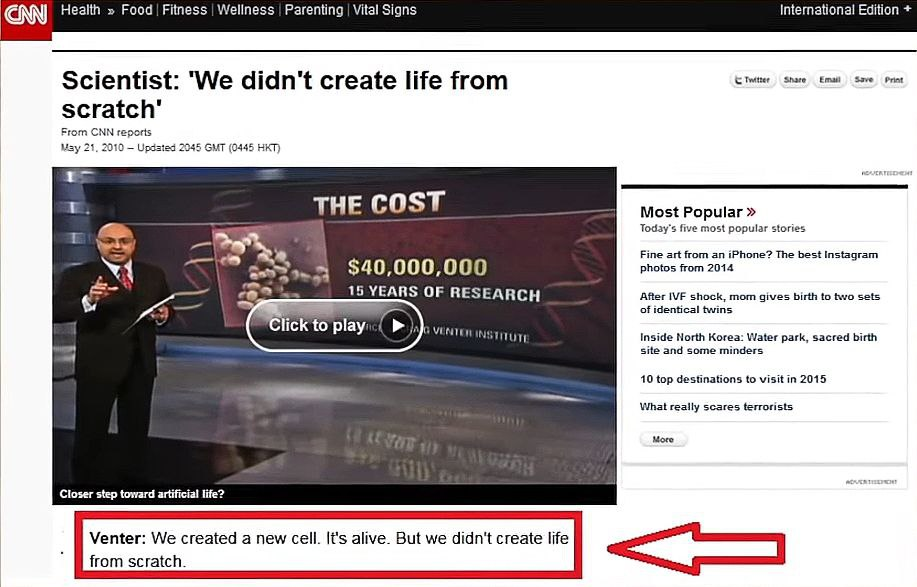
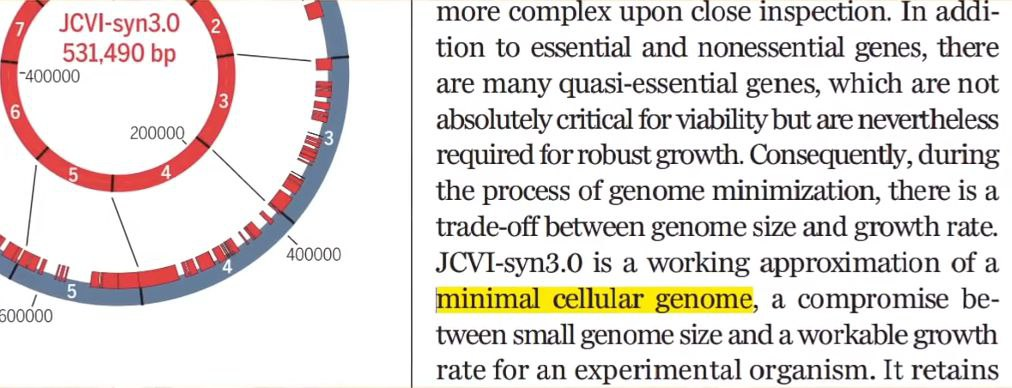
What Craig Venter did: He brought mycoplasma with its own membrane, cell enzymes, cell organelles, and a complete set of genes inside the cell nucleus, and then inserted a set of synthetic bases into the cell. The mycoplasma cell replicated these bases — it made more than one copy of these bases.
Here are Craig Venter’s two scientific papers:
- https://www.ncbi.nlm.nih.gov/pubmed/20488990
- http://science.sciencemag.org/content/sci/351/6280/aad6253.full.pdf

Do you know what is even funnier? Craig Venter’s research was about the minimum number of genes to produce a living organism.
The article is subject to expansion and amendment if they make new tweaks.
Final Warning to the Reader
Instead, ask him: “Can life arise by chance?!”
If he answers yes, or avoids the word “chance” by meaning it leads to coincidence, then the discussion will end — because there is no discussion with monkeys.