
Companions Witnessed the Prophet ﷺ Receiving Revelation — Refuting the "No Witnesses" Argument
The objection that “no one witnessed the Prophet ﷺ receiving revelation” is a non-sequitur. The first revelation in the cave being unwitnessed does not mean revelation never occurred — just as any event can occur without witnesses present. The revelation continued for over two decades, and the Companions witnessed it repeatedly.
Second: The incident in the cave was only the beginning. Revelation descended upon the Prophet ﷺ for more than twenty years after that, in public, among his Companions, on multiple occasions — and they witnessed it, recognized it, and narrated it in detail.
The Companions Witnessed the Descent of Revelation
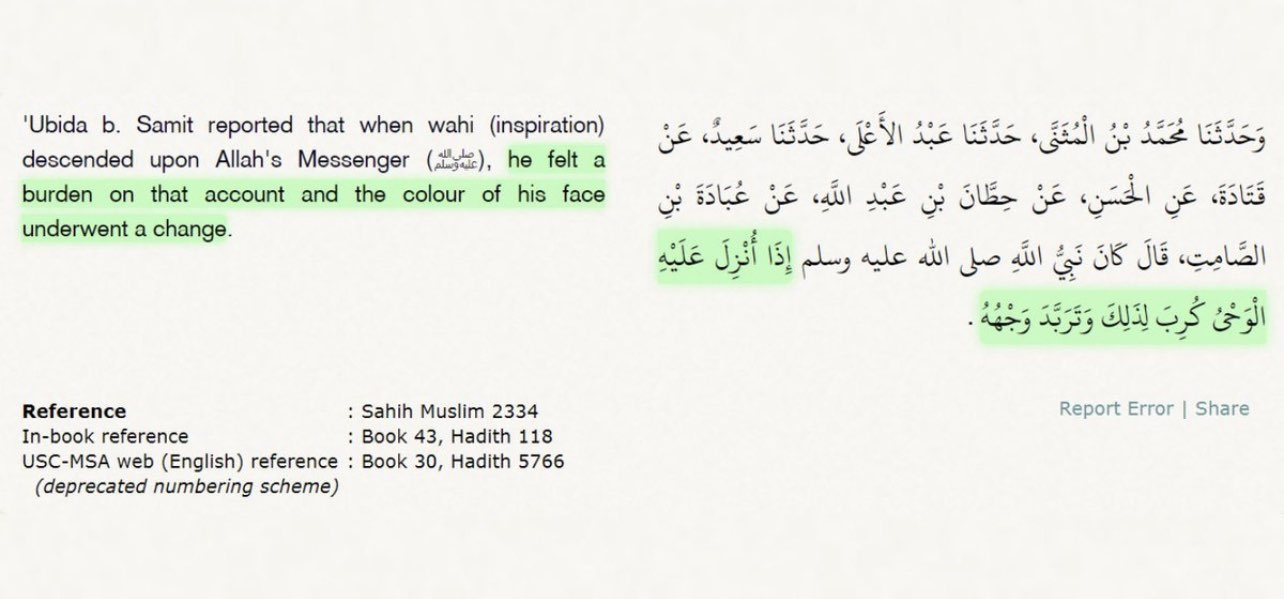
1. Ubada ibn al-Samet — He Knew the Physical Signs
Ubada ibn al-Samet (RA) was regularly present when revelation descended upon the Prophet ﷺ. He observed the process so frequently that he could recognize and describe the physical changes it produced in the Prophet ﷺ.
2. Aisha (RA) — “The Same State”
This narration is part of the long hadith of Aisha (RA) concerning the incident of the slander (Hadith al-Ifk). After a month of silence, revelation descended upon the Prophet ﷺ declaring her innocence. Aisha (RA) describes the moment with a phrase that reveals how familiar the experience was to her:
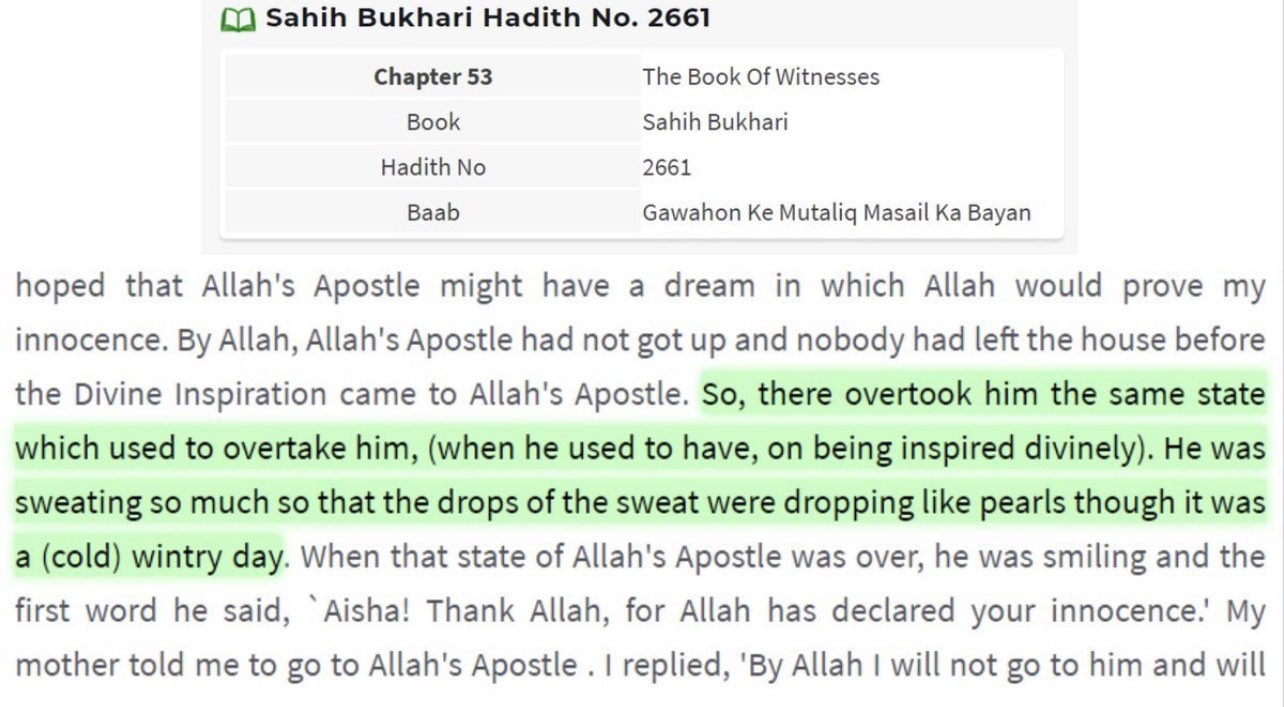
Her words — “the same state” — confirm that she had witnessed this condition in the Prophet ﷺ many times before and recognized it immediately.
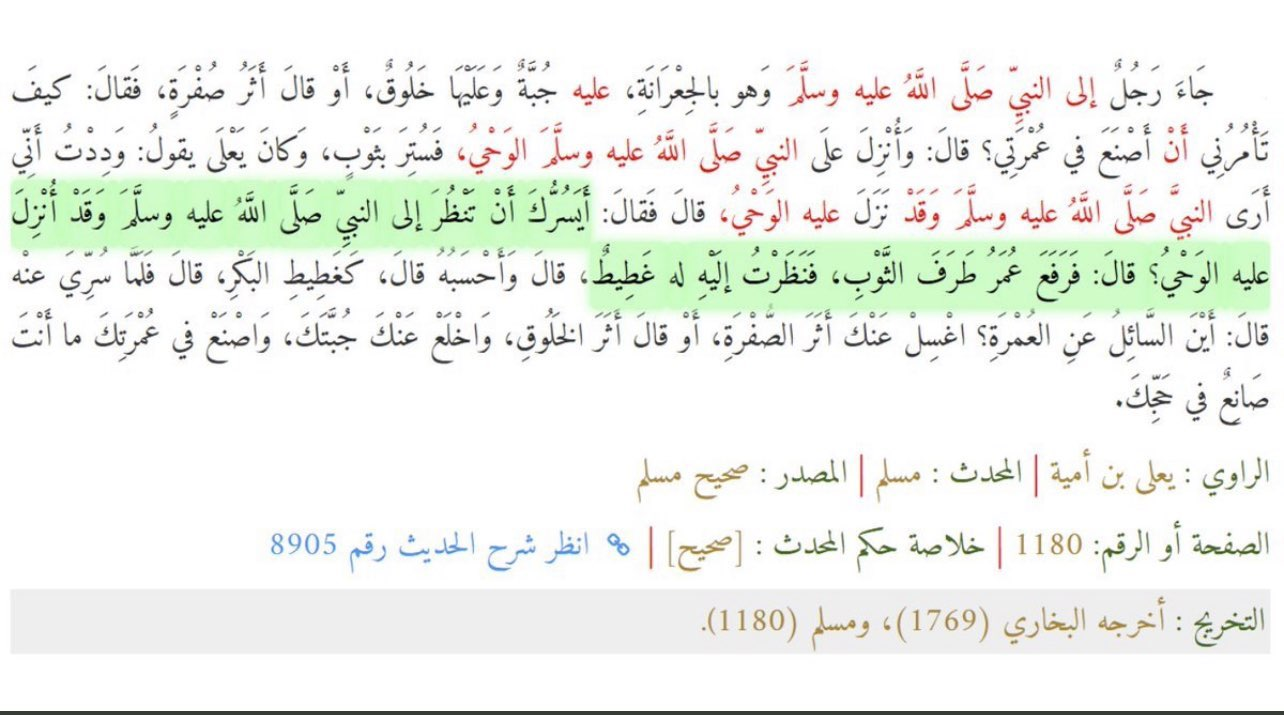
3. Umar (RA) Invites Others to Witness — Sahih Muslim
In this hadith from Sahih Muslim, a man asked the Prophet ﷺ a question about Umrah. As the answer was descending via revelation, Umar (RA) turned to the questioner and invited him to observe the Prophet ﷺ in that state. When Umar lifted the cover, the Prophet ﷺ was breathing heavily. He was in public. The Companions not only recognized “that state” — they invited others to witness it.
4. Ubada ibn al-Samet — The Companions Would Lower Their Heads
Ubada ibn al-Samet (RA) narrates how the Companions would react when revelation descended while the Prophet ﷺ was sitting among them. Out of reverence, the entire gathering would lower their heads and wait — lifting them only when the Prophet ﷺ lifted his.
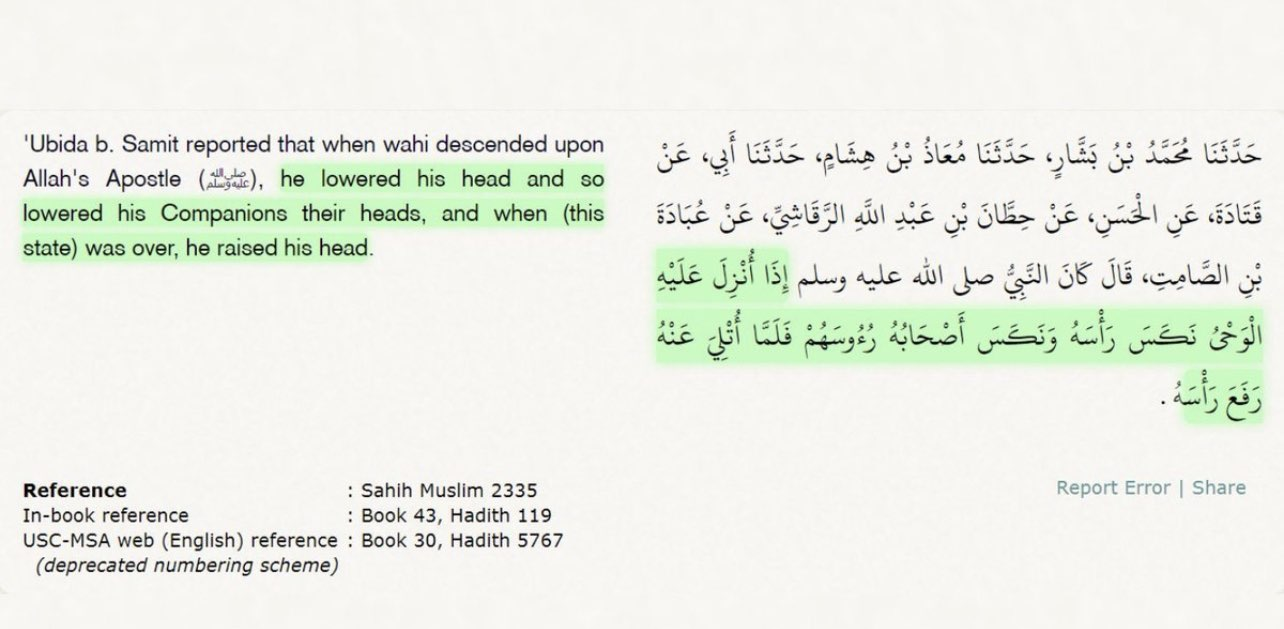
This was a communal, public experience — not a private, unverifiable claim.
5. Aisha (RA) — The Weight of Revelation
Aisha (RA) describes the physical heaviness that revelation placed upon the Prophet ﷺ. This is corroborated directly by the Quran itself:
“For We will soon send upon you a weighty revelation.”
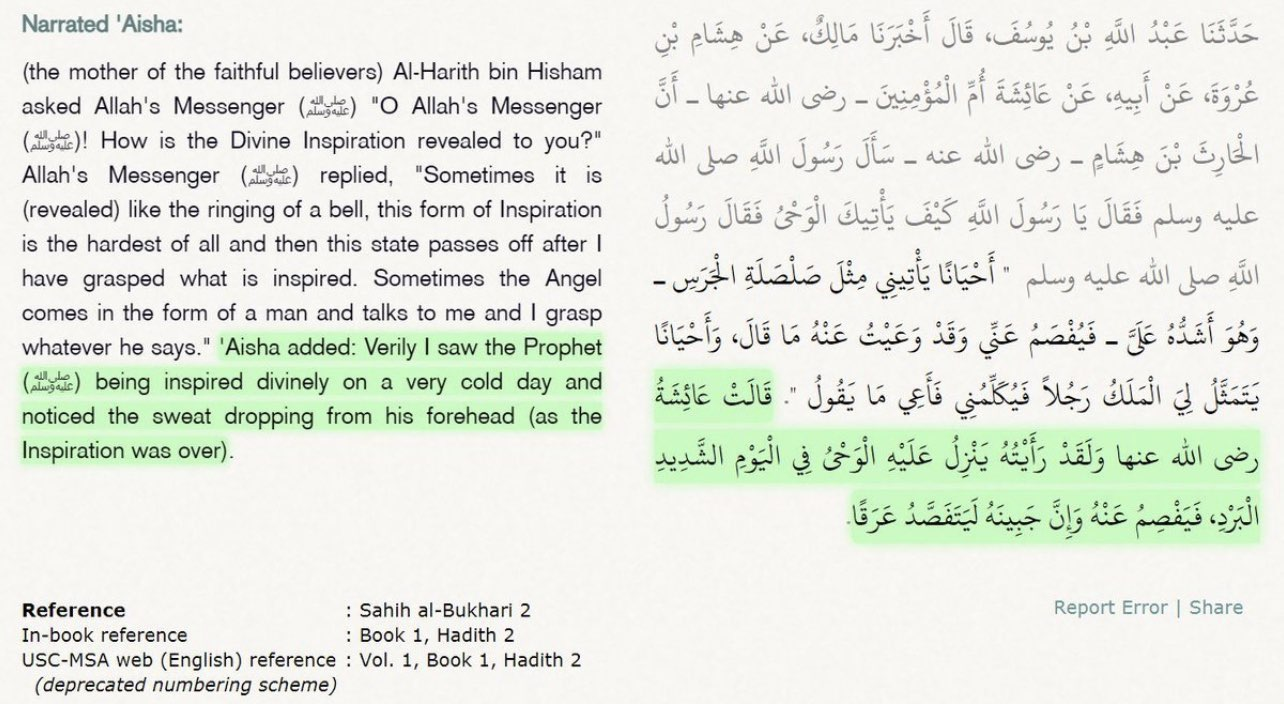
6. Multiple Companions — The Camel Could Not Move
Several Companions narrate the same incident: while the Prophet ﷺ was riding his camel and Surah al-Ma’ida was being revealed to him, the camel suddenly sat down and could not carry him. Multiple Companions witnessed this event and narrated it independently.
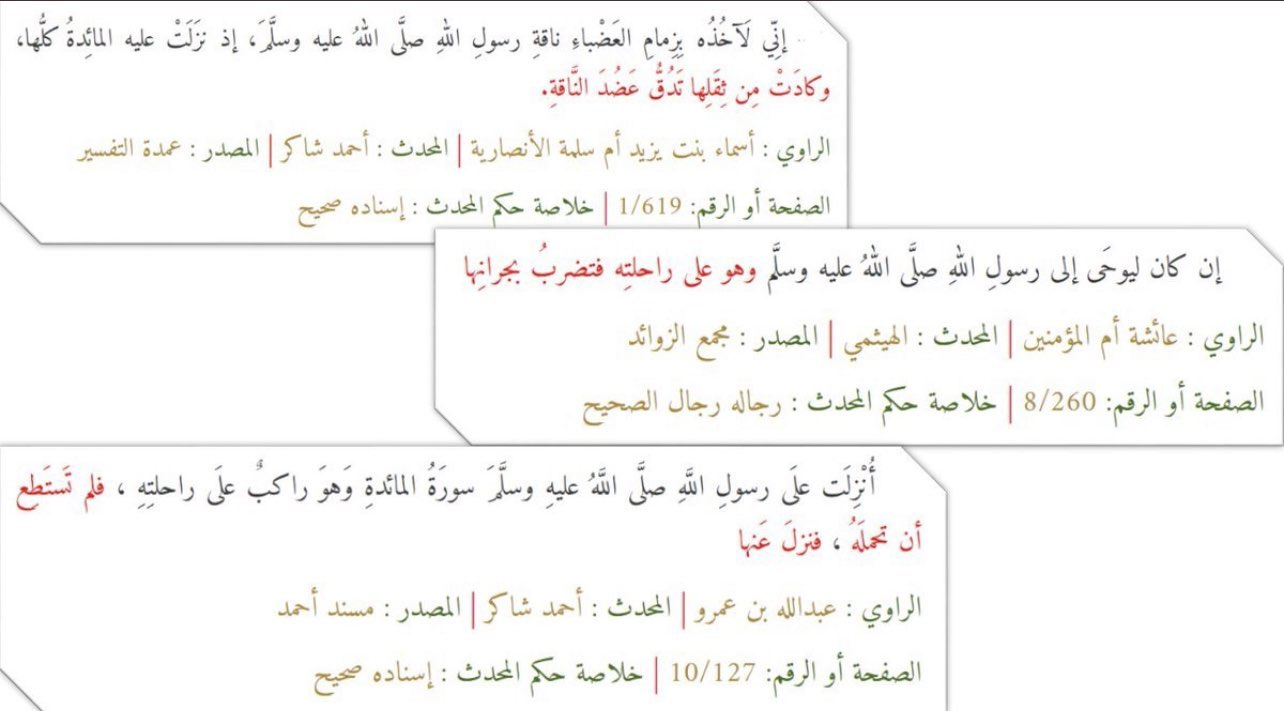
Multiple independent witnesses narrating the same physical event — a camel collapsing under the weight of revelation — is precisely the kind of corroboration that eliminates the possibility of fabrication.
7. Aisha (RA) — Revelation While He Was Eating
Aisha (RA) narrates that she saw the Prophet ﷺ eating in her room when revelation suddenly descended upon him. She recognized when the revelation had ended because he returned from the state she had come to know well. Importantly — he never dropped the food from his hand. The physical signs were present, but he remained composed.
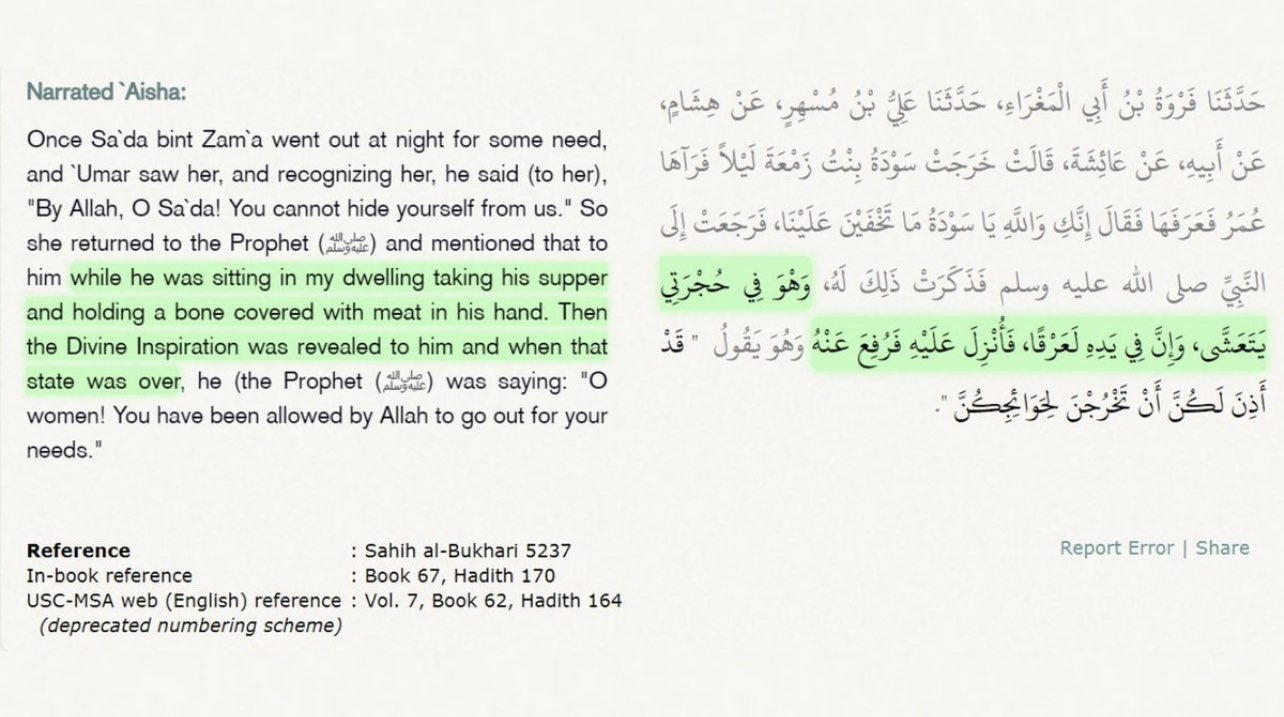
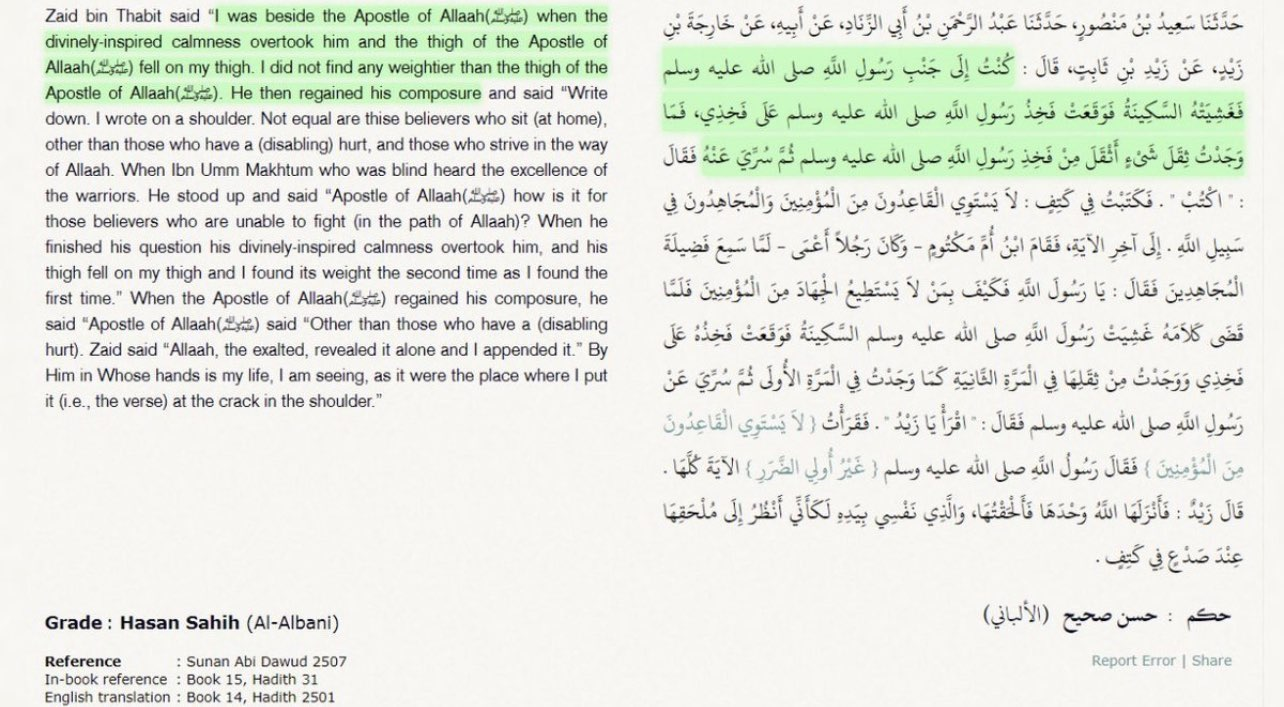
8. Zaid ibn Thabit — Sitting with the Prophet ﷺ When Jibreel Came
Zaid ibn Thabit (RA) narrates an incident in which he was sitting with the Prophet ﷺ when Jibreel came with revelation. He describes what he witnessed firsthand.
In all of these narrations, the Prophet ﷺ was not shaking or convulsing uncontrollably. Those around him recognized the state of divine inspiration from its familiar physical signs — and they waited for it to pass with full awareness of what was occurring.
9. The Companions Who Saw Jibreel as a Man
There are multiple hadith in which the Companions witnessed Jibreel (AS) come to the Prophet ﷺ in the form of a man, teaching him. These are separate testimonies from multiple witnesses across different occasions.
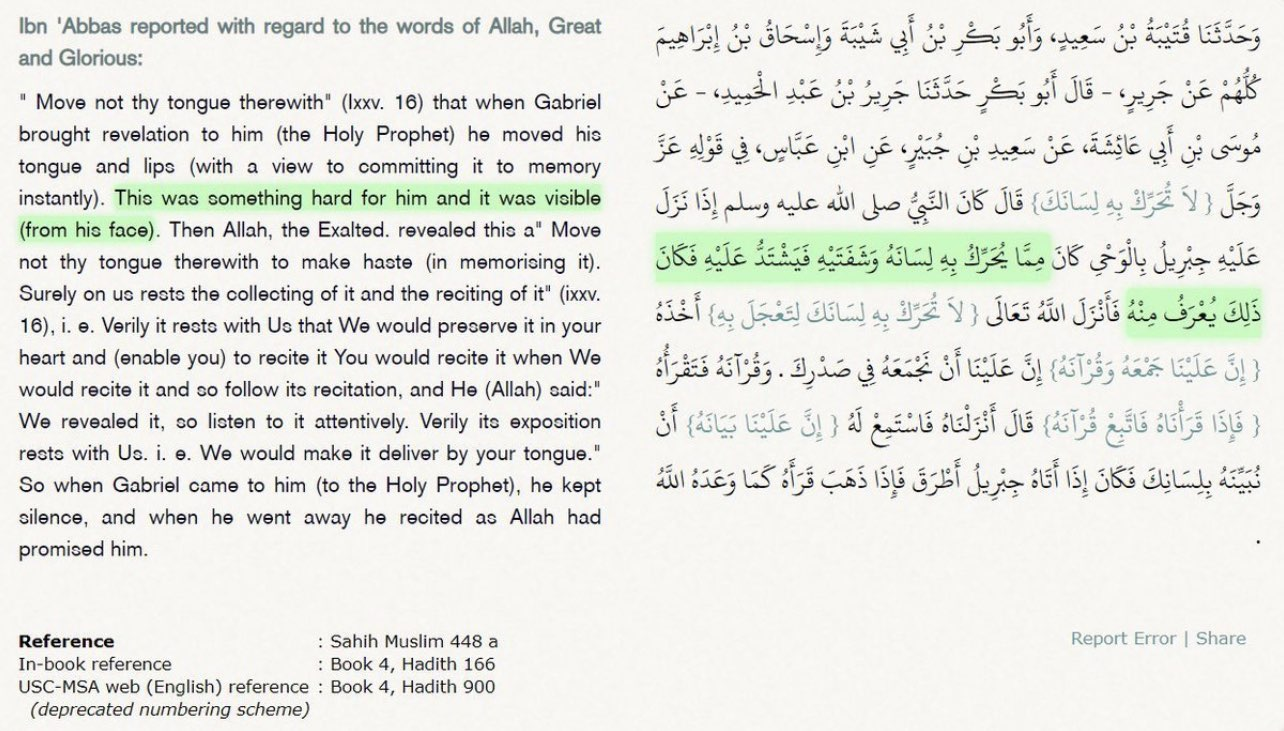
10. Ibn Abbas (RA) — The Descent Was Visible and Known
Ibn Abbas (RA) narrates how the descent of revelation upon the Prophet ﷺ was visible and recognizable to those present.