By Kufrcleaner V1
.
In general…can we take any certainty from this book???
Who sanctified this book??? … And was it distorted? … Who distorted it and why did they distort it???
What are the sources of this book???
Did the ancient church know this book??… Did the ancient church fathers believe in a book called the Holy Bible consisting of 66 or 73 books???
When the scribes were copying this book…were they aware that they were copying a holy book…or did they have another point of view towards this book???
Was the copying process infallible??…Did the copyists change the texts of this book???…And why did the copyists change some texts???
Did the ancient church fathers declare that there was any distortion in the book???
In this research, God willing, we will provide answers to these questions in detail… and we have taken into account several things in our research:
1The research is 100% Christian and we have not touched on Islam from near or far… All the talk is from Christian references… and from the words of the Church Fathers… The research is presented to Christians before anyone else… and as much as possible, all the talk will be from illustrated Christian references… and I have not spoken a single word without evidence or more… through senior Christian scholars…
2Not addressing the internal criticism of the book as evidence of distortion… the content of the book itself does not concern us at all… and we have never addressed it.
The book is either from God… and here we accept everything inside it… or from someone other than God… and here there is no need to discuss its content.
3We have not addressed the distortions related to translations… the occurrence of distortions in the translation has nothing to do with the original book… the important thing is that no distortion occurs in the original itself.
The nature of the Holy Book.. does not go beyond one of four possibilities: -
The first possibility … that it was already holy… and was never distorted.
The second possibility … that it was holy… but was distorted.
The third possibility … that this book was not originally holy… but was preserved as it is and was not distorted…
The fourth possibility … that it was not holy… and was distorted…
The truth is that the point related to the holiness of this book is extremely important.. If we prove that this book was not originally holy… then there is no need to talk about whether it was distorted or not…
and talking directly about the distortion of this book without searching for its origin… is an implicit admission that this book was already holy but was distorted… and this is a very serious admission,
so we will begin, God willing, with the point related to the origin of this book and the relationship of the church and the church fathers to it… then we will discuss the story of its distortion or not…
🚨🚨🚨🚨
1- [The original text is not sacred because it was copied from other documents]
We found this through the words of church scholars… Yes, the writers of revelation had sources from which they copied.!!! … And no church scholar told us… What is the nature of these sources.. Are they revelations given that the writers of revelation copied from them or what???
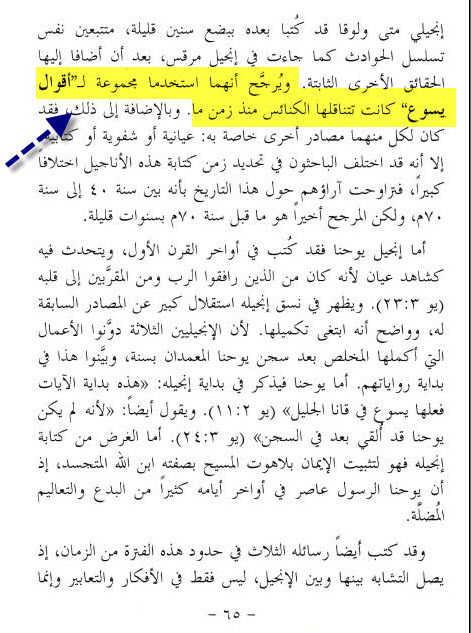
It is known that the first source… for the writer of the Gospel of Luke and the writer of the Gospel of Matthew and also John… is the Gospel of Mark.!! … And besides the Gospel of Mark there was another common source used by the writer of Matthew and the writer of Luke, which the scholars called (the sayings of Jesus or document Q) … And there was a third source used by Luke and Matthew did not use (and the scholars called it document L) … And a fourth source used by the writer of the Gospel of Matthew and the writer of Luke did not use… (and the scholars called it M)
Now let’s see what the church scholars say…
William Barclay, New Testament commentator, says - Gospel of Mark - Page 11
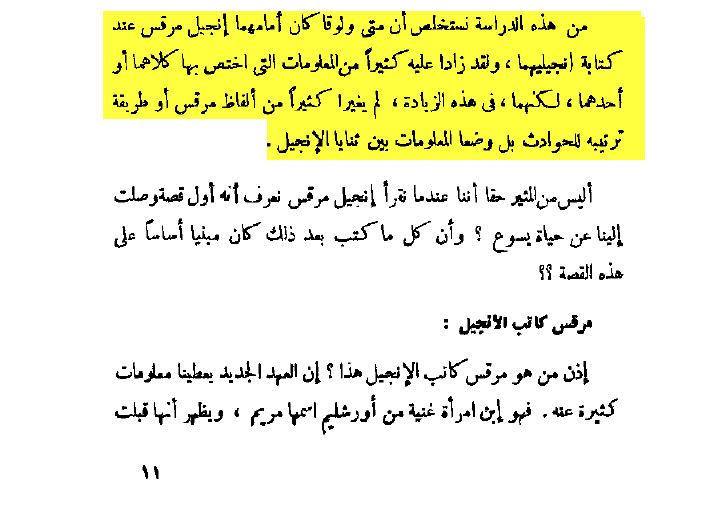
Here William Barclay confirms Matthew and Luke’s use of the Gospel of Mark…
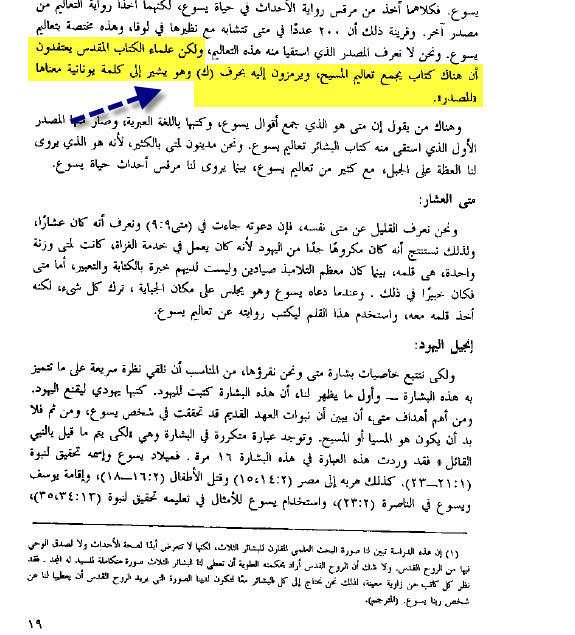
William Barclay says in his interpretation of the Gospel of Matthew - page 19
that the similarities between the Gospel of Luke and Matthew… are taken from an ancient lost book that collected the teachings of Christ…
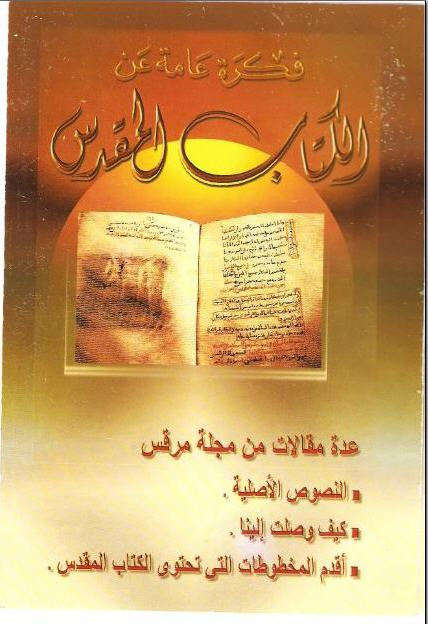
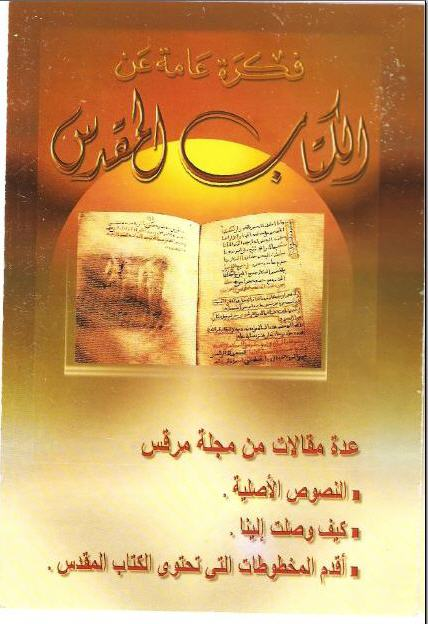
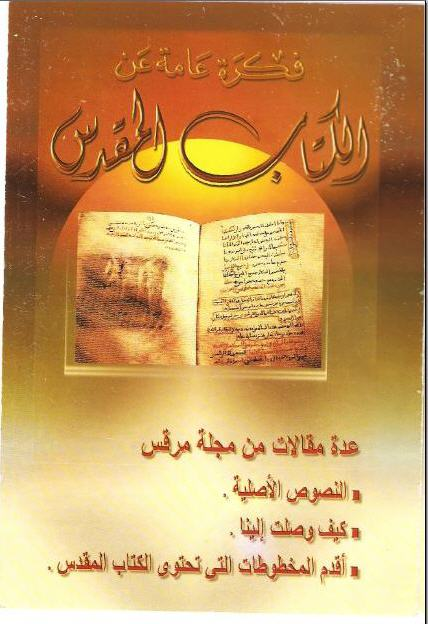
The same words are found in the book… A General Idea about the Holy Bible
General idea about the Holy Bible - Page
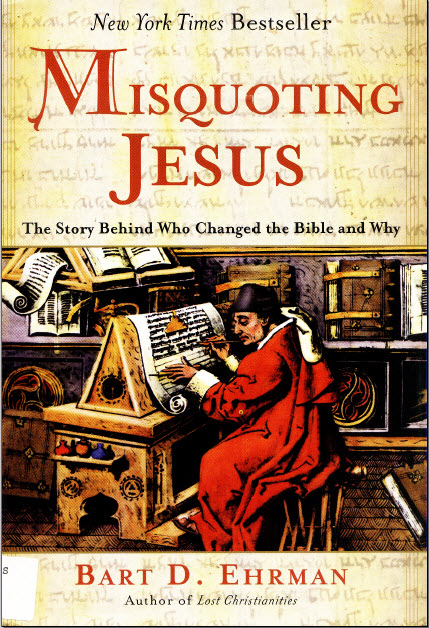
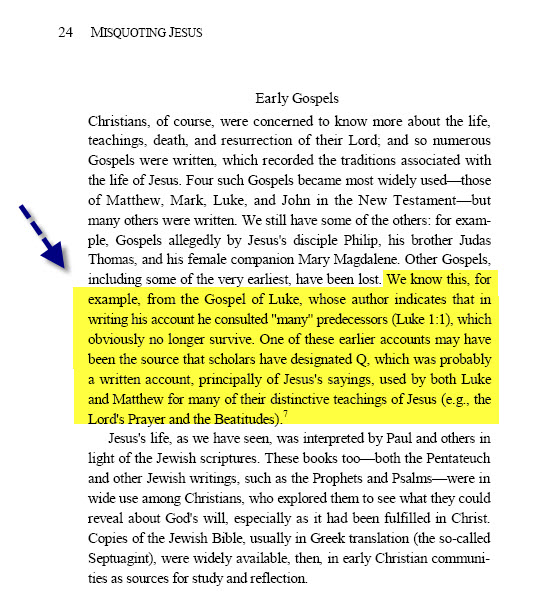
Bart Ehrman says…(1)
We know this, for example, from the Gospel of Luke, whose author indicates that he drew on “many” earlier writings (Luke 1:1), which are clearly no longer extant. One of these older accounts may have been the source identified by scholars as “Q,” which was probably a written account containing essentially the sayings of Jesus, and which both Luke and Matthew used as a source for many of Jesus’ own teachings
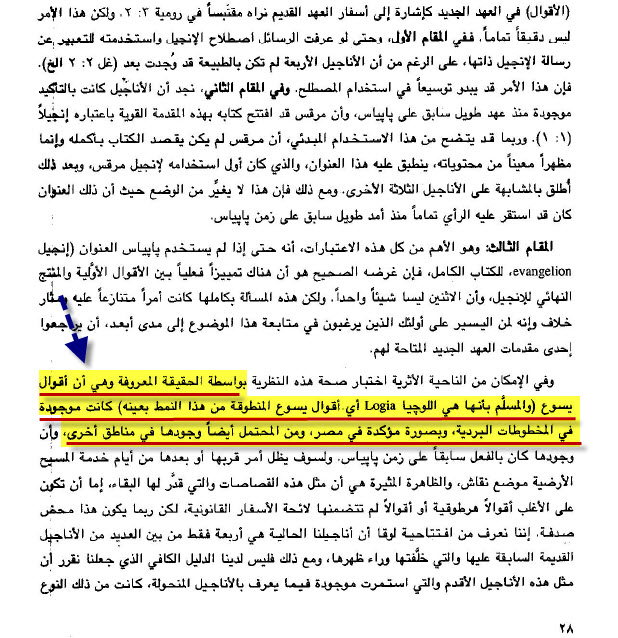
The existence of an ancient collection of Jesus’ sayings is a known fact. There were papyrus manuscripts…and certainly in Egypt and other places…
Modern Commentary on the Bible - Page 28
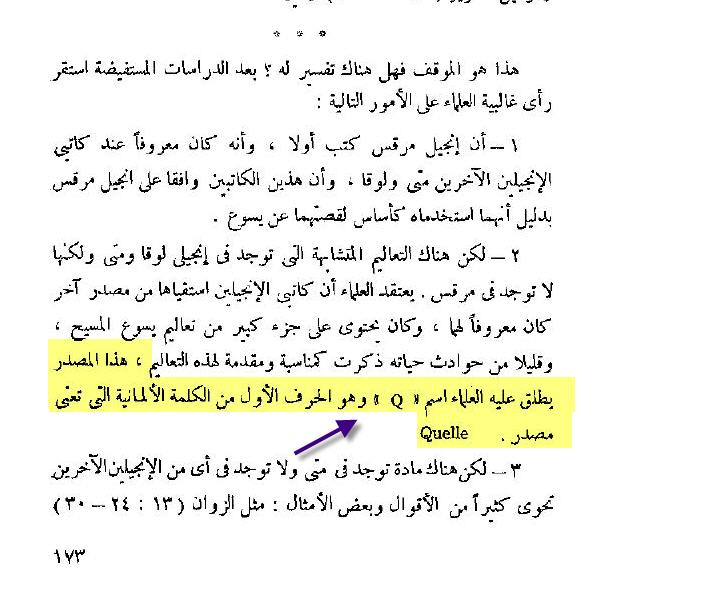
Dr. Fahim Aziz tells us the story of the sources (Q - L - M)
Introduction to the New Testament Page - Father Fahim Aziz - 173 - 174 - 175
Introduction to the New Testament Page - Priest Fahim Aziz - 173 - 174 - 175
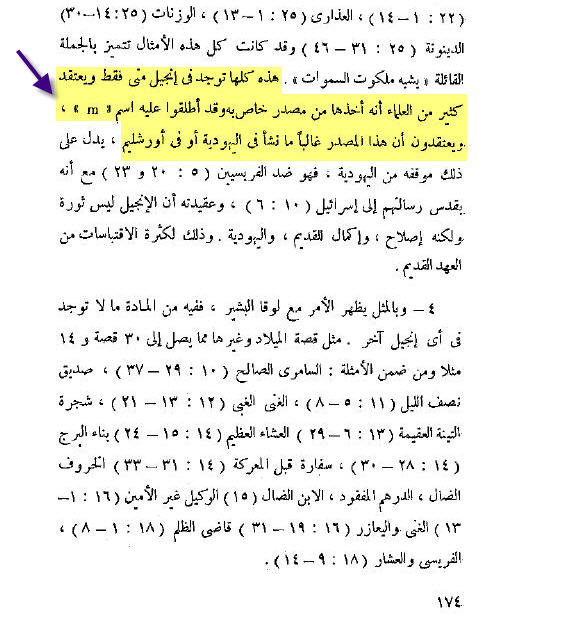
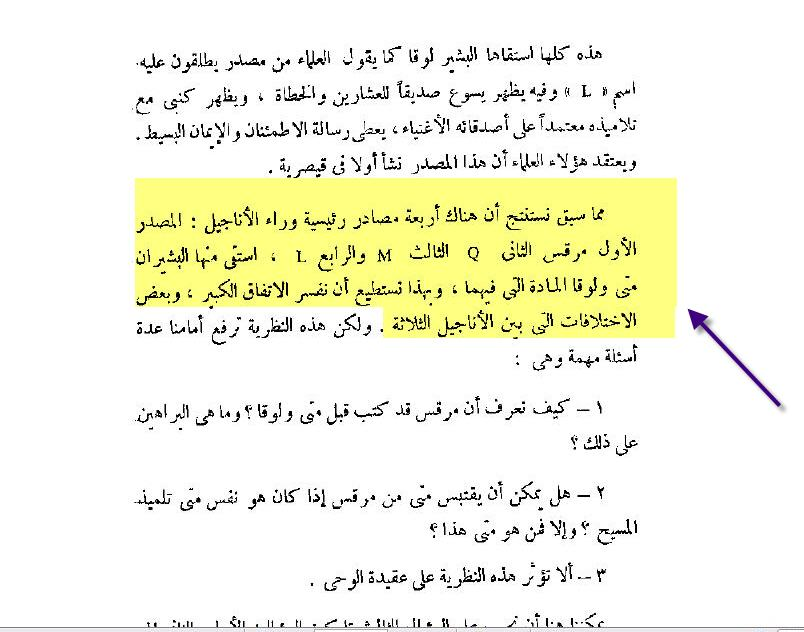
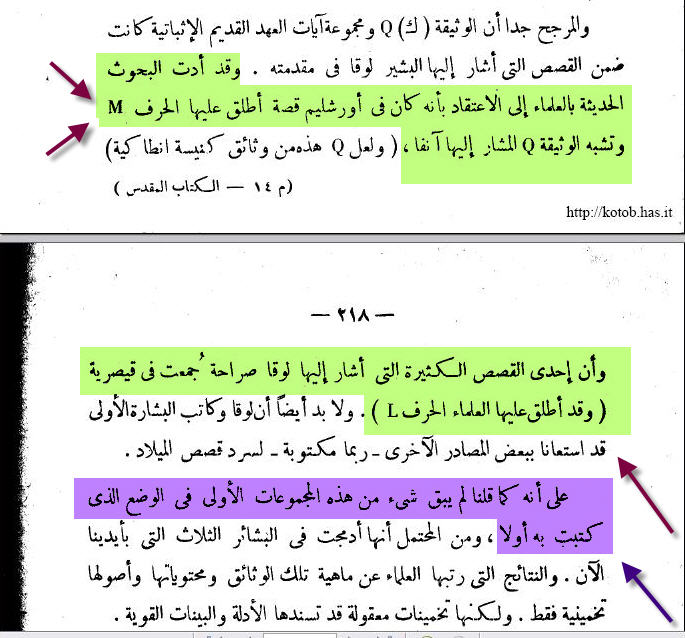
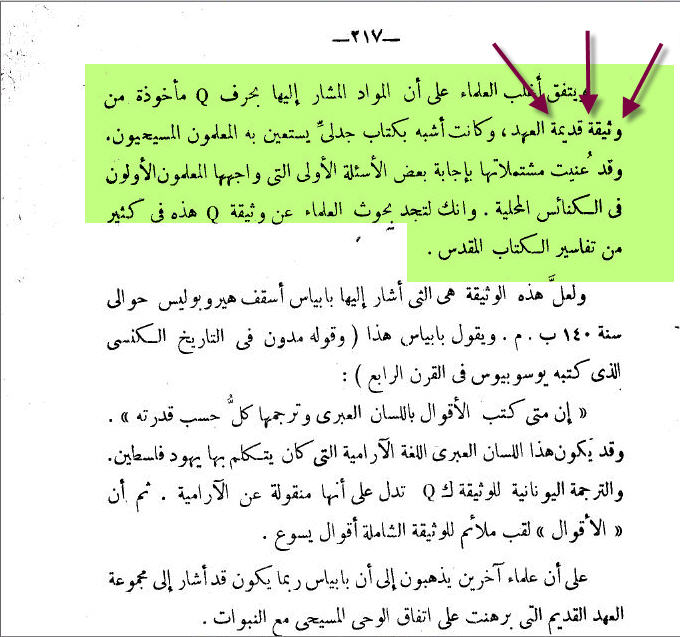
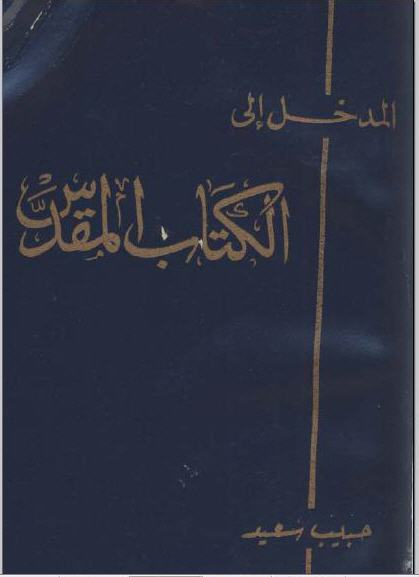
This is also beautifully illustrated by Habib Saeed in his book Introduction to the Holy Bible.
Introduction to the Holy Bible - Habib Saeed - 216 - 217 - 218
Introduction to the Holy Bible - Habib Saeed - 216 - 217 - 218
In the Jesuit translation… we find a simplified drawing that explains these sources to us.
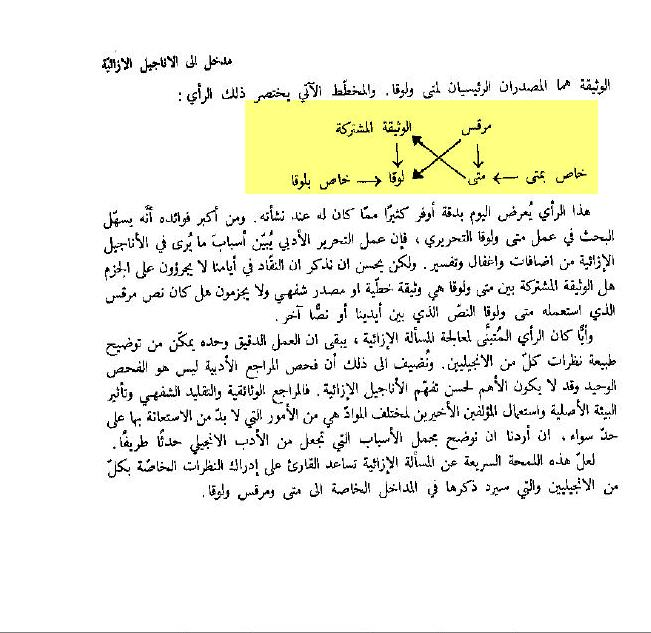
Matthew’s sources are… Mark, the common document, and a source specific to Matthew.
Luke’s sources are… Mark, the common document, and a source specific to Luke.
This is also explained by the author of the book A Guide to Reading the Holy Bible, who said that Mark also quoted from document (Q).
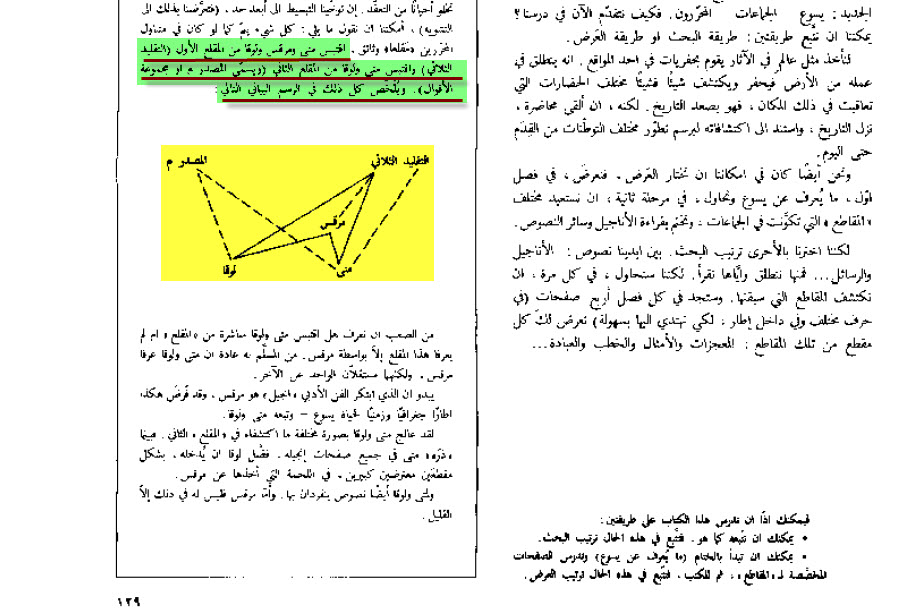
Now we know that some of the Gospel writers copied from other books they had… So we have 3 missing sources (l - M - Q)… And certainly these sources were reliable sources.. Otherwise, the Gospel writers would not have copied from them..!!
The question now is.. What is the nature of these sources?? Are they inspired or what??… And what about the book of the teachings of Jesus, is it inspired??… On what basis did the Gospel writers copy from these books??? Did they have a divine order to copy from these books..??.. And what is the evidence???
If these books were inspired… then why do we call the Gospels.. inspired as well??
And if they were not inspired… then how do the writers of the revelation copy.. from human books??!!
we go to the Old Testament, we will find that the matter is no different from the New Testament…
Unlike the traditions of the ancient Near East from which the writers of the Old Testament books copied
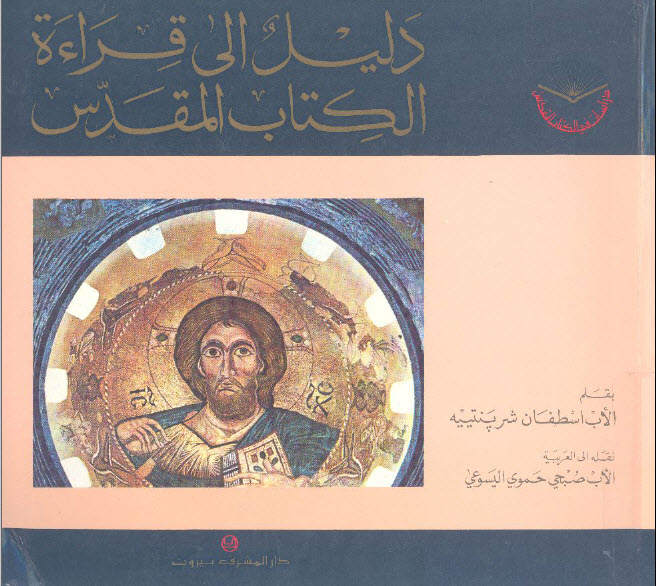
When we talk about the current Torah… we will find that it is also taken from four ancient documents… [The Yahwist Tradition - The Elohim - Deuteronomy - The Priestly Tradition]
and these documents were written by prophets, priests and sages…!!! … These four documents were collected by unknown persons… in five books, which are the books of the current Torah…
Father Stephan Charpentier, author of the book A Guide to Reading the Holy Bible, talks about the formation of the Torah from the four sources.
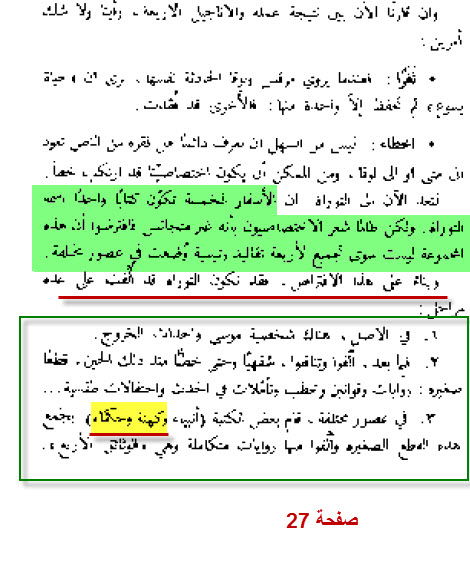
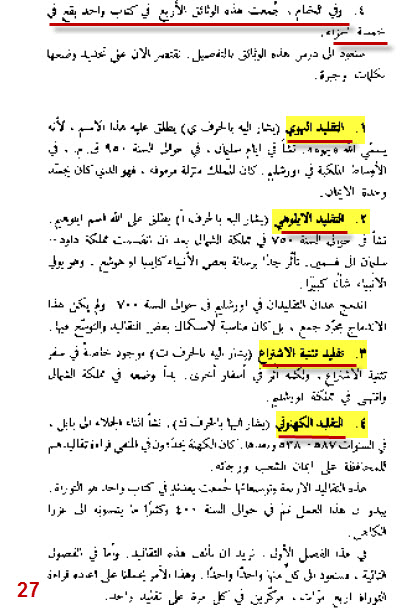
These documents were also referred to, or as scholars call them [J,E,D,P] … by Dr. Samuel Youssef .. (2)
and Habib Saeed, author of the book Introduction to the Holy Book, says that there is an overlap between the verses of the Torah .. and differences in the numbers … from which scholars learned that the Torah was written by more than one person … in different times … from different stories …
As for the writers of the current Torah … we do not know their names ..!!!
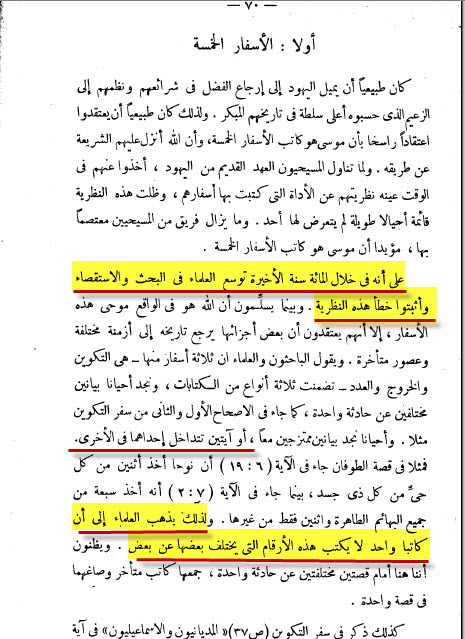
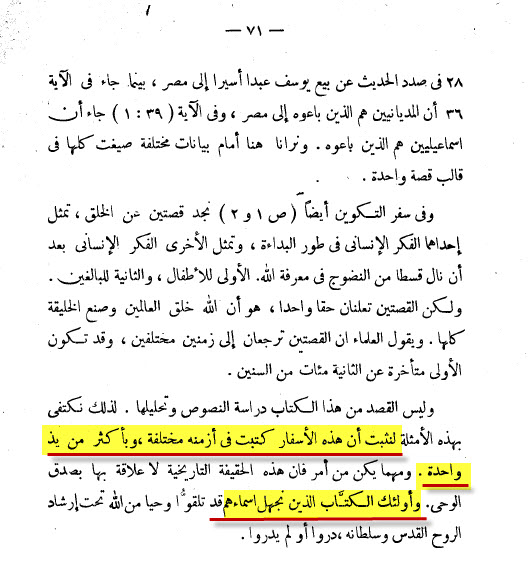
The Old Testament itself shows that there were prophetic books that the Old Testament writers had… and they do not exist now…
Encyclopedia of the Bible - Chronicles - Travel
For example,
1 Chronicles
29:29 And the acts of King David, first and last, are written in the books of Samuel the seer, and in the books of Nathan the prophet, and in the books of Gad the seer.
Joshua
10:13 And the sun stood still, and the moon stood still, until the people had avenged themselves on their enemies. Is not this written in the book of Jasher? And the sun stood still in the midst of heaven, and did not hasten to go down, about a whole day.
1 Kings
11:41 And the rest of the acts of Solomon, and all that he did, and his wisdom, are they not written in the book of the acts of Solomon
? 2 Chronicles
9:29 And the rest of the acts of Solomon, first and last, are they not written in the books of Nathan the prophet, and in the prophecy of Ahijah the Shilonite, and in the visions of Iddo the seer against Jeroboam, son of Nebat.
All of these books and scrolls are not found in the Old Testament…
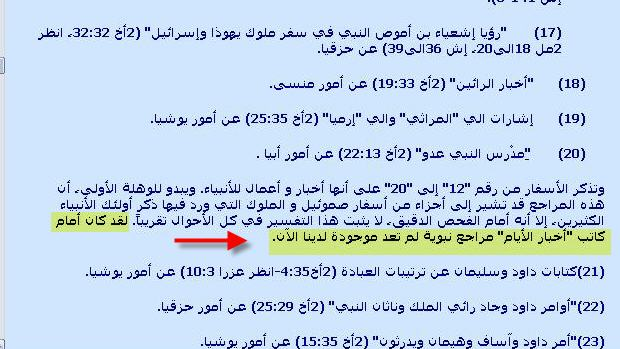
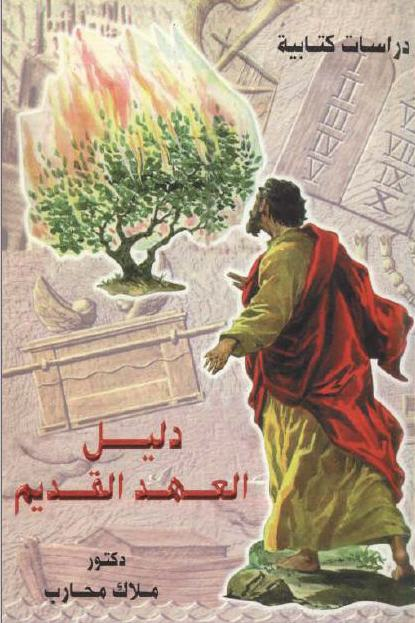
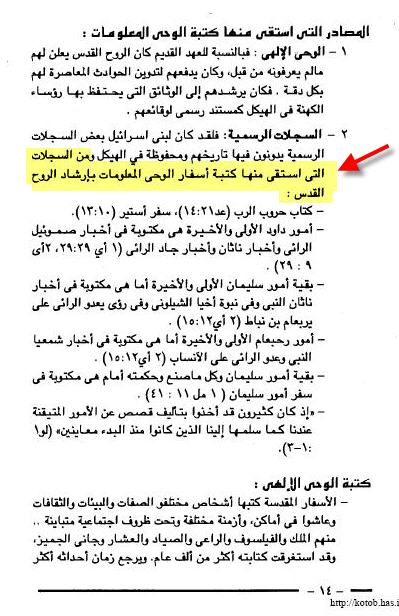
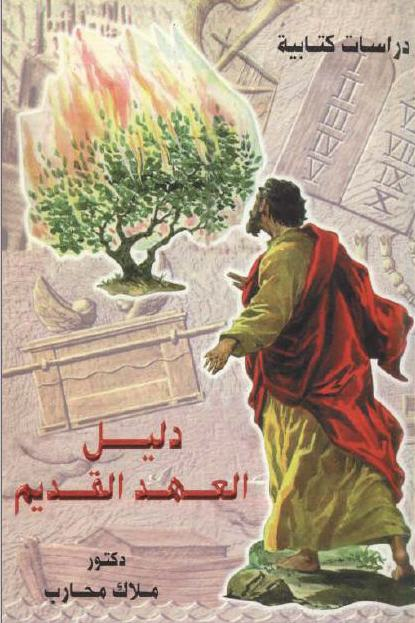
Dr. Malak Muharab indicated… that the Old Testament was quoted from these books.!!
Old Testament Guide - Dr. Malak Muharib - Page 14
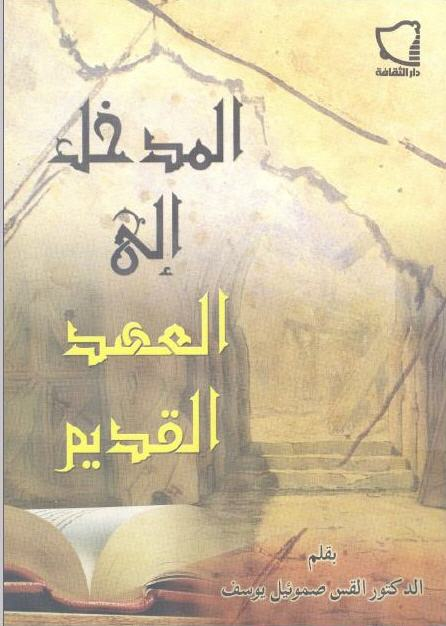
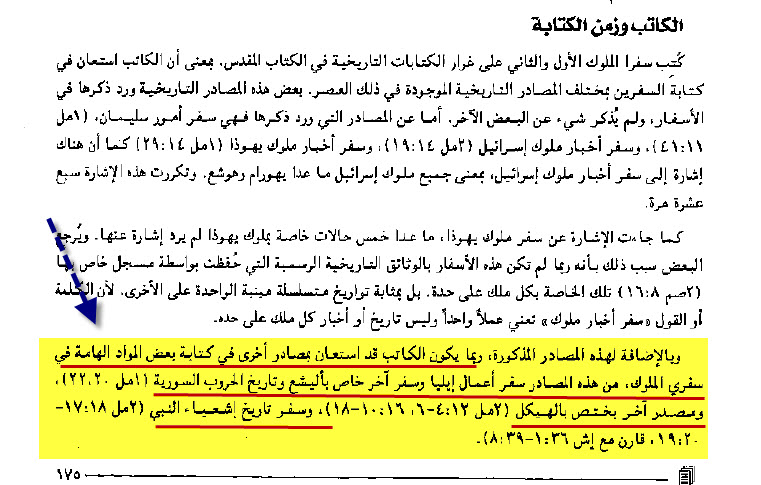
Dr. Samuel Youssef says that the writer of the Book of Kings… quoted from apocryphal books… such as the Book of Acts of Elijah and the History of the Acts of Syria
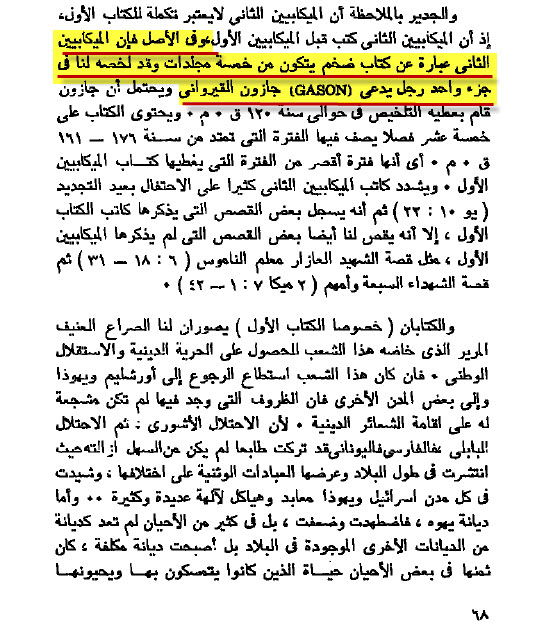
The matter becomes even stranger… when we look, for example, at the Second Book of Maccabees… This book is merely a summary of a book consisting of five parts…
History of Christian Thought - Dr. Hanna Al-Khadri - Page 68
Dr. Samuel Youssef says that the writer of the Book of Kings… quoted from apocryphal books… such as the Book of Acts of Elijah and the History of the Acts of Syria.
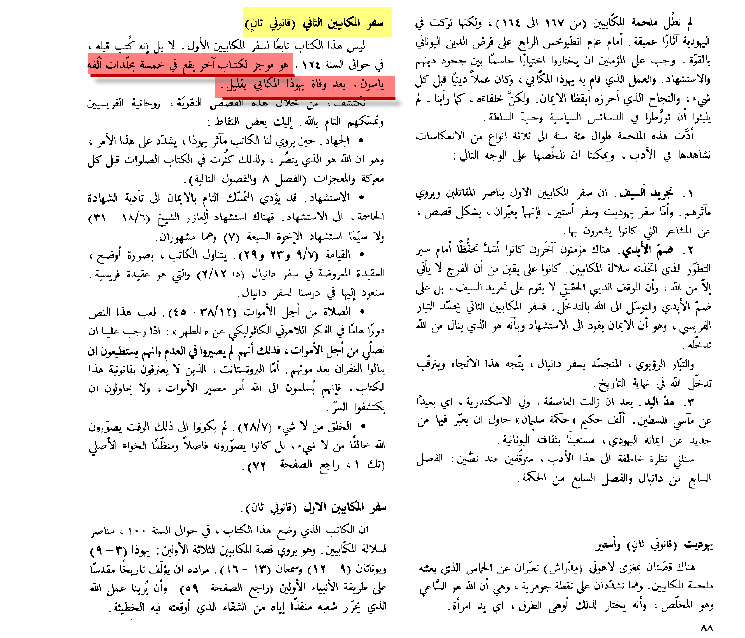
In short, we leave to the reader the words of the author of the book A General Idea about the Holy Bible, which summarizes for us the situation of the Old Testament.
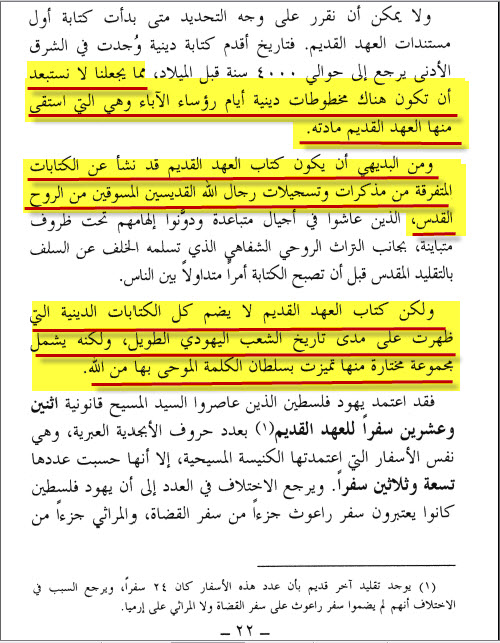
So the Old Testament that we see now… has other sources that are not present… Were all these sources inspired???… Who summarized these sources and produced the Old Testament.???… And who ordered him to do so.. And on what basis was the process of summarization done… And why does God summarize the revelation for us???
We have talked about the origins that scholars work on or have confirmed the existence of… But the truth is that there are also unknown sources from which the writers of the Holy Book copied…
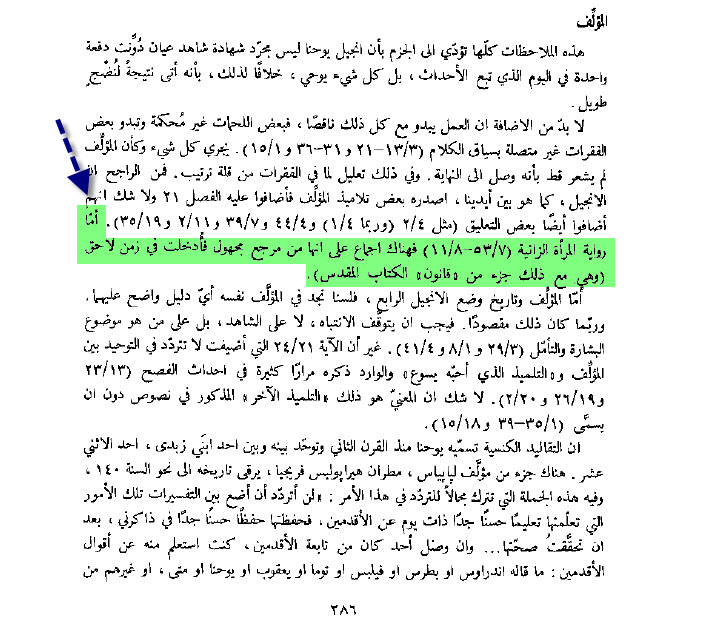
For example… the owners of the Jesuit translation tell us… that the story of the adulterous woman was taken from an unknown source.
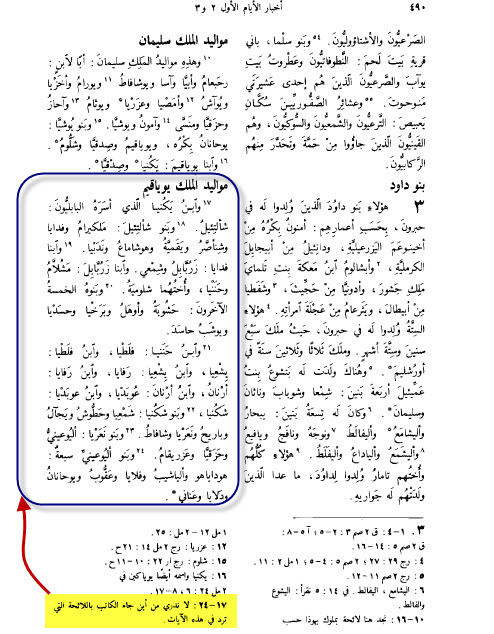
The owners of the joint Arabic translation wonder…and say…where did the writer of the First Book of Chronicles get the list of names of King Jehoiakim’s children?!…We don’t know..
There are additions to the Book of Job (3)… Who added them???… We do not know.
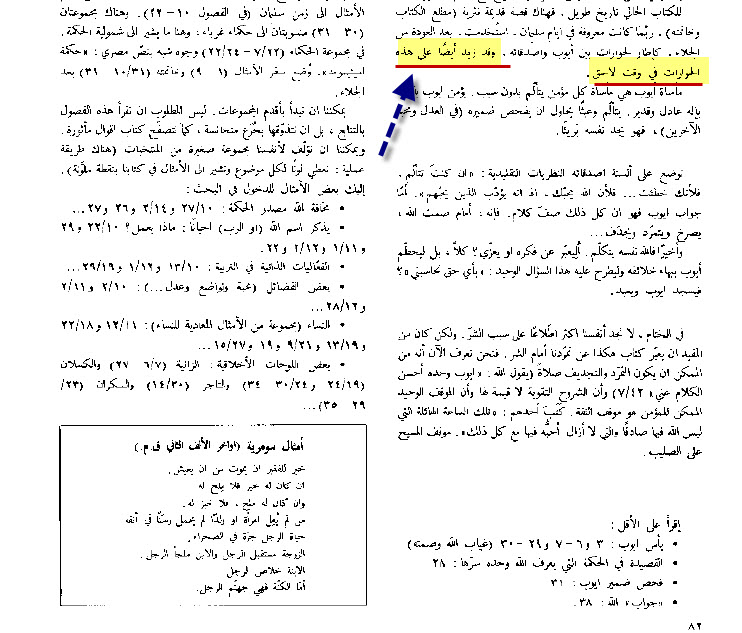
the origins of the Holy Book were copied from other origins… and God alone knows the nature of these texts… are they revelation or human writings… if these sources are revelation… then we are faced with a selected group of revelations… and if they are not revelations, then the matter is clear to everyone
2- [The origins are not sacred because we have no evidence of their validity and we have no evidence of the falsehood of others
The second reason why we say that the original text is not sacred.
It is not distinguished from the Apocrypha in any way.
… And when we see the standards set by the Church for accepting any book… we will discover that most of the books of the Holy Bible do not meet these standards..!!
We will see that there are books in the Apocrypha that meet these specifications.!!
The biggest problem in this regard… is the development of the book over time… What was apocryphal in the early centuries… has now become sacred… and what is sacred now… was unacceptable in the early centuries…
It is not limited to one or more books… but there are churches that believed in other gospels other than the current gospels.
The matter does not stop at churches only… but also at the church fathers. When we review the Holy Book that each church father believed in… we will discover that each church father had his own Holy Book… and what a certain father accepts… a certain father does not accept…!
The truth is that the matter is somewhat complicated…and there are mysterious things that the Church Fathers do not know yet…regarding the legality of this book…and how it was collected…
Why did the Holy Bible include these books in particular???…and why did it not include other Apocryphal books??!!…What are the criteria by which the legality of a book is determined?
There is a disagreement between the sects on this issue…
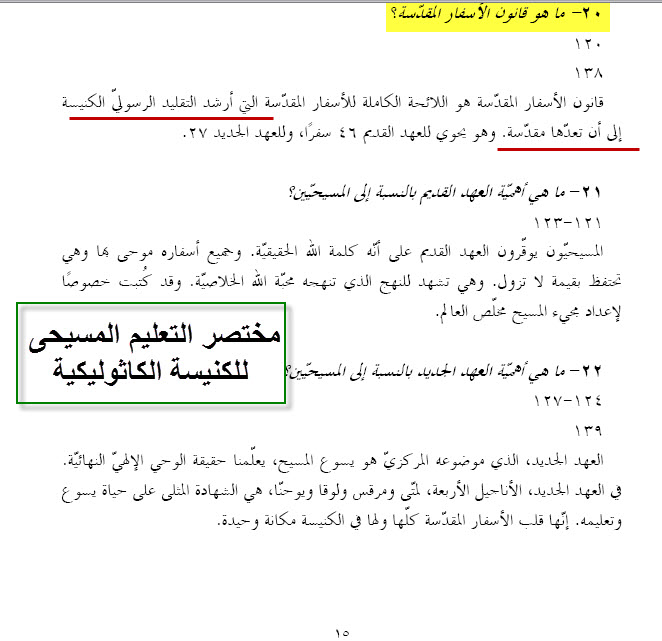
The Catholic Church, for example… believes in the legality of these books… and says that tradition is what guided the Church to these books
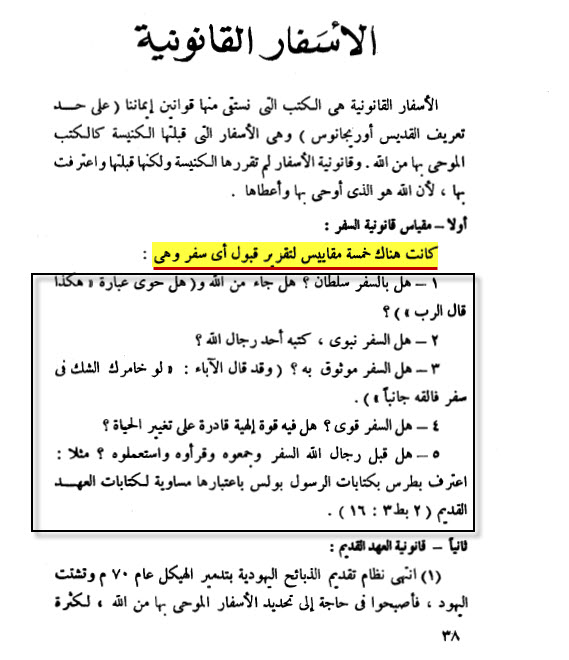
As for the Protestant Church…it rejects tradition…and has set certain conditions for accepting any book…and they are five conditions…
1Did it contain the phrase “The Lord said”??
2Was it written by a man of God??
3Is the travel reliable??
4Is travel strong??
5Did the men of God accept the journey and learn about it and collect it??
Proof requires a decision…Josh McDowell - Page 38
As for the Orthodox… some of them adhere to tradition only, like the Catholics… and consider it the only reference for accepting the canonical nature of the books… like Father Mikhail Mina.
Theology - Volume IV Page 37
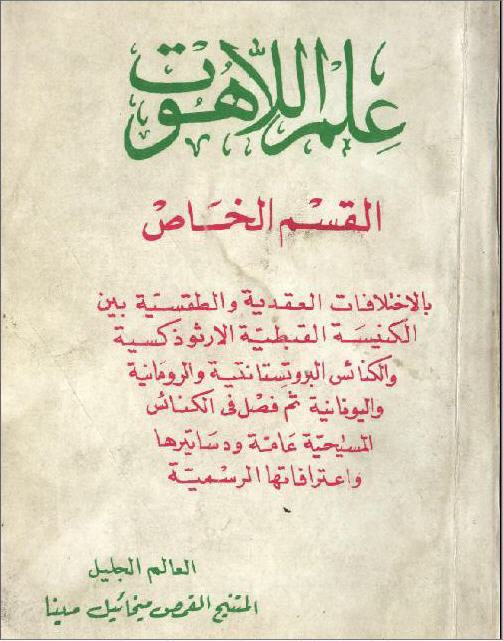
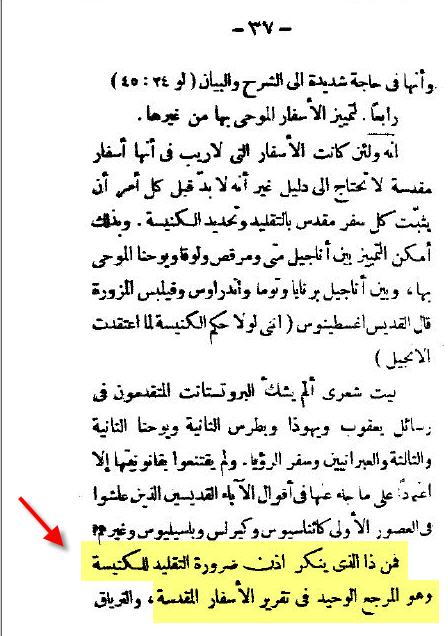
Theology - Volume IV Page 37
Some of them set other conditions…such as Father Abdel-Masih Basit (1)
1The scribes must be men of Christ and his disciples (the apostles’ mission)
2The Apostolic Tradition
3Delivery of the books to the early church
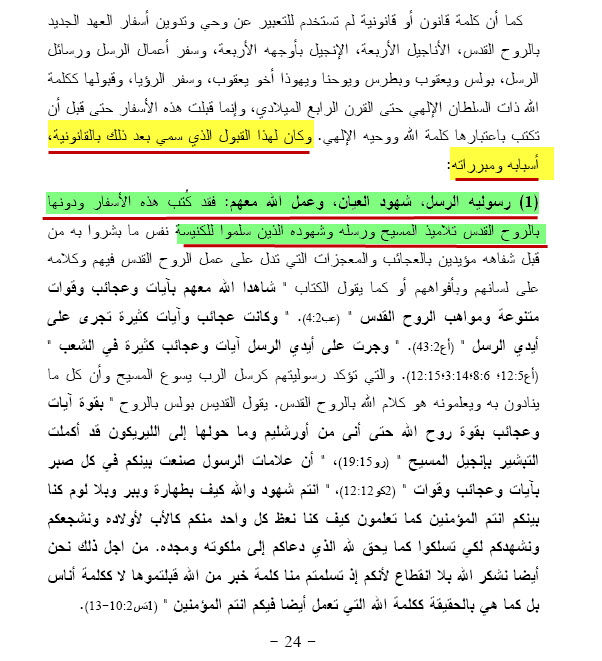
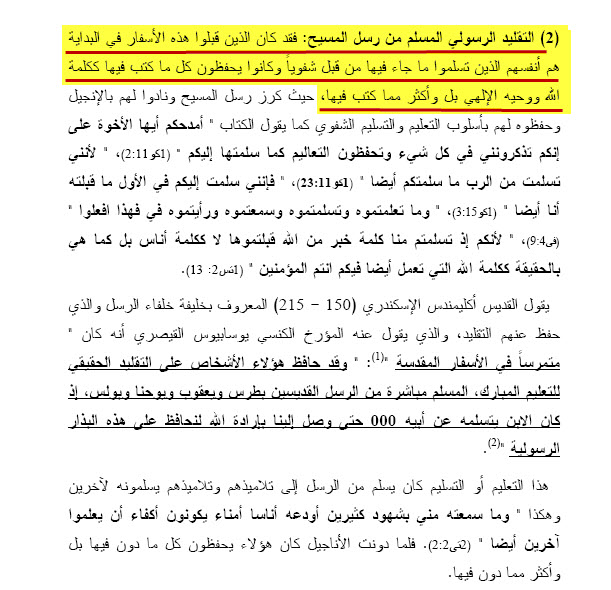
Some say it quite frankly…that we cannot accurately distinguish…inspired messages from others…
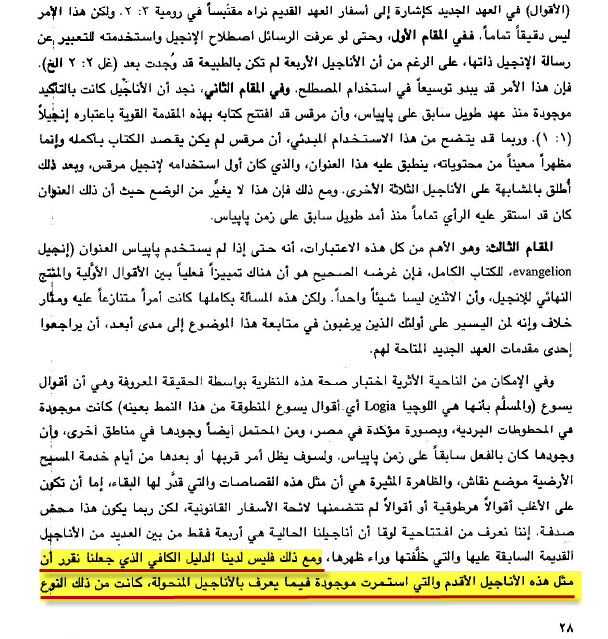
The author of the modern interpretation of the Holy Bible (the Gospel of Mark) says… that we do not have sufficient evidence… that would make us decide… that the Gospels that Christians now call - are forged or apocryphal -
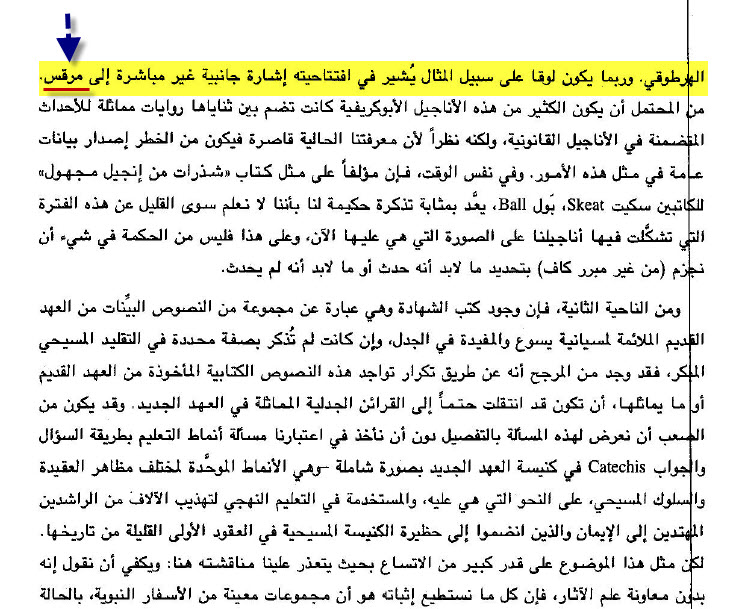
It was indeed an apocrypha in ancient times…and when the writer of the Gospel of Luke referred to the apocryphal books at the beginning of his Gospel…he may have meant the Gospel of Mark…
The author of Paul and his Epistles, whose words are quoted by Father Paul Al-Feghali, tells us…
We cannot distinguish precisely between those that have been preserved for us, the authentic letters, and those that borrowed Paul’s name.
http://www.paulfeghali.org/index.php…88&page_id=510
The writer of the Gospel of Luke says at the beginning of his Gospel:
1:1 Forasmuch as many have undertaken to compile an account of the things accomplished among us,
1:2 Just as they were delivered to us by those who from the beginning were eyewitnesses and servants of the word.
1:3 It seemed good to me also, having investigated everything carefully from the beginning, to write an orderly account for you, most excellent Theophilus.
1:4 That you may know the truth of the words which you have been taught.
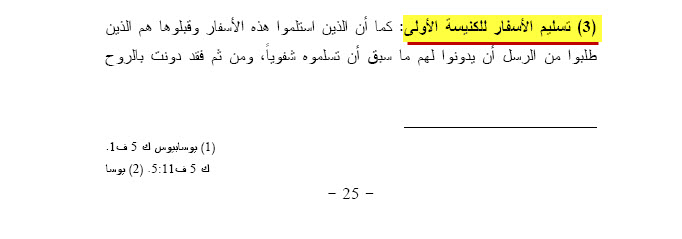
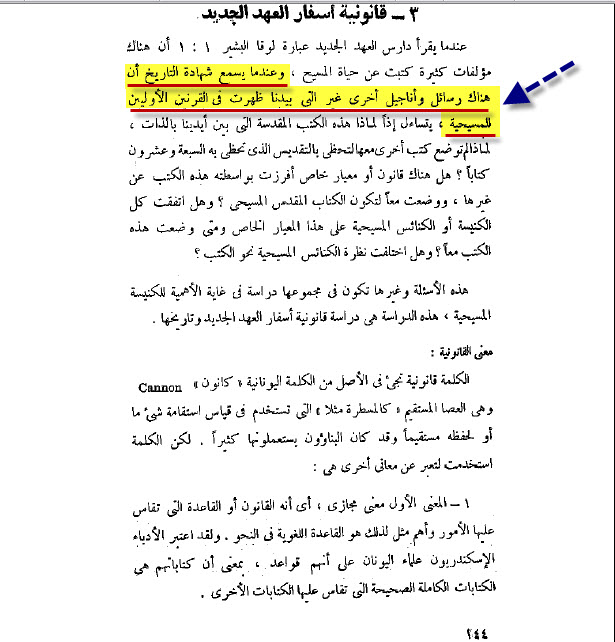
Anba Youanis says, commenting on this statement… that there were Christians in ancient times who had other books… other than the books we know now… but the church rejected them.!!
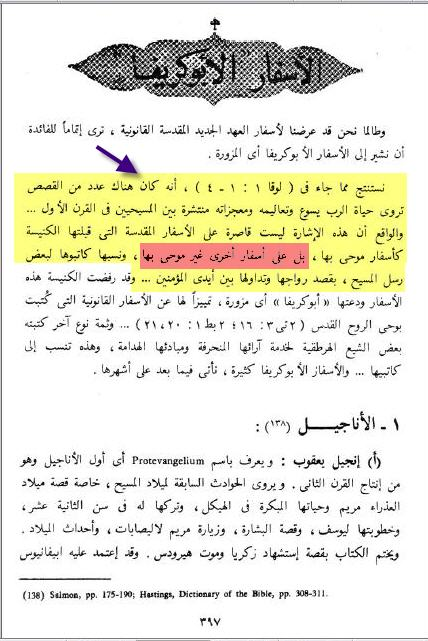
This meaning is also confirmed by Dr. Fahim Aziz in his book Introduction to the New Testament, which confirms that there are other gospels and epistles that appeared in the first centuries of Christianity other than the ones we have in our hands now.
Introduction to the New Testament - Page 244
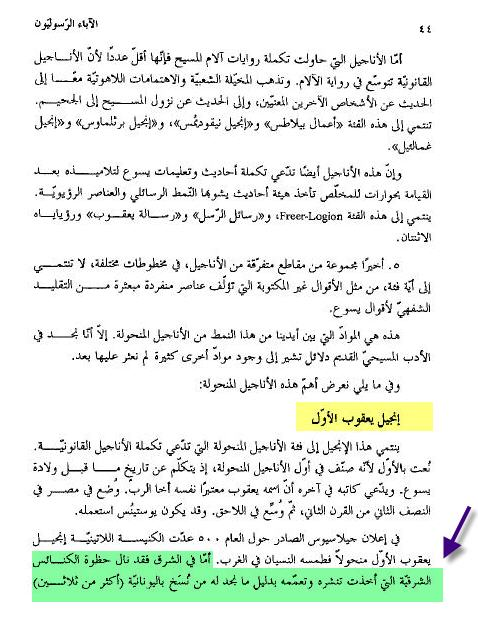
In fact, what Anba Youanis and Dr. Fahim said is indeed correct…there were Christians, and even churches, who knew other books than those known today…
The Eastern Church, for example… accepted the Gospel of James…
The History of Christian Thought from the Church Fathers - Hanna Al-Fakhoury…
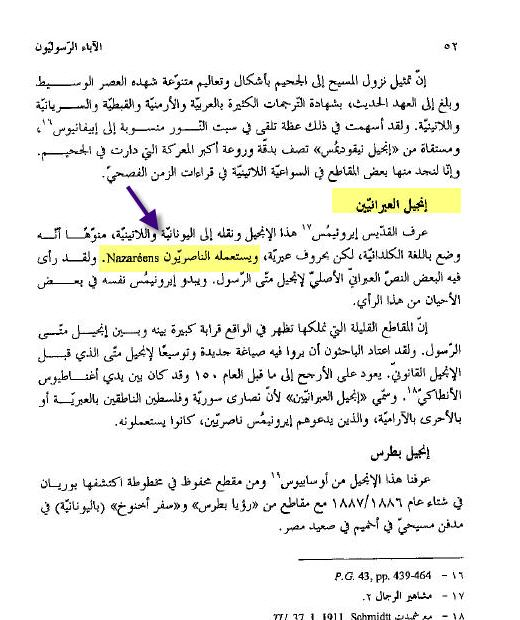
The Gospel of the Hebrews, which was used by the Nazarenes
, has the same reference…
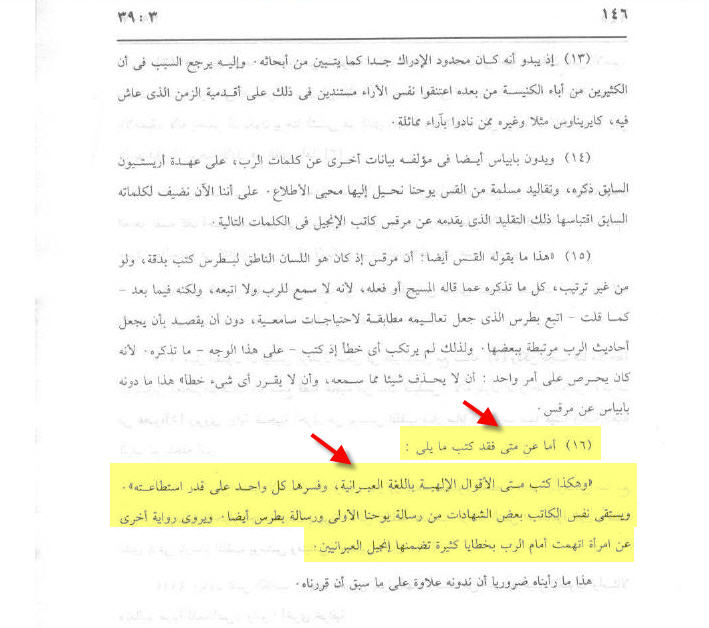
Other than this…the ancient church fathers knew…what is called the Hebrew Gospel of Matthew…it was known by…Papias, Irenaeus, Origen, Cyril of Jerusalem, Jerome, and Eusebius.
Church history…
History of the Church in the Age of the Apostles - Anba Youannis
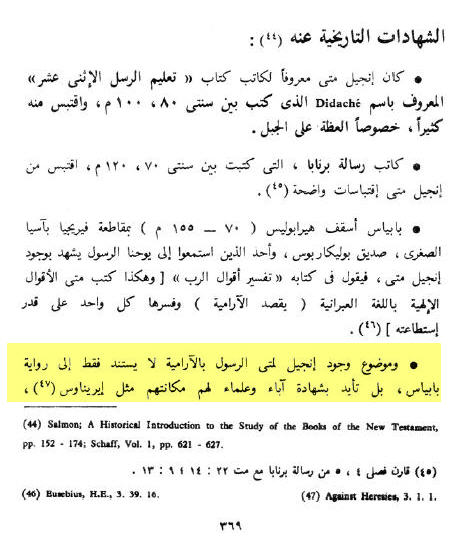
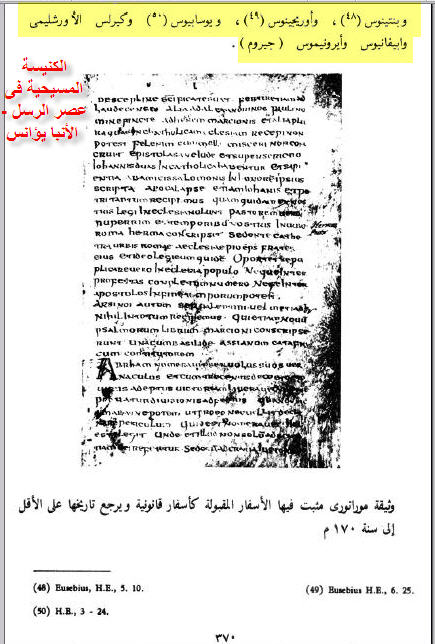
There is no connection between the current Gospel of Matthew, whose author we do not know, as we will see, God willing…and the Hebrew Gospel of Matthew…because the current Gospel of Matthew…was originally written in the Greek language,
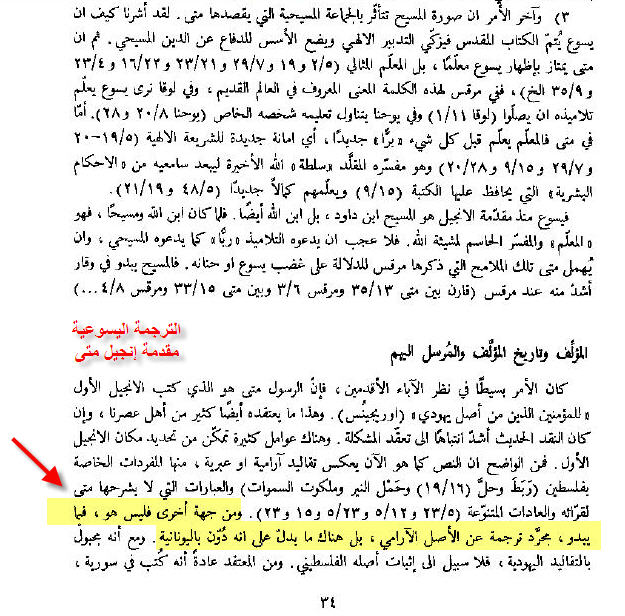
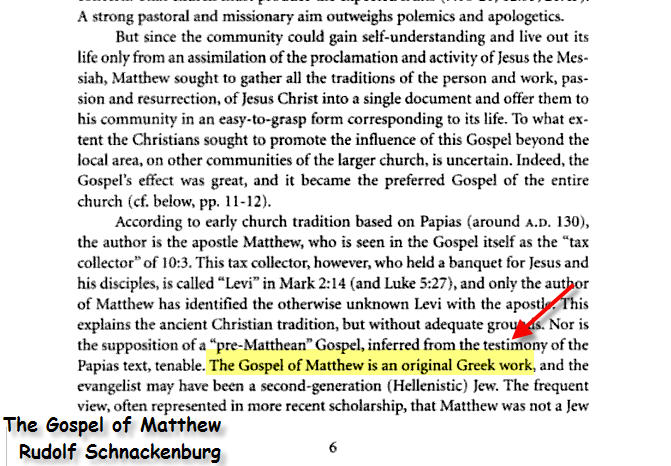
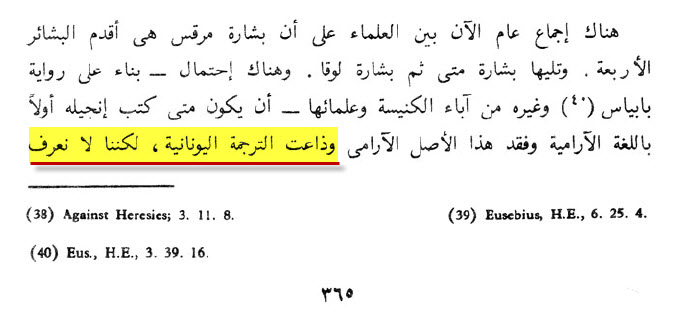
Even those who said that the current Gospel of Matthew…is translated into Greek from the Hebrew Bible…the translator is unknown to them and the time of translation is unknown, and there is no power or strength except with God…
the Christian Church in the Age of the Apostles…
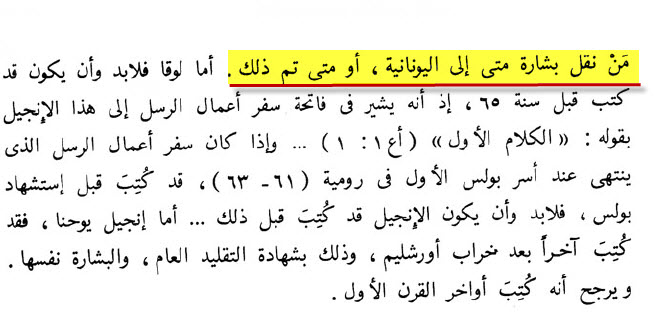
The matter does not extend beyond the Church Fathers only… but it reached the writers of revelation themselves…!!!
Yes, the writers of the revelation knew other books…that are not found in the current Bible…for example, the writer of the Epistle of Jude…
Epistle of Jude
1:9 But when Michael the archangel contended with the devil, disputing about the body of Moses, he did not dare to bring a slanderous accusation, but said, “The Lord rebuke you.”
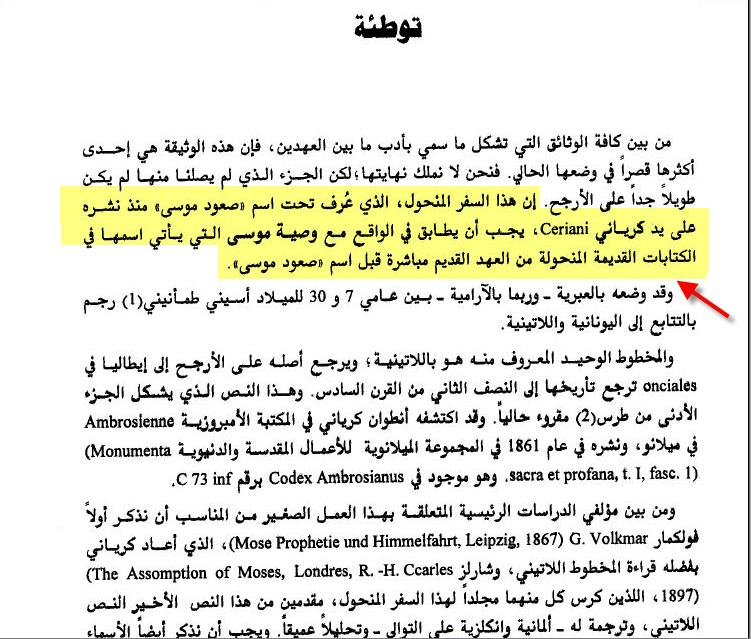
Of course, this story of Moses with Satan… is taken from the book The Raising of the Body of Moses, as stated by William Barclay, the interpreter of the New Testament… and this is an apocryphal book…
The Torah is Forged - Translated and Introduced by Musa Khoury - Volume Two, Page 499
It also came in the Epistle of Jude…
1:14 And Enoch also, the seventh from Adam, prophesied of these, saying, Behold, the Lord cometh with ten thousands of his saints.
The writer quotes Enoch the Seventh…!!!… and he believed in the validity of this prophecy as stated by William Barclay… and for your information, the Epistle of Jude was rejected in the past by some of the fathers…
William Barclay’s Interpretation - Page 269
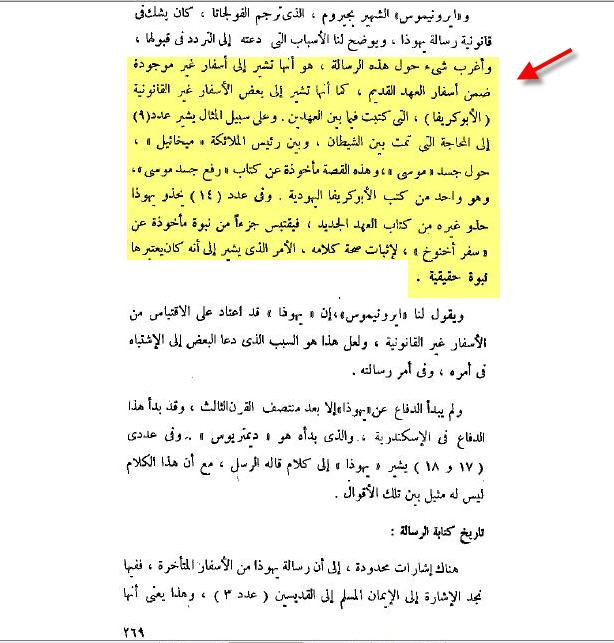
Some of the Church Fathers got out of this predicament…such as Saint Lucifer…who cited most of the books of the New Testament…and when he came to the Epistle of Jude, he quoted almost all of it, but he omitted these verses which are quoted from the Book of the Ascension of Moses and Enoch…
This is what scholar Bruce Metzger tells us…(2)
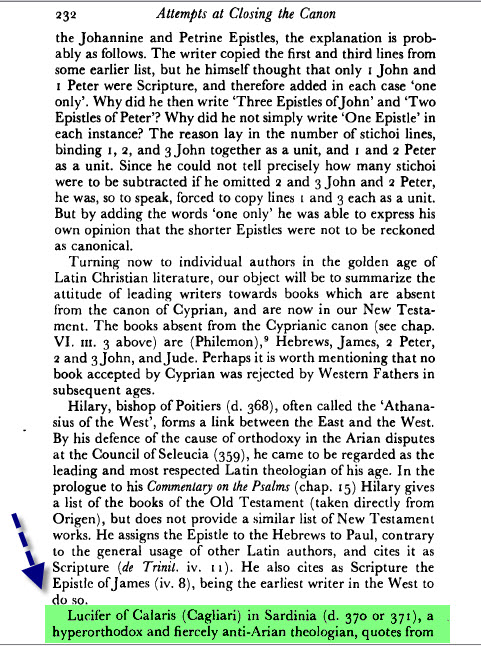
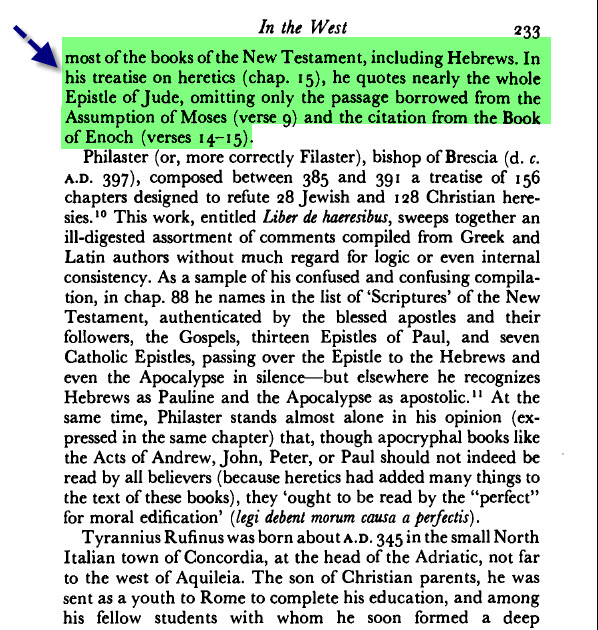
The witness of this speech… is that the early church and the early church fathers, and even the writers of revelation… knew other books besides the books that exist today… and we will see many examples, God willing, that show the extent of the confusion of the church and the church fathers in accepting or not accepting the books.
Now we come back again and say.. Why did the church accept these books in particular… and why did it not accept the rest of the books… and who collected these books in a book called the Holy Bible… and when did that happen… and on what basis???
We will look, God willing… at the subject from the Catholic, Protestant and Orthodox point of view… and we will see whether their standards actually apply to the current books of the Bible or not??… and whether the Apocrypha books do not meet these specifications or not??
To be continued, God willing…
They (Catholics and some Orthodox) told us that tradition is the only reference in determining the sacred books…and it is what guided the church to consider the books sacred…
Let us first know what tradition is…:-
Tradition is the teaching that has been preserved in the Church since the time of the Apostles…and has been passed down from one generation to the next by believers…this is how Father Mikhail Mina defined it.
Theology - Part Four - Page 27
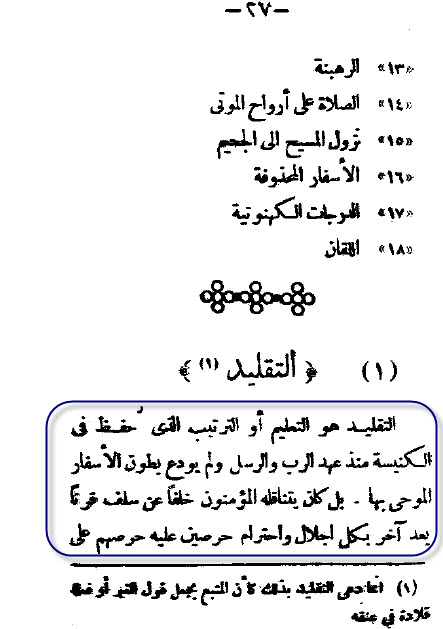
It is known that Protestants do not accept tradition…for many reasons (1)
We mention some of them…
1Some traditions contradict the Holy Book.
2There is no standard to know the correctness of a tradition from its incorrectness (there is no correct, continuous chain of transmission for these traditions, for example). There are many traditions that the Church adopted at one time…then it was proven that they were incorrect, such as the infallibility of the Pope, for example.
3The consensus of a certain church on a certain tradition does not mean that it applies to all Christians.
Systematic Theology - James Ince - Page 41
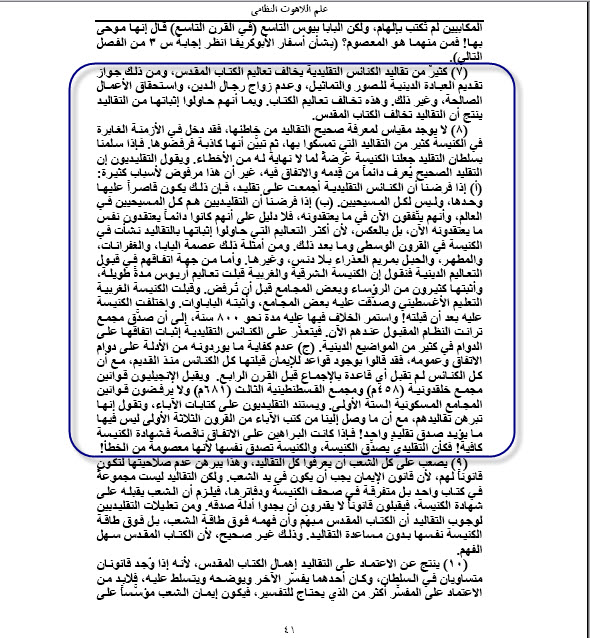
us leave the Protestants’ words now and return to the Catholics’ words and ask them what is the tradition that we must follow…???
As Dr. Fahim Aziz (2) says…
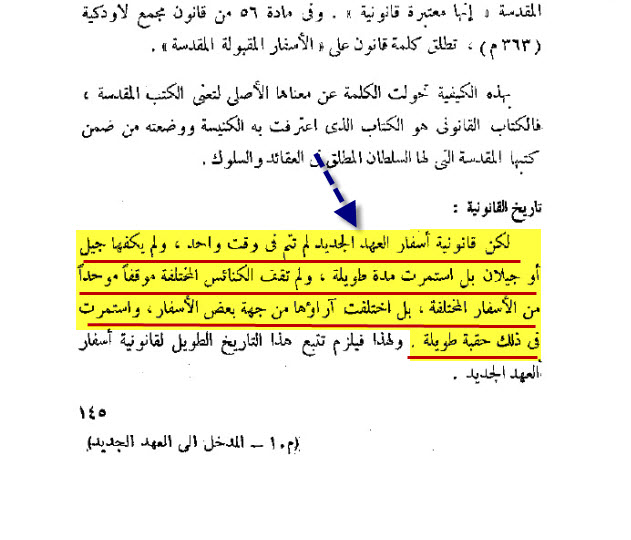
The canonization of this book did not happen at one time, but rather continued for a long time…and the different churches did not take a unified position on the different books…rather, the opinions of the churches differed regarding some books, and this continued for a long period.
The canonization of this book did not happen at one time, but rather continued for a long time…and the different churches did not take a unified position on the different books…rather, the opinions of the churches differed regarding some books, and this continued for a long period.
The canonization of this book did not happen at one time, but rather continued for a long time…and the different churches did not take a unified position on the different books…rather, the opinions of the churches differed regarding some books, and this continued for a long period.
The Western Church did not recognize the legitimacy of the Epistle to the Hebrews…and did not accept from the Catholic Epistles (the Epistles of John, Peter, Jude, and James)…except for only three Epistles (1 and 2 John and 1 Peter)…
The Eastern Church did not recognize the canonical nature of the Book of Revelation…
A General Idea about the Bible - Page 76
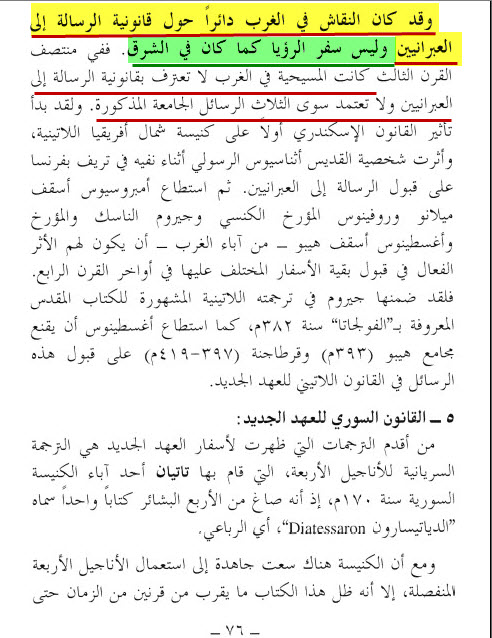
General idea about the Bible - Page 76
And the land card says (3)
It is clear that the first and second letters of Peter were written by two different people on different occasions…and were not brought together until a very late church tradition.
Looking at the history of canonization, we find that until the fourth century the Catholic Epistles were not recognized as a collection.
In the third century, only the First Epistle of John and the First Epistle of Peter were recognized…
As for the second and third epistles of John, the second epistle of Peter, Jude, and James…they struggled for recognition, but not with the same degree of success (i.e. the first epistle of John and the first epistle of Peter).
This is the position that Eusebius of Caesarea stated at the beginning of the fourth century…
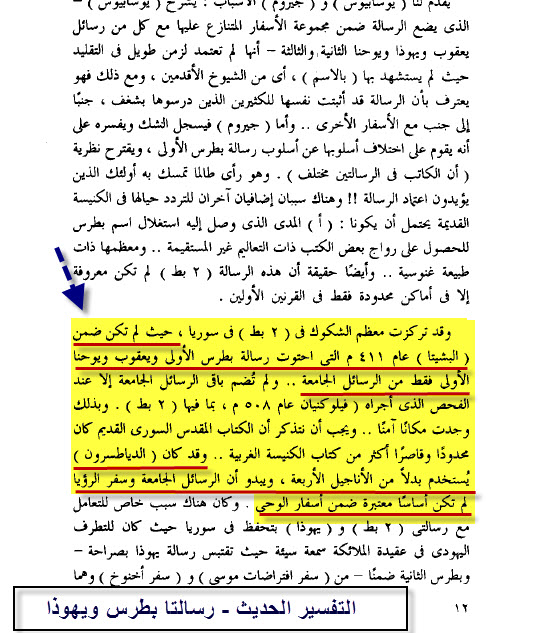
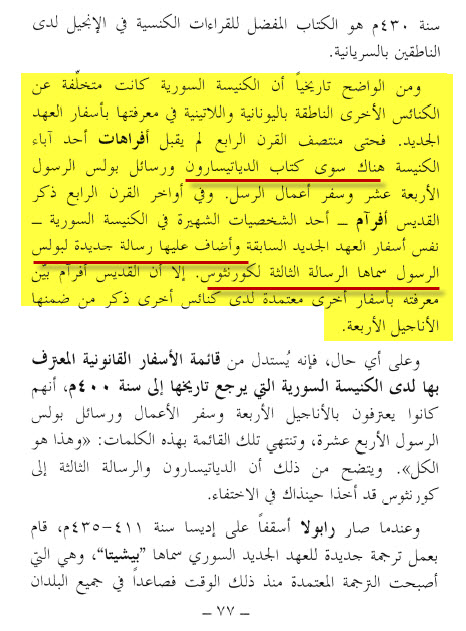
The evidence is quite clear…that the vision of John the Theologian at this time was widely rejected in the Eastern churches…
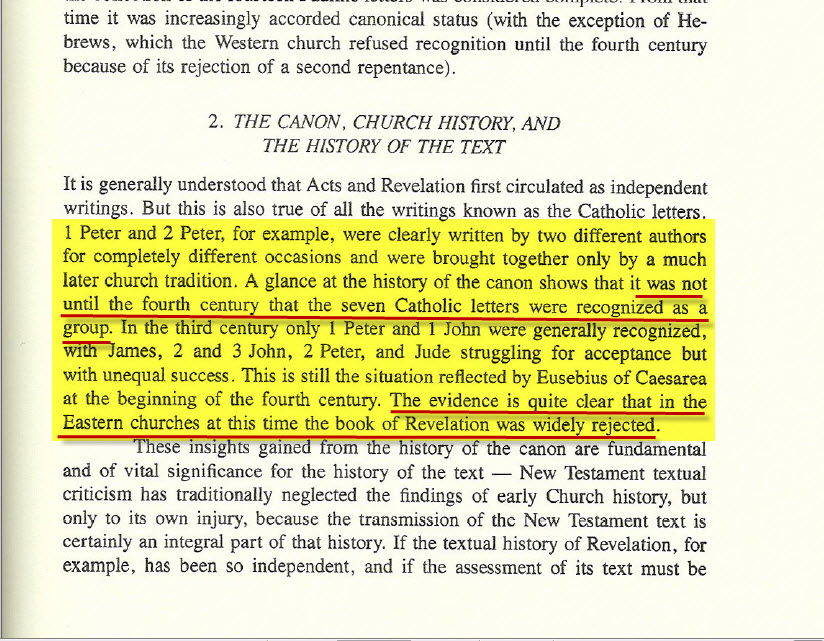
The evidence is quite clear…that the vision of John the Theologian at this time was widely rejected in the Eastern churches.As for
the Syrian Church… it is a story to tell…
She used to accept a book called the Diatessaron instead of the four Gospels……and this book was accepted in the churches of the Middle East.!!!
It does not go beyond this, but rather it rejected all the universal messages…and the Book of Revelation was not even among the books of revelation…!!!
They added a letter to Paul that we do not know now… called the Third Epistle to the Corinthians…!
Modern commentaries
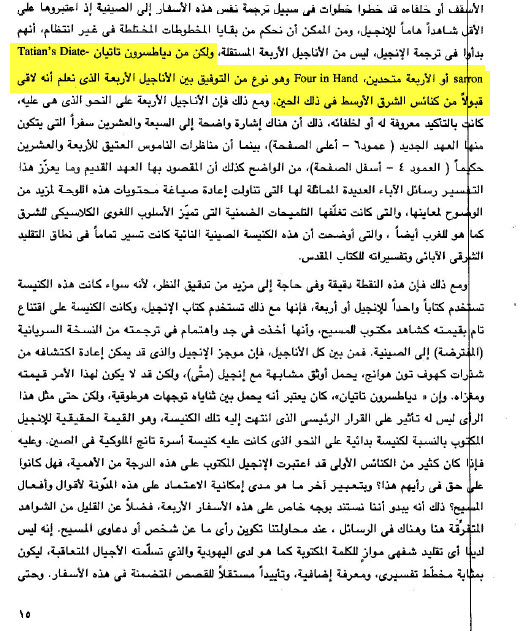
#The evidence is quite clear…that the vision of John the Theologian at this time was widely rejected in the Eastern churches.
Now, as we can see…we are facing church traditions, not traditions… So, which tradition do we follow then??
Do we follow the tradition of the Eastern Church and reject the Book of Revelation??? …or do we follow the tradition of the Western Church and reject the Epistle to the Hebrews?? …or do we return to the tradition of the Syrian Church and follow the Diatessaron??? …where is the correct tradition that we must follow???
Do we believe in the message of Jeremiah, which the early Greek fathers believed in and which the fathers considered a canonical book…or do we leave it as the fathers did now???
Encyclopedia👇
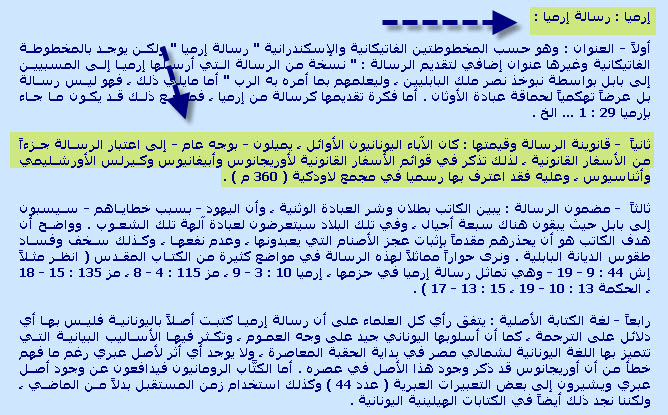
Do we reject the Book of Baruch because the early church rejected it and considered it an illegal book…or do we accept it because the current church accepts it???
Encyclopedia
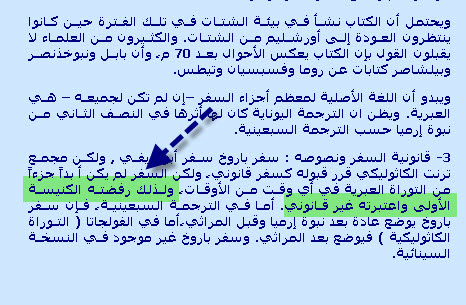
Do we believe in three books of Maccabees like the believers in the early church…or do we believe in only two books as the church believes now??
The Safawi Collection of Ibn Al-Assal - Page 44
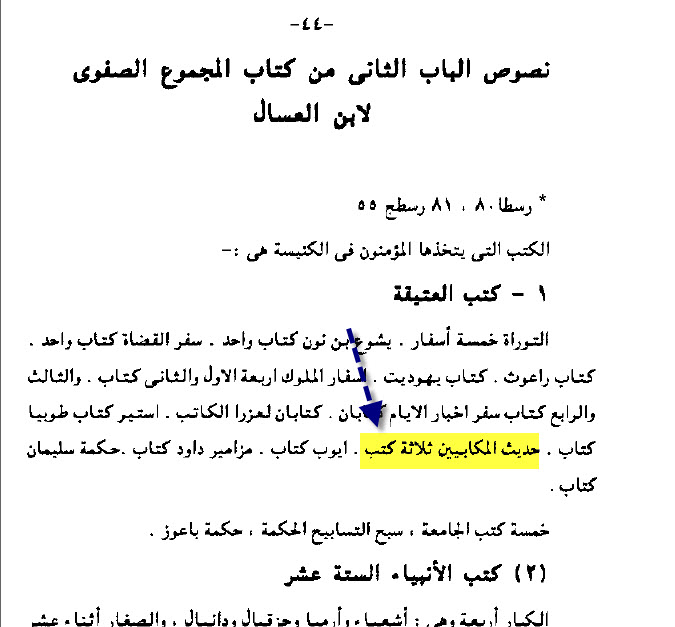
The Safawi Collection of Ibn Al-Assal - Page 44
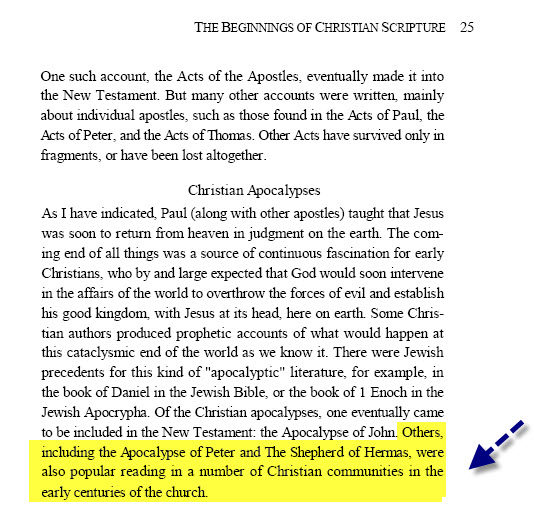
Do we accept the vision of Peter and the Shepherd of Hermas because some church communities read them in the first centuries of Christianity…as Bart Ehrman says…(4)
[While other visions, including the Apocalypse of Peter and the Shepherd of Hermas, were commonly read in a number of Christian communities in the early centuries of the Church.]
#The most important question is
Is it the Orthodox and Catholic Church…that accepts the second canonical books?
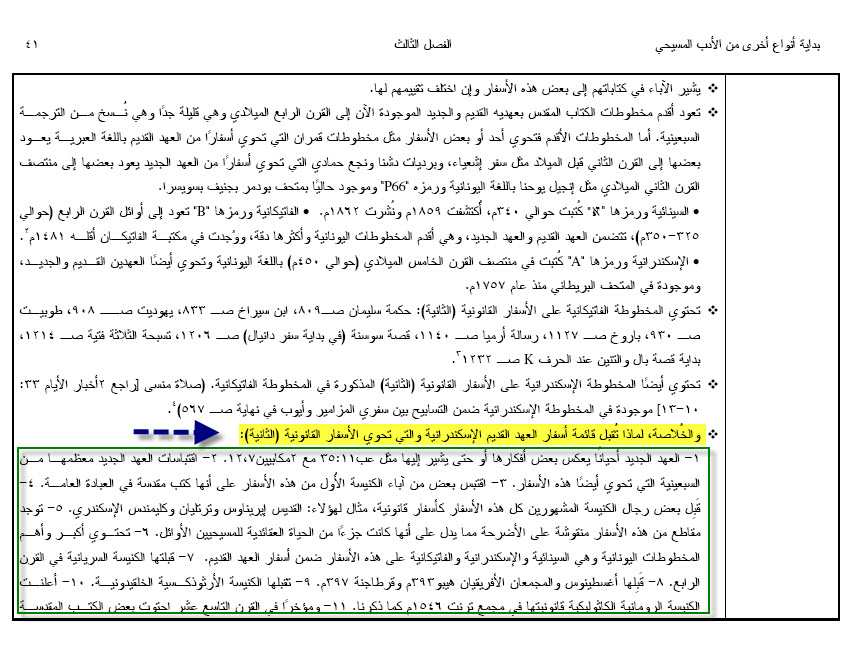
Because the New Testament accepts its ideas and quotes from it, and because the ancient church fathers quoted from it as sacred, and because the important manuscripts contain these books…as Father Tadros Yacoub Malti says (5).
Or do we reject it and call it fabricated, as the Protestants did ?🤦♂️
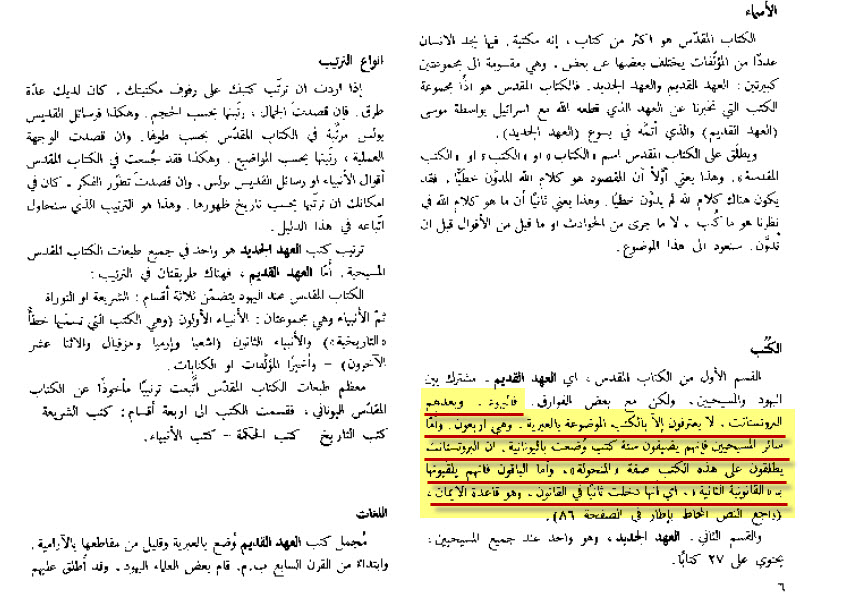
This is because the authors of these books did not say that they were revelations…and that they contained doctrinal and historical errors, and because the first church councils considered them illegal…as the Protestants say (7).
This is because the authors of these books did not say that they were revelations…and that they contained doctrinal and historical errors, and because the first church councils considered them illegal…as the Protestants say.
Or do we leave the Protestants and Orthodox and follow the tradition of the Ethiopian Church, which accepts 81 books…! …as the Encyclopedia of the Bible says (8)
This is because the authors of these books did not say that they were revelations…and that they contained doctrinal and historical errors, and because the first church councils considered them illegal…as the Protestants say.
I want to know which tradition is correct…??!!!
To be continued, God willing
1See Systematic Theology 39 - 40 - 41
2Introduction to the New Testament - Page 145
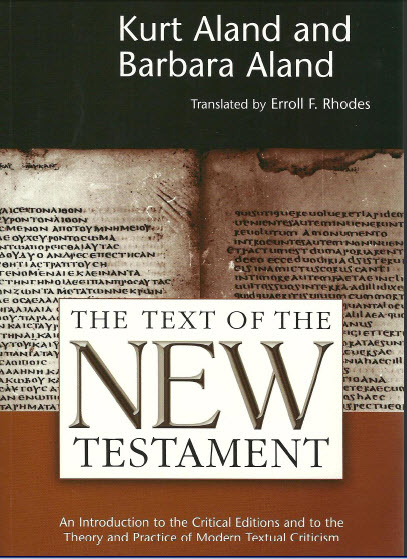
3the text of the new testament Kurt Aland & Barbara Aland pg 49
4Misquoting Jesus - Bart D. Ehrman - pg 25
5A comprehensive view of Patrology - Tadros Malti - Page 41
6A Guide to Reading the Holy Bible - Father Stephan Charpentier Page 6
7Systematic Theology - James Annas (translated by Munis Abdel Nour) - Page 51
8Encyclopedia of the Bible - Ethiopia
🤦♂️
🚨
As we have seen, the statement that tradition is the reference that determines the legality of books is a statement that is neither fattening nor satisfying.
Now let’s look at what the other group says.
(Protestants and some Orthodox)
And those who set more than one condition to determine the legality of travel
Josh McDowell says, as we saw in the fifth condition for the acceptance of any book (1):
Did the men of God accept the book, collect it, read it and use it?
And the priest says, “Basit (2)”
Those who received and accepted these books were the ones who asked the apostles to write down for them what they had previously received orally.
As we have seen, one of the conditions set by the Protestants and some Orthodox
The Church Fathers receive these books, use them, and accept them.)
Unfortunately, when we review the books that were accepted by the ancient church fathers… we will discover that each of the church fathers had his own holy book… and that there is almost no father of the ancient church fathers who believed in a holy book consisting of 73 books… and we will now see that there are books from the current holy book that some of the church fathers rejected… and that there are books that some of the church fathers accepted… that are not present in the current holy book.
Let us now review the books that the most famous churchmen believed in…to see whether the previously mentioned condition applies to the books of the Holy Bible or not…and whether there are books that are not in the Holy Bible now to which these conditions apply or not…
1- [Saint Clement of Alexandria]
Father Basit says about him, quoting Eusebius (3):
[He received the tradition with all accuracy from those who received it from the messengers]
Let us see the tradition that Clement received from the apostles with all accuracy.!!!
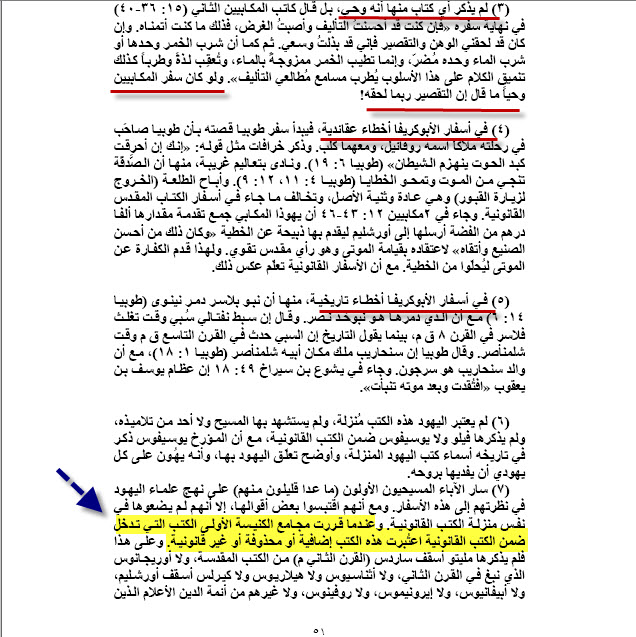
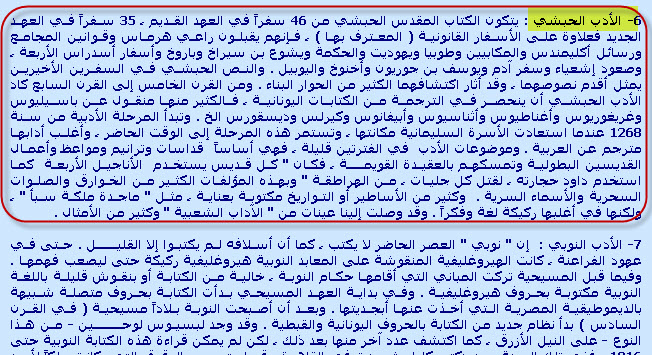
The tradition that Clement received from the apostles with all accuracy… He accepted the Epistle of Barnabas and the Apocalypse of Peter and considered them canonical books…!!
Church History - Eusebius of Caesarea
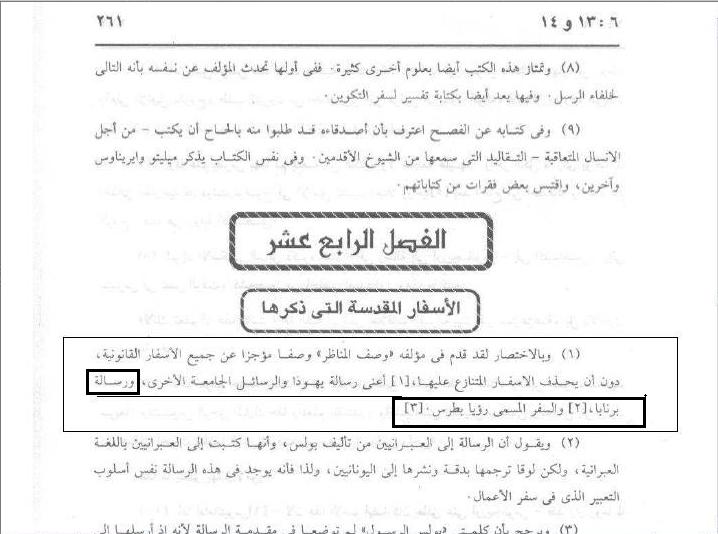
Book 6 Chapter 13
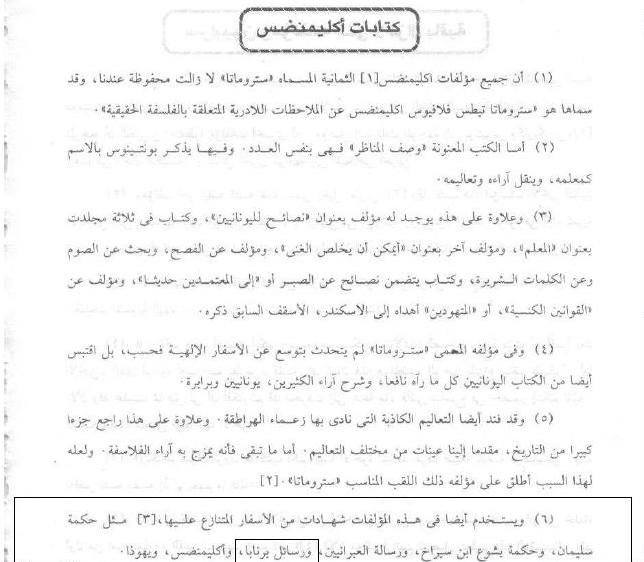
Book 6 Chapter 13
The Biblical Encyclopedia
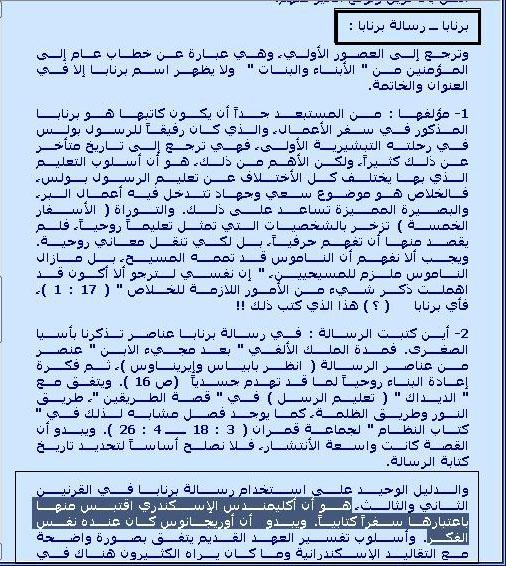
It seems that this tradition [which Clement of Alexandria received with great accuracy]… believed that the Didache was considered one of the sacred books… and so was the Shepherd of Hermas…
The Didache - 57, 85
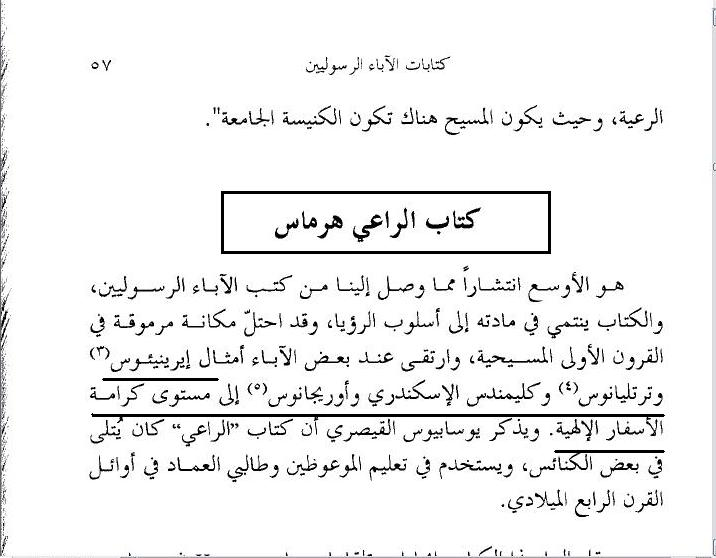
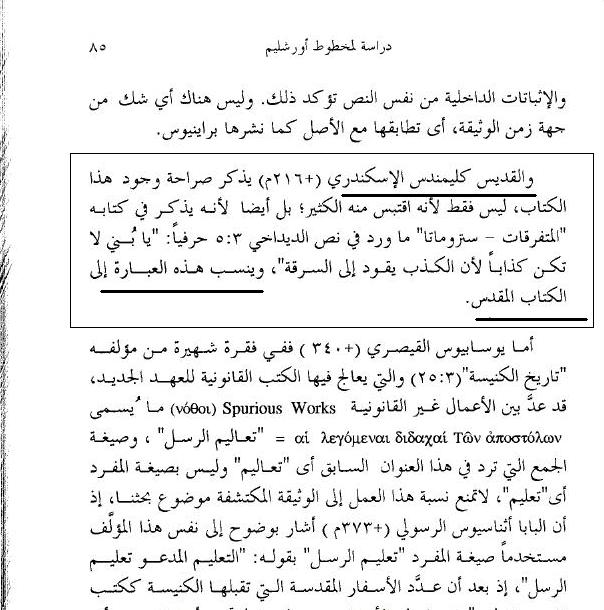
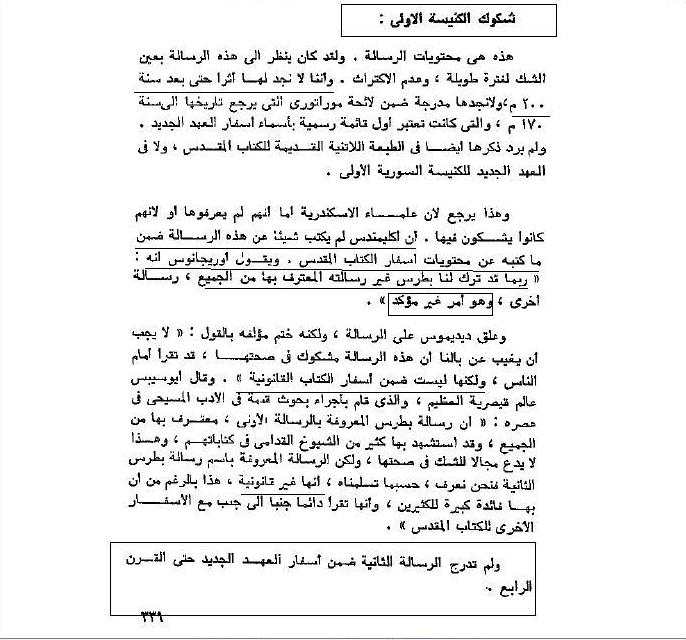
Unfortunately, this tradition (received with great precision from the apostles…!)… did not know anything about the Second Epistle of Peter… because Clement did not write anything about this epistle among what he wrote about the contents of the books of the Holy Bible.
William Barkey’s Commentary on the New Testament, page
Unfortunately, this tradition (received with great precision from the apostles…!)… did not know anything about the Second Epistle of Peter… because Clement did not write anything about this epistle among what he wrote about the contents of the books of the Holy Bible.
#2- [The scholar Origen]
Let’s see the books that Origen believed in.
Church History Book 6 Chapter 25 ..&&& … William Barclay’s Commentary Page 33 Church History The EncyclopediaBiblical
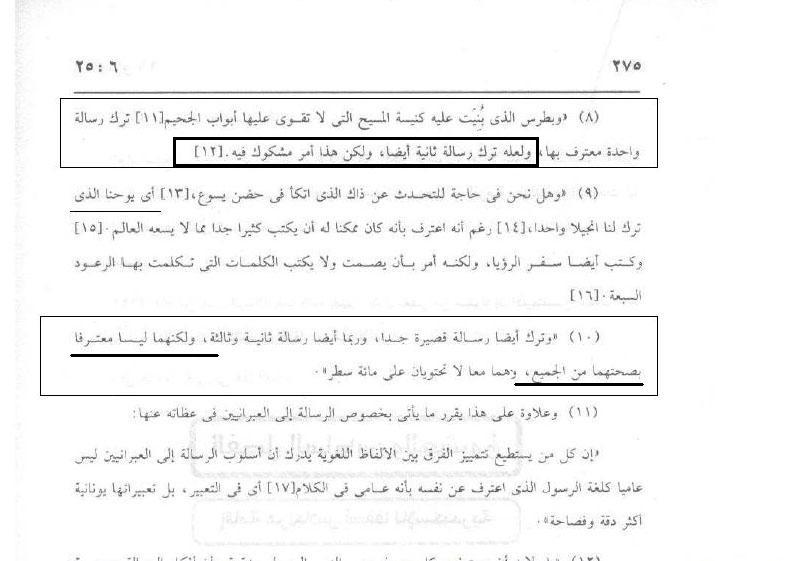
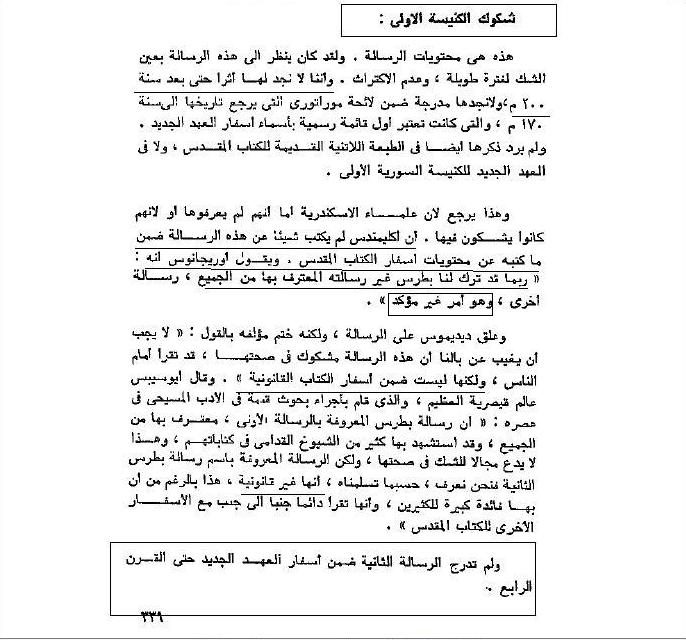
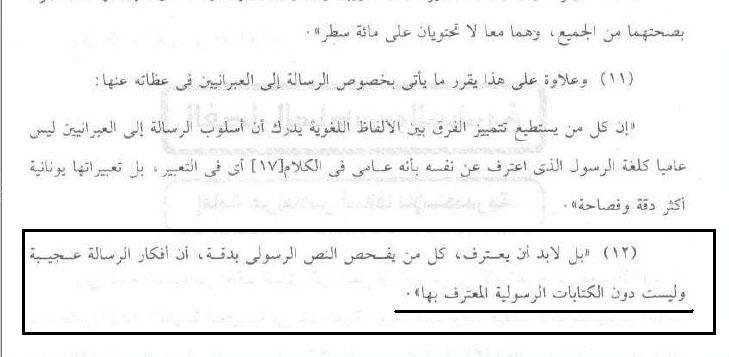
Here we see that the scholar Origen did not believe in the Second and Third Epistle of John, the Second Epistle of Peter, the Epistle to the Hebrews, or the First Book of Maccabees.
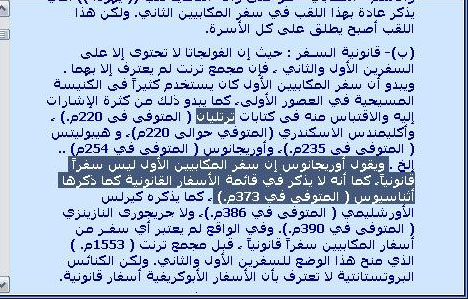
The Biblical Encyclopedia The Didache Page 57
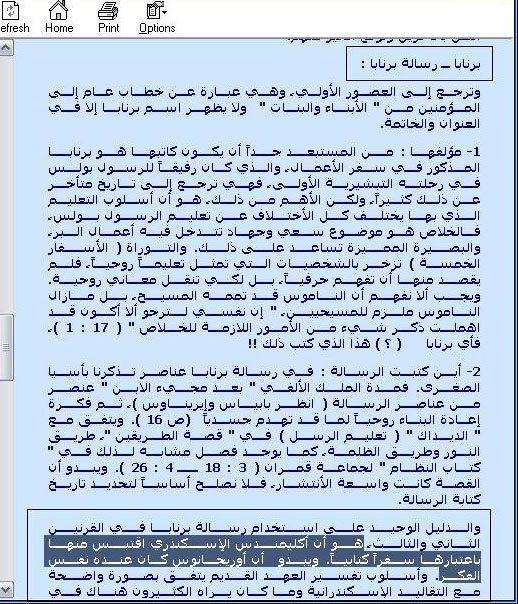
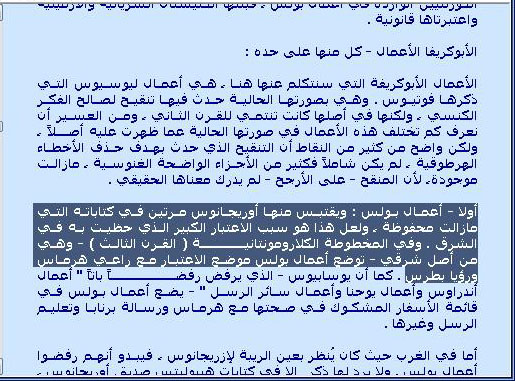
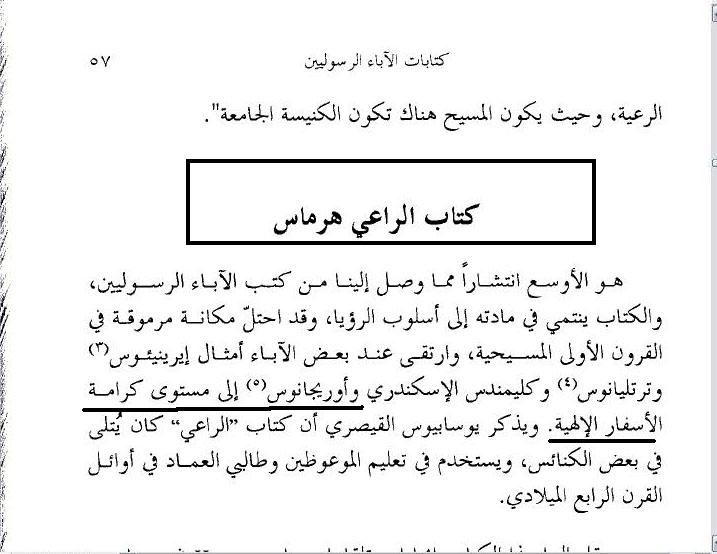
Unfortunately, the scholar Origen believed in the legality of the Acts of Paul, the Epistle of Barnabas, and the Shepherd of Hermas… So where are these books? God knows best.
3- [Eusebius of Caesarea]
As for Eusebius, the authority on church history, he was content to deny the Second Epistle of Peter and the Revelation of John the Theologian…
Church History Book 3 Chapter 3
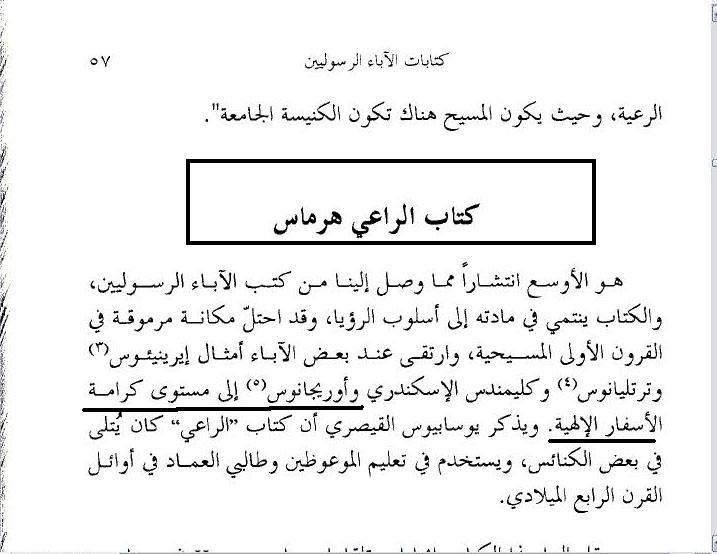
Encyclopedia of the Bible
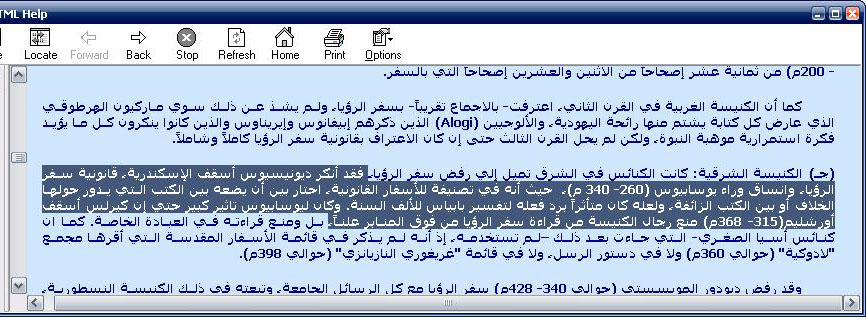
4- [Irenaeus, Bishop of Lyon]
He believed that the Book of the Shepherd of Hermas was included in the books of the Bible.
Church History Book 5 Chapter
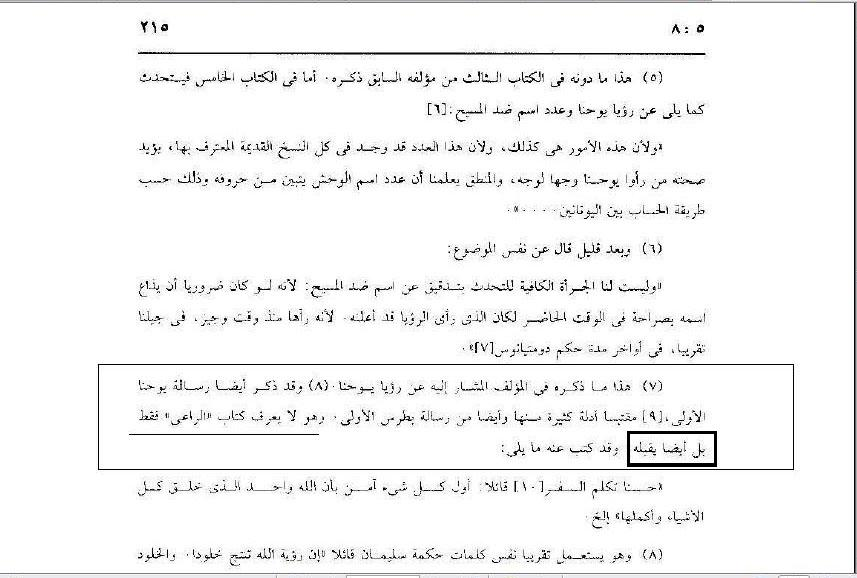
5- [Saint Athanasius the Apostolic]
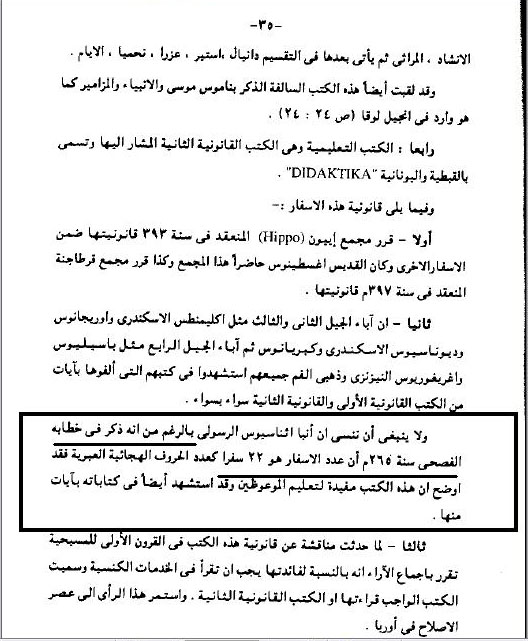
He believed that the number of books in the Old Testament was 22 books and did not include the second canonical books of the Bible.
The Safawi Collection - Page 35
6- [Justin the Martyr]
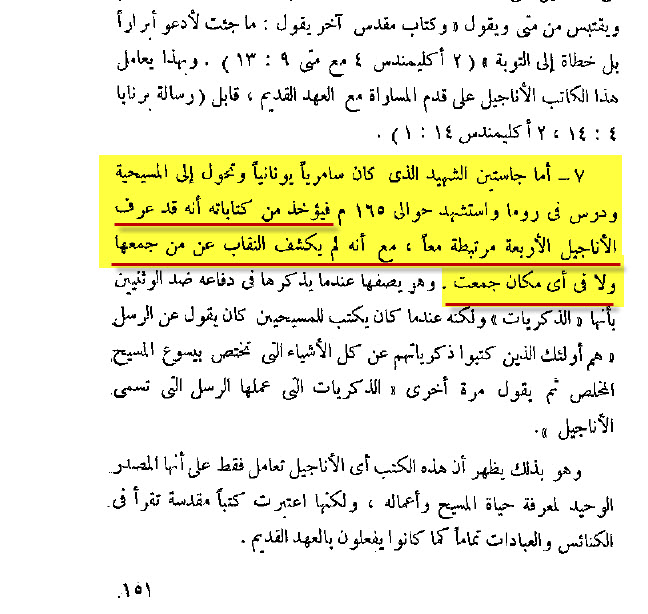
He knew the four Gospels were linked together…and he did not reveal who collected them and when they collected them.
He described it as memories..!
Introduction to the New Testament - Page
7- [Hippolytus]
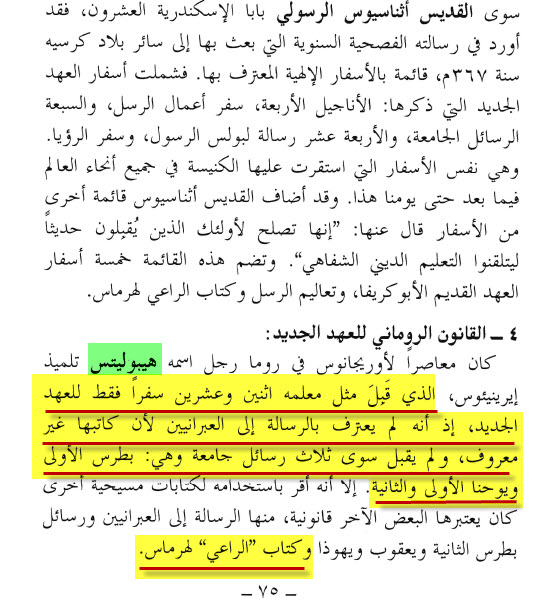
He only believed in 22 books of the Old Testament…and he denied the Epistle to the Hebrews because its author is unknown…!…and he denied the Second and Third Epistles of John, the Second Epistles of Peter, the Epistles of James, and the Epistles of Jude…!!
General idea about the Bible - Page 75
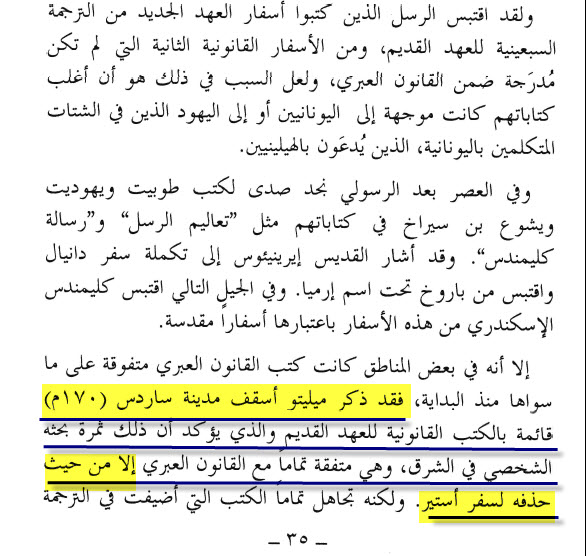
8- [Melito, Bishop of Sardis (170)]
He deleted the Book of Esther and did not believe in it…!!
General idea about the Bible - Page
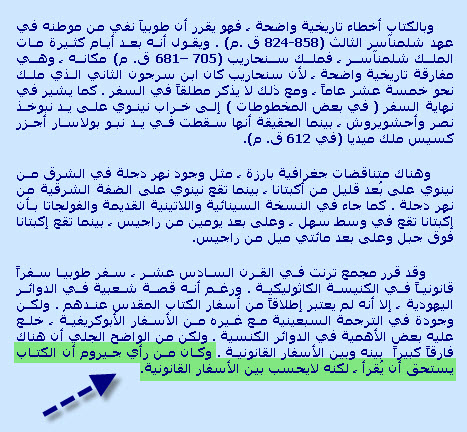
9- [Saint Jerome]
The Book of Tobit was not considered canonical.
Encyclopedia
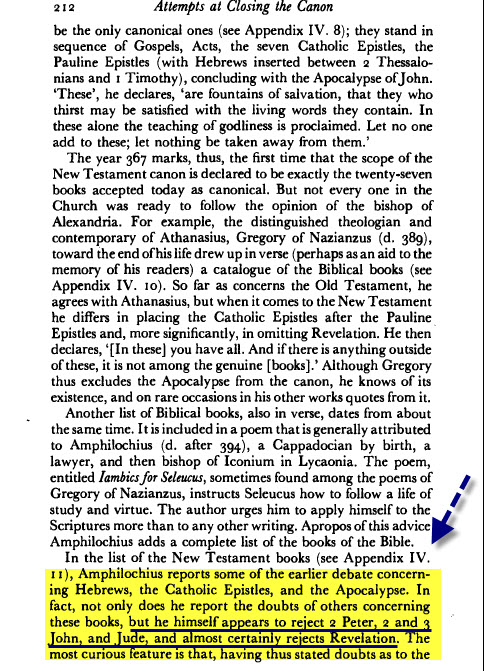
10- [Amphilochius]
Bruce Metzger (4) says about him…that he reported on the disputes over the Epistle to the Hebrews, the General Epistles, and the Revelation of John…and in fact he did not report his doubts about these books only…but he seems to reject the First and Second Epistles of John, the Second Epistle of Peter, and Jude…and more specifically he rejects the Book of rev
The Book of Tobit was not considered canonical
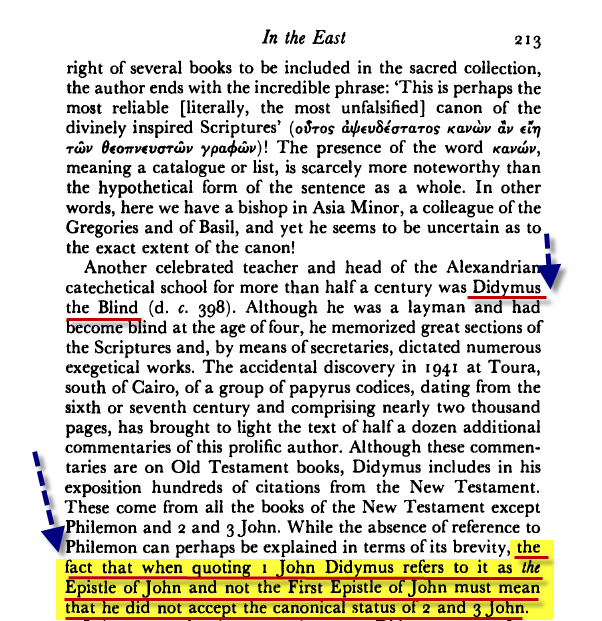
11- [Didamus the Blind]
Metzger (5) says that when he quoted from the First Epistle of John, he referred to it as the Epistle of John, and did not say the First Epistle of John, which indicates that he did not accept the Second and Third Epistle of John.
12- [Cyprian]
As the Catholic Encyclopedia says about him:
Before all the books of the New Testament except the Second Epistle of Peter, Hebrews, James and Jude..!!
St. Cyprian, whose Scriptural Canon certainly reflects the contents of the first Latin Bible, received all the books of the New Testament except Hebrews, II Peter, James, and Jude;
http://www.newadvent.org/cathen/03274a.htm
We will not add to these… all we want to clarify… is that the Holy Bible of Clement contained the Book of Revelation of Peter…
As for Origen’s book, it did not contain this book…but it did contain the book of Acts of Paul…and this book is not found in Clement’s Holy Book.
Unfortunately, the Book of Revelation of Peter and the Book of Acts of Paul are not found in the current Bible.
The current Bible contains the Second Epistle of Peter…which Clement and Origen did not believe in…etc.
If we follow this path…the forum pages will not be enough for us…the matter has become clear to everyone…the ancient church fathers were not united by one holy book…and each father chose his own holy book subject to his personal tradition and personal laws
The question now is, when were the books of the New Testament collected and who collected them???
This question is answered by Reverend James Ans in his book Systematic Theology… which explains very easily… that we do not know who compiled these books and when they were compiled…!!!
Systematic Theology - Page 53
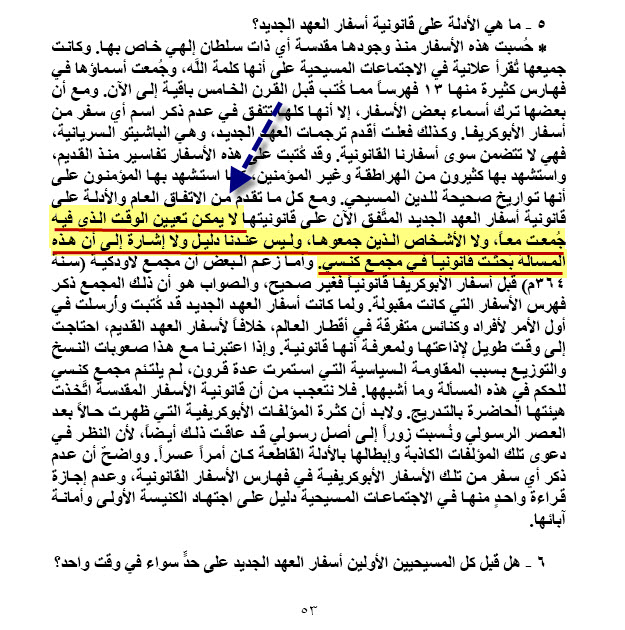
{Embed}
http://www.newadvent.org/cathen/03274a.htm
CATHOLIC ENCYCLOPEDIA: Canon of the New Testament
The idea of a complete and clear-cut canon of the New Testament existing from the beginning, that is from Apostolic times, has no foundation in history
Another question: When were the writings of Paul and the four Gospels considered sacred writings equal to the Old Testament?
This question is answered by Dr. Fahim Aziz, who explains that this date is still unknown…and there is no power or strength except with God…
Introduction to the New Testament - 149,150
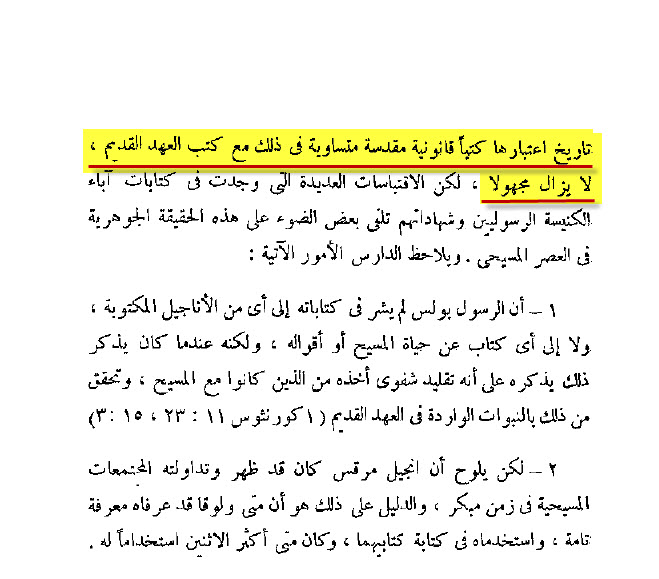
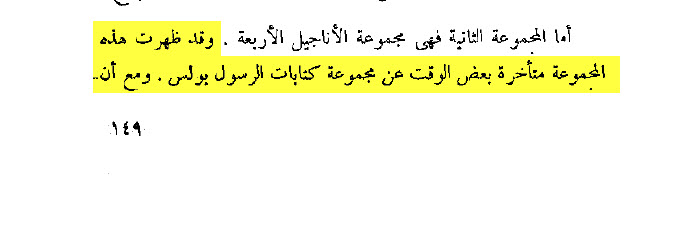
Who was the first to give the Old Testament this name… and who was the first to give the New Testament this name and when did that happen???
Old Testament… Miletus… 170 AD…!
New Testament… Tertullian… 200 AD… !
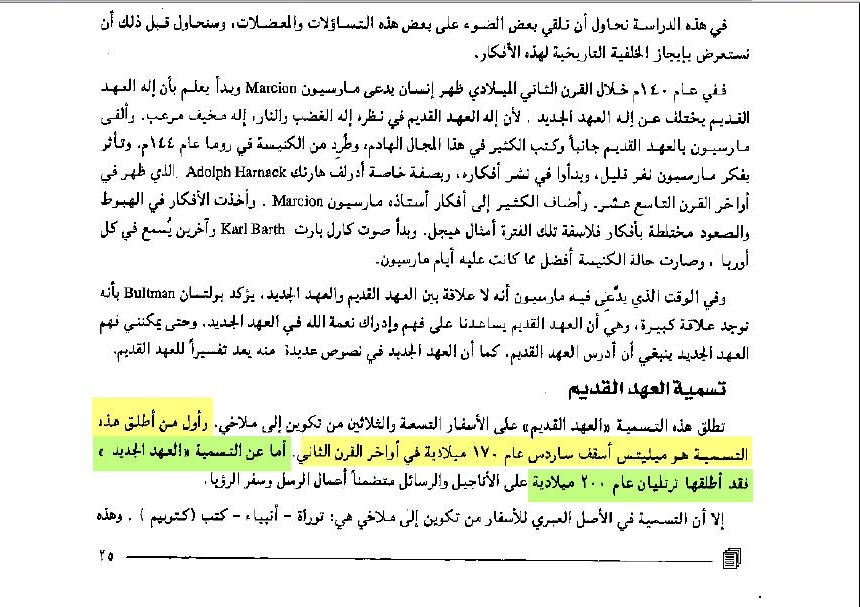
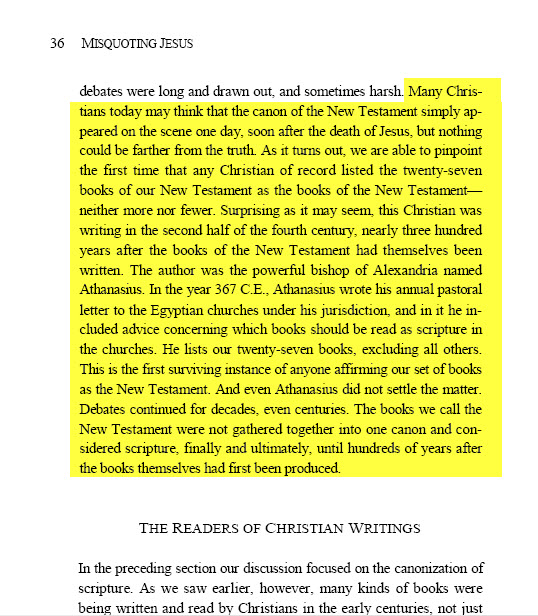
The question that imposes itself now is… Who was the first church father to know a holy book called the New Testament consisting of 27 books…like the books that we know now??
Bart Ehrman responds to us and says (6)
Many Christians today may believe that the official New Testament canon simply came into existence one day shortly after Jesus’ death…but nothing could be further from the truth than this belief.
As will become clear, we are able to pinpoint the time when some reliable Christian made a list of the twenty-seven books of our New Testament—more or less.
It may seem surprising that this Christian was writing in the second half of the fourth century, almost three hundred years after the New Testament books themselves began to be written. This author was Athanasius, the most powerful bishop of Alexandria. In 367 A.D., Athanasius wrote his annual pastoral letter to the Egyptian churches under his jurisdiction, in which he gave advice on the books that should be read in the churches as Scripture. In his list he listed our twenty-seven books,
And he excluded all other books.
This is the first recorded instance of someone asserting that the collection of books we know is the New Testament.
Even Athanasius did not settle the issue. The debates continued for decades, even centuries. The books we call the New Testament were not collected together in one official list and finally considered sacred until hundreds of years after they were first written.
Father Tadros Yacoub Malti (7) says:
The first person to mention the complete collection of books of the New Testament was Athanasius in the year 367, and the Universal Church considered them to be the canonical books of the New Testament (no comment..!
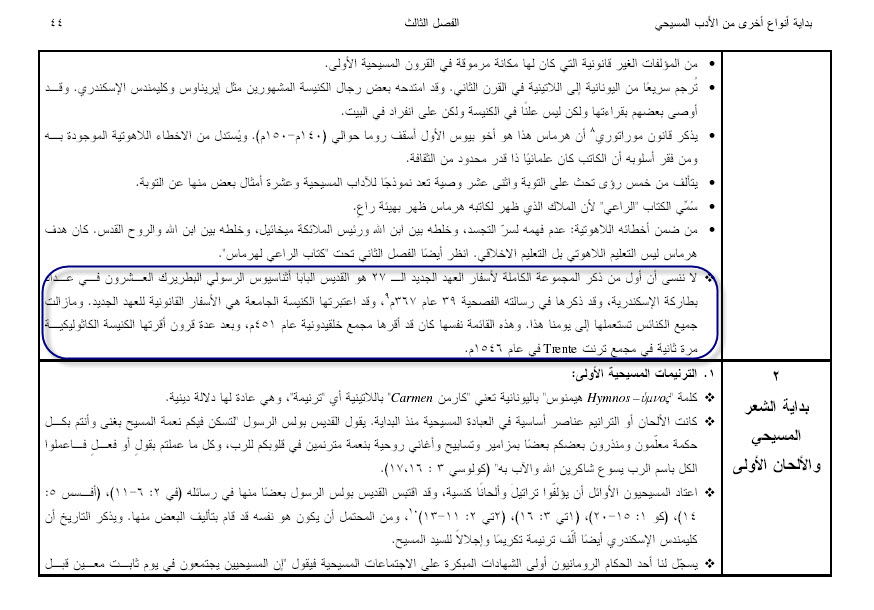
We read
the same words in the book General Idea of the Bible, page 75, and Metzger
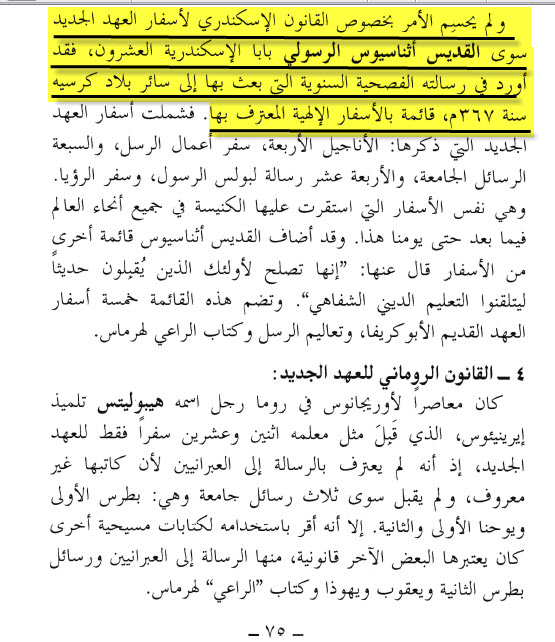
The year 367 is truly a sign… for the first time in the field of the canon of the New Testament… the exact twenty-seven books accepted today as canonical books were declared… (Then he mentioned Father Gregory’s disagreement with Athanasius and his deletion of the Book of Revelation
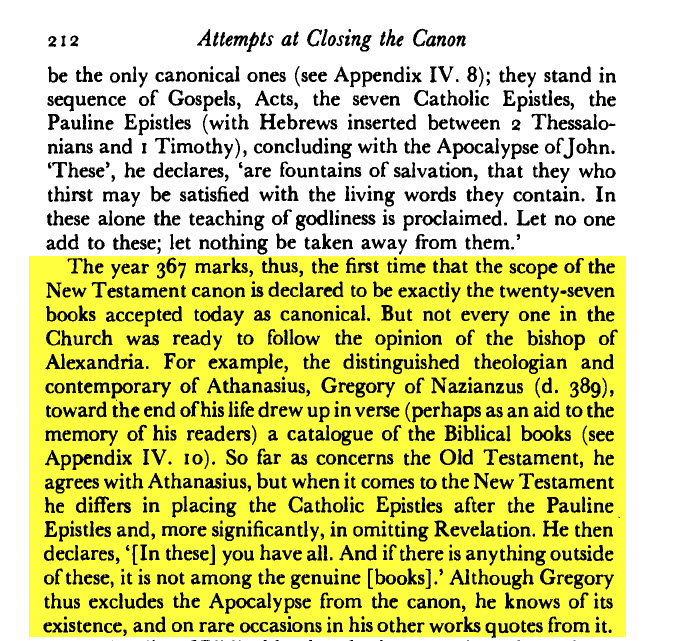
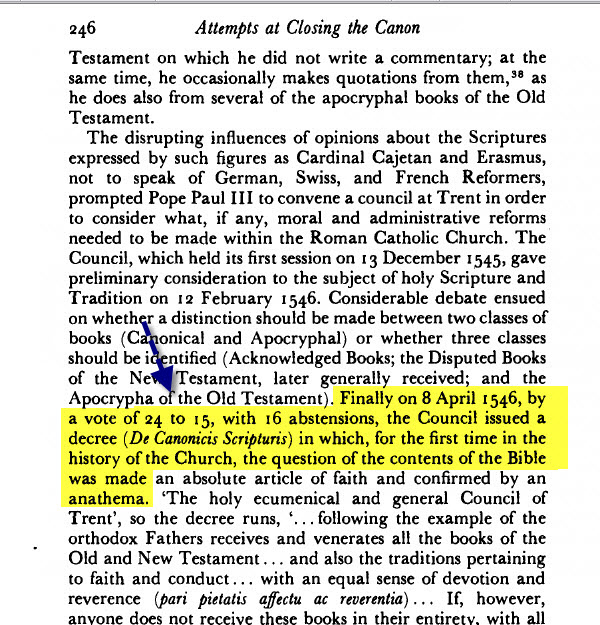
The conflict between the sects continued until the year 1546 (Council of Trent).
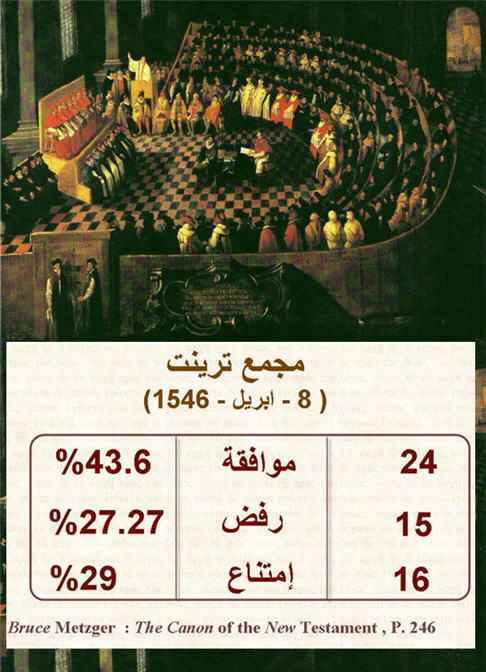
As Metzger (9) says…the number of books of the Bible was decided in this council by voting…
😂😂😂
Yes, by voting, the conflict over the books of the Holy Bible was resolved …!!! (*)
Where 43% of those present at the council voted…in favor of the current Bible.
27% of those present voted…against the current form of the Bible.
29% abstained from voting.
There is no power or strength except with God
🚨🚨🚨End of 2nd Point
🚨🚨🚨🚨🚨🚨🚨🚨
[ 3-The origins are not sacred because we do not know who wrote them and when they were written .]
As we have seen… Josh McDowell said in the second condition for accepting any book (1):
Is the book a prophetic book written by one of God’s men???
And the priest says, “Basit (2)”
The apostleship of the apostles…eyewitnesses…and God’s work with them: These books were written and recorded by Christ’s disciples, apostles, and witnesses who were handed down to the church.
The author of the Encyclopedia of the Church Fathers stated that knowing the author of the book determines the legitimacy of the message.
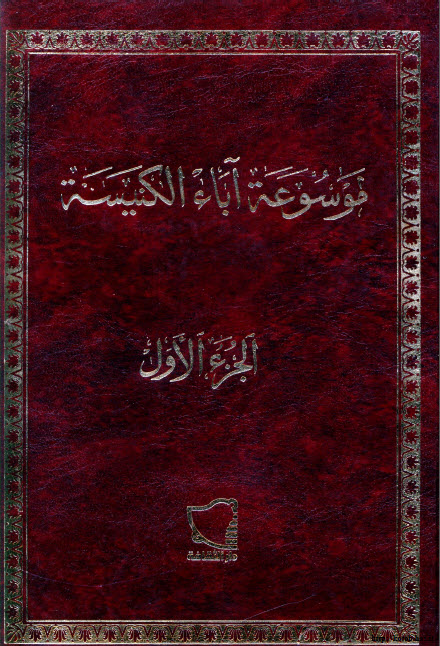
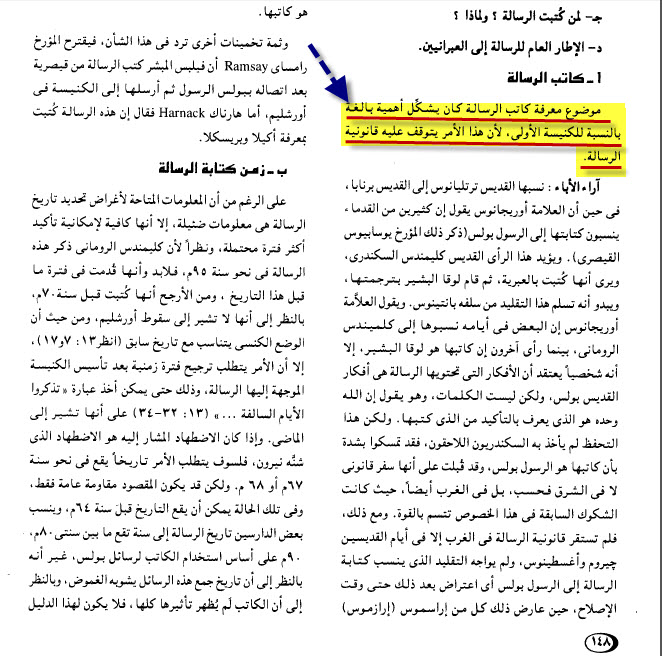
The author of the Encyclopedia of the Church Fathers stated that knowing the author of the book determines the legitimacy of the message.
As we see… for the book to be legal and acceptable to the church… its writer must be one of the men of God… and with regard to the books of the New Testament and the Gospels in particular… Father Basit said that the apostles’ apostleship and their being eyewitnesses to his life is an important condition for the book to be accepted.
According to this condition…we can say…that most of the books of the Holy Bible…are not canonical…because their author is unknown…and there is no power or strength except with God…
We saw in a previous post…that the writers of the books of the Torah are unknown…let us now take other examples from the books of the Old Testament and see what the church scholars said about their author…
According to church scholars…
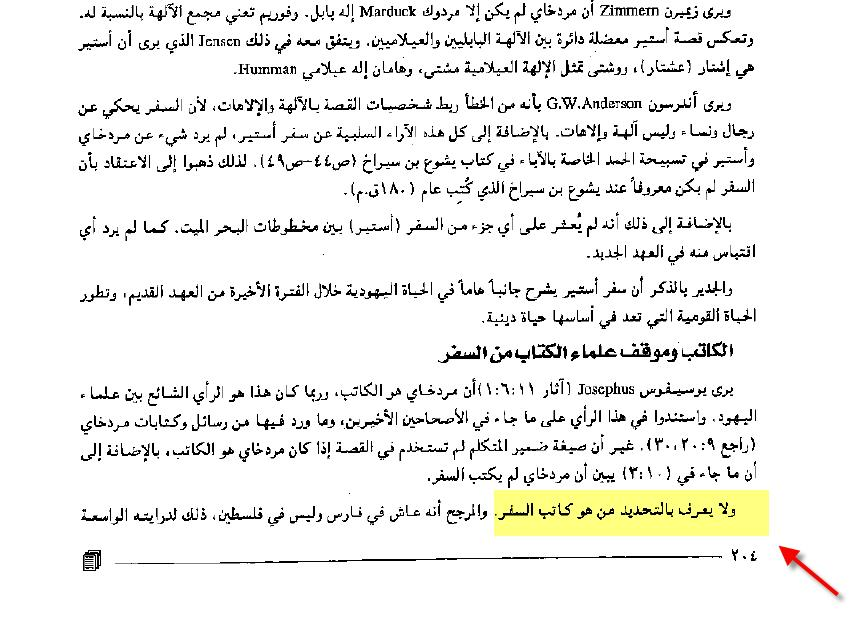
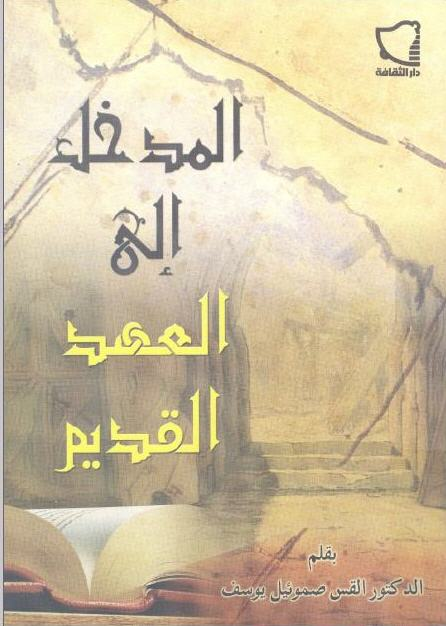
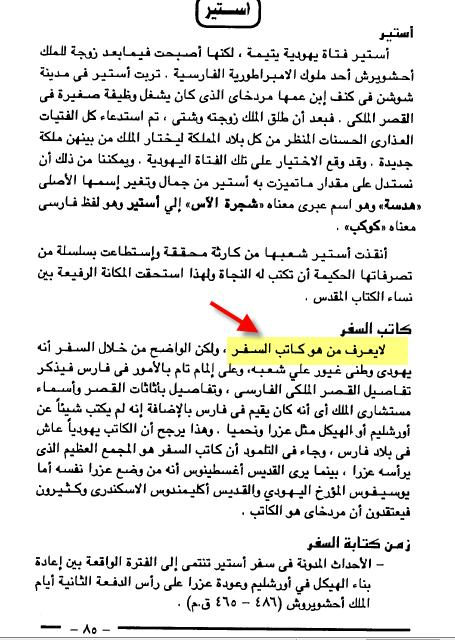
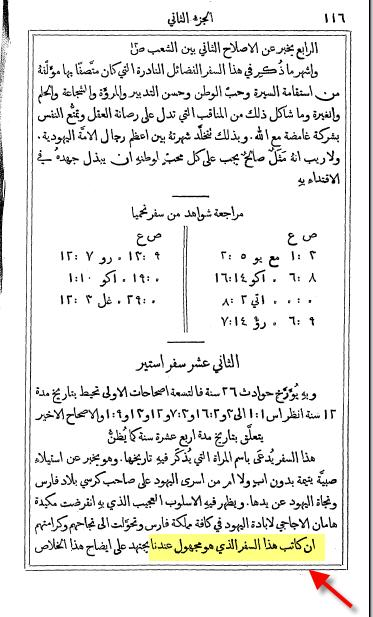
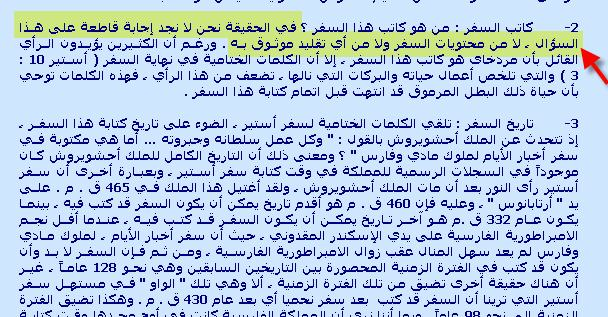
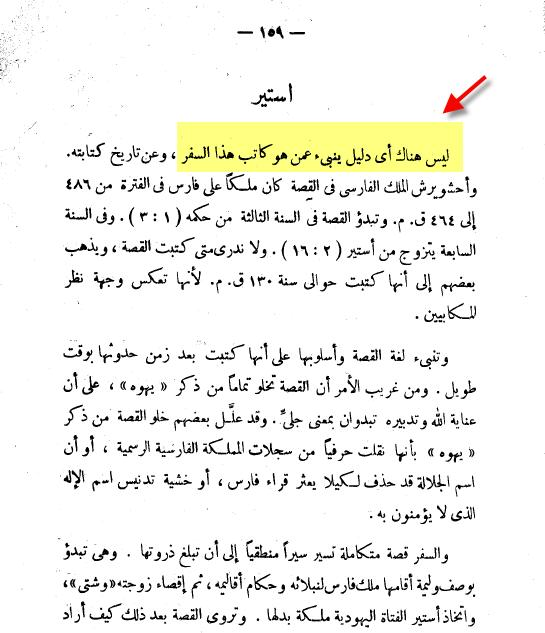
The author of the book of Esther is unknown.
Introduction to the Old Testament - Dr. Samuel Youssef - Page 204 A Guide to the Old Testament - Dr. Malak Muharib - Page 85 A Guide for Students to the Precious Bible - Page 116 The Encyclopedia of the Bible - The Book of Esther Introduction to the Bible - Habib Saeed - Page 159
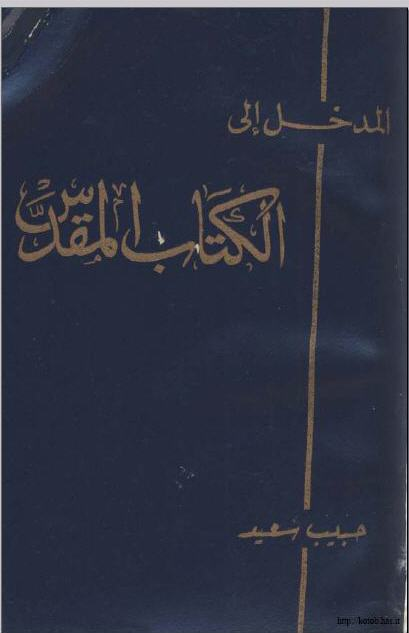
The author of song of song is also unknown
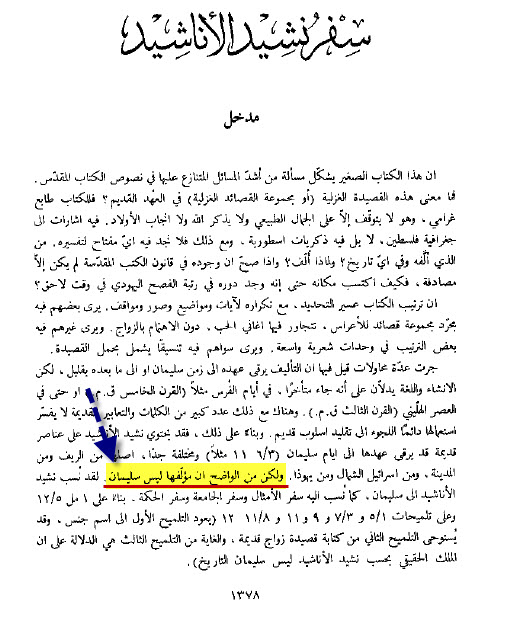
The language
of the book is later than the time of Solomon
The Song of Songs is the most beautiful song in the universe - Dr. Youhanna Qamir
The Song of Songs is the most beautiful song in the universe - Dr. Yohanna Qamir
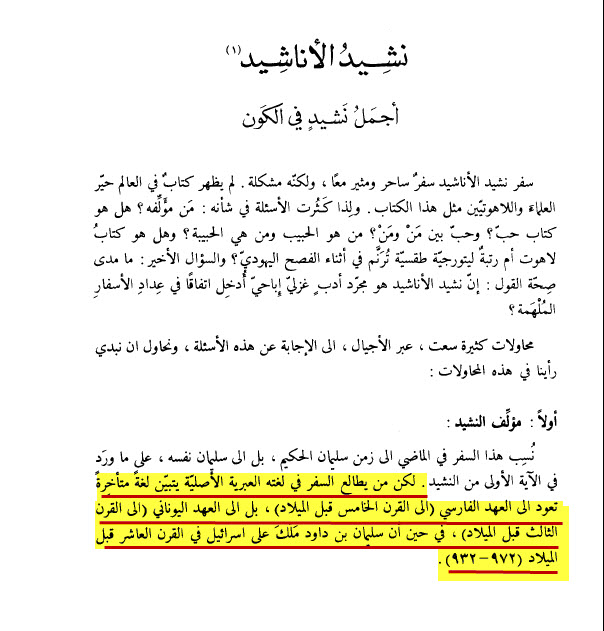
The Song of Songs is the most beautiful song in the universe - Dr. Yohanna Qamir
The writer of the travelogue is unknown.
Introduction to the Old Testament - Dr. Samuel Youssef - 192
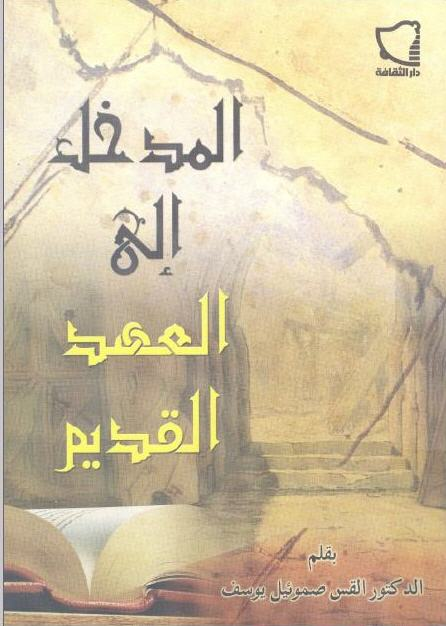
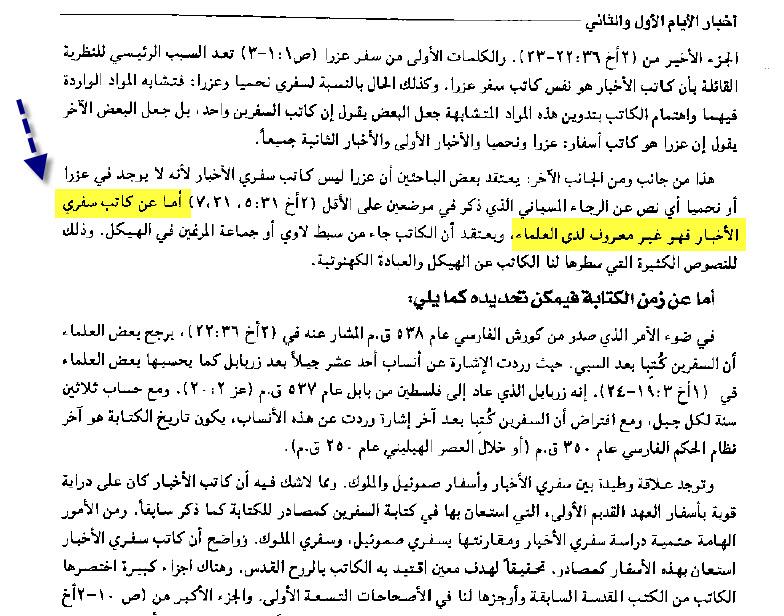
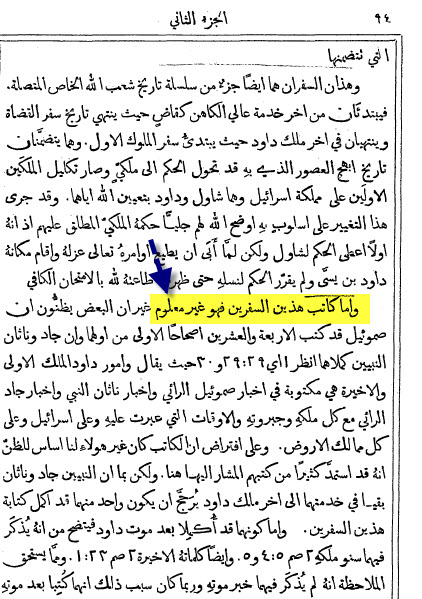
The writer of the first and second books of Samuel is unknown.
Student Guide - Page
Student Guide - Page 94
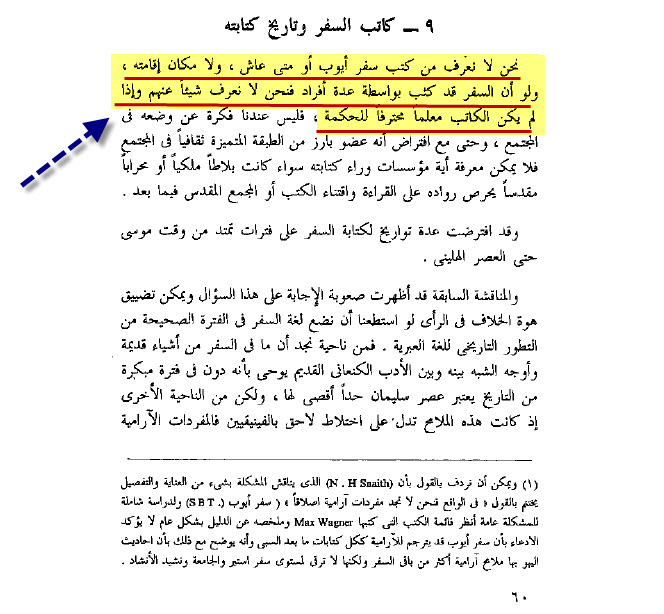
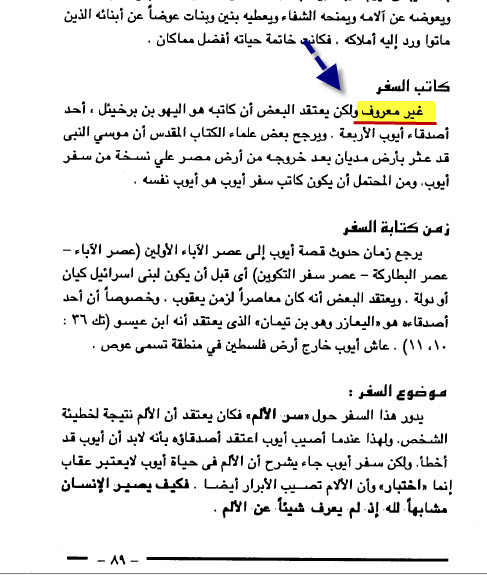
The writer of the Book of Job is unknown.
Modern Commentary - Page 60 Old Testament
Dictionary of Premillennial TheologyBy Mal Couchpg 213
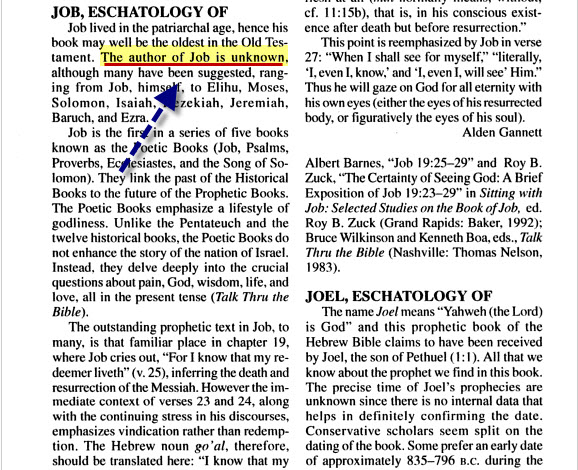
Dictionary of Premillennial TheologyBy Mal Couchpg 213
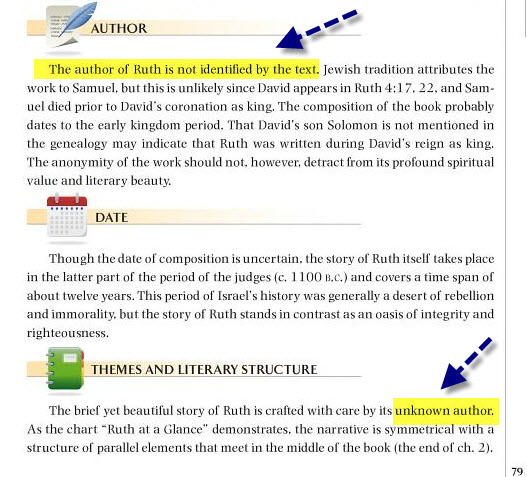
The same applies to the Book of Ruth.
Introduction to the Old Testament - Dr. Samuel Youssef Anonymous and perhaps Samuel (3) Unknown …$$…The text did not specify his identity…(4 )
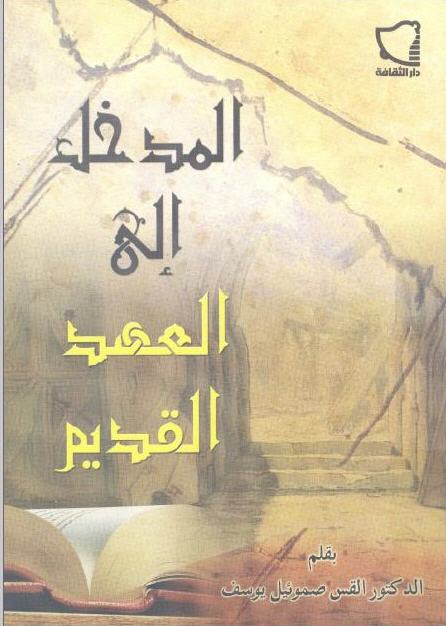
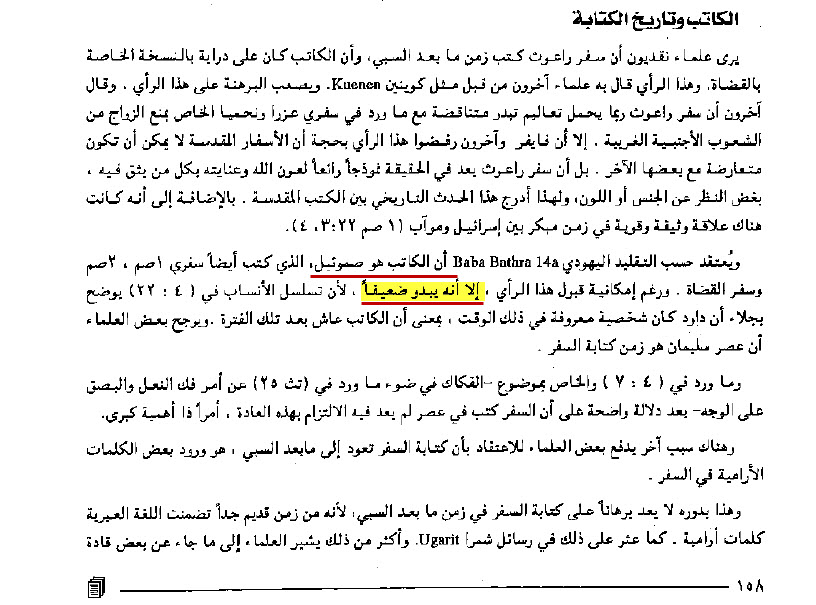
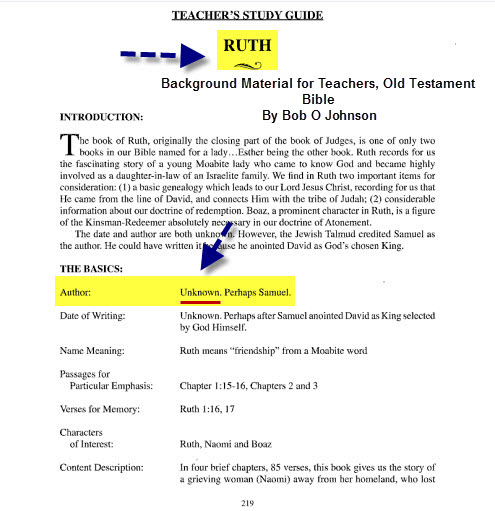
And the book of Tobit
Too
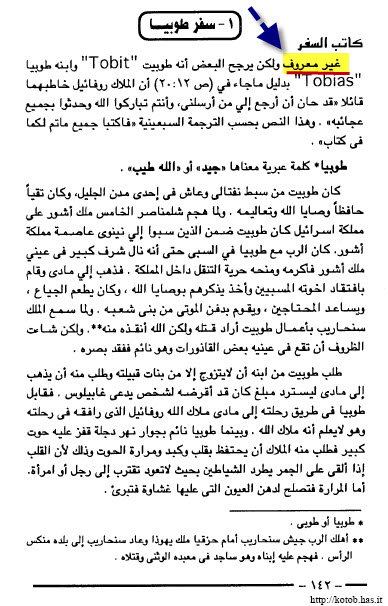
the text did not specify his identity…(4)The Book of
Judith is the same case
[ and there are those who hide under a false name…like the writer of the Book of Ecclesiastes, a guide to reading the Bible]The Book of Judith is the same.
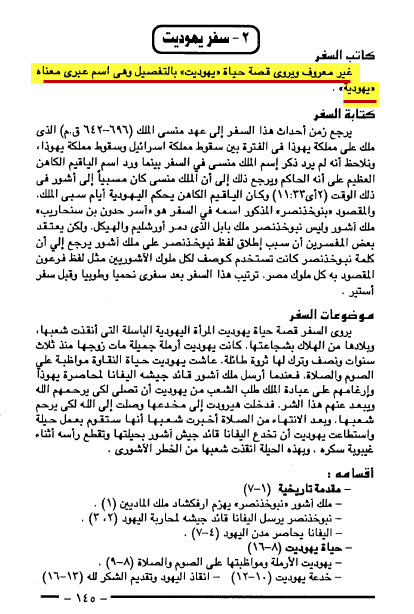
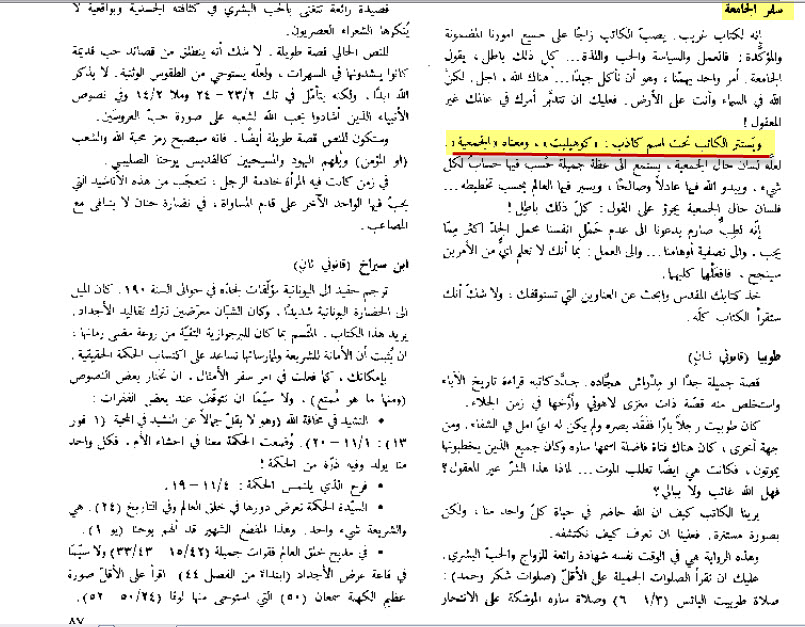
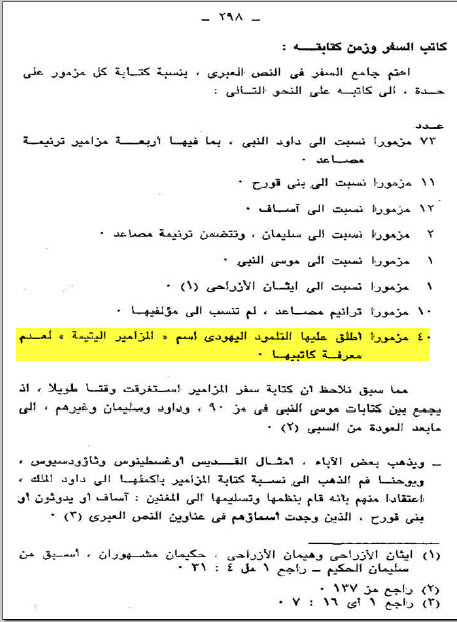
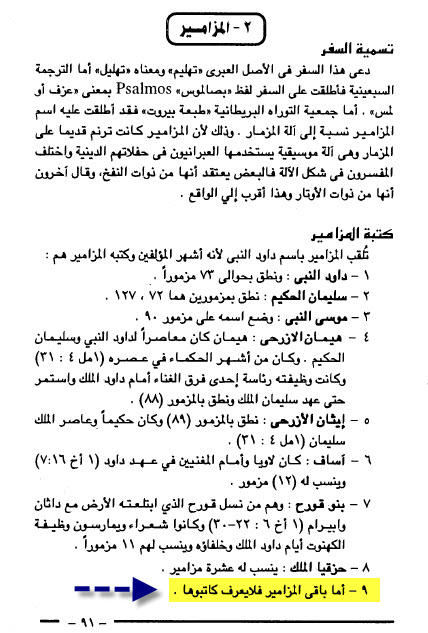
Even the Psalms of David…there are some Psalms whose author we do not know (the orphan Psalms)
Introductions to the Old Testament - Dr. Wahib George Guide to the Old Testament - Page 91 There is no power or strength except with God
🔝🔝🔝