Distortion V1
.
Now let us assume that the Holy Bible is not copied from any other documents…and there is a consensus among the churches and church fathers on its contents and its canonical books…and let us also assume that it is known who wrote all the books of the Bible and when they were written.
In other words…let’s assume that this book is actually sacred.
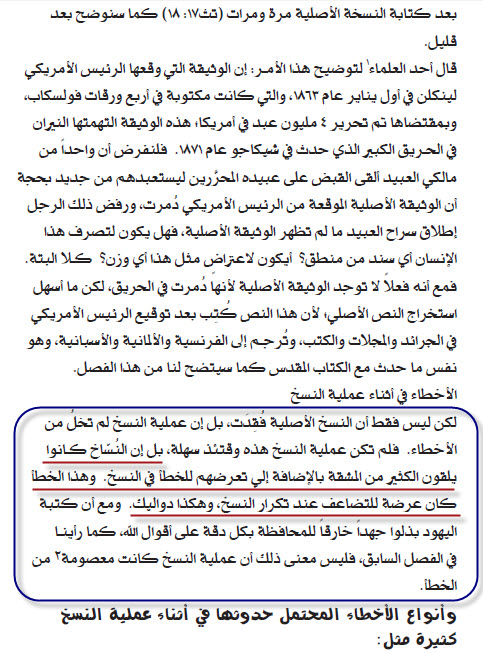
Was it distorted??? Who distorted it?? Why did he do that?? What is the interest of the copyist in changing the words??? Can we prove this distortion now???
Before talking about this topic…we must answer some important questions…
What is distortion technically??
Father Abdel-Masih Basit answers us (1)
Distortion, as a term, has many meanings, including…
Ordinal distortion
… That is, moving the verse from one place to another.
And from it
twist
…and changing it to something that contradicts the apparent meaning of its wording, and this includes interpretation by opinion…and whoever interprets the speech in a way that is contrary to its reality and interprets it in a meaning other than its true meaning, then this is a distortion.
And from it
distortion of the word
… It includes both increase or decrease, change and alteration.
Firstly
distortion by increase
…meaning that some of the book we have in our hands is not from the original book, whether by adding a letter, word, verse, or part of the book.
secondly
distortion by deficiency
.. meaning that some of the books we have in our hands do not include all of them.
What the prophets wrote in the spirit, some of which may have been lost either intentionally or through forgetfulness,
This part may be a letter, a word, a verse, or a part of the book. That is, distortion in replacing one word with another, distortion in replacing one letter with another, distortion in replacing one vowel with another.
What are the forms of distortion that the Holy Book spoke about???
Talk about distortion by deletion and distortion by addition
Apocalypse
22:18 For I testify to everyone who hears the words of the prophecy of this book.
If anyone adds to these things, God will add to him the plagues that are written in this book.
22: 19
And if anyone deletes from the words of this prophecy book
God takes away his portion from the Book of Life, from the holy city, and from what is written in this book.
Antonius Fikry’s interpretation
At the end of the Bible
God warned against distorting it in any way.
http://st-takla.org/pub_Bible-Interp…Chapter-22.htm
How do we prove the occurrence of distortion practically??
It can be proven.
By comparison
This is what Pope Shenouda said (2)
{Embed}
http://st-takla.org/pub_Bible-Interp…Chapter-22.htm
404 File Not Found! - الصفحة غير موجودة - St-Takla.org - Saint Takl…
404 File Not Found! - الصفحة غير موجودة - St-Takla.org - Saint Takla site - Alexandria - Egypt
attachments/image_9-fa0cc88c408f16cb.png
This is the distortion, the forms of distortion, and how to prove distortion in Christian thought…
Do these concepts apply to the Holy Bible???
He follows …
1Does the Bible testify to its own distortion?
2Years with People’s Questions - Part Six - Page 56
I mentioned in the second intervention … that the main source used by the writer of the Gospel of Matthew and the writer of the Gospel of Luke … is the Gospel of Mark.
But did the writer of the Gospel of Matthew and Luke transmit the events from the Gospel of Mark exactly as Mark narrated them … or did some change occur during the transmission???
For example, the writer of the Gospel of Mark says when he talked about Christ healing the sick
Mark
1:34 And he healed many who were sick with various diseases, and he cast out many demons, and he did not allow the demons to speak because they knew him.
How did the writer of the Gospel of Matthew report this incident …? … The writer reported it as it is, but he replaced only one word, which is the word “many”
Matthew
8:16 And when evening came, they brought to him many who were demon-possessed, and with a word he cast out the spirits, and healed all the sick.
Matthew
8:16 And when evening came, they brought to him many who were demon-possessed, and with a word he cast out the spirits, and healed all the sick.
Did you notice what the writer of the Gospel of Matthew did???
Yes, he changed the word “many” to the word “all” …!
How did the writer of the Gospel of Luke report this incident …? …the writer mentioned it as it is, but he also replaced only one word, which is the word “many” … and put in its place “each one of them” …
Luke
4:40 And when the sun was setting, all who had any sick with various diseases brought them to him; and he laid his hands on every one of them and healed them
. The question is why did the writer of the Gospel of Matthew Luke change the word “many” .. to the word “all” … and to the word “each one of them”??
The answer … quite simply because the writer of the Gospel of Matthew and Luke … found that the word “many” that Mark mentioned in his Gospel .. limits the power of Christ … so they replaced it with another word that indicates that Christ healed all the sick … and not many …!!
Another example…
the writer of the Gospel of Mark says… speaking about the power of Christ
Mark
6:5, ” And he was not able to do any mighty work there, except that he laid his hands on a few sick people and healed them. ”
Here the writer of the Gospel of Matthew could not say what Mark said , “And he was not able to do any mighty work there” … because this statement might lead to suspicion of the limited power of Christ,
so he cited the verse as follows:
Matthew
13:58, “And he did not do many mighty works there because of their unbelief
.” Did you notice the difference??
(Mark) And he was not able to do even one mighty thing there >>>> (Matthew) And he did not do many mighty things there
. As for the writer of the Gospel of Luke… he took a completely different approach… and did not mention this incident at all.
There are also numbers mentioned by the writer of the Gospel of Mark in his Gospel that the other Gospel writers did not mention in their Gospels, such
as
Mark
3:5 And he looked around at them with anger , grieved at the hardness of their hearts, and said to the man, “Stretch out your hand.” So he stretched it out, and his hand was restored whole like the other.
Mark
3:21 And when his relatives heard it, they went out to seize him; for they said, “He is out
of his mind.” Mark
10:14 But when Jesus saw it, he was indignant , and said to them, “Suffer the little children to come to me, and do not forbid them, for the kingdom of God belongs to such as these.”
Why did the writers of the other Gospels not mention these numbers??
The answer is simply that the Gospel writers did not mention these parts for fear that they would belittle Jesus…!…in terms of attributing to him human emotions of anger, sadness and rage.
#Do we understand from this that the Gospel writers revised the Gospel of Mark while transcribing it???
The answer is yes…and this is not my statement of course, but rather the statement of church scholars.
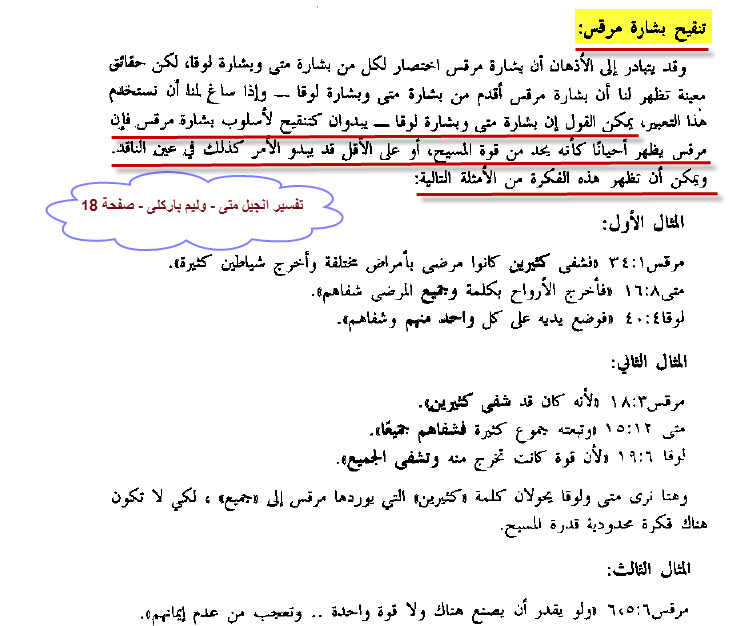
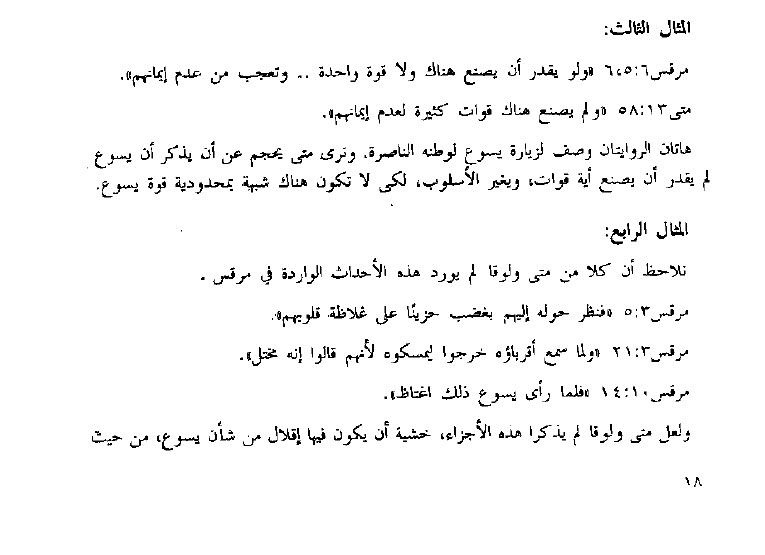
The New Testament commentator William Barclay (1) says… and under the title “Revising the Gospel of Mark”
it can be said that the Gospel of Matthew and the Gospel of Luke appear to be a revision of the style of the Gospel of Mark, as Mark sometimes appears as if he is limiting the power of Christ…or at least it seems that way in the eyes of the critic. (Then he mentioned the examples we mentioned…with the same commentary on them)
The author of the book Jesus and the Four Gospels says:
It seems that Matthew and Luke modified or deleted certain sayings that came in the Gospel of Mark that could be believed to denigrate Jesus… (Then he mentioned examples)
They seem to be a refinement of the style of Mark’s Gospel, as Mark sometimes appears to limit the power of Christ…or at least it seems that way in the eyes of the critic. (Then he mentioned the examples we mentioned…with the same commentary on them.
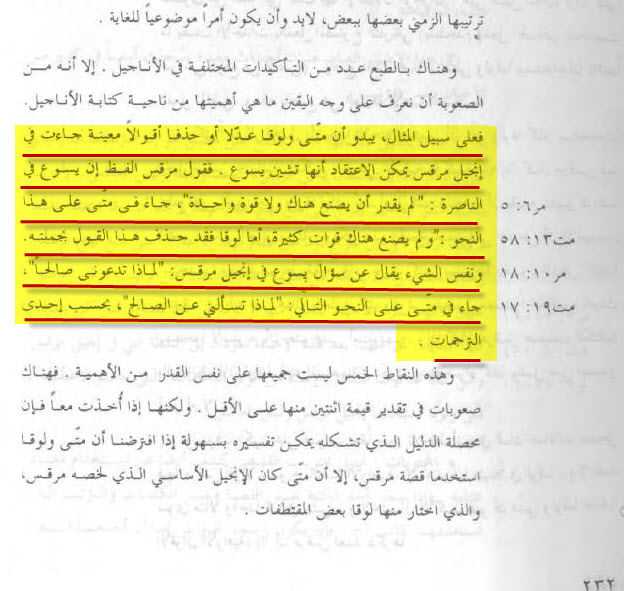
As for Dr. Fahim Aziz, he said that Matthew and Luke tried to reduce the complete frankness that Mark followed in his Gospel.
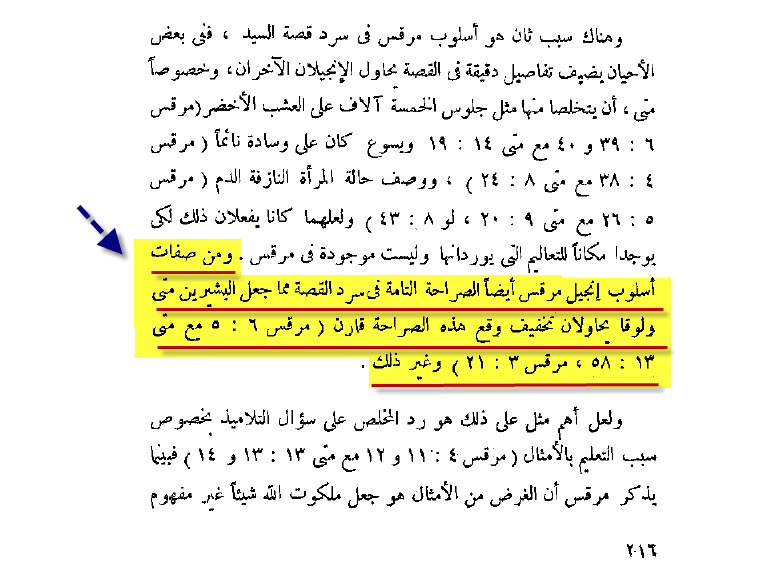
Now we have seen the reaction of the Gospel writers… in the event of any word or text… indicating something that limits the power of Jesus… or any word that has an unnatural meaning for them… The writers of revelation either changed this word to another word that is more acceptable from their point of view… or in other words, it softens the explicitness of the first word, according to Dr. Fahim Aziz
, or they delete this word from its roots… This is the approach of the Gospel writers in the event of any word or phrase that they do not like… either changing it to another word or deleting it.
So what is the approach of the copyists of the Holy Book towards the manuscript from which they were copying?
Was the copying process for them… a purely mechanical process?… meaning that they copy the words without any change… even if they found something unnatural for them???
Or did they do like the writers of revelation???… and changed and deleted any word that they did not like… or that indicated something unnatural for them???
Or did the matter develop with them to the point that they were adding and deleting from the manuscripts as they wanted🤦♂️
Perhaps the answer to these questions is the gateway to knowing whether the Bible was distorted or not… If all the copyists were from the first category, we would guarantee that the copying process was done correctly without alteration or change… But if they were from the second category, the matter would change a little… But if they were from the third category, the matter would be completely reversed.
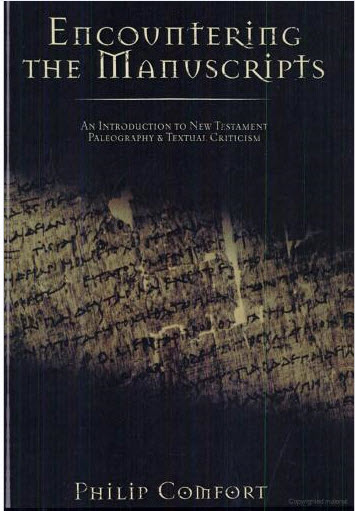
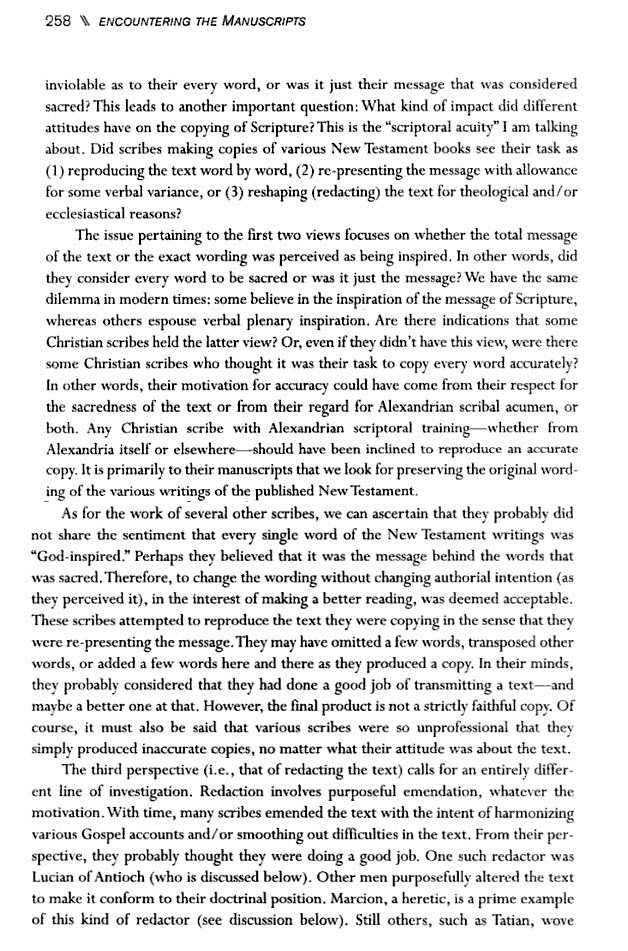
The scholar Philip Comfort (2) wonders… about the copyists’ point of view towards the manuscripts of the Bible and says…
When the copyist was copying the Bible… how did he view this task???
1 - Was he reproducing the text word for word???
2Or was he interested in presenting the message or purpose of the text in general… with an acceptable amount of verbal change???
3Or was he revising the text for a theological or ecclesiastical reason?
The issue related to the first and second points of view… is related to the issue of the inspiration of the Bible… Is the inspiration the message of the text in general… or is every word or words of the text itself inspiration???
In other words, did the scribe consider every word sacred, or did he consider only the message sacred?
This is a dilemma that we still live with to this day. Some believe that only the message of the text was inspired, while others support that the inspiration was entirely verbal.
Are there any indications that some scribes adopted the latter view, and even if they did not adopt this view, were there Christian scribes who viewed their mission as merely transcribing every word with the utmost accuracy?
In other words, was the Alexandrian scribe’s accuracy and care a result of his belief in the inspiration of the text, or because of the scribe’s intelligence and skill? Or both??!!
The Alexandrian scribe was generally inclined to produce a very accurate copy whether from Alexandria or elsewhere (the Alexandrian text)
and primarily to refer to their manuscripts when we search for the text that preserved the original from among the many writings of the New Testament
and through the work of many other scribes … we can be sure that they did not believe that every word of the New Testament is the word of God …
perhaps these scribes believed that the message that comes from behind the text is the only sacred …
And so they changed the words without changing anything about the divine meaning as they understood it, of course. In order to aspire to produce a better reading,
these copyists tried to reproduce the text, feeling that they were re-presenting the message behind the text.
Perhaps these copyists would delete a few words…transfer some words…or add some words…while they were copying.
From their point of view…they consider this work a good work…during the transfer of the text…and that the text will be better afterwards…
in any case…the final product or final copy is not accurate
and we must say that many of the copyists were unprofessional…and they are the ones who produced inaccurate copies…regardless of their belief towards the text…
as for the third point of view…it calls for a completely different view…
the revision of the text includes purposeful corrections whatever the motive…
and with time many copyists corrected the text in order to make the texts of the Gospels consistent with each other…or to remove some difficulties in the text…from their point of view…this work is considered a good work…
and one of these was Saint Lucian of Antioch…(3)
and others were changing the text in order to confirm their doctrinal point of view…an example of this is…the heretic Marcion…
and others like Tatian (4)
made one Gospel derived from the four Gospels and thus deleted any contradiction between the Gospels.
Some scholars, such as Bart Ehrman, believe that the text was revised during its transmission in ancient times by the Orthodox rather than the heretics.
Ehrman believes that the text was altered in order to bring about some kind of agreement between Orthodox doctrine and the text
Another question:
Were the copyists of the Bible professional copyists??? …or amateurs???
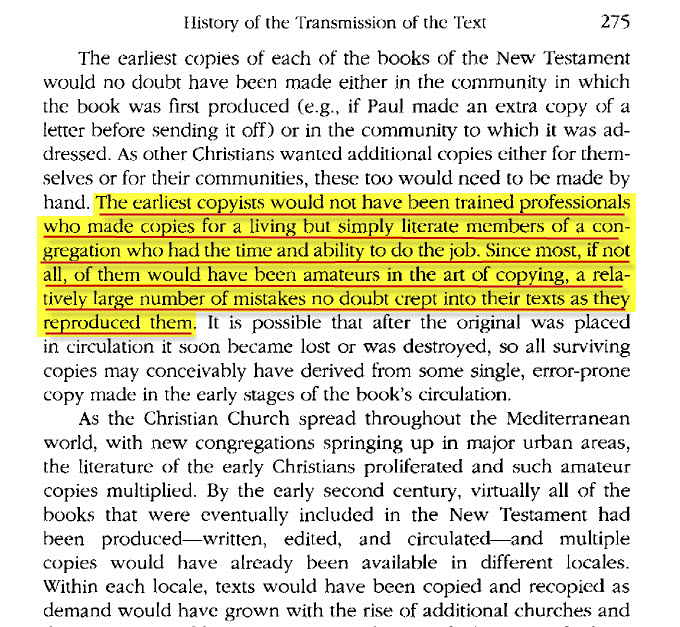
The scholar Metzger answers us and says (5) The people who copied the first Christian texts were not professionals who practiced copying…
butthey were simply the individuals who were able to read and write among the members of the Christian community who had the time and ability to accomplish this work… Therefore, most, if not all, were amateurs in the art of copying…!! And without a doubt, a huge number of errors crept into the manuscripts that they were copying.
Bart Ehrman (6) says:
the people copying the early Christian texts were not, for the most part, if at all, professionals who copied texts for a living (cf. Hermas, above)? they were simply the literate people in the Christian congregation who could make copies (since they were literate) and wanted to do so.
The people who copied the first Christian texts were not, in most cases, if not all, professionals who practiced copying. They were simply the individuals who were able to read and write among the members of the Christian community… and who had the desire and ability to copy.
🚨
Another question… Were all those who copied Christians???
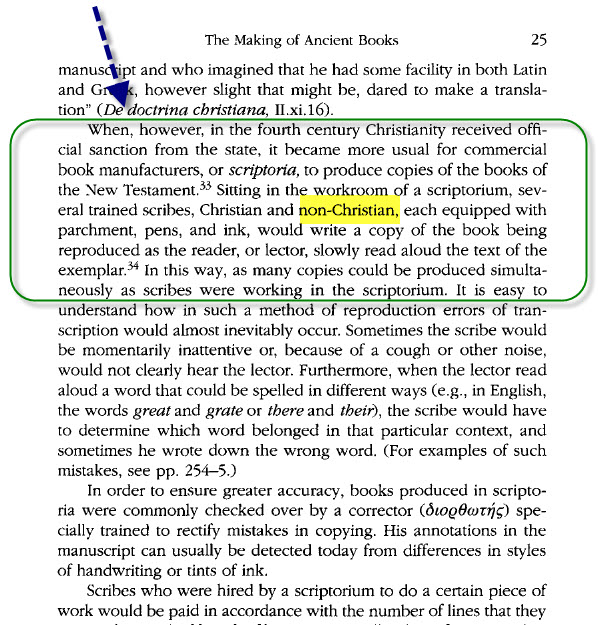
Perhaps a Christian would be surprised by this question… but the reality actually says that the copyists included Christians and pagans at the beginning of the fourth century…!!!
Metzger says (7)
in the fourth century Christianity became recognized by the state, so it was natural for commercial book factories to produce copies of the New Testament… so that many trained scribes, Christians and non-Christians, would sit with ink, pens and parchments…
so they would copy the book while listening to the reader or lecturer who would read the text to them slowly… Thus, many copies were produced in a way that… while the copyists were working in the factories
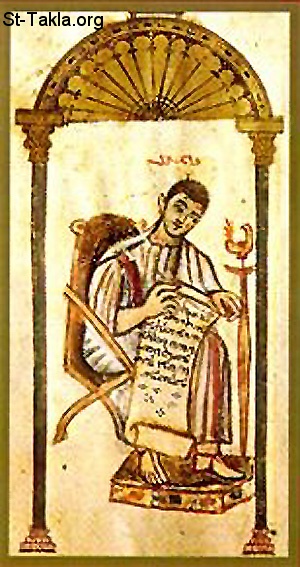
Now, as we see, the copyists of the Holy Bible did not have a single vision regarding the manuscripts they copied.
Some of them copied it as is without any changes…and some of them changed the words only without compromising the meaning…and some of them deleted and added for doctrinal reasons.
We saw amateur copyists in the first centuries who were not professional copyists…and we saw pagan copyists who participated with Christians in copying with the entry of the fourth century.
🚨In light of that, can we say that the Holy Bible was distorted???
1- تفسير إنجيل متى - وليم باركلى - صفحة 18 - 19
2Encountering the manuscripts: an introduction to New Testament paleographyPhilip Comfort - pg 258 259
3http://st-takla.org/Saints/Coptic-Or…tory_1523.html
4-http://st-takla.org/Saints/Coptic-Orthodox-Saints-Biography/Coptic-Saints-Story_655.html
5-The Text Of The New Testament Its Transmission, Corruption, and Restoration - Pg 275
6misquoting Jesus ,p50 - 51
7 - The Text Of The New Testament Its Transmission, Corruption, and Restoration - Pg 25
{Embed}
http://st-takla.org/Saints/Coptic-Or…tory_1523.html
404 File Not Found! - الصفحة غير موجودة - St-Takla.org - Saint Takl…
404 File Not Found! - الصفحة غير موجودة - St-Takla.org - Saint Takla site - Alexandria - Egypt
{Embed}
http://st-takla.org/Saints/Coptic-Orthodox-Saints-Biography/Coptic-Saints-Story_655.html
تاتيان السرياني المدافع | St-Takla.org
قصة حياة و سيرة تاتيان: قاموس القديسين - سير و قصص الشهداء المسيحيين و الأقباط - قاموس أباء الكنيسة وقديسيها - موقع الأنبا تكلا هيمانوت: الكنيسة القبطية الأرثوذكسية - إسكندرية - مصر
🚨🚨🚨🚨
We concluded the previous intervention with an important question:
Can we say that the Bible has been distorted???
The answer is… definitely it has been distorted… and we will explain in detail how this happened and why
through Christian references… and the Church Fathers
. What are the factors that paved the way for this…???
We saw that the copyists of the Bible had different views regarding the nature of the Bible and the nature of revelation… and we saw that the copyists were unskilled at the beginning of Christianity… and with the advent of the fourth century, the pagans entered the line with the Christians in copying the Bible.
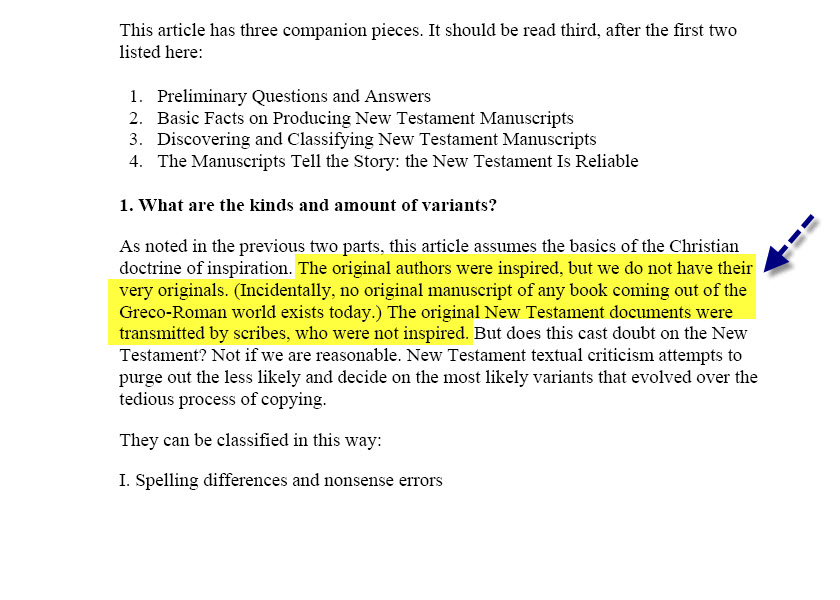
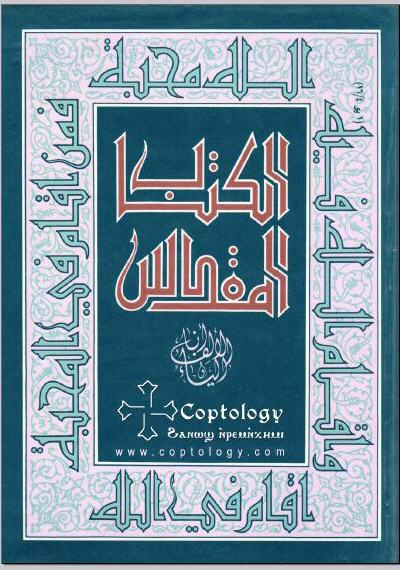
We add to this… the loss of the original copies of the Bible… for the book of the Bible was inspired to them and their writing was inspired, but unfortunately they are not with us now… … and of course these original copies were copied by copyists who were not inspired… so says James (1)
Ehrman says (2):
There would not be at this day any Copy even of the New Testament either Greek, Latin, Syriack or Arabick, that might be truly called authentick because there is not one, in whatsoever Language it be written, that is absolutely exempt from Additions. I might also avouch,that the Greeks Transcribers have taken a very great liberty in writing their Copies, as shall be proved in another place
There will not be at this day any copy of the New Testament, whether in Greek, Latin, Syriac, or Arabic, which we can rightly call an “original copy,” because there is not one at all, whatever language it was written in, that has survived additions. Perhaps I also confirm that the Greek copyists enjoyed wide freedom in writing their copies, as we will prove elsewhere,
and thus the absence of the original… and the presence of copyists with these characteristics… were among the most important factors that caused the occurrence of distortion in the manuscripts
the story of the distortion and how it happened…]
We read the story of the distortion in some detail in the Jesuit translation,
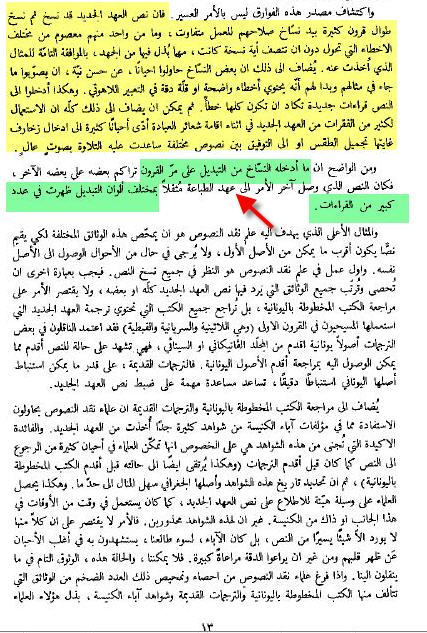
for the text of the New Testament… was copied and copied over many centuries… by copyists whose skill in the work varied… and none of them is immune from the various errors that prevent any copy … no matter how much effort was put into it… from being completely in agreement with the example from which it was taken… In addition to that, some copyists sometimes tried in good faith to correct what was in their example and it seemed to them that it contained clear errors … or a lack of theological expression… and thus they introduced new readings into the text that were almost all wrong … Then it can be added to all of that… that the extensive use of passages from the New Testament… during the performance of worship rites… led on many occasions… to the introduction of decorations Its purpose is to beautify the ritual or to reconcile different texts… It was helped by loud recitation,
and it is clear that the changes introduced by copyists over the centuries… were piled on top of each other, so the text that eventually reached print was burdened with various types of changes that appeared in a large number of readings…
Metzger (3) says
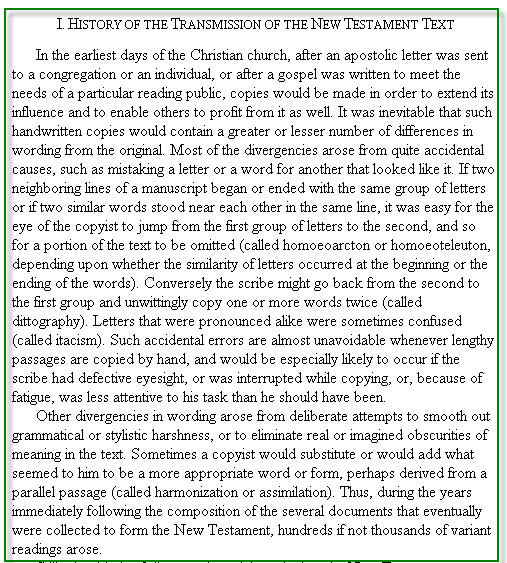
in the early ages of the Christian Church … after writing any apostolic work or any gospel to meet the needs of the general readers … these works were sent to an individual or a group of people
… The gospels and letters were copied in order to expand the scope of these works and so that others could benefit from them as well …
and inevitably the handwritten copies contained differences from the original … most of these differences arose from accidental or unauthorized reasons … such as an error in a letter or a word … If we suppose, for example, there is a line whose beginning or end is similar to another line … or two words are similar in one line … it is easy for the copyist’s eye to make a mistake and skip a word or more … and accordingly a part of the text is deleted (homoearchy)
and unintentionally the opposite can happen … and the copyist copies one or more words twice (dittography) … and sometimes there was confusion or distortion in hearing some letters that are similar in pronunciation (itacism) …
and accidental errors are almost unavoidable with paragraphs Long ones that are copied by hand.. especially in the case of the copyist’s poor eyesight.. or his fatigue… or the presence of any obstacles during copying.
There are other differences that arose from deliberate attempts to improve the text and may be grammatical.. or to reduce the severity of the text… or to delete anything ambiguous related to the meaning of the text, whether it was real or imaginary…
and sometimes the copyist would add or change the text… with what he saw as more appropriate in that position.. especially in parallel texts… (harmonization)… (this will be discussed later, God willing)
and with the passage of years.. the documents that were collected to form the New Testament contained hundreds if not thousands of readings.
The scholar Marvin Vincent (4) says that
with the multiplication of written copies… the presence of errors is inevitable
and every new copy is considered a source of error… because the copyist is likely not only to copy the errors present in the original from which he copies… but also to add errors of his own.
These errors may be consciously or unconsciously by the copyist… intentionally or unintentionally.
The copyist may mix up two capital letters… or two letters with the same form such as O and θ
, or there may be a similarity between two letters that may cause the copyist to overlook the first letter… and move directly to the second letter such as (προcελθων for προελθων)
or perhaps a letter is transferred in place of a letter such as (CPIAN… CPAIN).
Also, if there are two consecutive lines… that end with the same ending… the copyist’s eye may catch up with the second line instead of the first… and thus delete the words between the two lines.
In the early ages of the church… many copies were made in haste… and errors arose because of the haste in copying.
When the copying process for the copyist is purely mechanical (i.e. he copies without thinking about what he is copying)… errors will be mainly… errors of the eye, hearing, or memory.
The copyist’s thinking about what he is copying may prompt him to add a word that is not in the model he is copying from.
He may find in the margin of the model he is copying some oral tradition such as the story of the angel descending into the pool at Bethesda (John 5:2)… or any liturgical part such as the doxology of the Lord’s Prayer… or any interpretive addition… and all this enters into the text.
He also says that
the copyist may change the text in one Gospel in order to harmonize it with another text in another Gospel… he may change a non-classical word or expression… to a classical one.
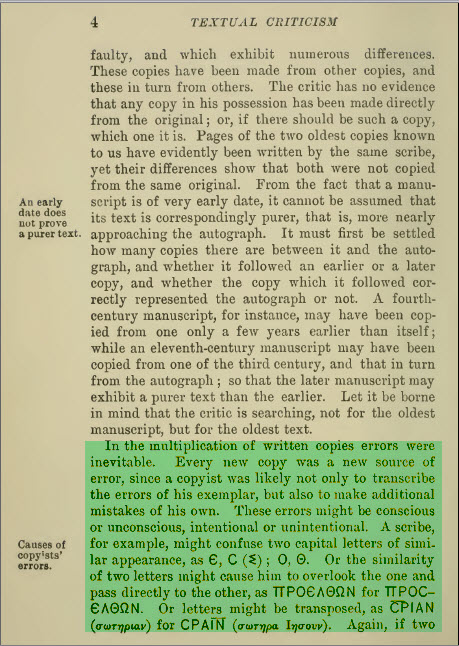
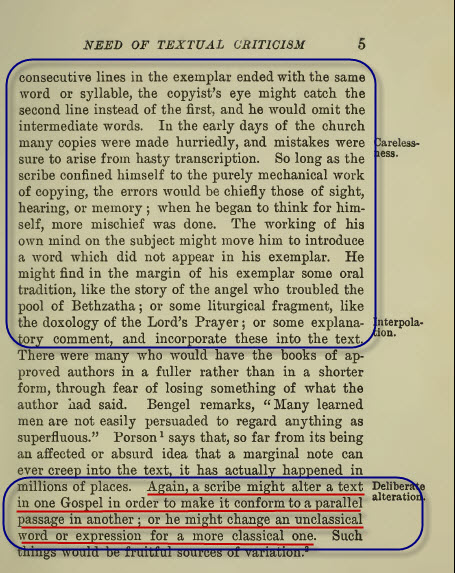
(5) We read in the Encyclopedia of the Bible
that there were differences in the texts: When the books of the New Testament were written, they were originally private works rather than literary works in the understood sense. This was true for most of the New Testament epistles, in particular, as they were letters addressed to individuals and groups. Indeed, the Gospels themselves were written for a purpose different from that of any ordinary literary work . Therefore, when any book of the New Testament was copied, in that early period, it was copied for personal use by a non-specialist scribe . Moreover, since the content of the book or epistle was the most important thing, the copyist did not necessarily feel obligated to transmit the text in the same order of words or details that did not affect the meaning . As for the historical books, the copyists, it seems, sometimes felt free to add some small details for clarification. Moreover, Christianity in the early New Testament period did not have the political authority to encourage extensive comparison of the New Testament manuscripts of that era, and it is difficult to avoid differences and errors even with the assumption of the best intentions for accuracy on the part of the copyist. All these factors combined to result in some differences between the manuscripts in the early period after all the books of the New Testament were written . This period continued until Christianity was officially recognized by the authorities in the early fourth century, although most of these differences - which are important for the verification of the texts - appeared in the first half of that period.
Same in The Student’s Guide to the Precious Bible
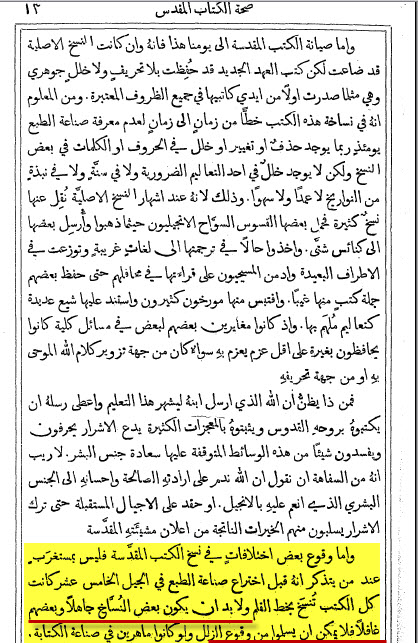
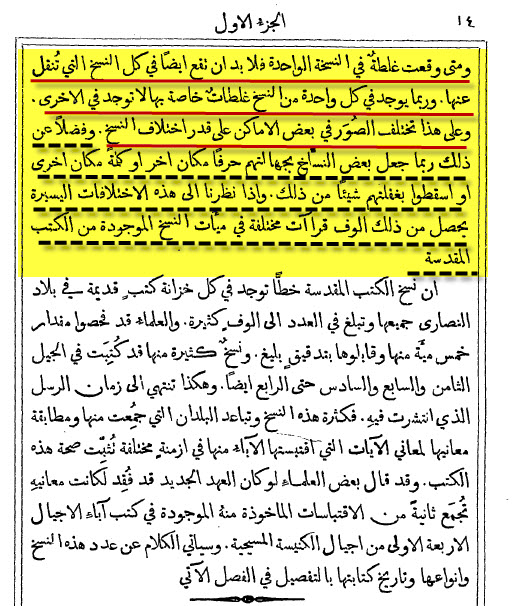
Based on all this…did the Church Fathers speak about the occurrence of distortion in the Holy Bible?
Have modern scholars acknowledged the existence of this matter?
Yes, most certainly the Church Fathers spoke about the occurrence of distortion in the manuscripts
[the scholar Origen says (6)]
The differences between the manuscripts have become great, either because of the negligence of some copyists or because of the foolish recklessness of others; were they neglecting to review what they copied, or, while reviewing it, were they deleting and adding as they pleased?
We read almost the same story in the book “The Student’s Guide to the Precious Bible.”
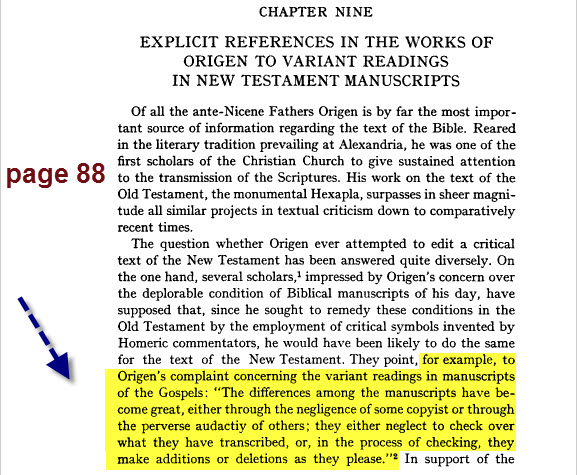
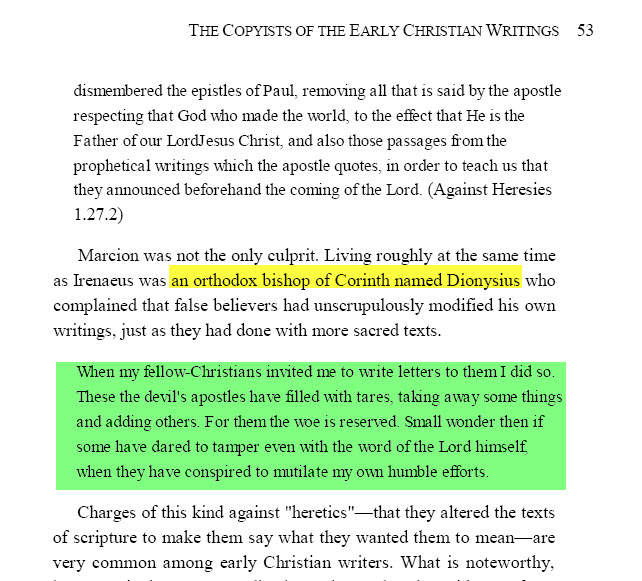
[Father Dionysius (7) says]
When my Christian companions invited me to write letters to them, I did as they asked. These messengers of Satan are full of tares, they delete things and add things. They have torment reserved for them. It is no wonder then that some of them dared to distort my humble works, since they conspire to tamper with even the word of the Lord himself.
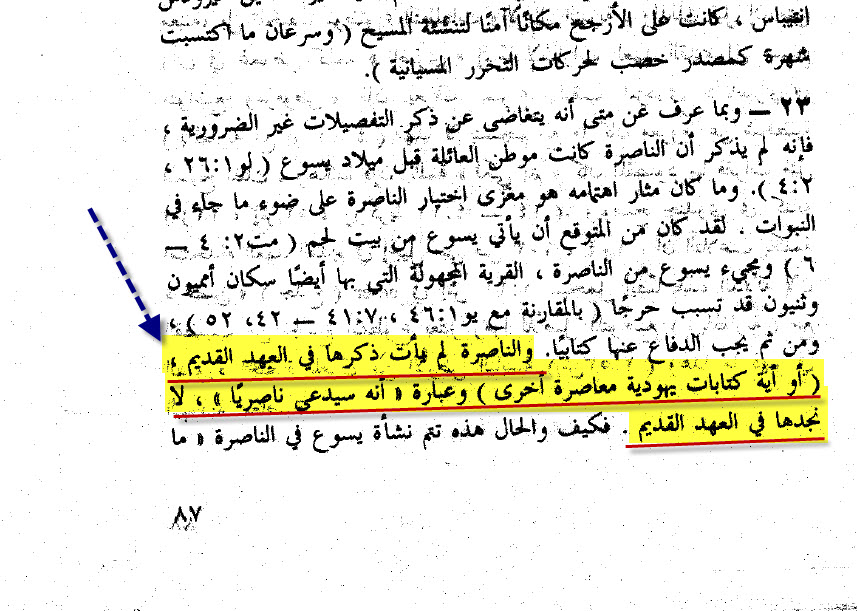
We read in the Gospel of Matthew…
2:23 And he came and dwelt in a city called Nazareth , that it might be fulfilled which was spoken by the prophets, He shall be called a Nazarene.
This prophecy is not found in the Old Testament… and there is no city with this name in the Old Testament at all… and we do not know where the writer of the Gospel got it from.
Modern Interpretation of the Gospel of Matthew William Barclay’s
Modern Commentary on the Gospel of MatthewInterpretation Synoptic El-FeghaliGospels
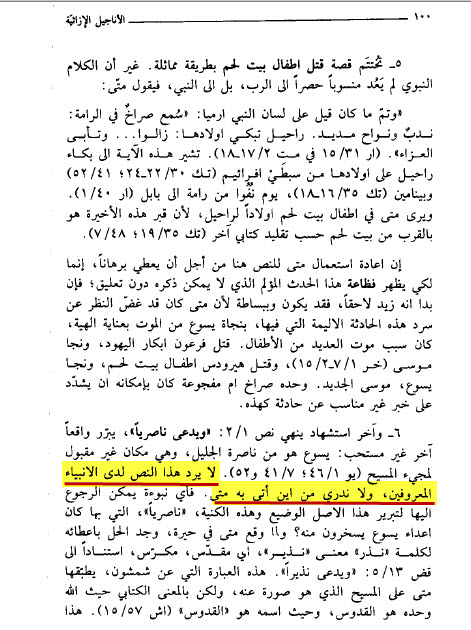
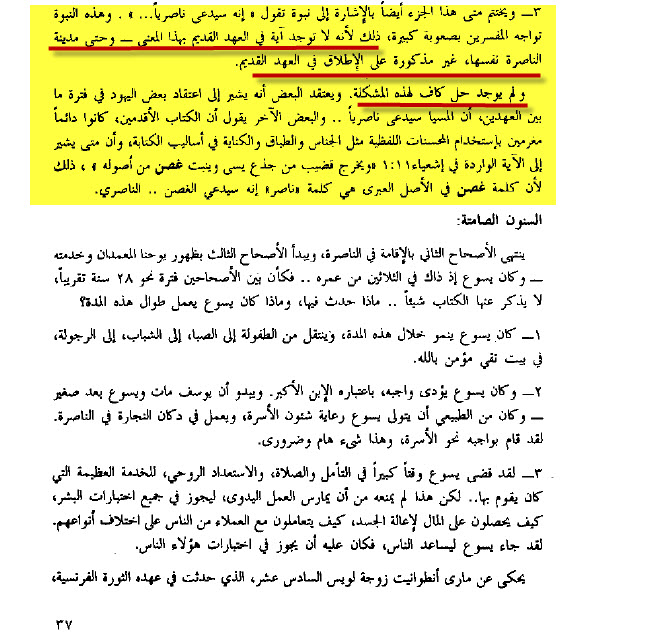
So where did you go????
[The scholar John Chrysostom responds to us and says (8)]
And what manner of prophet said this? Be not curious, nor overbusy. For many of the prophetic writings have been lost; and this one may see from the history of the Chronicles.22 For being negligent, and continually falling into ungodliness, some they suffered to perish, others they themselves burnt up23 and cut to pieces. The latter fact Jeremiah relates;24 the former, he who composed the fourth book of Kings, saying, that after 2R 22,8, etc) a long time the book of Deuteronomy was hardly found, buried somewhere and lost. But if, when there was no barbarian there, they betrayed their books, much more when the barbarians had overrun them .
Simplified translation…
Who is the prophet who said this prophecy???
Do not be surprised by that…there are many prophetic books that have been lost…and you can see this in the Book of Chronicles…
because of negligence and lack of piety they allowed some of them to be corrupted …and they said to burn the others and tear them up
as mentioned That is Jeremiah… and the writer of the Fourth Book of Kings…
then he spoke about the Book of Deuteronomy, saying that it was lost and completely forgotten, and then it was found with difficulty after that…
then he finally decided on the bitter truth and said
, therefore they are more traitors to their book than if they were under foreign rule. …
[Among the fathers who spoke about the distortion of the Holy Bible… Justin the Martyr in his dialogue with Trypho the Jew (9)[
Trypho: We ask you first of all to tell us some of the Scriptures which you allege have been completely cancelled.
Chapter 72. Passages have been removed by the Jews from Esdras and Jeremiah
Justin: I shall do as you please. From the statements, then, which Esdras made in
reference to the law of the passover, they have taken away the following: ‘And Esdras said to the people, This passover is our Saviour and our refuge. And if you have understood, and your heart has taken it in, that we shall humble Him on a standard, and thereafter hope in Him, then this place shall not be forsaken for ever, says the God of hosts. But if you will not believe Him, and will not listen to His declaration, you shall be a laughing-stock to the nations.’
And from the sayings of Jeremiah they have cut out the following: ‘I [was] like a lamb that is brought to the slaughter: they devised a device against me, saying, Come, let us lay on wood on His bread, and let us blot Him out from the land of the living
and His name shall no more be remembered.’ Jeremiah 11:19 And since this passage from the sayings of Jeremiah is still written in some copies [of the Scriptures] in the synagogues of the Jews (for it is only a short time since they were cut out), and since from these words it is demonstrated that the Jews deliberated about the Christ Himself, to crucify and put Him to death,
He Himself is both declared to be led as a sheep to the slaughter, as was predicted by Isaiah, and is here represented as a harmless lamb; but being in a difficulty about them, they give themselves over to blasphemy.
And again, from the sayings of the same Jeremiah these have been cut out: ‘The Lord God remembered His dead people of Israel who lay in the graves; and He descended to preach to them His own salvation.’
Translation (*)
Trypho
We ask you first and foremost to tell us about those texts that you claim have been completely erased
Chapter 72
Deleting texts from the Book of Ezra and Jeremiah
Justin
and I said to him “I will do as you like
from the text of Ezra in which he mentioned the laws of the Passover they removed from it the following
and Ezra said to the people, This Passover is our savior and our refuge, if you understand and your hearts believe, and we humble ourselves to Him and our hope is in Him, this place will never be deserted,
thus says the Lord God of hosts but if you do not believe and do not listen to Him you will be the mockery of the nations
, and from Jeremiah they removed the following text
I (was) like a lamb led to the slaughter and I did not know that they conspired against me saying let us spoil his bread and cut off his remembrance from the land of the living
but the text of Jeremiah is still found in some Jewish copies because its removal was done recently
and from this text it is clear that the Jews consulted about the Messiah to crucify him and kill him and
he is also the one about whom Isaiah prophesied that he would be led like a lamb to the slaughter depicting him in the form of a lamb Wise. And being in a difficult situation, they blasphemed it,
and from Jeremiah they also removed the text that says: The Lord God remembered his dead people, the Jews who were lying in the graves, so he ascended to announce to them salvation
(and he spoke in Chapter 73 about the existence of a distortion in Psalm 96).
http://www.newadvent.org/fathers/01286.htm
{Embed}
http://www.newadvent.org/fathers/01286.htm
CHURCH FATHERS: Dialogue with Trypho, Chapters 69-88 (Justin Martyr)
Featuring the Church Fathers, Catholic Encyclopedia, Summa Theologica and more.
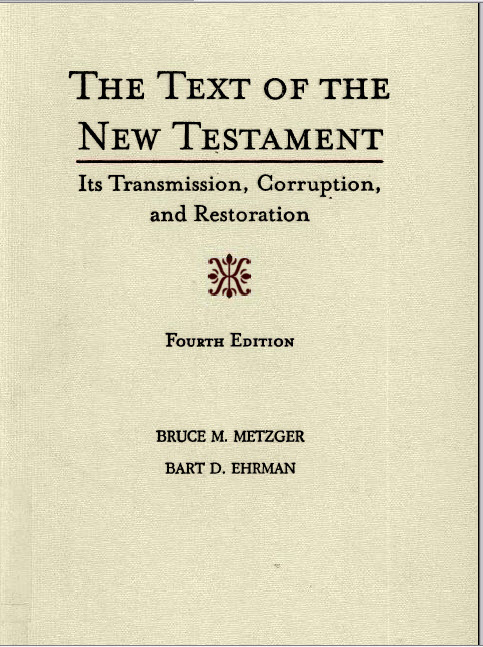
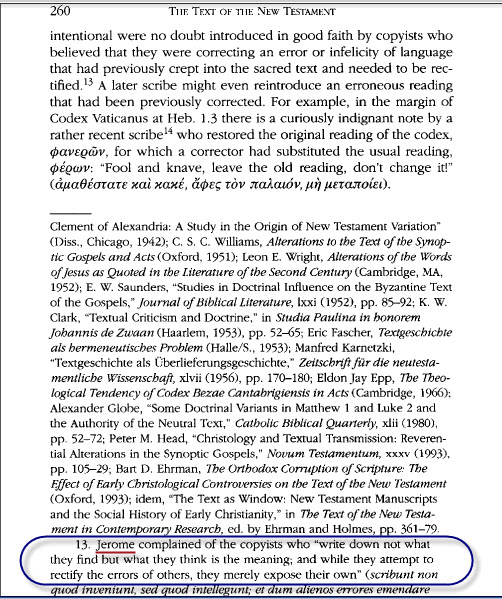
Bruce Metzger quotes the scholar Jerome as complaining about copyists who did not copy what they found before them but copied the meaning they believed it to mean…and perhaps while trying to correct the mistakes of other copyists…they were also introducing their own mistakes into the text.
The Text of the New Testament
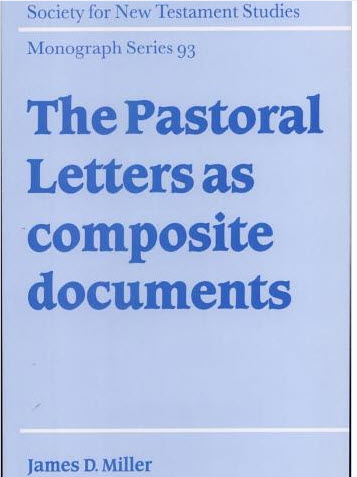
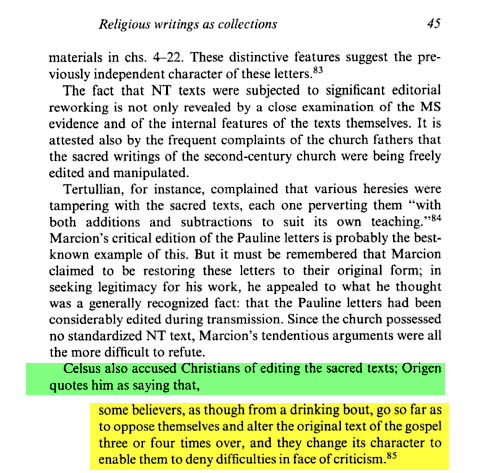
The accusation that copyists have distorted the Holy Book is not a recent one. Non-Christians have spoken about this in the past. The pagan Celsus accused copyists of this and said (10):
Some believers act as if they were in a drinking party. They go so far as to contradict themselves, changing the original text of the Gospel three or four times or a greater number of times, and changing its style in a way that enables them to deny the difficulties when criticism is directed at them
There is no disagreement among textual criticism scholars now about the occurrence of distortion in the Holy Bible.
Kart Aland (11) says
that one of the basic characteristics in the history of the text of the New Testament is that once a difference or a new reading appears in the tradition, it penetrates the tradition and refuses to disappear and continues… and the difference itself is perpetuated across the centuries… One of the most important characteristics of the biblical text is its rigidity.
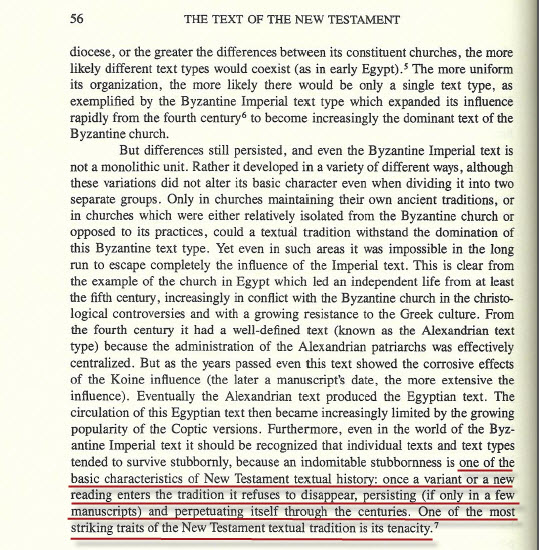
Charles Edward (12) says
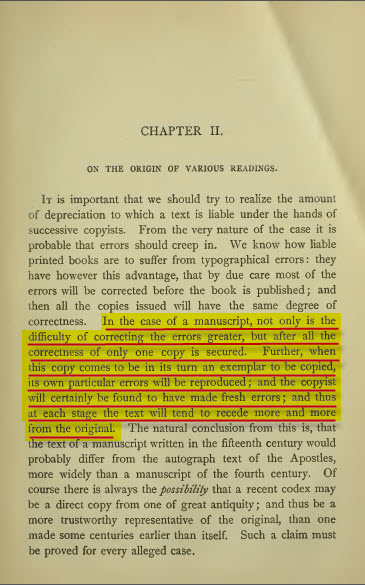
regarding manuscripts… The greatest difficulty lies not only in correcting errors, but also in correcting the only guaranteed copy… But when the turn comes for this copy to be copied, it will contain errors and will be reproduced, and the copyist will certainly add… other new errors… And at each stage the text will tend to deviate more and more from the original.
One of the basic characteristics of the history of the New Testament text is that as soon as a difference or a new reading appears in the tradition, it penetrates the tradition and refuses to disappear and continues. The difference itself is perpetuated across the centuries. One of the most important characteristics of the Gospel text is its rigidity.
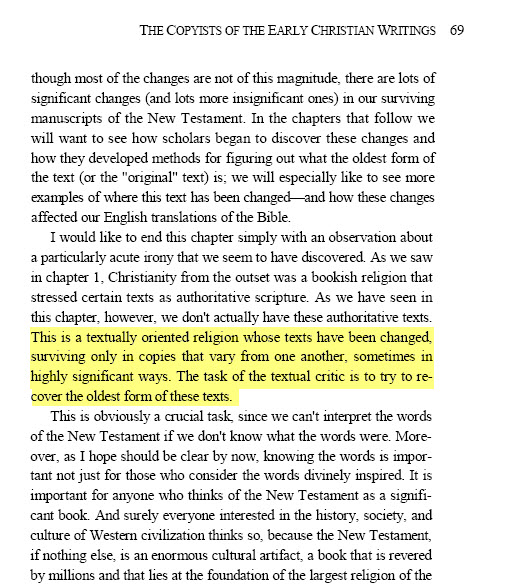
Bart Ehrman (13) says
that Christianity is a religion guided by texts, and these texts have been distorted, and what remains is only in the form of copies, differing from one to another, and often the difference is in matters of great importance… The task of the textual critic is to try to return the text to its old form from these texts.
(14) And he also says
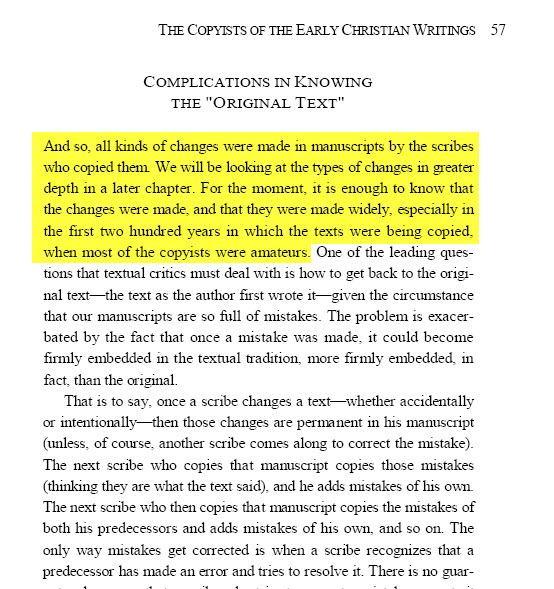
: Thus, all kinds of changes occurred in the manuscripts through the copyists who copied them. Perhaps we will study the types of changes in greater depth in one of the last chapters of this book. For now, it is sufficient to know that there were changes that occurred, and that they occurred on a large scale, especially during the first two hundred years in which the texts were copied, when most of the copyists were amateurs.
One of the basic characteristics of the history of the New Testament text is that as soon as a difference or a new reading appears in the tradition, it penetrates the tradition and refuses to disappear and continues. The difference itself is perpetuated across the centuries. One of the most important characteristics of the Gospel text is its rigidity.
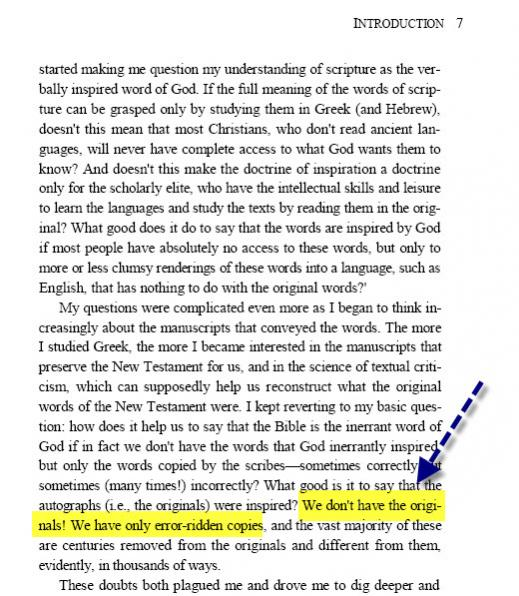
He also says (15)
We do not possess the originals…what we possess are distorted copies.
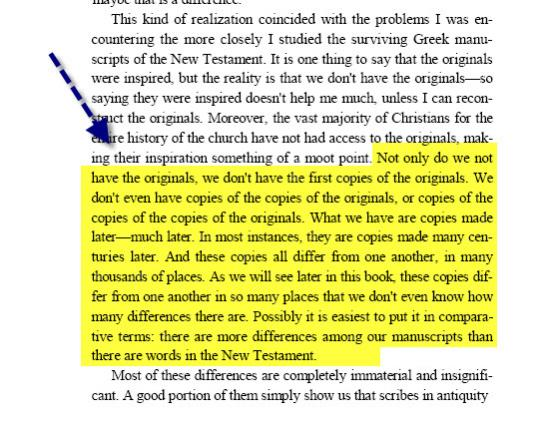
(16) says
that the matter is not limited to the loss of the originals… but we also do not have the first copies of the originals… nor copies of copies… nor copies of copies of copies… What we have are copies written at a late time - very late… at best… they were copies written many centuries later. And these copies all differ from one another, in many places that number in the thousands. And these copies, as we will see later in this book, differ from one another in so many places that we do not even know the number of differences that exist. For convenience, we can put them in the form of comparisons: the number of differences between our manuscripts is so great that it exceeds the number of words in the New Testament.
Murdock (17) says
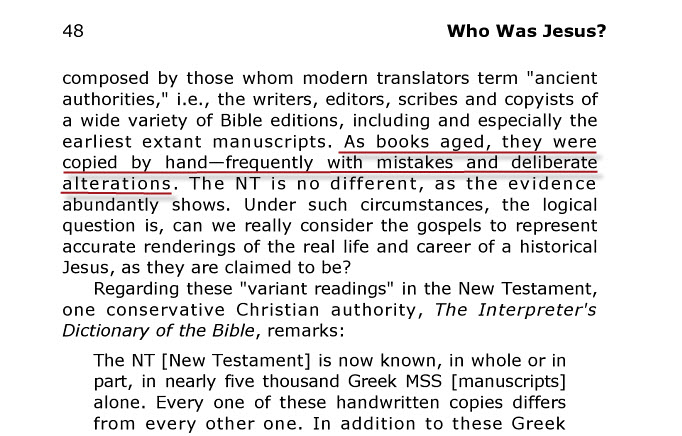
: As time progresses, books are copied by hand… and errors and deliberate changes increase.
In the Catholic Encyclopedia
No book of ancient times has come down to us exactly as it left the hands of its author—all have been in some way altered. The material conditions under which a book was spread before the invention of printing (1440), the little care of the copyists, correctors, and glossators for the text, so different from the desire of accuracy exhibited to-day, explain sufficiently the divergences we find between various manuscripts of the same work. To these causes may be added, in regard to the Scriptures, exegetical difficulties and dogmatical controversies. To exempt the scared writings from ordinary conditions a very special providence would have been necessary, and it has not been the will of God to exercise this providence.
More than 150,000 different readings have been found in the older witnesses to the text of the New Testament—which in itself is a proof that Scriptures are not the only, nor the principal, means of revelation.
No
ancient book has come down to us exactly as it left the hands of its author.
All have been altered in some way by
the circumstances in which they were circulated before the invention of printing in 1440, and the scant care taken by scribes, proofreaders, and translators, provides a sufficient explanation for the differences we see between different manuscripts of the same work.
To preserve the sacred writings from ordinary circumstances, great care and attention must be given, and it was not God’s will that such care should be given.
There are more than 150,000 readings of the text of the New Testament, which proves that the books are not the only or primary form of revelation.
http://www.newadvent.org/cathen/14530a.htm#IV
{Embed}
http://www.newadvent.org/cathen/14530a.htm
CATHOLIC ENCYCLOPEDIA: New Testament
Jesus Christ uses the words ‘new testament’ as meaning the alliance established by Himself between God and the world, and this is called ‘new’ as opposed to that of which Moses was the mediator
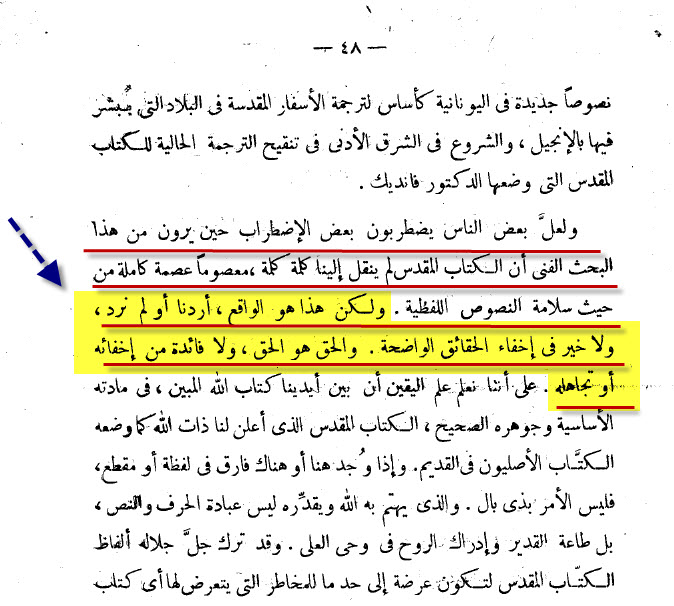
Our Christian colleagues may be surprised by these confessions…but we tell you, as Habib Saeed said in his book Introduction to the Holy Book… that this is the truth and there is no benefit in hiding or ignoring it.
http://www.burhanukum.com/article62.html
For more
Discovering and Classifying New Testament Manuscripts - James Arlandson
2misquoting jesus - PG 103-104
3Textual Commentary on the Greek New Testament
4 - History_of_Textual_Criticism_of_the_New_Testament - Marvin Richardson Vincent - pg 4-5
5- مخطوطات العهد الجديد
6New Testament tools and studies - Bruce Metzger - pg 88
7misquoting jesus - PG 53
8 - http://www.clerus.org/bibliaclerusonline/en/cl0.htm
9Dialogue with Trypho - Chapter 72
10 - The pastoral letters as composite documents - James David Miller
11 - the text of the new testament Kurt Aland & Barbara Aland - pg 56
12Outlines of Textual Criticism Applied to the New Testament - Charles Edward Hammond
13misquoting jesus - PG 53
14misquoting jesus - PG 57
1516- نفس المرجع
17Who Was Jesus? Fingerprints of the Christ - D. M. Murdock - pg 48
18- وحى الكتاب المقدس
🚨🚨🚨🚨
How many changes occurred in the New Testament??
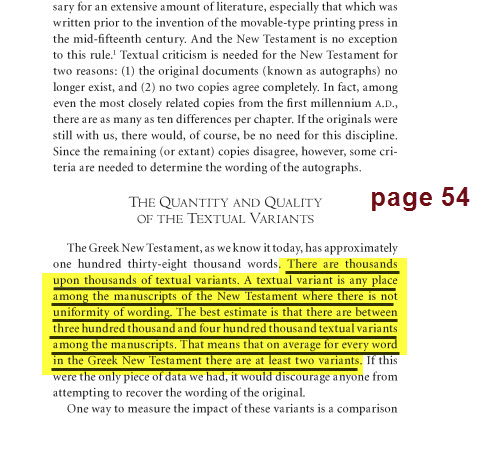
There are thousands and thousands of textual changes… A textual change is any place among the New Testament manuscripts where there is a mismatch or similarity in the text… The best estimate for the number of textual readings is that there are 300,000 to 400,000 textual readings among the manuscripts… This means that on average for every word in the New Testament there are at least two textual readings (1)
There are thousands and thousands of text changes.
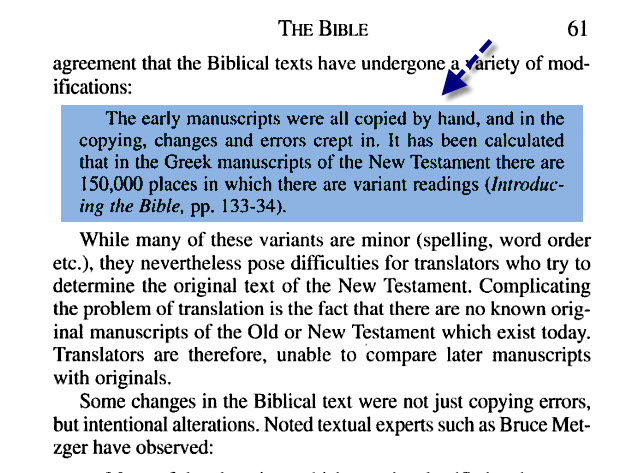
Stephen Gibson (2) says
: All ancient manuscripts were copied by hand… and during writing, errors and changes crept into them… The number of changes in the manuscripts of the Greek New Testament was calculated… and it was found to be 150,000 textual readings.
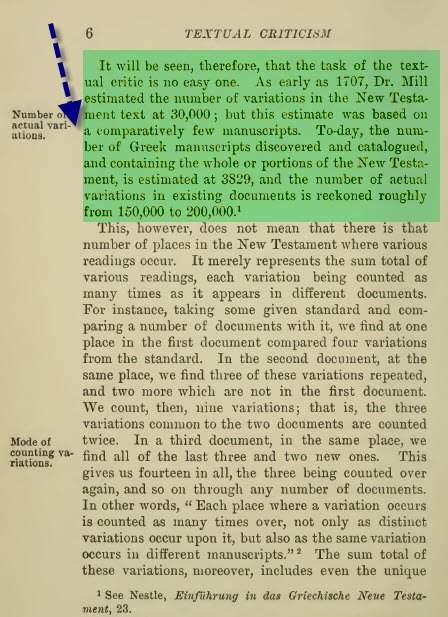
In 1707, Dr. Mill estimated the number of readings in the text of the New Testament and found it to be 30,000, but this estimate was based on a few manuscripts… Now, after the discovery of other Greek manuscripts of the New Testament that contain all of the New Testament or parts of it… estimated at about 3,829 manuscripts… the real number of textual readings falls between 150,000 readings and 200,000 readings (3).
We read in the Catholic Encyclopedia
More than 150,000 different readings have been found in the older witnesses to the text of the New Testament
http://www.newadvent.org/cathen/14530a.htm#IV
There are more than 150,000 different readings among the oldest witnesses of the New Testament text.
Bart Ehrman says (4):
we are dealing with additions that scribes made to the text, not additions of sizable length. Although most of the changes are of this magnitude, there are lots of significant changes (and lots more insignificant ones) in our surviving manuscripts of the New Testament .
We are dealing with additions made by copyists to the text, huge additions . Although most of the changes were not that big, there are many important changes (and many very unimportant changes) in the New Testament manuscripts we have
{Embed}
http://www.newadvent.org/cathen/14530a.htm
CATHOLIC ENCYCLOPEDIA: New Testament
Jesus Christ uses the words ‘new testament’ as meaning the alliance established by Himself between God and the world, and this is called ‘new’ as opposed to that of which Moses was the mediator
He says in another place
that there are thousands of differences between the copies… We do not know exactly how many of these differences there are… and the number of differences is more than the number of words in the New Testament itself…!!!
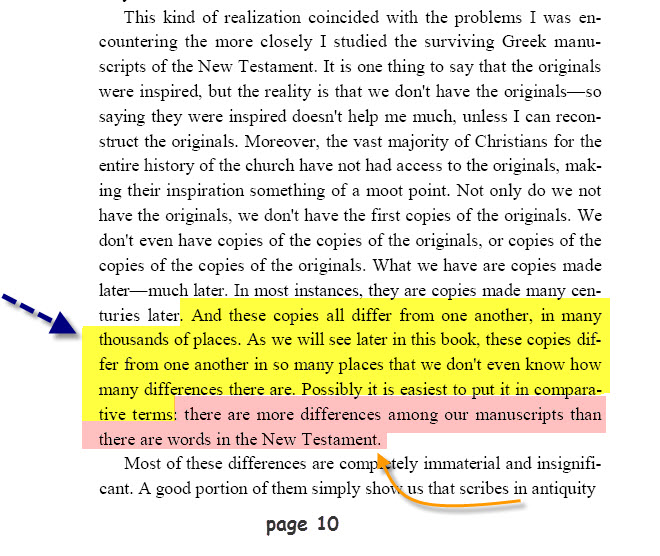
the changes intentional or unintentional???
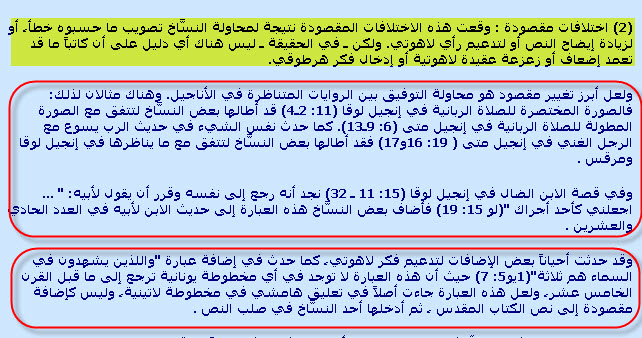
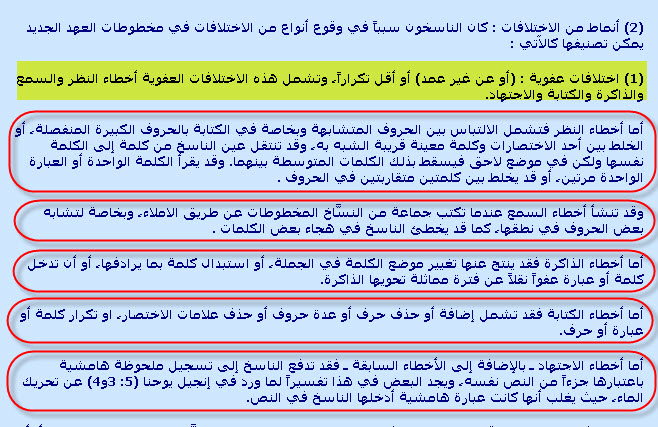
Some of them are intentional and some are unintentional… We will talk about them in some detail, God willing .
As for the unintentional
differences, these spontaneous differences include errors in sight, hearing, memory, writing, and reasoning.
The
intentional differences include those that occurred as a result of the copyists’ attempt to correct what they thought was wrong, or to further clarify the text , or to support a theological opinion .
Encyclopedia of the Bible
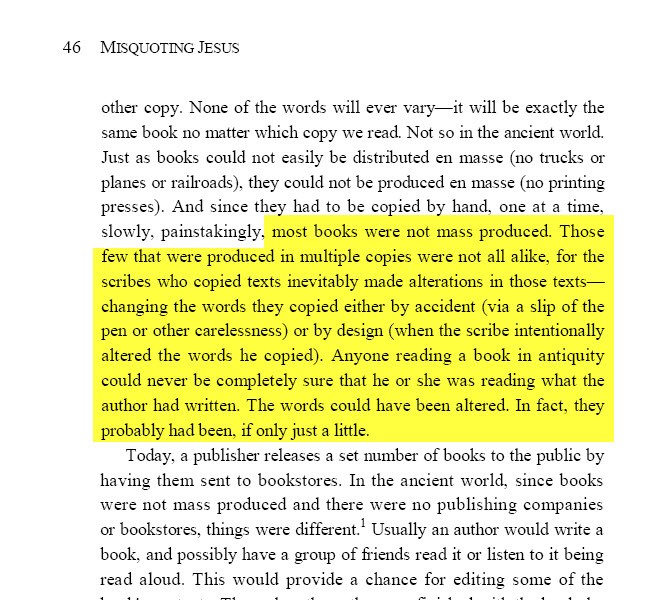
Most books were not produced in large quantities, says Bart Ehrman . The few books that were produced in multiple copies were not identical, since the scribes who copied the texts must have made changes to them—changing words as they were copied, either accidentally (slips of the pen and other careless acts) or deliberately (when the scribe intended to change the words he was copying
are the forms of change that a copyist can make to the text???
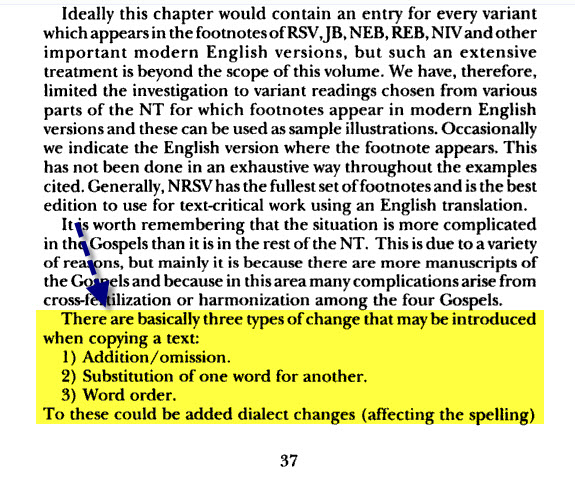
The scientist James Elliot says…(5)
There are three main types of changes that can be introduced into the text during copying:
1Addition and deletion
2Substitution, whether it is one word or more
3Word arrangement.
We can add to these types spelling errors.
We can add to these types spelling errors.
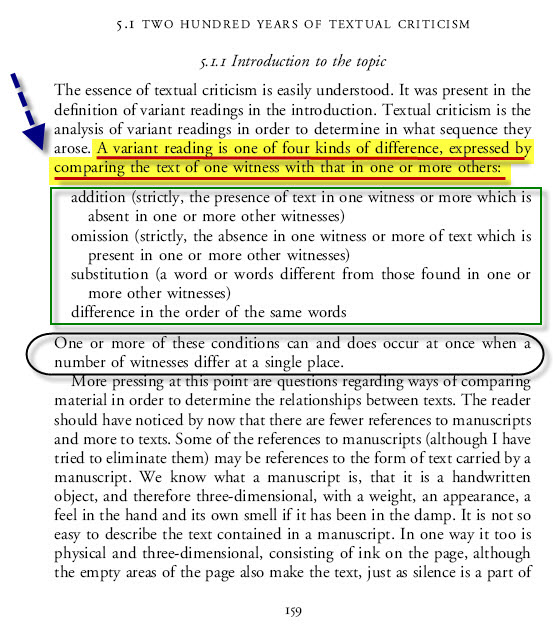
Parker (6) says
that the difference in reading (textual reading) is one of four types… It is determined by comparing the text in a specific witness (a specific manuscript)… with the rest of the witnesses:
addition … (i.e. the presence of a text in a specific witness… not in another witness or all of the witnesses)
deletion … (the disappearance of the text in a specific witness… while it is present in another witness or the rest of the witnesses)
substitution … (i.e. the presence of a specific sentence in a specific witness… and another sentence in another witness or all of the other witnesses)
or the presence of a difference in the order of the same sentence between the witnesses.
One or more of these cases can occur simply by a difference occurring between some witnesses in one place or one text.
are the reasons that led to differences in the manuscripts???
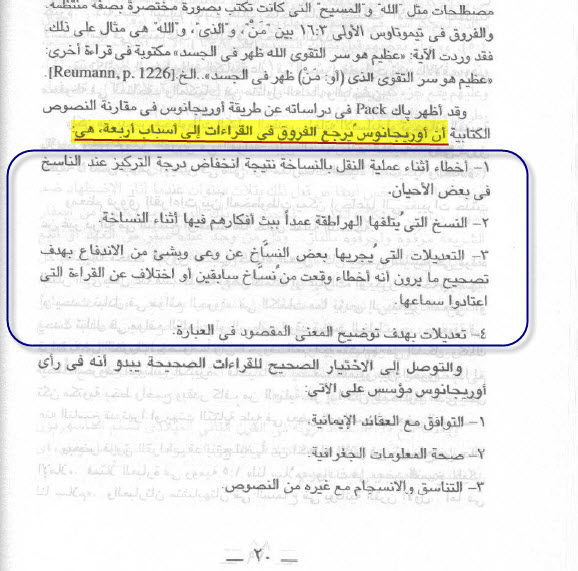
According to Origen, there are 4 reasons (7)
: 1This is a reason that does not fall within the deliberate change of manuscripts and includes normal errors in the copying process due to the copyist’s lack of concentration.
2Deliberate changes by heretics to spread their ideas.
3Copyists correcting what they see as an error.
4Amendments with the aim of clarifying the meaning
the scholars’ opinion regarding these changes that occurred in the text??
As we mentioned before, there is agreement among scholars that there were distortions in the manuscripts of the Bible… but how do scholars view them???
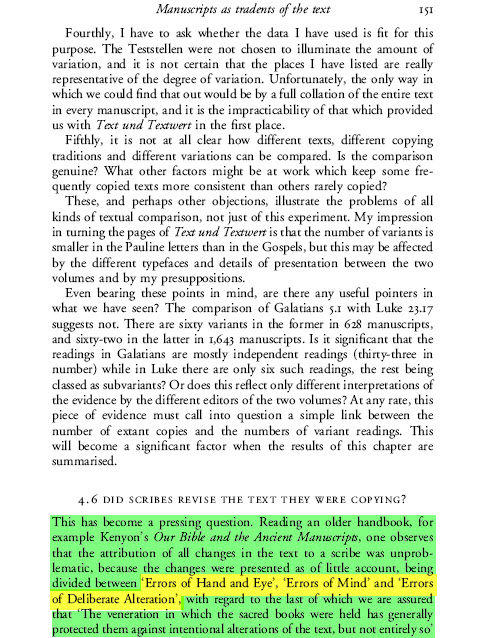
In this section, Barker speaks and says (8)
When we open any ancient book such as Our Bible and the Ancient Manuscripts by Kenyon, we will notice that these changes do not cause a big problem… because they were introduced by the writer on the basis that their number is small… and they are divided into two sections… a section that includes errors of sight and mind… and the other section includes deliberate changes,
noting that the majesty and dignity of the holy books make them protected from deliberate changes in the text, but not completely… and therefore the deliberate changes are mostly changes in the words, but they are not essential…
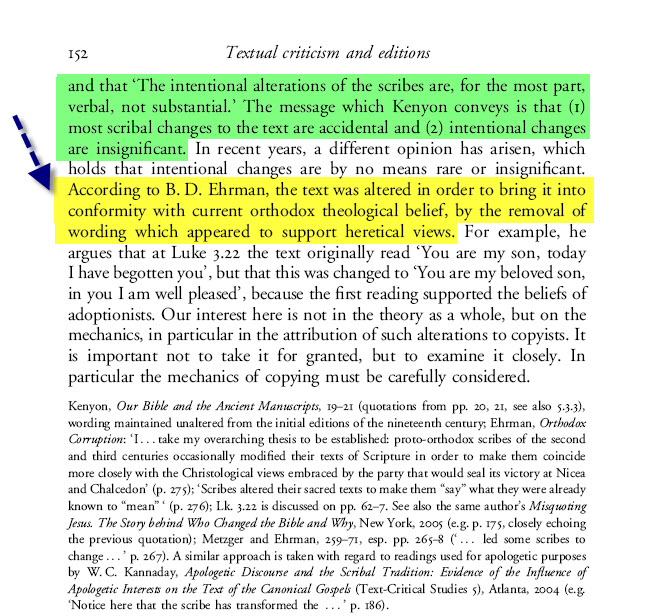
and Barker comments on Kenyon’s words and says… the message he wants to convey is
1Most of the changes made by copyists in the text are accidental (unintentional)
2The deliberate changes made by copyists in the text are not essential
, but in recent years a different opinion has emerged and sees that deliberate changes cannot at all be rare and unimportant…
according to Dr. Bart Ehrman… the text was changed in order to be consistent with the Orthodox doctrine… by deleting… Statements that seem to support heretical views
So it is clear to us that there is agreement among scholars on the occurrence of intentional and unintentional distortion in the manuscripts of the Bible… but they differed on the extent of the impact of this difference on the Bible and its message in general.
Although this issue does not concern us in the slightest… because our goal in the research is to discuss the occurrence of distortion or not only… regardless of the impact,
but we found a good classification of the readings from James Arlandson (9)…
and from the authors of the book (10)… Reinventing Jesus How Contemporary Skeptics Miss the Real Jesus and Mislead…
The classification is as follows:
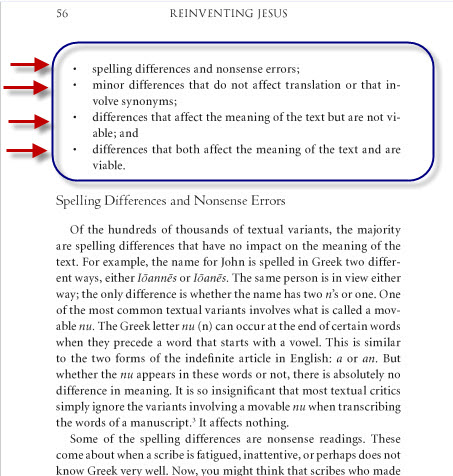
I. Spelling differences and nonsense errors
II. Differences that do not affect translation or that involve synonyms
III. Meaningful variants that are not viable
IV. Meaningful and viable
1Spelling errors and unintentional mistakes
2Errors that do not affect the translation…or include synonyms
3Meaningful changes (for a specific purpose) that affect the meaning but are not effective or influential
4Meaningful changes (for a specific purpose) that affect the meaning and are effective or influential
Discovering and Classifying New Testament Manuscripts
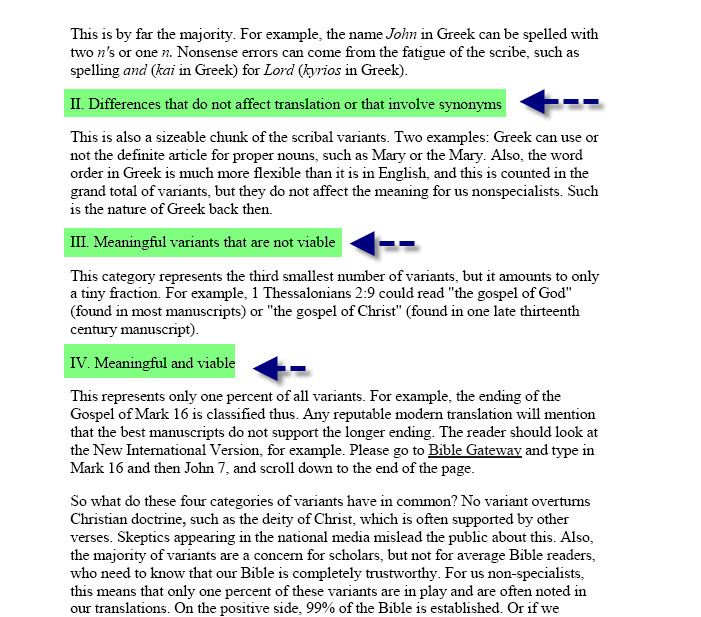
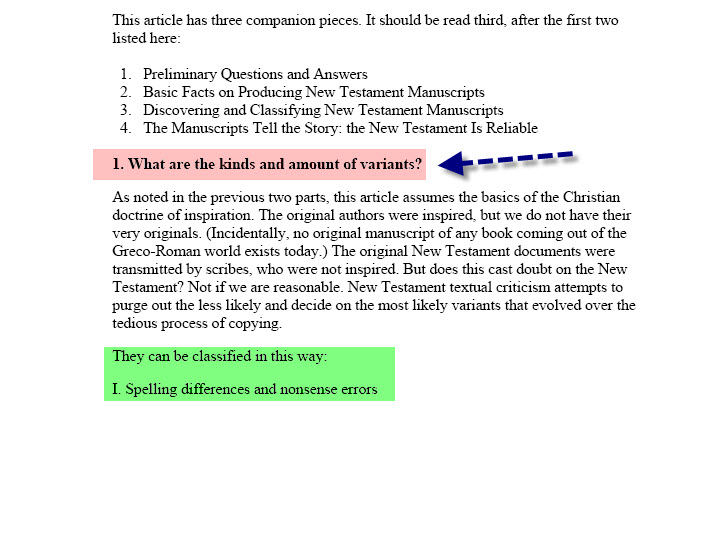
The owners of this classification have stated that most of the errors are unintentional… followed by the second section, then the third… As for the fourth section related to the influential changes that alter the meaning, they are few and represent only 1% of the readings.
In general, we will not talk much about the details of this subject… because what concerns us is proving whether or not distortion occurred… As for the effect of this distortion… we will leave the discussion to the scholars, as we will see… and as the reader will see through the manuscripts,
🚨1
-Reinventing Jesus How Contemporary Skeptics Miss the Real Jesus and Mislead
2One-Minute Answers to Anti-Mormon QuestionsBy Stephen W. Gibson
3Vincent’s History of Textual Criticism of the New Testament
4Misq Jesus -
pg - The Manuscripts and the Text of the New Testament - By James Keith Elliott, Ian Moir
6An Introduction to the NT Manuscripts and their Texts
7Manuscripts of the Holy Bible in Original Translation - Dr. Email Maher Shnoda
8 -An Introduction to the NT Manuscripts and their Texts - pg 152151
9Discovering and Classifying New Testament Manuscripts
10 Reinventing Jesus How Contemporary Skeptics Miss the Real Jesus and Misleadpg
What about the changes???
We will talk a little about the unintentional changes…and we will expand more, God willing…when we talk about the intentional changes, as they are the focus of this research.
[ unintentional changes ]
We have talked about them in previous interventions…and they include unintentional errors by copyists, such as errors of sight and hearing…etc.
The Encyclopedia of the Bible talked about these errors, as we have seen…and we also read about them under the title “distortion of texts” … in the Jesuit translation …where it says that it is possible for a copyist’s eye to jump, for example…and he does not copy a certain word or a certain sentence
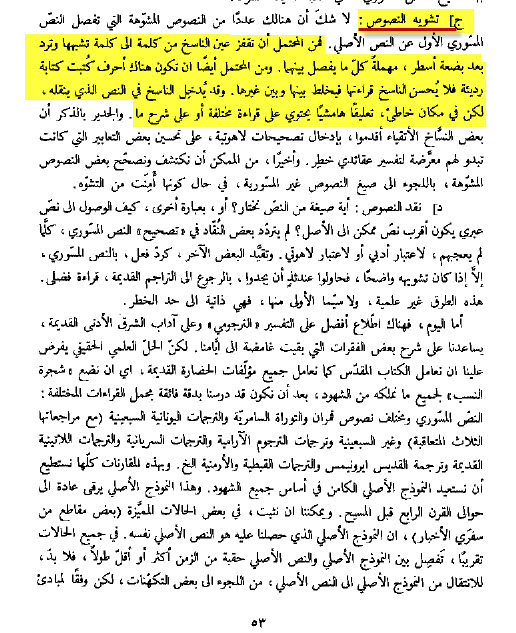
Dr. Youssef Riad talks about it in his book, The Inspiration of the Holy Book, and classifies it into errors related to deletion, unintentional repetition, and errors of hearing, sight, and memory.
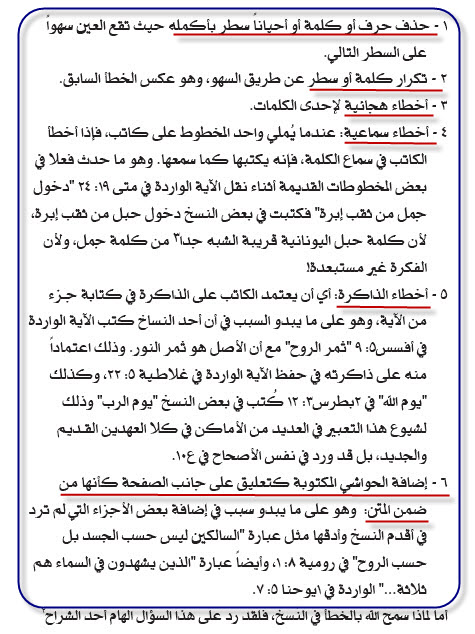
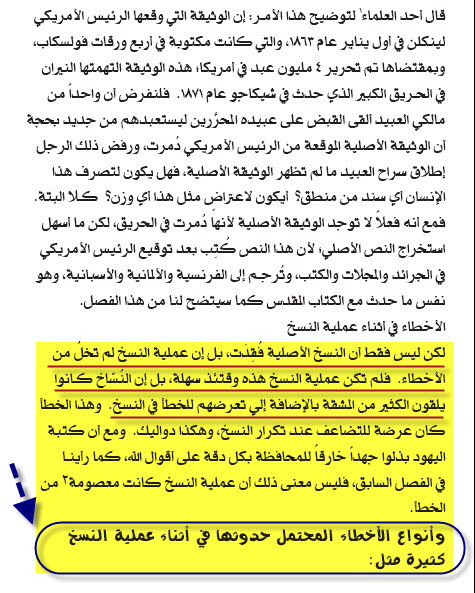
Dr. Emil Maher talks about it and says (1):
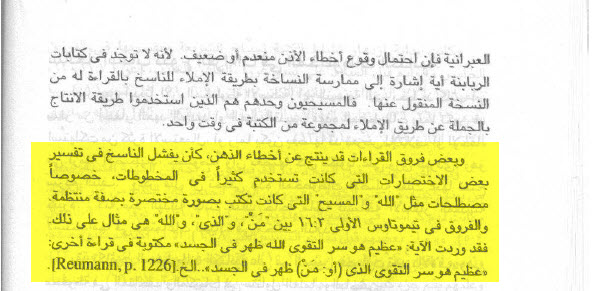
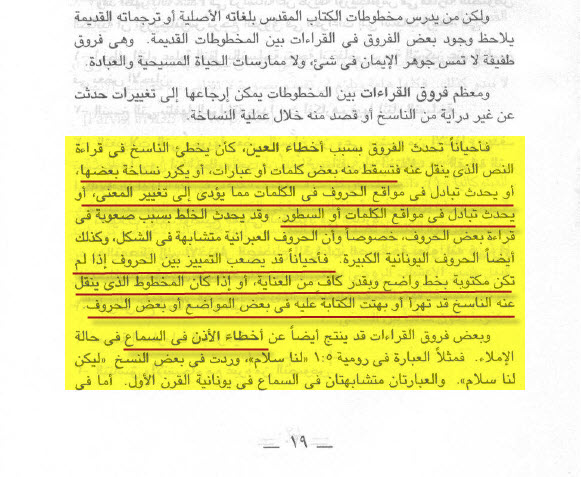
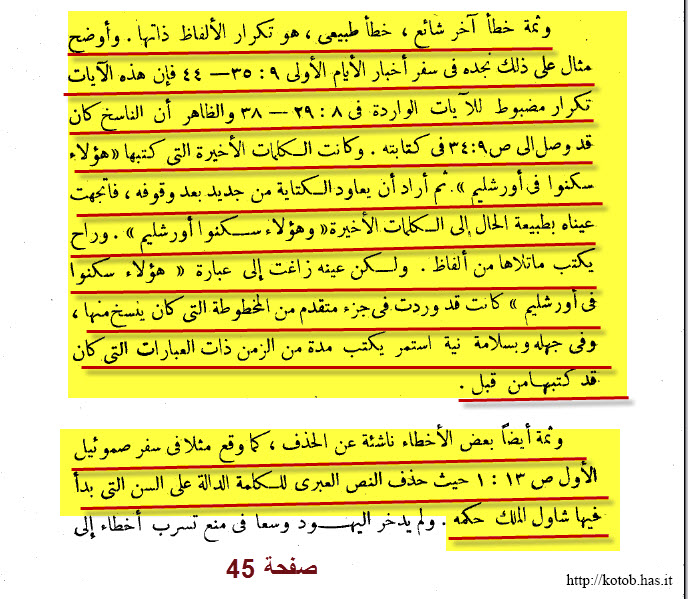
Habib Saeed, the author of the book Introduction to the Bible, spoke about the unintentional mistakes of the copyists and gave us a good example of the First Book of Kings, Chapter 9 (44-35) … which is considered an exact copy of Chapter 8 (38-29) … and he says that this was because the copyist’s eye went astray … and there is no power or strength except with God … and I really do not know why we still see this repetition in the Holy Bible and it has not been deleted, knowing that this paragraph was a mistake by the copyist.!!!
He also spoke about the First Book of Samuel and the omission of a word from it .. and it is still omitted to this day and we do not know what the real book said about it
Introduction to the Bible - Page 45
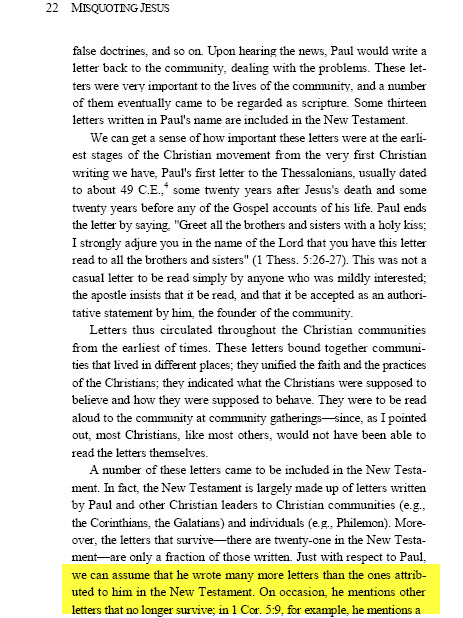
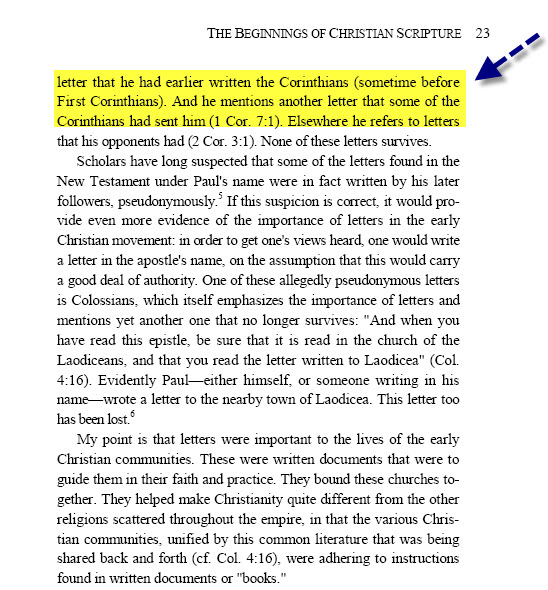
Bart Ehrman talks about it extensively and says (2)
A scribe might write the first line of a text, and then when his eye returns to the page, he might notice the same words on the next line, instead of the line he was just copying; he would then continue copying from there and, as a result, would neglect the words or lines in between, or both.
This kind of error is called periblepsis, or eye-leap, caused by homooeoteleuton, or similar endings… One of the things I teach my students is that they can claim to have a college education as soon as they can talk intelligently about eye-leap caused by similar endings.
We can illustrate how this happens by illustrating Luke 12:8-9, which reads:
8 He who acknowledges me before men, the Son of Man
will acknowledge him before the angels of God
; 9 but he who denies me before men
will deny him before the angels of God.
Our earliest papyrus manuscript of this passage omits verse 9 entirely; it is not difficult to see how the mistake occurred. The scribe copied the words “before the angels of God” into verse 8, and when his eye returned to the page, his eye noticed the same words in verse 9 and assumed that they were the same words he had just copied—and so he continued to copy verse 10, leaving out verse 9 entirely.
Sometimes this kind of mistake is even more disastrous to the meaning of the text.
In John 17:15, for example, Jesus says in his prayer to the Lord about his disciples:
I do not ask you to keep them from the
world, but to keep them from the
evil one.
In one of our best manuscripts (the Vatican manuscript from the fourth century) the words “world…of the” are deleted, so that Jesus now utters this ominous prayer “I do not ask you to protect them from evil”!
There are other errors related to the way words and phrases were written, as words were written without commas… which led to some errors … As Aland said (3)
we will not talk more about unintentional changes… and we will now move on to intentional changes and talk about them in some detail, God willing…
And before we talk about intentional changes… we must point out a type of distortion that occurred away from the copyists… which is distortion by deletion and addition … And here we are not talking about paragraphs and numbers only… but we are also talking about books that are completely lost.
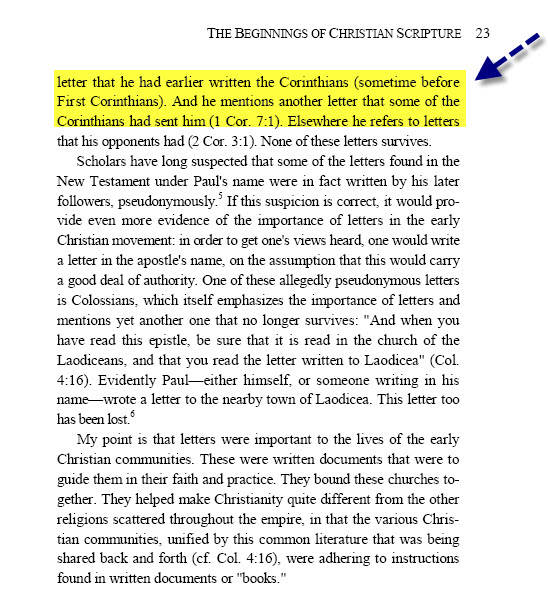
Habib saeed says
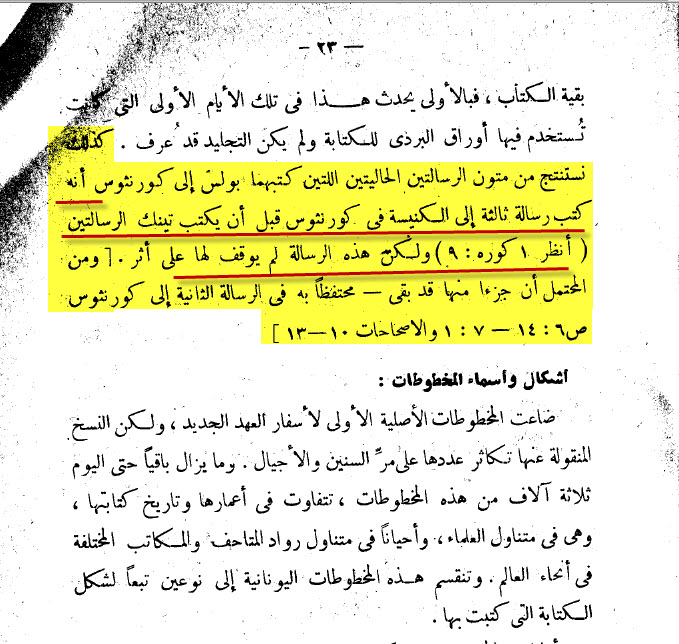
This is in addition to the lost prophecies such as the prophecy of the First Book of Kings
22:38: “And the chariot was washed in the pool of Samaria, and the dogs licked up his blood, and they washed his armor, according to the word of the Lord which he spoke
.” In the commentary of the Common Arabic Translation on this prophecy… the Old Testament did not preserve it in the current Bible…!!!
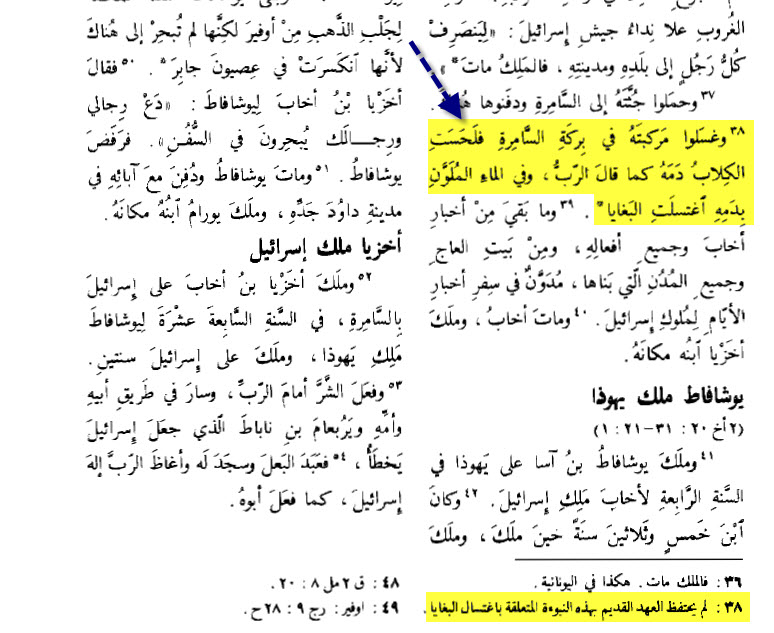
There are
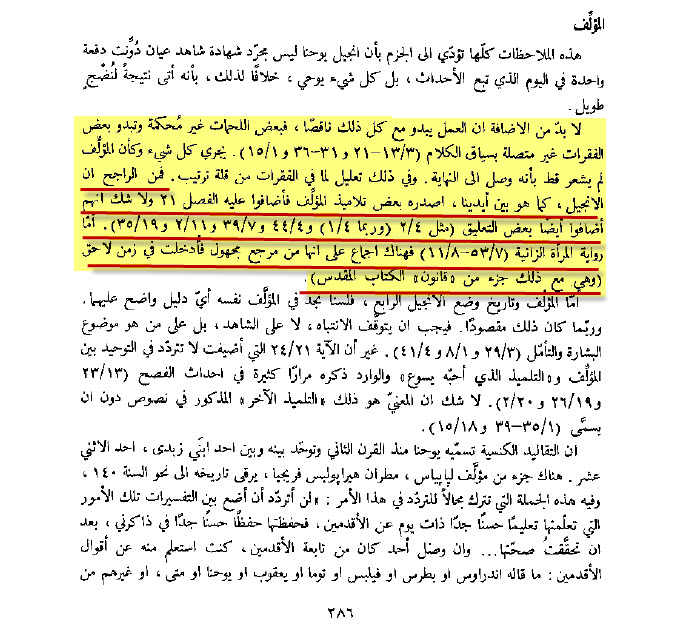
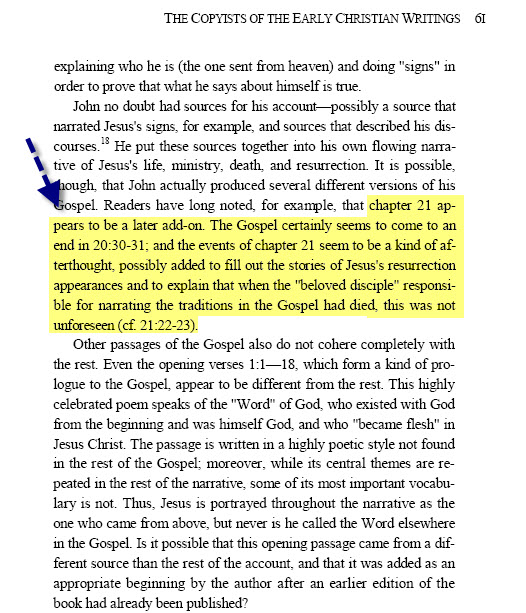
also additions that occurred in the Gospel that have no owner… such as the additions that occurred to the Gospel of John, for example… as the Jesuit translation said.
Ehrman says
that chapter 21 seems to be a late addition . The gospel certainly seems to have ended at 20:30-31; and the events in chapter 21 seem to be a kind of late thought, possibly added to complete the post-resurrection apparitions and to explain that when the “beloved disciple” responsible for the gospel tradition died, it was not contrary to prophecy (compare 21:22-23).
[ intentional changes ]
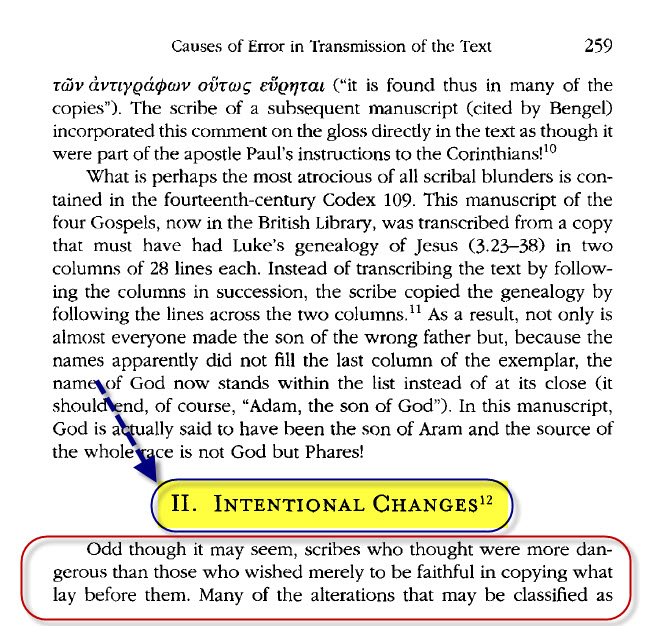
Bruce Metzger talks about it saying (4)
It may seem strange that the copyists who were thinking were more dangerous than those who were just hoping to be faithful while copying. Most of the amendments that are classified as deliberate…were undoubtedly made by copyists with good intentions…they believed that they were correcting an error that had been introduced into the sacred text and needed to be corrected…and it seems that the later copyists restored the old errors that the old copyists had corrected before…for example, in the text of the Epistle to the Hebrews 3-1…there is an angry note in the margin of the manuscript from a later copyist who restored the text to its original form after it had been changed by another old copyist…in which he says:
“Stupid and naive, leave the old reading, do not change it”
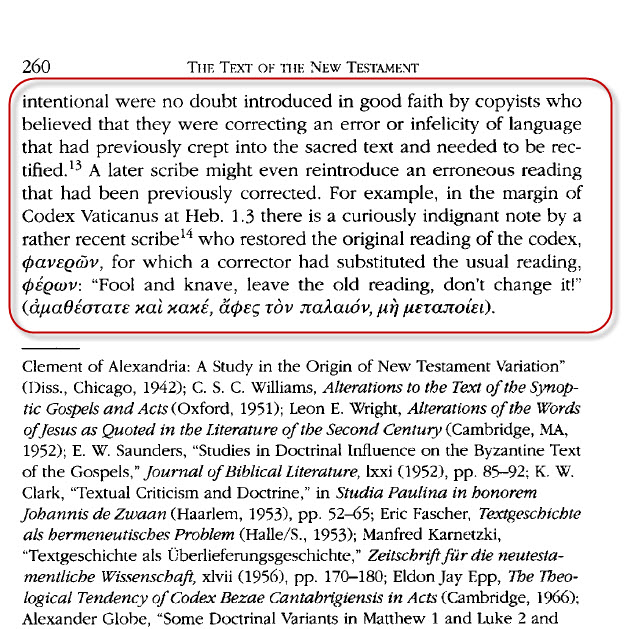
Ehrman also speaks about it and says (5)
Scholars today generally distinguish between changes that seem to have occurred unintentionally through copyist errors and those that occur deliberately, that is, after deliberation and long-sightedness. These are not definitive and hasty definitions, of course, but they seem sound so far: one can see how a copyist could have inadvertently omitted a word when writing a text (an accidental change) , but it is difficult to see how the last twelve verses of Mark’s Gospel could have been added to the Gospel through a writing error.
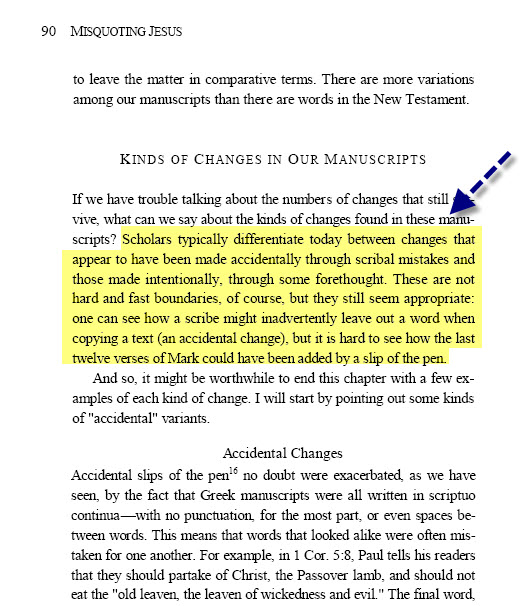
(6)
Deliberate changes tend to be a bit more difficult to identify. This is precisely because they are (clearly) premeditated, and because they tend to make a useful meaning. And because they make a useful meaning, there will always be critics who will argue that these changes make the best sense—that they are the original reading. This is not a dispute between scholars who believe that the text has been corrupted and those who believe otherwise. Everyone knows that the text has been manipulated , but the issue here is which reading represents the corruption and which represents the oldest form of the text that we can obtain. And this is where scholars sometimes disagree.
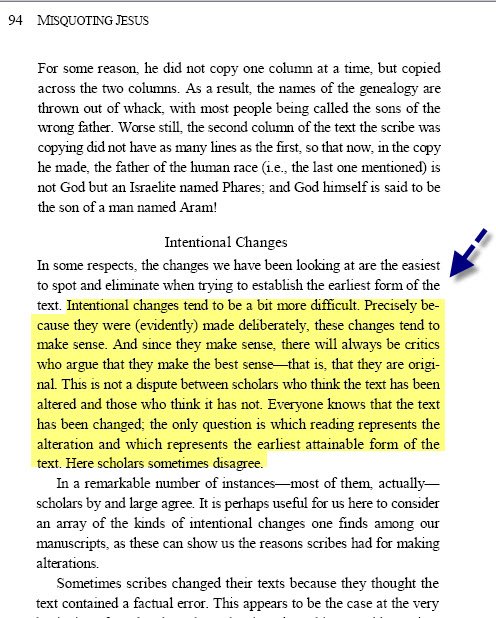
Perhaps the previous speech explains the reasons for the deliberate changes… but this is not enough.. We still want to know in detail why the deliberate changes were made by the copyists??? … and the other question… is it possible to know and uncover these distortions???
Pope Shenouda revealed to us that proving the process of distortion in the Holy Book comes through comparison… and this is what we will do, God willing… once we compare the manuscripts of the Holy Book with each other, the places of distortion will become clear to us … and through the words of the scholars we will know why the copyists distorted the Holy Book… and we will provide, God willing, a detailed answer to this question… through the words of the Christian scholars… and we will let the manuscripts speak
Manuscripts of the Bible in its original languages - page 19-20
2misq Jesus pg 91-92
3the text of the new testament Kurt Aland & Barbara Aland - pg 282
4The Text of the New Testament
5misq jesus
6The same reference
[1Distorting the text for sectarian considerations]
We quoted the scholar Origen that one of the factors that caused the distortion of the manuscripts is… (1)
The copies that the heretics deliberately destroyed by spreading their ideas in them during copying.
In fact, the role of the heretics in distorting the Holy Book is not easy… They had a dual role in the distortion process… Some of them distorted the texts in order to put their own beliefs in the text…
And of course this is not my words… These are the words of the great ancient church fathers…
The scholar Bruce Metzger says… (2)
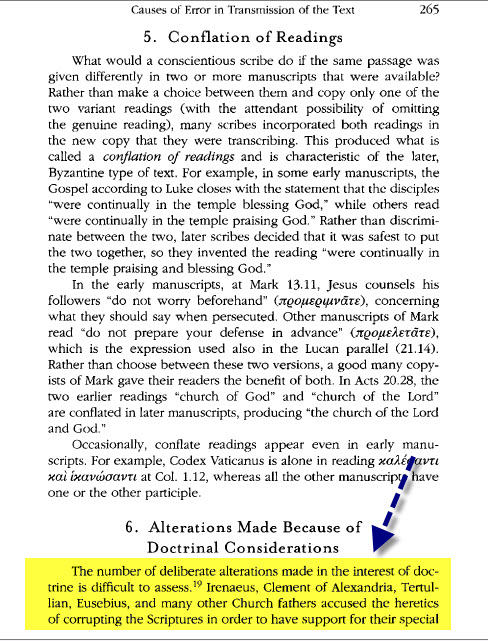
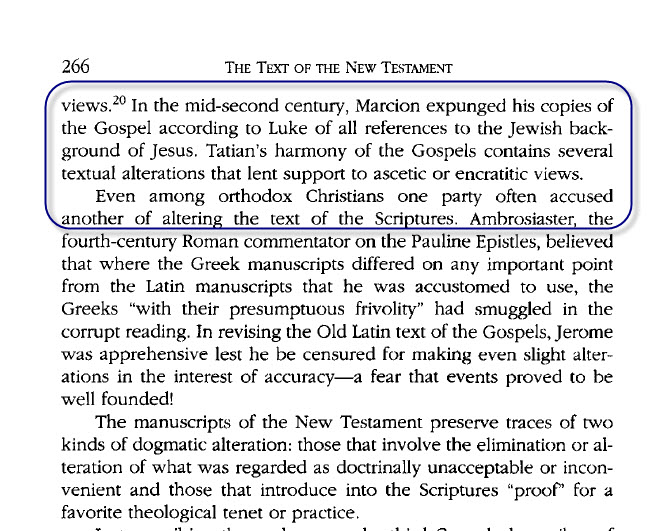
It is difficult to estimate the number of deliberate changes that occurred in the text due to sectarian differences… Irenaeus, Clement of Alexandria, Tertullian, Eusebius of Caesarea, and many of the church fathers… accused the hereticsof distorting the manuscripts in order to support their own point of view.
In the middle of the second century… Marcion deleted parts of his copies of the Gospel of Luke
and Tatian mixed the Gospels, which contained many textual changes…Even among Orthodox Christians… each sect often accused the other of changing the texts in the manuscripts.
Even among Orthodox Christians…each sect often accused the other of changing texts in manuscripts.
Bart Ehrman says… (3)
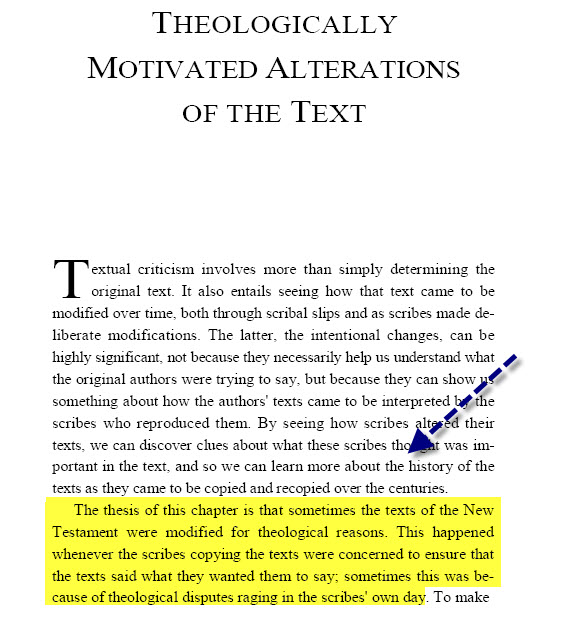
The texts of the New Testament were changed… for theological reasons… the copyist wanted the texts to say what he said… and sometimes this was due to theological differences…!!!
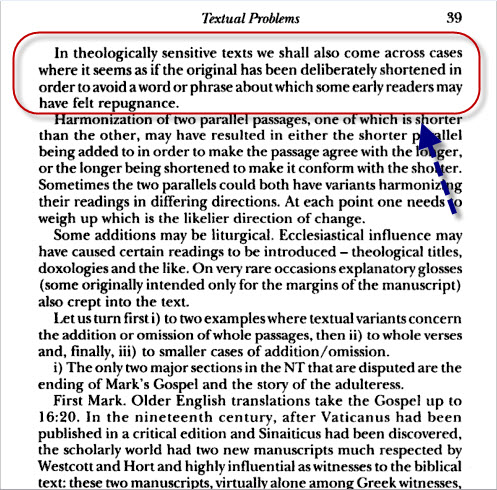
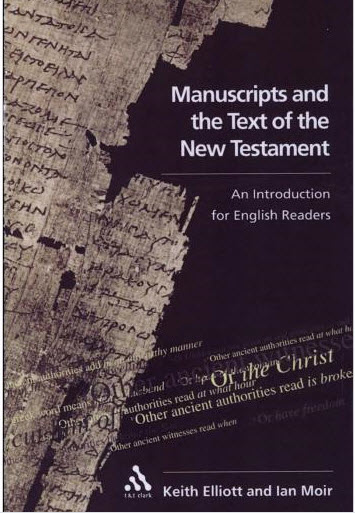
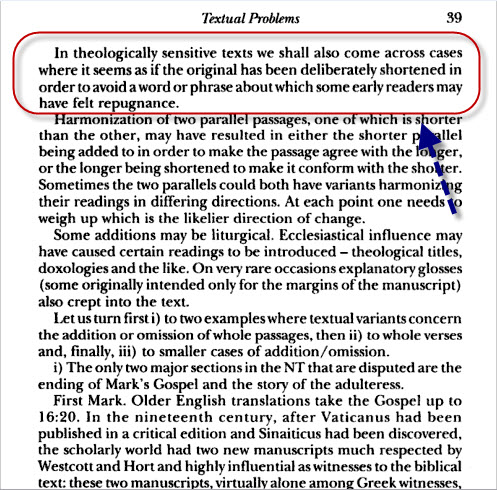
The scholar Keith Elliott (4) says
: We will go over some cases…that contain sensitive theological texts… in which it appears that the text was deliberately cut…in order to avoid a word or phrase that might disgust ancient readers…!!
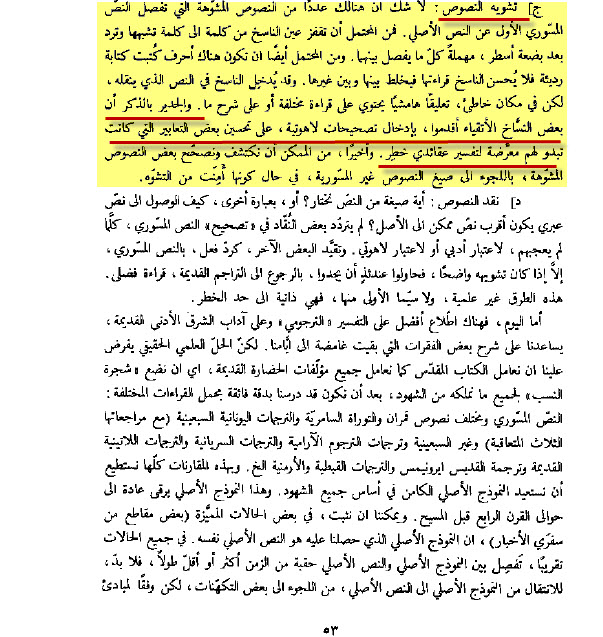
We read in the Jesuit translation - page 59.. under the title “Distortion of Texts”
that there were copyists who made theological corrections ..!! to improve some expressions that were exposed to dangerous doctrinal interpretation.
Christian scribes… responded to the heretics in the same manner as well… and they distorted the manuscripts in order to defend Christ and the Christian faith and respond to the heretics…
Ehrman says (5)
Sometimes scribes changed their text for more patently theological reasons, to make sure that the text could not be used by “heretics”or to ensure that it said what it was already supposed (by the scribes) to mean.
Sometimes the scribes changed the text they had in hand for obvious theological reasons , either to make sure that the text would not be used by “heretics”, or to make sure that it said what the scribes assumed it meant.
Some scribes even did as the heretics do… and distorted the text in order to make it conform to their beliefs…!!
Bart Ehrman says, accusing the Orthodox of distorting the Holy Bible (6):
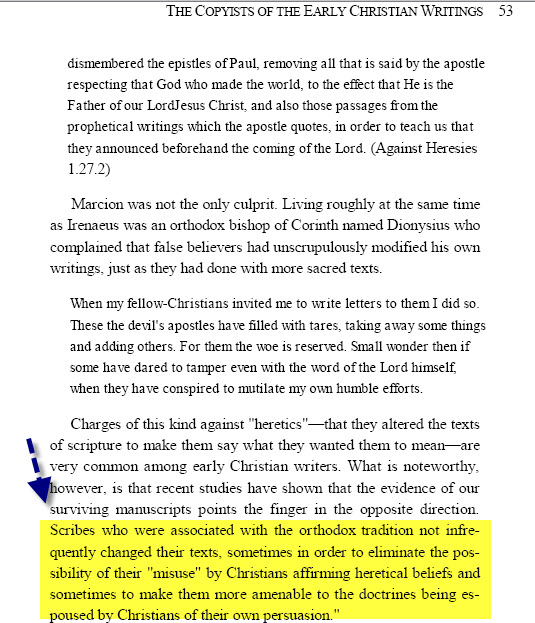
The scribes who believed in the Orthodox tradition often distorted the texts, sometimes in order to eliminate the possibility that Christians would “misuse” them to confirm heretical doctrines and sometimes to make them more conform to the doctrines adopted by Christians of their sect
The truth is that the conflict between heretics and Orthodox in this matter is very great… and books have been written about it (7)… The conflict, as we have seen, was not only intellectual… but also reached the manuscripts. In order for the heretics to support their beliefs, they placed them inside the manuscripts… and so did the Orthodox in response to them… and of course we cannot list all the examples in this place… but we will take some examples that will clarify to the reader how the conflict between
the Orthodox and heretics took place.
The Orthodox and the Ebionites
The Ebionites are a Jewish sect that entered Christianity… but they did not believe in the divinity of Christ… and they did not acknowledge his divine existence before the incarnation… and they denied his virgin birth
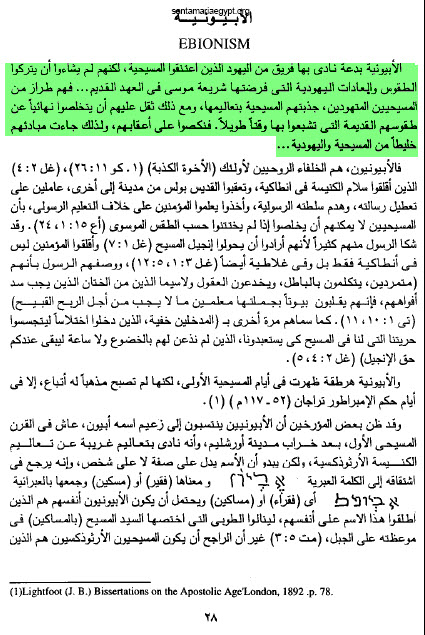
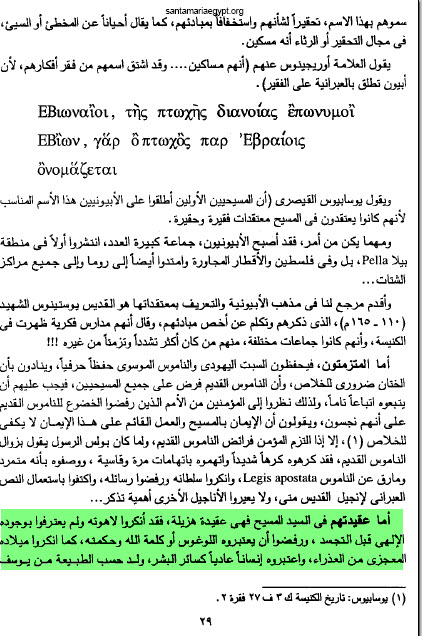
So as we can see, the Ebionites did not believe in any existence of Christ before his birth from the Virgin Mary.
Did this belief affect the manuscripts of the Bible???
Yes, we saw this belief in verses in the Bible.
We go to the Gospel of Luke
3:22 And the Holy Spirit descended upon him in bodily form like a dove. And there was a voice from heaven saying, ” You are my beloved Son, in you I am well pleased
.” This verse seems somewhat natural… but there is another reading of this verse in the Byzantine manuscript…
The verse in the Byzantine manuscript is
3:22 And the Holy Spirit descended upon him in bodily form like a dove. And there was a voice from heaven saying, “You are my Son,
today I have begotten you.” Did you notice the difference???
Saying, “You are my beloved Son, in you I am well pleased.” >>>> Saying, “You are my Son, today I have begotten you.”
The question here is, what is the correct reading… and why was the reading changed in the first place???
Bart Ehrman answers us and says that the original text is .. You are my Son, today I have begotten you … and this text was changed by Christian copyists because it supports the Ebionites’ doctrine that Christ was not born from eternity (I today have begotten you) .. to (My beloved Son, in you I am well pleased).
Ehrman says (8)
The first issue that must be resolved is: Which of these two forms of the text is the original form and which is the distortion? The overwhelming majority of Greek manuscripts support the first reading “You are my beloved Son, in whom I am well pleased”; thus this fact may tempt one to view the other reading as a distortion. The problem in this case is that this verse was quoted by many of the early church fathers at a time when most of our manuscripts had not yet been written. The text is quoted in the second and third centuries everywhere from Rome to Alexandria and from North Africa and Palestine to Gaul (France) and Spain. In almost all cases, it was the second form of the text that was quoted (“Today I have begotten you”).
Moreover, this is a form of the text that does not resemble much that of the parallel passage in Mark. As we have seen, scribes typically try to reconcile texts rather than leave them in conflict. So the form of the text that differs from Mark is the one that is most likely to be the original text in Luke. These assumptions suggest that the reading that is less frequently found in the manuscripts, “Today I have begotten you,” is indeed the original reading and was corrupted by scribes who feared its adoptionist resonance.
As for the scholar Bruce Metzger, he did not decide the position, but he preferred the reading (in you I am pleased)
and said that the other reading (today I have begotten you) was taken by scribes from Psalms (9)
2:7 I declare of the decree of the Lord: He said to me, “You are my Son; today I have begotten you.”
Let us see the Byzantine manuscript, which reads: “You are my Son, today I have begotten you.” Below the Vatican manuscript, which reads: “Saying: You are my beloved Son, in you I am well pleased.” Let us see the place of distortion.
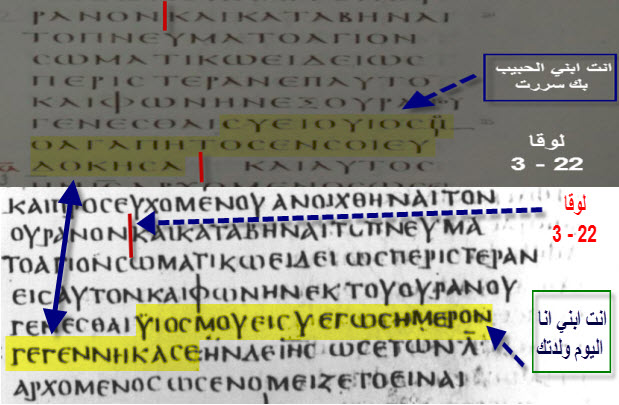
The word distortion cannot be proven practically except by comparison (Pope Shenouda)]
The question is what is the correct reading??? We do not care what is the correct reading… The evidence is that we have distortions in the manuscripts, whether the reading is (I have begotten you today) or (I was pleased).
Another example
we saw, as Anba Gregory told us, is that the Ebionites did not believe in the miraculous birth of Jesus Christ… and they believed that he was born like all other humans and that his father was Joseph the carpenter.
Have we seen traces of this belief in the manuscripts???
Yes, we saw this belief in the manuscripts
Luke (Vandik translation)
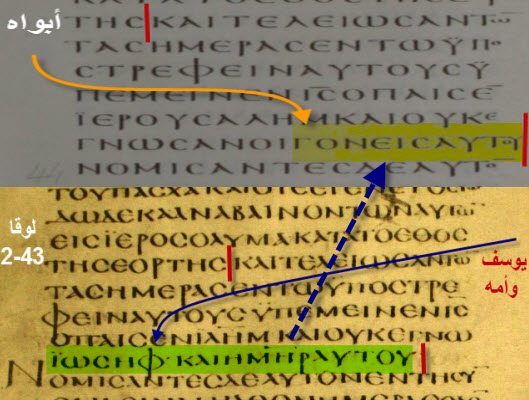
2:43 And when they had completed the days, on their return, the child Jesus remained behind in Jerusalem , and Joseph and his mother knew it not.
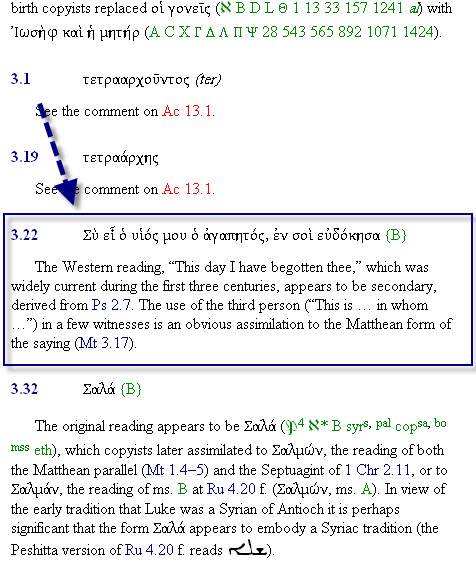
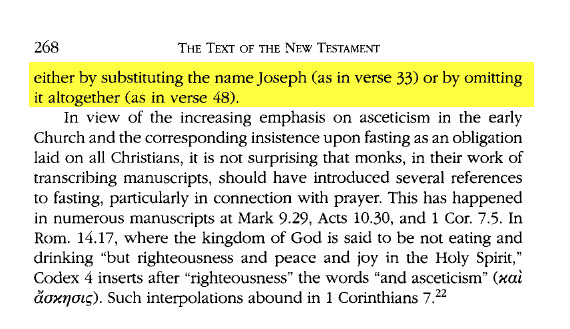
Luke (Joint translation) 2-43 And when the days of the feast were over and they took the way back, the child Jesus remained behind in Jerusalem, and his parents knew it not. We noticed that the Van Dyck translation, which relies on the modern manuscripts, has (Joseph and his mother)… As for the Joint translation, which relies on the oldest manuscripts, it has (and his parents). It is clear to everyone that the phrase his parents or his parents… strongly supports the Ebionites’ belief that Christ had a father and a mother like all other human beings… So what was the reaction of the Christian scribes??? The scholar Metzger responds to us and says (10) In the second chapter of the Gospel of Luke there are many references to Joseph and Mary… and without a doubt some people in the early church saw the need to reformulate this text… in order to preserve the virgin birth of Christ in verse 41 and also 43… the text was changed in some manuscripts from his parents to Joseph and Mary… and in verse 33 in certain manuscripts it was changed to Joseph… or it was deleted entirely as happened in verse 48.
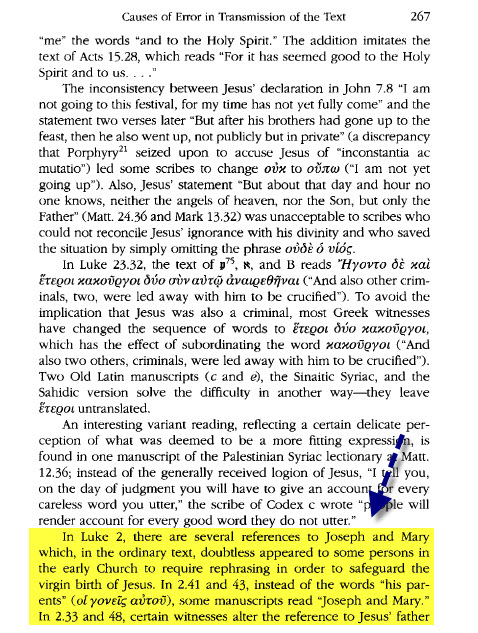
Bart Ehrman (11) says that
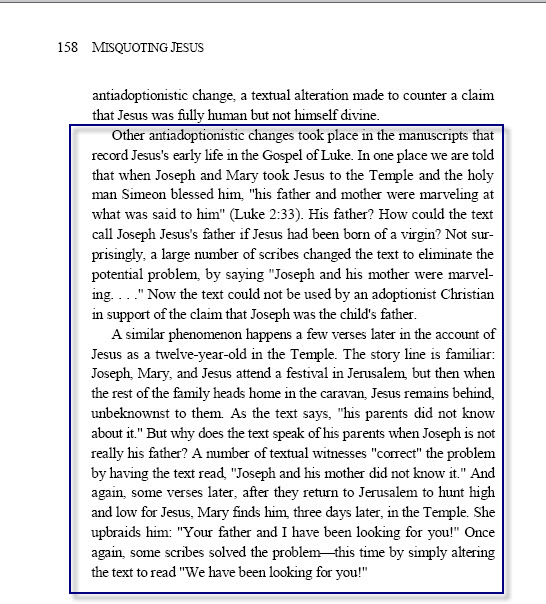
other changes that are contrary to the adoptionist views occurred in the manuscripts that record the early life of Jesus in the Gospel of Luke. In one place we are told that Joseph and Mary took Jesus to the temple and the man of God, Simeon, blessed him, “and his father and mother marveled at what was said about him” (Luke 2:33). His father?!! How dare the text call Joseph the father of Jesus if Jesus was born of a virgin? It is not surprising, then, that a large number of copyists changed the text to remove the potential problem by saying “and Joseph and his mother marveled…” Now an adoptionist Christian cannot exploit this text to support the claim that Joseph was the father of the child.
A similar phenomenon occurs a few verses later in the story of the twelve-year-old Jesus in the temple. The story has a familiar plot: Joseph, Mary, and Jesus attend a celebration in Jerusalem, but then when the rest of the family heads home with the caravan, Jesus is left behind without their knowledge. As the text says, “His parents did not know about it.” But how can the text talk about his parents when Joseph was not actually Jesus’ father? Several textual references “correct” the problem by making the text read, “Joseph and his mother did not know.” Another example comes from a few verses later. After they return to Jerusalem to look for Jesus everywhere, Mary finds him three days later in the temple. She rebukes him, saying, “Your father and I have been looking for you!” Once again, some scribes solved the problem - this time by simply distorting the text so that it read: “We were looking for you.”
Let us see how the text changed in the Vatican manuscript from (his parents)… to Joseph and his mother in the Alexandrian manuscript.
1- الكتاب المقدس ..مخطوطاته الاصلية
2The Text Of The New Testament Its Transmission, Corruption, and Restoration - Pg 265
3misquoting jesus - pg 151
4Manuscripts and the text of the New Testament - By James Keith Elliott, Ian Moirpg 39
5misquoting jesus - pg 95-96
6 - misquoting jesus - pg 95-96
7The.Orthodox.Corruption.of.Scripture.-.B.D.Ehrman
8misquoting jesus - pg 159
9Textual Commentary
10 - The Text Of The New Testament Its Transmission, Corruption, and Restoration - Pg 267
11misquoting jesus - pg 158
🚨🚨🚨🚨
Orthodox and Docetians]
Who are the Docetians??
This heresy denied the incarnation. The word Docetians came from the Greek word “Doken” meaning “to appear” . In their opinion, Christ appeared in the form of a body, but he was not incarnate , that is, he was an illusion, not real, and therefore he did not really suffer
http://st-takla.org/pub_Bible-Interp…roduction.html
As we see, the important point in the Docetists’ belief is that they did not believe that Christ had a real body… but it was an illusion.. and therefore he did not really suffer or hunger… etc.
Did this belief appear in the manuscripts of the Holy Bible???
Yes, and in several places…
Ehrman says (1)
The conflict over the doctrinal doctrines related to Christ had an impact on the scribes who were copying the books that eventually became the New Testament.
Let us take some examples:
Luke (Vandyke)
{Embed}
http://st-takla.org/pub_Bible-Interp…roduction.html
404 File Not Found! - الصفحة غير موجودة - St-Takla.org - Saint Takl…
404 File Not Found! - الصفحة غير موجودة - St-Takla.org - Saint Takla site - Alexandria - Egypt
22:43 And an angel appeared to him from heaven, strengthening him.
22:44 And being in an agony, he prayed more earnestly, and his sweat was like drops of blood falling to the ground.
We notice strongly that the numbers 43 and 44 destroy the doctrine of the Docetics… as they show Jesus as a person who needed strengthening… and his sweat was like drops of blood.
But there are ancient manuscripts that do not contain the numbers 43 and 44… such as the Vatican and Papyrus 75… and at the same time they were quoted by the ancient church fathers such as Justin Martyr (2)… So what is the explanation for this matter???
Were the two numbers added to the manuscripts or were they deleted from the manuscripts???
{Embed}
شرح رسالة يوحنا الأولى - تفسير الكتاب المقدس - القمص أنطونيوس فكري …
شرح رسالة يوحنا الأولى - تأملات في الكتاب المقدس (شرح الإنجيل): العهد القديم والعهد الجديد < موقع الأنبا تكلا هيمانوت - الأسكندرية - مصر
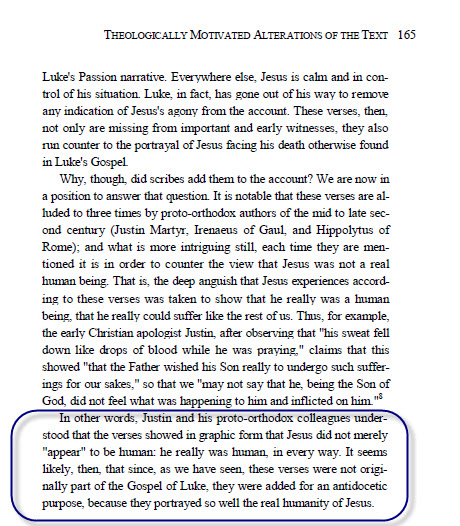
(3)
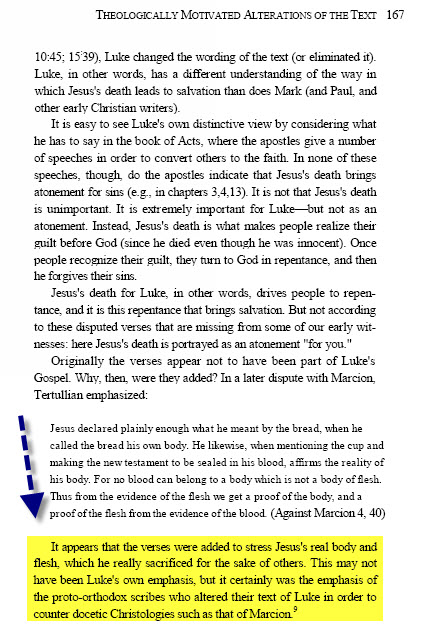
Justin and his pre-orthodox counterparts understood these verses to show in vivid detail that Jesus did not merely “appear” to be human: he was actually human in every way. It seems likely, then, that since these verses, as we have seen, were not an original part of Luke’s Gospel, they were added for anti-Docetic purposes because they paint a very clear picture of Jesus’ true humanity.
From the pre-orthodox Christian point of view, it was important to affirm that Jesus was a true human being of flesh and blood because it was precisely his slain flesh and shed blood that brought us salvation—not in appearance but in reality.
اما بروس متزجر قال (4)
Their presence in many manuscripts, some ancient, as well as their citation by Justin, Irenaeus, Hippolytus, Eusebius, and many other Fathers, is proof of the antiquity of the account. On grounds of transcriptional probability it is less likely that the verses were deleted in several different areas of the church by those who felt that the account of Jesus being overwhelmed with human weakness was incompatible with his sharing the divine omnipotence of the Father, than that they were added from an early source, oral or written, of extra-canonical traditions concerning the life and passion of Jesus. Nevertheless, while acknowledging that the passage is a later addition to the text, in view of its evident antiquity and its importance in the textual tradition, a majority of the Committee decided to retain the words in the text but to enclose them within double square brackets.
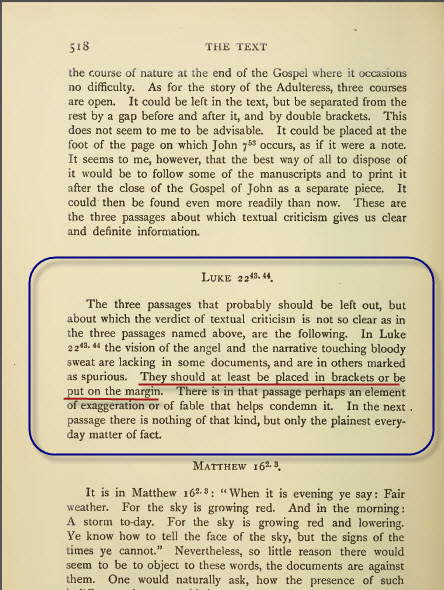
Let us see the Vatican manuscript from which the two verses were deleted, next to the Sinaitic manuscript in its current form, to see the place of distortion.
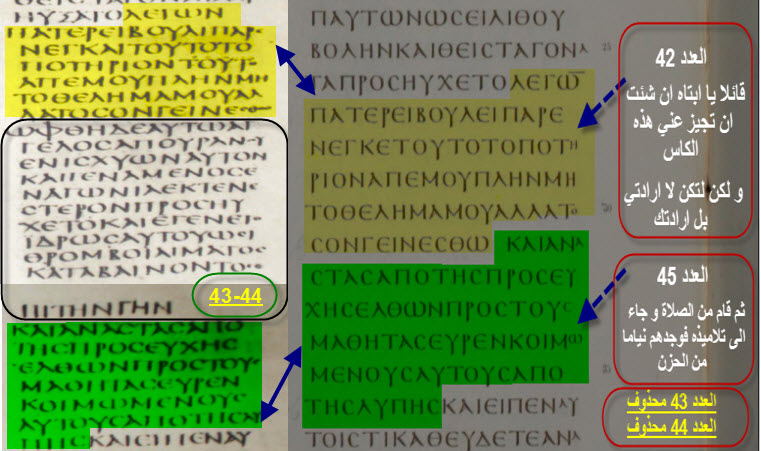
[The word distortion cannot be proven practically except by comparison (Pope Shenouda)]
The question now is, are the two numbers original?? Or were they added??? … It does not matter much to us, as scholars differ, as we can see.. The witness is that there are manuscripts with the numbers and there are manuscripts from which the numbers have been deleted… Thus, we now have either distortion by omission or distortion by addition.
Another example is
Luke
22:19 And he took bread, and gave thanks, and broke it, and gave it to them, saying, This is my body which is given for you; do this in remembrance of me.
22:20 And likewise also the cup after supper, saying, This cup is the new covenant in my blood, which is poured out for you.
The part marked in red at the end of verse 19 and verse 20… are deleted from the Byzantine manuscript… So, is the Byzantine manuscript correct and the phrase added to the rest of the manuscripts or the opposite???
This sentence clearly completely erases the Docetic belief… and Bart Ehrman has argued that this phrase was added by Christian scribes… to destroy the Docetic belief.
Ehrman says…
these verses appear to have been added to emphasize the real body and blood of Christ, which he actually sacrificed for others. This emphasis is probably not a view of Luke, but it certainly came from pre-orthodox scribes who distorted the existing Luke texts in order to counter the doctrinal doctrines of Christology such as Marcion.
Let us see the Bezian manuscript with the text deleted…in comparison with the Sinaitic manuscript.
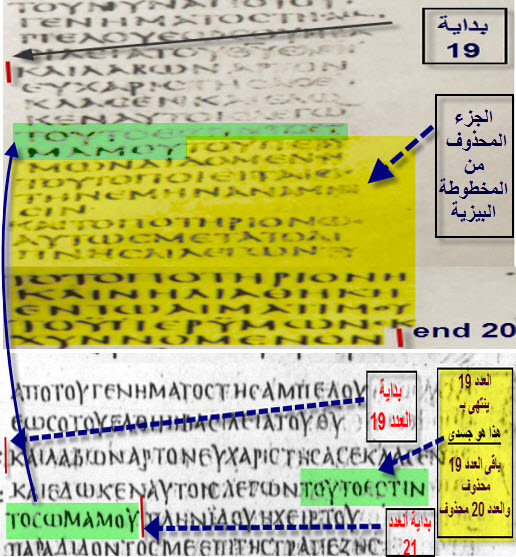
Another example
is Luke
24:51 And while he was blessing them, he parted from them and was carried up into heaven
. Of course, the phrase “was carried up into heaven” destroys the doctrine of the Docetics because it indicates that Christ has a real body… but this phrase is not found in the Byzantine manuscript and is deleted…!!
Did the Docetics delete it from the Byzantine manuscript… to confirm their belief??
Or did the Christians add it to confirm the invalidity of the Docetic doctrine???
Bart Ehrman believes that this phrase was added by the Christians to show the invalidity of the Docetic doctrine.
Ehrman says (7)
We know that the pre-Orthodox Christians wanted to confirm the real material nature of Jesus’ departure from earth: Jesus left in a material form and will return again in a material form to bring with him material salvation . In this way, they argued with the apparitionists who insisted that all of this was an apparition. Finally, (5) the omission of the clause in a few witnesses can be accounted for either ( a) through accidental scribal oversight occasioned by homoeoarcton (καια … καια …) or (b) by deliberate excision, either (i)
in order to
relieve the apparent contradiction between this account (which seemingly places the ascension late Easter night) and the account in Ac 1.3–11 (which dates the ascension forty days after Easter), or (ii) in order to introduce a subtle theological differentiation between the Gospel and the Acts. The
omission of this sentence in a few witnesses can be explained as follows:
either as a result of a normal scribal error due to the similarity of some words
or as a deliberate omission: -
to relieve the contradiction between this sentence (The ascension at the end of Easter night) and the contradiction found in the Book of Acts (3-11) -1… (The ascension of Christ 40 days after Easter)
or… to introduce a theological distinction between the Book of Acts and the Gospel of Luke,
let us see the Byzantine manuscript above the Vatican manuscript to see the place of distortion.
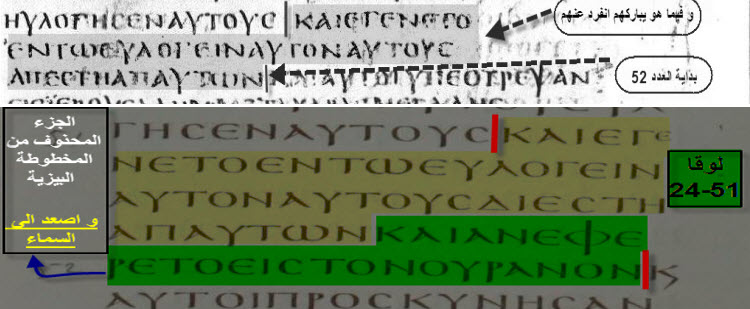
And if we notice, of course, that almost all the examples occur in the Gospel of Luke… This is because this sect only believed in the Gospel of Luke
[the Orthodox and the Gnostics]
Who are the Gnostics??
Summary of the belief of this group is that they believed that there are two gods in the universe.. a god of evil and another of good.
They divided Christ into Jesus the man (who was a complete human) and Christ the divine (who was a complete god) (9).
An example of a distortion in response to the Gnostics.
The Gnostics used a text from the Gospel of Mark
15:34 to confirm their belief: And at the ninth hour Jesus cried out with a loud voice, saying, Eloi, Eloi, lama sabachthani (which means, My God, My God, why have you forsaken me?)
Ehrman says (10)
We have strong evidence that makes us assume that some Gnostics took this last sentence that Jesus said literally in order to prove that this was the moment in which the Christ of divine nature separated from Jesus (since the divinity cannot taste annihilation and death). The evidence comes from Gnostic documents that believe in the importance of this moment in Jesus’ life.
So, for example, the apocryphal Gospel of Peter, which some have suspected of containing schismatic doctrines about the nature of Christ, quotes these words in a somewhat different way: “My power, my power, has left me!” What is even more striking is that the Gnostic text known as the Gospel of Philip quotes the text and then gives it a schismatic interpretation: “My God, my God, why, Lord, have you forsaken me?” Since he said these words on the cross, he must have been divided at that very moment.
What was the reaction of Orthodox Christians to this verse???
Someone simply changed it in the Byzantine manuscript from My God, why have you forsaken me to My God, my God, why do you mock me…!!
Why???
Ehrman responds by asking
why the scribes distorted this text… If we grant its usefulness to those defending the doctrines of the nature of Christ from the point of view of the schismatics, then there remains the small question of why. The pre-orthodox writers were concerned that their Gnostic opponents would not use the text against them and made a significant change that was consistent with the context in which they lived…so that God would henceforth be said to have mocked Jesus rather than to have forsaken him.
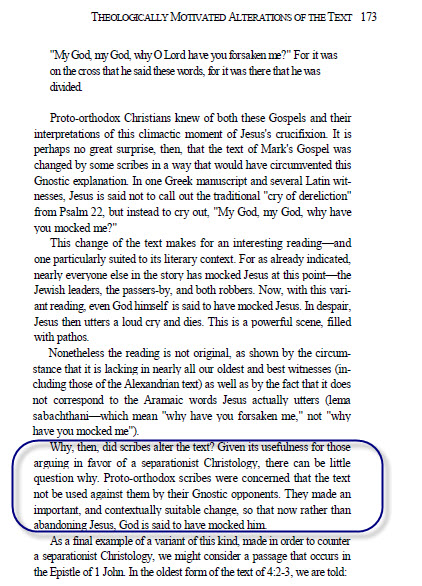
So because the Gnostics cited this verse… the scribes of the Byzantine manuscript changed the Byzantine manuscript… and changed the text to… Why are you mocking me..
Let us see the Vatican manuscript… above the Byzantine manuscript… in which the distortion occurred… Let us see the location of the distortion
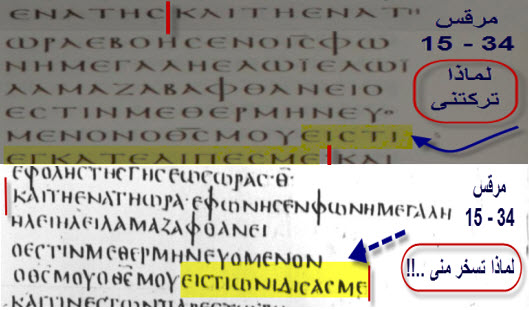
The truth is that the discussion on this matter is long and books have been written about it, as we said, but we conclude with Bart Ehrman’s sentence and say:
The theological disputes of the second and third centuries were among the causes of these distortions, because copyists sometimes modified their texts in light of the doctrines held by the Adoptionists, the Doctrinaires, and the Schismants regarding Christ and his nature.
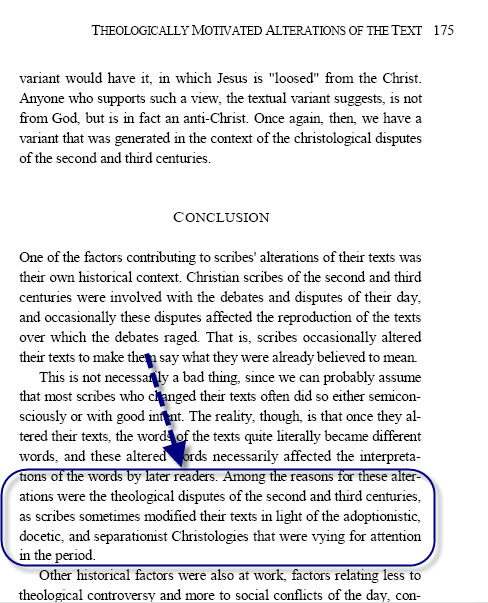
1Misquoting Jesus - pg 164
2textual commentary - bruce metzger
3Misquoting Jesus - pg 165
4textual commentary - bruce metzger
5A Student’s Guide to New Testament Textual Variants
6Canon and Text of the New Testament - By Gregory Caspar - pg 518
7Misquoting Jesus - pg 169170
8textual commentary - bruce metzger
9Misquoting Jesus - pg 170
See also History of Christian Thought - Dr. Hanna Khedry - Part One, pg 396-400
10Misquoting Jesus - pg 172173
🚨🚨🚨🚨
[2- [Defending Jesus (Defensive Theology)]
The second reason why scribes changed the textwas to defend Jesus… When a scribe saw that there was a sentence or a word that was expected to be used against Jesus by the pagans… he would simply either change this sentence or delete it completely.
For example,
John…
7:8 Go up to this feast.I am not yet going up to this feast,for my time is not yet fulfilled. 7:9 He said this to them and stayed in Galilee. 7:10 And when his brothers had gone up, then he also went up to the feast, not openly, but as if in secret. Here we notice that Jesus said that he would not go up to the feast… I am not yet going upto this feast Suddenly and without warning… In the verse after it, he went up to the feast…Thenhe also went up A real problem… Jesus said that he would not go up, and then he went up…!! But wait… In a word that Jesus said, this problem can be solved…And it is the word “after”. Perhaps Jesus meant that he would not ascend at the present time only… Yes, this is what we find in almost all Christian interpretations…For example, let us go to the interpretation of Antonius Fikry
Christ did not want to ascend with them because their goal was for Christ to appear in his glory and announce his kingdom. And Christ says to his brothers, “You go up to celebrate the feast as you wish. I am not ascending yet” = meaning I am not ascending now with you. He ascended after them, but not to celebrate like them or to show himself as they wanted. Rather, he ascended in secret. He does not show off his strength and does not want to provoke the Jews, because the time of the cross had not yet come. And note Christ’s accuracy. He did not say, “I will not ascend”, but rather, “I am not ascending yet” = meaning I will not ascend now.
{Embed}
يوحنا 7 - تفسير إنجيل يوحنا الأصحاح السابع - شرح العهد الجديد - الق…
يوحنا 7 - تفسير إنجيل يوحنا - شرح العهد الجديد (شرح الإنجيل): تفسير العهد القديم والعهد الجديد < موقع الأنبا تكلا هيمانوت - الأسكندرية - مصر
Father Matta Al Meskeen sees in his interpretation that the word “after” that Jesus said clarifies that Jesus meant that he would not ascend now , and does not negate that he would never ascend.
Father Matta Al Meskeen sees in his interpretation that the word “after” that Jesus said clarifies that Jesus meant that he would not ascend now, and does not negate that he would never ascend.
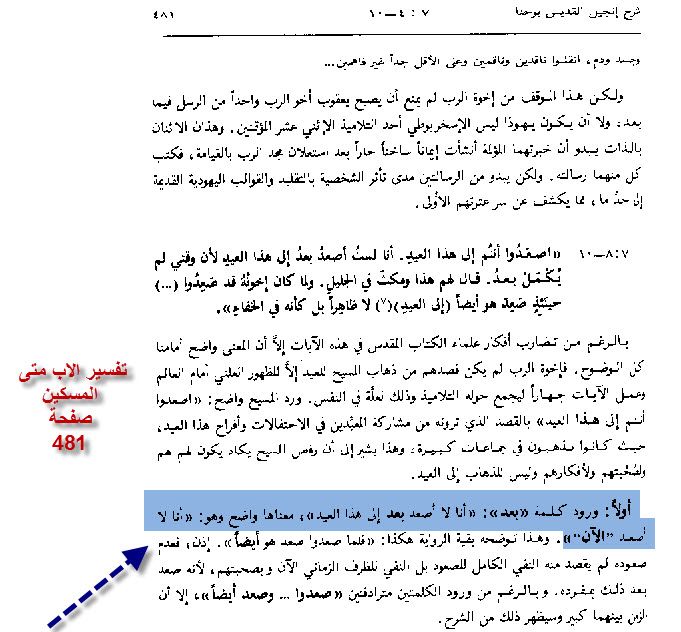
Dr. Ibrahim Saeed confirms that the word ” after” that Christ added after “ascended” confirms that he did not absolutely deny going to the feast, but rather indicates that the time to go had not yet come.
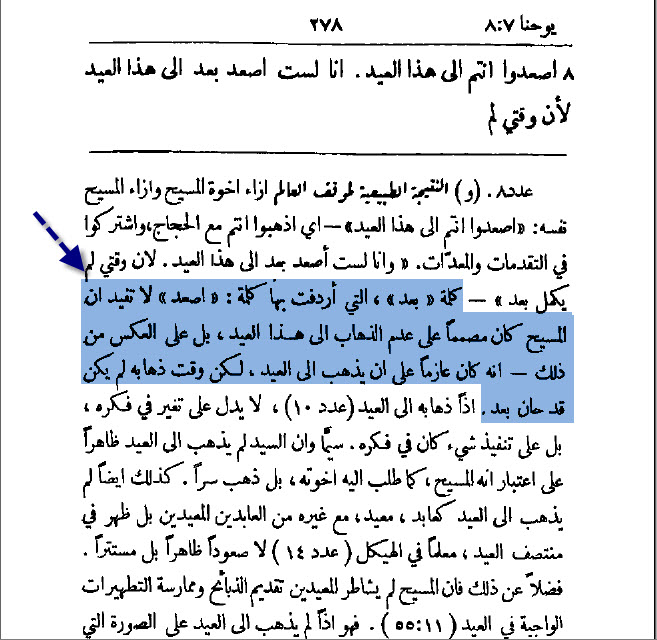
So now it is clear to everyone that the word “after” that Jesus said saved him from lying and that he did not mean not going to the feast at all. But the time had not yet come to
that point. That’s very good. But perhaps the matter will be a little different when we open any modern Arabic translation. Let’s open, for example, the Jesuit Fathers’ version.
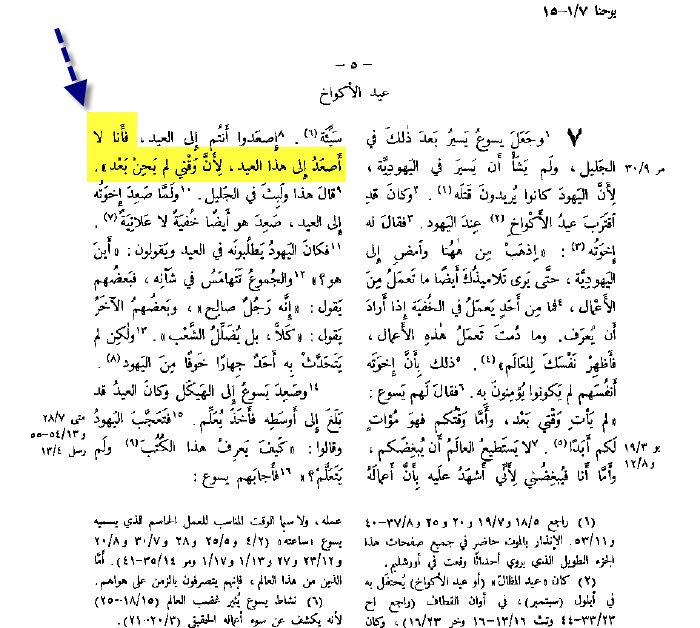
Yes, things have changed a lot… The word ” after” that protected Jesus from lying in the Van Dyke translation is not present in the Jesuit translation… And on this basis, Jesus is a liar according to the Jesuit translation…
Let us now bring up the subject from the beginning… and go back to the Greek original… and see whether Jesus lied or not according to the manuscripts and the words of scholars…??
Let us take the received Greek text..
( GNT ) You are not to go up to this feast ; I am going up to this feast , when the time of my coming is fulfilled .
(KJV) Go ye up unto this feast: I go not up yet unto this feast; for my time is not yet full come.
Van Dyke
7:8 Go up you to this feast; I am not yet going up to this feast, for my time is not yet fulfilled.
He is here (Obo)
This is the word found in the received copies…and the Westcott cash copy…
let’s see the meaning of the word in the dictionaries.
قاموس thayer
οὔπω
oupo?
not yet
قاموس strong
οὔπω
oupo?
oo’-po
not yet: - hitherto not, (no …) as yet, not yet.
And the word (Obo) … not yet … not yet
and the word ( Obo ) … is the word on which the interpreters built their words … and that Jesus is not a liar … and on this basis this word is what saves Jesus from lying
according to the words of the interpreters of the Holy Book … and this is the word found in the received texts .. from which the King James Version and the Van Dyke translation were translated.
We take a text like this from the critical texts … Tschendorff’s text for example … and translations based on the critical text …
Tischendorf Go ye
up untothefeast : I go not up unto thisfeast ; because my time isnot yet fulfilled.American Standard Version 7:8 Go ye up unto the feast : I go not up unto thisfeast ; because my time is not yet fulfilled.
Catholic translation
John 7:8.. Go up to the feast, for I do not go up to this feast, for my time has not yet come.
Okay
This is the word found in critical copies…and all modern English and Arabic translations.
We look at the meaning of the word in the dictionaries.
Thayer
οὐκ
ou
no, not; in direct questions expecting an affirmative answer
strong
οὐ
ou
oo
Also οὐκ ouk ook used before a vowel and οὐχ ouch ookh before an aspirate.
A primary word; the absolutely negative (compare G3361) adverb; no or not: - +
And so (ok) … not … not
On this basis, the word .. ο ὐ κ (ok) … means no or not .. and Jesus’ utterance of this word … makes Jesus a liar … because as we saw in the Christian interpretations .. the word after that Jesus said is what saved him from lying … and without it Jesus’ position would have been extremely difficult …!!!
Let us return now to some manuscripts of the New Testament ..and see if the correct word is … ο ὔ πω (opo) … or … ο ὐ κ (ok) …
Let’s go to Papyrus 66.. it is the oldest approximately.. around 200 AD ο ὔ πω (Obo)… and here we find that Papyrus 66… does not lie about Jesus… Let’s go for example to the Sinaiticus manuscript.. which is the greatest of the New Testament - around 350 AD ο ὐ κ (Ok)… and here we find that the Sinaiticus manuscript… lies about Jesus … Let’s go to the Vaticanus manuscript… late 4th century ο ὔ πω (Obo)… and here we find the Vaticanus manuscript… does not lie about Jesus… The Bezaan manuscript… fifth century ο ὐ κ (Ok)… and here we find that the Bezaan manuscript… lies about Jesus …
Let’s go to Papyrus 66…it is the oldest, approximately 200 AD
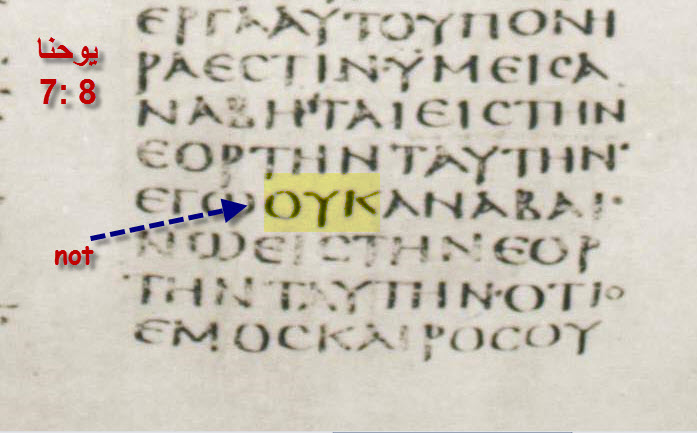
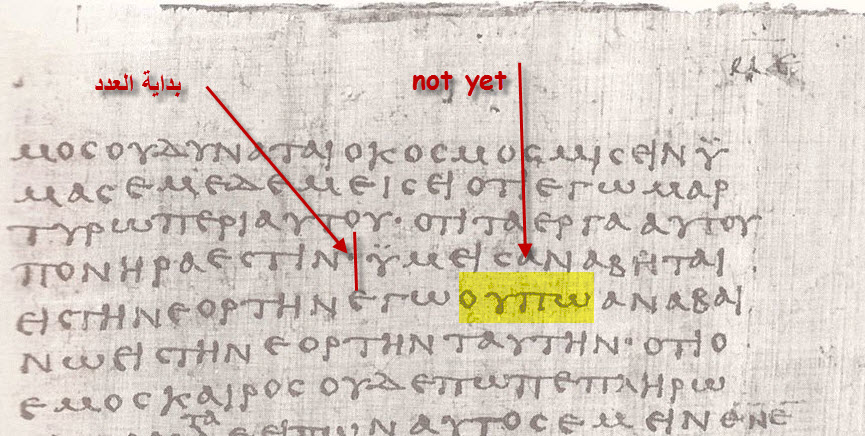
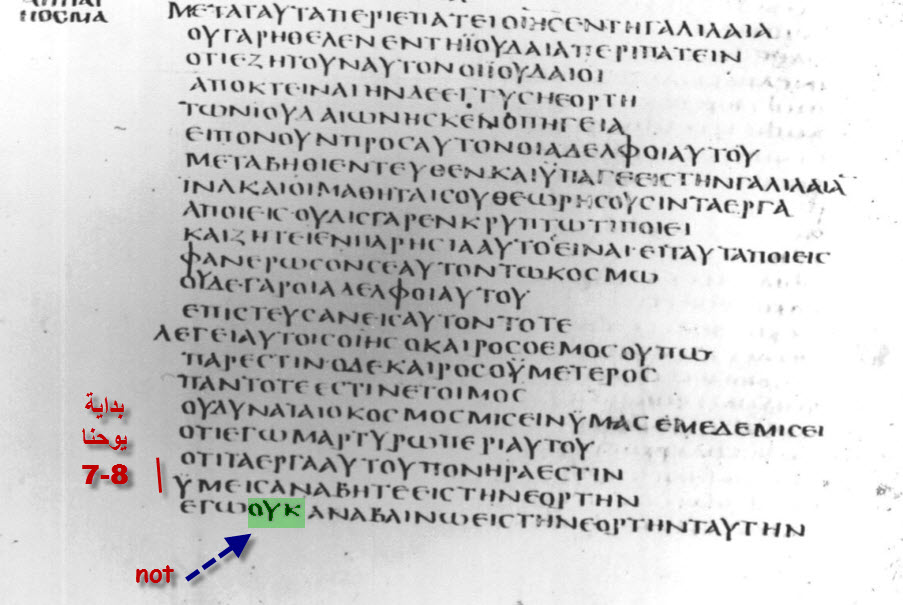
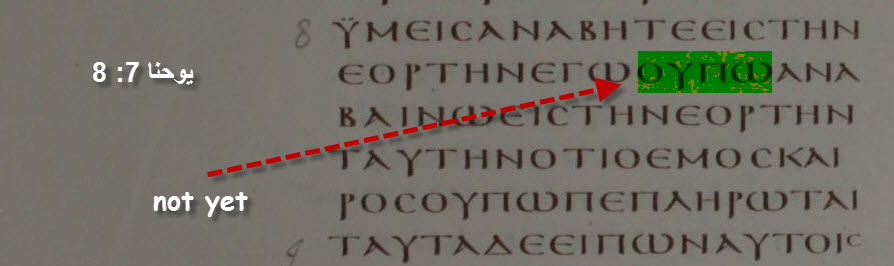
It is clear to everyone that the distortion here is intentional… as Christian scholars will show us of course…!
And before we know from the scholars… what is the correct reading??… and why did the scribes distort the correct reading to another reading???
Let us look at the Holy Bible.. itself… there is a wonderful rule… of the rules of textual criticism.. that says that the reading that explains the existence of other readings is the correct reading ..
This rule is mentioned to us by … K (1) … Komoszewski .. It is also mentioned by .. (2) Benno Przybylski It is also mentioned by It is also mentioned by … ( Philip Johnston (5)
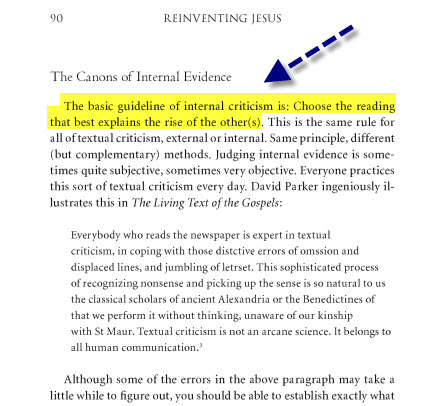
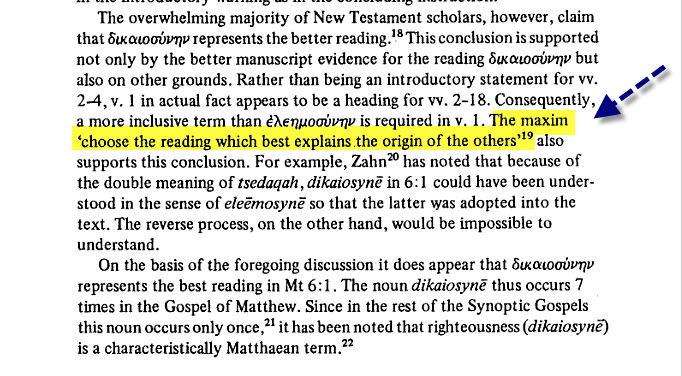
In general terms… the reading that the copyist might not like… and that he thinks harms the faith or anything that touches on religion… is this the correct reading…
I believe the matter… is beginning to become clear to everyone… According to the words of the Bible scholars, as we will see… the original reading… is… ο ὐ κ (Ok)… and this reading denies Jesus 100% … and thus the only solution for the copyists of the Bible… was to change this reading… to ο ὔ πω (Obo)… and thus we save Jesus from the lie and there is no power or strength except with God…
Let us now see what the scholars say… and see what exactly happened…
The great scholar Bruce Metzger - and Bart Ehreman (6) say…
that the contradiction between the two verses… which makes Jesus a liar… was exploited by a pagan… whose name was Porphyry… who attacked the Christians with it… which forced the scribes to change the reading from ο ὐ κ (Ok)… to ο ὔ πω (Obo)…
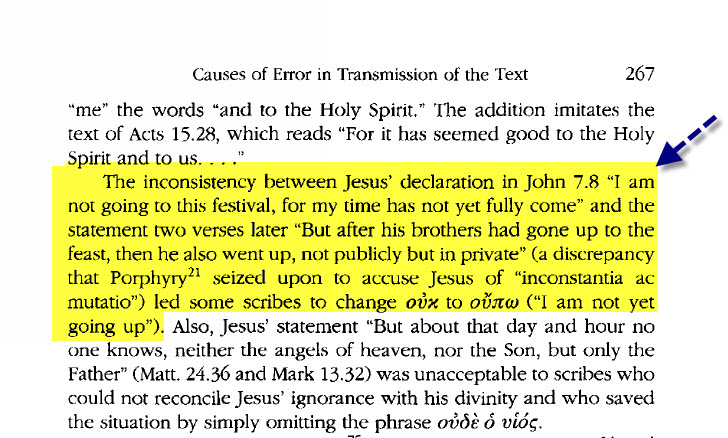
Bruce Tzoger also says… (7)
that the reading ο ὔ πω (Opu) (who belies Jesus) … entered very early… in Papyrus 66 and 75… in order to mitigate the contradiction between verses eight and ten…
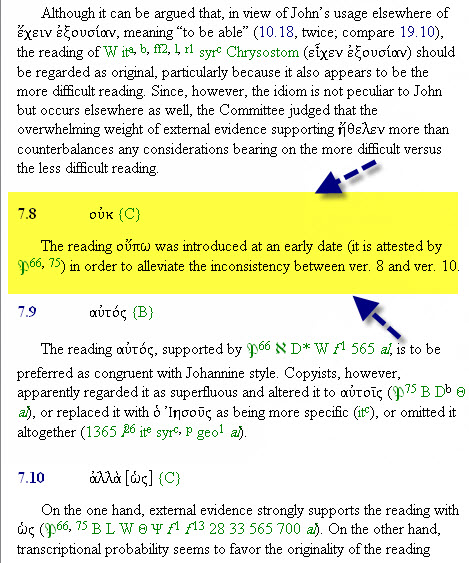
And Abdus Sattar also follows their path… and he confirms the same words that the pagan’s accusation of Jesus is the reason the copyists changed the reading (8)
And Abdus Sattar also follows their path… and he confirms the same words that the pagan’s accusation of Jesus is the reason the copyists changed the reading (8)
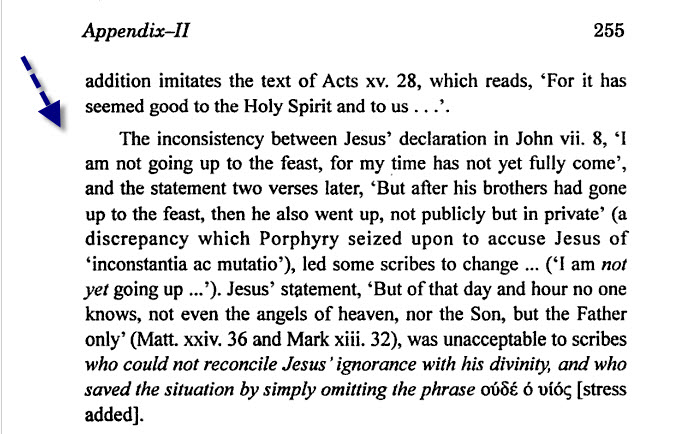
This is also confirmed by the great interpreter Adam Clarke (9) … and he says that Porphyry accused Jesus of lying… but Jesus did not just say I will not ascend… but he said I will not ascend anymore… that is, I will not ascend now.
Porphyry accuses our blessed Lord of falsehood, because he said here, I will not go to this feast, and yet afterwards he went; and some interpreters have made more ado than was necessary, in order to reconcile this seeming contradiction. To me the whole seems very simple and plain. Our Lord did not say, I will not go to this feast; but merely, I go not yet, ουπω, or am not going, i.e. at presen
(And of course, as we saw before, the word that Adam Clarke caught was not said by Jesus at all… and on this basis… without this word… Jesus would be a liar…)
As for… Gregory Caspar… he was very clear… and he said that there are changes that happen for a specific reason… we might call it a theological or defensive reason…!!! (No comment)… and he said that there was a good Christian back then… who saw that Jesus could not have said that… and Jesus certainly intended not to ascend now… so this Christian wrote above or next to the word ο ὐ κ (ok)… the word ο ὔ πω (opo)… (10)
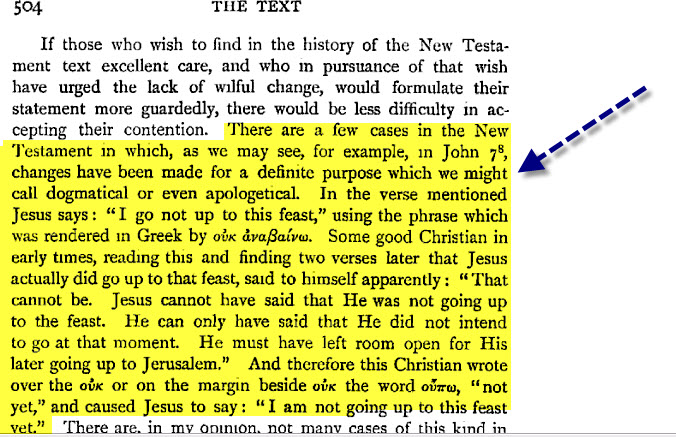
Bruce Terry says… who confirms that the copyists changed the reading… which belies Jesus… and if the correct reading was… ο ὔ πω (opo)… (which does not belie Jesus)… there would have been no need to change it to… ο ὐ κ (oke)… (which belies Jesus)
Looking past verse 9 (“he remained in Galilee”) to verse 10 (“he also went up”), several copyists apparently changed “not” to “not yet” to remove what they thought would have been a lie told by Jesus. If “not yet” was original, there would have been no reason for it to have been changed to “not” in so many manuscripts.
http://www.ovc.edu/terry/tc/lay09jhn.htm
We conclude now with some modern critical versions… and some modern translations… that denied Jesus…
Tischendorf 8th Ed . with Diacritics
7:8Go ye up untothefeast: I go not up unto this feast; because my time is not yet fulfilled. Greek NT (Nestle-Aland) UTF8 7:8 Go ye up unto the feast: I go not up unto this feast; because my timeis not yet fulfilled. Revised Standard Version 7: 8 Go ye up unto the feast : I go not up untothis feast ; because my time is not yet fulfilled. Darby’s English Translation 7:8 Ye, go ye up to this feast. I do not go up to this feast , for my time is not yet fulfilled.
John 7:8 You go up to the feast; I do not go up to this feast, for my timehas not yet come. Pauline
translation John 7:8 You go up to the
feast; I do not go up to this feast , for my time has not yet come.
🚨🚨
Another example…
Mark
1:40 Then a leper came to Him, begging Him, kneeling down and saying to Him, “If You are willing, You can make me clean .”
1:41 And Jesus, moved with compassion , stretched out His hand and touched him, and said to him, “I will; be cleansed
.” The incident is quite simple: There was a leper who asked Jesus to heal him… Jesus had compassion on this man and healed him,
but… There is another reading in the Byzantine manuscript that is extremely dangerous.
The reading says
1:40 Then a leper came to Him, begging Him, kneeling down and saying to Him, “If You are willing, You can make me clean.”
1:41 And Jesus was angry , stretched out His hand and touched him, and said to Him, “I will; be cleansed.”
This reading is perhaps one of the most difficult textual problems in the New Testament.
Did the scribes replace “compassionate” with “angry,” or did the opposite happen???
Some scholars such as Bart Ehrman believe that the correct reading is “angry” and he relied on internal evidence for this… He says that the reading that gives a good meaning and is easy to understand is often a wrong reading… The difficult reading is often the correct reading… Because copyists prefer the easy-to-understand reading,
Ehrman asks and says which is more likely… Is it possible that the copyist changed Jesus compassionate to Jesus angry??
Or did the copyist change Jesus angry to Jesus compassionate??!!… What is the reading that could be the source of the other readings?
The last reading (from Jesus angry to Jesus compassionate)… is the most difficult… and therefore it is the original reading… (11)
The question repeats itself, why did the copyists change the word angry to compassionate???
The answer is quite simple that there was a belief at that time that God does not get angry… This is because anger is a human emotion and therefore they did not accept this for Jesus so they changed the reading from angry to compassionate…!!
Ehrman says
that we have a number of writers from this period who insist that gods do not “get angry” because anger is a human emotion that arises from frustration with others, a sense of wrongdoing, or some other base reason. Christians, of course, could argue that God was angry with his creation because of their bad behavior. But the Christian God is also above any behavior that would indicate a quick temper . In the story of Jesus and the leper, there is no obvious reason for Jesus to get angry. Given that the text was being modified during a period when pagans and Christians were arguing about whether Jesus was behaving in a manner consistent with his divine nature, it is highly likely that a scribe changed the text in light of that disagreement. This, in other words, could be a defensive reading.
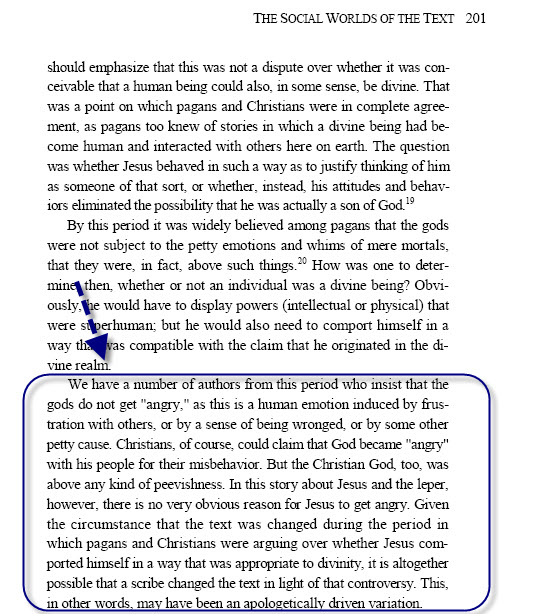
As for Bruce Terry… he agrees with Ehrman that it is easy for the copyist to change Jesus angry to Jesus compassionate… but he preferred that the correct reading is Jesus compassionate - because most and most manuscripts have the reading compassionate (12).
As for Bruce Terry… he agrees with Ehrman that it was easy for the copyist to change Jesus angry to Jesus compassionate… but he preferred that the correct reading is Jesus compassionate - because most and most of the manuscripts have the reading compassionate (12).
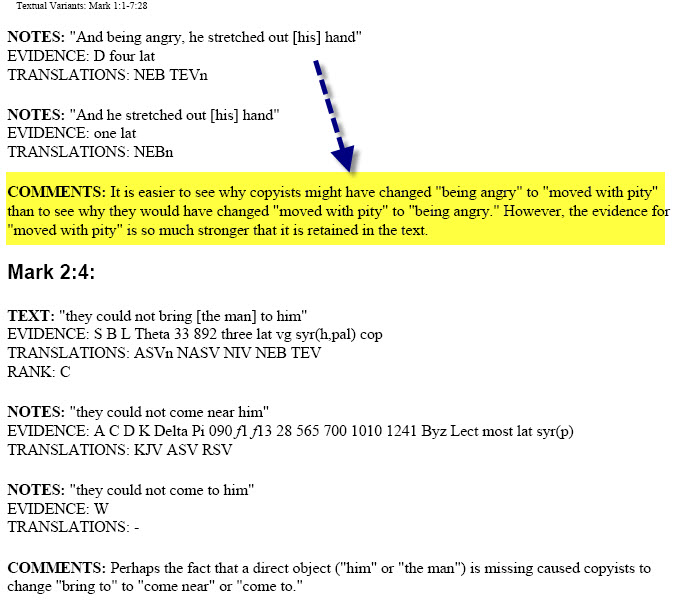
Bart Ehrman responded to this point and said… As we have seen, the presence of a certain reading in most manuscripts… and the presence of another reading in fewer manuscripts does not mean that the reading found in most manuscripts is the correct one… Sometimes it appears that the reading found in fewer manuscripts is the correct one… because most manuscripts were produced hundreds and hundreds of years after the original… and these manuscripts were not copied from the original but from other manuscripts that were much later… and as soon as one change is made in the manuscripts… it takes its way into tradition… perhaps this change is enshrined until it is transmitted in the rest of the manuscripts more than the words of the original text.
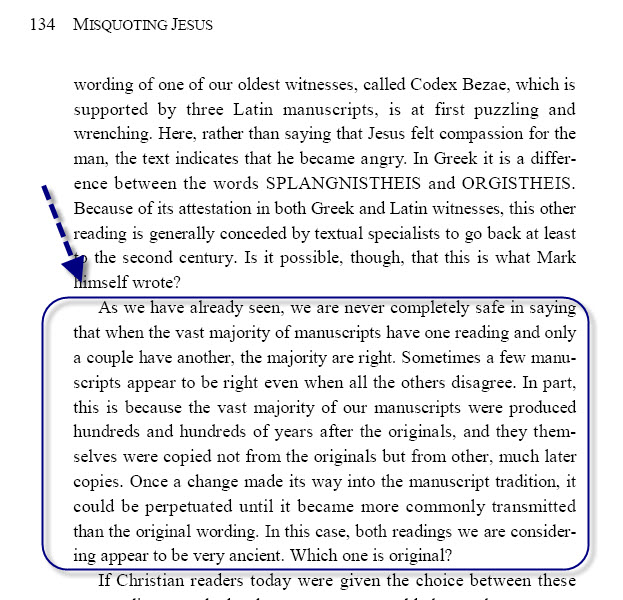
In general, judging the correct reading in this situation is difficult, as Metzger says (13).
It is difficult to come to a firm decision concerning the original text
That is, it is difficult to make a firm decision regarding the original text. Bruce Metzger gave the reading of the Mishka a grade of B… that is, it is likely that this reading is correct, but not absolutely.
Let us now look at the Bezin manuscript and the Vatican manuscript… to see the place of distortion.
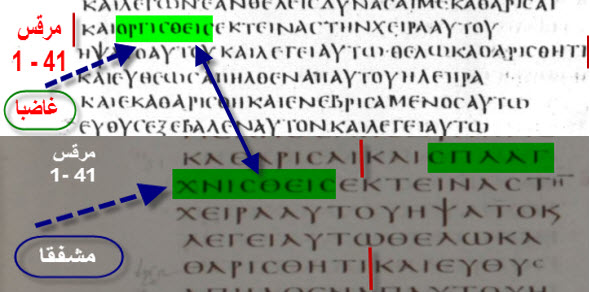
Reinventing Jesus: How Contemporary Skeptics Miss the Real Jesus and Mislead
2Righteousness in Matthew and His World of Thought
3-The Text Of The New Testament Its Transmission, Corruption, and Restoration
- Pg 300
4The character of the Syriac version of Psalms - pg 261
5IVP introduction to the bible: story, themes and interpretation - pg 8
6Bruce M. Metzger and Bart D. Ehrman: Text of the NT - pg 267
7 - A textual commentary on the Greek New Testament, second edition by Bruce M. Metzger – John 7:8
8The only son offered for sacrifice, Isaac or Ishmael
9Adam Clarke’s Commentary - john 7-8
10 - Canon and Text of the New Testament - By Gregory Caspar Ren
11 - misquoting jesus - 134-135
12Terry, Bruce - A student’s Guide to NT Textual Variants
13text commentary - bruce metzger
May Allahسُبْحَـٰنَهُۥ وَتَعَـٰلَىٰ guide you 🙂
🔝🔝🔝🔝