

David and Goliath's Beheading in 1 Samuel 17 — Biblical Glorification of Mutilation and Its Colonial Legacy
The Old Testament does not merely record David’s beheading of the already-dead Goliath as a historical incident — it immortalizes it in liturgical poetry, endorses it as behavior that was “right in the eyes of the Lord,” and places it at the center of a psalm that Coptic Orthodox Christians chant to this day. The argument here is not that Christianity caused colonialism, but that the glorification of a specific act — beheading a defeated enemy and celebrating it as divine favor — appears in the founding texts of a tradition and appears again, documented in newspaper print and military photography, in the behavior of armies that carried priests in their front lines and acted in the name of the God of the Old Testament.
The Biblical Account — 1 Samuel 17
The seventeenth chapter of the First Book of Samuel contains the story of David and Goliath. The relevant verses are as follows:
So David gained the upper hand over the Philistine with the sling and the stone, and struck the Philistine and killed him. And there was no sword in David’s hand.
Then David ran and stood over the Philistine, and took his sword, and drew it out of its sheath, and slew him, and cut off his head with it. And when the Philistines saw that their mighty man was dead, they fled.
Psalm 151 — The Beheading Immortalized in Coptic Liturgy
What makes this more than a historical narrative is that the act was not left to sit quietly in a war chronicle. It was elevated into liturgical poetry — into a psalm chanted by Coptic Orthodox Christians as an act of worship.
But I drew the sword that was in his hand, and cut off his head.
And I removed the shame from the children of Israel. Hallelujah!
The beheading of a dead man’s body is commemorated in a psalm that ends with “Hallelujah” — meaning “Glory to the Lord.” The act is not acknowledged as a moment of excess to be set aside. It is presented as a moment of divine deliverance, worthy of praise, worthy of liturgical repetition, worthy of the word that means glory to God. This psalm is not fringe material. It is part of the Coptic Orthodox canon and is chanted in Coptic churches to this day.
The Divine Endorsement — 1 Kings 15:5
The wider Biblical context seals the matter. The First Book of Kings offers a retrospective evaluation of David’s entire life and conduct before God:
The single exception noted is the matter of Uriah. The beheading of Goliath is not listed as an exception. It falls within the sweep of what David did that was “right in the eyes of the Lord.” This is the Old Testament’s own verdict on the act: it was right. It was approved. It was not a departure from God’s commandments but a fulfillment of them.
Matthew 7:5 — A Word to Those Who Object
Those who object to the behavior of others while their own scripture contains and endorses the act under discussion might consider these words from their own Gospel.
Historical Legacy — The Rif War and Morocco
The following section documents historical instances of beheading carried out by Christian colonial armies against Muslim populations, drawing on contemporary sources.
The Duchy of Victoria’s Gift — Spain, October 1921
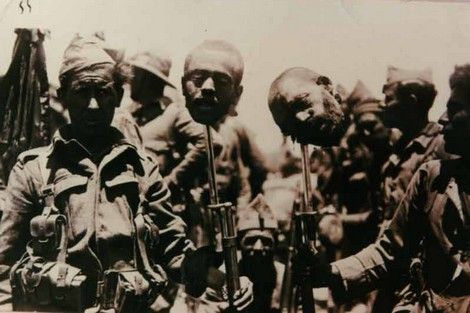
The Spanish researcher Manuel Leguineche documents the following in his work Annual 1921: Spain’s Crimes in the Rif (Alfaguara, Madrid, 1996), page 126. In October 1921, the daily newspaper El Sol published news that a Spanish noblewoman received a gift from Spanish soldiers — a basket containing the severed heads of Moroccan Muslims:
The following image shows documentary evidence related to this incident and the Rif War context:
The French Army in Morocco — Aghoray, Meknes Region
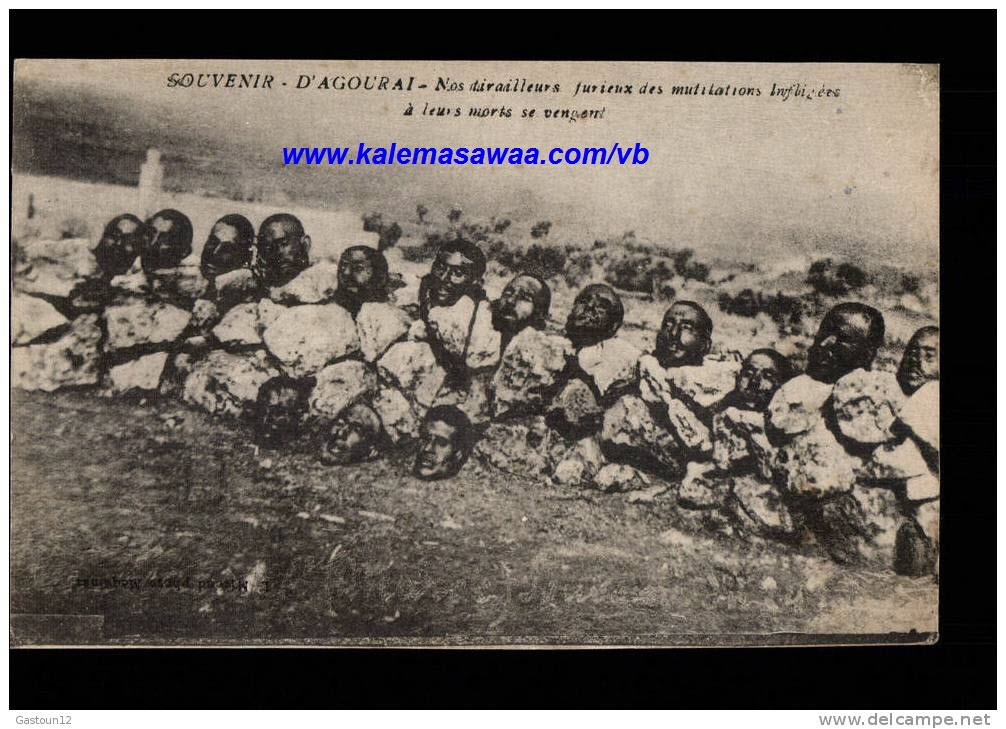
In the Aghoray region near the Moroccan city of Meknes, during the period of the French occupation, the French colonial army carried out beheadings of Moroccan resistance fighters and converted the photographs into postcards — souvenirs of military action distributed and preserved as trophies.
The following image shows one of these documented photographs from the French occupation period in Morocco:
The Rif War — Spanish Christian Colonial Forces
The following images document the conduct of Spanish Christian colonial soldiers during the Rif War, including the parading of Amazigh heads as spoils of war, carried out with the presence and blessing of monks and priests who accompanied these armies in their front lines:
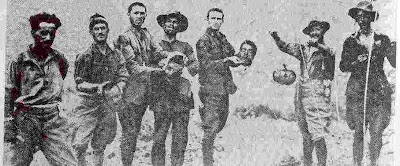
A second image from this period documents the colonial parade of Amazigh heads as military trophies:
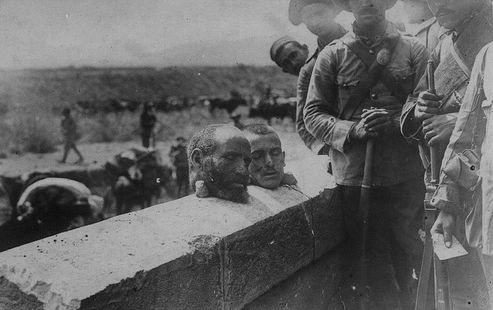
A third image from this documented historical record:
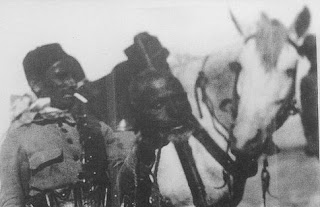
A fourth image continues this historical documentation:
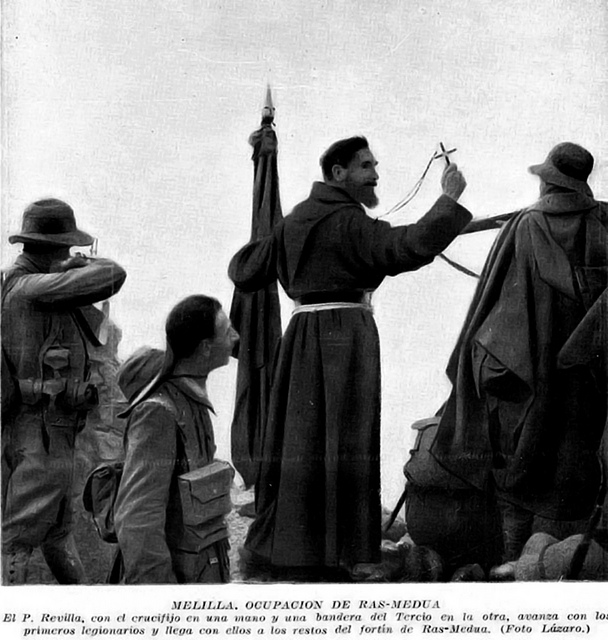
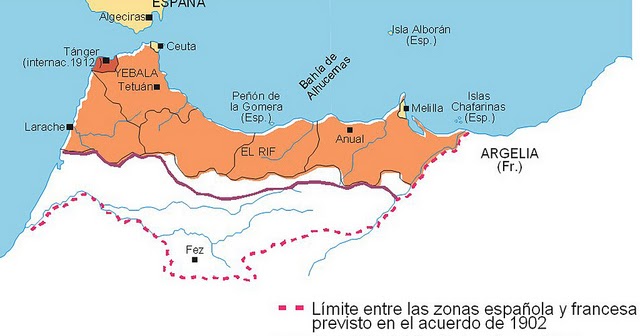
The following image is a historical map related to the Annual 1921 disaster and the geography of the Rif War:
Historical Legacy — The Americas
The testimony of the priest Bartolomé de las Casas — a Spanish Dominican friar who witnessed the conduct of Spanish Christian armies against the indigenous peoples of the Americas — records the following atrocities carried out in the name of the God of the Old Testament:
- Annihilation of entire villages
- Slitting the bellies of pregnant women and killing their fetuses
- Crushing the heads of children with rocks
- Burning people alive
The following image shows documentation related to Bartolomé de las Casas’s testimony on the crimes of the Spanish Christian armies in the Americas:
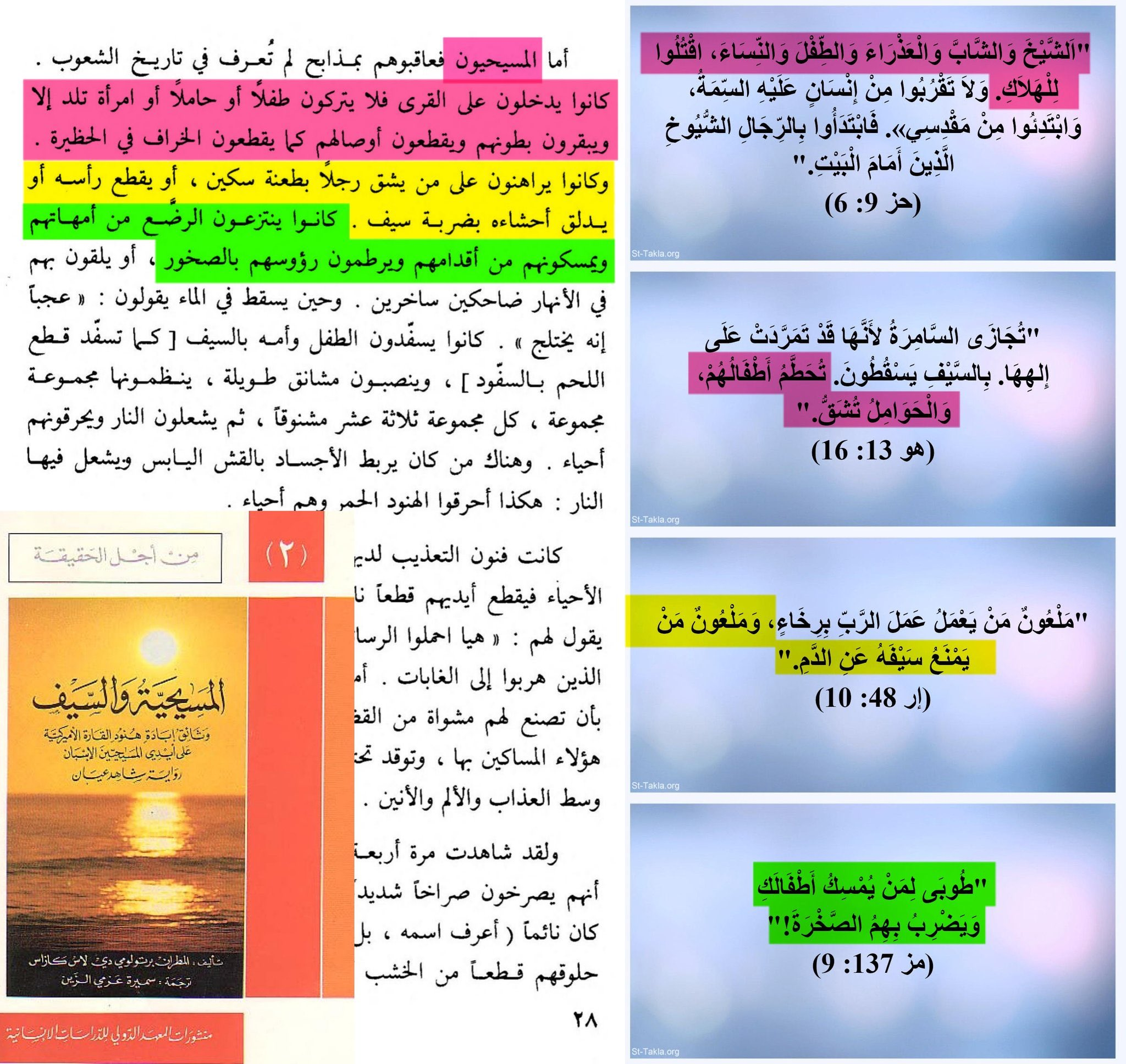
All of this was carried out by armies that were accompanied by priests and monks in their front lines — armies that acted in the name of the commandment of the God of the Old Testament: kill to destroy.
The Banu Qurayzah Incident Explained: Was It a Massacre or Wartime Treason?