David Chainmail Argument
Responding to the Suspicion: The Prophet David Made the Shields Listed, and Did the Shields Listed Not Exist during the Time of the Prophet David, and Did the Qur’an Make a Historical Error in Mentioning David Making Shields?
Content of the Doubt
Atheists claim that the Quran made a historical error when it stated that the Prophet David was the first to make armor. They even claim that armor did not exist during the time of the Prophet David, but rather began 600 years after his time. They cite the following Quranic verse as evidence for this:
{Make coats of mail and measure the links and work righteousness. Indeed, I, of what you do, am Seeing.} [Saba’ 34:11]
A Brief Response to This Ridiculous Suspicion
1The Holy Quran did not say that David was the first to make shields of any kind.
2The Holy Quran did not say that Prophet David made armor from iron.
3The manufacture of armor of various types existed hundreds of years before the Prophet David, and not after him, as atheists claim.
4The term “sard” is given to shields regardless of their composition. This name is not given only to scaly shields, as atheists think.
5It is wrong for atheists to challenge the Quran based on the words of Qatada or one of the commentators. What is my fault if someone else misinterprets my words?!
A detailed response to this ridiculous suspicion:
Firstly:
The Holy Quran does not state that the Prophet David was the first to make armor. Rather, it merely mentions God’s command to David to make armor. There is a difference between the two cases. For example:
If I order you to make me a wooden table, it does not mean that you are the first carpenter to make a wooden table in history.
✴ Let me give you another example:
When God commanded the Muslims to prepare the horse tether, God Almighty said:
And prepare against them whatever you are able of power and of steeds of war. [Al-Anfal 60]
The previous verse 👆 does not mean that Muslims were the first to prepare horse tethers in history, but the verse only means that God commanded Muslims to prepare horse tethers.
And also when God Almighty said about his prophet David:
And We taught him the making of coats of mail for you to protect you from your violence. So will you be grateful? [Al-Anbiya’ 80]
The previous verse 👆 did not say that the Prophet David was the first to learn how to make armor. Rather, the verse only mentioned that God taught him how to make armor. There is a difference between the two phrases. For example:
If I told you: “I taught so-and-so how to make soap,” it is not necessary that this person be the first person I taught how to make soap. Rather, he might be the second person I taught it to, or the third, or the fourth, or…
As for the atheists who quote Qatada’s words, I respond to them and say :
Qatada ibn Di’amah was not a Companion of the Prophet, but rather a person who lived during the era of the Successors. Many of his views and interpretations are not based on evidence from the Quran or the Prophet’s Sunnah, but are rather borrowed from Isra’iliyyat and other cultures. We have repeatedly emphasized this, and doctoral dissertations have been written on the subject.
Likewise, some commentators, such as Qatada, have claimed that the Prophet David was the first to make shields. However, this claim has no connection to Islam, as these views are not based on explicit evidence from the Qur’an or the Sunnah of the Prophet, but rather are merely the commentators’ own opinions.
secondly:
The Quranic verses do not state that Prophet David made armor out of iron. Rather, the verses only mention that God softened the iron for Prophet David. The verses also mention that God commanded Prophet David to make long armor, but the verses do not mention at all that God commanded Prophet David to make those armors out of tempered iron.
As for some of the commentators who claimed that the verse: ” And We made iron soft for him so that he might make coats of mail” means: “We made iron soft for him so that he might make coats of mail,” this interpretation is exaggerated. Therefore, Abu al-Su`ud responds to them in his book [Guidance of the Sound Mind], saying:
[ “Work” means: “We ordered him to work on”] , and “that” here is a verbal noun from which the preposition “ba” was deleted, and interpreting it as an explanatory noun is a clear effort .]
❋ The word (that) in the Qur’anic verse cannot possibly mean: (in order to) !
As for those who attributed to Ibn Abbas that he said that the narration is made of iron, this statement was mentioned in a narration narrated by Ali bin Abi Talha on the authority of Ibn Abbas , but the narration is mursal, and therefore it is a weak narration in the first place.
As for the importance of the iron that God softened for His Prophet David, perhaps the Prophet David used it to make swords, knives, hammers, and other things.
As for those who say that David made armor from iron, they are just some commentators who base their opinion on their own, and there is no clear evidence for their statement in the Holy Qur’an or the Sunnah of the Prophet.
Fourth:
The meaning of the Almighty’s saying : “And determine the chain of mounts” is to make the armor with perfection, precision, and moderation.
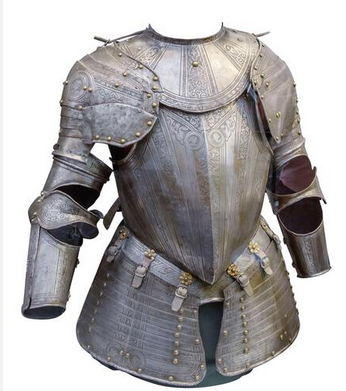
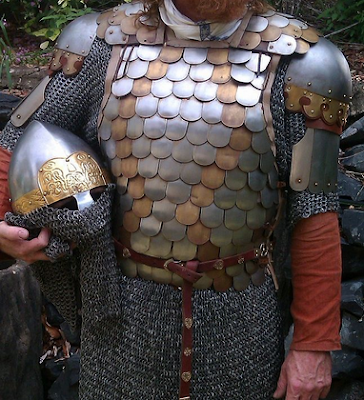
In Arabic, the word “sard al-duru” means: the manufacture of armor, regardless of its type, shape, or composition. Therefore, we find that the term “sard” may be used to refer to the manufacture of plate armor with rings and large parts, known as “plate armor,” and the term “sard” may be used to refer to the manufacture of scaly armor with small rings, known as “scale armor.”
🫡
🫡
Therefore, it was mentioned in the dictionary (Lisan Al-Arab), in the dictionary Al-Muhit, in the intermediate dictionary, and in the dictionary of the contemporary Arabic language, all of those Arabic dictionaries said that:
[The narrative is a collective name for the shields and all the rings]
Note: The word (ring) refers to the parts of the shield. The parts worn around the arm are round and are called (rings) , the part worn around the neck is called (ring) , the round part worn around the chest is called (ring) … and the rest of the semi-circular or semi-circular parts are called (ring) .
We have said that the shield is either made up of large rings, in which case it is known as: (lamellar shield) , or made up of small rings, in which case it is known as: (squamous shield) .
That is why it was mentioned in Al-Qamoos Al-Muhit, Al-Mu’jam Al-Ra’id and Al-Mu’jam Al-Wasit that (the ring) is (the shield) regardless of its shape or composition.
✱ As for the commentators who claimed that what is meant by “and measure the length of the chain” is that he made the nail of equal size or that the ring of the shield was of equal size , these two statements are exaggerated and forced and there is no evidence for them in the Holy Quran or the Sunnah of the Prophet. They are not evidence against the Holy Quran at all. Neither the nail nor the ring are mentioned in the Quranic verse.
Of course, there are atheists who have gone too far in their imagination and claimed that (the chainmail armor) is only the scaly armor known as: chainmail , and based on this false belief, the atheists accused the Qur’an of error; they thought that the Qur’an attributes the scaly armor to the time of the Prophet David, even though it was not made until many years after him!!
I respond to these atheists and say:
This claim is unsubstantiated and stems from ignorance of the Arabic language and a mistranslation from English to Arabic. We have previously stated that “armor armor” refers to its manufacture, regardless of the size of its rings, parts, and composition.
That is, the term armor may refer to plate armor, scaly armor, or other types. Therefore, the Prophet David may have made plate armor or other types.
As for the atheists’ belief that “the shield of the zard” only means scaly shields because this term was widespread among people in the Middle Ages, I respond to them and say:
This does not mean that the term “zard” refers only to scaly armor. Scaly armor was widespread in the post-Christian era, and since the word “sard” refers to any armor, people used to call scaly armor “zard.” However, this does not mean that “zard” is limited to scaly armor with small rings.
Let me give you an example to make the idea clear!
Today, people call the moving metal machine people ride as a means of transportation “car.” However, the word “car” originally refers to anything in Arabic that moves and is ridden, such as a camel in a caravan. The same applies to the word “zard.” Zard refers to any type of armor, not just scaly armor, as some people think.
Fifth
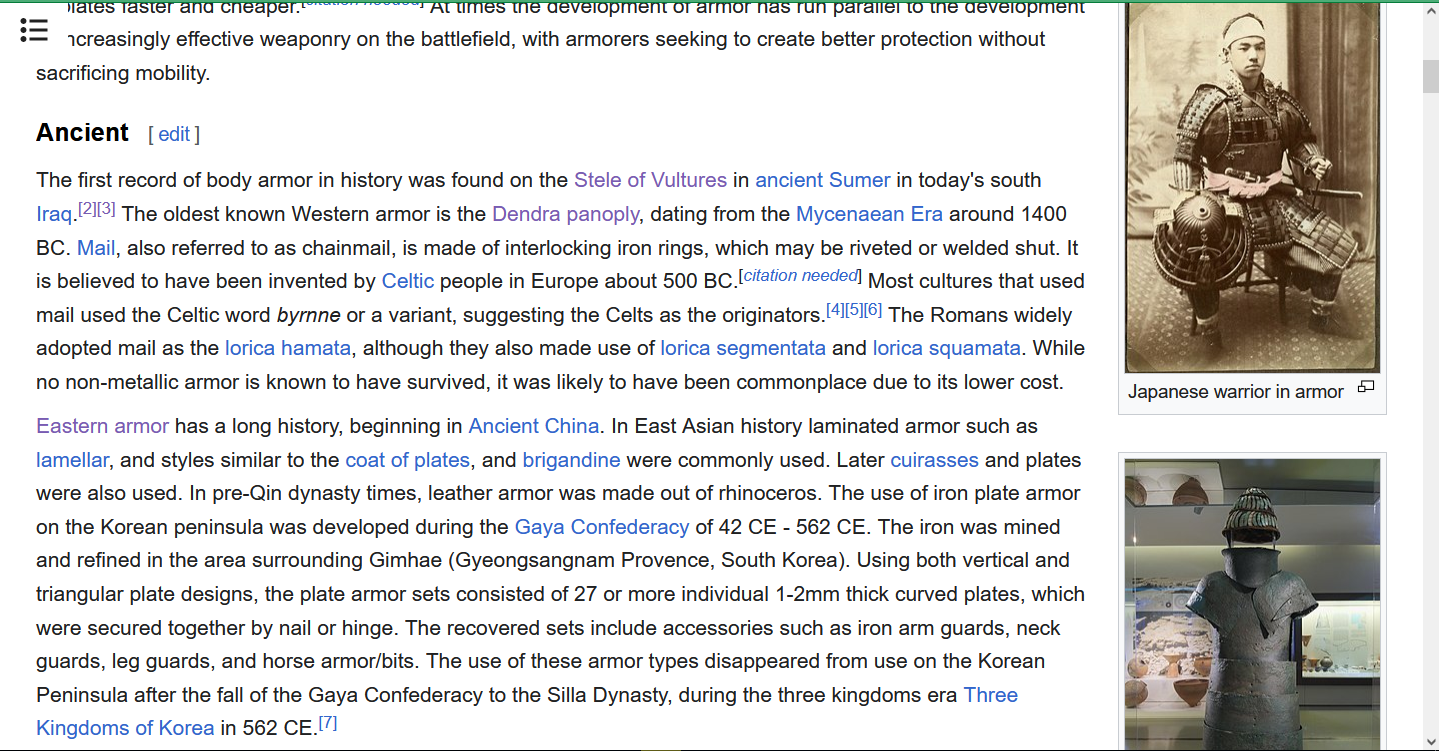
The manufacture of armor existed hundreds of years before the time of the Prophet David [1] , for example:
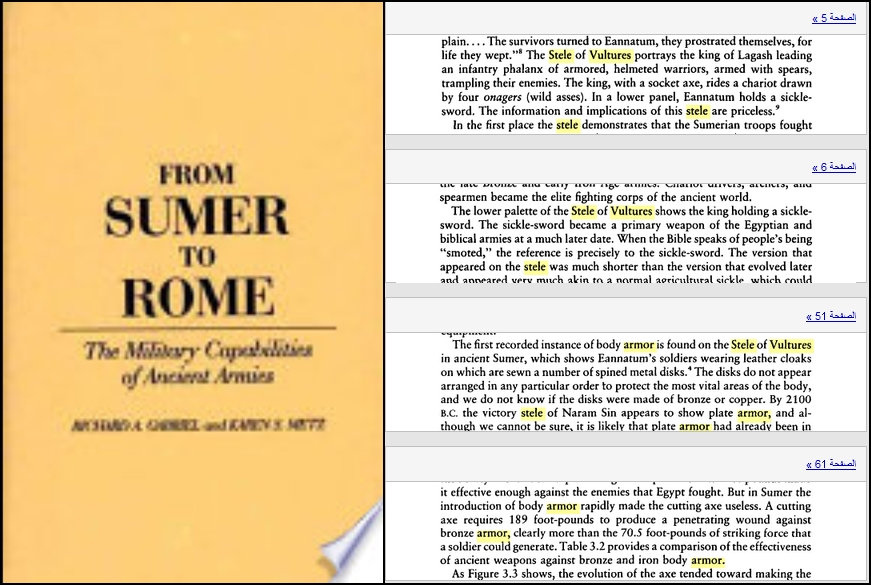
1Inscriptions were discovered proving that infantry soldiers wore armor in ancient Sumerian civilization. [2]
It appears that these Sumerian shields were scaly and lamellar.
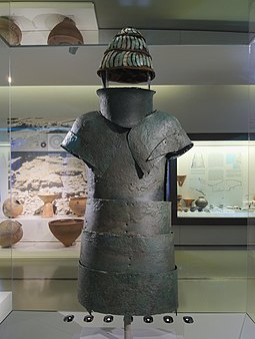
2In ancient Greece, during the Mycenaean period, plate armor was manufactured that covered the chest, back, neck, shoulders, upper arms, and upper legs. These armors were made of bronze, and some sources mention that the origin of these armors was interlocking iron rings, which could be riveted or welded and closed. These armors became popular and widespread throughout Greece and the surrounding area. [3][4]
The manufacture of these armors has been around since 1400 BC, about 400 years before the time of the Prophet David. The earliest Greek example of a worn armor is the Dendra panoply .
Dandara shield in Greece
3The manufacture of scaly armor began in the Middle East. Among the oldest evidence of this is the tomb of Knemun , who lived in Egypt during the reign of Amenhotep II (1436-1411 BC). [5][6][7]
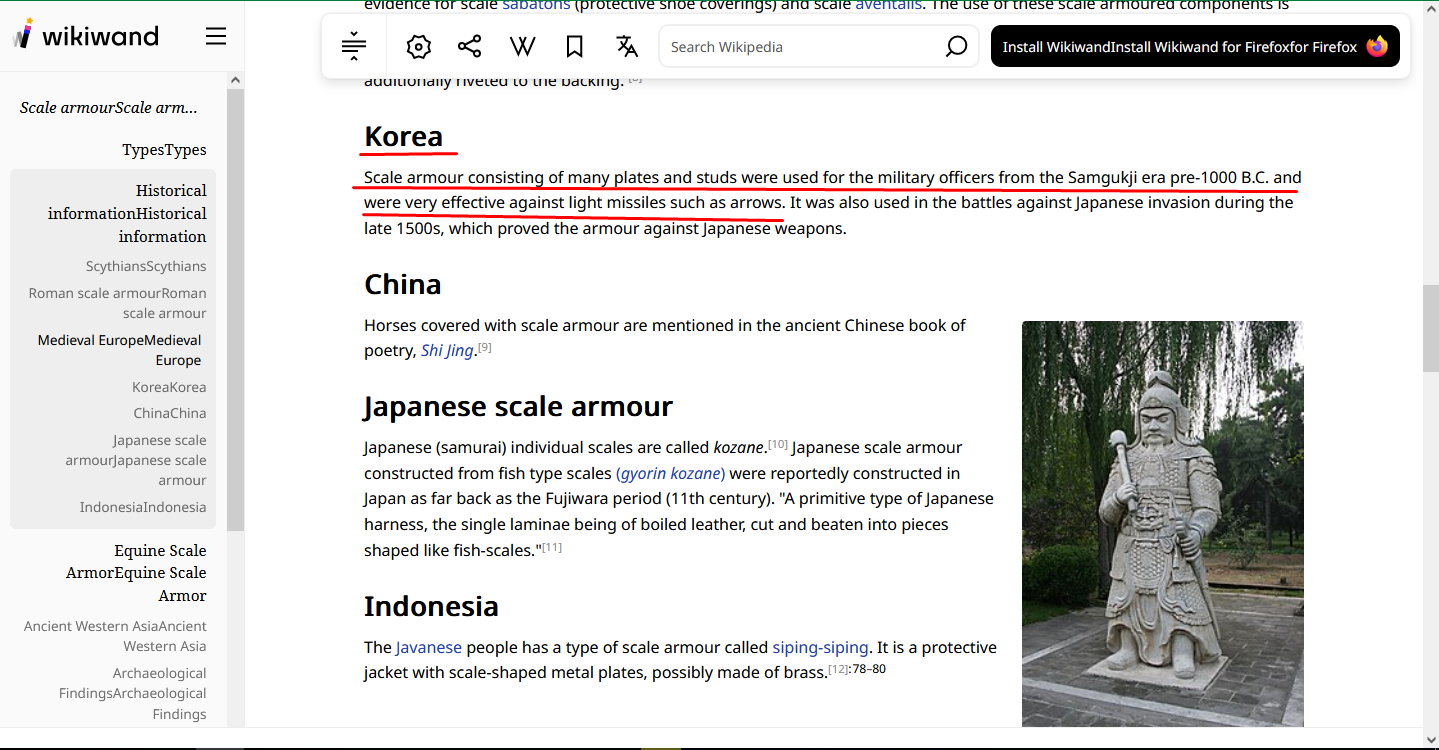
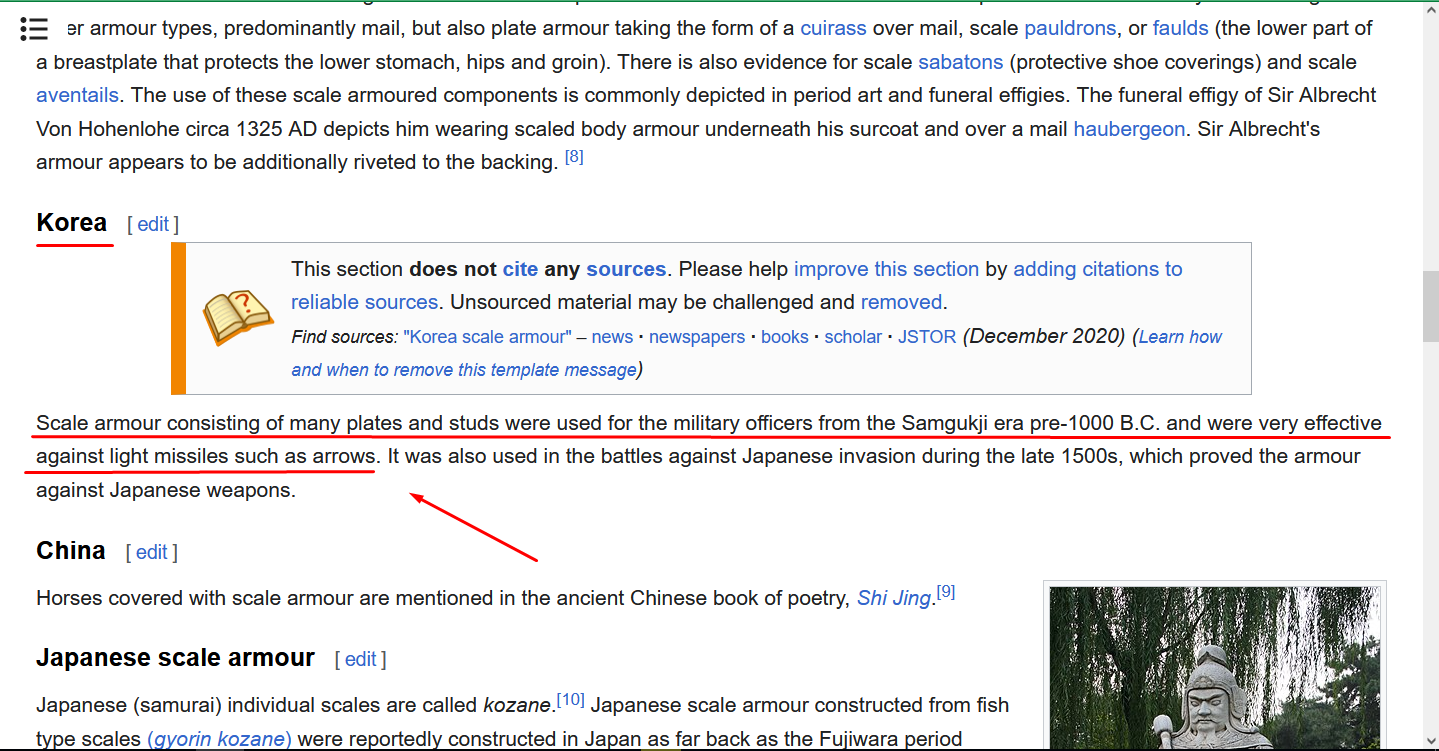
4In Korea, during the Samgukji period, scaly armor was made for military officers, consisting of small rings and nails, before 1000 BC. Indeed, these armors were effective against arrows. [8][9]
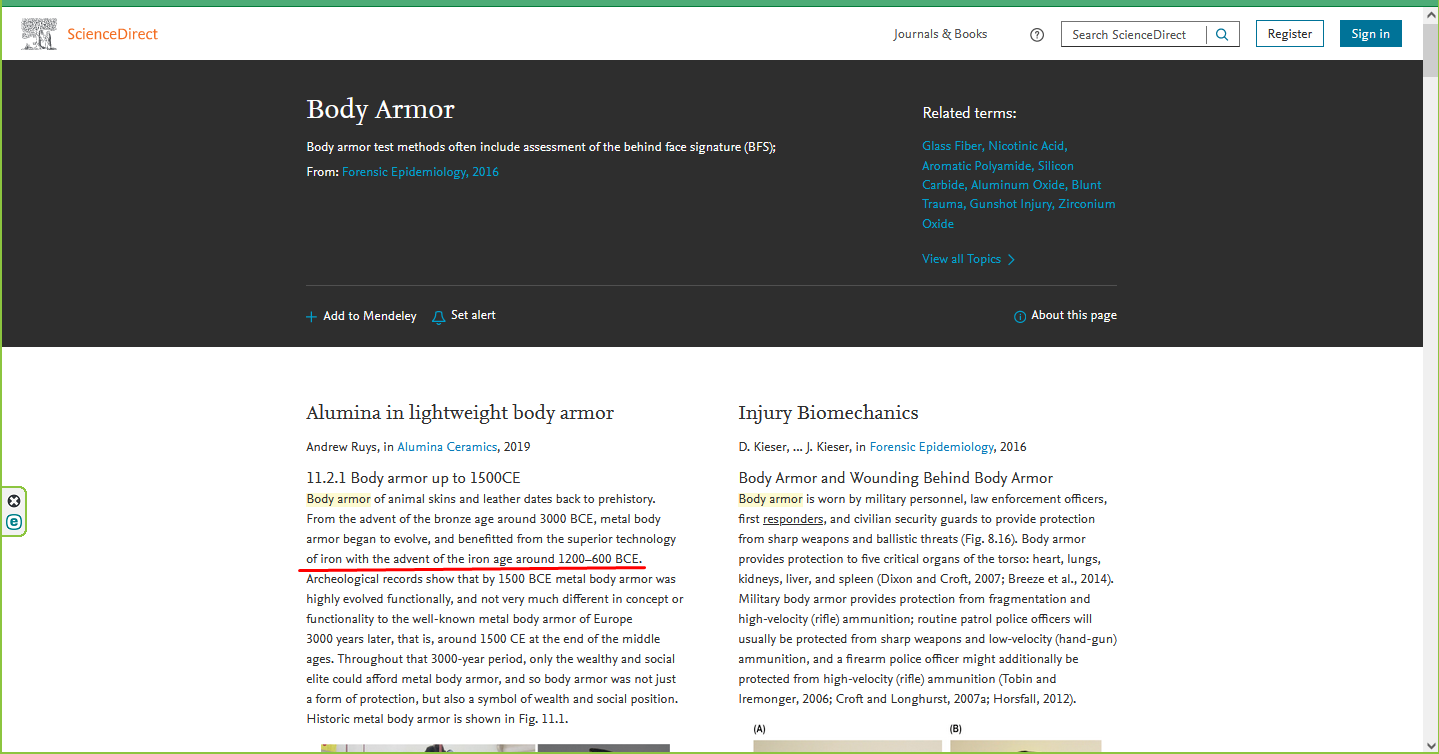
With the beginning of the Iron Age, people began to use iron shields extensively, which is equivalent to the period in which the Prophet David lived, but this does not negate the use of iron before. [10]
An important message to every atheist who challenges the Holy Quran:
I am astonished by some atheists who attribute Qatada’s errors to the Quran, even though the Quran is innocent of them. Many of Qatada’s views are not based on the Quran itself, but rather are borrowed from sources from other nations. The Quran is not to blame for Qatada’s errors.
I would like to read to you some quotes from my master’s thesis entitled:
(Imam Qatada bin Di’amah Al-Sadosi)
His sayings and narrations in interpretation from the beginning of Surat Yasin to the end of the Qur’an
This is a master’s thesis by Professor Muhammad Khalid Abdul Hadi , under the supervision of Dr. Uwaid bin Ayyad Al-Mutrafi. This study was published by Umm Al-Qura University in the Kingdom of Saudi Arabia.
🔴 Researcher Muhammad Khalid Abdul Hadi says in his book - page 144 the following:
[We have noticed that Qatada neglected to mention the chain of transmission and sources of his narrations except a little, and he is also criticized for frequently citing Isra’iliyyat and relying on them at times, and for frequently delving into details and particulars of events that are of no use and that the Qur’an and Sunnah were silent about, and its basis is the narrations of the People of the Book, but perfection belongs to God, and every horse stumbles, and there is no power or strength except with God. Qatada was not the only one who delved into the Isra’iliyyat and was interested in the hidden aspects of the events and stories referred to in the Qur’an. Rather, this was one of the characteristics of interpretation in that era.]
🔴 Researcher Muhammad Khalid Abdul Hadi says on pages 161, 162 the following:
[We saw previously that Qatada relied on Isra’iliyyat narrations in some places in his interpretation and he frequently delved into the particulars and details of stories that were mentioned in summary in the Noble Qur’an. There is no benefit in knowing their details, nor is there any evidence for them from the Qur’an or the Sunnah. Rather, he relied on the narrations of the People of the Book for that. ]
🔴
Researcher Muhammad Khalid Abdul Hadi says on page 130 the following:
[Stuffing the interpretation with Isra’iliyyat, the truth of which is unknown, is unsatisfactory in and of itself, so how about if they contradict what we have?! But what’s even more astonishing and bitter is that he interprets the Wise Reminder based on these false narratives. This is something I never expected from an interpreter like Qatadah. May Allah forgive him and those like him who distorted the interpretation and tarnished it with such fabricated articles. Anyone who examines Qatadah’s interpretation will notice that he is fond of detailing stories and particulars of the narratives referred to in the Quran, such as specifying places, times, people’s names, determining quantities, and other such matters that the Quran is silent on and vague about. Qatadah relies on the sayings of the People of the Book in these matters. From
the above, we find that Qatadah was quoting from the Isra’iliyyat and the books of the People of the Book when he wanted to interpret general verses of the Holy Quran. Therefore, Qatadah’s statement regarding David’s making of armor is not an argument for attacking the Holy Quran.
Ibn Taymiyyah was right when he said in (Majmu’ al-Fatawa 13/329) the following:
[The books compiled on interpretation are filled with the good and the bad, the clear falsehood and the evident truth. Knowledge is either a verified transmission from an infallible person or a statement for which there is known evidence. Anything other than this is either fabricated and rejected, or suspended, and it is not known whether it is ostentation or authentication.]
Knowing that there is no imam or sheikh who has issued a fatwa that everything in the books of interpretation is correct. Rather, scholars have said that the books of interpretation contain mixed opinions, some of which are correct and some of which are weak.
☵☵☵☵
References
The manufacture of scaly armor occurred 2,000 years before the Prophet David.
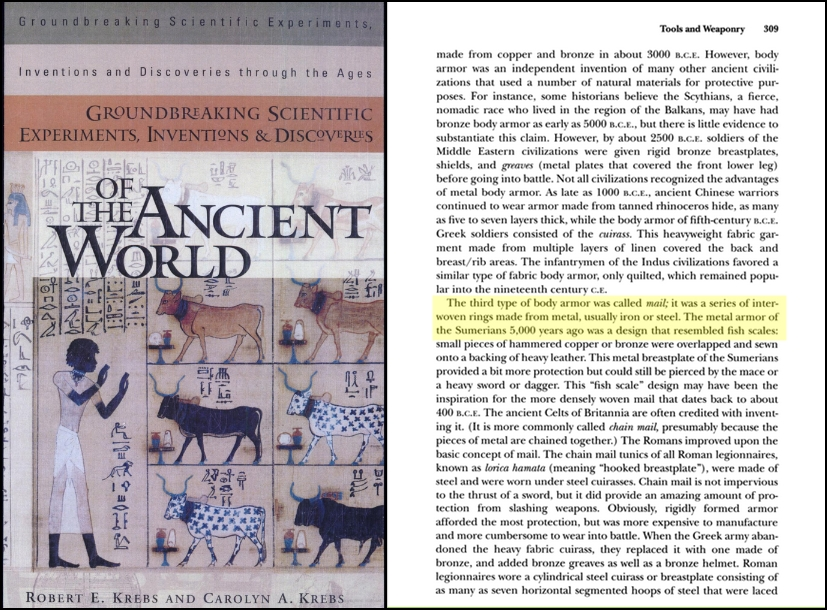
The armor industry was basically present 400 years before the Prophet David.
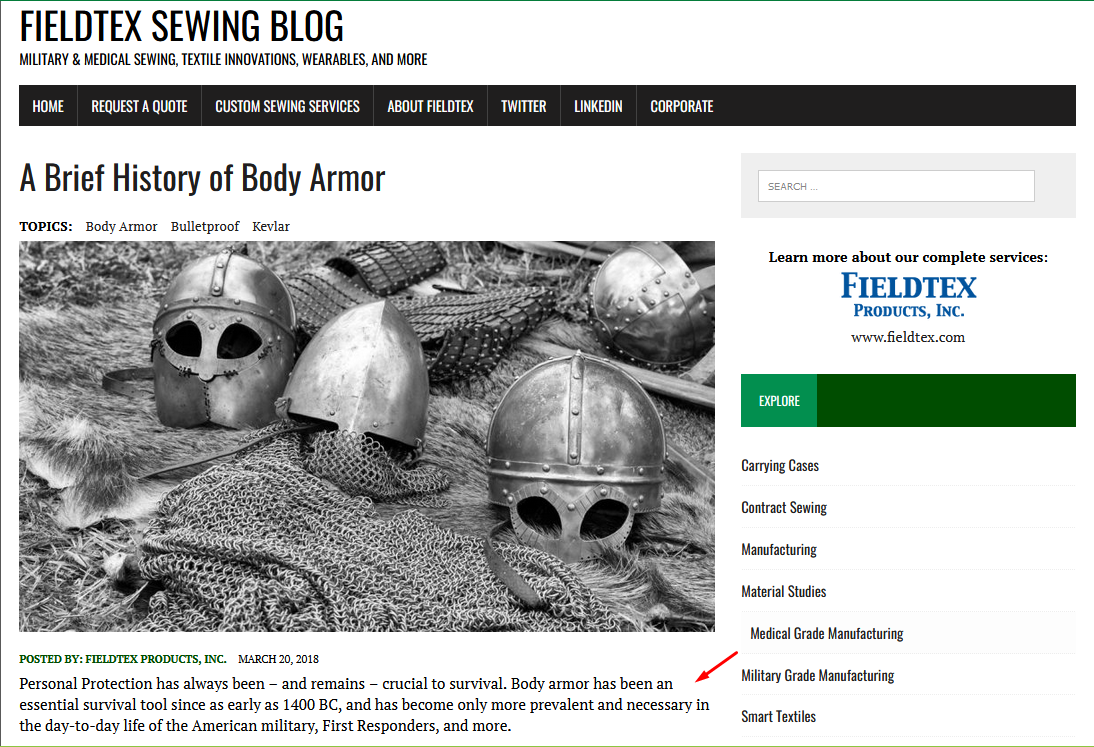
Scale armor in Greek civilization may have relied on iron before bronze.