

Did Abu Bakr Burn Hadiths? Refuting the Shia Claim with Sunni Sources
Did Abu Bakr Burn the Hadiths of the Prophet ﷺ? Refuting the Shia Claim
Table of Contents
- The Doubt Presented
- First: The Report Is Not Authentic
- Second: Abu Bakr Followed the Prophet ﷺ and His Sunnah
- Conclusion
The Doubt Presented
The Shiites claim that Abu Bakr al-Siddiq, may God be pleased with him, burned the hadiths of the Prophet ﷺ because he had too many of them.
First: The Report Is Not Authentic
First: The hadith they brought is not authentic.
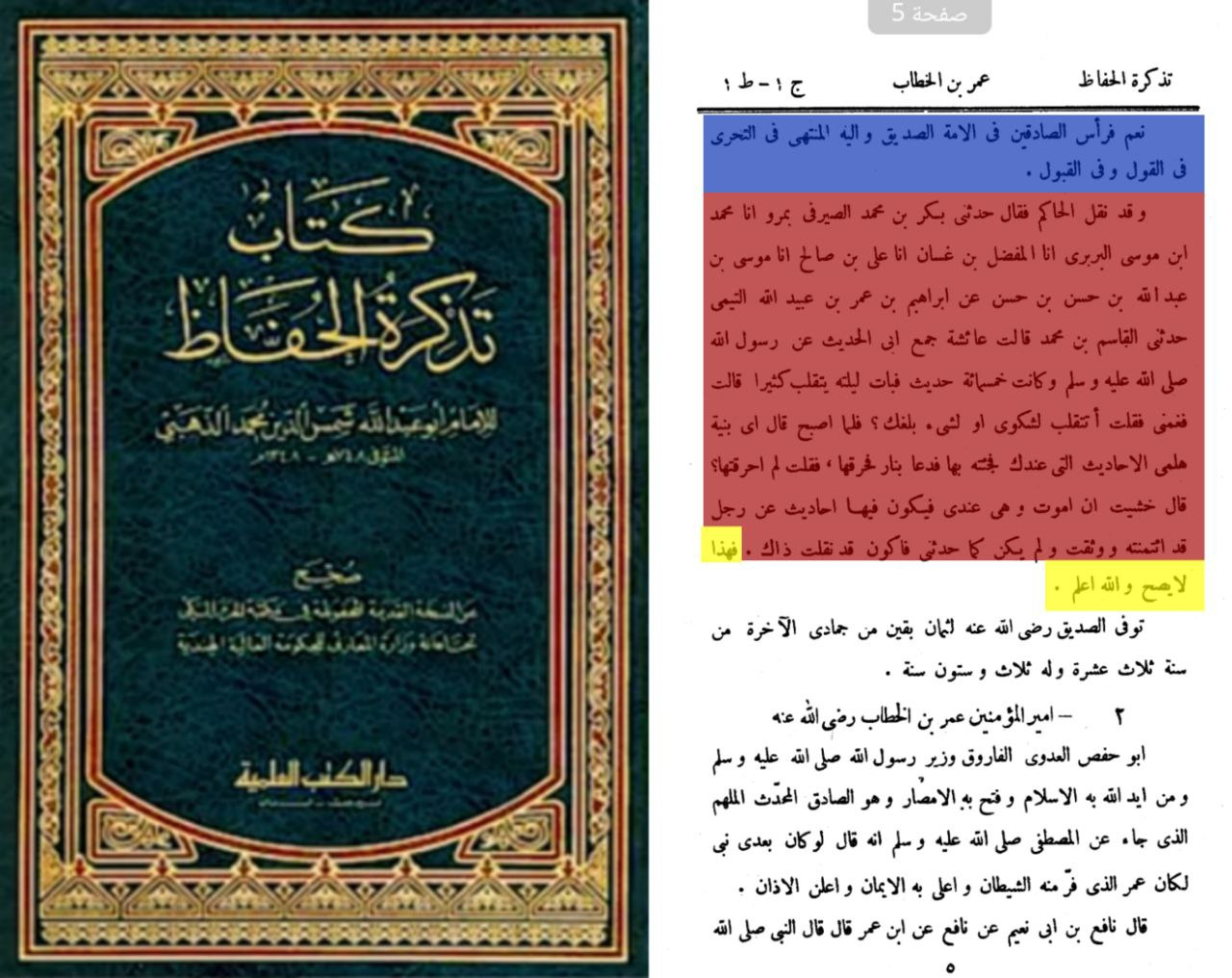
This scan is fromTadhkirat al-Huffaz and contains the report attributed to Aisha, may Allah be pleased with her, claiming that Abu Bakr had gathered hadiths from the Messenger of Allah ﷺ, became uneasy about them, asked for them, and then burned them. The important highlighted point is the judgment at the end: “This is not authentic, and Allah knows best.” So the very report used in the accusation is not accepted as sound evidence. The scan is being used here to show that the claim collapses at the level of authentication before any polemical conclusion can be built on it.
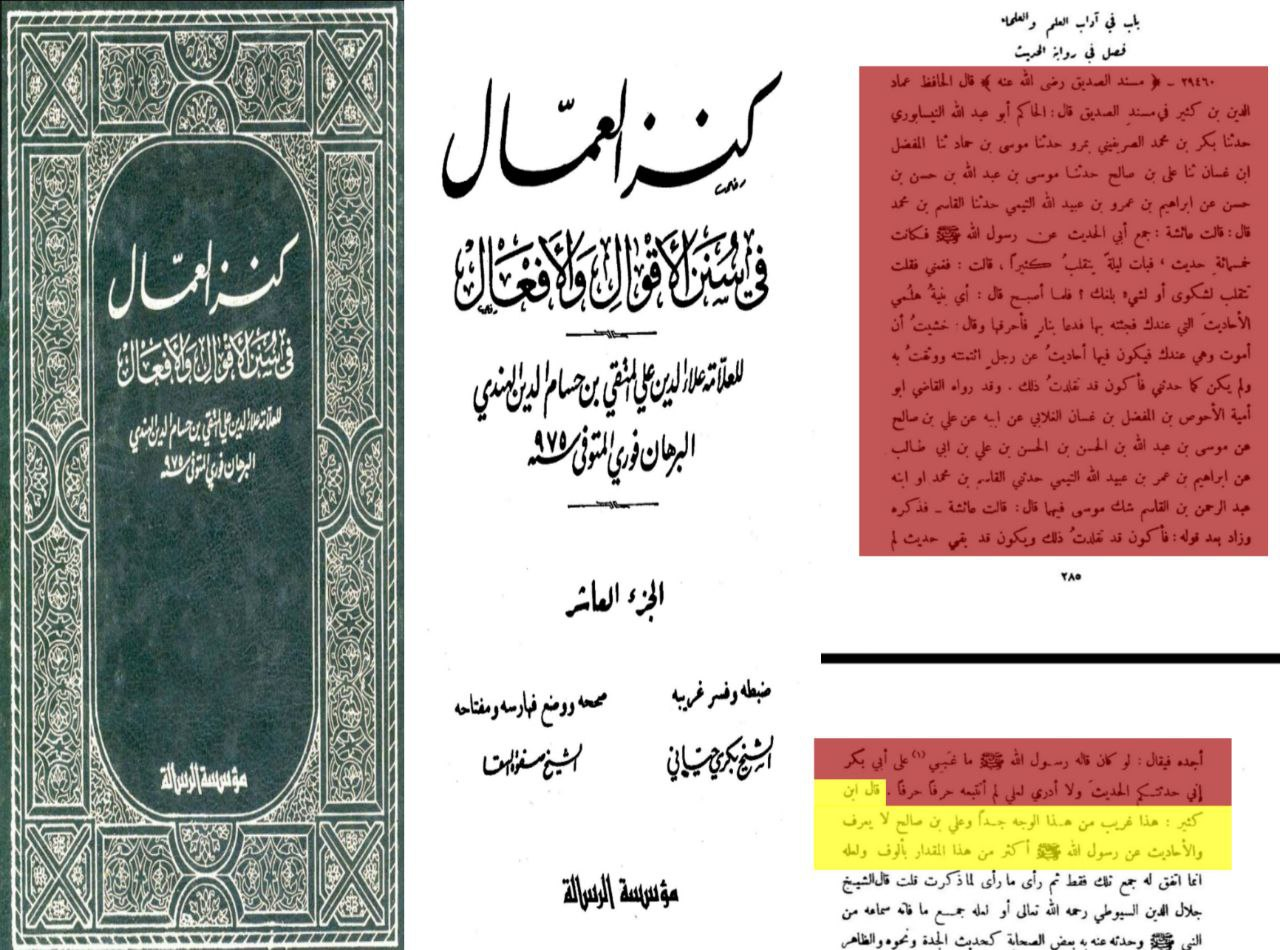
This scan is fromKanz al-Ummal and repeats the same narration about Abu Bakr, may Allah be pleased with him, allegedly collecting hadiths, spending the night unsettled, then asking Aisha to bring the written material so he could burn it. The highlighted note at the bottom states that it was mentioned by Abu Bakr ibn Abi Shaybah in his Musnad, but it is not authentic, and Allah knows best. This scan is important because it shows that the report is not merely being rejected by later polemicists; the source material itself records the weakness of the narration.
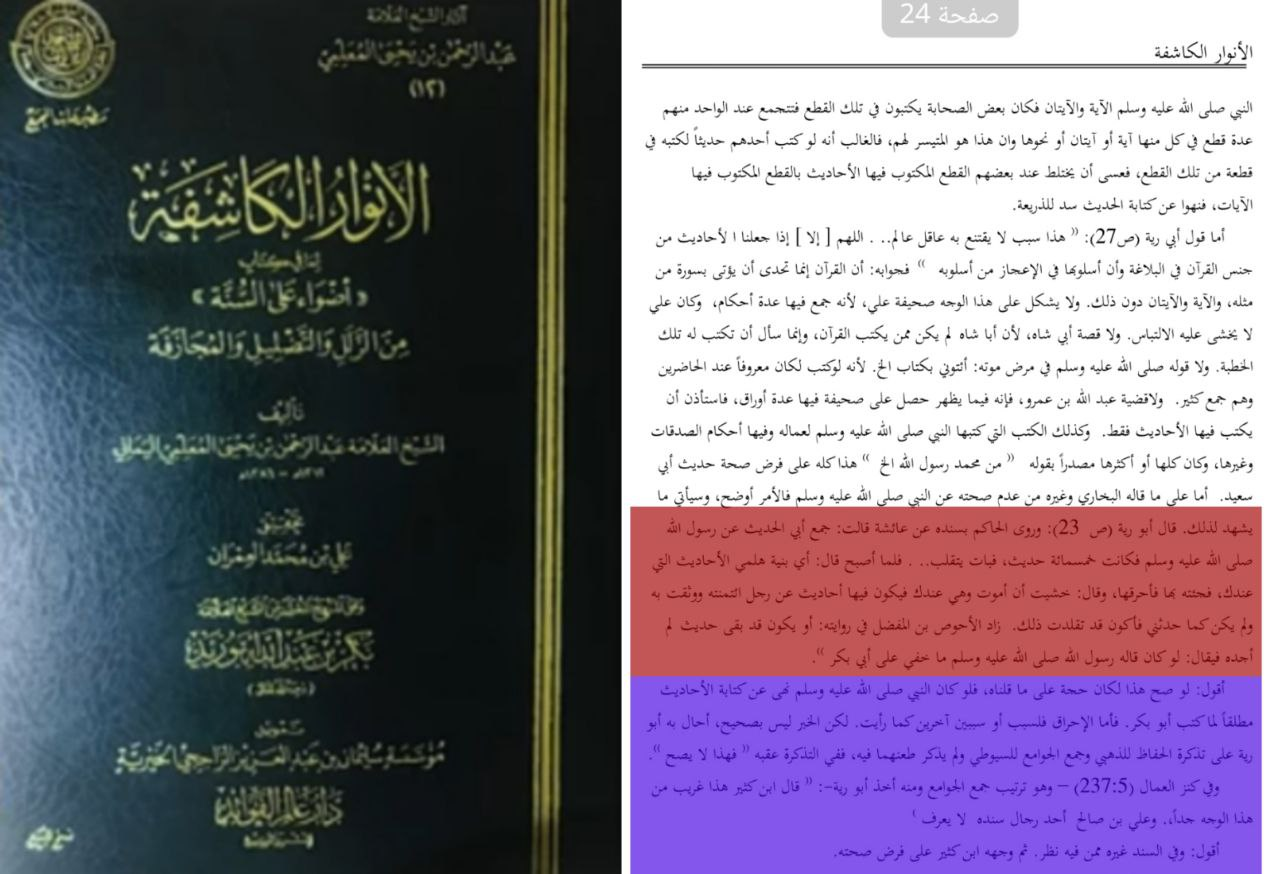
This scan is fromAl-Anwar al-Kashifah and discusses the same narration critically. The page cites the report and then explains that Al-Dhahabi judged it unauthentic. It also addresses the misuse of the narration by those who try to turn it into an argument against Abu Bakr, may Allah be pleased with him, or against the preservation and transmission of hadith. The key point is that the report is not sound, and even the discussion around it does not support the hostile claim that Abu Bakr rejected the Sunnah or destroyed prophetic guidance. The scan therefore strengthens the refutation by showing both the weakness of the narration and the invalidity of the polemical inference built upon it.
Second: Abu Bakr Followed the Prophet ﷺ and His Sunnah
Second: In the pictures below there are several testimonies that Abu Bakr, may God be pleased with him, applied what the Chosen One ﷺ said and did, and confessions from Ali bin Abi Talib, may God be pleased with him, that the best of this nation after the Messenger ﷺ is Abu Bakr, may God be pleased with him.
Evidence from the Compilation of the Qur’an
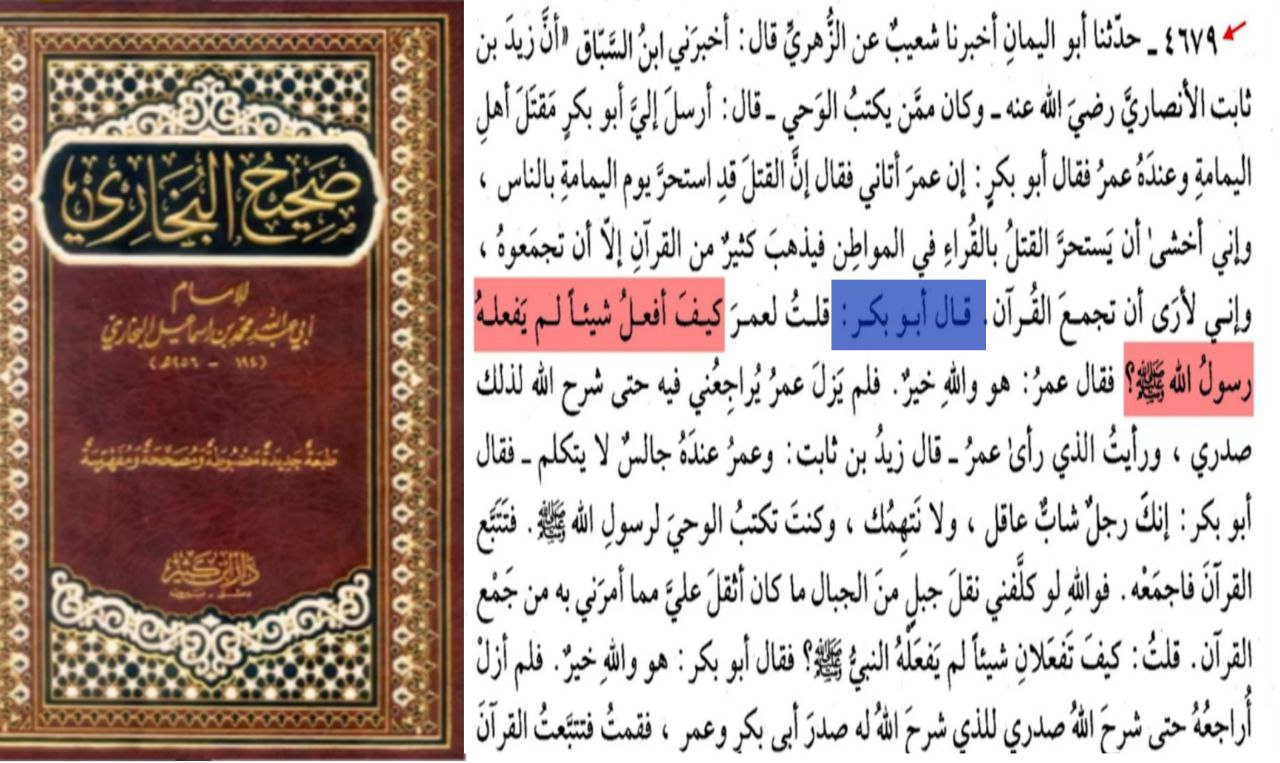
This scan is fromSahih al-Bukhari and shows Abu Bakr’s careful attitude toward religious matters after the Battle of Yamamah, when Umar suggested compiling the Qur’an. Abu Bakr initially replied: “How can I do something which the Messenger of Allah ﷺ did not do?” This statement is central because it proves Abu Bakr’s extreme caution in following the Prophet ﷺ. He was not someone who casually opposed, discarded, or erased prophetic guidance. Rather, his first instinct was to avoid introducing anything unless it was justified by necessity and recognized as good. This directly contradicts the accusation that Abu Bakr was hostile toward the Prophet’s hadiths.
Ali’s Testimony That Abu Bakr Followed the Sunnah
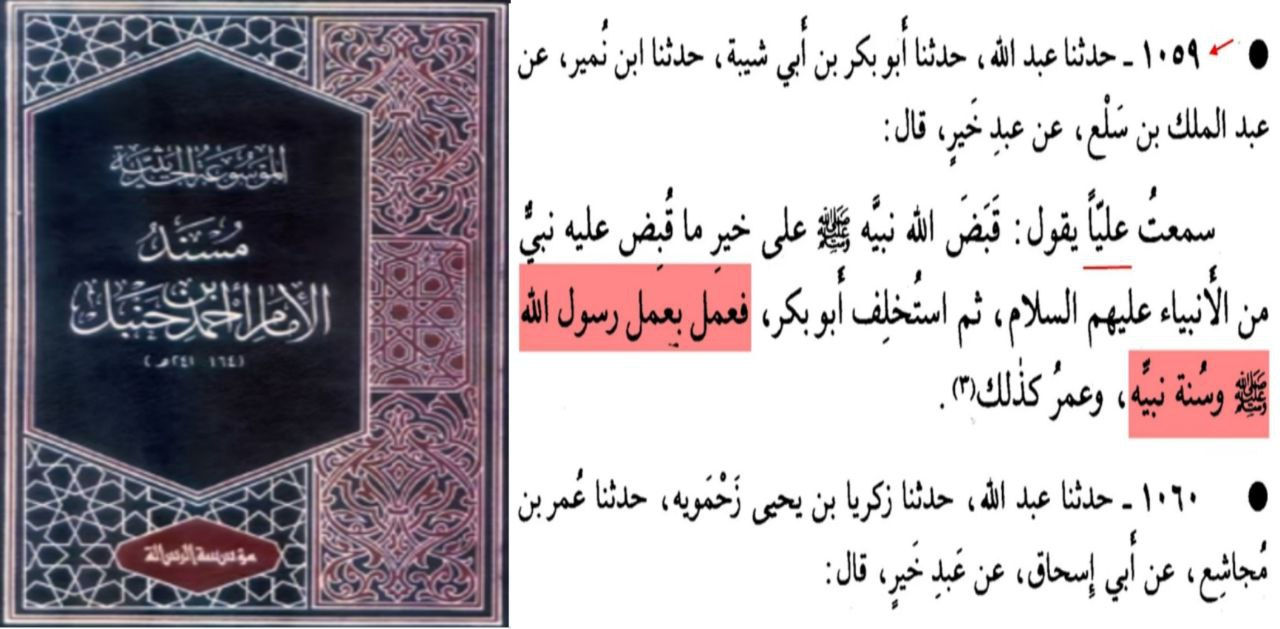
This scan is fromMusnad Ahmad and contains a report from Ali, may Allah be pleased with him. The highlighted passage states that after the Prophet ﷺ, Abu Bakr succeeded him and acted according to the action and Sunnah of the Messenger of Allah ﷺ, and Umar did likewise. This is decisive against the accusation. If Ali himself testifies that Abu Bakr followed the Sunnah of the Prophet ﷺ, then the claim that Abu Bakr burned hadiths out of opposition to the Sunnah is exposed as baseless polemics.
Ali’s Testimony That Abu Bakr Was the Best After the Prophet ﷺ
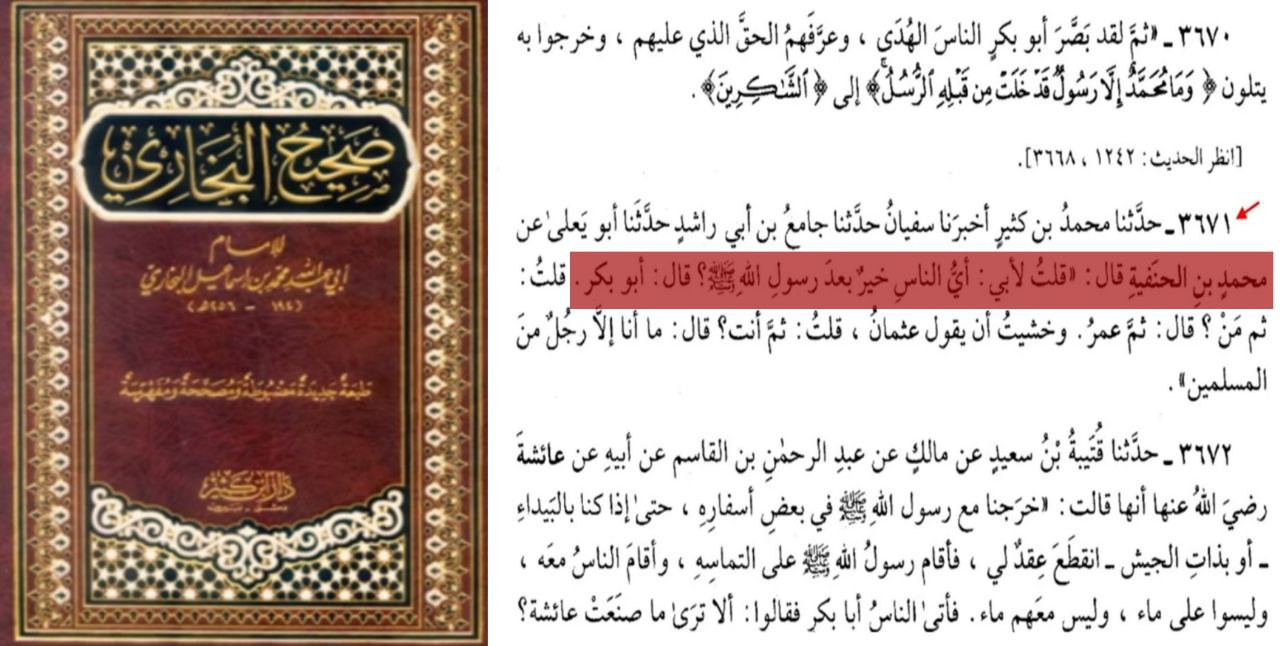
This scan is fromSahih al-Bukhari and records the famous narration in which Muhammad ibn al-Hanafiyyah asked his father Ali, may Allah be pleased with him: “Which of the people is best after the Messenger of Allah ﷺ?” Ali answered: “Abu Bakr.” He was then asked who came after him, and he answered: “Umar.” This scan is being used to show that Ali himself openly affirmed the virtue and rank of Abu Bakr. Therefore, it is dishonest to use a weak report to portray Abu Bakr as a corrupt figure while ignoring authentic testimony from Ali in praise of him.
Abu Bakr Applied the Prophetic Zakat Instructions
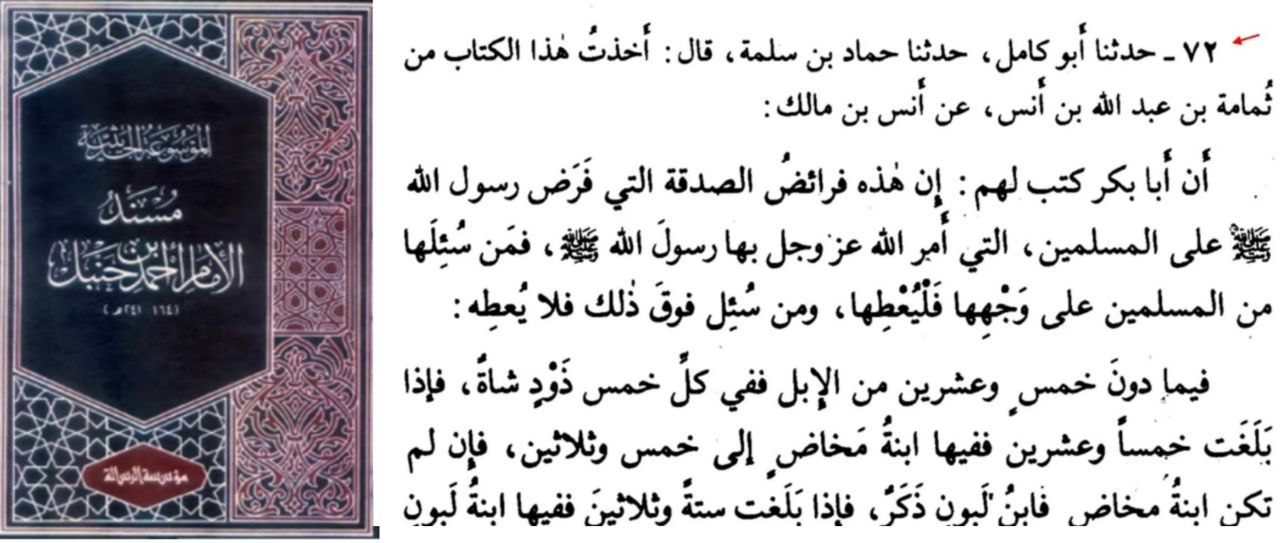
This scan is fromMusnad Ahmad and mentions that Abu Bakr wrote to them regarding the obligations of charity which the Messenger of Allah ﷺ had prescribed upon the Muslims, and which Allah had commanded His Messenger ﷺ. The report details the zakat rulings concerning camels and other obligations. This matters because Abu Bakr is shown preserving, applying, and transmitting the practical legal instructions of the Prophet ﷺ. That is the opposite of someone who supposedly tried to erase prophetic hadiths.
Further Testimony from Ali About Abu Bakr and Umar
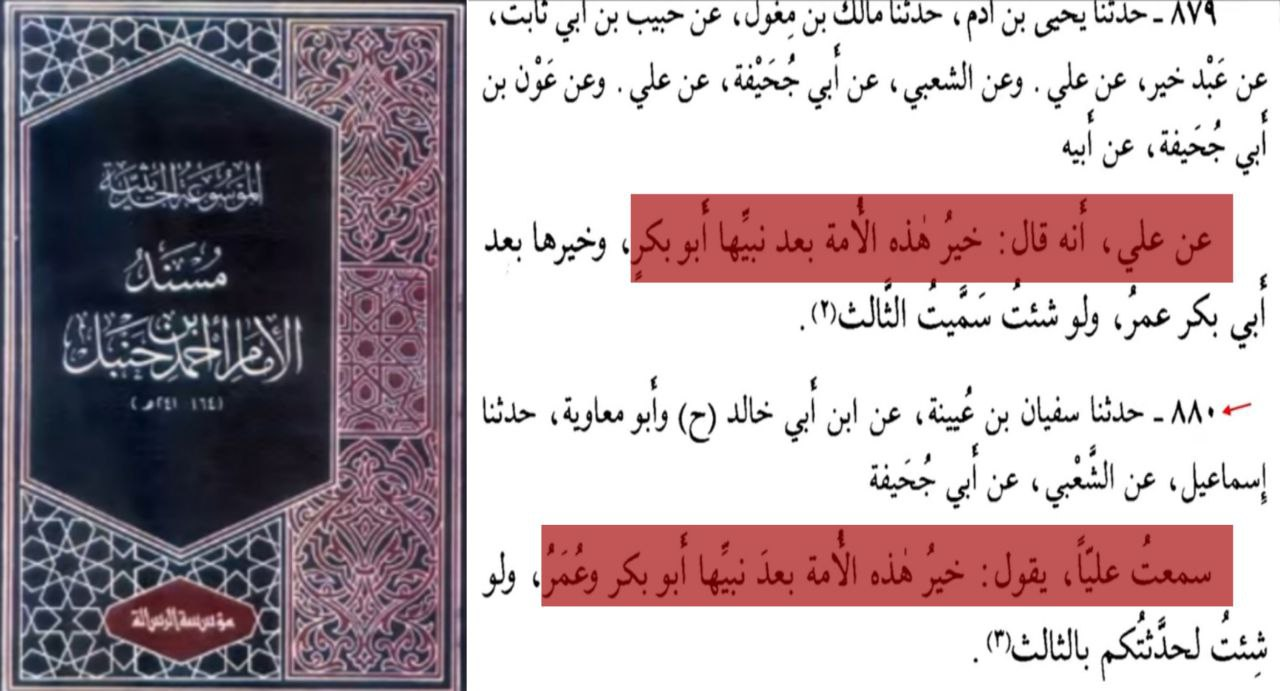
This scan is fromMusnad Ahmad and gives further reports from Ali, may Allah be pleased with him, saying that the best of this Ummah after its Prophet is Abu Bakr and Umar. The highlighted text repeats this meaning clearly. This evidence is important because it shows that the praise of Abu Bakr was not isolated in one narration. The testimony is repeated, and it comes from Ali himself. So the polemical attempt to weaponize a weak narration against Abu Bakr collapses in front of authentic and repeated reports affirming Abu Bakr’s virtue and his adherence to the prophetic path.
Conclusion
The authentic and stronger evidence points in the opposite direction: Abu Bakr, may Allah be pleased with him, was extremely cautious about following the Prophet ﷺ, applied the Sunnah, transmitted prophetic rulings, and was praised by Ali ibn Abi Talib, may Allah be pleased with him, as the best of this Ummah after the Messenger of Allah ﷺ.
So the accusation is not only weak — it is contradicted by the historical and hadith evidence.